




 Servicios personalizados
 Inglés (pdf)
 Articulo en XML
 Referencias del artículo
 Traducción automática
 Enviar articulo por email
 Citado por SciELO
  Citado por Google
  Similares en
SciELO
Similares en
SciELO  Similares en Google
 Permalink
INTRODUCTION
According to the 2019 Global Burden of Disease report (1), cardiovascular disease (CVD) has claimed the lives of 18.6 million people, with ischemic heart and cerebrovascular disease accounting for 85.1 % of these deaths (2). Despite significant investments in early prevention and therapy, the prevalence of CVD is increasing, and it is anticipated that, by 2035, nearly half of Americans will have been diagnosed with some form of CVD (3). A strong relationship between daily lifestyle and the vast majority of cardiovascular events has been reported (4). By choosing a balanced, healthy dietary pattern, CVD risk can be reduced by about 50 % (5).
The phenomenon of globalization, coupled with the growth of national incomes and the greater involvement of women in the workforce, has led to a growing trend of individuals forsaking home-cooked meals in favour of readily accessible, affordable, and shelf-stable ready-to-eat foods. However, it is important to note that these convenient food options often exhibit high levels of fat, sugar, and sodium, which can be considered excessive from a nutritional standpoint (6,7). In recent times, there has been a notable increase in the intake of ultra-processed food (UPF), which has expanded its presence from rich nations to developing countries. This trend has gradually resulted in the dominance of UPF in the global food market (6,7). Therefore, it is crucial to fully understand the impact of these developing food products on the well-being of people. In the current era of UPF, past approaches to classifying foods based on nutrient composition alone that ignored the health effects of food processing (8) are no longer applicable. In contrast, NOVA, a new method for rating foods based on their level of processing as opposed to their nutritional content, offers new insights. According to the NOVA categorization, UPF belongs to category 4, which comprises industrially processed foods and beverages with high concentrations of refined carbohydrates, saturated fatty acids, sugars, and salt and minimal amounts of dietary fibre and minerals (9). The hazards of UPF are not limited to their low nutritional content but are also related to the physical or chemical changes that occur during food processing and the use of various additives (10). Numerous in vitro and animal studies have revealed that different additives, plasticizers, and new compounds created during processing can harm cardiometabolism to varying degrees (11).
Although numerous studies have concentrated on the association between UPF and CVD, a direct relationship remains ambiguous (12-18). According to three cohort studies, UPF intake exerts a negative impact on hypertension (14-16). Nevertheless, Lavigne-Robichaud et al. (13) observed a lack of statistically significant association among UPF consumption and hypertension, which aligns with the results reported by Smaira et al. (17).
A notable longitudinal study conducted on a group of French individuals revealed that the use of UPF was linked to an increased likelihood of developing CVD, coronary heart disease, and cerebrovascular disease (18). In a separate cohort study, Kim et al. (12) identified a positive association between the consumption of UPF and an increased risk of all-cause death, although no significant association was observed with regards to cardiovascular disease. Moreover, Chen et al. (19) did a comprehensive analysis of 20 studies that investigated the correlation between the consumption of UPF and various health outcomes. Five studies have identified an association between UPF consumption and the risk of all-cause mortality, or CVD. However, these investigations did not provide a quantitative assessment of the magnitude of this risk.
No prior meta-analysis has undertaken a comprehensive evaluation of the available evidence regarding the possible association between intake of UPF and CVD. In light of the current knowledge gap, a meta-analysis was conducted on observational studies to measure the link between the intake of UPF and CVD. Furthermore, a dose-response study was performed in order to establish a foundation for subsequent scientific inquiry in this field.
METHODS
The present review conforms to the recommended reporting elements for meta-analyses, as outlined in the PRISMA guidelines (20).
LITERATURE SEARCH AND SELECTION
A thorough examination of relevant literature was conducted by utilizing the PubMed, Embase, and Web of Science databases. The search encompassed the whole duration of these databases' existence up until January 13, 2023, without any limitations on the language of publication. The search strategy was developed using the following search phrases: “blood pressure [MeSH Terms] OR “blood pressure determination [MeSH Terms]) OR “arterial pressure [MeSH Terms] OR “blood pressure [title/Abstract] OR “cardiovascular diseases [MeSH Terms] OR “cardiovascular disease*”[Title/Abstract] OR “arteriosclerosis [Title/Abstract] OR “atherosclerosis [Title/Abstract] OR “atrial fibrillation [Title/Abstract] OR “cardiac arrhythmia” [Title/Abstract] OR “cardiomyopath*” [Title/Abstract] OR “cerebrovascular disorder*” [Title/Abstract] OR “heart arrest [Title/Abstract] OR “heart failure*”[Title/Abstract] OR “hypertension”[Title/Abstract] OR “myocardial infarction [Title/Abstract] OR “myocardial ischemia [Title/Abstract] OR “out of hospital cardiac arrest [Title/Abstract] OR “stroke”[Title/Abstract] OR “vascular stiffness [MeSH Terms] OR “vascular stiffness [Title/Abstract] OR “carotid intima media thickness [MeSH Terms] OR “carotid intima media thickness [Title/Abstract]) AND (“ultra-processed [Title/Abstract] OR “ultra processed [Title/Abstract] OR “Ultraprocessed [Title/Abstract]. Furthermore, additional studies were included through manual screening of one of the retrieved records. The complete protocol used to screen the retrieved literature is outlined as a schematic in the supplementary figure 1 (https://www.nutricionhospitalaria.org/files/8624/ADMA1-05325-02.pdf).
CRITERIA FOR INCLUSION AND EXCLUSION
Reports were considered eligible for inclusion in this review if they were observational and had a cohort above the age of 18, examined the link between UPF and CVD risk, and provided effect estimates as odds ratios (ORs), relative risks (RR), or hazard ratios (HRs), with 95 % confidence intervals (CIs).
Studies on pregnant women, reports that were randomized controlled trials, letters, conference papers, abstracts, case reports, reviews, or meta-analyses, studies with insufficient or inconsistent data, and studies whose full text was unavailable were excluded from this review. The literature screening was completed separately by two authors. In instances of dispute, deliberation was conducted with the involvement of a third researcher, ultimately resulting in consensus.
EXTRACTION OF DATA
The general features and raw data from each selected study were separately extracted by two writers. These included: 1) the primary author's name, publication date, and nation; 2) research design; 3) the duration of cohort studies' follow-up; 4) participant characteristics (number, age, and sex); 5) methods for evaluating exposure to ultra-processed diets; 6) grouping and characteristics of ultra-processed dietary intake; 7) risk estimates associated with CVD; and 8) the covariables used for adjustment in multivariate analyses. Conflicts that arose during the data extraction process were discussed with a third author and resolved.
QUALITY EVALUATION
The research quality of each included study was independently assessed by two researchers utilizing the Newcastle-Ottawa Scale (NOS) (21). Population selection, group comparability, and exposure assessment make up the NOS scale. Reviewers entered scores with a maximum of 10 points per research study, depending on the features of each study. Moradi et al. (22) propose that a research quality score of 6 or below indicates a poor level, while a score of 7 or 8 indicates a moderate level, and a score of 9 or 10 signifies a high level of research quality. Discussions with a third author helped settle disagreements over how well the study was done.
STATISTICAL ANALYSIS
The statistical software Stata 15.0 was utilized to merge the data obtained from the studies that were contained in the meta-analysis. Considering the findings of Symons et al. (23) who concluded that reported HR is equivalent to the RR, the effect sizes in this meta-analysis are based on the pooled RR with a 95 % CI. Due to high heterogeneity (I2 > 50 % and p = 0.05), a random effects model was utilized to analyze effect sizes. Additionally, we conducted a sensitivity analysis, excluding every study in turn and revising the pooled effect sizes. In the present review, we considered the results of the complete adjustment of the model. We treated the non-consumption and minimum consumption groups in the original study as the reference group and the intake group after the reference group, also known as the moderate intake group, as the first exposure group in the study. The group with the highest intake in the original study was taken as the highest intake group for analysis.
The factors extracted from the selected studies were divided into two categories: those involved in mortality risk and others affecting the risk of disease. Subgroup analyses were conducted based on several factors, including country, duration of follow-up, NOS score, and mode of diet recording. Finally, we conducted a dose-response analysis for the stratification of consumption frequency.
RESULTS
STUDY SELECTION
The protocol adopted for the selection of studies relevant to this review is shown as a schematic in the supplementary figure 1 (https://www.nutricionhospitalaria.org/files/8624/ADMA1-05325-02.pdf). An overall total of 1,081 studies were enrolled in this current review, 1,079 of which were identified by literature extraction from the databases, and two were identified from the reference lists of the included reports. After deleting duplicate studies and non-original research categories, 623 records remained. After reading their titles and abstracts, 595 records were discarded (535 based on the title and 60 based on the abstract), leaving 26 records eligible for this review. Subsequently, these 26 studies were subjected to a comprehensive assessment of their entire texts, and 16 of these studies were omitted from the full-text screening due to the following reasons: one study was not available as full text (24); one study had inconsistent data (25); one article on unhealthy diets was not related to ultra-processed diets (26); one study utilized the same cohort as another study (27); four studies did not present ORs, RRs, or HRs, but only provided β, incidence rate ratio, or PR values (28-31); eight studies (15,32-38) did not have clear cardiovascular outcomes and only addressed changes in blood pressure, dyslipidemia, subclinical atherosclerosis, and excess heart age. Ultimately, 12 articles in total were taken into account in the current meta-analysis evaluation (Table I).
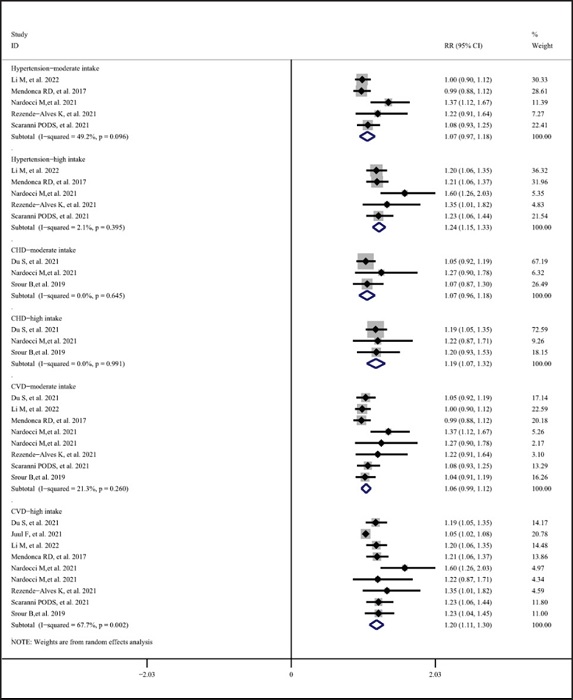
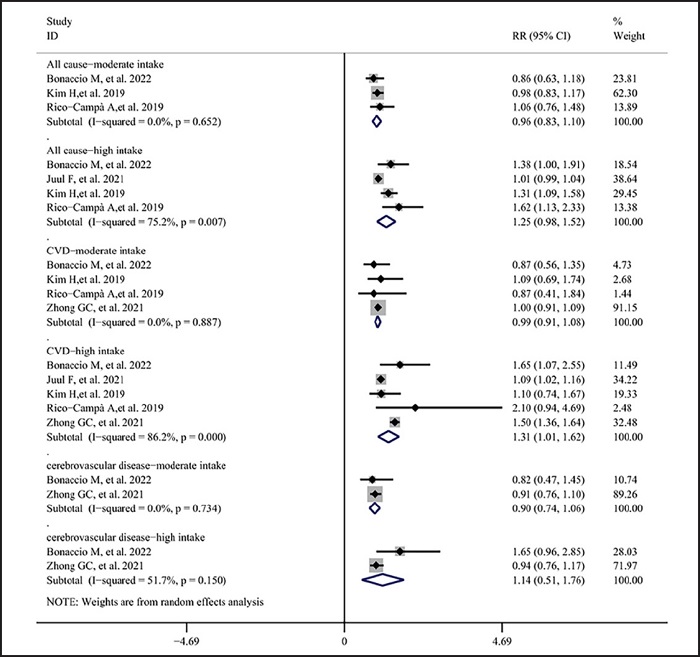
Figure 2. Forest plot of the association between ultra processed food consumption and cardiovascular disease using a random effects model.
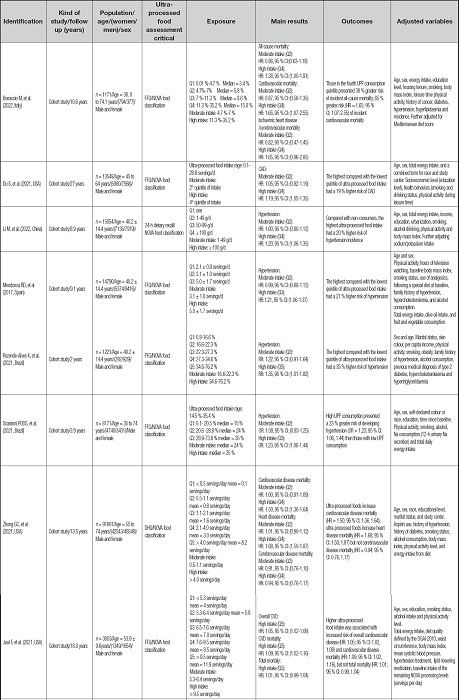
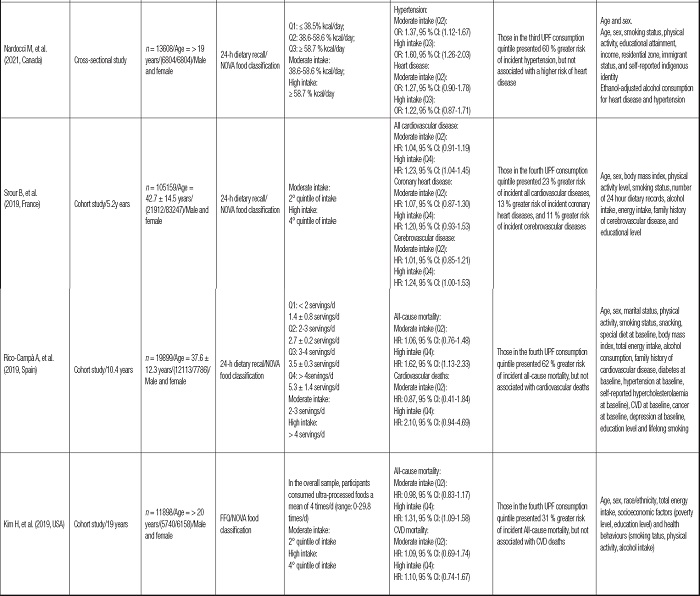
Among the 12 studies encompassed in this meta-analysis, a single study was classified as cross-sectional (39), while the remaining studies were categorized as cohort studies (12,14,16,18,40-46). The chosen studies encompassed a time frame from 2017 to 2022 and encompassed a total of about 299,413 people from seven different nations: Italy (40), the United States (12,41,42,46), China (43), Spain (14), Brazil (16,44), Canada (39), and France (18). The results of all the studies were grouped into two categories: the risk of disease-related death and disease risk. Of the included studies, four (12,41,45,46) addressed the risk of disease-related death only, seven (14,16,18,41-44) addressed the disease risk only, and one study (39) reported the risk of both disease and disease-related mortality. One study (39) reported on the relationship of an ultra-processed diet with either high blood pressure or heart disease.
QUALITY OF STUDIES
Eight studies (18,40-46) were rated to be of high research quality, while four studies (12,14,16,39) were rated as having moderate research quality. Details of the scores are shown in the supplementary figure 2 (https://www.nutricionhospitalaria.org/files/8624/ADMA1-05325-02.pdf).
Publication bias was tested in studies involving the risk of CVD. In the meta-analyses, eight primary studies were conducted on CVD risk, one of which involved two CVD conditions: hypertension and heart disease. Therefore, the latter article was used twice when assessing publication bias for the link between UPF and the risk of CVD (39). The Egger's test result for the association between high UPF intake and CVD risk was significant (p < 0.001), demonstrating the presence of publication bias. Following that, we utilized the cut-and-fill technique to produce symmetric funnel plots for four additional studies. The pooled effect was significant (pool effect size: 1.151, 95 % CI: 1.074-1.234, p < 0.001), indicating that the results were stable (Supplementary Fig. 3: https://www.nutricionhospitalaria.org/files/8624/ADMA1-05325-02.pdf).
ANALYSIS OF OUTCOMES
The link between the consumption of UPF and cardiovascular mortality
The probability of dying from cerebrovascular illness or from All-causes was not substantially correlated with moderate or high UPF consumption. There was a significant association observed among high UPF intake and a 31 percent rise in the likelihood of mortality from CVD (RR = 1.31; 95 % CI: 1.01-1.62, I2 = 86.2 %) (Fig. 1), but moderate UPF consumption was not linked with CVD death risk.
The connection between UPF intake and CVD risk
A positive correlation was found between high intake of UPF and an increased likelihood of getting hypertension, with a 24 % higher risk seen (RR = 1.24; 95 % CI: 1.15-1.33, I2 = 2.1 %), coronary heart disease by 19 % (RR = 1.19; 95 % CI: 1.07-1.32, I2 = 0.00 %), and CVD by 20 % (RR = 1.20; 95 % CI: 1.11-1.30, I2 = 66.7 %) (Fig. 2). A moderate UPF intake was found to not be connected with the hazards of hypertension, coronary heart disease, or CVD.
Subgroup analysis
Table II shows the results stratified by country or area. For all-cause mortality and CVD mortality risk, the results of high UPF intake were only significantly relevant in the European population (RR = 1.47, 95 % CI: 1.11-1.83, I2 = 0.0 %; RR = 1.71, 95 % CI: 1.02-2.04, I2 = 0.0 %), while the effect of a moderate UPF intake on the risk of CVD death was not correlated at the regional level (RR = 0.99, 95 % CI: 0.91-1.08, I2 = 0.0 %).
Table II. The association between ultra-processed food consumption and the risk of cardiovascular disease and mortality assessed by country or area.
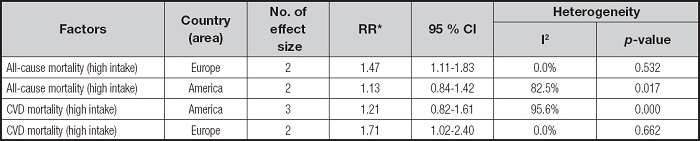
*Calculated using a random-effects model. RR: relative risk.
Table III shows the results stratified by follow-up time. When follow-up was less than 15 years, the likelihood of mortality from All-causes and CVD increased by 47 % (RR = 1.47, 95 % CI: 1.11-1.83, I2 = 0.0 %) and 51 % (RR = 1.51, 95 % CI: 1.37-1.65, I2 = 0.0 %), respectively. The incidence of hypertension increased by 25 % (RR = 1.25, 95 % CI: 1.08-14.2, I2 = 0.0 %) when the duration of following up was less than 5 years. Conversely, the incidence of hypertension decreased when the follow-up period extended beyond 5 years (RR = 1.20, 95 % CI: 1.10-1.31, I2 = 0.0 %). With prolonged follow-up, the CVD risk also decreased for those with a high rate of UPF intake. In comparison to patients with a follow-up of more than 5 years (RR = 1.16, 95 % CI: 1.06-1.26, I2 = 68.6 %), cases with a follow-up of less than 5 years had a greater risk of CVD (RR = 1.25, 95 % CI: 1.08-1.42, I2 = 0.0 %).
Table III. The association between ultra-processed food consumption and the risk of cardiovascular disease and mortality assessed by using stratified follow-up years.
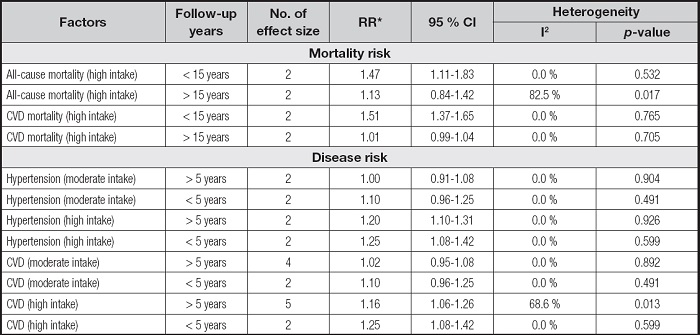
*Calculated using a random-effects model. RR: relative risk.
Table IV displays the results stratified by NOS scores. In moderate- or high-quality studies, higher rates of consumption of UPF were associated with hypertension and CVD. When the studies were graded as medium-quality, the association became stronger. A high UPF intake increased CVD risk by 26 % (RR = 1.26, 95 % CI: 1.13-1.38, I2 = 14.1 %) and that of hypertension by 28 % (RR = 1.28, 95 % CI: 1.11-1.44, I2 = 42.4 %).
Table IV. The association between ultra-processed food consumption and cardiovascular disease risk assessed by using the stratified NOS score.
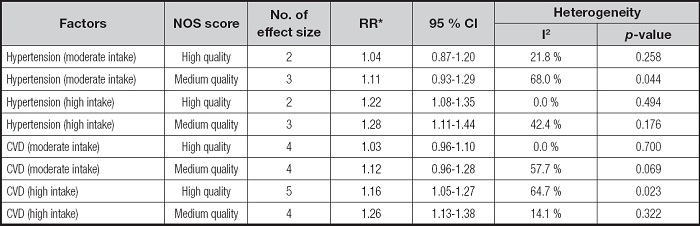
*Calculated using a random-effects model. RR: relative risk; NOS: nitric oxide synthase.
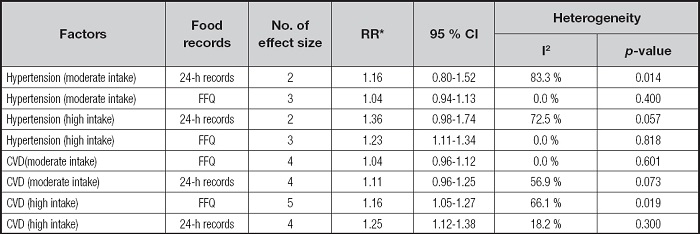
There was no observed association between a moderate intake of UPF and the occurrence of hypertension. The use of the food frequency questionnaire revealed that a heightened rate of intake of UPF was associated with a 23 % increase in the risk of hypertension (RR = 1.23, 95 % CI: 1.11-1.34, I2 = 0.0 %). Moreover, the use of UPF has been found to elevate the risk of CVD. The link between CVD and excessive intake of UPF was shown to be significantly greater when utilizing 24-hour records (RR = 1.25, 95 % CI: 1.12-1.38, I2 = 0.0 %) as shown in table V.
DOSE-RESPONSE ANALYSIS
Supplementary figure 3 (https://www.nutricionhospitalaria.org/files/8624/ADMA1-05325-02.pdf) depicts the dose-response ratios, which were organized based on the intake quartile. The consumption of UPF was divided into four groups, with the first group representing the lowest intake and the fourth group representing the greatest intake. These figures were utilized to quantify the relationship between UPF consumption and the risk of disease. According to the study's findings, people who consumed the most UPF had a 36 % higher chance of all-cause mortality than people who consumed the least (RR = 1.36, 95 % CI: 1.16-1.56, I2 = 0.0 %). Furthermore, individuals in the third group had an 11 % higher risk of CVD (RR = 1.11, 95 % CI: 1.02-1.19, I2 = 0.0 %) compared to those in the lowest intake group. Among the cohort exhibiting the greatest consumption of UPF, a statistically significant elevation of 20 % (RR = 1.20, 95 % CI: 1.11-1.30, I2 = 0.0 %) in CVD susceptibility was observed in comparison to the initial group.
DISCUSSION
To the best of our understanding, there has been no prior investigation that has conducted a comprehensive evaluation and meta-analysis regarding the correlation among UPF intake and the risk of cardiovascular disease. Consistent with our findings, there exists a positive association between the excessive consumption of UPF and an increased likelihood of CVD mortality, hypertension, coronary heart disease, and overall CVD. However, no significant relationship was observed between moderate UPF consumption and the occurrence of CVD. Furthermore, our research, which involved stratification based on consumption frequency, demonstrated a clear and consistent connection between quartiles of intake and cardiovascular CVD.
CVD and all-cause mortality risk were found to be elevated in the high-dose group of a 15-year study, but the association was absent when the follow-up period was extended beyond 15 years. An increased CVD risk and hypertension risk were associated with a high UPF intake, and the shorter the follow-up period, the stronger the correlation. Based on the analysis of NOS scores, regardless of whether the literature was of high or moderate quality, the risk of CVD or hypertension was only increased with higher UPF intakes, whereas no correlation was noted at lower intakes. A high UPF intake was seen significantly impact European participants only in subgroup analyses of participants in the US or Europe. The probability of death from cardiovascular disease increased by 71 %, and the chance of death from any cause by 47 % in those with a high UPF consumption. High UPF intake showed a significant association with hypertension only for food frequency questionnaire-based food records. When using 24-h records, the correlation between CVD risk and high UPF intake was 25 % stronger.
In a large prospective cohort study, each extra serving of UPF per day was linked to a 7 %, 9 %, and 5 % higher probability of severe CVD, severe coronary heart disease, and overall CVD, respectively, along with a 9 % rise in cardiovascular death (43).
We included 12 primary studies that did not involve sex-based analyses; therefore, we could not analyse the subgroups by sex, although sex differences in cardiovascular outcomes have long been recognised (47). A study conducted and published earlier has revealed that there exists a heightened risk of mortality associated with CVD and heart disease specifically among women (48). This may be related to differences in sex hormones (49), with female patients being likely to receive preventative instruction or treatment (50,51), and females being less compliant in terms of the need for long-term medications (52).
There are various mechanisms that could potentially elucidate the correlation between the consumption of UPF and CVD. First, the association between elevated consumption of UPF and mortality is partially influenced by biomarkers of renal function, such as cystatin C. One study found that people who consume UPF frequently tend to have high concentrations of renal function markers that correspond to a higher chance of CVD (53). Second, UPF has a poor nutritional composition and contains more sugar and less dietary fibre. There is frequently a positive correlation between consumption habits and the sugar level of food, while a negative correlation is observed with dietary fibre content (54). Third, UPF contains additives such as inorganic phosphates, sulfites, monosodium glutamate, and artificial sweeteners that may promote arteriosclerosis, oxidative stress, and endothelial dysfunction (55,56). Ultimately, it is possible for UPF to become tainted with contact substances, such as bisphenol A, which can be found in plastic packaging (57). The risk of hypertension and coronary artery disease was shown to be higher in people who were exposed to bisphenol A, according to a review (57). The processing and handling of UPF involve varying degrees of physical and chemical changes that produce new contaminants. Illustrative instances encompass acrylamide found in deep-fried potatoes, biscuits, bread, and coffee, as well as acrolein present in sausages and confectioneries, including caramel. There is evidence suggesting a correlation between acrylamide and an increased susceptibility to CVD (58). Similarly, exposure to acrolein has been found to induce platelet activation or prevent angiogenesis at the cellular level, hence potentially elevating the risk of CVD (59).
The current meta-analysis has several advantages. First, it quantifies the correlation between UPF intake and CVD risk and divides CVD risk into two groups: mortality risk and disease risk, and this provides clear findings on which to base interventions. Second, this study's subgroup analysis was a strong point. Various subgroup analyses were conducted in accordance with each factor's features. Third, this study makes full use of the data from the original study, comprehensively utilizing the results corresponding to each group of UPF intake rather than only analyzing the highest consumption group while ignoring other groups. Finally, we used a dose-response analysis to demonstrate the association among the various dose groups and disease risk allocation using empirical data.
This study also has some limitations. Although a comprehensive and systematic literature search and rigorous literature screenings were conducted, the number of articles ultimately included was small, limiting the power of the meta-analysis and the range of settings for which our results may be relevant. Second, the way that food intake was assessed, the characteristics of participants in each cohort, and the duration of follow-up differed across the studies. Finally, UPF intake is often assessed through food questionnaires that are not designed to include the degree of diet processing, and this may have resulted in the misclassification of UPF in the included studies, weakening the association that can be made between consumption of an ultra-processed diet and CVD.
Based on our research, there exists a positive correlation between the consumption of UPF and the likelihood of developing CVD or experiencing mortality. Furthermore, a higher intake of UPF is linked to an increased risk of morbidity or fatality. Further research is needed to conduct high-quality cohort studies that can accurately measure the association between CVD and diets consisting of UPF.

