




 Servicios personalizados
 Inglés (pdf)
 Articulo en XML
 Referencias del artículo
 Traducción automática
 Enviar articulo por email
 Citado por SciELO
  Citado por Google
  Similares en
SciELO
Similares en
SciELO  Similares en Google
 Permalink
INTRODUCTION
Oral nutritional supplements (ONS-PBD) are prescribed or recommended for malnourished individuals or those at risk of malnutrition who are unable to meet their nutritional requirements through diet and its adaptations. Although no clear superiority has been established between polymeric and peptide-based formulas in patients with malabsorption or inflammatory bowel disease (IBD), peptide-based formulas are suggested to be useful in cases of intolerance to standard formulas. Their use may be individualized in cases of severe malabsorptive disorders or when polymeric formulations have proven ineffective. The use of peptide-based enteral nutrition formulas provides an easily digestible source of nutrients and enhances nutrient absorption, supports mucosal integrity, and exhibits low antigenicity (1). These formulas have shown clinical utility even in models of severe malabsorption, such as oncology patients undergoing active chemotherapy with secondary diarrhea (2), for whom a specific clinical protocol has been developed (3). A recent Spanish consensus document on the use of oligomeric formulas concluded that an oligomeric formula should be considered as a first-line treatment for patients with severe malabsorptive symptoms or a history of poor tolerance to polymeric formulas (4).
The effectiveness of ONS-PBD is based on their continuous intake, i.e., on adequate medium and long-term adherence, which is conditioned by their palatability and tolerance (5). Palatability is influenced by many factors such as aftertaste, appearance, desirability, viscosity, temperature, volume, aroma and flavour among others (5).
Taste perception varies greatly between individuals and influences food selection and preference, and thus the nutritional and health status of the individual (6). Although individual differences affect all taste qualities, in recent decades the genetic predisposition to perceive the bitter taste of thiourea compounds, 6-n-propylthiouracil (PROP) and phenylthiocarbamide (PTC), has gained considerable attention as a taste trait which influences food preferences and behaviours that impact on body composition and health (6).
Several studies have repeatedly identified the role of 3 markers in the taste sensitivity to PTC and PROP (7-9). The TellmeGen® commercial genetic test (https://www.tellmegen.com/) measures the SNP rs10246939 (T/C), rs1726866 (A/G) and rs713598 (C/G) in the TAS2R38 gene. It is estimated that the TAS2R38 gene may be responsible for up to 85 % of the phenotypic variation in PTC sensitivity.
This assumption is based on data showing that individuals who perceive PROP as more bitter (super-tasters), compared to those who detect PROP only at a high concentration or not at all (non-tasters), are more responsive to various oral stimuli, including other bitter tasting compounds, sweet substances, acidic chemicals, irritants and fats, and generally have a lower acceptance of fruits, vegetables (10-12), and strong tasting or high fat foods (13-16). This may lead to individuals who are auper-tasters being associated with diets rich in sugars and saturated fatty acids, and not with diets based on vegetables rich in antioxidants and protective phytochemicals as these are associated with the bitter taste of these foods (17).
On the other hand, ONS-PBDs are complex formulas that include macronutrients together with micronutrients to obtain a combined and synergistic effect. Most of these nutrients have specific sensory properties, some pleasant and some not so pleasant to the consumer’s palate. For example, certain amino acids that are incorporated in many ONS-PBDs, especially in hydrolysed products, such as L-glutamine or L-alanine have a sweet taste, while others such as L-methionine or L-lysine have a bitter taste. The presence and concentration of each amino acid will contribute to the overall perceived taste of the supplement. This is of particular interest in the case of protein hydrolysate-based ONS, where the presence of amino acids can give a certain bitter taste or aftertaste depending on the concentration and type of amino acids present and thus have a negative impact on future adherence (18). It can be assumed, therefore, that the ability to detect or not the bitter taste may result in the same product having a different perceived taste for some subjects or others depending on this (19).
In view of the above and given that patient preference is a determining factor in long-term adherence to an ONS (20,21), this project was carried out to analyse whether the perception of bitter taste by means of a test strip or genetic predisposition can help predict their preference for a certain product over another and thus contribute to better future adherence, achieving better health results with ONS.
MATERIALS AND METHODS
Patients with inflammatory bowel disease from Virgen de las Nieves Hospital who attended endocrinology and nutrition and/or gastrointestinal medicine clinics for any reason and who did not have dysgeusia or any other condition that would preclude them from having a SNOP taste test at this time were invited to participate in the study. Eligible patients had to be in a clinically stable phase of IBD, without relevant gastrointestinal symptoms or recent changes in pharmacological treatment at the time of inclusion. Patient scores were compared with scores from a group of healthy controls selected based on the patients’ sex and age characteristics to avoid bias. All subjects completed a questionnaire to characterise the presence of factors that may alter taste, including a personal preference for sweet or salty tastes, use of tobacco or alcohol, use of special mouthwashes or toothpastes, and presence of diabetes.
For the taste test, the 9-protein hydrolysate oral nutritional supplements most commonly used in this type of patient at the time of the study were selected (Table I).
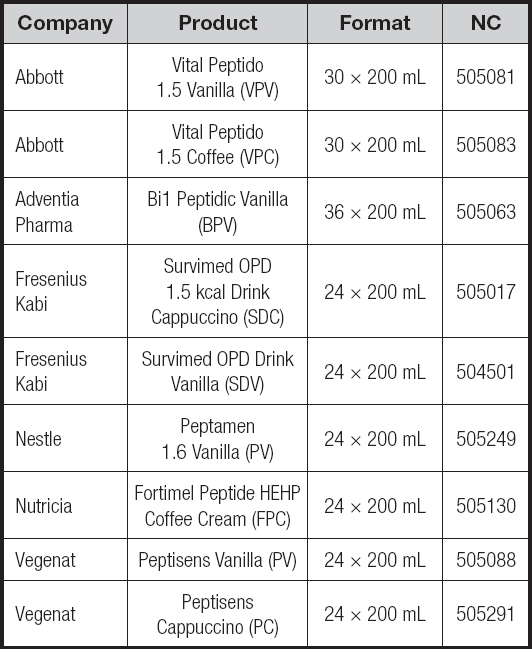
The most common commercially-available supplements in vanilla or coffee flavour and 200 ml packs were sought (the 9 products account for 93.1 % of the market for peptide-based nutritional supplements; IQVIA Sell-in sales data in 3MR January 2023). Subjects blindly tested a sample (20 cl) of each of the products at room temperature consecutively, altering the order of the products between groups to avoid scoring bias due to taste fatigue. For each product, the smell, taste, intensity of the flavour, density (consistency) of the sample and overall rating on a 7-point Likert scale (I strongly dislike to I strongly like) as well as their perception for each product were assessed using the following questions: Do you find it sweet, do you find it salty, do you find it sour, do you find it bitter, with a 7-point Likert scale ranging from “strongly disagree to strongly agree”. Finally, the respondents were asked to indicate their preference for continued consumption if this was the case and to select their 2 favourite products among the 9 tried.
The genetic basis of sweet/salty preferences and ability to perceive bitter taste (PROP) will be obtained by a approval DNA test on a saliva sample that was collected at the time (TellmeGen® [https://www.tellmegen.com/]). The test provides information on the following traits: detection of asparagus odour, perception of floral aroma, perception of bitter taste, preference for sweet, perception of salty taste, perception of sour taste, intensity of liquorice odour, intensity of cinnamon odour, perception of isobutyraldehyde odour (cereal or wet straw).
To objectively verify the degree of perception of the bitter taste by the subject, a test was carried out using a test strip containing n-propylthiouracil (n-PROPYLTHIOURACIL TEST PAPER. PROP P 125. PL Precision Laboratories). The subject placed the strip on the tongue and rated the degree of bitterness detected (none, mild, moderate or intense).
The assessments were conducted in a single room, accommodating groups of five participants each, across four days—February 13 to 16, 2023—in Granada, Spain. Each subject undertook the evaluations individually at separate tables, ensuring no direct visual contact among them. Prior to commencing the evaluations, the panelists were briefed on the various phases of the test and instructed on recognizing and rating the specific sensory attributes recorded in the organoleptic assessment of oral nutritional supplements.
A comprehensive descriptive statistical analysis was performed on all variables. Continuous variables were summarized by the count of valid cases, mean, and standard deviation (SD), whereas categorical variables were presented through the absolute and relative frequencies of each category against the total valid counts (N). The presence of missing values was documented by group. For categorical variable comparisons, methods such as ANOVA, the chi-square test, or Fisher’s exact test were applied based on suitability. Continuous variables were analyzed using the independent samples t-test or ANOVA for multi-group comparisons, and the Mann-Whitney U-test was utilized for data not meeting normal distribution criteria. Longitudinal data were examined using the paired samples t-test, considering each individual’s baseline value as their control. A significance threshold of 0.05 (two-tailed) was established for all statistical tests. This analysis adhered to the ICH E9 guidelines and good clinical practice standards, employing SAS (Statistical Analysis System) software, version 9.4 or newer, on a Windows operating system for the analyses.
RESULTS
A total of 58 subjects participated in the project, 27 IBD patients and 31 controls. Table II shows the characteristics of the study subjects.
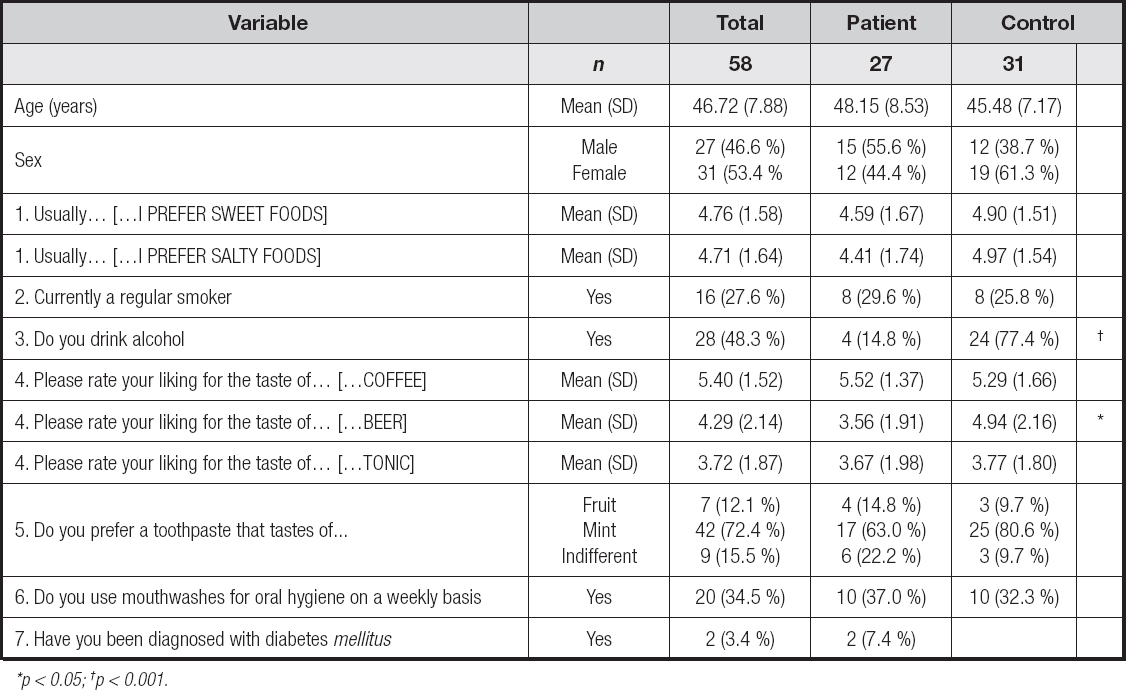
No significant differences were detected in the subjects’ sex, age or food preferences, except for alcohol consumption which was higher in the controls (14.8 % vs. 77.4 %; p < 0.0001) and liking for the taste of beer (3.56 ± 1.91 vs. 4.96 ± 2.16; p = 0.01). Since alcohol avoidance is a medical recommendation in IBD patients, it was not considered relevant to consider the sample as different. Table III shows the results of the genetic test and the presence of the different SNPs involved in the detection of bitter taste.
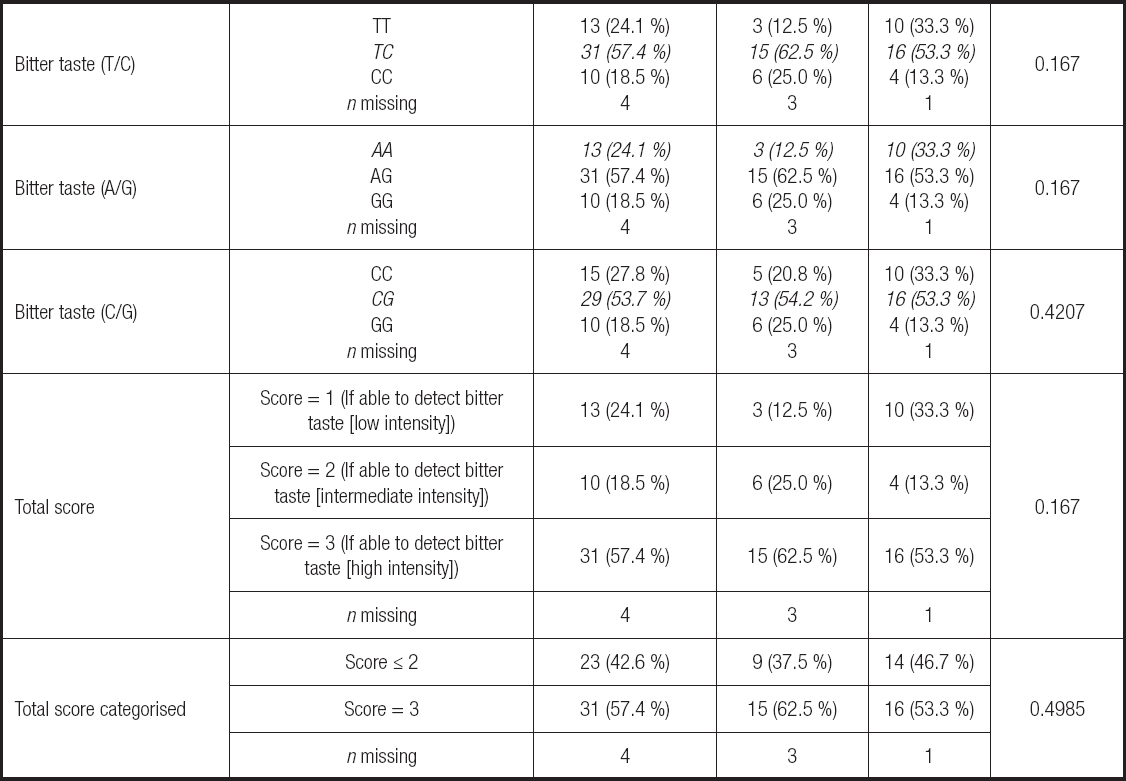
A total of 57.4 % of subjects would be able to detect the bitter taste with high intensity (score 3), with no differences between patients and controls (62.5 % and 53.3 %; p = ns). The genetic data were confirmed with those obtained from the saliva PROP strip in which 51.3 % were able to detect a moderate or intense bitter taste with no differences between patients and controls (55 % and 47.4 %; p = ns).
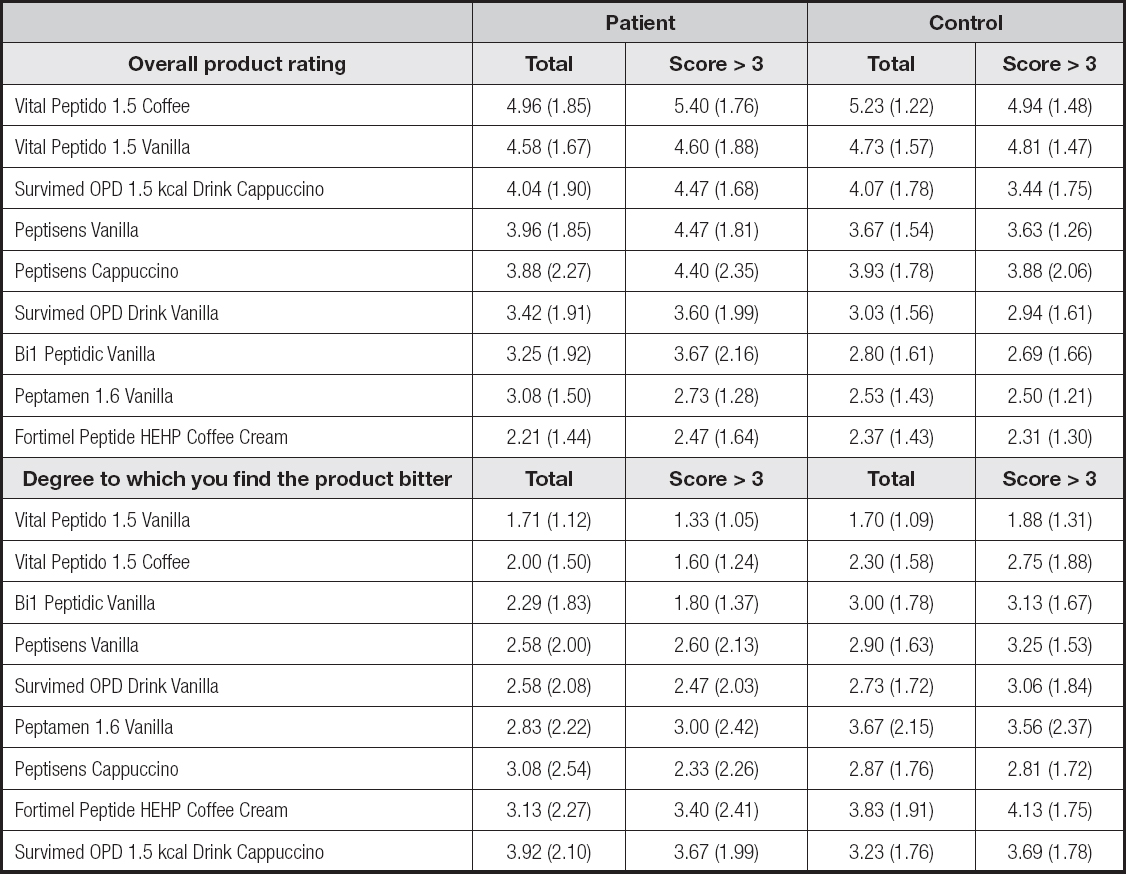
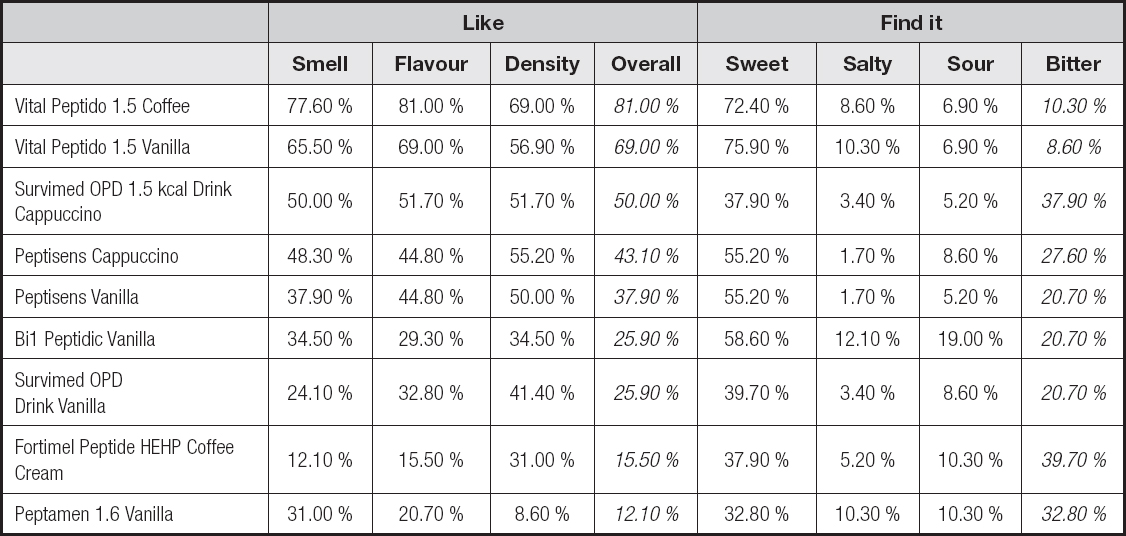
Table IV shows the scores of the products after rating by the subjects. The low overall scores recorded for the products assessed are noteworthy. Only 4 products had an average score higher than 4 ”indifferent” (Vital Peptido 1.5 Coffee, Vital Peptido 1.5 Vanilla, Survimed OPD 1.5 Kcal Drink Cappuccino and Peptisens Cappuccino). There was a good correlation between the “ smell”, “taste” and “density” scores and the “overall” rating. In the rating of the “sweet”, “salty”, “sour” and “bitter” components, it was observed that higher scores for “sweet” as well as lower scores for “bitter” contributed to a better overall rating of the products. As expected in the protein hydrolysate supplements, values for bitterness were recorded above those for saltiness or sourness, which ranged from 1.86 ± 1.25 points for Vital Peptido 1.5 Vanilla to 3.59 ± 1.91 points for Survimed OPD 1.5 kcal Drink Cappuccino. No significant differences were observed between the scores of controls and patients in any of the comparisons (Table IV). The baseline personal preferences for sweet or salty taste, tobacco or alcohol consumption, use of special mouthwashes or toothpastes and presence of diabetes did not significantly modify the product scores in any of the groups (p = ns).
Table IV Rating of product characteristics (smell, taste, density, overall) on a 7-point Likert scale (strongly dislike to strongly like) and degree to which you find it sweet, salty, sour and bitter on a 7-point Likert scale with a range from “not at all” to “extremely”
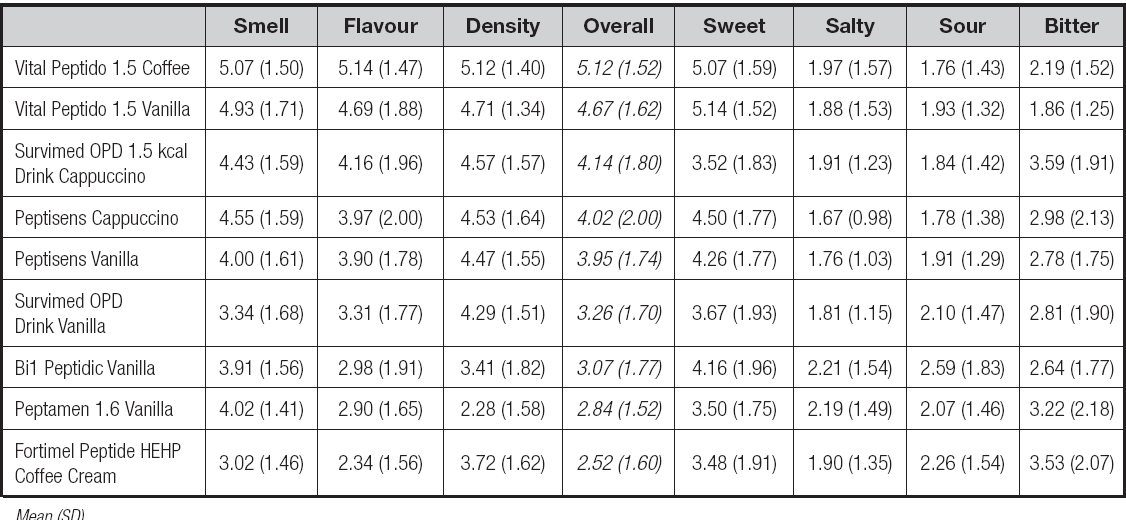
Mean (SD).
Table V jointly shows the overall scores of the products, the degree of objective perception of the bitter taste that each patient perceived in each product, together with the genetic ability to detect bitter taste separated between patients and controls. No significant differences or clear pattern were observed between the overall scores and ratings for the bitter taste and the ability to be tasters and non-tasters of bitter taste. The genetic ability to perceive the bitter taste does not appear to be sufficient to alter the overall ratings of the products.
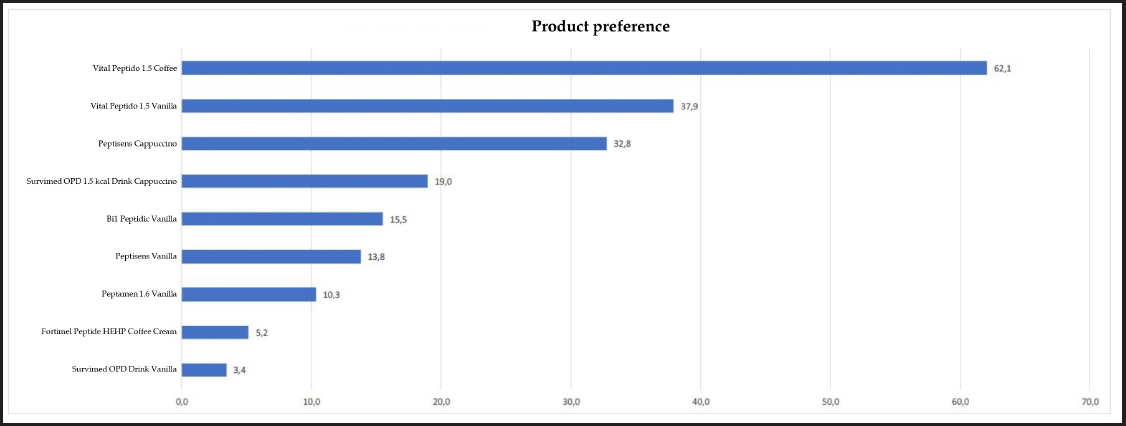
To put the above scores into context, the overall rating variable was recoded, and a product was considered to be “liked” by subjects when it scored 5-7 (slightly, moderately and strongly liked). Table VI shows the coding result. It is striking that only three products were liked by more than half of the subjects (Vital Peptido 1.5 Café by 81 %, Vital Peptido 1.5 Vanilla by 69 % and Survimed OPD 1.5 kcal Drink Cappuccino by 50 % of the subjects). There was also a strong inverse relationship between subjects who considered it “bitter” to some degree and “liking” the product. When subjects were asked to choose two of the products as preferred for continued consumption, coffee flavours were found to be preferred to vanilla flavours (Fig. 1).
Table V Overall assessment and perceived degree of bitterness of the products between patients and controls and according to the degree of sensitivity to detect bitter taste (ability to detect bitter taste with high intensity/score 3)
DISCUSSION
Dietary supplements are the result of the combination of macronutrients, vitamins, minerals, amino acids and polyunsaturated fatty acids designed to achieve a combined and synergistic effect. Oral nutritional supplements with protein hydrolysates are characterised by having concentrations of free amino acids. The d- and l-forms of many amino acids can cause a bitter taste. In particular, l-leucine, l-isoleucine, l-valine, l-arginine, l-methionine, l-phenylalanine, l-tyrosine, l-tryptophan and l-histidine possess a bitter taste (19,22).
Bitter compounds such as thiourea 6-n-propylthiouracil (PROP) and phenylthiocarbamide (PTC) including amino acids are detected in the mouth by 25 different bitter taste receptors in humans, called TAS2R (type-2 taste receptor) (19,23). The genetic predisposition to perceive the bitter taste of these compounds was considered to have the potential to influence dietary preferences and behaviours (6), and the ability of the subject to be a taster (very sensitive) or non-taster (poorly sensitive) of the bitter taste assessed by SNP rs10246939 (T/C), rs1726866 (A/G) and rs713598 (C/G) in the TAS2R38 gene could affect the way in which subjects rate this type of ONS-PBD and, ultimately, their acceptance and adherence to supplementation intake. In contrast, in this study, this ability does not seem to influence product ratings or the degree to which subjects report detecting a bitter component in the supplement. Ratings are consistent in all other aspects between controls and cases and between products, so the hypothesis that the ability to detect bitter taste might be a predictor of adherence does not seem to hold true in our case.
One of the results that emerges from the study is the absence of differences in overall SNOP scores between subjects and controls. This leads us to believe that the underlying inflammatory bowel disease in our patients does not affect their organoleptic perceptual ability. This is relevant since other diseases in which oral nutritional supplements are used, as in the case of several oncological processes, this does occur (24-26). It has been reported in patients with various types of cancer that the threshold for detecting sweet or bitter flavours is either amplified or reduced by the effect of the therapy for the cancer (radiotherapy and/or chemotherapy) or by the treatments used to alleviate the side effects it causes (24-26). Likewise, age involves changes in olfactory and gustatory capacity that are well described (27,28), although in our case the patients were the same age as the controls so this cannot influence the assessments. Since our patients were in a stable phase at the time of the study, this conclusion cannot be extrapolated to other times in the course of the disease where the symptoms associated with acute episodes of IBD or the treatments prescribed may alter the subjects’ organoleptic capacity.
The right smell, taste and density are related to the acceptance of the product as well as the degree of sweetness and bitterness present. The salty and sour component was not relevant in the ratings as it showed very low scores. There is a direct relationship between the degree of sweetness and the acceptance of the subjects (the sweeter the product, the more it is liked) and, on the contrary, an inverse relationship between the degree of bitterness of the product (if the patient detects the bitter component, the rating and acceptance decrease). These results may be of interest for future considerations in the formulation of ONS-PBDs and show the benefit of the effort to reduce the bitter component of products in industrial production without affecting their nutritional properties (19).
The biggest factor influencing the effectiveness of ONS-PBDs is whether patients actually consume them, and this intake is directly related to the organoleptic acceptability of the product. Although the baseline bitter effect of certain amino acids present in this type of supplements has been described, together with a poorer overall rating than other supplements that do not contain protein hydrolysates, the low acceptance scores obtained for these supplements in this study are striking.
The acceptance rate only exceeded 40 % in the case of four supplements (“liked” by more than 40 % of the subjects) Vital Peptido 1.5 Coffee, Vital Peptido 1.5 Vanilla, Survimed OPD and Peptisens Cappuccino, which leads us to consider how this may influence future adherence to them and, in these cases, the special attention that the clinician should devote to explaining the benefits of ONS-PBD and the need for patients to correctly adhere to the treatment. In this regard, the high acceptance rates for Vital Peptido 1.5 Coffee (81 %) and Vital Peptido 1.5 Vanilla (69 %) would be consistent with the high adherence to treatment recorded in clinical trials (29-31) and Survimed OPD (50 %), Peptisens Cappuccino (43.1 %). There are obviously many other factors that influence adherence to treatment beyond product acceptance, and further studies are needed to relate this finding to adherence and the final effectiveness of the treatment. With regard to the range of flavours tested, in general, coffee flavoured products were found to be better accepted than vanilla products, although it should be borne in mind that having the possibility of variability in the range of products contributes to better adherence in the medium and long term (5).
Therefore, it seems clear that these results contribute to the line of work to include the patient’s opinion in the management of malnutrition in IBD using ONS-PBD. A patient who is empowered and co-responsible for their treatment decisions will have better adherence, resulting in better overall health.
CONCLUSIONS
Patients who are in the stable phase of IBD do not appear to differ significantly from healthy controls in their ability to rate peptide-based oral nutritional supplements.
The ability to identify bitter taste by the subject using a PROP strip or genetic test has not been found to be a significant predictor of preference for ONS-PBDs. Direct testing of products has been shown to be effective, although it may not be feasible to implement this routinely in clinical practice. A larger sample size may be required to detect differences in this regard.
Patient preferences in the acceptance of nutritional supplements during the different stages of treatment are a factor in achieving efficient adherence to ONS-PBD. The low acceptance of most of the products assessed is a factor to be considered as this may influence adherence to treatment with these supplements. It therefore represents an opportunity for improvement and further research.
Considering the above and notwithstanding the study’s constraints related to the sample size, it seems that assessing bitter taste through a reactive strip, self-declared or genetic predisposition falls short in aiding clinicians to forecast a patient’s preference between products, which is critical for enhancing future compliance and achieving better health outcomes with Oral Nutritional Supplements (ONS). Consequently, broader studies employing alternative methodologies are required to elucidate the impact of patient taste preferences on the adherence to and efficacy of ONS.

