




 Servicios personalizados
 Inglés (pdf)
 Articulo en XML
 Referencias del artículo
 Traducción automática
 Enviar articulo por email
 Citado por SciELO
  Citado por Google
  Similares en
SciELO
Similares en
SciELO  Similares en Google
 Permalink
INTRODUCTION
Mild cognitive impairment (MCI) is a medical condition characterized by memory or cognitive difficulties in individuals compared to ones of the same age (1). The symptoms of MCI are less severe compared to those associated with Alzheimer’s disease or other forms of dementia (2). Individuals with MCI generally maintain the ability to manage their self-care and perform everyday tasks (2). Notably, MCI doesn’t cause serious problems in the cognitive performance of people to impair their daily lives (3). MCI is often seen as a critical period for the prevention of Alzheimer’s disease, providing a “window of opportunity” to potentially reverse or stabilize cognitive decline (4). During this time, some individuals may experience a return to normal cognitive functioning (4). As a transitional stage between normal aging and the onset of dementia, MCI is considered a key focus for interventions aimed at slowing the progression of dementia (5). Based on the results of a systematic review and meta-analysis performed by Bai et al., it has been found that the global prevalence of MCI in community-dwelling adults aged 50 and older was 15.56 percent (6). Further, findings from another meta-analysis revealed that about 39.2 % of those diagnosed with MCI progress to dementia over time (7). These statistics underscore the partial progression rate of the condition towards more severe neurodegenerative diseases, highlighting the importance of early detection and intervention efforts. These results indicate that despite the relative prevalence of this disease, the disease in only some cases progresses to dementia and Alzheimer’s disease. So that and that intervention measures can be helpful.
Mild Cognitive Impairment (MCI) is a reversible condition, and early detection and intervention can prevent the progression to dementia and Alzheimer’s disease. Research suggests that approximately one-third of dementia cases could potentially be avoided by managing modifiable risk factors (8). Various elements affect cognitive performance, including age, gender, obesity in mid-life, hypertension in mid-life, sleep disturbances, and insufficient physical activity (9). Dietary habits also significantly impact the likelihood of developing MCI. Healthy eating patterns are a crucial strategy for preventing or postponing MCI in older adults (10). Increasing evidence indicates that diets with plants are particularly beneficial for preventing cognitive decline. This is largely due to the protective effects of antioxidants found in vegetables and fruits, which are essential for maintaining cognitive health (11). Several preclinical research has demonstrated that the polyphenolic antioxidants of fruits and vegetables can significantly reduce or even prevent neuronal death, thereby potentially lowering the incidence of dementia, particularly in cellular and animal studies (12). Earlier research has indicated that sufficient or high consumption of fruits and/or vegetables is associated with a decreased risk of cognitive impairments (13). In a systematic review, early evidence suggests that there are correlations between food insecurity at various life stages and overall cognitive abilities, executive function, and memory (14,15). The results of another meta-analysis show that increased intake of fruits and vegetables among the elderly has a relationship with a reduced incidence of cognitive disorders in this population group (16).
As mentioned, nutritional factors play an essential role in the occurrence of cognitive impairment and some systematic review and meta-analysis studies have summarized this relationship. However, no systematic review and meta-analysis were performed on the relationship between fruit and vegetable consumption with mild cognitive impairment. Additionally, the impact of fruit intake, vegetable consumption, and the combined intake of both fruits and vegetables may be different (17,18). For these reasons, it is required that a systematic review and meta-analysis study is performed to summarize these findings. Therefore, the present study aimed to investigate the effect of fruit and vegetable consumption on the decreased risk of mild cognitive impairment in patients referring to health examination centers.
METHODS
This systematic review and meta-analysis were officially registered with PROSPERO and adhered to the guidelines outlined in the Preferred Reporting Items for Systematic Reviews and Meta-Analyses (PRISMA) (19). All methods were performed in accordance with relevant guidelines and regulations. However, this study is a systematic review and meta-analysis and does not require ethical approval by the institution.
SEARCH STRATEGY
A comprehensive search was conducted across five electronic bibliographic databases: Scopus, PubMed, Medline, Web of Science, and Embase, with the search completed by November 05, 2024. Two groups of keywords were selected for search in the databases. The keywords of the first group were “veget*” OR “fruit*” OR “juice” and the keywords in the second group were “Mild Cognitive Impairment*” OR “mild cognitive defect*” OR “mild neurocognitive disorder*” OR “mild cognitive disorder*” OR “MCI”.
ELIGIBILITY CRITERIA
A range of study types with the English language were incorporated into the systematic review. Moreover, all studies on the persons referring to health examination centers were entered into the study. However, this study excluded review and meta-analysis articles, editorial letters, case reports, and papers presented at conferences.
STUDY SELECTION
All articles retrieved from the databases were transferred into Endnote for evaluation, where any duplicates were identified and eliminated. Two independent researchers (W.H. and G.Z.) then screened the studies by examining the titles and abstracts to determine their relevance. Articles with unrelated titles and abstracts were discarded. The full texts of the remaining articles were thoroughly examined by the researchers to verify the criteria. Relevant studies were subsequently included in the review. In instances of disagreement between the two primary researchers, a third researcher (S.Y.) was consulted to resolve the issue.
QUALITY ASSESSMENT
To assess the quality of the studies, appraisal instruments from the Joanna Briggs Institute (JBI) designated for case-control, cross-sectional, and cohort research were utilized. The JBI checklist serves as an effective instrument to examine the quality across different studies (20). Upon filling out these checklists, the positive responses were summed to calculate an overall score. Subsequently, based on this score, the studies were classified into three distinct groups: low quality, moderate quality, and high quality.
DATA EXTRACTION
In this phase, two evaluators gathered essential details from the chosen studies. These details encompassed the author’s identity, publication year, design of the study, nation, sample size, gender distribution, age range, consumption type, tools, outcome, and findings.
DATA ANALYSIS
The concordance among evaluators was assessed using Cohen’s kappa coefficient (21). The resulting kappa values for the various stages were recorded at 0.91 and 0.93, respectively. Beyond the descriptive results, a meta-analysis was performed focusing on the values of odds ratio. For subgroup analyses, countries were categorized into low and middle-income (LMIC) and high-income (HIC) groups, following the World Bank’s classifications (22). In the study also. The research was grouped into four geographic areas: Europe, East/Southeast Asia, the Middle East, and the Americas. The studies were temporally divided based on whether they occurred before or after the year 2015. All data processing was carried out using STATA version 14.2.
RESULTS
SEARCH RESULTS AND STUDY SELECTION
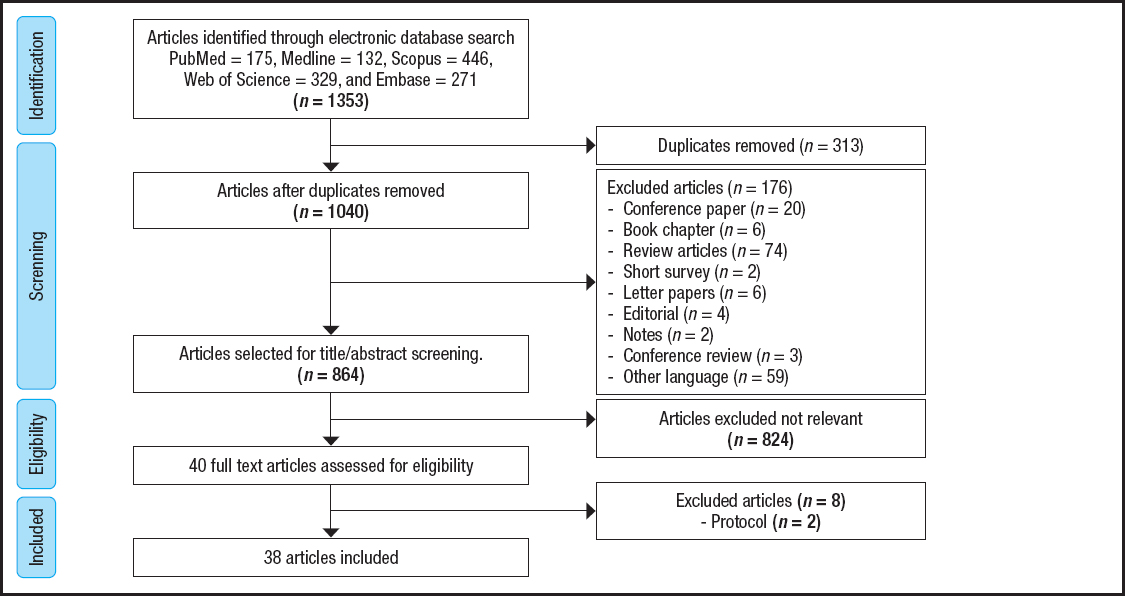
In this study, we collected 1,353 articles from multiple databases. From this source, 313 duplicated papers were removed. Following this, two researchers scrutinized the titles and abstracts of the 1040 remaining articles. After this preliminary assessment, 1,000 articles were eliminated either because they failed to meet the inclusion criteria or because they met the criteria for exclusion. Consequently, the full texts of 40 articles were thoroughly evaluated, and 38 of these were ultimately chosen to be entered into the study. The process is depicted in the PRISMA (Preferred Reporting Items for Systematic Reviews and Meta-Analyses) flow diagram (Fig. 1).
SPECIFICATION OF THE ARTICLES
Tables I and II outline the details of the articles incorporated into this systematic review. Among the 38 qualified studies, 11 studies were conducted using a cohort design, 9 studies using a cross-sectional design, and 18 studies using a case-control design. 4 studies have been carried out in Singapore, 11 studies in China, 6 studies in the United States, 2 studies in Taiwan, 4 studies in Malaysia, 4 studies in South Korea, and 1 study in each of the countries of India, France, Micronesia, Mexico, Greece, Netherland, Egypt, and the Central African Republic. Also, 1 study was conducted jointly in countries of China, Ghana, India, Mexico, Russia, and South Africa.
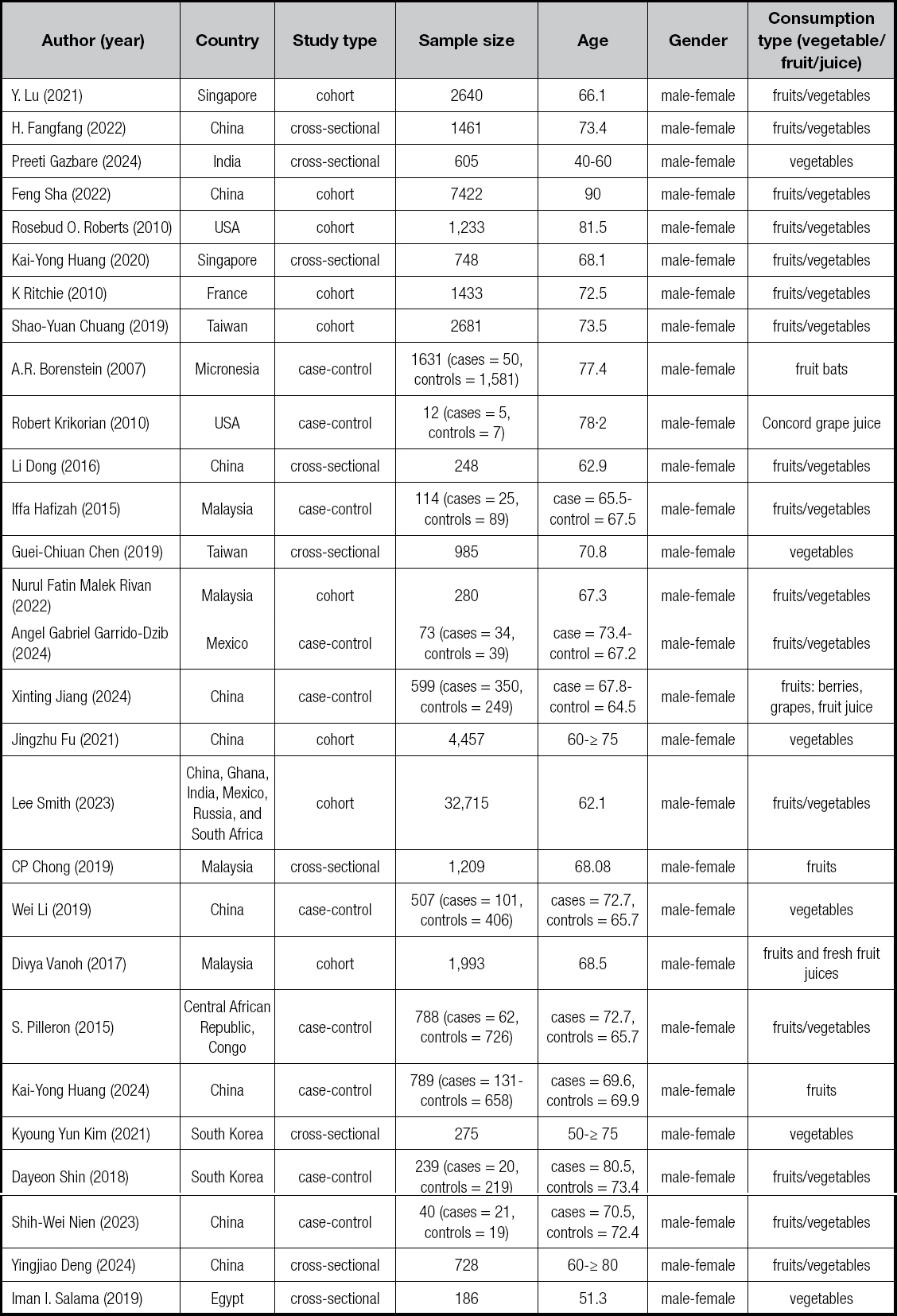

Among these studies, all 38 papers were performed on males and females. The age range of the subjects studied in the reviewed papers was between 40 and 90 years old. Also, the frequency of participants in 16 studies (42.1 percent) was lower than 500 people, in 9 studies (23.7 percent) was between 500 and 1000 persons, and in 13 studies (34.2 percent) was higher than 1,000 persons. 20 studies were simultaneously conducted on fruits and vegetables, 5 studies on fruits, 7 studies on vegetables, and 6 studies on juice.
The quality evaluation of the studies incorporated in the review was conducted using the JBI critical appraisal checklist. From the overall selection, 32 papers were identified as high quality, three as moderate quality, and three as low quality.
MAIN FINDINGS
Among the 38 studies, only 2 studies with moderate quality levels did not show a significant relationship between vegetable consumption and the change in the risk of mild cognitive impairment. 36 studies (94.7 percent) revealed that fruit and vegetable consumption can affect the occurrence of mild cognitive impairment.
The values of the odds ratio related to the effect of vegetable consumption and fruit intake on the decreased risk of mild cognitive impairment were between 0.20 to 0.82 and 0.14 to 0.92, respectively. Also, the values of the odds ratio related to insufficient fruit and vegetable consumption on the increased risk of this disease were between 1.03 to 2.52 and 1.49 to 1.82. The lowest odds ratio was observed in the relationship between the MIND diet (plant-based foods) and the decreased risk of this impairment (OR: 0.20) and the highest odds ratio was related to the association between total vegetable consumption and the increased risk of MCI (OR: 2.52). The lowest odds ratio was seen in the relationship between total fruit consumption and the decreased risk of this impairment (OR: 0.14) and the highest odds ratio was also related to the association between total fruit consumption and the increased risk of MCI (OR: 1.82). Only two studies investigated the combination effect of fruit and vegetable consumption on the risk of MCI. The results of these studies showed that a few daily consumptions of fruits/vegetables can increase the odds ratio related to the risk of MCI by 1.77 and the hazard ratio of this risk by 1.38.
RESULTS OF THE META-ANALYSIS
Regarding the high heterogeneity of the results, the meta-analysis of the odds ratio values was performed using a random effect model. Figure 2 shows the meta-analysis results related to the odds ratio of the relationship between vegetable and fruit consumption and decreased risk of mild cognitive impairment, respectively. The results showed that vegetable consumption [odds ratio: 0.60 (95 % CI: 0.40 to 0.79)] and fruit intake [odds ratio: (95 % CI: 0.46 to 0.86)] can decrease the risk of MCI.
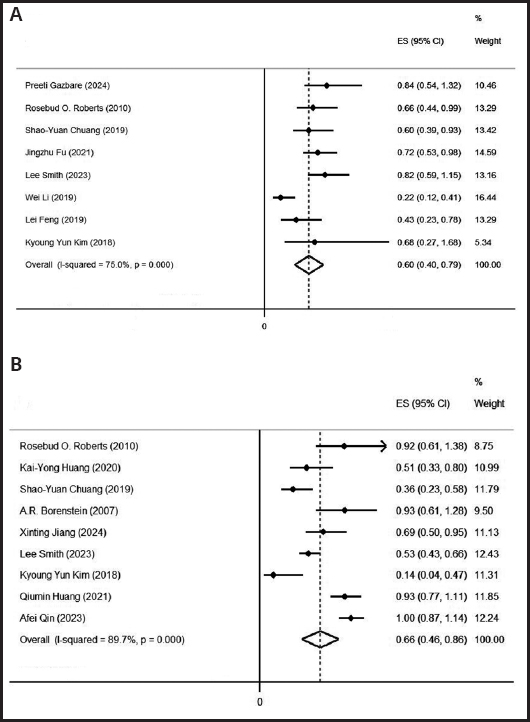
Figure 2 The results of the meta-analysis related to the odds ratio values of the relationship between vegetable intake (A) and fruit consumption (B), and the decreased mild cognitive impairment.
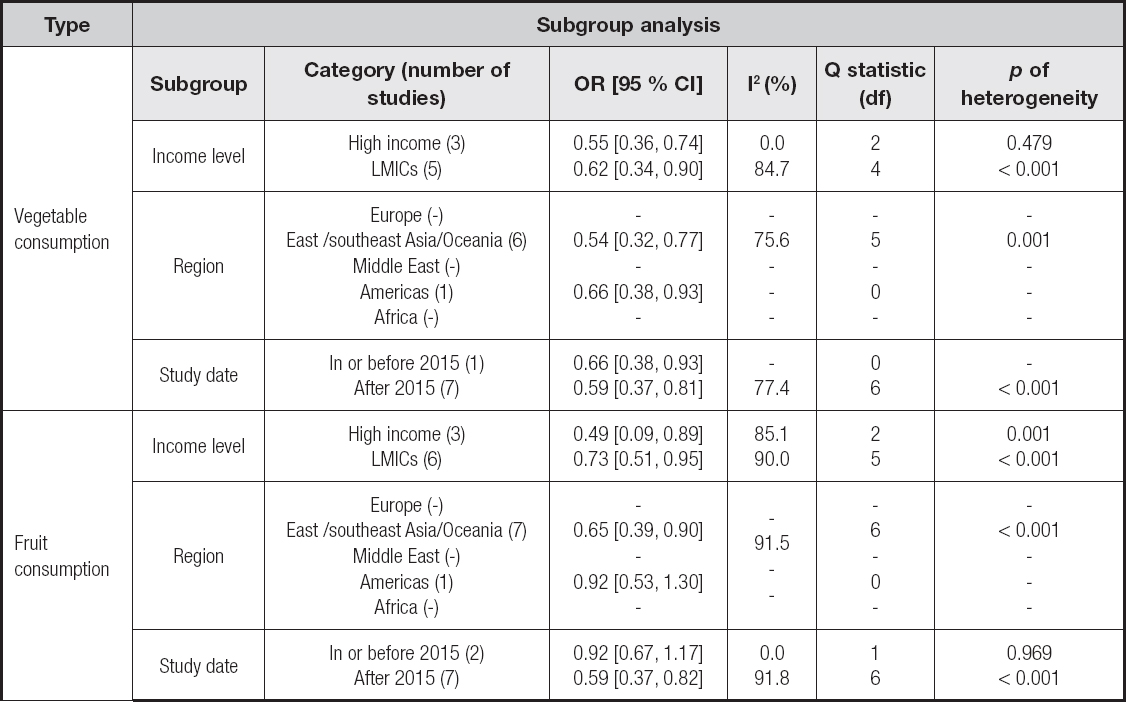
Table III describes the findings of subgroup analysis for the odds ratio values of these relationships. On consumption of vegetables and fruits, the results showed that the decrease in risk of MCI was higher in high-income countries, east/southwest Asia/Oceania, and after 2015.
DISCUSSION
Given the prevalence of cognitive impairment in different countries, it is very important to identify factors affecting the incidence of these impairments. One of these factors is the consumption of fruits and vegetables. Mild cognitive impairments are a warning stage that can be controlled to prevent more serious consequences. However, the results of studies on fruit and vegetable consumption and the occurrence of this disorder have not been summarized in previous studies. Therefore, the present study aimed to investigate the effect of fruit and vegetable consumption on the decreased risk of mild cognitive impairment in patients referring to health examination centers.
Thirty-six studies (94.7 percent) revealed that fruit and vegetable consumption can affect the occurrence of mild cognitive impairment. Therefore, it can be concluded that fruit and vegetable consumption has a significant effect on the increased risk of MCI. However, it should be noted that to increase the effectiveness of fruit and vegetable consumption on MCI, the consumption of other foods should be controlled (23). The consumption of some unhealthy foods, such as fast foods, can reduce the effect of fruits and vegetables (24,25), and the consumption of healthy foods, such as dairy products and fish, can increase the effect of these foods on mild cognitive impairment (26,27). Nicklaus and Remy also concluded that practices related to complementary feeding, such as timing and food diversity, are likely linked to the development of healthy dietary patterns, including the consumption of fruits and vegetables (28).
Research has also indicated a relationship where increased consumption of plants is associated with better cognitive preservation, particularly when fruits and vegetables are consumed together (29-31). Recent research emphasizes the necessity of both fruit and vegetable intake to support cognitive health in the elderly. It can be because of several mechanisms, which will be explained below.
Fruits and vegetable consumption may lower the risk of mild cognitive impairment (MCI) due to their numerous health advantages, including their roles in reducing inflammation and oxidative stress, boosting metabolic processes, improving vascular health, and enhancing the conduction of nerve signals (32). The benefits of fruits and vegetables are due to the contribution of nutrients and phytochemicals such as antioxidants, flavonoids, folate, vitamin C, and vitamin D. Firstly, fruits and vegetables are rich sources of dietary antioxidants such as those found in berries, which may influence the onset of MCI. The brain is particularly vulnerable to oxidative harm, and either oxidative stress or insufficient antioxidant defenses are likely contributors to the development and progression of both dementia and possibly MCI (33). Secondly, these foods are also rich in flavonoids, which are believed to support cognitive function through their neuroprotective effects, improving neuronal activity and promoting the growth of new neurons (34). Thirdly, a significant amount of folate found in fruits and vegetables plays a role in DNA methylation, a process critical for aging and the development of dementia, by acting as a methyl donor (35). Additionally, folate influences the expression of both β-secretase and γ-secretase, enzymes involved in the production of Aβ and the formation of amyloid plaques (35). Folate also plays a role in reducing tau protein phosphorylation and the subsequent development of neurofibrillary tangles by indirectly modulating the activity of protein phosphatase cyclin-dependent kinase and glycogen synthase kinase (35). Furthermore, a deficiency in vitamin B within the diet can lead to elevated levels of homocysteine, which is directly neurotoxic and can impair neurotransmitter synthesis through the 1-carbon pathway (36). Several randomized controlled trials have indicated that high-dose vitamin B supplementation may decelerate brain shrinkage in individuals with mild cognitive impairment (37,38). Additionally, research has suggested a relationship between plasma vitamin C levels and cognitive function (39,40). It has been observed that individuals with mild cognitive impairment have lower plasma vitamin C levels compared to healthy individuals, and a vitamin C-rich diet could lower the risk of cognitive decline (41). The protective effects on cognitive health may particularly be attributed to high fruit consumption, which is a major source of vitamin C (33). Ultimately, the cognitive advantages derived from fruit and vegetable intake are likely due to the presence of various bioactive compounds rather than any single nutrient. Indeed, dietary supplements have not consistently shown effectiveness in preventing dementia among older adults (42-44).
However, there are probable differences between the effect of fruit and vegetable consumption on the risk of mild cognitive impairments, which can be because of different compounds in these products. In addition to the direct effect, vegetables, and fruits can indirectly affect the risk of MCI through different ways. Sufficient fruit consumption, particularly the fiber found in fruits, could support cognitive health by aiding in long-term weight control and decreasing the likelihood of developing type 2 diabetes and metabolic syndrome (45), while the inorganic nitrates present in green leafy vegetables are believed to enhance cognitive functions by safeguarding cardiovascular health (46,47). The results of the meta-analysis in the present study showed that vegetable consumption [0.60 (95 % CI: 0.40 to 0.79)] and fruit intake [0.66 (95 % CI: 0.46 to 0.86)] can decrease the risk of MCI. Which group of vegetables or fruits is more beneficial depends on the type of fruit or vegetable and their consumption pattern. Moreover, this may be the reason for the differences between the results of different studies. So the range of odds ratio values related to the effect of fruit and vegetable consumption on the decreased risk of MCI in the present study was between 0.20 and 0.92.
The observed potential U-shaped correlation between the intake of vegetables and mild cognitive impairment (MCI) is intriguing. This may be attributed to the specific types of vegetables consumed by individuals who eat large quantities of them. For instance, certain vegetables such as leafy greens with high amounts of vitamin K and folate might show greater protective benefits against cognitive decline compared to other types (44). Additionally, it is important to consider that increased fruit consumption might lead to hyperglycemia in older adults with diabetes mellitus. Based on the Clinical Practice Guideline, it is advised that diabetic patients consume two servings of fruits daily that are rich in dietary fiber and have a low glycemic index to maintain effective glycemic control (48). To supply the required nutrients, Lalji et al. state that daily consumption of four to five portions of fruits and vegetables is generally recommended (49). However, fruit and vegetable consumption must be balanced. Jung et al. found that the excessive intake of these foods can be associated with adverse effects particularly for people with diabetes and hypertension because fruits have a high level of natural sugars and canned vegetables have a high sodium level (50).
In terms of vegetable type, tomatoes, and onions were identified as the most consumed vegetables. Tomatoes are rich in lycopene, a significant bioactive compound (51). Lycopene acts as a natural neuroprotective agent and is thought to support cognitive health and address various neurological conditions such as cerebral ischemia, Parkinson’s disease (PD), Alzheimer’s disease (AD), and depression (52). Onions contain quercetin, another potent flavonoid (53). The study also highlighted that tropical fruits are abundant in natural antioxidants like phenolic and polyphenolic compounds, flavonoids, and ascorbic acid, more so than fruits from temperate climates (54). Tropical fruits including bananas, guavas, jackfruits, papayas, dragon fruits, and mangoes are noted because of their high dietary fiber content and generally low to moderate glycaemic indices. These properties may enhance glycemic management in older adults with diabetes (55). Therefore, the intake of tropical fruits can protect diabetic older adults from cognitive decline (48).
Among various products, the results showed that the lowest odds ratio was observed in the relationship between the MIND diet (plant-based foods) and the decreased risk of this impairment (OR: 0.20). Therefore, it seems that fruits and vegetable intake associations with consumption of other useful product can make highest effect on the decreased risk of MCI. The observed decrease in risk may be linked to various neuroprotective components found in the MIND diet. For example, fish rich in omega-3 fatty acids possess antioxidant and anti-inflammatory properties (56), while mushrooms play a role in preventing the formation of beta-amyloid (57). Algae are known for their neuroprotective attributes (58), and soy enhances cognitive abilities through its antioxidant content (59). The compound allicin in garlic helps in slowing the breakdown of acetylcholine (60). Similarly, epigallocatechin gallate in tea decreases oxidative stress (61). Corn is another source of antioxidants that contribute to neuroprotection (62). Edible plant oils, which are high in essential fatty acids, have neuroprotective benefits and have a higher unsaturated fatty acid content than animal oils (63). Additionally, the abundant vitamins in fruits and vegetables slow cognitive deterioration (64), and nutrients like polyunsaturated fatty acids and polyphenols are known to improve cognitive performance (65).
On consumption of vegetables and fruits, the results subgroup analysis showed that the decrease in risk of MCI was higher in high-income countries, east/ southwest Asia/ Oceania, and after 2015. It may be because of differences in the nutritional habits between Asian people, particularly the population of East Asia and European and American people. For example, staples in Asian diets often include rice, noodles, and cereals, while Western diets prefer wheat-based products such as bread and pasta. Additionally, East Asians commonly consume fish, beans, and soy products for protein, while the Western population favors meat-based proteins. Differences in food preparation methods also contribute to the distinctiveness between these dietary cultures (66). Also, the results show that high-income countries compared to low- and medium-income countries may place greater emphasis on healthy diets and include preventive measures to reduce cognitive impairment in their intervention plans. Also, access to healthy foods can be associated with higher costs, which limits their use in low- and middle-income countries (67).
As a limitation, the studies didn’t consider the difference between people with different demographic characteristics in the relationship between fruit and vegetable consumption and the decreased risk of MCI. Moreover, in the reviewed studies, the effects of fruit and vegetable consumption were reported separately but not together. Therefore, it is suggested that the combined impacts of their consumption on mild cognitive impairment be examined in the next studies. Furthermore, it is required that the effect of fruit and vegetable intake along with the consumption of other foods in different cultures is investigated to eliminate the role of confounders.
CONCLUSIONS
In total, the results showed that fruit and vegetable consumption can significantly decrease the risk of mild cognitive impairment. So, the range of odds ratio values related to this relationship was between 0.20 and 0.92. The results also indicated that the decrease in risk of MCI was higher in high-income countries and east/southwest Asia/Oceania. Therefore, it is suggested that preventive plans for fruit and vegetable consumption should be implemented, especially in low- and middle-income countries. Also, it is recommended that the effectiveness of these interventional plans is investigated in the next cohort studies.
FUNDING
This study was supported by the Shandong Provincial Natural Science Foundation (ZR2023QG014).

