




 Servicios personalizados
 Inglés (pdf)
 Articulo en XML
 Referencias del artículo
 Traducción automática
 Enviar articulo por email
 Citado por SciELO
  Citado por Google
  Similares en
SciELO
Similares en
SciELO  Similares en Google
 Permalink
Persuasion treatments can change attitudes that are not directly related to the specific persuasive proposal advocated. This phenomenon has been called indirect change (Alvaro & Crano, 1997), lateral change (Brannon et al., 2019; Linne et al., 2024), attitude generalization (Shook et al., 2007), spillover (Paredes et al., 2019), attitude displacement (Linne et al., 2020) and a secondary transfer effect (Pettigrew, 2009; Vezzali et al., 2023). Although there are important differences between these paradigms (see Bergh & Brandt, 2023; Glaser et al., 2015; Linne et al., 2024; Vezzali et al., 2021, for reviews), we conceptualize indirect attitude change as instances in which a persuasive treatment produces the intended change in an attitude targeted by the persuasive appeal (i.e., the focal attitude), but also leads to change in some other distal attitudes. Therefore, the indirect change approach of the present manuscript implies changes in both focal and distal attitudes as a result of a persuasive treatment.
Indirect change effect has been explored in a number of important research domains. As an illustrative example, Wolstenholme et al. (2020) examined the extent to which a treatment impacting consumption of red and processed meat also affected the willingness to eat any other type of meat and dairy. In this research, participants read an article about the environmental and/or health impacts of eating red and processed meat. Results indicated that the message reduced their red and processed meat consumptions (focal event). This behavior predicted then a reduced willingness to eat meat and dairy (distal event).
Indirect change effects have also been studied as a relatively subtle approach for reducing prejudiced attitudes (Pettigrew, 1997; Ratliff & Nosek, 2011; Schmid et al., 2012), for consumer attitudes (Ahluwalia et al., 2001; Kirchoff et al., 2018) and for environmentally relevant attitudes (Brügger & Höchli, 2019; Cruz, 2019; Evans et al., 2012). The present work contributes to this literature by examining indirect change effects in the context of previously unexplored, health-related attitudes, with important social consequences. Of greater conceptual relevance, the current research examines for the first time the amount of thinking about the persuasive message (elaboration) as a new potential moderator of indirect change effects.
Elaboration refers to the amount of thinking a person engages in when processing information. Beyond processing, elaboration involves adding something of their own to the information externally provided (Petty & Cacioppo, 1986). Elaboration is a key element of dual-process models like The Elaboration Likelihood Model (ELM; Petty & Cacioppo, 1986; Petty & Briñol, 2012). According to the ELM, the more an attitude is based on elaboration, the more it tends to persist over time, resist attempts at change, and perhaps most importantly, have consequences for other judgments and behavior (Petty et al., 1995; Krosnick & Petty, 1995). Put simply, the more an attitude change is based on extensive thought, the stronger that attitude is. Thus, even if high and low thinking processes resulted in the same degree of attitude change, the consequences of this influence in terms of stability and further impact on behavior can differ (e.g., Haugtvedt & Petty, 1992). Just as attitude changes induced through high elaboration are more persistent, resistant to change, and predictive of behavior than those induced through low elaboration, we propose in the present research that attitude changes of focal attitudes based on high elaboration are more likely to indirect change distal attitudes.
We propose that attitude change processes that require elaboration about the attitude object are likely to result in attitude representations that are well integrated and connected with other material in memory (McGuire, 1981; Tesser, 1978). Because of the strong linkage among constructs associated with elaboration, activating one mental representation should activate related ones relatively easily (Horcajo et al., 2010; Petty et al., 2008).
In sum, given that elaboration strengthens associations among mental constructs, and increases the accessibility and relevance of those associations, we propose that it would be likely to lead to change on distal attitudes as well as focal ones. This hypothesis is consistent with other research on indirect change effects, suggesting that stronger associations between mental representations and greater accessibility of a construct increase the likelihood of indirect change (Blankenship et al., 2012; Evans et al., 2013; Fazio et al., 2015). In the current research, we propose that the extent of elaboration is important not only because it leads to stronger attitudes (as shown in previous research) but also because it might be more consequential for indirect change from focal to distal attitudes. Thus, the current research has the potential to reconcile apparently contradictory results of prior research showing that sometimes attitudes toward an object indirectly change other attitudes toward distal objects whereas other times they do not (e.g., Spaccatini et al., 2023; Sütterlin & Siegrist, 2014).
In Study 1, participants were asked to generate positive or negative thoughts about a healthy diet. In this first study, the extent of elaboration was assessed objectively by counting the number of thoughts toward the diet listed by each participant. After assessing focal attitudes toward that diet (focal attitudes), participants were also asked to rate the social group of overweight people as part of an unrelated study (distal attitudes). In this initial study, we examined the extent to which focal attitudes about diets would be more predictive of distal attitudes regarding overweight people as a function of measured elaboration.
After testing the moderating role of elaboration by measuring it in Study 1, Study 2 enhanced internal and construct validity by manipulating participants’ elaboration using an ability induction based on cognitive load. This study used novel materials for the attitude objects. Both the focal (i.e., coffee) and the distal (i.e., chocolate) attitudes were new to increase generalization across topics, materials, inductions, and measures. Thus, Study 2 sought to replicate and extend the effect found in Study 1 using different materials and inductions. In sum, the general prediction across studies is that elaboration will moderate indirect change from focal to distal attitudes.
Study 1
The goal of this study was to provide a first examination of the effect of elaboration on indirect attitude change from a focal to a distal attitude object. We began this study by randomly assigning participants to generate either positive or negative thoughts about the Mediterranean diet. This diet has been associated to healthier life, longer life expectancy, lower rates of obesity and a number of positive outcomes (Guasch‐Ferré & Willett, 2021). Next, attitudes toward the diet were measured and served as focal attitudes. Elaboration was assessed by counting the number of thoughts listed by each participant. Finally, participants were also asked to rate the social group of overweight people as part of an ostensibly unrelated study. Attitudes toward overweight people served as the distal attitudes.
We expected attitudes toward the diet (focal attitudes) to be more favorable in the positive (vs. negative) thoughts condition. Because of the association between healthy diets and weight (e.g., Mohammadbeigi et al., 2018; Puhl et al., 2012; Puhl et al., 2013; Tognon et al., 2014), we expected to find a link between focal attitudes toward the Mediterranean diet and distal attitudes toward overweight people. Most importantly, we expected this link to be stronger as the number of thoughts listed increased. In other words, we expected focal attitudes to predict distal attitudes to a greater extent for participants whose elaboration was relatively higher than lower.
Method
Participants
Two hundred and thirteen undergraduate students (184 women, 28 men, and 1 unidentified; M age = 19.89; SD = 3.28) participated in this study in exchange for course credit. Participants were randomly assigned to conditions in a 2 Thought Valence (Negative vs. Positive thoughts) × Extent of Elaboration (continuous variable) design. Focal attitudes toward the diet and distal attitudes toward overweight individuals (continuous variables) served as the dependent measures. A sensitivity power analysis was conducted using G*Power (Faul et al., 2007). Results indicated that our final sample size for a two-tailed test (α = .05) had .80 power to detect an effect size of Cohen’s f 2 = .037 for the predicted two-way interaction between focal attitudes and elaboration on distal attitudes. Our final sample size was determined by the number of participants that we were able to collect during the two weeks in which the study was posted.
Procedure
Participants were told that they would be taking part in two studies designed to test different materials for future studies. First, as part of a study on life habits, participants were asked to generate either negative or positive thoughts concerning a healthy diet (Mediterranean diet). To assess the extent of elaboration, the number of thoughts listed by each participant during this initial task was registered. After listing their thoughts, participants reported their attitudes toward the diet (focal attitude measure). Finally, participants were also asked to rate the social group of overweight people as part of the control measures of an ostensibly unrelated study. Thus, attitudes toward overweight people were the distal attitudes in this study. After participants completed the dependent measures, they were debriefed, thanked and dismissed. Participants’ debriefing followed standard ethical guidelines for research, adhering to the American Psychological Association [APA] (2017) ethical standards for research with human participants. This study was approved by the Institutional Ethics Committee of Universidad Autónoma de Madrid (Approval Code: UAM-CEI-120- 2426).
Instruments
Predictor Variables
Thought Valence. Participants were randomly assigned to list either positive or negative thoughts concerning a healthy diet (Mediterranean diet). In the positive (negative) thoughts condition, participants were told to list as many positive (negative) aspects about the diet as they could. Participants could take as long as they needed and stop whenever they wanted. This manipulation of thought direction has been successfully used in previous research to influence attitudes toward diets (e.g., Briñol et al., 2013; Gascó et al., 2018; see Requero et al., 2021, for a review on persuasion and healthy eating).
Extent of Elaboration. Elaboration was assessed by counting the number of thoughts listed by each participant. Specifically, after reading about the diet, participants were given several boxes in which they could write down their thoughts. Participants could list up to 7 thoughts, with a higher number of thoughts indicating more elaboration. Previous research has shown that this measure can be used to classify participants according to their extent of thoughtful processing of a persuasive message (Barden & Petty, 2008; Burnkrant & Howard, 1984; Petty & Wegener, 1998).
Dependent Variables
Focal Attitudes. Attitudes toward the diet were assessed using four semantic differential scales. Specifically, participants indicated to what extent the Mediterranean diet seemed: bad vs.good, negative vs. positive, unfavorable vs. favorable, and harmful vs. beneficial, on scales from 1 (e.g., extremely bad) to 9 (e.g., extremely good). Prior research has used similar items to assess attitudes (Gandarillas et al., 2018; Moreno et al., 2021). Item-ratings were highly correlated (α = .82), thus averaged to create a merged attitude index. Responses to this attitude scale were scored so that higher values represented more favorable attitudes toward the assigned diet. Focal attitudes were reverse-coded for the distal attitudes’ analysis because both attitudes were negatively correlated.
Distal Attitudes. Participants were indicated to what extent they had a positive opinion about overweight people, anchored by (1) Not at all and (9) Totally. Responses to this question were scored so that higher values represented more favorable attitudes toward overweight people. As noted, the object of distal attitudes (overweight people) was selected because of its conceptual relation to diet, as well as for its importance for reducing prejudiced attitudes as it has been used in prior research (Vezzali et al., 2023). Indeed, diet and body image are regularly considered together when making health-related choices (e.g., Breines et al., 2014; Cazzato et al., 2016; Requero et al., 2020).
Data Analysis
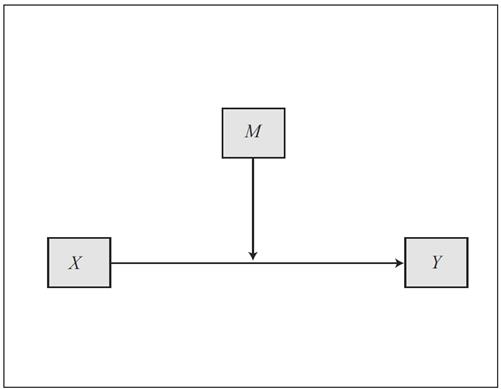
Pearson correlations and multiple linear regressions were run for this research. Focal attitudes were submitted to a multiple lineal regression analysis tested by using the PROCESS add-on for SPSS (Model 1; Hayes, 2013; see Figure 1). Thought valence (-1 = negative; 1 = positive), extent of elaboration (centered), and their interactions were entered as predictor variables. Distal attitudes were also submitted to a multiple lineal regression analysis with extent of elaboration (centered), focal attitudes (centered), and their interactions entered as predictor variables.
Results
A non-significant negative correlation was observed between focal and distal attitudes r(211) = -.073, p = .291.
Focal Attitudes. This measure was submitted to a multiple lineal regression analysis tested by using the PROCESS add-on for SPSS (Model 1; Hayes, 2013). Thought valence (manipulated), extent of elaboration (centered), and their interaction were entered as predictor variables. As expected, results revealed a significant main effect of thought valence on focal attitudes such that those who listed positive thoughts reported significantly more favorable attitudes toward the diet, B = 0.685, t(209) = 4.218, p < .001, 95% CI: [0.365, 1.006]. Results also revealed a marginal main effect of elaboration, B = -0.170, t(209) = -1.404, p = .162, 95% CI: [-0.409, 0.069], such that those who engaged in low elaboration (-1 SD) reported more favorable attitudes toward the diet than those who engaged in high elaboration (+1 SD). The interaction did not reach statistical significance (p = .533).
Distal Attitudes. The measure of distal attitudes was also submitted to a multiple lineal regression analysis. Extent of elaboration (centered), focal attitudes (centered), and their interactions were entered as our predictor variables. Results revealed a non-significant main effect of focal attitudes B = 0.093, t(209) = 1.351, p = .178, 95% CI: [-0.043, 0.227]. As predicted, results also revealed a significant two-way interaction between focal attitudes and elaboration, B = 0.170, t(209) = 2.359, p = .019, f 2 = .026 (small effect; Cohen, 1988), 95% CI: [0.028, 0.312] (see Figure 2). Specifically, focal attitudes were positively associated with distal attitudes for those participants who engaged in high elaboration (+1 SD), B = 0.262, t(209) = 2.508, p = .013, 95% CI: [0.056, 0.469]. However, for those participants whose extent of elaboration was relatively low the effect of focal attitudes on distal attitudes did not reach significance (-1 SD), B = -0.078, t(209) = -0.826, p = .410, 95% CI: [-0.262, 0.107]. No other effects reached significance (ps. > .325).
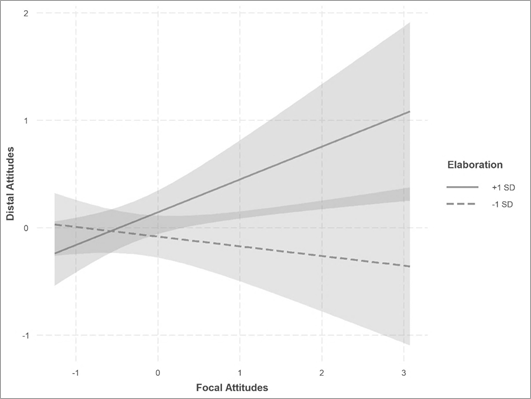
Figure 2 Standardized Distal Attitudes Toward Overweight People as a Function of the Extent of Elaboration and Focal Attitudes in Study 1
Other research on attitudes indirect change has used message direction as a predictor for both focal and distal attitudes (Brannon et al., 2019; Linne et al., 2020). Conducting this analysis including thought valence (manipulated), extent of elaboration (centered), and their interactions as predictors of distal attitudes, results showed a marginal main effect of though direction, B = 0.242, t(209) = 1.574, p = .117, 95% CI: [-0.061, 0.546]. No other effects reached significance (ps. > .377), meaning that the impact of the thought valence on distal attitudes did not vary as a function of elaboration.
The first study revealed that generating positive (vs. negative) thoughts about a diet resulted in more favorable (vs. unfavorable) attitudes toward that diet. More relevant to the present concerns, this study also revealed that elaboration moderated the subsequent link between focal and distal attitudes. That is, attitudes toward a healthy diet were associated with distal attitudes toward overweight people to a greater extent for those participants generating many (vs. few) thoughts about the diet.
Given that elaboration in the first study was measured rather than manipulated, there may be potential alternative interpretations, as confounding variables might have co-varied with elaboration (e.g., knowledge, experience, need for consistency, etc.). To address this potential issue and in order to establish a causal role in the effect of elaboration on indirect attitude change, study 2 employed an experimental approach by manipulating participants’ elaboration. This manipulation also serves to prevent potential differences in thought content across conditions. In the next study we also varied the focal and distal attitude objects to generalize across domains. Lastly, given that focal attitudes were just as affected by the thought valence induction regardless of their higher (vs. lower) elaboration conditions, it stands to reason that the indirect change effect found in Study 1 is due to focal attitudes being stronger under higher elaboration, and not due to focal attitudes being more extreme under higher elaboration. Therefore, the next study aims at replicating this effect by generating similar attitude change for high and low elaboration, via assigning participants to different directions of a message that uses both strong arguments and heuristic cues (thus keeping focal attitude extremity constant for both high and low elaboration conditions; see Haugtvedt & Petty, 1992). And then have that change affect distal attitudes more under high (vs. low) elaboration conditions.
Study 2
Study 1 revealed that measured elaboration moderates the subsequent link between focal and distal attitudes. Study 2 was designed to replicate and generalize to other attitude objects the findings of the prior study and gain greater internal and construct validity using a fully experimental design in which both predictors of the elaboration-indirect change effect (focal attitudes, and elaboration) were manipulated rather than measured.
Participants were first assigned to a high vs. low elaboration condition. Elaboration was manipulated through cognitive load, specifically, participants were asked to memorize a short vs. long number (Block et al., 2010). Next, participants were randomly assigned to read a message either in favor or against coffee. Both conditions of the message contained strong arguments that participants in the high elaboration condition were more likely to process, as well as heuristic cues (e.g., titles with large, bolded fonts) that participants in the low elaboration condition could rely on. The technique of using both strong arguments with positive cues to produce similar degrees of attitude change in both high and low elaboration groups has proven successful in prior research (e.g., Haugtvedt & Petty, 1992). Participants were then asked to report their attitudes toward coffee (i.e., focal attitude) as well as their attitudes toward chocolate (i.e., distal attitude). These objects were selected because there is room for people to link them, considering that both have caffeine, both have a dark color, both are associated with pleasure and common ingredients in some famous recipes, such as tiramisu, and both share connotations of pleasure, comfort, and sometimes health concerns. Although they can be related when thinking about their potential similarities, the association can be remote enough for some people not to make that link if they do not think about it.
We predicted that the message direction would impact focal attitudes both for high and for low elaboration conditions. We also expected a similar effect of message direction regardless of elaboration on distal attitudes. However, we expected such focal attitudes to predict distal attitudes significantly more for those who were assigned to the high elaboration conditions relative to those who were assigned to the low elaboration conditions.
Method
Participants
One hundred and fifty-seven people (76 women and 81 men; M age = 42.40; SD = 12.87) participated in this study online via CloudResearch. All participants were randomly assigned to conditions in a 2 Elaboration (Low vs. High) × 2 Message Direction (in favor vs. against coffee) design. Due to having a higher level of experimental control, we expected the effects to be potentially larger than those obtained in the previous study. A sensitivity power analysis was conducted using G*Power (Faul et al., 2007). Results indicated that our final sample size for a two-tailed test (α = .05) had .80 power to detect an effect size of Cohen’s f 2 = .051 for the predicted interaction between focal attitudes and elaboration on distal attitudes. Our final sample size was determined by the number of participants that we were able to collect during the two weeks in which the study was posted.
Procedure
First, participants were told that they were taking part in a study to know their opinion toward coffee. Then, as part of an ostensibly different study, they were asked to memorize a number. Half of them were asked to memorize a three digit one (low mental load), and the other half an eleven-digit number (high mental load). Next, participants were randomly assigned to read a message in favor or a message against coffee, with three arguments supporting or opposing coffee intake. The messages were created based on previously used messages about coffee consumption (e.g., Block & Williams, 2002; Petty et al., 1993; Philipp-Muller et al., 2022). Then, participants reported their attitudes toward coffee, and after doing so, they were asked to provide their opinion toward chocolate as part of a separate study. Finally, after participants completed the dependent measures, they were debriefed, thanked, and dismissed, as in Study 1.
Instruments
Predictor variables
Elaboration. Participants were told that as a part of the study they needed to memorize a short list of numbers. Half of them were told to remember a three-digit number (low cognitive load), and the other half were told to remember an eleven-digit number (high cognitive load). The longer number was expected to distract and increase mental load, thus impairing participants’ mental capacity. Previous research has revealed that this procedure is useful to vary ability to elaborate, as people have fewer cognitive resources available under high-load conditions and therefore they have less capacity to think extensively (Block et al., 2010; Cacioppo & Petty, 1989; Moreno et al., 2024).
Message Direction. Participants were presented with a persuasive message which contained either arguments in favor or against coffee. The manipulation was designed to influence the opinions of participants toward coffee, such as that those in the first condition would hold more favorable attitudes toward coffee than those on the second condition. The gist of some strong arguments in favor of coffee were that coffee drinkers are more likely to resist development of dementia and Alzheimer’s later in life and caffeine in coffee is a well-known stimulant, coffee promotes alertness, attention and wakefulness. The gist of some strong arguments against coffee were that coffee can induce stomach ulcers and impair digestion by raising stomach acidity levels and caffeine is a drug, a mild central nervous system stimulant, and it produces dependence.
Dependent variables
Elaboration Check. Participants reported to what extent they were very distracted vs. not distracted at all regarding the task of remembering the numbers using a 9-point scale ranging from 1 (not at all) to 9 (extremely). Responses of this item were scored so that higher values represented being less distracted while remembering those numbers.
Focal Attitudes. Attitudes toward coffee were assessed using three out of the four items in Study 1 (bad vs. good, negative vs. positive and unfavorable vs. favorable). Item-ratings were highly correlated (α = .98), thus averaged to create a merged attitude index. Responses to this attitude scale were scored so that higher values represented more favorable attitudes toward coffee.
Distal Attitudes. Participants reported their distal attitudes toward chocolate using the same three 9-point scales as for the focal attitude. Ratings were highly inter-correlated (α = .94), thus averaged to create one overall distal attitude index. Higher values represented more favorable evaluations toward chocolate. As noted, this particular distal object (chocolate) was selected because this study aims to show an object to object elaboration-indirect change effect.
Results
A significant and positive correlation was observed between the attitudes, r (155) = .512, p < .001.
Elaboration Check. Results of the 2 (Elaboration: high or low) × 2 (Message Direction: in favor or against coffee) ANOVA conducted on the elaboration check measure revealed a significant main effect of elaboration, such that participants assigned to the high elaboration condition reported being less distracted (M = 8.62, SD = 1.15) than those assigned to the lower elaboration condition (M = 7.44, SD = 2.53), F(1, 153) = 12.762, p < .001. Results also revealed a significant main effect of message direction, such that participants who received a message in favor of coffee reported being less distracted (M = 8.36, SD = 1.76) than did those who received the message against it (M = 7.71, SD = 2.28), F(1, 153) = 4.188, p = .042. The two-way interaction did not reach significance (ps. > .367).
Focal Attitudes. Results of the 2 (Elaboration: high or low) × 2 (Message Direction: in favor or against coffee) ANOVA conducted on the focal attitudes measure revealed a main effect of message direction, such that participants who received a message in favor of coffee held more favorable attitudes toward coffee (M = 7.66, SD = 1.75) than did those who received the message against it (M = 6.62, SD = 2.27), F(1, 153) = 9.164, p = .003. No other effects reached significance (ps. > .203).
Distal Attitudes. Results revealed a significant main effect of focal attitudes on attitudes toward chocolate, B = 0.504, t(153) = 7.377, p < .001, 95% CI: [0.369, 0.639], such that reporting more favorable attitudes toward coffee was associated with reporting more favorable attitudes toward chocolate. As predicted, results also revealed a significant two-way interaction between focal attitudes and elaboration, B = 0.176, t(153) = 2.578, p = .011, f 2 = .043, 95% CI: [0.041, 0.311] (see Figure 3). Specifically, the effect of focal attitudes on distal attitudes was significantly greater for those participants assigned to the high elaboration condition, B = 0.680, t(153) = 7.149, p < .001, 95% CI: [0.492, 0.868], than for those assigned to the low elaboration condition, B = 0.328, t(153) = 3.343, p = .001, 95% CI: [0.134, 0.522]. No other effects reached significance (ps. > .683).
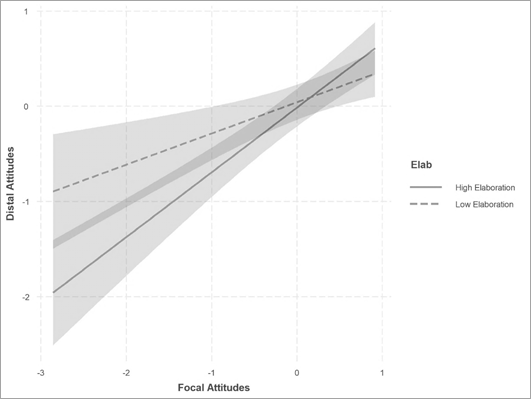
Figure 3 Standardized Distal Attitudes Toward Chocolate as a Function of Elaboration (Low vs. High Capacity) and Focal Attitudes in Study 2
As in Study 1, we conducted the same analysis with message direction as an additional predictor. We ran a multiple linear regression with message direction (manipulated), elaboration (manipulated), and their interactions as predictors of distal attitudes, Results showed significant main effects of message direction, B = 0.319, t(153) = 2.317, p = .022, 95% CI: [0.047, 0.591]. As in Study 1, no other effects reached significance (ps. > .346).
When we collapse both studies (n = 370), the two-way interaction between focal attitudes and elaboration remains significant, B = 0.178, t(366) = 3.265, p = .001, f 2 = .029, 95% CI: [0.071, 0.286]. A sensitivity analysis indicated that the sample size of the collapsed studies had a .80 power to detect an effect size of f 2 = .022 and above.
Study 2 replicated the impact of elaboration on indirect attitude change using new materials. Furthermore, this study generated attitude change via randomly assigning participants to a positive vs. negative message, and this change in focal attitudes indirectly changed distal attitudes more under high (vs. low) elaboration conditions. Elaboration was manipulated rather than measured, addressing potential confounds present in the first study (e.g., knowledge, experience, need for consistency, etc.).
Discussion
Taken together, this research revealed that attitudes may indirectly change other relevant attitudes, especially under high thinking conditions. Across two studies, changes in focal attitudes were associated with changes in distal attitudes to a greater extent when participants were higher in elaboration (both measured and manipulated; see Table 1). Among other implications, these findings are important because they can help to specify when indirect change effect is more likely to emerge, with the potential for shedding light on reconciling past findings showing that sometimes there is an indirect change following attitude change whereas at other times the effect does not emerge (Spaccatini et al., 2023; Sütterlin & Siegrist, 2014).
Table 1 Summary of the Interactions Found in Studies 1 and 2
| Variable | Study 1 (n=213) | ||||
|---|---|---|---|---|---|
| B | t | p | IC 95% | ||
| Focal Attitudes | .093 | 1.351 | .178 | -.043 | .227 |
| Focal Attitudes x Elaboration | .170 | 2.359 | .019 | .028 | .312 |
| Study 2 (n=157) | |||||
| Focal Attitudes | .504 | 7.377 | <.001 | .369 | .639 |
| Focal Attitudes x Elaboration | .176 | 2.578 | .011 | .041 | .311 |
This finding extends the Elaboration Likelihood Model by showing that the impact of elaboration goes beyond the strength and persistence of attitude change to influence the indirect change across different domains. It could also mean the possibility of reinterpreting previous moderators as if they were cases in which elaboration might have co-varied with the proposed moderator. For instance, change in attitudes that are based on unexpected arguments (Glaser et al., 2015) would spread relatively more because such arguments might have been perceived as surprising, thus increasing elaboration (Petty et al., 2001).
The current research also extends the potential successful outcomes of persuasive attempts (Tormala et al., 2004). When a persuasive appeal occurs, it is often assumed that it would be effective only if there is a change in the targeted self-reported explicit attitude. However, Tormala et al. (2004), showed that implicit attitudes measured with an Implicit Association Test (IAT, Greenwald et al., 1998) can be affected by persuasive attempts even in the absence of changes in explicit attitudes. There is also evidence that when people resist a persuasion attempt, their attitude certainty increases whilst their attitudes remain unchanged (Tormala & Petty, 2002). This suggests that even if persuasion does not change an attitude, it can change the certainty people have in that attitude, making it stronger and, hence, more stable and durable. As shown in this research, changes in distal attitudes might also happen as a result of a persuasive attempt (in addition to changes in focal attitudes). Therefore, based on the results of the current research, we claim that including measures of distal attitudes can provide researchers and practitioners with a novel, simple, and effective way to assess persuasion.
Results from this research have significant real-life applications that could be applied to public health campaigns or marketing. Interventions designed to promote healthy behaviors (e.g., regular exercise) could have unintended positive effects for other distal attitudes (e.g., reduced smoking), especially for audiences in higher elaboration conditions. Also, marketing campaigns that successfully change consumer attitudes toward a specific product (e.g., eco-friendly packaging) could potentially be affecting other desirable distal attitudes, such as increased recycling or purchasing other sustainable products (see Horcajo et al., 2010), particularly for those are highly motivated and/or capable to process such marketing campaigns. Finally, results from this research also have potential implications for reducing prejudiced attitudes toward a social group in a way that direct contact with the group is not needed (Pettigrew & Tropp, 2006). As noted, this research has the potential to advance equity, inclusion and anti-racism by explaining how and when evaluations unrelated to prejudice can be consequential for discrimination toward stigmatized groups, even when prejudiced attitudes toward one collective might indirectly change attitudes to other disadvantaged collectives, and even when attitudes toward one particular individual might indirectly change attitudes over the entire social category for which that person belongs. Future studies can benefit from exploring the role of elaboration in those prejudice-relevant paradigms.
Future research should explore the boundaries and mechanisms of the elaboration-indirect change effect further. For example, the extent to which participants perceive the link between focal and distal attitudes may vary this effect, and prior knowledge can influence how this link is perceived. It is known that focal and distal attitudes must be related (or to be perceived to be associated) in some way for indirect change effect to occur (Glaser et al., 2015), and elaboration makes that effect stronger. Future studies should examine to what extent elaboration can also contribute to creating new linkages with other distal attitudes for which prior associations do not exist. Also, if the focal-distal attitude link is too obvious, people might assume that the indirect change to distal attitudes is an unwanted bias potentially contaminating judgments, in which case people might engage in correcting effects to reduce this perceived influence (Wegener & Petty, 1995). Additionally, there is evidence that motivational variables are also important in affecting the likelihood of message elaboration (Petty & Cacioppo, 1986). Therefore, future studies could explore how motivational variables, such as personal relevance, can also influence indirect change. Future research can also benefit from achieving larger and more diverse samples, as well as replicating these results under more ecological approaches. Moreover, examining the long-term persistence of indirect attitude change moderated by elaboration would provide insights into the durability of the changes obtained over time. These directions could offer a deeper understanding of how elaboration functions across different contexts and how it can be optimally utilized to foster widespread and enduring attitude change.

