




 Servicios personalizados
 Articulo en XML
 Referencias del artículo
 Traducción automática
 Enviar articulo por email
 Citado por SciELO
  Citado por Google
  Similares en
SciELO
Similares en
SciELO  Similares en Google
 Permalink
INTRODUCTION
The chronic use of glucocorticoids (GCs) is the most common cause of secondary osteoporosis (OP), leading to an increased risk of fracture and a consequent reduction in quality of life. The prevention of GC-induced OP and fractures is included in the clinical practice guidelines of scientific and medical societies (1-3).
In the case of the American College of Rheumatology (1), the most recent clinical practice guidelines identify fracture risk as a determining factor when initiating prophylaxis for osteoporosis, emphasizing that treatment should begin early.
The recommendations of the Spanish Society for Bone Research and Mineral Metabolism (SEIOMM) (2) indicate that postmenopausal women and men older than 50 years on GCs at equal or and higher doses of prednisone 5 mg for more than 3 months should be prescribed OP prophylaxis. In premenopausal women, the indication depends on the dose of GCs (> 30 mg/d) or a history of fracture. SEIOMM recommends bisphosphonates as the first-line therapy of choice, and denosumab if there is a contraindication or intolerance to bisphosphonates.
The recommendations of the Spanish Society of Rheumatology (SER) (3) indicate prophylaxis for all patients on GCs for more than 3 months with a starting dose ≥ 30 mg of prednisone. In cases involving lower doses, a prescription for OP prophylaxis would depend on the history of fracture, the result of the densitometry test and the risk of fracture estimated by FRAX®.
The concept “imminent risk of fracture” includes any recent fracture, patients who have previously fallen and high doses of GC (4). As the term indicates, imminent risk means a very high risk of fracture that may be independent of bone mineral density, such as it is the case with frail, elderly people with frequent falls. Patients on high doses of GCs represent a vulnerable population for which fracture prevention should be implemented, given the imminent risk of fracture.
The incidence rate of fractures increases with GC treatment. In one study, the incidence rate of non-vertebral fractures increased from 1.6 per 100 person-years in the year before starting oral GC, to 2.0 within the first 3 months of treatment (5). In addition, a review of randomized clinical trials found a higher rate of vertebral fracture among GC initiators and a relative decline in the incidence rate of fracture incidence with longer duration of treatment (6).
GCs reduce bone mineral density by increasing the activity of osteoclasts and decreasing the activity of osteoblasts and osteocytes. Impaired bone formation and increased bone resorption seem be the main mechanisms underlying GC-induced bone loss. Clinical patients on GC treatment often have inflammation-related diseases that can impact the effects of GC on bone cells and the progression of OP and the effects of GC on bone cells (7). Furthermore, GCs have effects on various physiological factors, including muscle strength, calcium and vitamin D metabolism, fat metabolism, and sex steroid levels (7).
Various clinical trials and population studies demonstrate that oral bisphosphonates are associated with a significant reduction in the risk of fractures, especially the risk of vertebral fracture in patients on GCs (8). Zoledronic acid and denosumab are also effective in maintaining bone mineral density, both of which are superior to risedronic acid (9). In patients with very high risk of fracture on GC (eg, patients with vertebral fracture) treatment with teriparatide is justified (1).
The objective of our study was to analyze the prophylaxis of GC-induced OP at high doses in clinical practice.
PATIENTS AND METHODS
We conducted a cross-sectional observational study in which OP prophylaxis was assessed in patients treated with GCs at high doses.
The study subjects were selected from the verified electronic prescription dispensation records of the health system throughout 2022 on the island of Gran Canaria (Canary Islands, Spain). In 2022, the island had a total population of 853,262 inhabitants, 338,830 of them older than 50 years.
The following inclusion criteria were applied:
For each patient, the following variables were collected from the patients’ health records:
- Age.
- Sex.
- Underlying reason for the use of high-doses GC.
- The patient’s health care area (Gran Canaria is geographically divided into 2 health care areas, North and South).
- Number of packages of prednisone 30 mg (30 tablets) obtained from the pharmacy.
- Any concomitant prescription of oral bisphosphonate (alendronic acid, risedronic acid, ibadronic acid) or denosumab during the period analyzed.
STATISTICAL ANALYSIS
Descriptive statistical analyses were performed, in addition to a bivariate analysis, examining the associations between the prescription of OP prophylaxis with the pharmacy-dispensed GCs according to sex, age, body system involved and health area. For qualitative variables, contingency tables and the Man-Whitney U test were used. For quantitative variables the Student’s t test for unpaired samples was used. Variables with a statistical significance (p < 0.05) were included in a binary logistic regression model using IBM® SPSS version 27.
RESULTS
A total of 630 patients were evaluated, 203 of which were excluded due to a lack of data or an inability to access the health history. Therefore, the final sample included a total of 427 patients, 218 women (51.5 %) and 209 men (48.9 %).
By health areas, 238 patients corresponded to the Northern area (55.7 %), and 189 to the Southern area (44.3 %). The mean age was 66.5 years (SD, 10.5; range 50-93), 65.4 for the Northern area and 66.1 for the Southern area (p = 0.1). The percentage of women was similar in the Southern area (53.9 %) vs the Northern area (48.7 %; p = 0.28).
The distribution of disease groups is shown in table I, with respiratory diseases predominating (46 %); these included asthma (n = 129), chronic obstructive pulmonary disease (COPD) (n = 53) and interstitial lung disease (n = 18). Of the 427 patients, 256 (59.9 %) had been diagnosed before the study period, whereas 171 (40.0 %) received the diagnosis during the study year.
Table I Distribution of patients by disease type and health area
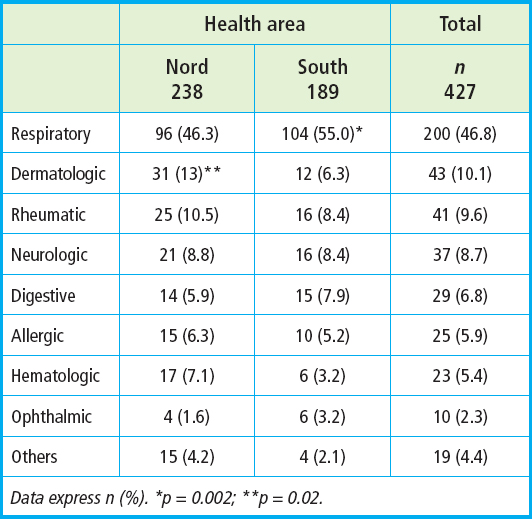
Data express n (%). *p = 0.002; **p = 0.02.
OP prophylaxis was prescribed in 59 cases (13.8 %), corresponding to 39 women (17.8 %) and 20 men (9.5 %) (p = 0.012). Figure 1 illustrates prophylaxis by decade of age. The difference in percentage of OP prophylaxis in those > and < 70 years was statistically significant (21.6 % vs 8.7 %; p < 0.001).
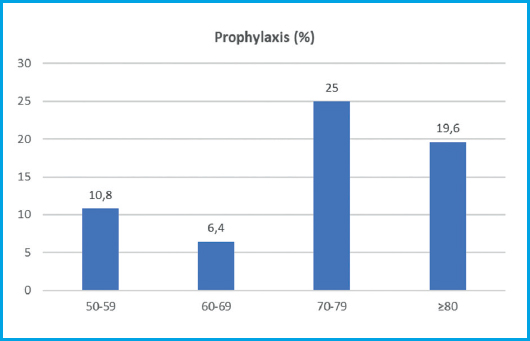
Table II illustrates the most significant differences between patients who received OP prophylaxis and those who did not. Patients prescribed OP prophylaxis were older, predominantly women and had undergone bone densitometry testing. When analyzing OP prophylaxis according to the dispensing of prednisone (30 mg packages), the group that had received > 4 packages had been prescribed prophylaxis in 35 % of cases vs 10.0 % of those who obtained < 4 packages (p = 0.002).
Table II Characteristics of patients who received osteoporosis prophylaxis vs those who did not
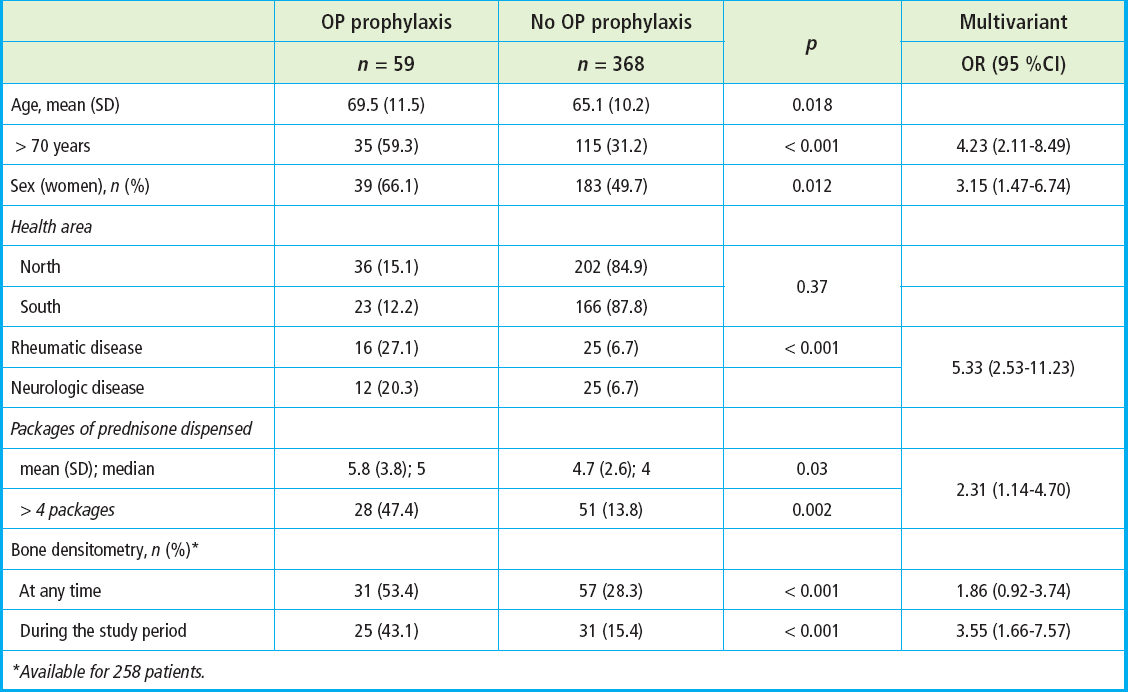
*Available for 258 patients.
There were no significant differences in OP prophylaxis depending on the health area or date of diagnosis of the body system involved (12.8 % before the study period vs 15.2 % during the study period).
The diseases with the highest percentage of OP prophylaxis were rheumatic (39 %) and neurological (32 %) (Fig. 2). The rheumatic and neurological diseases with the highest percentage of prophylaxis were vasculitis (66 %) and myasthenia gravis (35 %).
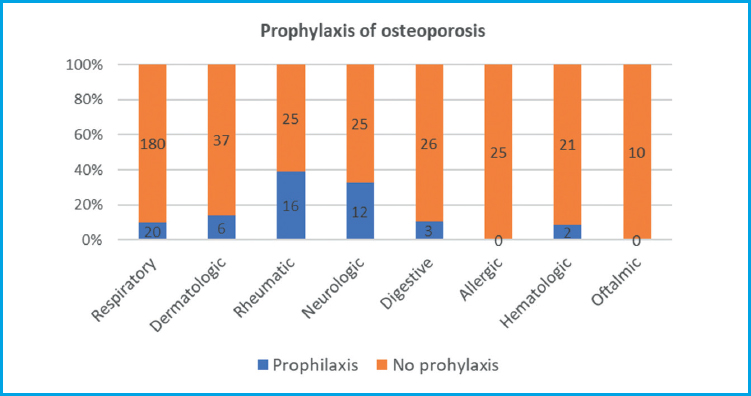
Figure 2 Osteoporosis prophylaxis based on the body system involved. The numbers represent the number of patients, and the size of the bars the percentage of prophylaxis.
Respiratory, dermatologic, hematologic and digestive patients received prophylaxis at rates ranging between 8 % and 13 %. Among respiratory causes, we observed that prophylaxis was prescribed more frequently for interstitial lung disease (22 %) than for asthma or COPD (7 %) (p < 0.03). In the cases of asthma and COPD, there were no differences in prophylaxis rates between patients who had received > 4 packages of prednisone from the pharmacy vs 3- 4 packages (8.7 % vs 7 %). The diseases with the lowest percentage of prophylaxis were allergic and ophthalmologic, both measuring 0 %. The difference in prophylaxis rates for rheumatic and neurological diseases vs the other groups was statistically significant (p < 0.001). Prophylaxis for rheumatic diseases was higher in the Northern (52.3 %) than in the Southern health area (21.4 %) (p = 0.08). Seven out of every 10 women aged > 70 with a rheumatic or neurologic disease were prescribed prophylaxis vs 5 out of every 100 women younger than 70 with other diseases.
In a logistic regression analysis in which the dependent variable was a prescription of prophylaxis for OP and the independent variables were age, sex, the body system involved (rheumatic and neurologic vs others), the performance of bone densitometry and the dispensation of prednisone packages (> 4 vs < 4), the following results were obtained (Table II): all variables were independently associated with the dispensation of OP prophylaxis, with an OR of 5.33 for the underlying rheumatic or neurologic disease and an OR of 4.2 for age > 70 years. When asthma/COPD cases were excluded from the multivariate analysis, all results remained significant with an OR of 3.22 (IC95 %, 1.54-6.72; p = 0.002) for rheumatic or neurological diseases [OR, 2.99 (IC95 %, 1.48-6.02; p = 0.002)] for age older than 70 years and an OR of 2.89 (IC95 %, 1.42-5.89; p = 0.003) for dispensation of > 4 packages of prednisone.
Bone densitometry, performed in 48 patients, was requested in 87 % of cases by a hospital specialty and in 12.5 % of cases by primary care physicians.
Treatment for OP consisted of risedronic acid for 23 patients (38.9 %), followed by alendronic acid for 21 (35.5 %), denosumab for 12 (20.3 %), and ibadronic acid for 3 (5 %). Overall, 37 of the 59 patients (79.6 %) on OP prophylaxis received an oral bisphosphonate. OP prophylaxis dispensations were administered by hospital specialties (87 %) and the GP (13 %). The dispensation of OP prophylaxis was initiated during GC treatments in 26 cases and before 2022 in 33 patients.
DISCUSSION
In addition to healthy lifestyle habits, such as a dairy products-rich diet, regular physical exercise and smoking cessation, patients on high-dose GCs are the primary candidates for co-prescription of a bisphosphonate. As far as we know, our study is the first to specifically focus on OP prophylaxis in patients on high-dose GCs. The results show that prophylaxis of GC-induced OP remains very low (13 %) and clearly does not comply with current recommendations. An approximate estimate based on the age of the patients (without having a FRAX risk scale) would be that between 75 % (ACR) and 100 % (SEIOMM, SER) of patients would be eligible for prophylaxis (1-3). Moreover, management guidelines emphasize the importance of sparing GCs for when indicated and at the lowest possible dose, even with immunosuppressants as GC-sparers, if necessary (3,11).
Therefore, there is a gap between clinical practice guidelines on GC-induced prophylaxis and their effective application. In our study, although the highest percentage of prophylaxis was found in rheumatic diseases (vasculitis, lupus nephropathy, etc.) it did not reach 50 % of patients. In our study, the profile of patients with prophylaxis was that of a woman older than 70 years with a rheumatic or neurological disease. Thus, male patients or those with other conditions younger than 70 years received prophylaxis at very low rates. The snapshot generated by our analysis is very informative in nature to encourage the implementation of training sessions aimed at those specialties that use high doses of GCs in the management of their patients.
Our findings are consistent with other studies. Albaum et al. conducted a systematic review, identifying 29 published studies, and found that < 40 % of patients who chronically used GCs (at different doses) received prophylaxis with calcium, vitamin D or bisphosphonates (11). Thus, in one of the studies with 17,736 patients on chronic GCs, a third with ≥ 10 mg/d of prednisone, the authors found that only 22 % of the new prescriptions included prophylaxis for OP (27 % in the case of patients aged ≥ 70) (12). Just as we observed, this Canadian study found that the patients most likely to receive prophylaxis were women older than 60 years treated by rheumatologists (12). A different registry study conducted in France with 32,812 patients who received, at least, 7.5 mg/d of prednisone for, at least, 3 months, reported that only 8 % underwent bone densitometry and only 12 % had OP prophylaxis with bisphosphonates. Prophylaxis was independently associated with female sex, age older than 55 years, a prescription of GC(s) by a rheumatologist, autoimmune disease, and an order for a bone densitometry (13).
Focusing on local data, a Spanish multicenter study that evaluated OP prophylaxis with GCs in patients with polymyalgia rheumatica (14) found that 69 % of cases underwent densitometry and 46 % were prescribed a bisphosphonate.
Our study has some strengths, such as its sample size, the reliability of the electronic dispensation data in terms of medication dispensed (not just indicated), the sample based in a well-defined territory and data drawn from real-world clinical practice. However, it does have some limitations. It was not possible to precisely identify whether the initial GC prescription was made by the GP or a hospital doctor, in some cases due to lack of information in the health record or electronic prescription. A different limitation to consider is that patients with asthma/COPD may use GCs occasionally during periods of disease exacerbations. Moreover, it is not reliably documented whether patients received uninterrupted treatment for longer than 3 months. However, this does not invalidate our results; patients with asthma who obtained 3 packages from the pharmacy received prophylaxis in 4 % of cases, while those who received > 7 packages benefited from prophylaxis in 10 % of cases. The results indicate that in the respiratory field there is no adequate awareness of the risks of GC, which underscores the need for specific training, especially because respiratory diseases remain the most prevalent disease in our series. The dispensation of zoledronic acid or teriparatide was not assessed in this study. These are infrequently used treatments; in fact, either drug is not indicated as a primary prevention method.
Computer aids such as the health history or electronic prescription alerts when high doses of GCs and other drugs are prescribed could be helpful in enhancing OP prophylaxis (15).
In conclusion, OP prophylaxis in patients on high-dose GCs remains very low; based on our results, specific training across multiple medical disciplines is highly warranted, both in hospital specialties and in primary care, especially in respiratory diseases, allergology and ophthalmology. Another important aspect that, based on the findings of this study, is to widely disseminate the results in order to sensitize doctors not only to the risks of fracture when prescribing high doses of GCs, but also to the availability of effective treatments for its prevention (8). The implementation of alerts in electronic prescriptions when high doses of GCs have been prescribed should be studied in greater detail as a tool for facilitating OP prophylaxis.

