



![Evaluación de la distribución y captación de [18F]FDG mediante microPET/CT en un modelo murino de infarto de miocardio](/img/es/prev.gif)


 Servicios personalizados
 Inglés (pdf)
 Articulo en XML
 Referencias del artículo
 Traducción automática
 Enviar articulo por email
 Citado por SciELO
  Citado por Google
  Similares en
SciELO
Similares en
SciELO  Similares en Google
 Permalink
Highlights
Medicinal plants, including Albizia julibrissin and Caesalpinia decapetala from the Fabaceae family, have significant therapeutic potential in managing various health conditions. This study aimed to investigate their ability to inhibit acetylcholinesterase, lipase, glycation, and cancer cell growth.
The methanolic extract of A. julibrissin exhibited the strongest acetylcholinesterase inhibition with an IC50 of 2.391 µg/ml.The methanolic extract of C. decapetala showed the most potent lipase inhibition (114.9 µg/ml) and anti-glycation activity (43.69 µg/ml). C. decapetala extract demonstrated significant cytotoxic effects on PC3 (144.3 ppm), 3T3 (201.0 ppm), and HeLa (236.0 ppm) cell lines.
HPLC analysis revealed that A. julibrissin contained high levels of chlorogenic acid (56.06 ppm) and quercetin dihydrate (15.71 ppm), while C. decapetala was rich in gallic acid (73.55 ppm).
Introduction
Oxidative stress produces excessive free radicals that damage cell components viz. lipids, proteins, carbohydrates and nucleic acid; resulting in neurodegenerative and metabolic disorders such as Alzheimer disease (AD), cancer and diabetes1. According to an estimate, about 55 million people were diagnosed with AD in 2020 and this number may increase to 78 million in 20302. One of the most useful approaches to treat AD includes increasing acetylcholine (ACh) levels in the brain3. AChE is the major enzyme in the pathogenesis of Alzheimer’s disease and its suppression reduces the Alzheimer’s disease4. The synthetic drugs adverse reactions have prompted researchers to screen alternative natural plant-based products to treat AD5,9. Similarly, obesity and inactive lifestyles have caused diabetes in many individuals by increasing blood glucose levels in the body. The International Diabetes Federation (IDF) observed 537 million diabetic individuals in 20216. Due to the increased insulin resistance, hyperglycemic condition leads to the protein glycation of proteins that produces advanced glycation end products (AGEs)7-8. Moreover, cancer is another critical life-threatening condition and the cervical cancer accounts for 15.9 % of the total cancer with 300,000 million cases every year10.
Previously, some studies have explored the biological properties of Fabaceae species. For instance, Albizia julibrissin is traditionally used to treat ulcers, fractures, anxiety, bruises and hemorrhoids11-12. Caesalpinia decapetala is used as antiseptic, astringent, analgesic, anti-pyretic and to treat burns13-14. Due to the multiple health benefits of these species, present studies were designed to investigate the acetylcholinesterase, porcine pancreatic lipase, non-enzymatic glycation and cytotoxic inhibitory potential of A. julibrissin and C. decapetala. Additionally, the concentration of six compounds was evaluated using HPLC.
Methods
Extracts preparation
Fresh leaves of A. julibrissin subsp. Julibrissin and C. decapetala (Roth) Alston were collected and their accession numbers were obtained from the Herbarium of National Agriculture Research Center (NARC), Islamabad. The weight of extracts was measured to ascertain extract yield as shown in Table 1.
Table 1 List of selected species, their accession numbers and extract yield.
| Plant species | Accession Numbers | Extracts | Extract weight (g) | Extract yield (%) |
|---|---|---|---|---|
| A. julibrissin | RAW101502 | Methanol | 5.32 | 26.60 |
| Meth-DMSO | 5.80 | 29.00 | ||
| C. decapetala | RAW101504 | Methanol | 7.53 | 37.65 |
| Meth-DMSO | 8.07 | 40.35 |
*Meth: Methanol; DMSO: Dimethyl sulfoxide; the weight of extract was taken in grams (g) and the extract yield was measured in percentage (%).
Acetylcholinesterase inhibitory assay
The acetylcholinesterase inhibition potential was assessed using 140 µL of 0.1 M sodium phosphate buffer (pH 8) was added in 20 µL of plant extract, 15 µL of AChE enzyme solution (0.2 units/ml) and 10 µL of 15 mM DTNB followed by the incubation for 10 min at room temperature. The absorbance of the final product was measured at 412 nm and galantamine (100, 500 and 1000 µg/ml) was measured as a positive control. The enzyme inhibition was determined as

Where Vmax is an enzyme activity without inhibitor.
Lipase inhibitory assay
Briefly, 5 mg/ml lipase from porcine pancreatic type II (Sigma) was added to 50 mM Tris-HCl buffer (pH 8.0) and then centrifuged for 5 min at 5500 rpm. Then, 100 µL of lipase solution was added to 50 µL of plant extract (100, 500 and 1000 µg/ml prepared in DMSO) and left for incubation on ice and the absorbance was noted at 405 nm. Orlistat was measured as a standard and the inhibition potential was calculated 15.

Anti-glycation assay
The AGE inhibition in plant extracts was determined using the method16. The fluorescence was measured at the emission wavelength of 440 nm and the percentage inhibition of AGE formation was calculated as:

Cytotoxicity assay against various cell lines
MTT assay
The cytotoxic potential of selected extracts was evaluated using standard MTT (3-[4, 5-dimethylthiazole-2-yl]-2,5-diphenyl-tetrazolium bromide) colorimetric assay17-18. The absorbance was measured at 490 nm and the percentage inhibition and IC50 values were calculated.
HPLC análisis
The plant extracts (1 mg) were dissolved in 5 ml of 10 % methanol and then filtered using membrane filters of 0.45 nm size. An Agilent 1260 HPLC system having a quaternary pump, auto-sampler and C18 column was run at 30 °C and the mobile phase was degassed before injecting into the HPLC. The separation was achieved using 0.2 % H3PO4, methanol and acetonitrile and flow rate was 1 ml/min. The mobile phase was increased from 0 to 15 %, 50 %, 70 %, 100 % and then kept isocratic for additional 5 min. The injected volume was 10 µL and the wavelength was set at 210 nm. The standards were measured at 10, 20, 30, 40, 50 and 70 ppm concentrations to derive the calibration equation. Total four phenolic compounds and two flavonoid compounds were identified based on their retention times and UV spectras’. The concentration of compounds was determined using peak area of samples versus the analyte concentration obtained from the calibration curve 19.
Results and Discussion
Anti-acetylcholinesterase assay
Plants are the potential source of compounds that can prevent or treat neurodegenerative diseases by inhibiting acetylcholinesterase20. The present study revealed highest acetylcholinesterase inhibitory activity in A. julibrissin methanolic extract (IC50 2.391 µg/ml) followed by A. julibrissin methanol-DMSO extract (IC50 10.16 µg/ml) and C. decapetala methanolic extract (IC50 22.79 µg/ml). However, C. decapetala methanol-DMSO extract showed lowest anti-acetylcholinesterase activity by displaying IC50 value of 30.24 µg/ml (Table 2).
Table 2: Anti-acetylcholinesterase activity of extracts
| Plant species | Extracts | Percentage Inhibition at Different Doses (µg/ml) | IC50 values | ||
|---|---|---|---|---|---|
| 100 | 500 | 1000 | |||
| A. julibrissin | Methanol | 71.4 | 74.4 | 83 | 2.391 |
| Methanol-DMSO | 75 | 78.7 | 94.6 | 10.16 | |
| C. decapetala | Methanol | 63.5 | 70.0 | 82 | 22.79 |
| Methanol-DMSO | 65.3 | 69 | 90.86 | 30.24 | |
| Standard* | 78.0 | 84.5 | 93 | 5.99 | |
*Galantamine was used as a standard and IC50 values indicates half maximal inhibitory concentration and is measured in µg/ml
The AChE inhibition potential of these extracts could be attributed to the existing phenolic and flavonoid compounds (21. A previous report 22 indicated anti-acetylcholinesterase activity in the ethanolic leaves extracts of Albizia lucidor (IC50 24.89 ± 1.60 µg/ml) and Albizia procera (IC50 43.50 ± 2.10 µg/ml). In another study, 23 demonstrated highest inhibition potential (10.20 mg galantamine equivalent/g) of C. decapetala leaves extracts against butyrylcholinesterase. However, the acetylcholinesterase inhibitory activity of selected species has been examined for the first time. It can be inferred that the variations within the same plant species could be due to the different phyto-constituents of the plants that are grown in various geographical areas in different seasons of the year. The phyto-constituents may vary depending on the soil, water, stage of plant and the time of collection (24. It can be suggested that A. julibrissin and C. decapetala leaves may serve as an ideal candidate for designing new AChE inhibitors to treat neurodegenerative disorders. However, detailed in vivo tests are needed to validate the efficiency of these species for medicinal use.
Anti-lipase and anti-glycation assays
The inhibition of pancreatic lipase (a lipolytic enzyme) and glycation products is a highly effective method that protects against fat absorption in individuals with obesity and hyperglycemia25. In this study, pancreatic anti-lipase and anti-glycation potential of two species have been investigated and results are presented in Figure 1a and b. The highest lipase and glycation inhibitory potential was observed in C. decapetala methanolic extract (IC50 114.9 µg/ml and 43.69 µg/ml) followed by the methanol-DMSO extract of A. julibrissin (IC50 138.7 µg/ml and 74.06 µg/ml). However, weak anti-lipase and anti-glycation activity was recorded in A. julibrissin methanolic extract (IC50 155.2 µg/ml and 182.5 µg/ml) and C. decapetala methanol-DMSO extract (IC50 168.4 µg/ml and 247.3 µg/ml) respectively (Table 2). The remarkable inhibitory activity of selected extracts indicates their potential use as a powerful source of anti-obesity and anti-glycation agents.
Previously, researchers have investigated biological potential of different species of Albizia and Ceasalpinia grown in different regions of world. For instance, (26 demonstrated pancreatic lipase inhibition potential in Caesalpinia sappan commonly grown in Thailand. Contrarily, (27) observed no lipase inhibitory potential in Albizia lebbeck that was grown in Thailand. It can be inferred that species belonging to the same family, irrespective to different climatic conditions, exhibit potent anti-lipase and anti-glycation activities. The relative bio-efficacy can be ascribed to the presence of phenolic and flavonoid compounds as suggested in previous literature (28-29. However, the plant extract is a mixture of bioactive compounds that contribute to the bioactivities altogether. This suggests that the composition of active compounds, structural features and other potential factors in plant extract may have also affected pancreatic lipase and hyperglycemic conditions. Therefore, the exact relationship between the active compounds and biological activities needs to be further investigated.
Table 2b: Percentage inhibition and IC50 values observed in anti-lipase and anti-glycation assays.
| Plant species | Extracts | Anti-lipase assay (µg/ml) | Anti-glycation assay (µg/ml) | ||||||
|---|---|---|---|---|---|---|---|---|---|
| Percentage Inhibition | IC50 values | Percentage inhibition | IC50 values | ||||||
| 100 | 500 | 1000 | 100 | 500 | 1000 | ||||
| A. julibrissin | Methanol | 45.89 ± 3.35 | 60.64 ± 1.06 | 67.85 ± 4.87 | 155.2 | 43.90 ± 4.10 | 54.25 ± 1.76 | 82.95 ± 1.34 | 182.5 |
| C. decapetala | Meth-DMSO | 46.60 ± 4.12 | 62.90 ± 1.95 | 77.49 ± 3.81 | 138.7 | 56.00 ± 2.12 | 70.60 ± 5.65 | 89.10 ± 1.41 | 74.06 |
| Methanol | 48.30 ± 5.72 | 68.40 ± 0.43 | 77.50 ± 1.85 | 114.9 | 58.50 ± 4.94 | 69.50 ± 0.70 | 78.85 ± 3.04 | 43.69 | |
| Meth-DMSO | 41.52 ± 2.83 | 67.10 ± 3.45 | 76.56 ± 3.53 | 168.4 | 43.00 ± 2.82 | 53.95 ± 0.07 | 63.05 ± 1.34 | 247.3 | |
| Control | 49.00 ± 1.41 | 59.00 ± 1.41 | 81.00 ± 1.41 | 127.5 | 69.00 ± 2.82 | 77.70 ± 0.84 | 88.50 ± 1.27 | 17.33 | |
Meth. stands for methanol and DMSO stands for dimethyl sulfoxide; Values in tables are presented as mean ± SD (n=3); IC50 value indicates half maximal inhibitory concentration.
Orlistat was used as a control in anti-lipase assay and rutin was used as a control in anti-glycation assay.
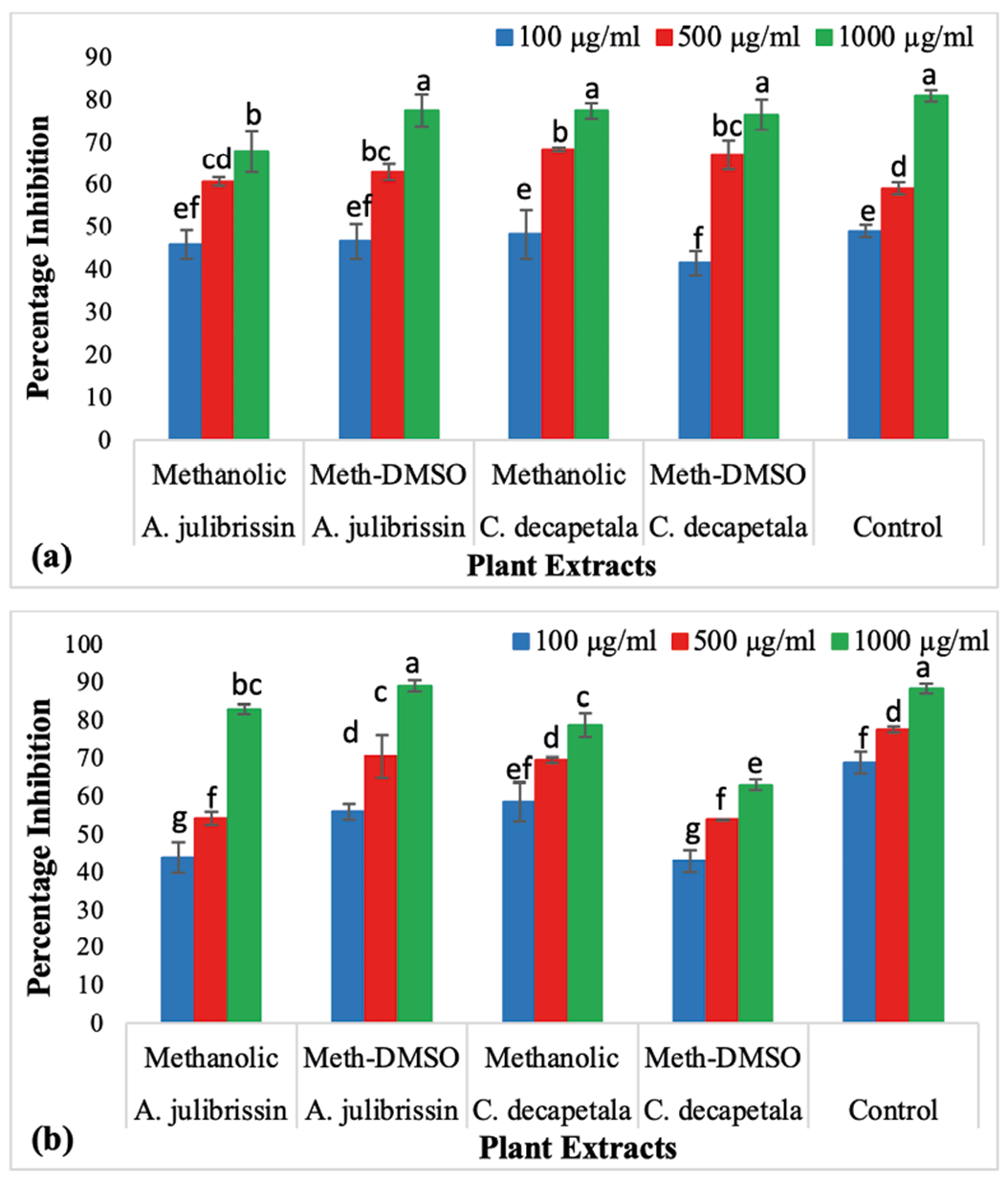
Figure 1: Anti-lipase and anti-glycation activity of leaves extracts of selected species (a) Anti-lipase assay (b) Anti-glycation assay. *Data indicates mean ± SD (3n) and each alphabetical letter (a-g) indicates a significance difference at P < 0.05. *Orlistat was used as a control in anti-lipase assay and rutin was used as a control in anti-glycation assay.
Cytotoxic activity
As the methanolic extracts displayed significant biological activities, hence were further tested to observe there in vitro cytotoxic potential against three different cell lines. Among different plant extracts, C. decapetala showed highest cytotoxic potential against PC3 and 3T3 cell lines by showing IC50 value of 144.3 ppm and 201.0 ppm. Contrarily, the lowest activity was recorded in A. julibrissin methanolic extract against PC3 cell lines (IC50 459.8 ppm) and 3T3 cell lines (IC50 392.6 ppm). However, the moderate inhibitory potential was observed in both species when tested against HeLa cell lines. Overall, C. decapetala leaf extract displayed the highest cytotoxic potential compared to A. julibrissin (Table 3).
Table 3: The cytotoxicity effects observed in selected species against HeLa, PC3 and 3T3 cells.
| Plant species | Cell lines | Percentage Inhibition at Different Concentrations (ppm) | IC50 (ppm) | ||||
|---|---|---|---|---|---|---|---|
| 30 | 60 | 90 | 120 | 150 | |||
| A. julibrissin | HeLa | 0 | 1.2 | 4.9 | 9.7 | 14.7 | 285.4 |
| PC3 | 0 | 1.2 | 2.7 | 4.3 | 6.1 | 459.8 | |
| 3T3 | -2.8 | 0 | 2.8 | 5.1 | 7.3 | 392.6 | |
| C. decapetala | HeLa | 0 | 1.1 | 5.5 | 11.6 | 19.6 | 236.0 |
| PC3 | 10.6 | 21.2 | 31.8 | 42.4 | 53 | 144.3 | |
| 3T3 | 1.7 | 3.3 | 6.2 | 7.4 | 23.8 | 201.0 | |
IC50: Half-maximal inhibitory concentration.
Previously, (30) isolated emodin, baicalein and apigenin from C. decapetala roots and confirmed their anti-tumor activities against human gastric carcinoma cell line MGC-803 cell line with IC50 values of 15.6, 16.3 and 13.2 µmol/L using MTT assay. Our studies also corroborate the earlier findings 23 who reported highest cytotoxicity (i.e. 46.08 µg/ml CC50) for the bark methanol extract of C. decapetala on the HeLa cells. Moreover, previous researcher 31) isolated oleanane-type saponins, julibrosides, from the stem bark of A. julibrissin and examined their cytotoxic effects against HCT-116, BGC-823, HepG2 and A549 cell lines. Earlier studies 32,33 revealed anti-cancer activity of another specie of Albizia genus i.e. Albizia lebbeck using MCF-7 (human breast cancer), HeLa and A549 cell lines. However, A. julibrissin leaves extracts have been examined for the first time against selected cell lines. The anti-carcinogenic potential of examined species could be attributed to the active compounds such as Julibroside saponins present in A. julibrissin34. In general, leaves of selected species showed promising results as a cytotoxic agent due to the relatively high toxicity on selected cells. Hence, it can be inferred that the exact mechanism of apoptosis should be investigated using flow cytometry and microscopy techniques.
HPLC análisis
In current study, HPLC method was used to quantify six compounds present in the leaves of selected species. The obtained HPLC chromatograms are presented in Figure 2 (a to d) which indicated that A. julibrissin possesses highest concentration of chlorogenic acid (56.06 ppm) and quercetin dihydrate (15.71 ppm) while C. decapetala leaves extracts exhibit the highest concentration of gallic acid (73.55 ppm). However, all other compounds were detected in lower concentrations (i.e. below 12 ppm) in these species (Table 4).
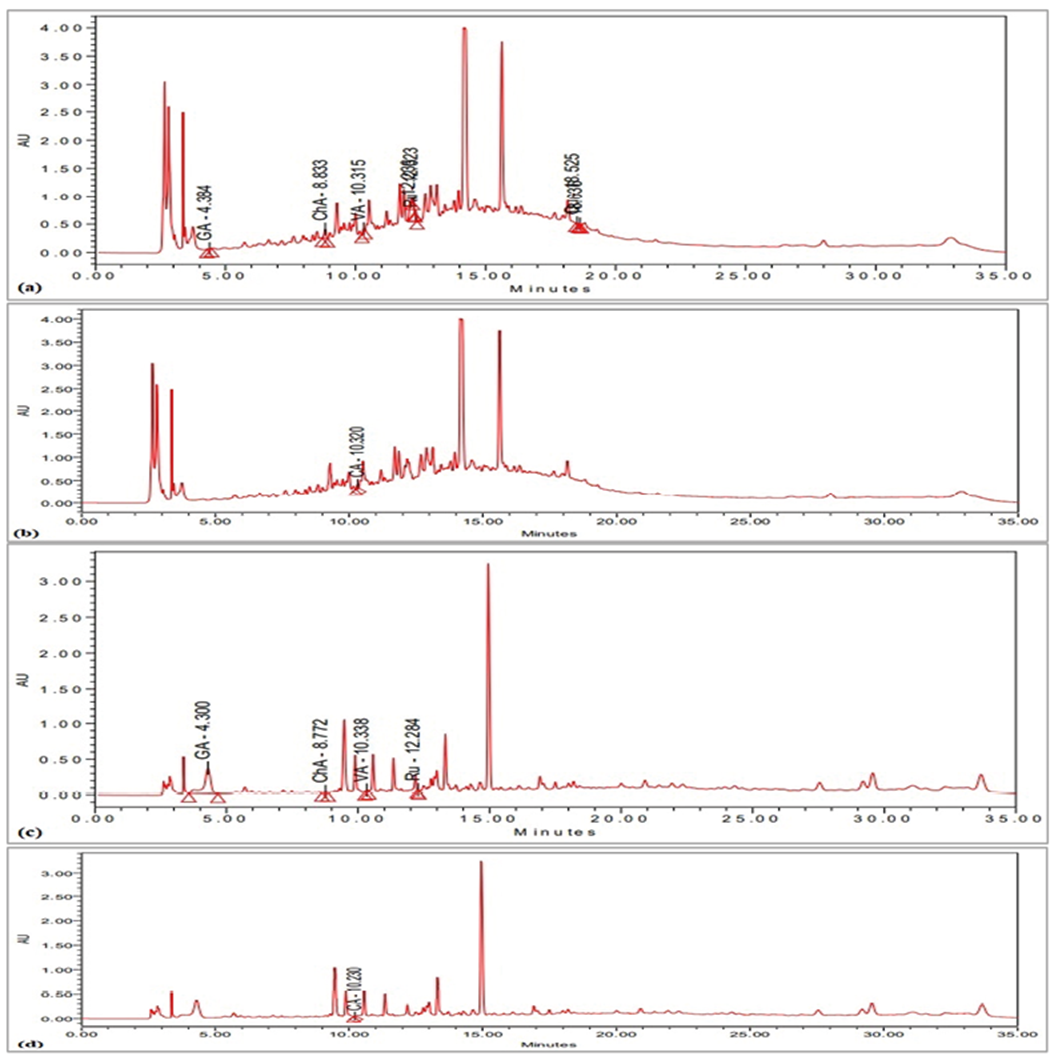
Figure 2: HPLC chromatograms indicating six phenolic and flavonoid compounds at respective retention times in selected species (a) Gallic acid, vanillic acid, chlorogenic acid, rutin trihydrate and quercetin dihydrate in A. julibrissin (b) Caffeic acid in A. julibrissin (c) Gallic acid, vanillic acid, chlorogenic acid, rutin trihydrate and quercetin dihydrate in C. decapetala (d) Caffeic acid in C. decapetala.
Table 4 Concentration of six compounds observed in selected species using HPLC.
| Plant species | Concentration of compounds (ppm) | |||||
|---|---|---|---|---|---|---|
| Gallic acid | Caffeic acid | Vanillic acid | Chlorogenic acid | Rutin trihydrate | Quercetin dihydrate | |
| A. julibrissin | 1.75 | 11.81 | 6.61 | 56.06 | 0.11 | 15.71 |
| C. decapetala | 73.55 | 0.29 | 4.92 | 8.89 | 1.02 | ND |
*ND: Not detected
Previously, scientists 13 showed the presence of gallic acid, quercetin, catechin, 4-hydroxybenoic acid and p-coumaric acid as the main phenolic compounds in C. decapetala extracts using the HPLC technique which has been confirmed in the current study. Similarly, 35 reported eight compounds in C. decapetala using UPLC-MS/MS. Furthermore, (36-37 indicated the presence of lignans, triterpenoids saponins and some phenolic compounds in the stem bark of A. julibrissin. Besides, cassane diterpenoid, caesaldecan, squalene, lupeol, resveratrol, quercetin, stigmasterol and astragalin, the main phytochemicals observed in C. decapetala are terpenoids, flavonoids and tannins38. It can be inferred that the selected species possesses a valuable reservoir of polyphenolic compounds of pharmacological significance and thus needs to be isolated and investigated for food and industrial application.
Conclusion
In the light our findings, it can be concluded that the methanolic extracts exhibited the most pronounced biological activities compared to the methanol-DSMO extracts of two selected species. A. julibrissin methanolic extract showed highest acetylcholinesterase inhibitory activity while C. decapetala methanolic extract displayed highest anti-lipase, anti-glycation and cytotoxic potential. HPLC indicated that A. julibrissin possesses highest concentration of chlorogenic acid and quercetin dihydrate while C. decapetala leaves extracts exhibited highest concentration of gallic acid. Therefore, the results of this study reinforce the potential therapeutic benefits of A. julibrissin and C. decapetala methanolic extracts. Further research and clinical trials are required to validate these findings and thereby uncover more evidence of its biological activities.

