<?xml version="1.0" encoding="ISO-8859-1"?><article xmlns:mml="http://www.w3.org/1998/Math/MathML" xmlns:xlink="http://www.w3.org/1999/xlink" xmlns:xsi="http://www.w3.org/2001/XMLSchema-instance">
<front>
<journal-meta>
<journal-id>0211-9536</journal-id>
<journal-title><![CDATA[Dynamis]]></journal-title>
<abbrev-journal-title><![CDATA[Dynamis]]></abbrev-journal-title>
<issn>0211-9536</issn>
<publisher>
<publisher-name><![CDATA[Universidad de Granada]]></publisher-name>
</publisher>
</journal-meta>
<article-meta>
<article-id>S0211-95362015000100009</article-id>
<title-group>
<article-title xml:lang="en"><![CDATA[John Victor Pickstone, or "JVP"]]></article-title>
<article-title xml:lang="es"><![CDATA[John Victor Pickstone (1944-2014)]]></article-title>
</title-group>
<contrib-group>
<contrib contrib-type="author">
<name>
<surname><![CDATA[Cunningham]]></surname>
<given-names><![CDATA[Andrew]]></given-names>
</name>
<xref ref-type="aff" rid="A01"/>
</contrib>
</contrib-group>
<aff id="A01">
<institution><![CDATA[,University of Cambridge Department of the History and Philosophy of Science ]]></institution>
<addr-line><![CDATA[Cambridge ]]></addr-line>
</aff>
<pub-date pub-type="pub">
<day>00</day>
<month>00</month>
<year>2015</year>
</pub-date>
<pub-date pub-type="epub">
<day>00</day>
<month>00</month>
<year>2015</year>
</pub-date>
<volume>35</volume>
<numero>1</numero>
<fpage>193</fpage>
<lpage>196</lpage>
<copyright-statement/>
<copyright-year/>
<self-uri xlink:href="http://scielo.isciii.es/scielo.php?script=sci_arttext&amp;pid=S0211-95362015000100009&amp;lng=en&amp;nrm=iso"></self-uri><self-uri xlink:href="http://scielo.isciii.es/scielo.php?script=sci_abstract&amp;pid=S0211-95362015000100009&amp;lng=en&amp;nrm=iso"></self-uri><self-uri xlink:href="http://scielo.isciii.es/scielo.php?script=sci_pdf&amp;pid=S0211-95362015000100009&amp;lng=en&amp;nrm=iso"></self-uri></article-meta>
</front><body><![CDATA[ <p>&nbsp;</p>     <p>&nbsp;</p>     <p><font face="Verdana" size="4"><b>John Victor Pickstone, or "JVP"</b></font></p>     <p><font face="Verdana" size="4"><b>John Victor Pickstone (1944-2014)</b></font></p>     <p>&nbsp;</p>     <p>&nbsp;</p>     <p><font face="Verdana" size="2"><b>Andrew Cunningham</b></font></p>     <p><font face="Verdana" size="2">Department of the History and Philosophy of Science, University of Cambridge.    <br><a href="mailto:arc7@hermes.cam.ac.uk">arc7@hermes.cam.ac.uk</a></font></p>     <p>&nbsp;</p>     ]]></body>
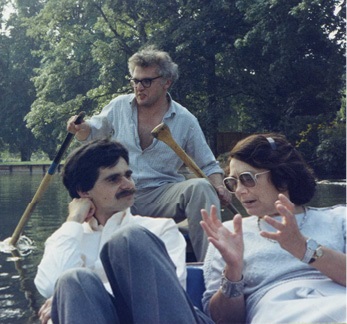
<body><![CDATA[<p>&nbsp;</p>     <p><font face="Verdana" size="2">John Pickstone, or "JVP" as he was known to all his friends and colleagues, was an eminent historian of medicine and science, who established and ran the successful Centre for the History of Science, Technology and Medicine (CHSTM) in Manchester University for many years. His relatively early death is a loss to the whole discipline.</font></p>     <p align=center><font face="Verdana" size="2"><img src="/img/revistas/dyn/v35n1/09_in memoriam_fig1.jpg">    <br>John Pickstone punting on the river Cam after the <i>Medicine and the Laboratory</i>    <br>Conference held at the Cambridge Wellcome Unit for the History of Medicine in september 1990,    <br>accompanied by Paul Weindling and Hilary Rose. Photo courtesy of Andrew Cunningham.</font></p>     <p>&nbsp;</p>     <p><font face="Verdana" size="2">He was born in Burnley, an industrial town in northern England, a flourishing place for coal, mills and heavy industry in the years of John's youth but now, like so much of the old industrial north, much decayed. His family were Methodists, the religious sect of choice for the industrialised working class and lower middle class, whose disciples seek to bring "God in action" into the community, and teach the value of hard work and commitment in building the individual and the group. John excelled at school and at the 11+ examination he came top in all the schools of the town. One of his sisters said at the commemoration for him early this year (2014): "We were so proud of him", she said, "our brother was the cleverest boy in Burnley!"<sup><a id="footnote-6352-1-backlink" href="#footnote-6352-1">1</a></sup>. He continued to do well in higher education at Burnley Grammar School, and then John won a place at Fitzwilliam College, Cambridge University, to study natural sciences, within which his specialist subject was physiology. He graduated in 1965 and went to Queen's University in Kingston, Ontario, Canada, where he completed an M.Sc. by research.</font></p>     <p><font face="Verdana" size="2">Then in 1968, a crucial year for self-examination for many of us of that generation, he began to reconsider his academic situation and the role of science in society. From physiology he turned first to the history and philosophy of science, which he studied at University College, London, and then in 1974 completed a Ph.D. at Chelsea College, London, where his thesis was on the French physiologist, Dutrochet. These were of course the years also of Michel Foucault's greatest influence, and John told me years later that he had two languages: whenever he thought or wrote about French scientific or medical history he automatically spoke in the vocabulary of Foucault, but whenever he spoke about British science or medicine, he spoke in traditional straightforward English historical vocabulary. From physiology he had moved to the history of physiology, and then to the history of medicine and science more widely. He had found his <i>m&eacute;tier</i>.</font></p>     <p><font face="Verdana" size="2">France and Britain -more particularly Paris and Manchester- were the two poles of his historical interest for the rest of his life. Back in England he took up a research position to explore the history of Manchester hospitals, and thereafter stayed in Manchester where he strongly and successfully promoted the history of this region which had made Britain "the workshop of the world" in the 19th century.</font></p>     ]]></body>
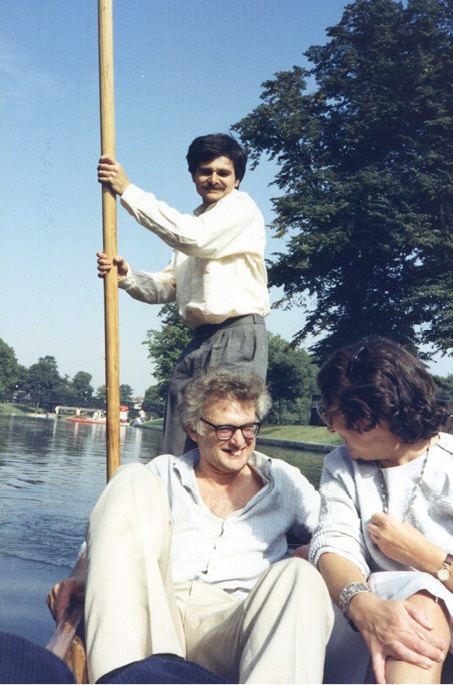
<body><![CDATA[<p><font face="Verdana" size="2">In her obituary for John, Vanessa Heggie, a former student inspired by his teaching, quotes John on the privilege of being an historian of medicine:</font></p>     <blockquote>     <p><font face="Verdana" size="2">"It is a pleasure and a privilege to be a medical historian. You can work with demographers on epidemics, cultural historians on governmentality, and historians of art on experimentation in science and art. You can discuss with medical students the rationing of renal treatments, with oncologists international differences in chemotherapy, or with disability activists the history of audiology. You can advise on a museum display about public health, campaign for the better preservation of hospital archives, or work with policy experts on the development of teaching hospitals. You can make links with university departments, and scarcely a week goes by without medical headlines that invite historical reflection"<sup><a id="footnote-6352-2-backlink" href="#footnote-6352-2">2</a></sup>.</font></p> </blockquote>     <p align=center><font face="Verdana" size="2"><img src="/img/revistas/dyn/v35n1/09_in memoriam_fig2.jpg">    <br>John Pickstone with Hilary Rose; Paul Weindling punting.    <br>Photo courtesy of Andrew Cunningham.</font></p>     <p>&nbsp;</p>     <p><font face="Verdana" size="2">John of course did all these things, seeking the widest arenas of discussion, and the largest audiences for the history of science and medicine.</font></p>     <p><font face="Verdana" size="2">Beyond all his particular contributions on the history of persons and institutions, John developed a large vision for the history of science, a "big picture" of its development and how it might be more fruitfully explored and employed. His grandest presentation of this was in his book<i> Ways of knowing: a new history of science, technology and medicine</i>, which appeared in 2000<sup><a id="footnote-6352-3-backlink" href="#footnote-6352-3">3</a></sup>. Other scholars (including myself) were developing "big pictures" of the history of science, but John's was quite distinctive. In the first place, as the title reveals, it embraced all three areas in which his institute and his own detailed research had been involved; perhaps no-one else had such a range of expertise. The "ways of knowing" phrase, and John's interest in looking at "knowledges", a plural form which is not native to English, come of course from the<i> episteme</i> vocabulary of Foucault. His exploration of the history of these three areas is also unusual in that it ignores discipline boundaries, and instead sees four "world-readings" or hermeneutics: natural history, analysis, experimentalism and techno-science. The book clearly reflects conceptual developments over John's academic lifetime, and it also embodies his own reactions to those experiences. The book made quite a splash. His hope for it was that it would also help ordinary people increase their "ability to relate esoteric knowledges and technical products to the lives they wish to lead, individually and collectively", as he put it. Perhaps I am the only colleague who would see here a link with John's early Methodism?</font></p>     <p><font face="Verdana" size="2">I think the abiding memory of JVP for many people in the business, fellow scholars and students alike, would be his outstanding role as a colleague among colleagues: supportive, innovative, inspiring, excellent in teaching, interested in everything and everyone, talking and listening, constantly continuing and developing the discussion.</font></p>     ]]></body>
<body><![CDATA[<p>&nbsp;</p>     <p><font face="Verdana" size="2"><b>References</b></font></p>     <!-- ref --><p><font face="Verdana" size="2"><sup><a id="footnote-6352-1" href="#footnote-6352-1-backlink">1</a></sup>. The John Pickstone Memorial Symposium took place on 20 June 2014 at the Sackville Street Building, University of Manchester.    &nbsp;&nbsp;&nbsp;&nbsp;&nbsp;&nbsp;&nbsp;&nbsp;[&#160;<a href="javascript:void(0);" onclick="javascript: window.open('/scielo.php?script=sci_nlinks&ref=1746135&pid=S0211-9536201500010000900001&lng=','','width=640,height=500,resizable=yes,scrollbars=1,menubar=yes,');">Links</a>&#160;]<!-- end-ref --></font></p>    <!-- ref --><p><font face="Verdana" size="2"><sup><a id="footnote-6352-2" href="#footnote-6352-2-backlink">2</a></sup>. Heggie, Vanessa. John Pickstone, 1944-2014 (citado 20 Dic 2014). Disponible en: <a target="_blank" href="http://www.theguardian.com/science/the-h-word/2014/feb/23/john-pickstone-historian-science-technology-medicine">http://www.theguardian.com/science/the-h-word/2014/feb/23/john-pickstone-historian-science-technology-medicine</a>.    &nbsp;&nbsp;&nbsp;&nbsp;&nbsp;&nbsp;&nbsp;&nbsp;[&#160;<a href="javascript:void(0);" onclick="javascript: window.open('/scielo.php?script=sci_nlinks&ref=1746137&pid=S0211-9536201500010000900002&lng=','','width=640,height=500,resizable=yes,scrollbars=1,menubar=yes,');">Links</a>&#160;]<!-- end-ref --></font></p>    <!-- ref --><p><font face="Verdana" size="2"><sup><a id="footnote-6352-3" href="#footnote-6352-3-backlink">3</a></sup>. Pickstone, John. Ways of knowing: a new history of science, technology and medicine. Manchester: Manchester University Press; 2000.    &nbsp;&nbsp;&nbsp;&nbsp;&nbsp;&nbsp;&nbsp;&nbsp;[&#160;<a href="javascript:void(0);" onclick="javascript: window.open('/scielo.php?script=sci_nlinks&ref=1746139&pid=S0211-9536201500010000900003&lng=','','width=640,height=500,resizable=yes,scrollbars=1,menubar=yes,');">Links</a>&#160;]<!-- end-ref --></font></p>      ]]></body><back>
<ref-list>
<ref id="B1">
<nlm-citation citation-type="confpro">
<source><![CDATA[]]></source>
<year></year>
<conf-name><![CDATA[ The John Pickstone Memorial Symposium]]></conf-name>
<conf-date>20 June 2014</conf-date>
<conf-loc> </conf-loc>
</nlm-citation>
</ref>
<ref id="B2">
<nlm-citation citation-type="">
<person-group person-group-type="author">
<name>
<surname><![CDATA[Heggie]]></surname>
<given-names><![CDATA[Vanessa]]></given-names>
</name>
</person-group>
<source><![CDATA[John Pickstone, 1944-2014]]></source>
<year></year>
</nlm-citation>
</ref>
<ref id="B3">
<nlm-citation citation-type="book">
<person-group person-group-type="author">
<name>
<surname><![CDATA[Pickstone]]></surname>
<given-names><![CDATA[John]]></given-names>
</name>
</person-group>
<source><![CDATA[Ways of knowing: a new history of science, technology and medicine]]></source>
<year>2000</year>
<publisher-loc><![CDATA[Manchester ]]></publisher-loc>
<publisher-name><![CDATA[Manchester University Press]]></publisher-name>
</nlm-citation>
</ref>
</ref-list>
</back>
</article>