<?xml version="1.0" encoding="ISO-8859-1"?><article xmlns:mml="http://www.w3.org/1998/Math/MathML" xmlns:xlink="http://www.w3.org/1999/xlink" xmlns:xsi="http://www.w3.org/2001/XMLSchema-instance">
<front>
<journal-meta>
<journal-id>0211-9536</journal-id>
<journal-title><![CDATA[Dynamis]]></journal-title>
<abbrev-journal-title><![CDATA[Dynamis]]></abbrev-journal-title>
<issn>0211-9536</issn>
<publisher>
<publisher-name><![CDATA[Universidad de Granada]]></publisher-name>
</publisher>
</journal-meta>
<article-meta>
<article-id>S0211-95362017000100006</article-id>
<title-group>
<article-title xml:lang="en"><![CDATA[The transcontinental birth of a species: scientific discussions and natural history museums in the second half of the nineteenth century]]></article-title>
</title-group>
<contrib-group>
<contrib contrib-type="author">
<name>
<surname><![CDATA[Sanhueza Cerda]]></surname>
<given-names><![CDATA[Carlos]]></given-names>
</name>
<xref ref-type="aff" rid="A01"/>
</contrib>
</contrib-group>
<aff id="A01">
<institution><![CDATA[,Universidad de Chile Facultad de Filosofía y Humanidades Departamento de Ciencias Históricas]]></institution>
<addr-line><![CDATA[ ]]></addr-line>
<country>Chile</country>
</aff>
<pub-date pub-type="pub">
<day>00</day>
<month>00</month>
<year>2017</year>
</pub-date>
<pub-date pub-type="epub">
<day>00</day>
<month>00</month>
<year>2017</year>
</pub-date>
<volume>37</volume>
<numero>1</numero>
<fpage>111</fpage>
<lpage>131</lpage>
<copyright-statement/>
<copyright-year/>
<self-uri xlink:href="http://scielo.isciii.es/scielo.php?script=sci_arttext&amp;pid=S0211-95362017000100006&amp;lng=en&amp;nrm=iso"></self-uri><self-uri xlink:href="http://scielo.isciii.es/scielo.php?script=sci_abstract&amp;pid=S0211-95362017000100006&amp;lng=en&amp;nrm=iso"></self-uri><self-uri xlink:href="http://scielo.isciii.es/scielo.php?script=sci_pdf&amp;pid=S0211-95362017000100006&amp;lng=en&amp;nrm=iso"></self-uri><abstract abstract-type="short" xml:lang="en"><p><![CDATA[This article is a case study of the scientific discussions on the birth of a zoological species that eventually came to be known as Arctocephalus philippii (Peters, 1866). It also examines the movement of the remains of a sea lion specimen from Chile to Germany and the discussions that arose in regard to its taxonomic definition. The paper argues that the material properties of this mobilized specimen, the circumstances of how it was hunted, transported and stored at the different museums, as well as the material aspects that later allowed it to be compared and analyzed, influenced the international debates on its classification between naturalists in England, Germany, Chile and Argentina. The first part reconstructs the context of sea lion's capture, transportation and transformation, while the second examines the discussion around this particular specimen - a controversy hinged partly upon the issue of the conditions in which it was graphically reproduced and preserved at the museum.]]></p></abstract>
<kwd-group>
<kwd lng="en"><![CDATA[natural history museums]]></kwd>
<kwd lng="en"><![CDATA[scientific objects]]></kwd>
<kwd lng="en"><![CDATA[naturalists]]></kwd>
<kwd lng="en"><![CDATA[South American sea lion]]></kwd>
<kwd lng="es"><![CDATA[museos de historia natural]]></kwd>
<kwd lng="es"><![CDATA[objetos científicos]]></kwd>
<kwd lng="es"><![CDATA[naturalistas]]></kwd>
<kwd lng="es"><![CDATA[león marino sudamericano]]></kwd>
</kwd-group>
</article-meta>
</front><body><![CDATA[ <p>&nbsp;</p>     <p>&nbsp;</p>     <p><font face="Verdana" size="4"><b>The transcontinental birth of a species: scientific discussions and natural history museums in the second half of the nineteenth century</b></font></p>     <p>&nbsp;</p>     <p>&nbsp;</p>     <p><font face="Verdana" size="2"><b>Carlos Sanhueza Cerda</b></font></p>     <p><font face="Verdana" size="2">orcid.org/0000-0002-6640-3473. Departamento de Ciencias Hist&oacute;ricas, Facultad de Filosof&iacute;a y Humanidades, Universidad de Chile. <a href="mailto:carlos.sanhueza@u.uchile.cl">carlos.sanhueza@u.uchile.cl</a></font></p>     <p><font face="Verdana" size="2">This article - translated from the original Spanish by Douglas Kristopher Smith - was made possible by FONDECYT grant number 1130593, as well as research conducted as a visiting scholar at the Humboldt Foundation, Germany.</font></p>     <p>&nbsp;</p>     <p>&nbsp;</p> <hr size="1">     ]]></body>
<body><![CDATA[<p><font face="Verdana" size="2"><b>ABSTRACT</b></font></p>     <p><font face="Verdana" size="2">This article is a case study of the scientific discussions on the birth of a zoological species that eventually came to be known as <i>Arctocephalus philippii</i> (Peters, 1866). It also examines the movement of the remains of a sea lion specimen from Chile to Germany and the discussions that arose in regard to its taxonomic definition. The paper argues that the material properties of this mobilized specimen, the circumstances of how it was hunted, transported and stored at the different museums, as well as the material aspects that later allowed it to be compared and analyzed, influenced the international debates on its classification between naturalists in England, Germany, Chile and Argentina. The first part reconstructs the context of sea lion's capture, transportation and transformation, while the second examines the discussion around this particular specimen - a controversy hinged partly upon the issue of the conditions in which it was graphically reproduced and preserved at the museum.</font></p>     <p><font face="Verdana" size="2"><b>Key words:</b> natural history museums, scientific objects, naturalists, South American sea lion.</font></p>     <p><font face="Verdana" size="2"><b>Palabras clave:</b> museos de historia natural, objetos cient&iacute;ficos, naturalistas, le&oacute;n marino sudamericano.</font></p> <hr size="1">     <p>&nbsp;</p>     <p><font face="Verdana" size="2"><b>1. Introduction</b></font></p>     <p><font face="Verdana" size="2">This article examines the transcontinental birth of a species of sea lion during the second half of the nineteenth century, which eventually came to known as <i>Arctocephalus philippii</i>. The history of this new species begins with its capture off the coast of Chile by employees of the <i>Museo Nacional de Chile</i> (National Museum of Chile). The specimen was later brought to the Museum and treated, so as to be transformed into transportable material: bones, skin, drawings and a zoometric analysis. The specimen was then sent off on a visual, textual, osseous and capillary journey from Santiago to Valparaiso, and from there to Hamburg, to later end up in the vaults of the Berlin's <i>Museum f&uuml;r Naturkunde</i>. In Berlin, the specimen's bones and skin were studied and transformed into a scientific report. From that point on, the discussion around the specimen would be based on the report circulating among naturalists and its comparison with specimens they possessed in their respective museums. In this sense, the dispute went from a living animal to the examination of remains that could be measured, drawn, and compared. Moreover, the report gave rise to a series of discussions regarding the new species's classification among naturalists from England, Germany, Chile and Argentina.</font></p>     <p><font face="Verdana" size="2">It has been stated that, "the species concept is one of the most hotly debated issues in speciation"<sup><a id="footnote-6322-1-backlink" href="#footnote-6322-1">1</a></sup>. The debates around the description of a species are fundamental, as one cannot study how species come into being before first discerning their characteristics. Therefore, the study of species depends directly on the discussions regarding its classification<sup><a id="footnote-6322-2-backlink" href="#footnote-6322-2">2</a></sup>. In the last 15 to 20 years, speciation debates - in the framework of the evolutionary species concept - have followed two distinct paths: ecological studies on the sources of natural selection and genetic studies on the genes and genomic regions affected by divergent selection. However, there have been some recent attempts at forging an "ecological and genetic literature" with the aim of seeking "new insight into the speciation process"<sup><a id="footnote-6322-3-backlink" href="#footnote-6322-3">3</a></sup>.</font></p>     <p><font face="Verdana" size="2">The discussion on the establishment of species in the period in question took place in context of profound change, due to the impact of evolutionary theory in the second half of the nineteenth century. Nevertheless, the case at hand is much closer to a "typological", or "essentialist" notion of species; individual specimens were considered to be members of a species if they matched certain morphological trait types or ideals, which were fixed properties. In this sort of approach a morphological assessment was indispensable in that, in order to determine whether or not a specimen belonged to a species, its anatomical structure had to be examined. The basic questions were, as stated by Lynn K. Nyhart, "In what ways did organization capture the essence of an animal's life? What was the relationship between the animal as a unified whole and its parts?"<sup><a id="footnote-6322-4-backlink" href="#footnote-6322-4">4</a></sup>. The discussion presented herein was informed by these same concerns"<sup><a id="footnote-6322-5-backlink" href="#footnote-6322-5">5</a></sup>. The <i>Arctocephalus</i> genus has the highest number of species of the <i>Otariidae</i> family, which makes the description of similarities and differences of the species therein particularly important. Moreover, the <i>Pinnipedia</i> superfamily, to which the genus belongs, is quite intricate, leading a recent study to conclude that the <i>Pinnipedia</i> taxonomy "is poorly understood"<sup><a id="footnote-6322-6-backlink" href="#footnote-6322-6">6</a></sup>. Out of the 29 subspecies identified by DNA analysis, 5 "lack adequate support"<sup><a id="footnote-6322-7-backlink" href="#footnote-6322-7">7</a></sup>. In this sense, the use of "robust statistical analyses", including on the molecular level, had not yet settled debate on the issue<sup><a id="footnote-6322-8-backlink" href="#footnote-6322-8">8</a></sup>. The difficulty in defining the species, on which this article will further elaborate, was dealt with by nineteenth century naturalists by way of morphological comparisons, at a time when genetic analysis did not yet exist.</font></p>     <p>&nbsp;</p>     ]]></body>
<body><![CDATA[<p><font face="Verdana" size="2"><b>2. Knowledge in transit and museological objects</b></font></p>     <p><font face="Verdana" size="2">It has been said that the circulation of knowledge depends greatly on the role played by non-human entities, such as data, information and objects<sup><a id="footnote-6322-9-backlink" href="#footnote-6322-9">9</a></sup>. This circulation can likewise be understood as a communicative process between those who receive said knowledge, those who produce it and the way in which it is transmitted - the traces of which can be found in "every text, image, action and object"<sup><a id="footnote-6322-10-backlink" href="#footnote-6322-10">10</a></sup>. Moreover, these traces visibilize the materiality and material culture involved in the construction - as well as the breaking with and changing - of scientific consensuses<sup><a id="footnote-6322-11-backlink" href="#footnote-6322-11">11</a></sup>. What is of interest to this study is the link between the circulation of knowledge, materiality and peripheral spaces, as elucidated by Raj. His critique of the view of science as merely a European product, and the importance he places on examining the instruments, techniques and services used in the production of knowledge, are fundamental to the study of global relations in the circulation of science. With regard to the circulation of objects, this article takes up Raj's perspective, in the sense that localities constantly reinvent themselves, appropriating and reconfiguring objects, abilities, ideas and practices that circulate both in regional as well as in transcontinental and global space alike<sup><a id="footnote-6322-12-backlink" href="#footnote-6322-12">12</a></sup>.</font></p>     <p><font face="Verdana" size="2">For the history of science, the case of instruments and machines provides a good example of the mobility of knowledge by way of these objects, as each piece could be designed and manufactured in a different country<sup><a id="footnote-6322-13-backlink" href="#footnote-6322-13">13</a></sup>. At the same time, instruments and mechanical tools act as mediators between the different communities that take part in the practice of science. They are also methodological and social mediators because they allow theories to be produced and justified, and also confer scientific authority. Therefore, just as science experiments only acquire significance if they can be replicated, objects do so insofar as they are transported, used and appropriated<sup><a id="footnote-6322-14-backlink" href="#footnote-6322-14">14</a></sup>.</font></p>     <p><font face="Verdana" size="2">One very important aspect of this study is to understand how an object in transit gets separated from its initial context of production and is appropriated into another. In this displacement, objects require disciplinary practices, as well as institutional rules and forms of inscription into their new settings<sup><a id="footnote-6322-15-backlink" href="#footnote-6322-15">15</a></sup>. For this process of adaptation and interchange to work, the objects in question must retain part of their initial identity in order to allow for the comparison of data in both contexts (original and new) and the upholding of common standards<sup><a id="footnote-6322-16-backlink" href="#footnote-6322-16">16</a></sup>. In turn, this displacement/appropriation takes place within the constructing of a common experience of shared knowledge enabling the provision of data that makes sense on a global scale<sup><a id="footnote-6322-17-backlink" href="#footnote-6322-17">17</a></sup>.</font></p>     <p><font face="Verdana" size="2">If objects are key elements in the mobility of knowledge, then what role do they play in the dynamics of museums?.</font></p>     <p><font face="Verdana" size="2">In earlier museological studies, scholars gave precedence to the ways in which collections are organized rather than the objects themselves. In other words, the study of objects has set out to examine the intentions (whether nationalistic, theoretical or commercial) of institutions, whereas the former long implied the study of museums with the analysis of its organization, exhibitions and displays<sup><a id="footnote-6322-18-backlink" href="#footnote-6322-18">18</a></sup>. Only recently has there been an effort to go beyond the notion of the museum as an <i>exhibitionary complex</i><sup><a id="footnote-6322-19-backlink" href="#footnote-6322-19">19</a></sup>, by studying museums in a wider spectrum, from their logic of accumulation and organization, to their exhibitions<sup><a id="footnote-6322-20-backlink" href="#footnote-6322-20">20</a></sup>.</font></p>     <p><font face="Verdana" size="2">In this new scheme of things, the question of materiality has emerged in museum studies. On the one hand, the mutual interaction between museumgoers and objects has been a focus of inquiry, making it possible to understand how the material characteristics of said objects activate spectators' sensations and emotions<sup><a id="footnote-6322-21-backlink" href="#footnote-6322-21">21</a></sup>. This aspect is key to understanding institutional practices vis-&agrave;-vis material culture in which the museum participates. On the other hand, attention has been paid to the relationship between visuality and materiality, allowing for an examination of how objects make themselves 'visible' within the boundaries of their own physical characteristics<sup><a id="footnote-6322-22-backlink" href="#footnote-6322-22">22</a></sup>.</font></p>     <p><font face="Verdana" size="2">Sandra Dudley has criticized the fact that the majority of studies have emphasized cultural elements more so than the material aspects of objects and their role in the human world; emphasis has not been placed on materiality <i>per se</i>. According to Dudley, it is high time that we focus on materiality, that we place it at the forefront of the practices of and studies about museums<sup><a id="footnote-6322-23-backlink" href="#footnote-6322-23">23</a></sup>. The material qualities of an object - quantitative (height, weight, etc.) as well as qualitative (colour, texture, shape, smell, sound) - not only help to understand how materiality is experienced, but also simultaneously offer insight on the sensorial processes of data derived from subjective perception<sup><a id="footnote-6322-24-backlink" href="#footnote-6322-24">24</a></sup>.</font></p>     <p><font face="Verdana" size="2">Similarly, this article seeks to contribute to these debates by unpacking the power that materiality wields in the production of scientific knowledge. In that sense, the article examines the impact that an object's physical characteristics have on its mobility in networks of museums, collectors and naturalists. Moreover, it explores the extent to which these material conditions of mobility established the limits in which these objects were studied. This article takes the position put forth by the material-cultural turn, which is critical of the textual and linguistic analytical reductionism often practiced in the humanities and social sciences<sup><a id="footnote-6322-25-backlink" href="#footnote-6322-25">25</a></sup>. Through this perspective one can take a critical approach to mainstream research premised on the idea that objects (scientific ones included) lack meaning, objectives or other qualities (apart from mechanical causality) by considering them beholden to the intentionality and rationality of the subject<sup><a id="footnote-6322-26-backlink" href="#footnote-6322-26">26</a></sup>.</font></p>     <p><font face="Verdana" size="2">With regard to the study of scientific objects in museums in Latin America, particularly South America, the research on Argentina by Podgorny is one of the more notable contributions. Their study examined the sociability networks that allowed scientists in Argentina to put together their collections<sup><a id="footnote-6322-27-backlink" href="#footnote-6322-27">27</a></sup>. In other publications with co-author Maria Margaret Lopes, Podgorny examined the archaeological classifications in Argentina in terms of how political power and practices in the field relate to one another<sup><a id="footnote-6322-28-backlink" href="#footnote-6322-28">28</a></sup>. A recent publication edited by Podgorny and Miruna Achim on natural history collections in Latin America, highlighted how the circulation of objects -set in motion by the everyday activities of major cities- spilled over into museum space<sup><a id="footnote-6322-29-backlink" href="#footnote-6322-29">29</a></sup>. In the case of Chile, the author of the present article has written on the period prior to the one at hand, showing how the formation of collections depended on bureaucratic practices of the Chilean state<sup><a id="footnote-6322-30-backlink" href="#footnote-6322-30">30</a></sup>. Patience Schell has also published research on Chile, specifically regarding how sociability networks between scientists, social elites and migrant groups help create the collections in science museums<sup><a id="footnote-6322-31-backlink" href="#footnote-6322-31">31</a></sup>.</font></p>     ]]></body>
<body><![CDATA[<p>&nbsp;</p>     <p><font face="Verdana" size="2"><b>3. A sea lion in transit: from the National Museum of Chile to the Museum f&uuml;r Naturkunde of Berlin</b></font></p>     <p><font face="Verdana" size="2">Rudolph Philippi (1808-1904) was German naturalist residing in Chile as part of mid-eighteenth century migration to the south of the country. He studied medicine in Berlin and, according to biographers, attended seminars taught by Humboldt, Lichtenstein and Mitscherlich, and studied drawing at the Royal Academy of Berlin. He wrote his doctoral dissertation on dipterans. After graduating he took part in an expedition researching the plants and animals of Sicily lead by Friedrich Hoffman and Escher Von Lind. Upon returning to Germany, he published <i>Shells That Are New and Little Known in Germany</i> in 1845. After experiencing financial and political troubles, he accepted an offer from his brother, head of German immigration in Chile Bernhard Philippi, and relocated in 1851. Having received recommendations from other foreigners residing in Chile, such as Ignacio Domeyko, he was hired as a professor of botany and zoology at the <i>Universidad de Chile</i>, where he was given the task of setting up and running a botanical garden. Ten year later, he was named director of the National Museum (later to become today's <i>Museo Nacional de Historia Natural</i> or National Museum of Natural History)<sup><a id="footnote-6322-32-backlink" href="#footnote-6322-32">32</a></sup>.</font></p>     <p><font face="Verdana" size="2">On August 5, 1865 Philippi was informing the Minister of Education on the state of the Museum. The main point he was trying to convey was that the Museum's role is to do justice to the national character of the institution. In this framework, Philippi brought the Minister around to seeing the importance of "making Chile's Fauna and Flora known to the world, describing plants and animals that were new to science, all of which were stored at the Museum"<sup><a id="footnote-6322-33-backlink" href="#footnote-6322-33">33</a></sup>. This implied publishing the results of his work in Chile, as well as in European (German, in this case) circuits, and selling duplicates of specimens to other museums throughout the world.</font></p>     <p><font face="Verdana" size="2">However, this practice of dissemination was not enough. The following year's report explained the difficulties of the task at hand in a country so far away from scientific circles and with such little resources. Philippi complained of not being able to finish the work he had started - work designed to "further illustrate the natural history of Chile". Although he recognized that the research merited the attention of "European scholars", he had trouble finishing since he did not have access to the books that contain "systematic collections made for the purpose of comparing", which he had to consult first, and found himself having to "tackle as vast a field as natural history, while naturalists in Europe... &#091;constituted&#093; a more specialized field"<sup><a id="footnote-6322-34-backlink" href="#footnote-6322-34">34</a></sup>. This peripheral situation made it necessary to find a middle-of-the-road solution that would help him systematize Chilean species, found during expeditions and received as donations, whose zoological categorization was still in doubt. In this <i>impasse</i>, sending specimens to the <i>Museum f&uuml;r Naturkunde</i> in Berlin was one of the recourses that Philippi often used. Besides, since this working relationship was established before his arrival in Chile<sup><a id="footnote-6322-35-backlink" href="#footnote-6322-35">35</a></sup>, as well as the fact that the articles were sold to the museum, the Minister could not refuse. However, it was not merely about sending off specimens to be studied. Philippi was dealing with a material dilemma in that, not only did he have to find a specimen that would generate scientific interest - in that it fell under the zoological concerns of the day - it also had to be transportable over long distances. In order for the specimen to provoke international scientific interest, thus making it part of particular zoological categories, it had not only to arrive in good condition at major European museums, but also posses specific attributes that allowed it to be analyzed and compared with other specimens<sup><a id="footnote-6322-36-backlink" href="#footnote-6322-36">36</a></sup>.</font></p>     <p><font face="Verdana" size="2">The first mention of a sea lion in the National Museum's records is in the <i>Libro de Gastos</i> (Expense Report) from 1864, which lists an expense for an order for "sea lions" (<i>lobo marino</i>) though without specifying from where. However, the Annual Report from that year, addressed to the Minister of Public Instruction, makes no mention of the sea lion.</font></p>     <p><font face="Verdana" size="2">The 1865 Expense Report lists a trip to Los Molles "to bring back sea lions"<sup><a id="footnote-6322-37-backlink" href="#footnote-6322-37">37</a></sup>. This same document later mentions the outstanding expense to be paid for the "delivery of the sea lion skins to the tanner", and to the tanner for his taxidermy services as well as for the purchase of "metal rods to mount the animal". It then alludes to an expense incurred from a trip to Juan Fern&aacute;ndez Island where "four fur seals" were purchased and later mentions funds spent to "treat four sea lion skins"<sup><a id="footnote-6322-38-backlink" href="#footnote-6322-38">38</a></sup>. The Annual Report highlights that the Museum "already has nearly all land mammals in its possession". However, in continues:</font></p>     <blockquote>     <p><font face="Verdana" size="2">"among marine mammals, and which are almost all little known to naturalists, we are still missing several, above all various Chilean seals, such as the elephant seal and cetaceans. I have not forgone any dealings or expenses in their procurement. At the very least I was able to get one <i>elephant seal</i>, currently one of the most precious pieces at the museum and, (in Juan Fern&aacute;ndez), a <i>fur seal</i> that will soon be mounted for display"<sup><a id="footnote-6322-39-backlink" href="#footnote-6322-39">39</a></sup>.</font></p> </blockquote>     <p><font face="Verdana" size="2">The possibility of identifying "Chilean species" was well in accord with the Museum's objectives<sup><a id="footnote-6322-40-backlink" href="#footnote-6322-40">40</a></sup>. Nevertheless, the fact that they were "little known to naturalists" made it necessary to seek help from other specialists to determine whether or not the species was indeed Chilean. To that end, preparing and circulating the animal skins to be studied in other museums was not enough. In the 1867 Annual Report, Philippi mentioned how important it was to obtain "sea lion specimens that included the skeleton and cranium, as the skin was not enough to classify these animals that naturalists were only partially familiar with". These lines alluded to the fact that he had already sent "the skull and skin of these animals" to professor Wilhelm Peters at the <i>Museum f&uuml;r Naturkunde</i>, "who had written a monograph on sea lions in the proceedings of the Berlin Academy so &#091;he would later be able&#093; ... to complete his work"<sup><a id="footnote-6322-41-backlink" href="#footnote-6322-41">41</a></sup>.</font></p>     ]]></body>
<body><![CDATA[<p><font face="Verdana" size="2">The earliest evidence found of German naturalists mentioning a sea lion appeared in a letter sent by Philippi to his counterparts in Berlin on September 16, 1864, in which he relayed information from expeditions carried out by the Chilean museum to identify and collect whole samples of new species. One of the species mentioned in a seal (<i>Robben</i>) from Juan Fern&aacute;ndez Island<sup><a id="footnote-6322-42-backlink" href="#footnote-6322-42">42</a></sup>.</font></p>     <p><font face="Verdana" size="2">Months later, on February 15, 1865, Wilhelm Peters received a letter from Philippi informing him about an expedition to Juan Fern&aacute;ndez Island in 1864, in which the Chilean museum director wrote that they were fortunate enough to have obtained a few specimens of a species of fur seal that, he believed, "from Forster on had not been seen by naturalists. If I may, I would like to know if you would be interested in having one for the museum in Berlin"<sup><a id="footnote-6322-43-backlink" href="#footnote-6322-43">43</a></sup>. He then proceeded to describe the dimensions and conditions in which it was kept: "This one has been properly treated, includes its foot bones and skull, and is 5 feet and 11 inches in length in the local measurements"<sup><a id="footnote-6322-44-backlink" href="#footnote-6322-44">44</a></sup>. This delivery marked the beginning of the sea lion's circulation, which included not only the specimen, but also an informative text specifying the dimensions and conditions in which it was captured. This information would prove useful when naturalists later debated whether or not they were in the presence of a new species. This sea lion specimen met the requirements to be studied abroad and had the necessary prerequisites to be of interest to international scientific circles and to become mobile. Nevertheless, the availability of materials at the museums would determine how well international scientists were able to analyze and classify the specimen, which would later spark a debate around the classification of <i>Otaria philippii</i>, as will be seen in the following sections.</font></p>     <p>&nbsp;</p>     <p><font face="Verdana" size="2"><b>4. The birth of a species: the <em>Otaria philippii</em></b></font></p>     <p><font face="Verdana" size="2">In the May 17, 1866, session of the Prussian Academy of Sciences in Berlin, Wilhelm Peters stated how unknown sea lions still were to naturalists. Much like the difficulty in classifying species in the <i>Otariidae</i> family mentioned at the outset, there was still confusion with regard to the species in question. It was not clear if an <i>Otaria</i> could be classified as a family or genus. Consequently, the ensuing debate around the specimen sent by Philippi would eventually end with the decision to consider the <i>Otaria</i> a genus.</font></p>     <p><font face="Verdana" size="2">Moreover, Peters affirmed that the recent publications by Gray in England and Gill in the United States, aside from the fact that "they have the biggest collection of this animal at their disposal for research", only added to the confusion<sup><a id="footnote-6322-45-backlink" href="#footnote-6322-45">45</a></sup>. For Peters, the main problem in distinguishing the species resided in the fact that specimens of the same age and sex not only varied in their external physical traits (and, conversely, sometimes looked quite similar in spite of different ages and sexes), but also in terms of their skeleton (specifically, the cranium). In many cases, it was quite difficult to discern their individual differences. Due to this fact, the range of denominations of the species was considerably vast. The German naturalist emphasized that even if the collection at the Berlin museum he directed "did not compare to those of the great seafaring nations", it offered material that could contribute to furthering knowledge. In order to take part in this debate, Peters highlighted the museum's <i>Otaria</i> specimen that "was sent by Philippi" the previous year. Using said specimen, as well as a "strange sea lion" at the Museum of Hamburg and a monograph "that Gill had authored", Peters classified 14 species of Otaria: O. jubata, O. leonina, O. godeffroyi, O. byronia, O. hookeri, O. ulloa tschudi, O. pusilla, O. falklandica, O. ursina, O. stellerii, O. giellespii, O. lobata and <i>O. philippii</i><sup><a id="footnote-6322-46-backlink" href="#footnote-6322-46">46</a></sup>. However, what were the criteria he used to differentiate them?.</font></p>     <p><font face="Verdana" size="2">The study was based mainly on the description and measurements of the crania -the different angles; shape, position and number of teeth; size and position of the jaw, palate, etc.- which gave a point of reference in determining the phenotypic structure of the animal. Another aspect of the study was an examination of the already treated skin by measuring the thickness and length, and determining the colour of the hair. The drawings of collections of other naturalists were also a factor of analysis and comparison. Nonetheless, it was generally considered more reliable to work with a specimen than an illustration, which is what Peters expressed regarding the <i>Otaria lobata</i>: "The likeness of the species... that I got was from its description and illustration, which is why I cannot be sure if it is correct"<sup><a id="footnote-6322-47-backlink" href="#footnote-6322-47">47</a></sup>. Since much of the discussion on the species was hinged upon the measurements of specimens, the naturalists with more extensive and diverse collections in their museums had more analytical possibilities.</font></p>     <p><font face="Verdana" size="2">The last entry on the list was a new species. Peters stated that Philippi had sent the skin and skeleton of an older specimen, captured in 1864 on Juan Fern&aacute;ndez Island, to the museum. Peters's article cited the aforementioned letter from December 17, 1864: "he wrote to me saying that he believed it to be an <i>O</i>. &#091;Otaria&#093; <i>forsteri</i> and that it had not been seen by any naturalist since Forster". However, "neither the number of molars nor its rounded shape coincide", all of which indicated, according to Peters, that this type "either has not been observed before or had previously been mistaken with other species". Therefore, as stated by the German naturalist, "until today no one has described or illustrated its physical traits or skeleton"<sup><a id="footnote-6322-48-backlink" href="#footnote-6322-48">48</a></sup>. Shortly thereafter, Peters described the characteristics (<i>Merkmale</i>) that proved the presence of a new species. First, he detailed the form and position of the teeth -their relation to the palate, jaw, space in between, location and size. Second, he took note of the skin -the colour, form and degradation in tone- also measuring the hair on the back of the neck, back and abdomen; the abovementioned morphological criteria made it necessary to detail the specimen's distinguishable traits. The rest of the report was based on measurements of the snout, ears, tail, flippers and skeleton. Peters concluded by establishing the external differences that could be confused with an <i>Otaria cinerea</i>, which could still be told apart (in this section he cited Forster's illustrations) by the colour of the hair and type of skin. In spite of the apparent confusion, Peters was inclined to believe and suggest that this was a different species, stating: "I have named the species in honour of its discoverer, who has made a name for himself in the field zoology, Dr. R. A. Philippi, current director of the Museum of Santiago de Chile"<sup><a id="footnote-6322-49-backlink" href="#footnote-6322-49">49</a></sup>. A new species was born, and named using binomial nomenclature: the Latin word <i>Otaria</i> identified the genus and the Latinized version of <i>Philippi</i> classified the species that he had discovered.</font></p>     <p>&nbsp;</p>     <p><font face="Verdana" size="2"><b>5. The debate</b></font></p>     ]]></body>
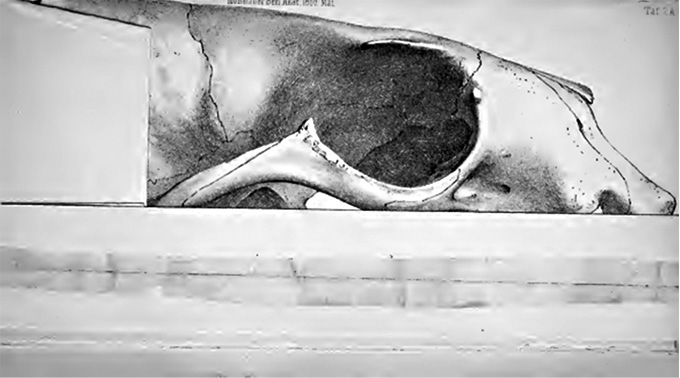
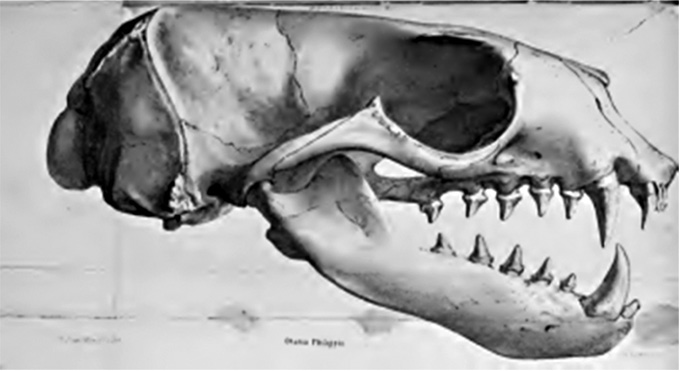
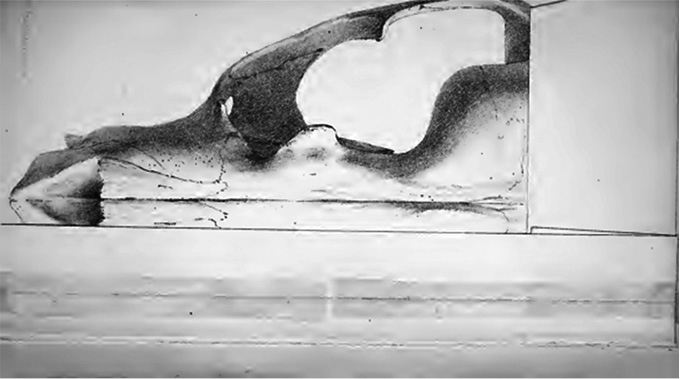
<body><![CDATA[<p><font face="Verdana" size="2">Due to the already large number of species in the genus, it was difficult to accept the birth of a new species. Faced with Peters's affirmation, other naturalists began to re-examine the species in their possession and compare them with the one examined by Peters. We will now attempt to unpack the different positions. However, the goal is not to study the controversies themselves (in spite of their importance), but rather explore how their arguments depended on the material conditions of the specimen in transit.</font></p>     <p><font face="Verdana" size="2">The first mention of <i>Otaria philippii</i> was in that same year of 1866 by naturalist John Edward Gray. According to Gray, Peters's classification had led him "to re-examine the skulls and skeletons &#091;of <i>Otaria</i> specimens&#093; in the British Museum" <sup><a id="footnote-6322-50-backlink" href="#footnote-6322-50">50</a></sup>. In doing so, Gray lamented not having specimens from Australia or New Zealand to be able to make a reliable comparison with the South American one in question. Regarding the <i>Otaria philippii</i> he stated that, "According to the figures, the form of the skull and the large size of the orbit are very similar to those of the <i>Phocarctos hookeri</i>; but the number and form of the teeth are different"<sup><a id="footnote-6322-51-backlink" href="#footnote-6322-51">51</a></sup>.</font></p>     <p><font face="Verdana" size="2">In 1867, Philippi wrote to the Faculty of Physical Science and Mathematics at the <i>Universidad de Chile</i> about "a new species of seal or sea lion from Chilean waters, described by Peters". He explained how, after making known his interest in obtaining "Chilean species", he traveled to Juan Fern&aacute;ndez Island during which a sea lion they had observed was, at first, thought to be an <i>Otaria forsteri</i>. He went on to say that, "I sent a specimen to the Museum of Berlin, whose director, Peters (...) found that it is a new species and dedicated it to me"<sup><a id="footnote-6322-52-backlink" href="#footnote-6322-52">52</a></sup>. The remainder is a summary of the <i>Otaria</i> classifications published by Peters in 1866 in the reports to the Royal Academy of Sciences of Berlin as well as a complete reproduction of the part referring to the <i>Otaria philippii</i><sup><a id="footnote-6322-53-backlink" href="#footnote-6322-53">53</a></sup>.</font></p>     <p><font face="Verdana" size="2">A different point of view on the new <i>Otaria</i> species came from German naturalist and director of the <i>Museo P&uacute;blico de Buenos Aires</i> (Public Museum of Buenos Aires), Hermann Burmeister. Like Philippi, Burmeister cited Peters's 1866 publication, debating the typology it employed<sup><a id="footnote-6322-54-backlink" href="#footnote-6322-54">54</a></sup>, and then compared Peters's report with the collections he had at the museum in Buenos Aires.</font></p>     <p><font face="Verdana" size="2">With regard to the <i>Otaria philipii</i>, Burmeister had no doubts -its close similarity to <i>Otaria falklandica</i> was such that it belonged to the same genus, however they were two distinct species<sup><a id="footnote-6322-55-backlink" href="#footnote-6322-55">55</a></sup> Burmeister did not agree with Peters's affirmation.</font></p>     <p><font face="Verdana" size="2">When comparing the drawing of the <i>Otaria philippii</i> in Peters's text with the skeleton of the <i>Otaria falklandica</i> at the museum in Buenos Aires, he noticed that the <i>Otaria falklandica</i>'s skeleton had the same general form and size. However, upon shifting his perspective of comparison to the top down, several differences began to surface relative to the shape of the snout, number of teeth, size of the forehead, etc. (<a href="#f1">Figure 1</a>). From the bottom up, he observed that in the case of <i>Otaria falklandica</i> the base of the cranium was bigger, the teeth were positioned differently in the palate and that there was a different amount of molars. In comparing the figure in Peters's text with the skeleton at his museum, Burmeister measured in millimetres the total length of the skeleton, jaw and lower jaw, as well as the width of the zygomatic arch and snout. The differences were minimal. Yet, the decisive factor that separated the two species was, according to this German naturalist, the dissimilarity of the nasal cavities and protrusion of the forehead. In his conclusion, Burmeister cites Juan Ignacio Molina<sup><a id="footnote-6322-56-backlink" href="#footnote-6322-56">56</a></sup> and his descriptions of the <i>Phoca porcina</i>, which he believed to be the same species that Peters had identified as <i>Otaria philippii</i><sup><a id="footnote-6322-57-backlink" href="#footnote-6322-57">57</a></sup>. In this sense, visual representation was key in defining the characteristics considered to be essential in determining a species<sup><a id="footnote-6322-58-backlink" href="#footnote-6322-58">58</a></sup>.</font></p>     <p>&nbsp;</p>     <p align="center"><font face="Verdana" size="2"><a name="f1"></a><img src="/img/revistas/dyn/v37n1/06_articulo1_fig1.jpg">    <br>Figure 1<i>. Otaria philippi</i>. Source: Peters Wilhelm. &Uuml;ber die Ohrenrobben (See L&ouml;wen und Seeb&auml;ren),    <br>Otariae, insbesondere &uuml;ber die in den Sammlungen zu Berlin befindlichen Arten.    ]]></body>
<body><![CDATA[<br>Monatsbericht der K&ouml;niglich Preussischen Akademie der Wissenschaften zu Berlin. 1866: 268.</font></p>     <p>&nbsp;</p>     <p><font face="Verdana" size="2">In 1869, James Murie, in an article on marine species of the Falkland Islands, commented on the categorization of the species by Gray and Peters, citing the aforementioned 1866 article for the latter. Murie did not agree with the addition of a new <i>Otaria</i> species. Like Gray, Murie did not have a skeleton of the animal, for which he had to base his judgement "on a careful comparison of Dr. Peters's figure with the British-Museum specimens of skulls named <i>O. hookeri</i>"<sup><a id="footnote-6322-59-backlink" href="#footnote-6322-59">59</a></sup>.</font></p>     <p><font face="Verdana" size="2">John Edward Gray intervened in the debate in 1872 by comparing the species described by Peters in 1866 with specimens' skulls from New Zealand and northern Australia acquired by the British Museum. Gray's comparisons were more extensive as they not only considered drawings from South America, but also from the broader South Pacific, which undoubtedly gave him an advantage over his peers when responding to the debate. He contrasted what was said about the cranium of the <i>Otaria philippii</i> with skulls from northern Australia by measuring the total length, and shape of the cerebral cavity, molars, jaw, etc. Aside from the fact that the specimen at the British Museum had lost some of its teeth and molars, making the comparison with Peters's drawing a difficult task, Gray still called into question the new species described in Berlin<sup><a id="footnote-6322-60-backlink" href="#footnote-6322-60">60</a></sup>.</font></p>     <p><font face="Verdana" size="2">In 1879, Burmeister would once again challenge the classification of the <i>Otaria philippii</i> in his physical description of the Argentine Republic. After conducting a classification of the <i>Otarias</i> in Argentina and its environs, Burmeister concluded that the species named by Peters in 1866, with regard to its shape and measurements, was the same as the <i>Otaria ursina</i> described by Claude Gay<sup><a id="footnote-6322-61-backlink" href="#footnote-6322-61">61</a></sup>. Here the measurements of the remains of the sea lion once again became the valid criterion in defining a species.</font></p>     <p><font face="Verdana" size="2">Philippi disputed this publication in two articles published in 1888 in Germany and 1889 in Chile, in which the issue took on a personal character: "The reader shall have to forgive me if I come out fighting in defense of my marine namesake against my colleague Burmeister, who would like to deny it its honourable name"<sup><a id="footnote-6322-62-backlink" href="#footnote-6322-62">62</a></sup>. On the one hand, Philippi considered that in Gay's text cited by the naturalist in Buenos Aires, "the <i>Otaria ursina</i> cannot be the same as the <i>Otaria philippii</i>, as it is the <i>Otaria</i> of the Arctic Sea". On the other hand, it was not possible to validate Burmeister's affirmation that attributed the Juan Fern&aacute;ndez species to Gay: "(...) Gay says nothing about that and would not have been able to, since he never saw a seal on that island"<sup><a id="footnote-6322-63-backlink" href="#footnote-6322-63">63</a></sup>. The location of the species was taken as a criterion for its difference. Finally, the possibility suggested by Burmeister of equating the Philippi species with a female of another that was already classified was put into doubt. An examination of the skull would be conclusive:</font></p>     <blockquote>     <p><font face="Verdana" size="2">"For me it's hard to believe that such a difference can exist between the shape of the head of the male and female. Unfortunately, both of my <i>Otaria</i> specimens (...) are female and I do not have any crania; for which I shall leave my judgement on hold"<sup><a id="footnote-6322-64-backlink" href="#footnote-6322-64">64</a></sup>.</font></p> </blockquote>     <p><font face="Verdana" size="2">The discussion could not continue without specimens to compare. The possibility of validating the various claims depended not only on the persuasiveness of each argument, but, above all, the museums' capacity to obtain species. Insofar as the catalogue of specimens was diverse and in good condition, naturalists could develop their argument. In that sense, the network of naturalists and museums set knowledge in motion.</font></p>     <p><font face="Verdana" size="2">The discussion on the existence of a new species of <i>Otaria</i> was carried on by Philippi throughout the nineteenth century. In fact, the discussion has continued up to today. Peters's 1886 article was used as the basis for the classification of the species <i>Arctocephalus Philipii.</i> This species, one can say, is the direct descendant of the type that was under discussion during the nineteenth century.</font></p>     ]]></body>
<body><![CDATA[<p>&nbsp;</p>     <p><font face="Verdana" size="2"><b>6. Concluding remarks</b></font></p>     <p><font face="Verdana" size="2">The debate among naturalists analyzed in this article hinged upon the effort to classify species within the framework of Carl Linnaeus's <i>Systema Naturae</i>. Therefore, the goal was to identify the characteristics that could make a species unique and distinguishable from others, within a specific geographical space. Interestingly, aside from the changes taking place at the time, there is no evidence to suggest that the controversy was swayed by conceptions such as 'uniformitarianism' or even 'Darwinism'. Rather, the discussion centred exclusively on the indicators that differentiated one species from another<sup><a id="footnote-6322-65-backlink" href="#footnote-6322-65">65</a></sup>.</font></p>     <p><font face="Verdana" size="2">Undoubtedly, the morphological study of animal remains was the most commonly employed method of defining species and settling debate. This implied that examinations of the specimen were thorough and included measurements of the cranium, fur, teeth, jaw, snout, etc. In this respect, the conditions of mobility of the animal proved quite important since they determined what exactly was going to be discussed. The skin and bones could be sent over long distances in the nineteenth century, at a reasonable cost to the institutions that sought to acquire them; that which could be studied was that which could be mobilized.</font></p>     <p><font face="Verdana" size="2">The institution made it possible to hunt the animal, transform it into transportable objects and put it into circulation within a global network of science. This meant that museums could obtain new specimens in order to compare them with others described in scientific articles. As a result, Gray rose to prominence since the British Museum had in its possession specimens' bones and skins from other parts of the world, such as Oceania. Moreover, the conditions of preservation in museums were crucial factors in these scientific disputes; if part of the remains were missing or were severely damaged they could not be compared, measured or weighed. This proves that nineteenth-century museums were not merely spaces of accumulation and exhibition of objects; they were a fundamental part of the very production of scientific knowledge. Recently, it has been stated that museum collections are "a primary source of information on the morphology of mammals, and they have been particularly valuable for systematic studies involving comparative anatomy"<sup><a id="footnote-6322-66-backlink" href="#footnote-6322-66">66</a></sup>. This case study attempted to show the genealogy of those studies.</font></p>     <p>&nbsp;</p>     <p align="center"><font face="Verdana" size="2"><a name="f2"></a><img src="/img/revistas/dyn/v37n1/06_articulo1_fig2.jpg">    <br><a name="f3"></a><img src="/img/revistas/dyn/v37n1/06_articulo1_fig3.jpg">    <br>Figure 2 and 3<i>. Otaria philippi</i>. Surce: Peters Wilhelm. &Uuml;ber die Ohrenrobben (See L&ouml;wen und Seeb&auml;ren),    <br>Otariae, insbesondere &uuml;ber die in den Sammlungen zu Berlin befindlichen Arten.    ]]></body>
<body><![CDATA[<br>Monatsbericht der K&ouml;niglich Preussischen Akademie der Wissenschaften zu Berlin. 1866: 268.</font></p>     <p>&nbsp;</p>     <p><font face="Verdana" size="2"><b>Acknowledgments</b></font></p>     <p><font face="Verdana" size="2">The author would like to thank Hannelore Landsberg from the Museum f&uuml;r Naturkunde in Berlin, Barbara Goebel from Ibero-Americab Institute, Berlin, Gabriela Riveros from the Chilean National Museum of Natural History and Gabriela Polanco from the Universidad de Chile for their generous assistance. Special thanks also goes to Lorena Valderrama and Davir V&eacute;liz for their close readin of this article.</font></p>     <p>&nbsp;</p>     <p><font face="Verdana" size="2"><b>References</b></font></p>     <!-- ref --><p><font face="Verdana" size="2"><sup><a id="footnote-6322-1" href="#footnote-6322-1-backlink">1</a></sup> Coyne, Jerry A.; Orr, Allen. Speciation. Sunderland: Sinauer Associates; 2004, p. 25.    &nbsp;&nbsp;&nbsp;&nbsp;&nbsp;&nbsp;&nbsp;&nbsp;[&#160;<a href="javascript:void(0);" onclick="javascript: window.open('/scielo.php?script=sci_nlinks&ref=1757586&pid=S0211-9536201700010000600001&lng=','','width=640,height=500,resizable=yes,scrollbars=1,menubar=yes,');">Links</a>&#160;]<!-- end-ref --></font></p>    <!-- ref --><p><font face="Verdana" size="2"><sup><a id="footnote-6322-2" href="#footnote-6322-2-backlink">2</a></sup>. Futuyma, Douglas. Evolution. Sunderland: Sinauer Associates; 2005, p. 354.    &nbsp;&nbsp;&nbsp;&nbsp;&nbsp;&nbsp;&nbsp;&nbsp;[&#160;<a href="javascript:void(0);" onclick="javascript: window.open('/scielo.php?script=sci_nlinks&ref=1757588&pid=S0211-9536201700010000600002&lng=','','width=640,height=500,resizable=yes,scrollbars=1,menubar=yes,');">Links</a>&#160;]<!-- end-ref --></font></p>    ]]></body>
<body><![CDATA[<!-- ref --><p><font face="Verdana" size="2"><sup><a id="footnote-6322-3" href="#footnote-6322-3-backlink">3</a></sup>. Nosil, Patrik. Ecological Speciation. New York: Oxford University Press; 2012, p xv.    &nbsp;&nbsp;&nbsp;&nbsp;&nbsp;&nbsp;&nbsp;&nbsp;[&#160;<a href="javascript:void(0);" onclick="javascript: window.open('/scielo.php?script=sci_nlinks&ref=1757590&pid=S0211-9536201700010000600003&lng=','','width=640,height=500,resizable=yes,scrollbars=1,menubar=yes,');">Links</a>&#160;]<!-- end-ref --></font></p>    <!-- ref --><p><font face="Verdana" size="2"><sup><a id="footnote-6322-4" href="#footnote-6322-4-backlink">4</a></sup>. Nyhart, Lynn K. Biology takes form: Animal morphology and the German universities, 1800-1900. Chicago; London: University of Chicago Press; 1995, p. 2.    &nbsp;&nbsp;&nbsp;&nbsp;&nbsp;&nbsp;&nbsp;&nbsp;[&#160;<a href="javascript:void(0);" onclick="javascript: window.open('/scielo.php?script=sci_nlinks&ref=1757592&pid=S0211-9536201700010000600004&lng=','','width=640,height=500,resizable=yes,scrollbars=1,menubar=yes,');">Links</a>&#160;]<!-- end-ref --><!-- ref --> For a discussion on essentialism prior to Darwin, see Winsor, Mary P. Non-essentialist methods in pre-Darwinian taxonomy. Biology and Philosophy. 2003; 18 (3): 387-400.    &nbsp;&nbsp;&nbsp;&nbsp;&nbsp;&nbsp;&nbsp;&nbsp;[&#160;<a href="javascript:void(0);" onclick="javascript: window.open('/scielo.php?script=sci_nlinks&ref=1757593&pid=S0211-9536201700010000600005&lng=','','width=640,height=500,resizable=yes,scrollbars=1,menubar=yes,');">Links</a>&#160;]<!-- end-ref --></font></p>    <p><font face="Verdana" size="2"><sup><a id="footnote-6322-5" href="#footnote-6322-5-backlink">5</a></sup>. Nyhart has stated that these debates took place in the context of the institutionalization process of animal morphology in German Universities. Nyhart, n. 4.</font></p>    <!-- ref --><p><font face="Verdana" size="2"><sup><a id="footnote-6322-6" href="#footnote-6322-6-backlink">6</a></sup>. Berta, Annalisa; Churchill, Morgan. Pinniped taxonomy: review of currently recognized species and subspecies, and evidence used for their description. Mammal Review. 2012; 42 (3): 207-234 (207).    &nbsp;&nbsp;&nbsp;&nbsp;&nbsp;&nbsp;&nbsp;&nbsp;[&#160;<a href="javascript:void(0);" onclick="javascript: window.open('/scielo.php?script=sci_nlinks&ref=1757596&pid=S0211-9536201700010000600006&lng=','','width=640,height=500,resizable=yes,scrollbars=1,menubar=yes,');">Links</a>&#160;]<!-- end-ref --></font></p>    <p><font face="Verdana" size="2"><sup><a id="footnote-6322-7" href="#footnote-6322-7-backlink">7</a></sup>. Berta; Churchill, n. 6.</font></p>    <p><font face="Verdana" size="2"><sup><a id="footnote-6322-8" href="#footnote-6322-8-backlink">8</a></sup>. Berta; Churchill, n. 6.</font></p>    ]]></body>
<body><![CDATA[<!-- ref --><p><font face="Verdana" size="2"><sup><a id="footnote-6322-9" href="#footnote-6322-9-backlink">9</a></sup>. Latour, Bruno. Science in action. Cambridge: Harvard University Press; 1987, p. 132-141;    &nbsp;&nbsp;&nbsp;&nbsp;&nbsp;&nbsp;&nbsp;&nbsp;[&#160;<a href="javascript:void(0);" onclick="javascript: window.open('/scielo.php?script=sci_nlinks&ref=1757600&pid=S0211-9536201700010000600007&lng=','','width=640,height=500,resizable=yes,scrollbars=1,menubar=yes,');">Links</a>&#160;]<!-- end-ref --><!-- ref --> Bourguet, Marie-No&euml;lle; Licoppe, Christian; Sibum, Otto H., eds. Instruments, travel and science. Itineraries of precision from the seventeenth to the twentieth century. London: Routledge; 2002;    &nbsp;&nbsp;&nbsp;&nbsp;&nbsp;&nbsp;&nbsp;&nbsp;[&#160;<a href="javascript:void(0);" onclick="javascript: window.open('/scielo.php?script=sci_nlinks&ref=1757601&pid=S0211-9536201700010000600008&lng=','','width=640,height=500,resizable=yes,scrollbars=1,menubar=yes,');">Links</a>&#160;]<!-- end-ref --><!-- ref --> Raposo, Pedro M. P.; Sim&otilde;es, Ana; Patiniotis, Manolis; Bertomeu-S&aacute;nchez, Jos&eacute; Ram&oacute;n. Moving localities and creative circulation: Travels as knowledge production in 18<sup>th</sup>-century Europe. Centaurus. 2014; 56: 167-188.    &nbsp;&nbsp;&nbsp;&nbsp;&nbsp;&nbsp;&nbsp;&nbsp;[&#160;<a href="javascript:void(0);" onclick="javascript: window.open('/scielo.php?script=sci_nlinks&ref=1757602&pid=S0211-9536201700010000600009&lng=','','width=640,height=500,resizable=yes,scrollbars=1,menubar=yes,');">Links</a>&#160;]<!-- end-ref --></font></p>    <!-- ref --><p><font face="Verdana" size="2"><sup><a id="footnote-6322-10" href="#footnote-6322-10-backlink">10</a></sup>. Secord, James. Knowledge in transit, Isis. 2004; 95: 661.    &nbsp;&nbsp;&nbsp;&nbsp;&nbsp;&nbsp;&nbsp;&nbsp;[&#160;<a href="javascript:void(0);" onclick="javascript: window.open('/scielo.php?script=sci_nlinks&ref=1757604&pid=S0211-9536201700010000600010&lng=','','width=640,height=500,resizable=yes,scrollbars=1,menubar=yes,');">Links</a>&#160;]<!-- end-ref --></font></p>    <!-- ref --><p><font face="Verdana" size="2"><sup><a id="footnote-6322-11" href="#footnote-6322-11-backlink">11</a></sup>. Faria, Alice Santiago; Raposo, Pedro, eds. Mobilidade e circula&ccedil;&atilde;o. Perspectivas em hist&oacute;ria da ci&ecirc;ncia e da tecnologia. Lisboa: CIUHCT; 2014.    &nbsp;&nbsp;&nbsp;&nbsp;&nbsp;&nbsp;&nbsp;&nbsp;[&#160;<a href="javascript:void(0);" onclick="javascript: window.open('/scielo.php?script=sci_nlinks&ref=1757606&pid=S0211-9536201700010000600011&lng=','','width=640,height=500,resizable=yes,scrollbars=1,menubar=yes,');">Links</a>&#160;]<!-- end-ref --></font></p>    <!-- ref --><p><font face="Verdana" size="2"><sup><a id="footnote-6322-12" href="#footnote-6322-12-backlink">12</a></sup>. Raj, Kapil. Relocating modern science. Circulation and the construction of knowledge in South Asia and Europe, 1650-1900. London: Palgrave Macmillan; 2007;    &nbsp;&nbsp;&nbsp;&nbsp;&nbsp;&nbsp;&nbsp;&nbsp;[&#160;<a href="javascript:void(0);" onclick="javascript: window.open('/scielo.php?script=sci_nlinks&ref=1757608&pid=S0211-9536201700010000600012&lng=','','width=640,height=500,resizable=yes,scrollbars=1,menubar=yes,');">Links</a>&#160;]<!-- end-ref --><!-- ref --> Raj, Kapil, Beyond Postcolonialism ...and Postpositivism: Circulation and the global history of Science. Isis. 2013; 104 (2): 337-347;    &nbsp;&nbsp;&nbsp;&nbsp;&nbsp;&nbsp;&nbsp;&nbsp;[&#160;<a href="javascript:void(0);" onclick="javascript: window.open('/scielo.php?script=sci_nlinks&ref=1757609&pid=S0211-9536201700010000600013&lng=','','width=640,height=500,resizable=yes,scrollbars=1,menubar=yes,');">Links</a>&#160;]<!-- end-ref --><!-- ref --> Arabatzis, Theodore; Renn, J&uuml;rgen; Sim&otilde;es, Ana, eds. Relocating the history of science. Essays in honor of Kostas Gavroglu. Cham: Springer; 2015.    &nbsp;&nbsp;&nbsp;&nbsp;&nbsp;&nbsp;&nbsp;&nbsp;[&#160;<a href="javascript:void(0);" onclick="javascript: window.open('/scielo.php?script=sci_nlinks&ref=1757610&pid=S0211-9536201700010000600014&lng=','','width=640,height=500,resizable=yes,scrollbars=1,menubar=yes,');">Links</a>&#160;]<!-- end-ref --></font></p>    <!-- ref --><p><font face="Verdana" size="2"><sup><a id="footnote-6322-13" href="#footnote-6322-13-backlink">13</a></sup>. A prime example of this can found in the scholarship on the building of telescopes during the nineteenth and twentieth centuries. See Watson, Fred, ed. Star gazer: The life and history of the telescope. Sydney: Allen &amp; Unwin/Da Capo Press; 2004;    &nbsp;&nbsp;&nbsp;&nbsp;&nbsp;&nbsp;&nbsp;&nbsp;[&#160;<a href="javascript:void(0);" onclick="javascript: window.open('/scielo.php?script=sci_nlinks&ref=1757612&pid=S0211-9536201700010000600015&lng=','','width=640,height=500,resizable=yes,scrollbars=1,menubar=yes,');">Links</a>&#160;]<!-- end-ref --><!-- ref --> King, Henry C. History of telescope. London: Charles Griffin; 1955;    &nbsp;&nbsp;&nbsp;&nbsp;&nbsp;&nbsp;&nbsp;&nbsp;[&#160;<a href="javascript:void(0);" onclick="javascript: window.open('/scielo.php?script=sci_nlinks&ref=1757613&pid=S0211-9536201700010000600016&lng=','','width=640,height=500,resizable=yes,scrollbars=1,menubar=yes,');">Links</a>&#160;]<!-- end-ref --><!-- ref --> Williams, Thomas R., Telescopes since 1820. In: Lankford, John. History of astronomy: An encyclopedia. Nueva York: Taylor &amp; Francis; 1997.    &nbsp;&nbsp;&nbsp;&nbsp;&nbsp;&nbsp;&nbsp;&nbsp;[&#160;<a href="javascript:void(0);" onclick="javascript: window.open('/scielo.php?script=sci_nlinks&ref=1757614&pid=S0211-9536201700010000600017&lng=','','width=640,height=500,resizable=yes,scrollbars=1,menubar=yes,');">Links</a>&#160;]<!-- end-ref --></font></p>    <!-- ref --><p><font face="Verdana" size="2"><sup><a id="footnote-6322-14" href="#footnote-6322-14-backlink">14</a></sup>. Van Helden, Albert; Hankins, Thomas L. Introduction: instruments in the history of science. Osiris. 1994; 1-6.    &nbsp;&nbsp;&nbsp;&nbsp;&nbsp;&nbsp;&nbsp;&nbsp;[&#160;<a href="javascript:void(0);" onclick="javascript: window.open('/scielo.php?script=sci_nlinks&ref=1757616&pid=S0211-9536201700010000600018&lng=','','width=640,height=500,resizable=yes,scrollbars=1,menubar=yes,');">Links</a>&#160;]<!-- end-ref --></font></p>    <p><font face="Verdana" size="2"><sup><a id="footnote-6322-15" href="#footnote-6322-15-backlink">15</a></sup>. Bourguet, n. 9.</font></p>    <!-- ref --><p><font face="Verdana" size="2"><sup><a id="footnote-6322-16" href="#footnote-6322-16-backlink">16</a></sup>. Wise, Norton M. Mediating machines. Science in Context. 1988; 2: 77-113;    &nbsp;&nbsp;&nbsp;&nbsp;&nbsp;&nbsp;&nbsp;&nbsp;[&#160;<a href="javascript:void(0);" onclick="javascript: window.open('/scielo.php?script=sci_nlinks&ref=1757619&pid=S0211-9536201700010000600019&lng=','','width=640,height=500,resizable=yes,scrollbars=1,menubar=yes,');">Links</a>&#160;]<!-- end-ref --> Bourguet, n. 9.</font></p>    <p><font face="Verdana" size="2"><sup><a id="footnote-6322-17" href="#footnote-6322-17-backlink">17</a></sup>. Wise, n. 16.</font></p>    <!-- ref --><p><font face="Verdana" size="2"><sup><a id="footnote-6322-18" href="#footnote-6322-18-backlink">18</a></sup>. Pearce, Susan. Museums, objects and collections. Washington: Smithsonian Institution Press; 1992, p. 1-14;    &nbsp;&nbsp;&nbsp;&nbsp;&nbsp;&nbsp;&nbsp;&nbsp;[&#160;<a href="javascript:void(0);" onclick="javascript: window.open('/scielo.php?script=sci_nlinks&ref=1757622&pid=S0211-9536201700010000600020&lng=','','width=640,height=500,resizable=yes,scrollbars=1,menubar=yes,');">Links</a>&#160;]<!-- end-ref --><!-- ref --> Genoways, Hugh H; Andrei, Mary Anne, eds. Museums origins. Readings in early museum history. Walnut Creek: Left Coast Press; 2008, p. 199-248;    &nbsp;&nbsp;&nbsp;&nbsp;&nbsp;&nbsp;&nbsp;&nbsp;[&#160;<a href="javascript:void(0);" onclick="javascript: window.open('/scielo.php?script=sci_nlinks&ref=1757623&pid=S0211-9536201700010000600021&lng=','','width=640,height=500,resizable=yes,scrollbars=1,menubar=yes,');">Links</a>&#160;]<!-- end-ref --><!-- ref --> Heesen, Anke te. Theorien des Museums. Hamburg: Junius; 2012, p. 22-23.    &nbsp;&nbsp;&nbsp;&nbsp;&nbsp;&nbsp;&nbsp;&nbsp;[&#160;<a href="javascript:void(0);" onclick="javascript: window.open('/scielo.php?script=sci_nlinks&ref=1757624&pid=S0211-9536201700010000600022&lng=','','width=640,height=500,resizable=yes,scrollbars=1,menubar=yes,');">Links</a>&#160;]<!-- end-ref --></font></p>    <!-- ref --><p><font face="Verdana" size="2"><sup><a id="footnote-6322-19" href="#footnote-6322-19-backlink">19</a></sup>. For more on the notion of "exhibitionary complex" see Bennett, Tony. The birth of the museum. History, theory, politics. London: Routledge; 1995.    &nbsp;&nbsp;&nbsp;&nbsp;&nbsp;&nbsp;&nbsp;&nbsp;[&#160;<a href="javascript:void(0);" onclick="javascript: window.open('/scielo.php?script=sci_nlinks&ref=1757626&pid=S0211-9536201700010000600023&lng=','','width=640,height=500,resizable=yes,scrollbars=1,menubar=yes,');">Links</a>&#160;]<!-- end-ref --></font></p>    <!-- ref --><p><font face="Verdana" size="2"><sup><a id="footnote-6322-20" href="#footnote-6322-20-backlink">20</a></sup>. Conn, Steven. Do museums still need objects? Philadelphia: University of Pennsylvania Press; 2010, p. 5-6.    &nbsp;&nbsp;&nbsp;&nbsp;&nbsp;&nbsp;&nbsp;&nbsp;[&#160;<a href="javascript:void(0);" onclick="javascript: window.open('/scielo.php?script=sci_nlinks&ref=1757628&pid=S0211-9536201700010000600024&lng=','','width=640,height=500,resizable=yes,scrollbars=1,menubar=yes,');">Links</a>&#160;]<!-- end-ref --></font></p>    ]]></body>
<body><![CDATA[<!-- ref --><p><font face="Verdana" size="2"><sup><a id="footnote-6322-21" href="#footnote-6322-21-backlink">21</a></sup>. Dudley, Sandra. Museum materialities. Objects, engagements, interpretations. London: Routledge; 2010, p. 4.    &nbsp;&nbsp;&nbsp;&nbsp;&nbsp;&nbsp;&nbsp;&nbsp;[&#160;<a href="javascript:void(0);" onclick="javascript: window.open('/scielo.php?script=sci_nlinks&ref=1757630&pid=S0211-9536201700010000600025&lng=','','width=640,height=500,resizable=yes,scrollbars=1,menubar=yes,');">Links</a>&#160;]<!-- end-ref --></font></p>    <!-- ref --><p><font face="Verdana" size="2"><sup><a id="footnote-6322-22" href="#footnote-6322-22-backlink">22</a></sup>. Rose, Gillian; Tolia-Kelly, Divya, eds. Visuality/materiality. Images, objects and practices. Surrey: Ashgate; 2012.    &nbsp;&nbsp;&nbsp;&nbsp;&nbsp;&nbsp;&nbsp;&nbsp;[&#160;<a href="javascript:void(0);" onclick="javascript: window.open('/scielo.php?script=sci_nlinks&ref=1757632&pid=S0211-9536201700010000600026&lng=','','width=640,height=500,resizable=yes,scrollbars=1,menubar=yes,');">Links</a>&#160;]<!-- end-ref --></font></p>    <p><font face="Verdana" size="2"><sup><a id="footnote-6322-23" href="#footnote-6322-23-backlink">23</a></sup>. This does not mean we should abandon cultural aspects, but rather attend to an aspect that has previously received little attention. Dudley, n. 21, p. 4-5.</font></p>    <p><font face="Verdana" size="2"><sup><a id="footnote-6322-24" href="#footnote-6322-24-backlink">24</a></sup>. Dudley, n. 21, p. 7.</font></p>    <!-- ref --><p><font face="Verdana" size="2"><sup><a id="footnote-6322-25" href="#footnote-6322-25-backlink">25</a></sup>. Hicks, Dan. The Material-cultural turn. In: Hicks, Dan; Beaudry, Mary Carolyn, eds. The Oxford handbook of material culture studies. Oxford: Oxford University Press; 2010, p. 25-98.    &nbsp;&nbsp;&nbsp;&nbsp;&nbsp;&nbsp;&nbsp;&nbsp;[&#160;<a href="javascript:void(0);" onclick="javascript: window.open('/scielo.php?script=sci_nlinks&ref=1757636&pid=S0211-9536201700010000600027&lng=','','width=640,height=500,resizable=yes,scrollbars=1,menubar=yes,');">Links</a>&#160;]<!-- end-ref --></font></p>    <!-- ref --><p><font face="Verdana" size="2"><sup><a id="footnote-6322-26" href="#footnote-6322-26-backlink">26</a></sup>. This implies that in research "not all that is solid melts into air", so as to confront the dematerialized conception of culture and society, as well as constructivist theory, that imposed their anti-material hegemony. Olsen, Bj&oslash;rnar. In defense of things: Archaeology and the ontology of objects. Lanham: AltaMira; 2013, p. 1-20.    &nbsp;&nbsp;&nbsp;&nbsp;&nbsp;&nbsp;&nbsp;&nbsp;[&#160;<a href="javascript:void(0);" onclick="javascript: window.open('/scielo.php?script=sci_nlinks&ref=1757638&pid=S0211-9536201700010000600028&lng=','','width=640,height=500,resizable=yes,scrollbars=1,menubar=yes,');">Links</a>&#160;]<!-- end-ref --></font></p>    ]]></body>
<body><![CDATA[<!-- ref --><p><font face="Verdana" size="2"><sup><a id="footnote-6322-27" href="#footnote-6322-27-backlink">27</a></sup>. Podgorny, Irina; Lopes, Maria Margaret. El desierto en una vitrina. Museos e historia natural en la Argentina, 1810-1890. M&eacute;xico: Limusa; 2008.    &nbsp;&nbsp;&nbsp;&nbsp;&nbsp;&nbsp;&nbsp;&nbsp;[&#160;<a href="javascript:void(0);" onclick="javascript: window.open('/scielo.php?script=sci_nlinks&ref=1757640&pid=S0211-9536201700010000600029&lng=','','width=640,height=500,resizable=yes,scrollbars=1,menubar=yes,');">Links</a>&#160;]<!-- end-ref --></font></p>    <!-- ref --><p><font face="Verdana" size="2"><sup><a id="footnote-6322-28" href="#footnote-6322-28-backlink">28</a></sup>. Podgorny, Irina, ed. El sendero del tiempo y de las causas accidentales: los espacios de la prehistoria en la Argentina, 1850-1910, Buenos Aires: Prohistoria; 2009.    &nbsp;&nbsp;&nbsp;&nbsp;&nbsp;&nbsp;&nbsp;&nbsp;[&#160;<a href="javascript:void(0);" onclick="javascript: window.open('/scielo.php?script=sci_nlinks&ref=1757642&pid=S0211-9536201700010000600030&lng=','','width=640,height=500,resizable=yes,scrollbars=1,menubar=yes,');">Links</a>&#160;]<!-- end-ref --></font></p>    <!-- ref --><p><font face="Verdana" size="2"><sup><a id="footnote-6322-29" href="#footnote-6322-29-backlink">29</a></sup>. Podgorny, Irina; Achim, Miruna, eds. Museos al detalle. Colecciones, antig&uuml;edades e historia natural, 1790-1870. Rosario: Protohistoria; 2014.    &nbsp;&nbsp;&nbsp;&nbsp;&nbsp;&nbsp;&nbsp;&nbsp;[&#160;<a href="javascript:void(0);" onclick="javascript: window.open('/scielo.php?script=sci_nlinks&ref=1757644&pid=S0211-9536201700010000600031&lng=','','width=640,height=500,resizable=yes,scrollbars=1,menubar=yes,');">Links</a>&#160;]<!-- end-ref --></font></p>    <p><font face="Verdana" size="2"><sup><a id="footnote-6322-30" href="#footnote-6322-30-backlink">30</a></sup>. Sanhueza, Carlos. El Gabinete de historia natural de Santiago de Chile. In: Podgorny, n. 28, p. 201-218.</font></p>    <!-- ref --><p><font face="Verdana" size="2"><sup><a id="footnote-6322-31" href="#footnote-6322-31-backlink">31</a></sup>. Schell, Patience. Idols, altars, slippers, and stockings: Heritage debates and displays in nineteenth-century Chile. Past and Present. 2015; Supl 10: 326-348;    &nbsp;&nbsp;&nbsp;&nbsp;&nbsp;&nbsp;&nbsp;&nbsp;[&#160;<a href="javascript:void(0);" onclick="javascript: window.open('/scielo.php?script=sci_nlinks&ref=1757647&pid=S0211-9536201700010000600032&lng=','','width=640,height=500,resizable=yes,scrollbars=1,menubar=yes,');">Links</a>&#160;]<!-- end-ref --><!-- ref --> Schell, Patience. The sociable sciences. Darwin and his contemporaries in Chile. New York: Palgrave; 2013;    &nbsp;&nbsp;&nbsp;&nbsp;&nbsp;&nbsp;&nbsp;&nbsp;[&#160;<a href="javascript:void(0);" onclick="javascript: window.open('/scielo.php?script=sci_nlinks&ref=1757648&pid=S0211-9536201700010000600033&lng=','','width=640,height=500,resizable=yes,scrollbars=1,menubar=yes,');">Links</a>&#160;]<!-- end-ref --><!-- ref --> Schell, Patience. Museos, exposiciones y la muestra de lo chileno en el siglo XIX. In: Cid, Gabriel; San Francisco, Alejandro, eds. Naci&oacute;n y nacionalismo en Chile. Siglo XIX. Santiago: Bicentenario; 2009, p. 85-116;    &nbsp;&nbsp;&nbsp;&nbsp;&nbsp;&nbsp;&nbsp;&nbsp;[&#160;<a href="javascript:void(0);" onclick="javascript: window.open('/scielo.php?script=sci_nlinks&ref=1757649&pid=S0211-9536201700010000600034&lng=','','width=640,height=500,resizable=yes,scrollbars=1,menubar=yes,');">Links</a>&#160;]<!-- end-ref --><!-- ref --> Schell, Patience. Capturing Chile: Santiago's Museo Nacional during the nineteenth century. Journal of Latin American Cultural Studies. 2001; 10 (1): 45-65.    &nbsp;&nbsp;&nbsp;&nbsp;&nbsp;&nbsp;&nbsp;&nbsp;[&#160;<a href="javascript:void(0);" onclick="javascript: window.open('/scielo.php?script=sci_nlinks&ref=1757650&pid=S0211-9536201700010000600035&lng=','','width=640,height=500,resizable=yes,scrollbars=1,menubar=yes,');">Links</a>&#160;]<!-- end-ref --></font></p>    <!-- ref --><p><font face="Verdana" size="2"><sup><a id="footnote-6322-32" href="#footnote-6322-32-backlink">32</a></sup>. Barros Arana, Diego. El doctor don Rodolfo Amando Philippi. Su vida y sus obras. Santiago de Chile: Imprenta Cervantes; 1904, p. 92;    &nbsp;&nbsp;&nbsp;&nbsp;&nbsp;&nbsp;&nbsp;&nbsp;[&#160;<a href="javascript:void(0);" onclick="javascript: window.open('/scielo.php?script=sci_nlinks&ref=1757652&pid=S0211-9536201700010000600036&lng=','','width=640,height=500,resizable=yes,scrollbars=1,menubar=yes,');">Links</a>&#160;]<!-- end-ref --><!-- ref --> Steenbuck, Ulrike. Nada m&aacute;s sublime que la naturaleza. Rudolph Amandus Philippi (1808-1904): vida y obra. In: Philippi, Rudolph Amandus. El orden prodigioso del mundo natural. Santiago de Chile: Pehu&eacute;n Editores/Universidad Austral de Chile; 2003.    &nbsp;&nbsp;&nbsp;&nbsp;&nbsp;&nbsp;&nbsp;&nbsp;[&#160;<a href="javascript:void(0);" onclick="javascript: window.open('/scielo.php?script=sci_nlinks&ref=1757653&pid=S0211-9536201700010000600037&lng=','','width=640,height=500,resizable=yes,scrollbars=1,menubar=yes,');">Links</a>&#160;]<!-- end-ref --></font></p>    <!-- ref --><p><font face="Verdana" size="2"><sup><a id="footnote-6322-33" href="#footnote-6322-33-backlink">33</a></sup>. Chilean National Archive (henceforth CNA), Fondo Ministerio de Justicia e Instrucci&oacute;n P&uacute;blica Collection, Informe Anual del Museo Nacional de 1865, volume 138, 1862-1883, Document 16, page 4.    &nbsp;&nbsp;&nbsp;&nbsp;&nbsp;&nbsp;&nbsp;&nbsp;[&#160;<a href="javascript:void(0);" onclick="javascript: window.open('/scielo.php?script=sci_nlinks&ref=1757655&pid=S0211-9536201700010000600038&lng=','','width=640,height=500,resizable=yes,scrollbars=1,menubar=yes,');">Links</a>&#160;]<!-- end-ref --><!-- ref --> During the more than 40 years that Philippi was the director of the National Museum of Chile he continuously sought to identify new botanical and zoological species. He did so in constant dialogue with naturalists from Europe and the Americas, as demonstrated by the publications of the era in which he was cited, as well as the correspondence he maintained with them. The National Museum also received the most important natural history publications, which allowed him to keep abreast of the discussions and controversies regarding the existence of new species in the world. Regarding Philippi's classifications, see Ochsenius, Carl. Dr. Rudolf Philippi (Nekrolog). Lepoldina. 1906; 42 (1): p. 66.    &nbsp;&nbsp;&nbsp;&nbsp;&nbsp;&nbsp;&nbsp;&nbsp;[&#160;<a href="javascript:void(0);" onclick="javascript: window.open('/scielo.php?script=sci_nlinks&ref=1757656&pid=S0211-9536201700010000600039&lng=','','width=640,height=500,resizable=yes,scrollbars=1,menubar=yes,');">Links</a>&#160;]<!-- end-ref --> The thousands of letters to and from Philippi can be found in archives in Chile (Universidad Austral in Valdivia, Chilean National Museum of Natural History, Emilio Held Archive in Santiago) and in Germany (Museum f&uuml;r Naturkunde in Berlin, Berlin State Library, Berlin Ethnologisches Museum library, Munich Libraries, etc.).</font></p>    <!-- ref --><p><font face="Verdana" size="2"><sup><a id="footnote-6322-34" href="#footnote-6322-34-backlink">34</a></sup>. CNA, Fondo Ministerio de Justicia e Instrucci&oacute;n P&uacute;blica Collection, Informe Anual del Museo Nacional de 1866, volume 138, 1862-1883, document 20, page 10.    &nbsp;&nbsp;&nbsp;&nbsp;&nbsp;&nbsp;&nbsp;&nbsp;[&#160;<a href="javascript:void(0);" onclick="javascript: window.open('/scielo.php?script=sci_nlinks&ref=1757658&pid=S0211-9536201700010000600040&lng=','','width=640,height=500,resizable=yes,scrollbars=1,menubar=yes,');">Links</a>&#160;]<!-- end-ref --> In effect, Philippi's work was vast and extensive. He boasted nearly 400 studies in the fields of zoology, botany, geology, paleontology, mineralogy, ethnography and archaeology. Ochsenius, n. 33, p. 16-20.</font></p>    ]]></body>
<body><![CDATA[<p><font face="Verdana" size="2"><sup><a id="footnote-6322-35" href="#footnote-6322-35-backlink">35</a></sup>. The Historical Archives at the Museum f&uuml;r Naturkunde in Berlin contain letters from Philippi and objects he sent as early as 1837.</font></p>    <p><font face="Verdana" size="2"><sup><a id="footnote-6322-36" href="#footnote-6322-36-backlink">36</a></sup>. According to inventories in the Historical Archives at the Museum f&uuml;r Naturkunde, Philippi also sent specimens of fish, birds, shells, etc. Archives at the Berlin Ethnologisches Museum, as well as in Chile, show that ethnographic and botanical samples were sent as well.</font></p>    <p><font face="Verdana" size="2"><sup><a id="footnote-6322-37" href="#footnote-6322-37-backlink">37</a></sup>. Location on the Chilean coast, 187 kilometers north of Santiago.</font></p>    <!-- ref --><p><font face="Verdana" size="2"><sup><a id="footnote-6322-38" href="#footnote-6322-38-backlink">38</a></sup>. Chilean National Museum of Natural History, Libro de Entradas y Gastos del Museo Nacional (National Museum's Record of Revenues and Expenses Museo Nacional de Historia Natural de Chile, Libro de Entradas y Gastos del Museo Nacional), document number 1312 and 1313.    &nbsp;&nbsp;&nbsp;&nbsp;&nbsp;&nbsp;&nbsp;&nbsp;[&#160;<a href="javascript:void(0);" onclick="javascript: window.open('/scielo.php?script=sci_nlinks&ref=1757663&pid=S0211-9536201700010000600041&lng=','','width=640,height=500,resizable=yes,scrollbars=1,menubar=yes,');">Links</a>&#160;]<!-- end-ref --></font></p>    <!-- ref --><p><font face="Verdana" size="2"><sup><a id="footnote-6322-39" href="#footnote-6322-39-backlink">39</a></sup>. CNA, Fondo Ministerio de Justicia e Instrucci&oacute;n P&uacute;blica Collection, Informe Anual del Museo Nacional de 1865, volume 138, 1862-1863, document 16, page 4.    &nbsp;&nbsp;&nbsp;&nbsp;&nbsp;&nbsp;&nbsp;&nbsp;[&#160;<a href="javascript:void(0);" onclick="javascript: window.open('/scielo.php?script=sci_nlinks&ref=1757665&pid=S0211-9536201700010000600042&lng=','','width=640,height=500,resizable=yes,scrollbars=1,menubar=yes,');">Links</a>&#160;]<!-- end-ref --></font></p>    <!-- ref --><p><font face="Verdana" size="2"><sup><a id="footnote-6322-40" href="#footnote-6322-40-backlink">40</a></sup>. Philippi had stated from the outset that the museum's goal was to possess a national catalogue of Chilean species. See CNA, Fondo Ministerio de Instrucci&oacute;n P&uacute;blica Collection, Volume 84, October 9, 1858.    &nbsp;&nbsp;&nbsp;&nbsp;&nbsp;&nbsp;&nbsp;&nbsp;[&#160;<a href="javascript:void(0);" onclick="javascript: window.open('/scielo.php?script=sci_nlinks&ref=1757667&pid=S0211-9536201700010000600043&lng=','','width=640,height=500,resizable=yes,scrollbars=1,menubar=yes,');">Links</a>&#160;]<!-- end-ref --></font></p>    <!-- ref --><p><font face="Verdana" size="2"><sup><a id="footnote-6322-41" href="#footnote-6322-41-backlink">41</a></sup>. CAN, Fondo Ministerio de Justicia e Instrucci&oacute;n P&uacute;blica Collection, Informe Anual del Museo Nacional de 1866, volume 138, document 27, page 9.    &nbsp;&nbsp;&nbsp;&nbsp;&nbsp;&nbsp;&nbsp;&nbsp;[&#160;<a href="javascript:void(0);" onclick="javascript: window.open('/scielo.php?script=sci_nlinks&ref=1757669&pid=S0211-9536201700010000600044&lng=','','width=640,height=500,resizable=yes,scrollbars=1,menubar=yes,');">Links</a>&#160;]<!-- end-ref --><!-- ref --> The naturalist in question, Wilhelm Peters (1815-1883), began his studies in medicine and natural history in Copenhagen, later completing them in Berlin. His first trip with the purpose of exploration was to the Mediterranean region. This work later brought him to Angola in 1842, later to Mozambique, and finally to the island of Madagascar. In 1847 he returned to Germany to work at the Anatomy Institute of the University of Berlin. In 1856 he became the assistant director of the Museum of Natural History of Berlin, later becoming its director. Peters collaborated in the expansion of the museum's collections, tripling the amount of amphibians and reptiles. He began to teach zoology in 1858 and published more than 400 articles on vertebrates and invertebrates alike. See F. von Hilgendorf. Peters, Wilhelm Karl Hartwig. In: Allgemeine Deutsche Biographie, herausgegeben von der Historischen Kommission bei der Bayerischen Akademie der Wissenschaften, 1887; Band 25: 489-49.    &nbsp;&nbsp;&nbsp;&nbsp;&nbsp;&nbsp;&nbsp;&nbsp;[&#160;<a href="javascript:void(0);" onclick="javascript: window.open('/scielo.php?script=sci_nlinks&ref=1757670&pid=S0211-9536201700010000600045&lng=','','width=640,height=500,resizable=yes,scrollbars=1,menubar=yes,');">Links</a>&#160;]<!-- end-ref --></font></p>    <p><font face="Verdana" size="2"><sup><a id="footnote-6322-42" href="#footnote-6322-42-backlink">42</a></sup>. Natural History Museum of Berlin, Collection of Historical Images and Written Material (Museum f&uuml;r Naturkunde of Berlin, Historische Bild-u. Schriftgutsammlungen), Bestand: Zool Mus., SI, Philippi, R.A.; I, p. 17.</font></p>    <p><font face="Verdana" size="2"><sup><a id="footnote-6322-43" href="#footnote-6322-43-backlink">43</a></sup>. The original citation reads: "...welche Art, so viel ich weiss, seit Forster von keinen Naturforscher gesehen worden ist, und erlaube mir, Sie zu fragen, ob Sie ein Exemplar davon f&uuml;r das Berliner Museum w&uuml;nschen". In: Natural History Museum of Berlin, n. 42, p. 18.</font></p>    <p><font face="Verdana" size="2"><sup><a id="footnote-6322-44" href="#footnote-6322-44-backlink">44</a></sup>. The original reads: "Dasselbe ist gut gegerbt, hat die Fu&szlig;knochen und den Sch&auml;del und mi&szlig;t 5 Fu&szlig; 11 Zoll hiesiger Ma&szlig; in der L&auml;nge". In: Natural History Museum of Berlin, n. 42, p. 18.</font></p>    <!-- ref --><p><font face="Verdana" size="2"><sup><a id="footnote-6322-45" href="#footnote-6322-45-backlink">45</a></sup>. Peters, Wilhelm. &Uuml;ber die Ohrenrobben (See L&ouml;wen und Seeb&auml;ren), Otariae, insbesondere &uuml;ber die in den Sammlungen zu Berlin befindlichen Arten. Monatsbericht der K&ouml;niglich Preussischen Akademie der Wissenschaften zu Berlin. 1866: 262.    &nbsp;&nbsp;&nbsp;&nbsp;&nbsp;&nbsp;&nbsp;&nbsp;[&#160;<a href="javascript:void(0);" onclick="javascript: window.open('/scielo.php?script=sci_nlinks&ref=1757675&pid=S0211-9536201700010000600046&lng=','','width=640,height=500,resizable=yes,scrollbars=1,menubar=yes,');">Links</a>&#160;]<!-- end-ref --></font></p>    <p><font face="Verdana" size="2"><sup><a id="footnote-6322-46" href="#footnote-6322-46-backlink">46</a></sup>. Peters, n. 45, p. 262.</font></p>    <p><font face="Verdana" size="2"><sup><a id="footnote-6322-47" href="#footnote-6322-47-backlink">47</a></sup>. Peters, n. 45, p. 276.</font></p>    <p><font face="Verdana" size="2"><sup><a id="footnote-6322-48" href="#footnote-6322-48-backlink">48</a></sup>. Peters, n. 45, p. 276.</font></p>    ]]></body>
<body><![CDATA[<p><font face="Verdana" size="2"><sup><a id="footnote-6322-49" href="#footnote-6322-49-backlink">49</a></sup>. Peters, n. 45, p. 278.</font></p>    <!-- ref --><p><font face="Verdana" size="2"><sup><a id="footnote-6322-50" href="#footnote-6322-50-backlink">50</a></sup>. Gray, John Edward. Notes on the skulls of sea-bears and sea-lions (Otaridae). The Annals and Magazines Natural History. London: Taylor and Francis; 1866, p. 228.    &nbsp;&nbsp;&nbsp;&nbsp;&nbsp;&nbsp;&nbsp;&nbsp;[&#160;<a href="javascript:void(0);" onclick="javascript: window.open('/scielo.php?script=sci_nlinks&ref=1757681&pid=S0211-9536201700010000600047&lng=','','width=640,height=500,resizable=yes,scrollbars=1,menubar=yes,');">Links</a>&#160;]<!-- end-ref --></font></p>    <p><font face="Verdana" size="2"><sup><a id="footnote-6322-51" href="#footnote-6322-51-backlink">51</a></sup>. Gray, n. 50, p. 232.</font></p>    <!-- ref --><p><font face="Verdana" size="2"><sup><a id="footnote-6322-52" href="#footnote-6322-52-backlink">52</a></sup>. Philippi, Rudolph. Sobre una nueva especie de Foca o Lobo marino del mar chileno, descrita por el profesor Peters, presented by Philippi to the Faculty of Physical Science and Mathematics in March, 1867. Anales de la Universidad de Chile. 1857; Oct (29): 803.    &nbsp;&nbsp;&nbsp;&nbsp;&nbsp;&nbsp;&nbsp;&nbsp;[&#160;<a href="javascript:void(0);" onclick="javascript: window.open('/scielo.php?script=sci_nlinks&ref=1757684&pid=S0211-9536201700010000600048&lng=','','width=640,height=500,resizable=yes,scrollbars=1,menubar=yes,');">Links</a>&#160;]<!-- end-ref --></font></p>    <p><font face="Verdana" size="2"><sup><a id="footnote-6322-53" href="#footnote-6322-53-backlink">53</a></sup>. Philippi, n. 52, p. 803-807.</font></p>    <!-- ref --><p><font face="Verdana" size="2"><sup><a id="footnote-6322-54" href="#footnote-6322-54-backlink">54</a></sup>. Interestingly, Burmeister evaluated each one of these categories, including the objects that can be studied in museums. In that regard, he commented on the difficulties in obtaining specimens' bones, as well as the advantages to examining the bones before the skin, as the former "are usually sent to Europe". Burmeister, Hermann. &Uuml;ber die Ohrenrobben der K&uuml;ste Sudamerikas. Zeitschrift f&uuml;r die Gesamten Naturwissenschaften. 1868; 2.95.    &nbsp;&nbsp;&nbsp;&nbsp;&nbsp;&nbsp;&nbsp;&nbsp;[&#160;<a href="javascript:void(0);" onclick="javascript: window.open('/scielo.php?script=sci_nlinks&ref=1757687&pid=S0211-9536201700010000600049&lng=','','width=640,height=500,resizable=yes,scrollbars=1,menubar=yes,');">Links</a>&#160;]<!-- end-ref --></font></p>    <p><font face="Verdana" size="2"><sup><a id="footnote-6322-55" href="#footnote-6322-55-backlink">55</a></sup>. Burmeister, n. 54, p. 299.</font></p>    ]]></body>
<body><![CDATA[<!-- ref --><p><font face="Verdana" size="2"><sup><a id="footnote-6322-56" href="#footnote-6322-56-backlink">56</a></sup>. Molina, Juan Ignacio. Compendio della storia geografica, naturale, e civili del regno del Chile. Bologna: Nella stamperia di S. Tommaso D'Aquino; 1776.    &nbsp;&nbsp;&nbsp;&nbsp;&nbsp;&nbsp;&nbsp;&nbsp;[&#160;<a href="javascript:void(0);" onclick="javascript: window.open('/scielo.php?script=sci_nlinks&ref=1757690&pid=S0211-9536201700010000600050&lng=','','width=640,height=500,resizable=yes,scrollbars=1,menubar=yes,');">Links</a>&#160;]<!-- end-ref --></font></p>    <p><font face="Verdana" size="2"><sup><a id="footnote-6322-57" href="#footnote-6322-57-backlink">57</a></sup>. Burmeister, n. 54, p. 301.</font></p>    <!-- ref --><p><font face="Verdana" size="2"><sup><a id="footnote-6322-58" href="#footnote-6322-58-backlink">58</a></sup>. Regarding the importance of images in science, see Hentschel, Klaus, Visual cultures in science and technology. A Comparative History. Oxford: Oxford University Press; 2014, p. 4.    &nbsp;&nbsp;&nbsp;&nbsp;&nbsp;&nbsp;&nbsp;&nbsp;[&#160;<a href="javascript:void(0);" onclick="javascript: window.open('/scielo.php?script=sci_nlinks&ref=1757693&pid=S0211-9536201700010000600051&lng=','','width=640,height=500,resizable=yes,scrollbars=1,menubar=yes,');">Links</a>&#160;]<!-- end-ref --></font></p>    <!-- ref --><p><font face="Verdana" size="2"><sup><a id="footnote-6322-59" href="#footnote-6322-59-backlink">59</a></sup>. Murie, James, Report on the Eared Seals collected by the Society's Keeper Fran&ccedil;ois Lecomte in the Falkland Island. Proceedings of the Zoological Society of London. 1869; 108.    &nbsp;&nbsp;&nbsp;&nbsp;&nbsp;&nbsp;&nbsp;&nbsp;[&#160;<a href="javascript:void(0);" onclick="javascript: window.open('/scielo.php?script=sci_nlinks&ref=1757695&pid=S0211-9536201700010000600052&lng=','','width=640,height=500,resizable=yes,scrollbars=1,menubar=yes,');">Links</a>&#160;]<!-- end-ref --></font></p>    <!-- ref --><p><font face="Verdana" size="2"><sup><a id="footnote-6322-60" href="#footnote-6322-60-backlink">60</a></sup>. Gray, John Edward, On the Sea-bear of New Zealand (Arctocephalus cinereus) and the North-Australian Sea-bear (Gypsophoca tropicalis). Proceedings of the Zoological Society of London, 1872; 653-662.    &nbsp;&nbsp;&nbsp;&nbsp;&nbsp;&nbsp;&nbsp;&nbsp;[&#160;<a href="javascript:void(0);" onclick="javascript: window.open('/scielo.php?script=sci_nlinks&ref=1757697&pid=S0211-9536201700010000600053&lng=','','width=640,height=500,resizable=yes,scrollbars=1,menubar=yes,');">Links</a>&#160;]<!-- end-ref --></font></p>    <!-- ref --><p><font face="Verdana" size="2"><sup><a id="footnote-6322-61" href="#footnote-6322-61-backlink">61</a></sup>. Burmeister, Hermann. Description physique de la R&eacute;publique Argentine d'apr&egrave;s des observations personelles et &eacute;trang&egrave;res, III Premiere Partie. Paris: F. Savy; 1879, p. 525-530.    &nbsp;&nbsp;&nbsp;&nbsp;&nbsp;&nbsp;&nbsp;&nbsp;[&#160;<a href="javascript:void(0);" onclick="javascript: window.open('/scielo.php?script=sci_nlinks&ref=1757699&pid=S0211-9536201700010000600054&lng=','','width=640,height=500,resizable=yes,scrollbars=1,menubar=yes,');">Links</a>&#160;]<!-- end-ref --></font></p>    <!-- ref --><p><font face="Verdana" size="2"><sup><a id="footnote-6322-62" href="#footnote-6322-62-backlink">62</a></sup>. Philippi, Rudolph. Rectificaci&oacute;n de algunos errores con respecto a las focas o lobos de mar de Chile. Anales de la Universidad de Chile, 1889; 75: 63.    &nbsp;&nbsp;&nbsp;&nbsp;&nbsp;&nbsp;&nbsp;&nbsp;[&#160;<a href="javascript:void(0);" onclick="javascript: window.open('/scielo.php?script=sci_nlinks&ref=1757701&pid=S0211-9536201700010000600055&lng=','','width=640,height=500,resizable=yes,scrollbars=1,menubar=yes,');">Links</a>&#160;]<!-- end-ref --><!-- ref --> For the German article, see Philippi, Rudolph. Berichtigung der Synonymie von Otaria Philippii Peters, welche Herr Burmeister in der Description physique de la Republique Argentine gegeben hat. Archiv f&uuml;r Naturgeschichte. Berlin: Nicolaische Verlags-Buchhandlung; 1888, p. 117-118.    &nbsp;&nbsp;&nbsp;&nbsp;&nbsp;&nbsp;&nbsp;&nbsp;[&#160;<a href="javascript:void(0);" onclick="javascript: window.open('/scielo.php?script=sci_nlinks&ref=1757702&pid=S0211-9536201700010000600056&lng=','','width=640,height=500,resizable=yes,scrollbars=1,menubar=yes,');">Links</a>&#160;]<!-- end-ref --></font></p>    <p><font face="Verdana" size="2"><sup><a id="footnote-6322-63" href="#footnote-6322-63-backlink">63</a></sup>. Philippi (1889), n. 62, p. 63.</font></p>    <p><font face="Verdana" size="2"><sup><a id="footnote-6322-64" href="#footnote-6322-64-backlink">64</a></sup>. Philippi (1889), n. 62, p. 64.</font></p>    <!-- ref --><p><font face="Verdana" size="2"><sup><a id="footnote-6322-65" href="#footnote-6322-65-backlink">65</a></sup>. O of the influence of both theories on the study of mammals in the nineteenth century, see Feldhamer A., Georg; Drickamer, Lee C.; Vessey, Stephen H.; Merritt, Joseph F.; Krajewski, Carey. Mammalogy. Adaptation, diversity, ecology. Maryland: John Hopkins University Press; 2015, especially part 1, chapter 2.    &nbsp;&nbsp;&nbsp;&nbsp;&nbsp;&nbsp;&nbsp;&nbsp;[&#160;<a href="javascript:void(0);" onclick="javascript: window.open('/scielo.php?script=sci_nlinks&ref=1757706&pid=S0211-9536201700010000600057&lng=','','width=640,height=500,resizable=yes,scrollbars=1,menubar=yes,');">Links</a>&#160;]<!-- end-ref --></font></p>    <p><font face="Verdana" size="2"><sup><a id="footnote-6322-66" href="#footnote-6322-66-backlink">66</a></sup>. Feldhamer; Drickamer; Vessey; Merrit; Krajewski, n. 65, p. 86.</font></p>     <p>&nbsp;</p>     ]]></body>
<body><![CDATA[<p>&nbsp;</p>     <p><font face="Verdana" size="2">Fecha de recepci&oacute;n: 20 de noviembre de 2015    <br>Fecha de aceptaci&oacute;n: 15 de octubre de 2016</font></p>      ]]></body><back>
<ref-list>
<ref id="B1">
<nlm-citation citation-type="book">
<person-group person-group-type="author">
<name>
<surname><![CDATA[Coyne]]></surname>
<given-names><![CDATA[Jerry A.]]></given-names>
</name>
<name>
<surname><![CDATA[Orr]]></surname>
<given-names><![CDATA[Allen]]></given-names>
</name>
</person-group>
<source><![CDATA[Speciation]]></source>
<year>2004</year>
<page-range>25</page-range><publisher-loc><![CDATA[Sunderland ]]></publisher-loc>
<publisher-name><![CDATA[Sinauer Associates]]></publisher-name>
</nlm-citation>
</ref>
<ref id="B2">
<nlm-citation citation-type="book">
<person-group person-group-type="author">
<name>
<surname><![CDATA[Futuyma]]></surname>
<given-names><![CDATA[Douglas]]></given-names>
</name>
</person-group>
<source><![CDATA[Evolution]]></source>
<year>2005</year>
<page-range>354</page-range><publisher-loc><![CDATA[Sunderland ]]></publisher-loc>
<publisher-name><![CDATA[Sinauer Associates]]></publisher-name>
</nlm-citation>
</ref>
<ref id="B3">
<nlm-citation citation-type="book">
<person-group person-group-type="author">
<name>
<surname><![CDATA[Nosil]]></surname>
<given-names><![CDATA[Patrik]]></given-names>
</name>
</person-group>
<source><![CDATA[Ecological Speciation]]></source>
<year>2012</year>
<page-range>xv</page-range><publisher-loc><![CDATA[New York ]]></publisher-loc>
<publisher-name><![CDATA[Oxford University Press]]></publisher-name>
</nlm-citation>
</ref>
<ref id="B4">
<nlm-citation citation-type="book">
<person-group person-group-type="author">
<name>
<surname><![CDATA[Nyhart]]></surname>
<given-names><![CDATA[Lynn K]]></given-names>
</name>
</person-group>
<source><![CDATA[Biology takes form: Animal morphology and the German universities, 1800-1900]]></source>
<year>1995</year>
<page-range>2</page-range><publisher-loc><![CDATA[ChicagoLondon ]]></publisher-loc>
<publisher-name><![CDATA[University of Chicago Press]]></publisher-name>
</nlm-citation>
</ref>
<ref id="B5">
<nlm-citation citation-type="journal">
<person-group person-group-type="author">
<name>
<surname><![CDATA[Winsor]]></surname>
<given-names><![CDATA[Mary P]]></given-names>
</name>
</person-group>
<article-title xml:lang="en"><![CDATA[Non-essentialist methods in pre-Darwinian taxonomy]]></article-title>
<source><![CDATA[Biology and Philosophy]]></source>
<year>2003</year>
<volume>18</volume>
<numero>3</numero>
<issue>3</issue>
<page-range>387-400</page-range></nlm-citation>
</ref>
<ref id="B6">
<nlm-citation citation-type="journal">
<person-group person-group-type="author">
<name>
<surname><![CDATA[Berta]]></surname>
<given-names><![CDATA[Annalisa]]></given-names>
</name>
<name>
<surname><![CDATA[Churchill]]></surname>
<given-names><![CDATA[Morgan]]></given-names>
</name>
</person-group>
<article-title xml:lang="en"><![CDATA[Pinniped taxonomy: review of currently recognized species and subspecies, and evidence used for their description]]></article-title>
<source><![CDATA[Mammal Review]]></source>
<year>2012</year>
<volume>42</volume>
<numero>3</numero>
<issue>3</issue>
<page-range>207-234</page-range></nlm-citation>
</ref>
<ref id="B7">
<nlm-citation citation-type="book">
<person-group person-group-type="author">
<name>
<surname><![CDATA[Latour]]></surname>
<given-names><![CDATA[Bruno]]></given-names>
</name>
</person-group>
<source><![CDATA[Science in action]]></source>
<year>1987</year>
<page-range>132-141</page-range><publisher-loc><![CDATA[Cambridge ]]></publisher-loc>
<publisher-name><![CDATA[Harvard University Press]]></publisher-name>
</nlm-citation>
</ref>
<ref id="B8">
<nlm-citation citation-type="book">
<person-group person-group-type="author">
<name>
<surname><![CDATA[Bourguet]]></surname>
<given-names><![CDATA[Marie-Noëlle]]></given-names>
</name>
<name>
<surname><![CDATA[Licoppe]]></surname>
<given-names><![CDATA[Christian]]></given-names>
</name>
<name>
<surname><![CDATA[Sibum]]></surname>
<given-names><![CDATA[Otto H.]]></given-names>
</name>
</person-group>
<source><![CDATA[Instruments, travel and science: Itineraries of precision from the seventeenth to the twentieth century]]></source>
<year>2002</year>
<publisher-loc><![CDATA[London ]]></publisher-loc>
<publisher-name><![CDATA[Routledge]]></publisher-name>
</nlm-citation>
</ref>
<ref id="B9">
<nlm-citation citation-type="journal">
<person-group person-group-type="author">
<name>
<surname><![CDATA[Raposo]]></surname>
<given-names><![CDATA[Pedro M. P.]]></given-names>
</name>
<name>
<surname><![CDATA[Simões]]></surname>
<given-names><![CDATA[Ana]]></given-names>
</name>
<name>
<surname><![CDATA[Patiniotis]]></surname>
<given-names><![CDATA[Manolis]]></given-names>
</name>
<name>
<surname><![CDATA[Bertomeu-Sánchez]]></surname>
<given-names><![CDATA[José Ramón]]></given-names>
</name>
</person-group>
<article-title xml:lang="en"><![CDATA[Moving localities and creative circulation: Travels as knowledge production in 18th-century Europe]]></article-title>
<source><![CDATA[Centaurus]]></source>
<year>2014</year>
<volume>56</volume>
<page-range>167-188</page-range></nlm-citation>
</ref>
<ref id="B10">
<nlm-citation citation-type="journal">
<person-group person-group-type="author">
<name>
<surname><![CDATA[Secord]]></surname>
<given-names><![CDATA[James]]></given-names>
</name>
</person-group>
<article-title xml:lang="en"><![CDATA[Knowledge in transit]]></article-title>
<source><![CDATA[Isis]]></source>
<year>2004</year>
<volume>95</volume>
<page-range>661</page-range></nlm-citation>
</ref>
<ref id="B11">
<nlm-citation citation-type="book">
<person-group person-group-type="author">
<name>
<surname><![CDATA[Faria]]></surname>
<given-names><![CDATA[Alice Santiago]]></given-names>
</name>
<name>
<surname><![CDATA[Raposo]]></surname>
<given-names><![CDATA[Pedro]]></given-names>
</name>
</person-group>
<source><![CDATA[Mobilidade e circulação: Perspectivas em história da ciência e da tecnologia]]></source>
<year>2014</year>
<publisher-loc><![CDATA[Lisboa ]]></publisher-loc>
<publisher-name><![CDATA[CIUHCT]]></publisher-name>
</nlm-citation>
</ref>
<ref id="B12">
<nlm-citation citation-type="book">
<person-group person-group-type="author">
<name>
<surname><![CDATA[Raj]]></surname>
<given-names><![CDATA[Kapil]]></given-names>
</name>
</person-group>
<source><![CDATA[Relocating modern science: Circulation and the construction of knowledge in South Asia and Europe, 1650-1900]]></source>
<year>2007</year>
<publisher-loc><![CDATA[London ]]></publisher-loc>
<publisher-name><![CDATA[Palgrave Macmillan]]></publisher-name>
</nlm-citation>
</ref>
<ref id="B13">
<nlm-citation citation-type="journal">
<person-group person-group-type="author">
<name>
<surname><![CDATA[Raj]]></surname>
<given-names><![CDATA[Kapil]]></given-names>
</name>
</person-group>
<article-title xml:lang="en"><![CDATA[Beyond Postcolonialism ...and Postpositivism: Circulation and the global history of Science]]></article-title>
<source><![CDATA[Isis]]></source>
<year>2013</year>
<volume>104</volume>
<numero>2</numero>
<issue>2</issue>
<page-range>337-347</page-range></nlm-citation>
</ref>
<ref id="B14">
<nlm-citation citation-type="book">
<person-group person-group-type="author">
<name>
<surname><![CDATA[Arabatzis]]></surname>
<given-names><![CDATA[Theodore]]></given-names>
</name>
<name>
<surname><![CDATA[Renn]]></surname>
<given-names><![CDATA[Jürgen]]></given-names>
</name>
<name>
<surname><![CDATA[Simões]]></surname>
<given-names><![CDATA[Ana]]></given-names>
</name>
</person-group>
<source><![CDATA[Relocating the history of science: Essays in honor of Kostas Gavroglu]]></source>
<year>2015</year>
<publisher-loc><![CDATA[Cham ]]></publisher-loc>
<publisher-name><![CDATA[Springer]]></publisher-name>
</nlm-citation>
</ref>
<ref id="B15">
<nlm-citation citation-type="book">
<person-group person-group-type="author">
<name>
<surname><![CDATA[Watson]]></surname>
<given-names><![CDATA[Fred]]></given-names>
</name>
</person-group>
<source><![CDATA[Star gazer: The life and history of the telescope]]></source>
<year>2004</year>
<publisher-loc><![CDATA[Sydney ]]></publisher-loc>
<publisher-name><![CDATA[Allen & Unwin/Da Capo Press]]></publisher-name>
</nlm-citation>
</ref>
<ref id="B16">
<nlm-citation citation-type="book">
<person-group person-group-type="author">
<name>
<surname><![CDATA[King]]></surname>
<given-names><![CDATA[Henry C]]></given-names>
</name>
</person-group>
<source><![CDATA[History of telescope]]></source>
<year>1955</year>
<publisher-loc><![CDATA[London ]]></publisher-loc>
<publisher-name><![CDATA[Charles Griffin]]></publisher-name>
</nlm-citation>
</ref>
<ref id="B17">
<nlm-citation citation-type="book">
<person-group person-group-type="author">
<name>
<surname><![CDATA[Williams]]></surname>
<given-names><![CDATA[Thomas R.]]></given-names>
</name>
</person-group>
<article-title xml:lang="en"><![CDATA[Telescopes since 1820]]></article-title>
<person-group person-group-type="editor">
<name>
<surname><![CDATA[Lankford]]></surname>
<given-names><![CDATA[John]]></given-names>
</name>
</person-group>
<source><![CDATA[History of astronomy: An encyclopedia]]></source>
<year>1997</year>
<publisher-loc><![CDATA[Nueva York ]]></publisher-loc>
<publisher-name><![CDATA[Taylor & Francis]]></publisher-name>
</nlm-citation>
</ref>
<ref id="B18">
<nlm-citation citation-type="journal">
<person-group person-group-type="author">
<name>
<surname><![CDATA[Van Helden]]></surname>
<given-names><![CDATA[Albert]]></given-names>
</name>
<name>
<surname><![CDATA[Hankins]]></surname>
<given-names><![CDATA[Thomas L]]></given-names>
</name>
</person-group>
<article-title xml:lang="en"><![CDATA[Introduction: instruments in the history of science]]></article-title>
<source><![CDATA[Osiris]]></source>
<year>1994</year>
<page-range>1-6</page-range></nlm-citation>
</ref>
<ref id="B19">
<nlm-citation citation-type="journal">
<person-group person-group-type="author">
<name>
<surname><![CDATA[Wise]]></surname>
<given-names><![CDATA[Norton M]]></given-names>
</name>
</person-group>
<article-title xml:lang="en"><![CDATA[Mediating machines]]></article-title>
<source><![CDATA[Science in Context]]></source>
<year>1988</year>
<volume>2</volume>
<page-range>77-113</page-range></nlm-citation>
</ref>
<ref id="B20">
<nlm-citation citation-type="book">
<person-group person-group-type="author">
<name>
<surname><![CDATA[Pearce]]></surname>
<given-names><![CDATA[Susan]]></given-names>
</name>
</person-group>
<source><![CDATA[Museums, objects and collections]]></source>
<year>1992</year>
<page-range>1-14</page-range><publisher-loc><![CDATA[Washington ]]></publisher-loc>
<publisher-name><![CDATA[Smithsonian Institution Press]]></publisher-name>
</nlm-citation>
</ref>
<ref id="B21">
<nlm-citation citation-type="book">
<person-group person-group-type="author">
<name>
<surname><![CDATA[Genoways]]></surname>
<given-names><![CDATA[Hugh H]]></given-names>
</name>
<name>
<surname><![CDATA[Andrei]]></surname>
<given-names><![CDATA[Mary Anne]]></given-names>
</name>
</person-group>
<source><![CDATA[Museums origins: Readings in early museum history]]></source>
<year>2008</year>
<page-range>199-248</page-range><publisher-loc><![CDATA[Walnut Creek ]]></publisher-loc>
<publisher-name><![CDATA[Left Coast Press]]></publisher-name>
</nlm-citation>
</ref>
<ref id="B22">
<nlm-citation citation-type="book">
<person-group person-group-type="author">
<name>
<surname><![CDATA[Heesen]]></surname>
<given-names><![CDATA[Anke te]]></given-names>
</name>
</person-group>
<source><![CDATA[Theorien des Museums]]></source>
<year>2012</year>
<page-range>22-23</page-range><publisher-loc><![CDATA[Hamburg ]]></publisher-loc>
<publisher-name><![CDATA[Junius]]></publisher-name>
</nlm-citation>
</ref>
<ref id="B23">
<nlm-citation citation-type="book">
<person-group person-group-type="author">
<name>
<surname><![CDATA[Bennett]]></surname>
<given-names><![CDATA[Tony]]></given-names>
</name>
</person-group>
<source><![CDATA[The birth of the museum: History, theory, politics]]></source>
<year>1995</year>
<publisher-loc><![CDATA[London ]]></publisher-loc>
<publisher-name><![CDATA[Routledge]]></publisher-name>
</nlm-citation>
</ref>
<ref id="B24">
<nlm-citation citation-type="book">
<person-group person-group-type="author">
<name>
<surname><![CDATA[Conn]]></surname>
<given-names><![CDATA[Steven]]></given-names>
</name>
</person-group>
<source><![CDATA[Do museums still need objects?]]></source>
<year>2010</year>
<page-range>5-6</page-range><publisher-loc><![CDATA[Philadelphia ]]></publisher-loc>
<publisher-name><![CDATA[University of Pennsylvania Press]]></publisher-name>
</nlm-citation>
</ref>
<ref id="B25">
<nlm-citation citation-type="book">
<person-group person-group-type="author">
<name>
<surname><![CDATA[Dudley]]></surname>
<given-names><![CDATA[Sandra]]></given-names>
</name>
</person-group>
<source><![CDATA[Museum materialities: Objects, engagements, interpretations]]></source>
<year>2010</year>
<page-range>4</page-range><publisher-loc><![CDATA[London ]]></publisher-loc>
<publisher-name><![CDATA[Routledge]]></publisher-name>
</nlm-citation>
</ref>
<ref id="B26">
<nlm-citation citation-type="book">
<person-group person-group-type="author">
<name>
<surname><![CDATA[Rose]]></surname>
<given-names><![CDATA[Gillian]]></given-names>
</name>
<name>
<surname><![CDATA[Tolia-Kelly]]></surname>
<given-names><![CDATA[Divya]]></given-names>
</name>
</person-group>
<source><![CDATA[Visuality/materiality: Images, objects and practices]]></source>
<year>2012</year>
<publisher-loc><![CDATA[Surrey ]]></publisher-loc>
<publisher-name><![CDATA[Ashgate]]></publisher-name>
</nlm-citation>
</ref>
<ref id="B27">
<nlm-citation citation-type="book">
<person-group person-group-type="author">
<name>
<surname><![CDATA[Hicks]]></surname>
<given-names><![CDATA[Dan]]></given-names>
</name>
</person-group>
<article-title xml:lang="en"><![CDATA[The Material-cultural turn]]></article-title>
<person-group person-group-type="editor">
<name>
<surname><![CDATA[Hicks]]></surname>
<given-names><![CDATA[Dan]]></given-names>
</name>
<name>
<surname><![CDATA[Beaudry]]></surname>
<given-names><![CDATA[Mary Carolyn]]></given-names>
</name>
</person-group>
<source><![CDATA[The Oxford handbook of material culture studies]]></source>
<year>2010</year>
<page-range>25-98</page-range><publisher-loc><![CDATA[Oxford ]]></publisher-loc>
<publisher-name><![CDATA[Oxford University Press]]></publisher-name>
</nlm-citation>
</ref>
<ref id="B28">
<nlm-citation citation-type="book">
<person-group person-group-type="author">
<name>
<surname><![CDATA[Olsen]]></surname>
<given-names><![CDATA[Bjørnar]]></given-names>
</name>
</person-group>
<source><![CDATA[In defense of things: Archaeology and the ontology of objects]]></source>
<year>2013</year>
<page-range>1-20</page-range><publisher-loc><![CDATA[Lanham ]]></publisher-loc>
<publisher-name><![CDATA[AltaMira]]></publisher-name>
</nlm-citation>
</ref>
<ref id="B29">
<nlm-citation citation-type="book">
<person-group person-group-type="author">
<name>
<surname><![CDATA[Podgorny]]></surname>
<given-names><![CDATA[Irina]]></given-names>
</name>
<name>
<surname><![CDATA[Lopes]]></surname>
<given-names><![CDATA[Maria Margaret]]></given-names>
</name>
</person-group>
<source><![CDATA[El desierto en una vitrina: Museos e historia natural en la Argentina, 1810-1890]]></source>
<year>2008</year>
<publisher-loc><![CDATA[México ]]></publisher-loc>
<publisher-name><![CDATA[Limusa]]></publisher-name>
</nlm-citation>
</ref>
<ref id="B30">
<nlm-citation citation-type="book">
<person-group person-group-type="author">
<name>
<surname><![CDATA[Podgorny]]></surname>
<given-names><![CDATA[Irina]]></given-names>
</name>
</person-group>
<source><![CDATA[El sendero del tiempo y de las causas accidentales: los espacios de la prehistoria en la Argentina, 1850-1910]]></source>
<year>2009</year>
<publisher-loc><![CDATA[Buenos Aires ]]></publisher-loc>
<publisher-name><![CDATA[Prohistoria]]></publisher-name>
</nlm-citation>
</ref>
<ref id="B31">
<nlm-citation citation-type="book">
<person-group person-group-type="author">
<name>
<surname><![CDATA[Podgorny]]></surname>
<given-names><![CDATA[Irina]]></given-names>
</name>
<name>
<surname><![CDATA[Achim]]></surname>
<given-names><![CDATA[Miruna]]></given-names>
</name>
</person-group>
<source><![CDATA[Museos al detalle: Colecciones, antigüedades e historia natural, 1790-1870]]></source>
<year>2014</year>
<publisher-loc><![CDATA[Rosario ]]></publisher-loc>
<publisher-name><![CDATA[Protohistoria]]></publisher-name>
</nlm-citation>
</ref>
<ref id="B32">
<nlm-citation citation-type="journal">
<person-group person-group-type="author">
<name>
<surname><![CDATA[Schell]]></surname>
<given-names><![CDATA[Patience]]></given-names>
</name>
</person-group>
<article-title xml:lang="en"><![CDATA[Idols, altars, slippers, and stockings: Heritage debates and displays in nineteenth-century Chile]]></article-title>
<source><![CDATA[Past and Present]]></source>
<year>2015</year>
<numero>^s10</numero>
<issue>^s10</issue>
<supplement>10</supplement>
<page-range>326-348</page-range></nlm-citation>
</ref>
<ref id="B33">
<nlm-citation citation-type="book">
<person-group person-group-type="author">
<name>
<surname><![CDATA[Schell]]></surname>
<given-names><![CDATA[Patience]]></given-names>
</name>
</person-group>
<source><![CDATA[The sociable sciences: Darwin and his contemporaries in Chile]]></source>
<year>2013</year>
<publisher-loc><![CDATA[New York ]]></publisher-loc>
<publisher-name><![CDATA[Palgrave]]></publisher-name>
</nlm-citation>
</ref>
<ref id="B34">
<nlm-citation citation-type="book">
<person-group person-group-type="author">
<name>
<surname><![CDATA[Schell]]></surname>
<given-names><![CDATA[Patience]]></given-names>
</name>
</person-group>
<article-title xml:lang="es"><![CDATA[Museos, exposiciones y la muestra de lo chileno en el siglo XIX]]></article-title>
<person-group person-group-type="editor">
<name>
<surname><![CDATA[Cid]]></surname>
<given-names><![CDATA[Gabriel]]></given-names>
</name>
<name>
<surname><![CDATA[San Francisco]]></surname>
<given-names><![CDATA[Alejandro]]></given-names>
</name>
</person-group>
<source><![CDATA[Nación y nacionalismo en Chile: Siglo XIX]]></source>
<year>2009</year>
<page-range>85-116</page-range><publisher-loc><![CDATA[Santiago ]]></publisher-loc>
<publisher-name><![CDATA[Bicentenario]]></publisher-name>
</nlm-citation>
</ref>
<ref id="B35">
<nlm-citation citation-type="journal">
<person-group person-group-type="author">
<name>
<surname><![CDATA[Schell]]></surname>
<given-names><![CDATA[Patience]]></given-names>
</name>
</person-group>
<article-title xml:lang="en"><![CDATA[Capturing Chile: Santiago's Museo Nacional during the nineteenth century]]></article-title>
<source><![CDATA[Journal of Latin American Cultural Studies]]></source>
<year>2001</year>
<volume>10</volume>
<numero>1</numero>
<issue>1</issue>
<page-range>45-65</page-range></nlm-citation>
</ref>
<ref id="B36">
<nlm-citation citation-type="book">
<person-group person-group-type="author">
<name>
<surname><![CDATA[Barros Arana]]></surname>
<given-names><![CDATA[Diego]]></given-names>
</name>
</person-group>
<source><![CDATA[El doctor don Rodolfo Amando Philippi: Su vida y sus obras]]></source>
<year>1904</year>
<page-range>92</page-range><publisher-loc><![CDATA[Santiago de Chile ]]></publisher-loc>
<publisher-name><![CDATA[Imprenta Cervantes]]></publisher-name>
</nlm-citation>
</ref>
<ref id="B37">
<nlm-citation citation-type="book">
<person-group person-group-type="author">
<name>
<surname><![CDATA[Steenbuck]]></surname>
<given-names><![CDATA[Ulrike]]></given-names>
</name>
</person-group>
<article-title xml:lang="es"><![CDATA[Nada más sublime que la naturaleza: Rudolph Amandus Philippi (1808-1904): vida y obra]]></article-title>
<person-group person-group-type="editor">
<name>
<surname><![CDATA[Philippi]]></surname>
<given-names><![CDATA[Rudolph Amandus]]></given-names>
</name>
</person-group>
<source><![CDATA[El orden prodigioso del mundo natural]]></source>
<year>2003</year>
<publisher-loc><![CDATA[Santiago de Chile ]]></publisher-loc>
<publisher-name><![CDATA[Pehuén EditoresUniversidad Austral de Chile]]></publisher-name>
</nlm-citation>
</ref>
<ref id="B38">
<nlm-citation citation-type="">
<collab>Chilean National Archive</collab>
<source><![CDATA[Informe Anual del Museo Nacional de 1865: volume 138, 1862-1883]]></source>
<year></year>
<page-range>4</page-range></nlm-citation>
</ref>
<ref id="B39">
<nlm-citation citation-type="journal">
<person-group person-group-type="author">
<name>
<surname><![CDATA[Ochsenius]]></surname>
<given-names><![CDATA[Carl]]></given-names>
</name>
</person-group>
<article-title xml:lang="en"><![CDATA[Dr. Rudolf Philippi (Nekrolog)]]></article-title>
<source><![CDATA[Lepoldina]]></source>
<year>1906</year>
<volume>42</volume>
<numero>1</numero>
<issue>1</issue>
<page-range>66</page-range></nlm-citation>
</ref>
<ref id="B40">
<nlm-citation citation-type="">
<collab>CNA</collab>
<source><![CDATA[Informe Anual del Museo Nacional de 1866: volume 138, 1862-1883]]></source>
<year></year>
<page-range>10</page-range></nlm-citation>
</ref>
<ref id="B41">
<nlm-citation citation-type="">
<collab>Chilean National Museum of Natural History</collab>
<source><![CDATA[Libro de Entradas y Gastos del Museo Nacional]]></source>
<year></year>
</nlm-citation>
</ref>
<ref id="B42">
<nlm-citation citation-type="">
<collab>CNA</collab>
<source><![CDATA[Informe Anual del Museo Nacional de 1865: volume 138, 1862-1863]]></source>
<year></year>
<page-range>4</page-range></nlm-citation>
</ref>
<ref id="B43">
<nlm-citation citation-type="">
<collab>CNA</collab>
<source><![CDATA[]]></source>
<year>Octo</year>
<month>be</month>
<day>r </day>
<volume>84</volume>
</nlm-citation>
</ref>
<ref id="B44">
<nlm-citation citation-type="">
<collab>CAN</collab>
<source><![CDATA[Informe Anual del Museo Nacional de 1866]]></source>
<year></year>
<volume>138</volume>
<page-range>9</page-range></nlm-citation>
</ref>
<ref id="B45">
<nlm-citation citation-type="book">
<person-group person-group-type="author">
<name>
<surname><![CDATA[von Hilgendorf]]></surname>
<given-names><![CDATA[F.]]></given-names>
</name>
</person-group>
<article-title xml:lang="de"><![CDATA[Peters, Wilhelm Karl Hartwig]]></article-title>
<source><![CDATA[Allgemeine Deutsche Biographie]]></source>
<year>1887</year>
<page-range>489-49</page-range><publisher-name><![CDATA[Historischen Kommission bei der Bayerischen Akademie der Wissenschaften]]></publisher-name>
</nlm-citation>
</ref>
<ref id="B46">
<nlm-citation citation-type="">
<person-group person-group-type="author">
<name>
<surname><![CDATA[Peters]]></surname>
<given-names><![CDATA[Wilhelm]]></given-names>
</name>
</person-group>
<source><![CDATA[Über die Ohrenrobben (See Löwen und Seebären), Otariae, insbesondere über die in den Sammlungen zu Berlin befindlichen Arten.: Monatsbericht der Königlich Preussischen Akademie der Wissenschaften zu Berlin]]></source>
<year>1866</year>
<page-range>262</page-range></nlm-citation>
</ref>
<ref id="B47">
<nlm-citation citation-type="book">
<person-group person-group-type="author">
<name>
<surname><![CDATA[Gray]]></surname>
<given-names><![CDATA[John Edward]]></given-names>
</name>
</person-group>
<source><![CDATA[Notes on the skulls of sea-bears and sea-lions (Otaridae): The Annals and Magazines Natural History]]></source>
<year>1866</year>
<page-range>228</page-range><publisher-loc><![CDATA[London ]]></publisher-loc>
<publisher-name><![CDATA[Taylor and Francis]]></publisher-name>
</nlm-citation>
</ref>
<ref id="B48">
<nlm-citation citation-type="journal">
<person-group person-group-type="author">
<name>
<surname><![CDATA[Philippi]]></surname>
<given-names><![CDATA[Rudolph]]></given-names>
</name>
</person-group>
<article-title xml:lang="es"><![CDATA[Sobre una nueva especie de Foca o Lobo marino del mar chileno, descrita por el profesor Peters, presented by Philippi to the Faculty of Physical Science and Mathematics in March, 1867]]></article-title>
<source><![CDATA[Anales de la Universidad de Chile]]></source>
<year>1857</year>
<month>; </month>
<day>Oc</day>
<volume>803</volume>
</nlm-citation>
</ref>
<ref id="B49">
<nlm-citation citation-type="journal">
<person-group person-group-type="author">
<name>
<surname><![CDATA[Burmeister]]></surname>
<given-names><![CDATA[Hermann]]></given-names>
</name>
</person-group>
<article-title xml:lang="de"><![CDATA[Über die Ohrenrobben der Küste Sudamerikas]]></article-title>
<source><![CDATA[Zeitschrift für die Gesamten Naturwissenschaften]]></source>
<year>1868</year>
<page-range>95</page-range></nlm-citation>
</ref>
<ref id="B50">
<nlm-citation citation-type="book">
<person-group person-group-type="author">
<name>
<surname><![CDATA[Molina]]></surname>
<given-names><![CDATA[Juan Ignacio]]></given-names>
</name>
</person-group>
<source><![CDATA[Compendio della storia geografica, naturale, e civili del regno del Chile]]></source>
<year>1776</year>
<publisher-loc><![CDATA[Bologna ]]></publisher-loc>
<publisher-name><![CDATA[Nella stamperia di S. Tommaso D'Aquino]]></publisher-name>
</nlm-citation>
</ref>
<ref id="B51">
<nlm-citation citation-type="book">
<person-group person-group-type="author">
<name>
<surname><![CDATA[Hentschel]]></surname>
<given-names><![CDATA[Klaus]]></given-names>
</name>
</person-group>
<source><![CDATA[Visual cultures in science and technology: A Comparative History]]></source>
<year>2014</year>
<page-range>4</page-range><publisher-loc><![CDATA[Oxford ]]></publisher-loc>
<publisher-name><![CDATA[Oxford University Press]]></publisher-name>
</nlm-citation>
</ref>
<ref id="B52">
<nlm-citation citation-type="journal">
<person-group person-group-type="author">
<name>
<surname><![CDATA[Murie]]></surname>
<given-names><![CDATA[James]]></given-names>
</name>
</person-group>
<article-title xml:lang="en"><![CDATA[Report on the Eared Seals collected by the Society's Keeper François Lecomte in the Falkland Island]]></article-title>
<source><![CDATA[Proceedings of the Zoological Society of London]]></source>
<year>1869</year>
<page-range>108</page-range></nlm-citation>
</ref>
<ref id="B53">
<nlm-citation citation-type="journal">
<person-group person-group-type="author">
<name>
<surname><![CDATA[Gray]]></surname>
<given-names><![CDATA[John Edward]]></given-names>
</name>
</person-group>
<article-title xml:lang="en"><![CDATA[On the Sea-bear of New Zealand (Arctocephalus cinereus) and the North-Australian Sea-bear (Gypsophoca tropicalis)]]></article-title>
<source><![CDATA[Proceedings of the Zoological Society of London]]></source>
<year>1872</year>
<page-range>653-662</page-range></nlm-citation>
</ref>
<ref id="B54">
<nlm-citation citation-type="book">
<person-group person-group-type="author">
<name>
<surname><![CDATA[Burmeister]]></surname>
<given-names><![CDATA[Hermann]]></given-names>
</name>
</person-group>
<source><![CDATA[Description physique de la République Argentine d'après des observations personelles et étrangères, III Premiere Partie]]></source>
<year>1879</year>
<page-range>525-530</page-range><publisher-loc><![CDATA[Paris ]]></publisher-loc>
<publisher-name><![CDATA[F. Savy]]></publisher-name>
</nlm-citation>
</ref>
<ref id="B55">
<nlm-citation citation-type="journal">
<person-group person-group-type="author">
<name>
<surname><![CDATA[Philippi]]></surname>
<given-names><![CDATA[Rudolph]]></given-names>
</name>
</person-group>
<article-title xml:lang="es"><![CDATA[Rectificación de algunos errores con respecto a las focas o lobos de mar de Chile]]></article-title>
<source><![CDATA[Anales de la Universidad de Chile]]></source>
<year>1889</year>
<volume>75</volume>
<page-range>63</page-range></nlm-citation>
</ref>
<ref id="B56">
<nlm-citation citation-type="book">
<person-group person-group-type="author">
<name>
<surname><![CDATA[Philippi]]></surname>
<given-names><![CDATA[Rudolph]]></given-names>
</name>
</person-group>
<article-title xml:lang="de"><![CDATA[Berichtigung der Synonymie von Otaria Philippii Peters, welche Herr Burmeister in der Description physique de la Republique Argentine gegeben hat]]></article-title>
<source><![CDATA[Archiv für Naturgeschichte]]></source>
<year>1888</year>
<page-range>117-118</page-range><publisher-loc><![CDATA[Berlin ]]></publisher-loc>
<publisher-name><![CDATA[Nicolaische Verlags-Buchhandlung]]></publisher-name>
</nlm-citation>
</ref>
<ref id="B57">
<nlm-citation citation-type="book">
<person-group person-group-type="author">
<name>
<surname><![CDATA[Feldhamer]]></surname>
<given-names><![CDATA[A., Georg]]></given-names>
</name>
<name>
<surname><![CDATA[Drickamer]]></surname>
<given-names><![CDATA[Lee C.]]></given-names>
</name>
<name>
<surname><![CDATA[Vessey]]></surname>
<given-names><![CDATA[Stephen H.]]></given-names>
</name>
<name>
<surname><![CDATA[Merritt]]></surname>
<given-names><![CDATA[Joseph F.]]></given-names>
</name>
<name>
<surname><![CDATA[Krajewski]]></surname>
<given-names><![CDATA[Carey]]></given-names>
</name>
</person-group>
<source><![CDATA[Mammalogy. Adaptation, diversity, ecology]]></source>
<year>2015</year>
<publisher-loc><![CDATA[Maryland ]]></publisher-loc>
<publisher-name><![CDATA[John Hopkins University Press]]></publisher-name>
</nlm-citation>
</ref>
</ref-list>
</back>
</article>