 Dirección para correspondencia:
 Sergio Santana Porbén.
Facultad de Biología de la Universidad de La Habana.
E-mail: ssergito@infomed.sld.cu
Comentario al artículo
Detsky AS, McLaughlin JR, Baker JP, Johnston N, Whittaker S, Mendelson RA, Jeejeebhoy KN. What is Subjective Global Assessment of Nutricional Status? JPEN Journal of Parenteral and Enteral Nutrition. 1987; 11(1):8-13
S. Santana Porbén
Médico. Especialista de Segundo Grado en Bioquímica Clínica. Profesor de Bioquímica Clínica de la Escuela de Medicina de La Habana. Profesor de Bioquímica de la Facultad de Biología de la Universidad de La Habana.
Dirección para correspondencia
]]>
"... when you can measure what you are speaking about and express it in numbers you know something about it (...) when you cannot express it in numbers your knowledge is of a meagre and unsatisfactory kind; it may be the beginning of knowledge, but you have scarcely, in your thoughts, advanced to the stage of science..."
William Thomson, ordenado en 1892 como Lord Kelvin.
(Belfast, Irlanda: 1824 -† Escocia: 1907).
Citado por: Shenkin A. Impact of disease on markers of macronutrient status.
Proc Nutr Soc 1997; 56(1B):433-41.
Introducción
En el mes de diciembre del 1985, el Dr. Allan Steven Detsky, encabezando un equipo de investigadores de los hospitales Toronto General y Toronto Western (ambos dentro de la Universidad canadiense de Toronto), remitió al Journal of Parenteral and Enteral Nutrition un manuscrito que presentaba las características operacionales de la Encuesta Subjetiva Global (ESG): una herramienta orientada a establecer el estado nutricional del paciente en espera de cirugía gastrointestinal electiva mediante la interpretación integrada de la historia de cambios recientes en el peso, un interrogatorio estructurado y un examen físico orientado1. Esta primera publicación fue seguida inmediatamente de otra que examinó la validez predictiva de la ESG de complicaciones en el post-operatorio2.
La ESG hubiera sido otra herramienta más, de las muchas existentes en los 1980's con propósitos similares, si no hubiera sido por un detalle único pero original: no era necesario un sistema de puntuación numérico para diagnosticar el estado nutricional del paciente hospitalizado. En su lugar, Detsky y sus cols., propusieron que el examinador asignara el paciente a cualquiera de 3 categorías posibles (A: No Desnutrido/Bien Nutrido; B: En riesgo de desnutrición/Moderadamente Desnutrido; C: Gravemente Desnutrido) sobre la base de su percepción subjetiva, o dicho con otras palabras, apelando a su intuición clínica, y después de sopesar los resultados encontrados en cada uno de las dimensiones exploradas.
]]> Contrario al pensamiento prevalente en aquellos años sobre la intrínseca superioridad de los indicadores"objetivos" del estado nutricional del paciente hospitalizado, la ESG se popularizó rápidamente en losámbitos asistenciales, y así abrió la puerta al desarrollo de herramientas similares en diseño para la evaluación del estado nutricional de adultos mayores y ancianos, niños, y recién nacidos, respectivamente3.La ESG se consagró definitivamente en el bienio 1999-2000, cuando se empleó en la denominada Encuesta ELAN Latinoamericana de Desnutrición Hospitalaria: un esfuerzo multinacional y multicéntrico auspiciado y liderado por la Federación Latinoamericana de Nutrición Parenteral y Enteral (FELANPE) para establecer la frecuencia de trastornos nutricionales entre los pacientes hospitalizados en la red asistencial pública de 13 países de la América Latina4. Luego, es sólo natural repasar los orígenes, las características, la utilidad y la trascendencia de la ESG en el vigésimo aniversario de su publicación primera.
A la búsqueda del Santo Grial de la evaluación nutricional
Se podrían esperar mejor respuesta al tratamiento médico-quirúrgico y reducción de la frecuencia de los eventos adversos e indeseables, junto con ahorros monetarios y fiscales, si se reconocieran tempranamente, y se corrigieran oportunamente, los trastornos nutricionales presentes en el enfermo hospitalizado. Ello sería posible si se contara con una herramienta diagnóstica que fuera sencilla en su diseño, fácil de aplicar e interpretar, barata, y, sobre todo, exacta, esto es: que describiera correctamente el estado nutricional de un sujeto sano(1); y que identificara la desnutrición clínicamente relevante, esto es, aquel estado nutricional alterado que se asocia con eventos clínicos adversos5,6.
Los indicadores en uso en aquel entonces habían sido diseñados originariamente para estudios nutricionales poblacionales(2), razón por la cual eran poco (o casi nada) útiles en el caso de individuos, y estaban sujetos a importantes influencias no-nutricionales que introducían sesgos considerables en el diagnóstico nutricional (un enfermo podía exhibir valores anómalos de algunos de los indicadores, sin que ello se tradujera forzosamente en la ocurrencia de eventos adversos), lo que resultaba en una pobre (cuando no nula) capacidad predictiva de eventos adversos6.
Se intentó mejorar la utilidad diagnóstica de los indicadores existentes mediante la combinación (integración) de varios de ellos (sin importar el tipo) en un sistema de puntuación numérico7, 8, o en una función matemática construida de tal manera que asignara ponderamientos según la fidelidad de cada indicador en reflejar el estado nutricional del sujeto9(3). Ambas soluciones demostraron ser metodológicamente arduas, engorrosas, costosas, y sobre todas las cosas, sujeta a graves errores de interpretación, debido a las interacciones que podían existir entre los indicadores seleccionados, lo que afectaba la capacidad predictiva del constructo(4).
Desafiando los cánones: ¿es realmente objetiva la evaluación nutricional mediante herramientas clínicas?
En aquel entonces no se concebía que la evaluación clínica del enfermo, a través de un interrogatorio estructurado y un examen físico orientado, pudiera servir a los fines del diagnóstico nutricional, como era la propuesta de Detsky. Si bien algunos autores habían señalado que la información nutricional recaudada mediante procedimientos antropométricos, bioquímicos, inmunológicos y dietéticos se complementara con el juicio clínico del examinador, no se había avanzado mucho más allá de este mero enunciado, y el examen clínico se limitaba solamente al reconocimiento de signos de carencias micronutrimentales en el enfermo12.
]]> Si el examen clínico fuera útil para la evaluación nutricional, debería mostrar, en primer lugar, validez convergente: esto es, que los pacientes asignados clínicamente a la mejor categoría nutricional mostraran valores preservados (como promedio) de los indicadores nutricionales "objetivos", en tanto los sujetos incluidos en la peor categoría nutricional deberían destacarse por presentar los valores más deteriorados de los indicadores. La validez convergente debería ir de la mano de la validez predictiva: el examen clínico debería identificar a aquellos pacientes en riesgo de desarrollar eventos adversos (tales como la infección) después de un acto operatorio importante(5). Finalmente, el examen clínico debería ser reproducible de-investigador- a-investigador: no importa la calificación profesional ni la experiencia laboral, los examinadores entrenados deberían asignar el mismo enfermo a la misma categoría nutricional una y otra vez mediante el método clínico.Los resultados preliminares de la utilidad del examen clínico como herramienta de diagnóstico nutricional se publicaron en sendos artículos para el New England Journal of Medicine y la Human Nutrition & Clinical Nutrition13, 14. Los pacientes categorizados nutricionalmente mediante el método clínico difirieron entre sí respecto de los valores promedio de 6 de los 9 indicadores objetivos empleados, incluidos el contenido corporal total de nitrógeno y el conteo corporal de 40K. Se pudo demostrar también que la concordancia entre-examinadores a la hora de evaluar clínicamente el estado nutricional del enfermo era superior en un 72,0% a la que cabría esperar de la influencia del puro azar. Pero lo que era más relevante: el equipo investigador pudo demostrar que los eventos sépticos y el uso de antibióticos fueron mayores, y las estancias hospitalarias más prolongadas, entre los pacientes que fueron denotados clínicamente como gravemente desnutridos. Por el contrario, los indicadores supuestamente objetivos fallaron en predecir eventos sépticos en el post-operatorio.
Anticipando las críticas sobre el costo-efectividad de un examen clínico exhaustivo para el diagnóstico nutricional en tiempos de contención administrativa y fiscal, Detsky y cols., crearon una proto-ESG con los principales determinantes clínicos del estado nutricional del paciente: la pérdida de la grasa subcutánea a nivel de la jaula costal y el dorso del brazo y la disminución del tono y volumen de los músculos deltoides y cuadríceps, junto con la historia y el patrón de los cambios recientes en el peso corporal. Esta antecesora de la actual ESG retuvo la buena validez predictiva de eventos sépticos, con lo que se desbrozó finalmente el camino para que una herramienta clínica para el diagnóstico nutricional sustituyera con exactitud y eficacia mayores el ejercicio de reunión e interpretación de incontables indicadores antropométricos, bioquímicos, inmunológicos y dietéticos.
La publicación de los resultados de tales investigaciones generó tanto entusiasmo, que Detsky y cols., escribieron una cuarta publicación (tema de este ensayo) que mostraba el formato definitivo de la ESG, los elementos que la integraban, las instrucciones para su correcto rellenado, 3 casos clínicos ilustrativos, y los resultados de la evaluación clínica de 202 pacientes en espera de cirugía gastrointestinal importante1. Se enfatizó en que el examinador asignara al paciente a cualquiera de las 3 categorías posibles basado en su percepción subjetiva, después de sopesar los resultados obtenidos en cada uno de los acápites de la ESG. En caso de que los hallazgos clínicos fueran vagos, ambiguos, o no concluyentes, los autores recomendaban que el examinador no asignara al sujeto a una categoría peor de la que realmente debería recibir. Nuevamente, se pudo demostrar que cualquier integrante del equipo de salud podía aprender a administrar la ESG; la concordancia de-observador-a-observador era un 78,0% mayor que la influencia del azar; y que examinadores diferentes de los investigadores asignaron a la categoría extrema de deterioro nutricional a aquellos enfermos en los que concurrieron la pérdida de peso, la pérdida del tejido adiposo subcutáneo, y la disminución del tejido muscular.
Los investigadores condujeron un estudio adicional para evaluar la capacidad de la ESG de predecir complicaciones post-operatorias diferentes de la sepsis en 202 pacientes atendidos en dos hospitales de la ciudad de Toronto2. La ESG y la Albúmina preoperatoria mostraron los estimados mayores de exactitud diagnóstica, en contraste con los indicadores supuestamente objetivos(6). Si el paciente recibía una categoría nutricional preoperatoria peor (como expresión de la progresión del desmedro nutricional antes del acto quirúrgico), o se le determinaba un valor de Albúmina sérica menor que el obtenido al ingreso, se podía obtener una mejoría de la exactitud diagnóstica de la herramienta. Es más: las tasas de complicaciones postoperatorias podrían ser predichos de la combinación de la ESG y la Albúmina sérica: para cada puntaje ESG, la tasa de complicaciones era mayor mientras menor era el valor de la Albúmina sérica(7).
El hallazgo más interesante, sin embargo, fue que la validez predictiva de la ESG pudo establecerse ante una tasa significativamente disminuida de complicaciones post-operatorias, y de diferencias en el comportamiento de los hospitales involucrados en el estudio, una demostración adicional que existe una relación causal entre el estado nutricional preoperatorio y la ocurrencia de eventos adversos post-operatorios que desafía incluso otras variables confusoras, no-nutricionales.
Ensanchando los horizontes de aplicación de la ESG
La existencia de una herramienta clínica como la ESG para la evaluación del estado nutricional del sujeto enfermo incentivó a otros practicantes a encontrarle aplicaciones fuera del ámbito de la Cirugía de las vías digestivas. La ESG ha sido aplicada, en su formato primigenio o modificado, en pacientes nefrópatas crónicos sujetos a diálisis, hepatópatas en espera de trasplante, enfermos de SIDA, otros pacientes afectos de enfermedades crónicas, y ancianos, entre otras subpoblaciones. No es la intención del autor detallar todas estas aplicaciones. Los interesados pueden consultar una excelente monografía de reciente aparición para mayor información17.
]]>La experiencia cubana
La ESG fue la herramienta empleada en la conducción de la Encuesta Cubana de Desnutrición Hospitalaria, en concordancia con los lineamientos del Estudio Latinoamericano de Desnutrición Hospitalaria4, 18. La frecuencia de desnutrición estimada mediante la ESG fue del 41,2%. La categoría nutricional asignada al paciente encuestado según la ESG se asoció fuertemente con el IMC calculado: fue 17 veces más probable que un enfermo con un IMC < 18,5 kg/m-2 fuera asignado a una categoría nutricional C, que otro con un IMC superior. Una mayor proporción de pacientes malnutridos reportaron pérdidas significativas de peso, disminución de los ingresos alimentarios, síntomas digestivos persistentes durante más de 15 días, y una capacidad funcional disminuida. Entre los enfermos desnutridos fueron prevalentes los requerimientos nutrimentales incrementados, la pérdida de grasa subcutánea y masa muscular, la ascitis y los edemas en el sacro y los tobillos.
En otro trabajo hecho con pacientes diagnosticados de enfermedad colorrectal maligna en espera del acto quirúrgico se pudo demostrar que el puntaje ESG se asoció con la conducta quirúrgica adoptada: las cirugías potencialmente curables fueron más frecuentes entre los pacientes con puntajes A de la ESG, mientras que los procederes derivativos predominaron en los pacientes con puntajes B/C de la ESG19. Hay que hacer notar que la asociación fue débil (como reveló la razón de productos cruzados), pero ello podría explicarse por el desproporcionado número de enfermos desnutridos en los que se intentó una cirugía radical.
La ESG también ha sido aplicada al estudio de pacientes cirróticos, y nefrópatas en diálisis. La evaluación nutricional clínica de 121 pacientes cirróticos devolvió una frecuencia de desnutrición del 45,0%. La categoría nutricional se asoció con la progresión de la enfermedad cirrótica: el 56,0% de los cirróticos con puntaje B del índice Child-Pugh estaba desnutrido, y llegó a ser del 90,0% entre aquellos con puntaje C. La desnutrición fue casi universal entre los fallecidos20. Por su parte, el 42,9% de los enfermos nefrópatas en diálisis recibieron puntajes B/C. La ESG fue capaz de identificar a los pacientes que se complicaron (e incluso fallecieron) dentro de la ventana de observación del estudio, comportamiento que no pudo ser replicado ni por la Albúmina ni la Circunferencia del brazo, ni por una regla de clasificación que reuniera estos 2 indicadores [Nutrición Hospitalaria. 2007. Remitido para publicación].
Percepción actual de la aplicación y utilidad de la ESG
La ESG ha estado en uso durante los últimos 20 años, lo que ha permitido acumular una impresionante masa de artículos que describen el escenario de aplicación, los pacientes encuestados, la concordancia entreobservador, la validez convergente con indicadores nutricionales objetivos y métodos avanzados de reconstrucción de la composición corporal, y la validez predictiva de eventos adversos(8). La ESG es particularmenteútil para la identificación de cuadros establecidos de desnutrición17. La ESG también se ha usado para identificar a aquellos en riesgo incrementado de desnutrirse, haciendo énfasis en los ítems relacionados con el estado de los ingresos alimentarios y la respuesta metabólica del sujeto ante el curso corriente de la enfermedad de base y/o el tratamiento médico instalado17.
Muchos investigadores han lamentado la incapacidad de la ESG de medir cambios pequeños, pero significativos, en el estado nutricional del paciente que se beneficia de las medidas prescritas de apoyo nutricional. Ello ha motivado la aparición de versiones de la ESG que incorporan un sistema de puntuación21. Más allá de los méritos inherentes a estas modificaciones, interesa señalar la flexibilidad y capacidad adaptativa de la ESG a diversos escenarios e intereses de los investigadores.
]]> ConclusionesLa ESG se ha convertido en una herramienta nutricional de aplicación global. Se ha empleado en numerosos escenarios, culturas y lenguajes, y ha sido revisada, enmendada, recortada, criticada y denostada. Pero todo ello no puede ocultar que, con la aparición de la ESG, la Nutrición Clínica maduró finalmente como disciplina, al ser capaz de crear herramientas propias para enfrentar exitosamente los objetivos determinantes de su existencia22.
(1) El estado nutricional es una categoría intuitiva pero elusiva. Una definición muy popular, y que refleja la influencia de los dietistas, reza que: "el estado nutricional es el resultado del equilibrio entre las demandas metabólicas y los ingresos alimenticios del individuo". De ahí sigue que la desnutrición es "cualquier desorden del estado nutricional que incluye los trastornos resultantes de una deficiencia en la ingestión de nutrientes, metabolismo alterado de los nutrientes, o la sobrenutrición"10.
(2) En el primer estudio de desnutrición hospitalaria reportado en la literatura, el estado nutricional del paciente se describió univariadamente mediante el Índice de Masa Corporal, la Circunferencia del Brazo, el Pliegue Cutáneo Tricipital, y la Albúmina sérica11.
(3) El Índice de Pronóstico Nutricional (IPN) fue el más promovido de todos estos constructos, entre otras cosas, porque su descripción coincidió con la aparición de la primera generación de computadoras personales, y con ella, la apertura de un excitante campo de aplicaciones de la Computación en la Medicina. Ciertamente, había algo mágico, cercano a la mística, en el hecho de alimentar a una máquina con los datos obtenidos del paciente, y queésta devolviera casi instantáneamente el dictamen sobre el estado nutricional. El IPN se distinguía por la buena validez predictiva, y la capacidad de identificar enfermos que podían beneficiarse de un esquema de apoyo nutricional preoperatorio15.
(4) Este fenómeno, por demás, no era desconocido para los estadísticos y matemáticos. Si las propiedades de un objeto o fenómeno se describen univariadamente (esto es, uno a uno) mediante varios indicadores, la probabilidad de clasificación errónea se incrementa geométricamente a medida que se incorporan nuevos indicadores al sistema de descripción16.
(5) Entendido como aquel que comprendiera, en el mismo acto, una laparotomía y exploración de la cavidad abdominal, seguida (o no) de la manipulación quirúrgica de los órganos gastrointestinales, con resección de segmentos de longitud variable, y la creación de nuevas uniones mediante sutura quirúrgica.
(6) También se comprobó una exactitud diagnóstica apreciable con el uso del IPN, lo que no sorprendió a los investigadores, habida cuenta del buen desempeño de la Albúmina sérica por sí misma, y la enorme contribución que hace este indicador al índice.
(7) La superioridad diagnóstica de la ESG frente a los indicadores tradicionales fue establecida también del análisis de las tasas de verosimilitud. La tasa de verosimilitud (del inglés likehood ratio) es un número que modifica la probabilidad de ocurrencia de un evento en el post-operatorio predicha del conocimiento de una condición previa. Una tasa de verosimilitud de 1.0 significa que la probabilidad de ocurrencia de complicaciones post-quirúrgicas es esencialmente independiente del valor del indicador nutricional. Categorías nutricionales B/C (valores disminuidos de Albúmina sérica) se correspondieron con tasas de verosimilitud incrementadas.
(8) La validez convergente de la ESG podría servir para asignar retrospectivamente al paciente a una u otra categoría nutricional según los resultados de los indicadores "objetivos". Si un enfermo refiere una pérdida de peso mayor del 20%, muestra un IMC menor de 18,5 kg/m-2, y los exámenes de laboratorio muestran valores séricos seriamente disminuidos de Albúmina y Colesterol, es poco probable que pueda ser asignado a una categoría nutricional A o incluso B.
]]>Referencias
1. Detsky AS, McLaughlin JR, Baker JP, Johnston N, Whittaker S, Mendelson RA y cols. What is Subjective Global Assessment of Nutritional Status? JPEN Journal of Parenteral and Enteral Nutrition 1987; 11:8-13. [ Links ] 2. Detsky AS, Baker JP, O'Rourke K, Johnston N, Whitwell J, Mendelson RA, Jeejeebhoy KH. Predicting nutrition-associated complications for patients undergoing gastrointestinal surgery. JPEN J Parenter Enteral Nutr 1987; 11:440-6. [ Links ] 3. Sermet-Gaudelus I, Poisson-Solamon A-S, Colomb V, Brusset M-C, Mosser F, Berrier F y cols. Simple pediatric nutritional risk score to identify children at risk of malnutrition. Am J Clin Nutr 2000; 72:64-70. [ Links ] 4. Correia MITD, Campos ACL. Prevalence of hospital malnutrition in Latin America: the Multicenter ELAN Study. Nutrition 2003; 19:823-5. [ Links ] 5. Blackburn GL, Bistrian BR, Maini BS, Schlamm HT, Smith MF. Nutritional and metabolic assessment of the hospitalized patient. JPEN J Parenter Enteral Nutr 1979; 1:11-22. [ Links ] 6. Grant JP, Custer PB, Thurlow J. Current techniques of nutritional assessment. Surg Clin North Am 1981; 61:437-63. [ Links ] 7. Chang RW. Nutritional assessment using a microcomputer. 1. Program design. Clin Nutr 1984; 3:67-73. [ Links ] 8. Chang RW, Richardson R. Nutritional assessment using a microcomputer. 2. Programme evaluation. Clin Nutr 1984; 3:75-82. [ Links ] 9. Larrea J, Betancor P, Núñez V, Culebras JM. The role of multiparameter indices in preoperative nutritional assessment. Nutr Hosp 1994; 9:364-74. [ Links ] 10. ASPEN Board of Directors. Definitions of terms used in ASPEN guidelines and standards. JPEN J Parenter Enteral Nutr 1995; 19:1-2. [ Links ] 11. Bistrian BR, Blackburn GL, Hallowell E, Heddle R. Protein status of general surgical patients. JAMA 1974; 230:858-60. [ Links ] 12. Zerfas AJ, Shorr IJ, Neumann CG. Office assessment of nutritional status. Pediatr Clin North Am 1977; 24:253-72. [ Links ] 13. Baker JP, Detsky AS, Wesson DE, Wolman SL, Stewart S, Whitewell J y cols. Nutritional assessment: a comparison of clinical judgement and objective measurements. N Engl J Med 1982; 306:969-72. [ Links ] 14. Baker JP, Detsky AS, Whitwell J, Langer B, Jeejeebhoy KN. A comparison of the predictive value of nutritional assessment techniques. Human Nutr Clin Nutr 1982; 36c:233-241. [ Links ] 15. Buzby GP, Mullen JL, Matthews DC, Hobbs CL, Rosato EF. Prognostic nutritional index in gastrointestinal surgery. Am J Surg 1980; 139:160-7. [ Links ] 16. Grannis GF, Lott JA. A technique for determining the probability of abnormality. Clin Chem 1978; 24:640-51. [ Links ] 17. Barbosa Silva MCG, Barros AJD. Indications and limitations of the use of subjective global assessment in clinical practice: an update. Current Opinion in Clinical Nutrition and Metabolic Care 2006; 9:263-9. [ Links ] 18. Barreto Penié J, Cuban Group for the Study of Hospital Malnutrition. State of malnutrition in Cuban hospitals. Nutrition 2005; 21:487-97. [ Links ] 19. Ortiz Reyes S, Aguilar Martínez F, Llanes Díaz G, González Díaz ME, González Villalonga JA, Santana Porbén y cols. Valor predictivo de la encuesta subjetiva global en la conducta quirúrgica y la evolución posoperatoria del cáncer colorrectal. Revista Mexicana de Coloproctología 2005; 11:114-22. [ Links ] 20. Castellanos Fernández M, Santana Porbén S, García Jordá E, Rodríguez de Miranda A. Influencia de la desnutrición en la aparición de complicaciones y mortalidad en pacientes cirróticos. Gastroenterol Hepatol (España) 2007; 30(Supl. 1):162. [ Links ] 21. Kalantar-Zadeh K, Kleiner M, Dunne E, Lee GH, Luft FC. A modified quantitative subjective global assessment of nutrition for dialysis patients. Nephrol Dial Transplant 1999; 14:1732-8. [ Links ] 22. Valero MA, Díez L, El Kadaoui N, Jiménez AE, Rodríguez H, León M. Are the tools recommended by ASPEN and ESPEN comparable for assessing the nutritional status? Nutr Hosp 2005; 20:259-67. [ Links ]
Dirección para correspondencia:
Sergio Santana Porbén.
Facultad de Biología de la Universidad de La Habana.
E-mail: ssergito@infomed.sld.cu
What is Subjective Global Assessment of Nutritional Status?*
A. S. Detsky, J. R. McLaughlin, J. P. Baker, N. Johnston, S. Whittaker, R. A. Mendelson and K. N. Jeejeebhoy
JPEN Journal of Parenteral and Enteral Nutrition 1987; 11(1):8-13.
ABSTRACT
]]> Presented and described in detail is a clinical technique called subjective global assessment (SGA), which assesses nutritional status bases on features of the history and physical examination. Illustrative cases are presented. To clarify, further the nature of the SGA, the method was applied before gastrointestinal surgery to 202 hospitalized patients. The primary aim of the study was to determine the extent to which our clinicians' SGA ratings were influenced by the individual clinical variables on which the clinicians were taught to base their assessments. Virtually all of these variables were significantly related to SGA class. Multivariate analysis showed that ratings were most affected by loss of subcutaneous tissue, muscle wasting, and weight loss. A high degree of interobserver agreement was found (kappa = 0.78%, 95% confidence interval 0.624 to 0.944, p < 0.001). We conclude that SGA can easily be taught to a variety of clinicians (residents, nurses), and that this technique is reproducible. (Journal of Parenteral and Enteral Nutrition 1987; 11:8-13).
The nutritional status of hospitalized patients can be assessed by a variety of methods. The widely applied traditional methods rely heavily on objective anthropometric measurements and laboratory tests results. Nutritional assessment can also be based on clinical criteria that is, the findings of a routine history and physical examination. Previously we have reported the results of a study which compared clinical assessment of nutritional status with several objective measurements.1-3 In that study, on the basis of the history and physical examination, two clinicians classified patients as either well nourished, moderately malnourished, or severely malnourished, a process which we now refer to as Subjective Global Assessment (SGA). We demonstrated that there were good correlation between the subjective and objective measurements (convergent validity). We also found that with SGA, postoperative infections could be predicted to a degree that was equal to or better than with objective measurements (predictive validity). Finally, we demonstrated a high degree of interrater reproducibility for SGA.
Other investigators have found SGA to be an appealing method of assessing nutritional status,4-7and have employed clinical assessments in a similar fashion in their own research.8-9 Unfortunately, the features of the history and physical examination which our clinicians incorporated into their SGA ratings were outlined only briefly in our earlier reports. We have received many comments which suggest that the description contained in those papers was not detailed enough to allow widespread clinical use of this technique. In this paper, we describe the technique of SGA in considerable detail, provide some illustrative examples, and examine the effect of the individual patient characteristics incorporated in SGA on the ratings assigned to 202 patients assessed prior to major gastrointestinal surgery. The analysis is part of a larger study to confirm our previous demonstration of the validity of SGA as a technique of nutritional assessment. The version of SGA used in this study is modified from the version used in the previous study, in the light of our subsequent experience with this technique.
DESCRIPTION OF THE MANEUVER
The specific features of the history and physical examination which are considered in the SGA method, are listed in table I. Five features of the history are elicited. The first is weight loss in the previous 6 months, expressed as both kilograms and proportionate loss. We consider less that 5% as a "small" loss, between 5 and 10% as a "potentially significant" loss, and greater than 10% as a "definitely significant" loss. We also considered the rate of weight loss and its pattern. For example, if the patient has lost 10% of his weight in the period 6 months to 1 month prior to admission but has regained 3% of his weight in the subsequent month, resulting in a net loss of 7% for the entire period , he is considered to be better nourished than a patient who has lost 7% of his weight in the previous 6 months and continues to loss weight. Thus, it is possible for patients to suffer a net weight loss of significant proportions but still be considered well nourished if there has been a recent stabilization or increase in weight. The second feature of the history is dietary intake in relation to a patient's usual pattern. Patients are classified first as having normal or abnormal intake. The duration and degree of abnormal intake are also noted (starvation, hypocaloric liquids, full liquid diet, suboptimal solid diet). The third feature of the history is the presence of significant gastrointestinal symptoms (anorexia, nausea, vomiting, diarrhea). By significant, we mean that these symptoms have persisted on virtually a daily basis for a period longer than 2 weeks. Short-duration diarrhea or intermittent vomiting is not considered significant. Daily or twice daily vomiting secondary to obstruction is considered significant. The fourth fea ture of the history is the patient's functional capacity or energy level (bedridden to full capacity). The last feature of the history concerns the metabolic demands of the patient's underlying disease state. An example of a high-stress disease is a bad flare of ulcerative colitis where the patient has suffered a large volume of bloody diarrhea on a daily basis. A low-stress disease might be a smoldering infection or malignancy.
There are four features of the physical examination which are noted as either normal (0), mild (1 +), moderate (2+), or severe (3+). The first is the loss of subcutaneous fat measured in the triceps region and the mid-axillary line at the level of the lower ribs. These measurements are not precise, but are merely a subjective impression of the degree of subcutaneous tissue loss. The second feature is muscle wasting in the quadriceps and deltoids as determined by loss of bulk and tone that is detectable by palpation. Obviously, a neurological deficit will interfere with this assessment. The presence of edema in both the ankles and the sacral region and the presence of ascites are noted. Again, a co-existing disease such as congestive heart failure will modify the weight placed on the finding of edema.
On the basis of these features of the history and physical examination, clinicians identify a SGA rank which indicates the patient's nutritional status. These categories are: (1) well nourished, (2) moderate or suspected malnutrition, and (3) severe malnutrition. In order to arrive at a SGA rank, we do not use an explicit numerical weighting scheme. Rather, a rank is assigned on the basis of subjective weighting. In this study, we instructed our clinical raters to place most of their judgement on the variables weight loss, poor dietary intake, loss of subcutaneous tissue, and muscle wasting. The raters were told that patients could be assigned a B rank if there was at least a 5% weight loss in the few weeks prior to admission without stabilization or weight gain, definite reduction in dietary intake, and mild subcutaneous tissue loss. If the patient had considerable edema, ascites, or tumor mass, the raters were told to be less influenced by the amount of weight loss. The other historical features are meant to help the rater confirm the patient's self report of weight loss and dietary change, but are given less weight. If the patient had a recent weight gain that did not appear to be merely fluid retention, the raters were instructed to assign an A rank, even if the net loss was between 5% and 10%, and the patient had mild loss of subcutaneous tissue, especially if the patient noted an improvement in the other historical features of the SGA (e.g., improvement in appetite). In order to receive a C rank, the patient had to demonstrate obvious physical signs of malnutrition (severe loss of subcutaneous tissue, muscle wasting, and often some edema) in the presence of a clear and convincing pattern of ongoing weight loss. These patients usually had a net loss of at least 10% of their normal weight, and also had many of the other historical features. The raters were instructed to be less sensitive and more specific in their assignment of rankings. That is, if the features which might influence the rater to assign a B rank (as opposed to an A rank) are equivocal or doubtful, an A rank is appropriate. Similarly, a C rank implied definite findings of severe malnutrition.
Case Presentations
]]> Case 1. A 52-yr-old man who was previously in good health was admitted to the hospital for elective resection of his transverse colon for suspected carcinoma. The patient came to medical attention because of a change in bowel habits. He had suffered from alternating constipation and diarrhea. He had lost 8% of his usual body weight (70 kg) in the period between 6 and 2 months prior to admission; however, his weight had been stable for the past 2 months and he had gained 2 kg in the 2 weeks prior to admission after placement on oral nutritional supplementation. He reported no other significant gastrointestinal symptoms, and he had been working with his usual energy up to the time of admission. Although his dietary intake was below normal a few months previous, it had been normal for 2 months prior to admission. On physical examination, there was no evidence of loss of subcutaneous tissue, muscle wasting, edema, or ascites. This patient was classified as "A," well nourished. Although his net weight loss was 5% in the 6 months prior to admission, his weight had stabilized and even increased, recently.Case 2. A 47-yr-old man with a history of heavy alcoholism was transferred to our hospital for suspected pancreatic pseudocyst. He had developed acute pancreatitis 2 weeks prior to transfer and was admitted to another hospital. He was well, prior to that admission. Since that time, he had been maintained on intravenous fluids for most of the period, with nasogastric suction much of the time. He had lost 8% of his usual body weight. He was continuing to lose weight. His abdominal pain and nausea had resolved considerably. The patient felt slightly weak but was able to ambulate. There was no fever. On physical examination, he was a robust-appearing man with a small amount of loss of subcutaneous fat in the chest. His shoulders had a "squared-off appearance" in the deltoid region which was evidence of muscle wasting. There was trace edema in the sacral region and ankles. There was no ascites. This patient was classified as "B," moderately malnourished. The ranking was most influenced by the continuing loss of weight, limitation of nutritional intake to hypocaloric fluids for 2 weeks, and mild loss of subcutaneous tissue and muscle.
Case 3. A 75-yr-old man was admitted to hospital for resection of a suspected esophageal carcinoma. He had been well until 4 months prior to admission, when he began to notice the onset of dysphagia. The dysphagia progressed rapidly to the point where he could no longer swallow. He had lost 12% of his body weight in the previous 4 months, and was continuing to lose weight. He was ambulatory but felt weak, and was no longer able to continue some of his usual daily activities. There was no fever, significant nausea, vomiting, or diarrhea. On physical examination, the man appeared to be wasted. There was obvious subcutaneous tissue loss in the triceps and thoracic regions. There was clear muscle wasting in the deltoids and quadriceps. There was trace edema in the ankles and no ascites. This man was classified as"C," severe malnutrition. The ranking was influenced most by the continuing large weight loss, change in dietary intake, and severe physical findings.
METHODS
Patient Sample and SGA Rates
Two hundred two consecutive patients scheduled for major gastrointestinal surgery from the practices of a selected group of 10 general surgeons at two teaching hospitals in Toronto were included in the study. These patients were entered into the study by the research nurse if they met the entry criteria (planned major gastrointestinal surgery). Patients were excluded if they were senile or comatose, had been on the study before, did not speak English, were on continuous ambulatory peritoneal dialysis, had undergone surgery before the earliest time they could be seen by the research nurse, had a psychiatric disorder, or if the study quota had been filled (only six patients could be followed at one time). Patients were not excluded because of comorbid conditions, such as liver disease or congestive heart failure. The average age of the patients was 52.7 yr (SD 17.7). These patients were derived from local referrals in the Toronto area as well as distant referrals throughout Ontario and Canada.
Five clinicians were involved in performing the subjecttive global assessments: three residents in clinical nutrition, one research nurse, and one nurse practitioner. Each was taught to perform SGA in a similar fashion by one individual (ASD) during a "training period" before the study. The training period consisted of a didactic session reviewing the technique, review of one patient of each nutritional class (if available) with ASD, and a review of at least three further patients by the clinician with a subsequent check of the findings by one of the previously trained raters. In addition, a test of interobserver agreement was performed for all new raters by duplicate ratings of several patients (at least 10).
SGA was performed on all patients before surgery. During the first year of the study (at Toronto General Hospital), 101 patients were assessed. All patients were seen by the research nurse; 81 were independently assessed by both the nurse and one of the residents. During the second year of the study (at Toronto Western Hospital), 101 patients were assessed, all by the research nurse or nurse practitioner and 29 by both a resident and a nurse. All duplicate assessments were performed at separate times on the same day; neither had knowledge of the other rater's findings.
The main purpose of this paper is to report the influence of the individual patient characteristics on the clinicians' SGA ratings. For this analysis, only one SGA rating provided by either the resident (where the patient was seen by both a nurse and resident) or the nurse (if not seen by the resident) was used. The second aim of this report is to examine the interobserver variation of SGA ratings. For this analysis, both the resident's and nurse's ratings were used. Objective measurements of nutritional status were also performed. The relationships between SGA, these objective measurements, and clinical outcomes will be the subject of a forthcoming report.
]]> Statistical TechniquesSGA class is an ordered categorical (ordinal) variable. Some of our patient characteristics are continuous variables (eg, percent weight loss), some are categorical variables (eg, presence of significant gastrointestinal symptoms), whereas still others are ordinal variables (eg, edema as 0, 1+, 2+). Thus, in addition to describing means and proportions across the three SGA classes, rank correlation coefficients (Kendall's tau) were calculated and tested for statistical significance10 using the Statistical Analysis System.11 Percentage weight loss was analyzed as both a continuous and a categorical variable. A multivariate analysis relating all of the patient characteristics to SGA class assigned by the clinicians was performed by fitting a logistic regression model for a three-level ordinal outcome variable12 using the Generalized Linear Interactive Modeling software package.13 Agreement between two observers (where two ratings were performed) was measured by the Kappa statistic.10
RESULTS
Relative Importance of SGA Components
Of the 202 patients assessed, 139 (69%) were classified as A, 44 patients (21%) were classified as B, and 19 patients (10%) were classified as C. Ten percent of thepatients developed major complications during their hospitalization (wound dehiscence, intraabdominal or wound abscess, major sepsis, death).
Although the weighting scheme was subjective rather than explicit, we found that our raters had no difficulty assigning ranks after the training sessions. We did find it difficult to define the variable"disease and its relation to nutritional requirements," and found that most raters seemed uninfluenced by this variable. Nevertheless, because we had instructed the raters to consider this variable, we left it in our description of the maneuver for this paper.
The results of the univariate analysis which demonstrates the distribution of values of clinical features in the SGA classes are presented for continuous variables in table II and for categorical variables in table III. In table II, the mean values of weight loss, percent weight loss, and duration of dietary change can be seen to increase consistently across the SGA classes, with the highest values of each occurring in class C. Each variable was significantly correlated with SGA class, as shown by the values of Kendall's tau.
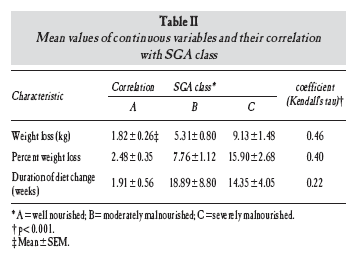
Table III shows the relationship between the categoryical or ordinal variables included in the SGA analysis and the SGA class assigned by the clinicians. For each characteristic, a large proportion of the patients with "normal" levels are classified as A, fewer are classified as B, and fewer again as C. A trend in the opposite direction can be seen for the most "severe" levels of the categorical variables. Kendall's tau, which summarizes the nature of these relationships, shows that the degree of abnormality for all variables is clearly correlated with the SGA class. The characteristics with the largest correlation coefficients are loss of subcutaneous fat, muscle wastage, and categorical weight loss.
]]> Multivariate logistic regression analysis was performed in two stages. The first stage predicts the assignment of class A vs classes B or C. The second model predicts the assignments of class C, given that the patient has been assigned either class B or C. Only two variables were consistently predictive of a more severe degree of malnutrition in both models: loss of subcutaneous tissue (p < 0.001) and muscle wasting (p < 0.05). In the second stage of the model (ie, prediction of class C), percent weight loss was also a significant predictor (p < 0.005).Interrater Reproducibility (Observer Agreement)
For the 109 patients who were given SGA ratings by two clinicians, there was agreement in 100 (91 %) of the cases, which was 78% above the agreement that could be expected by chance alone, ie, Kappa = 0.784 (SE = 0.08, 95% confidence interval 0.624 to 0.944). The individual kappas for three pairs of raters were: nurse A and resident A 0.81, nurse A and resident B 0.60, nurse A and resident C 1.0, nurse B and resident C 1.0. There is, therefore, a good level of agreement between observers in assigning SGA ratings; however, it should be noted that the level of agreement varies between pairs of raters.
DISCUSSION
The technique of performing subjective global assessment of patients' nutritional status has been described in considerable detail in this paper. We have found that a group of clinicians that included both nurses and physicians was able to learn and apply the method with ease. The univariate analyses demonstrate that the clinicians assigned lower SGA ranks (eg, C) to patients who exhibited more of the features which indicated poor nutritional status (eg, the correlations shown in tables II and III). As in our previous study,2 we again have found that SGA can be applied with a high degree of interrater agreement.
The multivariate analysis allows us to examine the simultaneous impact of all of the patient characteristics on the clinicians' SGA ratings. A literal interpretation of these results would suggest that clinicians were most influenced by two findings in the physical examination; loss of subcutaneous tissue in the triceps and rib cage, and muscle wasting in the deltoids and quadriceps. It also appears that percent weight loss may be an important predictor for patients in class C. We should point out that in the data collection form used in this study, overall percent weight loss was recorded, while the rate of change and pattern of weight loss, which the clinicians were instructed to consider, were not. For example, if a patient had lost a great deal of weight but had regained some weight in the few weeks prior to admission, we instructed the clinicians to classify the patient as better nourished than if he had lost an equal percent of weight and continued to lose weight until the time of admission. We believe that this pattern of weight loss is extremely important and that our multivariate analysis may not have captured its essence because of the incomplete data collection. We would urge those performing SGA on their patients to consider carefully both the amount and pattern of weight loss, as outlined in table I. As previously mentioned, we had considerable difficulty with the variable "disease and its relation to nutritional requirements." Whereas it is useful to note the patient's underlying diagnosis, we believe this variable may be dropped from SGA.
In teaching our raters to assign rankings, we did not use an explicit set of numerical weights such as those used in the Prognostic Nutritional Index14 or other predictive indexes.15 Although the derivation and testing of decision rules is currently a popular activity in clinical research, we generated the hypothesis in our previous study that subjective weighting would have predictive validity. Subjective prognostic indexes have been used to predict mortality in other clinical conditions, such as patients admitted to intensive care units16 or general medical services.17 The disadvantages of subjective systems is that it is harder for the researchers to describe the prognostic maneuver and demonstrate reproducibility. In addition, as suggested by Steinberg and Anderson,18 subjective ratings may be difficult to use for prognostic stratification for the purposes of financial reimbursement for comorbid diseases (although probably no more difficult than assigning comorbid conditions such as congestive heart failure or even diabetes in the absence of strict objective diagnostic criteria). However, clinicians should not be fooled into thinking that numerical weighting schemes are better merely because the weighting system is explicit. The weights derived from statistical techniques such as stepwise regression, discriminant, or logistic regressions are notoriously unstable, particularly if the variables are correlated with each other. The need for prospective validation of such explicit decision roles cannot be overestimated.15The sample sizes required to achieve precision for these weights (ie, narrow statistical confidence limits) may be very large, and confirmation of predictive validity may vary in a variety of settings. Subjective weighting systems also require prospective validation. (Our subsequent report of this study will show the ability of SGA to predict postoperative complications in this sample of patients and the correlation of SGA with other measurements of nutritional status.) A major advantage of the subjective approach is its flexibility in allowing clinicians to capture subtle patterns of change in clinical variables (eg, the pattern of weight loss, rather than absolute amount, or revision of influence that weight pattern has if there has been recent fluid retention) which would require the presence of several "interaction terms" (ie, the product of two variables) in an explicit index.
To the extent that we are successful in communicating our subjective weighting approach to clinicians who read this paper, we will fill a gap in the literature which we created ourselves by not adequately describing the technique of SGA in our previous publications. This technique can be easily taught to a wide variety of clinicians involved in the care of surgical patíents. We would urge groups who wish to adopt SGA to begin with a group training period by seeing several patients together (at least two of each SGA class) in order to achieve consistency in the method of eliciting the necessary information and agreement on the SGA ratings. We also recommend a formal test of interrater reproducibility through independent assessments. Some may also wish to test predictive and convergent validity, as we will subsequently report, in their own settings. In this way, SGA can be applied as a reliable and valid method of assessing nutritional status of hospitalized surgical patients.
]]> ACKNOWLEDGMENTS
This work was supported by the National Health Research and Development Program through Project Grant 6606-2362-42, and a National Health Scholar Award to Dr. Detsky.
REFERENCES
1. Detsky AS, Baker JP, Mendelson RA et al. Evaluating the accuracy of nutritional assessment techniques applied to hospitalized patients: Methodology and comparisons. JPEN 1984; 8:153-159.
2. Baker JP, Detsky AS, Wesson D et al. Nutritional assessment: A comparison of clinical judgment and objective measurements. N Engl J Med 1982; 306:969-972.
3. Baker JP, Detsky AS, Whitwell J et al. A comparison of the predictive value of nutritional assessment techniques. Human Nutr Clin Nutr 1982; 36c:233-241.
4. Unterman TG, Vazquez RM, Slas AJ. Nutrition and somatomedin. XIII. Usefulness of somatomedin C in nutritional assessment. Am J Med 1985; 78:228-234.
5. Linn BS. A protein energy malnutrition scale (PEMS). Ann Surg 1984; 200:747-752.
]]> 6. Woolfson AMJ. Artificial nutrition in hospital (editorial review). Br Med J 1983; 287:1004.7. Shizgal H. Body composition of patients with malnutrition and cancer: Summary of methods of assessment. Cancer 1985; 55:250-253.
8. Valberg LS, Flanagan PR, Ghent CN et al. Zinc absorption and leukocyte zinc in alcoholic and nonalcoholic controls. Diag Dis Sci 1985; 30:329-333.
9. Helliwell M, Coombes EJ, Moody BJ et al. Nutritional status in patients with rheumatoid arthritis. Ann Rheum Dis 1984; 43:386-90.
10. Reynolds HT. The Analysis of Cross-Classifications. Free Press, New York, 1977.
11. SAS Institute. SAS User's Guide. SAS Institute Inc., Cary, NC, 1982.
12. McCullagh P, Nelder JA. Generalized Linear Models. Methuen Inc., New York, 1983.
13. Baker RJ, Nelder JA. The GLIM System: Release 3. Royal Statistical Society, Oxford, UK, 1978.
14. Buzby GP, Mullen JL, Matthews DC et al. Prognostic nutritional index in gastrointestinal surgery. Am J Surg 1980; 139:160-167.
15. Wasson JH, Sox HC, Neff RK et al. Clinical prediction rules: Application and methodological standards. N Engl J Med 1985; 313:793-799.
]]> 16. Detsky AS, Stricker SC, Mulley AG et al. Prognosis, survival and the expenditure of hospital resources for patients in an intensive care unit. N Engl J Med 1981; 305:667-672.17. Charlson ME, Sax FL. Assessing clinical severity: Does clinical judgment work? Clin Res 1985; 33:245A.
18. Anderson GF, Steinberg EP. DRG's and specialized nutrition support. Prospective payment and nutritional support: The need for reform. JPEN 1986; 10:3-8.
Received for publication, December 31, 1985.
Accepted for publication, May 13, 1986.