<?xml version="1.0" encoding="ISO-8859-1"?><article xmlns:mml="http://www.w3.org/1998/Math/MathML" xmlns:xlink="http://www.w3.org/1999/xlink" xmlns:xsi="http://www.w3.org/2001/XMLSchema-instance">
<front>
<journal-meta>
<journal-id>0212-1611</journal-id>
<journal-title><![CDATA[Nutrición Hospitalaria]]></journal-title>
<abbrev-journal-title><![CDATA[Nutr. Hosp.]]></abbrev-journal-title>
<issn>0212-1611</issn>
<publisher>
<publisher-name><![CDATA[Grupo Arán]]></publisher-name>
</publisher>
</journal-meta>
<article-meta>
<article-id>S0212-16112008000600005</article-id>
<title-group>
<article-title xml:lang="es"><![CDATA[Complicaciones hepáticas asociadas al uso de nutrición parenteral]]></article-title>
<article-title xml:lang="en"><![CDATA[Parenteral nutrition-associated liver disease]]></article-title>
</title-group>
<contrib-group>
<contrib contrib-type="author">
<name>
<surname><![CDATA[Moreno Villares]]></surname>
<given-names><![CDATA[J. M.]]></given-names>
</name>
<xref ref-type="aff" rid="A01"/>
</contrib>
</contrib-group>
<aff id="A01">
<institution><![CDATA[,Hospital 12 de Octubre Unidad de Nutrición Clínica ]]></institution>
<addr-line><![CDATA[Madrid ]]></addr-line>
<country>España</country>
</aff>
<pub-date pub-type="pub">
<day>00</day>
<month>05</month>
<year>2008</year>
</pub-date>
<pub-date pub-type="epub">
<day>00</day>
<month>05</month>
<year>2008</year>
</pub-date>
<volume>23</volume>
<fpage>25</fpage>
<lpage>33</lpage>
<copyright-statement/>
<copyright-year/>
<self-uri xlink:href="http://scielo.isciii.es/scielo.php?script=sci_arttext&amp;pid=S0212-16112008000600005&amp;lng=en&amp;nrm=iso"></self-uri><self-uri xlink:href="http://scielo.isciii.es/scielo.php?script=sci_abstract&amp;pid=S0212-16112008000600005&amp;lng=en&amp;nrm=iso"></self-uri><self-uri xlink:href="http://scielo.isciii.es/scielo.php?script=sci_pdf&amp;pid=S0212-16112008000600005&amp;lng=en&amp;nrm=iso"></self-uri><abstract abstract-type="short" xml:lang="es"><p><![CDATA[La afectación hepática relacionada con la nutrición parenteral (PNALD) es un problema importante especialmente en los pacientes que requieren nutrición parenteral durante un tiempo prolongado y en los recién nacidos prematuros. La prevalencia es muy variable según las series y existen diferencias en la presentación entre los niños y los pacientes adultos. A pesar de haberse propuesto diferentes teorías en relación a la patogénesis del cuadro, su etiología no está bien definida. Es probable que intervengan varios factores al mismo tiempo. Podemos dividir los factores de riesgo de PNALD en tres grandes grupos: 1) derivados de la alteración de la función intestinal secundaria a la ausencia de estímulos enterales; 2) componentes de la NP que actúen como tóxicos para el hígado o la ausencia de determinados nutrientes que ocasionen afectación hepática, y 3) la contribución de la enfermedad de base. Cuando la NP es de corta duración y la afectación hepática se limita a una elevación de los enzimas de función hepática, generalmente no precisa ningún tratamiento. Cuando aparece una bilirrubina directa > 2 mg/dl durante un periodo largo y persiste la necesidad de NP es necesario primero descartar otras posibles causas de afectación hepática y luego minimizar los factores de riesgo. Se repasan en este artículo las distintas estrategias de manejo de la PNALD, incluyendo la estimulación enteral, el ajuste en el aporte de nutrientes, la adición de nutrientes específicos -taurina, colina- o el uso de fármacos coleréticos como el ácido ursodeoxicólico. Si la enfermedad hepática progresa puede llevar a una cirrosis y obligar a la realización de un trasplante hepato-intestinal.]]></p></abstract>
<abstract abstract-type="short" xml:lang="en"><p><![CDATA[Parenteral nutrition associated liver disease (PNALD) is an important problem in patients who require longterm parenteral nutrition as well as in preterm infants. Prevalence varies according to different series. Clinical presentation is different in adults and infants. Although since its first descriptions several hypothesis have been elucidated, the aetiology is not quite clear. It is possible that different factors could be involved. PNALD risk factors can be classified in three groups: 1) those derived from the lack of enteral nutrition stimulus; 2) parenteral nutrition components acting as toxic or the lack of specific nutrients and 3) those due to the underlying disease. If PNALD appears in short-term PN and it presents only as a mild elevation of liver enzymes, there is no need to treat. On the contrary, when direct bilirubin is > 2 mg/dL and lasts longer, there is a need to consider different causes and to minimize risk factors. We review the different approaches to manage PNALD, including optimizing enteral nutrition, modify parenteral solutions, use of specific nutrients -taurine, choline, etc.- or the use of drugs (mainly ursodeoxicolic acid) If liver disease progresses to a cirrhosis a liver transplant must be considered.]]></p></abstract>
<kwd-group>
<kwd lng="es"><![CDATA[Nutrición parenteral]]></kwd>
<kwd lng="es"><![CDATA[Colestasis]]></kwd>
<kwd lng="es"><![CDATA[Hígado]]></kwd>
<kwd lng="es"><![CDATA[Lípidos]]></kwd>
<kwd lng="es"><![CDATA[Recién nacidos]]></kwd>
<kwd lng="en"><![CDATA[Parenteral nutrition]]></kwd>
<kwd lng="en"><![CDATA[Cholestasis]]></kwd>
<kwd lng="en"><![CDATA[Liver]]></kwd>
<kwd lng="en"><![CDATA[Lipids]]></kwd>
<kwd lng="en"><![CDATA[Newborns]]></kwd>
</kwd-group>
</article-meta>
</front><body><![CDATA[ <p align="right"><font face="Verdana" size="2"><a name="top"></a><b>ORIGINAL</b></font></p>     <p align="right">&nbsp;</p>     <p align="left"><font face="Verdana" size="4"><b>Complicaciones hep&aacute;ticas asociadas al uso de nutrici&oacute;n parenteral</b></font></p>     <p align="left"><font face="Verdana" size="4"><b>Parenteral nutrition-associated liver disease</b></font></p>     <p align="left">&nbsp;</p>     <p align="left">&nbsp;</p>     <p align="left"><font face="Verdana" size="2"><b>J. M. Moreno Villares</b></font></p>     <p><font face="Verdana" size="2">Pediatra. Unidad de Nutrici&oacute;n Cl&iacute;nica. Hospital 12 de Octubre. Madrid. Espa&ntilde;a.</font></p>     <p><font face="Verdana" size="2"><a href="#back">Direcci&oacute;n para correspondencia</a></font></p>     <p>&nbsp;</p>     ]]></body>
<body><![CDATA[<p>&nbsp;</p> <hr size="1">     <p><font face="Verdana" size="2"><b>RESUMEN</b></font></p>     <p><font face="Verdana" size="2">La afectaci&oacute;n hep&aacute;tica relacionada con la nutrici&oacute;n parenteral (PNALD) es un problema importante especialmente en los pacientes que requieren nutrici&oacute;n parenteral durante un tiempo prolongado y en los reci&eacute;n nacidos prematuros. La prevalencia es muy variable seg&uacute;n las series y existen diferencias en la presentaci&oacute;n entre los ni&ntilde;os y los pacientes adultos. A pesar de haberse propuesto diferentes teor&iacute;as en relaci&oacute;n a la patog&eacute;nesis del cuadro, su etiolog&iacute;a no est&aacute; bien definida. Es probable que intervengan varios factores al mismo tiempo. Podemos dividir los factores de riesgo de PNALD en tres grandes grupos: 1) derivados de la alteraci&oacute;n de la funci&oacute;n intestinal secundaria a la ausencia de est&iacute;mulos enterales; 2) componentes de la NP que act&uacute;en como t&oacute;xicos para el h&iacute;gado o la ausencia de determinados nutrientes que ocasionen afectaci&oacute;n hep&aacute;tica, y 3) la contribuci&oacute;n de la enfermedad de base. Cuando la NP es de corta duraci&oacute;n y la afectaci&oacute;n hep&aacute;tica se limita a una elevaci&oacute;n de los enzimas de funci&oacute;n hep&aacute;tica, generalmente no precisa ning&uacute;n tratamiento. Cuando aparece una bilirrubina directa &gt; 2 mg/dl durante un periodo largo y persiste la necesidad de NP es necesario primero descartar otras posibles causas de afectaci&oacute;n hep&aacute;tica y luego minimizar los factores de riesgo. Se repasan en este art&iacute;culo las distintas estrategias de manejo de la PNALD, incluyendo la estimulaci&oacute;n enteral, el ajuste en el aporte de nutrientes, la adici&oacute;n de nutrientes espec&iacute;ficos -taurina, colina- o el uso de f&aacute;rmacos coler&eacute;ticos como el &aacute;cido ursodeoxic&oacute;lico. Si la enfermedad hep&aacute;tica progresa puede llevar a una cirrosis y obligar a la realizaci&oacute;n de un trasplante hepato-intestinal.</font></p>     <p><font face="Verdana" size="2"><B>Palabras clave:</B> Nutrici&oacute;n parenteral. Colestasis. H&iacute;gado. L&iacute;pidos. Reci&eacute;n nacidos.</font></p> <hr size="1">     <p><font face="Verdana" size="2"><B>ABSTRACT</B></font></p>     <p><font face="Verdana" size="2">Parenteral nutrition associated liver disease (PNALD) is an important problem in patients who require longterm parenteral nutrition as well as in preterm infants. Prevalence varies according to different series. Clinical presentation is different in adults and infants. Although since its first descriptions several hypothesis have been elucidated, the aetiology is not quite clear. It is possible that different factors could be involved. PNALD risk factors can be classified in three groups: 1) those derived from the lack of enteral nutrition stimulus; 2) parenteral nutrition components acting as toxic or the lack of specific nutrients and 3) those due to the underlying disease. If PNALD appears in short-term PN and it presents only as a mild elevation of liver enzymes, there is no need to treat. On the contrary, when direct bilirubin is &gt; 2 mg/dL and lasts longer, there is a need to consider different causes and to minimize risk factors. We review the different approaches to manage PNALD, including optimizing enteral nutrition, modify parenteral solutions, use of specific nutrients -taurine, choline, etc.- or the use of drugs (mainly ursodeoxicolic acid) If liver disease progresses to a cirrhosis a liver transplant must be considered.</font></p>     <p><font face="Verdana" size="2"><B>Key words:</B> Parenteral nutrition. Cholestasis. Liver. Lipids. Newborns.</font></p> <hr size="1">     <p>&nbsp;</p>     <p>&nbsp;</p>     <p><font face="Verdana" size="2">A comienzos de los a&ntilde;os 1970 ya se aceptaba que la nutrici&oacute;n parenteral (NP) era una opci&oacute;n posible que manten&iacute;a la vida en pacientes incapaces de recibir alimentaci&oacute;n enteral. Poco tiempo despu&eacute;s se describieron los primeros casos de alteraci&oacute;n hep&aacute;tica en pacientes que recib&iacute;an NP exclusiva. El primer caso publicado fue en 1971, en un prematuro que recibi&oacute; NP durante 71 d&iacute;as<sup>1</sup>. Desde entonces se han descrito distintas complicaciones hepatobiliares asociadas al uso de NP tanto en pacientes adultos como en ni&ntilde;os (<a href="#t1">tabla I</a>)<sup>2, 3</sup>. Aunque tradicionalmente se pensaba que la afectaci&oacute;n hep&aacute;tica se deb&iacute;a al efecto o a la ausencia de alg&uacute;n determinado componente de las soluciones de NP hoy se ha abandonado este concepto demasiado simplista y se prefiere el t&eacute;rmino afectaci&oacute;n hep&aacute;tica asociada a NP (PNALD, <i>Parenteral Nutrition Associated Liver Disease</i>) al de afectaci&oacute;n hep&aacute;tica causada por la NP.</font></p>     ]]></body>
<body><![CDATA[<p align="center"><font face="Verdana" size="2"><a name="t1"><img src="/img/revistas/nh/v23s2/original4_t1.gif" align="top"></a></font></p>     <p>&nbsp;</p>     <p><font face="Verdana" size="2">En los ni&ntilde;os la PNALD se manifiesta m&aacute;s com&uacute;nmente como colestasis<sup>4, 5</sup> mientras que en el paciente adulto es m&aacute;s frecuente la esteatohepatitis, aunque estas diferencias se hacen menos evidentes en el caso de la NP prolongada<sup>6-8</sup>.</font></p>     <p><font face="Verdana" size="2">Se han descrito alteraciones de las pruebas de funci&oacute;n hep&aacute;tica entre el 20 y el 90% de lo pacientes que reciben NP<sup>9, 10</sup>. Esta gran variabilidad se explica por varios hechos: la definici&oacute;n de la propia afectaci&oacute;n (seg&uacute;n se considere s&oacute;lo la alteraci&oacute;n anal&iacute;tica o se exija la demostraci&oacute;n histol&oacute;gica) y las modificaciones en la propia t&eacute;cnica de NP que han ocurrido en el tiempo (disminuci&oacute;n del aporte cal&oacute;rico total, en especial de glucosa, disponibilidad de soluciones de amino&aacute;cidos purificados y el uso rutinario de l&iacute;pidos intravenosos). Es indudable, no obstante, que PNALD es m&aacute;s frecuente en ni&ntilde;os que en adultos.</font></p>     <p><font face="Verdana" size="2">Podr&iacute;amos distinguir, desde un punto de vista de la evoluci&oacute;n y del pron&oacute;stico, las alteraciones hep&aacute;ticas que se presentan en el paciente que precisa NP por un periodo corto de tiempo de la que se presenta en el paciente con NP prolongada, aunque puedan compartir muchos rasgos fisiopatol&oacute;gicos<sup>11</sup>.</font></p>     <p><font face="Verdana" size="2">Haremos un breve apunte sobre la primera de las situaciones para hacerlo de forma m&aacute;s extendida sobre la segunda.</font></p>     <p><font face="Verdana" size="2">En estudios experimentales en animales se demuestra una disminuci&oacute;n del aclaramiento de &aacute;cidos biliares y un aumento del secuestro de bilis en la ves&iacute;cula en las dos primeras semanas de la administraci&oacute;n de NP asociada a dieta absoluta<sup>12</sup>.</font></p>     <p><font face="Verdana" size="2">Es frecuente encontrar un aumento en las enzimas hep&aacute;ticas en las primeras semanas de uso de la NP: los marcadores de colestasis que se elevan antes son GGT&gt; fosfatasa alcalina &gt; &aacute;cidos biliares &gt; bilirrubina, pero la fosfatasa alcalina y la GGT parecen las m&aacute;s espec&iacute;ficas en el paciente adulto<sup>13</sup>. La elevaci&oacute;n aparece al inicio de la 2ª semana, mientras que las transaminasas lo hacen m&aacute;s tarde. La posibilidad de alteraci&oacute;n hep&aacute;tica es mayor si existe sepsis o desnutrici&oacute;n<sup>14,15</sup>. En determinadas situaciones cl&iacute;nicas p.ej. pacientes con enfermedad inflamatoria intestinal la alteraci&oacute;n en la pruebas de funci&oacute;n hep&aacute;tica es considerablemente m&aacute;s frecuente<sup>16</sup>.</font></p>     <p><font face="Verdana" size="2">Pallar&eacute;s y cols., encontraron alteraciones moderadas de las pruebas anal&iacute;ticas en un 78% de los pacientes que recibieron NP y que no ten&iacute;an disfunci&oacute;n hep&aacute;tica previa. La GGT fue el par&aacute;metro que se alter&oacute; con mayor frecuencia y de forma m&aacute;s temprana, seguido de la fosfatasa alcalina y en menor proporci&oacute;n de las transaminasas y la bilirrubina<sup>17</sup>. Grau y cols., encontraron disfunci&oacute;n hep&aacute;tica en el 30% de los pacientes ingresados en una UCI que recib&iacute;an NP<sup>18</sup>. Resultados similares ocurren en el paciente pedi&aacute;trico, aunque m&aacute;s precozmente<sup>19, 20</sup>. En nuestra propia experiencia algo m&aacute;s del 50% de los ni&ntilde;os que recib&iacute;an NP presentaron disfunci&oacute;n hep&aacute;tica precoz, siendo la GGT el marcador que se afect&oacute; antes<sup>21</sup>. En la mayor&iacute;a de ocasiones estos aumentos de leve a moderada intensidad se resuelven al suspender la NP. Su significado y relevancia cl&iacute;nica se desconocen. Fuera de las medidas de pr&aacute;ctica com&uacute;n (ajustar el aporte cal&oacute;rico, uso precoz de la nutrici&oacute;n enteral, empleo de la NP c&iacute;clica) no parecen necesarias otras medidas en su manejo.</font></p>     <p><font face="Verdana" size="2">Tienen mucho mayor inter&eacute;s las complicaciones  hep&aacute;ticas asociadas al uso de NP prolongada o indefinida, algunas de ellas graves y potencialmente letales<sup>22</sup>.</font></p>     ]]></body>
<body><![CDATA[<p><font face="Verdana" size="2">La prevalencia de PNALD en pacientes con NP prolongada no se conoce bien. Cavicchi y cols., evaluaron la prevalencia en un grupo de 90 pacientes adultos con NP domiciliaria (NPD) por fracaso intestinal. La edad media de los pacientes era 45 a&ntilde;os y la duraci&oacute;n media de la NPD 45 meses. Se encontr&oacute; colestasis cr&oacute;nica (&gt; 1,5 veces el l&iacute;mite superior de la normalidad en dos de tres pruebas de funci&oacute;n hep&aacute;tica -GGT, FA, bilirrubina conjugada- durante al menos 6 meses, en ausencia de enfermedad hep&aacute;tica previa) en un 55% a los 2 a&ntilde;os, 64% a los 4 a&ntilde;os y 72% a los 6 a&ntilde;os. Dentro de este mismo grupo la prevalencia de enfermedad hep&aacute;tica grave (ascitis, hipertensi&oacute;n portal, encefalopat&iacute;a o fallo hep&aacute;tico o la presencia de fibrosis portal extensa o cirrosis en la biopsia) fue de 26% a los 2 a&ntilde;os y 50% a los 6 a&ntilde;os<sup>23</sup>.</font></p>     <p><font face="Verdana" size="2">La prevalencia en ni&ntilde;os tambi&eacute;n se ha valorado en estudios retrospectivos. 28 de 42 neonatos que precisaron NP durante al menos 3 meses desarrollaron colestasis (bilirrubina directa &gt; 2 mg/dL) y 7 (17%) progresaron a fallo hep&aacute;tico<sup>24</sup>. Otras series muestran resultados similares<sup>25, 26</sup>. Publicaciones m&aacute;s recientes, sin embargo, encuentran una disminuci&oacute;n de la incidencia en los &uacute;ltimos a&ntilde;os<sup>27</sup>.</font></p>     <p><font face="Verdana" size="2"><I>Hallazgos histopatol&oacute;gicos</i></font></p>     <p><font face="Verdana" size="2">Existe una correlaci&oacute;n pobre entre las alteraciones en las pruebas de funci&oacute;n hep&aacute;tica y los hallazgos histol&oacute;gicos de la biopsia hep&aacute;tica. Los hallazgos son poco espec&iacute;ficos y muy variables<sup>28</sup>. Encontramos en el paciente adulto esteatosis macro y microvesicular y, con menos frecuencia, esteatohepatitis, colestasis intrahep&aacute;tica y fosfolipoidosis<sup>29</sup>. La esteatohepatitis es la progresi&oacute;n inicial de la enfermedad hep&aacute;tica que se caracteriza por una inflamaci&oacute;n marcada y que puede progresar<sup>30</sup>. Si la afectaci&oacute;n progresa podemos encontrar esteatonecrosis, fibrosis, y dep&oacute;sitos de lipofuscina en las c&eacute;lulas de Kupffer. Se ha comunicado la progresi&oacute;n desde una esteatosis leve a una fibrosis y una fibrosis micronodular en un periodo de tiempo de cinco a&ntilde;os<sup>31</sup>. La progresi&oacute;n ser&iacute;a: inflamaci&oacute;n periportal, proliferaci&oacute;n ductal, inicio de puentes en espacios porta, colestasis canalicular e intralobular, c&eacute;lulas de Kupffer pigmentadas, puentes porto-portales, infiltraci&oacute;n grasa, fibrosis pericelular y portal y cirrosis<sup>32</sup>. Estos cambios histopatol&oacute;gicos no se deben exclusivamente a la NP sino que tambi&eacute;n se ven influidos por la presencia de fallo de alg&uacute;n otro &oacute;rgano (h&iacute;gado, ri&ntilde;&oacute;n) o de sepsis, especialmente, en las de origen abdominal<SUP>33, 34</sup>.</font></p>     <p><font face="Verdana" size="2">La aparici&oacute;n de colestasis es una complicaci&oacute;n grave porque puede evolucionar a cirrosis y fallo hep&aacute;tico. Es m&aacute;s frecuente en reci&eacute;n nacidos y ni&ntilde;os peque&ntilde;os que en pacientes adultos. La colestasis resulta de la alteraci&oacute;n en la secreci&oacute;n de bilis y se manifiesta como una elevaci&oacute;n de las concentraciones s&eacute;ricas de FA, GGT y bilirrubina conjugada (directa). Si la NP se suspende antes de que se produzca un da&ntilde;o hep&aacute;tico irreversible, la recuperaci&oacute;n hep&aacute;tica es esperable con normalizaci&oacute;n de las pruebas de funci&oacute;n hep&aacute;tica en un tiempo variable de semanas a meses.</font></p>     <p>&nbsp;</p>     <p><font face="Verdana"><B>Factores etiol&oacute;gicos en la afectaci&oacute;n hep&aacute;tica asociada al uso de nutrici&oacute;n parenteral</b></font></p>     <p><font face="Verdana" size="2">La patog&eacute;nesis de la PNALD no se conoce a ciencia cierta y es probablemente de origen multifactorial<SUP>35, 36</sup>. Entre los factores de riesgo para el desarrollo de la afectaci&oacute;n encontramos 1) consecuencias del uso de la NP, 2) factores relacionados con la NP y 3) factores relacionados con el proceso de base (<a href="#t2">tabla II</a>)<SUP>37, 38</sup>.</font></p>     <p align="center"><font face="Verdana" size="2"><a name="t2"><img src="/img/revistas/nh/v23s2/original4_t2.gif" align="top"></a></font></p>     <p>&nbsp;</p>     ]]></body>
<body><![CDATA[<p><font face="Verdana" size="2"><I><B>Factores relacionados con la enfermedad de base</b></i></font></p>     <p><font face="Verdana" size="2"><i>Prematuridad y bajo peso</i></font></p>    <p> <font face="Verdana" size="2">Se ha identificado una relaci&oacute;n entre prematuridad y bajo peso y la aparici&oacute;n de colestasis<sup>39</sup>. En el estudio de Beale, presentaron colestasis el 50% de los prematuros&lt; 1.000 g, pero s&oacute;lo en el 7% de los que pesaban &gt; 1.500 g<sup>40</sup>. Pero es dif&iacute;cil distinguir qu&eacute; factores constituyen un factor de riesgo cuando bajo peso y prematuridad son condiciones que se asocian a uso frecuente de NP. La mayor incidencia que aparece en los reci&eacute;n nacidos de peso m&aacute;s bajo podr&iacute;a estar relacionada con una mayor inmadurez hep&aacute;tica, una disminuci&oacute;n en la s&iacute;ntesis de &aacute;cidos biliares y una menor efectividad de la circulaci&oacute;n enterohep&aacute;tica. Es tambi&eacute;n posible que el h&iacute;gado neonatal sea m&aacute;s susceptible al da&ntilde;o debido una capacidad de sulfuraci&oacute;n menor (<a href="#t3">tabla III</a>).    <br> </font></p>     <p align="center"><font face="Verdana" size="2"><a name="t3"><img src="/img/revistas/nh/v23s2/original4_t3.gif" align="top"></a></font></p>     <p><font face="Verdana" size="2"><i>Sepsis</i></font></p>     <p><font face="Verdana" size="2">Se conoce desde hace tiempo que las infecciones bacterianas y f&uacute;ngicas se asocian a colestasis. En una serie de reci&eacute;n nacidos con NP a causa de una intervenci&oacute;n quir&uacute;rgica abdominal, los episodios de sepsis se asociaron con un aumento en los niveles de bilirrubina en un 30%<sup>41</sup>. La sepsis causa una respuesta inflamatoria en el h&iacute;gado por la liberaci&oacute;n de citoquinas proinflamatorias activada por las endotoxinas. La liberaci&oacute;n de citoquinas puede alterar la funci&oacute;n de la membrana del canal&iacute;culo biliar y reducir el flujo biliar. Se ha descrito recientemente que las infecciones se asocian con el desarrollo de fibrosis hep&aacute;tica en ni&ntilde;os que reciben NP de forma precoz y prolongada, con independencia de la duraci&oacute;n de la NP, del modo de administraci&oacute;n y de la enfermedad de base<sup>42, 43</sup>.</font></p>     <p><font face="Verdana" size="2"><i>S&iacute;ndrome de intestino corto (SIC)</i></font></p>     <P><font face="Verdana" size="2">Se encuentra una asociaci&oacute;n entre s&iacute;ndrome de intestino corto y la aparici&oacute;n de PNALD. 60% de los lactantes y 40% de los adultos con NPD por un fracaso intestinal desarrollan afectaci&oacute;n hep&aacute;tica<sup>44, 45</sup>. Sin embargo, es dif&iacute;cil discernir la contribuci&oacute;n espec&iacute;fica de la resecci&oacute;n intestinal en ello pues la mayor&iacute;a dependen de NP por periodos prolongados. Pacientes con s&iacute;ndrome de intestino corto que no son dependientes de NP no desarrollan PNALD. Los avances en el manejo del SIC, tanto en el campo m&eacute;dico como en el quir&uacute;rgico, contribuyen a disminuir su prevalencia en la medida en que permiten disminuir la duraci&oacute;n o, incluso retirar, la NP.</font></p>     <p><font face="Verdana" size="2"><i>Medicamentos</i></font></p>     ]]></body>
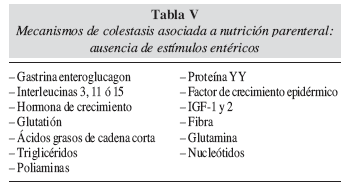
<body><![CDATA[<p><font face="Verdana" size="2">Algunos f&aacute;rmacos pueden actuar sobre el citocromo P450 hep&aacute;tico y ser causa de toxicidad. Otros pueden causar toxicidad directa. La lista de posibles f&aacute;rmacos es amplia entre los que destacan: inhibidores de la bomba de protones, antiinflamatorios no-esteroideos, antibi&oacute;ticos como la claritromicina o la eritromicina, benzodiacepinas, ondansetron, inmunomoduladores, etc&eacute;tera. Una lista actualizada de f&aacute;rmacos que interact&uacute;an con el citocromo P450 puede encontrarse en http://medicine.iupui.edu/flockhart/clinlist.htlm.</font></p>     <p><font face="Verdana" size="2"><i><b>Consecuencias del uso de la NP</b></i></font></p>     <p><font face="Verdana" size="2"><i>Sobrecrecimiento bacteriano</i></font></p>     <p><font face="Verdana" size="2">El sobrecrecimiento bacteriano puede contribuir al desarrollo de la afectaci&oacute;n hep&aacute;tica<sup>46</sup>. Se postula que las bacterias anaerobias pueden producir hepatotoxinas, sobre todo el &aacute;cido litoc&oacute;lico. Adem&aacute;s se produce deconjugaci&oacute;n de &aacute;cidos biliares que contribuye al da&ntilde;o biliar. Sin embargo, Riordan y cols., no encontraron afectaci&oacute;n de la funci&oacute;n hep&aacute;tica en 40 pacientes adultos con sobrecrecimiento bacteriano demostrado y que no recib&iacute;an NP<sup>47</sup>. Parecer&iacute;a necesaria la coexistencia de otros factores, adem&aacute;s del sobrecrecimiento bacteriano, para que se desarrolle la hepatopat&iacute;a.</font></p>     <p><font face="Verdana" size="2">La colonizaci&oacute;n intestinal con una flora an&oacute;mala puede contribuir tambi&eacute;n a aumentar la tasa de septicemia en neonatos postquir&uacute;rgicos<sup>48</sup>.</font></p>     <p><font face="Verdana" size="2"><i>Falta de est&iacute;mulo enteral</i></font></p>     <p><font face="Verdana" size="2">La deprivaci&oacute;n de nutrientes en la luz disminuye la circulaci&oacute;n enterohep&aacute;tica de &aacute;cidos biliares y disminuye la producci&oacute;n de hormonas GI (<a href="#t4">tabla IV</a>) que se estimulan habitualmente con la ingesta oral, como son la colecistoquinina, la secretina, la gastrina y el glucag&oacute;n, estimulantes del flujo biliar (<a href="#t5">tabla V</a>)<sup>49, 50</sup>.</font></p>     <p align="center"><font face="Verdana" size="2"><a name="t4"><img src="/img/revistas/nh/v23s2/original4_t4.gif" align="top"></a></font></p>     <p align="center">&nbsp;</p>     <p align="center"><font face="Verdana" size="2"><a name="t5"><img src="/img/revistas/nh/v23s2/original4_t5.gif" align="top"></a></font></p>     ]]></body>
<body><![CDATA[<p align="center">&nbsp;</p>     <p><font face="Verdana" size="2"><i>Estr&eacute;s oxidativo</i></font></p>     <p><font face="Verdana" size="2">La sobreexpresi&oacute;n de prote&iacute;nas relacionadas con la regulaci&oacute;n oxidativa y la protecci&oacute;n celular frente al estr&eacute;s oxidativo en el h&iacute;gado de pacientes con PNALD (peroxiredosina-4, serotransferrina, glutati&oacute;n S-transferasa P y Mn-super&oacute;xido dismutasa) hacen pensar que el da&ntilde;o oxidativo es una de los mecanismos principales que explicar&iacute;an el da&ntilde;o tisular en PNALD<sup>51</sup>. Los cambios mitocondriales y en la apoptosis mediadas por Fas apuntan al da&ntilde;o oxidativo en modelos animales<sup>52</sup>.</font></p>     <p><i><font face="Verdana" size="2"><b>Factores relacionados con la NP</b></font></p>     <p><font face="Verdana" size="2">Toxicidad causada por los componentes nutrientes</font></p>     <p><font face="Verdana" size="2">Excesivo aporte cal&oacute;rico</font></i></p>     <p><font face="Verdana" size="2">Un excesivo aporte cal&oacute;rico produce aumento en la lipog&eacute;nesis, una alteraci&oacute;n en la movilizaci&oacute;n y uso de los l&iacute;pidos, apareciendo como consecuencia esteatosis<sup>53, 54</sup>. La relaci&oacute;n entre kcal no proteicas y aporte nitrogenado no se ha demostrado que influya en la aparici&oacute;n de PNALD en neonatos, cuando se utilizan soluciones pedi&aacute;tricas de amino&aacute;cidos<sup>55</sup>.</font></p>     <p><font face="Verdana" size="2">DEXTROSA</font></p>     <p><font face="Verdana" size="2">El uso de soluciones que conten&iacute;an exclusivamente glucosa se ha asociado al desarrollo de esteatosis. El mecanismo de aparici&oacute;n era doble: por una parte el exceso de glucosa se deposita en el h&iacute;gado como grasa y, por otra, se pon&iacute;a de manifiesto un d&eacute;ficit de &aacute;cidos grasos esenciales. En la actualidad se recomienda el empleo de una mezcla de carbohidratos (70-85% de las kcal no proteicas) y grasas (15-30%). Adem&aacute;s no se debe sobrepasar los 7 g/kg/d de glucosa intravenosa (adultos).</font></p>     <p><font face="Verdana" size="2">L&Iacute;PIDOS</font></p>    ]]></body>
<body><![CDATA[<p> <font face="Verdana" size="2">Tanto el d&eacute;ficit de &aacute;cidos grasos esenciales como un aporte de l&iacute;pidos excesivo pueden causar da&ntilde;o hep&aacute;tico. Se recomienda administrar un m&iacute;nimo de entre el 2 y el 4% de las calor&iacute;as como &aacute;cido linoleico para evitar el d&eacute;ficit de &aacute;cidos grasos esenciales.</font></p>     <p><font face="Verdana" size="2"><i>Aporte excesivamente r&aacute;pido</i></font></p>     <p><font face="Verdana" size="2">Nutrientes espec&iacute;ficos presentes en la mezcla.</font></p>     <p><font face="Verdana" size="2">AMINO&Aacute;CIDOS</font></p>     <p><font face="Verdana" size="2">Tambi&eacute;n se ha descrito la aparici&oacute;n de colestasis en ni&ntilde;os que recib&iacute;an una cantidad excesivamente elevada de amino&aacute;cidos. Estudios experimentales previos hab&iacute;an sugerido que la afectaci&oacute;n hep&aacute;tica se deb&iacute;a m&aacute;s al infusado que a la v&iacute;a de administraci&oacute;n<sup>56</sup>. Los amino&aacute;cidos pueden tener un efecto directo sobre la membrana canalicular, con tendencia a reducir el flujo biliar y la excreci&oacute;n de sales biliares. Esto lleva a la acumulaci&oacute;n de &aacute;cidos biliares hepatot&oacute;xicos y alteraciones en el transporte de &aacute;cidos biliares.</font></p>     <p><font face="Verdana" size="2">L&Iacute;PIDOS</font></p>     <p><font face="Verdana" size="2">Tres aspectos se han considerado al establecer el papel de los l&iacute;pidos intravenosos en la aparici&oacute;n de PNALD: la fuente de grasa, el contenido en fitosteroles y la dosis. Las soluciones que contienen exclusivamente LCT causan mayor infiltraci&oacute;n grasa en el h&iacute;gado que las mezclas combinadas. Si las dosis de l&iacute;pidos administradas son elevadas y se excede la capacidad de aclaramiento lip&iacute;dico del h&iacute;gado, se puede producir dep&oacute;sitos en sus c&eacute;lulas y esteatosis. Adem&aacute;s se ha asociado aparici&oacute;n de colestasis a la administraci&oacute;n de l&iacute;pidos por encima de 1 g/kg/d&iacute;a (pacientes adultos).</font></p>     <p><font face="Verdana" size="2">MANGANESO</font></p>     <p><font face="Verdana" size="2">El manganeso se excreta por la bilis, por lo que en pacientes con colestasis pudiera contribuir a su ac&uacute;mulo en h&iacute;gado y consiguiente toxicidad. En un estudio realizado en Londres en 57 ni&ntilde;os con NP prolongada, en el 79% se encontraron niveles elevados de Manganeso y una correlaci&oacute;n directa entre estos la GPT y la bilirrubina total en plasma<sup>57</sup>.</font></p>     <p><font face="Verdana" size="2"><i>Deficiencia en determinados nutrientes<sup>58, 59</sup></i></font></p>     ]]></body>
<body><![CDATA[<p><font face="Verdana" size="2">&Aacute;cidos grasos esenciales</font></p>     <p><font face="Verdana" size="2">CARNITINA</font></p>     <p><font face="Verdana" size="2">Aunque se ha demostrado que los pacientes que reciben NP exclusiva tienen niveles plasm&aacute;ticos disminuidos de carnitina y que la carnitina est&aacute; directamente involucrada en el transporte de &aacute;cidos grasos de cadena larga en la membrana de la mitocondria para su oxidaci&oacute;n, su adici&oacute;n a las soluciones de NP no disminuye el riesgo de colestasis.</font></p>     <p><font face="Verdana" size="2">COLINA</font></p>     <p><font face="Verdana" size="2">La colina no es uno de los componentes de las soluciones de NP, ya que se asume que puede producirse a partir de la metionina. Esta conversi&oacute;n es menos eficaz cuando la metionina se administra por v&iacute;a intravenosa. Los niveles plasm&aacute;ticos de colina de los pacientes con NPD est&aacute;n disminuidos. La suplementaci&oacute;n con colina en forma de lecitina se ha asociado a una mejor&iacute;a de la esteatosis en pacientes con NPD, tanto ni&ntilde;os como adultos<sup>60, 61</sup>. Hasta la fecha no se dispone de soluciones intravenosas de colina. No existen tampoco criterios claros respecto a su empleo en la prevenci&oacute;n o en el tratamiento de la PNALD<sup>62</sup>.</font></p>     <p><font face="Verdana" size="2"><i>Contaminantes no nutrientes</i></font></p>     <p><font face="Verdana" size="2">FITOSTEROLES</font></p>     <p><font face="Verdana" size="2">Los fitosteroles son contaminantes de las emulsiones lip&iacute;dicas. Alteran la actividad secretoria del canal&iacute;culo afectando el transporte a trav&eacute;s de las membranas, reduciendo la s&iacute;ntesis y el flujo de sales biliares y causando precipitado en la bilis<sup>63</sup>. Clayton y cols., demostraron en 1993 en cinco ni&ntilde;os con PNALD severa niveles elevados de fitosteroles y sitostanol en plasma, pudiendo ser un aclaramiento ineficaz de estos compuestos uno de los factores que influyen en la aparici&oacute;n de colestasis<sup>64</sup>.</font></p>     <p><font face="Verdana" size="2">POLISORBATOS</font></p>     <p><font face="Verdana" size="2">(Emulsionantes de las vitaminas liposolubles).</font></p>     ]]></body>
<body><![CDATA[<p><font face="Verdana" size="2">TWEEN 80; DIETILFITATO, etc.</font></p>     <p>&nbsp;</p>     <p><font face="Verdana"><b>Afectaci&oacute;n de la v&iacute;a biliar</b></font></p>     <p><font face="Verdana" size="2">La ectasia biliar puede dar lugar a la aparici&oacute;n de barro biliar o incluso de litiasis, con el riesgo subsiguiente de colecistitis. Se debe m&aacute;s a la falta de est&iacute;mulo enteral que a la propia NP. La ausencia de est&iacute;mulo enteral conduce a una inhibici&oacute;n de la secreci&oacute;n de CCK y, por tanto, a una alteraci&oacute;n en la producci&oacute;n biliar y en la contractilidad de la ves&iacute;cula biliar. Estas alteraciones se producen a lo largo del tiempo<sup>65, 66</sup>. Los pacientes con s&iacute;ndrome de intestino corto tienen un riesgo aumentado de barro biliar y colelitiasis.</font></p>     <p><font face="Verdana" size="2">Puede aparecer colecistitis acalculosa hasta en un 4% de los pacientes que reciben NP m&aacute;s de 3 meses.</font></p>     <p>&nbsp;</p>     <p><font face="Verdana"><b>Monitorizaci&oacute;n de la afectaci&oacute;n hep&aacute;tica</b></font></p>     <p><font face="Verdana" size="2">Las pruebas de funci&oacute;n hep&aacute;tica deben formar parte de la monitorizaci&oacute;n rutinaria de los pacientes que reciben NP. Se recomienda realizarla de forma semanal en el paciente ingresado y con una periodicidad entre cada 1 a 6 meses en el paciente con NPD. Los marcadores m&aacute;s sensibles de colestasis son la GGT y la bilirrubina conjugada, aunque ninguno de ellos es espec&iacute;fico. Adem&aacute;s de los par&aacute;metros anal&iacute;ticos lo ideal es disponer una prueba de imagen ideal. La ecograf&iacute;a permite diagnosticar la esteatosis hep&aacute;tica, sin embargo existe una gran variabilidad interobservador a la hora de valorar su grado. La Resonancia Magn&eacute;tica obviar&iacute;a alguna de estas limitaciones<sup>67</sup>.</font></p>     <p><font face="Verdana" size="2">Con el fin de poder descubrir de una forma precoz qu&eacute; pacientes evolucionar&aacute;n a una hepatopat&iacute;a terminal y, por tanto, deber&aacute;n recibir un trasplante, pero al mismo tiempo evitando que se trasplanten pacientes potencialmente recuperables se han buscado marcadores bioqu&iacute;micos o pruebas de funci&oacute;n hep&aacute;tica que ayuden en la toma de decisiones. Se ha sugerido que una elevaci&oacute;n de la bilirrubina total por encima de 3 mg/dl durante m&aacute;s de tres meses indicar&iacute;a la necesidad de evaluaci&oacute;n en un centro de trasplantes<sup>68</sup>. Es de especial inter&eacute;s encontrar marcadores precoces en ni&ntilde;os<sup>69, 70</sup>.</font></p>     <p>&nbsp;</p>     ]]></body>
<body><![CDATA[<p><font face="Verdana"><b>Estrategias de manejo de la hepatopat&iacute;a asociada a NP</b></font></p>     <p><font face="Verdana" size="2">La afectaci&oacute;n hep&aacute;tica es reversible potencialmente si se puede iniciar una nutrici&oacute;n enteral y se puede suspender la NP antes de que se haya desarrollado una fibrosis importante o una cirrosis<sup>71</sup>. Se han empleado muchas estrategias de tratamiento, algunas son de empleo m&aacute;s o menos generalizado mientras que algunas otras no dejan de ser meras observaciones aisladas (<a href="#t6">tabla VI</a>)<sup>72</sup>. En todo caso, son pocos los estudios cl&iacute;nicos de calidad que avalen las distintas posibilidades de tratamiento.</font></p>     <p align="center"><font face="Verdana" size="2"><a name="t6"><img src="/img/revistas/nh/v23s2/original4_t6.gif" align="top"></a></font></p>     <p><font face="Verdana" size="2"><i>Prevenci&oacute;n de las infecciones asociadas a cat&eacute;ter</i></font></p>     <P><font face="Verdana" size="2">La prevenci&oacute;n de las infecciones asociadas a cat&eacute;ter requiere un compromiso individual y de equipo, disponer de protocolos claros de manejo de los cat&eacute;teres venosos y vigilancia. Tambi&eacute;n puede suponer avances importantes la aplicaci&oacute;n de nuevos desarrollos tecnol&oacute;gicos: uso de clorhexidina para la limpieza del cat&eacute;ter, cat&eacute;teres impregnados de antibi&oacute;ticos, etc.<sup>73</sup>.</font></p>     <p><font face="Verdana" size="2"><i>Tratamiento del sobrecrecimiento bacteriano</i></font></p>     <p><font face="Verdana" size="2">El tratamiento del sobrecrecimiento bacteriano contribuye a prevenir o a mejorar la afectaci&oacute;n hep&aacute;tica, en especial en los pacientes afectos de un trastorno de la motilidad. Se pueden usar distintos antibi&oacute;ticos orales, aunque el m&aacute;s habitual es el metronidazol 250 mg, 3 veces al d&iacute;a en ciclos de 10 a 14 d&iacute;as.</font></p>     <p><font face="Verdana" size="2">Est&aacute;n en fase de investigaci&oacute;n cl&iacute;nica otros agentes como el uso de productos enterales con fibra, suplementaci&oacute;n con glutamina o el empleo de agentes probi&oacute;ticos.</font></p>    <p> <font face="Verdana" size="2"> <i>Tratamiento general<sup>74, 75</sup>.</i></font></p>     <blockquote> 	    ]]></body>
<body><![CDATA[<p><font face="Verdana" size="2">&bull; Evitar la sobrealimentaci&oacute;n.    <br>&bull; Proporcionar un aporte equilibrado de nutrientes.    <br>&bull; Disminuir los aporte de cobre y manganeso en caso de colestasis.    <br>&bull; NP c&iacute;clica (generalmente en 8-12 horas)<sup>76</sup>.    <br>&bull; Uso precoz de la nutrici&oacute;n enteral<sup>77</sup>.</font></p> </blockquote>     <p><font face="Verdana" size="2"><i>&Aacute;cido ursodeoxic&oacute;lico</i></font></p>     <p><font face="Verdana" size="2">Se han usado distintas medicaciones para estimular el flujo biliar y mantener la contractilidad de la ves&iacute;cula biliar. S&oacute;lo del &aacute;cido ursodeoxic&oacute;lico se han publicado resultados favorables en distintas series de casos<sup>78-82</sup>. A dosis de 10 a 45 mg/kg/d&iacute;a se piensa que desplaza las sales biliares potencialmente t&oacute;xicas adem&aacute;s de actuar como estabilizante de membrana del hepatocito y como inmunomodulador<sup>83, 84</sup>.</font></p>     <p><font face="Verdana" size="2"><i>Octap&eacute;ptido de colecistoquinina</i></font></p>     <p><font face="Verdana" size="2">Aunque los estudios iniciales mostraron un posible efecto beneficioso de la administraci&oacute;n IM o endovenosa de este an&aacute;logo de CCK<sup>85-89</sup> en la prevenci&oacute;n de PNALD, un estudio m&aacute;s reciente en 243 neonatos con riesgo de desarrollar PNALD no consigui&oacute; demostrar una disminuci&oacute;n de su incidencia. Podr&iacute;a tener su papel en la prevenci&oacute;n de la formaci&oacute;n de barro biliar y colelitiasis<sup>90, 91</sup>.</font></p>     <p><font face="Verdana" size="2"><i>Empleo de soluciones de amino&aacute;cidos enriquecidas en taurina</i></font></p>     ]]></body>
<body><![CDATA[<p><font face="Verdana" size="2">Se ha demostrado que existe una depleci&oacute;n de taurina en pacientes cr&iacute;ticos<sup>92</sup> as&iacute; como en pacientes con NPD<sup>93</sup>, reversible cuando se suplementa con 10 mg/kg/d&iacute;a de forma intravenosa. Por otra parte, la administraci&oacute;n de bajas concentraciones de taurina se ha asociado a cambios en la composici&oacute;n de la bilis y en la histolog&iacute;a hep&aacute;tica<sup>94, 95</sup>. En animales de experimentaci&oacute;n, la taurina previene la colestasis inducida por sales biliares<sup>96</sup>. Estos trabajos iniciales llevaron a aumentar el contenido en taurina de las soluciones de amino&aacute;cidos para reci&eacute;n nacidos y lactantes<sup>97</sup> y de su precursor ciste&iacute;na<sup>98</sup>. En algunos subgrupos de neonatos (gran prematuridad o enterocolitis necrotizante) la administraci&oacute;n de soluciones de amino&aacute;cidos con taurina puede ofrecer una protecci&oacute;n frente al desarrollo de PNALD<sup>99</sup>. Sin embargo, no se ha evidenciado una mejor&iacute;a de la PNALD en pacientes adultos cuando se emplean soluciones de amino&aacute;cidos de mayor contenido en taurina<sup>100</sup>.</font></p>     <p><font face="Verdana" size="2"><i>Consideraciones sobre el uso de l&iacute;pidos intravenosos</i></font></p>     <p><font face="Verdana" size="2">Se recomienda no sobrepasar los 2,5 g/kg/d de l&iacute;pidos IV en pacientes adultos y en ni&ntilde;os, ni los 3 g/kg/d&iacute;a en prematuros. No obstante, puede ser conveniente disminuir los l&iacute;pidos a &lt; 1 g/kg/d&iacute;a o incluso suspenderlos temporalmente en caso de PNALD.</font></p>     <p><font face="Verdana" size="2">En los &uacute;ltimos a&ntilde;os algunos grupos han sustituido de forma emp&iacute;rica en los pacientes con PNALD las emulsiones de l&iacute;pidos basados en soja por aceites de pescado con resultados espectaculares<sup>101</sup>.</font></p>     <p><font face="Verdana" size="2"><i>Nuevos tratamientos en el s&iacute;ndrome de intestino corto</i></font></p>     <p><font face="Verdana" size="2">Nuevas t&eacute;cnicas quir&uacute;rgicas como la enteroplastia transversa en serie (STEP) o el uso de agentes que favorecen la adaptaci&oacute;n intestinal, como el an&aacute;logo de GLP-2 abren nuevas perspectivas en el manejo del s&iacute;ndrome de intestino corto, acortando la duraci&oacute;n de la NP y disminuyendo el riesgo de complicaciones.</font></p>     <p><font face="Verdana" size="2"><i>Otros tratamientos empleados ocasionalmente, pero sin ser de uso generalizado o s&oacute;lo utilizados en animales de experimentaci&oacute;n</i></font></p>     <blockquote> 	    <p><font face="Verdana" size="2">a) Empleo de &aacute;cido acetilsalic&iacute;lico, vitamina E e interfer&oacute;n-&alpha; (estudio en ratas)<sup>102</sup>.    <br>b) Anticuerpos frente a factor de necrosis tumoral &alpha; (1 caso en humanos)<sup>103</sup>.    ]]></body>
<body><![CDATA[<br>c) Descontinuaci&oacute;n de los amino&aacute;cidos de la NP (4 ni&ntilde;os)<sup>104</sup>.    <br>d) Eritromicina IV (neonatos)<sup>105</sup>.</font></p> </blockquote>     <p><font face="Verdana" size="2"><i>Trasplante hep&aacute;tico o hep&aacute;tico-intestinal</i></font></p>     <p><font face="Verdana" size="2">El grupo de pacientes con fracaso intestinal y PNALD que no responde a los tratamiento mencionados puede abocar a una hepatopat&iacute;a terminal y requerir un trasplante hep&aacute;tico, o hepato-intestinal o multivisceral<sup>106, 107</sup>. Como los resultados del trasplante combinado (hepato-intestinal) son inferiores a los de trasplante intestinal aislado, algunos grupos proponen que los pacientes candidatos a trasplante intestinal sean referidos a los equipos de trasplante antes, con el fin de que no progrese la enfermedad hep&aacute;tica asociada a NP<sup>108</sup>.</font></p>     <p>&nbsp;</p>     <p><font face="Verdana"><B>Referencias</B></font></p>     <!-- ref --><p><font face="Verdana" size="2">1. Peden VH, Witzleben CL, Skelton MA. Total parenteral nutrition. J Pediatr 1971; 78:180-1.</font>&nbsp;&nbsp;&nbsp;&nbsp;&nbsp;&nbsp;&nbsp;&nbsp;[&#160;<a href="javascript:void(0);" onclick="javascript: window.open('/scielo.php?script=sci_nlinks&ref=3528687&pid=S0212-1611200800060000500001&lng=','','width=640,height=500,resizable=yes,scrollbars=1,menubar=yes,');">Links</a>&#160;]<!-- end-ref --><!-- ref --><p><font face="Verdana" size="2">2. Btaiche IF, Khalidi N. Metabolic complications of parenteral nutrition in adults, part 2. Am J Health Syst Pharm2004; 61: 2050-9.</font>&nbsp;&nbsp;&nbsp;&nbsp;&nbsp;&nbsp;&nbsp;&nbsp;[&#160;<a href="javascript:void(0);" onclick="javascript: window.open('/scielo.php?script=sci_nlinks&ref=3528688&pid=S0212-1611200800060000500002&lng=','','width=640,height=500,resizable=yes,scrollbars=1,menubar=yes,');">Links</a>&#160;]<!-- end-ref --><!-- ref --><p><font face="Verdana" size="2">3. Fisher RL. Hepatobiliary abnormalities associated with total parenteral nutrition. Gastroenterol Clin N Am 1989; 18:645-66.</font>&nbsp;&nbsp;&nbsp;&nbsp;&nbsp;&nbsp;&nbsp;&nbsp;[&#160;<a href="javascript:void(0);" onclick="javascript: window.open('/scielo.php?script=sci_nlinks&ref=3528689&pid=S0212-1611200800060000500003&lng=','','width=640,height=500,resizable=yes,scrollbars=1,menubar=yes,');">Links</a>&#160;]<!-- end-ref --><!-- ref --><p><font face="Verdana" size="2">4. Merritt RJ. Cholestasis associated with total parenteral nutrition. J Pediatr Gastroenterol Nutr 1986; 5:9-22.</font>&nbsp;&nbsp;&nbsp;&nbsp;&nbsp;&nbsp;&nbsp;&nbsp;[&#160;<a href="javascript:void(0);" onclick="javascript: window.open('/scielo.php?script=sci_nlinks&ref=3528690&pid=S0212-1611200800060000500004&lng=','','width=640,height=500,resizable=yes,scrollbars=1,menubar=yes,');">Links</a>&#160;]<!-- end-ref --><!-- ref --><p><font face="Verdana" size="2">5. Teitelbaum DH. Parenteral nutrition-associated cholestasis. Curr Opin Pediatr 1997; 9:170-5.</font>&nbsp;&nbsp;&nbsp;&nbsp;&nbsp;&nbsp;&nbsp;&nbsp;[&#160;<a href="javascript:void(0);" onclick="javascript: window.open('/scielo.php?script=sci_nlinks&ref=3528691&pid=S0212-1611200800060000500005&lng=','','width=640,height=500,resizable=yes,scrollbars=1,menubar=yes,');">Links</a>&#160;]<!-- end-ref --><!-- ref --><p><font face="Verdana" size="2">6. Ukleja A, Romano MM. Complications of parenteral nutrition. Gastroenterol Clin N Am 2007; 36:23-46.</font>&nbsp;&nbsp;&nbsp;&nbsp;&nbsp;&nbsp;&nbsp;&nbsp;[&#160;<a href="javascript:void(0);" onclick="javascript: window.open('/scielo.php?script=sci_nlinks&ref=3528692&pid=S0212-1611200800060000500006&lng=','','width=640,height=500,resizable=yes,scrollbars=1,menubar=yes,');">Links</a>&#160;]<!-- end-ref --><!-- ref --><p><font face="Verdana" size="2">7. Colomb V, Goulet O, De Potter D, Ricour C. Liver disease associated with long-term parenteral nutrition in children. Transpl Proc 1994; 26:1467.</font>&nbsp;&nbsp;&nbsp;&nbsp;&nbsp;&nbsp;&nbsp;&nbsp;[&#160;<a href="javascript:void(0);" onclick="javascript: window.open('/scielo.php?script=sci_nlinks&ref=3528693&pid=S0212-1611200800060000500007&lng=','','width=640,height=500,resizable=yes,scrollbars=1,menubar=yes,');">Links</a>&#160;]<!-- end-ref --><!-- ref --><p><font face="Verdana" size="2">8. Quigley EMM, Marsh MN, Shaffer JL, Markin RS. Hepatobiliary complications of total parenteral nutrition. Gastroenterology 1993; 104:286-301.</font>&nbsp;&nbsp;&nbsp;&nbsp;&nbsp;&nbsp;&nbsp;&nbsp;[&#160;<a href="javascript:void(0);" onclick="javascript: window.open('/scielo.php?script=sci_nlinks&ref=3528694&pid=S0212-1611200800060000500008&lng=','','width=640,height=500,resizable=yes,scrollbars=1,menubar=yes,');">Links</a>&#160;]<!-- end-ref --><!-- ref --><p><font face="Verdana" size="2">9. Kelly DA. Liver complications of pediatric parenteral nutrition: epidemiology. Nutrition 1998; 14:153-7.</font>&nbsp;&nbsp;&nbsp;&nbsp;&nbsp;&nbsp;&nbsp;&nbsp;[&#160;<a href="javascript:void(0);" onclick="javascript: window.open('/scielo.php?script=sci_nlinks&ref=3528695&pid=S0212-1611200800060000500009&lng=','','width=640,height=500,resizable=yes,scrollbars=1,menubar=yes,');">Links</a>&#160;]<!-- end-ref --><!-- ref --><p><font face="Verdana" size="2">10. Salvino R, Ghanta R, Seidner DL, Mascha E, Xu Y, Steiger E. Liver failure is uncommon in adults receiving long-term parenteral nutrition. J Parent Enteral Nutr 2006; 30:202-8.</font>&nbsp;&nbsp;&nbsp;&nbsp;&nbsp;&nbsp;&nbsp;&nbsp;[&#160;<a href="javascript:void(0);" onclick="javascript: window.open('/scielo.php?script=sci_nlinks&ref=3528696&pid=S0212-1611200800060000500010&lng=','','width=640,height=500,resizable=yes,scrollbars=1,menubar=yes,');">Links</a>&#160;]<!-- end-ref --><!-- ref --><p><font face="Verdana" size="2">11. Baker AL, Rosenberg IH. Hepatic complications of total parenteral nutrition. Am J Med 1987; 82:489-97.</font>&nbsp;&nbsp;&nbsp;&nbsp;&nbsp;&nbsp;&nbsp;&nbsp;[&#160;<a href="javascript:void(0);" onclick="javascript: window.open('/scielo.php?script=sci_nlinks&ref=3528697&pid=S0212-1611200800060000500011&lng=','','width=640,height=500,resizable=yes,scrollbars=1,menubar=yes,');">Links</a>&#160;]<!-- end-ref --><!-- ref --><p><font face="Verdana" size="2">12. Das JB, Cosentino CM, Levy MF, Ansari GG, Raffensperger JG. Early hepatobiliary dysfunction during total parenteral nutrition: an experimental study. J Pediatr Surg 1993; 28:14-8.</font>&nbsp;&nbsp;&nbsp;&nbsp;&nbsp;&nbsp;&nbsp;&nbsp;[&#160;<a href="javascript:void(0);" onclick="javascript: window.open('/scielo.php?script=sci_nlinks&ref=3528698&pid=S0212-1611200800060000500012&lng=','','width=640,height=500,resizable=yes,scrollbars=1,menubar=yes,');">Links</a>&#160;]<!-- end-ref --><!-- ref --><p><font face="Verdana" size="2">13. Nanji AA, Anderson FH. Sensitivity and specificity of liver function tests in the detection of parenteral nutrition-associated cholestasis. J Parent Enteral Nutr 1985; 9:307-8.</font>&nbsp;&nbsp;&nbsp;&nbsp;&nbsp;&nbsp;&nbsp;&nbsp;[&#160;<a href="javascript:void(0);" onclick="javascript: window.open('/scielo.php?script=sci_nlinks&ref=3528699&pid=S0212-1611200800060000500013&lng=','','width=640,height=500,resizable=yes,scrollbars=1,menubar=yes,');">Links</a>&#160;]<!-- end-ref --><!-- ref --><p><font face="Verdana" size="2">14. Roberston JFR, Garden OJ, Shenkin A. Intravenous nutrition and hepatic dysfunction. J Parent Enteral Nutr 1986; 10:172-6.</font>&nbsp;&nbsp;&nbsp;&nbsp;&nbsp;&nbsp;&nbsp;&nbsp;[&#160;<a href="javascript:void(0);" onclick="javascript: window.open('/scielo.php?script=sci_nlinks&ref=3528700&pid=S0212-1611200800060000500014&lng=','','width=640,height=500,resizable=yes,scrollbars=1,menubar=yes,');">Links</a>&#160;]<!-- end-ref --><!-- ref --><p><font face="Verdana" size="2">15. Clarke PJ, Ball MJ, Kettlewell MG. Liver function tests in patients receiving parenteral nutrition. J Parent Enteral Nutr 1991; 15:54-9.</font>&nbsp;&nbsp;&nbsp;&nbsp;&nbsp;&nbsp;&nbsp;&nbsp;[&#160;<a href="javascript:void(0);" onclick="javascript: window.open('/scielo.php?script=sci_nlinks&ref=3528701&pid=S0212-1611200800060000500015&lng=','','width=640,height=500,resizable=yes,scrollbars=1,menubar=yes,');">Links</a>&#160;]<!-- end-ref --><!-- ref --><p><font face="Verdana" size="2">16. Abad-Lacruz A, Gonz&aacute;lez-Huix F, Esteve M, Fern&aacute;ndez-Ba&ntilde;ares F, Cabr&eacute; E, Boix J y cols. Liver function test abnormalities in patients with inflammatory bowel disease receiving artificial nutrition: a prospective randomized study of total enteral nutrition vs total parenteral nutrition. J Parent Enteral Nutr 1990; 14:618-21.</font>&nbsp;&nbsp;&nbsp;&nbsp;&nbsp;&nbsp;&nbsp;&nbsp;[&#160;<a href="javascript:void(0);" onclick="javascript: window.open('/scielo.php?script=sci_nlinks&ref=3528702&pid=S0212-1611200800060000500016&lng=','','width=640,height=500,resizable=yes,scrollbars=1,menubar=yes,');">Links</a>&#160;]<!-- end-ref --><!-- ref --><p><font face="Verdana" size="2">17. Pallar&eacute;s R, Sitges-Serra A, Fuentes J, Jaurrieta E, Guardia J, Fern&aacute;ndez-Nogu&eacute;s F, Sitges-Creus A. Factores etiopatog&eacute;nicos posiblemente implicados en la disfunci&oacute;n hep&aacute;tica asociada a la nutrici&oacute;n parenteral: estudio prospectivo en 104 pacientes adultos. Med Clin (Barc) 1984; 83:832-6.</font>&nbsp;&nbsp;&nbsp;&nbsp;&nbsp;&nbsp;&nbsp;&nbsp;[&#160;<a href="javascript:void(0);" onclick="javascript: window.open('/scielo.php?script=sci_nlinks&ref=3528703&pid=S0212-1611200800060000500017&lng=','','width=640,height=500,resizable=yes,scrollbars=1,menubar=yes,');">Links</a>&#160;]<!-- end-ref --><!-- ref --><p><font face="Verdana" size="2">18. Grau T, Bonet A, Rubio M y cols. Liver dysfunction associated with artificial nutrition in critically ill patients. Crit Care 2007; 11: R10 (doi:10.1186/cc5670)</font>&nbsp;&nbsp;&nbsp;&nbsp;&nbsp;&nbsp;&nbsp;&nbsp;[&#160;<a href="javascript:void(0);" onclick="javascript: window.open('/scielo.php?script=sci_nlinks&ref=3528704&pid=S0212-1611200800060000500018&lng=','','width=640,height=500,resizable=yes,scrollbars=1,menubar=yes,');">Links</a>&#160;]<!-- end-ref --><!-- ref --><p><font face="Verdana" size="2">19. Black DD, Suttle EA, Whitington DF, Whitington GL, Korones SD. The effect of short-term total parenteral nutrition in hepatic function in the human neonate: a prospective randomized study demonstrating alteration of hepatic canalicular function. J Pediatr 1981; 99:445-9.</font>&nbsp;&nbsp;&nbsp;&nbsp;&nbsp;&nbsp;&nbsp;&nbsp;[&#160;<a href="javascript:void(0);" onclick="javascript: window.open('/scielo.php?script=sci_nlinks&ref=3528705&pid=S0212-1611200800060000500019&lng=','','width=640,height=500,resizable=yes,scrollbars=1,menubar=yes,');">Links</a>&#160;]<!-- end-ref --><!-- ref --><p><font face="Verdana" size="2">20. Bell RL, Ferry GD, Smith EO, Shulman RJ, Christensen BL, Labarthe DR, Wills CA. Total parenteral nutrition-related cholestasis in infants. J Parent Enteral Nutr 1986; 10:356-9.</font>&nbsp;&nbsp;&nbsp;&nbsp;&nbsp;&nbsp;&nbsp;&nbsp;[&#160;<a href="javascript:void(0);" onclick="javascript: window.open('/scielo.php?script=sci_nlinks&ref=3528706&pid=S0212-1611200800060000500020&lng=','','width=640,height=500,resizable=yes,scrollbars=1,menubar=yes,');">Links</a>&#160;]<!-- end-ref --><!-- ref --><p><font face="Verdana" size="2">21. Moreno Villares JM, Gomis Mu&ntilde;oz P, Galiano Segovia MJ, Valero Zanuy MA, Serrano Garrote O, Le&oacute;n Sanz M. Complicaciones hep&aacute;ticas asociadas a nutrici&oacute;n parenteral de corta duraci&oacute;n en ni&ntilde;os. An Esp Pediatr 1999; 51:22-6.</font>&nbsp;&nbsp;&nbsp;&nbsp;&nbsp;&nbsp;&nbsp;&nbsp;[&#160;<a href="javascript:void(0);" onclick="javascript: window.open('/scielo.php?script=sci_nlinks&ref=3528707&pid=S0212-1611200800060000500021&lng=','','width=640,height=500,resizable=yes,scrollbars=1,menubar=yes,');">Links</a>&#160;]<!-- end-ref --><!-- ref --><p><font face="Verdana" size="2">22. Kumpf VJ. Parenteral nutrition-associated liver disease in adult and pediatric patients. NCP 2006; 21:279-90.</font>&nbsp;&nbsp;&nbsp;&nbsp;&nbsp;&nbsp;&nbsp;&nbsp;[&#160;<a href="javascript:void(0);" onclick="javascript: window.open('/scielo.php?script=sci_nlinks&ref=3528708&pid=S0212-1611200800060000500022&lng=','','width=640,height=500,resizable=yes,scrollbars=1,menubar=yes,');">Links</a>&#160;]<!-- end-ref --><!-- ref --><p><font face="Verdana" size="2">23. Cavicchi M, Beau P, Crenn P, Degott C, Messing B. Prevalence of liver disease and contributing factors in patients receiving home parenteral nutrition for permanent intestinal failure. Ann Intern Med 2000; 132:525-32.</font>&nbsp;&nbsp;&nbsp;&nbsp;&nbsp;&nbsp;&nbsp;&nbsp;[&#160;<a href="javascript:void(0);" onclick="javascript: window.open('/scielo.php?script=sci_nlinks&ref=3528709&pid=S0212-1611200800060000500023&lng=','','width=640,height=500,resizable=yes,scrollbars=1,menubar=yes,');">Links</a>&#160;]<!-- end-ref --><!-- ref --><p><font face="Verdana" size="2">24. Sondheimer JM; Asturias E, Cadnapaphornchai M. Infection and cholestasis in neonates with intestinal resection and long-term parenteral nutrition. J Pediatr Gastroenterol Nutr 1988; 27:131-7.</font>&nbsp;&nbsp;&nbsp;&nbsp;&nbsp;&nbsp;&nbsp;&nbsp;[&#160;<a href="javascript:void(0);" onclick="javascript: window.open('/scielo.php?script=sci_nlinks&ref=3528710&pid=S0212-1611200800060000500024&lng=','','width=640,height=500,resizable=yes,scrollbars=1,menubar=yes,');">Links</a>&#160;]<!-- end-ref --><!-- ref --><p><font face="Verdana" size="2">25. Suita S, Masumoto K, Yamanouchi T, Nagano M, Nakamura M. Complications in neonates with short bowel syndrome and long-term parenteral nutrition. J Parent Enteral Nutr 1999; 23(Supl. 5):S106-9.</font>&nbsp;&nbsp;&nbsp;&nbsp;&nbsp;&nbsp;&nbsp;&nbsp;[&#160;<a href="javascript:void(0);" onclick="javascript: window.open('/scielo.php?script=sci_nlinks&ref=3528711&pid=S0212-1611200800060000500025&lng=','','width=640,height=500,resizable=yes,scrollbars=1,menubar=yes,');">Links</a>&#160;]<!-- end-ref --><!-- ref --><p><font face="Verdana" size="2">26. Misra S, Ament ME, Vargas JH, Skoff C, Reyen L, Herzog F. Chronic liver disease in children on long-term parenteral nutrition. J Gastroenterol Hepatol 1996; 11:S4-S6.</font>&nbsp;&nbsp;&nbsp;&nbsp;&nbsp;&nbsp;&nbsp;&nbsp;[&#160;<a href="javascript:void(0);" onclick="javascript: window.open('/scielo.php?script=sci_nlinks&ref=3528712&pid=S0212-1611200800060000500026&lng=','','width=640,height=500,resizable=yes,scrollbars=1,menubar=yes,');">Links</a>&#160;]<!-- end-ref --><!-- ref --><p><font face="Verdana" size="2">27. Kubota A, Yonekura T, Hoki M y cols. Total parenteral nutrition-associated intrahepatic cholestasis in infants: 25 years experience. J Pediatr Surg 2000; 35:1049-51.</font>&nbsp;&nbsp;&nbsp;&nbsp;&nbsp;&nbsp;&nbsp;&nbsp;[&#160;<a href="javascript:void(0);" onclick="javascript: window.open('/scielo.php?script=sci_nlinks&ref=3528713&pid=S0212-1611200800060000500027&lng=','','width=640,height=500,resizable=yes,scrollbars=1,menubar=yes,');">Links</a>&#160;]<!-- end-ref --><!-- ref --><p><font face="Verdana" size="2">28. Zambrano E, El-Hennawy M, Ehrekranz RA, Zelterman D, Reyes-M&uacute;gica M. Total parenteral nutrition induced liver pathology: an autopsy series of 24 newborn cases. Pediatr Dev Pathol 2004; 7:425-32.</font>&nbsp;&nbsp;&nbsp;&nbsp;&nbsp;&nbsp;&nbsp;&nbsp;[&#160;<a href="javascript:void(0);" onclick="javascript: window.open('/scielo.php?script=sci_nlinks&ref=3528714&pid=S0212-1611200800060000500028&lng=','','width=640,height=500,resizable=yes,scrollbars=1,menubar=yes,');">Links</a>&#160;]<!-- end-ref --><!-- ref --><p><font face="Verdana" size="2">29. Degott C, Messing B, Moreau D y cols. Liver phospholipidosis induced by parenteral nutrition: histologic, histochemical, and ultraestructural investigations. Gastroenterology 1988; 95: 183-91.</font>&nbsp;&nbsp;&nbsp;&nbsp;&nbsp;&nbsp;&nbsp;&nbsp;[&#160;<a href="javascript:void(0);" onclick="javascript: window.open('/scielo.php?script=sci_nlinks&ref=3528715&pid=S0212-1611200800060000500029&lng=','','width=640,height=500,resizable=yes,scrollbars=1,menubar=yes,');">Links</a>&#160;]<!-- end-ref --><!-- ref --><p><font face="Verdana" size="2">30. Fong DG, Nehra V, Lindor K y cols. Metabolic and nutritional considerations in nonalcoholic fatty liver. Hepatology 2000; 32:3-10.</font>&nbsp;&nbsp;&nbsp;&nbsp;&nbsp;&nbsp;&nbsp;&nbsp;[&#160;<a href="javascript:void(0);" onclick="javascript: window.open('/scielo.php?script=sci_nlinks&ref=3528716&pid=S0212-1611200800060000500030&lng=','','width=640,height=500,resizable=yes,scrollbars=1,menubar=yes,');">Links</a>&#160;]<!-- end-ref --><!-- ref --><p><font face="Verdana" size="2">31. Craig RM, Neumann T, Jeejeebhoy KN y cols. Severe hepatocellular reaction resembling alcoholic hepatitis with cirrhosis after massive small bowel resection and prolonged total parenteral nutrition. Gastroenterology 1980; 79:131-7.</font>&nbsp;&nbsp;&nbsp;&nbsp;&nbsp;&nbsp;&nbsp;&nbsp;[&#160;<a href="javascript:void(0);" onclick="javascript: window.open('/scielo.php?script=sci_nlinks&ref=3528717&pid=S0212-1611200800060000500031&lng=','','width=640,height=500,resizable=yes,scrollbars=1,menubar=yes,');">Links</a>&#160;]<!-- end-ref --><!-- ref --><p><font face="Verdana" size="2">32. Baker AL, Rosenberg IH. Hepatic complications of total paren teral nutrition. Am J Med 1987; 82:489-97.</font>&nbsp;&nbsp;&nbsp;&nbsp;&nbsp;&nbsp;&nbsp;&nbsp;[&#160;<a href="javascript:void(0);" onclick="javascript: window.open('/scielo.php?script=sci_nlinks&ref=3528718&pid=S0212-1611200800060000500032&lng=','','width=640,height=500,resizable=yes,scrollbars=1,menubar=yes,');">Links</a>&#160;]<!-- end-ref --><!-- ref --><p><font face="Verdana" size="2">33. Wolfe BM, Walter BK, Shaul DB, Wong L, Ruebner BH. Effect of total parenteral nutrition on hepatic histology. Arch Surg 1988; 123:1084-90.</font>&nbsp;&nbsp;&nbsp;&nbsp;&nbsp;&nbsp;&nbsp;&nbsp;[&#160;<a href="javascript:void(0);" onclick="javascript: window.open('/scielo.php?script=sci_nlinks&ref=3528719&pid=S0212-1611200800060000500033&lng=','','width=640,height=500,resizable=yes,scrollbars=1,menubar=yes,');">Links</a>&#160;]<!-- end-ref --><!-- ref --><p><font face="Verdana" size="2">34. Balistreri WF, Bove KE. Hepatobiliary consequences of parenteral alimentation. Progress in Liver Disease 1990; 9:567-601.</font>&nbsp;&nbsp;&nbsp;&nbsp;&nbsp;&nbsp;&nbsp;&nbsp;[&#160;<a href="javascript:void(0);" onclick="javascript: window.open('/scielo.php?script=sci_nlinks&ref=3528720&pid=S0212-1611200800060000500034&lng=','','width=640,height=500,resizable=yes,scrollbars=1,menubar=yes,');">Links</a>&#160;]<!-- end-ref --><!-- ref --><p><font face="Verdana" size="2">35. Kelly DA. Intestinal failure-associated liver disease: what do we know today. Gastroenterology 2006; 130:S70-S77.</font>&nbsp;&nbsp;&nbsp;&nbsp;&nbsp;&nbsp;&nbsp;&nbsp;[&#160;<a href="javascript:void(0);" onclick="javascript: window.open('/scielo.php?script=sci_nlinks&ref=3528721&pid=S0212-1611200800060000500035&lng=','','width=640,height=500,resizable=yes,scrollbars=1,menubar=yes,');">Links</a>&#160;]<!-- end-ref --><!-- ref --><p><font face="Verdana" size="2">36. Btaiche IF, Khalidi N. Parenteral Nutrition-associated liver complications in children. Pharmacothearapy 2002; 22:188-211.</font>&nbsp;&nbsp;&nbsp;&nbsp;&nbsp;&nbsp;&nbsp;&nbsp;[&#160;<a href="javascript:void(0);" onclick="javascript: window.open('/scielo.php?script=sci_nlinks&ref=3528722&pid=S0212-1611200800060000500036&lng=','','width=640,height=500,resizable=yes,scrollbars=1,menubar=yes,');">Links</a>&#160;]<!-- end-ref --><!-- ref --><p><font face="Verdana" size="2">37. Forchielli ML, Walker WA. Nutritional factors contributing to the development of cholestasis during total parenteral nutrition. Adv Pediatr 2003; 50:245-67.</font>&nbsp;&nbsp;&nbsp;&nbsp;&nbsp;&nbsp;&nbsp;&nbsp;[&#160;<a href="javascript:void(0);" onclick="javascript: window.open('/scielo.php?script=sci_nlinks&ref=3528723&pid=S0212-1611200800060000500037&lng=','','width=640,height=500,resizable=yes,scrollbars=1,menubar=yes,');">Links</a>&#160;]<!-- end-ref --><!-- ref --><p><font face="Verdana" size="2">38. Shaffer JL. Hepatic complications of parenteral nutrition. Clin Nutr 1995; 14:S59-S64.</font>&nbsp;&nbsp;&nbsp;&nbsp;&nbsp;&nbsp;&nbsp;&nbsp;[&#160;<a href="javascript:void(0);" onclick="javascript: window.open('/scielo.php?script=sci_nlinks&ref=3528724&pid=S0212-1611200800060000500038&lng=','','width=640,height=500,resizable=yes,scrollbars=1,menubar=yes,');">Links</a>&#160;]<!-- end-ref --><!-- ref --><p><font face="Verdana" size="2">39. Rovira Guasch R, Ravent&oacute;s Estell&egrave; A, Mart&iacute;-Henneberg R, Closa Monasterolo R. Afectaci&oacute;n hep&aacute;tica por nutrici&oacute;n parenteral en reci&eacute;n nacidos prematuros. An Esp Pediatr 1997; 47: 528-30.</font>&nbsp;&nbsp;&nbsp;&nbsp;&nbsp;&nbsp;&nbsp;&nbsp;[&#160;<a href="javascript:void(0);" onclick="javascript: window.open('/scielo.php?script=sci_nlinks&ref=3528725&pid=S0212-1611200800060000500039&lng=','','width=640,height=500,resizable=yes,scrollbars=1,menubar=yes,');">Links</a>&#160;]<!-- end-ref --><!-- ref --><p><font face="Verdana" size="2">40. Beale EF, Nelson RM, Bucciarelli RL, Donnelly WH, Eitzman DV. Intrahepatic cholestasis associated with parenteral nutrition in premature infants. Pediatrics 1979; 64:342-7.</font>&nbsp;&nbsp;&nbsp;&nbsp;&nbsp;&nbsp;&nbsp;&nbsp;[&#160;<a href="javascript:void(0);" onclick="javascript: window.open('/scielo.php?script=sci_nlinks&ref=3528726&pid=S0212-1611200800060000500040&lng=','','width=640,height=500,resizable=yes,scrollbars=1,menubar=yes,');">Links</a>&#160;]<!-- end-ref --><!-- ref --><p><font face="Verdana" size="2">41. Beath SV, Papadopoulo DA, Khan AR, Buick RG, Corkery JJ, Gornall P, Booth IW. Parenteral nutrition-related cholestasis in post surgical neonates: multivariate analysis of risk factors. J Pediatr Surg 1996; 31:604-6.</font>&nbsp;&nbsp;&nbsp;&nbsp;&nbsp;&nbsp;&nbsp;&nbsp;[&#160;<a href="javascript:void(0);" onclick="javascript: window.open('/scielo.php?script=sci_nlinks&ref=3528727&pid=S0212-1611200800060000500041&lng=','','width=640,height=500,resizable=yes,scrollbars=1,menubar=yes,');">Links</a>&#160;]<!-- end-ref --><!-- ref --><p><font face="Verdana" size="2">42. Hermans D, Talbotec C, Lacaille F, Goulet O, Ricour C, Colomb V. Early central catheter infections may contribute to hepatic fibrosis in children receiving long-term parenteral nutrition. JPGN 2007; 44:459-63.</font>&nbsp;&nbsp;&nbsp;&nbsp;&nbsp;&nbsp;&nbsp;&nbsp;[&#160;<a href="javascript:void(0);" onclick="javascript: window.open('/scielo.php?script=sci_nlinks&ref=3528728&pid=S0212-1611200800060000500042&lng=','','width=640,height=500,resizable=yes,scrollbars=1,menubar=yes,');">Links</a>&#160;]<!-- end-ref --><!-- ref --><p><font face="Verdana" size="2">43. Wu PA, Kerner JA, Berquist WE. Parenteral nutrition-associated cholestasis related to parental care. NCP 2006; 21:291-5.</font>&nbsp;&nbsp;&nbsp;&nbsp;&nbsp;&nbsp;&nbsp;&nbsp;[&#160;<a href="javascript:void(0);" onclick="javascript: window.open('/scielo.php?script=sci_nlinks&ref=3528729&pid=S0212-1611200800060000500043&lng=','','width=640,height=500,resizable=yes,scrollbars=1,menubar=yes,');">Links</a>&#160;]<!-- end-ref --><!-- ref --><p><font face="Verdana" size="2">44. Ito Y, Shils M. Liver dysfunction associated with long-term total parenteral nutrition in patients with massive bowel resection. J Parent Enteral Nutr 1991; 15:271-6.</font>&nbsp;&nbsp;&nbsp;&nbsp;&nbsp;&nbsp;&nbsp;&nbsp;[&#160;<a href="javascript:void(0);" onclick="javascript: window.open('/scielo.php?script=sci_nlinks&ref=3528730&pid=S0212-1611200800060000500044&lng=','','width=640,height=500,resizable=yes,scrollbars=1,menubar=yes,');">Links</a>&#160;]<!-- end-ref --><!-- ref --><p><font face="Verdana" size="2">45. Meehan JJ, Georgeson KE. Prevention of liver failure in parenteral nutrition-dependent children with short bowel syndrome. J Pediatr Surg 1997; 32:473-5.</font>&nbsp;&nbsp;&nbsp;&nbsp;&nbsp;&nbsp;&nbsp;&nbsp;[&#160;<a href="javascript:void(0);" onclick="javascript: window.open('/scielo.php?script=sci_nlinks&ref=3528731&pid=S0212-1611200800060000500045&lng=','','width=640,height=500,resizable=yes,scrollbars=1,menubar=yes,');">Links</a>&#160;]<!-- end-ref --><!-- ref --><p><font face="Verdana" size="2">46. Beau P, Barrioz T, Ingrand P. L'h&eacute;patopathie cholestatique de la nutrition parent&eacute;rale totale est-elle une maladie infectieuse? Gastroenterol Clin Biol 1994; 18:63-7.</font>&nbsp;&nbsp;&nbsp;&nbsp;&nbsp;&nbsp;&nbsp;&nbsp;[&#160;<a href="javascript:void(0);" onclick="javascript: window.open('/scielo.php?script=sci_nlinks&ref=3528732&pid=S0212-1611200800060000500046&lng=','','width=640,height=500,resizable=yes,scrollbars=1,menubar=yes,');">Links</a>&#160;]<!-- end-ref --><!-- ref --><p><font face="Verdana" size="2">47. Riordan SM, McIver CJ, Willimas R. Liver damage in human small intestinal bacterial overgrowth. Am J Gastroenterol 1998; 93:234-7.</font>&nbsp;&nbsp;&nbsp;&nbsp;&nbsp;&nbsp;&nbsp;&nbsp;[&#160;<a href="javascript:void(0);" onclick="javascript: window.open('/scielo.php?script=sci_nlinks&ref=3528733&pid=S0212-1611200800060000500047&lng=','','width=640,height=500,resizable=yes,scrollbars=1,menubar=yes,');">Links</a>&#160;]<!-- end-ref --><!-- ref --><p><font face="Verdana" size="2">48. Van Saene HFK, Taylor N, Donnell SC y cols. Gut overgrowth with abnormal flora: the missing link in parenteral nutrition-related sepsis in surgical neonates. Eur J Clin Nutr 2003; 57: 548-53.</font>&nbsp;&nbsp;&nbsp;&nbsp;&nbsp;&nbsp;&nbsp;&nbsp;[&#160;<a href="javascript:void(0);" onclick="javascript: window.open('/scielo.php?script=sci_nlinks&ref=3528734&pid=S0212-1611200800060000500048&lng=','','width=640,height=500,resizable=yes,scrollbars=1,menubar=yes,');">Links</a>&#160;]<!-- end-ref --><!-- ref --><p><font face="Verdana" size="2">49. Zamir O, Nussbaum MS, Bhadra S, Subbiah MTR, Rafferty JF, Fischer JE. Effect of enteral feeding on hepatic steatosis induced by total parenteral nutrition.J Parent Enteral Nutr 1994; 18:20-5.</font>&nbsp;&nbsp;&nbsp;&nbsp;&nbsp;&nbsp;&nbsp;&nbsp;[&#160;<a href="javascript:void(0);" onclick="javascript: window.open('/scielo.php?script=sci_nlinks&ref=3528735&pid=S0212-1611200800060000500049&lng=','','width=640,height=500,resizable=yes,scrollbars=1,menubar=yes,');">Links</a>&#160;]<!-- end-ref --><!-- ref --><p><font face="Verdana" size="2">50. Hofmann AF. Defective biliary secretion during total parenteral nutrition: probable mechanisms and possible solutions. JPGN 1995; 20:376-90.</font>&nbsp;&nbsp;&nbsp;&nbsp;&nbsp;&nbsp;&nbsp;&nbsp;[&#160;<a href="javascript:void(0);" onclick="javascript: window.open('/scielo.php?script=sci_nlinks&ref=3528736&pid=S0212-1611200800060000500050&lng=','','width=640,height=500,resizable=yes,scrollbars=1,menubar=yes,');">Links</a>&#160;]<!-- end-ref --><!-- ref --><p><font face="Verdana" size="2">51. Sokol RJ, Murria K, Boyd J y cols. Comparative proteomic analysis of parenteral nutrition-associated liver disease (PNALD) in infants with intestinal failure. Hepatology 2007; 46(4 Supl. 1):278A.</font>&nbsp;&nbsp;&nbsp;&nbsp;&nbsp;&nbsp;&nbsp;&nbsp;[&#160;<a href="javascript:void(0);" onclick="javascript: window.open('/scielo.php?script=sci_nlinks&ref=3528737&pid=S0212-1611200800060000500051&lng=','','width=640,height=500,resizable=yes,scrollbars=1,menubar=yes,');">Links</a>&#160;]<!-- end-ref --><!-- ref --><p><font face="Verdana" size="2">52. Wang H, Khaoustov VI, Krishnan B, Cai W, Stoll B, Burrin DG, Yoffe B. Total parenteral nutrition induces liver steatosis and apoptosis in neonatal piglets. J Nutr 2006; 136:2547-52.</font>&nbsp;&nbsp;&nbsp;&nbsp;&nbsp;&nbsp;&nbsp;&nbsp;[&#160;<a href="javascript:void(0);" onclick="javascript: window.open('/scielo.php?script=sci_nlinks&ref=3528738&pid=S0212-1611200800060000500052&lng=','','width=640,height=500,resizable=yes,scrollbars=1,menubar=yes,');">Links</a>&#160;]<!-- end-ref --><!-- ref --><p><font face="Verdana" size="2">53. Messing B, Colombel JF, Herebach D, Chazouill&egrave;res O, Galian A. Chronic cholestasis and macronutrient excess in patients treated with prolonged parenteral nutrition. Nutrition 1992; 8:30-6.</font>&nbsp;&nbsp;&nbsp;&nbsp;&nbsp;&nbsp;&nbsp;&nbsp;[&#160;<a href="javascript:void(0);" onclick="javascript: window.open('/scielo.php?script=sci_nlinks&ref=3528739&pid=S0212-1611200800060000500053&lng=','','width=640,height=500,resizable=yes,scrollbars=1,menubar=yes,');">Links</a>&#160;]<!-- end-ref --><!-- ref --><p><font face="Verdana" size="2">54. Buchmiller CE, Kleiman-Wexler RL, Ephgrave KS, Booth B, Hensley CE. Liver dysfunction and energy source: results of a randomized clinical trial.J Parent Enteral Nutr 1993; 17:301-6.</font>&nbsp;&nbsp;&nbsp;&nbsp;&nbsp;&nbsp;&nbsp;&nbsp;[&#160;<a href="javascript:void(0);" onclick="javascript: window.open('/scielo.php?script=sci_nlinks&ref=3528740&pid=S0212-1611200800060000500054&lng=','','width=640,height=500,resizable=yes,scrollbars=1,menubar=yes,');">Links</a>&#160;]<!-- end-ref --><!-- ref --><p><font face="Verdana" size="2">55. Blau J, Sridhar S, Mathieson S, Chawla A. Effects of protein/nonprotein caloric intake on parenteral nutrition-associated cholestasis in premature infants weighing 600-1,000 grams. J Parent Enteral Nutr 2007; 31:487-90.</font>&nbsp;&nbsp;&nbsp;&nbsp;&nbsp;&nbsp;&nbsp;&nbsp;[&#160;<a href="javascript:void(0);" onclick="javascript: window.open('/scielo.php?script=sci_nlinks&ref=3528741&pid=S0212-1611200800060000500055&lng=','','width=640,height=500,resizable=yes,scrollbars=1,menubar=yes,');">Links</a>&#160;]<!-- end-ref --><!-- ref --><p><font face="Verdana" size="2">56. Moss RL, Das JB, Ansari G, Raffensperger JG. Hepatobiliary dysfunction during total parenteral nutrition is caused by infusate, not the route of administration. J Pediatr Surg 1993; 28: 391-7.</font>&nbsp;&nbsp;&nbsp;&nbsp;&nbsp;&nbsp;&nbsp;&nbsp;[&#160;<a href="javascript:void(0);" onclick="javascript: window.open('/scielo.php?script=sci_nlinks&ref=3528742&pid=S0212-1611200800060000500056&lng=','','width=640,height=500,resizable=yes,scrollbars=1,menubar=yes,');">Links</a>&#160;]<!-- end-ref --><!-- ref --><p><font face="Verdana" size="2">57. Fell JME, Reynolds AP, Meadows N y cols. Manganese toxicity in children receiving long-term parenteral nutrition. Lancet 1996; 347:1218-21.</font>&nbsp;&nbsp;&nbsp;&nbsp;&nbsp;&nbsp;&nbsp;&nbsp;[&#160;<a href="javascript:void(0);" onclick="javascript: window.open('/scielo.php?script=sci_nlinks&ref=3528743&pid=S0212-1611200800060000500057&lng=','','width=640,height=500,resizable=yes,scrollbars=1,menubar=yes,');">Links</a>&#160;]<!-- end-ref --><!-- ref --><p><font face="Verdana" size="2">58. Whalen GF, Shamberger RC, P&eacute;rez-Atayde A, Folkman J. A proposed cause for the hepatic dysfunction associated with parenteral nutrition. J Pediatr Surg 1990; 25:622-6.</font>&nbsp;&nbsp;&nbsp;&nbsp;&nbsp;&nbsp;&nbsp;&nbsp;[&#160;<a href="javascript:void(0);" onclick="javascript: window.open('/scielo.php?script=sci_nlinks&ref=3528744&pid=S0212-1611200800060000500058&lng=','','width=640,height=500,resizable=yes,scrollbars=1,menubar=yes,');">Links</a>&#160;]<!-- end-ref --><!-- ref --><p><font face="Verdana" size="2">59. Rudman D, Williams PJ. Nutrient deficiencies during total parenteral nutrition. Nutr Reviews 1985; 43:1-13.</font>&nbsp;&nbsp;&nbsp;&nbsp;&nbsp;&nbsp;&nbsp;&nbsp;[&#160;<a href="javascript:void(0);" onclick="javascript: window.open('/scielo.php?script=sci_nlinks&ref=3528745&pid=S0212-1611200800060000500059&lng=','','width=640,height=500,resizable=yes,scrollbars=1,menubar=yes,');">Links</a>&#160;]<!-- end-ref --><!-- ref --><p><font face="Verdana" size="2">60. Buchman AL, Dubin MD, Moukarzel AA y cols. Choline deficiency: a cause of hepatic stetosis during parenteral nutrition that can be reversed with intravenous choline supplementation. Hepatology 1995; 22:1399-403.</font>&nbsp;&nbsp;&nbsp;&nbsp;&nbsp;&nbsp;&nbsp;&nbsp;[&#160;<a href="javascript:void(0);" onclick="javascript: window.open('/scielo.php?script=sci_nlinks&ref=3528746&pid=S0212-1611200800060000500060&lng=','','width=640,height=500,resizable=yes,scrollbars=1,menubar=yes,');">Links</a>&#160;]<!-- end-ref --><!-- ref --><p><font face="Verdana" size="2">61. Misra S, Ahn C, Ament ME y cols. Plasma choline concentrations in children requiring long-term home parenteral nutrition: a case control study. J Parent Enteral Nutr 1999; 23:305-8.</font>&nbsp;&nbsp;&nbsp;&nbsp;&nbsp;&nbsp;&nbsp;&nbsp;[&#160;<a href="javascript:void(0);" onclick="javascript: window.open('/scielo.php?script=sci_nlinks&ref=3528747&pid=S0212-1611200800060000500061&lng=','','width=640,height=500,resizable=yes,scrollbars=1,menubar=yes,');">Links</a>&#160;]<!-- end-ref --><!-- ref --><p><font face="Verdana" size="2">62. Buchman A. Choline deficiency during parenteral nutrition in human. NCP 2003; 18:353-8.</font>&nbsp;&nbsp;&nbsp;&nbsp;&nbsp;&nbsp;&nbsp;&nbsp;[&#160;<a href="javascript:void(0);" onclick="javascript: window.open('/scielo.php?script=sci_nlinks&ref=3528748&pid=S0212-1611200800060000500062&lng=','','width=640,height=500,resizable=yes,scrollbars=1,menubar=yes,');">Links</a>&#160;]<!-- end-ref --><!-- ref --><p><font face="Verdana" size="2">63. Clayton PT, Whitfield P, Iyer K. The role of phytosterols in the pathogenesis of liver complications of pediatric parenteral nutrition. Nutrition 1998; 14:158-64.</font>&nbsp;&nbsp;&nbsp;&nbsp;&nbsp;&nbsp;&nbsp;&nbsp;[&#160;<a href="javascript:void(0);" onclick="javascript: window.open('/scielo.php?script=sci_nlinks&ref=3528749&pid=S0212-1611200800060000500063&lng=','','width=640,height=500,resizable=yes,scrollbars=1,menubar=yes,');">Links</a>&#160;]<!-- end-ref --><!-- ref --><p><font face="Verdana" size="2">64. Clayton PT, Bowron A, Mills KA, Massoud A Casteels M, Milla J. Phytosteroloemia in children with parenteral nutrition-associated cholestatic liver disease. Gastroenterology 1993; 105:186-13.</font>&nbsp;&nbsp;&nbsp;&nbsp;&nbsp;&nbsp;&nbsp;&nbsp;[&#160;<a href="javascript:void(0);" onclick="javascript: window.open('/scielo.php?script=sci_nlinks&ref=3528750&pid=S0212-1611200800060000500064&lng=','','width=640,height=500,resizable=yes,scrollbars=1,menubar=yes,');">Links</a>&#160;]<!-- end-ref --><!-- ref --><p><font face="Verdana" size="2">65. Messing B, Bories C, Klunstlingerr F, Bernier JJ. Does total parenteral nutrition induce gallbladder sludge formation and lithiasis? Gastroenterology 1983; 84:1012-19.</font>&nbsp;&nbsp;&nbsp;&nbsp;&nbsp;&nbsp;&nbsp;&nbsp;[&#160;<a href="javascript:void(0);" onclick="javascript: window.open('/scielo.php?script=sci_nlinks&ref=3528751&pid=S0212-1611200800060000500065&lng=','','width=640,height=500,resizable=yes,scrollbars=1,menubar=yes,');">Links</a>&#160;]<!-- end-ref --><!-- ref --><p><font face="Verdana" size="2">66. Klein S, Nealon WH. Hepatobiliary abnormalities associated with total parenteral nutrition. Sem Liver Dis 1988; 8:237-46.</font>&nbsp;&nbsp;&nbsp;&nbsp;&nbsp;&nbsp;&nbsp;&nbsp;[&#160;<a href="javascript:void(0);" onclick="javascript: window.open('/scielo.php?script=sci_nlinks&ref=3528752&pid=S0212-1611200800060000500066&lng=','','width=640,height=500,resizable=yes,scrollbars=1,menubar=yes,');">Links</a>&#160;]<!-- end-ref --><!-- ref --><p><font face="Verdana" size="2">67. Pac&iacute;fico L, Celestre Mi, Ananay C, Palantonio P, Chiesa C, Laghi A. MRI and ultrasound for hepatic fat quantification: relationships to clinical and metabolic characteristics of pediatric nonalcoholic fatty liver disease. Acta Paediatr 2007; 96:542-7.</font>&nbsp;&nbsp;&nbsp;&nbsp;&nbsp;&nbsp;&nbsp;&nbsp;[&#160;<a href="javascript:void(0);" onclick="javascript: window.open('/scielo.php?script=sci_nlinks&ref=3528753&pid=S0212-1611200800060000500067&lng=','','width=640,height=500,resizable=yes,scrollbars=1,menubar=yes,');">Links</a>&#160;]<!-- end-ref --><!-- ref --><p><font face="Verdana" size="2">68. Bueno J, Ohwada S, Kocoshis S y cols. Factors impacting the survival of children with intestinal failure referred for intestinal transplantation. J Pediatr Surg 1999; 34:27-33.</font>&nbsp;&nbsp;&nbsp;&nbsp;&nbsp;&nbsp;&nbsp;&nbsp;[&#160;<a href="javascript:void(0);" onclick="javascript: window.open('/scielo.php?script=sci_nlinks&ref=3528754&pid=S0212-1611200800060000500068&lng=','','width=640,height=500,resizable=yes,scrollbars=1,menubar=yes,');">Links</a>&#160;]<!-- end-ref --><!-- ref --><p><font face="Verdana" size="2">69. Nasr A, Avitzur Y, Ng VL, De Silva N, Wales PW. The use of conjugated hiperbilirubinemia greater than 100 &#181;mol/L as an indicator of irreversible liver disease in infants with short bowel syndrome. J Pediatr Surg 2007; 42:359-62.</font>&nbsp;&nbsp;&nbsp;&nbsp;&nbsp;&nbsp;&nbsp;&nbsp;[&#160;<a href="javascript:void(0);" onclick="javascript: window.open('/scielo.php?script=sci_nlinks&ref=3528755&pid=S0212-1611200800060000500069&lng=','','width=640,height=500,resizable=yes,scrollbars=1,menubar=yes,');">Links</a>&#160;]<!-- end-ref --><!-- ref --><p><font face="Verdana" size="2">70. Christensen RD, Henry E, Wiedmeier SE, Burnett J, Lambert DK. Identifying patients, on the first day of life, at high risk of developing parenteral nutrition-associated liver disease. J Perinatol 2007; 1-7.</font>&nbsp;&nbsp;&nbsp;&nbsp;&nbsp;&nbsp;&nbsp;&nbsp;[&#160;<a href="javascript:void(0);" onclick="javascript: window.open('/scielo.php?script=sci_nlinks&ref=3528756&pid=S0212-1611200800060000500070&lng=','','width=640,height=500,resizable=yes,scrollbars=1,menubar=yes,');">Links</a>&#160;]<!-- end-ref --><!-- ref --><p><font face="Verdana" size="2">71. Dahms BB, Halpin TC. Serial liver biopsies in parenteral nutrition associated cholestasis in early infancy. Gastroenterology 1981; 81:136-44.</font>&nbsp;&nbsp;&nbsp;&nbsp;&nbsp;&nbsp;&nbsp;&nbsp;[&#160;<a href="javascript:void(0);" onclick="javascript: window.open('/scielo.php?script=sci_nlinks&ref=3528757&pid=S0212-1611200800060000500071&lng=','','width=640,height=500,resizable=yes,scrollbars=1,menubar=yes,');">Links</a>&#160;]<!-- end-ref --><!-- ref --><p><font face="Verdana" size="2">72. Howard L, Ashley C. Management of complications in patients receiving home parenteral nutrition. Gastroenterology 2003; 124:1651-61.</font>&nbsp;&nbsp;&nbsp;&nbsp;&nbsp;&nbsp;&nbsp;&nbsp;[&#160;<a href="javascript:void(0);" onclick="javascript: window.open('/scielo.php?script=sci_nlinks&ref=3528758&pid=S0212-1611200800060000500072&lng=','','width=640,height=500,resizable=yes,scrollbars=1,menubar=yes,');">Links</a>&#160;]<!-- end-ref --><!-- ref --><p><font face="Verdana" size="2">73. Carter BA, Karpen SJ. Intestinal failure-associated liver disease: management and treatment strategies past, present, and future. Sem Liver Dis 2007; 27:251-7.</font>&nbsp;&nbsp;&nbsp;&nbsp;&nbsp;&nbsp;&nbsp;&nbsp;[&#160;<a href="javascript:void(0);" onclick="javascript: window.open('/scielo.php?script=sci_nlinks&ref=3528759&pid=S0212-1611200800060000500073&lng=','','width=640,height=500,resizable=yes,scrollbars=1,menubar=yes,');">Links</a>&#160;]<!-- end-ref --><!-- ref --><p><font face="Verdana" size="2">74. Messing B, Zarka Y, L&eacute;mman M, Iglicki F, Coffin B, Rambaud J. Chronic cholestasis associated with long-term parenteral nutrition. Transplant Proc 1994; 26:148-9.</font>&nbsp;&nbsp;&nbsp;&nbsp;&nbsp;&nbsp;&nbsp;&nbsp;[&#160;<a href="javascript:void(0);" onclick="javascript: window.open('/scielo.php?script=sci_nlinks&ref=3528760&pid=S0212-1611200800060000500074&lng=','','width=640,height=500,resizable=yes,scrollbars=1,menubar=yes,');">Links</a>&#160;]<!-- end-ref --><!-- ref --><p><font face="Verdana" size="2">75. Burstyne M, Jensen G. Abnormal liver functions as a result of total parenteral nutrition in a patient with short-bowel syndrome. Nutrition 2000; 16:1090-2.</font>&nbsp;&nbsp;&nbsp;&nbsp;&nbsp;&nbsp;&nbsp;&nbsp;[&#160;<a href="javascript:void(0);" onclick="javascript: window.open('/scielo.php?script=sci_nlinks&ref=3528761&pid=S0212-1611200800060000500075&lng=','','width=640,height=500,resizable=yes,scrollbars=1,menubar=yes,');">Links</a>&#160;]<!-- end-ref --><!-- ref --><p><font face="Verdana" size="2">76. Hwang T. Easy use of cyclic TPN prevents further deterioration of liver functions for the TPN patients with impaired liver function. The 11<sup>th</sup> PENSA Congress, 97-102.</font>&nbsp;&nbsp;&nbsp;&nbsp;&nbsp;&nbsp;&nbsp;&nbsp;[&#160;<a href="javascript:void(0);" onclick="javascript: window.open('/scielo.php?script=sci_nlinks&ref=3528762&pid=S0212-1611200800060000500076&lng=','','width=640,height=500,resizable=yes,scrollbars=1,menubar=yes,');">Links</a>&#160;]<!-- end-ref --><!-- ref --><p><font face="Verdana" size="2">77. Shin J, Namgung R, Park MS, Lee C. Could lipid infusion be a risk for parenteral nutrition-associated cholestasis in low birth weight neonates? Eur J Pediatr 2008; 167:197-202.</font>&nbsp;&nbsp;&nbsp;&nbsp;&nbsp;&nbsp;&nbsp;&nbsp;[&#160;<a href="javascript:void(0);" onclick="javascript: window.open('/scielo.php?script=sci_nlinks&ref=3528763&pid=S0212-1611200800060000500077&lng=','','width=640,height=500,resizable=yes,scrollbars=1,menubar=yes,');">Links</a>&#160;]<!-- end-ref --><!-- ref --><p><font face="Verdana" size="2">78. Beau P, Labat-Labourdette J, Ingrand P, Beauchant M. Is Ursodeoxycholic acid an effective therapy for total parenteral nutrition related liver disease? J Hepatol 1994; 20:240-4.</font>&nbsp;&nbsp;&nbsp;&nbsp;&nbsp;&nbsp;&nbsp;&nbsp;[&#160;<a href="javascript:void(0);" onclick="javascript: window.open('/scielo.php?script=sci_nlinks&ref=3528764&pid=S0212-1611200800060000500078&lng=','','width=640,height=500,resizable=yes,scrollbars=1,menubar=yes,');">Links</a>&#160;]<!-- end-ref --><!-- ref --><p><font face="Verdana" size="2">79. Arslanoglu S, Moro GE, Tauschel HD, Boehm G. Ursodeoxycholic acid treatment in preterm infants: a pilot study for the prevention of cholestasis associated with total parenteral nutrition. JPGN 2008; 46:228-31.</font>&nbsp;&nbsp;&nbsp;&nbsp;&nbsp;&nbsp;&nbsp;&nbsp;[&#160;<a href="javascript:void(0);" onclick="javascript: window.open('/scielo.php?script=sci_nlinks&ref=3528765&pid=S0212-1611200800060000500079&lng=','','width=640,height=500,resizable=yes,scrollbars=1,menubar=yes,');">Links</a>&#160;]<!-- end-ref --><!-- ref --><p><font face="Verdana" size="2">80. Lindor KD, Burnes J. Ursodeoxycholic acid for the treatment of home parenteral nutrition-associated cholestasis. Gastroenterology 1991; 101:250-3.</font>&nbsp;&nbsp;&nbsp;&nbsp;&nbsp;&nbsp;&nbsp;&nbsp;[&#160;<a href="javascript:void(0);" onclick="javascript: window.open('/scielo.php?script=sci_nlinks&ref=3528766&pid=S0212-1611200800060000500080&lng=','','width=640,height=500,resizable=yes,scrollbars=1,menubar=yes,');">Links</a>&#160;]<!-- end-ref --><!-- ref --><p><font face="Verdana" size="2">81. Spagnoulo MI, Iorio R, Vegnente A, Guarino A. Ursodeoxycholic acid for treatment of cholestasis in children on long-term total parenteral nutrition: a pilot study. Gastroenterology 1996; 111:716-9.</font>&nbsp;&nbsp;&nbsp;&nbsp;&nbsp;&nbsp;&nbsp;&nbsp;[&#160;<a href="javascript:void(0);" onclick="javascript: window.open('/scielo.php?script=sci_nlinks&ref=3528767&pid=S0212-1611200800060000500081&lng=','','width=640,height=500,resizable=yes,scrollbars=1,menubar=yes,');">Links</a>&#160;]<!-- end-ref --><!-- ref --><p><font face="Verdana" size="2">82. Chen CY, Tsao PN, Chen HL, Chou HC, Hsieh WS, Chang MH. Ursodeoxycholic acid (UDCA) therapy in very low birth weight infants with parenteral nutrition-associated cholestasis. J Pediatr 2004; 145:317-21.</font>&nbsp;&nbsp;&nbsp;&nbsp;&nbsp;&nbsp;&nbsp;&nbsp;[&#160;<a href="javascript:void(0);" onclick="javascript: window.open('/scielo.php?script=sci_nlinks&ref=3528768&pid=S0212-1611200800060000500082&lng=','','width=640,height=500,resizable=yes,scrollbars=1,menubar=yes,');">Links</a>&#160;]<!-- end-ref --><!-- ref --><p><font face="Verdana" size="2">83. Balistreri W. Bile acid therapy in pediatric hepatobiliary disease: the role of Ursodeoxycholic acid. JPGN 1997; 24:573-89.</font>&nbsp;&nbsp;&nbsp;&nbsp;&nbsp;&nbsp;&nbsp;&nbsp;[&#160;<a href="javascript:void(0);" onclick="javascript: window.open('/scielo.php?script=sci_nlinks&ref=3528769&pid=S0212-1611200800060000500083&lng=','','width=640,height=500,resizable=yes,scrollbars=1,menubar=yes,');">Links</a>&#160;]<!-- end-ref --><!-- ref --><p><font face="Verdana" size="2">84. Rubin RA, Kowalski TE, Khandelwal M, Malet PF. Ursodiol for hepatobiliary disorders. Ann Intern Med 1994; 121:207-18.</font>&nbsp;&nbsp;&nbsp;&nbsp;&nbsp;&nbsp;&nbsp;&nbsp;[&#160;<a href="javascript:void(0);" onclick="javascript: window.open('/scielo.php?script=sci_nlinks&ref=3528770&pid=S0212-1611200800060000500084&lng=','','width=640,height=500,resizable=yes,scrollbars=1,menubar=yes,');">Links</a>&#160;]<!-- end-ref --><!-- ref --><p><font face="Verdana" size="2">85. Schwartz JB, Merritt RJ, Rosenthal P, Diament M, Sinatra FR, Ramos A. Ceruletide to treat neonatal cholestasis. Lancet 1988; 1219.</font>&nbsp;&nbsp;&nbsp;&nbsp;&nbsp;&nbsp;&nbsp;&nbsp;[&#160;<a href="javascript:void(0);" onclick="javascript: window.open('/scielo.php?script=sci_nlinks&ref=3528771&pid=S0212-1611200800060000500085&lng=','','width=640,height=500,resizable=yes,scrollbars=1,menubar=yes,');">Links</a>&#160;]<!-- end-ref --><!-- ref --><p><font face="Verdana" size="2">86. Teitelbaum DH, Han-Markey T, Dronowski RA y cols. Use of cholecystokinin to prevent the development of parenteral nutrition-associated cholestasis. J Parent Enteral Nutr 1997; 21:100-3.</font>&nbsp;&nbsp;&nbsp;&nbsp;&nbsp;&nbsp;&nbsp;&nbsp;[&#160;<a href="javascript:void(0);" onclick="javascript: window.open('/scielo.php?script=sci_nlinks&ref=3528772&pid=S0212-1611200800060000500086&lng=','','width=640,height=500,resizable=yes,scrollbars=1,menubar=yes,');">Links</a>&#160;]<!-- end-ref --><!-- ref --><p><font face="Verdana" size="2">87. Rintala RJ, Pohjavouri M. Total parenteral nutrition-associated cholestasis in surgical neonates may be reversed by intravenous cholecystokinin: a preliminary report. J Pediatr Surg 1995; 30:827-30.</font>&nbsp;&nbsp;&nbsp;&nbsp;&nbsp;&nbsp;&nbsp;&nbsp;[&#160;<a href="javascript:void(0);" onclick="javascript: window.open('/scielo.php?script=sci_nlinks&ref=3528773&pid=S0212-1611200800060000500087&lng=','','width=640,height=500,resizable=yes,scrollbars=1,menubar=yes,');">Links</a>&#160;]<!-- end-ref --><!-- ref --><p><font face="Verdana" size="2">88. Curran TJ, Uzoaru I, Das JB, Ansari G, Raffensperger JG. The effect of cholecystokinin-octapeptide on the hepatobiliary dysfunction caused by total parenteral nutrition. J Pediatr Surg 1995; 30:242-5.</font>&nbsp;&nbsp;&nbsp;&nbsp;&nbsp;&nbsp;&nbsp;&nbsp;[&#160;<a href="javascript:void(0);" onclick="javascript: window.open('/scielo.php?script=sci_nlinks&ref=3528774&pid=S0212-1611200800060000500088&lng=','','width=640,height=500,resizable=yes,scrollbars=1,menubar=yes,');">Links</a>&#160;]<!-- end-ref --><!-- ref --><p><font face="Verdana" size="2">89. Teitelbaum DH, Han-Markey T, Schumacher RE. Treatment of parenteral nutrition-associated cholestasis with cholecystokinin-octapeptide. J Pediatr Surg 1995; 30:1082-5.</font>&nbsp;&nbsp;&nbsp;&nbsp;&nbsp;&nbsp;&nbsp;&nbsp;[&#160;<a href="javascript:void(0);" onclick="javascript: window.open('/scielo.php?script=sci_nlinks&ref=3528775&pid=S0212-1611200800060000500089&lng=','','width=640,height=500,resizable=yes,scrollbars=1,menubar=yes,');">Links</a>&#160;]<!-- end-ref --><!-- ref --><p><font face="Verdana" size="2">90. Doty JE, Pitt HA, Porter-Fink V, Denuesten L. Cholecystokinin prophylaxis of parenteral nutrition-induced gallbladder disease. Ann Surg 1985; 201:76-80.</font>&nbsp;&nbsp;&nbsp;&nbsp;&nbsp;&nbsp;&nbsp;&nbsp;[&#160;<a href="javascript:void(0);" onclick="javascript: window.open('/scielo.php?script=sci_nlinks&ref=3528776&pid=S0212-1611200800060000500090&lng=','','width=640,height=500,resizable=yes,scrollbars=1,menubar=yes,');">Links</a>&#160;]<!-- end-ref --><!-- ref --><p><font face="Verdana" size="2">91. Sitzmann JV, Pitt HA, Steinborn PA, Pasha ZR, Sanders RC. Cholecystokinin prevents parenteral nutrition induced biliary sludge in humans. Surg Gyn Obst 1990; 170:25-31.</font>&nbsp;&nbsp;&nbsp;&nbsp;&nbsp;&nbsp;&nbsp;&nbsp;[&#160;<a href="javascript:void(0);" onclick="javascript: window.open('/scielo.php?script=sci_nlinks&ref=3528777&pid=S0212-1611200800060000500091&lng=','','width=640,height=500,resizable=yes,scrollbars=1,menubar=yes,');">Links</a>&#160;]<!-- end-ref --><!-- ref --><p><font face="Verdana" size="2">92. Paauw JD, Davis AT. Taurine concentrations in serum of critically injured patients and age- and sex-matched healthy control subjects. Am J Clin Nutr 1990; 52:657-60.</font>&nbsp;&nbsp;&nbsp;&nbsp;&nbsp;&nbsp;&nbsp;&nbsp;[&#160;<a href="javascript:void(0);" onclick="javascript: window.open('/scielo.php?script=sci_nlinks&ref=3528778&pid=S0212-1611200800060000500092&lng=','','width=640,height=500,resizable=yes,scrollbars=1,menubar=yes,');">Links</a>&#160;]<!-- end-ref --><!-- ref --><p><font face="Verdana" size="2">93. Kopple JD, Vinton NE, Laidlaw SA, Ament ME. Effect of intravenous taurine supplementation on plasma blood cell, and urine taurine concentrations in adults undergoing long-term parenteral nutrition. Am J Clin Nutr 1990; 52:846-53.</font>&nbsp;&nbsp;&nbsp;&nbsp;&nbsp;&nbsp;&nbsp;&nbsp;[&#160;<a href="javascript:void(0);" onclick="javascript: window.open('/scielo.php?script=sci_nlinks&ref=3528779&pid=S0212-1611200800060000500093&lng=','','width=640,height=500,resizable=yes,scrollbars=1,menubar=yes,');">Links</a>&#160;]<!-- end-ref --><!-- ref --><p><font face="Verdana" size="2">94. Salas Mart&iacute;nez J, Mor&aacute;n Penco JM, Maci&aacute; Botejara E, Vinagre Velasco LM. Colestasis asociada a nutrici&oacute;n parenteral: influencia de las dietas exentas de taurina y de sus precursores metab&oacute;licos sobre la composici&oacute;n biliar y la estructura hep&aacute;tica. Nutr Hosp 1994; 9:44-53.</font>&nbsp;&nbsp;&nbsp;&nbsp;&nbsp;&nbsp;&nbsp;&nbsp;[&#160;<a href="javascript:void(0);" onclick="javascript: window.open('/scielo.php?script=sci_nlinks&ref=3528780&pid=S0212-1611200800060000500094&lng=','','width=640,height=500,resizable=yes,scrollbars=1,menubar=yes,');">Links</a>&#160;]<!-- end-ref --><!-- ref --><p><font face="Verdana" size="2">95. Guertin F, Roy CC, Lepage G y cols. Effect of taurine on total parenteral nutrition-associated cholestasis. JPEN1991; 15: 247-51.</font>&nbsp;&nbsp;&nbsp;&nbsp;&nbsp;&nbsp;&nbsp;&nbsp;[&#160;<a href="javascript:void(0);" onclick="javascript: window.open('/scielo.php?script=sci_nlinks&ref=3528781&pid=S0212-1611200800060000500095&lng=','','width=640,height=500,resizable=yes,scrollbars=1,menubar=yes,');">Links</a>&#160;]<!-- end-ref --><!-- ref --><p><font face="Verdana" size="2">96. Dorvil NP, Yousef IM; Tuchweber B, Roy CC. Taurine prevents cholestasis induced by lithocholic acid sulphate in guinea pigs. Am J Clin Nutr 1983; 37:221-32-.</font>&nbsp;&nbsp;&nbsp;&nbsp;&nbsp;&nbsp;&nbsp;&nbsp;[&#160;<a href="javascript:void(0);" onclick="javascript: window.open('/scielo.php?script=sci_nlinks&ref=3528782&pid=S0212-1611200800060000500096&lng=','','width=640,height=500,resizable=yes,scrollbars=1,menubar=yes,');">Links</a>&#160;]<!-- end-ref --><!-- ref --><p><font face="Verdana" size="2">97. Geggel HS, Ament ME, Heckenlively JR, Martin DA, Koppl JD. Nutritional requirement for taurine in patients receiving long-term parenteral nutrition. N Engl J Med 1985; 312:142-6.</font>&nbsp;&nbsp;&nbsp;&nbsp;&nbsp;&nbsp;&nbsp;&nbsp;[&#160;<a href="javascript:void(0);" onclick="javascript: window.open('/scielo.php?script=sci_nlinks&ref=3528783&pid=S0212-1611200800060000500097&lng=','','width=640,height=500,resizable=yes,scrollbars=1,menubar=yes,');">Links</a>&#160;]<!-- end-ref --><!-- ref --><p><font face="Verdana" size="2">98. Helms RA, Storm MC, Christensen ML, Hak EB, Chesney RW. Cysteine supplementation results in normalization of plasma taurine concentrations in children receiving home parenteral nutriton. J Pediatr 1999; 134:358-61.</font>&nbsp;&nbsp;&nbsp;&nbsp;&nbsp;&nbsp;&nbsp;&nbsp;[&#160;<a href="javascript:void(0);" onclick="javascript: window.open('/scielo.php?script=sci_nlinks&ref=3528784&pid=S0212-1611200800060000500098&lng=','','width=640,height=500,resizable=yes,scrollbars=1,menubar=yes,');">Links</a>&#160;]<!-- end-ref --><!-- ref --><p><font face="Verdana" size="2">99. Spencer AU, Yu S, Tracy TF y cols. Parenteral nutrition-associated cholestasis in neonates: multivariate analysis of the potential protective effect of taurine. J Parent Enteral Nutr 2005; 29:337-44.</font>&nbsp;&nbsp;&nbsp;&nbsp;&nbsp;&nbsp;&nbsp;&nbsp;[&#160;<a href="javascript:void(0);" onclick="javascript: window.open('/scielo.php?script=sci_nlinks&ref=3528785&pid=S0212-1611200800060000500099&lng=','','width=640,height=500,resizable=yes,scrollbars=1,menubar=yes,');">Links</a>&#160;]<!-- end-ref --><!-- ref --><p><font face="Verdana" size="2">100. Schneider SM, Joly F, Gehrardst MF y cols. Taurine status and response to intravenous taurine supplementation in adults with short-bowel syndrome undergoing long-term parenteral nutrition: a pilot study. Br J Nutr 2006; 96:365-70.</font>&nbsp;&nbsp;&nbsp;&nbsp;&nbsp;&nbsp;&nbsp;&nbsp;[&#160;<a href="javascript:void(0);" onclick="javascript: window.open('/scielo.php?script=sci_nlinks&ref=3528786&pid=S0212-1611200800060000500100&lng=','','width=640,height=500,resizable=yes,scrollbars=1,menubar=yes,');">Links</a>&#160;]<!-- end-ref --><!-- ref --><p><font face="Verdana" size="2">101. Gura KM, Duggan CP, Collier SB y cols. Reversal of parenteral nutrition-associated liver disease in two infants with short bowel syndrome using parenteral fish oil: implications for future management. Pediatrics 2006; 118:e197-e201.</font>&nbsp;&nbsp;&nbsp;&nbsp;&nbsp;&nbsp;&nbsp;&nbsp;[&#160;<a href="javascript:void(0);" onclick="javascript: window.open('/scielo.php?script=sci_nlinks&ref=3528787&pid=S0212-1611200800060000500101&lng=','','width=640,height=500,resizable=yes,scrollbars=1,menubar=yes,');">Links</a>&#160;]<!-- end-ref --><!-- ref --><p><font face="Verdana" size="2">102. Demircan M, Uguralp S, Mutus M y cols. The effects of acetylsalicylic acid, Interferon-</font><font face="Symbol" size="2">a</font><font face="Verdana" size="2">, and vitamin E on prevention of parenteral nutrition-associated cholestasis: an experimental study. JPGN 1999; 28:291-5.</font>&nbsp;&nbsp;&nbsp;&nbsp;&nbsp;&nbsp;&nbsp;&nbsp;[&#160;<a href="javascript:void(0);" onclick="javascript: window.open('/scielo.php?script=sci_nlinks&ref=3528788&pid=S0212-1611200800060000500102&lng=','','width=640,height=500,resizable=yes,scrollbars=1,menubar=yes,');">Links</a>&#160;]<!-- end-ref --><!-- ref --><p><font face="Verdana" size="2">103. Forrest EH, Oien KA, Dickson S, Galloway D, Mills PR. Improvement in cholestasis associated with total parenteral nutrition after treatment with an antibody against tumour necrosis factor alpha. Liver 2002; 22:317-20.</font>&nbsp;&nbsp;&nbsp;&nbsp;&nbsp;&nbsp;&nbsp;&nbsp;[&#160;<a href="javascript:void(0);" onclick="javascript: window.open('/scielo.php?script=sci_nlinks&ref=3528789&pid=S0212-1611200800060000500103&lng=','','width=640,height=500,resizable=yes,scrollbars=1,menubar=yes,');">Links</a>&#160;]<!-- end-ref --><!-- ref --><p><font face="Verdana" size="2">104. Abi-Hanna A, Mattis LE, Chao C, Conner K, Saavedra JJ. Resolution of TPN associated cholestasis following discontinuation of parenteral protein. JPGN 1996; 23:352.</font>&nbsp;&nbsp;&nbsp;&nbsp;&nbsp;&nbsp;&nbsp;&nbsp;[&#160;<a href="javascript:void(0);" onclick="javascript: window.open('/scielo.php?script=sci_nlinks&ref=3528790&pid=S0212-1611200800060000500104&lng=','','width=640,height=500,resizable=yes,scrollbars=1,menubar=yes,');">Links</a>&#160;]<!-- end-ref --><!-- ref --><p><font face="Verdana" size="2">105. NG PC, Lee CH, Wong SPS y cols. High-dose oral erythromycin decreased the incidence of parenteral nutrition-associated cholestasis in preterm infants. Gastroenterology 2007; 132: 1726-39.</font>&nbsp;&nbsp;&nbsp;&nbsp;&nbsp;&nbsp;&nbsp;&nbsp;[&#160;<a href="javascript:void(0);" onclick="javascript: window.open('/scielo.php?script=sci_nlinks&ref=3528791&pid=S0212-1611200800060000500105&lng=','','width=640,height=500,resizable=yes,scrollbars=1,menubar=yes,');">Links</a>&#160;]<!-- end-ref --><!-- ref --><p><font face="Verdana" size="2">106. Muiesan P, Dhawan A, Novelli M, Mieli-Vergani G, Rel M, Heaton ND. Isolated liver transplant and sequential small bowel transplantation for intestinal failure and related liver disease in children. Transplantation 2000; 11:2323-6.</font>&nbsp;&nbsp;&nbsp;&nbsp;&nbsp;&nbsp;&nbsp;&nbsp;[&#160;<a href="javascript:void(0);" onclick="javascript: window.open('/scielo.php?script=sci_nlinks&ref=3528792&pid=S0212-1611200800060000500106&lng=','','width=640,height=500,resizable=yes,scrollbars=1,menubar=yes,');">Links</a>&#160;]<!-- end-ref --><!-- ref --><p><font face="Verdana" size="2">107. Barshes NR, Carter BA, Karpen SJ, O'Mahony CA, Goss JA.</font> <font face="Verdana" size="2">Isolated orthotopic liver transplantation for parenteral nutrition associated liver injury. J Parent Enteral Nutr 2006; 30:526-9.</font>&nbsp;&nbsp;&nbsp;&nbsp;&nbsp;&nbsp;&nbsp;&nbsp;[&#160;<a href="javascript:void(0);" onclick="javascript: window.open('/scielo.php?script=sci_nlinks&ref=3528793&pid=S0212-1611200800060000500107&lng=','','width=640,height=500,resizable=yes,scrollbars=1,menubar=yes,');">Links</a>&#160;]<!-- end-ref --><!-- ref --><p><font face="Verdana" size="2">108. Chungfat N, Dixler I, Cohran V y cols. Impact of parenteral nutrition-associated liver disease on intestinal transplant waitlist dynamics. J Am Coll Surg 2007; 205:755-61.</font>&nbsp;&nbsp;&nbsp;&nbsp;&nbsp;&nbsp;&nbsp;&nbsp;[&#160;<a href="javascript:void(0);" onclick="javascript: window.open('/scielo.php?script=sci_nlinks&ref=3528794&pid=S0212-1611200800060000500108&lng=','','width=640,height=500,resizable=yes,scrollbars=1,menubar=yes,');">Links</a>&#160;]<!-- end-ref --><p>&nbsp;</p>     <p>&nbsp;</p>     <p><font face="Verdana" size="2"><b><a name="back"></a><a href="#top"><img border="0" src="/img/revistas/nh/v23s2/seta.gif" width="15" height="17"></a> Dirección para correspondencia:</b>    <br>J. M. Moreno Villares.    <br>Unidad de Nutrici&oacute;n Cl&iacute;nica.    <br>Hospital 12 de Octubre.    ]]></body>
<body><![CDATA[<br>28041 Madrid.    <br>E-mail: <a href="mailto:jmoreno.hdoc@salud.madrid.org">jmoreno.hdoc@salud.madrid.org</a></font></p>     <p><font face="Verdana" size="2">Recibido: 10-I-2008.    <br>Aceptado: 15-II-2008.</font></p>      ]]></body><back>
<ref-list>
<ref id="B1">
<label>1</label><nlm-citation citation-type="journal">
<person-group person-group-type="author">
<name>
<surname><![CDATA[Peden]]></surname>
<given-names><![CDATA[VH]]></given-names>
</name>
<name>
<surname><![CDATA[Witzleben]]></surname>
<given-names><![CDATA[CL]]></given-names>
</name>
<name>
<surname><![CDATA[Skelton]]></surname>
<given-names><![CDATA[MA]]></given-names>
</name>
</person-group>
<article-title xml:lang="en"><![CDATA[Total parenteral nutrition]]></article-title>
<source><![CDATA[J Pediatr]]></source>
<year>1971</year>
<volume>78</volume>
<page-range>180-1</page-range></nlm-citation>
</ref>
<ref id="B2">
<label>2</label><nlm-citation citation-type="journal">
<person-group person-group-type="author">
<name>
<surname><![CDATA[Btaiche]]></surname>
<given-names><![CDATA[IF]]></given-names>
</name>
<name>
<surname><![CDATA[Khalidi]]></surname>
<given-names><![CDATA[N]]></given-names>
</name>
</person-group>
<article-title xml:lang="en"><![CDATA[Metabolic complications of parenteral nutrition in adults, part 2]]></article-title>
<source><![CDATA[Am J Health Syst Pharm]]></source>
<year>2004</year>
<volume>61</volume>
<page-range>2050-9</page-range></nlm-citation>
</ref>
<ref id="B3">
<label>3</label><nlm-citation citation-type="journal">
<person-group person-group-type="author">
<name>
<surname><![CDATA[Fisher]]></surname>
<given-names><![CDATA[RL]]></given-names>
</name>
</person-group>
<article-title xml:lang="en"><![CDATA[Hepatobiliary abnormalities associated with total parenteral nutrition]]></article-title>
<source><![CDATA[Gastroenterol Clin N Am]]></source>
<year>1989</year>
<volume>18</volume>
<page-range>645-66</page-range></nlm-citation>
</ref>
<ref id="B4">
<label>4</label><nlm-citation citation-type="journal">
<person-group person-group-type="author">
<name>
<surname><![CDATA[Merritt]]></surname>
<given-names><![CDATA[RJ]]></given-names>
</name>
</person-group>
<article-title xml:lang="en"><![CDATA[Cholestasis associated with total parenteral nutrition]]></article-title>
<source><![CDATA[J Pediatr Gastroenterol Nutr]]></source>
<year>1986</year>
<volume>5</volume>
<page-range>9-22</page-range></nlm-citation>
</ref>
<ref id="B5">
<label>5</label><nlm-citation citation-type="journal">
<person-group person-group-type="author">
<name>
<surname><![CDATA[Teitelbaum]]></surname>
<given-names><![CDATA[DH]]></given-names>
</name>
</person-group>
<article-title xml:lang="en"><![CDATA[Parenteral nutrition-associated cholestasis]]></article-title>
<source><![CDATA[Curr Opin Pediatr]]></source>
<year>1997</year>
<volume>9</volume>
<page-range>170-5</page-range></nlm-citation>
</ref>
<ref id="B6">
<label>6</label><nlm-citation citation-type="journal">
<person-group person-group-type="author">
<name>
<surname><![CDATA[Ukleja]]></surname>
<given-names><![CDATA[A]]></given-names>
</name>
<name>
<surname><![CDATA[Romano]]></surname>
<given-names><![CDATA[MM]]></given-names>
</name>
</person-group>
<article-title xml:lang="en"><![CDATA[Complications of parenteral nutrition]]></article-title>
<source><![CDATA[Gastroenterol Clin N Am]]></source>
<year>2007</year>
<volume>36</volume>
<page-range>23-46</page-range></nlm-citation>
</ref>
<ref id="B7">
<label>7</label><nlm-citation citation-type="journal">
<person-group person-group-type="author">
<name>
<surname><![CDATA[Colomb]]></surname>
<given-names><![CDATA[V]]></given-names>
</name>
<name>
<surname><![CDATA[Goulet]]></surname>
<given-names><![CDATA[O]]></given-names>
</name>
<name>
<surname><![CDATA[De Potter]]></surname>
<given-names><![CDATA[D]]></given-names>
</name>
<name>
<surname><![CDATA[Ricour]]></surname>
<given-names><![CDATA[C]]></given-names>
</name>
</person-group>
<article-title xml:lang="en"><![CDATA[Liver disease associated with long-term parenteral nutrition in children]]></article-title>
<source><![CDATA[Transpl Proc]]></source>
<year>1994</year>
<volume>26</volume>
<page-range>1467</page-range></nlm-citation>
</ref>
<ref id="B8">
<label>8</label><nlm-citation citation-type="journal">
<person-group person-group-type="author">
<name>
<surname><![CDATA[Quigley]]></surname>
<given-names><![CDATA[EMM]]></given-names>
</name>
<name>
<surname><![CDATA[Marsh]]></surname>
<given-names><![CDATA[MN]]></given-names>
</name>
<name>
<surname><![CDATA[Shaffer]]></surname>
<given-names><![CDATA[JL]]></given-names>
</name>
<name>
<surname><![CDATA[Markin]]></surname>
<given-names><![CDATA[RS]]></given-names>
</name>
</person-group>
<article-title xml:lang="en"><![CDATA[Hepatobiliary complications of total parenteral nutrition]]></article-title>
<source><![CDATA[Gastroenterology]]></source>
<year>1993</year>
<volume>104</volume>
<page-range>286-301</page-range></nlm-citation>
</ref>
<ref id="B9">
<label>9</label><nlm-citation citation-type="journal">
<person-group person-group-type="author">
<name>
<surname><![CDATA[Kelly]]></surname>
<given-names><![CDATA[DA]]></given-names>
</name>
</person-group>
<article-title xml:lang="en"><![CDATA[Liver complications of pediatric parenteral nutrition: epidemiology]]></article-title>
<source><![CDATA[Nutrition]]></source>
<year>1998</year>
<volume>14</volume>
<page-range>153-7</page-range></nlm-citation>
</ref>
<ref id="B10">
<label>10</label><nlm-citation citation-type="journal">
<person-group person-group-type="author">
<name>
<surname><![CDATA[Salvino]]></surname>
<given-names><![CDATA[R]]></given-names>
</name>
<name>
<surname><![CDATA[Ghanta]]></surname>
<given-names><![CDATA[R]]></given-names>
</name>
<name>
<surname><![CDATA[Seidner]]></surname>
<given-names><![CDATA[DL]]></given-names>
</name>
<name>
<surname><![CDATA[Mascha]]></surname>
<given-names><![CDATA[E]]></given-names>
</name>
<name>
<surname><![CDATA[Xu]]></surname>
<given-names><![CDATA[Y]]></given-names>
</name>
<name>
<surname><![CDATA[Steiger]]></surname>
<given-names><![CDATA[E]]></given-names>
</name>
</person-group>
<article-title xml:lang="en"><![CDATA[Liver failure is uncommon in adults receiving long-term parenteral nutrition]]></article-title>
<source><![CDATA[J Parent Enteral Nutr]]></source>
<year>2006</year>
<volume>30</volume>
<page-range>202-8</page-range></nlm-citation>
</ref>
<ref id="B11">
<label>11</label><nlm-citation citation-type="journal">
<person-group person-group-type="author">
<name>
<surname><![CDATA[Baker]]></surname>
<given-names><![CDATA[AL]]></given-names>
</name>
<name>
<surname><![CDATA[Rosenberg]]></surname>
<given-names><![CDATA[IH]]></given-names>
</name>
</person-group>
<article-title xml:lang="en"><![CDATA[Hepatic complications of total parenteral nutrition]]></article-title>
<source><![CDATA[Am J Med]]></source>
<year>1987</year>
<volume>82</volume>
<page-range>489-97</page-range></nlm-citation>
</ref>
<ref id="B12">
<label>12</label><nlm-citation citation-type="journal">
<person-group person-group-type="author">
<name>
<surname><![CDATA[Das]]></surname>
<given-names><![CDATA[JB]]></given-names>
</name>
<name>
<surname><![CDATA[Cosentino]]></surname>
<given-names><![CDATA[CM]]></given-names>
</name>
<name>
<surname><![CDATA[Levy]]></surname>
<given-names><![CDATA[MF]]></given-names>
</name>
<name>
<surname><![CDATA[Ansari]]></surname>
<given-names><![CDATA[GG]]></given-names>
</name>
<name>
<surname><![CDATA[Raffensperger]]></surname>
<given-names><![CDATA[JG]]></given-names>
</name>
</person-group>
<article-title xml:lang="en"><![CDATA[Early hepatobiliary dysfunction during total parenteral nutrition: an experimental study]]></article-title>
<source><![CDATA[J Pediatr Surg]]></source>
<year>1993</year>
<volume>28</volume>
<page-range>14-8</page-range></nlm-citation>
</ref>
<ref id="B13">
<label>13</label><nlm-citation citation-type="journal">
<person-group person-group-type="author">
<name>
<surname><![CDATA[Nanji]]></surname>
<given-names><![CDATA[AA]]></given-names>
</name>
<name>
<surname><![CDATA[Anderson]]></surname>
<given-names><![CDATA[FH]]></given-names>
</name>
</person-group>
<article-title xml:lang="en"><![CDATA[Sensitivity and specificity of liver function tests in the detection of parenteral nutrition-associated cholestasis]]></article-title>
<source><![CDATA[J Parent Enteral Nutr]]></source>
<year>1985</year>
<volume>9</volume>
<page-range>307-8</page-range></nlm-citation>
</ref>
<ref id="B14">
<label>14</label><nlm-citation citation-type="journal">
<person-group person-group-type="author">
<name>
<surname><![CDATA[Roberston]]></surname>
<given-names><![CDATA[JFR]]></given-names>
</name>
<name>
<surname><![CDATA[Garden]]></surname>
<given-names><![CDATA[OJ]]></given-names>
</name>
<name>
<surname><![CDATA[Shenkin]]></surname>
<given-names><![CDATA[A]]></given-names>
</name>
</person-group>
<article-title xml:lang="en"><![CDATA[Intravenous nutrition and hepatic dysfunction]]></article-title>
<source><![CDATA[J Parent Enteral Nutr]]></source>
<year>1986</year>
<volume>10</volume>
<page-range>172-6</page-range></nlm-citation>
</ref>
<ref id="B15">
<label>15</label><nlm-citation citation-type="journal">
<person-group person-group-type="author">
<name>
<surname><![CDATA[Clarke]]></surname>
<given-names><![CDATA[PJ]]></given-names>
</name>
<name>
<surname><![CDATA[Ball]]></surname>
<given-names><![CDATA[MJ]]></given-names>
</name>
<name>
<surname><![CDATA[Kettlewell]]></surname>
<given-names><![CDATA[MG]]></given-names>
</name>
</person-group>
<article-title xml:lang="en"><![CDATA[Liver function tests in patients receiving parenteral nutrition]]></article-title>
<source><![CDATA[J Parent Enteral Nutr]]></source>
<year>1991</year>
<volume>15</volume>
<page-range>54-9</page-range></nlm-citation>
</ref>
<ref id="B16">
<label>16</label><nlm-citation citation-type="journal">
<person-group person-group-type="author">
<name>
<surname><![CDATA[Abad-Lacruz]]></surname>
<given-names><![CDATA[A]]></given-names>
</name>
<name>
<surname><![CDATA[González-Huix]]></surname>
<given-names><![CDATA[F]]></given-names>
</name>
<name>
<surname><![CDATA[Esteve]]></surname>
<given-names><![CDATA[M]]></given-names>
</name>
<name>
<surname><![CDATA[Fernández-Bañares]]></surname>
<given-names><![CDATA[F]]></given-names>
</name>
<name>
<surname><![CDATA[Cabré]]></surname>
<given-names><![CDATA[E]]></given-names>
</name>
<name>
<surname><![CDATA[Boix]]></surname>
<given-names><![CDATA[J]]></given-names>
</name>
</person-group>
<article-title xml:lang="en"><![CDATA[Liver function test abnormalities in patients with inflammatory bowel disease receiving artificial nutrition: a prospective randomized study of total enteral nutrition vs total parenteral nutrition]]></article-title>
<source><![CDATA[J Parent Enteral Nutr]]></source>
<year>1990</year>
<volume>14</volume>
<page-range>618-21</page-range></nlm-citation>
</ref>
<ref id="B17">
<label>17</label><nlm-citation citation-type="journal">
<person-group person-group-type="author">
<name>
<surname><![CDATA[Pallarés]]></surname>
<given-names><![CDATA[R]]></given-names>
</name>
<name>
<surname><![CDATA[Sitges-Serra]]></surname>
<given-names><![CDATA[A]]></given-names>
</name>
<name>
<surname><![CDATA[Fuentes]]></surname>
<given-names><![CDATA[J]]></given-names>
</name>
<name>
<surname><![CDATA[Jaurrieta]]></surname>
<given-names><![CDATA[E]]></given-names>
</name>
<name>
<surname><![CDATA[Guardia]]></surname>
<given-names><![CDATA[J]]></given-names>
</name>
<name>
<surname><![CDATA[Fernández-Nogués]]></surname>
<given-names><![CDATA[F]]></given-names>
</name>
<name>
<surname><![CDATA[Sitges-Creus]]></surname>
<given-names><![CDATA[A]]></given-names>
</name>
</person-group>
<article-title xml:lang="es"><![CDATA[Factores etiopatogénicos posiblemente implicados en la disfunción hepática asociada a la nutrición parenteral: estudio prospectivo en 104 pacientes adultos]]></article-title>
<source><![CDATA[Med Clin (Barc)]]></source>
<year>1984</year>
<volume>83</volume>
<page-range>832-6</page-range></nlm-citation>
</ref>
<ref id="B18">
<label>18</label><nlm-citation citation-type="journal">
<person-group person-group-type="author">
<name>
<surname><![CDATA[Grau]]></surname>
<given-names><![CDATA[T]]></given-names>
</name>
<name>
<surname><![CDATA[Bonet]]></surname>
<given-names><![CDATA[A]]></given-names>
</name>
<name>
<surname><![CDATA[Rubio]]></surname>
<given-names><![CDATA[M]]></given-names>
</name>
</person-group>
<article-title xml:lang="en"><![CDATA[Liver dysfunction associated with artificial nutrition in critically ill patients]]></article-title>
<source><![CDATA[Crit Care]]></source>
<year>2007</year>
<volume>11</volume>
<page-range>R10</page-range></nlm-citation>
</ref>
<ref id="B19">
<label>19</label><nlm-citation citation-type="journal">
<person-group person-group-type="author">
<name>
<surname><![CDATA[Black]]></surname>
<given-names><![CDATA[DD]]></given-names>
</name>
<name>
<surname><![CDATA[Suttle]]></surname>
<given-names><![CDATA[EA]]></given-names>
</name>
<name>
<surname><![CDATA[Whitington]]></surname>
<given-names><![CDATA[DF]]></given-names>
</name>
<name>
<surname><![CDATA[Whitington]]></surname>
<given-names><![CDATA[GL]]></given-names>
</name>
<name>
<surname><![CDATA[Korones]]></surname>
<given-names><![CDATA[SD]]></given-names>
</name>
</person-group>
<article-title xml:lang="en"><![CDATA[The effect of short-term total parenteral nutrition in hepatic function in the human neonate: a prospective randomized study demonstrating alteration of hepatic canalicular function]]></article-title>
<source><![CDATA[J Pediatr]]></source>
<year>1981</year>
<volume>99</volume>
<page-range>445-9</page-range></nlm-citation>
</ref>
<ref id="B20">
<label>20</label><nlm-citation citation-type="journal">
<person-group person-group-type="author">
<name>
<surname><![CDATA[Bell]]></surname>
<given-names><![CDATA[RL]]></given-names>
</name>
<name>
<surname><![CDATA[Ferry]]></surname>
<given-names><![CDATA[GD]]></given-names>
</name>
<name>
<surname><![CDATA[Smith]]></surname>
<given-names><![CDATA[EO]]></given-names>
</name>
<name>
<surname><![CDATA[Shulman]]></surname>
<given-names><![CDATA[RJ]]></given-names>
</name>
<name>
<surname><![CDATA[Christensen]]></surname>
<given-names><![CDATA[BL]]></given-names>
</name>
<name>
<surname><![CDATA[Labarthe]]></surname>
<given-names><![CDATA[DR]]></given-names>
</name>
<name>
<surname><![CDATA[Wills]]></surname>
<given-names><![CDATA[CA]]></given-names>
</name>
</person-group>
<article-title xml:lang="en"><![CDATA[Total parenteral nutrition-related cholestasis in infants]]></article-title>
<source><![CDATA[J Parent Enteral Nutr]]></source>
<year>1986</year>
<volume>10</volume>
<page-range>356-9</page-range></nlm-citation>
</ref>
<ref id="B21">
<label>21</label><nlm-citation citation-type="journal">
<person-group person-group-type="author">
<name>
<surname><![CDATA[Moreno Villares]]></surname>
<given-names><![CDATA[JM]]></given-names>
</name>
<name>
<surname><![CDATA[Gomis Muñoz]]></surname>
<given-names><![CDATA[P]]></given-names>
</name>
<name>
<surname><![CDATA[Galiano Segovia]]></surname>
<given-names><![CDATA[MJ]]></given-names>
</name>
<name>
<surname><![CDATA[Valero Zanuy]]></surname>
<given-names><![CDATA[MA]]></given-names>
</name>
<name>
<surname><![CDATA[Serrano Garrote]]></surname>
<given-names><![CDATA[O]]></given-names>
</name>
<name>
<surname><![CDATA[León Sanz]]></surname>
<given-names><![CDATA[M]]></given-names>
</name>
</person-group>
<article-title xml:lang="es"><![CDATA[Complicaciones hepáticas asociadas a nutrición parenteral de corta duración en niños]]></article-title>
<source><![CDATA[An Esp Pediatr]]></source>
<year>1999</year>
<volume>51</volume>
<page-range>22-6</page-range></nlm-citation>
</ref>
<ref id="B22">
<label>22</label><nlm-citation citation-type="journal">
<person-group person-group-type="author">
<name>
<surname><![CDATA[Kumpf]]></surname>
<given-names><![CDATA[VJ]]></given-names>
</name>
</person-group>
<article-title xml:lang="en"><![CDATA[Parenteral nutrition-associated liver disease in adult and pediatric patients]]></article-title>
<source><![CDATA[NCP]]></source>
<year>2006</year>
<volume>21</volume>
<page-range>279-90</page-range></nlm-citation>
</ref>
<ref id="B23">
<label>23</label><nlm-citation citation-type="journal">
<person-group person-group-type="author">
<name>
<surname><![CDATA[Cavicchi]]></surname>
<given-names><![CDATA[M]]></given-names>
</name>
<name>
<surname><![CDATA[Beau]]></surname>
<given-names><![CDATA[P]]></given-names>
</name>
<name>
<surname><![CDATA[Crenn]]></surname>
<given-names><![CDATA[P]]></given-names>
</name>
<name>
<surname><![CDATA[Degott]]></surname>
<given-names><![CDATA[C]]></given-names>
</name>
<name>
<surname><![CDATA[Messing]]></surname>
<given-names><![CDATA[B]]></given-names>
</name>
</person-group>
<article-title xml:lang="en"><![CDATA[Prevalence of liver disease and contributing factors in patients receiving home parenteral nutrition for permanent intestinal failure]]></article-title>
<source><![CDATA[Ann Intern Med]]></source>
<year>2000</year>
<volume>132</volume>
<page-range>525-32</page-range></nlm-citation>
</ref>
<ref id="B24">
<label>24</label><nlm-citation citation-type="journal">
<person-group person-group-type="author">
<name>
<surname><![CDATA[Sondheimer]]></surname>
<given-names><![CDATA[JM]]></given-names>
</name>
<name>
<surname><![CDATA[Asturias]]></surname>
<given-names><![CDATA[E]]></given-names>
</name>
<name>
<surname><![CDATA[Cadnapaphornchai]]></surname>
<given-names><![CDATA[M]]></given-names>
</name>
</person-group>
<article-title xml:lang="en"><![CDATA[Infection and cholestasis in neonates with intestinal resection and long-term parenteral nutrition]]></article-title>
<source><![CDATA[J Pediatr Gastroenterol Nutr]]></source>
<year>1988</year>
<volume>27</volume>
<page-range>131-7</page-range></nlm-citation>
</ref>
<ref id="B25">
<label>25</label><nlm-citation citation-type="journal">
<person-group person-group-type="author">
<name>
<surname><![CDATA[Suita]]></surname>
<given-names><![CDATA[S]]></given-names>
</name>
<name>
<surname><![CDATA[Masumoto]]></surname>
<given-names><![CDATA[K]]></given-names>
</name>
<name>
<surname><![CDATA[Yamanouchi]]></surname>
<given-names><![CDATA[T]]></given-names>
</name>
<name>
<surname><![CDATA[Nagano]]></surname>
<given-names><![CDATA[M]]></given-names>
</name>
<name>
<surname><![CDATA[Nakamura]]></surname>
<given-names><![CDATA[M]]></given-names>
</name>
</person-group>
<article-title xml:lang="en"><![CDATA[Complications in neonates with short bowel syndrome and long-term parenteral nutrition]]></article-title>
<source><![CDATA[J Parent Enteral Nutr]]></source>
<year>1999</year>
<volume>23</volume>
<numero>^s5</numero>
<issue>^s5</issue>
<supplement>5</supplement>
<page-range>S106-9</page-range></nlm-citation>
</ref>
<ref id="B26">
<label>26</label><nlm-citation citation-type="journal">
<person-group person-group-type="author">
<name>
<surname><![CDATA[Misra]]></surname>
<given-names><![CDATA[S]]></given-names>
</name>
<name>
<surname><![CDATA[Ament]]></surname>
<given-names><![CDATA[ME]]></given-names>
</name>
<name>
<surname><![CDATA[Vargas]]></surname>
<given-names><![CDATA[JH]]></given-names>
</name>
<name>
<surname><![CDATA[Skoff]]></surname>
<given-names><![CDATA[C]]></given-names>
</name>
<name>
<surname><![CDATA[Reyen]]></surname>
<given-names><![CDATA[L]]></given-names>
</name>
<name>
<surname><![CDATA[Herzog]]></surname>
<given-names><![CDATA[F]]></given-names>
</name>
</person-group>
<article-title xml:lang="en"><![CDATA[Chronic liver disease in children on long-term parenteral nutrition]]></article-title>
<source><![CDATA[J Gastroenterol Hepatol]]></source>
<year>1996</year>
<volume>11</volume>
<page-range>S4-S6</page-range></nlm-citation>
</ref>
<ref id="B27">
<label>27</label><nlm-citation citation-type="journal">
<person-group person-group-type="author">
<name>
<surname><![CDATA[Kubota]]></surname>
<given-names><![CDATA[A]]></given-names>
</name>
<name>
<surname><![CDATA[Yonekura]]></surname>
<given-names><![CDATA[T]]></given-names>
</name>
<name>
<surname><![CDATA[Hoki]]></surname>
<given-names><![CDATA[M]]></given-names>
</name>
</person-group>
<article-title xml:lang="en"><![CDATA[Total parenteral nutrition-associated intrahepatic cholestasis in infants: 25 years experience]]></article-title>
<source><![CDATA[J Pediatr Surg]]></source>
<year>2000</year>
<volume>35</volume>
<page-range>1049-51</page-range></nlm-citation>
</ref>
<ref id="B28">
<label>28</label><nlm-citation citation-type="journal">
<person-group person-group-type="author">
<name>
<surname><![CDATA[Zambrano]]></surname>
<given-names><![CDATA[E]]></given-names>
</name>
<name>
<surname><![CDATA[El-Hennawy]]></surname>
<given-names><![CDATA[M]]></given-names>
</name>
<name>
<surname><![CDATA[Ehrekranz]]></surname>
<given-names><![CDATA[RA]]></given-names>
</name>
<name>
<surname><![CDATA[Zelterman]]></surname>
<given-names><![CDATA[D]]></given-names>
</name>
<name>
<surname><![CDATA[Reyes-Múgica]]></surname>
<given-names><![CDATA[M]]></given-names>
</name>
</person-group>
<article-title xml:lang="en"><![CDATA[Total parenteral nutrition induced liver pathology: an autopsy series of 24 newborn cases]]></article-title>
<source><![CDATA[Pediatr Dev Pathol]]></source>
<year>2004</year>
<volume>7</volume>
<page-range>425-32</page-range></nlm-citation>
</ref>
<ref id="B29">
<label>29</label><nlm-citation citation-type="journal">
<person-group person-group-type="author">
<name>
<surname><![CDATA[Degott]]></surname>
<given-names><![CDATA[C]]></given-names>
</name>
<name>
<surname><![CDATA[Messing]]></surname>
<given-names><![CDATA[B]]></given-names>
</name>
<name>
<surname><![CDATA[Moreau]]></surname>
<given-names><![CDATA[D]]></given-names>
</name>
</person-group>
<article-title xml:lang="en"><![CDATA[Liver phospholipidosis induced by parenteral nutrition: histologic, histochemical, and ultraestructural investigations]]></article-title>
<source><![CDATA[Gastroenterology]]></source>
<year>1988</year>
<volume>95</volume>
<page-range>183-91</page-range></nlm-citation>
</ref>
<ref id="B30">
<label>30</label><nlm-citation citation-type="journal">
<person-group person-group-type="author">
<name>
<surname><![CDATA[Fong]]></surname>
<given-names><![CDATA[DG]]></given-names>
</name>
<name>
<surname><![CDATA[Nehra]]></surname>
<given-names><![CDATA[V]]></given-names>
</name>
<name>
<surname><![CDATA[Lindor]]></surname>
<given-names><![CDATA[K]]></given-names>
</name>
</person-group>
<article-title xml:lang="en"><![CDATA[Metabolic and nutritional considerations in nonalcoholic fatty liver]]></article-title>
<source><![CDATA[Hepatology]]></source>
<year>2000</year>
<volume>32</volume>
<page-range>3-10</page-range></nlm-citation>
</ref>
<ref id="B31">
<label>31</label><nlm-citation citation-type="journal">
<person-group person-group-type="author">
<name>
<surname><![CDATA[Craig]]></surname>
<given-names><![CDATA[RM]]></given-names>
</name>
<name>
<surname><![CDATA[Neumann]]></surname>
<given-names><![CDATA[T]]></given-names>
</name>
<name>
<surname><![CDATA[Jeejeebhoy]]></surname>
<given-names><![CDATA[KN]]></given-names>
</name>
</person-group>
<article-title xml:lang="en"><![CDATA[Severe hepatocellular reaction resembling alcoholic hepatitis with cirrhosis after massive small bowel resection and prolonged total parenteral nutrition]]></article-title>
<source><![CDATA[Gastroenterology]]></source>
<year>1980</year>
<volume>79</volume>
<page-range>131-7</page-range></nlm-citation>
</ref>
<ref id="B32">
<label>32</label><nlm-citation citation-type="journal">
<person-group person-group-type="author">
<name>
<surname><![CDATA[Baker]]></surname>
<given-names><![CDATA[AL]]></given-names>
</name>
<name>
<surname><![CDATA[Rosenberg]]></surname>
<given-names><![CDATA[IH]]></given-names>
</name>
</person-group>
<article-title xml:lang="en"><![CDATA[Hepatic complications of total paren teral nutrition]]></article-title>
<source><![CDATA[Am J Med]]></source>
<year>1987</year>
<volume>82</volume>
<page-range>489-97</page-range></nlm-citation>
</ref>
<ref id="B33">
<label>33</label><nlm-citation citation-type="journal">
<person-group person-group-type="author">
<name>
<surname><![CDATA[Wolfe]]></surname>
<given-names><![CDATA[BM]]></given-names>
</name>
<name>
<surname><![CDATA[Walter]]></surname>
<given-names><![CDATA[BK]]></given-names>
</name>
<name>
<surname><![CDATA[Shaul]]></surname>
<given-names><![CDATA[DB]]></given-names>
</name>
<name>
<surname><![CDATA[Wong]]></surname>
<given-names><![CDATA[L]]></given-names>
</name>
<name>
<surname><![CDATA[Ruebner]]></surname>
<given-names><![CDATA[BH]]></given-names>
</name>
</person-group>
<article-title xml:lang="en"><![CDATA[Effect of total parenteral nutrition on hepatic histology]]></article-title>
<source><![CDATA[Arch Surg]]></source>
<year>1988</year>
<volume>123</volume>
<page-range>1084-90</page-range></nlm-citation>
</ref>
<ref id="B34">
<label>34</label><nlm-citation citation-type="journal">
<person-group person-group-type="author">
<name>
<surname><![CDATA[Balistreri]]></surname>
<given-names><![CDATA[WF]]></given-names>
</name>
<name>
<surname><![CDATA[Bove]]></surname>
<given-names><![CDATA[KE]]></given-names>
</name>
</person-group>
<article-title xml:lang="en"><![CDATA[Hepatobiliary consequences of parenteral alimentation]]></article-title>
<source><![CDATA[Progress in Liver Disease]]></source>
<year>1990</year>
<volume>9</volume>
<page-range>567-601</page-range></nlm-citation>
</ref>
<ref id="B35">
<label>35</label><nlm-citation citation-type="journal">
<person-group person-group-type="author">
<name>
<surname><![CDATA[Kelly]]></surname>
<given-names><![CDATA[DA]]></given-names>
</name>
</person-group>
<article-title xml:lang="en"><![CDATA[Intestinal failure-associated liver disease: what do we know today]]></article-title>
<source><![CDATA[Gastroenterology]]></source>
<year>2006</year>
<volume>130</volume>
<page-range>S70-S77</page-range></nlm-citation>
</ref>
<ref id="B36">
<label>36</label><nlm-citation citation-type="journal">
<person-group person-group-type="author">
<name>
<surname><![CDATA[Btaiche]]></surname>
<given-names><![CDATA[IF]]></given-names>
</name>
<name>
<surname><![CDATA[Khalidi]]></surname>
<given-names><![CDATA[N]]></given-names>
</name>
</person-group>
<article-title xml:lang="en"><![CDATA[Parenteral Nutrition-associated liver complications in children]]></article-title>
<source><![CDATA[Pharmacothearapy]]></source>
<year>2002</year>
<volume>22</volume>
<page-range>188-211</page-range></nlm-citation>
</ref>
<ref id="B37">
<label>37</label><nlm-citation citation-type="journal">
<person-group person-group-type="author">
<name>
<surname><![CDATA[Forchielli]]></surname>
<given-names><![CDATA[ML]]></given-names>
</name>
<name>
<surname><![CDATA[Walker]]></surname>
<given-names><![CDATA[WA]]></given-names>
</name>
</person-group>
<article-title xml:lang="en"><![CDATA[Nutritional factors contributing to the development of cholestasis during total parenteral nutrition]]></article-title>
<source><![CDATA[Adv Pediatr]]></source>
<year>2003</year>
<volume>50</volume>
<page-range>245-67</page-range></nlm-citation>
</ref>
<ref id="B38">
<label>38</label><nlm-citation citation-type="journal">
<person-group person-group-type="author">
<name>
<surname><![CDATA[Shaffer]]></surname>
<given-names><![CDATA[JL]]></given-names>
</name>
</person-group>
<article-title xml:lang="en"><![CDATA[Hepatic complications of parenteral nutrition]]></article-title>
<source><![CDATA[Clin Nutr]]></source>
<year>1995</year>
<volume>14</volume>
<page-range>S59-S64</page-range></nlm-citation>
</ref>
<ref id="B39">
<label>39</label><nlm-citation citation-type="journal">
<person-group person-group-type="author">
<name>
<surname><![CDATA[Rovira Guasch]]></surname>
<given-names><![CDATA[R]]></given-names>
</name>
<name>
<surname><![CDATA[Raventós Estellè]]></surname>
<given-names><![CDATA[A]]></given-names>
</name>
<name>
<surname><![CDATA[Martí-Henneberg]]></surname>
<given-names><![CDATA[R]]></given-names>
</name>
<name>
<surname><![CDATA[Closa Monasterolo]]></surname>
<given-names><![CDATA[R]]></given-names>
</name>
</person-group>
<article-title xml:lang="es"><![CDATA[Afectación hepática por nutrición parenteral en recién nacidos prematuros]]></article-title>
<source><![CDATA[An Esp Pediatr]]></source>
<year>1997</year>
<volume>47</volume>
<page-range>528-30</page-range></nlm-citation>
</ref>
<ref id="B40">
<label>40</label><nlm-citation citation-type="journal">
<person-group person-group-type="author">
<name>
<surname><![CDATA[Beale]]></surname>
<given-names><![CDATA[EF]]></given-names>
</name>
<name>
<surname><![CDATA[Nelson]]></surname>
<given-names><![CDATA[RM]]></given-names>
</name>
<name>
<surname><![CDATA[Bucciarelli]]></surname>
<given-names><![CDATA[RL]]></given-names>
</name>
<name>
<surname><![CDATA[Donnelly]]></surname>
<given-names><![CDATA[WH]]></given-names>
</name>
<name>
<surname><![CDATA[Eitzman]]></surname>
<given-names><![CDATA[DV]]></given-names>
</name>
</person-group>
<article-title xml:lang="en"><![CDATA[Intrahepatic cholestasis associated with parenteral nutrition in premature infants]]></article-title>
<source><![CDATA[Pediatrics]]></source>
<year>1979</year>
<volume>64</volume>
<page-range>342-7</page-range></nlm-citation>
</ref>
<ref id="B41">
<label>41</label><nlm-citation citation-type="journal">
<person-group person-group-type="author">
<name>
<surname><![CDATA[Beath]]></surname>
<given-names><![CDATA[SV]]></given-names>
</name>
<name>
<surname><![CDATA[Papadopoulo]]></surname>
<given-names><![CDATA[DA]]></given-names>
</name>
<name>
<surname><![CDATA[Khan]]></surname>
<given-names><![CDATA[AR]]></given-names>
</name>
<name>
<surname><![CDATA[Buick]]></surname>
<given-names><![CDATA[RG]]></given-names>
</name>
<name>
<surname><![CDATA[Corkery]]></surname>
<given-names><![CDATA[JJ]]></given-names>
</name>
<name>
<surname><![CDATA[Gornall]]></surname>
<given-names><![CDATA[P]]></given-names>
</name>
<name>
<surname><![CDATA[Booth]]></surname>
<given-names><![CDATA[IW]]></given-names>
</name>
</person-group>
<article-title xml:lang="en"><![CDATA[Parenteral nutrition-related cholestasis in post surgical neonates: multivariate analysis of risk factors]]></article-title>
<source><![CDATA[J Pediatr Surg]]></source>
<year>1996</year>
<volume>31</volume>
<page-range>604-6</page-range></nlm-citation>
</ref>
<ref id="B42">
<label>42</label><nlm-citation citation-type="journal">
<person-group person-group-type="author">
<name>
<surname><![CDATA[Hermans]]></surname>
<given-names><![CDATA[D]]></given-names>
</name>
<name>
<surname><![CDATA[Talbotec]]></surname>
<given-names><![CDATA[C]]></given-names>
</name>
<name>
<surname><![CDATA[Lacaille]]></surname>
<given-names><![CDATA[F]]></given-names>
</name>
<name>
<surname><![CDATA[Goulet]]></surname>
<given-names><![CDATA[O]]></given-names>
</name>
<name>
<surname><![CDATA[Ricour]]></surname>
<given-names><![CDATA[C]]></given-names>
</name>
<name>
<surname><![CDATA[Colomb]]></surname>
<given-names><![CDATA[V]]></given-names>
</name>
</person-group>
<article-title xml:lang="en"><![CDATA[Early central catheter infections may contribute to hepatic fibrosis in children receiving long-term parenteral nutrition]]></article-title>
<source><![CDATA[JPGN]]></source>
<year>2007</year>
<volume>44</volume>
<page-range>459-63</page-range></nlm-citation>
</ref>
<ref id="B43">
<label>43</label><nlm-citation citation-type="journal">
<person-group person-group-type="author">
<name>
<surname><![CDATA[Wu]]></surname>
<given-names><![CDATA[PA]]></given-names>
</name>
<name>
<surname><![CDATA[Kerner]]></surname>
<given-names><![CDATA[JA]]></given-names>
</name>
<name>
<surname><![CDATA[Berquist]]></surname>
<given-names><![CDATA[WE]]></given-names>
</name>
</person-group>
<article-title xml:lang="en"><![CDATA[Parenteral nutrition-associated cholestasis related to parental care]]></article-title>
<source><![CDATA[NCP]]></source>
<year>2006</year>
<volume>21</volume>
<page-range>291-5</page-range></nlm-citation>
</ref>
<ref id="B44">
<label>44</label><nlm-citation citation-type="journal">
<person-group person-group-type="author">
<name>
<surname><![CDATA[Ito]]></surname>
<given-names><![CDATA[Y]]></given-names>
</name>
<name>
<surname><![CDATA[Shils]]></surname>
<given-names><![CDATA[M]]></given-names>
</name>
</person-group>
<article-title xml:lang="en"><![CDATA[Liver dysfunction associated with long-term total parenteral nutrition in patients with massive bowel resection]]></article-title>
<source><![CDATA[J Parent Enteral Nutr]]></source>
<year>1991</year>
<volume>15</volume>
<page-range>271-6</page-range></nlm-citation>
</ref>
<ref id="B45">
<label>45</label><nlm-citation citation-type="journal">
<person-group person-group-type="author">
<name>
<surname><![CDATA[Meehan]]></surname>
<given-names><![CDATA[JJ]]></given-names>
</name>
<name>
<surname><![CDATA[Georgeson]]></surname>
<given-names><![CDATA[KE]]></given-names>
</name>
</person-group>
<article-title xml:lang="en"><![CDATA[Prevention of liver failure in parenteral nutrition-dependent children with short bowel syndrome]]></article-title>
<source><![CDATA[J Pediatr Surg]]></source>
<year>1997</year>
<volume>32</volume>
<page-range>473-5</page-range></nlm-citation>
</ref>
<ref id="B46">
<label>46</label><nlm-citation citation-type="journal">
<person-group person-group-type="author">
<name>
<surname><![CDATA[Beau]]></surname>
<given-names><![CDATA[P]]></given-names>
</name>
<name>
<surname><![CDATA[Barrioz]]></surname>
<given-names><![CDATA[T]]></given-names>
</name>
<name>
<surname><![CDATA[Ingrand]]></surname>
<given-names><![CDATA[P]]></given-names>
</name>
</person-group>
<article-title xml:lang="fr"><![CDATA[L’hépatopathie cholestatique de la nutrition parentérale totale est-elle une maladie infectieuse?]]></article-title>
<source><![CDATA[Gastroenterol Clin Biol]]></source>
<year>1994</year>
<volume>18</volume>
<page-range>63-7</page-range></nlm-citation>
</ref>
<ref id="B47">
<label>47</label><nlm-citation citation-type="journal">
<person-group person-group-type="author">
<name>
<surname><![CDATA[Riordan]]></surname>
<given-names><![CDATA[SM]]></given-names>
</name>
<name>
<surname><![CDATA[McIver]]></surname>
<given-names><![CDATA[CJ]]></given-names>
</name>
<name>
<surname><![CDATA[Willimas]]></surname>
<given-names><![CDATA[R]]></given-names>
</name>
</person-group>
<article-title xml:lang="en"><![CDATA[Liver damage in human small intestinal bacterial overgrowth]]></article-title>
<source><![CDATA[Am J Gastroenterol]]></source>
<year>1998</year>
<volume>93</volume>
<page-range>234-7</page-range></nlm-citation>
</ref>
<ref id="B48">
<label>48</label><nlm-citation citation-type="journal">
<person-group person-group-type="author">
<name>
<surname><![CDATA[Van Saene]]></surname>
<given-names><![CDATA[HFK]]></given-names>
</name>
<name>
<surname><![CDATA[Taylor]]></surname>
<given-names><![CDATA[N]]></given-names>
</name>
<name>
<surname><![CDATA[Donnell]]></surname>
<given-names><![CDATA[SC]]></given-names>
</name>
</person-group>
<article-title xml:lang="en"><![CDATA[Gut overgrowth with abnormal flora: the missing link in parenteral nutrition-related sepsis in surgical neonates]]></article-title>
<source><![CDATA[Eur J Clin Nutr]]></source>
<year>2003</year>
<volume>57</volume>
<page-range>548-53</page-range></nlm-citation>
</ref>
<ref id="B49">
<label>49</label><nlm-citation citation-type="journal">
<person-group person-group-type="author">
<name>
<surname><![CDATA[Zamir]]></surname>
<given-names><![CDATA[O]]></given-names>
</name>
<name>
<surname><![CDATA[Nussbaum]]></surname>
<given-names><![CDATA[MS]]></given-names>
</name>
<name>
<surname><![CDATA[Bhadra]]></surname>
<given-names><![CDATA[S]]></given-names>
</name>
<name>
<surname><![CDATA[Subbiah]]></surname>
<given-names><![CDATA[MTR]]></given-names>
</name>
<name>
<surname><![CDATA[Rafferty]]></surname>
<given-names><![CDATA[JF]]></given-names>
</name>
<name>
<surname><![CDATA[Fischer]]></surname>
<given-names><![CDATA[JE]]></given-names>
</name>
</person-group>
<article-title xml:lang="en"><![CDATA[Effect of enteral feeding on hepatic steatosis induced by total parenteral nutrition]]></article-title>
<source><![CDATA[J Parent Enteral Nutr]]></source>
<year>1994</year>
<volume>18</volume>
<page-range>20-5</page-range></nlm-citation>
</ref>
<ref id="B50">
<label>50</label><nlm-citation citation-type="journal">
<person-group person-group-type="author">
<name>
<surname><![CDATA[Hofmann]]></surname>
<given-names><![CDATA[AF]]></given-names>
</name>
</person-group>
<article-title xml:lang="en"><![CDATA[Defective biliary secretion during total parenteral nutrition: probable mechanisms and possible solutions]]></article-title>
<source><![CDATA[JPGN]]></source>
<year>1995</year>
<volume>20</volume>
<page-range>376-90</page-range></nlm-citation>
</ref>
<ref id="B51">
<label>51</label><nlm-citation citation-type="journal">
<person-group person-group-type="author">
<name>
<surname><![CDATA[Sokol]]></surname>
<given-names><![CDATA[RJ]]></given-names>
</name>
<name>
<surname><![CDATA[Murria]]></surname>
<given-names><![CDATA[K]]></given-names>
</name>
<name>
<surname><![CDATA[Boyd]]></surname>
<given-names><![CDATA[J]]></given-names>
</name>
</person-group>
<article-title xml:lang="en"><![CDATA[Comparative proteomic analysis of parenteral nutrition-associated liver disease (PNALD) in infants with intestinal failure]]></article-title>
<source><![CDATA[Hepatology]]></source>
<year>2007</year>
<volume>46</volume>
<numero>4^s1</numero>
<issue>4^s1</issue>
<supplement>1</supplement>
<page-range>278A</page-range></nlm-citation>
</ref>
<ref id="B52">
<label>52</label><nlm-citation citation-type="journal">
<person-group person-group-type="author">
<name>
<surname><![CDATA[Wang]]></surname>
<given-names><![CDATA[H]]></given-names>
</name>
<name>
<surname><![CDATA[Khaoustov]]></surname>
<given-names><![CDATA[VI]]></given-names>
</name>
<name>
<surname><![CDATA[Krishnan]]></surname>
<given-names><![CDATA[B]]></given-names>
</name>
<name>
<surname><![CDATA[Cai]]></surname>
<given-names><![CDATA[W]]></given-names>
</name>
<name>
<surname><![CDATA[Stoll]]></surname>
<given-names><![CDATA[B]]></given-names>
</name>
<name>
<surname><![CDATA[Burrin]]></surname>
<given-names><![CDATA[DG]]></given-names>
</name>
<name>
<surname><![CDATA[Yoffe]]></surname>
<given-names><![CDATA[B]]></given-names>
</name>
</person-group>
<article-title xml:lang="en"><![CDATA[Total parenteral nutrition induces liver steatosis and apoptosis in neonatal piglets]]></article-title>
<source><![CDATA[J Nutr]]></source>
<year>2006</year>
<volume>136</volume>
<page-range>2547-52</page-range></nlm-citation>
</ref>
<ref id="B53">
<label>53</label><nlm-citation citation-type="journal">
<person-group person-group-type="author">
<name>
<surname><![CDATA[Messing]]></surname>
<given-names><![CDATA[B]]></given-names>
</name>
<name>
<surname><![CDATA[Colombel]]></surname>
<given-names><![CDATA[JF]]></given-names>
</name>
<name>
<surname><![CDATA[Herebach]]></surname>
<given-names><![CDATA[D]]></given-names>
</name>
<name>
<surname><![CDATA[Chazouillères]]></surname>
<given-names><![CDATA[O]]></given-names>
</name>
<name>
<surname><![CDATA[Galian]]></surname>
<given-names><![CDATA[A]]></given-names>
</name>
</person-group>
<article-title xml:lang="en"><![CDATA[Chronic cholestasis and macronutrient excess in patients treated with prolonged parenteral nutrition]]></article-title>
<source><![CDATA[Nutrition]]></source>
<year>1992</year>
<volume>8</volume>
<page-range>30-6</page-range></nlm-citation>
</ref>
<ref id="B54">
<label>54</label><nlm-citation citation-type="journal">
<person-group person-group-type="author">
<name>
<surname><![CDATA[Buchmiller]]></surname>
<given-names><![CDATA[CE]]></given-names>
</name>
<name>
<surname><![CDATA[Kleiman-Wexler]]></surname>
<given-names><![CDATA[RL]]></given-names>
</name>
<name>
<surname><![CDATA[Ephgrave]]></surname>
<given-names><![CDATA[KS]]></given-names>
</name>
<name>
<surname><![CDATA[Booth]]></surname>
<given-names><![CDATA[B]]></given-names>
</name>
<name>
<surname><![CDATA[Hensley]]></surname>
<given-names><![CDATA[CE]]></given-names>
</name>
</person-group>
<article-title xml:lang="en"><![CDATA[Liver dysfunction and energy source: results of a randomized clinical trial]]></article-title>
<source><![CDATA[J Parent Enteral Nutr]]></source>
<year>1993</year>
<volume>17</volume>
<page-range>301-6</page-range></nlm-citation>
</ref>
<ref id="B55">
<label>55</label><nlm-citation citation-type="journal">
<person-group person-group-type="author">
<name>
<surname><![CDATA[Blau]]></surname>
<given-names><![CDATA[J]]></given-names>
</name>
<name>
<surname><![CDATA[Sridhar]]></surname>
<given-names><![CDATA[S]]></given-names>
</name>
<name>
<surname><![CDATA[Mathieson]]></surname>
<given-names><![CDATA[S]]></given-names>
</name>
<name>
<surname><![CDATA[Chawla]]></surname>
<given-names><![CDATA[A]]></given-names>
</name>
</person-group>
<article-title xml:lang="en"><![CDATA[Effects of protein/nonprotein caloric intake on parenteral nutrition-associated cholestasis in premature infants weighing 600-1,000 grams]]></article-title>
<source><![CDATA[J Parent Enteral Nutr]]></source>
<year>2007</year>
<volume>31</volume>
<page-range>487-90</page-range></nlm-citation>
</ref>
<ref id="B56">
<label>56</label><nlm-citation citation-type="journal">
<person-group person-group-type="author">
<name>
<surname><![CDATA[Moss]]></surname>
<given-names><![CDATA[RL]]></given-names>
</name>
<name>
<surname><![CDATA[Das]]></surname>
<given-names><![CDATA[JB]]></given-names>
</name>
<name>
<surname><![CDATA[Ansari]]></surname>
<given-names><![CDATA[G]]></given-names>
</name>
<name>
<surname><![CDATA[Raffensperger]]></surname>
<given-names><![CDATA[JG]]></given-names>
</name>
</person-group>
<article-title xml:lang="en"><![CDATA[Hepatobiliary dysfunction during total parenteral nutrition is caused by infusate, not the route of administration]]></article-title>
<source><![CDATA[J Pediatr Surg]]></source>
<year>1993</year>
<volume>28</volume>
<page-range>391-7</page-range></nlm-citation>
</ref>
<ref id="B57">
<label>57</label><nlm-citation citation-type="journal">
<person-group person-group-type="author">
<name>
<surname><![CDATA[Fell]]></surname>
<given-names><![CDATA[JME]]></given-names>
</name>
<name>
<surname><![CDATA[Reynolds]]></surname>
<given-names><![CDATA[AP]]></given-names>
</name>
<name>
<surname><![CDATA[Meadows]]></surname>
<given-names><![CDATA[N]]></given-names>
</name>
</person-group>
<article-title xml:lang="en"><![CDATA[Manganese toxicity in children receiving long-term parenteral nutrition]]></article-title>
<source><![CDATA[Lancet]]></source>
<year>1996</year>
<volume>347</volume>
<page-range>1218-21</page-range></nlm-citation>
</ref>
<ref id="B58">
<label>58</label><nlm-citation citation-type="journal">
<person-group person-group-type="author">
<name>
<surname><![CDATA[Whalen]]></surname>
<given-names><![CDATA[GF]]></given-names>
</name>
<name>
<surname><![CDATA[Shamberger]]></surname>
<given-names><![CDATA[RC]]></given-names>
</name>
<name>
<surname><![CDATA[Pérez-Atayde]]></surname>
<given-names><![CDATA[A]]></given-names>
</name>
<name>
<surname><![CDATA[Folkman]]></surname>
<given-names><![CDATA[J]]></given-names>
</name>
</person-group>
<article-title xml:lang="en"><![CDATA[A proposed cause for the hepatic dysfunction associated with parenteral nutrition]]></article-title>
<source><![CDATA[J Pediatr Surg]]></source>
<year>1990</year>
<volume>25</volume>
<page-range>622-6</page-range></nlm-citation>
</ref>
<ref id="B59">
<label>59</label><nlm-citation citation-type="journal">
<person-group person-group-type="author">
<name>
<surname><![CDATA[Rudman]]></surname>
<given-names><![CDATA[D]]></given-names>
</name>
<name>
<surname><![CDATA[Williams]]></surname>
<given-names><![CDATA[PJ]]></given-names>
</name>
</person-group>
<article-title xml:lang="en"><![CDATA[Nutrient deficiencies during total parenteral nutrition]]></article-title>
<source><![CDATA[Nutr Reviews]]></source>
<year>1985</year>
<volume>43</volume>
<page-range>1-13</page-range></nlm-citation>
</ref>
<ref id="B60">
<label>60</label><nlm-citation citation-type="journal">
<person-group person-group-type="author">
<name>
<surname><![CDATA[Buchman]]></surname>
<given-names><![CDATA[AL]]></given-names>
</name>
<name>
<surname><![CDATA[Dubin]]></surname>
<given-names><![CDATA[MD]]></given-names>
</name>
<name>
<surname><![CDATA[Moukarzel]]></surname>
<given-names><![CDATA[AA]]></given-names>
</name>
</person-group>
<article-title xml:lang="en"><![CDATA[Choline deficiency: a cause of hepatic stetosis during parenteral nutrition that can be reversed with intravenous choline supplementation]]></article-title>
<source><![CDATA[Hepatology]]></source>
<year>1995</year>
<volume>22</volume>
<page-range>1399-403</page-range></nlm-citation>
</ref>
<ref id="B61">
<label>61</label><nlm-citation citation-type="journal">
<person-group person-group-type="author">
<name>
<surname><![CDATA[Misra]]></surname>
<given-names><![CDATA[S]]></given-names>
</name>
<name>
<surname><![CDATA[Ahn]]></surname>
<given-names><![CDATA[C]]></given-names>
</name>
<name>
<surname><![CDATA[Ament]]></surname>
<given-names><![CDATA[ME]]></given-names>
</name>
</person-group>
<article-title xml:lang="en"><![CDATA[Plasma choline concentrations in children requiring long-term home parenteral nutrition: a case control study]]></article-title>
<source><![CDATA[J Parent Enteral Nutr]]></source>
<year>1999</year>
<volume>23</volume>
<page-range>305-8</page-range></nlm-citation>
</ref>
<ref id="B62">
<label>62</label><nlm-citation citation-type="journal">
<person-group person-group-type="author">
<name>
<surname><![CDATA[Buchman]]></surname>
<given-names><![CDATA[A]]></given-names>
</name>
</person-group>
<article-title xml:lang="en"><![CDATA[Choline deficiency during parenteral nutrition in human]]></article-title>
<source><![CDATA[NCP]]></source>
<year>2003</year>
<volume>18</volume>
<page-range>353-8</page-range></nlm-citation>
</ref>
<ref id="B63">
<label>63</label><nlm-citation citation-type="journal">
<person-group person-group-type="author">
<name>
<surname><![CDATA[Clayton]]></surname>
<given-names><![CDATA[PT]]></given-names>
</name>
<name>
<surname><![CDATA[Whitfield]]></surname>
<given-names><![CDATA[P]]></given-names>
</name>
<name>
<surname><![CDATA[Iyer]]></surname>
<given-names><![CDATA[K]]></given-names>
</name>
</person-group>
<article-title xml:lang="en"><![CDATA[The role of phytosterols in the pathogenesis of liver complications of pediatric parenteral nutrition]]></article-title>
<source><![CDATA[Nutrition]]></source>
<year>1998</year>
<volume>14</volume>
<page-range>158-64</page-range></nlm-citation>
</ref>
<ref id="B64">
<label>64</label><nlm-citation citation-type="journal">
<person-group person-group-type="author">
<name>
<surname><![CDATA[Clayton]]></surname>
<given-names><![CDATA[PT]]></given-names>
</name>
<name>
<surname><![CDATA[Bowron]]></surname>
<given-names><![CDATA[A]]></given-names>
</name>
<name>
<surname><![CDATA[Mills]]></surname>
<given-names><![CDATA[KA]]></given-names>
</name>
<name>
<surname><![CDATA[Massoud]]></surname>
<given-names><![CDATA[A]]></given-names>
</name>
<name>
<surname><![CDATA[Casteels]]></surname>
<given-names><![CDATA[M]]></given-names>
</name>
<name>
<surname><![CDATA[Milla]]></surname>
<given-names><![CDATA[J]]></given-names>
</name>
</person-group>
<article-title xml:lang="en"><![CDATA[Phytosteroloemia in children with parenteral nutrition-associated cholestatic liver disease]]></article-title>
<source><![CDATA[Gastroenterology]]></source>
<year>1993</year>
<volume>105</volume>
<page-range>186-13</page-range></nlm-citation>
</ref>
<ref id="B65">
<label>65</label><nlm-citation citation-type="journal">
<person-group person-group-type="author">
<name>
<surname><![CDATA[Messing]]></surname>
<given-names><![CDATA[B]]></given-names>
</name>
<name>
<surname><![CDATA[Bories]]></surname>
<given-names><![CDATA[C]]></given-names>
</name>
<name>
<surname><![CDATA[Klunstlingerr]]></surname>
<given-names><![CDATA[F]]></given-names>
</name>
<name>
<surname><![CDATA[Bernier]]></surname>
<given-names><![CDATA[JJ]]></given-names>
</name>
</person-group>
<article-title xml:lang="en"><![CDATA[Does total parenteral nutrition induce gallbladder sludge formation and lithiasis?]]></article-title>
<source><![CDATA[Gastroenterology]]></source>
<year>1983</year>
<volume>84</volume>
<page-range>1012-19</page-range></nlm-citation>
</ref>
<ref id="B66">
<label>66</label><nlm-citation citation-type="journal">
<person-group person-group-type="author">
<name>
<surname><![CDATA[Klein]]></surname>
<given-names><![CDATA[S]]></given-names>
</name>
<name>
<surname><![CDATA[Nealon]]></surname>
<given-names><![CDATA[WH]]></given-names>
</name>
</person-group>
<article-title xml:lang="en"><![CDATA[Hepatobiliary abnormalities associated with total parenteral nutrition]]></article-title>
<source><![CDATA[Sem Liver Dis]]></source>
<year>1988</year>
<volume>8</volume>
<page-range>237-46</page-range></nlm-citation>
</ref>
<ref id="B67">
<label>67</label><nlm-citation citation-type="journal">
<person-group person-group-type="author">
<name>
<surname><![CDATA[Pacífico]]></surname>
<given-names><![CDATA[L]]></given-names>
</name>
<name>
<surname><![CDATA[Celestre]]></surname>
<given-names><![CDATA[Mi]]></given-names>
</name>
<name>
<surname><![CDATA[Ananay]]></surname>
<given-names><![CDATA[C]]></given-names>
</name>
<name>
<surname><![CDATA[Palantonio]]></surname>
<given-names><![CDATA[P]]></given-names>
</name>
<name>
<surname><![CDATA[Chiesa]]></surname>
<given-names><![CDATA[C]]></given-names>
</name>
<name>
<surname><![CDATA[Laghi]]></surname>
<given-names><![CDATA[A]]></given-names>
</name>
</person-group>
<article-title xml:lang="en"><![CDATA[MRI and ultrasound for hepatic fat quantification: relationships to clinical and metabolic characteristics of pediatric nonalcoholic fatty liver disease]]></article-title>
<source><![CDATA[Acta Paediatr]]></source>
<year>2007</year>
<volume>96</volume>
<page-range>542-7</page-range></nlm-citation>
</ref>
<ref id="B68">
<label>68</label><nlm-citation citation-type="journal">
<person-group person-group-type="author">
<name>
<surname><![CDATA[Bueno]]></surname>
<given-names><![CDATA[J]]></given-names>
</name>
<name>
<surname><![CDATA[Ohwada]]></surname>
<given-names><![CDATA[S]]></given-names>
</name>
<name>
<surname><![CDATA[Kocoshis]]></surname>
<given-names><![CDATA[S]]></given-names>
</name>
</person-group>
<article-title xml:lang="en"><![CDATA[Factors impacting the survival of children with intestinal failure referred for intestinal transplantation]]></article-title>
<source><![CDATA[J Pediatr Surg]]></source>
<year>1999</year>
<volume>34</volume>
<page-range>27-33</page-range></nlm-citation>
</ref>
<ref id="B69">
<label>69</label><nlm-citation citation-type="journal">
<person-group person-group-type="author">
<name>
<surname><![CDATA[Nasr]]></surname>
<given-names><![CDATA[A]]></given-names>
</name>
<name>
<surname><![CDATA[Avitzur]]></surname>
<given-names><![CDATA[Y]]></given-names>
</name>
<name>
<surname><![CDATA[Ng]]></surname>
<given-names><![CDATA[VL]]></given-names>
</name>
<name>
<surname><![CDATA[De Silva]]></surname>
<given-names><![CDATA[N]]></given-names>
</name>
<name>
<surname><![CDATA[Wales]]></surname>
<given-names><![CDATA[PW]]></given-names>
</name>
</person-group>
<article-title xml:lang="en"><![CDATA[The use of conjugated hiperbilirubinemia greater than 100 &#181;mol/L as an indicator of irreversible liver disease in infants with short bowel syndrome]]></article-title>
<source><![CDATA[J Pediatr Surg]]></source>
<year>2007</year>
<volume>42</volume>
<page-range>359-62</page-range></nlm-citation>
</ref>
<ref id="B70">
<label>70</label><nlm-citation citation-type="journal">
<person-group person-group-type="author">
<name>
<surname><![CDATA[Christensen]]></surname>
<given-names><![CDATA[RD]]></given-names>
</name>
<name>
<surname><![CDATA[Henry]]></surname>
<given-names><![CDATA[E]]></given-names>
</name>
<name>
<surname><![CDATA[Wiedmeier]]></surname>
<given-names><![CDATA[SE]]></given-names>
</name>
<name>
<surname><![CDATA[Burnett]]></surname>
<given-names><![CDATA[J]]></given-names>
</name>
<name>
<surname><![CDATA[Lambert]]></surname>
<given-names><![CDATA[DK]]></given-names>
</name>
</person-group>
<article-title xml:lang="en"><![CDATA[Identifying patients, on the first day of life, at high risk of developing parenteral nutrition-associated liver disease]]></article-title>
<source><![CDATA[J Perinatol]]></source>
<year>2007</year>
<page-range>1-7</page-range></nlm-citation>
</ref>
<ref id="B71">
<label>71</label><nlm-citation citation-type="journal">
<person-group person-group-type="author">
<name>
<surname><![CDATA[Dahms]]></surname>
<given-names><![CDATA[BB]]></given-names>
</name>
<name>
<surname><![CDATA[Halpin]]></surname>
<given-names><![CDATA[TC]]></given-names>
</name>
</person-group>
<article-title xml:lang="en"><![CDATA[Serial liver biopsies in parenteral nutrition associated cholestasis in early infancy]]></article-title>
<source><![CDATA[Gastroenterology]]></source>
<year>1981</year>
<volume>81</volume>
<page-range>136-44</page-range></nlm-citation>
</ref>
<ref id="B72">
<label>72</label><nlm-citation citation-type="journal">
<person-group person-group-type="author">
<name>
<surname><![CDATA[Howard]]></surname>
<given-names><![CDATA[L]]></given-names>
</name>
<name>
<surname><![CDATA[Ashley]]></surname>
<given-names><![CDATA[C]]></given-names>
</name>
</person-group>
<article-title xml:lang="en"><![CDATA[Management of complications in patients receiving home parenteral nutrition]]></article-title>
<source><![CDATA[Gastroenterology]]></source>
<year>2003</year>
<volume>124</volume>
<page-range>1651-61</page-range></nlm-citation>
</ref>
<ref id="B73">
<label>73</label><nlm-citation citation-type="journal">
<person-group person-group-type="author">
<name>
<surname><![CDATA[Carter]]></surname>
<given-names><![CDATA[BA]]></given-names>
</name>
<name>
<surname><![CDATA[Karpen]]></surname>
<given-names><![CDATA[SJ]]></given-names>
</name>
</person-group>
<article-title xml:lang="en"><![CDATA[Intestinal failure-associated liver disease: management and treatment strategies past, present, and future]]></article-title>
<source><![CDATA[Sem Liver Dis]]></source>
<year>2007</year>
<volume>27</volume>
<page-range>251-7</page-range></nlm-citation>
</ref>
<ref id="B74">
<label>74</label><nlm-citation citation-type="journal">
<person-group person-group-type="author">
<name>
<surname><![CDATA[Messing]]></surname>
<given-names><![CDATA[B]]></given-names>
</name>
<name>
<surname><![CDATA[Zarka]]></surname>
<given-names><![CDATA[Y]]></given-names>
</name>
<name>
<surname><![CDATA[Lémman]]></surname>
<given-names><![CDATA[M]]></given-names>
</name>
<name>
<surname><![CDATA[Iglicki]]></surname>
<given-names><![CDATA[F]]></given-names>
</name>
<name>
<surname><![CDATA[Coffin]]></surname>
<given-names><![CDATA[B]]></given-names>
</name>
<name>
<surname><![CDATA[Rambaud]]></surname>
<given-names><![CDATA[J]]></given-names>
</name>
</person-group>
<article-title xml:lang="en"><![CDATA[Chronic cholestasis associated with long-term parenteral nutrition]]></article-title>
<source><![CDATA[Transplant Proc]]></source>
<year>1994</year>
<volume>26</volume>
<page-range>148-9</page-range></nlm-citation>
</ref>
<ref id="B75">
<label>75</label><nlm-citation citation-type="journal">
<person-group person-group-type="author">
<name>
<surname><![CDATA[Burstyne]]></surname>
<given-names><![CDATA[M]]></given-names>
</name>
<name>
<surname><![CDATA[Jensen]]></surname>
<given-names><![CDATA[G]]></given-names>
</name>
</person-group>
<article-title xml:lang="en"><![CDATA[Abnormal liver functions as a result of total parenteral nutrition in a patient with short-bowel syndrome]]></article-title>
<source><![CDATA[Nutrition]]></source>
<year>2000</year>
<volume>16</volume>
<page-range>1090-2</page-range></nlm-citation>
</ref>
<ref id="B76">
<label>76</label><nlm-citation citation-type="confpro">
<person-group person-group-type="author">
<name>
<surname><![CDATA[Hwang]]></surname>
<given-names><![CDATA[T]]></given-names>
</name>
</person-group>
<article-title xml:lang="en"><![CDATA[Easy use of cyclic TPN prevents further deterioration of liver functions for the TPN patients with impaired liver function]]></article-title>
<source><![CDATA[]]></source>
<year></year>
<conf-name><![CDATA[11 PENSA Congress]]></conf-name>
<conf-loc> </conf-loc>
<page-range>97-102</page-range></nlm-citation>
</ref>
<ref id="B77">
<label>77</label><nlm-citation citation-type="journal">
<person-group person-group-type="author">
<name>
<surname><![CDATA[Shin]]></surname>
<given-names><![CDATA[J]]></given-names>
</name>
<name>
<surname><![CDATA[Namgung]]></surname>
<given-names><![CDATA[R]]></given-names>
</name>
<name>
<surname><![CDATA[Park]]></surname>
<given-names><![CDATA[MS]]></given-names>
</name>
<name>
<surname><![CDATA[Lee]]></surname>
<given-names><![CDATA[C]]></given-names>
</name>
</person-group>
<article-title xml:lang="en"><![CDATA[Could lipid infusion be a risk for parenteral nutrition-associated cholestasis in low birth weight neonates?]]></article-title>
<source><![CDATA[Eur J Pediatr]]></source>
<year>2008</year>
<volume>167</volume>
<page-range>197-202</page-range></nlm-citation>
</ref>
<ref id="B78">
<label>78</label><nlm-citation citation-type="journal">
<person-group person-group-type="author">
<name>
<surname><![CDATA[Beau]]></surname>
<given-names><![CDATA[P]]></given-names>
</name>
<name>
<surname><![CDATA[Labat-Labourdette]]></surname>
<given-names><![CDATA[J]]></given-names>
</name>
<name>
<surname><![CDATA[Ingrand]]></surname>
<given-names><![CDATA[P]]></given-names>
</name>
<name>
<surname><![CDATA[Beauchant]]></surname>
<given-names><![CDATA[M]]></given-names>
</name>
</person-group>
<article-title xml:lang="en"><![CDATA[Is Ursodeoxycholic acid an effective therapy for total parenteral nutrition related liver disease?]]></article-title>
<source><![CDATA[J Hepatol]]></source>
<year>1994</year>
<volume>20</volume>
<page-range>240-4</page-range></nlm-citation>
</ref>
<ref id="B79">
<label>79</label><nlm-citation citation-type="journal">
<person-group person-group-type="author">
<name>
<surname><![CDATA[Arslanoglu]]></surname>
<given-names><![CDATA[S]]></given-names>
</name>
<name>
<surname><![CDATA[Moro]]></surname>
<given-names><![CDATA[GE]]></given-names>
</name>
<name>
<surname><![CDATA[Tauschel]]></surname>
<given-names><![CDATA[HD]]></given-names>
</name>
<name>
<surname><![CDATA[Boehm]]></surname>
<given-names><![CDATA[G]]></given-names>
</name>
</person-group>
<article-title xml:lang="en"><![CDATA[Ursodeoxycholic acid treatment in preterm infants: a pilot study for the prevention of cholestasis associated with total parenteral nutrition]]></article-title>
<source><![CDATA[JPGN]]></source>
<year>2008</year>
<volume>46</volume>
<page-range>228-31</page-range></nlm-citation>
</ref>
<ref id="B80">
<label>80</label><nlm-citation citation-type="journal">
<person-group person-group-type="author">
<name>
<surname><![CDATA[Lindor]]></surname>
<given-names><![CDATA[KD]]></given-names>
</name>
<name>
<surname><![CDATA[Burnes]]></surname>
<given-names><![CDATA[J]]></given-names>
</name>
</person-group>
<article-title xml:lang="en"><![CDATA[Ursodeoxycholic acid for the treatment of home parenteral nutrition-associated cholestasis]]></article-title>
<source><![CDATA[Gastroenterology]]></source>
<year>1991</year>
<volume>101</volume>
<page-range>250-3</page-range></nlm-citation>
</ref>
<ref id="B81">
<label>81</label><nlm-citation citation-type="journal">
<person-group person-group-type="author">
<name>
<surname><![CDATA[Spagnoulo]]></surname>
<given-names><![CDATA[MI]]></given-names>
</name>
<name>
<surname><![CDATA[Iorio]]></surname>
<given-names><![CDATA[R]]></given-names>
</name>
<name>
<surname><![CDATA[Vegnente]]></surname>
<given-names><![CDATA[A]]></given-names>
</name>
<name>
<surname><![CDATA[Guarino]]></surname>
<given-names><![CDATA[A]]></given-names>
</name>
</person-group>
<article-title xml:lang="en"><![CDATA[Ursodeoxycholic acid for treatment of cholestasis in children on long-term total parenteral nutrition: a pilot study]]></article-title>
<source><![CDATA[Gastroenterology]]></source>
<year>1996</year>
<volume>111</volume>
<page-range>716-9</page-range></nlm-citation>
</ref>
<ref id="B82">
<label>82</label><nlm-citation citation-type="journal">
<person-group person-group-type="author">
<name>
<surname><![CDATA[Chen]]></surname>
<given-names><![CDATA[CY]]></given-names>
</name>
<name>
<surname><![CDATA[Tsao]]></surname>
<given-names><![CDATA[PN]]></given-names>
</name>
<name>
<surname><![CDATA[Chen]]></surname>
<given-names><![CDATA[HL]]></given-names>
</name>
<name>
<surname><![CDATA[Chou]]></surname>
<given-names><![CDATA[HC]]></given-names>
</name>
<name>
<surname><![CDATA[Hsieh]]></surname>
<given-names><![CDATA[WS]]></given-names>
</name>
<name>
<surname><![CDATA[Chang]]></surname>
<given-names><![CDATA[MH]]></given-names>
</name>
</person-group>
<article-title xml:lang="en"><![CDATA[Ursodeoxycholic acid (UDCA) therapy in very low birth weight infants with parenteral nutrition-associated cholestasis]]></article-title>
<source><![CDATA[J Pediatr]]></source>
<year>2004</year>
<volume>145</volume>
<page-range>317-21</page-range></nlm-citation>
</ref>
<ref id="B83">
<label>83</label><nlm-citation citation-type="journal">
<person-group person-group-type="author">
<name>
<surname><![CDATA[Balistreri]]></surname>
<given-names><![CDATA[W]]></given-names>
</name>
</person-group>
<article-title xml:lang="en"><![CDATA[Bile acid therapy in pediatric hepatobiliary disease: the role of Ursodeoxycholic acid]]></article-title>
<source><![CDATA[JPGN]]></source>
<year>1997</year>
<volume>24</volume>
<page-range>573-89</page-range></nlm-citation>
</ref>
<ref id="B84">
<label>84</label><nlm-citation citation-type="journal">
<person-group person-group-type="author">
<name>
<surname><![CDATA[Rubin]]></surname>
<given-names><![CDATA[RA]]></given-names>
</name>
<name>
<surname><![CDATA[Kowalski]]></surname>
<given-names><![CDATA[TE]]></given-names>
</name>
<name>
<surname><![CDATA[Khandelwal]]></surname>
<given-names><![CDATA[M]]></given-names>
</name>
<name>
<surname><![CDATA[Malet]]></surname>
<given-names><![CDATA[PF]]></given-names>
</name>
</person-group>
<article-title xml:lang="en"><![CDATA[Ursodiol for hepatobiliary disorders]]></article-title>
<source><![CDATA[Ann Intern Med]]></source>
<year>1994</year>
<volume>121</volume>
<page-range>207-18</page-range></nlm-citation>
</ref>
<ref id="B85">
<label>85</label><nlm-citation citation-type="journal">
<person-group person-group-type="author">
<name>
<surname><![CDATA[Schwartz]]></surname>
<given-names><![CDATA[JB]]></given-names>
</name>
<name>
<surname><![CDATA[Merritt]]></surname>
<given-names><![CDATA[RJ]]></given-names>
</name>
<name>
<surname><![CDATA[Rosenthal]]></surname>
<given-names><![CDATA[P]]></given-names>
</name>
<name>
<surname><![CDATA[Diament]]></surname>
<given-names><![CDATA[M]]></given-names>
</name>
<name>
<surname><![CDATA[Sinatra]]></surname>
<given-names><![CDATA[FR]]></given-names>
</name>
<name>
<surname><![CDATA[Ramos]]></surname>
<given-names><![CDATA[A]]></given-names>
</name>
</person-group>
<article-title xml:lang="en"><![CDATA[Ceruletide to treat neonatal cholestasis]]></article-title>
<source><![CDATA[Lancet]]></source>
<year>1988</year>
<page-range>1219</page-range></nlm-citation>
</ref>
<ref id="B86">
<label>86</label><nlm-citation citation-type="journal">
<person-group person-group-type="author">
<name>
<surname><![CDATA[Teitelbaum]]></surname>
<given-names><![CDATA[DH]]></given-names>
</name>
<name>
<surname><![CDATA[Han-Markey]]></surname>
<given-names><![CDATA[T]]></given-names>
</name>
<name>
<surname><![CDATA[Dronowski]]></surname>
<given-names><![CDATA[RA]]></given-names>
</name>
</person-group>
<article-title xml:lang="en"><![CDATA[Use of cholecystokinin to prevent the development of parenteral nutrition-associated cholestasis]]></article-title>
<source><![CDATA[J Parent Enteral Nutr]]></source>
<year>1997</year>
<volume>21</volume>
<page-range>100-3</page-range></nlm-citation>
</ref>
<ref id="B87">
<label>87</label><nlm-citation citation-type="journal">
<person-group person-group-type="author">
<name>
<surname><![CDATA[Rintala]]></surname>
<given-names><![CDATA[RJ]]></given-names>
</name>
<name>
<surname><![CDATA[Pohjavouri]]></surname>
<given-names><![CDATA[M]]></given-names>
</name>
</person-group>
<article-title xml:lang="en"><![CDATA[Total parenteral nutrition-associated cholestasis in surgical neonates may be reversed by intravenous cholecystokinin: a preliminary report]]></article-title>
<source><![CDATA[J Pediatr Surg]]></source>
<year>1995</year>
<volume>30</volume>
<page-range>827-30</page-range></nlm-citation>
</ref>
<ref id="B88">
<label>88</label><nlm-citation citation-type="journal">
<person-group person-group-type="author">
<name>
<surname><![CDATA[Curran]]></surname>
<given-names><![CDATA[TJ]]></given-names>
</name>
<name>
<surname><![CDATA[Uzoaru]]></surname>
<given-names><![CDATA[I]]></given-names>
</name>
<name>
<surname><![CDATA[Das]]></surname>
<given-names><![CDATA[JB]]></given-names>
</name>
<name>
<surname><![CDATA[Ansari]]></surname>
<given-names><![CDATA[G]]></given-names>
</name>
<name>
<surname><![CDATA[Raffensperger]]></surname>
<given-names><![CDATA[JG]]></given-names>
</name>
</person-group>
<article-title xml:lang="en"><![CDATA[The effect of cholecystokinin-octapeptide on the hepatobiliary dysfunction caused by total parenteral nutrition]]></article-title>
<source><![CDATA[J Pediatr Surg]]></source>
<year>1995</year>
<volume>30</volume>
<page-range>242-5</page-range></nlm-citation>
</ref>
<ref id="B89">
<label>89</label><nlm-citation citation-type="journal">
<person-group person-group-type="author">
<name>
<surname><![CDATA[Teitelbaum]]></surname>
<given-names><![CDATA[DH]]></given-names>
</name>
<name>
<surname><![CDATA[Han-Markey]]></surname>
<given-names><![CDATA[T]]></given-names>
</name>
<name>
<surname><![CDATA[Schumacher]]></surname>
<given-names><![CDATA[RE]]></given-names>
</name>
</person-group>
<article-title xml:lang="en"><![CDATA[Treatment of parenteral nutrition-associated cholestasis with cholecystokinin-octapeptide]]></article-title>
<source><![CDATA[J Pediatr Surg]]></source>
<year>1995</year>
<volume>30</volume>
<page-range>1082-5</page-range></nlm-citation>
</ref>
<ref id="B90">
<label>90</label><nlm-citation citation-type="journal">
<person-group person-group-type="author">
<name>
<surname><![CDATA[Doty]]></surname>
<given-names><![CDATA[JE]]></given-names>
</name>
<name>
<surname><![CDATA[Pitt]]></surname>
<given-names><![CDATA[HA]]></given-names>
</name>
<name>
<surname><![CDATA[Porter-Fink]]></surname>
<given-names><![CDATA[V]]></given-names>
</name>
<name>
<surname><![CDATA[Denuesten]]></surname>
<given-names><![CDATA[L]]></given-names>
</name>
</person-group>
<article-title xml:lang="en"><![CDATA[Cholecystokinin prophylaxis of parenteral nutrition-induced gallbladder disease]]></article-title>
<source><![CDATA[Ann Surg]]></source>
<year>1985</year>
<volume>201</volume>
<page-range>76-80</page-range></nlm-citation>
</ref>
<ref id="B91">
<label>91</label><nlm-citation citation-type="journal">
<person-group person-group-type="author">
<name>
<surname><![CDATA[Sitzmann]]></surname>
<given-names><![CDATA[JV]]></given-names>
</name>
<name>
<surname><![CDATA[Pitt]]></surname>
<given-names><![CDATA[HA]]></given-names>
</name>
<name>
<surname><![CDATA[Steinborn]]></surname>
<given-names><![CDATA[PA]]></given-names>
</name>
<name>
<surname><![CDATA[Pasha]]></surname>
<given-names><![CDATA[ZR]]></given-names>
</name>
<name>
<surname><![CDATA[Sanders]]></surname>
<given-names><![CDATA[RC]]></given-names>
</name>
</person-group>
<article-title xml:lang="en"><![CDATA[Cholecystokinin prevents parenteral nutrition induced biliary sludge in humans]]></article-title>
<source><![CDATA[Surg Gyn Obst]]></source>
<year>1990</year>
<volume>170</volume>
<page-range>25-31</page-range></nlm-citation>
</ref>
<ref id="B92">
<label>92</label><nlm-citation citation-type="journal">
<person-group person-group-type="author">
<name>
<surname><![CDATA[Paauw]]></surname>
<given-names><![CDATA[JD]]></given-names>
</name>
<name>
<surname><![CDATA[Davis]]></surname>
<given-names><![CDATA[AT]]></given-names>
</name>
</person-group>
<article-title xml:lang="en"><![CDATA[Taurine concentrations in serum of critically injured patients and age- and sex-matched healthy control subjects]]></article-title>
<source><![CDATA[Am J Clin Nutr]]></source>
<year>1990</year>
<volume>52</volume>
<page-range>657-60</page-range></nlm-citation>
</ref>
<ref id="B93">
<label>93</label><nlm-citation citation-type="journal">
<person-group person-group-type="author">
<name>
<surname><![CDATA[Kopple]]></surname>
<given-names><![CDATA[JD]]></given-names>
</name>
<name>
<surname><![CDATA[Vinton]]></surname>
<given-names><![CDATA[NE]]></given-names>
</name>
<name>
<surname><![CDATA[Laidlaw]]></surname>
<given-names><![CDATA[SA]]></given-names>
</name>
<name>
<surname><![CDATA[Ament]]></surname>
<given-names><![CDATA[ME]]></given-names>
</name>
</person-group>
<article-title xml:lang="en"><![CDATA[Effect of intravenous taurine supplementation on plasma blood cell, and urine taurine concentrations in adults undergoing long-term parenteral nutrition]]></article-title>
<source><![CDATA[Am J Clin Nutr]]></source>
<year>1990</year>
<volume>52</volume>
<page-range>846-53</page-range></nlm-citation>
</ref>
<ref id="B94">
<label>94</label><nlm-citation citation-type="journal">
<person-group person-group-type="author">
<name>
<surname><![CDATA[Salas Martínez]]></surname>
<given-names><![CDATA[J]]></given-names>
</name>
<name>
<surname><![CDATA[Morán Penco]]></surname>
<given-names><![CDATA[JM]]></given-names>
</name>
<name>
<surname><![CDATA[Maciá Botejara]]></surname>
<given-names><![CDATA[E]]></given-names>
</name>
<name>
<surname><![CDATA[Vinagre Velasco]]></surname>
<given-names><![CDATA[LM]]></given-names>
</name>
</person-group>
<article-title xml:lang="es"><![CDATA[Colestasis asociada a nutrición parenteral: influencia de las dietas exentas de taurina y de sus precursores metabólicos sobre la composición biliar y la estructura hepática]]></article-title>
<source><![CDATA[Nutr Hosp]]></source>
<year>1994</year>
<volume>9</volume>
<page-range>44-53</page-range></nlm-citation>
</ref>
<ref id="B95">
<label>95</label><nlm-citation citation-type="journal">
<person-group person-group-type="author">
<name>
<surname><![CDATA[Guertin]]></surname>
<given-names><![CDATA[F]]></given-names>
</name>
<name>
<surname><![CDATA[Roy]]></surname>
<given-names><![CDATA[CC]]></given-names>
</name>
<name>
<surname><![CDATA[Lepage]]></surname>
<given-names><![CDATA[G]]></given-names>
</name>
</person-group>
<article-title xml:lang="en"><![CDATA[Effect of taurine on total parenteral nutrition-associated cholestasis]]></article-title>
<source><![CDATA[JPEN]]></source>
<year>1991</year>
<volume>15</volume>
<page-range>247-51</page-range></nlm-citation>
</ref>
<ref id="B96">
<label>96</label><nlm-citation citation-type="journal">
<person-group person-group-type="author">
<name>
<surname><![CDATA[Dorvil]]></surname>
<given-names><![CDATA[NP]]></given-names>
</name>
<name>
<surname><![CDATA[Yousef]]></surname>
<given-names><![CDATA[IM]]></given-names>
</name>
<name>
<surname><![CDATA[Tuchweber]]></surname>
<given-names><![CDATA[B]]></given-names>
</name>
<name>
<surname><![CDATA[Roy]]></surname>
<given-names><![CDATA[CC]]></given-names>
</name>
</person-group>
<article-title xml:lang="en"><![CDATA[Taurine prevents cholestasis induced by lithocholic acid sulphate in guinea pigs]]></article-title>
<source><![CDATA[Am J Clin Nutr]]></source>
<year>1983</year>
<volume>37</volume>
<page-range>221-32</page-range></nlm-citation>
</ref>
<ref id="B97">
<label>97</label><nlm-citation citation-type="journal">
<person-group person-group-type="author">
<name>
<surname><![CDATA[Geggel]]></surname>
<given-names><![CDATA[HS]]></given-names>
</name>
<name>
<surname><![CDATA[Ament]]></surname>
<given-names><![CDATA[ME]]></given-names>
</name>
<name>
<surname><![CDATA[Heckenlively]]></surname>
<given-names><![CDATA[JR]]></given-names>
</name>
<name>
<surname><![CDATA[Martin]]></surname>
<given-names><![CDATA[DA]]></given-names>
</name>
<name>
<surname><![CDATA[Koppl]]></surname>
<given-names><![CDATA[JD]]></given-names>
</name>
</person-group>
<article-title xml:lang="en"><![CDATA[Nutritional requirement for taurine in patients receiving long-term parenteral nutrition]]></article-title>
<source><![CDATA[N Engl J Med]]></source>
<year>1985</year>
<volume>312</volume>
<page-range>142-6</page-range></nlm-citation>
</ref>
<ref id="B98">
<label>98</label><nlm-citation citation-type="journal">
<person-group person-group-type="author">
<name>
<surname><![CDATA[Helms]]></surname>
<given-names><![CDATA[RA]]></given-names>
</name>
<name>
<surname><![CDATA[Storm]]></surname>
<given-names><![CDATA[MC]]></given-names>
</name>
<name>
<surname><![CDATA[Christensen]]></surname>
<given-names><![CDATA[ML]]></given-names>
</name>
<name>
<surname><![CDATA[Hak]]></surname>
<given-names><![CDATA[EB]]></given-names>
</name>
<name>
<surname><![CDATA[Chesney]]></surname>
<given-names><![CDATA[RW]]></given-names>
</name>
</person-group>
<article-title xml:lang="en"><![CDATA[Cysteine supplementation results in normalization of plasma taurine concentrations in children receiving home parenteral nutriton]]></article-title>
<source><![CDATA[J Pediatr]]></source>
<year>1999</year>
<volume>134</volume>
<page-range>358-61</page-range></nlm-citation>
</ref>
<ref id="B99">
<label>99</label><nlm-citation citation-type="journal">
<person-group person-group-type="author">
<name>
<surname><![CDATA[Spencer]]></surname>
<given-names><![CDATA[AU]]></given-names>
</name>
<name>
<surname><![CDATA[Yu]]></surname>
<given-names><![CDATA[S]]></given-names>
</name>
<name>
<surname><![CDATA[Tracy]]></surname>
<given-names><![CDATA[TF]]></given-names>
</name>
</person-group>
<article-title xml:lang="en"><![CDATA[Parenteral nutrition-associated cholestasis in neonates: multivariate analysis of the potential protective effect of taurine]]></article-title>
<source><![CDATA[J Parent Enteral Nutr]]></source>
<year>2005</year>
<volume>29</volume>
<page-range>337-44</page-range></nlm-citation>
</ref>
<ref id="B100">
<label>100</label><nlm-citation citation-type="journal">
<person-group person-group-type="author">
<name>
<surname><![CDATA[Schneider]]></surname>
<given-names><![CDATA[SM]]></given-names>
</name>
<name>
<surname><![CDATA[Joly]]></surname>
<given-names><![CDATA[F]]></given-names>
</name>
<name>
<surname><![CDATA[Gehrardst]]></surname>
<given-names><![CDATA[MF]]></given-names>
</name>
</person-group>
<article-title xml:lang="en"><![CDATA[Taurine status and response to intravenous taurine supplementation in adults with short-bowel syndrome undergoing long-term parenteral nutrition: a pilot study]]></article-title>
<source><![CDATA[Br J Nutr]]></source>
<year>2006</year>
<volume>96</volume>
<page-range>365-70</page-range></nlm-citation>
</ref>
<ref id="B101">
<label>101</label><nlm-citation citation-type="journal">
<person-group person-group-type="author">
<name>
<surname><![CDATA[Gura]]></surname>
<given-names><![CDATA[KM]]></given-names>
</name>
<name>
<surname><![CDATA[Duggan]]></surname>
<given-names><![CDATA[CP]]></given-names>
</name>
<name>
<surname><![CDATA[Collier]]></surname>
<given-names><![CDATA[SB]]></given-names>
</name>
</person-group>
<article-title xml:lang="en"><![CDATA[Reversal of parenteral nutrition-associated liver disease in two infants with short bowel syndrome using parenteral fish oil: implications for future management]]></article-title>
<source><![CDATA[Pediatrics]]></source>
<year>2006</year>
<volume>118</volume>
<page-range>e197-e201</page-range></nlm-citation>
</ref>
<ref id="B102">
<label>102</label><nlm-citation citation-type="journal">
<person-group person-group-type="author">
<name>
<surname><![CDATA[Demircan]]></surname>
<given-names><![CDATA[M]]></given-names>
</name>
<name>
<surname><![CDATA[Uguralp]]></surname>
<given-names><![CDATA[S]]></given-names>
</name>
<name>
<surname><![CDATA[Mutus]]></surname>
<given-names><![CDATA[M]]></given-names>
</name>
</person-group>
<article-title xml:lang="en"><![CDATA[The effects of acetylsalicylic acid, Interferon-alpha, and vitamin E on prevention of parenteral nutrition-associated cholestasis: an experimental study]]></article-title>
<source><![CDATA[JPGN]]></source>
<year>1999</year>
<volume>28</volume>
<page-range>291-5</page-range></nlm-citation>
</ref>
<ref id="B103">
<label>103</label><nlm-citation citation-type="journal">
<person-group person-group-type="author">
<name>
<surname><![CDATA[Forrest]]></surname>
<given-names><![CDATA[EH]]></given-names>
</name>
<name>
<surname><![CDATA[Oien]]></surname>
<given-names><![CDATA[KA]]></given-names>
</name>
<name>
<surname><![CDATA[Dickson]]></surname>
<given-names><![CDATA[S]]></given-names>
</name>
<name>
<surname><![CDATA[Galloway]]></surname>
<given-names><![CDATA[D]]></given-names>
</name>
<name>
<surname><![CDATA[Mills]]></surname>
<given-names><![CDATA[PR]]></given-names>
</name>
</person-group>
<article-title xml:lang="en"><![CDATA[Improvement in cholestasis associated with total parenteral nutrition after treatment with an antibody against tumour necrosis factor alpha]]></article-title>
<source><![CDATA[Liver]]></source>
<year>2002</year>
<volume>22</volume>
<page-range>317-20</page-range></nlm-citation>
</ref>
<ref id="B104">
<label>104</label><nlm-citation citation-type="journal">
<person-group person-group-type="author">
<name>
<surname><![CDATA[Abi-Hanna]]></surname>
<given-names><![CDATA[A]]></given-names>
</name>
<name>
<surname><![CDATA[Mattis]]></surname>
<given-names><![CDATA[LE]]></given-names>
</name>
<name>
<surname><![CDATA[Chao]]></surname>
<given-names><![CDATA[C]]></given-names>
</name>
<name>
<surname><![CDATA[Conner]]></surname>
<given-names><![CDATA[K]]></given-names>
</name>
<name>
<surname><![CDATA[Saavedra]]></surname>
<given-names><![CDATA[JJ]]></given-names>
</name>
</person-group>
<article-title xml:lang="en"><![CDATA[Resolution of TPN associated cholestasis following discontinuation of parenteral protein]]></article-title>
<source><![CDATA[JPGN]]></source>
<year>1996</year>
<volume>23</volume>
<page-range>352</page-range></nlm-citation>
</ref>
<ref id="B105">
<label>105</label><nlm-citation citation-type="journal">
<person-group person-group-type="author">
<name>
<surname><![CDATA[NG]]></surname>
<given-names><![CDATA[PC]]></given-names>
</name>
<name>
<surname><![CDATA[Lee]]></surname>
<given-names><![CDATA[CH]]></given-names>
</name>
<name>
<surname><![CDATA[Wong]]></surname>
<given-names><![CDATA[SPS]]></given-names>
</name>
</person-group>
<article-title xml:lang="en"><![CDATA[High-dose oral erythromycin decreased the incidence of parenteral nutrition-associated cholestasis in preterm infants]]></article-title>
<source><![CDATA[Gastroenterology]]></source>
<year>2007</year>
<volume>132</volume>
<page-range>1726-39</page-range></nlm-citation>
</ref>
<ref id="B106">
<label>106</label><nlm-citation citation-type="journal">
<person-group person-group-type="author">
<name>
<surname><![CDATA[Muiesan]]></surname>
<given-names><![CDATA[P]]></given-names>
</name>
<name>
<surname><![CDATA[Dhawan]]></surname>
<given-names><![CDATA[A]]></given-names>
</name>
<name>
<surname><![CDATA[Novelli]]></surname>
<given-names><![CDATA[M]]></given-names>
</name>
<name>
<surname><![CDATA[Mieli-Vergani]]></surname>
<given-names><![CDATA[G]]></given-names>
</name>
<name>
<surname><![CDATA[Rel]]></surname>
<given-names><![CDATA[M]]></given-names>
</name>
<name>
<surname><![CDATA[Heaton]]></surname>
<given-names><![CDATA[ND]]></given-names>
</name>
</person-group>
<article-title xml:lang="en"><![CDATA[Isolated liver transplant and sequential small bowel transplantation for intestinal failure and related liver disease in children]]></article-title>
<source><![CDATA[Transplantation]]></source>
<year>2000</year>
<volume>11</volume>
<page-range>2323-6</page-range></nlm-citation>
</ref>
<ref id="B107">
<label>107</label><nlm-citation citation-type="journal">
<person-group person-group-type="author">
<name>
<surname><![CDATA[Barshes]]></surname>
<given-names><![CDATA[NR]]></given-names>
</name>
<name>
<surname><![CDATA[Carter]]></surname>
<given-names><![CDATA[BA]]></given-names>
</name>
<name>
<surname><![CDATA[Karpen]]></surname>
<given-names><![CDATA[SJ]]></given-names>
</name>
<name>
<surname><![CDATA[O’Mahony]]></surname>
<given-names><![CDATA[CA]]></given-names>
</name>
<name>
<surname><![CDATA[Goss]]></surname>
<given-names><![CDATA[JA]]></given-names>
</name>
</person-group>
<article-title xml:lang="en"><![CDATA[Isolated orthotopic liver transplantation for parenteral nutrition associated liver injury]]></article-title>
<source><![CDATA[J Parent Enteral Nutr]]></source>
<year>2006</year>
<volume>30</volume>
<page-range>526-9</page-range></nlm-citation>
</ref>
<ref id="B108">
<label>108</label><nlm-citation citation-type="journal">
<person-group person-group-type="author">
<name>
<surname><![CDATA[Chungfat]]></surname>
<given-names><![CDATA[N]]></given-names>
</name>
<name>
<surname><![CDATA[Dixler]]></surname>
<given-names><![CDATA[I]]></given-names>
</name>
<name>
<surname><![CDATA[Cohran]]></surname>
<given-names><![CDATA[V]]></given-names>
</name>
</person-group>
<article-title xml:lang="en"><![CDATA[Impact of parenteral nutrition-associated liver disease on intestinal transplant waitlist dynamics]]></article-title>
<source><![CDATA[J Am Coll Surg]]></source>
<year>2007</year>
<volume>205</volume>
<page-range>755-61</page-range></nlm-citation>
</ref>
</ref-list>
</back>
</article>