<?xml version="1.0" encoding="ISO-8859-1"?><article xmlns:mml="http://www.w3.org/1998/Math/MathML" xmlns:xlink="http://www.w3.org/1999/xlink" xmlns:xsi="http://www.w3.org/2001/XMLSchema-instance">
<front>
<journal-meta>
<journal-id>0212-1611</journal-id>
<journal-title><![CDATA[Nutrición Hospitalaria]]></journal-title>
<abbrev-journal-title><![CDATA[Nutr. Hosp.]]></abbrev-journal-title>
<issn>0212-1611</issn>
<publisher>
<publisher-name><![CDATA[Grupo Arán]]></publisher-name>
</publisher>
</journal-meta>
<article-meta>
<article-id>S0212-16112009000300013</article-id>
<title-group>
<article-title xml:lang="en"><![CDATA[Trends in home enteral nutrition in Spain: analysis of the NADYA registry 1992-2007]]></article-title>
<article-title xml:lang="es"><![CDATA[Tendencias en nutrición enteral domiciliaria en España: análisis del registro NADYA 1992-2007]]></article-title>
</title-group>
<contrib-group>
<contrib contrib-type="author">
<name>
<surname><![CDATA[Cuerda]]></surname>
<given-names><![CDATA[C.]]></given-names>
</name>
<xref ref-type="aff" rid="A01"/>
</contrib>
<contrib contrib-type="author">
<name>
<surname><![CDATA[Planas]]></surname>
<given-names><![CDATA[M.]]></given-names>
</name>
<xref ref-type="aff" rid="A01"/>
</contrib>
<contrib contrib-type="author">
<name>
<surname><![CDATA[Gómez Candela]]></surname>
<given-names><![CDATA[C.]]></given-names>
</name>
<xref ref-type="aff" rid="A01"/>
</contrib>
<contrib contrib-type="author">
<name>
<surname><![CDATA[Luengo]]></surname>
<given-names><![CDATA[L. M.]]></given-names>
</name>
<xref ref-type="aff" rid="A01"/>
</contrib>
</contrib-group>
<aff id="A01">
<institution><![CDATA[,Hospital General Universitario Gregorio Marañón Nutrition Unit ]]></institution>
<addr-line><![CDATA[Madrid ]]></addr-line>
<country>Spain</country>
</aff>
<pub-date pub-type="pub">
<day>00</day>
<month>06</month>
<year>2009</year>
</pub-date>
<pub-date pub-type="epub">
<day>00</day>
<month>06</month>
<year>2009</year>
</pub-date>
<volume>24</volume>
<numero>3</numero>
<fpage>347</fpage>
<lpage>353</lpage>
<copyright-statement/>
<copyright-year/>
<self-uri xlink:href="http://scielo.isciii.es/scielo.php?script=sci_arttext&amp;pid=S0212-16112009000300013&amp;lng=en&amp;nrm=iso"></self-uri><self-uri xlink:href="http://scielo.isciii.es/scielo.php?script=sci_abstract&amp;pid=S0212-16112009000300013&amp;lng=en&amp;nrm=iso"></self-uri><self-uri xlink:href="http://scielo.isciii.es/scielo.php?script=sci_pdf&amp;pid=S0212-16112009000300013&amp;lng=en&amp;nrm=iso"></self-uri><abstract abstract-type="short" xml:lang="en"><p><![CDATA[Background: There are few data on trends in home enteral nutrition (HEN) practice in different countries. NADYA is the Spanish home artificial nutrition (HAN) group, and is responsible for the Spanish HAN registry. Method: We performed a 16-year retrospective study (1992-2007) of the Spanish HEN registry by retrieving data from the NADYA database and from publications of the working group. People receiving more than 1000 kcal/d with an enteral formula were included regardless of the access route (oral/tube feeding). Results: The number of patients registered increased more than 8 times during the study period: the current prevalence is 113 patients/10(6) inhabitants (oral and tube feeding), or 41 patients/10(6) inhabitants (tube feeding). The distribution of the patients was not uniform, and most came from six autonomous communities (Catalonia, Galicia, Castilla-León, Madrid, Andalusia and Extremadura). Gender distribution was nearly 1:1. The number of paediatric patients was very low, representing less than 10% of the total. Mean age in adults was above 65 years in most of the reports. We observed an increase in the age of the patients over the years. The most common underlying diseases were neurological disorders, followed by cancer. We observed an increase in the use of the oral route, from 5.8% in 1992 to 64% in 2007, with a parallel decrease in the use of nasogastric tubes. Gastrostomy tubes were used in 15-20% of the patients. The number of complications was low (less than one complication/patient/year), the most frequent being change of tube, followed by gastrointestinal complications. The principal reasons for discontinuing treatment were death related to the underlying disease (40-50%) and switch to oral diet (30-40%). Most of the patients (75%) were followed by the hospital nutrition unit. Provision of the enteral formula and disposables varied according to the autonomous community. Most of the patients had limited physical activity or were chair- or bed-bound, requiring partial or total help in their daily life. Conclusions: The use of HEN has increased dramatically in the last 16 years in Spain. Most of the patients registered were elderly people with neurological disorders and limited physical activity. The oral route was the most frequently used. The number of complications was low. The mortality rate in these patients was highly related to the underlying disease.]]></p></abstract>
<abstract abstract-type="short" xml:lang="es"><p><![CDATA[Introducción: Existen pocos datos sobre la evolución de la práctica de la nutrición enteral domiciliaria (NED) en diferentes países. NADYA es el grupo de trabajo español de nutrición artificial domiciliaria (NAD), y es responsable del registro español de estos pacientes. Métodos: Realizamos un estudio retrospectivo de los últimos 16 años (1992-2007) del registro español de NED utilizando la base de datos de NADYA y las publicaciones del grupo de trabajo. Se incluyeron aquellos pacientes que recibieron más de 1000 kcal/d de una fórmula enteral, independientemente de la vía de acceso (oral/sonda). Resultados: El número de pacientes registrados se multiplicó por ocho durante el periodo de estudio: prevalencia actual 113 pacientes/10(6) habitantes (oral y sonda), o 41 pacientes/10(6) habitantes (sonda). La distribución de los pacientes no fue uniforme, y la mayoría pertenecían a seis comunidades autónomas (Cataluña, Galicia, Castilla-León, Madrid, Andalucía y Extremadura). La distribución por sexo fue casi 1:1. El número de pacientes pediátricos fue muy bajo, representando menos del 10% del total. La edad media de los adultos fue superior a 65 años en la mayoría de los registros. Observamos un incremento en la edad de los pacientes a lo largo de los años de estudio. Las enfermedades más prevalentes fueron las neurológicas, seguidas del cáncer. Observamos un aumento del uso de la nutrición enteral oral, de 5,8% en 1992 a 64% en 2007, con un descenso paralelo del uso de las sondas nasogástricas. La gastrostomía se utilizó en el 15-20% de los pacientes. El número de complicaciones fue bajo (menos de una complicación/paciente/año), siendo la más frecuente el cambio de la sonda, seguida de las complicaciones gastrointestinales. Las principales razones de finalización del tratamiento fueron la muerte relacionada con la patología de base (40-50%) y el paso a la alimentación oral (30-40%). La mayoría de los pacientes (75%) fueron seguidos por las unidades de nutrición de los hospitales. El suministro de la fórmula de nutrición enteral y el material fungible varió dependiendo de las comunidades autónomas. La mayoría de los pacientes tenían limitada su actividad física o estaban confinados a cama/sillón, y requerían ayuda total o parcial para las actividades de la vida diaria. Conclusiones: El uso de la NED ha aumentado mucho en los últimos 16 años en España. La mayoría de los pacientes registrados eran ancianos con enfermedades neurológicas y con una limitada actividad física. La vía oral fue la más empleada. El número de complicaciones fue bajo. La mortalidad de estos pacientes se relacionó principalmente con la enfermedad de base.]]></p></abstract>
<kwd-group>
<kwd lng="en"><![CDATA[Home enteral nutrition]]></kwd>
<kwd lng="en"><![CDATA[Registry]]></kwd>
<kwd lng="en"><![CDATA[Complications]]></kwd>
<kwd lng="es"><![CDATA[Nutrición enteral domiciliaria]]></kwd>
<kwd lng="es"><![CDATA[Registro]]></kwd>
<kwd lng="es"><![CDATA[Complicaciones]]></kwd>
</kwd-group>
</article-meta>
</front><body><![CDATA[ <p align="left"><a name="top"></a><font size="2" face="Verdana"><b>ORIGINAL</b></font></p>     <p>&nbsp;</p>     <p><font face="Verdana" size="4"><b>Trends in home enteral nutrition in Spain; analysis of the NADYA registry 1992-2007</b></font></p>     <p><font face="Verdana" size="4"><b>Tendencias en nutrición enteral domiciliaria en España; análisis del registro NADYA 1992-2007</b></font></p>     <p>&nbsp;</p>     <p>&nbsp;</p>     <p><font size="2" face="Verdana"><b>C. Cuerda, M. Planas, C. G&oacute;mez Candela, L. M. Luengo and the NADYA-SENPE group</b></font></p>     <p><font size="2" face="Verdana">Nutrition Unit. Hospital General Universitario Gregorio Mara&ntilde;&oacute;n. Madrid. Spain.</font></p>     <p><font size="2" face="Verdana"><a href="#back">Correspondence</a></font></p>     <p>&nbsp;</p>     ]]></body>
<body><![CDATA[<p>&nbsp;</p> <hr size="1">     <p><b><font size="2" face="Verdana">ABSTRACT</font></b></p>     <p><font size="2" face="Verdana"><b>Background:</b> There are few data on trends in home enteral nutrition (HEN) practice in different countries. NADYA is the Spanish home artificial nutrition (HAN) group, and is responsible for the Spanish HAN registry.    <br> <b>Method:</b> We performed a 16-year retrospective study (1992-2007) of the Spanish HEN registry by retrieving data from the NADYA database and from publications of the working group. People receiving more than 1000 kcal/d with an enteral formula were included regardless of the access route (oral/tube feeding).    <br><b>Results:</b> The number of patients registered increased more than 8 times during the study period: the current prevalence is 113 patients/10<sup>6</sup> inhabitants (oral and tube feeding), or 41 patients/10<sup>6</sup> inhabitants (tube feeding). The distribution of the patients was not uniform, and most came from six autonomous communities (Catalonia, Galicia, Castilla-Le&oacute;n, Madrid, Andalusia and Extremadura). Gender distribution was nearly 1:1. The number of paediatric patients was very low, representing less than 10% of the total. Mean age in adults was above 65 years in most of the reports. We observed an increase in the age of the patients over the years. The most common underlying diseases were neurological disorders, followed by cancer. We observed an increase in the use of the oral route, from 5.8% in 1992 to 64% in 2007, with a parallel decrease in the use of nasogastric tubes. Gastrostomy tubes were used in 15-20% of the patients. The number of complications was low (less than one complication/patient/year), the most frequent being change of tube, followed by gastrointestinal complications. The principal reasons for discontinuing treatment were death related to the underlying disease (40-50%) and switch to oral diet (30-40%). Most of the patients (75%) were followed by the hospital nutrition unit. Provision of the enteral formula and disposables varied according to the autonomous community. Most of the patients had limited physical activity or were chair- or bed-bound, requiring partial or total help in their daily life.    <br><b>Conclusions:</b> The use of HEN has increased dramatically in the last 16 years in Spain. Most of the patients registered were elderly people with neurological disorders and limited physical activity. The oral route was the most frequently used. The number of complications was low. The mortality rate in these patients was highly related to the underlying disease.</font></p>     <p><font size="2" face="Verdana"><b>Key words:</b> Home enteral nutrition. Registry. Complications.</font></p> <hr size="1">     <p><font size="2" face="Verdana"><b>RESUMEN</b></font></p>     <p><font size="2" face="Verdana"><b>Introducci&oacute;n:</b> Existen pocos datos sobre la evoluci&oacute;n de la pr&aacute;ctica de la nutrici&oacute;n enteral domiciliaria (NED) en diferentes pa&iacute;ses. NADYA es el grupo de trabajo espa&ntilde;ol de nutrici&oacute;n artificial domiciliaria (NAD), y es responsable del registro espa&ntilde;ol de estos pacientes.    <br><b>M&eacute;todos:</b> Realizamos un estudio retrospectivo de los &uacute;ltimos 16 a&ntilde;os (1992-2007) del registro espa&ntilde;ol de NED utilizando la base de datos de NADYA y las publicaciones del grupo de trabajo. Se incluyeron aquellos pacientes que recibieron m&aacute;s de 1000 kcal/d de una f&oacute;rmula enteral, independientemente de la v&iacute;a de acceso (oral/sonda).    ]]></body>
<body><![CDATA[<br><b>Resultados:</b> El n&uacute;mero de pacientes registrados se multiplic&oacute; por ocho durante el periodo de estudio: prevalencia actual 113 pacientes/10<sup>6</sup> habitantes (oral y sonda), o 41 pacientes/10<sup>6</sup> habitantes (sonda). La distribuci&oacute;n de los pacientes no fue uniforme, y la mayor&iacute;a pertenec&iacute;an a seis comunidades aut&oacute;nomas (Catalu&ntilde;a, Galicia, Castilla-Le&oacute;n, Madrid, Andaluc&iacute;a y Extremadura). La distribuci&oacute;n por sexo fue casi 1:1. El n&uacute;mero de pacientes pedi&aacute;tricos fue muy bajo, representando menos del 10% del total. La edad media de los adultos fue superior a 65 a&ntilde;os en la mayor&iacute;a de los registros. Observamos un incremento en la edad de los pacientes a lo largo de los a&ntilde;os de estudio. Las enfermedades m&aacute;s prevalentes fueron las neurol&oacute;gicas, seguidas del c&aacute;ncer. Observamos un aumento del uso de la nutrici&oacute;n enteral oral, de 5,8% en 1992 a 64% en 2007, con un descenso paralelo del uso de las sondas nasog&aacute;stricas. La gastrostom&iacute;a se utiliz&oacute; en el 15-20% de los pacientes. El n&uacute;mero de complicaciones fue bajo (menos de una complicaci&oacute;n/paciente/a&ntilde;o), siendo la m&aacute;s frecuente el cambio de la sonda, seguida de las complicaciones gastrointestinales. Las principales razones de finalizaci&oacute;n del tratamiento fueron la muerte relacionada con la patolog&iacute;a de base (40-50%) y el paso a la alimentaci&oacute;n oral (30-40%). La mayor&iacute;a de los pacientes (75%) fueron seguidos por las unidades de nutrici&oacute;n de los hospitales. El suministro de la f&oacute;rmula de nutrici&oacute;n enteral y el material fungible vari&oacute; dependiendo de las comunidades aut&oacute;nomas. La mayor&iacute;a de los pacientes ten&iacute;an limitada su actividad f&iacute;sica o estaban confinados a cama/sill&oacute;n, y requer&iacute;an ayuda total o parcial para las actividades de la vida diaria.    <br><b>Conclusiones:</b> El uso de la NED ha aumentado mucho en los &uacute;ltimos 16 a&ntilde;os en Espa&ntilde;a. La mayor&iacute;a de los pacientes registrados eran ancianos con enfermedades neurol&oacute;gicas y con una limitada actividad f&iacute;sica. La v&iacute;a oral fue la m&aacute;s empleada. El n&uacute;mero de complicaciones fue bajo. La mortalidad de estos pacientes se relacion&oacute; principalmente con la enfermedad de base.</font></p>     <p><font size="2" face="Verdana"><b>Palabras clave:</b> Nutrici&oacute;n enteral domiciliaria. Registro. Complicaciones.</font></p> <hr size="1">     <p>&nbsp;</p>     <p><font face="Verdana"><b>Introduction</b></font></p>     <p><font size="2" face="Verdana">Home enteral nutrition (HEN) is defined as the provision of enteral diets as the main source of daily intake at home. However, there is little agreement about what constitutes HEN. In one European survey, three countries (Italy, France, United Kingdom) considered only tube feedings covering &gt; 75% of requirements as enteral nutrition, and six countries considered both tube and oral feedings covering &gt; 75% requirements as enteral nutrition (Belgium, Czech Republic, Denmark, Israel, Poland, Spain). In two countries (Austria, Croatia), any kind of enteral diet or supplement was considered as enteral nutrition.<sup>1</sup></font></p>     <p><font size="2" face="Verdana">The use of HEN has increased enormously in the last few decades,<sup>2,3</sup> triggering the development of specific legislation, guidelines and national registries in many countries.<sup>1</sup></font></p>     <p><font size="2" face="Verdana">The Spanish home artificial nutrition (HAN) group, NADYA, was established in 1992 by health care professionals working with artificial nutrition.<sup>4</sup> One of the aims of the group has been the maintenance of a voluntary registry, which is accessible at <a target="_blank" href="http://www.nadya-senpe.com">www.nadya-senpe.com</a>.</font></p>     <p><font size="2" face="Verdana">We now have an extensive database on the practice of HAN in Spain. Since 1994, the annual registries of patients on HAN have been published periodically (with the exception of 1997 and 1998), and we have observed an increase in the number of patients registered. <sup>5-14</sup> In 2006 we reviewed the progress of home parenteral nutrition (HPN) through this registry.<sup>15</sup> In this article, we present trends in HEN practice in Spain during this period.</font></p>     <p>&nbsp;</p>     ]]></body>
<body><![CDATA[<p><font face="Verdana"><b>Material and methods</b></font></p>     <p><font size="2" face="Verdana">We performed a 16-year retrospective study (1992-2007) evaluating the characteristics of patients receiving HEN in Spain. The data were extracted from the NADYA registry, and most are available in yearly publications. <sup>5-14</sup> The NADYA registry is voluntary and depends on the goodwill of reporters; therefore, real data may be underreported.</font></p>     <p><font size="2" face="Verdana">In 1992, our group performed a national survey on HEN practice.<sup>16</sup> The first registry was conducted in 1994<sup>5</sup> and yearly thereafter, except for the years 1997-1998 (not available). Data from the years 2004 and 2005 are partial because of changes in the organization of the registry.<sup>17</sup> Data included personal information, underlying disease, type of enteral access, length of treatment, complications, outcome, HEN providers, physical activity, and patient autonomy. As the data from the previous year were filled out at the end of the current year, the prevalence was calculated annually.</font></p>     <p><font size="2" face="Verdana">Data recording in the initial registry was on paper until 1998, when an on-line reporting system was set up on the group's website, thus providing reporting physicians with direct individual access to the registry. The patients included in the registry were those receiving more than 1,000 kcal/d with an enteral formula regardless of the access route (oral/tube feeding).</font></p>     <p><font size="2" face="Verdana">In 2005, the registry was updated to meet the stipulations of Data Protection Law 15/1999, and changes were made: the number of items was reduced in order to increase the participation of the investigators.<sup>17</sup> Furthermore, in the updated version, data can be entered at any time, and are available until the investigator closes the enteral episode.</font></p>     <p>&nbsp;</p>     <p><font face="Verdana"><b>Results</b></font></p>     <p><font size="2" face="Verdana"><i>Period prevalence 1992-2007</i></font></p>     <p><font size="2" face="Verdana">The number of patients registered increased more than 8 times during the study period (<a href="#f1">fig. 1</a>). In 2007, the prevalence was 113 patients/10<sup>6</sup> inhabitants (including oral and tube feeding), or 41 patients/10<sup>6</sup> inhabitants (including only tube feeding).<sup>14</sup> The number of reporting centres during this period varied from 17 in 1994 to 28 in 2007.</font></p>     <p align="center"><a name="f1"><img src="/img/revistas/nh/v24n3/original10_f1.gif"></a></p>     ]]></body>
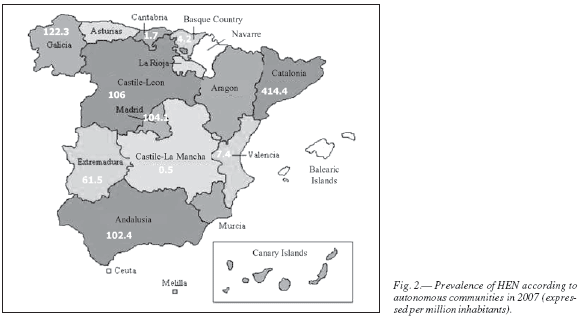
<body><![CDATA[<p align="center">&nbsp;</p>     <p><font size="2" face="Verdana">In the period 2004-2005 there was a decrease in the number of patients registered due to the changes in the working of the registry.</font></p>     <p><font size="2" face="Verdana">Interestingly, the distribution of patients throughout Spain in not uniform (<a href="#f2">fig. 2</a>). The available data from 10 of the 17 autonomous communities show that most patients were in six communities (Catalonia, Galicia, Castilla-Le&oacute;n, Madrid, Andalusia, Extremadura).</font></p>     <p align="center"><a name="f2"><img src="/img/revistas/nh/v24n3/original10_f2.gif"></a></p>     <p align="center">&nbsp;</p>     <p><font size="2" face="Verdana">Gender distribution was nearly 1:1, and the number of paediatric patients was very low (less than 10% of the registry). The mean age in adults is above 65 years in most reports (68 yrs in 2007); in children it is 4-6 years (4.2 yrs in 2007). Age tended to increase during the study period: people older than 74 years made up 26% of the study population in 1994, compared with 42% in 2007<i>.</i></font></p>     <p><font size="2" face="Verdana"><i>Underlying disease</i></font></p>     <p><font size="2" face="Verdana">Neurological disorders and cancer were the two most prevalent diagnoses, affecting nearly 70% of the patients (<a href="#t1">table I</a>). In the last few years of the study period, we observed an increase in the number of patients with neurological diseases over cancer, probably as a result of the older age of the patients registered. Gastrointestinal diseases (eg, inflammatory bowel disease, motility disorders, malabsorption, ischemia, and radiation enteritis) represented less than 5%. During the last 5 years, HIV infection was present in very few patients.</font></p>     <p align="center"><a name="t1"><img src="/img/revistas/nh/v24n3/original10_t1.gif"></a></p>     <p><font size="2" face="Verdana"><i>Enteral access route</i></font></p>     ]]></body>
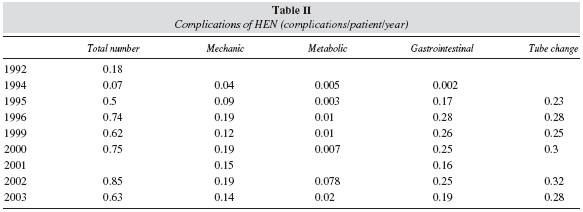
<body><![CDATA[<p><font size="2" face="Verdana">There was a large increase in the use of the oral route during the study period, from 5.8% in 1992 to 64% in 2007, with a parallel decrease in the use of nasogastric tubes, from 68.8% in 1992 to 26% in 2007. Gastrostomy tubes were used in 15-20% of patients, representing 25% of non-oral accesses. Jejunostomy tubes were used in 2% of patients.</font></p>     <p><font size="2" face="Verdana"><i>Length of treatment</i></font></p>     <p><font size="2" face="Verdana">We observed an increase in the length of treatment from 6.3 months in 1994 to 9.4 months in 2007. Before the modification of the registry in 2005, the duration of treatment was &lt; 3 months in ~30% of patients and between 3 and 5 months in 20%. This trend changed during the last few years of the study.</font></p>     <p><font size="2" face="Verdana"><i>Complications</i></font></p>     <p><font size="2" face="Verdana">All the data on complications come from the old registry (<a href="#t2">table II</a>). In general, patients had less than one HEN-related complication per year. The most frequent was the change of enteral tube, followed by gastrointestinal complications (diarrhoea, constipation).</font></p>     <p align="center"><a name="t2"><img src="/img/revistas/nh/v24n3/original10_t2.gif"></a></p>     <p><font size="2" face="Verdana"><i>Outcome</i></font></p>     <p><font size="2" face="Verdana">Until 2003, between 30% and 40% of patients were weaned from HEN during the year. This percentage fell towards the end of the study probably due to misreporting of data (ie, the investigators did not close the episodes). The principal reasons for discontinuing treatment were death related to the underlying disease (40-50%) and progress to oral diet (30-40%). Approximately 10-15% patients were lost to follow-up.</font></p>     <p><font size="2" face="Verdana"><i>Follow-up and delivery of treatment</i></font></p>     <p><font size="2" face="Verdana">In 75% of patients, follow-up was performed by the hospital nutrition unit and in 10-15% by the home hospitalization units.</font></p>     ]]></body>
<body><![CDATA[<p><font size="2" face="Verdana">The enteral formula was provided by the hospital and private pharmacies, depending on the area. The type of formula was recorded until 2003, and polymeric formulas were the most commonly used (85%). The disposables were mainly provided by the hospitals. Enteral pumps were used in only 10% of patients.</font></p>     <p><font size="2" face="Verdana"><i>Physical activity and autonomy</i></font></p>     <p><font size="2" face="Verdana">Most of the patients were limited in their physical activity (30%), or were chair- or bed-bound (40%). Very few patients were unconscious (1%). Most adult patients required partial (28%) or total help (39%) in their daily activities.</font></p>     <p>&nbsp;</p>     <p><font face="Verdana"><b>Discussion</b></font></p>     <p><font size="2" face="Verdana">We describe HEN practice in Spain over a 16-year period. The information we provide is useful, given that HEN has received less attention in the literature than HPN.</font></p>     <p><font size="2" face="Verdana">We observed an enormous increase in HEN during the study period. This increase is the result of the development of the enteral industry (including new enteral formulas, many of them for oral use, and improvements in enteral access) and legislation on HEN, and a growing awareness of the importance of malnutrition in the prognosis of illness.</font></p>     <p><font size="2" face="Verdana">HEN was first approved in Spain in 1998 for people incapable of covering their daily requirements by oral diets.<sup>18</sup> Enteral feeding (generally by tube) is publicly financed for a long list of diseases. Legislation has recently been modified,<sup>19</sup> and in 1998, a group of experts on HEN and the Ministry of Health developed national guidelines,<sup>20</sup> which have recently been updated.<sup>21</sup></font></p>     <p><font size="2" face="Verdana">As the NADYA registry is voluntary, we are aware that it could underestimate the number of patients on HEN in Spain. This is clearly visible from the map of the Spanish autonomous communities (<a href="#f2">fig. 2</a>). The different systems for organizing HEN make follow-up easier to perform in some autonomous communities (for example Catalonia and Galicia).</font></p>     <p><font size="2" face="Verdana">Our data show that the prevalence of HEN is 113 patients/10<sup>6</sup> inhabitants (including oral and tube feeding), or 41 patients/10<sup>6</sup> inhabitants (including only tube feeding). Except for 5 autonomous communities (Catalonia, Galicia, Castilla-Le&oacute;n, Madrid, Andalusia), this prevalence is lower than observed in other studies performed in different areas of Spain.</font></p>     ]]></body>
<body><![CDATA[<p><font size="2" face="Verdana">In Valladolid, de Luis et al<sup>22</sup> reported an incidence of 95-265 patients/10<sup>6</sup> inhabitants in the period 1999-2004. In Galicia, the prevalence found in a multicentre study in 1998-1999 was much higher (1,034 cases/10<sup>6</sup> inhabitants).<sup>23 </sup>Although several studies have shown an increase in HEN in other areas of Spain, prevalence is unknown.<sup>24-26</sup></font></p>     <p><font size="2" face="Verdana">In Europe, the prevalence of HEN is also unknown. One European survey in 1999, reported the median annual incidence to be 163 patients/10<sup>6</sup> inhabitants/year (range 62-457).<sup>3</sup> The British registry, which includes only people on tube feeding, reported 24,203 adult patients (prevalence 404 cases/million) and 5,831 children in 2007.<sup>27</sup> In Germany, the number of patients on HEN is unknown, but probably exceeds 100,000 cases.<sup>28</sup> An Italian survey in 2005 showed a prevalence of 128 cases/million.<sup>29</sup> In a recent report from Northeast Italy, the mean incidence and prevalence of HEN during 2001-2005 were 308.7 and 379.8 cases/million, respectively.<sup>30</sup> In the United States, there were 152,000 patients on HEN in 1992, with a prevalence of 415 cases/million during 1989-1992.<sup>2</sup></font></p>     <p><font size="2" face="Verdana">Neurological disorders and cancer are the most frequent indications for HEN in our registry. The first has increased over the years, probably as a result of aging of the population. These data are similar to those from two studies performed in Galicia,<sup>23,31</sup> but differ from those reported in the study from Valladolid,<sup>22</sup> in which head and neck cancer was the most common underlying disease (43.8%), and neurological disorders represented only 9.6%, probably as a result of the younger age of the patients included (mean age 56.4 yrs).</font></p>     <p><font size="2" face="Verdana">In the European survey, the most frequent diagnoses were neurological disorders and head and neck cancer.<sup>3</sup> In the British registry, which includes patients with very similar characteristics to ours, neurological disorders were also the most frequent diseases.<sup>27</sup> In Italy, most patients on HEN had neurological disorders.<sup>29,30</sup> In the North American Home Parenteral and Enteral Nutrition Registry 1985-1992, the most frequent diagnosis was cancer (40%) followed by dysphagia (30%).<sup>2</sup> More recent data from Denver on 17,014 patients (mean age 46.6 years) followed from 1998 to 2002 showed that the most common indications were gastrointestinal diseases, malnutrition, and diseases of the esophagus.<sup>32</sup> The indication for HEN is clearly shown to depend on the characteristics of the patients (mainly age).</font></p>     <p><font size="2" face="Verdana">In our series, oral enteral feeding was the most frequently used approach, especially in the latter part of the study, as a result of the enormous increase in the availability of oral formulas during this period. This mirrors the results of the studies from Galicia<sup>23,31</sup> and Valladolid,<sup>22</sup> but differs from the practice in areas where oral enteral feeding is not reimbursed<sup>28,32</sup> and the patients are not included in the national registries.<sup>2,27</sup></font></p>     <p><font size="2" face="Verdana">The use of gastrostomy tubes in our series was very low (15-20%) -25% of non-oral feedings- especially taking into account the age of the patients and the underlying disease. This percentage is similar to that observed in studies from other areas of Spain,<sup>22,23,31</sup> but differs from those reported in other countries (58.2% of gastrostomies in the European survey, 83% in the British registry).<sup>3,27</sup> However, in the study from Northeast Italy, most patients were fed by nasogastric tube.<sup>30</sup> In the United States, gastrostomies are probably overused because Medicare only finances HEN treatment lasting more than 3 months.<sup>33</sup> In addition, these tubes are currently very common in nursing homes.<sup>32</sup> In 1989, 15,000 percutaneous endoscopic gastrostomy (PEG) tubes were used; in 2000, this figure had risen to more than 216,000 tubes. Approximately 30% were used in patients with dementia.<sup>34</sup></font></p>     <p><font size="2" face="Verdana">Although gastrostomy is indicated in long-term enteral feeding because of its safety and patient comfort,<sup>35</sup> there are many doubts over its benefits in some cases, especially in patients with advanced dementia.<sup>36,37</sup></font></p>     <p><font size="2" face="Verdana">The number of complications in our registry was low, the most frequent being change of the feeding tube. This could be avoided by the use of gastrostomy in some cases. Our complication rate is similar to those of other studies performed in Spain<sup>22,23,31,38</sup> and elsewhere. <sup>2,39,40</sup></font></p>     <p><font size="2" face="Verdana">The increase in the length of treatment over the years in our series is probably unreal and may reflect misreporting of the weaning process during follow-up in the new registry. The most frequent reasons for discontinuing treatment were death and progress to oral diet, as occurred in other series.<sup>2,22,27,30</sup> It is important to note that mortality is very high (20% mortality 1 month after starting treatment) despite appropriate selection of patients,<sup>41</sup> and mostly depends on age and underlying disease.<sup>22,42,43</sup></font></p>     <p><font size="2" face="Verdana">In our experience, HEN was used in elderly people (most of them chair- or bed-bound) who required partial or total help in their daily activities. These features are common in the British registry.<sup>27</sup></font></p>     ]]></body>
<body><![CDATA[<p><font size="2" face="Verdana">The organization of HEN in Spain differs according to the autonomous community. While the enteral formula and disposables are provided by the hospital (or directly delivered to the patient's home through agreements with the enteral feeding industry) in Galicia and Catalonia, in the rest of the country the formula is provided by private pharmacies and the disposables by the hospital or primary care centers.</font></p>     <p><font size="2" face="Verdana">As this treatment is financed by the National Health Services in many countries, it is important to establish its cost-effectiveness. HEN costs about a tenth of HPN. In a recent report from Elia et al,<sup>44</sup> the cost per quality adjusted life years in patients receiving long-term enteral tube feeding in their own home was &pound; 12,817. This cost compares favourably with other forms of intervention, and is well within the typical range of the interventions recommended by the National Health Service in many countries.</font></p>     <p><font size="2" face="Verdana">We can conclude that HEN is a safe, cost-effective treatment, which has become increasingly used in the last 20 years in Spain and in other western countries.</font></p>     <p>&nbsp;</p>     <p><font face="Verdana"><b>Acknowledgments</b></font></p>     <p><font size="2" face="Verdana">The authors extend their thanks to all the contributors to the NADYA registry and to B Braun, Spain for their technical support over these years.</font></p>     <p>&nbsp;</p>     <p><font face="Verdana"><b>References</b></font></p>     <!-- ref --><p><font size="2" face="Verdana">1. Moreno JM, Shaffer J, Staun M, Hebuterne X, Bozzetti F, Pertkiewicz M et al. Survey on legislation and funding of home artificial nutrition in different European countries. Clin Nutr 2001; 20 (2): 117-23.</font>&nbsp;&nbsp;&nbsp;&nbsp;&nbsp;&nbsp;&nbsp;&nbsp;[&#160;<a href="javascript:void(0);" onclick="javascript: window.open('/scielo.php?script=sci_nlinks&ref=3556627&pid=S0212-1611200900030001300001&lng=','','width=640,height=500,resizable=yes,scrollbars=1,menubar=yes,');">Links</a>&#160;]<!-- end-ref --><!-- ref --><p><font size="2" face="Verdana">2. Howard L, Ament M, Fleming CR, Shike M, Steiger E. Current use and clinical outcome of home parenteral and enteral nutrition therapies in the United States. Gastroenterology 1995; 109: 355-65.</font>&nbsp;&nbsp;&nbsp;&nbsp;&nbsp;&nbsp;&nbsp;&nbsp;[&#160;<a href="javascript:void(0);" onclick="javascript: window.open('/scielo.php?script=sci_nlinks&ref=3556628&pid=S0212-1611200900030001300002&lng=','','width=640,height=500,resizable=yes,scrollbars=1,menubar=yes,');">Links</a>&#160;]<!-- end-ref --><!-- ref --><p><font size="2" face="Verdana">3. Hebuterne X, Bozetti F, Moreno Villares JM, Pertkiewicz M, Shaffer J, Staun M et al. ESPEN-Home Artificial Nutrition Working Group. Home enteral nutrition in adults: A European multicentre survey. Clin Nutr 2003; 22: 261-6.</font>&nbsp;&nbsp;&nbsp;&nbsp;&nbsp;&nbsp;&nbsp;&nbsp;[&#160;<a href="javascript:void(0);" onclick="javascript: window.open('/scielo.php?script=sci_nlinks&ref=3556629&pid=S0212-1611200900030001300003&lng=','','width=640,height=500,resizable=yes,scrollbars=1,menubar=yes,');">Links</a>&#160;]<!-- end-ref --><!-- ref --><p><font size="2" face="Verdana">4. G&oacute;mez Candela C, De Cos AI, V&aacute;zquez C, Celaya S, Garc&iacute;a Luna PP, P&eacute;rez de la Cruz A et al. Grupo de trabajo nacional en nutrici&oacute;n artificial domiciliaria y ambulatoria. NADYA. Nutr Hosp 1995; 10 (5): 258-63.</font>&nbsp;&nbsp;&nbsp;&nbsp;&nbsp;&nbsp;&nbsp;&nbsp;[&#160;<a href="javascript:void(0);" onclick="javascript: window.open('/scielo.php?script=sci_nlinks&ref=3556630&pid=S0212-1611200900030001300004&lng=','','width=640,height=500,resizable=yes,scrollbars=1,menubar=yes,');">Links</a>&#160;]<!-- end-ref --><!-- ref --><p><font size="2" face="Verdana">5. G&oacute;mez Candela C, De Cos AI y grupo NADYA. Nutrici&oacute;n artificial domiciliaria. Informe anual 1994. Grupo NADYA. Nutr Hosp 1997; 12 (1): 20-27.</font>&nbsp;&nbsp;&nbsp;&nbsp;&nbsp;&nbsp;&nbsp;&nbsp;[&#160;<a href="javascript:void(0);" onclick="javascript: window.open('/scielo.php?script=sci_nlinks&ref=3556631&pid=S0212-1611200900030001300005&lng=','','width=640,height=500,resizable=yes,scrollbars=1,menubar=yes,');">Links</a>&#160;]<!-- end-ref --><!-- ref --><p><font size="2" face="Verdana">6. G&oacute;mez Candela C, De Cos AI, Iglesias C, Carbonell MD, Camarero E, Celador A, et al. Nutrici&oacute;n artificial domiciliaria. Informe anual 1995. Grupo NADYA-SENPE. Nutr Hosp 1998; 13 (3): 144-52.</font>&nbsp;&nbsp;&nbsp;&nbsp;&nbsp;&nbsp;&nbsp;&nbsp;[&#160;<a href="javascript:void(0);" onclick="javascript: window.open('/scielo.php?script=sci_nlinks&ref=3556632&pid=S0212-1611200900030001300006&lng=','','width=640,height=500,resizable=yes,scrollbars=1,menubar=yes,');">Links</a>&#160;]<!-- end-ref --><!-- ref --><p><font size="2" face="Verdana">7. G&oacute;mez Candela C, De Cos AI, Iglesias C, Carbonell MD, Camarero E, Carrera JA, et al. Nutrici&oacute;n artificial domiciliaria. Informe anual 1996. Grupo NADYA-SENPE. Nutr Hosp 1999; 14 (4): 145-52.</font>&nbsp;&nbsp;&nbsp;&nbsp;&nbsp;&nbsp;&nbsp;&nbsp;[&#160;<a href="javascript:void(0);" onclick="javascript: window.open('/scielo.php?script=sci_nlinks&ref=3556633&pid=S0212-1611200900030001300007&lng=','','width=640,height=500,resizable=yes,scrollbars=1,menubar=yes,');">Links</a>&#160;]<!-- end-ref --><!-- ref --><p><font size="2" face="Verdana">8. G&oacute;mez Candela C, De Cos AI, Iglesias C, Planas M, Castella M, Garc&iacute;a Luna PP et al. Nutrici&oacute;n enteral domiciliaria. Informe anual 1999. Grupo NADYA-SENPE. Nutr Hosp 2002; 17 (1): 28-33.</font>&nbsp;&nbsp;&nbsp;&nbsp;&nbsp;&nbsp;&nbsp;&nbsp;[&#160;<a href="javascript:void(0);" onclick="javascript: window.open('/scielo.php?script=sci_nlinks&ref=3556634&pid=S0212-1611200900030001300008&lng=','','width=640,height=500,resizable=yes,scrollbars=1,menubar=yes,');">Links</a>&#160;]<!-- end-ref --><!-- ref --><p><font size="2" face="Verdana">9. Planas M, Castell&aacute; M, Garc&iacute;a Luna PP, Chamorro J, G&oacute;mez Candela C, Carbonell MD et al. Nutrici&oacute;n enteral domiciliaria (NED): Registro nacional del a&ntilde;o 2000. Nutr Hosp 2003; 18 (1): 24-8.</font>&nbsp;&nbsp;&nbsp;&nbsp;&nbsp;&nbsp;&nbsp;&nbsp;[&#160;<a href="javascript:void(0);" onclick="javascript: window.open('/scielo.php?script=sci_nlinks&ref=3556635&pid=S0212-1611200900030001300009&lng=','','width=640,height=500,resizable=yes,scrollbars=1,menubar=yes,');">Links</a>&#160;]<!-- end-ref --><!-- ref --><p><font size="2" face="Verdana">10. Planas M, Castell&aacute; M, Garc&iacute;a Luna PP, Par&eacute;s RM, Chamorro J, Camarero E et al. Nutrici&oacute;n enteral domiciliaria (NED): registro nacional 2001. Nutr Hosp 2004; 19 (3): 145-9.</font>&nbsp;&nbsp;&nbsp;&nbsp;&nbsp;&nbsp;&nbsp;&nbsp;[&#160;<a href="javascript:void(0);" onclick="javascript: window.open('/scielo.php?script=sci_nlinks&ref=3556636&pid=S0212-1611200900030001300010&lng=','','width=640,height=500,resizable=yes,scrollbars=1,menubar=yes,');">Links</a>&#160;]<!-- end-ref --><!-- ref --><p><font size="2" face="Verdana">11. Planas M, Lecha M, Garc&iacute;a Luna PP, Chamorro J, Zamarr&oacute;n I, Par&eacute;s RM et al. Registro nacional de la nutrici&oacute;n enteral domiciliaria del a&ntilde;o 2002. Nutr Hosp 2005; 20 (2): 254-8.</font>&nbsp;&nbsp;&nbsp;&nbsp;&nbsp;&nbsp;&nbsp;&nbsp;[&#160;<a href="javascript:void(0);" onclick="javascript: window.open('/scielo.php?script=sci_nlinks&ref=3556637&pid=S0212-1611200900030001300011&lng=','','width=640,height=500,resizable=yes,scrollbars=1,menubar=yes,');">Links</a>&#160;]<!-- end-ref --><!-- ref --><p><font size="2" face="Verdana">12. Planas M, Lecha M, Garc&iacute;a Luna PP, Par&eacute;s RM, Chamorro J, Mart&iacute; E et al. Grupo de trabajo NADYA-SENPE. Registro nacional de la nutrici&oacute;n enteral domiciliaria del a&ntilde;o 2003. Nutr Hosp 2006; 21 (1): 71-4.</font>&nbsp;&nbsp;&nbsp;&nbsp;&nbsp;&nbsp;&nbsp;&nbsp;[&#160;<a href="javascript:void(0);" onclick="javascript: window.open('/scielo.php?script=sci_nlinks&ref=3556638&pid=S0212-1611200900030001300012&lng=','','width=640,height=500,resizable=yes,scrollbars=1,menubar=yes,');">Links</a>&#160;]<!-- end-ref --><!-- ref --><p><font size="2" face="Verdana">13. Cuerda C, Chicharro ML, Fr&iacute;as L, Garc&iacute;a Luna PP, Cardona D, Camarero E et al. Registro de la nutrici&oacute;n enteral domiciliaria en Espa&ntilde;a en el a&ntilde;o 2006 (Grupo NADYA-SENPE). Nutr Hosp 2008; 23 (2): 95-9.</font>&nbsp;&nbsp;&nbsp;&nbsp;&nbsp;&nbsp;&nbsp;&nbsp;[&#160;<a href="javascript:void(0);" onclick="javascript: window.open('/scielo.php?script=sci_nlinks&ref=3556639&pid=S0212-1611200900030001300013&lng=','','width=640,height=500,resizable=yes,scrollbars=1,menubar=yes,');">Links</a>&#160;]<!-- end-ref --><!-- ref --><p><font size="2" face="Verdana">14. Luengo LM, Chicharro ML, Cuerda C, Garc&iacute;a Luna PP, Rabassa A, Romero A et al. Registro de nutrici&oacute;n enteral domiciliaria en Espa&ntilde;a en el a&ntilde;o 2007. Nutr Hosp 2009; in press.</font>&nbsp;&nbsp;&nbsp;&nbsp;&nbsp;&nbsp;&nbsp;&nbsp;[&#160;<a href="javascript:void(0);" onclick="javascript: window.open('/scielo.php?script=sci_nlinks&ref=3556640&pid=S0212-1611200900030001300014&lng=','','width=640,height=500,resizable=yes,scrollbars=1,menubar=yes,');">Links</a>&#160;]<!-- end-ref --><!-- ref --><p><font size="2" face="Verdana">15. Moreno Villares JM, Cuerda C, Planas M, G&oacute;mez Candela C, Le&oacute;n Sanz M, de Cos A et al. Trends in adult home parenteral nutrition in Spain. 1992-2003. Nutr Hosp 2006; 21 (5): 617-21.</font>&nbsp;&nbsp;&nbsp;&nbsp;&nbsp;&nbsp;&nbsp;&nbsp;[&#160;<a href="javascript:void(0);" onclick="javascript: window.open('/scielo.php?script=sci_nlinks&ref=3556641&pid=S0212-1611200900030001300015&lng=','','width=640,height=500,resizable=yes,scrollbars=1,menubar=yes,');">Links</a>&#160;]<!-- end-ref --><!-- ref --><p><font size="2" face="Verdana">16. G&oacute;mez Candela C, De Cos Blanco AI y grupo NADYA. Nutrici&oacute;n artificial domiciliaria y ambulatoria (NADYA). Nutrici&oacute;n enteral. Nutr Hosp 1995; X (5): 246-51.</font>&nbsp;&nbsp;&nbsp;&nbsp;&nbsp;&nbsp;&nbsp;&nbsp;[&#160;<a href="javascript:void(0);" onclick="javascript: window.open('/scielo.php?script=sci_nlinks&ref=3556642&pid=S0212-1611200900030001300016&lng=','','width=640,height=500,resizable=yes,scrollbars=1,menubar=yes,');">Links</a>&#160;]<!-- end-ref --><!-- ref --><p><font size="2" face="Verdana">17. Cuerda C, Par&oacute;n L, Planas M, G&oacute;mez Candela C, Moreno JM y grupo NADYA-SENPE. Presentaci&oacute;n del nuevo registro espa&ntilde;ol de pacientes con nutrici&oacute;n artificial domiciliaria. Nutr Hosp 2007; 22 (4): 491-5.</font>&nbsp;&nbsp;&nbsp;&nbsp;&nbsp;&nbsp;&nbsp;&nbsp;[&#160;<a href="javascript:void(0);" onclick="javascript: window.open('/scielo.php?script=sci_nlinks&ref=3556643&pid=S0212-1611200900030001300017&lng=','','width=640,height=500,resizable=yes,scrollbars=1,menubar=yes,');">Links</a>&#160;]<!-- end-ref --><!-- ref --><p><font size="2" face="Verdana">18. Orden de 2 Junio de 1998, para la regulaci&oacute;n de la nutrici&oacute;n enteral domiciliaria en el Sistema Nacional de Salud. Bolet&iacute;n Oficial del Estado, nº 139, (11-06-1998).</font>&nbsp;&nbsp;&nbsp;&nbsp;&nbsp;&nbsp;&nbsp;&nbsp;[&#160;<a href="javascript:void(0);" onclick="javascript: window.open('/scielo.php?script=sci_nlinks&ref=3556644&pid=S0212-1611200900030001300018&lng=','','width=640,height=500,resizable=yes,scrollbars=1,menubar=yes,');">Links</a>&#160;]<!-- end-ref --><!-- ref --><p><font size="2" face="Verdana">19. B.O.E. Nº 222, de 16 septiembre 2006. Real Decreto 1030/2006, de 15 de septiembre, por el que se establece la cartera de servicios comunes del Sistema Nacional de Salud y el procedimiento para su actualizaci&oacute;n.</font>&nbsp;&nbsp;&nbsp;&nbsp;&nbsp;&nbsp;&nbsp;&nbsp;[&#160;<a href="javascript:void(0);" onclick="javascript: window.open('/scielo.php?script=sci_nlinks&ref=3556645&pid=S0212-1611200900030001300019&lng=','','width=640,height=500,resizable=yes,scrollbars=1,menubar=yes,');">Links</a>&#160;]<!-- end-ref --><!-- ref --><p><font size="2" face="Verdana">20. Consejo Interterritorial del Sistema Nacional de Salud. Gu&iacute;a de pr&aacute;ctica cl&iacute;nica de nutrici&oacute;n enteral domiciliaria. Madrid: Ministerio de Sanidad y Consumo, 1998.</font>&nbsp;&nbsp;&nbsp;&nbsp;&nbsp;&nbsp;&nbsp;&nbsp;[&#160;<a href="javascript:void(0);" onclick="javascript: window.open('/scielo.php?script=sci_nlinks&ref=3556646&pid=S0212-1611200900030001300020&lng=','','width=640,height=500,resizable=yes,scrollbars=1,menubar=yes,');">Links</a>&#160;]<!-- end-ref --><!-- ref --><p><font size="2" face="Verdana">21. Ministerio de Sanidad y Consumo. Gu&iacute;a de nutrici&oacute;n enteral domiciliaria en el Sistema Nacional de Salud. Madrid: Ministerio de Sanidad y Consumo, 2008.</font>&nbsp;&nbsp;&nbsp;&nbsp;&nbsp;&nbsp;&nbsp;&nbsp;[&#160;<a href="javascript:void(0);" onclick="javascript: window.open('/scielo.php?script=sci_nlinks&ref=3556647&pid=S0212-1611200900030001300021&lng=','','width=640,height=500,resizable=yes,scrollbars=1,menubar=yes,');">Links</a>&#160;]<!-- end-ref --><!-- ref --><p><font size="2" face="Verdana">22. De Luis DA, Aller R, Izaola O, Terroba MC, Cabezas G, Cuellar LA. Experience of 6 years with home enteral nutrition in an area of Spain. European J Clin Nutr 2006; 60: 553-7.</font>&nbsp;&nbsp;&nbsp;&nbsp;&nbsp;&nbsp;&nbsp;&nbsp;[&#160;<a href="javascript:void(0);" onclick="javascript: window.open('/scielo.php?script=sci_nlinks&ref=3556648&pid=S0212-1611200900030001300022&lng=','','width=640,height=500,resizable=yes,scrollbars=1,menubar=yes,');">Links</a>&#160;]<!-- end-ref --><!-- ref --><p><font size="2" face="Verdana">23. P&eacute;rez M&eacute;ndez LF, Garc&iacute;a Mayor RV y grupo de trabajo de la Sociedad Gallega de Nutrici&oacute;n y Diet&eacute;tica. Situaci&oacute;n actual de la nutrici&oacute;n enteral domiciliaria en Galicia. Estudio multic&eacute;ntrico. Nutr Hosp 2001; 16 (6): 257-61.</font>&nbsp;&nbsp;&nbsp;&nbsp;&nbsp;&nbsp;&nbsp;&nbsp;[&#160;<a href="javascript:void(0);" onclick="javascript: window.open('/scielo.php?script=sci_nlinks&ref=3556649&pid=S0212-1611200900030001300023&lng=','','width=640,height=500,resizable=yes,scrollbars=1,menubar=yes,');">Links</a>&#160;]<!-- end-ref --><!-- ref --><p><font size="2" face="Verdana">24. Casta&ntilde;o A. Consumo de productos de nutrici&oacute;n enteral domiciliaria en la Comunidad Aut&oacute;noma de Madrid. Nutr Hosp 2002; 17 (2): 107-11.</font>&nbsp;&nbsp;&nbsp;&nbsp;&nbsp;&nbsp;&nbsp;&nbsp;[&#160;<a href="javascript:void(0);" onclick="javascript: window.open('/scielo.php?script=sci_nlinks&ref=3556650&pid=S0212-1611200900030001300024&lng=','','width=640,height=500,resizable=yes,scrollbars=1,menubar=yes,');">Links</a>&#160;]<!-- end-ref --><!-- ref --><p><font size="2" face="Verdana">25. Casta&ntilde;o Escudero A, P&eacute;rez Gabarda ME. Nutrici&oacute;n enteral domiciliaria en la Comunidad de Madrid. Nutr Hosp 2004; 19 (2): 68-72.</font>&nbsp;&nbsp;&nbsp;&nbsp;&nbsp;&nbsp;&nbsp;&nbsp;[&#160;<a href="javascript:void(0);" onclick="javascript: window.open('/scielo.php?script=sci_nlinks&ref=3556651&pid=S0212-1611200900030001300025&lng=','','width=640,height=500,resizable=yes,scrollbars=1,menubar=yes,');">Links</a>&#160;]<!-- end-ref --><!-- ref --><p><font size="2" face="Verdana">26. Leyes P, Forga MT, Montserrat C, Coronas R. Nutrici&oacute;n enteral domiciliaria. Casu&iacute;stica del Hospital Cl&iacute;nico de Barcelona. Nutr Hosp 2001; 16 (5): 152-6.</font>&nbsp;&nbsp;&nbsp;&nbsp;&nbsp;&nbsp;&nbsp;&nbsp;[&#160;<a href="javascript:void(0);" onclick="javascript: window.open('/scielo.php?script=sci_nlinks&ref=3556652&pid=S0212-1611200900030001300026&lng=','','width=640,height=500,resizable=yes,scrollbars=1,menubar=yes,');">Links</a>&#160;]<!-- end-ref --><!-- ref --><p><font size="2" face="Verdana">27. Jones B, Micklewright A, Hirst A, Glencorse C, Baxter J, Khair J. Annual BANS Report 2008. Artificial Nutrition Support in the UK 2000-2007. www.bapen.org.uk/pdfs/bans_report/bans_report_08.pdf (Accessed 1/1/2009).</font>&nbsp;&nbsp;&nbsp;&nbsp;&nbsp;&nbsp;&nbsp;&nbsp;[&#160;<a href="javascript:void(0);" onclick="javascript: window.open('/scielo.php?script=sci_nlinks&ref=3556653&pid=S0212-1611200900030001300027&lng=','','width=640,height=500,resizable=yes,scrollbars=1,menubar=yes,');">Links</a>&#160;]<!-- end-ref --><!-- ref --><p><font size="2" face="Verdana">28. Van Gossum A. Home enteral nutrition. Epidemiology and legislation in Europe. Nestl&eacute; Nutrition Workshop Series Clinical &amp; Performance Program 2005; 10: 59-71.</font>&nbsp;&nbsp;&nbsp;&nbsp;&nbsp;&nbsp;&nbsp;&nbsp;[&#160;<a href="javascript:void(0);" onclick="javascript: window.open('/scielo.php?script=sci_nlinks&ref=3556654&pid=S0212-1611200900030001300028&lng=','','width=640,height=500,resizable=yes,scrollbars=1,menubar=yes,');">Links</a>&#160;]<!-- end-ref --><!-- ref --><p><font size="2" face="Verdana">29. Pironi L, Candusso M, Biondo A, Bosco A, Castaldi P, Contaldo F et al. Prevalence of home artificial nutrition in Italy in 2005: a survey by the Italian Society for Parenteral and Enteral Nutrition (SINPE). Clin Nutr 2007; 26: 123-32.</font>&nbsp;&nbsp;&nbsp;&nbsp;&nbsp;&nbsp;&nbsp;&nbsp;[&#160;<a href="javascript:void(0);" onclick="javascript: window.open('/scielo.php?script=sci_nlinks&ref=3556655&pid=S0212-1611200900030001300029&lng=','','width=640,height=500,resizable=yes,scrollbars=1,menubar=yes,');">Links</a>&#160;]<!-- end-ref --><!-- ref --><p><font size="2" face="Verdana">30. Paccagnella A, Baruffi C, Pizzolato D, Favaro V, Marcon ML, Morello M et al. Home enteral nutrition in adults: a five-year (2001-2005) epidemiological analysis. Clin Nutr 2008; 27: 378-85.</font>&nbsp;&nbsp;&nbsp;&nbsp;&nbsp;&nbsp;&nbsp;&nbsp;[&#160;<a href="javascript:void(0);" onclick="javascript: window.open('/scielo.php?script=sci_nlinks&ref=3556656&pid=S0212-1611200900030001300030&lng=','','width=640,height=500,resizable=yes,scrollbars=1,menubar=yes,');">Links</a>&#160;]<!-- end-ref --><!-- ref --><p><font size="2" face="Verdana">31. Villar Taibo R, Mart&iacute;nez Olmos MA, Rodr&iacute;guez Iglesias MJ, Fern&aacute;ndez Rodr&iacute;guez E, Prieto Tenreiro A. Home artificial nutrition in a sanitary area of Galicia (Spain): descriptive study and proposals for the future. Nutr Hosp 2008; 23 (5): 433-8.</font>&nbsp;&nbsp;&nbsp;&nbsp;&nbsp;&nbsp;&nbsp;&nbsp;[&#160;<a href="javascript:void(0);" onclick="javascript: window.open('/scielo.php?script=sci_nlinks&ref=3556657&pid=S0212-1611200900030001300031&lng=','','width=640,height=500,resizable=yes,scrollbars=1,menubar=yes,');">Links</a>&#160;]<!-- end-ref --><!-- ref --><p><font size="2" face="Verdana">32. DeLegge MH. Home enteral nutrition. Demographics and utilization in the United States. Nestl&eacute; Nutrition Workshop Series Clinical &amp; Performance Program 2005; 10: 45-58.</font>&nbsp;&nbsp;&nbsp;&nbsp;&nbsp;&nbsp;&nbsp;&nbsp;[&#160;<a href="javascript:void(0);" onclick="javascript: window.open('/scielo.php?script=sci_nlinks&ref=3556658&pid=S0212-1611200900030001300032&lng=','','width=640,height=500,resizable=yes,scrollbars=1,menubar=yes,');">Links</a>&#160;]<!-- end-ref --><!-- ref --><p><font size="2" face="Verdana">33. DiBaise JK, Scolapio JS. Home parenteral and enteral nutrition. Gastroenterol Clin N Am 2007; 36: 123-44.</font>&nbsp;&nbsp;&nbsp;&nbsp;&nbsp;&nbsp;&nbsp;&nbsp;[&#160;<a href="javascript:void(0);" onclick="javascript: window.open('/scielo.php?script=sci_nlinks&ref=3556659&pid=S0212-1611200900030001300033&lng=','','width=640,height=500,resizable=yes,scrollbars=1,menubar=yes,');">Links</a>&#160;]<!-- end-ref --><!-- ref --><p><font size="2" face="Verdana">34. Roche V. Percutaneous endoscopic gastrostomy: Clinical care of PEG tubes in older adults. Geriatrics 2003; 58 (11): 22-9.</font>&nbsp;&nbsp;&nbsp;&nbsp;&nbsp;&nbsp;&nbsp;&nbsp;[&#160;<a href="javascript:void(0);" onclick="javascript: window.open('/scielo.php?script=sci_nlinks&ref=3556660&pid=S0212-1611200900030001300034&lng=','','width=640,height=500,resizable=yes,scrollbars=1,menubar=yes,');">Links</a>&#160;]<!-- end-ref --><!-- ref --><p><font size="2" face="Verdana">35. Valentini L, Sch&uuml;tz T, Allison S, Howard P, Pichard C, Lochs H. ESPEN Guidelines on Enteral Nutrition. Clin Nutr 2006; 25: 177-360.</font>&nbsp;&nbsp;&nbsp;&nbsp;&nbsp;&nbsp;&nbsp;&nbsp;[&#160;<a href="javascript:void(0);" onclick="javascript: window.open('/scielo.php?script=sci_nlinks&ref=3556661&pid=S0212-1611200900030001300035&lng=','','width=640,height=500,resizable=yes,scrollbars=1,menubar=yes,');">Links</a>&#160;]<!-- end-ref --><!-- ref --><p><font size="2" face="Verdana">36. Cervo FA, Bryan L, Farber S. To PEG or not to PEG. A review of evidence for placing feeding tubes in advanced dementia and the decision-making process. Geriatrics 2006; 61: 30-5.</font>&nbsp;&nbsp;&nbsp;&nbsp;&nbsp;&nbsp;&nbsp;&nbsp;[&#160;<a href="javascript:void(0);" onclick="javascript: window.open('/scielo.php?script=sci_nlinks&ref=3556662&pid=S0212-1611200900030001300036&lng=','','width=640,height=500,resizable=yes,scrollbars=1,menubar=yes,');">Links</a>&#160;]<!-- end-ref --><!-- ref --><p><font size="2" face="Verdana">37. Finucane TE, Christmas C, Leff BA. Tube feeding in dementia: How incentives undermine health care quality and patient safety. J Am Med Dir Assoc 2007; 8: 205-8.</font>&nbsp;&nbsp;&nbsp;&nbsp;&nbsp;&nbsp;&nbsp;&nbsp;[&#160;<a href="javascript:void(0);" onclick="javascript: window.open('/scielo.php?script=sci_nlinks&ref=3556663&pid=S0212-1611200900030001300037&lng=','','width=640,height=500,resizable=yes,scrollbars=1,menubar=yes,');">Links</a>&#160;]<!-- end-ref --><!-- ref --><p><font size="2" face="Verdana">38. G&oacute;mez Candela C, Cos Blanco A, Garc&iacute;a Luna PP, P&eacute;rez de la Cruz A, Luengo P&eacute;rez LM, Iglesias Rosado C, et al. Complicaciones de la nutrici&oacute;n enteral domiciliaria. Resultados de un estudio multic&eacute;ntrico. Nutr Hosp 2003; 18 (3): 167-73.</font>&nbsp;&nbsp;&nbsp;&nbsp;&nbsp;&nbsp;&nbsp;&nbsp;[&#160;<a href="javascript:void(0);" onclick="javascript: window.open('/scielo.php?script=sci_nlinks&ref=3556664&pid=S0212-1611200900030001300038&lng=','','width=640,height=500,resizable=yes,scrollbars=1,menubar=yes,');">Links</a>&#160;]<!-- end-ref --><!-- ref --><p><font size="2" face="Verdana">39. Crosby J, Duerksen D. A retrospective survey of tube-related complications in patients receiving long-term home enteral nutrition. Dig Dis Sci 2005; 50 (9): 1712-7.</font>&nbsp;&nbsp;&nbsp;&nbsp;&nbsp;&nbsp;&nbsp;&nbsp;[&#160;<a href="javascript:void(0);" onclick="javascript: window.open('/scielo.php?script=sci_nlinks&ref=3556665&pid=S0212-1611200900030001300039&lng=','','width=640,height=500,resizable=yes,scrollbars=1,menubar=yes,');">Links</a>&#160;]<!-- end-ref --><!-- ref --><p><font size="2" face="Verdana">40. Iyer KR, Crawley TC. Complications of enteral access. Gastrointest Endos Clin N Am 2007; 17: 717-29.</font>&nbsp;&nbsp;&nbsp;&nbsp;&nbsp;&nbsp;&nbsp;&nbsp;[&#160;<a href="javascript:void(0);" onclick="javascript: window.open('/scielo.php?script=sci_nlinks&ref=3556666&pid=S0212-1611200900030001300040&lng=','','width=640,height=500,resizable=yes,scrollbars=1,menubar=yes,');">Links</a>&#160;]<!-- end-ref --><!-- ref --><p><font size="2" face="Verdana">41. H&eacute;buterne X, Schneider SM. What are the goals of nutritional support? The example of home enteral nutrition. Nestl&eacute; Nutrition Workshop Series Clinical &amp; Performance Program 2005; 10: 89-102.</font>&nbsp;&nbsp;&nbsp;&nbsp;&nbsp;&nbsp;&nbsp;&nbsp;[&#160;<a href="javascript:void(0);" onclick="javascript: window.open('/scielo.php?script=sci_nlinks&ref=3556667&pid=S0212-1611200900030001300041&lng=','','width=640,height=500,resizable=yes,scrollbars=1,menubar=yes,');">Links</a>&#160;]<!-- end-ref --><!-- ref --><p><font size="2" face="Verdana">42. Schneider SM, Raina C, Pugliese P, Pouget I, Rampal P, H&eacute;buterne X. Outcome of patients treated with home enteral nutrition. JPEN 2001; 25: 203-9.</font>&nbsp;&nbsp;&nbsp;&nbsp;&nbsp;&nbsp;&nbsp;&nbsp;[&#160;<a href="javascript:void(0);" onclick="javascript: window.open('/scielo.php?script=sci_nlinks&ref=3556668&pid=S0212-1611200900030001300042&lng=','','width=640,height=500,resizable=yes,scrollbars=1,menubar=yes,');">Links</a>&#160;]<!-- end-ref --><!-- ref --><p><font size="2" face="Verdana">43. Sanders DS, Carter MJ, D'Silva J, James G, Bolton RP, Bardhan KD. Survival analysis in percutaneous endoscopic gastrostomy feeding: a worse outcome in patients with dementia. Am J Gastroenterol 2000; 95: 1472-5.</font>&nbsp;&nbsp;&nbsp;&nbsp;&nbsp;&nbsp;&nbsp;&nbsp;[&#160;<a href="javascript:void(0);" onclick="javascript: window.open('/scielo.php?script=sci_nlinks&ref=3556669&pid=S0212-1611200900030001300043&lng=','','width=640,height=500,resizable=yes,scrollbars=1,menubar=yes,');">Links</a>&#160;]<!-- end-ref --><!-- ref --><p><font size="2" face="Verdana">44. Elia M, Stratton RJ. A cost-utility analysis in patients receiving enteral tube feeding at home and in nursing homes. Clin Nutr 2008; 27: 416-23.</font>&nbsp;&nbsp;&nbsp;&nbsp;&nbsp;&nbsp;&nbsp;&nbsp;[&#160;<a href="javascript:void(0);" onclick="javascript: window.open('/scielo.php?script=sci_nlinks&ref=3556670&pid=S0212-1611200900030001300044&lng=','','width=640,height=500,resizable=yes,scrollbars=1,menubar=yes,');">Links</a>&#160;]<!-- end-ref --><p>&nbsp;</p>     <p>&nbsp;</p>     <p><font size="2" face="Verdana"><b><a name="back"></a><a href="#top"><img border="0" src="/img/revistas/nh/v24n3/seta.gif" width="15" height="17"></a>Correspondence:</b>    <br>Cristina Cuerda.    <br>Nutrition Unit.    <br>Hospital General Universitario Gregorio Mara&ntilde;&oacute;n.    <br>c/ Doctor Esquerdo, 46.    <br>28007 Madrid    ]]></body>
<body><![CDATA[<br>E-mail: <a href="mailto:mcuerda.hgugm@salud.madrid.org">mcuerda.hgugm@salud.madrid.org</a></font></p>     <p><font size="2" face="Verdana">Recibido: 01-II-2009.    <br>Aceptado: 09-II-2009.</font></p>      ]]></body><back>
<ref-list>
<ref id="B1">
<label>1</label><nlm-citation citation-type="journal">
<person-group person-group-type="author">
<name>
<surname><![CDATA[Moreno]]></surname>
<given-names><![CDATA[JM]]></given-names>
</name>
<name>
<surname><![CDATA[Shaffer]]></surname>
<given-names><![CDATA[J]]></given-names>
</name>
<name>
<surname><![CDATA[Staun]]></surname>
<given-names><![CDATA[M]]></given-names>
</name>
<name>
<surname><![CDATA[Hebuterne]]></surname>
<given-names><![CDATA[X]]></given-names>
</name>
<name>
<surname><![CDATA[Bozzetti]]></surname>
<given-names><![CDATA[F]]></given-names>
</name>
<name>
<surname><![CDATA[Pertkiewicz]]></surname>
<given-names><![CDATA[M]]></given-names>
</name>
</person-group>
<article-title xml:lang="en"><![CDATA[Survey on legislation and funding of home artificial nutrition in different European countries]]></article-title>
<source><![CDATA[Clin Nutr]]></source>
<year>2001</year>
<volume>20</volume>
<numero>2</numero>
<issue>2</issue>
<page-range>117-23</page-range></nlm-citation>
</ref>
<ref id="B2">
<label>2</label><nlm-citation citation-type="journal">
<person-group person-group-type="author">
<name>
<surname><![CDATA[Howard]]></surname>
<given-names><![CDATA[L]]></given-names>
</name>
<name>
<surname><![CDATA[Ament]]></surname>
<given-names><![CDATA[M]]></given-names>
</name>
<name>
<surname><![CDATA[Fleming]]></surname>
<given-names><![CDATA[CR]]></given-names>
</name>
<name>
<surname><![CDATA[Shike]]></surname>
<given-names><![CDATA[M]]></given-names>
</name>
<name>
<surname><![CDATA[Steiger]]></surname>
<given-names><![CDATA[E]]></given-names>
</name>
</person-group>
<article-title xml:lang="en"><![CDATA[Current use and clinical outcome of home parenteral and enteral nutrition therapies in the United States]]></article-title>
<source><![CDATA[Gastroenterology]]></source>
<year>1995</year>
<volume>109</volume>
<page-range>355-65</page-range></nlm-citation>
</ref>
<ref id="B3">
<label>3</label><nlm-citation citation-type="journal">
<person-group person-group-type="author">
<name>
<surname><![CDATA[Hebuterne]]></surname>
<given-names><![CDATA[X]]></given-names>
</name>
<name>
<surname><![CDATA[Bozetti]]></surname>
<given-names><![CDATA[F]]></given-names>
</name>
<name>
<surname><![CDATA[Moreno Villares]]></surname>
<given-names><![CDATA[JM]]></given-names>
</name>
<name>
<surname><![CDATA[Pertkiewicz]]></surname>
<given-names><![CDATA[M]]></given-names>
</name>
<name>
<surname><![CDATA[Shaffer]]></surname>
<given-names><![CDATA[J]]></given-names>
</name>
<name>
<surname><![CDATA[Staun]]></surname>
<given-names><![CDATA[M]]></given-names>
</name>
</person-group>
<article-title xml:lang="en"><![CDATA[Home enteral nutrition in adults: A European multicentre survey]]></article-title>
<source><![CDATA[Clin Nutr]]></source>
<year>2003</year>
<volume>22</volume>
<page-range>261-6</page-range></nlm-citation>
</ref>
<ref id="B4">
<label>4</label><nlm-citation citation-type="journal">
<person-group person-group-type="author">
<name>
<surname><![CDATA[Gómez Candela]]></surname>
<given-names><![CDATA[C]]></given-names>
</name>
<name>
<surname><![CDATA[De Cos]]></surname>
<given-names><![CDATA[AI]]></given-names>
</name>
<name>
<surname><![CDATA[Vázquez]]></surname>
<given-names><![CDATA[C]]></given-names>
</name>
<name>
<surname><![CDATA[Celaya]]></surname>
<given-names><![CDATA[S]]></given-names>
</name>
<name>
<surname><![CDATA[García Luna]]></surname>
<given-names><![CDATA[PP]]></given-names>
</name>
<name>
<surname><![CDATA[Pérez de la Cruz]]></surname>
<given-names><![CDATA[A]]></given-names>
</name>
</person-group>
<article-title xml:lang="es"><![CDATA[Grupo de trabajo nacional en nutrición artificial domiciliaria y ambulatoria: NADYA]]></article-title>
<source><![CDATA[Nutr Hosp]]></source>
<year>1995</year>
<volume>10</volume>
<numero>5</numero>
<issue>5</issue>
<page-range>258-63</page-range></nlm-citation>
</ref>
<ref id="B5">
<label>5</label><nlm-citation citation-type="journal">
<person-group person-group-type="author">
<name>
<surname><![CDATA[Gómez Candela]]></surname>
<given-names><![CDATA[C]]></given-names>
</name>
<name>
<surname><![CDATA[De Cos]]></surname>
<given-names><![CDATA[AI]]></given-names>
</name>
</person-group>
<collab>grupo NADYA</collab>
<article-title xml:lang="es"><![CDATA[Nutrición artificial domiciliaria: Informe anual 1994. Grupo NADYA]]></article-title>
<source><![CDATA[Nutr Hosp]]></source>
<year>1997</year>
<volume>12</volume>
<numero>1</numero>
<issue>1</issue>
<page-range>20-27</page-range></nlm-citation>
</ref>
<ref id="B6">
<label>6</label><nlm-citation citation-type="journal">
<person-group person-group-type="author">
<name>
<surname><![CDATA[Gómez Candela]]></surname>
<given-names><![CDATA[C]]></given-names>
</name>
<name>
<surname><![CDATA[De Cos]]></surname>
<given-names><![CDATA[AI]]></given-names>
</name>
<name>
<surname><![CDATA[Iglesias]]></surname>
<given-names><![CDATA[C]]></given-names>
</name>
<name>
<surname><![CDATA[Carbonell]]></surname>
<given-names><![CDATA[MD]]></given-names>
</name>
<name>
<surname><![CDATA[Camarero]]></surname>
<given-names><![CDATA[E]]></given-names>
</name>
<name>
<surname><![CDATA[Celador]]></surname>
<given-names><![CDATA[A]]></given-names>
</name>
</person-group>
<article-title xml:lang="es"><![CDATA[Nutrición artificial domiciliaria: Informe anual 1995. Grupo NADYA-SENPE]]></article-title>
<source><![CDATA[Nutr Hosp]]></source>
<year>1998</year>
<volume>13</volume>
<numero>3</numero>
<issue>3</issue>
<page-range>144-52</page-range></nlm-citation>
</ref>
<ref id="B7">
<label>7</label><nlm-citation citation-type="journal">
<person-group person-group-type="author">
<name>
<surname><![CDATA[Gómez Candela]]></surname>
<given-names><![CDATA[C]]></given-names>
</name>
<name>
<surname><![CDATA[De Cos]]></surname>
<given-names><![CDATA[AI]]></given-names>
</name>
<name>
<surname><![CDATA[Iglesias]]></surname>
<given-names><![CDATA[C]]></given-names>
</name>
<name>
<surname><![CDATA[Carbonell]]></surname>
<given-names><![CDATA[MD]]></given-names>
</name>
<name>
<surname><![CDATA[Camarero]]></surname>
<given-names><![CDATA[E]]></given-names>
</name>
<name>
<surname><![CDATA[Carrera]]></surname>
<given-names><![CDATA[JA]]></given-names>
</name>
</person-group>
<article-title xml:lang="es"><![CDATA[Nutrición artificial domiciliaria: Informe anual 1996. Grupo NADYA-SENPE]]></article-title>
<source><![CDATA[Nutr Hosp]]></source>
<year>1999</year>
<volume>14</volume>
<numero>4</numero>
<issue>4</issue>
<page-range>145-52</page-range></nlm-citation>
</ref>
<ref id="B8">
<label>8</label><nlm-citation citation-type="journal">
<person-group person-group-type="author">
<name>
<surname><![CDATA[Gómez Candela]]></surname>
<given-names><![CDATA[C]]></given-names>
</name>
<name>
<surname><![CDATA[De Cos]]></surname>
<given-names><![CDATA[AI]]></given-names>
</name>
<name>
<surname><![CDATA[Iglesias]]></surname>
<given-names><![CDATA[C]]></given-names>
</name>
<name>
<surname><![CDATA[Planas]]></surname>
<given-names><![CDATA[M]]></given-names>
</name>
<name>
<surname><![CDATA[Castella]]></surname>
<given-names><![CDATA[M]]></given-names>
</name>
<name>
<surname><![CDATA[García Luna]]></surname>
<given-names><![CDATA[PP]]></given-names>
</name>
</person-group>
<article-title xml:lang="es"><![CDATA[Nutrición enteral domiciliaria: Informe anual 1999. Grupo NADYA-SENPE]]></article-title>
<source><![CDATA[Nutr Hosp]]></source>
<year>2002</year>
<volume>17</volume>
<numero>1</numero>
<issue>1</issue>
<page-range>28-33</page-range></nlm-citation>
</ref>
<ref id="B9">
<label>9</label><nlm-citation citation-type="journal">
<person-group person-group-type="author">
<name>
<surname><![CDATA[Planas]]></surname>
<given-names><![CDATA[M]]></given-names>
</name>
<name>
<surname><![CDATA[Castellá]]></surname>
<given-names><![CDATA[M]]></given-names>
</name>
<name>
<surname><![CDATA[García Luna]]></surname>
<given-names><![CDATA[PP]]></given-names>
</name>
<name>
<surname><![CDATA[Chamorro]]></surname>
<given-names><![CDATA[J]]></given-names>
</name>
<name>
<surname><![CDATA[Gómez Candela]]></surname>
<given-names><![CDATA[C]]></given-names>
</name>
<name>
<surname><![CDATA[Carbonell]]></surname>
<given-names><![CDATA[MD]]></given-names>
</name>
</person-group>
<article-title xml:lang="es"><![CDATA[Nutrición enteral domiciliaria (NED): Registro nacional del año 2000]]></article-title>
<source><![CDATA[Nutr Hosp]]></source>
<year>2003</year>
<volume>18</volume>
<numero>1</numero>
<issue>1</issue>
<page-range>24-8</page-range></nlm-citation>
</ref>
<ref id="B10">
<label>10</label><nlm-citation citation-type="journal">
<person-group person-group-type="author">
<name>
<surname><![CDATA[Planas]]></surname>
<given-names><![CDATA[M]]></given-names>
</name>
<name>
<surname><![CDATA[Castellá]]></surname>
<given-names><![CDATA[M]]></given-names>
</name>
<name>
<surname><![CDATA[García Luna]]></surname>
<given-names><![CDATA[PP]]></given-names>
</name>
<name>
<surname><![CDATA[Parés]]></surname>
<given-names><![CDATA[RM]]></given-names>
</name>
<name>
<surname><![CDATA[Chamorro]]></surname>
<given-names><![CDATA[J]]></given-names>
</name>
<name>
<surname><![CDATA[Camarero]]></surname>
<given-names><![CDATA[E]]></given-names>
</name>
</person-group>
<article-title xml:lang="es"><![CDATA[Nutrición enteral domiciliaria (NED): registro nacional 2001]]></article-title>
<source><![CDATA[Nutr Hosp]]></source>
<year>2004</year>
<volume>19</volume>
<numero>3</numero>
<issue>3</issue>
<page-range>145-9</page-range></nlm-citation>
</ref>
<ref id="B11">
<label>11</label><nlm-citation citation-type="journal">
<person-group person-group-type="author">
<name>
<surname><![CDATA[Planas]]></surname>
<given-names><![CDATA[M]]></given-names>
</name>
<name>
<surname><![CDATA[Lecha]]></surname>
<given-names><![CDATA[M]]></given-names>
</name>
<name>
<surname><![CDATA[García Luna]]></surname>
<given-names><![CDATA[PP]]></given-names>
</name>
<name>
<surname><![CDATA[Chamorro]]></surname>
<given-names><![CDATA[J]]></given-names>
</name>
<name>
<surname><![CDATA[Zamarrón]]></surname>
<given-names><![CDATA[I]]></given-names>
</name>
<name>
<surname><![CDATA[Parés]]></surname>
<given-names><![CDATA[RM]]></given-names>
</name>
</person-group>
<article-title xml:lang="es"><![CDATA[Registro nacional de la nutrición enteral domiciliaria del año 2002]]></article-title>
<source><![CDATA[Nutr Hosp]]></source>
<year>2005</year>
<volume>20</volume>
<numero>2</numero>
<issue>2</issue>
<page-range>254-8</page-range></nlm-citation>
</ref>
<ref id="B12">
<label>12</label><nlm-citation citation-type="journal">
<person-group person-group-type="author">
<name>
<surname><![CDATA[Planas]]></surname>
<given-names><![CDATA[M]]></given-names>
</name>
<name>
<surname><![CDATA[Lecha]]></surname>
<given-names><![CDATA[M]]></given-names>
</name>
<name>
<surname><![CDATA[García Luna]]></surname>
<given-names><![CDATA[PP]]></given-names>
</name>
<name>
<surname><![CDATA[Parés]]></surname>
<given-names><![CDATA[RM]]></given-names>
</name>
<name>
<surname><![CDATA[Chamorro]]></surname>
<given-names><![CDATA[J]]></given-names>
</name>
<name>
<surname><![CDATA[Martí]]></surname>
<given-names><![CDATA[E]]></given-names>
</name>
</person-group>
<article-title xml:lang="es"><![CDATA[Grupo de trabajo NADYA-SENPE: Registro nacional de la nutrición enteral domiciliaria del año 2003]]></article-title>
<source><![CDATA[Nutr Hosp]]></source>
<year>2006</year>
<volume>21</volume>
<numero>1</numero>
<issue>1</issue>
<page-range>71-4</page-range></nlm-citation>
</ref>
<ref id="B13">
<label>13</label><nlm-citation citation-type="journal">
<person-group person-group-type="author">
<name>
<surname><![CDATA[Cuerda]]></surname>
<given-names><![CDATA[C]]></given-names>
</name>
<name>
<surname><![CDATA[Chicharro]]></surname>
<given-names><![CDATA[ML]]></given-names>
</name>
<name>
<surname><![CDATA[Frías]]></surname>
<given-names><![CDATA[L]]></given-names>
</name>
<name>
<surname><![CDATA[García Luna]]></surname>
<given-names><![CDATA[PP]]></given-names>
</name>
<name>
<surname><![CDATA[Cardona]]></surname>
<given-names><![CDATA[D]]></given-names>
</name>
<name>
<surname><![CDATA[Camarero]]></surname>
<given-names><![CDATA[E]]></given-names>
</name>
</person-group>
<article-title xml:lang="es"><![CDATA[Registro de la nutrición enteral domiciliaria en España en el año 2006 (Grupo NADYA-SENPE)]]></article-title>
<source><![CDATA[Nutr Hosp]]></source>
<year>2008</year>
<volume>23</volume>
<numero>2</numero>
<issue>2</issue>
<page-range>95-9</page-range></nlm-citation>
</ref>
<ref id="B14">
<label>14</label><nlm-citation citation-type="journal">
<person-group person-group-type="author">
<name>
<surname><![CDATA[Luengo]]></surname>
<given-names><![CDATA[LM]]></given-names>
</name>
<name>
<surname><![CDATA[Chicharro]]></surname>
<given-names><![CDATA[ML]]></given-names>
</name>
<name>
<surname><![CDATA[Cuerda]]></surname>
<given-names><![CDATA[C]]></given-names>
</name>
<name>
<surname><![CDATA[García Luna]]></surname>
<given-names><![CDATA[PP]]></given-names>
</name>
<name>
<surname><![CDATA[Rabassa]]></surname>
<given-names><![CDATA[A]]></given-names>
</name>
<name>
<surname><![CDATA[Romero]]></surname>
<given-names><![CDATA[A]]></given-names>
</name>
</person-group>
<article-title xml:lang="es"><![CDATA[Registro de nutrición enteral domiciliaria en España en el año 2007]]></article-title>
<source><![CDATA[Nutr Hosp]]></source>
<year>2009</year>
</nlm-citation>
</ref>
<ref id="B15">
<label>15</label><nlm-citation citation-type="journal">
<person-group person-group-type="author">
<name>
<surname><![CDATA[Moreno Villares]]></surname>
<given-names><![CDATA[JM]]></given-names>
</name>
<name>
<surname><![CDATA[Cuerda]]></surname>
<given-names><![CDATA[C]]></given-names>
</name>
<name>
<surname><![CDATA[Planas]]></surname>
<given-names><![CDATA[M]]></given-names>
</name>
<name>
<surname><![CDATA[Gómez Candela]]></surname>
<given-names><![CDATA[C]]></given-names>
</name>
<name>
<surname><![CDATA[León Sanz]]></surname>
<given-names><![CDATA[M]]></given-names>
</name>
<name>
<surname><![CDATA[de Cos]]></surname>
<given-names><![CDATA[A]]></given-names>
</name>
</person-group>
<article-title xml:lang="en"><![CDATA[Trends in adult home parenteral nutrition in Spain: 1992-2003]]></article-title>
<source><![CDATA[Nutr Hosp]]></source>
<year>2006</year>
<volume>21</volume>
<numero>5</numero>
<issue>5</issue>
<page-range>617-21</page-range></nlm-citation>
</ref>
<ref id="B16">
<label>16</label><nlm-citation citation-type="journal">
<person-group person-group-type="author">
<name>
<surname><![CDATA[Gómez Candela]]></surname>
<given-names><![CDATA[C]]></given-names>
</name>
<name>
<surname><![CDATA[De Cos Blanco]]></surname>
<given-names><![CDATA[AI]]></given-names>
</name>
</person-group>
<collab>grupo NADYA</collab>
<article-title xml:lang="es"><![CDATA[Nutrición artificial domiciliaria y ambulatoria (NADYA): Nutrición enteral]]></article-title>
<source><![CDATA[Nutr Hosp]]></source>
<year>1995</year>
<volume>X</volume>
<numero>5</numero>
<issue>5</issue>
<page-range>246-51</page-range></nlm-citation>
</ref>
<ref id="B17">
<label>17</label><nlm-citation citation-type="journal">
<person-group person-group-type="author">
<name>
<surname><![CDATA[Cuerda]]></surname>
<given-names><![CDATA[C]]></given-names>
</name>
<name>
<surname><![CDATA[Parón]]></surname>
<given-names><![CDATA[L]]></given-names>
</name>
<name>
<surname><![CDATA[Planas]]></surname>
<given-names><![CDATA[M]]></given-names>
</name>
<name>
<surname><![CDATA[Gómez Candela]]></surname>
<given-names><![CDATA[C]]></given-names>
</name>
<name>
<surname><![CDATA[Moreno]]></surname>
<given-names><![CDATA[JM]]></given-names>
</name>
</person-group>
<collab>SENPE^dgrupo NADYA</collab>
<article-title xml:lang="es"><![CDATA[Presentación del nuevo registro español de pacientes con nutrición artificial domiciliaria]]></article-title>
<source><![CDATA[Nutr Hosp]]></source>
<year>2007</year>
<volume>22</volume>
<numero>4</numero>
<issue>4</issue>
<page-range>491-5</page-range></nlm-citation>
</ref>
<ref id="B18">
<label>18</label><nlm-citation citation-type="journal">
<article-title xml:lang="es"><![CDATA[Orden de 2 Junio de 1998, para la regulación de la nutrición enteral domiciliaria en el Sistema Nacional de Salud]]></article-title>
<source><![CDATA[Boletín Oficial del Estado]]></source>
<year>11-0</year>
<month>6-</month>
<day>19</day>
<numero>139</numero>
<issue>139</issue>
</nlm-citation>
</ref>
<ref id="B19">
<label>19</label><nlm-citation citation-type="journal">
<article-title xml:lang="es"><![CDATA[Real Decreto 1030/2006, de 15 de septiembre, por el que se establece la cartera de servicios comunes del Sistema Nacional de Salud y el procedimiento para su actualización]]></article-title>
<source><![CDATA[B.O.E.]]></source>
<year>16 s</year>
<month>ep</month>
<day>ti</day>
<numero>222</numero>
<issue>222</issue>
</nlm-citation>
</ref>
<ref id="B20">
<label>20</label><nlm-citation citation-type="book">
<collab>Sistema Nacional de Salud^dConsejo Interterritorial</collab>
<source><![CDATA[Guía de práctica clínica de nutrición enteral domiciliaria]]></source>
<year>1998</year>
<publisher-loc><![CDATA[Madrid ]]></publisher-loc>
<publisher-name><![CDATA[Ministerio de Sanidad y Consumo]]></publisher-name>
</nlm-citation>
</ref>
<ref id="B21">
<label>21</label><nlm-citation citation-type="book">
<collab>Ministerio de Sanidad y Consumo</collab>
<source><![CDATA[Guía de nutrición enteral domiciliaria en el Sistema Nacional de Salud]]></source>
<year>2008</year>
<publisher-loc><![CDATA[Madrid ]]></publisher-loc>
<publisher-name><![CDATA[Ministerio de Sanidad y Consumo]]></publisher-name>
</nlm-citation>
</ref>
<ref id="B22">
<label>22</label><nlm-citation citation-type="journal">
<person-group person-group-type="author">
<name>
<surname><![CDATA[De Luis]]></surname>
<given-names><![CDATA[DA]]></given-names>
</name>
<name>
<surname><![CDATA[Aller]]></surname>
<given-names><![CDATA[R]]></given-names>
</name>
<name>
<surname><![CDATA[Izaola]]></surname>
<given-names><![CDATA[O]]></given-names>
</name>
<name>
<surname><![CDATA[Terroba]]></surname>
<given-names><![CDATA[MC]]></given-names>
</name>
<name>
<surname><![CDATA[Cabezas]]></surname>
<given-names><![CDATA[G]]></given-names>
</name>
<name>
<surname><![CDATA[Cuellar]]></surname>
<given-names><![CDATA[LA]]></given-names>
</name>
</person-group>
<article-title xml:lang="en"><![CDATA[Experience of 6 years with home enteral nutrition in an area of Spain]]></article-title>
<source><![CDATA[European J Clin Nutr]]></source>
<year>2006</year>
<volume>60</volume>
<page-range>553-7</page-range></nlm-citation>
</ref>
<ref id="B23">
<label>23</label><nlm-citation citation-type="journal">
<person-group person-group-type="author">
<name>
<surname><![CDATA[Pérez Méndez]]></surname>
<given-names><![CDATA[LF]]></given-names>
</name>
<name>
<surname><![CDATA[García Mayor]]></surname>
<given-names><![CDATA[RV]]></given-names>
</name>
</person-group>
<collab>Sociedad Gallega de Nutrición y Dietética^dgrupo de trabajo</collab>
<article-title xml:lang="es"><![CDATA[Situación actual de la nutrición enteral domiciliaria en Galicia: Estudio multicéntrico]]></article-title>
<source><![CDATA[Nutr Hosp]]></source>
<year>2001</year>
<volume>16</volume>
<numero>6</numero>
<issue>6</issue>
<page-range>257-61</page-range></nlm-citation>
</ref>
<ref id="B24">
<label>24</label><nlm-citation citation-type="journal">
<person-group person-group-type="author">
<name>
<surname><![CDATA[Castaño]]></surname>
<given-names><![CDATA[A]]></given-names>
</name>
</person-group>
<article-title xml:lang="es"><![CDATA[Consumo de productos de nutrición enteral domiciliaria en la Comunidad Autónoma de Madrid]]></article-title>
<source><![CDATA[Nutr Hosp]]></source>
<year>2002</year>
<volume>17</volume>
<numero>2</numero>
<issue>2</issue>
<page-range>107-11</page-range></nlm-citation>
</ref>
<ref id="B25">
<label>25</label><nlm-citation citation-type="journal">
<person-group person-group-type="author">
<name>
<surname><![CDATA[Castaño Escudero]]></surname>
<given-names><![CDATA[A]]></given-names>
</name>
<name>
<surname><![CDATA[Pérez Gabarda]]></surname>
<given-names><![CDATA[ME]]></given-names>
</name>
</person-group>
<article-title xml:lang="es"><![CDATA[Nutrición enteral domiciliaria en la Comunidad de Madrid]]></article-title>
<source><![CDATA[Nutr Hosp]]></source>
<year>2004</year>
<volume>19</volume>
<numero>2</numero>
<issue>2</issue>
<page-range>68-72</page-range></nlm-citation>
</ref>
<ref id="B26">
<label>26</label><nlm-citation citation-type="journal">
<person-group person-group-type="author">
<name>
<surname><![CDATA[Leyes]]></surname>
<given-names><![CDATA[P]]></given-names>
</name>
<name>
<surname><![CDATA[Forga]]></surname>
<given-names><![CDATA[MT]]></given-names>
</name>
<name>
<surname><![CDATA[Montserrat]]></surname>
<given-names><![CDATA[C]]></given-names>
</name>
<name>
<surname><![CDATA[Coronas]]></surname>
<given-names><![CDATA[R]]></given-names>
</name>
</person-group>
<article-title xml:lang="es"><![CDATA[Nutrición enteral domiciliaria: Casuística del Hospital Clínico de Barcelona]]></article-title>
<source><![CDATA[Nutr Hosp]]></source>
<year>2001</year>
<volume>16</volume>
<numero>5</numero>
<issue>5</issue>
<page-range>152-6</page-range></nlm-citation>
</ref>
<ref id="B27">
<label>27</label><nlm-citation citation-type="">
<person-group person-group-type="author">
<name>
<surname><![CDATA[Jones]]></surname>
<given-names><![CDATA[B]]></given-names>
</name>
<name>
<surname><![CDATA[Micklewright]]></surname>
<given-names><![CDATA[A]]></given-names>
</name>
<name>
<surname><![CDATA[Hirst]]></surname>
<given-names><![CDATA[A]]></given-names>
</name>
<name>
<surname><![CDATA[Glencorse]]></surname>
<given-names><![CDATA[C]]></given-names>
</name>
<name>
<surname><![CDATA[Baxter]]></surname>
<given-names><![CDATA[J]]></given-names>
</name>
<name>
<surname><![CDATA[Khair]]></surname>
<given-names><![CDATA[J]]></given-names>
</name>
</person-group>
<source><![CDATA[Annual BANS Report 2008: Artificial Nutrition Support in the UK 2000-2007]]></source>
<year></year>
</nlm-citation>
</ref>
<ref id="B28">
<label>28</label><nlm-citation citation-type="journal">
<person-group person-group-type="author">
<name>
<surname><![CDATA[Van Gossum]]></surname>
<given-names><![CDATA[A]]></given-names>
</name>
</person-group>
<article-title xml:lang="en"><![CDATA[Home enteral nutrition: Epidemiology and legislation in Europe]]></article-title>
<source><![CDATA[Nestlé Nutrition Workshop Series Clinical & Performance Program]]></source>
<year>2005</year>
<volume>10</volume>
<page-range>59-71</page-range></nlm-citation>
</ref>
<ref id="B29">
<label>29</label><nlm-citation citation-type="journal">
<person-group person-group-type="author">
<name>
<surname><![CDATA[Pironi]]></surname>
<given-names><![CDATA[L]]></given-names>
</name>
<name>
<surname><![CDATA[Candusso]]></surname>
<given-names><![CDATA[M]]></given-names>
</name>
<name>
<surname><![CDATA[Biondo]]></surname>
<given-names><![CDATA[A]]></given-names>
</name>
<name>
<surname><![CDATA[Bosco]]></surname>
<given-names><![CDATA[A]]></given-names>
</name>
<name>
<surname><![CDATA[Castaldi]]></surname>
<given-names><![CDATA[P]]></given-names>
</name>
<name>
<surname><![CDATA[Contaldo]]></surname>
<given-names><![CDATA[F]]></given-names>
</name>
</person-group>
<article-title xml:lang="en"><![CDATA[Prevalence of home artificial nutrition in Italy in 2005: a survey by the Italian Society for Parenteral and Enteral Nutrition (SINPE)]]></article-title>
<source><![CDATA[Clin Nutr]]></source>
<year>2007</year>
<volume>26</volume>
<page-range>123-32</page-range></nlm-citation>
</ref>
<ref id="B30">
<label>30</label><nlm-citation citation-type="journal">
<person-group person-group-type="author">
<name>
<surname><![CDATA[Paccagnella]]></surname>
<given-names><![CDATA[A]]></given-names>
</name>
<name>
<surname><![CDATA[Baruffi]]></surname>
<given-names><![CDATA[C]]></given-names>
</name>
<name>
<surname><![CDATA[Pizzolato]]></surname>
<given-names><![CDATA[D]]></given-names>
</name>
<name>
<surname><![CDATA[Favaro]]></surname>
<given-names><![CDATA[V]]></given-names>
</name>
<name>
<surname><![CDATA[Marcon]]></surname>
<given-names><![CDATA[ML]]></given-names>
</name>
<name>
<surname><![CDATA[Morello]]></surname>
<given-names><![CDATA[M]]></given-names>
</name>
</person-group>
<article-title xml:lang="en"><![CDATA[Home enteral nutrition in adults: a five-year (2001-2005) epidemiological analysis]]></article-title>
<source><![CDATA[Clin Nutr]]></source>
<year>2008</year>
<volume>27</volume>
<page-range>378-85</page-range></nlm-citation>
</ref>
<ref id="B31">
<label>31</label><nlm-citation citation-type="journal">
<person-group person-group-type="author">
<name>
<surname><![CDATA[Villar Taibo]]></surname>
<given-names><![CDATA[R]]></given-names>
</name>
<name>
<surname><![CDATA[Martínez Olmos]]></surname>
<given-names><![CDATA[MA]]></given-names>
</name>
<name>
<surname><![CDATA[Rodríguez Iglesias]]></surname>
<given-names><![CDATA[MJ]]></given-names>
</name>
<name>
<surname><![CDATA[Fernández Rodríguez]]></surname>
<given-names><![CDATA[E]]></given-names>
</name>
<name>
<surname><![CDATA[Prieto Tenreiro]]></surname>
<given-names><![CDATA[A]]></given-names>
</name>
</person-group>
<article-title xml:lang="en"><![CDATA[Home artificial nutrition in a sanitary area of Galicia (Spain): descriptive study and proposals for the future]]></article-title>
<source><![CDATA[Nutr Hosp]]></source>
<year>2008</year>
<volume>23</volume>
<numero>5</numero>
<issue>5</issue>
<page-range>433-8</page-range></nlm-citation>
</ref>
<ref id="B32">
<label>32</label><nlm-citation citation-type="journal">
<person-group person-group-type="author">
<name>
<surname><![CDATA[DeLegge]]></surname>
<given-names><![CDATA[MH]]></given-names>
</name>
</person-group>
<article-title xml:lang="en"><![CDATA[Home enteral nutrition: Demographics and utilization in the United States]]></article-title>
<source><![CDATA[Nestlé Nutrition Workshop Series Clinical & Performance Program]]></source>
<year>2005</year>
<volume>10</volume>
<page-range>45-58</page-range></nlm-citation>
</ref>
<ref id="B33">
<label>33</label><nlm-citation citation-type="journal">
<person-group person-group-type="author">
<name>
<surname><![CDATA[DiBaise]]></surname>
<given-names><![CDATA[JK]]></given-names>
</name>
<name>
<surname><![CDATA[Scolapio]]></surname>
<given-names><![CDATA[JS]]></given-names>
</name>
</person-group>
<article-title xml:lang="en"><![CDATA[Home parenteral and enteral nutrition]]></article-title>
<source><![CDATA[Gastroenterol Clin N Am]]></source>
<year>2007</year>
<volume>36</volume>
<page-range>123-44</page-range></nlm-citation>
</ref>
<ref id="B34">
<label>34</label><nlm-citation citation-type="journal">
<person-group person-group-type="author">
<name>
<surname><![CDATA[Roche]]></surname>
<given-names><![CDATA[V]]></given-names>
</name>
</person-group>
<article-title xml:lang="en"><![CDATA[Percutaneous endoscopic gastrostomy: Clinical care of PEG tubes in older adults]]></article-title>
<source><![CDATA[Geriatrics]]></source>
<year>2003</year>
<volume>58</volume>
<numero>11</numero>
<issue>11</issue>
<page-range>22-9</page-range></nlm-citation>
</ref>
<ref id="B35">
<label>35</label><nlm-citation citation-type="journal">
<person-group person-group-type="author">
<name>
<surname><![CDATA[Valentini]]></surname>
<given-names><![CDATA[L]]></given-names>
</name>
<name>
<surname><![CDATA[Schütz]]></surname>
<given-names><![CDATA[T]]></given-names>
</name>
<name>
<surname><![CDATA[Allison]]></surname>
<given-names><![CDATA[S]]></given-names>
</name>
<name>
<surname><![CDATA[Howard]]></surname>
<given-names><![CDATA[P]]></given-names>
</name>
<name>
<surname><![CDATA[Pichard]]></surname>
<given-names><![CDATA[C]]></given-names>
</name>
<name>
<surname><![CDATA[Lochs]]></surname>
<given-names><![CDATA[H]]></given-names>
</name>
</person-group>
<article-title xml:lang="en"><![CDATA[ESPEN Guidelines on Enteral Nutrition]]></article-title>
<source><![CDATA[Clin Nutr]]></source>
<year>2006</year>
<volume>25</volume>
<page-range>177-360</page-range></nlm-citation>
</ref>
<ref id="B36">
<label>36</label><nlm-citation citation-type="journal">
<person-group person-group-type="author">
<name>
<surname><![CDATA[Cervo]]></surname>
<given-names><![CDATA[FA]]></given-names>
</name>
<name>
<surname><![CDATA[Bryan]]></surname>
<given-names><![CDATA[L]]></given-names>
</name>
<name>
<surname><![CDATA[Farber]]></surname>
<given-names><![CDATA[S]]></given-names>
</name>
</person-group>
<article-title xml:lang="en"><![CDATA[To PEG or not to PEG: A review of evidence for placing feeding tubes in advanced dementia and the decision-making process]]></article-title>
<source><![CDATA[Geriatrics]]></source>
<year>2006</year>
<volume>61</volume>
<page-range>30-5</page-range></nlm-citation>
</ref>
<ref id="B37">
<label>37</label><nlm-citation citation-type="journal">
<person-group person-group-type="author">
<name>
<surname><![CDATA[Finucane]]></surname>
<given-names><![CDATA[TE]]></given-names>
</name>
<name>
<surname><![CDATA[Christmas]]></surname>
<given-names><![CDATA[C]]></given-names>
</name>
<name>
<surname><![CDATA[Leff]]></surname>
<given-names><![CDATA[BA]]></given-names>
</name>
</person-group>
<article-title xml:lang="en"><![CDATA[Tube feeding in dementia: How incentives undermine health care quality and patient safety]]></article-title>
<source><![CDATA[J Am Med Dir Assoc]]></source>
<year>2007</year>
<volume>8</volume>
<page-range>205-8</page-range></nlm-citation>
</ref>
<ref id="B38">
<label>38</label><nlm-citation citation-type="journal">
<person-group person-group-type="author">
<name>
<surname><![CDATA[Gómez Candela]]></surname>
<given-names><![CDATA[C]]></given-names>
</name>
<name>
<surname><![CDATA[Cos Blanco]]></surname>
<given-names><![CDATA[A]]></given-names>
</name>
<name>
<surname><![CDATA[García Luna]]></surname>
<given-names><![CDATA[PP]]></given-names>
</name>
<name>
<surname><![CDATA[Pérez de la Cruz]]></surname>
<given-names><![CDATA[A]]></given-names>
</name>
<name>
<surname><![CDATA[Luengo Pérez]]></surname>
<given-names><![CDATA[LM]]></given-names>
</name>
<name>
<surname><![CDATA[Iglesias Rosado]]></surname>
<given-names><![CDATA[C]]></given-names>
</name>
</person-group>
<article-title xml:lang="es"><![CDATA[Complicaciones de la nutrición enteral domiciliaria: Resultados de un estudio multicéntrico]]></article-title>
<source><![CDATA[Nutr Hosp]]></source>
<year>2003</year>
<volume>18</volume>
<numero>3</numero>
<issue>3</issue>
<page-range>167-73</page-range></nlm-citation>
</ref>
<ref id="B39">
<label>39</label><nlm-citation citation-type="journal">
<person-group person-group-type="author">
<name>
<surname><![CDATA[Crosby]]></surname>
<given-names><![CDATA[J]]></given-names>
</name>
<name>
<surname><![CDATA[Duerksen]]></surname>
<given-names><![CDATA[D]]></given-names>
</name>
</person-group>
<article-title xml:lang="en"><![CDATA[A retrospective survey of tube-related complications in patients receiving long-term home enteral nutrition]]></article-title>
<source><![CDATA[Dig Dis Sci]]></source>
<year>2005</year>
<volume>50</volume>
<numero>9</numero>
<issue>9</issue>
<page-range>1712-7</page-range></nlm-citation>
</ref>
<ref id="B40">
<label>40</label><nlm-citation citation-type="journal">
<person-group person-group-type="author">
<name>
<surname><![CDATA[Iyer]]></surname>
<given-names><![CDATA[KR]]></given-names>
</name>
<name>
<surname><![CDATA[Crawley]]></surname>
<given-names><![CDATA[TC]]></given-names>
</name>
</person-group>
<article-title xml:lang="en"><![CDATA[Complications of enteral access]]></article-title>
<source><![CDATA[Gastrointest Endos Clin N Am]]></source>
<year>2007</year>
<volume>17</volume>
<page-range>717-29</page-range></nlm-citation>
</ref>
<ref id="B41">
<label>41</label><nlm-citation citation-type="journal">
<person-group person-group-type="author">
<name>
<surname><![CDATA[Hébuterne]]></surname>
<given-names><![CDATA[X]]></given-names>
</name>
<name>
<surname><![CDATA[Schneider]]></surname>
<given-names><![CDATA[SM]]></given-names>
</name>
</person-group>
<article-title xml:lang="en"><![CDATA[What are the goals of nutritional support?: The example of home enteral nutrition]]></article-title>
<source><![CDATA[Nestlé Nutrition Workshop Series Clinical & Performance Program]]></source>
<year>2005</year>
<volume>10</volume>
<page-range>89-102</page-range></nlm-citation>
</ref>
<ref id="B42">
<label>42</label><nlm-citation citation-type="journal">
<person-group person-group-type="author">
<name>
<surname><![CDATA[Schneider]]></surname>
<given-names><![CDATA[SM]]></given-names>
</name>
<name>
<surname><![CDATA[Raina]]></surname>
<given-names><![CDATA[C]]></given-names>
</name>
<name>
<surname><![CDATA[Pugliese]]></surname>
<given-names><![CDATA[P]]></given-names>
</name>
<name>
<surname><![CDATA[Pouget]]></surname>
<given-names><![CDATA[I]]></given-names>
</name>
<name>
<surname><![CDATA[Rampal]]></surname>
<given-names><![CDATA[P]]></given-names>
</name>
<name>
<surname><![CDATA[Hébuterne]]></surname>
<given-names><![CDATA[X]]></given-names>
</name>
</person-group>
<article-title xml:lang="en"><![CDATA[Outcome of patients treated with home enteral nutrition]]></article-title>
<source><![CDATA[JPEN]]></source>
<year>2001</year>
<volume>25</volume>
<page-range>203-9</page-range></nlm-citation>
</ref>
<ref id="B43">
<label>43</label><nlm-citation citation-type="journal">
<person-group person-group-type="author">
<name>
<surname><![CDATA[Sanders]]></surname>
<given-names><![CDATA[DS]]></given-names>
</name>
<name>
<surname><![CDATA[Carter]]></surname>
<given-names><![CDATA[MJ]]></given-names>
</name>
<name>
<surname><![CDATA[D'Silva]]></surname>
<given-names><![CDATA[J]]></given-names>
</name>
<name>
<surname><![CDATA[James]]></surname>
<given-names><![CDATA[G]]></given-names>
</name>
<name>
<surname><![CDATA[Bolton]]></surname>
<given-names><![CDATA[RP]]></given-names>
</name>
<name>
<surname><![CDATA[Bardhan]]></surname>
<given-names><![CDATA[KD]]></given-names>
</name>
</person-group>
<article-title xml:lang="en"><![CDATA[Survival analysis in percutaneous endoscopic gastrostomy feeding: a worse outcome in patients with dementia]]></article-title>
<source><![CDATA[Am J Gastroenterol]]></source>
<year>2000</year>
<volume>95</volume>
<page-range>1472-5</page-range></nlm-citation>
</ref>
<ref id="B44">
<label>44</label><nlm-citation citation-type="journal">
<person-group person-group-type="author">
<name>
<surname><![CDATA[Elia]]></surname>
<given-names><![CDATA[M]]></given-names>
</name>
<name>
<surname><![CDATA[Stratton]]></surname>
<given-names><![CDATA[RJ]]></given-names>
</name>
</person-group>
<article-title xml:lang="en"><![CDATA[A cost-utility analysis in patients receiving enteral tube feeding at home and in nursing homes]]></article-title>
<source><![CDATA[Clin Nutr]]></source>
<year>2008</year>
<volume>27</volume>
<page-range>416-23</page-range></nlm-citation>
</ref>
</ref-list>
</back>
</article>