<?xml version="1.0" encoding="ISO-8859-1"?><article xmlns:mml="http://www.w3.org/1998/Math/MathML" xmlns:xlink="http://www.w3.org/1999/xlink" xmlns:xsi="http://www.w3.org/2001/XMLSchema-instance">
<front>
<journal-meta>
<journal-id>0212-1611</journal-id>
<journal-title><![CDATA[Nutrición Hospitalaria]]></journal-title>
<abbrev-journal-title><![CDATA[Nutr. Hosp.]]></abbrev-journal-title>
<issn>0212-1611</issn>
<publisher>
<publisher-name><![CDATA[Grupo Arán]]></publisher-name>
</publisher>
</journal-meta>
<article-meta>
<article-id>S0212-16112010000100003</article-id>
<title-group>
<article-title xml:lang="en"><![CDATA[Use of carb counting in the dietary treatment of diabetes mellitus]]></article-title>
<article-title xml:lang="es"><![CDATA[Utilización del contaje de hidratos de carbono en el tratamiento dietético de la diabetes mellitus]]></article-title>
</title-group>
<contrib-group>
<contrib contrib-type="author">
<name>
<surname><![CDATA[Lopes Souto]]></surname>
<given-names><![CDATA[D.]]></given-names>
</name>
<xref ref-type="aff" rid="A01"/>
</contrib>
<contrib contrib-type="author">
<name>
<surname><![CDATA[Lopes Rosado]]></surname>
<given-names><![CDATA[E.]]></given-names>
</name>
<xref ref-type="aff" rid="A02"/>
</contrib>
</contrib-group>
<aff id="A01">
<institution><![CDATA[,Sociedade Unificada de Ensino Superior Augusto Motta  ]]></institution>
<addr-line><![CDATA[Río de Janeiro RJ]]></addr-line>
<country>Brazil</country>
</aff>
<aff id="A02">
<institution><![CDATA[,Universidade Federal do Rio de Janeiro Instituto de Nutrição Josué de Castro Departament of Nutrition and Dietetic]]></institution>
<addr-line><![CDATA[Rio de Janeiro ]]></addr-line>
<country>Brazil</country>
</aff>
<pub-date pub-type="pub">
<day>00</day>
<month>02</month>
<year>2010</year>
</pub-date>
<pub-date pub-type="epub">
<day>00</day>
<month>02</month>
<year>2010</year>
</pub-date>
<volume>25</volume>
<numero>1</numero>
<fpage>18</fpage>
<lpage>25</lpage>
<copyright-statement/>
<copyright-year/>
<self-uri xlink:href="http://scielo.isciii.es/scielo.php?script=sci_arttext&amp;pid=S0212-16112010000100003&amp;lng=en&amp;nrm=iso"></self-uri><self-uri xlink:href="http://scielo.isciii.es/scielo.php?script=sci_abstract&amp;pid=S0212-16112010000100003&amp;lng=en&amp;nrm=iso"></self-uri><self-uri xlink:href="http://scielo.isciii.es/scielo.php?script=sci_pdf&amp;pid=S0212-16112010000100003&amp;lng=en&amp;nrm=iso"></self-uri><abstract abstract-type="short" xml:lang="en"><p><![CDATA[Currently, carb counting is a nutritional strategy that has allowed a greater adherence and dietary management of patients with diabetes mellitus, because it allows the consumption of a greater variety of foods. However, also requires greater adherence by the patient to maintain an adequate blood glucose monitoring and the ability to determine the amount of carbohydrates in the meals. Since diabetes mellitus is a chronic disease, a more flexible and varied diet will allow better monitoring, taking into account their glycemic control in long-term. The objective of this study was to examine the applicability of this method to a less restrictive diet and nutritionally adequate for the patient with diabetes mellitus, as well an individual dietary adjustment that is needed to better glycemic control, identifying nutritional advantages and disadvantages of the method.]]></p></abstract>
<abstract abstract-type="short" xml:lang="es"><p><![CDATA[En la actualidad, el contaje del contenido de hidratos de carbono es una estrategia de nutrición que ha permitido mayor adherencia al tratamiento dietético del paciente con diabetes mellitus ya que permite el consumo de una mayor diversidad de comidas. Sin embargo, también se hace necesario una mayor implicación por parte del paciente para mantener una adecuada monitorización de su glucemia, así como la capacidad para determinar la cantidad de hidratos de carbono en las ingestas. Dado que el diabetes mellitus es una enfermedad crónica, una dieta más flexible y variada permitirá un mejor seguimiento, teniendo en cuenta a su vez el control glucémico a largo plazo. El objetivo del estudio fue revisar la aplicabilidad de este método para formular una dieta menos restrictiva y nutricionalmente adecuada para el paciente con diabetes mellitus, así como el ajuste dietético individual que se hace necesario para el mejor control glucémico, identificando ventajas y desventajas nutricionales del método.]]></p></abstract>
<kwd-group>
<kwd lng="en"><![CDATA[Carb counting]]></kwd>
<kwd lng="en"><![CDATA[Diabetes mellitus]]></kwd>
<kwd lng="en"><![CDATA[Glycemic control]]></kwd>
<kwd lng="es"><![CDATA[Contenido de hidratos de carbono]]></kwd>
<kwd lng="es"><![CDATA[Diabetes mellitus]]></kwd>
<kwd lng="es"><![CDATA[Adecuación glucémico]]></kwd>
</kwd-group>
</article-meta>
</front><body><![CDATA[ <p><a name="top"></a><font face="Verdana" size="2"><b>REVI</b></font><b><font face="Verdana" size="2">EWS</font></b></p>     <p>&nbsp;</p>     <p><font face="Verdana" size="4"><b>Use of carb counting in the dietary treatment of diabetes mellitus</b></font></p>     <p><font face="Verdana" size="4"><b>Utilizaci&oacute;n del contaje de hidratos de carbono en el tratamiento diet&eacute;tico de la diabetes mellitus</b></font></p>     <p>&nbsp;</p>     <p>&nbsp;</p>     <p><font size="2" face="Verdana"><b>D. Lopes Souto<sup>1</sup> and E. Lopes Rosado<sup>2</sup></b></font></p>     <p><font size="2" face="Verdana"><sup>1</sup> Graduated in Nutrition by Sociedade Unificada de Ensino Superior Augusto Motta.    <br><sup>2</sup>Adjunct Teacher in Departament of Nutrition and Dietetic. Instituto de Nutri&ccedil;&atilde;o Josu&eacute; de Castro. Universidade Federal do Rio de Janeiro. Brazil.</font></p>     <p><font size="2" face="Verdana"><a href="#back">Correspondence</a></font></p>     ]]></body>
<body><![CDATA[<p>&nbsp;</p>     <p>&nbsp;</p> <hr size="1">     <p><b><font size="2" face="Verdana">ABSTRACT</font></b></p>     <p><font size="2" face="Verdana">Currently, carb counting is a nutritional strategy that has allowed a greater adherence and dietary management of patients with diabetes mellitus, because it allows the consumption of a greater variety of foods. However, also requires greater adherence by the patient to maintain an adequate blood glucose monitoring and the ability to determine the amount of carbohydrates in the meals. Since diabetes mellitus is a chronic disease, a more flexible and varied diet will allow better monitoring, taking into account their glycemic control in long-term. The objective of this study was to examine the applicability of this method to a less restrictive diet and nutritionally adequate for the patient with diabetes mellitus, as well an individual dietary adjustment that is needed to better glycemic control, identifying nutritional advantages and disadvantages of the method.</font></p>     <p><font size="2" face="Verdana"><b>Key words:</b> Carb counting. Diabetes mellitus. Glycemic control.</font></p> <hr size="1">     <p><font size="2" face="Verdana"><b>RESUMEN</b></font></p>     <p><font size="2" face="Verdana">En la actualidad, el contaje del contenido de hidratos de carbono es una estrategia de nutrici&oacute;n que ha permitido mayor adherencia al tratamiento diet&eacute;tico del paciente con diabetes mellitus ya que permite el consumo de una mayor diversidad de comidas. Sin embargo, tambi&eacute;n se hace necesario una mayor implicaci&oacute;n por parte del paciente para mantener una adecuada monitorizaci&oacute;n de su glucemia, as&iacute; como la capacidad para determinar la cantidad de hidratos de carbono en las ingestas. Dado que el diabetes mellitus es una enfermedad cr&oacute;nica, una dieta m&aacute;s flexible y variada permitir&aacute; un mejor seguimiento, teniendo en cuenta a su vez el control gluc&eacute;mico a largo plazo. El objetivo del estudio fue revisar la aplicabilidad de este m&eacute;todo para formular una dieta menos restrictiva y nutricionalmente adecuada para el paciente con diabetes mellitus, as&iacute; como el ajuste diet&eacute;tico individual que se hace necesario para el mejor control gluc&eacute;mico, identificando ventajas y desventajas nutricionales del m&eacute;todo.</font></p>     <p><font size="2" face="Verdana"><b>Palabras clave:</b> Contenido de hidratos de carbono. Diabetes mellitus. Adecuaci&oacute;n gluc&eacute;mico.</font></p> <hr size="1">     <p>&nbsp;</p>     <p><font size="2" face="Verdana"><b>Introducci&oacute;n</b></font></p>     ]]></body>
<body><![CDATA[<p><font size="2" face="Verdana">Diabetes mellitus (DM) is a metabolic disorder characterized by high concentrations of blood glucose (hyperglycemia) resulting in partial or total failure of pancreas to produce and secrete insulin, the hormone responsible for transporting glucose to cells. There are 2 types of DM: DM type 1 and DM type 2.<sup>1</sup></font></p>     <p>&nbsp;</p>     <p><font size="2" face="Verdana"><b>Material y m&eacute;todos</b></font></p>     <p><font size="2" face="Verdana">The prevalence of DM increases every year and estimates of growth indicate that the number of diabetics, in 2010, will reach about 11 million Brazilians due to population ageing, obesity increasing, inadequate diet and sedentary. In 1994, there were 110 million diabetics in the world, already in 2000 this number increased to 175 million and is expected for the end of this decade to reach 239 million carriers of the disease. The numbers also show that diabetes accounted for 25 thousand deaths annually, being ranked as the sixth most frequent cause of death, the primary cause of acquired blindness, a major cardiovascular risk factors and an important determinant of lower limb amputations.<sup>2</sup></font></p>     <p><font size="2" face="Verdana">In 2000, the Unified Health System spent more than R$ 39 million (U$ 21,197,955.4293) with hospitalizations resulting from complications of diabetes uncontrolled diabetes.<sup>3</sup> The diseases associated with DM are several: maligne tumors, chronic renal failure, gangrene, stroke, retinopathy, lower limb amputation, myocardial infarction and coma.<sup>4</sup> Early diagnosis and monitoring can prevent the emergence of such complication.</font></p>     <p><font size="2" face="Verdana">There are several ways to treat DM: insulin, drugs, weight loss, regular exercise and diet hypoglycaemic or by carb counting.<sup>5</sup> This method was created in Europe in 1935, by "Diabetes Control and Complications Trial", with the objective of providing a healthy and varied food for their patients with DM. The technique is now recommended for patients in other places in the world as a starting point for food planning efficient after the report of "American Diabetes Association" in 1995. In Brazil, the carb counting began to be used in 1997.<sup>6</sup></font></p>     <p><font size="2" face="Verdana">The carb counting is a more nutritional strategy, where the main rule is to count the number of carbohydrates (CHO) in each food, aiming to keep glycemia within an appropriate standard.<sup>7</sup></font></p>     <p>&nbsp;</p>     <p><font size="2" face="Verdana"><b>Insulin</b></font></p>     <p><font size="2" face="Verdana">Insulin is produced by &beta;-cells of Islets of Langerhans and their release is enhanced when there are high concentrations of glucose in the blood. It is an anabolic hormone that interferes with the macronutrient metabolism facilitating the kidnapping of glucose in the insulin sensitive tissues and in the liver. Your action is carried out mainly on the skeletal muscle, liver and fat tissue.<sup>8</sup></font></p>     ]]></body>
<body><![CDATA[<p><font size="2" face="Verdana">The insulin secretion may be influenced by a number of factors such as nutrients, gastrointestinal and pancreatic hormones, autonomic neurotransmitters and glucose. Among these, the glucose has more intense insulinotropic action. When the concentration of glucose is less than 50 mU/mL the &beta;-cell does not release insulin for the little glucose is not captured by insulindependent tissue but, by independent as brain and kidneys. If the concentration of glucose is over 50 mU/mL the beta cell increases the insulin secretion to glucose be standardised.<sup>9</sup></font></p>     <p><font size="2" face="Verdana">In the basement, insulin is secreted in low rates (5 a 15 mU/mg) and in postprandial period, when there are high concentrations of glucose and other agents insulinotropics, there is high rate of insulin secretion (30 mU/mg).<sup>10</sup></font></p>     <p><font size="2" face="Verdana">In liver, insulin acts suppressive of glicogenic enzymes, inhibits not only the glycogenolysis as well as lipolysis. In muscle, the insulin promotes the capture amino acids and synthesis of protein synthesis. In fat tissue, insulin inhibits lipolysis and increases the glycerol synthesis and fatty acids (FA).<sup>11</sup></font></p>     <p>&nbsp;</p>     <p><font size="2" face="Verdana"><b>Diabetes mellitus</b></font></p>     <p><font size="2" face="Verdana">The DM is characterized by high concentrations of glucose in the blood, disabilities arising from pancreatic, partial or complete, in insulin production.<sup>12</sup> This a disease can be classified in two different ways, according with etiology: DM type 1 and DM type 2.</font></p>     <p><font size="2" face="Verdana"><i>Diabetes mellitus type 1</i></font></p>     <p><font size="2" face="Verdana">The DM type 1 (DM1) is resulting from the destruction of pancreatic &beta;-cells due to white blood cells recognize these cells as foreign substances in body, attacking and destroying them gradually. This patient may have some &beta;-cells remaining secreting insulin, but with time it will need exogenous insulin, whereas the white blood cells continue to attack these cells.<sup>13</sup></font></p>     <p><font size="2" face="Verdana">The holder of DM1 presents a great chance to develop ketoacidosis due to insulin lack. The insulin deficiency hampers the use of glucose by the body, promoting the mobilization of fat body to meet energy deficient.<sup>14</sup> The large amount of FA resulting from the use of fats results in metabolic acidosis, and this is due to excessive production of lactic acids or ketoacids, which is produced in the liver from the free FA and metabolized by non-liver tissue. The severe metabolic acidosis occurs due to over-ketoacids added to dehydration produced by excessive formation of urine.<sup>15</sup></font></p>     <p><font size="2" face="Verdana"><i>Diabetes mellitus type 2</i></font></p>     ]]></body>
<body><![CDATA[<p><font size="2" face="Verdana">The DM type 2 (DM2) begins decades before their diagnosis. This type of diabetes is caused by insulin resistance, also called glucose intolerance, which occurs when the insulin is not properly exploited by cells, causing increased blood glucose (hyperglycemia). This causes the pancreas further increase the insulin production, gradually weakening the pancreas until the insulin production and secession is exhausted.<sup>16</sup></font></p>     <p><font size="2" face="Verdana">The holder of DM2 normally does not present ketoacidosis, because the blood glucose rises slowly, until the onset of symptoms.<sup>18</sup></font></p>     <p>&nbsp;</p>     <p><font size="2" face="Verdana"><b>Continuos glucose monitoring</b></font></p>     <p><font size="2" face="Verdana">Blood glucose monitoring includes check your blood glucose level at different times of day, reflecting the effect of drugs and feeding of diabetic. Monitoring is essential to diabetic, because the increase in blood glucose results in damage as the white blood cells (leukocytes) do not function properly favouring infections and increasing the body's vulnerable.<sup>18</sup></font></p>     <p><font size="2" face="Verdana">The monitoring of blood glucose prevent large fluctuations of the same, reduction in 76% the risk of developing primary retinopathy, 54% of delayed progressive retinopathy, 39% less likely to develop microalbuminuria and 60% decrease in the number of cases of neuropathy clinic.<sup>1</sup></font></p>     <p><font size="2" face="Verdana">The tests must be made before meals and in the postprandial (2 hours after the meal). The average of normal and acceptable blood glucose, for diabetic individuals, is approximately 70 to 135mg/dL before and &ge; 160 mg/dL after small and large meals, respectively, and between 110 to 150mg/dL before sleeping, to avoid nocturnal hypoglycaemia.<sup>1</sup></font></p>     <p>&nbsp;</p>     <p><font size="2" face="Verdana"><b>Treatment and control of diabetes mellitus</b></font></p>     <p><font size="2" face="Verdana">The treatments of individual DM patient based on the use of medicines (insulin and anti-diabetic drugs) to regulate blood glucose, balance diet and practice a regular physical exercise.</font></p>     ]]></body>
<body><![CDATA[<p><font size="2" face="Verdana"><i>Treatment with exogenous insulin</i></font></p>     <p><font size="2" face="Verdana">The daily needs of insulin vary with the age, daily routine, usual diet and, mostly, the presence or absence of any residual insulin secretion.<sup>19</sup></font></p>     <p><font size="2" face="Verdana">The insulins are named according to their action, and most currently used are: "Ultrafast" (Lispro or Aspart) with less than 15 minutes to start the action and effective duration of 2 to 5 hours; "Fast" (Regular) began their action on 30 minutes and with effective duration of 3 to 6 hours; "Basal-insulin" or basal (Intermediate, NPH or Slow) has beginning of the action in 2 to 4 hours and effective duration of 10 to 18 hours, and "Long-acting" (Ultra-slow or Glargina) taking early action in 2 to 6 hours and effective duration of up to 24 hours.<sup>19</sup></font></p>     <p><font size="2" face="Verdana">In conventional insulin therapy, the patients using one or more fixed doses of slow-action insulin (basal) per day, associated with the rapid-action insulin. This scheme is associated with higher rates of glycosylated hemoglobin and low flexibility the schedules of meals and practice of physical exercises.<sup>20</sup></font></p>     <p><font size="2" face="Verdana">Multiple-dose insulin treatment, which can also be called intensive treatment, includes a dose of basalinsulin (represents 40 to 60% of total insulin and its goal is to block the liver glucose production) and other extra insulin to glucose possible correction. This model aims to copy the pattern of physiological insulin secretion in response to food intake.<sup>16</sup></font></p>     <p><font size="2" face="Verdana">The insulin pump is a mechanical device, with electronic control, able to continuous subcutaneous insulin infusion through catheter inserted through the abdomen. The pump works continuously injecting a dose of basal-insulin and when food, the patient controls the device to release an amount of ultra-fast insulin, enough to cover the glucose from food.<sup>21</sup></font></p>     <p><font size="2" face="Verdana"><i>Physical exercises</i></font></p>     <p><font size="2" face="Verdana">The regular physical activity is extremely beneficial to the DM patient because it produces an increase in the uptake of glucose by the skeletal muscle, independent the insulin action. In period after exercise the capture of the glucose as glycogen is still synthesized, this effect on insulin sensitivity is 12 to 48 hours after the end of the exercise.<sup>22</sup></font></p>     <p><font size="2" face="Verdana">Both aerobic exercises such as resistance are given to holders of DM since the first assists in the maintenance, or reduction of body weight and the second is beneficial for maintaining muscle mass.<sup>23</sup></font></p>     <p><font size="2" face="Verdana"><i>Healthy diet plan for diabetics</i></font></p>     ]]></body>
<body><![CDATA[<p><font size="2" face="Verdana">The goal of an individualized food plan aims to achieve the best possible glycemic control, reducing the complications arising from hiperglycemias; control the plasma concentrations of lipids (cholesterol and triglycerides); maintain or achieve the ideal weight; and meet the nutritional needs of the patient according to their age, sex, metabolic state, physical activity, socio-cultural habits, economic situation and availability to food.<sup>17</sup></font></p>     <p><font size="2" face="Verdana">Diet acceptance is essential for DM control in any age group. Is very common finding difficulty on the part of patients to follow the diet recommended due to various meanings associated with food, such as: happy to eat and freedom when eat. Sweets seem extremely desired for these patients.<sup>24</sup></font></p>     <p><font size="2" face="Verdana">The diet plan composition by diabetic should like a healthy individual: 50-60% of total energy expenditure (TEE) of total CHO (with 14 of the total fibre each 1,000 kcal); 25-35% of fats (&le; 7% saturated FA (SFA), 10% of polyunsaturated FA (PUFA), 10-15% monounsaturated FA (MUFA) and &le; 200 mg/day by cholesterol); and 0,8 to 1 g of protein/kg of body weight<sup>1</sup>.</font></p>     <p><font size="2" face="Verdana">Currently, the carbcounting has allowed the DM patient consume foods with more diversity through the counting of CHO present in each of these foods.</font></p>     <p>&nbsp;</p>     <p><font size="2" face="Verdana"><b>Carb Counting</b></font></p>     <p><font size="2" face="Verdana">The carb counting should be placed within the context of healthy eating, this method combines adequate nutrition with adjustments in insulin dosage.</font></p>     <p><font size="2" face="Verdana">According to American Diabetes Association, regardless of the type or source, the total amount of CHO intaked (being complex or simple) be transformed in glucose. How is the amount of CHO that has greater impact on blood glucose, be able to calculate the amount of insulin to be administered to appropriate metabolism of glucose from the CHO.<sup>21</sup></font></p>     <p><font size="2" face="Verdana">The CHO should represent 50 to 60% of TEE.<sup>6</sup></font></p>     <p><font size="2" face="Verdana">There is no difference between simple and complex CHO in relation to the speed glycemic increase. Factors that may influence the absorption of glucose by the body are: presence of soluble fibre, fats and proteins in the same meal that the CHO; method of cooking (heating) of food; and the division of meals.<sup>25</sup></font></p>     ]]></body>
<body><![CDATA[<p><font size="2" face="Verdana">Study<sup>29</sup> reinforced the idea that simple CHO can be consumed within its recommendations. This research argues that both the starch as the sugar are formed by units of molecules of glucose and both are rapidly metabolized by the body.</font></p>     <p><font size="2" face="Verdana">The starch are hydrolysates to be digested the glucose to be absorbed, such as occurs when we consume the sucrose. The body uses both in the same, failing to distinguish the origin of each.<sup>6</sup></font></p>     <p><font size="2" face="Verdana">The CHO is the nutrient that most affects blood glucose because it is converted to glucose in its entirety (100%), and the conversion into glucose can take 15 minutes to 2 hours. The CHO non-refined, that have their natural fibre intact, should be prioritized by contributing to greater satiety; have property to be connected to cholesterol and provide lower glycemic &iacute;ndex.<sup>6</sup></font></p>     <p><font size="2" face="Verdana">The protein recommendation is 15 to 20% of TEE, or 0,8 to 1,0 g/kg of body weight. Excessive protein intake will have kidney problems in diabetics.<sup>27</sup></font></p>     <p><font size="2" face="Verdana">The fats, because they contain less oxygen that the CHO and protein, provide more energy. The recommendation for daily intake is 25 to 35% of TEE. The American Diabetes Association recommends that the total amount of fats (30% of TEE) is &le; 7% of SFA, and total fats remaining 53% is divided into MUFA and 47% of PUFA.<sup>1,29</sup></font></p>     <p><font size="2" face="Verdana">The proteins and fats not raise blood glucose as both the CHO (Protein: 35 to 60%; fats: 10% of conversion into glucose).<sup>7</sup></font></p>     <p><font size="2" face="Verdana">Currently the carbohydrate counting can be inserted into daily life of the individual through two methods: method of replacing or method of the sum in grams of CHO.</font></p>     <p><font size="2" face="Verdana"><i>Basic carb counting (Exchange list)</i></font></p>     <p><font size="2" face="Verdana">Foods are divided into groups so that each serving contains 15 g of CHO, being grouped in a table. This  table is divided into categories, based on the nutritional function and chemical composition of food<sup>6</sup>.  <a href="#t1">Table I</a> contains various substitutions.</font></p>     <p align="center"><font size="2" face="Verdana"><a name="t1"><img src="/img/revistas/nh/v25n1/revision3_t1.gif" align="top"></a></font></p>     ]]></body>
<body><![CDATA[<p><font size="2" face="Verdana">When using the table, can bring the values up or down in order to facilitate the calculations. The change from 8 to 22g of CHO is regarded as 1 equivalent of the table. It is estimated that 1 portion of the group is equal to 15 of CHO.<sup>31</sup></font></p>     <p><font size="2" face="Verdana">The DM2 should not use the advanced carb counting per not to use the insulin injection, thus easing the amount of CHO to be consumed should not be held. The exchange system is more appropriate to this patient.<sup>6</sup></font></p>     <p><font size="2" face="Verdana">Throughout new therapy is needed greater effort from the patient, and also great care by the nutritionist is necessary to follow certain steps for the success of therapy that includes calculating the amount of CHO provided to the patient; assess how much CHO the patient normally consumes at each meal; distribute the portions of CHO among the meals (4 to 6/day); offer to patient a list of foods and their equivalents in CHO (Exchange list); tell to patient the need to consume the recommended servings of food, without any increase in the same; monitor blood glucose before and 2 hours after meals, setting goals of glucose pre-meal and postmeal; guide to patient the need for a "Food Diary" containing what his consumed at each meal, the amount of consumed, the glycemia and physical activity undertaken exercised that day.<sup>7</sup></font></p>     <p><font size="2" face="Verdana"><i>Advanced carb counting</i></font></p>     <p><font size="2" face="Verdana">In this method, the CHO contained in each food of meal should be added, obtaining the necessary information in their packs or on the tables provided by nutritionist.</font></p>     <p><font size="2" face="Verdana">Is necessary to clarify that the CHO is measured in grams, but the weight of the food is different from the amount of CHO that this has. The nutritional information in package, tells how much CHO exists in a portion, thus, it is necessary to weigh or measure the portion to be consumed on whether it is equal to that in the package.<sup>31</sup></font></p>     <p><font size="2" face="Verdana">A essential calculation for foods that require the addition of other ingredients to be prepared, such as the case by pudding, chocolate powder and others. The information contained on the label of pudding refers to dust and not the product after added milk. To obtain the correct information, it is also essential to include the CHO available in milk to be added in product.</font></p>     <p><font size="2" face="Verdana">The choice of method should be appropriate to the needs of patient, and many times, both methods can be used at the same time. The advanced carb counting offers more precise information, but is more laborious by requiring that the patient read the labels on food, weighing and calculate the quantity of food being consumed. The exchange system is more simple to use, but is less accurate than the previous.<sup>6</sup></font></p>     <p><font size="2" face="Verdana"><i>Advanced carb counting for patients using Fast-acting insulin</i></font></p>     <p><font size="2" face="Verdana">With this method is possible define how the patient wants to take, and how much will have to administer insulin to cover what was intaked.<sup>31</sup> To proceed properly it is necessary to understand what some terms mean as "Basal Rate" which is the insulin dose needed to correct blood glucose and to calculate it is necessary to observe the patient's insulin sensitivity and "Bolus Rate" which is the insulin dose needed to cover the grams of CHO intake in the meal. The insulin dose is calculated according to Insulin-to-Carb ratio (amount of insulin needed to cover the grams of CHO a meal).<sup>6</sup></font></p>     ]]></body>
<body><![CDATA[<p><font size="2" face="Verdana">The insulin-to-carb ratio varies from patient to patient, but the estimate is that one unit of insulin to metabolize between 20 to 30g of CHO in children and 15g of CHO in adults.<sup>31</sup></font></p>     <p><font size="2" face="Verdana">It is important to remember that the insulin used to cover the grams of CHO should be the fast or ultra-fast insulin.<sup>6</sup></font></p>     <p><font size="2" face="Verdana"><i>Advanced carb counting for patients with insulin pump</i></font></p>     <p><font size="2" face="Verdana">In this therapy the counting of CHO is imperative. The insulin pump releases 24 hours a basal insulin, imitating the secretion of a normal pancreas. During the meal the patient needs to adjust the pump to secrete the bolus rate necessary to cover what will consume.<sup>20</sup></font></p>     <p>&nbsp;</p>     <p><font size="2" face="Verdana"><b>Important considerations about carb counting</b></font></p>     <p><font size="2" face="Verdana">The Brazilian Diabetes Association recommends that rapid and ultrafast insulin are administered in 15 to 30 minutes before meals, respectively. The insulin only should be applied by users who are sure of what will consume. In the case of children and elderly, in which the consumption and quantity of food to be intaked are uncertain, the insulin must be administered after meal so that does not apply a greater or lesser than needed.<sup>6</sup></font></p>     <p><font size="2" face="Verdana"><i>Consumption of sugar and sweets</i></font></p>     <p><font size="2" face="Verdana">The diabetic may include sugar in their food provided the total of CHO provided by him is counted in their diet<sup>6</sup>. The sucrose should be replaced by other CHO and not simply increased in food plan.<sup>30</sup></font></p>     <p><font size="2" face="Verdana">Important to remember the damage that hyperglycemia causes the body because when there is elevation of blood glucose, the glucose is sticking to cellular proteins preventing them to divide properly, can result in atherosclerosis. Can also occur greater serotonin and dopamine production of brain, to consume the sugar, and can say that the sugar must addiction and glucose, when in excess, cannot be fully exploited by the body, being accumulated in form of fat.<sup>32</sup></font></p>     ]]></body>
<body><![CDATA[<p><font size="2" face="Verdana"><i>Intake of food high in fiber</i></font></p>     <p><font size="2" face="Verdana">Fibers decrease the absorption of CHO so consume a food rich in fiber (having more than 5g of fibre in its composition) you must subtract the amount in grams of fibre of the total quantity of CHO<sup>6</sup>. Example: 100 g of cooked black beans contains 14 of CHO total and 8,4 g of total fiber. The amount of CHO available to be converted into glucose is 14-8.4 g y 5.6 g.</font></p>     <p><font size="2" face="Verdana"><i>Intake of high protein diet and greasy foods</i></font></p>     <p><font size="2" face="Verdana">Even if not increasing both the glucose as CHO, the protein must be accounted for when intaked in excess. As was informed, only 35 to 60% protein is converted into glucose,<sup>31</sup> but when the meal is, for example, in a barbecue, the conversion must make as follows. Example: 180 g of meat contains 50 g protein, 50 g protein x 0,6 (60% of the amount of protein converted to glucose) will be equal to 30 g of CHO.</font></p>     <p><font size="2" face="Verdana">With respect to consumption of a meal rich in fat (more than 35% of TEE), is not recommended for diabetics, who already has dyslipidemias predisposition.<sup>14</sup></font></p>     <p><font size="2" face="Verdana"><i>Alcoholic drinks consumption</i></font></p>     <p><font size="2" face="Verdana">The alcohol consumption, when intake alone, increases the risk of hypoglycemia. That's because the substrates of gluconeogenesis (pyruvate, oxaloacetate and glycero-P) are being used in ethanol metabolism.<sup>7</sup></font></p>     <p><font size="2" face="Verdana">The intake of alcohol should not be counted in the counting of CHO because the alcohol is not con verted to glucose but metabolized in a similar way to fat.<sup>7</sup></font></p>     <p>&nbsp;</p>     <p><font size="2" face="Verdana"><b>Important of nutricionist in carb counting</b></font></p>     ]]></body>
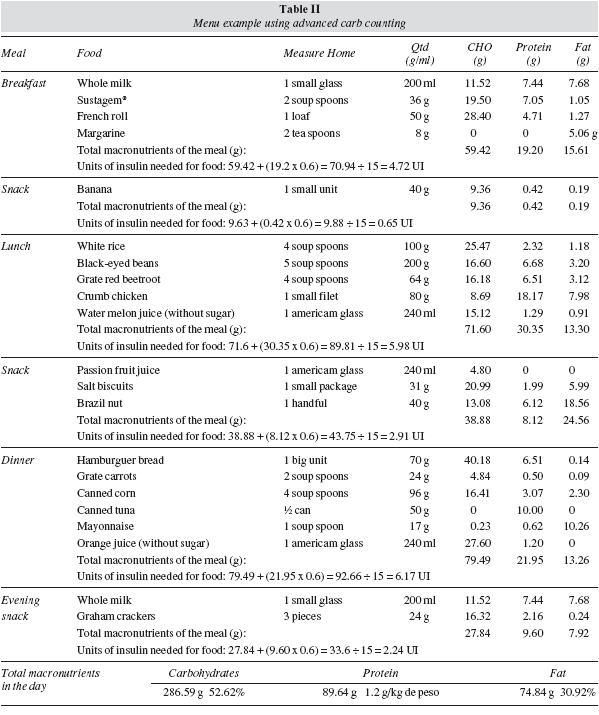
<body><![CDATA[<p><font size="2" face="Verdana">At the beginning of the use the method may occur abuse by the patient at the time substitutions, however, as time passes you can see gradual reduction of caloric intake that patient, and also considerable reduction of its values of glycosylated hemoglobin. If supposes that the improvement in blood glucose can occur due to the increased number of monitoring and glycemic corrections.<sup>30</sup></font></p>     <p><font size="2" face="Verdana">The main barrier to the use carb counting is the lack of guidance from experts. The survey conducted by the Brazilian Diabetes Association in 2006 on this site, announced that 59% of respondents (138 votes) never received information about this therapy.<sup>33</sup></font></p>     <p><font size="2" face="Verdana">The main shall of the nutrition professional is clear to the patient on how best to deal with their disease. The carb counting is just another strategy for success with this prerogative.</font></p>     <p>&nbsp;</p>     <p><font size="2" face="Verdana"><b>Meal plan for patient diabetic based in carb counting</b></font></p>     <p><font size="2" face="Verdana">The nutritionist who works with carb counting must first talk to your patient in order to define their goals and expectations with the new treatment. Several factors are responsible for determining the best method to be applied to this patient, and not just the nutritionist may pointing them.</font></p>     <p><font size="2" face="Verdana">Hereinafter are portrayed some cases where the carb counting is a good alternative for the patient.</font></p>     <p><font size="2" face="Verdana">Case 1: Male, 34 year-old, DM diagnosed 14 years ago, uses multiple-dose insulin for treatment and control blood glucose and does not present other diseases associated with diabetes. The value of glycosylated hemoglobin collected in the last month = 6.8%. Weight = 74.5 kg, height = 1.84 m. Reporting that performs all meals outside the home because the whole day working in an office, and would like to more flexibility in menu.</font></p>     <p><font size="2" face="Verdana">The patient described does not have diseases that prohibit the consumption of processed foods or offered in restaurants and cafeterias, as your Body Mass Index (BMI) is within the recommended by OMS/85,<sup>34</sup> this person can eat meals rich in CHO previously been targeted as must act to cover the additional Bolus Rate. The patient can use the basic or advanced carb counting. The diet plan for that patient was based on FAO/2001,<sup>35</sup> recital 1.5 as physical activity level (PAL) and getting as result the value of Basal Energy Expenditure (BEE) = 1.743,20 kcal/day and TEE = 2,091.84 kcal/day. A menu example, using advanced carb counting, can be found in  <a href="#t2">table II</a>.</font></p>     <p align="center"><font size="2" face="Verdana"><a name="t2"><img src="/img/revistas/nh/v25n1/revision3_t2.gif" align="top"></a></font></p>     ]]></body>
<body><![CDATA[<p><font size="2" face="Verdana">From this calculation you can propose a diversified food and also allow the patient swallow the exact amount of CHO planned for him. If you replace a food by another of the list, he should consult the exchange list, if the order is eating food with a greater or lesser amount of CHO than the prescribed will be necessary to calculate the accuracy of insulin to cover the bolus rate.</font></p>     <p><font size="2" face="Verdana">Case 2: Female, 64 year-old, DM diagnosed 4 years ago, uses anti-diabetic drugs and the value of the last glycosylated hemoglobin (collected at 2 months) was 7.3%. She has not kidney problems and sistemic arterial hypertension, but coexists with hypercholesterolemia. Weight = 67 kg, height = 1.60 m.</font></p>     <p><font size="2" face="Verdana">The patient has DM2 and is overweight, so the best  method is basic carb counting (exchange list).</font></p>     <p><font size="2" face="Verdana">The best estimate is to calculate the TEE by the method of energetic value adipose tissue<sup>36</sup> for loss of 2 kg/month, this will cause your blood glucose and cholesterol concentrations decrease. The exchange list must be submitted to this patient so that it can be used to vary the food, never added to the diet. This will allow greater diversity in their food, assisting in adherence to the diet.</font></p>     <p>&nbsp;</p>     <p><font size="2" face="Verdana"><b>Conclusions</b></font></p>     <p><font size="2" face="Verdana">The implementation of the technique of carb counting is an important point for its successful treatment diet. For this, the nutritionist has the role of defining the goals of the new treatment, calculate the amount of CHO planned for the patient and distribute it throughout the day, assist the patient in the choice of food from the exchange list by equivalent and teach, in the case of patients with DM1, to calculate the ratio between the amount of CHO that it will consume and the dose of insulin to be administered to cover bolus rate.</font></p>     <p><font size="2" face="Verdana">The carb counting, though has a number of advantages, also presents disadvantages as the need to make constant tests for the monitoring of blood glucose, ability to determine the quantity of CHO contained in home food, constant concern to measure whether the portions of food for consumption and, in children the concern and vigil and watching the possibility of hypoglycemia.</font></p>     <p><font size="2" face="Verdana">Carb counting is not the solution to people with DM, but it is a very useful tool, that can improve the coexistence of patients with the disease and society.</font></p>     <p><font size="2" face="Verdana">We are must remember that, currently, there are several options for dietary treatment by DM and one of them is the carb counting. Therefore, other treatment options can be displayed more depending on the type of diabetes and patients.</font></p>     ]]></body>
<body><![CDATA[<p><font size="2" face="Verdana">It is the duty of nutritionist with all new treatments proposed for improving the quality of life of their patients that is, in the case of the patient with DM, enabling it supplies in places as diverse any other individual in society.</font></p>     <p><font size="2" face="Verdana">It is noted that the process of nutrition education of the diabetic patient is essential for the prevention of complications associated with the disease, since often the diabetic is not informed about the seriousness of the disease and thus, prefers ignore it and just starting treatment when complications are already installed.</font></p>     <p>&nbsp;</p>     <p><font size="2" face="Verdana"><b>References</b></font></p>     <!-- ref --><p><font size="2" face="Verdana">1. American Diabetes Association. Nutrition recommendations and interventions for diabetes. Diabetes Care 2008; 31 (1): S61-78.</font>&nbsp;&nbsp;&nbsp;&nbsp;&nbsp;&nbsp;&nbsp;&nbsp;[&#160;<a href="javascript:void(0);" onclick="javascript: window.open('/scielo.php?script=sci_nlinks&ref=3573033&pid=S0212-1611201000010000300001&lng=','','width=640,height=500,resizable=yes,scrollbars=1,menubar=yes,');">Links</a>&#160;]<!-- end-ref --><!-- ref --><p><font size="2" face="Verdana">2. Minist&eacute;rio da Sa&uacute;de. Assessoria de comunica&ccedil;&atilde;o social &#091;homepage on internet&#093;, 2007; &#091;access in 2007 Dec 30&#093;. Available at:  <a target="_blank" href="http://dtr2001.saude.gov.br/sas/cnhd/noticias/dia_mundial.htm">http://dtr2001.saude.gov.br/sas/cnhd/noticias/dia_mundial.htm</a></font>&nbsp;&nbsp;&nbsp;&nbsp;&nbsp;&nbsp;&nbsp;&nbsp;[&#160;<a href="javascript:void(0);" onclick="javascript: window.open('/scielo.php?script=sci_nlinks&ref=3573034&pid=S0212-1611201000010000300002&lng=','','width=640,height=500,resizable=yes,scrollbars=1,menubar=yes,');">Links</a>&#160;]<!-- end-ref --><!-- ref --><p><font size="2" face="Verdana">3. Coeli CM, Ferreira LGFD, Drbal MM, Veras RP, Camargo KR, Casc&atilde;o AM. Diabetes mellitus mortality among elderly as an underlying or secondary cause of death. Rev Saude Publica 2002; 36 (2): 135-40.</font>&nbsp;&nbsp;&nbsp;&nbsp;&nbsp;&nbsp;&nbsp;&nbsp;[&#160;<a href="javascript:void(0);" onclick="javascript: window.open('/scielo.php?script=sci_nlinks&ref=3573035&pid=S0212-1611201000010000300003&lng=','','width=640,height=500,resizable=yes,scrollbars=1,menubar=yes,');">Links</a>&#160;]<!-- end-ref --><!-- ref --><p><font size="2" face="Verdana">4. Portero KCC, Motta DG, Campino ACC. Economic approach and flow chart of services rendered to people with diabetes mellitus (type 2) in the public health system. Rev Saude Publica 2003; 5 (11): 35-42.</font>&nbsp;&nbsp;&nbsp;&nbsp;&nbsp;&nbsp;&nbsp;&nbsp;[&#160;<a href="javascript:void(0);" onclick="javascript: window.open('/scielo.php?script=sci_nlinks&ref=3573036&pid=S0212-1611201000010000300004&lng=','','width=640,height=500,resizable=yes,scrollbars=1,menubar=yes,');">Links</a>&#160;]<!-- end-ref --><!-- ref --><p><font size="2" face="Verdana">5. Gross LJ, Silveiro SP. Diabetes mellitus: diagnosis, classification and glucose control evaluation. Arq Bras Endocrinol Metabol 2002; 46 (1): 16-26.</font>&nbsp;&nbsp;&nbsp;&nbsp;&nbsp;&nbsp;&nbsp;&nbsp;[&#160;<a href="javascript:void(0);" onclick="javascript: window.open('/scielo.php?script=sci_nlinks&ref=3573037&pid=S0212-1611201000010000300005&lng=','','width=640,height=500,resizable=yes,scrollbars=1,menubar=yes,');">Links</a>&#160;]<!-- end-ref --><!-- ref --><p><font size="2" face="Verdana">6. Sociedade Brasileira de Diabetes. Manual oficial de contagem de carboidratos. Rio de Janeiro (RJ), 2003.</font>&nbsp;&nbsp;&nbsp;&nbsp;&nbsp;&nbsp;&nbsp;&nbsp;[&#160;<a href="javascript:void(0);" onclick="javascript: window.open('/scielo.php?script=sci_nlinks&ref=3573038&pid=S0212-1611201000010000300006&lng=','','width=640,height=500,resizable=yes,scrollbars=1,menubar=yes,');">Links</a>&#160;]<!-- end-ref --><!-- ref --><p><font size="2" face="Verdana">7. Melo K. Aprenda a contar carboidratos &#091;homepage on internet&#093;, 2006 &#091;access in 2007 Apr 28&#093;. Available at:  <a target="_blank" href="http://www.diabetes.org.br/apresentacoes/congresso_Paraibano/contcarb.php">http://www.diabetes.org.br/apresentacoes/congresso_Paraibano/contcarb.php</a></font>&nbsp;&nbsp;&nbsp;&nbsp;&nbsp;&nbsp;&nbsp;&nbsp;[&#160;<a href="javascript:void(0);" onclick="javascript: window.open('/scielo.php?script=sci_nlinks&ref=3573039&pid=S0212-1611201000010000300007&lng=','','width=640,height=500,resizable=yes,scrollbars=1,menubar=yes,');">Links</a>&#160;]<!-- end-ref --><!-- ref --><p><font size="2" face="Verdana">8. Gelonese B, Tambascia MA. Laboratorial evaluation and diagnosis of insulin resistance. Arq Bras Endocrinol Metab 2006; 50 (2): 208-16.</font>&nbsp;&nbsp;&nbsp;&nbsp;&nbsp;&nbsp;&nbsp;&nbsp;[&#160;<a href="javascript:void(0);" onclick="javascript: window.open('/scielo.php?script=sci_nlinks&ref=3573040&pid=S0212-1611201000010000300008&lng=','','width=640,height=500,resizable=yes,scrollbars=1,menubar=yes,');">Links</a>&#160;]<!-- end-ref --><!-- ref --><p><font size="2" face="Verdana">9. Dib AS. Insulin resistance and metabolic syndrome in type 1 diabetes mellitus. Arq Bras Endocrinol Metab 2006; 50 (2): 250-63.</font>&nbsp;&nbsp;&nbsp;&nbsp;&nbsp;&nbsp;&nbsp;&nbsp;[&#160;<a href="javascript:void(0);" onclick="javascript: window.open('/scielo.php?script=sci_nlinks&ref=3573041&pid=S0212-1611201000010000300009&lng=','','width=640,height=500,resizable=yes,scrollbars=1,menubar=yes,');">Links</a>&#160;]<!-- end-ref --><!-- ref --><p><font size="2" face="Verdana">10. Garc&iacute;a JB. Conhecimento b&aacute;sico do p&acirc;ncreas &#091;homepage on internet&#093;, 2007 &#091;access in 2007 Nov 30&#093;. Available at:  <a target="_blank" href="http://www.jorgebastosgarcia.com.br/endocrino2.html">http://www.jorgebastosgarcia.com.br/endocrino2.html</a></font>&nbsp;&nbsp;&nbsp;&nbsp;&nbsp;&nbsp;&nbsp;&nbsp;[&#160;<a href="javascript:void(0);" onclick="javascript: window.open('/scielo.php?script=sci_nlinks&ref=3573042&pid=S0212-1611201000010000300010&lng=','','width=640,height=500,resizable=yes,scrollbars=1,menubar=yes,');">Links</a>&#160;]<!-- end-ref --><!-- ref --><p><font size="2" face="Verdana">11. Carvalheira JBC, Zecchin HG, Saad MJA. Vias de sinaliza&ccedil;&atilde;o da insulina. Arq Bras Endocrinol Metab 2002; 46 (4): 419-25.</font>&nbsp;&nbsp;&nbsp;&nbsp;&nbsp;&nbsp;&nbsp;&nbsp;[&#160;<a href="javascript:void(0);" onclick="javascript: window.open('/scielo.php?script=sci_nlinks&ref=3573043&pid=S0212-1611201000010000300011&lng=','','width=640,height=500,resizable=yes,scrollbars=1,menubar=yes,');">Links</a>&#160;]<!-- end-ref --><!-- ref --><p><font size="2" face="Verdana">12. Sociedade Brasileira de Diabetes. O que &eacute; diabetes? &#091;homepage on internet&#093;, 2000 &#091;access in 2007 Oct 03&#093;. Available at:  <a target="_blank" href="http://www.adj.org.br/0%20que%20e%20dabetes.htm"> http://www.adj.org.br/0 que e dabetes.htm</a></font>&nbsp;&nbsp;&nbsp;&nbsp;&nbsp;&nbsp;&nbsp;&nbsp;[&#160;<a href="javascript:void(0);" onclick="javascript: window.open('/scielo.php?script=sci_nlinks&ref=3573044&pid=S0212-1611201000010000300012&lng=','','width=640,height=500,resizable=yes,scrollbars=1,menubar=yes,');">Links</a>&#160;]<!-- end-ref --><!-- ref --><p><font size="2" face="Verdana">13. Tannenhaus N. Diabetes: o que voc&ecirc; precisa saber para venc&ecirc;lo. Rio de Janeiro: Ediouro, 1994.</font>&nbsp;&nbsp;&nbsp;&nbsp;&nbsp;&nbsp;&nbsp;&nbsp;[&#160;<a href="javascript:void(0);" onclick="javascript: window.open('/scielo.php?script=sci_nlinks&ref=3573045&pid=S0212-1611201000010000300013&lng=','','width=640,height=500,resizable=yes,scrollbars=1,menubar=yes,');">Links</a>&#160;]<!-- end-ref --><!-- ref --><p><font size="2" face="Verdana">14. Foss-Freitas MC, Foss MC. Diabetic ketoacidosis and hyperosmolar hyperglycemic state. Rev Med Ribeiro Preto 2003; 36: 385-93.</font>&nbsp;&nbsp;&nbsp;&nbsp;&nbsp;&nbsp;&nbsp;&nbsp;[&#160;<a href="javascript:void(0);" onclick="javascript: window.open('/scielo.php?script=sci_nlinks&ref=3573046&pid=S0212-1611201000010000300014&lng=','','width=640,height=500,resizable=yes,scrollbars=1,menubar=yes,');">Links</a>&#160;]<!-- end-ref --><!-- ref --><p><font size="2" face="Verdana">15. Piva JP, Czepielewski M, Garcia PCR, Machado D. Current perspectives for treating children with diabetic ketoacidosis. J Pediatr 2007; 83 (Supl. 5): S119-27.</font>&nbsp;&nbsp;&nbsp;&nbsp;&nbsp;&nbsp;&nbsp;&nbsp;[&#160;<a href="javascript:void(0);" onclick="javascript: window.open('/scielo.php?script=sci_nlinks&ref=3573047&pid=S0212-1611201000010000300015&lng=','','width=640,height=500,resizable=yes,scrollbars=1,menubar=yes,');">Links</a>&#160;]<!-- end-ref --><!-- ref --><p><font size="2" face="Verdana">16. Franz M. Aprendendo a viver com diabetes &#091;homepage on internet&#093;, 2003 &#091;acess in 2007 Apr 03&#093;. Available at:  <a target="_blank" href="http://www.parknicollet.com/search/search.cfm">http://www.parknicollet.com/search/search.cfm</a></font>&nbsp;&nbsp;&nbsp;&nbsp;&nbsp;&nbsp;&nbsp;&nbsp;[&#160;<a href="javascript:void(0);" onclick="javascript: window.open('/scielo.php?script=sci_nlinks&ref=3573048&pid=S0212-1611201000010000300016&lng=','','width=640,height=500,resizable=yes,scrollbars=1,menubar=yes,');">Links</a>&#160;]<!-- end-ref --><!-- ref --><p><font size="2" face="Verdana">17. Sociedade Brasileira de Diabetes. Conselho brasileiro sobre Diabetes. Diagn&oacute;stico e classifica&ccedil;&atilde;o do diabetes mellitus tipo 1 e tratamento no diabetes mellitus tipo 2. Rio de Janeiro (RJ); 2000.</font>&nbsp;&nbsp;&nbsp;&nbsp;&nbsp;&nbsp;&nbsp;&nbsp;[&#160;<a href="javascript:void(0);" onclick="javascript: window.open('/scielo.php?script=sci_nlinks&ref=3573049&pid=S0212-1611201000010000300017&lng=','','width=640,height=500,resizable=yes,scrollbars=1,menubar=yes,');">Links</a>&#160;]<!-- end-ref --><!-- ref --><p><font size="2" face="Verdana"> 18. Lagranha CJ, Fiorino P, Casarini DE, Schaan BD, Irigoyen MC. Molecular basis of diabetic nephropathy. Arq Bras Endocrinol Metab 2007; 51 (6): 901-12.</font>&nbsp;&nbsp;&nbsp;&nbsp;&nbsp;&nbsp;&nbsp;&nbsp;[&#160;<a href="javascript:void(0);" onclick="javascript: window.open('/scielo.php?script=sci_nlinks&ref=3573050&pid=S0212-1611201000010000300018&lng=','','width=640,height=500,resizable=yes,scrollbars=1,menubar=yes,');">Links</a>&#160;]<!-- end-ref --><!-- ref --><p><font size="2" face="Verdana">19. Schmid H. New options in insulin therapy. J Pediatr 2007; 83 (Supl. 5): S146-54.</font>&nbsp;&nbsp;&nbsp;&nbsp;&nbsp;&nbsp;&nbsp;&nbsp;[&#160;<a href="javascript:void(0);" onclick="javascript: window.open('/scielo.php?script=sci_nlinks&ref=3573051&pid=S0212-1611201000010000300019&lng=','','width=640,height=500,resizable=yes,scrollbars=1,menubar=yes,');">Links</a>&#160;]<!-- end-ref --><!-- ref --><p><font size="2" face="Verdana">20. Pavim EJ. Insulinoterapia &#091;homepage on internet&#093;, 2007 &#091;access in 2007 Apr 26&#093;. Available at:  <a target="_blank" href="http://www.fam.unicamp.br/diretrizes/arquivos/DM1-%20Insulinoterapia.pdf"> http://www.fam.unicamp.br/diretrizes/arquivos/DM1- Insulinoterapia.pdf</a></font>&nbsp;&nbsp;&nbsp;&nbsp;&nbsp;&nbsp;&nbsp;&nbsp;[&#160;<a href="javascript:void(0);" onclick="javascript: window.open('/scielo.php?script=sci_nlinks&ref=3573052&pid=S0212-1611201000010000300020&lng=','','width=640,height=500,resizable=yes,scrollbars=1,menubar=yes,');">Links</a>&#160;]<!-- end-ref --><!-- ref --><p><font size="2" face="Verdana">21. Hissa MN, Hissa ASR, Bruin VMS. Tratamento do diabetes mellitus tipo 1 com bomba de infus&atilde;o subcut&acirc;nea cont&iacute;nua de insulina e insulina lispro. Arq Bras Endocrinol Metabol 2001; 12: 487-93.</font>&nbsp;&nbsp;&nbsp;&nbsp;&nbsp;&nbsp;&nbsp;&nbsp;[&#160;<a href="javascript:void(0);" onclick="javascript: window.open('/scielo.php?script=sci_nlinks&ref=3573053&pid=S0212-1611201000010000300021&lng=','','width=640,height=500,resizable=yes,scrollbars=1,menubar=yes,');">Links</a>&#160;]<!-- end-ref --><!-- ref --><p><font size="2" face="Verdana">22. Rique ABR, Soares EA, Meirelles CM. Nutrition and exercise on cardiovascular disease prevention and control. Rev Bras Med Esporte 2002; 8 (6): 244-54.</font>&nbsp;&nbsp;&nbsp;&nbsp;&nbsp;&nbsp;&nbsp;&nbsp;[&#160;<a href="javascript:void(0);" onclick="javascript: window.open('/scielo.php?script=sci_nlinks&ref=3573054&pid=S0212-1611201000010000300022&lng=','','width=640,height=500,resizable=yes,scrollbars=1,menubar=yes,');">Links</a>&#160;]<!-- end-ref --><!-- ref --><p><font size="2" face="Verdana">23. Ciolac EG, Guimar&atilde;es GV. Exerc&iacute;cio f&iacute;sico e s&iacute;ndrome metab&oacute;lica. Rev Bras Med Esporte 2004; 10 (4): 318-24.</font>&nbsp;&nbsp;&nbsp;&nbsp;&nbsp;&nbsp;&nbsp;&nbsp;[&#160;<a href="javascript:void(0);" onclick="javascript: window.open('/scielo.php?script=sci_nlinks&ref=3573055&pid=S0212-1611201000010000300023&lng=','','width=640,height=500,resizable=yes,scrollbars=1,menubar=yes,');">Links</a>&#160;]<!-- end-ref --><!-- ref --><p><font size="2" face="Verdana">24. P&eacute;res DS, Franco LJ, Santos NA. Eating behavior among type 2 diabetes women. Rev Saude Publica 2006; 40 (2): 310-17.</font>&nbsp;&nbsp;&nbsp;&nbsp;&nbsp;&nbsp;&nbsp;&nbsp;[&#160;<a href="javascript:void(0);" onclick="javascript: window.open('/scielo.php?script=sci_nlinks&ref=3573056&pid=S0212-1611201000010000300024&lng=','','width=640,height=500,resizable=yes,scrollbars=1,menubar=yes,');">Links</a>&#160;]<!-- end-ref --><!-- ref --><p><font size="2" face="Verdana">25. Zimmerman BR, Walker EA. Guia completo sobre diabetes da American Diabetes Association. Rio de Janeiro (RJ): Anima, 2002.</font>&nbsp;&nbsp;&nbsp;&nbsp;&nbsp;&nbsp;&nbsp;&nbsp;[&#160;<a href="javascript:void(0);" onclick="javascript: window.open('/scielo.php?script=sci_nlinks&ref=3573057&pid=S0212-1611201000010000300025&lng=','','width=640,height=500,resizable=yes,scrollbars=1,menubar=yes,');">Links</a>&#160;]<!-- end-ref --><!-- ref --><p><font size="2" face="Verdana">26. Millet WC, Stampfer MJ. As novas bases da nutri&ccedil;&atilde;o. Rev Ci&ecirc;ncia Saude 2007; 4: 20-30.</font>&nbsp;&nbsp;&nbsp;&nbsp;&nbsp;&nbsp;&nbsp;&nbsp;[&#160;<a href="javascript:void(0);" onclick="javascript: window.open('/scielo.php?script=sci_nlinks&ref=3573058&pid=S0212-1611201000010000300026&lng=','','width=640,height=500,resizable=yes,scrollbars=1,menubar=yes,');">Links</a>&#160;]<!-- end-ref --><!-- ref --><p><font size="2" face="Verdana">27. Sociedade Brasileira de Endocrinologia e Metabologia; Sociedade Brasileira de Nefrologia. Diabetes mellitus: Recomenda&ccedil;&otilde;es nutricionais. S&atilde;o Paulo, 2005.</font>&nbsp;&nbsp;&nbsp;&nbsp;&nbsp;&nbsp;&nbsp;&nbsp;[&#160;<a href="javascript:void(0);" onclick="javascript: window.open('/scielo.php?script=sci_nlinks&ref=3573059&pid=S0212-1611201000010000300027&lng=','','width=640,height=500,resizable=yes,scrollbars=1,menubar=yes,');">Links</a>&#160;]<!-- end-ref --><!-- ref --><p><font size="2" face="Verdana">28. Seyffarth AS. Tratando a hipo e a hiper com alimentos. Revista BD Bom Dia 2003. S&atilde;o Paulo, n<sup>o</sup> 69.</font>&nbsp;&nbsp;&nbsp;&nbsp;&nbsp;&nbsp;&nbsp;&nbsp;[&#160;<a href="javascript:void(0);" onclick="javascript: window.open('/scielo.php?script=sci_nlinks&ref=3573060&pid=S0212-1611201000010000300028&lng=','','width=640,height=500,resizable=yes,scrollbars=1,menubar=yes,');">Links</a>&#160;]<!-- end-ref --><!-- ref --><p><font size="2" face="Verdana">29. American Diabetes Association. Diet, nutrition and the prevention of type 2 diabetes. Public Health Nutrition 2004; 7 (1A): 145-64.</font>&nbsp;&nbsp;&nbsp;&nbsp;&nbsp;&nbsp;&nbsp;&nbsp;[&#160;<a href="javascript:void(0);" onclick="javascript: window.open('/scielo.php?script=sci_nlinks&ref=3573061&pid=S0212-1611201000010000300029&lng=','','width=640,height=500,resizable=yes,scrollbars=1,menubar=yes,');">Links</a>&#160;]<!-- end-ref --><!-- ref --><p><font size="2" face="Verdana">30. Costa PCA, Franco LJ. Introduction of sucrose in the diet plan of persons with type 1 diabetes - its influence in the glycemic control. Arq Bras Endocrinol Metabol 2005; 49: 403-09.</font>&nbsp;&nbsp;&nbsp;&nbsp;&nbsp;&nbsp;&nbsp;&nbsp;[&#160;<a href="javascript:void(0);" onclick="javascript: window.open('/scielo.php?script=sci_nlinks&ref=3573062&pid=S0212-1611201000010000300030&lng=','','width=640,height=500,resizable=yes,scrollbars=1,menubar=yes,');">Links</a>&#160;]<!-- end-ref --><!-- ref --><p><font size="2" face="Verdana">31. Goveia GR, Bruno LPC. Manual de contagem de carboidratos. S&atilde;o Paulo (SP): 2001.</font>&nbsp;&nbsp;&nbsp;&nbsp;&nbsp;&nbsp;&nbsp;&nbsp;[&#160;<a href="javascript:void(0);" onclick="javascript: window.open('/scielo.php?script=sci_nlinks&ref=3573063&pid=S0212-1611201000010000300031&lng=','','width=640,height=500,resizable=yes,scrollbars=1,menubar=yes,');">Links</a>&#160;]<!-- end-ref --><!-- ref --><p><font size="2" face="Verdana">32. Dufty W. Sugar Blues. Rio de Janeiro (RJ): Ground, 1978.</font>&nbsp;&nbsp;&nbsp;&nbsp;&nbsp;&nbsp;&nbsp;&nbsp;[&#160;<a href="javascript:void(0);" onclick="javascript: window.open('/scielo.php?script=sci_nlinks&ref=3573064&pid=S0212-1611201000010000300032&lng=','','width=640,height=500,resizable=yes,scrollbars=1,menubar=yes,');">Links</a>&#160;]<!-- end-ref --><!-- ref --><p><font size="2" face="Verdana">33. Sociedade Brasileira de Diabetes. Enquete sobre a contagem de carboidratos &#091;homepage on internet&#093;, 2006 &#091;access in 2007 Apr 30&#093;. Available at:  <a target="_blank" href="http://www.diabetes.org.br/nutricao/enquetecontagemdecarboidratos.php">http://www.diabetes.org.br/nutricao/enquetecontagemdecarboidratos.php</a></font>&nbsp;&nbsp;&nbsp;&nbsp;&nbsp;&nbsp;&nbsp;&nbsp;[&#160;<a href="javascript:void(0);" onclick="javascript: window.open('/scielo.php?script=sci_nlinks&ref=3573065&pid=S0212-1611201000010000300033&lng=','','width=640,height=500,resizable=yes,scrollbars=1,menubar=yes,');">Links</a>&#160;]<!-- end-ref --><!-- ref --><p><font size="2" face="Verdana">34. Organizaci&oacute;n Mundial de la Salud (OMS). Necessidades de energia y de prote&iacute;nas. Informe de uma reuni&oacute;n consultiva conjunta FAO/OMS/UNU de expertos. Genebra, 1985.</font>&nbsp;&nbsp;&nbsp;&nbsp;&nbsp;&nbsp;&nbsp;&nbsp;[&#160;<a href="javascript:void(0);" onclick="javascript: window.open('/scielo.php?script=sci_nlinks&ref=3573066&pid=S0212-1611201000010000300034&lng=','','width=640,height=500,resizable=yes,scrollbars=1,menubar=yes,');">Links</a>&#160;]<!-- end-ref --><!-- ref --><p><font size="2" face="Verdana">35. Food and Nutrition Technical Report Series. Human energy requirements. Rome, 17-24 October 2001.</font>&nbsp;&nbsp;&nbsp;&nbsp;&nbsp;&nbsp;&nbsp;&nbsp;[&#160;<a href="javascript:void(0);" onclick="javascript: window.open('/scielo.php?script=sci_nlinks&ref=3573067&pid=S0212-1611201000010000300035&lng=','','width=640,height=500,resizable=yes,scrollbars=1,menubar=yes,');">Links</a>&#160;]<!-- end-ref --><!-- ref --><p><font size="2" face="Verdana">36. Diretrizes Brasileiras de Obesidade. Associa&ccedil;&atilde;o Brasileira para o Estudo da Obesidade e da S&iacute;ndrome Metab&oacute;lica, 2007.</font>&nbsp;&nbsp;&nbsp;&nbsp;&nbsp;&nbsp;&nbsp;&nbsp;[&#160;<a href="javascript:void(0);" onclick="javascript: window.open('/scielo.php?script=sci_nlinks&ref=3573068&pid=S0212-1611201000010000300036&lng=','','width=640,height=500,resizable=yes,scrollbars=1,menubar=yes,');">Links</a>&#160;]<!-- end-ref --><!-- ref --><p><font size="2" face="Verdana">37. Pinheiro ABV, Lacerda EMA, Benzecky EG, Gomes MCS, Costa VM. Tabela para avalia&ccedil;&atilde;o de consumo alimentar em medidas caseiras. Rio de Janeiro: Atheneu, 2005.</font>&nbsp;&nbsp;&nbsp;&nbsp;&nbsp;&nbsp;&nbsp;&nbsp;[&#160;<a href="javascript:void(0);" onclick="javascript: window.open('/scielo.php?script=sci_nlinks&ref=3573069&pid=S0212-1611201000010000300037&lng=','','width=640,height=500,resizable=yes,scrollbars=1,menubar=yes,');">Links</a>&#160;]<!-- end-ref --><p>&nbsp;</p>     <p>&nbsp;</p>     <p><font size="2" face="Verdana"><b><a name="back"></a><a href="#top"><img border="0" src="/img/revistas/nh/v25n1/seta.gif" width="15" height="17"></a>Correspondence:</b>    <br>D&eacute;bora Lopes Souto.    <br>Graduated in Nutrition.    <br>Sociedade Unificada de Ensino Superior Augusto Motta.    <br>360 Felisbelo Freire Street, Apartament 202 - District: Ramos.    <br>21031-250 R&iacute;o de Janeiro, RJ, Brazil.    <br>E-mail: <a href="mailto:deborasouto@openlink.com.br">deborasouto@openlink.com.br</a></font></p>     ]]></body>
<body><![CDATA[<p><font size="2" face="Verdana">Recibido: 22-IV-2009.    <br>Aceptado: 27-IV-2009.</font></p>      ]]></body><back>
<ref-list>
<ref id="B1">
<label>1</label><nlm-citation citation-type="journal">
<collab>American Diabetes Association</collab>
<article-title xml:lang="en"><![CDATA[Nutrition recommendations and interventions for diabetes]]></article-title>
<source><![CDATA[Diabetes Care]]></source>
<year>2008</year>
<volume>31</volume>
<numero>1</numero>
<issue>1</issue>
<page-range>S61-78</page-range></nlm-citation>
</ref>
<ref id="B2">
<label>2</label><nlm-citation citation-type="">
<collab>Ministério da Saúde</collab>
<source><![CDATA[Assessoria de comunicação social]]></source>
<year>2007</year>
</nlm-citation>
</ref>
<ref id="B3">
<label>3</label><nlm-citation citation-type="journal">
<person-group person-group-type="author">
<name>
<surname><![CDATA[Coeli]]></surname>
<given-names><![CDATA[CM]]></given-names>
</name>
<name>
<surname><![CDATA[Ferreira]]></surname>
<given-names><![CDATA[LGFD]]></given-names>
</name>
<name>
<surname><![CDATA[Drbal]]></surname>
<given-names><![CDATA[MM]]></given-names>
</name>
<name>
<surname><![CDATA[Veras]]></surname>
<given-names><![CDATA[RP]]></given-names>
</name>
<name>
<surname><![CDATA[Camargo]]></surname>
<given-names><![CDATA[KR]]></given-names>
</name>
<name>
<surname><![CDATA[Cascão]]></surname>
<given-names><![CDATA[AM]]></given-names>
</name>
</person-group>
<article-title xml:lang="en"><![CDATA[Diabetes mellitus mortality among elderly as an underlying or secondary cause of death]]></article-title>
<source><![CDATA[Rev Saude Publica]]></source>
<year>2002</year>
<volume>36</volume>
<numero>2</numero>
<issue>2</issue>
<page-range>135-40</page-range></nlm-citation>
</ref>
<ref id="B4">
<label>4</label><nlm-citation citation-type="journal">
<person-group person-group-type="author">
<name>
<surname><![CDATA[Portero]]></surname>
<given-names><![CDATA[KCC]]></given-names>
</name>
<name>
<surname><![CDATA[Motta]]></surname>
<given-names><![CDATA[DG]]></given-names>
</name>
<name>
<surname><![CDATA[Campino]]></surname>
<given-names><![CDATA[ACC]]></given-names>
</name>
</person-group>
<article-title xml:lang="en"><![CDATA[Economic approach and flow chart of services rendered to people with diabetes mellitus (type 2) in the public health system]]></article-title>
<source><![CDATA[Rev Saude Publica]]></source>
<year>2003</year>
<volume>5</volume>
<numero>11</numero>
<issue>11</issue>
<page-range>35-42</page-range></nlm-citation>
</ref>
<ref id="B5">
<label>5</label><nlm-citation citation-type="journal">
<person-group person-group-type="author">
<name>
<surname><![CDATA[Gross]]></surname>
<given-names><![CDATA[LJ]]></given-names>
</name>
<name>
<surname><![CDATA[Silveiro]]></surname>
<given-names><![CDATA[SP]]></given-names>
</name>
</person-group>
<article-title xml:lang="en"><![CDATA[Diabetes mellitus: diagnosis, classification and glucose control evaluation]]></article-title>
<source><![CDATA[Arq Bras Endocrinol Metabol]]></source>
<year>2002</year>
<volume>46</volume>
<numero>1</numero>
<issue>1</issue>
<page-range>16-26</page-range></nlm-citation>
</ref>
<ref id="B6">
<label>6</label><nlm-citation citation-type="">
<collab>Sociedade Brasileira de Diabetes</collab>
<source><![CDATA[Manual oficial de contagem de carboidratos]]></source>
<year>2003</year>
<publisher-loc><![CDATA[Rio de Janeiro^eRJ RJ]]></publisher-loc>
</nlm-citation>
</ref>
<ref id="B7">
<label>7</label><nlm-citation citation-type="">
<person-group person-group-type="author">
<name>
<surname><![CDATA[Melo]]></surname>
<given-names><![CDATA[K]]></given-names>
</name>
</person-group>
<source><![CDATA[Aprenda a contar carboidratos]]></source>
<year>2006</year>
</nlm-citation>
</ref>
<ref id="B8">
<label>8</label><nlm-citation citation-type="journal">
<person-group person-group-type="author">
<name>
<surname><![CDATA[Gelonese]]></surname>
<given-names><![CDATA[B]]></given-names>
</name>
<name>
<surname><![CDATA[Tambascia]]></surname>
<given-names><![CDATA[MA]]></given-names>
</name>
</person-group>
<article-title xml:lang="en"><![CDATA[Laboratorial evaluation and diagnosis of insulin resistance]]></article-title>
<source><![CDATA[Arq Bras Endocrinol Metab]]></source>
<year>2006</year>
<volume>50</volume>
<numero>2</numero>
<issue>2</issue>
<page-range>208-16</page-range></nlm-citation>
</ref>
<ref id="B9">
<label>9</label><nlm-citation citation-type="journal">
<person-group person-group-type="author">
<name>
<surname><![CDATA[Dib]]></surname>
<given-names><![CDATA[AS]]></given-names>
</name>
</person-group>
<article-title xml:lang="en"><![CDATA[Insulin resistance and metabolic syndrome in type 1 diabetes mellitus]]></article-title>
<source><![CDATA[Arq Bras Endocrinol Metab]]></source>
<year>2006</year>
<volume>50</volume>
<numero>2</numero>
<issue>2</issue>
<page-range>250-63</page-range></nlm-citation>
</ref>
<ref id="B10">
<label>10</label><nlm-citation citation-type="">
<person-group person-group-type="author">
<name>
<surname><![CDATA[García]]></surname>
<given-names><![CDATA[JB]]></given-names>
</name>
</person-group>
<source><![CDATA[Conhecimento básico do pâncreas]]></source>
<year>2007</year>
</nlm-citation>
</ref>
<ref id="B11">
<label>11</label><nlm-citation citation-type="journal">
<person-group person-group-type="author">
<name>
<surname><![CDATA[Carvalheira]]></surname>
<given-names><![CDATA[JBC]]></given-names>
</name>
<name>
<surname><![CDATA[Zecchin]]></surname>
<given-names><![CDATA[HG]]></given-names>
</name>
<name>
<surname><![CDATA[Saad]]></surname>
<given-names><![CDATA[MJA]]></given-names>
</name>
</person-group>
<article-title xml:lang="pt"><![CDATA[Vias de sinalização da insulina]]></article-title>
<source><![CDATA[Arq Bras Endocrinol Metab]]></source>
<year>2002</year>
<volume>46</volume>
<numero>4</numero>
<issue>4</issue>
<page-range>419-25</page-range></nlm-citation>
</ref>
<ref id="B12">
<label>12</label><nlm-citation citation-type="">
<collab>Sociedade Brasileira de Diabetes</collab>
<source><![CDATA[O que é diabetes?]]></source>
<year>2000</year>
</nlm-citation>
</ref>
<ref id="B13">
<label>13</label><nlm-citation citation-type="book">
<person-group person-group-type="author">
<name>
<surname><![CDATA[Tannenhaus]]></surname>
<given-names><![CDATA[N]]></given-names>
</name>
</person-group>
<source><![CDATA[Diabetes: o que você precisa saber para vencêlo]]></source>
<year>1994</year>
<publisher-loc><![CDATA[Rio de Janeiro ]]></publisher-loc>
<publisher-name><![CDATA[Ediouro]]></publisher-name>
</nlm-citation>
</ref>
<ref id="B14">
<label>14</label><nlm-citation citation-type="journal">
<person-group person-group-type="author">
<name>
<surname><![CDATA[Foss-Freitas]]></surname>
<given-names><![CDATA[MC]]></given-names>
</name>
<name>
<surname><![CDATA[Foss]]></surname>
<given-names><![CDATA[MC]]></given-names>
</name>
</person-group>
<article-title xml:lang="pt"><![CDATA[Diabetic ketoacidosis and hyperosmolar hyperglycemic state]]></article-title>
<source><![CDATA[Rev Med Ribeiro Preto]]></source>
<year>2003</year>
<volume>36</volume>
<page-range>385-93</page-range></nlm-citation>
</ref>
<ref id="B15">
<label>15</label><nlm-citation citation-type="journal">
<person-group person-group-type="author">
<name>
<surname><![CDATA[Piva]]></surname>
<given-names><![CDATA[JP]]></given-names>
</name>
<name>
<surname><![CDATA[Czepielewski]]></surname>
<given-names><![CDATA[M]]></given-names>
</name>
<name>
<surname><![CDATA[Garcia]]></surname>
<given-names><![CDATA[PCR]]></given-names>
</name>
<name>
<surname><![CDATA[Machado]]></surname>
<given-names><![CDATA[D]]></given-names>
</name>
</person-group>
<article-title xml:lang="en"><![CDATA[Current perspectives for treating children with diabetic ketoacidosis]]></article-title>
<source><![CDATA[J Pediatr]]></source>
<year>2007</year>
<volume>83</volume>
<numero>^s5</numero>
<issue>^s5</issue>
<supplement>5</supplement>
<page-range>S119-27</page-range></nlm-citation>
</ref>
<ref id="B16">
<label>16</label><nlm-citation citation-type="">
<person-group person-group-type="author">
<name>
<surname><![CDATA[Franz]]></surname>
<given-names><![CDATA[M]]></given-names>
</name>
</person-group>
<source><![CDATA[Aprendendo a viver com diabetes]]></source>
<year>2003</year>
</nlm-citation>
</ref>
<ref id="B17">
<label>17</label><nlm-citation citation-type="">
<collab>Sociedade Brasileira de Diabetes^dConselho brasileiro sobre Diabetes</collab>
<source><![CDATA[Diagnóstico e classificação do diabetes mellitus tipo 1 e tratamento no diabetes mellitus tipo 2]]></source>
<year>2000</year>
<publisher-loc><![CDATA[Rio de Janeiro^eRJ RJ]]></publisher-loc>
</nlm-citation>
</ref>
<ref id="B18">
<label>18</label><nlm-citation citation-type="journal">
<person-group person-group-type="author">
<name>
<surname><![CDATA[Lagranha]]></surname>
<given-names><![CDATA[CJ]]></given-names>
</name>
<name>
<surname><![CDATA[Fiorino]]></surname>
<given-names><![CDATA[P]]></given-names>
</name>
<name>
<surname><![CDATA[Casarini]]></surname>
<given-names><![CDATA[DE]]></given-names>
</name>
<name>
<surname><![CDATA[Schaan]]></surname>
<given-names><![CDATA[BD]]></given-names>
</name>
<name>
<surname><![CDATA[Irigoyen]]></surname>
<given-names><![CDATA[MC]]></given-names>
</name>
</person-group>
<article-title xml:lang="en"><![CDATA[Molecular basis of diabetic nephropathy]]></article-title>
<source><![CDATA[Arq Bras Endocrinol Metab]]></source>
<year>2007</year>
<volume>51</volume>
<numero>6</numero>
<issue>6</issue>
<page-range>901-12</page-range></nlm-citation>
</ref>
<ref id="B19">
<label>19</label><nlm-citation citation-type="journal">
<person-group person-group-type="author">
<name>
<surname><![CDATA[Schmid]]></surname>
<given-names><![CDATA[H]]></given-names>
</name>
</person-group>
<article-title xml:lang="en"><![CDATA[New options in insulin therapy]]></article-title>
<source><![CDATA[J Pediatr]]></source>
<year>2007</year>
<volume>83</volume>
<numero>^s5</numero>
<issue>^s5</issue>
<supplement>5</supplement>
<page-range>S146-54</page-range></nlm-citation>
</ref>
<ref id="B20">
<label>20</label><nlm-citation citation-type="">
<person-group person-group-type="author">
<name>
<surname><![CDATA[Pavim]]></surname>
<given-names><![CDATA[EJ]]></given-names>
</name>
</person-group>
<source><![CDATA[Insulinoterapia]]></source>
<year>2007</year>
</nlm-citation>
</ref>
<ref id="B21">
<label>21</label><nlm-citation citation-type="journal">
<person-group person-group-type="author">
<name>
<surname><![CDATA[Hissa]]></surname>
<given-names><![CDATA[MN]]></given-names>
</name>
<name>
<surname><![CDATA[Hissa]]></surname>
<given-names><![CDATA[ASR]]></given-names>
</name>
<name>
<surname><![CDATA[Bruin]]></surname>
<given-names><![CDATA[VMS]]></given-names>
</name>
</person-group>
<article-title xml:lang="pt"><![CDATA[Tratamento do diabetes mellitus tipo 1 com bomba de infusão subcutânea contínua de insulina e insulina lispro]]></article-title>
<source><![CDATA[Arq Bras Endocrinol Metabol]]></source>
<year>2001</year>
<volume>12</volume>
<page-range>487-93</page-range></nlm-citation>
</ref>
<ref id="B22">
<label>22</label><nlm-citation citation-type="journal">
<person-group person-group-type="author">
<name>
<surname><![CDATA[Rique]]></surname>
<given-names><![CDATA[ABR]]></given-names>
</name>
<name>
<surname><![CDATA[Soares]]></surname>
<given-names><![CDATA[EA]]></given-names>
</name>
<name>
<surname><![CDATA[Meirelles]]></surname>
<given-names><![CDATA[CM]]></given-names>
</name>
</person-group>
<article-title xml:lang="en"><![CDATA[Nutrition and exercise on cardiovascular disease prevention and control]]></article-title>
<source><![CDATA[Rev Bras Med Esporte]]></source>
<year>2002</year>
<volume>8</volume>
<numero>6</numero>
<issue>6</issue>
<page-range>244-54</page-range></nlm-citation>
</ref>
<ref id="B23">
<label>23</label><nlm-citation citation-type="journal">
<person-group person-group-type="author">
<name>
<surname><![CDATA[Ciolac]]></surname>
<given-names><![CDATA[EG]]></given-names>
</name>
<name>
<surname><![CDATA[Guimarães]]></surname>
<given-names><![CDATA[GV]]></given-names>
</name>
</person-group>
<article-title xml:lang="pt"><![CDATA[Exercício físico e síndrome metabólica]]></article-title>
<source><![CDATA[Rev Bras Med Esporte]]></source>
<year>2004</year>
<volume>10</volume>
<numero>4</numero>
<issue>4</issue>
<page-range>318-24</page-range></nlm-citation>
</ref>
<ref id="B24">
<label>24</label><nlm-citation citation-type="journal">
<person-group person-group-type="author">
<name>
<surname><![CDATA[Péres]]></surname>
<given-names><![CDATA[DS]]></given-names>
</name>
<name>
<surname><![CDATA[Franco]]></surname>
<given-names><![CDATA[LJ]]></given-names>
</name>
<name>
<surname><![CDATA[Santos]]></surname>
<given-names><![CDATA[NA]]></given-names>
</name>
</person-group>
<article-title xml:lang="en"><![CDATA[Eating behavior among type 2 diabetes women]]></article-title>
<source><![CDATA[Rev Saude Publica]]></source>
<year>2006</year>
<volume>40</volume>
<numero>2</numero>
<issue>2</issue>
<page-range>310-17</page-range></nlm-citation>
</ref>
<ref id="B25">
<label>25</label><nlm-citation citation-type="book">
<person-group person-group-type="author">
<name>
<surname><![CDATA[Zimmerman]]></surname>
<given-names><![CDATA[BR]]></given-names>
</name>
<name>
<surname><![CDATA[Walker]]></surname>
<given-names><![CDATA[EA]]></given-names>
</name>
</person-group>
<source><![CDATA[Guia completo sobre diabetes da American Diabetes Association]]></source>
<year>2002</year>
<publisher-loc><![CDATA[Rio de Janeiro^eRJ RJ]]></publisher-loc>
<publisher-name><![CDATA[Anima]]></publisher-name>
</nlm-citation>
</ref>
<ref id="B26">
<label>26</label><nlm-citation citation-type="journal">
<person-group person-group-type="author">
<name>
<surname><![CDATA[Millet]]></surname>
<given-names><![CDATA[WC]]></given-names>
</name>
<name>
<surname><![CDATA[Stampfer]]></surname>
<given-names><![CDATA[MJ]]></given-names>
</name>
</person-group>
<article-title xml:lang="pt"><![CDATA[As novas bases da nutrição]]></article-title>
<source><![CDATA[Rev Ciência Saude]]></source>
<year>2007</year>
<volume>4</volume>
<page-range>20-30</page-range></nlm-citation>
</ref>
<ref id="B27">
<label>27</label><nlm-citation citation-type="">
<collab>Sociedade Brasileira de Endocrinologia e Metabologia</collab>
<collab>Sociedade Brasileira de Nefrologia</collab>
<source><![CDATA[Diabetes mellitus: Recomendações nutricionais]]></source>
<year>2005</year>
<publisher-loc><![CDATA[São Paulo ]]></publisher-loc>
</nlm-citation>
</ref>
<ref id="B28">
<label>28</label><nlm-citation citation-type="journal">
<person-group person-group-type="author">
<name>
<surname><![CDATA[Seyffarth]]></surname>
<given-names><![CDATA[AS]]></given-names>
</name>
</person-group>
<article-title xml:lang="pt"><![CDATA[Tratando a hipo e a hiper com alimentos]]></article-title>
<source><![CDATA[Revista BD Bom Dia]]></source>
<year>2003</year>
<numero>69</numero>
<issue>69</issue>
<publisher-loc><![CDATA[São Paulo ]]></publisher-loc>
</nlm-citation>
</ref>
<ref id="B29">
<label>29</label><nlm-citation citation-type="journal">
<collab>American Diabetes Association</collab>
<article-title xml:lang="en"><![CDATA[Diet, nutrition and the prevention of type 2 diabetes]]></article-title>
<source><![CDATA[Public Health Nutrition]]></source>
<year>2004</year>
<volume>7</volume>
<numero>1A</numero>
<issue>1A</issue>
<page-range>145-64</page-range></nlm-citation>
</ref>
<ref id="B30">
<label>30</label><nlm-citation citation-type="journal">
<person-group person-group-type="author">
<name>
<surname><![CDATA[Costa]]></surname>
<given-names><![CDATA[PCA]]></given-names>
</name>
<name>
<surname><![CDATA[Franco]]></surname>
<given-names><![CDATA[LJ]]></given-names>
</name>
</person-group>
<article-title xml:lang="en"><![CDATA[Introduction of sucrose in the diet plan of persons with type 1 diabetes: its influence in the glycemic control]]></article-title>
<source><![CDATA[Arq Bras Endocrinol Metabol]]></source>
<year>2005</year>
<volume>49</volume>
<page-range>403-09</page-range></nlm-citation>
</ref>
<ref id="B31">
<label>31</label><nlm-citation citation-type="">
<person-group person-group-type="author">
<name>
<surname><![CDATA[Goveia]]></surname>
<given-names><![CDATA[GR]]></given-names>
</name>
<name>
<surname><![CDATA[Bruno]]></surname>
<given-names><![CDATA[LPC]]></given-names>
</name>
</person-group>
<source><![CDATA[Manual de contagem de carboidratos]]></source>
<year>2001</year>
<publisher-loc><![CDATA[São Paulo^eSP SP]]></publisher-loc>
</nlm-citation>
</ref>
<ref id="B32">
<label>32</label><nlm-citation citation-type="book">
<person-group person-group-type="author">
<name>
<surname><![CDATA[Dufty]]></surname>
<given-names><![CDATA[W]]></given-names>
</name>
</person-group>
<source><![CDATA[Sugar Blues]]></source>
<year>1978</year>
<publisher-loc><![CDATA[Rio de Janeiro^eRJ RJ]]></publisher-loc>
<publisher-name><![CDATA[Ground]]></publisher-name>
</nlm-citation>
</ref>
<ref id="B33">
<label>33</label><nlm-citation citation-type="">
<collab>Sociedade Brasileira de Diabetes</collab>
<source><![CDATA[Enquete sobre a contagem de carboidratos]]></source>
<year>2006</year>
</nlm-citation>
</ref>
<ref id="B34">
<label>34</label><nlm-citation citation-type="">
<collab>Organización Mundial de la Salud (OMS)</collab>
<source><![CDATA[Necessidades de energia y de proteínas: Informe de uma reunión consultiva conjunta FAO/OMS/UNU de expertos]]></source>
<year>1985</year>
<publisher-loc><![CDATA[Genebra ]]></publisher-loc>
</nlm-citation>
</ref>
<ref id="B35">
<label>35</label><nlm-citation citation-type="">
<source><![CDATA[Human energy requirements]]></source>
<year>17-2</year>
<month>4 </month>
<day>Oc</day>
<publisher-loc><![CDATA[Rome ]]></publisher-loc>
</nlm-citation>
</ref>
<ref id="B36">
<label>36</label><nlm-citation citation-type="book">
<source><![CDATA[Diretrizes Brasileiras de Obesidade]]></source>
<year>2007</year>
<publisher-name><![CDATA[Associação Brasileira para o Estudo da Obesidade e da Síndrome Metabólica]]></publisher-name>
</nlm-citation>
</ref>
<ref id="B37">
<label>37</label><nlm-citation citation-type="book">
<person-group person-group-type="author">
<name>
<surname><![CDATA[Pinheiro]]></surname>
<given-names><![CDATA[ABV]]></given-names>
</name>
<name>
<surname><![CDATA[Lacerda]]></surname>
<given-names><![CDATA[EMA]]></given-names>
</name>
<name>
<surname><![CDATA[Benzecky]]></surname>
<given-names><![CDATA[EG]]></given-names>
</name>
<name>
<surname><![CDATA[Gomes]]></surname>
<given-names><![CDATA[MCS]]></given-names>
</name>
<name>
<surname><![CDATA[Costa]]></surname>
<given-names><![CDATA[VM]]></given-names>
</name>
</person-group>
<source><![CDATA[Tabela para avaliação de consumo alimentar em medidas caseiras]]></source>
<year>2005</year>
<publisher-loc><![CDATA[Rio de Janeiro ]]></publisher-loc>
<publisher-name><![CDATA[Atheneu]]></publisher-name>
</nlm-citation>
</ref>
</ref-list>
</back>
</article>