<?xml version="1.0" encoding="ISO-8859-1"?><article xmlns:mml="http://www.w3.org/1998/Math/MathML" xmlns:xlink="http://www.w3.org/1999/xlink" xmlns:xsi="http://www.w3.org/2001/XMLSchema-instance">
<front>
<journal-meta>
<journal-id>0212-1611</journal-id>
<journal-title><![CDATA[Nutrición Hospitalaria]]></journal-title>
<abbrev-journal-title><![CDATA[Nutr. Hosp.]]></abbrev-journal-title>
<issn>0212-1611</issn>
<publisher>
<publisher-name><![CDATA[Grupo Arán]]></publisher-name>
</publisher>
</journal-meta>
<article-meta>
<article-id>S0212-16112010000200008</article-id>
<title-group>
<article-title xml:lang="en"><![CDATA[Exposure to flaxseed during lactation does not alter prostate area or epithelium height but changes lipid profile in rats]]></article-title>
<article-title xml:lang="es"><![CDATA[Exposición a la linaza durante la lactación no cambia el área o altura epitelial de la próstata pero cambia el perfil lipídico en ratones]]></article-title>
</title-group>
<contrib-group>
<contrib contrib-type="author">
<name>
<surname><![CDATA[Ferreira Medeiros de França Cardozo]]></surname>
<given-names><![CDATA[L.]]></given-names>
</name>
<xref ref-type="aff" rid="A01"/>
</contrib>
<contrib contrib-type="author">
<name>
<surname><![CDATA[Alves Chagas]]></surname>
<given-names><![CDATA[M.]]></given-names>
</name>
<xref ref-type="aff" rid="A02"/>
</contrib>
<contrib contrib-type="author">
<name>
<surname><![CDATA[Leal Soares]]></surname>
<given-names><![CDATA[L.]]></given-names>
</name>
<xref ref-type="aff" rid="A01"/>
</contrib>
<contrib contrib-type="author">
<name>
<surname><![CDATA[Andrade Troina]]></surname>
<given-names><![CDATA[A.]]></given-names>
</name>
<xref ref-type="aff" rid="A03"/>
</contrib>
<contrib contrib-type="author">
<name>
<surname><![CDATA[Teles Bonaventura]]></surname>
<given-names><![CDATA[G.]]></given-names>
</name>
<xref ref-type="aff" rid="A01"/>
</contrib>
</contrib-group>
<aff id="A01">
<institution><![CDATA[,Federal Fluminense University Laboratory of Experimental Nutrition ]]></institution>
<addr-line><![CDATA[ Rio de Janeiro]]></addr-line>
<country>Brazil</country>
</aff>
<aff id="A02">
<institution><![CDATA[,Federal Fluminense University Laboratory of Cellular and Extracellular Biomorphology ]]></institution>
<addr-line><![CDATA[ ]]></addr-line>
</aff>
<aff id="A03">
<institution><![CDATA[,Rio de Janeiro State University Laboratory of Endocrine Physiology ]]></institution>
<addr-line><![CDATA[ Rio de Janeiro]]></addr-line>
<country>Brazil</country>
</aff>
<pub-date pub-type="pub">
<day>00</day>
<month>04</month>
<year>2010</year>
</pub-date>
<pub-date pub-type="epub">
<day>00</day>
<month>04</month>
<year>2010</year>
</pub-date>
<volume>25</volume>
<numero>2</numero>
<fpage>250</fpage>
<lpage>255</lpage>
<copyright-statement/>
<copyright-year/>
<self-uri xlink:href="http://scielo.isciii.es/scielo.php?script=sci_arttext&amp;pid=S0212-16112010000200008&amp;lng=en&amp;nrm=iso"></self-uri><self-uri xlink:href="http://scielo.isciii.es/scielo.php?script=sci_abstract&amp;pid=S0212-16112010000200008&amp;lng=en&amp;nrm=iso"></self-uri><self-uri xlink:href="http://scielo.isciii.es/scielo.php?script=sci_pdf&amp;pid=S0212-16112010000200008&amp;lng=en&amp;nrm=iso"></self-uri><abstract abstract-type="short" xml:lang="en"><p><![CDATA[Flaxseed intake has increased owing to beneficial effects to health and prevention of diseases. Provided that it's an important source of lignan, a phytoestrogen, the present study aimed at evaluating the possible effect of the intake of this seed during lactation upon prostate, sexual hormones and lipidic profile of the offspring in adult life. Material and methods: 16 female Wistar rats were used. After delivery, they were divided into two different groups to receive one of the following diets during lactation: Control group (CG), with a casein based diet and Flaxseed group (FG), with a flaxseed based diet containing 25% flaxseed. At weaning, male pups received commercial chow until adult life (170 days old), when they were sacrificed. Results: No differences were perceived concerning offspring food intake and body weight at 170 days. There was a reduction in total cholesterol levels (FG = 45.71 &plusmn; 8.96 mg/dL; CG = 63.43 &plusmn; 15.69 mg/dL, p = 0.02) and triglycerides (FG = 54.29 &plusmn; 11.10 mg/dL; CG = 79.86 &plusmn; 25.68 mg/dL, p = 0.03). Also, no alterations were observed in prostatic morphology, testosterone or estradiol levelsin the two groups analyzed. Conclusion: Flaxseed intake during lactation did not produce histological alterations in prostatic alveolus or in sexual hormones, but programmed to a reduction in lipid profile in adult life with decreased cardiovascular risk.]]></p></abstract>
<abstract abstract-type="short" xml:lang="es"><p><![CDATA[El consumo de la linaza ha aumentado debido a los efectos beneficiosos para la salud y la prevención de enfermedades. Siendo una importante fuente de lignanos, un fitoestrógeno, el presente estudio evaluó los efectos de la administración de esta semilla durante la lactación en la próstata, las hormonas sexuales y perfil lipídico de loshijos en la vida adulta. Material y métodos: Fueron utilizados 16 ratones Wistar hembras. Después del parto fueron divididas en dos grupos recibiendo durante la lactación las siguientes dietas: Grupo Control (GC), con ración a base de caseína y Grupo Linaza (GL), con ración a base de caseína conteniendo 25% de semilla de linaza. En el destete, las crías machos pasaron a recibir ración comercial hasta la edad adulta, cuando fueron muertos a los 170 días de vida. Resultados: No fueron verificadas diferencias sobre el consumo alimentario y peso corporal de los animales a los 170 días. Hubo una reducción en los niveles de colesterol total (GL = 45,71 &plusmn; 8,96 mg/dL; GC = 63,43 &plusmn; 15,69 mg/dL, p = 0,02) y triglicéridos (GL = 54,29 &plusmn; 11,10 mg/dL; GC = 79,86 &plusmn; 25,68 mg/dL, p = 0,03). Además, no se observaron alteraciones en la morfología de la próstata, la testosterona o los niveles de estradiol en los dos grupos analizados. Conclusión: La administración de la semilla durante la lactación no promueve alteraciones histológicas en los alvéolos de próstata o en las hormonas sexuales, pero programado para una reducción en el perfil lipídico en la vida adulta con una disminución del riesgo cardiovascular.]]></p></abstract>
<kwd-group>
<kwd lng="en"><![CDATA[Flaxseed]]></kwd>
<kwd lng="en"><![CDATA[Lactation]]></kwd>
<kwd lng="en"><![CDATA[Prostate]]></kwd>
<kwd lng="en"><![CDATA[Lipid profile]]></kwd>
<kwd lng="en"><![CDATA[Rats]]></kwd>
<kwd lng="es"><![CDATA[Linaza]]></kwd>
<kwd lng="es"><![CDATA[Lactación]]></kwd>
<kwd lng="es"><![CDATA[Próstata]]></kwd>
<kwd lng="es"><![CDATA[Perfil lipídico]]></kwd>
<kwd lng="es"><![CDATA[Ratones]]></kwd>
</kwd-group>
</article-meta>
</front><body><![CDATA[ <p><font face="Verdana" size="2"><a name="top"></a><b>ORIGINAL</b></font></p>     <p>&nbsp;</p>     <p><font face="Verdana" size="4"><b>Exposure to flaxseed during lactation does not alter prostate area or epithelium height but changes lipid profile in rats</b></font></p>     <p><font face="Verdana" size="4"><b>Exposici&oacute;n a la linaza durante la lactaci&oacute;n no cambia el &aacute;rea o altura epitelial de la pr&oacute;stata pero cambia el perfil lip&iacute;dico en ratones</b></font></p>     <p>&nbsp;</p>     <p>&nbsp;</p>     <p><font face="Verdana" size="2"><b>L. Ferreira Medeiros de Fran&ccedil;a Cardozo<sup>1</sup>, M. Alves Chagas<sup>2</sup>, L. Leal Soares<sup>1</sup>, A. Andrade Troina<sup>3</sup> and G. Teles Bonaventura<sup>1</sup></b></font></p>     <p><font face="Verdana" size="2"><sup>1</sup>Laboratory of Experimental Nutrition. Federal Fluminense University.    <br><sup>2</sup>Laboratory of Cellular and Extracellular Biomorphology. Federal Fluminense University.    <br><sup>3</sup>Laboratory of Endocrine Physiology. Rio de Janeiro State University. Brazil.</font></p>     ]]></body>
<body><![CDATA[<p><font face="Verdana" size="2"><a href="#back">Correspondence</a></font></p>     <p>&nbsp;</p>     <p>&nbsp;</p> <hr size="1">     <p><font face="Verdana" size="2"><b>ABSTRACT</b></font></p>     <p><font face="Verdana" size="2">Flaxseed intake has increased owing to beneficial effects to health and prevention of diseases. Provided that it's an important source of lignan, a phytoestrogen, the present study aimed at evaluating the possible effect of the intake of this seed during lactation upon prostate, sexual hormones and lipidic profile of the offspring in adult life.    <br><b>Material and methods:</b> 16 female Wistar rats were used. After delivery, they were divided into two different groups to receive one of the following diets during lactation: Control group (CG), with a casein based diet and Flaxseed group (FG), with a flaxseed based diet containing 25% flaxseed. At weaning, male pups received commercial chow until adult life (170 days old), when they were sacrificed.    <br><b>Results:</b> No differences were perceived concerning offspring food intake and body weight at 170 days. There was a reduction in total cholesterol levels (FG = 45.71 &plusmn; 8.96 mg/dL; CG = 63.43 &plusmn; 15.69 mg/dL, <i>p</i> = 0.02) and triglycerides (FG = 54.29 &plusmn; 11.10 mg/dL; CG = 79.86 &plusmn; 25.68 mg/dL, <i>p</i> = 0.03). Also, no alterations were observed in prostatic morphology, testosterone or estradiol levelsin the two groups analyzed.    <br><b>Conclusion:</b> Flaxseed intake during lactation did not produce histological alterations in prostatic alveolus or in sexual hormones, but programmed to a reduction in lipid profile in adult life with decreased cardiovascular risk.</font></p>     <p><font face="Verdana" size="2"><b>Key words:</b> Flaxseed. Lactation. Prostate. Lipid profile. Rats.</font></p> <hr size="1">     <p><font face="Verdana" size="2"><b>RESUMEN</b></font></p>     ]]></body>
<body><![CDATA[<p><font face="Verdana" size="2">El consumo de la linaza ha aumentado debido a los efectos beneficiosos para la salud y la prevenci&oacute;n de enfermedades. Siendo una importante fuente de lignanos, un fitoestr&oacute;geno, el presente estudio evalu&oacute; los efectos de la administraci&oacute;n de esta semilla durante la lactaci&oacute;n en la pr&oacute;stata, las hormonas sexuales y perfil lip&iacute;dico de loshijos en la vida adulta.    <br><b>Material y m&eacute;todos:</b> Fueron utilizados 16 ratones Wistar hembras. Despu&eacute;s del parto fueron divididas en dos grupos recibiendo durante la lactaci&oacute;n las siguientes dietas: Grupo Control (GC), con raci&oacute;n a base de case&iacute;na y Grupo Linaza (GL), con raci&oacute;n a base de case&iacute;na conteniendo 25% de semilla de linaza. En el destete, las cr&iacute;as machos pasaron a recibir raci&oacute;n comercial hasta la edad adulta, cuando fueron muertos a los 170 d&iacute;as de vida.    <br><b>Resultados:</b> No fueron verificadas diferencias sobre el consumo alimentario y peso corporal de los animales a los 170 d&iacute;as. Hubo una reducci&oacute;n en los niveles de colesterol total (GL = 45,71 &plusmn; 8,96 mg/dL; GC = 63,43 &plusmn; 15,69 mg/dL, <i>p</i> = 0,02) y triglic&eacute;ridos (GL = 54,29 &plusmn; 11,10 mg/dL; GC = 79,86 &plusmn; 25,68 mg/dL,  <i>p</i> = 0,03). Adem&aacute;s, no se observaron alteraciones en la morfolog&iacute;a de la pr&oacute;stata, la testosterona o los niveles de estradiol en los dos grupos analizados.    <br><b>Conclusi&oacute;n:</b> La administraci&oacute;n de la semilla durante la lactaci&oacute;n no promueve alteraciones histol&oacute;gicas en los alv&eacute;olos de pr&oacute;stata o en las hormonas sexuales, pero programado para una reducci&oacute;n en el perfil lip&iacute;dico en la vida adulta con una disminuci&oacute;n del riesgo cardiovascular.</font></p>     <p><font face="Verdana" size="2"><b>Palabras clave:</b> Linaza. Lactaci&oacute;n. Pr&oacute;stata. Perfil lip&iacute;dico. Ratones.</font></p> <hr size="1">     <p>&nbsp;</p>     <p><font face="Verdana" size="2">Flaxseed (<i>Linum usitatissimum</i>) has emerged as a healthy food owing to its beneficial effects and property of acting in the prevention of some diseases.<sup>1</sup> Countless benefits have been associated with the use of flaxseed and its flour, such as: cardiovascular protection through the improvement in lipid profile,<sup>2</sup> reduction in the risk of cancer<sup>3</sup> and prostatic health enhancement. <sup>4</sup>.</font></p>     <p><font face="Verdana" size="2">This seed is made up of 41% lipids (50-55% as alpha linolenic acid, and 15-18% as alpha-linoleic acid), 28% fibers, 21% protein, 4% minerals and 6% carbohydrates distributed among phenolic acids, sugars, lignan and hemicelluloses.<sup>5,6</sup>.</font></p>     <p><font face="Verdana" size="2">Flaxseed is a rich source of dietary lignans, presenting 100 times more of this compound than any other food.<sup>7</sup> The lignans are thought to exert protective effects by interfering with endogenous sex hormone metabolism.<sup>8</sup> The secoisolariciresinol diglycoside (SDG) is the lignan found in flaxseed, precursor of the major mammalian lignans, enterodiol (ED) and enterolactone (EL), which are produced in the presence of bacteria that are naturally present in the colon.<sup>7</sup> ED and EL have chemical structures that are similar to 17-&beta;- estradiol and can bind to estrogen receptors (ER), nevertheless with less affinity than endogenous estrogen.<sup>9</sup>.</font></p>     <p><font face="Verdana" size="2">Flaxseed can exert influence upon prostate growth because this seed acts as a weak estrogen. Prostate growth is a hormone-mediated phenomenon regulated by both androgens and estrogens. Prostate is highly dependent on androgens to grow. Moreover, estrogens can also control normal gland function and may serve to control pathological growth. It has been described that the metabolites from SDG, ED and EL can inhibit the enzyme 5</font><font face="Symbol" size="2">a</font><font face="Verdana" size="2">-reductase, which converts testosterone in dihydrotestosterone, the most potent androgen.<sup>10</sup> Within the prostate, estrogen receptor beta (ER&beta;) has been shown to be a key component in the regulation of hormone-dependent morphological alterations.<sup>11</sup>.</font></p>     ]]></body>
<body><![CDATA[<p><font face="Verdana" size="2">In rats, critical sexual differentiation occurs from gestation day 18 until postnatal day 10,<sup>12</sup> being the initial period of lactation critical to prostate development. The components in flaxseed with potential hormonelike effects can be transferred to nursing offspring via mother's milk,<sup>13</sup> with the risk of provoking some long term effect in many organs systems. This fact can be explained by the term "programming", which can be defined as the process by which a determined factor acts in the beginning of life, during a sensitive or critical period, and promotes long lasting effects in adult health.<sup>14</sup> Extensive human epidemiologic data has indicated that prenatal and early postnatal nutrition influence adult susceptibility to diet related chronic diseases.<sup>15</sup> For these reasons it is important to determine whether maternal consumption of diets rich in flaxseedis safe for infants that suckle breast milk.<sup>13</sup></font></p>     <p><font face="Verdana" size="2">Even though many publications focus the use of flaxseed during gestation and lactation, which are critical periods for reproductive system development, few works in the literature describe the use during the lactation exclusively.<sup>13</sup> Furthermore, in other studies, the results are controversial, varying according to the dose used, time of exposition and phase of life.<sup>16,17</sup> Tou et al. (1998) gave 10% flaxseed to rats during gestation and lactation and verified bigger relative prostate weight in the offspring, which increases the risk of cancer.<sup>18</sup> In other study, in rats that consumed 20% flaxseed during gestation and lactation and their offspring were maintained with the same diet for 70 days, a reduction in the prostate weight was found.<sup>17</sup>.</font></p>     <p><font face="Verdana" size="2">The objective of this study was to evaluate if maternal consumption of flaxseed during lactation programs alterations in prostatic morphology, in sexual hormones and lipidic profile of adult male Wistar rats.</font></p>     <p>&nbsp;</p>     <p><font face="Verdana" size="2"><b>Material and methods</b></font></p>     <p><font face="Verdana" size="2"><i>Experimental design</i></font></p>     <p><font face="Verdana" size="2">Sixteen female wistar rats, with 90 days old and nullipary from the colony kept at the Laboratory of Experimental Nutrition (LabNe) matched in a proportion of 3 females to 1 male receiving commercial chow (Nuvilab<sup>&reg;</sup>, Nuvital Ltda, Paran&aacute;, Brazil). After delivery, mothers were randomly divided in two groups, having access during all lactation period to one of the following diets: Control group (CG), chow made up of casein and flaxseed group (FG), chow with casein and 25% flaxseed. At weaning, 8 male pups from each group (being used only one animal per mother) were weaned onto a commercial chow and this was maintained until 170 days of age, when they were sacrificed. Body weight (BW) and food consumption were recorded three times during the week. All animals were kept under controlled temperature (21-23ºC) and dark/light cycle (12/12 h), receiving chow<i>ad libitum</i>.</font></p>     <p><font face="Verdana" size="2">This research project was approved by the Ethics committee in research from Federal Fluminense University (UFF). All procedures were carried out in accordance with the norms from Brazilian College of Animal Experimentation (COBEA).</font></p>     <p><font face="Verdana" size="2"><i>Experimental diets</i></font></p>     <p><font face="Verdana" size="2">The seed was ground in the blender to obtain the flour. The experimental chow prepared at LabNE had the same amount of energy, containing 17% protein and the mix of vitamins and minerals following the recommendations of the <i>American Institute of Nutrition</i>- 93(AIN-G).<sup>19</sup> The chow that was given to FG had a concentration of 25% of flaxseed, aiming at reach all the recommendation of fibers (AIN-93G). The ingredients of the experimental chows (<a href="#tabla1">table I</a>) were weighted and homogenized in industrial blender (Hobart<sup>&reg;</sup>, S&atilde;o Paulo, SP, Brazil), with heating water to amid gelatinization. The obtained mass was transformed in pellets and dried in ventilated oven (Fabbe-Primar<sup>&reg;</sup>, S&atilde;o Paulo, SP, Brazil) under 60ºC for 24 h, and after identification, kept at refrigeration until being used.</font></p>     ]]></body>
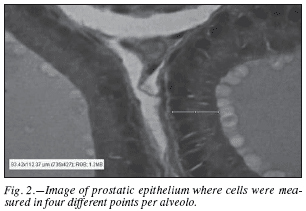
<body><![CDATA[<p align="center"><font face="Verdana" size="2"><a name="tabla1"><img src="/img/revistas/nh/v25n2/original4_t1.gif" align="top"></a></font></p>     <p>&nbsp;</p>     <p><font face="Verdana" size="2">The commercial chow was made up of 23% protein source, 67,7% amid, 4% mineral mix, 0,4%vitamin mix and 5% soy oil.</font></p>     <p><font face="Verdana" size="2"><i>Biochemical analysis</i></font></p>     <p><font face="Verdana" size="2">The animals were anesthetized with intraperitoneal injection of 5% (0,15 ml/100g p.c., i.p.) Thiopental sodic 1G (Crist&aacute;lia pharmaceutical chemical products LTDA, Brazil) in order to collect blood through cardiac punction. The blood samples were centrifuged at 3500 rpm during 15 minutes to obtain serum, which was stored at -20<sup>o</sup>C. Cholesterol and triglycerides analysis were measured by the colorimetric method with commercial kits (BIOCLIN, Qu&iacute;mica B&aacute;sica Ltda/ Belo Horizonte-MG) and the determination of estradiol and testosterone were made through quimioluminescency (Immulite 2000/PPC/H2967, Siemens, Los Angeles, USA), using a specific commercial kit to each hormone (Siemens Medical Solutions Diagnostics, Los Angeles, USA).</font></p>     <p><font face="Verdana" size="2"><i>Prostate histomorphometric analysis</i></font></p>     <p><font face="Verdana" size="2">Prostate was immediately fixated in buffered formalin (10%) per 24 hours. Afterwards, the left lateral lobule was excised and processed following the pattern technique to inclusion in paraffin. Five micrometers thick sections were stained with hematoxylin-eosin.<sup>20</sup> In order to estimate alveolar areas, the images were captured by a stereoscopic microscopy. This procedure made it possible to capture almost the entire area of the section, facilitating the morphometric determinations. The images were binarized (<a href="#fig1">fig. 1</a>) so as to identify the alveolar area in white. Then, 50 alveolos of each prostate (<a href="#fig2">fig. 2</a>) were observed, being the cells measured at four different points in each alveolo. All images were digitalized to produce tiff files. And were analyzed with the software<i> ImageJ</i> (National Institutes of Health, USA), by which data from average alveolar area, total area and epithelial height were obtained.</font></p>     <p align="center"><font face="Verdana" size="2"><a name="fig1"><img src="/img/revistas/nh/v25n2/original4_f1.gif" align="top"></a></font></p>     <p>&nbsp;</p>     <p align="center"><font face="Verdana" size="2"><a name="fig2"><img src="/img/revistas/nh/v25n2/original4_f2.gif" align="top"></a></font></p>     ]]></body>
<body><![CDATA[<p>&nbsp;</p>     <p><font face="Verdana" size="2"><i>Statistical analysis</i></font></p>     <p><font face="Verdana" size="2">Data is presented as average and standard deviation. The normal distribution of the values found was tested through<i> Shapiro-Wilk</i> test. Once the normality of data was verified, it was submitted to comparison between groups using Student T test to independent data. In the results that did not follow normal distribution, nonparametric<i> Mann-Whitney</i> test was chosen. The established significance level was p &le; 0.05. All these analysis were made by SPSS for<i> Windows</i> 10.0.</font></p>     <p>&nbsp;</p>     <p><font face="Verdana" size="2"><b>Results</b></font></p>     <p><font face="Verdana" size="2">The analysis of mothers' food intake during lactation revealed that there was not difference between the groups. At weaning, it was observed reduction in offspring's body weight (<i>p</i> = 0.04). At 170 days, there were no differences concerning body weight and food intake (<a href="#tabla2">table II</a>). However, it's important to highlight that there was a decrease in total cholesterol and triglycerides levels in FG (<i>p</i> = 0.03). The estradiol and testosterone concentrations were similar (<a href="#tabla3">table III</a>). As for prostatic morphology, there was no difference in average alveolar area (mm<sup>2</sup>), in total area (mm<sup>2</sup>) and in epithelial height between the groups analyzed (<a href="#tabla4">table IV</a>).</font></p>     <p align="center"><font face="Verdana" size="2"><a name="tabla2"><img src="/img/revistas/nh/v25n2/original4_t2.gif" align="top"></a></font></p>     <p>&nbsp;</p>     <p align="center"><font face="Verdana" size="2"><a name="tabla3"><img src="/img/revistas/nh/v25n2/original4_t3.gif" align="top"></a></font></p>     <p>&nbsp;</p>     ]]></body>
<body><![CDATA[<p align="center"><font face="Verdana" size="2"><a name="tabla4"><img src="/img/revistas/nh/v25n2/original4_t4.gif" align="top"></a></font></p>     <p>&nbsp;</p>     <p><font face="Verdana" size="2"><b>Discussion</b></font></p>     <p><font face="Verdana" size="2">The intake of phytoestrogens rich foods has increased since its protective effects have been extensively linked to prostatic and breast cancer prevention. A study carried out by Tarpila et al in 2002 recommended the use of 20% of flaxseed in relation to the diary energy intake so as to evaluate the benefits from this seed,<sup>21</sup> reinforcing the increasing use by the population. This fact has raised questions in relation to possible effects of these components in male reproductive health.<sup>17</sup> According to the literature, caution should be taken concerning the consumption of flaxseed during critical periods such as lactation due to the fact that this contains substances that may interfere with male reproductive system development. Hence, this seed can exert protective or adverse effects, depending on the dose, time of exposure and phase of life.<sup>16</sup> The adverse effects can occur by the direct contact with the lignan that is transferred by the mother, yielding changes in the development that can result in endocrine function alterations in the offspring. Some of these changes are not completely expressed until the offspring reach adult life.<sup>22</sup></font></p>     <p><font face="Verdana" size="2">Maternal exposure to a diet containing 25% flaxseed yielded reduction in offspring's body weight at weaning. This observation agrees with the one from Collins et al. (2003) after giving flaxseed or fat free flaxseed diet with different concentrations of the seed, this author verified lower body mass in offspring at weaning when compared to control group.<sup>23</sup> The low body mass at weaning can be explained by Rickard et al. (2000), who administered 5% flaxseed or 1.5mg/day of SDG and found reduction in plasmatic concentrations of insulin-like growth factor (IGF-I),<sup>24</sup> which acts as a hormonal mediator of growth (GH), visto que the actions of GH in the promotion of body weight gain are mediated by IGF-I.<sup>25</sup></font></p>     <p><font face="Verdana" size="2">Tou et al. (1999) showed that the administration of 10% flaxseed in the diet resulted in increased levels of serum estradiol and testosterone in male offspring.<sup>16</sup> Conversely, our results did not show differences concerning hormonal concentrations in adult animals. These authors demonstrated that this concentration of flaxseed during gestation and lactation periods resulted in reduced postnatal ponderal gain, smaller anogenital distance, and prostatic morphological alterations with increase in its relative weight as well as increase in seminal tubules and testicles, which suggest estrogenic effects.<sup>16,18</sup> On the other hand, 5% flaxseed provoked antiestrogenic effects, with reduction in the relative weight of the prostate.<sup>16</sup></font></p>     <p><font face="Verdana" size="2">In the present work was verified that the average alveolar area and prostatic total area were similar between CG and FG, implying that maternal exposure to flaxseed does not alter the gland at 170 days of age. This fact can be explained by the unchanged concentrations of estradiol and testosterone after the use of the seed. These results agree with the ones from Ward et al. (2001) in which 10% flaxseed during lactation exclusively did not promote alterations in prostatic morphology in the 132 days old offspring<sup>13.</sup> A study carried out in healthy young men revealed that the intake of 13,5g of flaxseed flour during 6 weeks did not modify plasmatic testosterone levels.<sup>26</sup></font></p>     <p><font face="Verdana" size="2">Among beneficial effects linked to flaxseed intake, the reduction in cardiovascular risk is well know in women.<sup>27</sup> However, recent studies describe this protective role also in men and male animals.<sup>28,29</sup> Not only have beneficial effects been associated with the intake of the seed, but also with the use of oil, SDG or protein.</font></p>     <p><font face="Verdana" size="2">The use of 20 g of flaxseed in hyperlipidemic patients for 60 days showed modification in the risk factors for cardiovascular disease, with significant decrease in total cholesterol, LDL and triglycerides.<sup>30</sup> Riediger et al. (2008) offered flaxseed oil together with a diet rich in saturated fatty acids to male mice and verified reduction in plasmatic cholesterol and triglyce rides, which can be accounted for the smaller n6: n3 ratio.<sup>31</sup> Prasad, in 2008, showed that 20 mg/kg BW/day of SDG in rabbits associated with a cholesterol rich diet did not decrease serum lipid levels but prevented atherosclerosis progression through a reduction in oxidative stress.<sup>32</sup></font></p>     <p><font face="Verdana" size="2">Flaxseed protein intake reduced plasmatic cholesterol as well as triglycerides in rats with normal lipid profile.<sup>33</sup> Our results ensure this finding as FG showed reduced cholesterol and triglycerides levels, suggesting that flaxseed programs for cardiovascular protection in adult male. However, this programming mechanism remains to be elucidated and further studies are utterly necessary.</font></p>     ]]></body>
<body><![CDATA[<p>&nbsp;</p>     <p><font face="Verdana" size="2"><b>Conclusion</b></font></p>     <p><font face="Verdana" size="2">According to the results found, the consumption of 25% flaxseed in the maternal diet during lactation does not yield histological alterations in prostatic alveolus or sexual hormones. However, it may directly interfere with metabolic programming for reduction in plasmatic lipids with decrease in cardiovascular risk in adult life.</font></p>     <p>&nbsp;</p>     <p><font face="Verdana" size="2"><b>Acknowlegements</b></font></p>     <p><font face="Verdana" size="2">The authors would like to thank the Coordena&ccedil;&atilde;o de Aperfei&ccedil;oamento de Pessoal de N&iacute;vel Superior (CAPES) and the Conselho Nacional de Desenvolvimento Cient&iacute;fico e Tecnol&oacute;gico (CNPq) for financial support.</font></p>     <p><font face="Verdana" size="2">We would like to thank the biomedicine's student Vivian Alves Pereira for the helping with the prostate analisys.</font></p>     <p>&nbsp;</p>     <p><font face="Verdana" size="2"><b>References</b></font></p>     <!-- ref --><p><font face="Verdana" size="2">1. Prasad K. Flax lignan complex slows down the progression of atherosclerosis in hyperlipidemic rabbits. <i>J Cardiovasc Pharmacol Ther</i> 2009; 14 (1): 38-48.</font>&nbsp;&nbsp;&nbsp;&nbsp;&nbsp;&nbsp;&nbsp;&nbsp;[&#160;<a href="javascript:void(0);" onclick="javascript: window.open('/scielo.php?script=sci_nlinks&ref=3558181&pid=S0212-1611201000020000800001&lng=','','width=640,height=500,resizable=yes,scrollbars=1,menubar=yes,');">Links</a>&#160;]<!-- end-ref --><!-- ref --><p><font face="Verdana" size="2">2. Riediger ND, Othman R, Fitz E et al. Low n-6:n-3 fatty acid ratio, with fish- or flaxseed oil, in a high fat diet improves plasma lipids and beneficially alters tissue fatty acid composition in mice. <i>Eur J Nutr</i> 2008; 47: 153-60.</font>&nbsp;&nbsp;&nbsp;&nbsp;&nbsp;&nbsp;&nbsp;&nbsp;[&#160;<a href="javascript:void(0);" onclick="javascript: window.open('/scielo.php?script=sci_nlinks&ref=3558182&pid=S0212-1611201000020000800002&lng=','','width=640,height=500,resizable=yes,scrollbars=1,menubar=yes,');">Links</a>&#160;]<!-- end-ref --><!-- ref --><p><font face="Verdana" size="2">3. Touillaud MS, Thiebaut ACM, Fournier A et al. Dietary lignan intake and postmenopausal breast cancer risk by estrogen and progesterone receptor status. <i>J Natl Cancer</i> Inst 2007; 99: 475-86.</font>&nbsp;&nbsp;&nbsp;&nbsp;&nbsp;&nbsp;&nbsp;&nbsp;[&#160;<a href="javascript:void(0);" onclick="javascript: window.open('/scielo.php?script=sci_nlinks&ref=3558183&pid=S0212-1611201000020000800003&lng=','','width=640,height=500,resizable=yes,scrollbars=1,menubar=yes,');">Links</a>&#160;]<!-- end-ref --><!-- ref --><p><font face="Verdana" size="2">4. Demark-Wahnefried W, Polascik TJ, George SL et al. Flaxseed supplementation (not dietary fat restriction) reduces prostate cancer proliferation rates in men presurgery. <i>Cancer Epidemiol Biomarkers Prev</i> 2008; 17 (12): 3577-87.</font>&nbsp;&nbsp;&nbsp;&nbsp;&nbsp;&nbsp;&nbsp;&nbsp;[&#160;<a href="javascript:void(0);" onclick="javascript: window.open('/scielo.php?script=sci_nlinks&ref=3558184&pid=S0212-1611201000020000800004&lng=','','width=640,height=500,resizable=yes,scrollbars=1,menubar=yes,');">Links</a>&#160;]<!-- end-ref --><!-- ref --><p><font face="Verdana" size="2">5. Zheng Y, Weisenborn DP, Tostenson K, et al. Energy analysis in the screw pressing of whole and dehulled flaxseed. <i>J Food Eng </i>2005; 66: 193-202.</font>&nbsp;&nbsp;&nbsp;&nbsp;&nbsp;&nbsp;&nbsp;&nbsp;[&#160;<a href="javascript:void(0);" onclick="javascript: window.open('/scielo.php?script=sci_nlinks&ref=3558185&pid=S0212-1611201000020000800005&lng=','','width=640,height=500,resizable=yes,scrollbars=1,menubar=yes,');">Links</a>&#160;]<!-- end-ref --><!-- ref --><p><font face="Verdana" size="2">6. Carter JF. Potencial of flaxseed and flaxseed oil in baked goods and other products in human nutrition. <i>Cereal Foods World</i> 1993; 38 (10): 753-9.</font>&nbsp;&nbsp;&nbsp;&nbsp;&nbsp;&nbsp;&nbsp;&nbsp;[&#160;<a href="javascript:void(0);" onclick="javascript: window.open('/scielo.php?script=sci_nlinks&ref=3558186&pid=S0212-1611201000020000800006&lng=','','width=640,height=500,resizable=yes,scrollbars=1,menubar=yes,');">Links</a>&#160;]<!-- end-ref --><!-- ref --><p><font face="Verdana" size="2">7. Thompson LU, Robb, P, Serraino, M, and Cheung, F: Mammalian lignan production from various foods. <i>Nutr Cancer</i> 1991; 16: 43-52.</font>&nbsp;&nbsp;&nbsp;&nbsp;&nbsp;&nbsp;&nbsp;&nbsp;[&#160;<a href="javascript:void(0);" onclick="javascript: window.open('/scielo.php?script=sci_nlinks&ref=3558187&pid=S0212-1611201000020000800007&lng=','','width=640,height=500,resizable=yes,scrollbars=1,menubar=yes,');">Links</a>&#160;]<!-- end-ref --><!-- ref --><p><font face="Verdana" size="2">8. Velentzis LS, Woodside JV, Cantwell MM, et al. Do phytoestrogens reduce the risk of breast cancer and breast cancer recurrence? What clinicians need to know. <i>Eur J Cancer 2008</i>; 44: 1799-1806.</font>&nbsp;&nbsp;&nbsp;&nbsp;&nbsp;&nbsp;&nbsp;&nbsp;[&#160;<a href="javascript:void(0);" onclick="javascript: window.open('/scielo.php?script=sci_nlinks&ref=3558188&pid=S0212-1611201000020000800008&lng=','','width=640,height=500,resizable=yes,scrollbars=1,menubar=yes,');">Links</a>&#160;]<!-- end-ref --><!-- ref --><p><font face="Verdana" size="2">9. Miksicek RJ. Interaction of naturally occurring nonsteroidal estrogens with expressed recombinant human estrogen receptor. <i>J Steroid Biochem Mol Biol</i> 1994; 49: 153-60.</font>&nbsp;&nbsp;&nbsp;&nbsp;&nbsp;&nbsp;&nbsp;&nbsp;[&#160;<a href="javascript:void(0);" onclick="javascript: window.open('/scielo.php?script=sci_nlinks&ref=3558189&pid=S0212-1611201000020000800009&lng=','','width=640,height=500,resizable=yes,scrollbars=1,menubar=yes,');">Links</a>&#160;]<!-- end-ref --><!-- ref --><p><font face="Verdana" size="2">10. Evans BA, Griffiths K, Morton MS. Inhibition of 5 alphareductase in genital skin fibroblasts and prostate tissue by dietary lignans and isoflavonoids. J Endocrinol 1995; 147: 295-302.</font>&nbsp;&nbsp;&nbsp;&nbsp;&nbsp;&nbsp;&nbsp;&nbsp;[&#160;<a href="javascript:void(0);" onclick="javascript: window.open('/scielo.php?script=sci_nlinks&ref=3558190&pid=S0212-1611201000020000800010&lng=','','width=640,height=500,resizable=yes,scrollbars=1,menubar=yes,');">Links</a>&#160;]<!-- end-ref --><!-- ref --><p><font face="Verdana" size="2">11. Weihua Z, Lathe R, Warner M, et al. An endocrine pathway in the prostate, ER&#946;, AR, 5&#945;-androstane-3&#946;, 17&#946;-diol, and CYP7B1, regulates prostate growth. PNAS 2002; 99:13589-94.</font>&nbsp;&nbsp;&nbsp;&nbsp;&nbsp;&nbsp;&nbsp;&nbsp;[&#160;<a href="javascript:void(0);" onclick="javascript: window.open('/scielo.php?script=sci_nlinks&ref=3558191&pid=S0212-1611201000020000800011&lng=','','width=640,height=500,resizable=yes,scrollbars=1,menubar=yes,');">Links</a>&#160;]<!-- end-ref --><!-- ref --><p><font face="Verdana" size="2">12. Manson JM, Kang YJ. Test methods for assessing female reproductive and developmental toxicology. In: Hayes AW, ed. <i>Principles and Methods of Toxicology</i>. 2nd ed, Raven Press Ltd., New York, 1989: 311-59.</font>&nbsp;&nbsp;&nbsp;&nbsp;&nbsp;&nbsp;&nbsp;&nbsp;[&#160;<a href="javascript:void(0);" onclick="javascript: window.open('/scielo.php?script=sci_nlinks&ref=3558192&pid=S0212-1611201000020000800012&lng=','','width=640,height=500,resizable=yes,scrollbars=1,menubar=yes,');">Links</a>&#160;]<!-- end-ref --><!-- ref --><p><font face="Verdana" size="2">13. Ward, WE, Chen J, Thompson LU. Exposure to flaxseed or its purified lignin during suckling only or continuously does not alter reproductive indices in male and female offspring. <i>J Toxicol Environ Health</i> 2001; Part A. 64: 567-77.</font>&nbsp;&nbsp;&nbsp;&nbsp;&nbsp;&nbsp;&nbsp;&nbsp;[&#160;<a href="javascript:void(0);" onclick="javascript: window.open('/scielo.php?script=sci_nlinks&ref=3558193&pid=S0212-1611201000020000800013&lng=','','width=640,height=500,resizable=yes,scrollbars=1,menubar=yes,');">Links</a>&#160;]<!-- end-ref --><!-- ref --><p> <font face="Verdana" size="2">14. Lucas, A. Programming by early nutrition in man. In: <i>The Childhood Environment and Adult Disease</i>. CIBA Foundation Symposium- 156. Wiley, Chichester, U.K; 1991: 38-55.</font>&nbsp;&nbsp;&nbsp;&nbsp;&nbsp;&nbsp;&nbsp;&nbsp;[&#160;<a href="javascript:void(0);" onclick="javascript: window.open('/scielo.php?script=sci_nlinks&ref=3558194&pid=S0212-1611201000020000800014&lng=','','width=640,height=500,resizable=yes,scrollbars=1,menubar=yes,');">Links</a>&#160;]<!-- end-ref --><!-- ref --><p><font face="Verdana" size="2">15. Waterland RA, Michels KB. Epigenetic epidemiology of the developmental origins hypothesis. <i>Annu Rev Nutr</i> 2007; 27: 363-88.</font>&nbsp;&nbsp;&nbsp;&nbsp;&nbsp;&nbsp;&nbsp;&nbsp;[&#160;<a href="javascript:void(0);" onclick="javascript: window.open('/scielo.php?script=sci_nlinks&ref=3558195&pid=S0212-1611201000020000800015&lng=','','width=640,height=500,resizable=yes,scrollbars=1,menubar=yes,');">Links</a>&#160;]<!-- end-ref --><!-- ref --><p><font face="Verdana" size="2">16. Tou JCL, Chen J, Thompson LU. Dose, timing and duration of flaxseed exposure alter reproductive indices and sex hormones in rats. J Toxicol Environ Health 1999; Part A 56 (8): 555-70.</font>&nbsp;&nbsp;&nbsp;&nbsp;&nbsp;&nbsp;&nbsp;&nbsp;[&#160;<a href="javascript:void(0);" onclick="javascript: window.open('/scielo.php?script=sci_nlinks&ref=3558196&pid=S0212-1611201000020000800016&lng=','','width=640,height=500,resizable=yes,scrollbars=1,menubar=yes,');">Links</a>&#160;]<!-- end-ref --><!-- ref --><p><font face="Verdana" size="2">17. Sprando RL, Collins TFX, Black TN et al. The effect of maternal exposure to flaxseed on spermatogenesis in F1 generation rats. <i>Food Chem Toxicol</i> 2000; 38: 325-34.</font>&nbsp;&nbsp;&nbsp;&nbsp;&nbsp;&nbsp;&nbsp;&nbsp;[&#160;<a href="javascript:void(0);" onclick="javascript: window.open('/scielo.php?script=sci_nlinks&ref=3558197&pid=S0212-1611201000020000800017&lng=','','width=640,height=500,resizable=yes,scrollbars=1,menubar=yes,');">Links</a>&#160;]<!-- end-ref --><!-- ref --><p><font face="Verdana" size="2">18. Tou JCL, Chen J, Thompson LU. Flaxseed and its lignin precursor, secoisolariciresinol diglycoside, affect pregnancy outcome and reproductive development in rats.<i> J Nutr</i> 1998; 128 (11): 1861-8.</font>&nbsp;&nbsp;&nbsp;&nbsp;&nbsp;&nbsp;&nbsp;&nbsp;[&#160;<a href="javascript:void(0);" onclick="javascript: window.open('/scielo.php?script=sci_nlinks&ref=3558198&pid=S0212-1611201000020000800018&lng=','','width=640,height=500,resizable=yes,scrollbars=1,menubar=yes,');">Links</a>&#160;]<!-- end-ref --><!-- ref --><p><font face="Verdana" size="2">19. Reeves PG, Nielsen FH, Fahey Jr GCF. AIN-93 purified diet of laboratory rodents: final report of the American Institute of Nutrition ad hoc Writing Committee on the Reformulation of the AIN-76A rodents diet. <i>J Nutr </i>1993; 123: 1939-51.</font>&nbsp;&nbsp;&nbsp;&nbsp;&nbsp;&nbsp;&nbsp;&nbsp;[&#160;<a href="javascript:void(0);" onclick="javascript: window.open('/scielo.php?script=sci_nlinks&ref=3558199&pid=S0212-1611201000020000800019&lng=','','width=640,height=500,resizable=yes,scrollbars=1,menubar=yes,');">Links</a>&#160;]<!-- end-ref --><!-- ref --><p><font face="Verdana" size="2">20. Bancroft JD, Cook HC. Manual of Histological Techniques and their Diagnostic Application. Edinburgh: <i>Churchill Livingstone</i> 1994; 35-67.</font>&nbsp;&nbsp;&nbsp;&nbsp;&nbsp;&nbsp;&nbsp;&nbsp;[&#160;<a href="javascript:void(0);" onclick="javascript: window.open('/scielo.php?script=sci_nlinks&ref=3558200&pid=S0212-1611201000020000800020&lng=','','width=640,height=500,resizable=yes,scrollbars=1,menubar=yes,');">Links</a>&#160;]<!-- end-ref --><!-- ref --><p><font face="Verdana" size="2">21. Tarpila S, Aro A, Salminen I et al. The effect of flaxseed supplementation in processed foods on serum fatty acids and enterolactone.<i>Eur J Clin Nutr </i>2002; 56: 157-65.</font>&nbsp;&nbsp;&nbsp;&nbsp;&nbsp;&nbsp;&nbsp;&nbsp;[&#160;<a href="javascript:void(0);" onclick="javascript: window.open('/scielo.php?script=sci_nlinks&ref=3558201&pid=S0212-1611201000020000800021&lng=','','width=640,height=500,resizable=yes,scrollbars=1,menubar=yes,');">Links</a>&#160;]<!-- end-ref --><!-- ref --><p><font face="Verdana" size="2">22. Pinheiro AR, Salvucci ID, Aguila MB et al. Protein restriction during gestation and/or lactation causes adverse transgenerational effects on biometry and glucose metabolism in F1 and F2 progenies of rats. <i>Clin Sci </i>(Lond) 2008; 114 (5): 381-92.</font>&nbsp;&nbsp;&nbsp;&nbsp;&nbsp;&nbsp;&nbsp;&nbsp;[&#160;<a href="javascript:void(0);" onclick="javascript: window.open('/scielo.php?script=sci_nlinks&ref=3558202&pid=S0212-1611201000020000800022&lng=','','width=640,height=500,resizable=yes,scrollbars=1,menubar=yes,');">Links</a>&#160;]<!-- end-ref --><!-- ref --><p><font face="Verdana" size="2">23. Collins TFX, Sprando RL, Black TN et al. Effects of flaxseed. and defatted meal on reproduction and development in rats. Food Chem Toxicol 2003; 41: 819-34.</font>&nbsp;&nbsp;&nbsp;&nbsp;&nbsp;&nbsp;&nbsp;&nbsp;[&#160;<a href="javascript:void(0);" onclick="javascript: window.open('/scielo.php?script=sci_nlinks&ref=3558203&pid=S0212-1611201000020000800023&lng=','','width=640,height=500,resizable=yes,scrollbars=1,menubar=yes,');">Links</a>&#160;]<!-- end-ref --><!-- ref --><p><font face="Verdana" size="2">24. Rickard SE, Yuana YV, Thompson LU. Plasma insulin-like growth factor I levels in rats are reduced by dietary supplementation of flaxseed or its lignan secoisolariciresinol diglycoside. <i>Cancer Lett</i> 2000; 161: 47-55.</font>&nbsp;&nbsp;&nbsp;&nbsp;&nbsp;&nbsp;&nbsp;&nbsp;[&#160;<a href="javascript:void(0);" onclick="javascript: window.open('/scielo.php?script=sci_nlinks&ref=3558204&pid=S0212-1611201000020000800024&lng=','','width=640,height=500,resizable=yes,scrollbars=1,menubar=yes,');">Links</a>&#160;]<!-- end-ref --><!-- ref --><p><font face="Verdana" size="2">25. Meinhardt UJ, Ho KK. Modulation of growth hormone action by sex steroids. <i>Clin Endocrinol</i> (Oxf) 2006; 65 (4): 413-22.</font>&nbsp;&nbsp;&nbsp;&nbsp;&nbsp;&nbsp;&nbsp;&nbsp;[&#160;<a href="javascript:void(0);" onclick="javascript: window.open('/scielo.php?script=sci_nlinks&ref=3558205&pid=S0212-1611201000020000800025&lng=','','width=640,height=500,resizable=yes,scrollbars=1,menubar=yes,');">Links</a>&#160;]<!-- end-ref --><!-- ref --><p><font face="Verdana" size="2">26. Shultz TD, Bonorden WR, Seaman WR. Effect of short-term flaxseed consumption on lignan and sex hormone metabolism in men. <i>Nutr Res</i> 1991; 11: 1089-1100.</font>&nbsp;&nbsp;&nbsp;&nbsp;&nbsp;&nbsp;&nbsp;&nbsp;[&#160;<a href="javascript:void(0);" onclick="javascript: window.open('/scielo.php?script=sci_nlinks&ref=3558206&pid=S0212-1611201000020000800026&lng=','','width=640,height=500,resizable=yes,scrollbars=1,menubar=yes,');">Links</a>&#160;]<!-- end-ref --><!-- ref --><p><font face="Verdana" size="2">27. Patade A, Devareddy L, Lucas EA et al. Flaxseed Reduces Total and LDL Cholesterol Concentrations in Native American Postmenopausal Women. <i>Journal of Women's Health</i> 2008; 17(3): 355-66. doi:10.1089/jwh.2007.0359.</font>&nbsp;&nbsp;&nbsp;&nbsp;&nbsp;&nbsp;&nbsp;&nbsp;[&#160;<a href="javascript:void(0);" onclick="javascript: window.open('/scielo.php?script=sci_nlinks&ref=3558207&pid=S0212-1611201000020000800027&lng=','','width=640,height=500,resizable=yes,scrollbars=1,menubar=yes,');">Links</a>&#160;]<!-- end-ref --><!-- ref --><p><font face="Verdana" size="2">28. Zhang W, Wang X, Liu Y et al. Dietary flaxseed lignan extract lowers plasma cholesterol and glucose concentrations in hypercholesterolaemic subjects.<i> Br J Nutr</i> 2008; 99: 1301-9.</font>&nbsp;&nbsp;&nbsp;&nbsp;&nbsp;&nbsp;&nbsp;&nbsp;[&#160;<a href="javascript:void(0);" onclick="javascript: window.open('/scielo.php?script=sci_nlinks&ref=3558208&pid=S0212-1611201000020000800028&lng=','','width=640,height=500,resizable=yes,scrollbars=1,menubar=yes,');">Links</a>&#160;]<!-- end-ref --><!-- ref --><p><font face="Verdana" size="2">29. Tzang BS, Yang SF, Fu SG et al. Effects of dietary flaxseed oil on cholesterol metabolism of hamsters.<i> Food Chemistry</i> 2009; 114: 1450-5.</font>&nbsp;&nbsp;&nbsp;&nbsp;&nbsp;&nbsp;&nbsp;&nbsp;[&#160;<a href="javascript:void(0);" onclick="javascript: window.open('/scielo.php?script=sci_nlinks&ref=3558209&pid=S0212-1611201000020000800029&lng=','','width=640,height=500,resizable=yes,scrollbars=1,menubar=yes,');">Links</a>&#160;]<!-- end-ref --><!-- ref --><p><font face="Verdana" size="2">30. Mandasescu S, Mocanu V, Dascalita AM et al. Flaxseed supplementation in hyperlipidemic patients. <i>Rev Med Chir Soc Med Nat Iasi </i>2005; 109 (3): 502-6.</font>&nbsp;&nbsp;&nbsp;&nbsp;&nbsp;&nbsp;&nbsp;&nbsp;[&#160;<a href="javascript:void(0);" onclick="javascript: window.open('/scielo.php?script=sci_nlinks&ref=3558210&pid=S0212-1611201000020000800030&lng=','','width=640,height=500,resizable=yes,scrollbars=1,menubar=yes,');">Links</a>&#160;]<!-- end-ref --><!-- ref --><p><font face="Verdana" size="2">31. Riediger ND, Othman R, Fitz E et al. Low n-6:n-3 fatty acid ratio, with fish- or flaxseed oil, in a high fat diet improves plasma lipids and beneficially alters tissue fatty acid composition in mice. <i>Eur J Nutr </i>2008; 47: 153-60.</font>&nbsp;&nbsp;&nbsp;&nbsp;&nbsp;&nbsp;&nbsp;&nbsp;[&#160;<a href="javascript:void(0);" onclick="javascript: window.open('/scielo.php?script=sci_nlinks&ref=3558211&pid=S0212-1611201000020000800031&lng=','','width=640,height=500,resizable=yes,scrollbars=1,menubar=yes,');">Links</a>&#160;]<!-- end-ref --><!-- ref --><p><font face="Verdana" size="2">32. Prasad, K. Regression of hypercholesterolemic atherosclerosis in rabbits by secoisolariciresinol diglucoside isolated from flaxseed. <i>Atherosclerosis</i> 2008; 197: 34-42.</font>&nbsp;&nbsp;&nbsp;&nbsp;&nbsp;&nbsp;&nbsp;&nbsp;[&#160;<a href="javascript:void(0);" onclick="javascript: window.open('/scielo.php?script=sci_nlinks&ref=3558212&pid=S0212-1611201000020000800032&lng=','','width=640,height=500,resizable=yes,scrollbars=1,menubar=yes,');">Links</a>&#160;]<!-- end-ref --><!-- ref --><p><font face="Verdana" size="2">33. Bhathena SL, Ali AA, Mohamed AI et al. Differential effects of dietary flaxseed protein ad soy protein on plasma triglyceride and uric acid levels in animal models. <i>J Nutr Biochem </i>2002; 13: 684-9.</font>&nbsp;&nbsp;&nbsp;&nbsp;&nbsp;&nbsp;&nbsp;&nbsp;[&#160;<a href="javascript:void(0);" onclick="javascript: window.open('/scielo.php?script=sci_nlinks&ref=3558213&pid=S0212-1611201000020000800033&lng=','','width=640,height=500,resizable=yes,scrollbars=1,menubar=yes,');">Links</a>&#160;]<!-- end-ref --><p>&nbsp;</p>     <p>&nbsp;</p>     <p><font face="Verdana" size="2"><b><a name="back"></a><a href="#top"><img border="0" src="/img/revistas/nh/v25n2/seta.gif" width="15" height="17"></a>Correspondence:</b>    <br>Ludmila Ferreira Medeiros de Fran&ccedil;a Cardozo.    <br>Federal Fluminense University (UFF).    <br>Rua Bar&atilde;o de Palmares, 337.    <br>Pendotiba. Niter&oacute;i. Rio de Janeiro. Brasil.    <br>CEP: 24322320.    ]]></body>
<body><![CDATA[<br>E-mail: <a href="mailto:ludmila.cardozo@gmail.com">ludmila.cardozo@gmail.com</a></font></p>     <p><font face="Verdana" size="2">Recibido: 6-IV-2009.    <br>Aceptado: 27-IV-2009.</font></p>      ]]></body><back>
<ref-list>
<ref id="B1">
<label>1</label><nlm-citation citation-type="journal">
<person-group person-group-type="author">
<name>
<surname><![CDATA[Prasad]]></surname>
<given-names><![CDATA[K]]></given-names>
</name>
</person-group>
<article-title xml:lang="en"><![CDATA[Flax lignan complex slows down the progression of atherosclerosis in hyperlipidemic rabbits]]></article-title>
<source><![CDATA[J Cardiovasc Pharmacol Ther]]></source>
<year>2009</year>
<volume>14</volume>
<numero>1</numero>
<issue>1</issue>
<page-range>38-48</page-range></nlm-citation>
</ref>
<ref id="B2">
<label>2</label><nlm-citation citation-type="journal">
<person-group person-group-type="author">
<name>
<surname><![CDATA[Riediger]]></surname>
<given-names><![CDATA[ND]]></given-names>
</name>
<name>
<surname><![CDATA[Othman]]></surname>
<given-names><![CDATA[R]]></given-names>
</name>
<name>
<surname><![CDATA[Fitz]]></surname>
<given-names><![CDATA[E]]></given-names>
</name>
</person-group>
<article-title xml:lang="en"><![CDATA[Low n-6: n-3 fatty acid ratio, with fish- or flaxseed oil, in a high fat diet improves plasma lipids and beneficially alters tissue fatty acid composition in mice]]></article-title>
<source><![CDATA[Eur J Nutr]]></source>
<year>2008</year>
<volume>47</volume>
<page-range>153-60</page-range></nlm-citation>
</ref>
<ref id="B3">
<label>3</label><nlm-citation citation-type="journal">
<person-group person-group-type="author">
<name>
<surname><![CDATA[Touillaud]]></surname>
<given-names><![CDATA[MS]]></given-names>
</name>
<name>
<surname><![CDATA[Thiebaut]]></surname>
<given-names><![CDATA[ACM]]></given-names>
</name>
<name>
<surname><![CDATA[Fournier]]></surname>
<given-names><![CDATA[A]]></given-names>
</name>
</person-group>
<article-title xml:lang="en"><![CDATA[Dietary lignan intake and postmenopausal breast cancer risk by estrogen and progesterone receptor status]]></article-title>
<source><![CDATA[J Natl Cancer Inst]]></source>
<year>2007</year>
<volume>99</volume>
<page-range>475-86</page-range></nlm-citation>
</ref>
<ref id="B4">
<label>4</label><nlm-citation citation-type="journal">
<person-group person-group-type="author">
<name>
<surname><![CDATA[Demark-Wahnefried]]></surname>
<given-names><![CDATA[W]]></given-names>
</name>
<name>
<surname><![CDATA[Polascik]]></surname>
<given-names><![CDATA[TJ]]></given-names>
</name>
<name>
<surname><![CDATA[George]]></surname>
<given-names><![CDATA[SL]]></given-names>
</name>
</person-group>
<article-title xml:lang="en"><![CDATA[Flaxseed supplementation (not dietary fat restriction) reduces prostate cancer proliferation rates in men presurgery]]></article-title>
<source><![CDATA[Cancer Epidemiol Biomarkers Prev]]></source>
<year>2008</year>
<volume>17</volume>
<numero>12</numero>
<issue>12</issue>
<page-range>3577-87</page-range></nlm-citation>
</ref>
<ref id="B5">
<label>5</label><nlm-citation citation-type="journal">
<person-group person-group-type="author">
<name>
<surname><![CDATA[Zheng]]></surname>
<given-names><![CDATA[Y]]></given-names>
</name>
<name>
<surname><![CDATA[Weisenborn]]></surname>
<given-names><![CDATA[DP]]></given-names>
</name>
<name>
<surname><![CDATA[Tostenson]]></surname>
<given-names><![CDATA[K]]></given-names>
</name>
</person-group>
<article-title xml:lang="en"><![CDATA[Energy analysis in the screw pressing of whole and dehulled flaxseed]]></article-title>
<source><![CDATA[J Food Eng]]></source>
<year>2005</year>
<volume>66</volume>
<page-range>193-202</page-range></nlm-citation>
</ref>
<ref id="B6">
<label>6</label><nlm-citation citation-type="journal">
<person-group person-group-type="author">
<name>
<surname><![CDATA[Carter]]></surname>
<given-names><![CDATA[JF]]></given-names>
</name>
</person-group>
<article-title xml:lang="en"><![CDATA[Potencial of flaxseed and flaxseed oil in baked goods and other products in human nutrition]]></article-title>
<source><![CDATA[Cereal Foods World]]></source>
<year>1993</year>
<volume>38</volume>
<numero>10</numero>
<issue>10</issue>
<page-range>753-9</page-range></nlm-citation>
</ref>
<ref id="B7">
<label>7</label><nlm-citation citation-type="journal">
<person-group person-group-type="author">
<name>
<surname><![CDATA[Thompson]]></surname>
<given-names><![CDATA[LU]]></given-names>
</name>
<name>
<surname><![CDATA[Robb]]></surname>
<given-names><![CDATA[P]]></given-names>
</name>
<name>
<surname><![CDATA[Serraino]]></surname>
<given-names><![CDATA[M]]></given-names>
</name>
<name>
<surname><![CDATA[Cheung]]></surname>
<given-names><![CDATA[F]]></given-names>
</name>
</person-group>
<article-title xml:lang="en"><![CDATA[Mammalian lignan production from various foods]]></article-title>
<source><![CDATA[Nutr Cancer]]></source>
<year>1991</year>
<volume>16</volume>
<page-range>43-52</page-range></nlm-citation>
</ref>
<ref id="B8">
<label>8</label><nlm-citation citation-type="journal">
<person-group person-group-type="author">
<name>
<surname><![CDATA[Velentzis]]></surname>
<given-names><![CDATA[LS]]></given-names>
</name>
<name>
<surname><![CDATA[Woodside]]></surname>
<given-names><![CDATA[JV]]></given-names>
</name>
<name>
<surname><![CDATA[Cantwell]]></surname>
<given-names><![CDATA[MM]]></given-names>
</name>
</person-group>
<article-title xml:lang="en"><![CDATA[Do phytoestrogens reduce the risk of breast cancer and breast cancer recurrence?: What clinicians need to know]]></article-title>
<source><![CDATA[Eur J Cancer]]></source>
<year>2008</year>
<volume>44</volume>
<page-range>1799-1806</page-range></nlm-citation>
</ref>
<ref id="B9">
<label>9</label><nlm-citation citation-type="journal">
<person-group person-group-type="author">
<name>
<surname><![CDATA[Miksicek]]></surname>
<given-names><![CDATA[RJ]]></given-names>
</name>
</person-group>
<article-title xml:lang="en"><![CDATA[Interaction of naturally occurring nonsteroidal estrogens with expressed recombinant human estrogen receptor]]></article-title>
<source><![CDATA[J Steroid Biochem Mol Biol]]></source>
<year>1994</year>
<volume>49</volume>
<page-range>153-60</page-range></nlm-citation>
</ref>
<ref id="B10">
<label>10</label><nlm-citation citation-type="journal">
<person-group person-group-type="author">
<name>
<surname><![CDATA[Evans]]></surname>
<given-names><![CDATA[BA]]></given-names>
</name>
<name>
<surname><![CDATA[Griffiths]]></surname>
<given-names><![CDATA[K]]></given-names>
</name>
<name>
<surname><![CDATA[Morton]]></surname>
<given-names><![CDATA[MS]]></given-names>
</name>
</person-group>
<article-title xml:lang="en"><![CDATA[Inhibition of 5 alphareductase in genital skin fibroblasts and prostate tissue by dietary lignans and isoflavonoids]]></article-title>
<source><![CDATA[J Endocrinol]]></source>
<year>1995</year>
<volume>147</volume>
<page-range>295-302</page-range></nlm-citation>
</ref>
<ref id="B11">
<label>11</label><nlm-citation citation-type="journal">
<person-group person-group-type="author">
<name>
<surname><![CDATA[Weihua]]></surname>
<given-names><![CDATA[Z]]></given-names>
</name>
<name>
<surname><![CDATA[Lathe]]></surname>
<given-names><![CDATA[R]]></given-names>
</name>
<name>
<surname><![CDATA[Warner]]></surname>
<given-names><![CDATA[M]]></given-names>
</name>
</person-group>
<article-title xml:lang="en"><![CDATA[An endocrine pathway in the prostate, ER&#946;, AR, 5&#945;-androstane-3&#946;, 17&#946;-diol, and CYP7B1, regulates prostate growth]]></article-title>
<source><![CDATA[PNAS]]></source>
<year>2002</year>
<volume>99</volume>
<page-range>13589-94</page-range></nlm-citation>
</ref>
<ref id="B12">
<label>12</label><nlm-citation citation-type="book">
<person-group person-group-type="author">
<name>
<surname><![CDATA[Manson]]></surname>
<given-names><![CDATA[JM]]></given-names>
</name>
<name>
<surname><![CDATA[Kang]]></surname>
<given-names><![CDATA[YJ]]></given-names>
</name>
</person-group>
<article-title xml:lang="en"><![CDATA[Test methods for assessing female reproductive and developmental toxicology]]></article-title>
<person-group person-group-type="editor">
<name>
<surname><![CDATA[Hayes]]></surname>
<given-names><![CDATA[AW]]></given-names>
</name>
</person-group>
<source><![CDATA[Principles and Methods of Toxicology]]></source>
<year>1989</year>
<edition>2</edition>
<page-range>311-59</page-range><publisher-loc><![CDATA[New York ]]></publisher-loc>
<publisher-name><![CDATA[Raven Press]]></publisher-name>
</nlm-citation>
</ref>
<ref id="B13">
<label>13</label><nlm-citation citation-type="journal">
<person-group person-group-type="author">
<name>
<surname><![CDATA[Ward]]></surname>
<given-names><![CDATA[WE]]></given-names>
</name>
<name>
<surname><![CDATA[Chen]]></surname>
<given-names><![CDATA[J]]></given-names>
</name>
<name>
<surname><![CDATA[Thompson]]></surname>
<given-names><![CDATA[LU]]></given-names>
</name>
</person-group>
<article-title xml:lang="en"><![CDATA[Exposure to flaxseed or its purified lignin during suckling only or continuously does not alter reproductive indices in male and female offspring]]></article-title>
<source><![CDATA[J Toxicol Environ Health]]></source>
<year>2001</year>
<volume>64</volume>
<page-range>567-77</page-range></nlm-citation>
</ref>
<ref id="B14">
<label>14</label><nlm-citation citation-type="confpro">
<person-group person-group-type="author">
<name>
<surname><![CDATA[Lucas]]></surname>
<given-names><![CDATA[A]]></given-names>
</name>
</person-group>
<article-title xml:lang="en"><![CDATA[Programming by early nutrition in man]]></article-title>
<source><![CDATA[The Childhood Environment and Adult Disease]]></source>
<year>1991</year>
<conf-name><![CDATA[156 CIBA Foundation Symposium]]></conf-name>
<conf-loc> </conf-loc>
<page-range>38-55</page-range><publisher-loc><![CDATA[Chichester ]]></publisher-loc>
<publisher-name><![CDATA[Wiley]]></publisher-name>
</nlm-citation>
</ref>
<ref id="B15">
<label>15</label><nlm-citation citation-type="journal">
<person-group person-group-type="author">
<name>
<surname><![CDATA[Waterland]]></surname>
<given-names><![CDATA[RA]]></given-names>
</name>
<name>
<surname><![CDATA[Michels]]></surname>
<given-names><![CDATA[KB]]></given-names>
</name>
</person-group>
<article-title xml:lang="en"><![CDATA[Epigenetic epidemiology of the developmental origins hypothesis]]></article-title>
<source><![CDATA[Annu Rev Nutr]]></source>
<year>2007</year>
<volume>27</volume>
<page-range>363-88</page-range></nlm-citation>
</ref>
<ref id="B16">
<label>16</label><nlm-citation citation-type="journal">
<person-group person-group-type="author">
<name>
<surname><![CDATA[Tou]]></surname>
<given-names><![CDATA[JCL]]></given-names>
</name>
<name>
<surname><![CDATA[Chen]]></surname>
<given-names><![CDATA[J]]></given-names>
</name>
<name>
<surname><![CDATA[Thompson]]></surname>
<given-names><![CDATA[LU]]></given-names>
</name>
</person-group>
<article-title xml:lang="en"><![CDATA[Dose, timing and duration of flaxseed exposure alter reproductive indices and sex hormones in rats]]></article-title>
<source><![CDATA[J Toxicol Environ Health]]></source>
<year>1999</year>
<volume>56</volume>
<numero>8</numero>
<issue>8</issue>
<page-range>555-70</page-range></nlm-citation>
</ref>
<ref id="B17">
<label>17</label><nlm-citation citation-type="journal">
<person-group person-group-type="author">
<name>
<surname><![CDATA[Sprando]]></surname>
<given-names><![CDATA[RL]]></given-names>
</name>
<name>
<surname><![CDATA[Collins]]></surname>
<given-names><![CDATA[TFX]]></given-names>
</name>
<name>
<surname><![CDATA[Black]]></surname>
<given-names><![CDATA[TN]]></given-names>
</name>
</person-group>
<article-title xml:lang="en"><![CDATA[The effect of maternal exposure to flaxseed on spermatogenesis in F1 generation rats]]></article-title>
<source><![CDATA[Food Chem Toxicol]]></source>
<year>2000</year>
<volume>38</volume>
<page-range>325-34</page-range></nlm-citation>
</ref>
<ref id="B18">
<label>18</label><nlm-citation citation-type="journal">
<person-group person-group-type="author">
<name>
<surname><![CDATA[Tou]]></surname>
<given-names><![CDATA[JCL]]></given-names>
</name>
<name>
<surname><![CDATA[Chen]]></surname>
<given-names><![CDATA[J]]></given-names>
</name>
<name>
<surname><![CDATA[Thompson]]></surname>
<given-names><![CDATA[LU]]></given-names>
</name>
</person-group>
<article-title xml:lang="en"><![CDATA[Flaxseed and its lignin precursor, secoisolariciresinol diglycoside, affect pregnancy outcome and reproductive development in rats]]></article-title>
<source><![CDATA[J Nutr]]></source>
<year>1998</year>
<volume>128</volume>
<numero>11</numero>
<issue>11</issue>
<page-range>1861-8</page-range></nlm-citation>
</ref>
<ref id="B19">
<label>19</label><nlm-citation citation-type="journal">
<person-group person-group-type="author">
<name>
<surname><![CDATA[Reeves]]></surname>
<given-names><![CDATA[PG]]></given-names>
</name>
<name>
<surname><![CDATA[Nielsen]]></surname>
<given-names><![CDATA[FH]]></given-names>
</name>
<name>
<surname><![CDATA[Fahey Jr]]></surname>
<given-names><![CDATA[GCF]]></given-names>
</name>
</person-group>
<article-title xml:lang="en"><![CDATA[AIN-93 purified diet of laboratory rodents: final report of the American Institute of Nutrition ad hoc Writing Committee on the Reformulation of the AIN-76A rodents diet]]></article-title>
<source><![CDATA[J Nutr]]></source>
<year>1993</year>
<volume>123</volume>
<page-range>1939-51</page-range></nlm-citation>
</ref>
<ref id="B20">
<label>20</label><nlm-citation citation-type="book">
<person-group person-group-type="author">
<name>
<surname><![CDATA[Bancroft]]></surname>
<given-names><![CDATA[JD]]></given-names>
</name>
<name>
<surname><![CDATA[Cook]]></surname>
<given-names><![CDATA[HC]]></given-names>
</name>
</person-group>
<source><![CDATA[Manual of Histological Techniques and their Diagnostic Application]]></source>
<year>1994</year>
<page-range>35-67</page-range><publisher-loc><![CDATA[Edinburgh ]]></publisher-loc>
<publisher-name><![CDATA[Churchill Livingstone]]></publisher-name>
</nlm-citation>
</ref>
<ref id="B21">
<label>21</label><nlm-citation citation-type="journal">
<person-group person-group-type="author">
<name>
<surname><![CDATA[Tarpila]]></surname>
<given-names><![CDATA[S]]></given-names>
</name>
<name>
<surname><![CDATA[Aro]]></surname>
<given-names><![CDATA[A]]></given-names>
</name>
<name>
<surname><![CDATA[Salminen]]></surname>
<given-names><![CDATA[I]]></given-names>
</name>
</person-group>
<article-title xml:lang="en"><![CDATA[The effect of flaxseed supplementation in processed foods on serum fatty acids and enterolactone]]></article-title>
<source><![CDATA[Eur J Clin Nutr]]></source>
<year>2002</year>
<volume>56</volume>
<page-range>157-65</page-range></nlm-citation>
</ref>
<ref id="B22">
<label>22</label><nlm-citation citation-type="journal">
<person-group person-group-type="author">
<name>
<surname><![CDATA[Pinheiro]]></surname>
<given-names><![CDATA[AR]]></given-names>
</name>
<name>
<surname><![CDATA[Salvucci]]></surname>
<given-names><![CDATA[ID]]></given-names>
</name>
<name>
<surname><![CDATA[Aguila]]></surname>
<given-names><![CDATA[MB]]></given-names>
</name>
</person-group>
<article-title xml:lang="en"><![CDATA[Protein restriction during gestation and/or lactation causes adverse transgenerational effects on biometry and glucose metabolism in F1 and F2 progenies of rats]]></article-title>
<source><![CDATA[Clin Sci (Lond)]]></source>
<year>2008</year>
<volume>114</volume>
<numero>5</numero>
<issue>5</issue>
<page-range>381-92</page-range></nlm-citation>
</ref>
<ref id="B23">
<label>23</label><nlm-citation citation-type="journal">
<person-group person-group-type="author">
<name>
<surname><![CDATA[Collins]]></surname>
<given-names><![CDATA[TFX]]></given-names>
</name>
<name>
<surname><![CDATA[Sprando]]></surname>
<given-names><![CDATA[RL]]></given-names>
</name>
<name>
<surname><![CDATA[Black]]></surname>
<given-names><![CDATA[TN]]></given-names>
</name>
</person-group>
<article-title xml:lang="en"><![CDATA[Effects of flaxseed: and defatted meal on reproduction and development in rats]]></article-title>
<source><![CDATA[Food Chem Toxicol]]></source>
<year>2003</year>
<volume>41</volume>
<page-range>819-34</page-range></nlm-citation>
</ref>
<ref id="B24">
<label>24</label><nlm-citation citation-type="journal">
<person-group person-group-type="author">
<name>
<surname><![CDATA[Rickard]]></surname>
<given-names><![CDATA[SE]]></given-names>
</name>
<name>
<surname><![CDATA[Yuana]]></surname>
<given-names><![CDATA[YV]]></given-names>
</name>
<name>
<surname><![CDATA[Thompson]]></surname>
<given-names><![CDATA[LU]]></given-names>
</name>
</person-group>
<article-title xml:lang="en"><![CDATA[Plasma insulin-like growth factor I levels in rats are reduced by dietary supplementation of flaxseed or its lignan secoisolariciresinol diglycoside]]></article-title>
<source><![CDATA[Cancer Lett]]></source>
<year>2000</year>
<volume>161</volume>
<page-range>47-55</page-range></nlm-citation>
</ref>
<ref id="B25">
<label>25</label><nlm-citation citation-type="journal">
<person-group person-group-type="author">
<name>
<surname><![CDATA[Meinhardt]]></surname>
<given-names><![CDATA[UJ]]></given-names>
</name>
<name>
<surname><![CDATA[Ho]]></surname>
<given-names><![CDATA[KK]]></given-names>
</name>
</person-group>
<article-title xml:lang="en"><![CDATA[Modulation of growth hormone action by sex steroids]]></article-title>
<source><![CDATA[Clin Endocrinol (Oxf)]]></source>
<year>2006</year>
<volume>65</volume>
<numero>4</numero>
<issue>4</issue>
<page-range>413-22</page-range></nlm-citation>
</ref>
<ref id="B26">
<label>26</label><nlm-citation citation-type="journal">
<person-group person-group-type="author">
<name>
<surname><![CDATA[Shultz]]></surname>
<given-names><![CDATA[TD]]></given-names>
</name>
<name>
<surname><![CDATA[Bonorden]]></surname>
<given-names><![CDATA[WR]]></given-names>
</name>
<name>
<surname><![CDATA[Seaman]]></surname>
<given-names><![CDATA[WR]]></given-names>
</name>
</person-group>
<article-title xml:lang="en"><![CDATA[Effect of short-term flaxseed consumption on lignan and sex hormone metabolism in men]]></article-title>
<source><![CDATA[Nutr Res]]></source>
<year>1991</year>
<volume>11</volume>
<page-range>1089-1100</page-range></nlm-citation>
</ref>
<ref id="B27">
<label>27</label><nlm-citation citation-type="journal">
<person-group person-group-type="author">
<name>
<surname><![CDATA[Patade]]></surname>
<given-names><![CDATA[A]]></given-names>
</name>
<name>
<surname><![CDATA[Devareddy]]></surname>
<given-names><![CDATA[L]]></given-names>
</name>
<name>
<surname><![CDATA[Lucas]]></surname>
<given-names><![CDATA[EA]]></given-names>
</name>
</person-group>
<article-title xml:lang="en"><![CDATA[Flaxseed Reduces Total and LDL Cholesterol Concentrations in Native American Postmenopausal Women]]></article-title>
<source><![CDATA[Journal of Women's Health]]></source>
<year>2008</year>
<volume>17</volume>
<numero>3</numero>
<issue>3</issue>
<page-range>355-66</page-range></nlm-citation>
</ref>
<ref id="B28">
<label>28</label><nlm-citation citation-type="journal">
<person-group person-group-type="author">
<name>
<surname><![CDATA[Zhang]]></surname>
<given-names><![CDATA[W]]></given-names>
</name>
<name>
<surname><![CDATA[Wang]]></surname>
<given-names><![CDATA[X]]></given-names>
</name>
<name>
<surname><![CDATA[Liu]]></surname>
<given-names><![CDATA[Y]]></given-names>
</name>
</person-group>
<article-title xml:lang="en"><![CDATA[Dietary flaxseed lignan extract lowers plasma cholesterol and glucose concentrations in hypercholesterolaemic subjects]]></article-title>
<source><![CDATA[Br J Nutr]]></source>
<year>2008</year>
<volume>99</volume>
<page-range>1301-9</page-range></nlm-citation>
</ref>
<ref id="B29">
<label>29</label><nlm-citation citation-type="journal">
<person-group person-group-type="author">
<name>
<surname><![CDATA[Tzang]]></surname>
<given-names><![CDATA[BS]]></given-names>
</name>
<name>
<surname><![CDATA[Yang]]></surname>
<given-names><![CDATA[SF]]></given-names>
</name>
<name>
<surname><![CDATA[Fu]]></surname>
<given-names><![CDATA[SG]]></given-names>
</name>
</person-group>
<article-title xml:lang="en"><![CDATA[Effects of dietary flaxseed oil on cholesterol metabolism of hamsters]]></article-title>
<source><![CDATA[Food Chemistry]]></source>
<year>2009</year>
<volume>114</volume>
<page-range>1450-5</page-range></nlm-citation>
</ref>
<ref id="B30">
<label>30</label><nlm-citation citation-type="journal">
<person-group person-group-type="author">
<name>
<surname><![CDATA[Mandasescu]]></surname>
<given-names><![CDATA[S]]></given-names>
</name>
<name>
<surname><![CDATA[Mocanu]]></surname>
<given-names><![CDATA[V]]></given-names>
</name>
<name>
<surname><![CDATA[Dascalita]]></surname>
<given-names><![CDATA[AM]]></given-names>
</name>
</person-group>
<article-title xml:lang="en"><![CDATA[Flaxseed supplementation in hyperlipidemic patients]]></article-title>
<source><![CDATA[Rev Med Chir Soc Med Nat Iasi]]></source>
<year>2005</year>
<volume>109</volume>
<numero>3</numero>
<issue>3</issue>
<page-range>502-6</page-range></nlm-citation>
</ref>
<ref id="B31">
<label>31</label><nlm-citation citation-type="journal">
<person-group person-group-type="author">
<name>
<surname><![CDATA[Riediger]]></surname>
<given-names><![CDATA[ND]]></given-names>
</name>
<name>
<surname><![CDATA[Othman]]></surname>
<given-names><![CDATA[R]]></given-names>
</name>
<name>
<surname><![CDATA[Fitz]]></surname>
<given-names><![CDATA[E]]></given-names>
</name>
</person-group>
<article-title xml:lang="en"><![CDATA[Low n-6: n-3 fatty acid ratio, with fish- or flaxseed oil, in a high fat diet improves plasma lipids and beneficially alters tissue fatty acid composition in mice]]></article-title>
<source><![CDATA[Eur J Nutr]]></source>
<year>2008</year>
<volume>47</volume>
<page-range>153-60</page-range></nlm-citation>
</ref>
<ref id="B32">
<label>32</label><nlm-citation citation-type="journal">
<person-group person-group-type="author">
<name>
<surname><![CDATA[Prasad]]></surname>
<given-names><![CDATA[K]]></given-names>
</name>
</person-group>
<article-title xml:lang="en"><![CDATA[Regression of hypercholesterolemic atherosclerosis in rabbits by secoisolariciresinol diglucoside isolated from flaxseed]]></article-title>
<source><![CDATA[Atherosclerosis]]></source>
<year>2008</year>
<volume>197</volume>
<page-range>34-42</page-range></nlm-citation>
</ref>
<ref id="B33">
<label>33</label><nlm-citation citation-type="journal">
<person-group person-group-type="author">
<name>
<surname><![CDATA[Bhathena]]></surname>
<given-names><![CDATA[SL]]></given-names>
</name>
<name>
<surname><![CDATA[Ali]]></surname>
<given-names><![CDATA[AA]]></given-names>
</name>
<name>
<surname><![CDATA[Mohamed]]></surname>
<given-names><![CDATA[AI]]></given-names>
</name>
</person-group>
<article-title xml:lang="en"><![CDATA[Differential effects of dietary flaxseed protein ad soy protein on plasma triglyceride and uric acid levels in animal models]]></article-title>
<source><![CDATA[J Nutr Biochem]]></source>
<year>2002</year>
<volume>13</volume>
<page-range>684-9</page-range></nlm-citation>
</ref>
</ref-list>
</back>
</article>