<?xml version="1.0" encoding="ISO-8859-1"?><article xmlns:mml="http://www.w3.org/1998/Math/MathML" xmlns:xlink="http://www.w3.org/1999/xlink" xmlns:xsi="http://www.w3.org/2001/XMLSchema-instance">
<front>
<journal-meta>
<journal-id>0212-1611</journal-id>
<journal-title><![CDATA[Nutrición Hospitalaria]]></journal-title>
<abbrev-journal-title><![CDATA[Nutr. Hosp.]]></abbrev-journal-title>
<issn>0212-1611</issn>
<publisher>
<publisher-name><![CDATA[Grupo Arán]]></publisher-name>
</publisher>
</journal-meta>
<article-meta>
<article-id>S0212-16112010000600007</article-id>
<title-group>
<article-title xml:lang="en"><![CDATA[Effect of melatonin supplementation on food and water intake in streptozotocin-diabetic and non-diabetic male Wistar rats]]></article-title>
<article-title xml:lang="es"><![CDATA[Efecto de la suplementación oral con melatonina sobre la ingestión de agua y alimento en ratas Wistar macho con diabetes experimental]]></article-title>
</title-group>
<contrib-group>
<contrib contrib-type="author">
<name>
<surname><![CDATA[Montano]]></surname>
<given-names><![CDATA[M. E.]]></given-names>
</name>
<xref ref-type="aff" rid="A03"/>
</contrib>
<contrib contrib-type="author">
<name>
<surname><![CDATA[Molpeceres]]></surname>
<given-names><![CDATA[V.]]></given-names>
</name>
<xref ref-type="aff" rid="A01"/>
</contrib>
<contrib contrib-type="author">
<name>
<surname><![CDATA[Mauriz]]></surname>
<given-names><![CDATA[J. L.]]></given-names>
</name>
<xref ref-type="aff" rid="A01"/>
<xref ref-type="aff" rid="A02"/>
</contrib>
<contrib contrib-type="author">
<name>
<surname><![CDATA[Garzo]]></surname>
<given-names><![CDATA[E.]]></given-names>
</name>
<xref ref-type="aff" rid="A01"/>
<xref ref-type="aff" rid="A02"/>
</contrib>
<contrib contrib-type="author">
<name>
<surname><![CDATA[Cruz]]></surname>
<given-names><![CDATA[I. B. M.]]></given-names>
</name>
<xref ref-type="aff" rid="A04"/>
</contrib>
<contrib contrib-type="author">
<name>
<surname><![CDATA[González]]></surname>
<given-names><![CDATA[P.]]></given-names>
</name>
<xref ref-type="aff" rid="A01"/>
<xref ref-type="aff" rid="A02"/>
</contrib>
<contrib contrib-type="author">
<name>
<surname><![CDATA[Barrio]]></surname>
<given-names><![CDATA[J. P.]]></given-names>
</name>
<xref ref-type="aff" rid="A01"/>
<xref ref-type="aff" rid="A02"/>
</contrib>
</contrib-group>
<aff id="A02">
<institution><![CDATA[,Centro de Investigaciones Médicas en Red de Enfermedades Hepáticas y Digestivas (CIBEREHD) Instituto de Biomedicina ]]></institution>
<addr-line><![CDATA[ ]]></addr-line>
</aff>
<aff id="A01">
<institution><![CDATA[,Universidad de León Departamento de Ciencias Biomédicas ]]></institution>
<addr-line><![CDATA[León ]]></addr-line>
<country>España</country>
</aff>
<aff id="A03">
<institution><![CDATA[,Universidade do Noroeste do Estado de Santa Catarina  ]]></institution>
<addr-line><![CDATA[Xanxeré SC]]></addr-line>
<country>Brazil</country>
</aff>
<aff id="A04">
<institution><![CDATA[,Universidade Federal de Santa Maria Centro de Ciências Naturais e Exatas, Ciências Biológicas ]]></institution>
<addr-line><![CDATA[Santa Maria RS]]></addr-line>
<country>Brazil</country>
</aff>
<pub-date pub-type="pub">
<day>00</day>
<month>12</month>
<year>2010</year>
</pub-date>
<pub-date pub-type="epub">
<day>00</day>
<month>12</month>
<year>2010</year>
</pub-date>
<volume>25</volume>
<numero>6</numero>
<fpage>931</fpage>
<lpage>938</lpage>
<copyright-statement/>
<copyright-year/>
<self-uri xlink:href="http://scielo.isciii.es/scielo.php?script=sci_arttext&amp;pid=S0212-16112010000600007&amp;lng=en&amp;nrm=iso"></self-uri><self-uri xlink:href="http://scielo.isciii.es/scielo.php?script=sci_abstract&amp;pid=S0212-16112010000600007&amp;lng=en&amp;nrm=iso"></self-uri><self-uri xlink:href="http://scielo.isciii.es/scielo.php?script=sci_pdf&amp;pid=S0212-16112010000600007&amp;lng=en&amp;nrm=iso"></self-uri><abstract abstract-type="short" xml:lang="en"><p><![CDATA[The effect of orally supplemented melatonin (MT) at 1 mg/kg bw for 4 weeks on feeding behavior of non-diabetic and diabetic male Wistar rats has been studied by computerized meal pattern analysis. Exogenous MT has a satiating effect in non-diabetic rats, but not in diabetic animals. The changes in feeding behavior induced by MT in non-diabetic animals are related to changes in meal frequency, size and duration leading to lower total food intake during the scotophase. MT administration to diabetic rats resulted in lower drinking time and higher faecal output, without further behavioral effects. We conclude that the notorious metabolic changes ocurring in the streptozotocin-diabetic rat can overcome most of the underlying effects of MT supplementation. The possible MT usage for therapeutical purposes could benefit from the lack of behavioral alterations in diabetic animals.]]></p></abstract>
<abstract abstract-type="short" xml:lang="es"><p><![CDATA[Varias líneas de evidencia señalan a la melatonina (MT) como un importante factor en el complejo entramado de la regulación de la ingestión de alimento. Puesto que la secreción de MT aumenta en la rata con diabetes tipo I, y dada la importancia de MT en el tracto gastrointestinal, es interesante comprobar los efectos de MT sobre el alterado comportamiento ingestivo de estos animales. Se ha estudiado el efecto de la suplementación oral de MT (1 mg por kg de peso corporal y día) en la escotofase sobre el comportamiento ingestivo de ratas Wistar macho diabéticas y no diabéticas durante cuatro semanas mediante análisis de pautas de ingestión asistido por ordenador. La administración de MT exógena indujo un efecto de saciación en ratas no diabéticas, pero no en animales diabéticos. Los cambios en comportamiento ingestivo inducidos por MT en animales no diabéticos están relacionados con cambios en frecuencia, tamaño y duración de las comidas, con el resultado de una disminución de la ingestión total de alimento durante la escotofase. La administración de MT en ratas diabéticas originó una disminución del tiempo total de actividad dípsica y aumento de la masa fecal durante la escotofase, sin otros cambios comportamentales significativos. Se concluye que los notables cambios metabólicos que tienen lugar en la rata con diabetes experimental inducida por estreptozotocina provocan cambios comportamentales más potentes que los ejercidos por la suplementación oral con MT. El posible uso terapéutico de MT podría beneficiarse de la falta de alteraciones comportamentales en animales diabéticos.]]></p></abstract>
<kwd-group>
<kwd lng="en"><![CDATA[Diabetes]]></kwd>
<kwd lng="en"><![CDATA[Feeding behavior]]></kwd>
<kwd lng="en"><![CDATA[Feeding pattern]]></kwd>
<kwd lng="en"><![CDATA[Melatonin]]></kwd>
<kwd lng="en"><![CDATA[Rat]]></kwd>
<kwd lng="es"><![CDATA[Diabetes]]></kwd>
<kwd lng="es"><![CDATA[Comportamiento ingestivo]]></kwd>
<kwd lng="es"><![CDATA[Pautas de ingestión]]></kwd>
<kwd lng="es"><![CDATA[Melatonina]]></kwd>
<kwd lng="es"><![CDATA[Rata]]></kwd>
</kwd-group>
</article-meta>
</front><body><![CDATA[ <p><font face="Verdana" size="2"><a name="top"></a><b>ORIGINAL</b></font></p>     <p>&nbsp;</p>     <p><font face="Verdana" size="4"><b>Effect of melatonin supplementation on food and water intake in streptozotocin-diabetic and non-diabetic male Wistar rats</b></font></p>     <p><b><font face="Verdana" size="4">E</font></b><font face="Verdana" size="4"><b>fecto de la suplementación oral con melatonina sobre la ingestión de agua y alimento en ratas  Wistar macho con diabetes experimental</b></font></p>     <p>&nbsp;</p>     <p>&nbsp;</p>     <p><font face="Verdana" size="2"><b>M. E. Montano<sup>2</sup>, V. Molpeceres<sup>1</sup>, J. L. Mauriz<sup>1</sup>, E. Garzo<sup>1</sup>, I. B. M. Cruz<sup>3</sup>, P. González<sup>1</sup> and J. P. Barrio<sup>1</sup></b></font></p>     <p><font face="Verdana" size="2"><sup>1</sup>Instituto de Biomedicina. Centro de Investigaciones Médicas en Red: Enfermedades Hepáticas y Digestivas (CIBEREHD), and Departamento de Ciencias Biomédicas. Universidad de León. Spain.    <br><sup>2</sup>Universidade do O este do Estado de Santa Catarina. Xanxeré SC. Brazil.    <br><sup>3</sup>Centro de Ciências Naturais e Exatas, Ciências Biológicas. Universidade Federal de Santa Maria. Santa Maria RS. Brazil.</font></p>     ]]></body>
<body><![CDATA[<p><font face="Verdana" size="2">This work has been partly supported by grant PHB2007-0025, Ministerio de Educación y Ciencia, Spain.</font></p>     <p><font face="Verdana" size="2"><a href="#back">Correspondence</a></font></p>     <p>&nbsp;</p>     <p>&nbsp;</p> <hr size="1">     <p><font face="Verdana" size="2"><b>ABSTRACT</b></font></p>     <p><font face="Verdana" size="2">The effect of orally supplemented melatonin (MT) at 1 mg/kg bw for 4 weeks on feeding behavior of non-diabetic and diabetic male Wistar rats has been studied by computerized meal pattern analysis. Exogenous MT has a satiating effect in non-diabetic rats, but not in diabetic animals. The changes in feeding behavior induced by MT in non-diabetic animals are related to changes in meal frequency, size and duration leading to lower total food intake during the scotophase. MT administration to diabetic rats resulted in lower drinking time and higher faecal output, without further behavioral effects. We conclude that the notorious metabolic changes ocurring in the streptozotocin-diabetic rat can overcome most of the underlying effects of MT supplementation. The possible MT usage for therapeutical purposes could benefit from the lack of behavioral alterations in diabetic animals.</font></p>     <p><font face="Verdana" size="2"><b>Key words:</b> Diabetes. Feeding behavior. Feeding pattern. Melatonin. Rat.</font></p> <hr size="1">     <p><font face="Verdana" size="2"><b>RESUMEN</b></font></p>     <p><font face="Verdana" size="2">Varias líneas de evidencia señalan a la melatonina (MT) como un importante factor en el complejo entramado de la regulación de la ingestión de alimento. Puesto que la secreción de MT aumenta en la rata con diabetes tipo I, y dada la importancia de MT en el tracto gastrointestinal, es interesante comprobar los efectos de MT sobre el alterado comportamiento ingestivo de estos animales. Se ha estudiado el efecto de la suplementación oral de MT (1 mg por kg de peso corporal y día) en la escotofase sobre el comportamiento ingestivo de ratas Wistar macho diabéticas y no diabéticas durante cuatro semanas mediante análisis de pautas de ingestión asistido por ordenador. La administración de MT exógena indujo un efecto de saciación en ratas no diabéticas, pero no en animales diabéticos. Los cambios en comportamiento ingestivo inducidos por MT en animales no diabéticos están relacionados con cambios en frecuencia, tamaño y duración de las comidas, con el resultado de una disminución de la ingestión total de alimento durante la escotofase. La administración de MT en ratas diabéticas originó una disminución del tiempo total de actividad dípsica y aumento de la masa fecal durante la escotofase, sin otros cambios comportamentales significativos. Se concluye que los notables cambios metabólicos que tienen lugar en la rata con diabetes experimental inducida por estreptozotocina provocan cambios comportamentales más potentes que los ejercidos por la suplementación oral con MT. El posible uso terapéutico de MT podría beneficiarse de la falta de alteraciones comportamentales en animales diabéticos.</font></p>     <p><font face="Verdana" size="2"><b>Palabras clave:</b> Diabetes. Comportamiento ingestivo. Pautas de ingestión. Melatonina. Rata.</font></p> <hr size="1">     ]]></body>
<body><![CDATA[<p>&nbsp;</p>     <p><font face="Verdana" size="2"><b>Introduction</b></font></p>     <p><font face="Verdana" size="2">Feeding behaviour is the final result of intricate relationships between central nervous system and peripheral tissues. Some aspects of feeding, such as meal size or satiety, seem to be mainly dependent on the interplay between general oropharyngeal sensations and the action of nutrients and peptidic and nervous signals from the gastrointestinal tract.<sup>1</sup> Several hormones seem to act as signals providing the link between feeding behaviour and long-term regulation of body weight and adiposity. Leptin, insulin and glucocorticoid levels are related to the energy stores, modifying the expression of neurotransmitters and neuromodulators of both orexigenic and anorexigenic nature in the hypothalamus and other brain regions, which are on the long run determinant of changes in feeding and energy expenditure.<sup>2</sup></font></p>     <p><font face="Verdana" size="2">Melatonin (MT) is a most versatile and ubiquitous hormonal molecule produced not only in the pineal gland but also in various other tissues of invertebrates and vertebrates, particulary in the gastrointestinal tract (GIT). GIT mucosa, especially duodenal cluster unit and small bowel, is highly effective in the synthesis of MT.<sup>3</sup> Pineal MT is responsible for the nocturnal rise in plasma level of this hormone, whereas daytime MT originates mainly from GIT.<sup>3</sup></font></p>     <p><font face="Verdana" size="2">Peripheral MT levels and food intake are related.<sup>4</sup> The comparison of pineal and GIT MT seems to provide evidence that pineal MT is secreted in a circadian way reaching maximal levels during the scotophase, while GIT production of MT shows episodic rises following food intake, with food deprivation resulting in an increase in tissue and plasma MT levels.<sup>4</sup> <i>In vivo </i> and<i> in vitro</i> experiments have shown that MT inhibits GIT motor activity.<sup>5</sup> At the same time, exogenous MT has been shown to delay gastric emptying, an effect possibly related to the establishment of vago-vagal inhibitory effects through interaction with vagal serotonin receptors.<sup>6</sup></font></p>     <p><font face="Verdana" size="2">Several lines of evidence point to MT as an important factor within the complex framework of food intake regulation. Pineal gland and MT affect different metabolic functions via suprachiasmatic nuclei,<sup>7</sup> which in turn are directly involved in feeding behaviour.<sup>8</sup> Pineal MT has effects on the lateral hypothalamic area and ventromedial hypothalamus<sup>9</sup> and can alter the circannual body weight and food intake rhythms in the rat.<sup>10</sup></font></p>     <p><font face="Verdana" size="2">Experimental diabetes mellitus in rats is associated to a marked hyperglycaemia when the animals are fed diets based on standard chow including high amounts of carbohydrates and low levels of fat.<sup>11</sup> Experimental diabetes induced by streptozotocin causes hypophagia for a few days immediately after the treatment, followed by a continued hyperphagia and remarkable changes in feeding behaviour.<sup>11-13</sup> The diabetic hyperphagia has being described either by changes in feeding frequency, meal size, or a combination of both.<sup>12,13</sup></font></p>     <p><font face="Verdana" size="2">MT is known to have protective effects on diabetic complications, either before or after the onset of diabetes. <sup>14</sup> Given the likelihood that MT influences both gastrointestinal activity and feeding,<sup>3,4</sup> albeit inconsistencies on food intake changes found in previous studies,<sup>15,16</sup> this study was conducted with the aim to ascertain possible alterations in feeding behaviour induced by MT supplementation in non-diabetic and diabetic animals through computerized feeding pattern analysis.</font></p>     <p>&nbsp;</p>     <p><font face="Verdana" size="2"><b>Methods</b></font></p>     ]]></body>
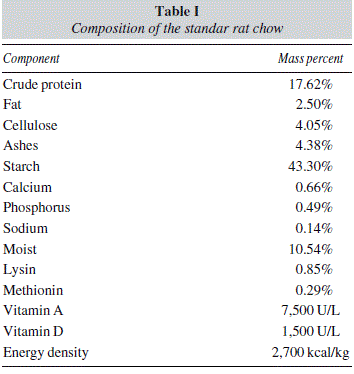
<body><![CDATA[<p><font face="Verdana" size="2"><i>Animals</i></font></p>     <p><font face="Verdana" size="2">Male Wistar rats were used, ranging 175-190 g body weight (Charles River, Barcelona, Spain), kept under controlled conditions of temperature (22-25 <sup>o</sup>C), relative humidity (50-60%), and 12-hour photoperiod starting at 8:00 am. The animals were housed on adjacent metabolism cages (Tecniplast Gazzada, Varese, Italy), providing free access to drinking water, and a standard chow (<a href="#t1">table I</a>) was daily provided <i>ad libitum</i> within 15 minutes after the photophase started. All study protocols were reviewed and approved by the University of León Animal Care Committee and were in accordance with the indications of the current Spanish and European laws (1201/2005 and EU Directive 86/609/CEE).</font></p>     <p align="center"><font face="Verdana" size="2"><a name="t1"><img src="/img/revistas/nh/v25n6/original3_t1.gif" align="top"></a></font></p>     <p>&nbsp;</p>     <p><font face="Verdana" size="2"><i>Experimental design</i></font></p>     <p><font face="Verdana" size="2">After seven days of acclimation, the animals were assigned one of the following experimental groups:</font></p>     <blockquote> 	    <p><font face="Verdana" size="2">- Group C: Control (untreated) pancreatic-normal animals. These were given standard chow and drinking water <i>ad libitum</i>.</font></p> 	    <p><font face="Verdana" size="2">- Group CM: Control animals were administered 1 mg/kg bw MT in the drinking water.</font></p> 	    <p><font face="Verdana" size="2">- Group D: Diabetic animals. These were given standard chow and drinking water 	<i>ad libitum</i>.</font></p> 	    ]]></body>
<body><![CDATA[<p><font face="Verdana" size="2">- Group DM: Diabetic animals were given 1 mg/kg bw MT in the drinking water.</font></p> </blockquote>     <p><font face="Verdana" size="2">MT solutions were prepared using ethanol as primary solvent. Final ethanol concentration in the drinking water was 0.1%. Untreated animals received drinking water including 0.1% ethanol.</font></p>     <p><font face="Verdana" size="2">MT administration was carried out along four weeks. MT-supplemented drinking water was daily provided within 15 minutes before the beginning of the scotophase until the next photophase, when all animals were given unsupplemented drinking water. Estimation of the effective MT amount to be taken by the animals was made daily after measuring the water intake during the previous scotophase by untreated animals. The reason of using a MT dosage of 1 mg/kg body weight was made after a previous acceptability study using a standard two-bottle test with 0.1, 1, and 5 mg/ml MT in driking water against unsupplemented water. Only the higher dose showed significantly less preference (data not shown).</font></p>     <p><font face="Verdana" size="2"><i>Diabetes mellitus induction</i></font></p>     <p><font face="Verdana" size="2">Rats were made diabetic by intraperitoneal administration of a single dose of 60 mg/kg bw streptozotocin. Glycaemia control was carried out using blood samples from the tail applied to commercial test strips (Glucostix, Bayer Diagnostics, Madrid, Spain). Diabetes was considered to be fully established when blood glucose levels exceeded 400 mg/100 ml.</font></p>     <p><font face="Verdana" size="2"><i>Feeding behavior analysis</i></font></p>     <p><font face="Verdana" size="2">Food and water intake data were collected during the 4 weeks of the experimental period. The first five days after diabetes was developed were not included in the data analysis since diabetic hyperphagia was found not to be fully established. Animals were also weighed weekly during the morning maintenance schedule.</font></p>     <p><font face="Verdana" size="2">Food and water intake were recorded daily using a semiautomatic system (TSE Systems GmbH, Bad Homburg, Germany). Each cage had one food sensor and one water sensor fitted on the lid, with trays beneath to collect spillage.</font></p>     <p><font face="Verdana" size="2">The proprietary software controlling the TSE hardware can record data using a minimum of 8 seconds averaging, through a multiplexed modified parallel port, and needs a previous estimate of the minimum inter-meal interval (IMI) in order to export meal lists. Following previous studies,<sup>17</sup> the IMI value used was set at 5 min. Because of this limitation, no frequency distributions of intake intervals<sup>18</sup> could be performed, since the attempts made gave out frequency distributions with a large number of intervals that were multiples of 300, and shorter number of intervals that were assumed to be the result of the data input averaging process.</font></p>     <p><font face="Verdana" size="2">Nevertheless, we obtained meal lists including animal identification, substance (pellets or water), date and time of the start of both recording session and meals, as well as meal size, duration, and post-meal interval. These data were imported into Statistica v7.1 (Statsoft Inc., Tulsa OK, USA) data files. A number of tailored routines within Statistica allowed us to obtain standard feeding behaviour parameters for food and water intake considering either photophase or scotophase periods of the day. The parameters analyzed were MF (meal frequency, defined as the number of intake episodes per period), TI (total intake, amount of food/water ingested per period), ID (intake duration, sum of the duration of all intake episodes per period), MS (meal size, mean amount of food/water ingested per intake episode and period), and MD (meal duration, mean duration of food/water intake episodes per period).</font></p>     ]]></body>
<body><![CDATA[<p><font face="Verdana" size="2"><i>Tissue collection</i></font></p>     <p><font face="Verdana" size="2">Once the experimental period was over, animals were killed at 10:00 am after being weighed and anaesthesized using 50 mg/kg bw sodium pentobarbital in saline until plantar and palpebral reflexes were extinguished. Heparinized carotid blood samples were taken. The whole liver was dissected and immediately frozen by liquid-nitrogen immersion. Frozen liver and blood plasma were stored at -80 <sup>o</sup>C until needed for analytical determinations.</font></p>     <p><font face="Verdana" size="2"><i>Analytical determinations</i></font></p>     <p><font face="Verdana" size="2">Plasma glucose levels were estimated by the glucose oxidase method using a commercially available kit (Boehringer Mannheim S.A., Barcelona, Spain). Hepatic glycogen content was determined as the difference between free glucose from homogeneized liver and total glucose as obtained by digestion with amyloglucosidase.<sup>19</sup></font></p>     <p><font face="Verdana" size="2"><i>Statistical procedures</i></font></p>     <p><font face="Verdana" size="2">Data analysis was performed using Statistica v8. Repeated-measures analysis of variance (ANOVA) was performed to analyse feeding behavior parameters, assuming time (days) as the repeated-measures variable. One-way ANOVA was used for metabolic parameters. <i>Post-hoc</i> group comparisons were carried out using the Newman-Keuls test. Results were expressed as mean and standard error for each parameter.</font></p>     <p>&nbsp;</p>     <p><font face="Verdana" size="2"><b>Results</b></font></p>     <p><font face="Verdana" size="2"><i>Metabolic aspects of MT supplementation on diabetic rats</i></font></p>     <p><font face="Verdana" size="2">Typical signs of diabetes appeared shortly after streptozotocin administration in the rat, including polyphagia, polydipsia and polyuria. Following a twoday period of hypophagia after hyperglycemia was established, we found +37% and +456% change in food and water intake, respectively (tables <a target="_blank" href="/img/revistas/nh/v25n6/original3_t3.gif">III</a> and <a target="_blank" href="/img/revistas/nh/v25n6/original3_t4.gif">IV</a>). <a target="_blank" href="/img/revistas/nh/v25n6/original3_t2.gif">Table II</a> shows plasma glucose levels at the beginning and the end of the study, as well as liver glycogen levels for the different experimental groups; diabetic rats showed a significant degree of hyperglycaemia (+225%) when compared to control animals. Glycaemia was not significantly changed as a result of MT supplementation. Liver glycogen levels were significantly lower in diabetic animals than in controls. MT supplementation provided a certain degree of reversal, the values being significantly higher than unsupplemented diabetic rats and significantly lower than control levels. MT was also shown to increase the liver glycogen levels in control rats.</font></p>     ]]></body>
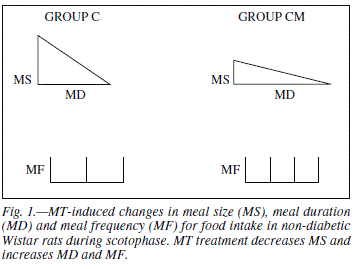
<body><![CDATA[<p><font face="Verdana" size="2">At the beginning of our observations, all experimental groups had animals with similar body weight (175-190 g). After four weeks of treatment, control rats (group C) showed a significant increase in body weight (<a target="_blank" href="/img/revistas/nh/v25n6/original3_t2.gif">table II</a>), with lack of significant differences in body weight of diabetic rats (groups D and DM). Liver weight was significantly lower in diabetic groups when compared to group C, but MT supplementation induced a significant increase relative to group D. MT had no effects on either body weight or total liver weight in non-diabetic animals.</font></p>     <p><font face="Verdana" size="2"><i>Feeding behaviour parameters</i></font></p>     <p><font face="Verdana" size="2">Separate repeated-measurements ANOVA were performed for food and water intake on 18 records for each of the experimental groups C (control rats), CM (control MT-supplemented rats), D (diabetic rats) and DM (diabetic MT-supplemented rats). The record selection was made on the basis of the absence of missing data in any of the groups either by human or power failures. Tables <a target="_blank" href="/img/revistas/nh/v25n6/original3_t3.gif">III</a> and <a target="_blank" href="/img/revistas/nh/v25n6/original3_t4.gif">IV</a> summarize the results obtained.</font></p>     <p><font face="Verdana" size="2">As shown in tables <a target="_blank" href="/img/revistas/nh/v25n6/original3_t3.gif">III</a> and <a target="_blank" href="/img/revistas/nh/v25n6/original3_t4.gif">IV</a>, diabetes induced significant increases in all feeding behavior parameters, both in food and water intake, mostly during the scotophase, with the exception of a significantly decrease in food meal size. We observed that MT supplementation, both in photophase and scotophase, did not alter feeding parameters on diabetic rats, with the exception of meal duration for water intake in scotophase (<a target="_blank" href="/img/revistas/nh/v25n6/original3_t4.gif">table IV</a>). However, in non-diabetic rats MT lead to lowered total food intake and food meal size, while increasing meal frequency and meal duration for food intake (<a target="_blank" href="/img/revistas/nh/v25n6/original3_t3.gif">table III</a>) during the scotophase. The relationship between meal frequency, meal size, and meal duration changes induced by MT supplementation in non-diabetic rats is summarized in  <a href="#f1">figure 1</a>. MT increases total food intake by increasing meal frequency while decreasing meal size. These changes are not observed during the photophase.</font></p>     <p align="center"><font face="Verdana" size="2"><a name="f1"><img src="/img/revistas/nh/v25n6/original3_f1.gif" align="top"></a></font></p>     <p>&nbsp;</p>     <p><font face="Verdana" size="2"><b>Discussion</b></font></p>     <p><font face="Verdana" size="2"><i>Metabolic aspects of MT supplementation on diabetic rats</i></font></p>     <p><font face="Verdana" size="2">Similarly to other authors,<sup>20</sup> liver glycogen was significantly decreased in diabetic rats. Hyperglycaemia is known to promote non-enzymatic glycosilation as well as protein and lipid oxidation, leading to increasing levels of nitric oxide (NO) in diabetes.<sup>21</sup> Since NO can inhibit liver glycogen synthesis,<sup>22</sup> it could explain the lower liver glycogen levels found in our study. MT is able to inhibiting NO production in different tissues, <sup>23,24</sup> and therefore this effect could contribute to the observed change in carbohydrate metabolism. Contrarily to other studies where MT has been observed to decrease plasma glucose concentration either administered before<sup>25,26</sup> or after<sup>27</sup> the onset of diabetes, in our study MT supplementation did not induce significant glycemia changes in streptozotocin-induced diabetic rats, a fact that may be related to the different MT concentrations and/or administration method used. Studies have been made using 200 &micro;g/kg i.p. MT in rats,<sup>27,28</sup> while others have administered 5 mg/kg/day MT intragastrically in mice.<sup>26</sup> However, Sudnikovich et al.<sup>24</sup> injected 10 mg MT /kg body weight (i.p.) at the beginning of the photophase and could not find hypoglycemic effects on streptozotocin-diabetic Wistar rats. In our study, ca. 1 mg/kg bw MT was administered as a drinking-water supplement firstly because this method implied no animal handling, which is important in the study of spontaneous feeding behaviour, and secondly since we were interested in having an insight on how MT could have effects at GI level in a more prolonged way, rather than acutely by i.p. administration. On the other hand, treatment of alloxan-diabetic rats with 200 &micro;g/animal MT either orally or i.p. was unable to decrease hyperglycaemia.<sup>28</sup> When MT is administered before the induction of the diabetic condition, MT is probably preventing the complete destruction of the pancreatic islets. However, in our study MT was given after development of diabetes, when beta-cells had already been irreversible damaged by STZ.<sup>29</sup> Strain differences might also conceivably alter MT effects on hyperglycaemia: Sprague-Dawley rats have been shown to be more susceptible to streptozotocin-induced diabetes than Wistar rats.<sup>30</sup> Anwar & Meki<sup>27</sup> used Sprague-Dawley rats, while Wistar rats have been used in the present study.</font></p>     <p><font face="Verdana" size="2">Non-diabetic rats drinking MT-supplemented water showed greater liver glycogen levels than untreated animals, in agreement with data from other authors<sup>31</sup> that administered MT i.p. at 0.5 g/kg bw. However, this result does not agree with other observations<sup>32</sup> where MT was administered at 4 g/kg bw in the drinking water for 26 weeks. Liver carbohydrate utilization has been shown to be increased in rats treated with continuous-release MT implants.<sup>33</sup> The effect of MT on carbohydrate metabolism in experimental animals is still controversial.<sup>32</sup></font></p>     ]]></body>
<body><![CDATA[<p><font face="Verdana" size="2"><i>Food intake in diabetic animals</i></font></p>     <p><font face="Verdana" size="2">Our results show a significant increase in meal frequency, total food intake and duration, and meal duration in diabetic vs. non-diabetic rats during the scotophase. Meal size was shown to decrease only during the scotophase. In our study, diabetic animals ate 37% more food daily than controls, being the starch content in the diet 433 g/kg; this is in agreement with former observations that diabetic rats given high-carbohydrate diet (570 g/kg starch, 70 g/kg cellulose) ingested 40% more food daily than control and diabetic animals fed on a isocaloric low-carbohydrate diet (250 g/kg starch, 250 g/kg cellulose).<sup>11</sup> Former meal pattern studies showed increases in total intake, meal frequency, meal size and meal duration in streptozotocin-diabetic rats.<sup>12,13</sup> Albeit differences in meal pattern criteria, our results partly confirm these observations, with the notorious exception of food meal size, which is significantly decreased in diabetic animals with respect to controls. Meal size was shown to increase in previous studies<sup>13</sup> using 45-mg pellets. However, repeated exercise made by the diabetic rat in order to feed has been pointed out as leading to decreased meal size.<sup>34</sup> The amount of feeding work involved in our study could be significant since the animal had to enter a short feeding tunnel and turn his head to scratch larger, hanged pellets; further, and it is known that salivary secretion is depressed in the diabetic rat.<sup>35</sup> We also found significantly increased meal frequency both for food intake and drinking activity; this showed up as a trend in the studies by Smith (1991)<sup>12</sup> and Vanderweele (1993),<sup>13</sup> and so it has to be added to the increased meal duration to characterize the diabetic hyperphagia.</font></p>     <p><font face="Verdana" size="2"><i>Effect of MT supplementation on feeding behavior parameters</i></font></p>     <p><font face="Verdana" size="2">There seems to be no studies in the literature relating feeding behavior and MT suplementation in experimentally-induced diabetes. In this work we found no significant effects of scotophase-supplemented MT on the overall feeding behavior in diabetic animals. Even when it has been found that streptozotocin-induced diabetes is associated with increased pineal MT synthesis, <sup>36</sup> an extra MT supplementation at the nocturnal phase does not alter feeding behavior. However, there was a trend for water intake to be enhanced by MT, and concomitantly an increase in daily wet faecal mass was observed. These observations are in sharp contrast with the effect of MT on the feeding behavior parameters of non-diabetic rats during the scotophase, where it increased total food intake duration, meal frequency and meal duration while decreased total food intake and meal size for food intake but not for water intake (tables <a target="_blank" href="/img/revistas/nh/v25n6/original3_t3.gif">III</a> and <a target="_blank" href="/img/revistas/nh/v25n6/original3_t4.gif">IV</a>). Former studies reported the absence of effect of MT on total food intake after 12-weeks oral MT supplementation.<sup>16</sup> This observation has not been confirmed in this study on a shorter time range, and the effects observed on meal frequency, duration and size are suggestive of deeper effects of MT. There is evidence that leptin produced by adipose tissue has a longterm role in regulating energy stores and body weight,<sup>37</sup> while gastric leptin acts as a satiety signal in the shortterm control of food intake.<sup>38</sup> However, ghrelin, the orexigenic hormone produced by the stomach, has a stimulatory effect on food intake.<sup>39</sup> MT seems to have opposite effects on the circulating levels of leptin and ghrelin. Circulating ghrelin levels have been shown to be decreased in a number of studies in MT-treated animals. <sup>40</sup> On the other hand, chronic MT administration is able to increase plasma leptin levels,<sup>41</sup> and leptin is more potently reducing meal frequency than meal size in the rat.<sup>42</sup> All these effects are compatible with the observed reduction in meal size and increase in meal duration in non-diabetic animals. Moreover, the fact that the feeding behavior changes have been found only in the scotophase, at the time exogenous MT was administered, gives support to an effect of GIT MT on feeding behavior. No carry-over effects of MT during the photophase seem to have been taken place.</font></p>     <p><font face="Verdana" size="2">We observed a trend for orally-supplemented MT increasing water intake in diabetic animals. At the same time, the average duration of drinking episodes was significantly decreased in MT-supplemented diabetic rats. These observations could be in agreement with several reports that MT is able to decrease plasma levels of vasopressin (VP) in the Syrian hamster<sup>43</sup> and the rat.<sup>44</sup> However, aminopeptidase enzyme activities (with VP as a substrate) are decreased in hypothalamus in the streptozotocin-diabetic rat, and it could lead to increases in VP levels.<sup>45</sup> In any case, non-diabetic MTtreated rats clearly do not follow that water-intake increase trend. MT administration before meals is able to decrease the frequency of the irregular spiking activity of migratory motor complex while inducing a preprandial-like motor pattern.<sup>46</sup> On the other hand, the diabetic rat shows significant delayed stomach to caecum transit time<sup>47</sup> albeit small intestine and caecum size and lenght are normal.<sup>48</sup> Gastrointestinal MT could be involved in these apparent contradictory effects of MT on water intake, as suggested by the significantly higher faecal mass output in MT-supplemented diabetic rats: the decreased water reabsorption could be ultimately responsible of their increased water intake trend. However, MT synthesis has been found to be enhanced in the streptozotocin-diabetic rat, at least at pineal level,<sup>36</sup> suggestive of an interplay between MT and insulin, so that more studies are needed to further clarify the effect of MT supplementation on energy metabolism. The dichotomy of feeding behavior changes comparing non-diabetic and streptozotocindiabetic male rats upon MT supplementation is indicative of profound metabolic/behavioral rearrangements triggered by the lack of insulin that MT cannot overcome. On the experimental conditions used in this work, no translatable therapeutic implications could be inferred from MT supplementation.</font></p>     <p><font face="Verdana" size="2"><i>Concluding remarks</i></font></p>     <p><font face="Verdana" size="2">This work has revealed increased meal frequency both for food and water intake in diabetic animals, as well as increased meal duration, as behavioral contributors to the hyperphagia in STZ-induced diabetes. We have found a satiating effect of MT in non-diabetic rats, an effect that has not been replicated in diabetic animals. The changes in feeding behavior induced by MT in nondiabetic animals during the scotophase are related to changes in meal frequency, size and duration leading to lower total food intake. MT administration to diabetic rats did translate in lower drinking time and higher faecal output, without further behavioral effects. The satiating effect of MT supplementation during 4 weeks has not apparently continued in longer studies.<sup>16</sup> Since streptozotocin-diabetic rats failed to show MT alterations, probably the notorious metabolic changes occurring as a consequence of diabetes are able to overcome most of the underlying effects of MT supplementation. MT has been recently approved by the European Medicines Agency (EMEA) against sleeping disorders in humans at least 55-year old;<sup>49</sup> further MT usage for therapeutical purposes could benefit from the lack of behavioral alterations in diabetic animals. A word of caution should be incorporated into the potential use of MT in the elderly since there could be gastrointestinal alterations leading to changes in food intake.</font></p>     <p>&nbsp;</p>     <p><font face="Verdana" size="2"><b>References</b></font></p>     <!-- ref --><p><font face="Verdana" size="2">1. Teff K. Nutritional implications of the cephalic-phase reflexes: Endocrine responses. <i>Appetite</i> 2000; 34: 206-13.</font>&nbsp;&nbsp;&nbsp;&nbsp;&nbsp;&nbsp;&nbsp;&nbsp;[&#160;<a href="javascript:void(0);" onclick="javascript: window.open('/scielo.php?script=sci_nlinks&ref=3587601&pid=S0212-1611201000060000700001&lng=','','width=640,height=500,resizable=yes,scrollbars=1,menubar=yes,');">Links</a>&#160;]<!-- end-ref --><!-- ref --><p><font face="Verdana" size="2">2. Sahu A. A hypothalamic role in energy balance with special emphasis on leptin. <i>Endocrinology</i> 2004; 145: 2613-20.</font>&nbsp;&nbsp;&nbsp;&nbsp;&nbsp;&nbsp;&nbsp;&nbsp;[&#160;<a href="javascript:void(0);" onclick="javascript: window.open('/scielo.php?script=sci_nlinks&ref=3587602&pid=S0212-1611201000060000700002&lng=','','width=640,height=500,resizable=yes,scrollbars=1,menubar=yes,');">Links</a>&#160;]<!-- end-ref --><!-- ref --><p><font face="Verdana" size="2">3. Konturek SJ, Konturek PC, Brzozowska I, Pawlik M, Sliwowski Z, Czesnikiewicz-Guzik M et al. Localization and biological activities of melatonin in intact and diseased gastrointestinal tract (GIT). <i>J Physiol Pharmacol</i> 2007; 58: 381-405.</font>&nbsp;&nbsp;&nbsp;&nbsp;&nbsp;&nbsp;&nbsp;&nbsp;[&#160;<a href="javascript:void(0);" onclick="javascript: window.open('/scielo.php?script=sci_nlinks&ref=3587603&pid=S0212-1611201000060000700003&lng=','','width=640,height=500,resizable=yes,scrollbars=1,menubar=yes,');">Links</a>&#160;]<!-- end-ref --><!-- ref --><p><font face="Verdana" size="2">4. Bubenik GA. Gastrointestinal Melatonin. Localization, Function, and Clinical Relevance. <i>Dig Dis Sci</i> 2002; 42: 2336-48.</font>&nbsp;&nbsp;&nbsp;&nbsp;&nbsp;&nbsp;&nbsp;&nbsp;[&#160;<a href="javascript:void(0);" onclick="javascript: window.open('/scielo.php?script=sci_nlinks&ref=3587604&pid=S0212-1611201000060000700004&lng=','','width=640,height=500,resizable=yes,scrollbars=1,menubar=yes,');">Links</a>&#160;]<!-- end-ref --><!-- ref --><p><font face="Verdana" size="2">5. Thor PJ, Krolczyk G, Gil K, Zurowski D, Nowak L. Melatonin and serotonin effects on gastrointestinal motility. <i>J Physiol Pharmacol</i> 2007; 58: 97-103.</font>&nbsp;&nbsp;&nbsp;&nbsp;&nbsp;&nbsp;&nbsp;&nbsp;[&#160;<a href="javascript:void(0);" onclick="javascript: window.open('/scielo.php?script=sci_nlinks&ref=3587605&pid=S0212-1611201000060000700005&lng=','','width=640,height=500,resizable=yes,scrollbars=1,menubar=yes,');">Links</a>&#160;]<!-- end-ref --><!-- ref --><p><font face="Verdana" size="2">6. Kasimay O, Cakir B, Devseren E, Yegen BC. Exogenous melatonin delays gastric emptying rate in rats: role of CCK2 and 5-HT3 receptors. <i>J Physiol Pharmacol</i> 2005; 56: 543-53.</font>&nbsp;&nbsp;&nbsp;&nbsp;&nbsp;&nbsp;&nbsp;&nbsp;[&#160;<a href="javascript:void(0);" onclick="javascript: window.open('/scielo.php?script=sci_nlinks&ref=3587606&pid=S0212-1611201000060000700006&lng=','','width=640,height=500,resizable=yes,scrollbars=1,menubar=yes,');">Links</a>&#160;]<!-- end-ref --><!-- ref --><p><font face="Verdana" size="2">7. Cardinali DP, Vacas MI, Keller-Sarmiento MI, Etchegoyen GS, Pereyra EN, Chuluyan HE. Neuroendocrine integrative mechanisms in mammalian pineal gland: effects of steroid and adenohypophisial hormones on melatonin synthesis in vitro. <i>J Steroid Biochem</i> 1984; 83-107.</font>&nbsp;&nbsp;&nbsp;&nbsp;&nbsp;&nbsp;&nbsp;&nbsp;[&#160;<a href="javascript:void(0);" onclick="javascript: window.open('/scielo.php?script=sci_nlinks&ref=3587607&pid=S0212-1611201000060000700007&lng=','','width=640,height=500,resizable=yes,scrollbars=1,menubar=yes,');">Links</a>&#160;]<!-- end-ref --><!-- ref --><p><font face="Verdana" size="2">8. Nakagawa H, Nagai K, Kida K, Nishio T. Control mechanisms of circadian rhythms of feeding behavior and metabolism influenced by food intake. In: Suda H, Hayaishi O, Nakagawa H, editors. Biological rhythms and their central mechanisms. Amsterdam: Elsevier-North Holland Press; 1979, pp. 283-294.</font>&nbsp;&nbsp;&nbsp;&nbsp;&nbsp;&nbsp;&nbsp;&nbsp;[&#160;<a href="javascript:void(0);" onclick="javascript: window.open('/scielo.php?script=sci_nlinks&ref=3587608&pid=S0212-1611201000060000700008&lng=','','width=640,height=500,resizable=yes,scrollbars=1,menubar=yes,');">Links</a>&#160;]<!-- end-ref --><!-- ref --><p><font face="Verdana" size="2">9. Brooks CM, Ishikawa T, Koizumi K. Autonomic system control of the pineal gland and the role of this complex in the integration of body function. <i>Brain Res</i> 1975; 87: 181-90.</font>&nbsp;&nbsp;&nbsp;&nbsp;&nbsp;&nbsp;&nbsp;&nbsp;[&#160;<a href="javascript:void(0);" onclick="javascript: window.open('/scielo.php?script=sci_nlinks&ref=3587609&pid=S0212-1611201000060000700009&lng=','','width=640,height=500,resizable=yes,scrollbars=1,menubar=yes,');">Links</a>&#160;]<!-- end-ref --><!-- ref --><p><font face="Verdana" size="2">10. Peschke D, Peschke E, Mess B. Circannual rhythm and increase of body weight and food intake in the young Wistar rat following pinealectomy and ganglionectomy. <i>Neuroendocrinol Lett</i> 1987; 9: 321-7.</font>&nbsp;&nbsp;&nbsp;&nbsp;&nbsp;&nbsp;&nbsp;&nbsp;[&#160;<a href="javascript:void(0);" onclick="javascript: window.open('/scielo.php?script=sci_nlinks&ref=3587610&pid=S0212-1611201000060000700010&lng=','','width=640,height=500,resizable=yes,scrollbars=1,menubar=yes,');">Links</a>&#160;]<!-- end-ref --><!-- ref --><p><font face="Verdana" size="2">11. Granneman JG, Stricker EM. Food intake and gastric emptying in rats with streptozotocin-induced diabetes. <i>Am J Physiol</i> 1984; 247: R1054-R-1061.</font>&nbsp;&nbsp;&nbsp;&nbsp;&nbsp;&nbsp;&nbsp;&nbsp;[&#160;<a href="javascript:void(0);" onclick="javascript: window.open('/scielo.php?script=sci_nlinks&ref=3587611&pid=S0212-1611201000060000700011&lng=','','width=640,height=500,resizable=yes,scrollbars=1,menubar=yes,');">Links</a>&#160;]<!-- end-ref --><!-- ref --><p><font face="Verdana" size="2">12. Smith JC, Gannon KS. Ingestion patterns of food, water, saccharin and sucrose in streptozotocin-induced diabetic rats. <i>Physiol Behav</i> 1991; 49: 189-99.</font>&nbsp;&nbsp;&nbsp;&nbsp;&nbsp;&nbsp;&nbsp;&nbsp;[&#160;<a href="javascript:void(0);" onclick="javascript: window.open('/scielo.php?script=sci_nlinks&ref=3587612&pid=S0212-1611201000060000700012&lng=','','width=640,height=500,resizable=yes,scrollbars=1,menubar=yes,');">Links</a>&#160;]<!-- end-ref --><!-- ref --><p><font face="Verdana" size="2">13. Vanderweele DA. Insulin and satiety from feeding in pancreatic-normal and diabetic rats. <i>Physiol Behav</i> 1993; 54: 477-85.</font>&nbsp;&nbsp;&nbsp;&nbsp;&nbsp;&nbsp;&nbsp;&nbsp;[&#160;<a href="javascript:void(0);" onclick="javascript: window.open('/scielo.php?script=sci_nlinks&ref=3587613&pid=S0212-1611201000060000700013&lng=','','width=640,height=500,resizable=yes,scrollbars=1,menubar=yes,');">Links</a>&#160;]<!-- end-ref --><!-- ref --><p><font face="Verdana" size="2">14. Baydas G, Canatan H, Turkoglu A. Comparative analysis of the protective effects of melatonin and vitamin E on streptozotocin-induced diabetes mellitus. <i>J Pineal Res</i> 2002; 32: 225-30.</font>&nbsp;&nbsp;&nbsp;&nbsp;&nbsp;&nbsp;&nbsp;&nbsp;[&#160;<a href="javascript:void(0);" onclick="javascript: window.open('/scielo.php?script=sci_nlinks&ref=3587614&pid=S0212-1611201000060000700014&lng=','','width=640,height=500,resizable=yes,scrollbars=1,menubar=yes,');">Links</a>&#160;]<!-- end-ref --><!-- ref --><p><font face="Verdana" size="2">15. Angers K, Haddad N, selmaoui B, Thibault L. Effect of melatonin on total food intake and macronutrient choice in rats. <i>Physiol Behav</i> 2003; 80: 9-18.</font>&nbsp;&nbsp;&nbsp;&nbsp;&nbsp;&nbsp;&nbsp;&nbsp;[&#160;<a href="javascript:void(0);" onclick="javascript: window.open('/scielo.php?script=sci_nlinks&ref=3587615&pid=S0212-1611201000060000700015&lng=','','width=640,height=500,resizable=yes,scrollbars=1,menubar=yes,');">Links</a>&#160;]<!-- end-ref --><!-- ref --><p><font face="Verdana" size="2">16. Wolden-Hanson T, Mitton DR, McCants RL, Yellon SM, Wilkinson CW, Matsumoto AM et al. Daily melatonin administration to middle-aged male rats suppresses body weight, intraabdominal adiposity, and plasma leptin and insulin independent of food intake and total body fat. Endocrinology 2000;141: 487-97.</font>&nbsp;&nbsp;&nbsp;&nbsp;&nbsp;&nbsp;&nbsp;&nbsp;[&#160;<a href="javascript:void(0);" onclick="javascript: window.open('/scielo.php?script=sci_nlinks&ref=3587616&pid=S0212-1611201000060000700016&lng=','','width=640,height=500,resizable=yes,scrollbars=1,menubar=yes,');">Links</a>&#160;]<!-- end-ref --><!-- ref --><p><font face="Verdana" size="2">17. Clifton PG. Meal patterning in rodents: psychopharmacological and neuroanatomical studies. Neuroscience & Biobehavioral Reviews 2000; 24: 213-22.</font>&nbsp;&nbsp;&nbsp;&nbsp;&nbsp;&nbsp;&nbsp;&nbsp;[&#160;<a href="javascript:void(0);" onclick="javascript: window.open('/scielo.php?script=sci_nlinks&ref=3587617&pid=S0212-1611201000060000700017&lng=','','width=640,height=500,resizable=yes,scrollbars=1,menubar=yes,');">Links</a>&#160;]<!-- end-ref --><!-- ref --><p><font face="Verdana" size="2">18. Tolkamp BJ, Kyriazakis I. To split behaviour into bouts, logtransform the intervals. Anim Behav 1999; 57: 807-17.</font>&nbsp;&nbsp;&nbsp;&nbsp;&nbsp;&nbsp;&nbsp;&nbsp;[&#160;<a href="javascript:void(0);" onclick="javascript: window.open('/scielo.php?script=sci_nlinks&ref=3587618&pid=S0212-1611201000060000700018&lng=','','width=640,height=500,resizable=yes,scrollbars=1,menubar=yes,');">Links</a>&#160;]<!-- end-ref --><!-- ref --><p><font face="Verdana" size="2">19. Keppler CA & Decker K. Glycogen determination with amyloglucosidase. In: Bergmeyer HU, editor. Methods in Enzymology. New York:Academic Press; 1974, pp. 1127-1131.</font>&nbsp;&nbsp;&nbsp;&nbsp;&nbsp;&nbsp;&nbsp;&nbsp;[&#160;<a href="javascript:void(0);" onclick="javascript: window.open('/scielo.php?script=sci_nlinks&ref=3587619&pid=S0212-1611201000060000700019&lng=','','width=640,height=500,resizable=yes,scrollbars=1,menubar=yes,');">Links</a>&#160;]<!-- end-ref --><!-- ref --><p><font face="Verdana" size="2">20. González E, Rosello-Catafau J, Jawerbaum A, Novaro V, Gómez G, Gelpi E, et al. Influence of nitric oxide synthase and kinin antagonists on metabolic parameters in chronic streptozotocininduced diabetes mellitus. Prostaglandins 1997; 53: 321-36.</font>&nbsp;&nbsp;&nbsp;&nbsp;&nbsp;&nbsp;&nbsp;&nbsp;[&#160;<a href="javascript:void(0);" onclick="javascript: window.open('/scielo.php?script=sci_nlinks&ref=3587620&pid=S0212-1611201000060000700020&lng=','','width=640,height=500,resizable=yes,scrollbars=1,menubar=yes,');">Links</a>&#160;]<!-- end-ref --><!-- ref --><p><font face="Verdana" size="2">21. Stadler K, Jenei V, Von Bolcshazy G, Somogyi A, Jakus J. Increased nitric oxide levels as an early sign of premature aging in diabetes. Free Rad Biol Med 2003; 35: 1240-51.</font>&nbsp;&nbsp;&nbsp;&nbsp;&nbsp;&nbsp;&nbsp;&nbsp;[&#160;<a href="javascript:void(0);" onclick="javascript: window.open('/scielo.php?script=sci_nlinks&ref=3587621&pid=S0212-1611201000060000700021&lng=','','width=640,height=500,resizable=yes,scrollbars=1,menubar=yes,');">Links</a>&#160;]<!-- end-ref --><!-- ref --><p><font face="Verdana" size="2">22. Sprangers F, Sauerwein HP, Romijn JA, van Woerkom GM, Meijer AJ. Nitric oxide inhibits glycogen synthesis in isolated rat hepatocytes. Biochem J 1998; 330: 1045-9.</font>&nbsp;&nbsp;&nbsp;&nbsp;&nbsp;&nbsp;&nbsp;&nbsp;[&#160;<a href="javascript:void(0);" onclick="javascript: window.open('/scielo.php?script=sci_nlinks&ref=3587622&pid=S0212-1611201000060000700022&lng=','','width=640,height=500,resizable=yes,scrollbars=1,menubar=yes,');">Links</a>&#160;]<!-- end-ref --><!-- ref --><p><font face="Verdana" size="2">23. Escames G, León J, Macías M, Khaldy H, Acuña-Castroviejo D. Melatonin counteracts lipopolysaccharide-induced expression and activity of mitochondrial nitric oxide synthase in rats. Faseb J 2003; 17: 932-4.</font>&nbsp;&nbsp;&nbsp;&nbsp;&nbsp;&nbsp;&nbsp;&nbsp;[&#160;<a href="javascript:void(0);" onclick="javascript: window.open('/scielo.php?script=sci_nlinks&ref=3587623&pid=S0212-1611201000060000700023&lng=','','width=640,height=500,resizable=yes,scrollbars=1,menubar=yes,');">Links</a>&#160;]<!-- end-ref --><!-- ref --><p><font face="Verdana" size="2">24. Sudnikovich EJ, Maksimchik YZ, Zabrodskaya SV, Kubyshin VL, Lapshina EA, Bryszewska M et al. Melatonin attenuates metabolic disorders due to streptozotocin-induced diabetes in rats. Eur J Pharmacol 2007; 569: 180-7.</font>&nbsp;&nbsp;&nbsp;&nbsp;&nbsp;&nbsp;&nbsp;&nbsp;[&#160;<a href="javascript:void(0);" onclick="javascript: window.open('/scielo.php?script=sci_nlinks&ref=3587624&pid=S0212-1611201000060000700024&lng=','','width=640,height=500,resizable=yes,scrollbars=1,menubar=yes,');">Links</a>&#160;]<!-- end-ref --><!-- ref --><p><font face="Verdana" size="2">25. Montilla López P, Vargas JF, Tunez I, Muñoz de Agueda MC, Valdelvira ME, Cabrera ES. Oxidative stress in diabetic rats induced by streptozotocin: protective effects of melatonin. J Pineal Res 1998; 25: 94-100.</font>&nbsp;&nbsp;&nbsp;&nbsp;&nbsp;&nbsp;&nbsp;&nbsp;[&#160;<a href="javascript:void(0);" onclick="javascript: window.open('/scielo.php?script=sci_nlinks&ref=3587625&pid=S0212-1611201000060000700025&lng=','','width=640,height=500,resizable=yes,scrollbars=1,menubar=yes,');">Links</a>&#160;]<!-- end-ref --><!-- ref --><p><font face="Verdana" size="2">26. Abdel-Wahab MH, Abd-Allah ARA. Possible protective effect of melatonin and/or desferrioxamine against streptozotocininduced hyperglycaemia in mice. Pharmacol Res 2000; 41: 533-7.</font>&nbsp;&nbsp;&nbsp;&nbsp;&nbsp;&nbsp;&nbsp;&nbsp;[&#160;<a href="javascript:void(0);" onclick="javascript: window.open('/scielo.php?script=sci_nlinks&ref=3587626&pid=S0212-1611201000060000700026&lng=','','width=640,height=500,resizable=yes,scrollbars=1,menubar=yes,');">Links</a>&#160;]<!-- end-ref --><!-- ref --><p><font face="Verdana" size="2">27. Anwar MM, Meki AMA. Oxidative stress in streptozotocininduced diabetic rats effects of garlic oil and melatonin. Comp Biochem Physiol A 2003; 135: 539-47.</font>&nbsp;&nbsp;&nbsp;&nbsp;&nbsp;&nbsp;&nbsp;&nbsp;[&#160;<a href="javascript:void(0);" onclick="javascript: window.open('/scielo.php?script=sci_nlinks&ref=3587627&pid=S0212-1611201000060000700027&lng=','','width=640,height=500,resizable=yes,scrollbars=1,menubar=yes,');">Links</a>&#160;]<!-- end-ref --><!-- ref --><p><font face="Verdana" size="2">28. Sailaja Devi MM, Suresh Y, Das UN. Preservation of the antioxidant status in chemically-induced diabetes mellitus by melatonin. J Pineal Res 2000; 29: 108-15.</font>&nbsp;&nbsp;&nbsp;&nbsp;&nbsp;&nbsp;&nbsp;&nbsp;[&#160;<a href="javascript:void(0);" onclick="javascript: window.open('/scielo.php?script=sci_nlinks&ref=3587628&pid=S0212-1611201000060000700028&lng=','','width=640,height=500,resizable=yes,scrollbars=1,menubar=yes,');">Links</a>&#160;]<!-- end-ref --><!-- ref --><p><font face="Verdana" size="2">29. Baydas G, Yilmaz O, Celik S, Yasar A, Gursu MF. Effects of certain micronutrients and melatonin on plasma lipid, lipid peroxidation, and homocysteine levels in rats. Arch Med Res 2002; 33: 515-9.</font>&nbsp;&nbsp;&nbsp;&nbsp;&nbsp;&nbsp;&nbsp;&nbsp;[&#160;<a href="javascript:void(0);" onclick="javascript: window.open('/scielo.php?script=sci_nlinks&ref=3587629&pid=S0212-1611201000060000700029&lng=','','width=640,height=500,resizable=yes,scrollbars=1,menubar=yes,');">Links</a>&#160;]<!-- end-ref --><!-- ref --><p><font face="Verdana" size="2">30. Ojiro K, Kitamura H, Shimada T, Nakamura M. A morphometrical study of the postnatal development of rat pancreatic islets, with special regard to the differences between Wistar and Sprague-Dawley strains. Kaibogaku Zasshi 1993; 68: 190-203.</font>&nbsp;&nbsp;&nbsp;&nbsp;&nbsp;&nbsp;&nbsp;&nbsp;[&#160;<a href="javascript:void(0);" onclick="javascript: window.open('/scielo.php?script=sci_nlinks&ref=3587630&pid=S0212-1611201000060000700030&lng=','','width=640,height=500,resizable=yes,scrollbars=1,menubar=yes,');">Links</a>&#160;]<!-- end-ref --><!-- ref --><p><font face="Verdana" size="2">31. Mazepa RC, Cuevas MJ, Collado PS, Gonzalez-Gallego J. Melatonin increases muscle and liver glycogen content in nonexercised and exercised rats. Life Sci 2000; 66: 153-60.</font>&nbsp;&nbsp;&nbsp;&nbsp;&nbsp;&nbsp;&nbsp;&nbsp;[&#160;<a href="javascript:void(0);" onclick="javascript: window.open('/scielo.php?script=sci_nlinks&ref=3587631&pid=S0212-1611201000060000700031&lng=','','width=640,height=500,resizable=yes,scrollbars=1,menubar=yes,');">Links</a>&#160;]<!-- end-ref --><!-- ref --><p><font face="Verdana" size="2">32. Markova M, Adamekova E, Bojkova E, Kubatka P, Kassayova M, Ahlersova E et al. Effect of low-dose chronic melatonin administration on metabolic and hormonal variables in young laboratory rats. Acta Vet Brno 2004; 73: 445-53.</font>&nbsp;&nbsp;&nbsp;&nbsp;&nbsp;&nbsp;&nbsp;&nbsp;[&#160;<a href="javascript:void(0);" onclick="javascript: window.open('/scielo.php?script=sci_nlinks&ref=3587632&pid=S0212-1611201000060000700032&lng=','','width=640,height=500,resizable=yes,scrollbars=1,menubar=yes,');">Links</a>&#160;]<!-- end-ref --><!-- ref --><p><font face="Verdana" size="2">33. Mustonen AM, Nieminen P, Hyvarinen H. Effects of continuous light and melatonin treatment on energy metabolism of the rat. J Endocrinol Invest 2002; 25: 716-23.</font>&nbsp;&nbsp;&nbsp;&nbsp;&nbsp;&nbsp;&nbsp;&nbsp;[&#160;<a href="javascript:void(0);" onclick="javascript: window.open('/scielo.php?script=sci_nlinks&ref=3587633&pid=S0212-1611201000060000700033&lng=','','width=640,height=500,resizable=yes,scrollbars=1,menubar=yes,');">Links</a>&#160;]<!-- end-ref --><!-- ref --><p><font face="Verdana" size="2">34. De Castro JM, Balagura S. Relationship between endogenous, natural feeding patterns and body composition in the rat. Physiol Behav 1975; 15: 635-9.</font>&nbsp;&nbsp;&nbsp;&nbsp;&nbsp;&nbsp;&nbsp;&nbsp;[&#160;<a href="javascript:void(0);" onclick="javascript: window.open('/scielo.php?script=sci_nlinks&ref=3587634&pid=S0212-1611201000060000700034&lng=','','width=640,height=500,resizable=yes,scrollbars=1,menubar=yes,');">Links</a>&#160;]<!-- end-ref --><!-- ref --><p><font face="Verdana" size="2">35. Anderson LC. Effects of diabetes and dietary manipulation on rat parotid gland secretory response to sympathetic nerve stimulation. Comp Biochem Physiol A Comp Physiol 1991; 98: 363-6.</font>&nbsp;&nbsp;&nbsp;&nbsp;&nbsp;&nbsp;&nbsp;&nbsp;[&#160;<a href="javascript:void(0);" onclick="javascript: window.open('/scielo.php?script=sci_nlinks&ref=3587635&pid=S0212-1611201000060000700035&lng=','','width=640,height=500,resizable=yes,scrollbars=1,menubar=yes,');">Links</a>&#160;]<!-- end-ref --><!-- ref --><p><font face="Verdana" size="2">36. Peschke E, Wolgast S, Bazwinsky I, Ponicke K, Muhlbauer E. Increased melatonin synthesis in pineal glands of rats in streptozotocin induced type 1 diabetes. J Pineal Res 2008; 45: 439-48.</font>&nbsp;&nbsp;&nbsp;&nbsp;&nbsp;&nbsp;&nbsp;&nbsp;[&#160;<a href="javascript:void(0);" onclick="javascript: window.open('/scielo.php?script=sci_nlinks&ref=3587636&pid=S0212-1611201000060000700036&lng=','','width=640,height=500,resizable=yes,scrollbars=1,menubar=yes,');">Links</a>&#160;]<!-- end-ref --><!-- ref --><p><font face="Verdana" size="2">37. Kalra SP, Ueno N, Kalra PS. Stimulation of appetite by ghrelin is regulated by leptin restraint: peripheral and central sites of action. J Nutr 2005; 135: 1331-5.</font>&nbsp;&nbsp;&nbsp;&nbsp;&nbsp;&nbsp;&nbsp;&nbsp;[&#160;<a href="javascript:void(0);" onclick="javascript: window.open('/scielo.php?script=sci_nlinks&ref=3587637&pid=S0212-1611201000060000700037&lng=','','width=640,height=500,resizable=yes,scrollbars=1,menubar=yes,');">Links</a>&#160;]<!-- end-ref --><!-- ref --><p><font face="Verdana" size="2">38. Pico C, Oliver P, Sánchez J, Palou A. Gastric leptin: a putative role in the short-term regulation of food intake. Br J Nutr 2003; 90: 735-41.</font>&nbsp;&nbsp;&nbsp;&nbsp;&nbsp;&nbsp;&nbsp;&nbsp;[&#160;<a href="javascript:void(0);" onclick="javascript: window.open('/scielo.php?script=sci_nlinks&ref=3587638&pid=S0212-1611201000060000700038&lng=','','width=640,height=500,resizable=yes,scrollbars=1,menubar=yes,');">Links</a>&#160;]<!-- end-ref --><!-- ref --><p><font face="Verdana" size="2">39. Nakazato M, Murakami N, Date Y, Kojima M, Matsuo H, Kangawa K et al. A role for ghrelin in the central regulation of feeding. Nature 2001; 409: 194-8.</font>&nbsp;&nbsp;&nbsp;&nbsp;&nbsp;&nbsp;&nbsp;&nbsp;[&#160;<a href="javascript:void(0);" onclick="javascript: window.open('/scielo.php?script=sci_nlinks&ref=3587639&pid=S0212-1611201000060000700039&lng=','','width=640,height=500,resizable=yes,scrollbars=1,menubar=yes,');">Links</a>&#160;]<!-- end-ref --><!-- ref --><p><font face="Verdana" size="2">40. Mustonen AM, Nieminen P, Hyvarinen H. Preliminary evidence that pharmacologic melatonin treatment decreases rat ghrelin levels. Endocrine 2001; 16: 43-6.</font>&nbsp;&nbsp;&nbsp;&nbsp;&nbsp;&nbsp;&nbsp;&nbsp;[&#160;<a href="javascript:void(0);" onclick="javascript: window.open('/scielo.php?script=sci_nlinks&ref=3587640&pid=S0212-1611201000060000700040&lng=','','width=640,height=500,resizable=yes,scrollbars=1,menubar=yes,');">Links</a>&#160;]<!-- end-ref --><!-- ref --><p><font face="Verdana" size="2">41. Baltaci AK, Mogulkoc R. Pinealectomy and melatonin administration in rats: their effects on plasma leptin levels and relationship with zinc. Acta Biol Hung 2007; 58: 335-43.</font>&nbsp;&nbsp;&nbsp;&nbsp;&nbsp;&nbsp;&nbsp;&nbsp;[&#160;<a href="javascript:void(0);" onclick="javascript: window.open('/scielo.php?script=sci_nlinks&ref=3587641&pid=S0212-1611201000060000700041&lng=','','width=640,height=500,resizable=yes,scrollbars=1,menubar=yes,');">Links</a>&#160;]<!-- end-ref --><!-- ref --><p><font face="Verdana" size="2">42. Zorrilla EP, Inoue K, Valdez GR, Tabarin A, Koob GF. Leptin and post-prandial satiety: acute central leptin more potently reduces meal frequency than meal size in the rat. Psychopharmacology 2005; 177: 324-35.</font>&nbsp;&nbsp;&nbsp;&nbsp;&nbsp;&nbsp;&nbsp;&nbsp;[&#160;<a href="javascript:void(0);" onclick="javascript: window.open('/scielo.php?script=sci_nlinks&ref=3587642&pid=S0212-1611201000060000700042&lng=','','width=640,height=500,resizable=yes,scrollbars=1,menubar=yes,');">Links</a>&#160;]<!-- end-ref --><!-- ref --><p><font face="Verdana" size="2">43. Richardson BA, Studier EH, Stallone JN, Kennedy CM. Effects of melatonin on water metabolism and renal function in male Syrian hamsters (Mesocricetus auratus). J Pineal Res 1992; 13: 49-59.</font>&nbsp;&nbsp;&nbsp;&nbsp;&nbsp;&nbsp;&nbsp;&nbsp;[&#160;<a href="javascript:void(0);" onclick="javascript: window.open('/scielo.php?script=sci_nlinks&ref=3587643&pid=S0212-1611201000060000700043&lng=','','width=640,height=500,resizable=yes,scrollbars=1,menubar=yes,');">Links</a>&#160;]<!-- end-ref --><!-- ref --><p><font face="Verdana" size="2">44. Juszczak M, Boczek-Leszczyk E, Stempniak B. Effect of melatonin on the vasopressin secretion as influenced by tachykinin NK-1 receptor agonist and antagonist: <i>in vivo</i> and <i>in vitro</i> studies. J Physiol Pharmacol 2007; 58: 829-43.</font>&nbsp;&nbsp;&nbsp;&nbsp;&nbsp;&nbsp;&nbsp;&nbsp;[&#160;<a href="javascript:void(0);" onclick="javascript: window.open('/scielo.php?script=sci_nlinks&ref=3587644&pid=S0212-1611201000060000700044&lng=','','width=640,height=500,resizable=yes,scrollbars=1,menubar=yes,');">Links</a>&#160;]<!-- end-ref --><!-- ref --><p><font face="Verdana" size="2">45. Zambotti-Villela L, Yamasaki SC, Villarroel JS, Murena-Nunes C, Silveira PF. Prolyl, cystyl and pyroglutamyl peptidase activities in the hippocampus and hypothalamus of streptozotocin-induced diabetic rats. Peptides 2007; 28:1586-95.</font>&nbsp;&nbsp;&nbsp;&nbsp;&nbsp;&nbsp;&nbsp;&nbsp;[&#160;<a href="javascript:void(0);" onclick="javascript: window.open('/scielo.php?script=sci_nlinks&ref=3587645&pid=S0212-1611201000060000700045&lng=','','width=640,height=500,resizable=yes,scrollbars=1,menubar=yes,');">Links</a>&#160;]<!-- end-ref --><!-- ref --><p><font face="Verdana" size="2">46. Merle A, Delagrange Ph, Renard P, Lesieur D, Cuber JC, Roche M et al. Effect of melatonin on motility pattern of small intestine in rats and its inhibition by melatonin receptor antagonist S 22153. J Pineal Res 2000; 29: 116-24.</font>&nbsp;&nbsp;&nbsp;&nbsp;&nbsp;&nbsp;&nbsp;&nbsp;[&#160;<a href="javascript:void(0);" onclick="javascript: window.open('/scielo.php?script=sci_nlinks&ref=3587646&pid=S0212-1611201000060000700046&lng=','','width=640,height=500,resizable=yes,scrollbars=1,menubar=yes,');">Links</a>&#160;]<!-- end-ref --><!-- ref --><p><font face="Verdana" size="2">47. Chesta J, Debnam ES, Srai SK, Epstein O. Delayed stomach to caecum transit time in the diabetic rat. Possible role of hyperglucagonaemia. Gut 1990; 31: 660-2.</font>&nbsp;&nbsp;&nbsp;&nbsp;&nbsp;&nbsp;&nbsp;&nbsp;[&#160;<a href="javascript:void(0);" onclick="javascript: window.open('/scielo.php?script=sci_nlinks&ref=3587647&pid=S0212-1611201000060000700047&lng=','','width=640,height=500,resizable=yes,scrollbars=1,menubar=yes,');">Links</a>&#160;]<!-- end-ref --><!-- ref --><p><font face="Verdana" size="2">48. Kim WK, Chung MK, Kang NE, Kim MH, Park OJ. Effect of resistant starch from corn or rice on glucose control, colonic events, and blood lipid concentrations in streptozotocininduced diabetic rats. J Nutr Biochem 2003; 14: 166-72.</font>&nbsp;&nbsp;&nbsp;&nbsp;&nbsp;&nbsp;&nbsp;&nbsp;[&#160;<a href="javascript:void(0);" onclick="javascript: window.open('/scielo.php?script=sci_nlinks&ref=3587648&pid=S0212-1611201000060000700048&lng=','','width=640,height=500,resizable=yes,scrollbars=1,menubar=yes,');">Links</a>&#160;]<!-- end-ref --><!-- ref --><p><font face="Verdana" size="2">49. European Medicines Agency (2008) EPARs for authorised medicinal products for human use.</font>&nbsp;&nbsp;&nbsp;&nbsp;&nbsp;&nbsp;&nbsp;&nbsp;[&#160;<a href="javascript:void(0);" onclick="javascript: window.open('/scielo.php?script=sci_nlinks&ref=3587649&pid=S0212-1611201000060000700049&lng=','','width=640,height=500,resizable=yes,scrollbars=1,menubar=yes,');">Links</a>&#160;]<!-- end-ref --><p>&nbsp;</p>     <p>&nbsp;</p>     ]]></body>
<body><![CDATA[<p><font face="Verdana" size="2"><b><a name="back"></a><a href="#top"><img border="0" src="/img/revistas/nh/v25n6/seta.gif" width="15" height="17"></a>Correspondence:</b>    <br>Juan Pablo Barrio Lera.    <br>Departamento de Ciencias Biomédicas.    <br>Universidad de León.    <br>24071 León (Spain).    <br>E-mail: <a href="mailto:jpbarl@unileon.es">jpbarl@unileon.es</a></font></p>     <p><font face="Verdana" size="2">Recibido: 5-V-2010.    <br>1<sup>a</sup> Revisión: 7-VIII-2010.    <br>Aceptado: 9-IX-2010.</font></p>      ]]></body><back>
<ref-list>
<ref id="B1">
<label>1</label><nlm-citation citation-type="journal">
<person-group person-group-type="author">
<name>
<surname><![CDATA[Teff]]></surname>
<given-names><![CDATA[K]]></given-names>
</name>
</person-group>
<article-title xml:lang="en"><![CDATA[Nutritional implications of the cephalic-phase reflexes: Endocrine responses]]></article-title>
<source><![CDATA[Appetite]]></source>
<year>2000</year>
<volume>34</volume>
<page-range>206-13</page-range></nlm-citation>
</ref>
<ref id="B2">
<label>2</label><nlm-citation citation-type="journal">
<person-group person-group-type="author">
<name>
<surname><![CDATA[Sahu]]></surname>
<given-names><![CDATA[A]]></given-names>
</name>
</person-group>
<article-title xml:lang="en"><![CDATA[A hypothalamic role in energy balance with special emphasis on leptin]]></article-title>
<source><![CDATA[Endocrinology]]></source>
<year>2004</year>
<volume>145</volume>
<page-range>2613-20</page-range></nlm-citation>
</ref>
<ref id="B3">
<label>3</label><nlm-citation citation-type="journal">
<person-group person-group-type="author">
<name>
<surname><![CDATA[Konturek]]></surname>
<given-names><![CDATA[SJ]]></given-names>
</name>
<name>
<surname><![CDATA[Konturek]]></surname>
<given-names><![CDATA[PC]]></given-names>
</name>
<name>
<surname><![CDATA[Brzozowska]]></surname>
<given-names><![CDATA[I]]></given-names>
</name>
<name>
<surname><![CDATA[Pawlik]]></surname>
<given-names><![CDATA[M]]></given-names>
</name>
<name>
<surname><![CDATA[Sliwowski]]></surname>
<given-names><![CDATA[Z]]></given-names>
</name>
<name>
<surname><![CDATA[Czesnikiewicz-Guzik]]></surname>
<given-names><![CDATA[M]]></given-names>
</name>
</person-group>
<article-title xml:lang="en"><![CDATA[Localization and biological activities of melatonin in intact and diseased gastrointestinal tract (GIT)]]></article-title>
<source><![CDATA[J Physiol Pharmacol]]></source>
<year>2007</year>
<volume>58</volume>
<page-range>381-405</page-range></nlm-citation>
</ref>
<ref id="B4">
<label>4</label><nlm-citation citation-type="journal">
<person-group person-group-type="author">
<name>
<surname><![CDATA[Bubenik]]></surname>
<given-names><![CDATA[GA]]></given-names>
</name>
</person-group>
<article-title xml:lang="en"><![CDATA[Gastrointestinal Melatonin: Localization, Function, and Clinical Relevance]]></article-title>
<source><![CDATA[Dig Dis Sci]]></source>
<year>2002</year>
<volume>42</volume>
<page-range>2336-48</page-range></nlm-citation>
</ref>
<ref id="B5">
<label>5</label><nlm-citation citation-type="journal">
<person-group person-group-type="author">
<name>
<surname><![CDATA[Thor]]></surname>
<given-names><![CDATA[PJ]]></given-names>
</name>
<name>
<surname><![CDATA[Krolczyk]]></surname>
<given-names><![CDATA[G]]></given-names>
</name>
<name>
<surname><![CDATA[Gil]]></surname>
<given-names><![CDATA[K]]></given-names>
</name>
<name>
<surname><![CDATA[Zurowski]]></surname>
<given-names><![CDATA[D]]></given-names>
</name>
<name>
<surname><![CDATA[Nowak]]></surname>
<given-names><![CDATA[L]]></given-names>
</name>
</person-group>
<article-title xml:lang="en"><![CDATA[Melatonin and serotonin effects on gastrointestinal motility]]></article-title>
<source><![CDATA[J Physiol Pharmacol]]></source>
<year>2007</year>
<volume>58</volume>
<page-range>97-103</page-range></nlm-citation>
</ref>
<ref id="B6">
<label>6</label><nlm-citation citation-type="journal">
<person-group person-group-type="author">
<name>
<surname><![CDATA[Kasimay]]></surname>
<given-names><![CDATA[O]]></given-names>
</name>
<name>
<surname><![CDATA[Cakir]]></surname>
<given-names><![CDATA[B]]></given-names>
</name>
<name>
<surname><![CDATA[Devseren]]></surname>
<given-names><![CDATA[E]]></given-names>
</name>
<name>
<surname><![CDATA[Yegen]]></surname>
<given-names><![CDATA[BC]]></given-names>
</name>
</person-group>
<article-title xml:lang="en"><![CDATA[Exogenous melatonin delays gastric emptying rate in rats: role of CCK2 and 5-HT3 receptors]]></article-title>
<source><![CDATA[J Physiol Pharmacol]]></source>
<year>2005</year>
<volume>56</volume>
<page-range>543-53</page-range></nlm-citation>
</ref>
<ref id="B7">
<label>7</label><nlm-citation citation-type="journal">
<person-group person-group-type="author">
<name>
<surname><![CDATA[Cardinali]]></surname>
<given-names><![CDATA[DP]]></given-names>
</name>
<name>
<surname><![CDATA[Vacas]]></surname>
<given-names><![CDATA[MI]]></given-names>
</name>
<name>
<surname><![CDATA[Keller-Sarmiento]]></surname>
<given-names><![CDATA[MI]]></given-names>
</name>
<name>
<surname><![CDATA[Etchegoyen]]></surname>
<given-names><![CDATA[GS]]></given-names>
</name>
<name>
<surname><![CDATA[Pereyra]]></surname>
<given-names><![CDATA[EN]]></given-names>
</name>
<name>
<surname><![CDATA[Chuluyan]]></surname>
<given-names><![CDATA[HE]]></given-names>
</name>
</person-group>
<article-title xml:lang="en"><![CDATA[Neuroendocrine integrative mechanisms in mammalian pineal gland: effects of steroid and adenohypophisial hormones on melatonin synthesis in vitro]]></article-title>
<source><![CDATA[J Steroid Biochem]]></source>
<year>1984</year>
<page-range>83-107</page-range></nlm-citation>
</ref>
<ref id="B8">
<label>8</label><nlm-citation citation-type="book">
<person-group person-group-type="author">
<name>
<surname><![CDATA[Nakagawa]]></surname>
<given-names><![CDATA[H]]></given-names>
</name>
<name>
<surname><![CDATA[Nagai]]></surname>
<given-names><![CDATA[K]]></given-names>
</name>
<name>
<surname><![CDATA[Kida]]></surname>
<given-names><![CDATA[K]]></given-names>
</name>
<name>
<surname><![CDATA[Nishio]]></surname>
<given-names><![CDATA[T]]></given-names>
</name>
</person-group>
<article-title xml:lang="en"><![CDATA[Control mechanisms of circadian rhythms of feeding behavior and metabolism influenced by food intake]]></article-title>
<person-group person-group-type="editor">
<name>
<surname><![CDATA[Suda]]></surname>
<given-names><![CDATA[H]]></given-names>
</name>
<name>
<surname><![CDATA[Hayaishi]]></surname>
<given-names><![CDATA[O]]></given-names>
</name>
<name>
<surname><![CDATA[Nakagawa]]></surname>
<given-names><![CDATA[H]]></given-names>
</name>
</person-group>
<source><![CDATA[Biological rhythms and their central mechanisms]]></source>
<year>1979</year>
<page-range>283-294</page-range><publisher-loc><![CDATA[Amsterdam ]]></publisher-loc>
<publisher-name><![CDATA[Elsevier-North Holland Press]]></publisher-name>
</nlm-citation>
</ref>
<ref id="B9">
<label>9</label><nlm-citation citation-type="journal">
<person-group person-group-type="author">
<name>
<surname><![CDATA[Brooks]]></surname>
<given-names><![CDATA[CM]]></given-names>
</name>
<name>
<surname><![CDATA[Ishikawa]]></surname>
<given-names><![CDATA[T]]></given-names>
</name>
<name>
<surname><![CDATA[Koizumi]]></surname>
<given-names><![CDATA[K]]></given-names>
</name>
</person-group>
<article-title xml:lang="en"><![CDATA[Autonomic system control of the pineal gland and the role of this complex in the integration of body function]]></article-title>
<source><![CDATA[Brain Res]]></source>
<year>1975</year>
<volume>87</volume>
<page-range>181-90</page-range></nlm-citation>
</ref>
<ref id="B10">
<label>10</label><nlm-citation citation-type="journal">
<person-group person-group-type="author">
<name>
<surname><![CDATA[Peschke]]></surname>
<given-names><![CDATA[D]]></given-names>
</name>
<name>
<surname><![CDATA[Peschke]]></surname>
<given-names><![CDATA[E]]></given-names>
</name>
<name>
<surname><![CDATA[Mess]]></surname>
<given-names><![CDATA[B]]></given-names>
</name>
</person-group>
<article-title xml:lang="en"><![CDATA[Circannual rhythm and increase of body weight and food intake in the young Wistar rat following pinealectomy and ganglionectomy]]></article-title>
<source><![CDATA[Neuroendocrinol Lett]]></source>
<year>1987</year>
<volume>9</volume>
<page-range>321-7</page-range></nlm-citation>
</ref>
<ref id="B11">
<label>11</label><nlm-citation citation-type="journal">
<person-group person-group-type="author">
<name>
<surname><![CDATA[Granneman]]></surname>
<given-names><![CDATA[JG]]></given-names>
</name>
<name>
<surname><![CDATA[Stricker]]></surname>
<given-names><![CDATA[EM]]></given-names>
</name>
</person-group>
<article-title xml:lang="en"><![CDATA[Food intake and gastric emptying in rats with streptozotocin-induced diabetes]]></article-title>
<source><![CDATA[Am J Physiol]]></source>
<year>1984</year>
<volume>247</volume>
<page-range>R1054-R-1061</page-range></nlm-citation>
</ref>
<ref id="B12">
<label>12</label><nlm-citation citation-type="journal">
<person-group person-group-type="author">
<name>
<surname><![CDATA[Smith]]></surname>
<given-names><![CDATA[JC]]></given-names>
</name>
<name>
<surname><![CDATA[Gannon]]></surname>
<given-names><![CDATA[KS]]></given-names>
</name>
</person-group>
<article-title xml:lang="en"><![CDATA[Ingestion patterns of food, water, saccharin and sucrose in streptozotocin-induced diabetic rats]]></article-title>
<source><![CDATA[Physiol Behav]]></source>
<year>1991</year>
<volume>49</volume>
<page-range>189-99</page-range></nlm-citation>
</ref>
<ref id="B13">
<label>13</label><nlm-citation citation-type="journal">
<person-group person-group-type="author">
<name>
<surname><![CDATA[Vanderweele]]></surname>
<given-names><![CDATA[DA]]></given-names>
</name>
</person-group>
<article-title xml:lang="en"><![CDATA[Insulin and satiety from feeding in pancreatic-normal and diabetic rats]]></article-title>
<source><![CDATA[Physiol Behav]]></source>
<year>1993</year>
<volume>54</volume>
<page-range>477-85</page-range></nlm-citation>
</ref>
<ref id="B14">
<label>14</label><nlm-citation citation-type="journal">
<person-group person-group-type="author">
<name>
<surname><![CDATA[Baydas]]></surname>
<given-names><![CDATA[G]]></given-names>
</name>
<name>
<surname><![CDATA[Canatan]]></surname>
<given-names><![CDATA[H]]></given-names>
</name>
<name>
<surname><![CDATA[Turkoglu]]></surname>
<given-names><![CDATA[A]]></given-names>
</name>
</person-group>
<article-title xml:lang="en"><![CDATA[Comparative analysis of the protective effects of melatonin and vitamin E on streptozotocin-induced diabetes mellitus]]></article-title>
<source><![CDATA[J Pineal Res]]></source>
<year>2002</year>
<volume>32</volume>
<page-range>225-30</page-range></nlm-citation>
</ref>
<ref id="B15">
<label>15</label><nlm-citation citation-type="journal">
<person-group person-group-type="author">
<name>
<surname><![CDATA[Angers]]></surname>
<given-names><![CDATA[K]]></given-names>
</name>
<name>
<surname><![CDATA[Haddad]]></surname>
<given-names><![CDATA[N]]></given-names>
</name>
<name>
<surname><![CDATA[selmaoui]]></surname>
<given-names><![CDATA[B]]></given-names>
</name>
<name>
<surname><![CDATA[Thibault]]></surname>
<given-names><![CDATA[L]]></given-names>
</name>
</person-group>
<article-title xml:lang="en"><![CDATA[Effect of melatonin on total food intake and macronutrient choice in rats]]></article-title>
<source><![CDATA[Physiol Behav]]></source>
<year>2003</year>
<volume>80</volume>
<page-range>9-18</page-range></nlm-citation>
</ref>
<ref id="B16">
<label>16</label><nlm-citation citation-type="journal">
<person-group person-group-type="author">
<name>
<surname><![CDATA[Wolden-Hanson]]></surname>
<given-names><![CDATA[T]]></given-names>
</name>
<name>
<surname><![CDATA[Mitton]]></surname>
<given-names><![CDATA[DR]]></given-names>
</name>
<name>
<surname><![CDATA[McCants]]></surname>
<given-names><![CDATA[RL]]></given-names>
</name>
<name>
<surname><![CDATA[Yellon]]></surname>
<given-names><![CDATA[SM]]></given-names>
</name>
<name>
<surname><![CDATA[Wilkinson]]></surname>
<given-names><![CDATA[CW]]></given-names>
</name>
<name>
<surname><![CDATA[Matsumoto]]></surname>
<given-names><![CDATA[AM]]></given-names>
</name>
</person-group>
<article-title xml:lang="en"><![CDATA[Daily melatonin administration to middle-aged male rats suppresses body weight, intraabdominal adiposity, and plasma leptin and insulin independent of food intake and total body fat]]></article-title>
<source><![CDATA[Endocrinology]]></source>
<year>2000</year>
<volume>141</volume>
<page-range>487-97</page-range></nlm-citation>
</ref>
<ref id="B17">
<label>17</label><nlm-citation citation-type="journal">
<person-group person-group-type="author">
<name>
<surname><![CDATA[Clifton]]></surname>
<given-names><![CDATA[PG]]></given-names>
</name>
</person-group>
<article-title xml:lang="en"><![CDATA[Meal patterning in rodents: psychopharmacological and neuroanatomical studies]]></article-title>
<source><![CDATA[Neuroscience & Biobehavioral Reviews]]></source>
<year>2000</year>
<volume>24</volume>
<page-range>213-22</page-range></nlm-citation>
</ref>
<ref id="B18">
<label>18</label><nlm-citation citation-type="journal">
<person-group person-group-type="author">
<name>
<surname><![CDATA[Tolkamp]]></surname>
<given-names><![CDATA[BJ]]></given-names>
</name>
<name>
<surname><![CDATA[Kyriazakis]]></surname>
<given-names><![CDATA[I]]></given-names>
</name>
</person-group>
<article-title xml:lang="en"><![CDATA[To split behaviour into bouts, logtransform the intervals]]></article-title>
<source><![CDATA[Anim Behav]]></source>
<year>1999</year>
<volume>57</volume>
<page-range>807-17</page-range></nlm-citation>
</ref>
<ref id="B19">
<label>19</label><nlm-citation citation-type="book">
<person-group person-group-type="author">
<name>
<surname><![CDATA[Keppler]]></surname>
<given-names><![CDATA[CA]]></given-names>
</name>
<name>
<surname><![CDATA[Decker]]></surname>
<given-names><![CDATA[K]]></given-names>
</name>
</person-group>
<article-title xml:lang="en"><![CDATA[Glycogen determination with amyloglucosidase]]></article-title>
<person-group person-group-type="editor">
<name>
<surname><![CDATA[Bergmeyer]]></surname>
<given-names><![CDATA[HU]]></given-names>
</name>
</person-group>
<source><![CDATA[Methods in Enzymology]]></source>
<year>1974</year>
<page-range>1127-1131</page-range><publisher-loc><![CDATA[New York ]]></publisher-loc>
<publisher-name><![CDATA[Academic Press]]></publisher-name>
</nlm-citation>
</ref>
<ref id="B20">
<label>20</label><nlm-citation citation-type="journal">
<person-group person-group-type="author">
<name>
<surname><![CDATA[González]]></surname>
<given-names><![CDATA[E]]></given-names>
</name>
<name>
<surname><![CDATA[Rosello-Catafau]]></surname>
<given-names><![CDATA[J]]></given-names>
</name>
<name>
<surname><![CDATA[Jawerbaum]]></surname>
<given-names><![CDATA[A]]></given-names>
</name>
<name>
<surname><![CDATA[Novaro]]></surname>
<given-names><![CDATA[V]]></given-names>
</name>
<name>
<surname><![CDATA[Gómez]]></surname>
<given-names><![CDATA[G]]></given-names>
</name>
<name>
<surname><![CDATA[Gelpi]]></surname>
<given-names><![CDATA[E]]></given-names>
</name>
</person-group>
<article-title xml:lang="en"><![CDATA[Influence of nitric oxide synthase and kinin antagonists on metabolic parameters in chronic streptozotocininduced diabetes mellitus]]></article-title>
<source><![CDATA[Prostaglandins]]></source>
<year>1997</year>
<volume>53</volume>
<page-range>321-36</page-range></nlm-citation>
</ref>
<ref id="B21">
<label>21</label><nlm-citation citation-type="journal">
<person-group person-group-type="author">
<name>
<surname><![CDATA[Stadler]]></surname>
<given-names><![CDATA[K]]></given-names>
</name>
<name>
<surname><![CDATA[Jenei]]></surname>
<given-names><![CDATA[V]]></given-names>
</name>
<name>
<surname><![CDATA[Von Bolcshazy]]></surname>
<given-names><![CDATA[G]]></given-names>
</name>
<name>
<surname><![CDATA[Somogyi]]></surname>
<given-names><![CDATA[A]]></given-names>
</name>
<name>
<surname><![CDATA[Jakus]]></surname>
<given-names><![CDATA[J]]></given-names>
</name>
</person-group>
<article-title xml:lang="en"><![CDATA[Increased nitric oxide levels as an early sign of premature aging in diabetes]]></article-title>
<source><![CDATA[Free Rad Biol Med]]></source>
<year>2003</year>
<volume>35</volume>
<page-range>1240-51</page-range></nlm-citation>
</ref>
<ref id="B22">
<label>22</label><nlm-citation citation-type="journal">
<person-group person-group-type="author">
<name>
<surname><![CDATA[Sprangers]]></surname>
<given-names><![CDATA[F]]></given-names>
</name>
<name>
<surname><![CDATA[Sauerwein]]></surname>
<given-names><![CDATA[HP]]></given-names>
</name>
<name>
<surname><![CDATA[Romijn]]></surname>
<given-names><![CDATA[JA]]></given-names>
</name>
<name>
<surname><![CDATA[van Woerkom]]></surname>
<given-names><![CDATA[GM]]></given-names>
</name>
<name>
<surname><![CDATA[Meijer]]></surname>
<given-names><![CDATA[AJ]]></given-names>
</name>
</person-group>
<article-title xml:lang="en"><![CDATA[Nitric oxide inhibits glycogen synthesis in isolated rat hepatocytes]]></article-title>
<source><![CDATA[Biochem J]]></source>
<year>1998</year>
<volume>330</volume>
<page-range>1045-9</page-range></nlm-citation>
</ref>
<ref id="B23">
<label>23</label><nlm-citation citation-type="journal">
<person-group person-group-type="author">
<name>
<surname><![CDATA[Escames]]></surname>
<given-names><![CDATA[G]]></given-names>
</name>
<name>
<surname><![CDATA[León]]></surname>
<given-names><![CDATA[J]]></given-names>
</name>
<name>
<surname><![CDATA[Macías]]></surname>
<given-names><![CDATA[M]]></given-names>
</name>
<name>
<surname><![CDATA[Khaldy]]></surname>
<given-names><![CDATA[H]]></given-names>
</name>
<name>
<surname><![CDATA[Acuña-Castroviejo]]></surname>
<given-names><![CDATA[D]]></given-names>
</name>
</person-group>
<article-title xml:lang="en"><![CDATA[Melatonin counteracts lipopolysaccharide-induced expression and activity of mitochondrial nitric oxide synthase in rats]]></article-title>
<source><![CDATA[Faseb J]]></source>
<year>2003</year>
<volume>17</volume>
<page-range>932-4</page-range></nlm-citation>
</ref>
<ref id="B24">
<label>24</label><nlm-citation citation-type="journal">
<person-group person-group-type="author">
<name>
<surname><![CDATA[Sudnikovich]]></surname>
<given-names><![CDATA[EJ]]></given-names>
</name>
<name>
<surname><![CDATA[Maksimchik]]></surname>
<given-names><![CDATA[YZ]]></given-names>
</name>
<name>
<surname><![CDATA[Zabrodskaya]]></surname>
<given-names><![CDATA[SV]]></given-names>
</name>
<name>
<surname><![CDATA[Kubyshin]]></surname>
<given-names><![CDATA[VL]]></given-names>
</name>
<name>
<surname><![CDATA[Lapshina]]></surname>
<given-names><![CDATA[EA]]></given-names>
</name>
<name>
<surname><![CDATA[Bryszewska]]></surname>
<given-names><![CDATA[M]]></given-names>
</name>
</person-group>
<article-title xml:lang="en"><![CDATA[Melatonin attenuates metabolic disorders due to streptozotocin-induced diabetes in rats]]></article-title>
<source><![CDATA[Eur J Pharmacol]]></source>
<year>2007</year>
<volume>569</volume>
<page-range>180-7</page-range></nlm-citation>
</ref>
<ref id="B25">
<label>25</label><nlm-citation citation-type="journal">
<person-group person-group-type="author">
<name>
<surname><![CDATA[Montilla López]]></surname>
<given-names><![CDATA[P]]></given-names>
</name>
<name>
<surname><![CDATA[Vargas]]></surname>
<given-names><![CDATA[JF]]></given-names>
</name>
<name>
<surname><![CDATA[Tunez]]></surname>
<given-names><![CDATA[I]]></given-names>
</name>
<name>
<surname><![CDATA[Muñoz de Agueda]]></surname>
<given-names><![CDATA[MC]]></given-names>
</name>
<name>
<surname><![CDATA[Valdelvira]]></surname>
<given-names><![CDATA[ME]]></given-names>
</name>
<name>
<surname><![CDATA[Cabrera]]></surname>
<given-names><![CDATA[ES]]></given-names>
</name>
</person-group>
<article-title xml:lang="en"><![CDATA[Oxidative stress in diabetic rats induced by streptozotocin: protective effects of melatonin]]></article-title>
<source><![CDATA[J Pineal Res]]></source>
<year>1998</year>
<volume>25</volume>
<page-range>94-100</page-range></nlm-citation>
</ref>
<ref id="B26">
<label>26</label><nlm-citation citation-type="journal">
<person-group person-group-type="author">
<name>
<surname><![CDATA[Abdel-Wahab]]></surname>
<given-names><![CDATA[MH]]></given-names>
</name>
<name>
<surname><![CDATA[Abd-Allah]]></surname>
<given-names><![CDATA[ARA]]></given-names>
</name>
</person-group>
<article-title xml:lang="en"><![CDATA[Possible protective effect of melatonin and/or desferrioxamine against streptozotocininduced hyperglycaemia in mice]]></article-title>
<source><![CDATA[Pharmacol Res]]></source>
<year>2000</year>
<volume>41</volume>
<page-range>533-7</page-range></nlm-citation>
</ref>
<ref id="B27">
<label>27</label><nlm-citation citation-type="journal">
<person-group person-group-type="author">
<name>
<surname><![CDATA[Anwar]]></surname>
<given-names><![CDATA[MM]]></given-names>
</name>
<name>
<surname><![CDATA[Meki]]></surname>
<given-names><![CDATA[AMA]]></given-names>
</name>
</person-group>
<article-title xml:lang="en"><![CDATA[Oxidative stress in streptozotocininduced diabetic rats effects of garlic oil and melatonin]]></article-title>
<source><![CDATA[Comp Biochem Physiol A]]></source>
<year>2003</year>
<volume>135</volume>
<page-range>539-47</page-range></nlm-citation>
</ref>
<ref id="B28">
<label>28</label><nlm-citation citation-type="journal">
<person-group person-group-type="author">
<name>
<surname><![CDATA[Sailaja Devi]]></surname>
<given-names><![CDATA[MM]]></given-names>
</name>
<name>
<surname><![CDATA[Suresh]]></surname>
<given-names><![CDATA[Y]]></given-names>
</name>
<name>
<surname><![CDATA[Das]]></surname>
<given-names><![CDATA[UN]]></given-names>
</name>
</person-group>
<article-title xml:lang="en"><![CDATA[Preservation of the antioxidant status in chemically-induced diabetes mellitus by melatonin]]></article-title>
<source><![CDATA[J Pineal Res]]></source>
<year>2000</year>
<volume>29</volume>
<page-range>108-15</page-range></nlm-citation>
</ref>
<ref id="B29">
<label>29</label><nlm-citation citation-type="journal">
<person-group person-group-type="author">
<name>
<surname><![CDATA[Baydas]]></surname>
<given-names><![CDATA[G]]></given-names>
</name>
<name>
<surname><![CDATA[Yilmaz]]></surname>
<given-names><![CDATA[O]]></given-names>
</name>
<name>
<surname><![CDATA[Celik]]></surname>
<given-names><![CDATA[S]]></given-names>
</name>
<name>
<surname><![CDATA[Yasar]]></surname>
<given-names><![CDATA[A]]></given-names>
</name>
<name>
<surname><![CDATA[Gursu]]></surname>
<given-names><![CDATA[MF]]></given-names>
</name>
</person-group>
<article-title xml:lang="en"><![CDATA[Effects of certain micronutrients and melatonin on plasma lipid, lipid peroxidation, and homocysteine levels in rats]]></article-title>
<source><![CDATA[Arch Med Res]]></source>
<year>2002</year>
<volume>33</volume>
<page-range>515-9</page-range></nlm-citation>
</ref>
<ref id="B30">
<label>30</label><nlm-citation citation-type="journal">
<person-group person-group-type="author">
<name>
<surname><![CDATA[Ojiro]]></surname>
<given-names><![CDATA[K]]></given-names>
</name>
<name>
<surname><![CDATA[Kitamura]]></surname>
<given-names><![CDATA[H]]></given-names>
</name>
<name>
<surname><![CDATA[Shimada]]></surname>
<given-names><![CDATA[T]]></given-names>
</name>
<name>
<surname><![CDATA[Nakamura]]></surname>
<given-names><![CDATA[M]]></given-names>
</name>
</person-group>
<article-title xml:lang="en"><![CDATA[A morphometrical study of the postnatal development of rat pancreatic islets, with special regard to the differences between Wistar and Sprague-Dawley strains]]></article-title>
<source><![CDATA[Kaibogaku Zasshi]]></source>
<year>1993</year>
<volume>68</volume>
<page-range>190-203</page-range></nlm-citation>
</ref>
<ref id="B31">
<label>31</label><nlm-citation citation-type="journal">
<person-group person-group-type="author">
<name>
<surname><![CDATA[Mazepa]]></surname>
<given-names><![CDATA[RC]]></given-names>
</name>
<name>
<surname><![CDATA[Cuevas]]></surname>
<given-names><![CDATA[MJ]]></given-names>
</name>
<name>
<surname><![CDATA[Collado]]></surname>
<given-names><![CDATA[PS]]></given-names>
</name>
<name>
<surname><![CDATA[Gonzalez-Gallego]]></surname>
<given-names><![CDATA[J]]></given-names>
</name>
</person-group>
<article-title xml:lang="en"><![CDATA[Melatonin increases muscle and liver glycogen content in nonexercised and exercised rats]]></article-title>
<source><![CDATA[Life Sci]]></source>
<year>2000</year>
<volume>66</volume>
<page-range>153-60</page-range></nlm-citation>
</ref>
<ref id="B32">
<label>32</label><nlm-citation citation-type="journal">
<person-group person-group-type="author">
<name>
<surname><![CDATA[Markova]]></surname>
<given-names><![CDATA[M]]></given-names>
</name>
<name>
<surname><![CDATA[Adamekova]]></surname>
<given-names><![CDATA[E]]></given-names>
</name>
<name>
<surname><![CDATA[Bojkova]]></surname>
<given-names><![CDATA[E]]></given-names>
</name>
<name>
<surname><![CDATA[Kubatka]]></surname>
<given-names><![CDATA[P]]></given-names>
</name>
<name>
<surname><![CDATA[Kassayova]]></surname>
<given-names><![CDATA[M]]></given-names>
</name>
<name>
<surname><![CDATA[Ahlersova]]></surname>
<given-names><![CDATA[E]]></given-names>
</name>
</person-group>
<article-title xml:lang="en"><![CDATA[Effect of low-dose chronic melatonin administration on metabolic and hormonal variables in young laboratory rats]]></article-title>
<source><![CDATA[Acta Vet Brno]]></source>
<year>2004</year>
<volume>73</volume>
<page-range>445-53</page-range></nlm-citation>
</ref>
<ref id="B33">
<label>33</label><nlm-citation citation-type="journal">
<person-group person-group-type="author">
<name>
<surname><![CDATA[Mustonen]]></surname>
<given-names><![CDATA[AM]]></given-names>
</name>
<name>
<surname><![CDATA[Nieminen]]></surname>
<given-names><![CDATA[P]]></given-names>
</name>
<name>
<surname><![CDATA[Hyvarinen]]></surname>
<given-names><![CDATA[H]]></given-names>
</name>
</person-group>
<article-title xml:lang="en"><![CDATA[Effects of continuous light and melatonin treatment on energy metabolism of the rat]]></article-title>
<source><![CDATA[J Endocrinol Invest]]></source>
<year>2002</year>
<volume>25</volume>
<page-range>716-23</page-range></nlm-citation>
</ref>
<ref id="B34">
<label>34</label><nlm-citation citation-type="journal">
<person-group person-group-type="author">
<name>
<surname><![CDATA[De Castro]]></surname>
<given-names><![CDATA[JM]]></given-names>
</name>
<name>
<surname><![CDATA[Balagura]]></surname>
<given-names><![CDATA[S]]></given-names>
</name>
</person-group>
<article-title xml:lang="en"><![CDATA[Relationship between endogenous, natural feeding patterns and body composition in the rat]]></article-title>
<source><![CDATA[Physiol Behav]]></source>
<year>1975</year>
<volume>15</volume>
<page-range>635-9</page-range></nlm-citation>
</ref>
<ref id="B35">
<label>35</label><nlm-citation citation-type="journal">
<person-group person-group-type="author">
<name>
<surname><![CDATA[Anderson]]></surname>
<given-names><![CDATA[LC]]></given-names>
</name>
</person-group>
<article-title xml:lang="en"><![CDATA[Effects of diabetes and dietary manipulation on rat parotid gland secretory response to sympathetic nerve stimulation]]></article-title>
<source><![CDATA[Comp Biochem Physiol A Comp Physiol]]></source>
<year>1991</year>
<volume>98</volume>
<page-range>363-6</page-range></nlm-citation>
</ref>
<ref id="B36">
<label>36</label><nlm-citation citation-type="journal">
<person-group person-group-type="author">
<name>
<surname><![CDATA[Peschke]]></surname>
<given-names><![CDATA[E]]></given-names>
</name>
<name>
<surname><![CDATA[Wolgast]]></surname>
<given-names><![CDATA[S]]></given-names>
</name>
<name>
<surname><![CDATA[Bazwinsky]]></surname>
<given-names><![CDATA[I]]></given-names>
</name>
<name>
<surname><![CDATA[Ponicke]]></surname>
<given-names><![CDATA[K]]></given-names>
</name>
<name>
<surname><![CDATA[Muhlbauer]]></surname>
<given-names><![CDATA[E]]></given-names>
</name>
</person-group>
<article-title xml:lang="en"><![CDATA[Increased melatonin synthesis in pineal glands of rats in streptozotocin induced type 1 diabetes]]></article-title>
<source><![CDATA[J Pineal Res]]></source>
<year>2008</year>
<volume>45</volume>
<page-range>439-48</page-range></nlm-citation>
</ref>
<ref id="B37">
<label>37</label><nlm-citation citation-type="journal">
<person-group person-group-type="author">
<name>
<surname><![CDATA[Kalra]]></surname>
<given-names><![CDATA[SP]]></given-names>
</name>
<name>
<surname><![CDATA[Ueno]]></surname>
<given-names><![CDATA[N]]></given-names>
</name>
<name>
<surname><![CDATA[Kalra]]></surname>
<given-names><![CDATA[PS]]></given-names>
</name>
</person-group>
<article-title xml:lang="en"><![CDATA[Stimulation of appetite by ghrelin is regulated by leptin restraint: peripheral and central sites of action]]></article-title>
<source><![CDATA[J Nutr]]></source>
<year>2005</year>
<volume>135</volume>
<page-range>1331-5</page-range></nlm-citation>
</ref>
<ref id="B38">
<label>38</label><nlm-citation citation-type="journal">
<person-group person-group-type="author">
<name>
<surname><![CDATA[Pico]]></surname>
<given-names><![CDATA[C]]></given-names>
</name>
<name>
<surname><![CDATA[Oliver]]></surname>
<given-names><![CDATA[P]]></given-names>
</name>
<name>
<surname><![CDATA[Sánchez]]></surname>
<given-names><![CDATA[J]]></given-names>
</name>
<name>
<surname><![CDATA[Palou]]></surname>
<given-names><![CDATA[A]]></given-names>
</name>
</person-group>
<article-title xml:lang="en"><![CDATA[Gastric leptin: a putative role in the short-term regulation of food intake]]></article-title>
<source><![CDATA[Br J Nutr]]></source>
<year>2003</year>
<volume>90</volume>
<page-range>735-41</page-range></nlm-citation>
</ref>
<ref id="B39">
<label>39</label><nlm-citation citation-type="journal">
<person-group person-group-type="author">
<name>
<surname><![CDATA[Nakazato]]></surname>
<given-names><![CDATA[M]]></given-names>
</name>
<name>
<surname><![CDATA[Murakami]]></surname>
<given-names><![CDATA[N]]></given-names>
</name>
<name>
<surname><![CDATA[Date]]></surname>
<given-names><![CDATA[Y]]></given-names>
</name>
<name>
<surname><![CDATA[Kojima]]></surname>
<given-names><![CDATA[M]]></given-names>
</name>
<name>
<surname><![CDATA[Matsuo]]></surname>
<given-names><![CDATA[H]]></given-names>
</name>
<name>
<surname><![CDATA[Kangawa]]></surname>
<given-names><![CDATA[K]]></given-names>
</name>
</person-group>
<article-title xml:lang="en"><![CDATA[A role for ghrelin in the central regulation of feeding]]></article-title>
<source><![CDATA[Nature]]></source>
<year>2001</year>
<volume>409</volume>
<page-range>194-8</page-range></nlm-citation>
</ref>
<ref id="B40">
<label>40</label><nlm-citation citation-type="journal">
<person-group person-group-type="author">
<name>
<surname><![CDATA[Mustonen]]></surname>
<given-names><![CDATA[AM]]></given-names>
</name>
<name>
<surname><![CDATA[Nieminen]]></surname>
<given-names><![CDATA[P]]></given-names>
</name>
<name>
<surname><![CDATA[Hyvarinen]]></surname>
<given-names><![CDATA[H]]></given-names>
</name>
</person-group>
<article-title xml:lang="en"><![CDATA[Preliminary evidence that pharmacologic melatonin treatment decreases rat ghrelin levels]]></article-title>
<source><![CDATA[Endocrine]]></source>
<year>2001</year>
<volume>16</volume>
<page-range>43-6</page-range></nlm-citation>
</ref>
<ref id="B41">
<label>41</label><nlm-citation citation-type="journal">
<person-group person-group-type="author">
<name>
<surname><![CDATA[Baltaci]]></surname>
<given-names><![CDATA[AK]]></given-names>
</name>
<name>
<surname><![CDATA[Mogulkoc]]></surname>
<given-names><![CDATA[R]]></given-names>
</name>
</person-group>
<article-title xml:lang="en"><![CDATA[Pinealectomy and melatonin administration in rats: their effects on plasma leptin levels and relationship with zinc]]></article-title>
<source><![CDATA[Acta Biol Hung]]></source>
<year>2007</year>
<volume>58</volume>
<page-range>335-43</page-range></nlm-citation>
</ref>
<ref id="B42">
<label>42</label><nlm-citation citation-type="journal">
<person-group person-group-type="author">
<name>
<surname><![CDATA[Zorrilla]]></surname>
<given-names><![CDATA[EP]]></given-names>
</name>
<name>
<surname><![CDATA[Inoue]]></surname>
<given-names><![CDATA[K]]></given-names>
</name>
<name>
<surname><![CDATA[Valdez]]></surname>
<given-names><![CDATA[GR]]></given-names>
</name>
<name>
<surname><![CDATA[Tabarin]]></surname>
<given-names><![CDATA[A]]></given-names>
</name>
<name>
<surname><![CDATA[Koob]]></surname>
<given-names><![CDATA[GF]]></given-names>
</name>
</person-group>
<article-title xml:lang="en"><![CDATA[Leptin and post-prandial satiety: acute central leptin more potently reduces meal frequency than meal size in the rat]]></article-title>
<source><![CDATA[Psychopharmacology]]></source>
<year>2005</year>
<volume>177</volume>
<page-range>324-35</page-range></nlm-citation>
</ref>
<ref id="B43">
<label>43</label><nlm-citation citation-type="journal">
<person-group person-group-type="author">
<name>
<surname><![CDATA[Richardson]]></surname>
<given-names><![CDATA[BA]]></given-names>
</name>
<name>
<surname><![CDATA[Studier]]></surname>
<given-names><![CDATA[EH]]></given-names>
</name>
<name>
<surname><![CDATA[Stallone]]></surname>
<given-names><![CDATA[JN]]></given-names>
</name>
<name>
<surname><![CDATA[Kennedy]]></surname>
<given-names><![CDATA[CM]]></given-names>
</name>
</person-group>
<article-title xml:lang="en"><![CDATA[Effects of melatonin on water metabolism and renal function in male Syrian hamsters (Mesocricetus auratus)]]></article-title>
<source><![CDATA[J Pineal Res]]></source>
<year>1992</year>
<volume>13</volume>
<page-range>49-59</page-range></nlm-citation>
</ref>
<ref id="B44">
<label>44</label><nlm-citation citation-type="journal">
<person-group person-group-type="author">
<name>
<surname><![CDATA[Juszczak]]></surname>
<given-names><![CDATA[M]]></given-names>
</name>
<name>
<surname><![CDATA[Boczek-Leszczyk]]></surname>
<given-names><![CDATA[E]]></given-names>
</name>
<name>
<surname><![CDATA[Stempniak]]></surname>
<given-names><![CDATA[B]]></given-names>
</name>
</person-group>
<article-title xml:lang="en"><![CDATA[Effect of melatonin on the vasopressin secretion as influenced by tachykinin NK-1 receptor agonist and antagonist: in vivo and in vitro studies]]></article-title>
<source><![CDATA[J Physiol Pharmacol]]></source>
<year>2007</year>
<volume>58</volume>
<page-range>829-43</page-range></nlm-citation>
</ref>
<ref id="B45">
<label>45</label><nlm-citation citation-type="journal">
<person-group person-group-type="author">
<name>
<surname><![CDATA[Zambotti-Villela]]></surname>
<given-names><![CDATA[L]]></given-names>
</name>
<name>
<surname><![CDATA[Yamasaki]]></surname>
<given-names><![CDATA[SC]]></given-names>
</name>
<name>
<surname><![CDATA[Villarroel]]></surname>
<given-names><![CDATA[JS]]></given-names>
</name>
<name>
<surname><![CDATA[Murena-Nunes]]></surname>
<given-names><![CDATA[C]]></given-names>
</name>
<name>
<surname><![CDATA[Silveira]]></surname>
<given-names><![CDATA[PF]]></given-names>
</name>
</person-group>
<article-title xml:lang="en"><![CDATA[Prolyl, cystyl and pyroglutamyl peptidase activities in the hippocampus and hypothalamus of streptozotocin-induced diabetic rats]]></article-title>
<source><![CDATA[Peptides]]></source>
<year>2007</year>
<volume>28</volume>
<page-range>1586-95</page-range></nlm-citation>
</ref>
<ref id="B46">
<label>46</label><nlm-citation citation-type="journal">
<person-group person-group-type="author">
<name>
<surname><![CDATA[Merle]]></surname>
<given-names><![CDATA[A]]></given-names>
</name>
<name>
<surname><![CDATA[Delagrange]]></surname>
<given-names><![CDATA[Ph]]></given-names>
</name>
<name>
<surname><![CDATA[Renard]]></surname>
<given-names><![CDATA[P]]></given-names>
</name>
<name>
<surname><![CDATA[Lesieur]]></surname>
<given-names><![CDATA[D]]></given-names>
</name>
<name>
<surname><![CDATA[Cuber]]></surname>
<given-names><![CDATA[JC]]></given-names>
</name>
<name>
<surname><![CDATA[Roche]]></surname>
<given-names><![CDATA[M]]></given-names>
</name>
</person-group>
<article-title xml:lang="en"><![CDATA[Effect of melatonin on motility pattern of small intestine in rats and its inhibition by melatonin receptor antagonist S 22153]]></article-title>
<source><![CDATA[J Pineal Res]]></source>
<year>2000</year>
<volume>29</volume>
<page-range>116-24</page-range></nlm-citation>
</ref>
<ref id="B47">
<label>47</label><nlm-citation citation-type="journal">
<person-group person-group-type="author">
<name>
<surname><![CDATA[Chesta]]></surname>
<given-names><![CDATA[J]]></given-names>
</name>
<name>
<surname><![CDATA[Debnam]]></surname>
<given-names><![CDATA[ES]]></given-names>
</name>
<name>
<surname><![CDATA[Srai]]></surname>
<given-names><![CDATA[SK]]></given-names>
</name>
<name>
<surname><![CDATA[Epstein]]></surname>
<given-names><![CDATA[O]]></given-names>
</name>
</person-group>
<article-title xml:lang="en"><![CDATA[Delayed stomach to caecum transit time in the diabetic rat: Possible role of hyperglucagonaemia]]></article-title>
<source><![CDATA[Gut]]></source>
<year>1990</year>
<volume>31</volume>
<page-range>660-2</page-range></nlm-citation>
</ref>
<ref id="B48">
<label>48</label><nlm-citation citation-type="journal">
<person-group person-group-type="author">
<name>
<surname><![CDATA[Kim]]></surname>
<given-names><![CDATA[WK]]></given-names>
</name>
<name>
<surname><![CDATA[Chung]]></surname>
<given-names><![CDATA[MK]]></given-names>
</name>
<name>
<surname><![CDATA[Kang]]></surname>
<given-names><![CDATA[NE]]></given-names>
</name>
<name>
<surname><![CDATA[Kim]]></surname>
<given-names><![CDATA[MH]]></given-names>
</name>
<name>
<surname><![CDATA[Park]]></surname>
<given-names><![CDATA[OJ]]></given-names>
</name>
</person-group>
<article-title xml:lang="en"><![CDATA[Effect of resistant starch from corn or rice on glucose control, colonic events, and blood lipid concentrations in streptozotocininduced diabetic rats]]></article-title>
<source><![CDATA[J Nutr Biochem]]></source>
<year>2003</year>
<volume>14</volume>
<page-range>166-72</page-range></nlm-citation>
</ref>
<ref id="B49">
<label>49</label><nlm-citation citation-type="">
<collab>European Medicines Agency</collab>
<source><![CDATA[EPARs for authorised medicinal products for human use]]></source>
<year>2008</year>
</nlm-citation>
</ref>
</ref-list>
</back>
</article>