<?xml version="1.0" encoding="ISO-8859-1"?><article xmlns:mml="http://www.w3.org/1998/Math/MathML" xmlns:xlink="http://www.w3.org/1999/xlink" xmlns:xsi="http://www.w3.org/2001/XMLSchema-instance">
<front>
<journal-meta>
<journal-id>0212-1611</journal-id>
<journal-title><![CDATA[Nutrición Hospitalaria]]></journal-title>
<abbrev-journal-title><![CDATA[Nutr. Hosp.]]></abbrev-journal-title>
<issn>0212-1611</issn>
<publisher>
<publisher-name><![CDATA[Grupo Arán]]></publisher-name>
</publisher>
</journal-meta>
<article-meta>
<article-id>S0212-16112011000400005</article-id>
<title-group>
<article-title xml:lang="en"><![CDATA[Burns, metabolism and nutritional requirements]]></article-title>
<article-title xml:lang="es"><![CDATA[Quemaduras, el metabolismo y los requerimientos nutricionales]]></article-title>
</title-group>
<contrib-group>
<contrib contrib-type="author">
<name>
<surname><![CDATA[Mendonça Machado]]></surname>
<given-names><![CDATA[N.]]></given-names>
</name>
<xref ref-type="aff" rid="A01"/>
</contrib>
<contrib contrib-type="author">
<name>
<surname><![CDATA[Gragnani]]></surname>
<given-names><![CDATA[A.]]></given-names>
</name>
<xref ref-type="aff" rid="A02"/>
</contrib>
<contrib contrib-type="author">
<name>
<surname><![CDATA[Masako Ferreira]]></surname>
<given-names><![CDATA[L.]]></given-names>
</name>
<xref ref-type="aff" rid="A02"/>
</contrib>
</contrib-group>
<aff id="A01">
<institution><![CDATA[,Universidade Federal de São Paulo  ]]></institution>
<addr-line><![CDATA[São Paulo ]]></addr-line>
<country>Brasil</country>
</aff>
<aff id="A02">
<institution><![CDATA[,Universidade Federal de São Paulo Surgery Department Plastic Surgery Division]]></institution>
<addr-line><![CDATA[São Paulo ]]></addr-line>
<country>Brasil</country>
</aff>
<pub-date pub-type="pub">
<day>00</day>
<month>08</month>
<year>2011</year>
</pub-date>
<pub-date pub-type="epub">
<day>00</day>
<month>08</month>
<year>2011</year>
</pub-date>
<volume>26</volume>
<numero>4</numero>
<fpage>692</fpage>
<lpage>700</lpage>
<copyright-statement/>
<copyright-year/>
<self-uri xlink:href="http://scielo.isciii.es/scielo.php?script=sci_arttext&amp;pid=S0212-16112011000400005&amp;lng=en&amp;nrm=iso"></self-uri><self-uri xlink:href="http://scielo.isciii.es/scielo.php?script=sci_abstract&amp;pid=S0212-16112011000400005&amp;lng=en&amp;nrm=iso"></self-uri><self-uri xlink:href="http://scielo.isciii.es/scielo.php?script=sci_pdf&amp;pid=S0212-16112011000400005&amp;lng=en&amp;nrm=iso"></self-uri><abstract abstract-type="short" xml:lang="en"><p><![CDATA[Objectives: To review the nutritional evaluation in burned patient, considering the literature descriptions of nutritional evaluation and energy requirements of these patients. Introduction: Thermal injury is the traumatic event with the highest metabolic response in critically ill patients. Various mathematical formulas have been developed to estimate nutritional requirements in burned patient. Indirect Calorimetry is the only method considered gold standard for measuring caloric expenditure. Methods: A survey of the literature and data was collected based on official data bases, LILACS, EMBASE and PubMed. Results: The metabolic changes involved in hypermetabolism are designed to supply energy to support immune function, brain activity, wound healing, and preservation of body tissues. Body weight is considered the easiest indicator and perhaps the best to assess the nutritional status. The most common formulas utilized in these patients are the Curreri, Pennisi, Schofield, Ireton-Jones, Harris-Benedict and the ASPEN recommendations. For children is the Mayes and World Health Organization formula. The majority of mathematical formulas overestimate the nutritional needs. The regular use of Indirect Calorimetry supplies adequate nutritional support to the burn patient. Discussion: The traditional nutritional evaluation considers anthropometry, biochemical markers and estimation of nutritional requirements. The weight provides a basis for decisions that are established in the clinical context. Classic parameters can be adapted to intensive care environment. Conclusions: The use of Indirect Calorimetry is crucial to ensure the safety of the nutritional support of burn patients and this should be widely encouraged.]]></p></abstract>
<abstract abstract-type="short" xml:lang="es"><p><![CDATA[Objetivos: Revisar la evaluación nutricional del paciente quemado, considerando las descripciones bibliográficas de la evaluación nutricional y de los requerimientos energéticos de estos pacientes. Introducción: la lesión térmica es el acontecimiento traumático con la mayor respuesta metabólica en los pacientes críticos. Se han desarrollado diversas fórmulas matemáticas para estimar los requerimientos nutricionales del paciente quemado. La calorimetría indirecta es el único método de referencia para medir el gasto calórico. Métodos: se realizó una revisión bibliográfica y una recogida de datos a partir de las bases de datos oficiales LILACS, EMBASE y PubMed. Resultados: Los cambios metabólicos que implican un hipermetabolismo están diseñados para aportar energía para mantener la función inmunitaria, la actividad cerebral y la curación de las heridas así como la conservación de los tejidos corporales. Se considera que el peso corporal es el indicador más sencillo y quizás el óptimo para evaluar el estado nutritivo. Las fórmulas más frecuentemente empleadas en estos pacientes son Curreri, Pennisi, Schofield, Ireton-Jones, Harris-Benedict y las recomendaciones de ASPEN. En los niños son la de Mayes y la de la Organización Mundial de la Salud. La mayoría de las fórmulas matemáticas sobreestiman las necesidades nutricionales. El uso habitual de la calorimetría indirecta proporciona un soporte nutricional adecuado en el paciente quemado. Discusión: La evaluación nutricional tradicional considera la antropometría, los marcadores bioquímicos y la estimación de los requerimientos nutricionales. El peso proporciona la base para las decisiones que se establecen en el contexto clínico. Los parámetros clásicos pueden adaptarse al ambiente de los cuidados intensivos. Conclusiones: el uso de la calorimetría indirecta es crucial para asegurar la seguridad del soporte nutricional de los pacientes quemados por lo que debería potenciarse.]]></p></abstract>
<kwd-group>
<kwd lng="en"><![CDATA[Burns]]></kwd>
<kwd lng="en"><![CDATA[Metabolism]]></kwd>
<kwd lng="en"><![CDATA[Nutritional evaluation]]></kwd>
<kwd lng="es"><![CDATA[Quemaduras]]></kwd>
<kwd lng="es"><![CDATA[Metabolismo]]></kwd>
<kwd lng="es"><![CDATA[Evaluación nutricional]]></kwd>
</kwd-group>
</article-meta>
</front><body><![CDATA[ <p><font face="Verdana" size="2"><a name="top"></a><b>REVISIÓN</b></font></p>     <p>&nbsp;</p>     <p><font face="Verdana" size="4"><b>Burns, metabolism and nutritional requirements</b></font></p>     <p><font face="Verdana" size="4"><b>Quemaduras, el metabolismo y los requerimientos nutricionales</b></font></p>     <p>&nbsp;</p>     <p>&nbsp;</p>     <p><font face="Verdana" size="2"><b>N. Mendonça Machado<sup>1</sup>, A. Gragnani<sup>2</sup> and L. Masako Ferreira<sup>3</sup></b></font></p>     <p><font face="Verdana" size="2"><sup>1</sup>Student of sensu lato post-graduation course in Surgery. Universidade Federal de São Paulo. São Paulo. Brasil.    <br><sup>2</sup>Associate Professor. Plastic Surgery Division. Universidade Federal de São Paulo. São Paulo. Brasil.    <br><sup>3</sup>Full Professor. Plastic Surgery Division. Head of Surgery Department. Universidade Federal de São Paulo. São Paulo. Brasil.</font></p>     ]]></body>
<body><![CDATA[<p><font face="Verdana" size="2"><a href="#back">Correspondence</a></font></p>     <p>&nbsp;</p>     <p>&nbsp;</p> <hr size="1">     <p><font face="Verdana" size="2"><b>ABSTRACT</b></font></p>     <p><font face="Verdana" size="2"><b>Objectives:</b> To review the nutritional evaluation in burned patient, considering the literature descriptions of nutritional evaluation and energy requirements of these patients.    <br><b>Introduction:</b> Thermal injury is the traumatic event with the highest metabolic response in critically ill patients. Various mathematical formulas have been developed to estimate nutritional requirements in burned patient. Indirect Calorimetry is the only method considered gold standard for measuring caloric expenditure.    <br><b>Methods:</b> A survey of the literature and data was collected based on official data bases, LILACS, EMBASE and PubMed.    <br><b>Results:</b> The metabolic changes involved in hypermetabolism are designed to supply energy to support immune function, brain activity, wound healing, and preservation of body tissues. Body weight is considered the easiest indicator and perhaps the best to assess the nutritional status. The most common formulas utilized in these patients are the Curreri, Pennisi, Schofield, Ireton-Jones, Harris-Benedict and the ASPEN recommendations. For children is the Mayes and World Health Organization formula. The majority of mathematical formulas overestimate the nutritional needs. The regular use of Indirect Calorimetry supplies adequate nutritional support to the burn patient.    <br><b>Discussion:</b> The traditional nutritional evaluation considers anthropometry, biochemical markers and estimation of nutritional requirements. The weight provides a basis for decisions that are established in the clinical context. Classic parameters can be adapted to intensive care environment.    <br><b>Conclusions:</b> The use of Indirect Calorimetry is crucial to ensure the safety of the nutritional support of burn patients and this should be widely encouraged.</font></p>     ]]></body>
<body><![CDATA[<p><font face="Verdana" size="2"><b>Key words:</b> Burns. Metabolism. Nutritional evaluation.</font></p> <hr size="1">     <p><font face="Verdana" size="2"><b>RESUMEN</b></font></p>     <p><font face="Verdana" size="2"><b>Objetivos:</b> Revisar la evaluación nutricional del paciente quemado, considerando las descripciones bibliográficas de la evaluación nutricional y de los requerimientos energéticos de estos pacientes.    <br><b>Introducción:</b> la lesión térmica es el acontecimiento traumático con la mayor respuesta metabólica en los pacientes críticos. Se han desarrollado diversas fórmulas matemáticas para estimar los requerimientos nutricionales del paciente quemado. La calorimetría indirecta es el único método de referencia para medir el gasto calórico.    <br><b>Métodos:</b> se realizó una revisión bibliográfica y una recogida de datos a partir de las bases de datos oficiales LILACS, EMBASE y PubMed.    <br><b>Resultados:</b> Los cambios metabólicos que implican un hipermetabolismo están diseñados para aportar energía para mantener la función inmunitaria, la actividad cerebral y la curación de las heridas así como la conservación de los tejidos corporales. Se considera que el peso corporal es el indicador más sencillo y quizás el óptimo para evaluar el estado nutritivo. Las fórmulas más frecuentemente empleadas en estos pacientes son Curreri, Pennisi, Schofield, Ireton-Jones, Harris-Benedict y las recomendaciones de ASPEN. En los niños son la de Mayes y la de la Organización Mundial de la Salud. La mayoría de las fórmulas matemáticas sobreestiman las necesidades nutricionales. El uso habitual de la calorimetría indirecta proporciona un soporte nutricional adecuado en el paciente quemado.    <br><b>Discusión:</b> La evaluación nutricional tradicional considera la antropometría, los marcadores bioquímicos y la estimación de los requerimientos nutricionales. El peso proporciona la base para las decisiones que se establecen en el contexto clínico. Los parámetros clásicos pueden adaptarse al ambiente de los cuidados intensivos.    <br><b>Conclusiones:</b> el uso de la calorimetría indirecta es crucial para asegurar la seguridad del soporte nutricional de los pacientes quemados por lo que debería potenciarse.</font></p>     <p><font face="Verdana" size="2"><b>Palabras clave:</b> Quemaduras. Metabolismo. Evaluación nutricional.</font></p> <hr size="1">     <p><font face="Verdana" size="2"><b>Abbreviations:</b>    ]]></body>
<body><![CDATA[<br>TBSA: Total Body Surface Area.    <br>ESPEN: European Society for Clinical Nutrition and Metabolism.    <br>NRS: Nutritional Risk Screening.    <br>ASPEN: American Society for Parenteral and Enteral Nutrition.    <br>IC: Indirect Calorimetry.</font></p>     <p>&nbsp;</p>     <p><font face="Verdana" size="2"><b>Introduction</b></font></p>     <p><font face="Verdana" size="2">Thermal injury is the traumatic event with the highest metabolic response in critically ill patients.<sup>1,2</sup> This response is proportional to the size of the burn and damage continue years after the incident.<sup>3</sup> Pathophysiological changes induce an acute inflammatory response, peripheral resistance to insulin and immunodeficiency.<sup>4,5</sup></font></p>     <p><font face="Verdana" size="2">The effect of continuous and prolonged secretion of cytokines on metabolism can lead to an unstable and hypercatabolic condition, causing multiple organ failure.<sup>6</sup></font></p>     <p><font face="Verdana" size="2">Objective determination of nutritional needs should be accurately evaluated to ensure adequate nutrition for this condition. Knowledge of the patient's profile is essential to prevent under-nutrition or over-nutrition and to minimize the complications of nutritional support.<sup>7</sup></font></p>     ]]></body>
<body><![CDATA[<p><font face="Verdana" size="2">Various mathematical formulas have been developed to estimate nutritional requirements in burned patient.<sup>8</sup> The objective of this study is to review the nutritional evaluation in burned patient, considering the literature descriptions of nutritional evaluation and energy requirements of these patients.</font></p>     <p>&nbsp;</p>     <p><font face="Verdana" size="2"><b>Methods and materials</b></font></p>     <p><font face="Verdana" size="2">A survey of the literature and data was collected utilizing the key words <i>burns, metabolism, nutritional evaluation</i> and <i>intensive care unit</i> based on official data bases from LILACS, EMBASE and PubMed.</font></p>     <p>&nbsp;</p>     <p><font face="Verdana" size="2"><b>Metabolic response to burns injury</b></font></p>     <p><font face="Verdana" size="2">The patient essentially exhibits two phases: the first is referred to the <i>ebb</i> stage, in which the patient shows a deficit in plasma volume and insulin levels, initial signs of shock, hypothermia, lowered oxygen consumption and a decrease in overall metabolic rate. After this, the body undergoes hormonal modifications and, the <i>ebb</i> phase evolves to the <i>flow</i> phase. This stage is characterized by an increased concentration of catabolic hormones regulating the metabolic response. An increase in heart rate, body temperature, calorie consumption, proteolysis and neoglycogenesis is observed.<sup>9</sup> These reactions result of metabolic events aimed at wound healing.<sup>10</sup></font></p>     <p><font face="Verdana" size="2">Hypermetabolism begins at about the fifth post-burn day and persists for close to twentyfour months, causing loss of lean body mass, reduced bone density and muscle weakness, among other events.<sup>11,12</sup></font></p>     <p><font face="Verdana" size="2">The intensive use of energy substrates predisposes the patient to malnutrition, which can cause a deficiency in the immune system, infections, an important nitrogen loss, delayed wound healing, prolonged hospital stay and mortality.<sup>13,14</sup></font></p>     <p><font face="Verdana" size="2">The catabolic state is maintained by the inflammatory events activated by the damaged tissues. The cytokines released from these tissues transform the modified basal metabolism and keep it altered for long periods after acute trauma.<sup>15</sup></font></p>     ]]></body>
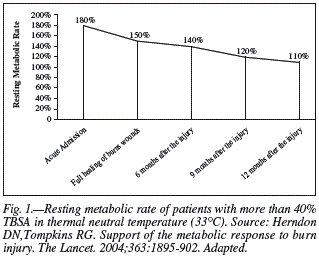
<body><![CDATA[<p><font face="Verdana" size="2">Metabolic response in patients with more than 40% TBSA represents values above 100% of the resting metabolic rate.<sup>10</sup> (<a href="#f1">fig. 1</a>).</font></p>     <p align="center"><a name="f1"> <img border="0" src="/img/revistas/nh/v26n4/05_revision_05_f1.gif" width="319" height="261"></a></p>     <p>&nbsp;</p>     <p><font face="Verdana" size="2"><b>Nutrition</b></font></p>     <p><font face="Verdana" size="2">Currently the concept that nutritional support plays an indisputable role in treating critically ill patient is well-accepted by scientific and health professional societies.<sup>16</sup> The metabolic changes involved in hypermetabolism are designed to supply energy to support immune function, brain activity, wound healing and preservation of body tissues.<sup>17</sup></font></p>     <p><font face="Verdana" size="2">Tissue repair, accentuated and persistent muscle catabolism, and wound losses promote an increased protein needs after thermal injury. A clear recommendation is more problematic, although numerous investigators have discussed the increased protein needs of the thermally injured patient.<sup>18</sup></font></p>     <p><font face="Verdana" size="2">The molecular mechanism of the hypermetabolic response to burn injury is not completely understood. Studies indicate that approximately 60% of the increased metabolic response to burn injury is attributable to an increased protein synthesis, gluconeogenesis, urea production and substrate cycling.<sup>19</sup></font></p>     <p><font face="Verdana" size="2">Nutritional therapy aims: to offer favorable conditions for the establishment of the therapeutic plan, to offer energy, fluids and nutrients in adequate quantities to maintain vital functions and homeostasis, recover the activity immune system, reduce the risks of overfeeding, ensure offers of protein and energy necessary to minimize the protein catabolism and nitrogen loss.<sup>20</sup></font></p>     <p>&nbsp;</p>     <p><font face="Verdana" size="2"><b>Metabolic transformations involving nutrients</b></font></p>     ]]></body>
<body><![CDATA[<p><font face="Verdana" size="2">Exogenous protein, while capable of enhancing protein synthesis, cannot totally abate muscle protein breakdown despite high nitrogen intakes.<sup>21</sup> Protein breakdown may increase two to four times the usual levels, particularly in burn. Liver gluconeogenesis rises from 2.0 to 2.5 mg/kg body weight/min to 4.4 to 5.1 mg/kg body weight/min in the stressed patient.<sup>17,22</sup> Proteins play the most important role throughout the entire wound-healing process.<sup>23</sup></font></p>     <p><font face="Verdana" size="2">Numerous studies have established that hypercatabolic and hypermetabolic states are associated with profound glutamine deprivation. A study conducted by Peng et al. (2005) found that when supplemented at a rate of 0.5 g/kg/day burned patients were capable of reversing the changes made during the burn.<sup>24</sup></font></p>     <p><font face="Verdana" size="2">Hyperglycemia from metabolic perspective results from an increase in hepatic gluconeogenesis and a resistance to the action of insulin to clear glucose into muscle.<sup>25</sup></font></p>     <p><font face="Verdana" size="2">Futile recycling of free fatty acids and triglycerides results of the enhanced lipolysis combined with fat oxidation.<sup>23</sup></font></p>     <p>&nbsp;</p>     <p><font face="Verdana" size="2"><b>Nutritional evaluation</b></font></p>     <p><font face="Verdana" size="2">Assessment is used to identify patients who would benefit from nutritional support and suggests a design for that therapy.<sup>26</sup> In general, the same methods are used for other patients to conduct an assessment of nutritional status of critically ill patients, such as anthropometric and biochemical markers. However, nutritional assessment is limited in the burned patient.<sup>27</sup></font></p>     <p><font face="Verdana" size="2">Most nutritional assessment tools available in a clinical setting are confounded by the physiological elements of the inflammatory response. Despite their limitations, many of markers of nutritional status when used collectively can help in daily monitoring of nutritional support.<sup>21</sup></font></p>     <p><font face="Verdana" size="2">Nutritional risk is defined as &quot;the chances of a better or worse outcome from disease or surgery according to actual or potential nutritional and metabolic status&quot; by the European Society for Clinical Nutrition and Metabolism (ESPEN), Nutritional Risk Screening (NRS) 2002.<sup>28,29</sup> (<a target="_blank" href="/img/revistas/nh/v26n4/05_revision_05_t1.gif">table I</a>).</font></p>     <p><font face="Verdana" size="2">According to the study by Hart et al. (2000) the five most significant variables in determining the magnitude of the catabolic response to severe burn were admission weight, percentage of TBSA burned, metabolic rate expressed as the percentage of the predicted energy expenditure, time from burn to the primary excision of the wound and burn sepsis.<sup>30</sup></font></p>     ]]></body>
<body><![CDATA[<p>&nbsp;</p>     <p><font face="Verdana" size="2"><b>Anthropometric variables</b></font></p>     <p><font face="Verdana" size="2">Body compartments and evolution of hydration status in burn patients invalidate anthropometric variables for nutritional evaluation.<sup>31</sup> Body weight is considered the easiest indicator and perhaps the best to assess the nutritional status.<sup>32</sup> Moreover, presence of edema are common.<sup>27</sup></font></p>     <p><font face="Verdana" size="2">The anatomical point for the anthropometry measurements may be inaccessible and surgical procedures require days of bed rest. Semiologic analysis is important to detect the signs of depletion and some situations must be constantly monitored (<a target="_blank" href="/img/revistas/nh/v26n4/05_revision_05_t2.gif">table II</a>).</font></p>     <p>&nbsp;</p>     <p><font face="Verdana" size="2"><b>Energy requirements</b></font></p>     <p><font face="Verdana" size="2">The size of the burn will proportionally influence the hypermetabolic response, inflammation, catabolism, changes in body composition, hormone production and organic dysfunction.<sup>3,33</sup></font></p>     <p><font face="Verdana" size="2">The increase in energetic expenditure significantly contributes to the development of malnutrition and predicts that all adult patients with over 20% of TBSA must receive specific and individualized nutritional support.<sup>34</sup></font></p>     <p><font face="Verdana" size="2">The majority of mathematical formulas overestimate the nutritional needs of burn patient.<sup>11</sup> It is difficult for a single formula to define individual nutritional needs with satisfactory precision, since all the factors involved in affecting metabolism are very complex. Predetermined equations to estimate energy expenditure are not recommended.<sup>35,36</sup></font></p>     <p><font face="Verdana" size="2">Between 1970 and 1980 the most frequently used formula for estimating the nutritional needs of burn patients was developed by William Curreri.<sup>37,38</sup> In 1976, Pennisi created a more comprehensive formula, designed for adults and children, estimating both the energetic needs in calories and protein needs in grams.<sup>39</sup> Other formulas developed for critically ill and burn patients include Toronto,<sup>40</sup> Schofield,<sup>41</sup> Ireton-Jones,<sup>42</sup> Harris-Benedict,<sup>43,44</sup> and the American Society for Parenteral and Enteral Nutrition (ASPEN) recommendations.<sup>45</sup> The most widely formulas used in children are those of Harris and Benedict, Mayes and the World Health Organization<sup>46</sup> (<a target="_blank" href="/img/revistas/nh/v26n4/05_revision_05_t3.gif">table III</a>).</font></p>     ]]></body>
<body><![CDATA[<p><font face="Verdana" size="2">A study by a group of researchers analyzed the accuracy of these formulas in children comparing caloric expenditure determined by IC. All the formulas overestimate the patient's caloric expenditure, predisposing him to over-nutrition.<sup>47</sup></font></p>     <p><font face="Verdana" size="2">In order to compare the energy requirements suggested by the formulas most commonly used in adults, it was hypothesized a case of burn, and all formulas were employed. Hypothetically, was taken as reference for the use of formulas to a patient following conditions: 30 years old, weighing 72 kg, height 170cm, 40% of TBSA, bedridden, with eight days of burning, body temperature of 37<sup>o</sup>C, breathing spontaneously and with average intake of 2.000 calories per day (<a href="#f2">fig. 2</a>).</font></p>     <p align="center"><a name="f2"> <img border="0" src="/img/revistas/nh/v26n4/05_revision_05_f2.gif" width="381" height="307"></a></p>     <p>&nbsp;</p>     <p><font face="Verdana" size="2">Over-nutrition predisposes the patient to hyperglycemia, overload of the respiratory system, steatosis and hyperosmolarity. When dealing with under-nutrition, the patient could suffer from malnutrition and subsequent reduction of immunocompetence, prolonged dependency on mechanical ventilation and delay in the healing processes, increased risk of infection, morbidity and mortality.<sup>46</sup></font></p>     <p><font face="Verdana" size="2">In 1783, a study on the physiology of breathing -<i>Mémoire sur la Chaleur</i>, published by Lavoisier and Laplace for a periodical on the study of heat, generated the initial concepts of energy metabolism. The study explained the relationship between the inspired oxygen and the heat lost by the body.<sup>48</sup></font></p>     <p><font face="Verdana" size="2">With respect to the study of energy metabolism, Indirect Calorimetry (IC) is the only research method considered gold standard for measuring caloric expenditure.<sup>49</sup> Identifying the patient's metabolic rate is essential to prevent deficits in energetic equilibrium. The regular use of IC supplies adequate nutritional support to the burn patient and is useful in the early detection of under-nutrition and over-nutrition.<sup>50,51</sup></font></p>     <p><font face="Verdana" size="2">Due to its high cost, the use of IC for nutritional evaluation occurs mainly for research and few professionals have access to it. In the past 33 years, about 111 scientific articles reporting on burn injuries and IC have been published. The rate of publications over the last three decades follows an irregular pattern.</font></p>     <p>&nbsp;</p>     <p><font face="Verdana" size="2"><b>Nutritional support</b></font></p>     ]]></body>
<body><![CDATA[<p><font face="Verdana" size="2">The American College of Chest Physicians suggests that enteral nutrition should be initiated as soon as possible after resuscitation.<sup>52</sup> Burn patients frequently receive inadequate nutrition, initially because of hemodynamic instability and paralytic ileus. Eventually, nutrition is still inadequate due to required fasting for surgical procedures or diagnostic exams, the difficulty in chewing solid foods because of facial burns and due to anorexia and vomiting.<sup>53</sup></font></p>     <p><font face="Verdana" size="2">The introduction of nutritional support cannot suppress hypermetabolic and hypercatabolic responses produced by a burn. Nevertheless, simply providing enteral nutrients in the first 24 hours postburn, reduces the caloric deficit.<sup>54</sup></font></p>     <p><font face="Verdana" size="2">A study designed to compare the benefits of enteral nutrition when provided in different amounts was verified that the mortality of patients in the group receiving enteral nutrition in the proportion of 30 kcal/kg/day or more had lower mortality rates.<sup>32,55</sup></font></p>     <p><font face="Verdana" size="2">In general rule critically ill adults require around 2 g of protein/kg/day or approximately 15% to 20% of total caloric intake in 24 hours.<sup>56</sup> The nutrients often used for Pharmacological nutrition in burned patients are glutamine, arginine and omega-3. These components, when supplied in quantities 2-7 times higher than those commonly eaten by healthy people, appear to have a beneficial effect on the pathophysiological changes induced by burns.<sup>57</sup></font></p>     <p>&nbsp;</p>     <p><font face="Verdana" size="2"><b>Discussion</b></font></p>     <p><font face="Verdana" size="2">Nutritional support has become a major focus in the care of severely burned patients to overcome clinical events.<sup>55</sup> Malnutrition is an increasing problem in critically ill adults and can have a profound impact on outcomes. Given the ongoing challenges associated with nutrition screening, assessment, and support processes, this situation is perhaps not surprising. There is an unacceptably high prevalence of malnutrition in critically ill adults.<sup>52</sup></font></p>     <p><font face="Verdana" size="2">Nutrition support may reduce morbidity and mortality after severe thermal injury, but excessive caloric and protein intakes cannot overcome the catabolic response to critical illness.<sup>18</sup></font></p>     <p><font face="Verdana" size="2">Some patients do not exhibit the expected hypermetabolic response from their wounds. There are other individual factors that interfere with this response and advance the patient's progress to hypometabolism. The chief factors responsible for this unusual response are: the use of analgesia and sedatives, the presence of malnutrition, hypothyroidism, shock or hemodynamic instability, cellular bio-energetic failure, hypothermia and advanced hepatitis.<sup>58</sup></font></p>     <p><font face="Verdana" size="2">This unusual response of some patient's causes an increase in the risk of developing clinical complications related to over-nutrition, because this picture is &quot;masked&quot; by typical hypermetabolism of burn patients. Accurate determination of resting energy expenditure is necessary in patients receiving nutritional support to ensure that their energy needs are met and to avoid the complications associated with over or underfeeding.<sup>59</sup></font></p>     ]]></body>
<body><![CDATA[<p><font face="Verdana" size="2">Determining nutritional needs in burns becomes a challenge for nutritionists. The valorization of metabolic aspects of critical ill patient should be promoted with the inclusion of IC equipment. Nutritional evaluation should include a specific investigation, considering the clinical condition and patient's exposure to situations that may interfere with nutritional support.</font></p>     <p><font face="Verdana" size="2">In clinical practice, the burned patient is constantly exposed to periods of fasting, mostly due execution of examinations or surgical procedures. However, what differs this from other patients in intensive care is the constant need to make bandages. The frequency of these procedures can be daily and also require fasting. Moreover, it is widely described in literature that some inflammatory markers induced anorexia in patients submitted to metabolic stress.<sup>60,61</sup></font></p>     <p><font face="Verdana" size="2">Keeping patients &quot;fasted&quot; to avoid aspiration complications when attempting extubation and a variety of other reasons generally delay enteral feeding. Several studies and reviews have shown that only about 75% of prescribed nutrients are actually delivered, with substantial variability.<sup>62</sup></font></p>     <p><font face="Verdana" size="2">Even in a simple fasting, as a prolonged fasting, the body of an average adult loses about 60 to 70 g of protein (240 to 280 g of muscle tissue) per day. In severe trauma or sepsis, this loss can reach 150 to 200 g (600 to 1,000 g of muscle tissue) per day.<sup>27</sup></font></p>     <p><font face="Verdana" size="2">The constant development of nutritional assessment reveals a promising future for the discipline. The results of these investigations will allow professionals in the field to broaden knowledge and devise new treatment strategies, improving the quality of care. Nutrition occupies a central role in our lives and for this reason it should be approached seriously, especially in pathological states.</font></p>     <p>&nbsp;</p>     <p><font face="Verdana" size="2"><b>Conclusion</b></font></p>     <p><font face="Verdana" size="2">There are lists of possible markers for nutritional assessment, but a minimum set of standards should be established. The use of IC is crucial to ensuring the safety of the nutritional support of burn patients and this should be widely encouraged.</font></p>     <p>&nbsp;</p>     <p><font face="Verdana" size="2"><b>References</b></font></p>     ]]></body>
<body><![CDATA[<!-- ref --><p><font face="Verdana" size="2">1.  Boucher J, Cynober L. Protein metabolism and therapy in burn injury. <i>Ann Nutr Metab</i> 1997; 41: 69-82.    &nbsp;&nbsp;&nbsp;&nbsp;&nbsp;&nbsp;&nbsp;&nbsp;[&#160;<a href="javascript:void(0);" onclick="javascript: window.open('/scielo.php?script=sci_nlinks&ref=3606311&pid=S0212-1611201100040000500001&lng=','','width=640,height=500,resizable=yes,scrollbars=1,menubar=yes,');">Links</a>&#160;]<!-- end-ref --></font></p>    <!-- ref --><p><font face="Verdana" size="2">2. Waymack JP, Jenkins M, Gottschlich M, Alexander JW, Warden GD. Effect of ibuprofen on the postburn hypermetabolic response: a case report. <i>J Burn Care Rehabil</i> 1990; 11: 340-2.    &nbsp;&nbsp;&nbsp;&nbsp;&nbsp;&nbsp;&nbsp;&nbsp;[&#160;<a href="javascript:void(0);" onclick="javascript: window.open('/scielo.php?script=sci_nlinks&ref=3606313&pid=S0212-1611201100040000500002&lng=','','width=640,height=500,resizable=yes,scrollbars=1,menubar=yes,');">Links</a>&#160;]<!-- end-ref --></font></p>    <!-- ref --><p><font face="Verdana" size="2">3. Jeschke MG, Mlcak RP, Finnerty CC, Norbury WB, Gauglitz GG, Kulp GA et al. Burn size determines the inflammatory and hypermetabolic response. <i>Crit Care</i> 2007; 11: R90.    &nbsp;&nbsp;&nbsp;&nbsp;&nbsp;&nbsp;&nbsp;&nbsp;[&#160;<a href="javascript:void(0);" onclick="javascript: window.open('/scielo.php?script=sci_nlinks&ref=3606315&pid=S0212-1611201100040000500003&lng=','','width=640,height=500,resizable=yes,scrollbars=1,menubar=yes,');">Links</a>&#160;]<!-- end-ref --></font></p>    <!-- ref --><p><font face="Verdana" size="2">4. Hart DW, Herndon DN, Klein G, Lee SB, Celis M, Mohan S et al. Attenuation of Posttraumatic Muscle Catabolism and Osteopenia by Long-Term Growth Hormone Therapy. <i>Ann Surg</i> 2001; 233: 827-34.    &nbsp;&nbsp;&nbsp;&nbsp;&nbsp;&nbsp;&nbsp;&nbsp;[&#160;<a href="javascript:void(0);" onclick="javascript: window.open('/scielo.php?script=sci_nlinks&ref=3606317&pid=S0212-1611201100040000500004&lng=','','width=640,height=500,resizable=yes,scrollbars=1,menubar=yes,');">Links</a>&#160;]<!-- end-ref --></font></p>    <!-- ref --><p><font face="Verdana" size="2">5. Ramakrishnan MK, Sankar J, Venkatraman J, Ramesh J. Infections in burn patients: experience in a tertiary care hospital. <i>Burns</i> 2006; 32: 594-6.    &nbsp;&nbsp;&nbsp;&nbsp;&nbsp;&nbsp;&nbsp;&nbsp;[&#160;<a href="javascript:void(0);" onclick="javascript: window.open('/scielo.php?script=sci_nlinks&ref=3606319&pid=S0212-1611201100040000500005&lng=','','width=640,height=500,resizable=yes,scrollbars=1,menubar=yes,');">Links</a>&#160;]<!-- end-ref --></font></p>    ]]></body>
<body><![CDATA[<!-- ref --><p><font face="Verdana" size="2">6. Saffle RJ. What's new in general surgery: burns and metabolism. <i>J Am Coll Surg</i> 2003; 196: 267-89.    &nbsp;&nbsp;&nbsp;&nbsp;&nbsp;&nbsp;&nbsp;&nbsp;[&#160;<a href="javascript:void(0);" onclick="javascript: window.open('/scielo.php?script=sci_nlinks&ref=3606321&pid=S0212-1611201100040000500006&lng=','','width=640,height=500,resizable=yes,scrollbars=1,menubar=yes,');">Links</a>&#160;]<!-- end-ref --></font></p>    <!-- ref --><p><font face="Verdana" size="2">7. Miles JM. Energy expenditure in hospitalized patients: implications for nutritional support. <i>Mayo Clin Proc</i> 2006; 81: 809-16.    &nbsp;&nbsp;&nbsp;&nbsp;&nbsp;&nbsp;&nbsp;&nbsp;[&#160;<a href="javascript:void(0);" onclick="javascript: window.open('/scielo.php?script=sci_nlinks&ref=3606323&pid=S0212-1611201100040000500007&lng=','','width=640,height=500,resizable=yes,scrollbars=1,menubar=yes,');">Links</a>&#160;]<!-- end-ref --></font></p>    <!-- ref --><p><font face="Verdana" size="2">8. Pereira JL, Vázquez L, Gámez-Cia MG, Parejo M, Mallen JM, Fraile J et al. Evaluation of energy metabolism in burn patients: indirect calorimetry predictive equations. <i>Nutr Hosp</i> 1997; 12: 147-53.    &nbsp;&nbsp;&nbsp;&nbsp;&nbsp;&nbsp;&nbsp;&nbsp;[&#160;<a href="javascript:void(0);" onclick="javascript: window.open('/scielo.php?script=sci_nlinks&ref=3606325&pid=S0212-1611201100040000500008&lng=','','width=640,height=500,resizable=yes,scrollbars=1,menubar=yes,');">Links</a>&#160;]<!-- end-ref --></font></p>    <!-- ref --><p><font face="Verdana" size="2">9. Tredget EE, Yu YM. The Metabolic Effects of Thermal Injury. <i>World J Surg</i> 1992; 16: 68-79.    &nbsp;&nbsp;&nbsp;&nbsp;&nbsp;&nbsp;&nbsp;&nbsp;[&#160;<a href="javascript:void(0);" onclick="javascript: window.open('/scielo.php?script=sci_nlinks&ref=3606327&pid=S0212-1611201100040000500009&lng=','','width=640,height=500,resizable=yes,scrollbars=1,menubar=yes,');">Links</a>&#160;]<!-- end-ref --></font></p>    <!-- ref --><p><font face="Verdana" size="2">10. Herndon DN, Tompkins RG. Support of the metabolic response to burn injury. <i>Lancet</i> 2004; 363: 1895-902.    &nbsp;&nbsp;&nbsp;&nbsp;&nbsp;&nbsp;&nbsp;&nbsp;[&#160;<a href="javascript:void(0);" onclick="javascript: window.open('/scielo.php?script=sci_nlinks&ref=3606329&pid=S0212-1611201100040000500010&lng=','','width=640,height=500,resizable=yes,scrollbars=1,menubar=yes,');">Links</a>&#160;]<!-- end-ref --></font></p>    ]]></body>
<body><![CDATA[<!-- ref --><p><font face="Verdana" size="2">11. Dickerson RN, Gervasio JM, Riley ML, Scott BJ, Daugherty SA, Koh YO. Accuracy of predictive methods to estimate resting energy expenditure of thermally-injured patients. <i>JPEN J Parenter Enteral Nutr</i> 2002; 26: 17-29.    &nbsp;&nbsp;&nbsp;&nbsp;&nbsp;&nbsp;&nbsp;&nbsp;[&#160;<a href="javascript:void(0);" onclick="javascript: window.open('/scielo.php?script=sci_nlinks&ref=3606331&pid=S0212-1611201100040000500011&lng=','','width=640,height=500,resizable=yes,scrollbars=1,menubar=yes,');">Links</a>&#160;]<!-- end-ref --></font></p>    <!-- ref --><p><font face="Verdana" size="2">12. Hart DW, Wolf SE, Mlcak R, Chinkes DL, Ramzy PI, Obeng MK et al. Persistence of muscle catabolism after severe burn. <i>Surgery</i> 2000; 128: 312-9.    &nbsp;&nbsp;&nbsp;&nbsp;&nbsp;&nbsp;&nbsp;&nbsp;[&#160;<a href="javascript:void(0);" onclick="javascript: window.open('/scielo.php?script=sci_nlinks&ref=3606333&pid=S0212-1611201100040000500012&lng=','','width=640,height=500,resizable=yes,scrollbars=1,menubar=yes,');">Links</a>&#160;]<!-- end-ref --></font></p>    <!-- ref --><p><font face="Verdana" size="2">13. De-Souza DA, Greene LJ. Pharmacological Nutrition After Burn Injury. <i>The Journal of Nutrition</i> 1998; 128: 797-803.    &nbsp;&nbsp;&nbsp;&nbsp;&nbsp;&nbsp;&nbsp;&nbsp;[&#160;<a href="javascript:void(0);" onclick="javascript: window.open('/scielo.php?script=sci_nlinks&ref=3606335&pid=S0212-1611201100040000500013&lng=','','width=640,height=500,resizable=yes,scrollbars=1,menubar=yes,');">Links</a>&#160;]<!-- end-ref --></font></p>    <!-- ref --><p><font face="Verdana" size="2">14. Barbosa ASAA, Calvi AS, Pereira PCM. Nutritional, immunological and microbiological profiles of burn patients. <i>J Venom Anim Incl Trop Dis</i> 2009; 15: 768-77.    &nbsp;&nbsp;&nbsp;&nbsp;&nbsp;&nbsp;&nbsp;&nbsp;[&#160;<a href="javascript:void(0);" onclick="javascript: window.open('/scielo.php?script=sci_nlinks&ref=3606337&pid=S0212-1611201100040000500014&lng=','','width=640,height=500,resizable=yes,scrollbars=1,menubar=yes,');">Links</a>&#160;]<!-- end-ref --></font></p>    <!-- ref --><p><font face="Verdana" size="2">15. Nguyen T. Current Treatment of Severely Burned Patients. <i>Ann Surg</i> 1995; 223: 14-25.    &nbsp;&nbsp;&nbsp;&nbsp;&nbsp;&nbsp;&nbsp;&nbsp;[&#160;<a href="javascript:void(0);" onclick="javascript: window.open('/scielo.php?script=sci_nlinks&ref=3606339&pid=S0212-1611201100040000500015&lng=','','width=640,height=500,resizable=yes,scrollbars=1,menubar=yes,');">Links</a>&#160;]<!-- end-ref --></font></p>    ]]></body>
<body><![CDATA[<!-- ref --><p><font face="Verdana" size="2">16. Mateos AGL, Aguilar TCF, Malpica AB. Multiple trauma and burns. <i>Nutr Hosp</i> 2000; 15 (Suppl. 1): 121-7.    &nbsp;&nbsp;&nbsp;&nbsp;&nbsp;&nbsp;&nbsp;&nbsp;[&#160;<a href="javascript:void(0);" onclick="javascript: window.open('/scielo.php?script=sci_nlinks&ref=3606341&pid=S0212-1611201100040000500016&lng=','','width=640,height=500,resizable=yes,scrollbars=1,menubar=yes,');">Links</a>&#160;]<!-- end-ref --></font></p>    <!-- ref --><p><font face="Verdana" size="2">17. Cartwright MM. The metabolic response to stress: a case of complex nutrition support management. <i>Crit Care Nurs Clin N Am </i>2004; 16: 467-87.    &nbsp;&nbsp;&nbsp;&nbsp;&nbsp;&nbsp;&nbsp;&nbsp;[&#160;<a href="javascript:void(0);" onclick="javascript: window.open('/scielo.php?script=sci_nlinks&ref=3606343&pid=S0212-1611201100040000500017&lng=','','width=640,height=500,resizable=yes,scrollbars=1,menubar=yes,');">Links</a>&#160;]<!-- end-ref --></font></p>    <!-- ref --><p><font face="Verdana" size="2">18. Dickerson RN. Estimating Energy and Protein Requirements of Thermally Injured Patients: Art or Science? <i>Nutrition</i> 2002; 18 (5): 439-42.    &nbsp;&nbsp;&nbsp;&nbsp;&nbsp;&nbsp;&nbsp;&nbsp;[&#160;<a href="javascript:void(0);" onclick="javascript: window.open('/scielo.php?script=sci_nlinks&ref=3606345&pid=S0212-1611201100040000500018&lng=','','width=640,height=500,resizable=yes,scrollbars=1,menubar=yes,');">Links</a>&#160;]<!-- end-ref --></font></p>    <!-- ref --><p><font face="Verdana" size="2">19. Yu YM, Tompkins RG, Ryan CM, Young VR. The metabolic basis of the increase in energy expenditure in severely burned patients. <i>JPEN J Parenter Enteral Nutr</i> 1999; 23: 160-8.    &nbsp;&nbsp;&nbsp;&nbsp;&nbsp;&nbsp;&nbsp;&nbsp;[&#160;<a href="javascript:void(0);" onclick="javascript: window.open('/scielo.php?script=sci_nlinks&ref=3606347&pid=S0212-1611201100040000500019&lng=','','width=640,height=500,resizable=yes,scrollbars=1,menubar=yes,');">Links</a>&#160;]<!-- end-ref --></font></p>    <!-- ref --><p><font face="Verdana" size="2">20. Medeiros NI, Schott E, Silva R, Czarnobay SA. Efeitos da terapia nutricional enteral em pacientes queimados atendidos em hospital público de Joinville/SC. <i>Rev Bras Queimaduras</i> 2009; 8 (3): 97-100.    &nbsp;&nbsp;&nbsp;&nbsp;&nbsp;&nbsp;&nbsp;&nbsp;[&#160;<a href="javascript:void(0);" onclick="javascript: window.open('/scielo.php?script=sci_nlinks&ref=3606349&pid=S0212-1611201100040000500020&lng=','','width=640,height=500,resizable=yes,scrollbars=1,menubar=yes,');">Links</a>&#160;]<!-- end-ref --></font></p>    ]]></body>
<body><![CDATA[<!-- ref --><p><font face="Verdana" size="2">21. Prelack K, Dylewski M, Sheridan RL. Practical guidelines for nutritional management of burn injury and recovery. <i>Burns</i> 2007; 33: 14-24.    &nbsp;&nbsp;&nbsp;&nbsp;&nbsp;&nbsp;&nbsp;&nbsp;[&#160;<a href="javascript:void(0);" onclick="javascript: window.open('/scielo.php?script=sci_nlinks&ref=3606351&pid=S0212-1611201100040000500021&lng=','','width=640,height=500,resizable=yes,scrollbars=1,menubar=yes,');">Links</a>&#160;]<!-- end-ref --></font></p>    <!-- ref --><p><font face="Verdana" size="2">22. Piccolo NS, Correa MD, Amaral CR, Leonardi DF, Novaes FN, Prestes MA et al. Projeto Diretrizes Queimaduras. Associação Médica Brasileira e Conselho Federal de Medicina, Sociedade Brasileira de Cirurgia Plástica, Brasil. 2002: 3-18.    &nbsp;&nbsp;&nbsp;&nbsp;&nbsp;&nbsp;&nbsp;&nbsp;[&#160;<a href="javascript:void(0);" onclick="javascript: window.open('/scielo.php?script=sci_nlinks&ref=3606353&pid=S0212-1611201100040000500022&lng=','','width=640,height=500,resizable=yes,scrollbars=1,menubar=yes,');">Links</a>&#160;]<!-- end-ref --></font></p>    <!-- ref --><p><font face="Verdana" size="2">23. Wild T, Rahbarnia A, Kellner M, Sobotka, Eberlein T. Basics in nutrition and wound healing. <i>Nutrition</i> 2010; 26: 862-6.    &nbsp;&nbsp;&nbsp;&nbsp;&nbsp;&nbsp;&nbsp;&nbsp;[&#160;<a href="javascript:void(0);" onclick="javascript: window.open('/scielo.php?script=sci_nlinks&ref=3606355&pid=S0212-1611201100040000500023&lng=','','width=640,height=500,resizable=yes,scrollbars=1,menubar=yes,');">Links</a>&#160;]<!-- end-ref --></font></p>    <!-- ref --><p><font face="Verdana" size="2">24. Peng X, Yan H, You Z, Wang P, Wang S. Clinical and protein metabolic efficacy of glutamine granules-supplemented enteral nutrition in severely burned patients. <i>Burns</i> 2005; 31: 342-6.    &nbsp;&nbsp;&nbsp;&nbsp;&nbsp;&nbsp;&nbsp;&nbsp;[&#160;<a href="javascript:void(0);" onclick="javascript: window.open('/scielo.php?script=sci_nlinks&ref=3606357&pid=S0212-1611201100040000500024&lng=','','width=640,height=500,resizable=yes,scrollbars=1,menubar=yes,');">Links</a>&#160;]<!-- end-ref --></font></p>    <!-- ref --><p><font face="Verdana" size="2">25. Jahoor F, Herndon DN, Wolfe RR. Role of insulin and glucagon in the response of glucose and alanine kinetics in burn-injured patients. <i>J Clin Invest</i> 1986; 78: 807-14.    &nbsp;&nbsp;&nbsp;&nbsp;&nbsp;&nbsp;&nbsp;&nbsp;[&#160;<a href="javascript:void(0);" onclick="javascript: window.open('/scielo.php?script=sci_nlinks&ref=3606359&pid=S0212-1611201100040000500025&lng=','','width=640,height=500,resizable=yes,scrollbars=1,menubar=yes,');">Links</a>&#160;]<!-- end-ref --></font></p>    ]]></body>
<body><![CDATA[<!-- ref --><p><font face="Verdana" size="2">26. Sue Slone D. Nutritional support of the critically ill and injured patient. <i>Crit Care Clin</i> 2004; 20: 135-57.    &nbsp;&nbsp;&nbsp;&nbsp;&nbsp;&nbsp;&nbsp;&nbsp;[&#160;<a href="javascript:void(0);" onclick="javascript: window.open('/scielo.php?script=sci_nlinks&ref=3606361&pid=S0212-1611201100040000500026&lng=','','width=640,height=500,resizable=yes,scrollbars=1,menubar=yes,');">Links</a>&#160;]<!-- end-ref --></font></p>    <!-- ref --><p><font face="Verdana" size="2">27. Maicá AO, Schweigert  ID. Avaliação nutricional em pacientes graves. <i>Rev Bras Terap Int</i> 2008; 20 (3): 286-95.    &nbsp;&nbsp;&nbsp;&nbsp;&nbsp;&nbsp;&nbsp;&nbsp;[&#160;<a href="javascript:void(0);" onclick="javascript: window.open('/scielo.php?script=sci_nlinks&ref=3606363&pid=S0212-1611201100040000500027&lng=','','width=640,height=500,resizable=yes,scrollbars=1,menubar=yes,');">Links</a>&#160;]<!-- end-ref --></font></p>    <!-- ref --><p><font face="Verdana" size="2">28. Fontoura CSM, Cruz DO, Londero LG, Vieira RM. Avaliação nutricional de paciente crítico. <i>Rev Bras Ter Int</i> 2006; 18 (3): 298-306.    &nbsp;&nbsp;&nbsp;&nbsp;&nbsp;&nbsp;&nbsp;&nbsp;[&#160;<a href="javascript:void(0);" onclick="javascript: window.open('/scielo.php?script=sci_nlinks&ref=3606365&pid=S0212-1611201100040000500028&lng=','','width=640,height=500,resizable=yes,scrollbars=1,menubar=yes,');">Links</a>&#160;]<!-- end-ref --></font></p>    <!-- ref --><p><font face="Verdana" size="2">29. Lochs H, Allison SP, Meier R, Pirlich M, Kondrup J, Schneider S et al. Introductory to the ESPEN Guidelines on Enteral Nutrition: Terminology, Definitions and General Topics. <i>Clin Nutr</i> 2006; 25: 180-6.    &nbsp;&nbsp;&nbsp;&nbsp;&nbsp;&nbsp;&nbsp;&nbsp;[&#160;<a href="javascript:void(0);" onclick="javascript: window.open('/scielo.php?script=sci_nlinks&ref=3606367&pid=S0212-1611201100040000500029&lng=','','width=640,height=500,resizable=yes,scrollbars=1,menubar=yes,');">Links</a>&#160;]<!-- end-ref --></font></p>    <!-- ref --><p><font face="Verdana" size="2">30. Hart DW, Wolf SE, Chinkes DL, Gore DC, Mlcak RP,  Beauford RB et al. Determinants of Skeletal Muscle Catabolism After Severe Burn. <i>Ann Surg</i> 2000; 232 (4): 455-65.    &nbsp;&nbsp;&nbsp;&nbsp;&nbsp;&nbsp;&nbsp;&nbsp;[&#160;<a href="javascript:void(0);" onclick="javascript: window.open('/scielo.php?script=sci_nlinks&ref=3606369&pid=S0212-1611201100040000500030&lng=','','width=640,height=500,resizable=yes,scrollbars=1,menubar=yes,');">Links</a>&#160;]<!-- end-ref --></font></p>    ]]></body>
<body><![CDATA[<!-- ref --><p><font face="Verdana" size="2">31. González JCM, Culebras-Fernández JM, Mateos AGL. Recomendaciones para la valoración nutricional del paciente crítico. <i>Rev Méd Chile</i> 2006; 134: 1049-56.    &nbsp;&nbsp;&nbsp;&nbsp;&nbsp;&nbsp;&nbsp;&nbsp;[&#160;<a href="javascript:void(0);" onclick="javascript: window.open('/scielo.php?script=sci_nlinks&ref=3606371&pid=S0212-1611201100040000500031&lng=','','width=640,height=500,resizable=yes,scrollbars=1,menubar=yes,');">Links</a>&#160;]<!-- end-ref --></font></p>    <!-- ref --><p><font face="Verdana" size="2">32. Chan MM, Chan GM. Nutritional therapy for burns in children and adults. <i>Nutrition</i> 2009; 25: 261-9.    &nbsp;&nbsp;&nbsp;&nbsp;&nbsp;&nbsp;&nbsp;&nbsp;[&#160;<a href="javascript:void(0);" onclick="javascript: window.open('/scielo.php?script=sci_nlinks&ref=3606373&pid=S0212-1611201100040000500032&lng=','','width=640,height=500,resizable=yes,scrollbars=1,menubar=yes,');">Links</a>&#160;]<!-- end-ref --></font></p>    <!-- ref --><p><font face="Verdana" size="2">33. Grau Carmona T, Ferrari MDR, Labajo DG. Nutrición artificial en el paciente quemado. <i>Nutr Hosp</i> 2005; XX (Suppl. 2): 44-6.    &nbsp;&nbsp;&nbsp;&nbsp;&nbsp;&nbsp;&nbsp;&nbsp;[&#160;<a href="javascript:void(0);" onclick="javascript: window.open('/scielo.php?script=sci_nlinks&ref=3606375&pid=S0212-1611201100040000500033&lng=','','width=640,height=500,resizable=yes,scrollbars=1,menubar=yes,');">Links</a>&#160;]<!-- end-ref --></font></p>    <!-- ref --><p><font face="Verdana" size="2">34. Deitch EA. Nutritional support of the burn patients. <i>Crit Care Clin</i> 1995; 11: 735-50.    &nbsp;&nbsp;&nbsp;&nbsp;&nbsp;&nbsp;&nbsp;&nbsp;[&#160;<a href="javascript:void(0);" onclick="javascript: window.open('/scielo.php?script=sci_nlinks&ref=3606377&pid=S0212-1611201100040000500034&lng=','','width=640,height=500,resizable=yes,scrollbars=1,menubar=yes,');">Links</a>&#160;]<!-- end-ref --></font></p>    <!-- ref --><p><font face="Verdana" size="2">35. Diener JRC. Calorimetria indireta. <i>Rev Ass Med Brasil</i> 1997; 43: 245-53.    &nbsp;&nbsp;&nbsp;&nbsp;&nbsp;&nbsp;&nbsp;&nbsp;[&#160;<a href="javascript:void(0);" onclick="javascript: window.open('/scielo.php?script=sci_nlinks&ref=3606379&pid=S0212-1611201100040000500035&lng=','','width=640,height=500,resizable=yes,scrollbars=1,menubar=yes,');">Links</a>&#160;]<!-- end-ref --></font></p>    ]]></body>
<body><![CDATA[<!-- ref --><p><font face="Verdana" size="2">36. Mann S, Wenstenskow DR, Houtchens BA. Measured and predicted caloric expenditure in the acutely ill. <i>Crit Care Med</i> 1985; 13: 173-7.    &nbsp;&nbsp;&nbsp;&nbsp;&nbsp;&nbsp;&nbsp;&nbsp;[&#160;<a href="javascript:void(0);" onclick="javascript: window.open('/scielo.php?script=sci_nlinks&ref=3606381&pid=S0212-1611201100040000500036&lng=','','width=640,height=500,resizable=yes,scrollbars=1,menubar=yes,');">Links</a>&#160;]<!-- end-ref --></font></p>    <!-- ref --><p><font face="Verdana" size="2">37. Purdue GF. American Burn Association Presidential Address 2006 on Nutrition: Yesterday, Today, and Tomorrow. <i>J Burn Care Res</i> 2007; 28: 1-5.    &nbsp;&nbsp;&nbsp;&nbsp;&nbsp;&nbsp;&nbsp;&nbsp;[&#160;<a href="javascript:void(0);" onclick="javascript: window.open('/scielo.php?script=sci_nlinks&ref=3606383&pid=S0212-1611201100040000500037&lng=','','width=640,height=500,resizable=yes,scrollbars=1,menubar=yes,');">Links</a>&#160;]<!-- end-ref --></font></p>    <!-- ref --><p><font face="Verdana" size="2">38. Curreri PW, Richmond D, Marvin J, Baxter CR. Dietary requirements of patients with major burns. <i>J Am Diet Assoc</i> 1974; 65: 415-7.    &nbsp;&nbsp;&nbsp;&nbsp;&nbsp;&nbsp;&nbsp;&nbsp;[&#160;<a href="javascript:void(0);" onclick="javascript: window.open('/scielo.php?script=sci_nlinks&ref=3606385&pid=S0212-1611201100040000500038&lng=','','width=640,height=500,resizable=yes,scrollbars=1,menubar=yes,');">Links</a>&#160;]<!-- end-ref --></font></p>    <!-- ref --><p><font face="Verdana" size="2">39. Pennisi VM. Monitoring the nutritional care of burned patients. <i>J Am Diet Assoc</i> 1976; 69: 531-3.    &nbsp;&nbsp;&nbsp;&nbsp;&nbsp;&nbsp;&nbsp;&nbsp;[&#160;<a href="javascript:void(0);" onclick="javascript: window.open('/scielo.php?script=sci_nlinks&ref=3606387&pid=S0212-1611201100040000500039&lng=','','width=640,height=500,resizable=yes,scrollbars=1,menubar=yes,');">Links</a>&#160;]<!-- end-ref --></font></p>    <!-- ref --><p><font face="Verdana" size="2">40. Allard JP, Pichard C, Hoshino E, Stechison S, Fareholm L, Peters WJ et al. Validation of a new formula for calculating energy requirements of burns patients. <i>JPEN J Parenter Enteral Nutr</i> 1990; 14: 115-8.    &nbsp;&nbsp;&nbsp;&nbsp;&nbsp;&nbsp;&nbsp;&nbsp;[&#160;<a href="javascript:void(0);" onclick="javascript: window.open('/scielo.php?script=sci_nlinks&ref=3606389&pid=S0212-1611201100040000500040&lng=','','width=640,height=500,resizable=yes,scrollbars=1,menubar=yes,');">Links</a>&#160;]<!-- end-ref --></font></p>    ]]></body>
<body><![CDATA[<!-- ref --><p><font face="Verdana" size="2">41. Schofield WN. Predicting basal metabolic rate, new standards and review of previous work. Human Nutrition. <i>Clinical Nutrition</i> 1985; 39 (Suppl. 1): 5-41.    &nbsp;&nbsp;&nbsp;&nbsp;&nbsp;&nbsp;&nbsp;&nbsp;[&#160;<a href="javascript:void(0);" onclick="javascript: window.open('/scielo.php?script=sci_nlinks&ref=3606391&pid=S0212-1611201100040000500041&lng=','','width=640,height=500,resizable=yes,scrollbars=1,menubar=yes,');">Links</a>&#160;]<!-- end-ref --></font></p>    <!-- ref --><p><font face="Verdana" size="2">42. Ireton-Jones CS, Jones JD. Should predictive equations or indirect calorimetry be used to design nutrition support regimens? <i>Nutrition in Clinical Practice</i> 1998; 13: 141-5.    &nbsp;&nbsp;&nbsp;&nbsp;&nbsp;&nbsp;&nbsp;&nbsp;[&#160;<a href="javascript:void(0);" onclick="javascript: window.open('/scielo.php?script=sci_nlinks&ref=3606393&pid=S0212-1611201100040000500042&lng=','','width=640,height=500,resizable=yes,scrollbars=1,menubar=yes,');">Links</a>&#160;]<!-- end-ref --></font></p>    <!-- ref --><p><font face="Verdana" size="2">43. Harris JA, Benedict FG. A Biometric Study of Basal Metabolism in Man. Washington DC: Carnegie Institution of Washington, 1919, Publication n. 279.    &nbsp;&nbsp;&nbsp;&nbsp;&nbsp;&nbsp;&nbsp;&nbsp;[&#160;<a href="javascript:void(0);" onclick="javascript: window.open('/scielo.php?script=sci_nlinks&ref=3606395&pid=S0212-1611201100040000500043&lng=','','width=640,height=500,resizable=yes,scrollbars=1,menubar=yes,');">Links</a>&#160;]<!-- end-ref --></font></p>    <!-- ref --><p><font face="Verdana" size="2">44. Brito S, Dreyer E. Terapia Nutricional: Condutas do Nutricionista. <i>UNICAMP</i>, 2003.    &nbsp;&nbsp;&nbsp;&nbsp;&nbsp;&nbsp;&nbsp;&nbsp;[&#160;<a href="javascript:void(0);" onclick="javascript: window.open('/scielo.php?script=sci_nlinks&ref=3606397&pid=S0212-1611201100040000500044&lng=','','width=640,height=500,resizable=yes,scrollbars=1,menubar=yes,');">Links</a>&#160;]<!-- end-ref --></font></p>    <!-- ref --><p><font face="Verdana" size="2">45. Guidelines for the use of parenteral and enteral nutrition in adult and pediatric patients. <i>JPEN</i> 2002; 26 (Suppl. 1): 1SA-138SA.    &nbsp;&nbsp;&nbsp;&nbsp;&nbsp;&nbsp;&nbsp;&nbsp;[&#160;<a href="javascript:void(0);" onclick="javascript: window.open('/scielo.php?script=sci_nlinks&ref=3606399&pid=S0212-1611201100040000500045&lng=','','width=640,height=500,resizable=yes,scrollbars=1,menubar=yes,');">Links</a>&#160;]<!-- end-ref --></font></p>    ]]></body>
<body><![CDATA[<!-- ref --><p><font face="Verdana" size="2">46. Schulman CI, Ivascu FA. Nutritional and Metabolic Consequences in the Pediatric Burn Patient. <i>The J Craniofacial Surg</i> 2008; 19: 891-4.    &nbsp;&nbsp;&nbsp;&nbsp;&nbsp;&nbsp;&nbsp;&nbsp;[&#160;<a href="javascript:void(0);" onclick="javascript: window.open('/scielo.php?script=sci_nlinks&ref=3606401&pid=S0212-1611201100040000500046&lng=','','width=640,height=500,resizable=yes,scrollbars=1,menubar=yes,');">Links</a>&#160;]<!-- end-ref --></font></p>    <!-- ref --><p><font face="Verdana" size="2">47. Liusuwan RA, Palmieri TL, Kinoshita L, Greenhalgh DG. Comparison of measured resting energy expenditure versus predictive equations in pediatric burn patients. <i>J Burn Care Rehabil</i> 2005; 26: 464-70.    &nbsp;&nbsp;&nbsp;&nbsp;&nbsp;&nbsp;&nbsp;&nbsp;[&#160;<a href="javascript:void(0);" onclick="javascript: window.open('/scielo.php?script=sci_nlinks&ref=3606403&pid=S0212-1611201100040000500047&lng=','','width=640,height=500,resizable=yes,scrollbars=1,menubar=yes,');">Links</a>&#160;]<!-- end-ref --></font></p>    <!-- ref --><p><font face="Verdana" size="2">48. Passos JC. Os experimentos de Joule e a primeira lei da termodinámica. <i>Rev Bras Ens Fisic</i> 2009; 31: 3602-9.    &nbsp;&nbsp;&nbsp;&nbsp;&nbsp;&nbsp;&nbsp;&nbsp;[&#160;<a href="javascript:void(0);" onclick="javascript: window.open('/scielo.php?script=sci_nlinks&ref=3606405&pid=S0212-1611201100040000500048&lng=','','width=640,height=500,resizable=yes,scrollbars=1,menubar=yes,');">Links</a>&#160;]<!-- end-ref --></font></p>    <!-- ref --><p><font face="Verdana" size="2">49. Suman OE, Mlcak RP, Chinkes DL, Herndon DN. Resting energy expenditure in severely burned children: analysis of agreement between indirect calorimetry and prediction equations using the Bland-Altman method. <i>Burns</i> 2006; 32: 335-42.    &nbsp;&nbsp;&nbsp;&nbsp;&nbsp;&nbsp;&nbsp;&nbsp;[&#160;<a href="javascript:void(0);" onclick="javascript: window.open('/scielo.php?script=sci_nlinks&ref=3606407&pid=S0212-1611201100040000500049&lng=','','width=640,height=500,resizable=yes,scrollbars=1,menubar=yes,');">Links</a>&#160;]<!-- end-ref --></font></p>    <!-- ref --><p><font face="Verdana" size="2">50. Peck MD, Kessler M, Cairns BA, Chang YH, Ivanova A, Schooler W. Early enteral nutrition does not decrease hypermetabolism associated with burn injury. <i>J Trauma</i> 2004; 57: 1143-8.    &nbsp;&nbsp;&nbsp;&nbsp;&nbsp;&nbsp;&nbsp;&nbsp;[&#160;<a href="javascript:void(0);" onclick="javascript: window.open('/scielo.php?script=sci_nlinks&ref=3606409&pid=S0212-1611201100040000500050&lng=','','width=640,height=500,resizable=yes,scrollbars=1,menubar=yes,');">Links</a>&#160;]<!-- end-ref --></font></p>    ]]></body>
<body><![CDATA[<!-- ref --><p><font face="Verdana" size="2">51. Gottschlich MM, Jenkins ME, Mayes T, Khoury J, Kagan RJ, Warden GD. The 2002 Clinical Research Award. An evaluation of the safety of early vs delayed enteral support and effects on clinical, nutritional, and endocrine outcomes after severe burns. <i>J Burn Care Rehabil</i> 2002; 23: 401-15.    &nbsp;&nbsp;&nbsp;&nbsp;&nbsp;&nbsp;&nbsp;&nbsp;[&#160;<a href="javascript:void(0);" onclick="javascript: window.open('/scielo.php?script=sci_nlinks&ref=3606411&pid=S0212-1611201100040000500051&lng=','','width=640,height=500,resizable=yes,scrollbars=1,menubar=yes,');">Links</a>&#160;]<!-- end-ref --></font></p>    <!-- ref --><p><font face="Verdana" size="2">52. Harrington L. Nutrition in critically ill adults: key processes and outcomes. <i>Crit Care Nurs Clin N Am</i> 2004; 16: 459-65.    &nbsp;&nbsp;&nbsp;&nbsp;&nbsp;&nbsp;&nbsp;&nbsp;[&#160;<a href="javascript:void(0);" onclick="javascript: window.open('/scielo.php?script=sci_nlinks&ref=3606413&pid=S0212-1611201100040000500052&lng=','','width=640,height=500,resizable=yes,scrollbars=1,menubar=yes,');">Links</a>&#160;]<!-- end-ref --></font></p>    <!-- ref --><p><font face="Verdana" size="2">53. Wolfe RR, Martini WZ. Changes in intermediary metabolism in several surgical illness. <i>Word J Surg</i> 2000; 24: 639-47.    &nbsp;&nbsp;&nbsp;&nbsp;&nbsp;&nbsp;&nbsp;&nbsp;[&#160;<a href="javascript:void(0);" onclick="javascript: window.open('/scielo.php?script=sci_nlinks&ref=3606415&pid=S0212-1611201100040000500053&lng=','','width=640,height=500,resizable=yes,scrollbars=1,menubar=yes,');">Links</a>&#160;]<!-- end-ref --></font></p>    <!-- ref --><p><font face="Verdana" size="2">54. Kreymann KG, Berger MM, Deutz NEP, Hiesmayr M, Jolliet P, Kazandjiev G et al. ESPEN Guidelines on Enteral Nutrition: Intensive care. <i>Clinical Nutrition</i> 2006; 25: 210-23.    &nbsp;&nbsp;&nbsp;&nbsp;&nbsp;&nbsp;&nbsp;&nbsp;[&#160;<a href="javascript:void(0);" onclick="javascript: window.open('/scielo.php?script=sci_nlinks&ref=3606417&pid=S0212-1611201100040000500054&lng=','','width=640,height=500,resizable=yes,scrollbars=1,menubar=yes,');">Links</a>&#160;]<!-- end-ref --></font></p>    <!-- ref --><p><font face="Verdana" size="2">55. Rimdeika R, Gudavicíene D, Adamonis K, Barauskas G, Pavalkis D, Endzinas Z: The effectiveness of caloric value of enteral nutrition in patients with major Burns. <i>Burns</i> 2006; 32: 83-6.    &nbsp;&nbsp;&nbsp;&nbsp;&nbsp;&nbsp;&nbsp;&nbsp;[&#160;<a href="javascript:void(0);" onclick="javascript: window.open('/scielo.php?script=sci_nlinks&ref=3606419&pid=S0212-1611201100040000500055&lng=','','width=640,height=500,resizable=yes,scrollbars=1,menubar=yes,');">Links</a>&#160;]<!-- end-ref --></font></p>    ]]></body>
<body><![CDATA[<!-- ref --><p><font face="Verdana" size="2">56. Beaver WL, Wassermann K, Whipp BJ. On-line computer analysis and breath-by-breath graphical display of exercise function tests. <i>J Appl Physiol </i>1973; 34: 128-32.    &nbsp;&nbsp;&nbsp;&nbsp;&nbsp;&nbsp;&nbsp;&nbsp;[&#160;<a href="javascript:void(0);" onclick="javascript: window.open('/scielo.php?script=sci_nlinks&ref=3606421&pid=S0212-1611201100040000500056&lng=','','width=640,height=500,resizable=yes,scrollbars=1,menubar=yes,');">Links</a>&#160;]<!-- end-ref --></font></p>    <!-- ref --><p><font face="Verdana" size="2">57. De-Souza DA, Greene LJ. Correlação entre as alterações fisiopatológicas de pacientes queimados e o suporte nutricional. <i>Revista Virtual de Medicina</i> 1998; 1 (2).    &nbsp;&nbsp;&nbsp;&nbsp;&nbsp;&nbsp;&nbsp;&nbsp;[&#160;<a href="javascript:void(0);" onclick="javascript: window.open('/scielo.php?script=sci_nlinks&ref=3606423&pid=S0212-1611201100040000500057&lng=','','width=640,height=500,resizable=yes,scrollbars=1,menubar=yes,');">Links</a>&#160;]<!-- end-ref --></font></p>    <!-- ref --><p><font face="Verdana" size="2">58. McClave SA, Snider HL, Greene L. Effective utilization of indirect calorimetry during critical care. <i>Intensive Care World</i> 1992; 9: 194-200.    &nbsp;&nbsp;&nbsp;&nbsp;&nbsp;&nbsp;&nbsp;&nbsp;[&#160;<a href="javascript:void(0);" onclick="javascript: window.open('/scielo.php?script=sci_nlinks&ref=3606425&pid=S0212-1611201100040000500058&lng=','','width=640,height=500,resizable=yes,scrollbars=1,menubar=yes,');">Links</a>&#160;]<!-- end-ref --></font></p>    <!-- ref --><p><font face="Verdana" size="2">59. Davis KA, Kinn T, Esposito TJ, Reed RL, Santaniello JM, Luchette FA. Nutritional Gain Versus Financial Gain: The Role of Metabolic Carts in the Surgical ICU. <i>J Trauma</i> 2006; 61: 1436-40.    &nbsp;&nbsp;&nbsp;&nbsp;&nbsp;&nbsp;&nbsp;&nbsp;[&#160;<a href="javascript:void(0);" onclick="javascript: window.open('/scielo.php?script=sci_nlinks&ref=3606427&pid=S0212-1611201100040000500059&lng=','','width=640,height=500,resizable=yes,scrollbars=1,menubar=yes,');">Links</a>&#160;]<!-- end-ref --></font></p>    <!-- ref --><p><font face="Verdana" size="2">60. Borish LC, Steinke JW. Cytokines and chemokines. <i>J Allergy Clin Immunol</i> 2003; 11: S460-S75.    &nbsp;&nbsp;&nbsp;&nbsp;&nbsp;&nbsp;&nbsp;&nbsp;[&#160;<a href="javascript:void(0);" onclick="javascript: window.open('/scielo.php?script=sci_nlinks&ref=3606429&pid=S0212-1611201100040000500060&lng=','','width=640,height=500,resizable=yes,scrollbars=1,menubar=yes,');">Links</a>&#160;]<!-- end-ref --></font></p>    ]]></body>
<body><![CDATA[<!-- ref --><p><font face="Verdana" size="2">61. Cederholm T, Wretlind B, Hellstrom K, Andersson B, Engstron L, Brismar K. Enhanced generation of interleukins 1 and 6 may contribute to the cachexia of chronic disease. <i>Am J Clin Nutr</i> 1997; 65: 876-82.    &nbsp;&nbsp;&nbsp;&nbsp;&nbsp;&nbsp;&nbsp;&nbsp;[&#160;<a href="javascript:void(0);" onclick="javascript: window.open('/scielo.php?script=sci_nlinks&ref=3606431&pid=S0212-1611201100040000500061&lng=','','width=640,height=500,resizable=yes,scrollbars=1,menubar=yes,');">Links</a>&#160;]<!-- end-ref --></font></p>    <!-- ref --><p><font face="Verdana" size="2">62. Berger MM, Revelly JP, Wasserfallen JB, Schmid A, Bouvry S, Cayeux MC et al. Impact of a computerized information system on quality of nutritional support in the ICU. <i>Nutrition</i> 2006; 22: 221-9.    &nbsp;&nbsp;&nbsp;&nbsp;&nbsp;&nbsp;&nbsp;&nbsp;[&#160;<a href="javascript:void(0);" onclick="javascript: window.open('/scielo.php?script=sci_nlinks&ref=3606433&pid=S0212-1611201100040000500062&lng=','','width=640,height=500,resizable=yes,scrollbars=1,menubar=yes,');">Links</a>&#160;]<!-- end-ref --></font></p>     <p>&nbsp;</p>     <p>&nbsp;</p>     <p><font face="Verdana" size="2"><b><a name="back"></a><a href="#top"><img border="0" src="/img/revistas/nh/v26n4/seta.gif" width="15" height="17"></a>Correspondence:</b>    <br>Alfredo Gragnani.    <br>Rua Napoleão de Barros 737,    <br> 14<sup>o</sup> andar, Vila Clementino.    ]]></body>
<body><![CDATA[<br> CP: 04024-002 São Paulo. Brasil.    <br>E-mail: <a href="mailto:alfredogf@ig.com.br">alfredogf@ig.com.br</a></font></p>     <p><font face="Verdana" size="2">Recibido: 12-II-2011    <br>Aceptado: 5-IV-2011.</font></p>      ]]></body><back>
<ref-list>
<ref id="B1">
<label>1</label><nlm-citation citation-type="journal">
<person-group person-group-type="author">
<name>
<surname><![CDATA[Boucher]]></surname>
<given-names><![CDATA[J]]></given-names>
</name>
<name>
<surname><![CDATA[Cynober]]></surname>
<given-names><![CDATA[L]]></given-names>
</name>
</person-group>
<article-title xml:lang="en"><![CDATA[Protein metabolism and therapy in burn injury]]></article-title>
<source><![CDATA[Ann Nutr Metab]]></source>
<year>1997</year>
<volume>41</volume>
<page-range>69-82</page-range></nlm-citation>
</ref>
<ref id="B2">
<label>2</label><nlm-citation citation-type="journal">
<person-group person-group-type="author">
<name>
<surname><![CDATA[Waymack]]></surname>
<given-names><![CDATA[JP]]></given-names>
</name>
<name>
<surname><![CDATA[Jenkins]]></surname>
<given-names><![CDATA[M]]></given-names>
</name>
<name>
<surname><![CDATA[Gottschlich]]></surname>
<given-names><![CDATA[M]]></given-names>
</name>
<name>
<surname><![CDATA[Alexander]]></surname>
<given-names><![CDATA[JW]]></given-names>
</name>
<name>
<surname><![CDATA[Warden]]></surname>
<given-names><![CDATA[GD]]></given-names>
</name>
</person-group>
<article-title xml:lang="en"><![CDATA[Effect of ibuprofen on the postburn hypermetabolic response: a case report]]></article-title>
<source><![CDATA[J Burn Care Rehabil]]></source>
<year>1990</year>
<volume>11</volume>
<page-range>340-2</page-range></nlm-citation>
</ref>
<ref id="B3">
<label>3</label><nlm-citation citation-type="journal">
<person-group person-group-type="author">
<name>
<surname><![CDATA[Jeschke]]></surname>
<given-names><![CDATA[MG]]></given-names>
</name>
<name>
<surname><![CDATA[Mlcak]]></surname>
<given-names><![CDATA[RP]]></given-names>
</name>
<name>
<surname><![CDATA[Finnerty]]></surname>
<given-names><![CDATA[CC]]></given-names>
</name>
<name>
<surname><![CDATA[Norbury]]></surname>
<given-names><![CDATA[WB]]></given-names>
</name>
<name>
<surname><![CDATA[Gauglitz]]></surname>
<given-names><![CDATA[GG]]></given-names>
</name>
<name>
<surname><![CDATA[Kulp]]></surname>
<given-names><![CDATA[GA]]></given-names>
</name>
</person-group>
<article-title xml:lang="en"><![CDATA[Burn size determines the inflammatory and hypermetabolic response]]></article-title>
<source><![CDATA[Crit Care]]></source>
<year>2007</year>
<volume>11</volume>
<page-range>R90</page-range></nlm-citation>
</ref>
<ref id="B4">
<label>4</label><nlm-citation citation-type="journal">
<person-group person-group-type="author">
<name>
<surname><![CDATA[Hart]]></surname>
<given-names><![CDATA[DW]]></given-names>
</name>
<name>
<surname><![CDATA[Herndon]]></surname>
<given-names><![CDATA[DN]]></given-names>
</name>
<name>
<surname><![CDATA[Klein]]></surname>
<given-names><![CDATA[G]]></given-names>
</name>
<name>
<surname><![CDATA[Lee]]></surname>
<given-names><![CDATA[SB]]></given-names>
</name>
<name>
<surname><![CDATA[Celis]]></surname>
<given-names><![CDATA[M]]></given-names>
</name>
<name>
<surname><![CDATA[Mohan]]></surname>
<given-names><![CDATA[S]]></given-names>
</name>
</person-group>
<article-title xml:lang="en"><![CDATA[Attenuation of Posttraumatic Muscle Catabolism and Osteopenia by Long-Term Growth Hormone Therapy]]></article-title>
<source><![CDATA[Ann Surg]]></source>
<year>2001</year>
<volume>233</volume>
<page-range>827-34</page-range></nlm-citation>
</ref>
<ref id="B5">
<label>5</label><nlm-citation citation-type="journal">
<person-group person-group-type="author">
<name>
<surname><![CDATA[Ramakrishnan]]></surname>
<given-names><![CDATA[MK]]></given-names>
</name>
<name>
<surname><![CDATA[Sankar]]></surname>
<given-names><![CDATA[J]]></given-names>
</name>
<name>
<surname><![CDATA[Venkatraman]]></surname>
<given-names><![CDATA[J]]></given-names>
</name>
<name>
<surname><![CDATA[Ramesh]]></surname>
<given-names><![CDATA[J]]></given-names>
</name>
</person-group>
<article-title xml:lang="en"><![CDATA[Infections in burn patients: experience in a tertiary care hospital]]></article-title>
<source><![CDATA[Burns]]></source>
<year>2006</year>
<volume>32</volume>
<page-range>594-6</page-range></nlm-citation>
</ref>
<ref id="B6">
<label>6</label><nlm-citation citation-type="journal">
<person-group person-group-type="author">
<name>
<surname><![CDATA[Saffle]]></surname>
<given-names><![CDATA[RJ]]></given-names>
</name>
</person-group>
<article-title xml:lang="en"><![CDATA[What's new in general surgery: burns and metabolism]]></article-title>
<source><![CDATA[J Am Coll Surg]]></source>
<year>2003</year>
<volume>196</volume>
<page-range>267-89</page-range></nlm-citation>
</ref>
<ref id="B7">
<label>7</label><nlm-citation citation-type="journal">
<person-group person-group-type="author">
<name>
<surname><![CDATA[Miles]]></surname>
<given-names><![CDATA[JM]]></given-names>
</name>
</person-group>
<article-title xml:lang="en"><![CDATA[Energy expenditure in hospitalized patients: implications for nutritional support]]></article-title>
<source><![CDATA[Mayo Clin Proc]]></source>
<year>2006</year>
<volume>81</volume>
<page-range>809-16</page-range></nlm-citation>
</ref>
<ref id="B8">
<label>8</label><nlm-citation citation-type="journal">
<person-group person-group-type="author">
<name>
<surname><![CDATA[Pereira]]></surname>
<given-names><![CDATA[JL]]></given-names>
</name>
<name>
<surname><![CDATA[Vázquez]]></surname>
<given-names><![CDATA[L]]></given-names>
</name>
<name>
<surname><![CDATA[Gámez-Cia]]></surname>
<given-names><![CDATA[MG]]></given-names>
</name>
<name>
<surname><![CDATA[Parejo]]></surname>
<given-names><![CDATA[M]]></given-names>
</name>
<name>
<surname><![CDATA[Mallen]]></surname>
<given-names><![CDATA[JM]]></given-names>
</name>
<name>
<surname><![CDATA[Fraile]]></surname>
<given-names><![CDATA[J]]></given-names>
</name>
</person-group>
<article-title xml:lang="en"><![CDATA[Evaluation of energy metabolism in burn patients: indirect calorimetry predictive equations]]></article-title>
<source><![CDATA[Nutr Hosp]]></source>
<year>1997</year>
<volume>12</volume>
<page-range>147-53</page-range></nlm-citation>
</ref>
<ref id="B9">
<label>9</label><nlm-citation citation-type="journal">
<person-group person-group-type="author">
<name>
<surname><![CDATA[Tredget]]></surname>
<given-names><![CDATA[EE]]></given-names>
</name>
<name>
<surname><![CDATA[Yu]]></surname>
<given-names><![CDATA[YM]]></given-names>
</name>
</person-group>
<article-title xml:lang="en"><![CDATA[The Metabolic Effects of Thermal Injury]]></article-title>
<source><![CDATA[World J Surg]]></source>
<year>1992</year>
<volume>16</volume>
<page-range>68-79</page-range></nlm-citation>
</ref>
<ref id="B10">
<label>10</label><nlm-citation citation-type="journal">
<person-group person-group-type="author">
<name>
<surname><![CDATA[Herndon]]></surname>
<given-names><![CDATA[DN]]></given-names>
</name>
<name>
<surname><![CDATA[Tompkins]]></surname>
<given-names><![CDATA[RG]]></given-names>
</name>
</person-group>
<article-title xml:lang="en"><![CDATA[Support of the metabolic response to burn injury]]></article-title>
<source><![CDATA[Lancet]]></source>
<year>2004</year>
<volume>363</volume>
<page-range>1895-902</page-range></nlm-citation>
</ref>
<ref id="B11">
<label>11</label><nlm-citation citation-type="journal">
<person-group person-group-type="author">
<name>
<surname><![CDATA[Dickerson]]></surname>
<given-names><![CDATA[RN]]></given-names>
</name>
<name>
<surname><![CDATA[Gervasio]]></surname>
<given-names><![CDATA[JM]]></given-names>
</name>
<name>
<surname><![CDATA[Riley]]></surname>
<given-names><![CDATA[ML]]></given-names>
</name>
<name>
<surname><![CDATA[Scott]]></surname>
<given-names><![CDATA[BJ]]></given-names>
</name>
<name>
<surname><![CDATA[Daugherty]]></surname>
<given-names><![CDATA[SA]]></given-names>
</name>
<name>
<surname><![CDATA[Koh]]></surname>
<given-names><![CDATA[YO]]></given-names>
</name>
</person-group>
<article-title xml:lang="en"><![CDATA[Accuracy of predictive methods to estimate resting energy expenditure of thermally-injured patients]]></article-title>
<source><![CDATA[JPEN J Parenter Enteral Nutr]]></source>
<year>2002</year>
<volume>26</volume>
<page-range>17-29</page-range></nlm-citation>
</ref>
<ref id="B12">
<label>12</label><nlm-citation citation-type="journal">
<person-group person-group-type="author">
<name>
<surname><![CDATA[Hart]]></surname>
<given-names><![CDATA[DW]]></given-names>
</name>
<name>
<surname><![CDATA[Wolf]]></surname>
<given-names><![CDATA[SE]]></given-names>
</name>
<name>
<surname><![CDATA[Mlcak]]></surname>
<given-names><![CDATA[R]]></given-names>
</name>
<name>
<surname><![CDATA[Chinkes]]></surname>
<given-names><![CDATA[DL]]></given-names>
</name>
<name>
<surname><![CDATA[Ramzy]]></surname>
<given-names><![CDATA[PI]]></given-names>
</name>
<name>
<surname><![CDATA[Obeng]]></surname>
<given-names><![CDATA[MK]]></given-names>
</name>
</person-group>
<article-title xml:lang="en"><![CDATA[Persistence of muscle catabolism after severe burn]]></article-title>
<source><![CDATA[Surgery]]></source>
<year>2000</year>
<volume>128</volume>
<page-range>312-9</page-range></nlm-citation>
</ref>
<ref id="B13">
<label>13</label><nlm-citation citation-type="journal">
<person-group person-group-type="author">
<name>
<surname><![CDATA[De-Souza]]></surname>
<given-names><![CDATA[DA]]></given-names>
</name>
<name>
<surname><![CDATA[Greene]]></surname>
<given-names><![CDATA[LJ]]></given-names>
</name>
</person-group>
<article-title xml:lang="en"><![CDATA[Pharmacological Nutrition After Burn Injury]]></article-title>
<source><![CDATA[The Journal of Nutrition]]></source>
<year>1998</year>
<volume>128</volume>
<page-range>797-803</page-range></nlm-citation>
</ref>
<ref id="B14">
<label>14</label><nlm-citation citation-type="journal">
<person-group person-group-type="author">
<name>
<surname><![CDATA[Barbosa]]></surname>
<given-names><![CDATA[ASAA]]></given-names>
</name>
<name>
<surname><![CDATA[Calvi]]></surname>
<given-names><![CDATA[AS]]></given-names>
</name>
<name>
<surname><![CDATA[Pereira]]></surname>
<given-names><![CDATA[PCM]]></given-names>
</name>
</person-group>
<article-title xml:lang="en"><![CDATA[Nutritional, immunological and microbiological profiles of burn patients]]></article-title>
<source><![CDATA[J Venom Anim Incl Trop Dis]]></source>
<year>2009</year>
<volume>15</volume>
<page-range>768-77</page-range></nlm-citation>
</ref>
<ref id="B15">
<label>15</label><nlm-citation citation-type="journal">
<person-group person-group-type="author">
<name>
<surname><![CDATA[Nguyen]]></surname>
<given-names><![CDATA[T]]></given-names>
</name>
</person-group>
<article-title xml:lang="en"><![CDATA[Current Treatment of Severely Burned Patients]]></article-title>
<source><![CDATA[Ann Surg]]></source>
<year>1995</year>
<volume>223</volume>
<page-range>14-25</page-range></nlm-citation>
</ref>
<ref id="B16">
<label>16</label><nlm-citation citation-type="journal">
<person-group person-group-type="author">
<name>
<surname><![CDATA[Mateos]]></surname>
<given-names><![CDATA[AGL]]></given-names>
</name>
<name>
<surname><![CDATA[Aguilar]]></surname>
<given-names><![CDATA[TCF]]></given-names>
</name>
<name>
<surname><![CDATA[Malpica]]></surname>
<given-names><![CDATA[AB]]></given-names>
</name>
</person-group>
<article-title xml:lang="en"><![CDATA[Multiple trauma and burns]]></article-title>
<source><![CDATA[Nutr Hosp]]></source>
<year>2000</year>
<volume>15</volume>
<numero>^s1</numero>
<issue>^s1</issue>
<supplement>1</supplement>
<page-range>121-7</page-range></nlm-citation>
</ref>
<ref id="B17">
<label>17</label><nlm-citation citation-type="journal">
<person-group person-group-type="author">
<name>
<surname><![CDATA[Cartwright]]></surname>
<given-names><![CDATA[MM]]></given-names>
</name>
</person-group>
<article-title xml:lang="en"><![CDATA[The metabolic response to stress: a case of complex nutrition support management]]></article-title>
<source><![CDATA[Crit Care Nurs Clin N Am]]></source>
<year>2004</year>
<volume>16</volume>
<page-range>467-87</page-range></nlm-citation>
</ref>
<ref id="B18">
<label>18</label><nlm-citation citation-type="journal">
<person-group person-group-type="author">
<name>
<surname><![CDATA[Dickerson]]></surname>
<given-names><![CDATA[RN]]></given-names>
</name>
</person-group>
<article-title xml:lang="en"><![CDATA[Estimating Energy and Protein Requirements of Thermally Injured Patients: Art or Science?]]></article-title>
<source><![CDATA[Nutrition]]></source>
<year>2002</year>
<volume>18</volume>
<numero>5</numero>
<issue>5</issue>
<page-range>439-42</page-range></nlm-citation>
</ref>
<ref id="B19">
<label>19</label><nlm-citation citation-type="journal">
<person-group person-group-type="author">
<name>
<surname><![CDATA[Yu]]></surname>
<given-names><![CDATA[YM]]></given-names>
</name>
<name>
<surname><![CDATA[Tompkins]]></surname>
<given-names><![CDATA[RG]]></given-names>
</name>
<name>
<surname><![CDATA[Ryan]]></surname>
<given-names><![CDATA[CM]]></given-names>
</name>
<name>
<surname><![CDATA[Young]]></surname>
<given-names><![CDATA[VR]]></given-names>
</name>
</person-group>
<article-title xml:lang="en"><![CDATA[The metabolic basis of the increase in energy expenditure in severely burned patients]]></article-title>
<source><![CDATA[JPEN J Parenter Enteral Nutr]]></source>
<year>1999</year>
<volume>23</volume>
<page-range>160-8</page-range></nlm-citation>
</ref>
<ref id="B20">
<label>20</label><nlm-citation citation-type="journal">
<person-group person-group-type="author">
<name>
<surname><![CDATA[Medeiros]]></surname>
<given-names><![CDATA[NI]]></given-names>
</name>
<name>
<surname><![CDATA[Schott]]></surname>
<given-names><![CDATA[E]]></given-names>
</name>
<name>
<surname><![CDATA[Silva]]></surname>
<given-names><![CDATA[R]]></given-names>
</name>
<name>
<surname><![CDATA[Czarnobay]]></surname>
<given-names><![CDATA[SA]]></given-names>
</name>
</person-group>
<article-title xml:lang="pt"><![CDATA[Efeitos da terapia nutricional enteral em pacientes queimados atendidos em hospital público de Joinville/SC]]></article-title>
<source><![CDATA[Rev Bras Queimaduras]]></source>
<year>2009</year>
<volume>8</volume>
<numero>3</numero>
<issue>3</issue>
<page-range>97-100</page-range></nlm-citation>
</ref>
<ref id="B21">
<label>21</label><nlm-citation citation-type="journal">
<person-group person-group-type="author">
<name>
<surname><![CDATA[Prelack]]></surname>
<given-names><![CDATA[K]]></given-names>
</name>
<name>
<surname><![CDATA[Dylewski]]></surname>
<given-names><![CDATA[M]]></given-names>
</name>
<name>
<surname><![CDATA[Sheridan]]></surname>
<given-names><![CDATA[RL]]></given-names>
</name>
</person-group>
<article-title xml:lang="en"><![CDATA[Practical guidelines for nutritional management of burn injury and recovery]]></article-title>
<source><![CDATA[Burns]]></source>
<year>2007</year>
<volume>33</volume>
<page-range>14-24</page-range></nlm-citation>
</ref>
<ref id="B22">
<label>22</label><nlm-citation citation-type="book">
<person-group person-group-type="author">
<name>
<surname><![CDATA[Piccolo]]></surname>
<given-names><![CDATA[NS]]></given-names>
</name>
<name>
<surname><![CDATA[Correa]]></surname>
<given-names><![CDATA[MD]]></given-names>
</name>
<name>
<surname><![CDATA[Amaral]]></surname>
<given-names><![CDATA[CR]]></given-names>
</name>
<name>
<surname><![CDATA[Leonardi]]></surname>
<given-names><![CDATA[DF]]></given-names>
</name>
<name>
<surname><![CDATA[Novaes]]></surname>
<given-names><![CDATA[FN]]></given-names>
</name>
<name>
<surname><![CDATA[Prestes]]></surname>
<given-names><![CDATA[MA]]></given-names>
</name>
</person-group>
<source><![CDATA[Projeto Diretrizes Queimaduras: Associação Médica Brasileira e Conselho Federal de Medicina]]></source>
<year>2002</year>
<page-range>3-18</page-range><publisher-loc><![CDATA[Brasil ]]></publisher-loc>
<publisher-name><![CDATA[Sociedade Brasileira de Cirurgia Plástica]]></publisher-name>
</nlm-citation>
</ref>
<ref id="B23">
<label>23</label><nlm-citation citation-type="journal">
<person-group person-group-type="author">
<name>
<surname><![CDATA[Wild]]></surname>
<given-names><![CDATA[T]]></given-names>
</name>
<name>
<surname><![CDATA[Rahbarnia]]></surname>
<given-names><![CDATA[A]]></given-names>
</name>
<name>
<surname><![CDATA[Kellner]]></surname>
<given-names><![CDATA[M]]></given-names>
</name>
<name>
<surname><![CDATA[Sobotka]]></surname>
</name>
<name>
<surname><![CDATA[Eberlein]]></surname>
<given-names><![CDATA[T]]></given-names>
</name>
</person-group>
<article-title xml:lang="en"><![CDATA[Basics in nutrition and wound healing]]></article-title>
<source><![CDATA[Nutrition]]></source>
<year>2010</year>
<volume>26</volume>
<page-range>862-6</page-range></nlm-citation>
</ref>
<ref id="B24">
<label>24</label><nlm-citation citation-type="journal">
<person-group person-group-type="author">
<name>
<surname><![CDATA[Peng]]></surname>
<given-names><![CDATA[X]]></given-names>
</name>
<name>
<surname><![CDATA[Yan]]></surname>
<given-names><![CDATA[H]]></given-names>
</name>
<name>
<surname><![CDATA[You]]></surname>
<given-names><![CDATA[Z]]></given-names>
</name>
<name>
<surname><![CDATA[Wang]]></surname>
<given-names><![CDATA[P]]></given-names>
</name>
<name>
<surname><![CDATA[Wang]]></surname>
<given-names><![CDATA[S]]></given-names>
</name>
</person-group>
<article-title xml:lang="en"><![CDATA[Clinical and protein metabolic efficacy of glutamine granules-supplemented enteral nutrition in severely burned patients]]></article-title>
<source><![CDATA[Burns]]></source>
<year>2005</year>
<volume>31</volume>
<page-range>342-6</page-range></nlm-citation>
</ref>
<ref id="B25">
<label>25</label><nlm-citation citation-type="journal">
<person-group person-group-type="author">
<name>
<surname><![CDATA[Jahoor]]></surname>
<given-names><![CDATA[F]]></given-names>
</name>
<name>
<surname><![CDATA[Herndon]]></surname>
<given-names><![CDATA[DN]]></given-names>
</name>
<name>
<surname><![CDATA[Wolfe]]></surname>
<given-names><![CDATA[RR]]></given-names>
</name>
</person-group>
<article-title xml:lang="en"><![CDATA[Role of insulin and glucagon in the response of glucose and alanine kinetics in burn-injured patients]]></article-title>
<source><![CDATA[J Clin Invest]]></source>
<year>1986</year>
<volume>78</volume>
<page-range>807-14</page-range></nlm-citation>
</ref>
<ref id="B26">
<label>26</label><nlm-citation citation-type="journal">
<person-group person-group-type="author">
<name>
<surname><![CDATA[D]]></surname>
<given-names><![CDATA[Sue Slone]]></given-names>
</name>
</person-group>
<article-title xml:lang="en"><![CDATA[Nutritional support of the critically ill and injured patient]]></article-title>
<source><![CDATA[Crit Care Clin]]></source>
<year>2004</year>
<volume>20</volume>
<page-range>135-57</page-range></nlm-citation>
</ref>
<ref id="B27">
<label>27</label><nlm-citation citation-type="journal">
<person-group person-group-type="author">
<name>
<surname><![CDATA[Maicá]]></surname>
<given-names><![CDATA[AO]]></given-names>
</name>
<name>
<surname><![CDATA[Schweigert]]></surname>
<given-names><![CDATA[ID]]></given-names>
</name>
</person-group>
<article-title xml:lang="pt"><![CDATA[Avaliação nutricional em pacientes graves]]></article-title>
<source><![CDATA[Rev Bras Terap Int]]></source>
<year>2008</year>
<volume>20</volume>
<numero>3</numero>
<issue>3</issue>
<page-range>286-95</page-range></nlm-citation>
</ref>
<ref id="B28">
<label>28</label><nlm-citation citation-type="journal">
<person-group person-group-type="author">
<name>
<surname><![CDATA[Fontoura]]></surname>
<given-names><![CDATA[CSM]]></given-names>
</name>
<name>
<surname><![CDATA[Cruz]]></surname>
<given-names><![CDATA[DO]]></given-names>
</name>
<name>
<surname><![CDATA[Londero]]></surname>
<given-names><![CDATA[LG]]></given-names>
</name>
<name>
<surname><![CDATA[Vieira]]></surname>
<given-names><![CDATA[RM]]></given-names>
</name>
</person-group>
<article-title xml:lang="pt"><![CDATA[Avaliação nutricional de paciente crítico]]></article-title>
<source><![CDATA[Rev Bras Ter Int]]></source>
<year>2006</year>
<volume>18</volume>
<numero>3</numero>
<issue>3</issue>
<page-range>298-306</page-range></nlm-citation>
</ref>
<ref id="B29">
<label>29</label><nlm-citation citation-type="journal">
<person-group person-group-type="author">
<name>
<surname><![CDATA[Lochs]]></surname>
<given-names><![CDATA[H]]></given-names>
</name>
<name>
<surname><![CDATA[Allison]]></surname>
<given-names><![CDATA[SP]]></given-names>
</name>
<name>
<surname><![CDATA[Meier]]></surname>
<given-names><![CDATA[R]]></given-names>
</name>
<name>
<surname><![CDATA[Pirlich]]></surname>
<given-names><![CDATA[M]]></given-names>
</name>
<name>
<surname><![CDATA[Kondrup]]></surname>
<given-names><![CDATA[J]]></given-names>
</name>
<name>
<surname><![CDATA[Schneider]]></surname>
<given-names><![CDATA[S]]></given-names>
</name>
</person-group>
<article-title xml:lang="en"><![CDATA[Introductory to the ESPEN Guidelines on Enteral Nutrition: Terminology, Definitions and General Topics]]></article-title>
<source><![CDATA[Clin Nutr]]></source>
<year>2006</year>
<volume>25</volume>
<page-range>180-6</page-range></nlm-citation>
</ref>
<ref id="B30">
<label>30</label><nlm-citation citation-type="journal">
<person-group person-group-type="author">
<name>
<surname><![CDATA[Hart]]></surname>
<given-names><![CDATA[DW]]></given-names>
</name>
<name>
<surname><![CDATA[Wolf]]></surname>
<given-names><![CDATA[SE]]></given-names>
</name>
<name>
<surname><![CDATA[Chinkes]]></surname>
<given-names><![CDATA[DL]]></given-names>
</name>
<name>
<surname><![CDATA[Gore]]></surname>
<given-names><![CDATA[DC]]></given-names>
</name>
<name>
<surname><![CDATA[Mlcak]]></surname>
<given-names><![CDATA[RP]]></given-names>
</name>
<name>
<surname><![CDATA[Beauford]]></surname>
<given-names><![CDATA[RB]]></given-names>
</name>
</person-group>
<article-title xml:lang="en"><![CDATA[Determinants of Skeletal Muscle Catabolism After Severe Burn]]></article-title>
<source><![CDATA[Ann Surg]]></source>
<year>2000</year>
<volume>232</volume>
<numero>4</numero>
<issue>4</issue>
<page-range>455-65</page-range></nlm-citation>
</ref>
<ref id="B31">
<label>31</label><nlm-citation citation-type="journal">
<person-group person-group-type="author">
<name>
<surname><![CDATA[González]]></surname>
<given-names><![CDATA[JCM]]></given-names>
</name>
<name>
<surname><![CDATA[Culebras-Fernández]]></surname>
<given-names><![CDATA[JM]]></given-names>
</name>
<name>
<surname><![CDATA[Mateos]]></surname>
<given-names><![CDATA[AGL]]></given-names>
</name>
</person-group>
<article-title xml:lang="es"><![CDATA[Recomendaciones para la valoración nutricional del paciente crítico]]></article-title>
<source><![CDATA[Rev Méd Chile]]></source>
<year>2006</year>
<volume>134</volume>
<page-range>1049-56</page-range></nlm-citation>
</ref>
<ref id="B32">
<label>32</label><nlm-citation citation-type="journal">
<person-group person-group-type="author">
<name>
<surname><![CDATA[Chan]]></surname>
<given-names><![CDATA[MM]]></given-names>
</name>
<name>
<surname><![CDATA[Chan]]></surname>
<given-names><![CDATA[GM]]></given-names>
</name>
</person-group>
<article-title xml:lang="en"><![CDATA[Nutritional therapy for burns in children and adults]]></article-title>
<source><![CDATA[Nutrition]]></source>
<year>2009</year>
<volume>25</volume>
<page-range>261-9</page-range></nlm-citation>
</ref>
<ref id="B33">
<label>33</label><nlm-citation citation-type="journal">
<person-group person-group-type="author">
<name>
<surname><![CDATA[Grau Carmona]]></surname>
<given-names><![CDATA[T]]></given-names>
</name>
<name>
<surname><![CDATA[Ferrari]]></surname>
<given-names><![CDATA[MDR]]></given-names>
</name>
<name>
<surname><![CDATA[Labajo]]></surname>
<given-names><![CDATA[DG]]></given-names>
</name>
</person-group>
<article-title xml:lang="es"><![CDATA[Nutrición artificial en el paciente quemado]]></article-title>
<source><![CDATA[Nutr Hosp]]></source>
<year>2005</year>
<volume>XX</volume>
<numero>^s2</numero>
<issue>^s2</issue>
<supplement>2</supplement>
<page-range>44-6</page-range></nlm-citation>
</ref>
<ref id="B34">
<label>34</label><nlm-citation citation-type="journal">
<person-group person-group-type="author">
<name>
<surname><![CDATA[Deitch]]></surname>
<given-names><![CDATA[EA]]></given-names>
</name>
</person-group>
<article-title xml:lang="en"><![CDATA[Nutritional support of the burn patients]]></article-title>
<source><![CDATA[Crit Care Clin]]></source>
<year>1995</year>
<volume>11</volume>
<page-range>735-50</page-range></nlm-citation>
</ref>
<ref id="B35">
<label>35</label><nlm-citation citation-type="journal">
<person-group person-group-type="author">
<name>
<surname><![CDATA[Diener]]></surname>
<given-names><![CDATA[JRC]]></given-names>
</name>
</person-group>
<article-title xml:lang="pt"><![CDATA[Calorimetria indireta]]></article-title>
<source><![CDATA[Rev Ass Med Brasil]]></source>
<year>1997</year>
<volume>43</volume>
<page-range>245-53</page-range></nlm-citation>
</ref>
<ref id="B36">
<label>36</label><nlm-citation citation-type="journal">
<person-group person-group-type="author">
<name>
<surname><![CDATA[Mann]]></surname>
<given-names><![CDATA[S]]></given-names>
</name>
<name>
<surname><![CDATA[Wenstenskow]]></surname>
<given-names><![CDATA[DR]]></given-names>
</name>
<name>
<surname><![CDATA[Houtchens]]></surname>
<given-names><![CDATA[BA]]></given-names>
</name>
</person-group>
<article-title xml:lang="en"><![CDATA[Measured and predicted caloric expenditure in the acutely ill]]></article-title>
<source><![CDATA[Crit Care Med]]></source>
<year>1985</year>
<volume>13</volume>
<page-range>173-7</page-range></nlm-citation>
</ref>
<ref id="B37">
<label>37</label><nlm-citation citation-type="journal">
<person-group person-group-type="author">
<name>
<surname><![CDATA[Purdue]]></surname>
<given-names><![CDATA[GF]]></given-names>
</name>
</person-group>
<article-title xml:lang="en"><![CDATA[American Burn Association Presidential Address 2006 on Nutrition: Yesterday, Today, and Tomorrow]]></article-title>
<source><![CDATA[J Burn Care Res]]></source>
<year>2007</year>
<volume>28</volume>
<page-range>1-5</page-range></nlm-citation>
</ref>
<ref id="B38">
<label>38</label><nlm-citation citation-type="journal">
<person-group person-group-type="author">
<name>
<surname><![CDATA[Curreri]]></surname>
<given-names><![CDATA[PW]]></given-names>
</name>
<name>
<surname><![CDATA[Richmond]]></surname>
<given-names><![CDATA[D]]></given-names>
</name>
<name>
<surname><![CDATA[Marvin]]></surname>
<given-names><![CDATA[J]]></given-names>
</name>
<name>
<surname><![CDATA[Baxter]]></surname>
<given-names><![CDATA[CR]]></given-names>
</name>
</person-group>
<article-title xml:lang="en"><![CDATA[Dietary requirements of patients with major burns]]></article-title>
<source><![CDATA[J Am Diet Assoc]]></source>
<year>1974</year>
<volume>65</volume>
<page-range>415-7</page-range></nlm-citation>
</ref>
<ref id="B39">
<label>39</label><nlm-citation citation-type="journal">
<person-group person-group-type="author">
<name>
<surname><![CDATA[Pennisi]]></surname>
<given-names><![CDATA[VM]]></given-names>
</name>
</person-group>
<article-title xml:lang="en"><![CDATA[Monitoring the nutritional care of burned patients]]></article-title>
<source><![CDATA[J Am Diet Assoc]]></source>
<year>1976</year>
<volume>69</volume>
<page-range>531-3</page-range></nlm-citation>
</ref>
<ref id="B40">
<label>40</label><nlm-citation citation-type="journal">
<person-group person-group-type="author">
<name>
<surname><![CDATA[Allard]]></surname>
<given-names><![CDATA[JP]]></given-names>
</name>
<name>
<surname><![CDATA[Pichard]]></surname>
<given-names><![CDATA[C]]></given-names>
</name>
<name>
<surname><![CDATA[Hoshino]]></surname>
<given-names><![CDATA[E]]></given-names>
</name>
<name>
<surname><![CDATA[Stechison]]></surname>
<given-names><![CDATA[S]]></given-names>
</name>
<name>
<surname><![CDATA[Fareholm]]></surname>
<given-names><![CDATA[L]]></given-names>
</name>
<name>
<surname><![CDATA[Peters]]></surname>
<given-names><![CDATA[WJ]]></given-names>
</name>
</person-group>
<article-title xml:lang="en"><![CDATA[Validation of a new formula for calculating energy requirements of burns patients]]></article-title>
<source><![CDATA[JPEN J Parenter Enteral Nutr]]></source>
<year>1990</year>
<volume>14</volume>
<page-range>115-8</page-range></nlm-citation>
</ref>
<ref id="B41">
<label>41</label><nlm-citation citation-type="journal">
<person-group person-group-type="author">
<name>
<surname><![CDATA[Schofield]]></surname>
<given-names><![CDATA[WN]]></given-names>
</name>
</person-group>
<article-title xml:lang="en"><![CDATA[Predicting basal metabolic rate, new standards and review of previous work: Human Nutrition]]></article-title>
<source><![CDATA[Clinical Nutrition]]></source>
<year>1985</year>
<volume>39</volume>
<numero>^s1</numero>
<issue>^s1</issue>
<supplement>1</supplement>
<page-range>5-41</page-range></nlm-citation>
</ref>
<ref id="B42">
<label>42</label><nlm-citation citation-type="journal">
<person-group person-group-type="author">
<name>
<surname><![CDATA[Ireton-Jones]]></surname>
<given-names><![CDATA[CS]]></given-names>
</name>
<name>
<surname><![CDATA[Jones]]></surname>
<given-names><![CDATA[JD]]></given-names>
</name>
</person-group>
<article-title xml:lang="en"><![CDATA[Should predictive equations or indirect calorimetry be used to design nutrition support regimens?]]></article-title>
<source><![CDATA[Nutrition in Clinical Practice]]></source>
<year>1998</year>
<volume>13</volume>
<page-range>141-5</page-range></nlm-citation>
</ref>
<ref id="B43">
<label>43</label><nlm-citation citation-type="book">
<person-group person-group-type="author">
<name>
<surname><![CDATA[Harris]]></surname>
<given-names><![CDATA[JA]]></given-names>
</name>
<name>
<surname><![CDATA[Benedict]]></surname>
<given-names><![CDATA[FG]]></given-names>
</name>
</person-group>
<source><![CDATA[A Biometric Study of Basal Metabolism in Man]]></source>
<year>1919</year>
<publisher-loc><![CDATA[Washington^eDC DC]]></publisher-loc>
<publisher-name><![CDATA[Carnegie Institution of Washington]]></publisher-name>
</nlm-citation>
</ref>
<ref id="B44">
<label>44</label><nlm-citation citation-type="book">
<person-group person-group-type="author">
<name>
<surname><![CDATA[Brito]]></surname>
<given-names><![CDATA[S]]></given-names>
</name>
<name>
<surname><![CDATA[Dreyer]]></surname>
<given-names><![CDATA[E]]></given-names>
</name>
</person-group>
<source><![CDATA[Terapia Nutricional: Condutas do Nutricionista]]></source>
<year>2003</year>
<publisher-name><![CDATA[UNICAMP]]></publisher-name>
</nlm-citation>
</ref>
<ref id="B45">
<label>45</label><nlm-citation citation-type="journal">
<article-title xml:lang="en"><![CDATA[Guidelines for the use of parenteral and enteral nutrition in adult and pediatric patients]]></article-title>
<source><![CDATA[JPEN]]></source>
<year>2002</year>
<volume>26</volume>
<numero>^s1</numero>
<issue>^s1</issue>
<supplement>1</supplement>
<page-range>1SA-138SA</page-range></nlm-citation>
</ref>
<ref id="B46">
<label>46</label><nlm-citation citation-type="journal">
<person-group person-group-type="author">
<name>
<surname><![CDATA[Schulman]]></surname>
<given-names><![CDATA[CI]]></given-names>
</name>
<name>
<surname><![CDATA[Ivascu]]></surname>
<given-names><![CDATA[FA]]></given-names>
</name>
</person-group>
<article-title xml:lang="en"><![CDATA[Nutritional and Metabolic Consequences in the Pediatric Burn Patient]]></article-title>
<source><![CDATA[The J Craniofacial Surg]]></source>
<year>2008</year>
<volume>19</volume>
<page-range>891-4</page-range></nlm-citation>
</ref>
<ref id="B47">
<label>47</label><nlm-citation citation-type="journal">
<person-group person-group-type="author">
<name>
<surname><![CDATA[Liusuwan]]></surname>
<given-names><![CDATA[RA]]></given-names>
</name>
<name>
<surname><![CDATA[Palmieri]]></surname>
<given-names><![CDATA[TL]]></given-names>
</name>
<name>
<surname><![CDATA[Kinoshita]]></surname>
<given-names><![CDATA[L]]></given-names>
</name>
<name>
<surname><![CDATA[Greenhalgh]]></surname>
<given-names><![CDATA[DG]]></given-names>
</name>
</person-group>
<article-title xml:lang="en"><![CDATA[Comparison of measured resting energy expenditure versus predictive equations in pediatric burn patients]]></article-title>
<source><![CDATA[J Burn Care Rehabil]]></source>
<year>2005</year>
<volume>26</volume>
<page-range>464-70</page-range></nlm-citation>
</ref>
<ref id="B48">
<label>48</label><nlm-citation citation-type="journal">
<person-group person-group-type="author">
<name>
<surname><![CDATA[Passos]]></surname>
<given-names><![CDATA[JC]]></given-names>
</name>
</person-group>
<article-title xml:lang="pt"><![CDATA[Os experimentos de Joule e a primeira lei da termodinámica]]></article-title>
<source><![CDATA[Rev Bras Ens Fisic]]></source>
<year>2009</year>
<volume>31</volume>
<page-range>3602-9</page-range></nlm-citation>
</ref>
<ref id="B49">
<label>49</label><nlm-citation citation-type="journal">
<person-group person-group-type="author">
<name>
<surname><![CDATA[Suman]]></surname>
<given-names><![CDATA[OE]]></given-names>
</name>
<name>
<surname><![CDATA[Mlcak]]></surname>
<given-names><![CDATA[RP]]></given-names>
</name>
<name>
<surname><![CDATA[Chinkes]]></surname>
<given-names><![CDATA[DL]]></given-names>
</name>
<name>
<surname><![CDATA[Herndon]]></surname>
<given-names><![CDATA[DN]]></given-names>
</name>
</person-group>
<article-title xml:lang="en"><![CDATA[Resting energy expenditure in severely burned children: analysis of agreement between indirect calorimetry and prediction equations using the Bland-Altman method]]></article-title>
<source><![CDATA[Burns]]></source>
<year>2006</year>
<volume>32</volume>
<page-range>335-42</page-range></nlm-citation>
</ref>
<ref id="B50">
<label>50</label><nlm-citation citation-type="journal">
<person-group person-group-type="author">
<name>
<surname><![CDATA[Peck]]></surname>
<given-names><![CDATA[MD]]></given-names>
</name>
<name>
<surname><![CDATA[Kessler]]></surname>
<given-names><![CDATA[M]]></given-names>
</name>
<name>
<surname><![CDATA[Cairns]]></surname>
<given-names><![CDATA[BA]]></given-names>
</name>
<name>
<surname><![CDATA[Chang]]></surname>
<given-names><![CDATA[YH]]></given-names>
</name>
<name>
<surname><![CDATA[Ivanova]]></surname>
<given-names><![CDATA[A]]></given-names>
</name>
<name>
<surname><![CDATA[Schooler]]></surname>
<given-names><![CDATA[W]]></given-names>
</name>
</person-group>
<article-title xml:lang="en"><![CDATA[Early enteral nutrition does not decrease hypermetabolism associated with burn injury]]></article-title>
<source><![CDATA[J Trauma]]></source>
<year>2004</year>
<volume>57</volume>
<page-range>1143-8</page-range></nlm-citation>
</ref>
<ref id="B51">
<label>51</label><nlm-citation citation-type="journal">
<person-group person-group-type="author">
<name>
<surname><![CDATA[Gottschlich]]></surname>
<given-names><![CDATA[MM]]></given-names>
</name>
<name>
<surname><![CDATA[Jenkins]]></surname>
<given-names><![CDATA[ME]]></given-names>
</name>
<name>
<surname><![CDATA[Mayes]]></surname>
<given-names><![CDATA[T]]></given-names>
</name>
<name>
<surname><![CDATA[Khoury]]></surname>
<given-names><![CDATA[J]]></given-names>
</name>
<name>
<surname><![CDATA[Kagan]]></surname>
<given-names><![CDATA[RJ]]></given-names>
</name>
<name>
<surname><![CDATA[Warden]]></surname>
<given-names><![CDATA[GD]]></given-names>
</name>
</person-group>
<article-title xml:lang="en"><![CDATA[The 2002 Clinical Research Award: An evaluation of the safety of early vs delayed enteral support and effects on clinical, nutritional, and endocrine outcomes after severe burns]]></article-title>
<source><![CDATA[J Burn Care Rehabil]]></source>
<year>2002</year>
<volume>23</volume>
<page-range>401-15</page-range></nlm-citation>
</ref>
<ref id="B52">
<label>52</label><nlm-citation citation-type="journal">
<person-group person-group-type="author">
<name>
<surname><![CDATA[Harrington]]></surname>
<given-names><![CDATA[L]]></given-names>
</name>
</person-group>
<article-title xml:lang="en"><![CDATA[Nutrition in critically ill adults: key processes and outcomes]]></article-title>
<source><![CDATA[Crit Care Nurs Clin N Am]]></source>
<year>2004</year>
<volume>16</volume>
<page-range>459-65</page-range></nlm-citation>
</ref>
<ref id="B53">
<label>53</label><nlm-citation citation-type="journal">
<person-group person-group-type="author">
<name>
<surname><![CDATA[Wolfe]]></surname>
<given-names><![CDATA[RR]]></given-names>
</name>
<name>
<surname><![CDATA[Martini]]></surname>
<given-names><![CDATA[WZ]]></given-names>
</name>
</person-group>
<article-title xml:lang="en"><![CDATA[Changes in intermediary metabolism in several surgical illness]]></article-title>
<source><![CDATA[Word J Surg]]></source>
<year>2000</year>
<volume>24</volume>
<page-range>639-47</page-range></nlm-citation>
</ref>
<ref id="B54">
<label>54</label><nlm-citation citation-type="journal">
<person-group person-group-type="author">
<name>
<surname><![CDATA[Kreymann]]></surname>
<given-names><![CDATA[KG]]></given-names>
</name>
<name>
<surname><![CDATA[Berger]]></surname>
<given-names><![CDATA[MM]]></given-names>
</name>
<name>
<surname><![CDATA[Deutz]]></surname>
<given-names><![CDATA[NEP]]></given-names>
</name>
<name>
<surname><![CDATA[Hiesmayr]]></surname>
<given-names><![CDATA[M]]></given-names>
</name>
<name>
<surname><![CDATA[Jolliet]]></surname>
<given-names><![CDATA[P]]></given-names>
</name>
<name>
<surname><![CDATA[Kazandjiev]]></surname>
<given-names><![CDATA[G]]></given-names>
</name>
</person-group>
<article-title xml:lang="en"><![CDATA[ESPEN Guidelines on Enteral Nutrition: Intensive care]]></article-title>
<source><![CDATA[Clinical Nutrition]]></source>
<year>2006</year>
<volume>25</volume>
<page-range>210-23</page-range></nlm-citation>
</ref>
<ref id="B55">
<label>55</label><nlm-citation citation-type="journal">
<person-group person-group-type="author">
<name>
<surname><![CDATA[Rimdeika]]></surname>
<given-names><![CDATA[R]]></given-names>
</name>
<name>
<surname><![CDATA[Gudavicíene]]></surname>
<given-names><![CDATA[D]]></given-names>
</name>
<name>
<surname><![CDATA[Adamonis]]></surname>
<given-names><![CDATA[K]]></given-names>
</name>
<name>
<surname><![CDATA[Barauskas]]></surname>
<given-names><![CDATA[G]]></given-names>
</name>
<name>
<surname><![CDATA[Pavalkis]]></surname>
<given-names><![CDATA[D]]></given-names>
</name>
<name>
<surname><![CDATA[Endzinas]]></surname>
<given-names><![CDATA[Z]]></given-names>
</name>
</person-group>
<article-title xml:lang="en"><![CDATA[The effectiveness of caloric value of enteral nutrition in patients with major Burns]]></article-title>
<source><![CDATA[Burns]]></source>
<year>2006</year>
<volume>32</volume>
<page-range>83-6</page-range></nlm-citation>
</ref>
<ref id="B56">
<label>56</label><nlm-citation citation-type="journal">
<person-group person-group-type="author">
<name>
<surname><![CDATA[Beaver]]></surname>
<given-names><![CDATA[WL]]></given-names>
</name>
<name>
<surname><![CDATA[Wassermann]]></surname>
<given-names><![CDATA[K]]></given-names>
</name>
<name>
<surname><![CDATA[Whipp]]></surname>
<given-names><![CDATA[BJ]]></given-names>
</name>
</person-group>
<article-title xml:lang="en"><![CDATA[On-line computer analysis and breath-by-breath graphical display of exercise function tests]]></article-title>
<source><![CDATA[J Appl Physiol]]></source>
<year>1973</year>
<volume>34</volume>
<page-range>128-32</page-range></nlm-citation>
</ref>
<ref id="B57">
<label>57</label><nlm-citation citation-type="journal">
<person-group person-group-type="author">
<name>
<surname><![CDATA[De-Souza]]></surname>
<given-names><![CDATA[DA]]></given-names>
</name>
<name>
<surname><![CDATA[Greene]]></surname>
<given-names><![CDATA[LJ]]></given-names>
</name>
</person-group>
<article-title xml:lang="pt"><![CDATA[Correlação entre as alterações fisiopatológicas de pacientes queimados e o suporte nutricional]]></article-title>
<source><![CDATA[Revista Virtual de Medicina]]></source>
<year>1998</year>
<volume>1</volume>
<numero>2</numero>
<issue>2</issue>
</nlm-citation>
</ref>
<ref id="B58">
<label>58</label><nlm-citation citation-type="journal">
<person-group person-group-type="author">
<name>
<surname><![CDATA[McClave]]></surname>
<given-names><![CDATA[SA]]></given-names>
</name>
<name>
<surname><![CDATA[Snider]]></surname>
<given-names><![CDATA[HL]]></given-names>
</name>
<name>
<surname><![CDATA[Greene]]></surname>
<given-names><![CDATA[L]]></given-names>
</name>
</person-group>
<article-title xml:lang="en"><![CDATA[Effective utilization of indirect calorimetry during critical care]]></article-title>
<source><![CDATA[Intensive Care World]]></source>
<year>1992</year>
<volume>9</volume>
<page-range>194-200</page-range></nlm-citation>
</ref>
<ref id="B59">
<label>59</label><nlm-citation citation-type="journal">
<person-group person-group-type="author">
<name>
<surname><![CDATA[Davis]]></surname>
<given-names><![CDATA[KA]]></given-names>
</name>
<name>
<surname><![CDATA[Kinn]]></surname>
<given-names><![CDATA[T]]></given-names>
</name>
<name>
<surname><![CDATA[Esposito]]></surname>
<given-names><![CDATA[TJ]]></given-names>
</name>
<name>
<surname><![CDATA[Reed]]></surname>
<given-names><![CDATA[RL]]></given-names>
</name>
<name>
<surname><![CDATA[Santaniello]]></surname>
<given-names><![CDATA[JM]]></given-names>
</name>
<name>
<surname><![CDATA[Luchette]]></surname>
<given-names><![CDATA[FA]]></given-names>
</name>
</person-group>
<article-title xml:lang="en"><![CDATA[Nutritional Gain Versus Financial Gain: The Role of Metabolic Carts in the Surgical ICU]]></article-title>
<source><![CDATA[J Trauma]]></source>
<year>2006</year>
<volume>61</volume>
<page-range>1436-40</page-range></nlm-citation>
</ref>
<ref id="B60">
<label>60</label><nlm-citation citation-type="journal">
<person-group person-group-type="author">
<name>
<surname><![CDATA[Borish]]></surname>
<given-names><![CDATA[LC]]></given-names>
</name>
<name>
<surname><![CDATA[Steinke]]></surname>
<given-names><![CDATA[JW]]></given-names>
</name>
</person-group>
<article-title xml:lang="en"><![CDATA[Cytokines and chemokines]]></article-title>
<source><![CDATA[J Allergy Clin Immunol]]></source>
<year>2003</year>
<volume>11</volume>
<page-range>S460-S75</page-range></nlm-citation>
</ref>
<ref id="B61">
<label>61</label><nlm-citation citation-type="journal">
<person-group person-group-type="author">
<name>
<surname><![CDATA[Cederholm]]></surname>
<given-names><![CDATA[T]]></given-names>
</name>
<name>
<surname><![CDATA[Wretlind]]></surname>
<given-names><![CDATA[B]]></given-names>
</name>
<name>
<surname><![CDATA[Hellstrom]]></surname>
<given-names><![CDATA[K]]></given-names>
</name>
<name>
<surname><![CDATA[Andersson]]></surname>
<given-names><![CDATA[B]]></given-names>
</name>
<name>
<surname><![CDATA[Engstron]]></surname>
<given-names><![CDATA[L]]></given-names>
</name>
<name>
<surname><![CDATA[Brismar]]></surname>
<given-names><![CDATA[K]]></given-names>
</name>
</person-group>
<article-title xml:lang="en"><![CDATA[Enhanced generation of interleukins 1 and 6 may contribute to the cachexia of chronic disease]]></article-title>
<source><![CDATA[Am J Clin Nutr]]></source>
<year>1997</year>
<volume>65</volume>
<page-range>876-82</page-range></nlm-citation>
</ref>
<ref id="B62">
<label>62</label><nlm-citation citation-type="journal">
<person-group person-group-type="author">
<name>
<surname><![CDATA[Berger]]></surname>
<given-names><![CDATA[MM]]></given-names>
</name>
<name>
<surname><![CDATA[Revelly]]></surname>
<given-names><![CDATA[JP]]></given-names>
</name>
<name>
<surname><![CDATA[Wasserfallen]]></surname>
<given-names><![CDATA[JB]]></given-names>
</name>
<name>
<surname><![CDATA[Schmid]]></surname>
<given-names><![CDATA[A]]></given-names>
</name>
<name>
<surname><![CDATA[Bouvry]]></surname>
<given-names><![CDATA[S]]></given-names>
</name>
<name>
<surname><![CDATA[Cayeux]]></surname>
<given-names><![CDATA[MC]]></given-names>
</name>
</person-group>
<article-title xml:lang="en"><![CDATA[Impact of a computerized information system on quality of nutritional support in the ICU]]></article-title>
<source><![CDATA[Nutrition]]></source>
<year>2006</year>
<volume>22</volume>
<page-range>221-9</page-range></nlm-citation>
</ref>
</ref-list>
</back>
</article>
