<?xml version="1.0" encoding="ISO-8859-1"?><article xmlns:mml="http://www.w3.org/1998/Math/MathML" xmlns:xlink="http://www.w3.org/1999/xlink" xmlns:xsi="http://www.w3.org/2001/XMLSchema-instance">
<front>
<journal-meta>
<journal-id>0212-1611</journal-id>
<journal-title><![CDATA[Nutrición Hospitalaria]]></journal-title>
<abbrev-journal-title><![CDATA[Nutr. Hosp.]]></abbrev-journal-title>
<issn>0212-1611</issn>
<publisher>
<publisher-name><![CDATA[Grupo Arán]]></publisher-name>
</publisher>
</journal-meta>
<article-meta>
<article-id>S0212-16112011000600010</article-id>
<title-group>
<article-title xml:lang="en"><![CDATA[Long-term efficacy of high-protein diets: a systematic review]]></article-title>
<article-title xml:lang="es"><![CDATA[Eficacia a largo plazo de las dietas altas en proteínas: revisión sistemática]]></article-title>
</title-group>
<contrib-group>
<contrib contrib-type="author">
<name>
<surname><![CDATA[Lepe]]></surname>
<given-names><![CDATA[M.]]></given-names>
</name>
<xref ref-type="aff" rid="A01"/>
</contrib>
<contrib contrib-type="author">
<name>
<surname><![CDATA[Bacardí Gascón]]></surname>
<given-names><![CDATA[M.]]></given-names>
</name>
<xref ref-type="aff" rid="A01"/>
</contrib>
<contrib contrib-type="author">
<name>
<surname><![CDATA[Jiménez Cruz]]></surname>
<given-names><![CDATA[A.]]></given-names>
</name>
<xref ref-type="aff" rid="A01"/>
</contrib>
</contrib-group>
<aff id="A01">
<institution><![CDATA[,Universidad Autónoma de Baja California Graduate Nutrition Program ]]></institution>
<addr-line><![CDATA[Tijuana Baja California]]></addr-line>
<country>México</country>
</aff>
<pub-date pub-type="pub">
<day>00</day>
<month>12</month>
<year>2011</year>
</pub-date>
<pub-date pub-type="epub">
<day>00</day>
<month>12</month>
<year>2011</year>
</pub-date>
<volume>26</volume>
<numero>6</numero>
<fpage>1256</fpage>
<lpage>1259</lpage>
<copyright-statement/>
<copyright-year/>
<self-uri xlink:href="http://scielo.isciii.es/scielo.php?script=sci_arttext&amp;pid=S0212-16112011000600010&amp;lng=en&amp;nrm=iso"></self-uri><self-uri xlink:href="http://scielo.isciii.es/scielo.php?script=sci_abstract&amp;pid=S0212-16112011000600010&amp;lng=en&amp;nrm=iso"></self-uri><self-uri xlink:href="http://scielo.isciii.es/scielo.php?script=sci_pdf&amp;pid=S0212-16112011000600010&amp;lng=en&amp;nrm=iso"></self-uri><abstract abstract-type="short" xml:lang="en"><p><![CDATA[The rationale for the use of high-protein diets is that they offer a higher level of satiety for a longer period of time when compared with carbohydrates or fats; this diminishes calorie consumption in the long-run. The purpose of this review was to assess the efficacy of long-term randomized clinical trials. We used Pubmed, EBSCO and SCIELO to conduct our searches. Inclusion criteria were: randomized clinical trials conducted in adults, with an intervention/follow-up of at least 24 weeks, stating the specific amount of energy protein (in percentages) in the diet; with a control group with either a conventional energy restricted diet or a high-fat/high-carbohydrate diet, also the studies should provide at least body weight or body mass index (BMI) at the beginning and at the end of the intervention. A total of 481 studies were found. Eight studies met the inclusion criteria. Weight loss difference in those with the highest weight loss with the highprotein diet ranged from 3.7 kg in a six month trial to 1.2 kg in a 17 month trial. The average weight loss of the eight studies in the high-protein diet was 6.3 kg and in the standard diet was 5.0 kg. Although half of the studies showed a higher weight loss with a high-protein diet, three out of four studies with the longest intervention show no statistical difference in weight loss. In this systematic review it was observed that the long-term effect of high-protein diets is neither consistent nor conclusive.]]></p></abstract>
<abstract abstract-type="short" xml:lang="es"><p><![CDATA[La justificación para el uso de dietas altas en proteínas (DAP) es que las proteínas ofrecen una mayor saciedad por un periodo prolongado de tiempo comparado con carbohidratos o lípidos, lo que disminuye la ingesta calórica a largo plazo. El propósito de esta revisión fue evaluar la eficacia a largo plazo de las DAP, en ensayos clínicos aleatorizados (RCT en inglés). Se realizaron las búsquedas en Pubmed, EBSCO y SCIELO. Los criterios de inclusión fueron: RCT, adultos, intervención y seguimiento igual o mayor de 24 semanas, estudios que presentaran la cantidad de proteína (en porcentajes) en la dieta, la presencia de un grupo control con una dieta convencional restringida en energía o una dieta alta en lípidos/carbohidratos. Además, la inclusión de peso corporal o índice de masa corporal al inicio y al final de la intervención. Se encontraron 481 estudios. Ocho estudios cumplieron los criterios de inclusión. La diferencia de la pérdida de peso en aquellos con la mayor pérdida con la DAP varió de 3,7 kg en un estudio de seis meses a 1,2 kg en un estudio de diecisiete meses. La pérdida de peso promedio de los ocho estudios en el grupo de DAP fue 6,3 kg y en la dieta estándar fue 5,0 kg. La mitad de los estudios mostró una mayor pérdida de peso en la DAP, tres de los cuatro estudios con mayor tiempo de intervención no muestran diferencia significativa en la pérdida de peso. En conclusión, se observó que el efecto a largo plazo de las DAP no es consistente ni concluyente.]]></p></abstract>
<kwd-group>
<kwd lng="en"><![CDATA[High-protein]]></kwd>
<kwd lng="en"><![CDATA[Diet]]></kwd>
<kwd lng="en"><![CDATA[Weight loss]]></kwd>
<kwd lng="en"><![CDATA[Long-term results]]></kwd>
<kwd lng="es"><![CDATA[Dieta alta en proteínas]]></kwd>
<kwd lng="es"><![CDATA[Pérdida de peso]]></kwd>
<kwd lng="es"><![CDATA[Resultados a largo plazo]]></kwd>
</kwd-group>
</article-meta>
</front><body><![CDATA[ <p><font face="Verdana" size="2"><a name="top"></a><b>REVISIÓN</b></font></p>     <p>&nbsp;</p>     <p><font face="Verdana" size="4"><b>Long-term efficacy of high-protein diets: a systematic review</b></font></p>     <p><font face="Verdana" size="4"><b>Eficacia a largo plazo de las dietas altas en proteínas: revisión sistemática</b></font></p>     <p>&nbsp;</p>     <p>&nbsp;</p>     <p><font face="Verdana" size="2"><b>M. Lepe, M. Bacardí Gascón and A. Jiménez Cruz</b></font></p>     <p><font face="Verdana" size="2">Universidad Autónoma de Baja California. Graduate Nutrition Program. Tijuana. Baja California.</font></p>     <p><font face="Verdana" size="2"><a href="#back">Correspondence</a></font></p>     <p>&nbsp;</p>     ]]></body>
<body><![CDATA[<p>&nbsp;</p> <hr size="1">     <p><font face="Verdana" size="2"><b>ABSTRACT</b></font></p>     <p><font face="Verdana" size="2">The rationale for the use of high-protein diets is that they offer a higher level of satiety for a longer period of time when compared with carbohydrates or fats; this diminishes calorie consumption in the long-run. The purpose of this review was to assess the efficacy of long-term randomized clinical trials. We used Pubmed, EBSCO and SCIELO to conduct our searches. Inclusion criteria were: randomized clinical trials conducted in adults, with an intervention/follow-up of at least 24 weeks, stating the specific amount of energy protein (in percentages) in the diet; with a control group with either a conventional energy restricted diet or a high-fat/high-carbohydrate diet, also the studies should provide at least body weight or body mass index (BMI) at the beginning and at the end of the intervention. A total of 481 studies were found. Eight studies met the inclusion criteria. Weight loss difference in those with the highest weight loss with the highprotein diet ranged from 3.7 kg in a six month trial to 1.2 kg in a 17 month trial. The average weight loss of the eight studies in the high-protein diet was 6.3 kg and in the standard diet was 5.0 kg. Although half of the studies showed a higher weight loss with a high-protein diet, three out of four studies with the longest intervention show no statistical difference in weight loss. In this systematic review it was observed that the long-term effect of high-protein diets is neither consistent nor conclusive.</font></p>     <p><font face="Verdana" size="2"><b>Key words:</b> High-protein. Diet. Weight loss. Long-term results.</font></p> <hr size="1">     <p><font face="Verdana" size="2"><b>RESUMEN</b></font></p>     <p><font face="Verdana" size="2">La justificación para el uso de dietas altas en proteínas (DAP) es que las proteínas ofrecen una mayor saciedad por un periodo prolongado de tiempo comparado con carbohidratos o lípidos, lo que disminuye la ingesta calórica a largo plazo. El propósito de esta revisión fue evaluar la eficacia a largo plazo de las DAP, en ensayos clínicos aleatorizados (RCT en inglés). Se realizaron las búsquedas en Pubmed, EBSCO y SCIELO. Los criterios de inclusión fueron: RCT, adultos, intervención y seguimiento igual o mayor de 24 semanas, estudios que presentaran la cantidad de proteína (en porcentajes) en la dieta, la presencia de un grupo control con una dieta convencional restringida en energía o una dieta alta en lípidos/carbohidratos. Además, la inclusión de peso corporal o índice de masa corporal al inicio y al final de la intervención. Se encontraron 481 estudios. Ocho estudios cumplieron los criterios de inclusión. La diferencia de la pérdida de peso en aquellos con la mayor pérdida con la DAP varió de 3,7 kg en un estudio de seis meses a 1,2 kg en un estudio de diecisiete meses. La pérdida de peso promedio de los ocho estudios en el grupo de DAP fue 6,3 kg y en la dieta estándar fue 5,0 kg. La mitad de los estudios mostró una mayor pérdida de peso en la DAP, tres de los cuatro estudios con mayor tiempo de intervención no muestran diferencia significativa en la pérdida de peso. En conclusión, se observó que el efecto a largo plazo de las DAP no es consistente ni concluyente.</font></p>     <p><font face="Verdana" size="2"><b>Palabras clave:</b> Dieta alta en proteínas. Pérdida de peso. Resultados a largo plazo.</font></p> <hr size="1">     <p>&nbsp;</p>     <p><font face="Verdana" size="2"><b>Introduction</b></font></p>     <p><font face="Verdana" size="2">There is a debate regarding the macronutrient composition of diets for weight loss. High-protein diets have been used as far as 2000 years ago by Greek bodybuilders who had a diet that consisted mainly of meats and scarce vegetables.<sup>1</sup> Diets promoting high protein have recently regained popularity<sup>2</sup> along with modifications regarding fats and other issues.<sup>3</sup></font></p>     ]]></body>
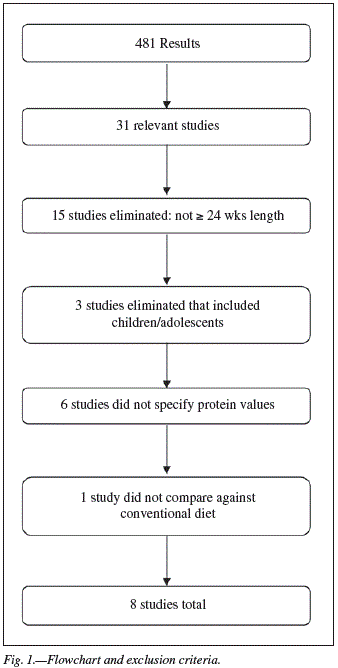
<body><![CDATA[<p><font face="Verdana" size="2">The rationale for the use of high-protein diets is that they offer a higher level of satiety for a longer period of time when compared with carbohydrates or fats; this diminishes calorie consumption in the long-run<sup>4,5</sup> Weigle et al. reported a higher satiety perception in a highprotein diet than in a high fat diet<sup>6</sup>, similar results have been reported elsewhere.<sup>7</sup> Since the utilization of lipids as a fuel source is the main basis of this diet, the release of ketone bodies has been used as an indicator of the catabolization process.<sup>8</sup> This had led to believe that an undesirable increment of total cholesterol and LDLcholesterol would be the result of high protein diets. However, there have been studies which show that biological markers like cholesterol, LDL-cholesterol remain the same with either a high-protein diet or a conventional diet.<sup>8-14</sup> Most studies evaluating high-protein diets usually have an intervention and follow-up period of 12 or less weeks. Since weight loss must be a long-term strategy to reduce the health implications of obesity, including the reduction of morbidity and mortality and the augmentation of quality of life,<sup>15,16</sup> the purpose of this review was to assess the efficacy of long-term randomized clinical trials, with an intervention and/or follow-up equal or higher than 24 weeks.</font></p>     <p>&nbsp;</p>     <p><font face="Verdana" size="2"><b>Methods</b></font></p>     <p><font face="Verdana" size="2">We used Pubmed, EBSCO and SCIELO to conduct our searches with the following keywords: "high-protein" and "weight loss" and "Atkins diet" and "weight loss". Limits added were: Humans, Clinical Trial, English and Spanish. Criteria for the inclusion of the studies were randomized clinical trials conducted in adult population with an intervention or follow-up of at least 24 weeks, stating the specific amount of energy from macronutrients or the absolute amount of the protein (in grams) in the diet; with a control group with either a conventional energy restricted diet or a high fat/high carbohydrate diet. In addition, the studies included should provide at least the measurement of weight or body mass index (BMI) at the beginning and at the end of the intervention. A total of 481 studies were found. Eight studies met the inclusion criteria (<a href="#f1">fig. 1</a>).</font></p>     <p>&nbsp;</p>     <p align="center"><font face="Verdana" size="2"><a name="f1"><img src="/img/revistas/nh/v26n6/10_revision_07_f1.gif" align="top"></a></font></p>     <p>&nbsp;</p>     <p><font face="Verdana" size="2">Data extracted from RCTs:</font></p>     <p><font face="Verdana" size="2">We extracted the following from each study: gender, BMI, age, co-morbidities, population size, types of diets, daily macronutrient intakes (shown as percentages), and duration of each study. We also included retention rate at the end of the study, net weight loss and when available, the statistical difference between groups, intention to treat analysis, and statistical power (<a target="_blank" href="/img/revistas/nh/v26n6/10_revision_07_t1.gif">table I</a>).</font></p>     <p>&nbsp;</p>     ]]></body>
<body><![CDATA[<p><font face="Verdana" size="2"><b>Results</b></font></p>     <p><font face="Verdana" size="2">In <a target="_blank" href="/img/revistas/nh/v26n6/10_revision_07_t1.gif">table I</a> the characteristics of all studies are shown. The numbers of participants ranged from 50 to 119; age ranged from 18 to 70 years; BMI ranged from 25 to 43 kg/m<sup>2</sup>; contribution of protein to high-protein diets was from 25% to 40%; contribution of carbohydrates to the high-protein diets was from 5 to 45%; length of intervention was from 6 to 24 months; retention rate was from 34% in the longest trial (24 months)<sup>17</sup> to 92% in a six month trial.<sup>18</sup> Only one study had an intention to treat analysis,<sup>19</sup> and five reported statistical power<sup>18-22</sup> Three out of four studies with the longest intervention<sup>17,19,23</sup>  show no statistical difference in weight loss. One out of four studies showed significantly more weight loss in the high monounsaturated fat diet group than in the highprotein diet group.<sup>18</sup> Weight loss difference in those with the highest weight loss with the high-protein diet ranged from 3.7 kg in a six month trial<sup>22</sup> to 1.2 kg in a 17 month trial.<sup>24</sup> The average weight loss of the eight studies in the high-protein diet was 6.3kg and in the standard diet was 5.0 kg<sup>17-24</sup> However, in one study<sup>18</sup> conducted during 12 months, a 9.4 kg weight loss was observed with the standard diet, which is higher than the weight loss observed with the high-protein diet in the other seven.<sup>17-19,21-24</sup></font></p>     <p>&nbsp;</p>     <p><font face="Verdana" size="2"><b>Discussion</b></font></p>     <p><font face="Verdana" size="2">In this systematic review it was observed that the long-term effect of high-protein diets is neither consistent nor conclusive. Although more than half of the studies<sup>18,20-22,24</sup> showed a higher weight loss with a highprotein diet, three out of four studies with the longest intervention<sup>17,19,23</sup> show no statistical difference in weight loss. Weight loss difference in those with the highest weight loss in the high-protein diet range from 3.7 kg in a six month trial<sup>18</sup> to 1.2 kg in a 17 month trial.<sup>24</sup> Additionally, the non-statistical difference observed in the majority of the studies conducted for more than 12 months, suggested a diminishing trend of weight loss with the length of intervention.<sup>17,19,23</sup></font></p>     <p><font face="Verdana" size="2">However, one study<sup>18</sup> that showed a higher weight loss reduction in the high monounsaturated fat diet group than the high-protein diet group, at the beginning of the study the former were statistically heavier than the latter, and the retention rate was only 52%. Thus, indicating a lower quality of the study. Likewise, the three studies with no significant difference had a lower retention rate.<sup>17,19,23</sup></font></p>     <p><font face="Verdana" size="2">The higher weight loss observed with the standard diet<sup>18</sup> compared with the HPD in the same study, and the weight loss observed with the high-protein diet in the rest of the studies,<sup>17-19,21-24</sup> indicates that when a standard diet is well designed, conducted and supervised a higher weight loss might be observed.</font></p>     <p><font face="Verdana" size="2">No side effects of the high-protein diet were reported in any of the studies analyzed, which is consistent with the conclusions made by Crowe.<sup>25</sup> However, there were no evaluations on the potential adverse effects over mineral and vitamin contents of the diets, since HPD may result in restricted intakes of fiber, fruits, and vegetables . In addition, there are also several safety concerns regarding a constant state of lipolysis: higher LDL's and cholesterol. This also needs further research in the long-term.<sup>8-14</sup></font></p>     <p><font face="Verdana" size="2">There are several limitations to this systematic review. Foremost is the small number of randomized studies available with an intervention time greater than 12 months. Five studies with an intervention greater than 12 months and no study with a follow-up greater than 24 months was found.<sup>17-19,23,24</sup></font></p>     <p><font face="Verdana" size="2">In conclusion, the results observed from this review, show no conclusive better long term effect of the highprotein diet compared to a standard, high monounsaturated or high-carbohydrate diet. Therefore, the results warrant more long- term studies including statistical power, intention to treat analysis and high retention rates.</font></p>     ]]></body>
<body><![CDATA[<p>&nbsp;</p>     <p><font face="Verdana" size="2"><b>References</b></font></p>     <!-- ref --><p><font face="Verdana" size="2">1. Denke MA. Metabolic effects of high-protein, low-carbohydrate diets. <i>The American Journal of Cardiology</i> 2001; 88 (1): 59-61.    &nbsp;&nbsp;&nbsp;&nbsp;&nbsp;&nbsp;&nbsp;&nbsp;[&#160;<a href="javascript:void(0);" onclick="javascript: window.open('/scielo.php?script=sci_nlinks&ref=3622559&pid=S0212-1611201100060001000001&lng=','','width=640,height=500,resizable=yes,scrollbars=1,menubar=yes,');">Links</a>&#160;]<!-- end-ref --></font></p>    <!-- ref --><p><font face="Verdana" size="2">2. Evangelista LS, Heber D, Li Z, Bowerman S, Hamilton MA, Fonarow GC. Reduced Body Weight and Adiposity With a High-Protein Diet Improves Functional Status, Lipid Profiles, Glycemic Control, and Quality of Life in Patients With Heart Failure: A Feasibility Study. <i>Journal of Cardiovascular Nursing</i> 2009; 24 (3): 207-15.    &nbsp;&nbsp;&nbsp;&nbsp;&nbsp;&nbsp;&nbsp;&nbsp;[&#160;<a href="javascript:void(0);" onclick="javascript: window.open('/scielo.php?script=sci_nlinks&ref=3622561&pid=S0212-1611201100060001000002&lng=','','width=640,height=500,resizable=yes,scrollbars=1,menubar=yes,');">Links</a>&#160;]<!-- end-ref --></font></p>    <!-- ref --><p><font face="Verdana" size="2">3. Atkins R. Atkins Nutritional Approach Webpage. Available from:  <a target="_blank" href="http://www.atkins.com/">http://www.atkins.com/</a>.    &nbsp;&nbsp;&nbsp;&nbsp;&nbsp;&nbsp;&nbsp;&nbsp;[&#160;<a href="javascript:void(0);" onclick="javascript: window.open('/scielo.php?script=sci_nlinks&ref=3622563&pid=S0212-1611201100060001000003&lng=','','width=640,height=500,resizable=yes,scrollbars=1,menubar=yes,');">Links</a>&#160;]<!-- end-ref --></font></p>    <!-- ref --><p><font face="Verdana" size="2">4. Latner JD, Schwartz M. The Effects of a High-carbohydrate, High-protein or Balanced Lunch upon Later Food Intake and Hunger Ratings. <i>Appetite</i> 1999; 33 (1): 119-28.    &nbsp;&nbsp;&nbsp;&nbsp;&nbsp;&nbsp;&nbsp;&nbsp;[&#160;<a href="javascript:void(0);" onclick="javascript: window.open('/scielo.php?script=sci_nlinks&ref=3622565&pid=S0212-1611201100060001000004&lng=','','width=640,height=500,resizable=yes,scrollbars=1,menubar=yes,');">Links</a>&#160;]<!-- end-ref --></font></p>    ]]></body>
<body><![CDATA[<!-- ref --><p><font face="Verdana" size="2">5. Astrup A, Larsen TM, Harper A. Atkins and other low-carbohydrate diets: hoax or an effective tool for weight loss? <i>The Lancet</i> 2004; 364 (9437): 897-9.    &nbsp;&nbsp;&nbsp;&nbsp;&nbsp;&nbsp;&nbsp;&nbsp;[&#160;<a href="javascript:void(0);" onclick="javascript: window.open('/scielo.php?script=sci_nlinks&ref=3622567&pid=S0212-1611201100060001000005&lng=','','width=640,height=500,resizable=yes,scrollbars=1,menubar=yes,');">Links</a>&#160;]<!-- end-ref --></font></p>    <!-- ref --><p><font face="Verdana" size="2">6. Weigle DS, Breen PA, Matthys CC, Callahan HS, Meeuws KE, Burden VR et al. A high-protein diet induces sustained reductions in appetite, ad libitum caloric intake, and body weight despite compensatory changes in diurnal plasma leptin and ghrelin concentrations. <i>The American Journal of Clinical Nutrition</i> 2005; 82 (1): 41-8.    &nbsp;&nbsp;&nbsp;&nbsp;&nbsp;&nbsp;&nbsp;&nbsp;[&#160;<a href="javascript:void(0);" onclick="javascript: window.open('/scielo.php?script=sci_nlinks&ref=3622569&pid=S0212-1611201100060001000006&lng=','','width=640,height=500,resizable=yes,scrollbars=1,menubar=yes,');">Links</a>&#160;]<!-- end-ref --></font></p>    <!-- ref --><p><font face="Verdana" size="2">7. Rolls BJ, Hetherington M, Burley VJ. The specificity of satiety: The influence of foods of different macronutrient content on the development of satiety. <i>Physiology & Behavior</i> 1988; 43 (2): 145-53.    &nbsp;&nbsp;&nbsp;&nbsp;&nbsp;&nbsp;&nbsp;&nbsp;[&#160;<a href="javascript:void(0);" onclick="javascript: window.open('/scielo.php?script=sci_nlinks&ref=3622571&pid=S0212-1611201100060001000007&lng=','','width=640,height=500,resizable=yes,scrollbars=1,menubar=yes,');">Links</a>&#160;]<!-- end-ref --></font></p>    <!-- ref --><p><font face="Verdana" size="2">8. Bravata DM, Sanders L, Huang J, Krumholz HM, Olkin I, Gardner CD et al. Efficacy and Safety of Low-Carbohydrate Diets. JAMA: <i>The Journal of the American Medical Association</i> 2003; 289 (14): 1837-50.    &nbsp;&nbsp;&nbsp;&nbsp;&nbsp;&nbsp;&nbsp;&nbsp;[&#160;<a href="javascript:void(0);" onclick="javascript: window.open('/scielo.php?script=sci_nlinks&ref=3622573&pid=S0212-1611201100060001000008&lng=','','width=640,height=500,resizable=yes,scrollbars=1,menubar=yes,');">Links</a>&#160;]<!-- end-ref --></font></p>    <!-- ref --><p><font face="Verdana" size="2">9. Foster GD, Wyatt HR, Hill JO, McGuckin BG, Brill C, Mohammed BS et al. A Randomized Trial of a Low-Carbohydrate Diet for Obesity. <i>New England Journal of Medicine</i> 2003; 348 (21): 2082-90.    &nbsp;&nbsp;&nbsp;&nbsp;&nbsp;&nbsp;&nbsp;&nbsp;[&#160;<a href="javascript:void(0);" onclick="javascript: window.open('/scielo.php?script=sci_nlinks&ref=3622575&pid=S0212-1611201100060001000009&lng=','','width=640,height=500,resizable=yes,scrollbars=1,menubar=yes,');">Links</a>&#160;]<!-- end-ref --></font></p>    ]]></body>
<body><![CDATA[<!-- ref --><p><font face="Verdana" size="2">10. Samaha FF, Iqbal N, Seshadri P, Chicano KL, Daily DA, McGrory J et al. A Low-Carbohydrate as Compared with a Low-Fat Diet in Severe Obesity. <i>New England Journal of Medicine</i> 2003; 348 (21): 2074-81.    &nbsp;&nbsp;&nbsp;&nbsp;&nbsp;&nbsp;&nbsp;&nbsp;[&#160;<a href="javascript:void(0);" onclick="javascript: window.open('/scielo.php?script=sci_nlinks&ref=3622577&pid=S0212-1611201100060001000010&lng=','','width=640,height=500,resizable=yes,scrollbars=1,menubar=yes,');">Links</a>&#160;]<!-- end-ref --></font></p>    <!-- ref --><p><font face="Verdana" size="2">11. Stern L, Iqbal N, Seshadri P, Chicano KL, Daily DA, McGrory J et al. The Effects of Low-Carbohydrate versus Conventional Weight Loss Diets in Severely Obese Adults: One-Year Follow-up of a Randomized Trial. <i>Annals of Internal Medicine</i> 2004; 140 (10): 778-85.    &nbsp;&nbsp;&nbsp;&nbsp;&nbsp;&nbsp;&nbsp;&nbsp;[&#160;<a href="javascript:void(0);" onclick="javascript: window.open('/scielo.php?script=sci_nlinks&ref=3622579&pid=S0212-1611201100060001000011&lng=','','width=640,height=500,resizable=yes,scrollbars=1,menubar=yes,');">Links</a>&#160;]<!-- end-ref --></font></p>    <!-- ref --><p><font face="Verdana" size="2">12. Volek JS, Gomez AL, Kraemer WJ. Fasting lipoprotein and postprandial triacylglycerol responses to a low-carbohydrate diet supplemented with n-3 fatty acids. <i>J Am Coll Nutr</i> 2000; 19 (3): 383-91.    &nbsp;&nbsp;&nbsp;&nbsp;&nbsp;&nbsp;&nbsp;&nbsp;[&#160;<a href="javascript:void(0);" onclick="javascript: window.open('/scielo.php?script=sci_nlinks&ref=3622581&pid=S0212-1611201100060001000012&lng=','','width=640,height=500,resizable=yes,scrollbars=1,menubar=yes,');">Links</a>&#160;]<!-- end-ref --></font></p>    <!-- ref --><p><font face="Verdana" size="2">13. Yancy WS, Olsen MK, Guyton JR, Bakst RP, Westman EC. A Low-Carbohydrate, Ketogenic Diet versus a Low-Fat Diet To Treat Obesity and Hyperlipidemia. <i>Annals of Internal Medicine</i> 2004; 140 (10): 769-77.    &nbsp;&nbsp;&nbsp;&nbsp;&nbsp;&nbsp;&nbsp;&nbsp;[&#160;<a href="javascript:void(0);" onclick="javascript: window.open('/scielo.php?script=sci_nlinks&ref=3622583&pid=S0212-1611201100060001000013&lng=','','width=640,height=500,resizable=yes,scrollbars=1,menubar=yes,');">Links</a>&#160;]<!-- end-ref --></font></p>    <!-- ref --><p><font face="Verdana" size="2">14. Brehm BJ, Seeley RJ, Daniels SR, D'Alessio DA. A Randomized Trial Comparing a Very Low Carbohydrate Diet and a Calorie-Restricted Low Fat Diet on Body Weight and Cardiovascular Risk Factors in Healthy Women. <i>J Clin Endocrinol Metab</i> 2003; 88 (4): 1617-23.    &nbsp;&nbsp;&nbsp;&nbsp;&nbsp;&nbsp;&nbsp;&nbsp;[&#160;<a href="javascript:void(0);" onclick="javascript: window.open('/scielo.php?script=sci_nlinks&ref=3622585&pid=S0212-1611201100060001000014&lng=','','width=640,height=500,resizable=yes,scrollbars=1,menubar=yes,');">Links</a>&#160;]<!-- end-ref --></font></p>    ]]></body>
<body><![CDATA[<!-- ref --><p><font face="Verdana" size="2">15. Camberos Solis R, Jiménez Cruz A, Bacardí Gascón M, Culebras JM. Efectividad y seguridad a largo plazo del bypass gástrico en "y" de Roux y de la banda gástrica: revisión sistemática. <i>Nutr Hosp</i> 2010; 25 (6): 964-970.    &nbsp;&nbsp;&nbsp;&nbsp;&nbsp;&nbsp;&nbsp;&nbsp;[&#160;<a href="javascript:void(0);" onclick="javascript: window.open('/scielo.php?script=sci_nlinks&ref=3622587&pid=S0212-1611201100060001000015&lng=','','width=640,height=500,resizable=yes,scrollbars=1,menubar=yes,');">Links</a>&#160;]<!-- end-ref --></font></p>    <!-- ref --><p><font face="Verdana" size="2">16. Pérez Morales ME, Jiménez Cruz A, Bacardí Gascón M. Efecto de la pérdida de peso sobre la mortalidad. Revisión sistemática de 2000 a 2009. <i>Nutr Hosp</i> 2010; 25 (5): 718-724.    &nbsp;&nbsp;&nbsp;&nbsp;&nbsp;&nbsp;&nbsp;&nbsp;[&#160;<a href="javascript:void(0);" onclick="javascript: window.open('/scielo.php?script=sci_nlinks&ref=3622589&pid=S0212-1611201100060001000016&lng=','','width=640,height=500,resizable=yes,scrollbars=1,menubar=yes,');">Links</a>&#160;]<!-- end-ref --></font></p>    <!-- ref --><p><font face="Verdana" size="2">17. Due A, Toubro S, Skov AR, Astrup A. Effect of normal-fat diets, either medium or high in protein, on body weight in overweight subjects: a randomised 1-year trial. <i>Int J Obes Relat Metab Disord</i> 2004; 28 (10): 1283-90.    &nbsp;&nbsp;&nbsp;&nbsp;&nbsp;&nbsp;&nbsp;&nbsp;[&#160;<a href="javascript:void(0);" onclick="javascript: window.open('/scielo.php?script=sci_nlinks&ref=3622591&pid=S0212-1611201100060001000017&lng=','','width=640,height=500,resizable=yes,scrollbars=1,menubar=yes,');">Links</a>&#160;]<!-- end-ref --></font></p>    <!-- ref --><p><font face="Verdana" size="2">18. Keogh JB, Luscombe-Marsh ND, Noakes M, Wittert GA, Clifton PM. Long-term weight maintenance and cardiovascular risk factors are not different following weight loss on carbohydrate-restricted diets high in either monounsaturated fat or protein in obese hyperinsulinaemic men and women. <i>British Journal of Nutrition</i> 2007; 97 (02): 405-10.    &nbsp;&nbsp;&nbsp;&nbsp;&nbsp;&nbsp;&nbsp;&nbsp;[&#160;<a href="javascript:void(0);" onclick="javascript: window.open('/scielo.php?script=sci_nlinks&ref=3622593&pid=S0212-1611201100060001000018&lng=','','width=640,height=500,resizable=yes,scrollbars=1,menubar=yes,');">Links</a>&#160;]<!-- end-ref --></font></p>    <!-- ref --><p><font face="Verdana" size="2">19. Brinkworth GD, Noakes M, Keogh JB, Luscombe ND, Wittert GA, Clifton PM. Long-term effects of a high-protein, low-carbohydrate diet on weight control and cardiovascular risk markers in obese hyperinsulinemic subjects. <i>Int J Obes Relat Metab Disord</i> 2004; 28 (5): 661-70.    &nbsp;&nbsp;&nbsp;&nbsp;&nbsp;&nbsp;&nbsp;&nbsp;[&#160;<a href="javascript:void(0);" onclick="javascript: window.open('/scielo.php?script=sci_nlinks&ref=3622595&pid=S0212-1611201100060001000019&lng=','','width=640,height=500,resizable=yes,scrollbars=1,menubar=yes,');">Links</a>&#160;]<!-- end-ref --></font></p>    ]]></body>
<body><![CDATA[<!-- ref --><p><font face="Verdana" size="2">20. Brinkworth GD, Noakes M, Buckley JD, Keogh JB, Clifton PM. Long-term effects of a very-low-carbohydrate weight loss diet compared with an isocaloric low-fat diet after 12 mo. <i>Am J Clin Nutr</i> 2009; 90 (1): 23-32.    &nbsp;&nbsp;&nbsp;&nbsp;&nbsp;&nbsp;&nbsp;&nbsp;[&#160;<a href="javascript:void(0);" onclick="javascript: window.open('/scielo.php?script=sci_nlinks&ref=3622597&pid=S0212-1611201100060001000020&lng=','','width=640,height=500,resizable=yes,scrollbars=1,menubar=yes,');">Links</a>&#160;]<!-- end-ref --></font></p>    <!-- ref --><p><font face="Verdana" size="2">21. McAuley KA, Smith KJ, Taylor RW, McLay RT, Williams SM, Mann JI. Long-term effects of popular dietary approaches on weight loss and features of insulin resistance. <i>Int J Obes Relat Metab Disord</i> 2005; 30 (2): 342-9.    &nbsp;&nbsp;&nbsp;&nbsp;&nbsp;&nbsp;&nbsp;&nbsp;[&#160;<a href="javascript:void(0);" onclick="javascript: window.open('/scielo.php?script=sci_nlinks&ref=3622599&pid=S0212-1611201100060001000021&lng=','','width=640,height=500,resizable=yes,scrollbars=1,menubar=yes,');">Links</a>&#160;]<!-- end-ref --></font></p>    <!-- ref --><p><font face="Verdana" size="2">22. Skov AR, Toubro SRB, Holm L, Astrup A. Randomized trial on protein vs carbohydrate in ad libitum fat reduced diet for the treatment of obesity. <i>Int J Obes</i> 1999; 23 (5): 528-36.    &nbsp;&nbsp;&nbsp;&nbsp;&nbsp;&nbsp;&nbsp;&nbsp;[&#160;<a href="javascript:void(0);" onclick="javascript: window.open('/scielo.php?script=sci_nlinks&ref=3622601&pid=S0212-1611201100060001000022&lng=','','width=640,height=500,resizable=yes,scrollbars=1,menubar=yes,');">Links</a>&#160;]<!-- end-ref --></font></p>    <!-- ref --><p><font face="Verdana" size="2">23. Clifton PM, Keogh JB, Noakes M. Long-term effects of a highprotein weight-loss diet. <i>The American Journal of Clinical Nutrition</i> 2008; 87 (1): 23-9.    &nbsp;&nbsp;&nbsp;&nbsp;&nbsp;&nbsp;&nbsp;&nbsp;[&#160;<a href="javascript:void(0);" onclick="javascript: window.open('/scielo.php?script=sci_nlinks&ref=3622603&pid=S0212-1611201100060001000023&lng=','','width=640,height=500,resizable=yes,scrollbars=1,menubar=yes,');">Links</a>&#160;]<!-- end-ref --></font></p>    <!-- ref --><p><font face="Verdana" size="2">24. Brinkworth GD, Noakes M, Parker B, Foster P, Clifton PM. Long-term effects of advice to consume a high-protein, low-fat diet, rather than a conventional weight-loss diet, in obese adults with Type 2 diabetes: one-year follow-up of a randomised trial. <i>Diabetologia</i> 2004; 47 (10): 1677-86.    &nbsp;&nbsp;&nbsp;&nbsp;&nbsp;&nbsp;&nbsp;&nbsp;[&#160;<a href="javascript:void(0);" onclick="javascript: window.open('/scielo.php?script=sci_nlinks&ref=3622605&pid=S0212-1611201100060001000024&lng=','','width=640,height=500,resizable=yes,scrollbars=1,menubar=yes,');">Links</a>&#160;]<!-- end-ref --></font></p>     ]]></body>
<body><![CDATA[<!-- ref --><p><font face="Verdana" size="2">25. Crowe TC. Safety of low-carbohydrate diets. <i>Obes Rev</i> 2005; 6 (3): 235-45.    &nbsp;&nbsp;&nbsp;&nbsp;&nbsp;&nbsp;&nbsp;&nbsp;[&#160;<a href="javascript:void(0);" onclick="javascript: window.open('/scielo.php?script=sci_nlinks&ref=3622607&pid=S0212-1611201100060001000025&lng=','','width=640,height=500,resizable=yes,scrollbars=1,menubar=yes,');">Links</a>&#160;]<!-- end-ref --></font></p>     <p>&nbsp;</p>     <p>&nbsp;</p>     <p><font face="Verdana" size="2"><b><a name="back"></a><a href="#top"><img border="0" src="/img/revistas/nh/v26n6/seta.gif" width="15" height="17"></a>Correspondence:</b>    <br>Arturo Jiménez Cruz.    <br>Universidad Autónoma de Baja California.    <br>Av. Tecnológico    <br> 14418. Tijuana. Baja California.    <br>E-mail:  <a href="mailto:ajimenez@uabc.edu.mx">ajimenez@uabc.edu.mx</a></font></p>     ]]></body>
<body><![CDATA[<p><font face="Verdana" size="2">Recibido: 13-VI-2011.    <br>Aceptado: 17-VI-2011.</font></p>      ]]></body><back>
<ref-list>
<ref id="B1">
<label>1</label><nlm-citation citation-type="journal">
<person-group person-group-type="author">
<name>
<surname><![CDATA[Denke]]></surname>
<given-names><![CDATA[MA]]></given-names>
</name>
</person-group>
<article-title xml:lang="en"><![CDATA[Metabolic effects of high-protein, low-carbohydrate diets]]></article-title>
<source><![CDATA[The American Journal of Cardiology]]></source>
<year>2001</year>
<volume>88</volume>
<numero>1</numero>
<issue>1</issue>
<page-range>59-61</page-range></nlm-citation>
</ref>
<ref id="B2">
<label>2</label><nlm-citation citation-type="journal">
<person-group person-group-type="author">
<name>
<surname><![CDATA[Evangelista]]></surname>
<given-names><![CDATA[LS]]></given-names>
</name>
<name>
<surname><![CDATA[Heber]]></surname>
<given-names><![CDATA[D]]></given-names>
</name>
<name>
<surname><![CDATA[Li]]></surname>
<given-names><![CDATA[Z]]></given-names>
</name>
<name>
<surname><![CDATA[Bowerman]]></surname>
<given-names><![CDATA[S]]></given-names>
</name>
<name>
<surname><![CDATA[Hamilton]]></surname>
<given-names><![CDATA[MA]]></given-names>
</name>
<name>
<surname><![CDATA[Fonarow]]></surname>
<given-names><![CDATA[GC]]></given-names>
</name>
</person-group>
<article-title xml:lang="en"><![CDATA[Reduced Body Weight and Adiposity With a High-Protein Diet Improves Functional Status, Lipid Profiles, Glycemic Control, and Quality of Life in Patients With Heart Failure: A Feasibility Study]]></article-title>
<source><![CDATA[Journal of Cardiovascular Nursing]]></source>
<year>2009</year>
<volume>24</volume>
<numero>3</numero>
<issue>3</issue>
<page-range>207-15</page-range></nlm-citation>
</ref>
<ref id="B3">
<label>3</label><nlm-citation citation-type="">
<person-group person-group-type="author">
<name>
<surname><![CDATA[Atkins]]></surname>
<given-names><![CDATA[R]]></given-names>
</name>
</person-group>
<source><![CDATA[Atkins Nutritional Approach Webpage]]></source>
<year></year>
</nlm-citation>
</ref>
<ref id="B4">
<label>4</label><nlm-citation citation-type="journal">
<person-group person-group-type="author">
<name>
<surname><![CDATA[Latner]]></surname>
<given-names><![CDATA[JD]]></given-names>
</name>
<name>
<surname><![CDATA[Schwartz]]></surname>
<given-names><![CDATA[M]]></given-names>
</name>
</person-group>
<article-title xml:lang="en"><![CDATA[The Effects of a High-carbohydrate, High-protein or Balanced Lunch upon Later Food Intake and Hunger Ratings]]></article-title>
<source><![CDATA[Appetite]]></source>
<year>1999</year>
<volume>33</volume>
<numero>1</numero>
<issue>1</issue>
<page-range>119-28</page-range></nlm-citation>
</ref>
<ref id="B5">
<label>5</label><nlm-citation citation-type="journal">
<person-group person-group-type="author">
<name>
<surname><![CDATA[Astrup]]></surname>
<given-names><![CDATA[A]]></given-names>
</name>
<name>
<surname><![CDATA[Larsen]]></surname>
<given-names><![CDATA[TM]]></given-names>
</name>
<name>
<surname><![CDATA[Harper]]></surname>
<given-names><![CDATA[A]]></given-names>
</name>
</person-group>
<article-title xml:lang="en"><![CDATA[Atkins and other low-carbohydrate diets: hoax or an effective tool for weight loss?]]></article-title>
<source><![CDATA[The Lancet]]></source>
<year>2004</year>
<volume>364</volume>
<numero>9437</numero>
<issue>9437</issue>
<page-range>897-9</page-range></nlm-citation>
</ref>
<ref id="B6">
<label>6</label><nlm-citation citation-type="journal">
<person-group person-group-type="author">
<name>
<surname><![CDATA[Weigle]]></surname>
<given-names><![CDATA[DS]]></given-names>
</name>
<name>
<surname><![CDATA[Breen]]></surname>
<given-names><![CDATA[PA]]></given-names>
</name>
<name>
<surname><![CDATA[Matthys]]></surname>
<given-names><![CDATA[CC]]></given-names>
</name>
<name>
<surname><![CDATA[Callahan]]></surname>
<given-names><![CDATA[HS]]></given-names>
</name>
<name>
<surname><![CDATA[Meeuws]]></surname>
<given-names><![CDATA[KE]]></given-names>
</name>
<name>
<surname><![CDATA[Burden]]></surname>
<given-names><![CDATA[VR]]></given-names>
</name>
</person-group>
<article-title xml:lang="en"><![CDATA[A high-protein diet induces sustained reductions in appetite, ad libitum caloric intake, and body weight despite compensatory changes in diurnal plasma leptin and ghrelin concentrations]]></article-title>
<source><![CDATA[The American Journal of Clinical Nutrition]]></source>
<year>2005</year>
<volume>82</volume>
<numero>1</numero>
<issue>1</issue>
<page-range>41-8</page-range></nlm-citation>
</ref>
<ref id="B7">
<label>7</label><nlm-citation citation-type="journal">
<person-group person-group-type="author">
<name>
<surname><![CDATA[Rolls]]></surname>
<given-names><![CDATA[BJ]]></given-names>
</name>
<name>
<surname><![CDATA[Hetherington]]></surname>
<given-names><![CDATA[M]]></given-names>
</name>
<name>
<surname><![CDATA[Burley]]></surname>
<given-names><![CDATA[VJ]]></given-names>
</name>
</person-group>
<article-title xml:lang="en"><![CDATA[The specificity of satiety: The influence of foods of different macronutrient content on the development of satiety]]></article-title>
<source><![CDATA[Physiology & Behavior]]></source>
<year>1988</year>
<volume>43</volume>
<numero>2</numero>
<issue>2</issue>
<page-range>145-53</page-range></nlm-citation>
</ref>
<ref id="B8">
<label>8</label><nlm-citation citation-type="journal">
<person-group person-group-type="author">
<name>
<surname><![CDATA[Bravata]]></surname>
<given-names><![CDATA[DM]]></given-names>
</name>
<name>
<surname><![CDATA[Sanders]]></surname>
<given-names><![CDATA[L]]></given-names>
</name>
<name>
<surname><![CDATA[Huang]]></surname>
<given-names><![CDATA[J]]></given-names>
</name>
<name>
<surname><![CDATA[Krumholz]]></surname>
<given-names><![CDATA[HM]]></given-names>
</name>
<name>
<surname><![CDATA[Olkin]]></surname>
<given-names><![CDATA[I]]></given-names>
</name>
<name>
<surname><![CDATA[Gardner]]></surname>
<given-names><![CDATA[CD]]></given-names>
</name>
</person-group>
<article-title xml:lang="en"><![CDATA[Efficacy and Safety of Low-Carbohydrate Diets]]></article-title>
<source><![CDATA[JAMA: The Journal of the American Medical Association]]></source>
<year>2003</year>
<volume>289</volume>
<numero>14</numero>
<issue>14</issue>
<page-range>1837-50</page-range></nlm-citation>
</ref>
<ref id="B9">
<label>9</label><nlm-citation citation-type="journal">
<person-group person-group-type="author">
<name>
<surname><![CDATA[Foster]]></surname>
<given-names><![CDATA[GD]]></given-names>
</name>
<name>
<surname><![CDATA[Wyatt]]></surname>
<given-names><![CDATA[HR]]></given-names>
</name>
<name>
<surname><![CDATA[Hill]]></surname>
<given-names><![CDATA[JO]]></given-names>
</name>
<name>
<surname><![CDATA[McGuckin]]></surname>
<given-names><![CDATA[BG]]></given-names>
</name>
<name>
<surname><![CDATA[Brill]]></surname>
<given-names><![CDATA[C]]></given-names>
</name>
<name>
<surname><![CDATA[Mohammed]]></surname>
<given-names><![CDATA[BS]]></given-names>
</name>
</person-group>
<article-title xml:lang="en"><![CDATA[A Randomized Trial of a Low-Carbohydrate Diet for Obesity]]></article-title>
<source><![CDATA[New England Journal of Medicine]]></source>
<year>2003</year>
<volume>348</volume>
<numero>21</numero>
<issue>21</issue>
<page-range>2082-90</page-range></nlm-citation>
</ref>
<ref id="B10">
<label>10</label><nlm-citation citation-type="journal">
<person-group person-group-type="author">
<name>
<surname><![CDATA[Samaha]]></surname>
<given-names><![CDATA[FF]]></given-names>
</name>
<name>
<surname><![CDATA[Iqbal]]></surname>
<given-names><![CDATA[N]]></given-names>
</name>
<name>
<surname><![CDATA[Seshadri]]></surname>
<given-names><![CDATA[P]]></given-names>
</name>
<name>
<surname><![CDATA[Chicano]]></surname>
<given-names><![CDATA[KL]]></given-names>
</name>
<name>
<surname><![CDATA[Daily]]></surname>
<given-names><![CDATA[DA]]></given-names>
</name>
<name>
<surname><![CDATA[McGrory]]></surname>
<given-names><![CDATA[J]]></given-names>
</name>
</person-group>
<article-title xml:lang="en"><![CDATA[A Low-Carbohydrate as Compared with a Low-Fat Diet in Severe Obesity]]></article-title>
<source><![CDATA[New England Journal of Medicine]]></source>
<year>2003</year>
<volume>348</volume>
<numero>21</numero>
<issue>21</issue>
<page-range>2074-81</page-range></nlm-citation>
</ref>
<ref id="B11">
<label>11</label><nlm-citation citation-type="journal">
<person-group person-group-type="author">
<name>
<surname><![CDATA[Stern]]></surname>
<given-names><![CDATA[L]]></given-names>
</name>
<name>
<surname><![CDATA[Iqbal]]></surname>
<given-names><![CDATA[N]]></given-names>
</name>
<name>
<surname><![CDATA[Seshadri]]></surname>
<given-names><![CDATA[P]]></given-names>
</name>
<name>
<surname><![CDATA[Chicano]]></surname>
<given-names><![CDATA[KL]]></given-names>
</name>
<name>
<surname><![CDATA[Daily]]></surname>
<given-names><![CDATA[DA]]></given-names>
</name>
<name>
<surname><![CDATA[McGrory]]></surname>
<given-names><![CDATA[J]]></given-names>
</name>
</person-group>
<article-title xml:lang="en"><![CDATA[The Effects of Low-Carbohydrate versus Conventional Weight Loss Diets in Severely Obese Adults: One-Year Follow-up of a Randomized Trial]]></article-title>
<source><![CDATA[Annals of Internal Medicine]]></source>
<year>2004</year>
<volume>140</volume>
<numero>10</numero>
<issue>10</issue>
<page-range>778-85</page-range></nlm-citation>
</ref>
<ref id="B12">
<label>12</label><nlm-citation citation-type="journal">
<person-group person-group-type="author">
<name>
<surname><![CDATA[Volek]]></surname>
<given-names><![CDATA[JS]]></given-names>
</name>
<name>
<surname><![CDATA[Gomez]]></surname>
<given-names><![CDATA[AL]]></given-names>
</name>
<name>
<surname><![CDATA[Kraemer]]></surname>
<given-names><![CDATA[WJ]]></given-names>
</name>
</person-group>
<article-title xml:lang="en"><![CDATA[Fasting lipoprotein and postprandial triacylglycerol responses to a low-carbohydrate diet supplemented with n-3 fatty acids]]></article-title>
<source><![CDATA[J Am Coll Nutr]]></source>
<year>2000</year>
<volume>19</volume>
<numero>3</numero>
<issue>3</issue>
<page-range>383-91</page-range></nlm-citation>
</ref>
<ref id="B13">
<label>13</label><nlm-citation citation-type="journal">
<person-group person-group-type="author">
<name>
<surname><![CDATA[Yancy]]></surname>
<given-names><![CDATA[WS]]></given-names>
</name>
<name>
<surname><![CDATA[Olsen]]></surname>
<given-names><![CDATA[MK]]></given-names>
</name>
<name>
<surname><![CDATA[Guyton]]></surname>
<given-names><![CDATA[JR]]></given-names>
</name>
<name>
<surname><![CDATA[Bakst]]></surname>
<given-names><![CDATA[RP]]></given-names>
</name>
<name>
<surname><![CDATA[Westman]]></surname>
<given-names><![CDATA[EC]]></given-names>
</name>
</person-group>
<article-title xml:lang="en"><![CDATA[A Low-Carbohydrate, Ketogenic Diet versus a Low-Fat Diet To Treat Obesity and Hyperlipidemia]]></article-title>
<source><![CDATA[Annals of Internal Medicine]]></source>
<year>2004</year>
<volume>140</volume>
<numero>10</numero>
<issue>10</issue>
<page-range>769-77</page-range></nlm-citation>
</ref>
<ref id="B14">
<label>14</label><nlm-citation citation-type="journal">
<person-group person-group-type="author">
<name>
<surname><![CDATA[Brehm]]></surname>
<given-names><![CDATA[BJ]]></given-names>
</name>
<name>
<surname><![CDATA[Seeley]]></surname>
<given-names><![CDATA[RJ]]></given-names>
</name>
<name>
<surname><![CDATA[Daniels]]></surname>
<given-names><![CDATA[SR]]></given-names>
</name>
<name>
<surname><![CDATA[D'Alessio]]></surname>
<given-names><![CDATA[DA]]></given-names>
</name>
</person-group>
<article-title xml:lang="en"><![CDATA[A Randomized Trial Comparing a Very Low Carbohydrate Diet and a Calorie-Restricted Low Fat Diet on Body Weight and Cardiovascular Risk Factors in Healthy Women]]></article-title>
<source><![CDATA[J Clin Endocrinol Metab]]></source>
<year>2003</year>
<volume>88</volume>
<numero>4</numero>
<issue>4</issue>
<page-range>1617-23</page-range></nlm-citation>
</ref>
<ref id="B15">
<label>15</label><nlm-citation citation-type="journal">
<person-group person-group-type="author">
<name>
<surname><![CDATA[Camberos Solis]]></surname>
<given-names><![CDATA[R]]></given-names>
</name>
<name>
<surname><![CDATA[Jiménez Cruz]]></surname>
<given-names><![CDATA[A]]></given-names>
</name>
<name>
<surname><![CDATA[Bacardí Gascón]]></surname>
<given-names><![CDATA[M]]></given-names>
</name>
<name>
<surname><![CDATA[Culebras]]></surname>
<given-names><![CDATA[JM]]></given-names>
</name>
</person-group>
<article-title xml:lang="es"><![CDATA[Efectividad y seguridad a largo plazo del bypass gástrico en "y" de Roux y de la banda gástrica: revisión sistemática]]></article-title>
<source><![CDATA[Nutr Hosp]]></source>
<year>2010</year>
<volume>25</volume>
<numero>6</numero>
<issue>6</issue>
<page-range>964-970</page-range></nlm-citation>
</ref>
<ref id="B16">
<label>16</label><nlm-citation citation-type="journal">
<person-group person-group-type="author">
<name>
<surname><![CDATA[Pérez Morales]]></surname>
<given-names><![CDATA[ME]]></given-names>
</name>
<name>
<surname><![CDATA[Jiménez Cruz]]></surname>
<given-names><![CDATA[A]]></given-names>
</name>
<name>
<surname><![CDATA[Bacardí Gascón]]></surname>
<given-names><![CDATA[M]]></given-names>
</name>
</person-group>
<article-title xml:lang="es"><![CDATA[Efecto de la pérdida de peso sobre la mortalidad: Revisión sistemática de 2000 a 2009]]></article-title>
<source><![CDATA[Nutr Hosp]]></source>
<year>2010</year>
<volume>25</volume>
<numero>5</numero>
<issue>5</issue>
<page-range>718-724</page-range></nlm-citation>
</ref>
<ref id="B17">
<label>17</label><nlm-citation citation-type="journal">
<person-group person-group-type="author">
<name>
<surname><![CDATA[Due]]></surname>
<given-names><![CDATA[A]]></given-names>
</name>
<name>
<surname><![CDATA[Toubro]]></surname>
<given-names><![CDATA[S]]></given-names>
</name>
<name>
<surname><![CDATA[Skov]]></surname>
<given-names><![CDATA[AR]]></given-names>
</name>
<name>
<surname><![CDATA[Astrup]]></surname>
<given-names><![CDATA[A]]></given-names>
</name>
</person-group>
<article-title xml:lang="en"><![CDATA[Effect of normal-fat diets, either medium or high in protein, on body weight in overweight subjects: a randomised 1-year trial]]></article-title>
<source><![CDATA[Int J Obes Relat Metab Disord]]></source>
<year>2004</year>
<volume>28</volume>
<numero>10</numero>
<issue>10</issue>
<page-range>1283-90</page-range></nlm-citation>
</ref>
<ref id="B18">
<label>18</label><nlm-citation citation-type="journal">
<person-group person-group-type="author">
<name>
<surname><![CDATA[Keogh]]></surname>
<given-names><![CDATA[JB]]></given-names>
</name>
<name>
<surname><![CDATA[Luscombe-Marsh]]></surname>
<given-names><![CDATA[ND]]></given-names>
</name>
<name>
<surname><![CDATA[Noakes]]></surname>
<given-names><![CDATA[M]]></given-names>
</name>
<name>
<surname><![CDATA[Wittert]]></surname>
<given-names><![CDATA[GA]]></given-names>
</name>
<name>
<surname><![CDATA[Clifton]]></surname>
<given-names><![CDATA[PM]]></given-names>
</name>
</person-group>
<article-title xml:lang="en"><![CDATA[Long-term weight maintenance and cardiovascular risk factors are not different following weight loss on carbohydrate-restricted diets high in either monounsaturated fat or protein in obese hyperinsulinaemic men and women]]></article-title>
<source><![CDATA[British Journal of Nutrition]]></source>
<year>2007</year>
<volume>97</volume>
<numero>02</numero>
<issue>02</issue>
<page-range>405-10</page-range></nlm-citation>
</ref>
<ref id="B19">
<label>19</label><nlm-citation citation-type="journal">
<person-group person-group-type="author">
<name>
<surname><![CDATA[Brinkworth]]></surname>
<given-names><![CDATA[GD]]></given-names>
</name>
<name>
<surname><![CDATA[Noakes]]></surname>
<given-names><![CDATA[M]]></given-names>
</name>
<name>
<surname><![CDATA[Keogh]]></surname>
<given-names><![CDATA[JB]]></given-names>
</name>
<name>
<surname><![CDATA[Luscombe]]></surname>
<given-names><![CDATA[ND]]></given-names>
</name>
<name>
<surname><![CDATA[Wittert]]></surname>
<given-names><![CDATA[GA]]></given-names>
</name>
<name>
<surname><![CDATA[Clifton]]></surname>
<given-names><![CDATA[PM]]></given-names>
</name>
</person-group>
<article-title xml:lang="en"><![CDATA[Long-term effects of a high-protein, low-carbohydrate diet on weight control and cardiovascular risk markers in obese hyperinsulinemic subjects]]></article-title>
<source><![CDATA[Int J Obes Relat Metab Disord]]></source>
<year>2004</year>
<volume>28</volume>
<numero>5</numero>
<issue>5</issue>
<page-range>661-70</page-range></nlm-citation>
</ref>
<ref id="B20">
<label>20</label><nlm-citation citation-type="journal">
<person-group person-group-type="author">
<name>
<surname><![CDATA[Brinkworth]]></surname>
<given-names><![CDATA[GD]]></given-names>
</name>
<name>
<surname><![CDATA[Noakes]]></surname>
<given-names><![CDATA[M]]></given-names>
</name>
<name>
<surname><![CDATA[Buckley]]></surname>
<given-names><![CDATA[JD]]></given-names>
</name>
<name>
<surname><![CDATA[Keogh]]></surname>
<given-names><![CDATA[JB]]></given-names>
</name>
<name>
<surname><![CDATA[Clifton]]></surname>
<given-names><![CDATA[PM]]></given-names>
</name>
</person-group>
<article-title xml:lang="en"><![CDATA[Long-term effects of a very-low-carbohydrate weight loss diet compared with an isocaloric low-fat diet after 12 mo]]></article-title>
<source><![CDATA[Am J Clin Nutr]]></source>
<year>2009</year>
<volume>90</volume>
<numero>1</numero>
<issue>1</issue>
<page-range>23-32</page-range></nlm-citation>
</ref>
<ref id="B21">
<label>21</label><nlm-citation citation-type="journal">
<person-group person-group-type="author">
<name>
<surname><![CDATA[McAuley]]></surname>
<given-names><![CDATA[KA]]></given-names>
</name>
<name>
<surname><![CDATA[Smith]]></surname>
<given-names><![CDATA[KJ]]></given-names>
</name>
<name>
<surname><![CDATA[Taylor]]></surname>
<given-names><![CDATA[RW]]></given-names>
</name>
<name>
<surname><![CDATA[McLay]]></surname>
<given-names><![CDATA[RT]]></given-names>
</name>
<name>
<surname><![CDATA[Williams]]></surname>
<given-names><![CDATA[SM]]></given-names>
</name>
<name>
<surname><![CDATA[Mann]]></surname>
<given-names><![CDATA[JI]]></given-names>
</name>
</person-group>
<article-title xml:lang="en"><![CDATA[Long-term effects of popular dietary approaches on weight loss and features of insulin resistance]]></article-title>
<source><![CDATA[Int J Obes Relat Metab Disord]]></source>
<year>2005</year>
<volume>30</volume>
<numero>2</numero>
<issue>2</issue>
<page-range>342-9</page-range></nlm-citation>
</ref>
<ref id="B22">
<label>22</label><nlm-citation citation-type="journal">
<person-group person-group-type="author">
<name>
<surname><![CDATA[Skov]]></surname>
<given-names><![CDATA[AR]]></given-names>
</name>
<name>
<surname><![CDATA[Toubro]]></surname>
<given-names><![CDATA[SRB]]></given-names>
</name>
<name>
<surname><![CDATA[Holm]]></surname>
<given-names><![CDATA[L]]></given-names>
</name>
<name>
<surname><![CDATA[Astrup]]></surname>
<given-names><![CDATA[A]]></given-names>
</name>
</person-group>
<article-title xml:lang="en"><![CDATA[Randomized trial on protein vs carbohydrate in ad libitum fat reduced diet for the treatment of obesity]]></article-title>
<source><![CDATA[Int J Obes]]></source>
<year>1999</year>
<volume>23</volume>
<numero>5</numero>
<issue>5</issue>
<page-range>528-36</page-range></nlm-citation>
</ref>
<ref id="B23">
<label>23</label><nlm-citation citation-type="journal">
<person-group person-group-type="author">
<name>
<surname><![CDATA[Clifton]]></surname>
<given-names><![CDATA[PM]]></given-names>
</name>
<name>
<surname><![CDATA[Keogh]]></surname>
<given-names><![CDATA[JB]]></given-names>
</name>
<name>
<surname><![CDATA[Noakes]]></surname>
<given-names><![CDATA[M]]></given-names>
</name>
</person-group>
<article-title xml:lang="en"><![CDATA[Long-term effects of a highprotein weight-loss diet]]></article-title>
<source><![CDATA[The American Journal of Clinical Nutrition]]></source>
<year>2008</year>
<volume>87</volume>
<numero>1</numero>
<issue>1</issue>
<page-range>23-9</page-range></nlm-citation>
</ref>
<ref id="B24">
<label>24</label><nlm-citation citation-type="journal">
<person-group person-group-type="author">
<name>
<surname><![CDATA[Brinkworth]]></surname>
<given-names><![CDATA[GD]]></given-names>
</name>
<name>
<surname><![CDATA[Noakes]]></surname>
<given-names><![CDATA[M]]></given-names>
</name>
<name>
<surname><![CDATA[Parker]]></surname>
<given-names><![CDATA[B]]></given-names>
</name>
<name>
<surname><![CDATA[Foster]]></surname>
<given-names><![CDATA[P]]></given-names>
</name>
<name>
<surname><![CDATA[Clifton]]></surname>
<given-names><![CDATA[PM]]></given-names>
</name>
</person-group>
<article-title xml:lang="en"><![CDATA[Long-term effects of advice to consume a high-protein, low-fat diet, rather than a conventional weight-loss diet, in obese adults with Type 2 diabetes: one-year follow-up of a randomised trial]]></article-title>
<source><![CDATA[Diabetologia]]></source>
<year>2004</year>
<volume>47</volume>
<numero>10</numero>
<issue>10</issue>
<page-range>1677-86</page-range></nlm-citation>
</ref>
<ref id="B25">
<label>25</label><nlm-citation citation-type="journal">
<person-group person-group-type="author">
<name>
<surname><![CDATA[Crowe]]></surname>
<given-names><![CDATA[TC]]></given-names>
</name>
</person-group>
<article-title xml:lang="en"><![CDATA[Safety of low-carbohydrate diets]]></article-title>
<source><![CDATA[Obes Rev]]></source>
<year>2005</year>
<volume>6</volume>
<numero>3</numero>
<issue>3</issue>
<page-range>235-45</page-range></nlm-citation>
</ref>
</ref-list>
</back>
</article>
