<?xml version="1.0" encoding="ISO-8859-1"?><article xmlns:mml="http://www.w3.org/1998/Math/MathML" xmlns:xlink="http://www.w3.org/1999/xlink" xmlns:xsi="http://www.w3.org/2001/XMLSchema-instance">
<front>
<journal-meta>
<journal-id>0212-1611</journal-id>
<journal-title><![CDATA[Nutrición Hospitalaria]]></journal-title>
<abbrev-journal-title><![CDATA[Nutr. Hosp.]]></abbrev-journal-title>
<issn>0212-1611</issn>
<publisher>
<publisher-name><![CDATA[Grupo Arán]]></publisher-name>
</publisher>
</journal-meta>
<article-meta>
<article-id>S0212-16112012000100008</article-id>
<title-group>
<article-title xml:lang="en"><![CDATA[Dietetic management in gastrointestinal complications from antimalignant chemotherapy]]></article-title>
<article-title xml:lang="es"><![CDATA[Dietoterapia en complicaciones gastrointestinales de quimioterápicos]]></article-title>
</title-group>
<contrib-group>
<contrib contrib-type="author">
<name>
<surname><![CDATA[Calixto-Lima]]></surname>
<given-names><![CDATA[L.]]></given-names>
</name>
<xref ref-type="aff" rid="A01"/>
<xref ref-type="aff" rid="A02"/>
</contrib>
<contrib contrib-type="author">
<name>
<surname><![CDATA[Martins de Andrade]]></surname>
<given-names><![CDATA[E.]]></given-names>
</name>
<xref ref-type="aff" rid="A02"/>
<xref ref-type="aff" rid="A03"/>
</contrib>
<contrib contrib-type="author">
<name>
<surname><![CDATA[Gomes]]></surname>
<given-names><![CDATA[A. P.]]></given-names>
</name>
<xref ref-type="aff" rid="A04"/>
</contrib>
<contrib contrib-type="author">
<name>
<surname><![CDATA[Geller]]></surname>
<given-names><![CDATA[M.]]></given-names>
</name>
<xref ref-type="aff" rid="A05"/>
<xref ref-type="aff" rid="A06"/>
</contrib>
<contrib contrib-type="author">
<name>
<surname><![CDATA[Siqueira-Batista]]></surname>
<given-names><![CDATA[R.]]></given-names>
</name>
<xref ref-type="aff" rid="A04"/>
</contrib>
</contrib-group>
<aff id="A01">
<institution><![CDATA[,Instituto Nacional de Câncer (INCA)  ]]></institution>
<addr-line><![CDATA[ ]]></addr-line>
<country>Brazil</country>
</aff>
<aff id="A02">
<institution><![CDATA[,Hospital Universitário Oswaldo Cruz/Universidade de Pernambuco (HUOC/UPE)  ]]></institution>
<addr-line><![CDATA[ ]]></addr-line>
</aff>
<aff id="A03">
<institution><![CDATA[,Universidade de Pernambuco (UPE-PE)  ]]></institution>
<addr-line><![CDATA[ Pernambuco]]></addr-line>
</aff>
<aff id="A04">
<institution><![CDATA[,Universidade Federal de Viçosa (UFV) Department of Medicine and Nursing ]]></institution>
<addr-line><![CDATA[Viçosa ]]></addr-line>
</aff>
<aff id="A05">
<institution><![CDATA[,Centro Universitário Serra dos Órgãos (UNIFESO)  ]]></institution>
<addr-line><![CDATA[ ]]></addr-line>
</aff>
<aff id="A06">
<institution><![CDATA[,New York University (NYU)  ]]></institution>
<addr-line><![CDATA[New York ]]></addr-line>
</aff>
<pub-date pub-type="pub">
<day>00</day>
<month>02</month>
<year>2012</year>
</pub-date>
<pub-date pub-type="epub">
<day>00</day>
<month>02</month>
<year>2012</year>
</pub-date>
<volume>27</volume>
<numero>1</numero>
<fpage>65</fpage>
<lpage>75</lpage>
<copyright-statement/>
<copyright-year/>
<self-uri xlink:href="http://scielo.isciii.es/scielo.php?script=sci_arttext&amp;pid=S0212-16112012000100008&amp;lng=en&amp;nrm=iso"></self-uri><self-uri xlink:href="http://scielo.isciii.es/scielo.php?script=sci_abstract&amp;pid=S0212-16112012000100008&amp;lng=en&amp;nrm=iso"></self-uri><self-uri xlink:href="http://scielo.isciii.es/scielo.php?script=sci_pdf&amp;pid=S0212-16112012000100008&amp;lng=en&amp;nrm=iso"></self-uri><abstract abstract-type="short" xml:lang="en"><p><![CDATA[Antineoplastic chemotherapy (CT) represents the systemic treatment of malignant tumors. It can be used alone or combined with surgery and / or radiotherapy. The cytotoxic agents used in chemotherapy work on both cancerous cells and noncancerous cells of the body, generally resulting in high toxicity. The biological aggressiveness of chemotherapy particularly affects rapidly replicating cells, such as those of the digestive tract, resulting in adverse effects that impair food intake, leading to compromised nutritional status and which may lead to cachexia. The main toxic effects of chemotherapy in the gastrointestinal tract include nausea, vomiting -these are the most frequent- constipation, diarrhea, xerostomia, mucositis, dysphagia and anorexia. Given the high frequency of such effects, nutritional intervention should be an integral part of cancer treatment, to maintain and/or improve the patient´s nutritional status and reduce or minimize the side effects caused by treatment. Accordingly, the goal of this study is to review dietetic conduct in the process of caring for patients undergoing cancer chemotherapy.]]></p></abstract>
<abstract abstract-type="short" xml:lang="es"><p><![CDATA[La quimioterapia (QT) representa el tratamiento antineoplásico sistémico de los tumores malignos. Puede ser utilizada solo o combinada con la cirugía y / o radioterapia. Los agentes quimioterápicos actúan en las células cancerosas y las células normales del cuerpo, siendo por lo general muy tóxicos. La agresividad de la quimioterapia afecta especialmente rápida replicación celular en el tracto digestivo, dando lugar a efectos adversos que impiden la ingesta de alimentos, dando lugar al estado nutricional comprometido y puede conducir a la caquexia. Los principales efectos tóxicos de la quimioterapia, el tracto gastrointestinal, como náuseas, vómitos estos son los más frecuentes- estreñimiento, diarrea, sequedad de boca, mucositis disfagia y anorexia. Dada la alta frecuencia de tales efectos, la intervención nutricional debe ser parte integral del tratamiento del cáncer, para mantener y/o mejorar el estado nutricional del paciente y reducir o minimizar los efectos secundarios del tratamiento. En efecto, la revisión de la dietética conducta en el proceso de cuidar de los pacientes en quimioterapia contra el cáncer es el objetivo de este trabajo.]]></p></abstract>
<kwd-group>
<kwd lng="en"><![CDATA[Chemoteraphy]]></kwd>
<kwd lng="en"><![CDATA[Toxicity]]></kwd>
<kwd lng="en"><![CDATA[Dietetics]]></kwd>
<kwd lng="en"><![CDATA[Oncology]]></kwd>
<kwd lng="es"><![CDATA[Quimioterapia]]></kwd>
<kwd lng="es"><![CDATA[Toxicidad]]></kwd>
<kwd lng="es"><![CDATA[Dietoterapia]]></kwd>
<kwd lng="es"><![CDATA[Oncología]]></kwd>
</kwd-group>
</article-meta>
</front><body><![CDATA[ <p><font face="Verdana" size="2"><a name="top"></a><b>REVISIÓN</b></font></p>     <p>&nbsp;</p>     <p><font face="Verdana" size="4"><b>Dietetic management in gastrointestinal complications from antimalignant chemotherapy</b></font></p>     <p><font face="Verdana" size="4"><b>Dietoterapia en complicaciones gastrointestinales de quimioterápicos</b></font></p>     <p>&nbsp;</p>     <p>&nbsp;</p>     <p><font face="Verdana" size="2"><b>L. Calixto-Lima<sup>1</sup>, E. Martins de Andrade<sup>2</sup>, A. P. Gomes<sup>3</sup>, M. Geller<sup>4</sup> and R. Siqueira-Batista<sup>5</sup></b></font></p>     <p><font face="Verdana" size="2"><sup>1</sup>Nutritionist at Instituto Nacional de Câncer (INCA); Specialist in Clinical Nutrition, Hospital Universitário Oswaldo Cruz/Universidade de Pernambuco (HUOC/UPE).    <br><sup>2</sup>Nutritionist at Hospital Universitário Oswaldo Cruz/Universidade de Pernambuco (HUOC/UPE); Specialist in Elderly Health Care, Universidade de Pernambuco (UPE-PE).    <br><sup>3</sup>Professor in the Department of Medicine and Nursing, Universidade Federal de Viçosa (UFV).    ]]></body>
<body><![CDATA[<br><sup>4</sup>Professor of Medicine, Centro Universitário Serra dos Órg&atilde;os (UNIFESO); Professor at New York University (NYU).    <br><sup>5</sup>Professor in the Department of Medicine and Nursing, Universidade Federal de Viçosa (UFV); Professor in Post Graduate Program in Bioethics, Applied Ethics and Public Health (PPGBios). Rio de Janeiro. Brazil.</font></p>     <p><font face="Verdana" size="2"><a href="#bajo">Correspondence</a></font></p>     <p>&nbsp;</p>     <p>&nbsp;</p> <hr size="1">     <p><font face="Verdana" size="2"><b>ABSTRACT</b></font></p>     <p><font face="Verdana" size="2">Antineoplastic chemotherapy (CT) represents the systemic treatment of malignant tumors. It can be used alone or combined with surgery and / or radiotherapy. The cytotoxic agents used in chemotherapy work on both cancerous cells and noncancerous cells of the body, generally resulting in high toxicity. The biological aggressiveness of chemotherapy particularly affects rapidly replicating cells, such as those of the digestive tract, resulting in adverse effects that impair food intake, leading to compromised nutritional status and which may lead to cachexia. The main toxic effects of chemotherapy in the gastrointestinal tract include nausea, vomiting -these are the most frequent- constipation, diarrhea, xerostomia, mucositis, dysphagia and anorexia. Given the high frequency of such effects, nutritional intervention should be an integral part of cancer treatment, to maintain and/or improve the patient´s nutritional status and reduce or minimize the side effects caused by treatment. Accordingly, the goal of this study is to review dietetic conduct in the process of caring for patients undergoing cancer chemotherapy.</font></p>     <p><font face="Verdana" size="2"><b>Key words:</b> Chemoteraphy. Toxicity. Dietetics. Oncology.</font></p> <hr size="1">     <p><font face="Verdana" size="2"><b>RESUMEN</b></font></p>     <p><font face="Verdana" size="2">La quimioterapia (QT) representa el tratamiento antineoplásico sistémico de los tumores malignos. Puede ser utilizada solo o combinada con la cirugía y / o radioterapia. Los agentes quimioterápicos actúan en las células cancerosas y las células normales del cuerpo, siendo por lo general muy tóxicos. La agresividad de la quimioterapia afecta especialmente rápida replicación celular en el tracto digestivo, dando lugar a efectos adversos que impiden la ingesta de alimentos, dando lugar al estado nutricional comprometido y puede conducir a la caquexia. Los principales efectos tóxicos de la quimioterapia, el tracto gastrointestinal, como náuseas, vómitos estos son los más frecuentes- estreñimiento, diarrea, sequedad de boca, mucositis disfagia y anorexia. Dada la alta frecuencia de tales efectos, la intervención nutricional debe ser parte integral del tratamiento del cáncer, para mantener y/o mejorar el estado nutricional del paciente y reducir o minimizar los efectos secundarios del tratamiento. En efecto, la revisión de la dietética conducta en el proceso de cuidar de los pacientes en quimioterapia contra el cáncer es el objetivo de este trabajo.</font></p>     ]]></body>
<body><![CDATA[<p><font face="Verdana" size="2"><b>Palabras clave:</b> Quimioterapia. Toxicidad. Dietoterapia. Oncología.</font></p> <hr size="1">     <p><font face="Verdana" size="2"><b>Abbreviations</b>    <br> IC: Intestinal constipation.    <br>CTZ: Chemoreceptor trigger zone.    <br>CT: Chemotherapy.    <br>RT: Radiotherapy.    <br>INS: Intrinsic nervous system.    <br>GIT: Gastrointestinal tract.</font></p>     <p>&nbsp;</p>     <p><font face="Verdana" size="2"><b>Introduction</b></font></p>     ]]></body>
<body><![CDATA[<p><font face="Verdana" size="2">Cancer is a generic term used to define a class of illnessess characterized by the uncontrolled, abnormal development and proliferation of cells.<sup>1,2</sup> These cells divide rapidly, and if not contained, lead to the formation of malignant neoplasms.<sup>1</sup> The therapeutic success of cancer therapy depends on the treatment mode that is best suited to the individual patient, as well as on tumor location. The most common forms of antineoplastic treatment include chemotherapy (CT), radiotherapy (RT), and surgery.<sup>1,3</sup></font></p>     <p><font face="Verdana" size="2">CT represents a symptomatic cancer treatment, encompassing a group of substances that act on various steps of cellular metabolism, interfering in the synthesis or transcription of DNA. CT can be classified according to its purpose, as:<sup>1,3</sup> a) <i>curative</i>, employed with the goal of complete control of the tumor; b) <i>adjuvant</i>, used after curative surgery, with the goal of sterilizing local or circulating cells and reducing the incidence of distant metastasis; c) <i>neoadjuvant</i>, used to obtain a reduction of the tumor, later complemented by surgery and/or radiotherapy; d) <i>palliative</i>, where it has no curative intent and is used only to improve the quality of life or survival of the patient.</font></p>     <p><font face="Verdana" size="2">Specific antineoplastic substances for tumor cells have not yet been developed -in fact, CT acts wherever these cells are found- in such a way that the cytotoxic agents act on neoplastic as well as on normal cells of the organism, at times generating severe adverse reactions.<sup>1,3,4</sup> Among the most commonly affected noncancerous cells are those with high replicative capacity, such as the younger and less differentiated cells of the gastrointestinal tract (GIT). This explains the frequent occurrence of adverse effects involving the GIT, including nausea, vomitin, mucositis, xerostomia, dysphagia, anorexia, constipation and diarrhea.<sup>5,6,7,8</sup></font></p>     <p><font face="Verdana" size="2">These adverse effects are proportional to quantity, and related to the quality of the substance applied, given that chemotherapy treatment can possess differing degrees of toxicity. The adverse effects can be serious or less serious, of early or late onset, acute or chronic. In general, the first consequence of CT is a reduction in food intake, leading to a compromised nutritional status and immunological profile, a clinical context which may progress to cachexia.<sup>5,6,9</sup></font></p>     <p><font face="Verdana" size="2">Based on these considerations, the goal of this article is to review the adverse effects of CT that interfere with the nutritional status of the oncologic patient, emphasizing the importance of nutritional managment during treatment.</font></p>     <p>&nbsp;</p>     <p><font face="Verdana" size="2"><b>Methods</b></font></p>     <p><font face="Verdana" size="2">The text was based on a literature review with defined search terms. Searches were performed in LILACS, SciELO, Cochrane library, and MEDLINE, which were chosen for their relevance to the field of health science. The search terms used were:</font></p>     <blockquote>     <p><font face="Verdana" size="2">&bull; Search term 1 - chemotherapy + toxicity.</font></p>     ]]></body>
<body><![CDATA[<p><font face="Verdana" size="2">&bull; Search term 2 - chemotherapy + nutrition.</font></p>     <p><font face="Verdana" size="2">&bull; Search term 3 - chemotherapy + vomiting.</font></p>     <p><font face="Verdana" size="2">&bull; Search term 4 - chemotherapy + constipation.</font></p>     <p><font face="Verdana" size="2">&bull; Search term 5 - chemotherapy + diarrhea.</font></p>     <p><font face="Verdana" size="2">&bull; Search term 6 - chemotherapy + xerostomia.</font></p>     <p><font face="Verdana" size="2">&bull; Search term 7 - chemotherapy + mucositis.</font></p>     <p><font face="Verdana" size="2">&bull; Search term 8 - chemotherapy + dysphagia.</font></p>     <p><font face="Verdana" size="2">&bull; Search term 9 - chemotherapy + anorexia.</font></p> </blockquote>     <p><font face="Verdana" size="2">The search undertaken allowed the acquisition of 994 items -from the use of combinations of descriptors mentioned websites- distributed according to <a target="_blank" href="/img/revistas/nh/v27n1/08_revision_07_t1.gif">table I</a>.</font></p>     <p>&nbsp;</p>     ]]></body>
<body><![CDATA[<p><font face="Verdana" size="2"><b>Results</b></font></p>     <p><font face="Verdana" size="2">From reading the summaries of studies and complete texts found -when abstracts were in agreement with the theme of the review- a careful selection process was applied to those that dealt with with the following subjects: (a) gastrointestinal complications related to cancer chemotherapy; (b) the impact of these complications on dietary intake and patient nutritional status; (c) recommended nutritional therapy to treat/reduce these complications. Thirty-nine papers were finally selected, including articles, theses and dissertations that met the proposed objectives. Textbooks on nutrition, oncology and pathophysiology were also included in the bibliographic survey.</font></p>     <p>&nbsp;</p>     <p><font face="Verdana" size="2"><b>Discussion</b></font></p>     <p><font face="Verdana" size="2">The reading of papers and textbooks selected allowed for the delimitation of the clinical aspects and therapeutic approach to the principal disorders of the GIT related to CT -nausea and vomiting, constipation, diarrhea, xerostomia, oral mucositis, dysphagia and anorexia- which are presented below.</font></p>     <p>&nbsp;</p>     <p><font face="Verdana" size="2"><b>Nausea and vomiting</b></font></p>     <p><font face="Verdana" size="2">Nausea and vomiting are among the adverse effects most frequently associated with CT and are those that cause the most trepidation among patients.<sup>10,11</sup> When intense, they can result in complications such as loss of appetite, dehydration, electrolytic imbalance, and compromised quality-of-life. Nausea and vomiting are sources of intense anxiety and stress and contribute to up to 10% as a predisposing factor for treatment noncompliance.<sup>5,11</sup></font></p>     <p><font face="Verdana" size="2">Nausea is an unpleasant feeling, manifested in the epigastric área or throat, which causes an imminent urge to vomit. When intense, nausea can interfere with food intake and with the patient´s activity level.<sup>7</sup> Vomiting consists of the violent expulsion, from the nose or mouth, of the stomach contents, from the duodenum and/or proximal jejunum. Nausea and vomiting often occur together, accompanied by signs and symptoms such as tachycardia, pallor, weakness, diziness, and sudoresis.<sup>1,6</sup></font></p>     <p><font face="Verdana" size="2">Young, female patients without a history of excessive alcohol consumption are more prone to nausea and vomiting. <sup>5</sup> Emotional factors, such as anxiety and fear -and unfavorable organic conditions such as dehydration, fasting, gastrointestinal problems, and fever- may also contribute to a higher incidence of nausea and vomiting.<sup>1,5</sup></font></p>     ]]></body>
<body><![CDATA[<p><font face="Verdana" size="2">Episodes of nausea and vomiting can be classified as acute, late-onset, and anticipatory. The acute form is the most common and occurs within the first 24 hours following CT, usually between two and six hours after infusion. Late-onset nausea and vomiting begin after 24 hours of chemotherapy administration, probably due to the continuity of the metabolic effects of the substances on the central nervous system and the gastrointestinal tract. Some patients present anticipatory nausea and vomiting, which present themselves prior to medication administration.<sup>3,11</sup></font></p>     <p><font face="Verdana" size="2">Nausea and vomiting are not observed among all patients receiving CT. The occurrence and severity vary in accordance with the different emetic degrees among the various antineoplastic agents (<a href="#t2">table II</a>).<sup>3,5</sup> Roughly 30% of antineoplastic substances produce significant nausea and vomiting in treated patients, with cisplatin considered the chemotherapeutic agent with the highest emetic potential.<sup>6,10,12,13</sup></font></p>     <p>&nbsp;</p>     <p align="center"><font face="Verdana" size="2"><a name="t2"><img src="/img/revistas/nh/v27n1/08_revision_07_t2.gif" width="341" height="463"></a></font></p>     <p>&nbsp;</p>     <p><font face="Verdana" size="2">The exact mechanisms by which chemotherapeutic agents induce nausea and vomiting are not entirely known. It is believed that these symptoms are controlled by two distinct areas of the brain: the vomiting center and the chemoreceptor trigger zone (CTZ).<sup>3,14</sup> As such, the vomiting center has ample control, receiving stimuli from the CTZ, located at the base of the fourth ventricle. The CTZ may be activated by the chemoreceptors present in systemic and cerebrospinal fluid circulation by mediators such as serotonin and dopamine as well as by vagal visceral impulses originating in the gastrointestinal tract in response to gastric distension as well as irritant inflammatory and ischemic phenomena.<sup>12,14</sup></font></p>     <p><font face="Verdana" size="2"><i>Treatment</i></font></p>     <p><font face="Verdana" size="2">Prevention and control of nausea and vomiting is fundamental in order to avoid the numerous complications brought on by these alterations, although it is acknowledged that medication is not entirely effective for all patients. Dietetic intervention associated with antiemetic therapy is extremely important in order to enhance the therapeutic effects and provides for a more effective prevention and control.<sup>6</sup></font></p>     <p><font face="Verdana" size="2">The changes in eating habits that help patients in the treatment of nausea and vomiting include:<sup>1,5,6,15,16</sup></font></p>     <blockquote>     ]]></body>
<body><![CDATA[<p><font face="Verdana" size="2">&bull; Eating slowly, with small and frequent meals.</font></p>     <p><font face="Verdana" size="2">&bull; Avoiding overly spicy, fatty, and sweet foods.</font></p>     <p><font face="Verdana" size="2">&bull; Favoring cold or warm drinks and foods, since hotter foods and drinks contribute to nausea.</font></p>     <p><font face="Verdana" size="2">&bull; Avoiding intake of liquids during meals.</font></p>     <p><font face="Verdana" size="2">&bull; Using well-tolerated foods with neutral odors.</font></p>     <p><font face="Verdana" size="2">&bull; Preferring dry foods such as toasts, crackers, and cereals.</font></p>     <p><font face="Verdana" size="2">&bull; Eating before feeling hungry, since hunger can increase nausea.</font></p>     <p><font face="Verdana" size="2">&bull; Staying away from the kitchen during food preparation.</font></p>     <p><font face="Verdana" size="2">&bull; Eating in a pleasant, cool environment with fresh air.</font></p> </blockquote>     <p><font face="Verdana" size="2">It is also important to identify negative ideas about the treatment that may generate anxiety and stress.<sup>5</sup></font></p>     ]]></body>
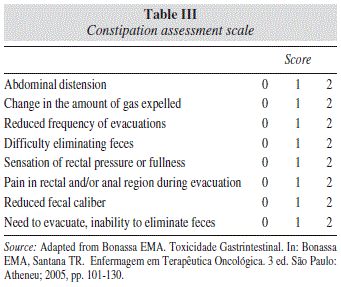
<body><![CDATA[<p>&nbsp;</p>     <p><font face="Verdana" size="2"><b>Intestinal constipation</b></font></p>     <p><font face="Verdana" size="2">The definitions of intestinal constipation (IC) tend to vary significantly. Based on the frequency of evacuations established in the western world, an individual is considered constipated if there are fewer than three evacuations per week.<sup>1,5</sup> However, IC should not be defined without consideration of the patient´s perception.</font></p>     <p><font face="Verdana" size="2">IC is an adverse effect from CT, however it should be distinguished from complications of the neoplasm itself. In fact, subocclusion and intestinal obstruction may result in constipation, especially in patients with cancer of the pelvic, gynecological (ovarian), gastric, and pancreatic regions, arising as a result of tumor growth, plexus invasion, presence of adhesions, hernias, previous radiotherapy, peritoneal carcinomatosis, and high doses of opioids.<sup>17,18</sup></font></p>     <p><font face="Verdana" size="2">In patients undergoing CT, IC occurs due to the use of substances that interfere with intestinal motility, through toxic action on the intrinsic nervous system (INS) of the digestive tract.<sup>6,12,18</sup></font></p>     <p><font face="Verdana" size="2">IC is often accompanied by anorexia, discomfort, pain, and abdominal distension and when prolonged may cause nausea, vomiting, electrolyte imbalance, and the formation of dry, hard feces which cause pain and may lead to the formation of fecaloma.<sup>18</sup></font></p>     <p><font face="Verdana" size="2">Suzan McMillan proposes the use of a scale for the objective assessment of constipation, in which the patient circles a number which best represents their symptoms (<a href="#t3">table III</a>). The sum of these numbers indicates the severity of this side effect, which may range from zero (no constipation) to 16 (most severe constipation).<sup>6</sup></font></p>     <p>&nbsp;</p>     <p align="center"><font face="Verdana" size="2"><a name="t3"><img src="/img/revistas/nh/v27n1/08_revision_07_t3.gif" width="341" height="287"></a></font></p>     <p>&nbsp;</p>     ]]></body>
<body><![CDATA[<p><font face="Verdana" size="2">An average of 41% of patients undergoing antineoplastic treatment experience IC.<sup>16</sup> It is known that associated factors such as advanced age, decreased mobility and physical activity, dietary errors (low-fiber diets) and psychological alterations (depression, anxiety), may increase its occurrence.<sup>6</sup> The antineoplastic agents of the vinca alkaloid group -such as vincristine and vinblastine- are the most likely to cause IC.<sup>1,18</sup></font></p>     <p><font face="Verdana" size="2"><i>Treatment</i></font></p>     <p><font face="Verdana" size="2">The three first lines of orientation in the treatment of IC include increased physical activity, increased water intake, and increased fiber intake.<sup>19</sup></font></p>     <p><font face="Verdana" size="2">Constipation can be controled with a daily fiber consumption of 25 to 35 grams for individuals over 20 years of age, and 10 to 13 grams per 1,000 caloreis for elderly patients.<sup>19,20</sup> Fiber softens the feces and facilitates elimination; it reduces intestinal transit time, protecting the colon from cytotoxic substances; it increases fecal volume and increases microbial mass.<sup>19,21,22</sup> These benefits are only relevant in the presence of liquids: the fibers absorb liquids, resulting in increased fecal volume and consequent stimulus for peristalsis. In diets with low liquid intake, dried feces adhere to the mucosa and do not come loose, or if they do, only in small quantities. It is recommended to drink two to three liters of liquid per day.<sup>10,12,19</sup></font></p>     <p><font face="Verdana" size="2">Accordingly, the nutritional recommendations for IC include:<sup>1,5,6,14,15,16</sup></font></p>     <blockquote>     <p><font face="Verdana" size="2">&bull; Increasing liquid intake through water, teas, coconut water, and juice.</font></p>     <p><font face="Verdana" size="2">&bull; Drinking cold liquids, since these normally stimulate the intestinal tract.</font></p>     <p><font face="Verdana" size="2">&bull; Increasing the consumption of whole-wheat breads, cereals, flours, and grains.</font></p>     <p><font face="Verdana" size="2">&bull; Avoiding constipating fruits such as guava, banana and cashew, prefer laxative fruits such as papaya, plum, and orange.</font></p>     ]]></body>
<body><![CDATA[<p><font face="Verdana" size="2">&bull; Avoiding consuming dishes containing rice cream; whenever possible, adding whole-wheat cereals, oats, linseed flour, wheat bran, granola, wheat germ, and prunes to milk, shakes, yoghurts and curds.</font></p>     <p><font face="Verdana" size="2">&bull; Eating foods containing live lactobacilli.</font></p> </blockquote>     <p><font face="Verdana" size="2">Ideally, dietary fiber should be consumed in the form of foods such as fruit, vegetables, whole-wheat breads and cereals, legumes, nuts, and seeds, not only because they are rich in fibers, but also because they are excellent sources of vitamins and minerals, trace elements and antioxidants. If the patient is unable to consume adequate quantities of these foods, volume-forming agents can be used to promote regular evacuation of soft feces, including: cellulose, hemicellulose derivatives, psyllium seeds, linseed seeds/flour, plantago and osmotic agents such as lactose, magnesium hydroxide, and sorbitol.<sup>14,19,20,22</sup></font></p>     <p><font face="Verdana" size="2">At the start of a high-fiber diet, unpleasant side effects such as increased flatulence, intestinal cramps or diarrhea may occur. The gradual increase in fiber ingestion may help to avoid these symptoms.<sup>19</sup></font></p>     <p>&nbsp;</p>     <p><font face="Verdana" size="2"><b>Diarrhea</b></font></p>     <p><font face="Verdana" size="2">Diarrhea may be defined as an increase in evacuation frequency, or an increase in stool volume and content, different from the normal fecal elimination pattern, and may or may not be accompanied by abdominal pain or cramps.<sup>5,6</sup> It usually consists of three or more soft, liquid bowel movements per day. Roughly 75% of patients undergoing antineoplastic treatment present diarrhea.<sup>12</sup></font></p>     <p><font face="Verdana" size="2">The physiopathology of diarrhea arises from the action of the antineoplastic substances on the rapidly multiplying cells of the digestive tract.<sup>18</sup> CT interferes with the cell cycle of these rapidly dividing cells, causing a sloughing of the mucosa without adequate replacement, leading to irritation, inflammation, and functional alterations.<sup>1,14,18</sup> The substances most often related to the occurrence of diarrhea in patients undergoing CT include cytarabine, actinomycin D, fluorouracil, floxuridine, topotecan, oxaliplatin, and the nitrosoureas.<sup>1,18</sup> The incidence of this side effect depends not only on the substance employed but also on the dose and frequency of administration.<sup>6,18</sup></font></p>     <p><font face="Verdana" size="2">CT-related diarrhea puts the patient at risk of fluid depletion and electrolyte imbalance, conditions that are potentially fatal.<sup>6</sup></font></p>     <p><font face="Verdana" size="2"><i>Treatment</i></font></p>     ]]></body>
<body><![CDATA[<p><font face="Verdana" size="2">The treatment of diarrhea should begin as early as possible in order to avoid complications such as dehydration, weakness, electrolyte imbalance and loss of weight. Such symptoms are common due to alterations in the flow of water and electrolytes in the digestive tract, and consquently lead to complications in the digestive, absorbtion and secretion mechanisms, Flattening occurs in the intestinal villus, causing difficulties in various stages of the process of digestion and absorbtion:</font></p>     <blockquote>     <p><font face="Verdana" size="2">&bull; Impaired functioning of the dissacharides (lactose, saccharose and maltose) appearing on the brush border, restricting the digestion of lactose, saccharose and less frequently maltose.</font></p>     <p><font face="Verdana" size="2">&bull; Reduced absorbtion of nutrients, as the microvillus present on the superficial apical of each epithelial cell of the small intestine, the purpose of which is to supply thousands of inclines and declines leading to the expansion of the absorbative surface, are flattened.</font></p> </blockquote>     <p><font face="Verdana" size="2">In this context, an increase in the quantity of calories, protein, minerals, vitamins, liquids and electrolytes is essential in order to counter nutrients lost as a result of reduced digestive and absorptive function.<sup>21.22</sup> Modifications to the diet are necessary to relieve the patient of the symptoms and correct nutrititional deficiency.<sup>6</sup></font></p>     <p><font face="Verdana" size="2">The first step consists of oral fluid and electrolyte replacement. The nutritional guidelines for diarrhea control include:<sup>1,6,15,16,21,22</sup></font></p>     <blockquote>     <p><font face="Verdana" size="2">&bull; Eating small and frequent meals.</font></p>     <p><font face="Verdana" size="2">&bull; Avoiding lactose-rich foods (milk and milk products), since enterocyte lactose levels are decreased and there may be intolerance.</font></p>     <p><font face="Verdana" size="2">&bull; Increasing liquid intake to at least three liters per day, including coconut water, isotonics, meat broth, teas, strained juices, and gelatins.</font></p>     ]]></body>
<body><![CDATA[<p><font face="Verdana" size="2">&bull; Removing from the diet any foods that irritate or stimulate peristaltism, such as whole-wheat cereals, insoluble fibers, fried, fatty, or spicy foods, fresh fruit and raw vegetables, coffee, chocolate, citrus fruits and juices (orange, tangerine, acerola, cherry, guava, cashew, pineapple, lime, kiwi, and caja).</font></p>     <p><font face="Verdana" size="2">&bull; Providing sources of soluble fiber, which assist in the control of intestinal transit by providing viscosity, as well as the possibility of producing short-chain fatty acids, important to the integrity and recovery of the intestinal mucosa.</font></p>     <p><font face="Verdana" size="2">&bull; Avoiding flatulence-inducing foods such as garlic, onions, cabbage, broccoli, Bell peppers, sweet potato, sweets in general (caramels, bonbons, chocolate, honey, sugar), cheese, beans, peas, lentils, avocado, guava, apple, grapes, melon, watermelon, jackfruit, oranges, oats, carbonated beverages, coffee, and condiments (except salt).</font></p>     <p><font face="Verdana" size="2">&bull; Avoiding foods that are very hot or very cold.</font></p>     <p><font face="Verdana" size="2">&bull; Substituting sucrose for maltodextrin.</font></p> </blockquote>     <p><font face="Verdana" size="2">It is also important to remember the importance of a balanced diet with high levels of complex carbohydrates and a reduced amount of fat, in addition to regular physical exercise.<sup>22</sup></font></p>     <p>&nbsp;</p>     <p><font face="Verdana" size="2"><b>Xerostomia</b></font></p>     <p><font face="Verdana" size="2">Xerostomia, or dry mouth, consists of the interruption or marked reduction of salivary gland secretion.<sup>23</sup> Under normal conditions, 0.3 to 0.5 mL of saliva is produced per minute; xerostomia occurs when salivary flow is less than 0.1 mL per minute.<sup>24</sup> Roughly 40% of patients undergoing chemotherapy experience dry mouth, usually short-lasting, with recovery within two to eight weeks after treatment conclusion.<sup>14,25</sup> The manifestations include dryness of the mouth, lip fissures, as well as papillary burning and atrophy on the dorsal surface of the tongue.<sup>23,24,26</sup></font></p>     <p><font face="Verdana" size="2">Some antineoplastic substances cause xerostomia due to competition with the receptors for the neurotransmitter acetylcholine, thus inhibiting transmission of parasympathetic nerve impulses arising from the salivary nuclei. These parasympathetic nerves are responsible for the control of the salivary glands when excited by tactile or taste stimulation from the tongue and other areas of the mouth; inhibition results in decreased salivary secretions.<sup>24,27</sup></font></p>     ]]></body>
<body><![CDATA[<p><font face="Verdana" size="2">Xerostomia affects women more frequently than men, and is also more common among the elderly. Physical examination of the affected patient typically reveals a reduction in saliva production, with a thick or foamy appearance.<sup>27</sup></font></p>     <p><font face="Verdana" size="2">Clinical findings do not always correlate with the patient´s symptoms. Some patients reporting dryness of the mouth may present adequate salivary flow and oral humidity, while some patients who appear to have clinically dry mouth do not present symptoms. The lack of saliva production may be confirmed by measurement of saliva production at rest and under stimulation.<sup>27</sup></font></p>     <p><font face="Verdana" size="2">The buffering effect and the role of oral hygiene generally attributed to saliva are altered by xerostomiaa, thus contributing to the emergence of microbial infections, rapidly progressing dental cavities and loss of taste acuity, as well as leading to an incapacity to moisten, chew, and swallow foods. All these conditions have a profound effect on food selection and consequently on systemic nutrition.<sup>24</sup></font></p>     <p><font face="Verdana" size="2"><i>Treatment</i></font></p>     <p><font face="Verdana" size="2">Patients receiving substances that trigger xerostomia should increase fluid ingestion to 25-30 mL/kg/day.<sup>11,19</sup> The nutritional approach to reduce and relieve xerostomia includes:<sup>4,5,15,16,24</sup></font></p>     <blockquote>     <p><font face="Verdana" size="2">&bull; Preferring foods that are moist, soft, with sauces, in the form of puree, broths and icecream.</font></p>     <p><font face="Verdana" size="2">&bull; Avoiding dry, hard foods that are hard to swallow.</font></p>     <p><font face="Verdana" size="2">&bull; Preferring cold foods, eat acidic fruit candy, popsicles, and chewing gum.</font></p>     <p><font face="Verdana" size="2">&bull; Accompanying meals with liquids, preferable acidic juices, which stimulate saliva production.</font></p>     ]]></body>
<body><![CDATA[<p><font face="Verdana" size="2">&bull; Drinking liquids through a straw, providing less contact with the mucosa.</font></p>     <p><font face="Verdana" size="2">&bull; Squeezing lemon juice under the tongue to increase salivation.</font></p>     <p><font face="Verdana" size="2">&bull; Avoiding smoking and alcoholic beverages.</font></p> </blockquote>     <p><font face="Verdana" size="2">Other strategies include: frequent cleaning of dental prostheses, avoiding oral solutions containing alcohol since these dry out the mucosa, frequent hydration of the mouth with small sips of water and maintaining the lips moisturized with glycerin or vaseline lipstick.<sup>14,15,24</sup></font></p>     <p><font face="Verdana" size="2">The use of artificial saliva may also be beneficial to hydrate the oral mucosa. There are also medications which stimulate intact salivary glands to increase saliva production.<sup>24,27</sup></font></p>     <p>&nbsp;</p>     <p><font face="Verdana" size="2"><b>Oral mucositis</b></font></p>     <p><font face="Verdana" size="2">Mucositis consists of an inflammatory response of the mucous membranes to antineoplastic treatment.<sup>1,28,29,30</sup> It is caused by the interference of CT on the cycles of cells that have a high rate of proliferation. It is characterized by more or less diffuse lesions on the oral mucosa, typically associated with pain, dryness, burning, bleeding and infection. Physical examination reveals erythema, erosions, and ulceration.<sup>26,31</sup> Clinical manifestations generally begin with complaints of sensitivity to acidic foods and intolerance to very hot or very cold foods, starting after two to 14 days of chemotherapy. Symptoms such as dysphagia and odynophagia are common, and may lead to altered food and liquid intake.<sup>25,28,32</sup></font></p>     <p><font face="Verdana" size="2">The ocurrence and severity of the lesions varies with the antineoplastic agent used, administration time, and the physical condition of the patient.<sup>1,5</sup> Approximately 40% of patients undergoing CT develop mucositis in varying degrees, more often in the more intense and aggressive chemotherapeutic protocols, such as in the treatment of leukemia and lymphoma, as well as in treatment regimens that employ RT and CT simultaneously.<sup>1,5,14,28,33</sup> The principal antineoplastic agents associated with mucositis include: methotrexate, 5-fluorouracil, bleomycin, doxorubicin, cisplatin, vinblastine, and vincristine.<sup>30,34</sup> The degree of dysfunction of the lips, tongue, oral mucosa, teeth, and slaiva according to mucositis intensity can be observed in <a target="_blank" href="/img/revistas/nh/v27n1/08_revision_07_t4.gif">table IV</a>.</font></p>     <p><font face="Verdana" size="2">Risk factors for the development of mucositis include: inadequate oral hygiene, nutritional status, smoking, alcohol intake, age (young patients are more at risk), and preexisting oral conditions.<sup>5,32</sup></font></p>     ]]></body>
<body><![CDATA[<p><font face="Verdana" size="2">Chemotherapeutic agents cause mucositis through direct and indirect toxic effects on the oral mucosa.<sup>30,33</sup></font></p>     <p><font face="Verdana" size="2">The direct effect is caused by interference of CT on the cell cycle of cells that renew themselves every seven to 14 days. Antineoplastic substances cause destruction of cells that are undergoing active division by interfering in the synthesis of DNA, RNA, and proteins. Epithelial atrophy, destruction of the basal layer of the mucosa and inhibition of cellular replacement occur, causing ulceration that may progress to massive scaling, increasing the likelihood of the development of secondary infections.<sup>5,28,34</sup></font></p>     <p><font face="Verdana" size="2">The indirect toxic effect of CT is due to myelosuppression, or suppressed immune response, making the epithelium more susceptible to ulceration, infection, necrosis and bleeding.<sup>33,34</sup> The intensity of oral mucositis is directly associated with a decrease in granulocytes during the Nadir period during antineoplastic treatment, which corresponds to the time elapsed between drug administration and the ocurrence of the lowest hematological.<sup>1,5,34</sup> Expressed in days, the Nadir period typically occurs seven to ten days following administration of the chemotherapeutic agent.</font></p>     <p><font face="Verdana" size="2">Oral mucositis can be divided in four development phases:<sup>5,33,34</sup></font></p>     <blockquote>     <p><font face="Verdana" size="2">1. <i>Inflammatory/vascular phase:</i> cytokine relese occurs, causing local tissue damage and triggering an immune response.</font></p>     <p><font face="Verdana" size="2">2. <i>Epithelial phase:</i> antineoplastic substances act directly on the epithelial cells of the oral mucosa, resulting in a reduction of cellular replacement, atrophy, and ulceration.</font></p>     <p><font face="Verdana" size="2">3. <i>Ulcerative/bacterial phase:</i> generally occurs between seven to 10 days after CT, concomittantly to neutropenia. It is characterized by tissue erosion and secondary bacterial colonization, leading to a new release of cytokines and, consequently, greater tissue damage.</font></p>     <p><font face="Verdana" size="2">4. <i>Healing phase:</i> resolution of neutropenia occurs, epithelial renovation and proliferation and the reestablishment of the local microbiota.</font></p> </blockquote>     <p><font face="Verdana" size="2"><i>Treatment</i></font></p>     ]]></body>
<body><![CDATA[<p><font face="Verdana" size="2">The treatment goal for oral mucositis is the prevention of complications such as secondary infections and bleeding, relief of local pain and discomfort, maintenance of the integrity of the oral mucosa, and adequate caloric intake. Accordingly, the following overall guidelines apply:<sup>1,5,6,14</sup></font></p>     <blockquote>     <p><font face="Verdana" size="2">&bull; Perform a daily, careful evaluation of the oral cavity of patients undergoing CT, before and after administration of the chemotherapeutic medication.</font></p>     <p><font face="Verdana" size="2">&bull; Emphasize to the patient and the family the importance of maintaining good oral hygiene in the prevention of mucositis-related complications.</font></p>     <p><font face="Verdana" size="2">&bull; Advise the patient on the most appropriate alternatives for mouthwashes, such as saline solutions of sodium chloride and alkaline solutions containing sodium bicarbonate, and also those that are contraindicated, such as commercial solutions containing alcoholic diluents.</font></p>     <p><font face="Verdana" size="2">&bull; Advise the patient to avoid smoking.</font></p>     <p><font face="Verdana" size="2">&bull; Promote local hydration with cacau butter or vaseline-based creams.</font></p>     <p><font face="Verdana" size="2">&bull; Advise the doctor about any change in the evolution of the mucositis, as worsening may warrant dose reduction or suspension of the chemotherapeutic treatment.</font></p>     <p><font face="Verdana" size="2">&bull; Relieve pain with the use of topical or systemic anesthetics, according to medical prescriptions.</font></p>     <p><font face="Verdana" size="2">&bull; Advise the patient to avoid dental treatment during the Nadir period of the antineoplastic substances.</font></p>     ]]></body>
<body><![CDATA[<p><font face="Verdana" size="2">&bull; Inform the patient and family of the possibility of mucositis occurrence and of the resources available to alleviate this side effect.</font></p> </blockquote>     <p><font face="Verdana" size="2">The nutritional guidelines include:<sup>1,5,6,14,15,16,22</sup></font></p>     <blockquote>     <p><font face="Verdana" size="2">&bull; Individual dietary adaptation in terms of consistency, flavor, acidity, and temperature.</font></p>     <p><font face="Verdana" size="2">&bull; Frequent small meals, favoring foods that are rich in proteins and calories.</font></p>     <p><font face="Verdana" size="2">&bull; Explaining to the patient that palate changes are common and may anticipate the signs and symptoms of mucositis.</font></p>     <p><font face="Verdana" size="2">&bull; Offering foods that are pasty or semi-liquid in consistency, easy to chew and swallow, with mild flavors and served at room temperature (not overly hot or cold).</font></p>     <p><font face="Verdana" size="2">&bull; Excluding from the diet any foods that irritate the mucosa, such as salt or seasonings, peppery spices, and acids.</font></p>     <p><font face="Verdana" size="2">&bull; Ingesting soft foods with purees, creams, and smoothies made with milk and fruit.</font></p>     <p><font face="Verdana" size="2">&bull; Drinking smoothies and juices through a straw since this makes swallowing easier.</font></p>     ]]></body>
<body><![CDATA[<p><font face="Verdana" size="2">&bull; Encouraging intake of liquids (about two to three liters per day).</font></p> </blockquote>     <p>&nbsp;</p>     <p><font face="Verdana" size="2"><b>Dysphagia</b></font></p>     <p><font face="Verdana" size="2">Dysphagia is the difficulty -or even the impossibi -lity- to swallow food normally. When there is pain associated with the process of swallowing, the term odynophagia is used.<sup>35,36,37,38</sup> Some symptoms associated with dysphagia include choking or coughing after meals, a choking sensation, abnormal sensation of food lodged in the back of the throat, and gurgling voice quality.<sup>35,36,37,39</sup> There is no concrete data on the prevalence of dysphagia in patients undergoing CT.</font></p>     <p><font face="Verdana" size="2">In the patient undergoing CT, dysphagia is characterized by changes in the preparatory, oral, and pharyngeal phases of swallowing. Antineoplastic agents interfere with the cell cycle of the quickly-renewed cells of the GIT, leading to symptoms such as xerostomia, mucositis, dysgeusia and stomatitis, which alter oral and pharyngeal sensitivity, resulting in less stimulation of the swallowing center, with an increase in pharyngeal transit time for food, reduced laryngeal elevation, and laryngeal penetrations or aspirations, among others.<sup>16,25,27,35</sup></font></p>     <p><font face="Verdana" size="2">Using the criteria established by the National Cancer Institute, <a target="_blank" href="/img/revistas/nh/v27n1/08_revision_07_t5.gif">table V</a> presents dysphagia intensity assessments in oncologic patients undergoing antineoplastic treatment.<sup>16</sup></font></p>     <p><font face="Verdana" size="2"><i>Treatment</i></font></p>     <p><font face="Verdana" size="2">The dietary strategies to facilitate swallowing and prevent aspriation of food should include the following aspects:<sup>5,15,16,35,40,41</sup></font></p>     <blockquote>     <p><font face="Verdana" size="2">&bull; Adjusting food consistency by individual tole - rance.</font></p>     ]]></body>
<body><![CDATA[<p><font face="Verdana" size="2">&bull; Making frequent, small-volume meals, avoid foods in extreme temperatures.</font></p>     <p><font face="Verdana" size="2">&bull; Excluding irritant foods; increase consumption of foods rich in proteins and calories.</font></p>     <p><font face="Verdana" size="2">&bull; Maintaining upright posture during and within the 30 minutes after meals to reduce the risk of aspiration; avoid environmental distractions and conversations during the meal.</font></p>     <p><font face="Verdana" size="2">&bull; Adding thickening agents to food -to avoid aspiration- such as non-fat milk powder, corn starch,modular carbohydrate supplements, or commercial thickeners containing a modified corn starchbased thickening agent.</font></p>     <p><font face="Verdana" size="2">&bull; Encouraging the patient to focus on their eating helps to avoid chocking.</font></p>     <p>&nbsp;</p> </blockquote>     <p><font face="Verdana" size="2"><b>Anorexia</b></font></p>     <p><font face="Verdana" size="2">Anorexia is the most frequent complication associated with cancer, being present in 24% of patients at diagnosis and reaching 80% in the advanced disease stage.<sup>42,43,44,45</sup> It affects roughly 66% of patients undergoing chemotherapy.<sup>1,5,46</sup> It consists of a loss of appetite, early satiety, a combination of both, or a change in food.<sup>42,44,47,48,49</sup> The effects of anorexia progress rapidly and are difficult to reverse, making early intervention a worthwhile strategy with regards to patient nutritional status.<sup>43,44,48,49,50</sup></font></p>     <p><font face="Verdana" size="2">Some antineoplastic medications commonly associated with anorexia are: carboplatin, cytarabine, dacarbazine, fluorouracil, hydroxyureia, methotrexate, and bleomycin sulphate.<sup>1</sup></font></p>     <p><font face="Verdana" size="2">The intensity of this side effect is related to several factors, such as: dose and frequency of administrations, overall status of the patient, presence of pain, psychological factors including anxiety, fear, depression, and use of other medications associated with chemotherapeutic treatment.<sup>1,17,51,52</sup></font></p>     ]]></body>
<body><![CDATA[<p><font face="Verdana" size="2">Virtually all chemotherapeutic agents are associated with anorexia. At effective therapeutic dosage levels, these drugs in general present an acute anorexic effect due to their actions in the central firing zone of the food avoidance chemoreceptor.<sup>34,39</sup> However, food intake can diminish long-term due to symptoms such as nausea and vomiting, food aversions, impaired oral function (mucositis, dysphagia, and xerostomia), dysgeusia and ageusia, gastric irritation and GIT alterations (slow gastric emptying).<sup>5,42,44,47,52,53</sup></font></p>     <p><font face="Verdana" size="2">Dysgeusia is one of the symptoms most commonly related to loss of appetite, and consists of a change in varying degrees in taste sensation. It is often described by patients as an unpleasant, characteristically metallic or putrid taste that lingers in the mouth.<sup>54,55,56,57</sup></font></p>     <p><font face="Verdana" size="2">The risks arising from medication-induced loss of appetite depend on both the primary toxicity of the substance and on the secondary effects of appetite loss. These include not only weight loss, but also specific nutrient deficiencies.<sup>16,51</sup></font></p>     <p><font face="Verdana" size="2"><i>Treatment</i></font></p>     <p><font face="Verdana" size="2">Some dietary strategies to reduce the discomfort associated with food intake and increase energetic nutrient consumption include:<sup>5,14,15,16,43,58</sup></font></p>     <blockquote>     <p><font face="Verdana" size="2">&bull; Reinforcing the first meals of the day, since anorexia is often less intense earlier in the day.</font></p>     <p><font face="Verdana" size="2">&bull; Eating slowly, having frequent, low-volume meals, and avoiding fluid intake during meals (these measures aim to counter early satiation and gastric bloating which, when associated with loss of appetite, limit dietary intake).</font></p>     <p><font face="Verdana" size="2">&bull; Avoiding frequent repetitions of foods.</font></p>     <p><font face="Verdana" size="2">&bull; Avoiding excess fat, because it increases satiety and delays gastric emptying.</font></p>     ]]></body>
<body><![CDATA[<p><font face="Verdana" size="2">&bull; Facilitating the choice of favorite foods.</font></p>     <p><font face="Verdana" size="2">&bull; High-calorie and high-protein nutritional supplements offer complementation of great value.</font></p>     <p><font face="Verdana" size="2">&bull; Encouraging oral hygiene before meals to improve the palate.</font></p>     <p><font face="Verdana" size="2">&bull; Eating whenever hungry.</font></p>     <p><font face="Verdana" size="2">&bull; Appetite stimulants should be administered according to medical criteria.</font></p> </blockquote>     <p><font face="Verdana" size="2">Increasing the dietary caloric and protein content is also an important strategy, utilizing the following guidelines:<sup>47</sup></font></p>     <blockquote>     <p><font face="Verdana" size="2">&bull; <i>Caloric increase:</i> fruit jams in yoghurt or milk; condensed milk or honey in fruit salad; starchy foods like potato, yam, and manioc in soups and salads; porridge made with milk and thickener.</font></p>     <p><font face="Verdana" size="2">&bull; <i>Protein increase:</i> parmesan or other cheese in soup; powdered milk added to liquid milk; eggs added to some foods such as soups; omelets enriched with cheese or milk; beef, chicken, or fish stocks in foods like soups, rice, beans; shredded chicken, beef, or fish in salads or sandwiches, juice with milk.</font></p> </blockquote>     <p><font face="Verdana" size="2">Other important measures include:<sup>5,6,15,16,43,47</sup></font></p>     ]]></body>
<body><![CDATA[<blockquote>     <p><font face="Verdana" size="2">&bull; Meals should be eaten in a quiet place, with good chewing of the food.</font></p>     <p><font face="Verdana" size="2">&bull; The patient should stay away from the place where the food is prepared so that the odors produced do not interfere with meals.</font></p>     <p><font face="Verdana" size="2">&bull; Physical exercise, adapted for the tolerance of each patient, should be performed before each meal, if possible, as this may increase appetite.</font></p>     <p>&nbsp;</p> </blockquote>     <p><font face="Verdana" size="2"><b>Conclusion</b></font></p>     <p><font face="Verdana" size="2">Nutritional therapy is a fundamental part of the treatment of oncologic patients undergoing chemotherapy, as dietetic prescription, in addition to providing for the patients nutritional needs, should, above all, provide pleasure and comfort.</font></p>     <p><font face="Verdana" size="2">The nutritionist who works with patients undergoing CT should establish an individualized nutritional treatment plan and schedule the dietary therapeutic approach with periodic reviews, which may minimize symptoms, leading to a reduction of complications, duration of hospital stay, and costs. This approach, constructed within a multidisciplinary team -and with a central premise of comprehensive care- may represent a significant improvement in patient quality of life.</font></p>     <p>&nbsp;</p>     <p><font face="Verdana" size="2"><b>References</b></font></p>     ]]></body>
<body><![CDATA[<!-- ref --><p><font face="Verdana" size="2">1. Almeida JRC. Farmac&ecirc;uticos em oncologia: uma nova realidade. S&atilde;o Paulo: Atheneu; 2004.    &nbsp;&nbsp;&nbsp;&nbsp;&nbsp;&nbsp;&nbsp;&nbsp;[&#160;<a href="javascript:void(0);" onclick="javascript: window.open('/scielo.php?script=sci_nlinks&ref=3653828&pid=S0212-1611201200010000800001&lng=','','width=640,height=500,resizable=yes,scrollbars=1,menubar=yes,');">Links</a>&#160;]<!-- end-ref --></font></p>    <!-- ref --><p><font face="Verdana" size="2">2. Garófolo A, Avesani CM, Camargo KG, Barros ME, Silva SRJ, Taddei JA de AC, et al. Dieta e câncer: um enfoque epidemiológico. <i>Rev Nutr</i> 2004; 17 (4): 491-505.    &nbsp;&nbsp;&nbsp;&nbsp;&nbsp;&nbsp;&nbsp;&nbsp;[&#160;<a href="javascript:void(0);" onclick="javascript: window.open('/scielo.php?script=sci_nlinks&ref=3653830&pid=S0212-1611201200010000800002&lng=','','width=640,height=500,resizable=yes,scrollbars=1,menubar=yes,');">Links</a>&#160;]<!-- end-ref --></font></p>    <!-- ref --><p><font face="Verdana" size="2">3. Anelli A. Tratamento sist&ecirc;mico do câncer. In: Kowalsky LP,Anelli A, Salvajoli JV, Lopes LF, editors. Manual de conduta diagnostica e terap&ecirc;utica em oncologia. 2. ed. S&atilde;o Paulo: Âmbito Editores; 2002, pp. 100-11.    &nbsp;&nbsp;&nbsp;&nbsp;&nbsp;&nbsp;&nbsp;&nbsp;[&#160;<a href="javascript:void(0);" onclick="javascript: window.open('/scielo.php?script=sci_nlinks&ref=3653832&pid=S0212-1611201200010000800003&lng=','','width=640,height=500,resizable=yes,scrollbars=1,menubar=yes,');">Links</a>&#160;]<!-- end-ref --></font></p>    <!-- ref --><p><font face="Verdana" size="2">3. Machado R de CL, Paiva DRS, Rojea Júnior W. Quimioterápicos antineoplásicos. In: Fonseca SM, Machado R de CL, Paiva DR dos S, Almeida EPM, Massunaga VM, Rotia Júnior W, et al, editors. Manual de quimioterapia antineoplásica. Rio de Janeiro: Reichmann & Affonso; 2000, pp. 7-14.    &nbsp;&nbsp;&nbsp;&nbsp;&nbsp;&nbsp;&nbsp;&nbsp;[&#160;<a href="javascript:void(0);" onclick="javascript: window.open('/scielo.php?script=sci_nlinks&ref=3653834&pid=S0212-1611201200010000800004&lng=','','width=640,height=500,resizable=yes,scrollbars=1,menubar=yes,');">Links</a>&#160;]<!-- end-ref --></font></p>    <!-- ref --><p><font face="Verdana" size="2">4. Massunaga VM, Ayoub AC, Frias MAE, Barros MA, Kobayashi RM. Efeitos adversos da quimioterapia: complicaç&otilde;es no sistema digestivo. In: Ayoub AC, Farias MAE, Barros MA, Kobayashy RM, editors. Bases de enfermagem em quimioterapia. S&atilde;o Paulo: Lamar; 2002, pp. 371-84.    &nbsp;&nbsp;&nbsp;&nbsp;&nbsp;&nbsp;&nbsp;&nbsp;[&#160;<a href="javascript:void(0);" onclick="javascript: window.open('/scielo.php?script=sci_nlinks&ref=3653836&pid=S0212-1611201200010000800005&lng=','','width=640,height=500,resizable=yes,scrollbars=1,menubar=yes,');">Links</a>&#160;]<!-- end-ref --></font></p>    ]]></body>
<body><![CDATA[<!-- ref --><p><font face="Verdana" size="2">5. Bonassa EMA. Toxicidade gastrintestinal. In: Bonassa EMA, Santana TR, editors. Enfermagem em terap&ecirc;utica oncológica. 3. ed. S&atilde;o Paulo: Atheneu; 2005, pp. 101-30.    &nbsp;&nbsp;&nbsp;&nbsp;&nbsp;&nbsp;&nbsp;&nbsp;[&#160;<a href="javascript:void(0);" onclick="javascript: window.open('/scielo.php?script=sci_nlinks&ref=3653838&pid=S0212-1611201200010000800006&lng=','','width=640,height=500,resizable=yes,scrollbars=1,menubar=yes,');">Links</a>&#160;]<!-- end-ref --></font></p>    <!-- ref --><p><font face="Verdana" size="2">6. Tripton JM, Skeel RT. Reacciones agudas y efectos secundários a corto plazo de los antneoplásicos. In: Skell RT, editor. Quimioterapia del câncer. 5. ed. Madrid: Marben; 2000, pp. 555-73.    &nbsp;&nbsp;&nbsp;&nbsp;&nbsp;&nbsp;&nbsp;&nbsp;[&#160;<a href="javascript:void(0);" onclick="javascript: window.open('/scielo.php?script=sci_nlinks&ref=3653840&pid=S0212-1611201200010000800007&lng=','','width=640,height=500,resizable=yes,scrollbars=1,menubar=yes,');">Links</a>&#160;]<!-- end-ref --></font></p>    <!-- ref --><p><font face="Verdana" size="2">7. Tong H, Isenring E, Yates P. The prevalence of nutrition impact symptoms and their relationship to quality of life and clinical outcomes in medical oncology patients. <i>Support Care Cancer</i> 2009; 17 (1): 83-90.    &nbsp;&nbsp;&nbsp;&nbsp;&nbsp;&nbsp;&nbsp;&nbsp;[&#160;<a href="javascript:void(0);" onclick="javascript: window.open('/scielo.php?script=sci_nlinks&ref=3653842&pid=S0212-1611201200010000800008&lng=','','width=640,height=500,resizable=yes,scrollbars=1,menubar=yes,');">Links</a>&#160;]<!-- end-ref --></font></p>    <!-- ref --><p><font face="Verdana" size="2">8. Bozzetti F. Screening the nutritional status in oncology: a preliminary report on 1,000 outpatients. <i>Support Care Cancer</i> 2009; 17 (3): 279-84.    &nbsp;&nbsp;&nbsp;&nbsp;&nbsp;&nbsp;&nbsp;&nbsp;[&#160;<a href="javascript:void(0);" onclick="javascript: window.open('/scielo.php?script=sci_nlinks&ref=3653844&pid=S0212-1611201200010000800009&lng=','','width=640,height=500,resizable=yes,scrollbars=1,menubar=yes,');">Links</a>&#160;]<!-- end-ref --></font></p>    <!-- ref --><p><font face="Verdana" size="2">9. Dewan P, Singhal S, Harit D. Management of chemotherapyinduced nausea and vomiting. <i>Indian Pediatr</i> 2010; 47 (2): 149-55.    &nbsp;&nbsp;&nbsp;&nbsp;&nbsp;&nbsp;&nbsp;&nbsp;[&#160;<a href="javascript:void(0);" onclick="javascript: window.open('/scielo.php?script=sci_nlinks&ref=3653846&pid=S0212-1611201200010000800010&lng=','','width=640,height=500,resizable=yes,scrollbars=1,menubar=yes,');">Links</a>&#160;]<!-- end-ref --></font></p>    ]]></body>
<body><![CDATA[<!-- ref --><p><font face="Verdana" size="2">10. Roila F, Herrstedt J, Aapro M, Gralla RJ, Einhorn JH, Ballatori E et al. Guideline update for mascc and esmo in the prevention of chemotherapy- and radiotherapy-induced nausea and vomiting: results of the perugia consensus conference. <i>Ann Oncol</i> 2010; 21 (5): 232-43.    &nbsp;&nbsp;&nbsp;&nbsp;&nbsp;&nbsp;&nbsp;&nbsp;[&#160;<a href="javascript:void(0);" onclick="javascript: window.open('/scielo.php?script=sci_nlinks&ref=3653848&pid=S0212-1611201200010000800011&lng=','','width=640,height=500,resizable=yes,scrollbars=1,menubar=yes,');">Links</a>&#160;]<!-- end-ref --></font></p>    <!-- ref --><p><font face="Verdana" size="2">11. Fonseca SM, Almeida EPM, Massunaga VM. Protocolo de intervenç&atilde;o de enfermagem frente às reaç&otilde;es adversas aos quimioterápicos antineoplásicos. In: Fonseca SM, Machado R de CL, Paiva DR dos S, Almeida EPM, Massunaga VM, Rotia Júnior W, et al, editors. Manual de quimioterapia antineoplásica. Rio de Janeiro: Reichmann & Affonso; 2000, pp. 27-54.    &nbsp;&nbsp;&nbsp;&nbsp;&nbsp;&nbsp;&nbsp;&nbsp;[&#160;<a href="javascript:void(0);" onclick="javascript: window.open('/scielo.php?script=sci_nlinks&ref=3653850&pid=S0212-1611201200010000800012&lng=','','width=640,height=500,resizable=yes,scrollbars=1,menubar=yes,');">Links</a>&#160;]<!-- end-ref --></font></p>    <!-- ref --><p><font face="Verdana" size="2">12. Cabezos PA, Vera G, Martín-Fontelles MI, Fernández-Pujol R, Abalo R. Cisplatin-induced gastrointestinal dysmotility is aggravated after chronic administration in the rat. Comparison with pica. <i>Neurogastroenterol Motil</i> 2010; 22 (7): 797-805.    &nbsp;&nbsp;&nbsp;&nbsp;&nbsp;&nbsp;&nbsp;&nbsp;[&#160;<a href="javascript:void(0);" onclick="javascript: window.open('/scielo.php?script=sci_nlinks&ref=3653852&pid=S0212-1611201200010000800013&lng=','','width=640,height=500,resizable=yes,scrollbars=1,menubar=yes,');">Links</a>&#160;]<!-- end-ref --></font></p>    <!-- ref --><p><font face="Verdana" size="2">13. Dzink C. Toxicidade da quimioterapia. In: Forones NM, Jesus-Gargia Filho R, Tadokoro H, Freire CAR, editors. Oncologia: guia de medicina ambulatorial e hospitalar. S&atilde;o Paulo: Manole; 2005, pp. 423-33.    &nbsp;&nbsp;&nbsp;&nbsp;&nbsp;&nbsp;&nbsp;&nbsp;[&#160;<a href="javascript:void(0);" onclick="javascript: window.open('/scielo.php?script=sci_nlinks&ref=3653854&pid=S0212-1611201200010000800014&lng=','','width=640,height=500,resizable=yes,scrollbars=1,menubar=yes,');">Links</a>&#160;]<!-- end-ref --></font></p>    <!-- ref --><p><font face="Verdana" size="2">14. Ministério da Saúde (BR). Consenso Nacional de Nutriç&atilde;o Oncológica. Rio de Janeiro: INCA; 2009.    &nbsp;&nbsp;&nbsp;&nbsp;&nbsp;&nbsp;&nbsp;&nbsp;[&#160;<a href="javascript:void(0);" onclick="javascript: window.open('/scielo.php?script=sci_nlinks&ref=3653856&pid=S0212-1611201200010000800015&lng=','','width=640,height=500,resizable=yes,scrollbars=1,menubar=yes,');">Links</a>&#160;]<!-- end-ref --></font></p>    ]]></body>
<body><![CDATA[<!-- ref --><p><font face="Verdana" size="2">15. Dias MCG. Repercuss&atilde;o da terapia nutricional em quimio e radioterapia. In: Waitzberg DL, editor. Dieta, Nutriç&atilde;o e Câncer. S&atilde;o Paulo: Atheneu; 2004, pp. 450-60.    &nbsp;&nbsp;&nbsp;&nbsp;&nbsp;&nbsp;&nbsp;&nbsp;[&#160;<a href="javascript:void(0);" onclick="javascript: window.open('/scielo.php?script=sci_nlinks&ref=3653858&pid=S0212-1611201200010000800016&lng=','','width=640,height=500,resizable=yes,scrollbars=1,menubar=yes,');">Links</a>&#160;]<!-- end-ref --></font></p>    <!-- ref --><p><font face="Verdana" size="2">16. Corr&ecirc;a PH, Shibuya E. Administraç&atilde;o da terapia nutricional em cuidados paliativos. <i>Rev Brás Cancerolog</i> 2007; 53 (3): 317-23.    &nbsp;&nbsp;&nbsp;&nbsp;&nbsp;&nbsp;&nbsp;&nbsp;[&#160;<a href="javascript:void(0);" onclick="javascript: window.open('/scielo.php?script=sci_nlinks&ref=3653860&pid=S0212-1611201200010000800017&lng=','','width=640,height=500,resizable=yes,scrollbars=1,menubar=yes,');">Links</a>&#160;]<!-- end-ref --></font></p>    <!-- ref --><p><font face="Verdana" size="2">17. Zeino Z, Sisson G, Bjarnason I. Adverse effects of drugs on small intestine and colon. <i>Best Pract Res Clin Gastroenterol</i> 2010; 24 (2): 133-41.    &nbsp;&nbsp;&nbsp;&nbsp;&nbsp;&nbsp;&nbsp;&nbsp;[&#160;<a href="javascript:void(0);" onclick="javascript: window.open('/scielo.php?script=sci_nlinks&ref=3653862&pid=S0212-1611201200010000800018&lng=','','width=640,height=500,resizable=yes,scrollbars=1,menubar=yes,');">Links</a>&#160;]<!-- end-ref --></font></p>    <!-- ref --><p><font face="Verdana" size="2">18. Dos Santos HS. Terap&ecirc;utica nutricional para constipaç&atilde;o intestinal em pacientes oncológicos com doenças avançada em uso de opiácios: revis&atilde;o. <i>Rev Bras Cancerolog</i> 2002; 48 (2): 263-9.    &nbsp;&nbsp;&nbsp;&nbsp;&nbsp;&nbsp;&nbsp;&nbsp;[&#160;<a href="javascript:void(0);" onclick="javascript: window.open('/scielo.php?script=sci_nlinks&ref=3653864&pid=S0212-1611201200010000800019&lng=','','width=640,height=500,resizable=yes,scrollbars=1,menubar=yes,');">Links</a>&#160;]<!-- end-ref --></font></p>    <!-- ref --><p><font face="Verdana" size="2">19. Machado WM, Capelari SM. Avaliaç&atilde;o da eficácia e do grau de ades&atilde;o ao uso prolongado de fibra dietética no tratamento da constipaç&atilde;o intestinal funcional. <i>Rev Nutr</i> 2010; 23 (2): 231-238.    &nbsp;&nbsp;&nbsp;&nbsp;&nbsp;&nbsp;&nbsp;&nbsp;[&#160;<a href="javascript:void(0);" onclick="javascript: window.open('/scielo.php?script=sci_nlinks&ref=3653866&pid=S0212-1611201200010000800020&lng=','','width=640,height=500,resizable=yes,scrollbars=1,menubar=yes,');">Links</a>&#160;]<!-- end-ref --></font></p>    ]]></body>
<body><![CDATA[<!-- ref --><p><font face="Verdana" size="2">20. Cope DG. Management of chemotherapy-induced diarrhea and constipation. <i>Nurs Clin North Am</i> 2001; 36 (4): 695-707.    &nbsp;&nbsp;&nbsp;&nbsp;&nbsp;&nbsp;&nbsp;&nbsp;[&#160;<a href="javascript:void(0);" onclick="javascript: window.open('/scielo.php?script=sci_nlinks&ref=3653868&pid=S0212-1611201200010000800021&lng=','','width=640,height=500,resizable=yes,scrollbars=1,menubar=yes,');">Links</a>&#160;]<!-- end-ref --></font></p>    <!-- ref --><p><font face="Verdana" size="2">21. Beyer PL. Tratamento médico nutricional para doenças do trato gastrointestinal inferior. In: Mahan LK, Escott-stump S, editors. Krause: Alimentos, nutriç&atilde;o e dietoterapia. 12. ed. S&atilde;o Paulo: Roca, 2010, pp. 654-772.    &nbsp;&nbsp;&nbsp;&nbsp;&nbsp;&nbsp;&nbsp;&nbsp;[&#160;<a href="javascript:void(0);" onclick="javascript: window.open('/scielo.php?script=sci_nlinks&ref=3653870&pid=S0212-1611201200010000800022&lng=','','width=640,height=500,resizable=yes,scrollbars=1,menubar=yes,');">Links</a>&#160;]<!-- end-ref --></font></p>    <!-- ref --><p><font face="Verdana" size="2">22. Silvestre-Donat FJ, Puente Sandoval A. Efectos adversos del tratamiento del cáncer oral. <i>Av Odontoestomatol</i> 2008; 24 (1): 111-121.    &nbsp;&nbsp;&nbsp;&nbsp;&nbsp;&nbsp;&nbsp;&nbsp;[&#160;<a href="javascript:void(0);" onclick="javascript: window.open('/scielo.php?script=sci_nlinks&ref=3653872&pid=S0212-1611201200010000800023&lng=','','width=640,height=500,resizable=yes,scrollbars=1,menubar=yes,');">Links</a>&#160;]<!-- end-ref --></font></p>    <!-- ref --><p><font face="Verdana" size="2">23. Depaola DP, Faine MP, Palmer CA. Nutriç&atilde;o em relaç&atilde;o à odontologia. In: Shils ME, Olson JA, Shike M, Ross AC, editors. Tratado de nutriç&atilde;o moderna na saúde e na doença. 9. ed. Vol. 2. S&atilde;o Paulo: Manole; 2003, pp. 1175-202.    &nbsp;&nbsp;&nbsp;&nbsp;&nbsp;&nbsp;&nbsp;&nbsp;[&#160;<a href="javascript:void(0);" onclick="javascript: window.open('/scielo.php?script=sci_nlinks&ref=3653874&pid=S0212-1611201200010000800024&lng=','','width=640,height=500,resizable=yes,scrollbars=1,menubar=yes,');">Links</a>&#160;]<!-- end-ref --></font></p>    <!-- ref --><p><font face="Verdana" size="2">24. Hespanhol FL, Tinoco BEM, Teiceira HGC, Falabella MEV, Assis NMSP. Manifestaç&otilde;es bucais em pacientes submetidos à quimioterapia. <i>Ci&ecirc;ncia & Saúde Coletiva</i> 2010; 15 (1): 1085-1094.    &nbsp;&nbsp;&nbsp;&nbsp;&nbsp;&nbsp;&nbsp;&nbsp;[&#160;<a href="javascript:void(0);" onclick="javascript: window.open('/scielo.php?script=sci_nlinks&ref=3653876&pid=S0212-1611201200010000800025&lng=','','width=640,height=500,resizable=yes,scrollbars=1,menubar=yes,');">Links</a>&#160;]<!-- end-ref --></font></p>    ]]></body>
<body><![CDATA[<!-- ref --><p><font face="Verdana" size="2">25. Rhodus NL. Management of oral complications from radiation and chemotherapy. <i>Northwest Dent</i> 2010; 89 (1): 39-42.    &nbsp;&nbsp;&nbsp;&nbsp;&nbsp;&nbsp;&nbsp;&nbsp;[&#160;<a href="javascript:void(0);" onclick="javascript: window.open('/scielo.php?script=sci_nlinks&ref=3653878&pid=S0212-1611201200010000800026&lng=','','width=640,height=500,resizable=yes,scrollbars=1,menubar=yes,');">Links</a>&#160;]<!-- end-ref --></font></p>    <!-- ref --><p><font face="Verdana" size="2">26. Neville BW, Damm DD, Allen CM, Bouquot JE. Patologia oral e maxilofacial. 2. ed. Rio de Janeiro: Guanabara Koogan; 2004.    &nbsp;&nbsp;&nbsp;&nbsp;&nbsp;&nbsp;&nbsp;&nbsp;[&#160;<a href="javascript:void(0);" onclick="javascript: window.open('/scielo.php?script=sci_nlinks&ref=3653880&pid=S0212-1611201200010000800027&lng=','','width=640,height=500,resizable=yes,scrollbars=1,menubar=yes,');">Links</a>&#160;]<!-- end-ref --></font></p>    <!-- ref --><p><font face="Verdana" size="2">27. Epstein SB, Shubert MM. Oral mucositis in cancer patients. In: Loesesr JD, editor. Bonica´s Management of Pain. 3. ed.Philadelphia: Lippincott Williams & Wilkins, 2001, pp. 730-8.    &nbsp;&nbsp;&nbsp;&nbsp;&nbsp;&nbsp;&nbsp;&nbsp;[&#160;<a href="javascript:void(0);" onclick="javascript: window.open('/scielo.php?script=sci_nlinks&ref=3653882&pid=S0212-1611201200010000800028&lng=','','width=640,height=500,resizable=yes,scrollbars=1,menubar=yes,');">Links</a>&#160;]<!-- end-ref --></font></p>    <!-- ref --><p><font face="Verdana" size="2">28. Dodd M. The pathogenesis and characterization of oral mucositis associated with cancer therapy. <i>Oncol Nurs Forum</i> 2004; 31 (4): 5-11.    &nbsp;&nbsp;&nbsp;&nbsp;&nbsp;&nbsp;&nbsp;&nbsp;[&#160;<a href="javascript:void(0);" onclick="javascript: window.open('/scielo.php?script=sci_nlinks&ref=3653884&pid=S0212-1611201200010000800029&lng=','','width=640,height=500,resizable=yes,scrollbars=1,menubar=yes,');">Links</a>&#160;]<!-- end-ref --></font></p>    <!-- ref --><p><font face="Verdana" size="2">29. Vieira ACF, Lopes FF. Mucosite oral: efeito adverso da terapia antineoplásica. <i>R Ci Méd Biol</i> 2006; 5 (3): 268-274.    &nbsp;&nbsp;&nbsp;&nbsp;&nbsp;&nbsp;&nbsp;&nbsp;[&#160;<a href="javascript:void(0);" onclick="javascript: window.open('/scielo.php?script=sci_nlinks&ref=3653886&pid=S0212-1611201200010000800030&lng=','','width=640,height=500,resizable=yes,scrollbars=1,menubar=yes,');">Links</a>&#160;]<!-- end-ref --></font></p>    ]]></body>
<body><![CDATA[<!-- ref --><p><font face="Verdana" size="2">30. Santos PSS, Messaggi NA, Mantesso A, Magalh&atilde;es MHCG. Mucosite oral: perspectivas atuais na prevenç&atilde;o e tratamento. <i>RGO</i> 2009; 57 (3): 339-344.    &nbsp;&nbsp;&nbsp;&nbsp;&nbsp;&nbsp;&nbsp;&nbsp;[&#160;<a href="javascript:void(0);" onclick="javascript: window.open('/scielo.php?script=sci_nlinks&ref=3653888&pid=S0212-1611201200010000800031&lng=','','width=640,height=500,resizable=yes,scrollbars=1,menubar=yes,');">Links</a>&#160;]<!-- end-ref --></font></p>    <!-- ref --><p><font face="Verdana" size="2">31. Gallego C. La mucositis, un efecto del tratamiento quimioterapéutico: fisiopatología y manejo. <i>Revista facultad de odontología universidad de Antioquia</i> 2007; 18 (2): 84-92.    &nbsp;&nbsp;&nbsp;&nbsp;&nbsp;&nbsp;&nbsp;&nbsp;[&#160;<a href="javascript:void(0);" onclick="javascript: window.open('/scielo.php?script=sci_nlinks&ref=3653890&pid=S0212-1611201200010000800032&lng=','','width=640,height=500,resizable=yes,scrollbars=1,menubar=yes,');">Links</a>&#160;]<!-- end-ref --></font></p>    <!-- ref --><p><font face="Verdana" size="2">32. Volpato LER, Volpato MCPF, Castro PHS, Oliveira RC, Machado MAAM. The use of low-level laser therapy in the prevention and treatment of chemotherapy-induced oral mucositis. <i>Applied Cancer Research</i> 2009; 29 (3): 106-111.    &nbsp;&nbsp;&nbsp;&nbsp;&nbsp;&nbsp;&nbsp;&nbsp;[&#160;<a href="javascript:void(0);" onclick="javascript: window.open('/scielo.php?script=sci_nlinks&ref=3653892&pid=S0212-1611201200010000800033&lng=','','width=640,height=500,resizable=yes,scrollbars=1,menubar=yes,');">Links</a>&#160;]<!-- end-ref --></font></p>    <!-- ref --><p><font face="Verdana" size="2">33. Trucci VM, Veeck EB, Morosolli AR. Current strategies for the management of oral. Mucositis induced by radiotherapy or chemotherapy. <i>Rev Odonto Ci&ecirc;nc</i> 2009; 24 (3): 309-314.    &nbsp;&nbsp;&nbsp;&nbsp;&nbsp;&nbsp;&nbsp;&nbsp;[&#160;<a href="javascript:void(0);" onclick="javascript: window.open('/scielo.php?script=sci_nlinks&ref=3653894&pid=S0212-1611201200010000800034&lng=','','width=640,height=500,resizable=yes,scrollbars=1,menubar=yes,');">Links</a>&#160;]<!-- end-ref --></font></p>    <!-- ref --><p><font face="Verdana" size="2">34. Reming CR, Romero C. Terapia nutricional para distúrbios neurológicos. In: Mahan LK, Escott-stump S, editors. Krause: Alimentos, nutriç&atilde;o e dietoterapia. 11. ed. S&atilde;o Paulo: Roca; 2005, pp. 1032-1067.    &nbsp;&nbsp;&nbsp;&nbsp;&nbsp;&nbsp;&nbsp;&nbsp;[&#160;<a href="javascript:void(0);" onclick="javascript: window.open('/scielo.php?script=sci_nlinks&ref=3653896&pid=S0212-1611201200010000800035&lng=','','width=640,height=500,resizable=yes,scrollbars=1,menubar=yes,');">Links</a>&#160;]<!-- end-ref --></font></p>    ]]></body>
<body><![CDATA[<!-- ref --><p><font face="Verdana" size="2">35. Rofes L, Arreola V, Almirall J, Cabré M, Campins L, García-Peris P et al. Diagnosis and Management of Oropharyngeal Dysphagia and Its Nutritional and Respiratory Complications in the Elderly. <i>Gastroenterology Research and Practice</i> 2011; 2011: 1-13.    &nbsp;&nbsp;&nbsp;&nbsp;&nbsp;&nbsp;&nbsp;&nbsp;[&#160;<a href="javascript:void(0);" onclick="javascript: window.open('/scielo.php?script=sci_nlinks&ref=3653898&pid=S0212-1611201200010000800036&lng=','','width=640,height=500,resizable=yes,scrollbars=1,menubar=yes,');">Links</a>&#160;]<!-- end-ref --></font></p>    <!-- ref --><p><font face="Verdana" size="2">36. Mertl-R&ouml;tzer M. Dysphagia-epidemiology, diagnostics, therapyand nutrition-management. <i>Laryngorhinootologie</i> 2009; 88 (4): 259-68.    &nbsp;&nbsp;&nbsp;&nbsp;&nbsp;&nbsp;&nbsp;&nbsp;[&#160;<a href="javascript:void(0);" onclick="javascript: window.open('/scielo.php?script=sci_nlinks&ref=3653900&pid=S0212-1611201200010000800037&lng=','','width=640,height=500,resizable=yes,scrollbars=1,menubar=yes,');">Links</a>&#160;]<!-- end-ref --></font></p>    <!-- ref --><p><font face="Verdana" size="2">37. Lazarus CL. Effects of chemoradiotherapy on voice and swallowing. <i>Curr Opin Otolaryngol Head Neck Surg</i> 2009; 17 (3):172-178.    &nbsp;&nbsp;&nbsp;&nbsp;&nbsp;&nbsp;&nbsp;&nbsp;[&#160;<a href="javascript:void(0);" onclick="javascript: window.open('/scielo.php?script=sci_nlinks&ref=3653902&pid=S0212-1611201200010000800038&lng=','','width=640,height=500,resizable=yes,scrollbars=1,menubar=yes,');">Links</a>&#160;]<!-- end-ref --></font></p>    <!-- ref --><p><font face="Verdana" size="2">38. Nguyen NP, Frank C, Moltz CC, Vos P, Smith HJ, Karlsson U et al. Impact of dysphagia on quality of life after treatment of head-and-neck cancer. <i>Int J Radiat Oncol Biol Phys</i> 2005; 61 (3): 772-8.    &nbsp;&nbsp;&nbsp;&nbsp;&nbsp;&nbsp;&nbsp;&nbsp;[&#160;<a href="javascript:void(0);" onclick="javascript: window.open('/scielo.php?script=sci_nlinks&ref=3653904&pid=S0212-1611201200010000800039&lng=','','width=640,height=500,resizable=yes,scrollbars=1,menubar=yes,');">Links</a>&#160;]<!-- end-ref --></font></p>    <!-- ref --><p><font face="Verdana" size="2">39. Schattner M, Shike M. Suporte nutricional do paciente com câncer. In: Shils ME, Shike M, Ross AC, Caballero B, Cousins RJ, editors. Nutriç&atilde;o moderna na saúde e na doença. 10 ed. S&atilde;o Paulo: Manole; 2009, pp. 1382-1407.    &nbsp;&nbsp;&nbsp;&nbsp;&nbsp;&nbsp;&nbsp;&nbsp;[&#160;<a href="javascript:void(0);" onclick="javascript: window.open('/scielo.php?script=sci_nlinks&ref=3653906&pid=S0212-1611201200010000800040&lng=','','width=640,height=500,resizable=yes,scrollbars=1,menubar=yes,');">Links</a>&#160;]<!-- end-ref --></font></p>    ]]></body>
<body><![CDATA[<!-- ref --><p><font face="Verdana" size="2">40. Vivanti AP, Campbell KL, Suter MS, Hannan-Jones MT, Hulcombe JA. Contribution of thickened drinks, food and enteral and parenteral fluids to fluid intake in hospitalised patients with dysphagia. <i>J Hum Nutr Diet</i> 2009; 22 (2): 148-55.    &nbsp;&nbsp;&nbsp;&nbsp;&nbsp;&nbsp;&nbsp;&nbsp;[&#160;<a href="javascript:void(0);" onclick="javascript: window.open('/scielo.php?script=sci_nlinks&ref=3653908&pid=S0212-1611201200010000800041&lng=','','width=640,height=500,resizable=yes,scrollbars=1,menubar=yes,');">Links</a>&#160;]<!-- end-ref --></font></p>    <!-- ref --><p><font face="Verdana" size="2">41. Silva MPN. Síndrome da anorexia-caquexia em portadores de câncer. <i>Revista Brasileira de Cancerologia</i> 2006; 52 (1): 59-77.    &nbsp;&nbsp;&nbsp;&nbsp;&nbsp;&nbsp;&nbsp;&nbsp;[&#160;<a href="javascript:void(0);" onclick="javascript: window.open('/scielo.php?script=sci_nlinks&ref=3653910&pid=S0212-1611201200010000800042&lng=','','width=640,height=500,resizable=yes,scrollbars=1,menubar=yes,');">Links</a>&#160;]<!-- end-ref --></font></p>    <!-- ref --><p><font face="Verdana" size="2">42. Goebel M. Anorexia-cachexia syndrome in advanced cancer. <i>J Palliat Med</i> 2010; 13 (5): 627-8.    &nbsp;&nbsp;&nbsp;&nbsp;&nbsp;&nbsp;&nbsp;&nbsp;[&#160;<a href="javascript:void(0);" onclick="javascript: window.open('/scielo.php?script=sci_nlinks&ref=3653912&pid=S0212-1611201200010000800043&lng=','','width=640,height=500,resizable=yes,scrollbars=1,menubar=yes,');">Links</a>&#160;]<!-- end-ref --></font></p>    <!-- ref --><p><font face="Verdana" size="2">43. Lasheen W, Walsh D. The cancer anorexia-cachexia syndrome: myth or reality? <i>Support Care Cancer</i> 2010; 18 (2): 265-72.    &nbsp;&nbsp;&nbsp;&nbsp;&nbsp;&nbsp;&nbsp;&nbsp;[&#160;<a href="javascript:void(0);" onclick="javascript: window.open('/scielo.php?script=sci_nlinks&ref=3653914&pid=S0212-1611201200010000800044&lng=','','width=640,height=500,resizable=yes,scrollbars=1,menubar=yes,');">Links</a>&#160;]<!-- end-ref --></font></p>    <!-- ref --><p><font face="Verdana" size="2">44. Garófolo A, Petrilli AS. Balanço entre ácidos graxos &ocirc;mega-3 e 6 na resposta inflamatória em pacientes com câncer e caquexia. <i>Rev Nutr</i> 2006; 19 (5): 611-621.    &nbsp;&nbsp;&nbsp;&nbsp;&nbsp;&nbsp;&nbsp;&nbsp;[&#160;<a href="javascript:void(0);" onclick="javascript: window.open('/scielo.php?script=sci_nlinks&ref=3653916&pid=S0212-1611201200010000800045&lng=','','width=640,height=500,resizable=yes,scrollbars=1,menubar=yes,');">Links</a>&#160;]<!-- end-ref --></font></p>    ]]></body>
<body><![CDATA[<!-- ref --><p><font face="Verdana" size="2">45. García-Luna PP, Campos JP, Cunill JLP. Causas e impacto clínico de la desnutrición y caquexia en el paciente oncológico. <i>Nutr Hosp</i> 2006; 21 (3): 10-6.    &nbsp;&nbsp;&nbsp;&nbsp;&nbsp;&nbsp;&nbsp;&nbsp;[&#160;<a href="javascript:void(0);" onclick="javascript: window.open('/scielo.php?script=sci_nlinks&ref=3653918&pid=S0212-1611201200010000800046&lng=','','width=640,height=500,resizable=yes,scrollbars=1,menubar=yes,');">Links</a>&#160;]<!-- end-ref --></font></p>    <!-- ref --><p><font face="Verdana" size="2">46. Malzyner A, Caponeiro R. Consequ&ecirc;ncias nutricionais do tratamento quimioterápico. In: Waitzberg DL, editor. Dieta, nutriç&atilde;o e câncer. S&atilde;o Paulo: Atheneu; 2004, pp. 399-406.    &nbsp;&nbsp;&nbsp;&nbsp;&nbsp;&nbsp;&nbsp;&nbsp;[&#160;<a href="javascript:void(0);" onclick="javascript: window.open('/scielo.php?script=sci_nlinks&ref=3653920&pid=S0212-1611201200010000800047&lng=','','width=640,height=500,resizable=yes,scrollbars=1,menubar=yes,');">Links</a>&#160;]<!-- end-ref --></font></p>    <!-- ref --><p><font face="Verdana" size="2">47. Walz DA. Cancer-related anorexia-cachexia syndrome. <i>Clin J Oncol Nurs</i> 2010; 14 (3): 283-7.    &nbsp;&nbsp;&nbsp;&nbsp;&nbsp;&nbsp;&nbsp;&nbsp;[&#160;<a href="javascript:void(0);" onclick="javascript: window.open('/scielo.php?script=sci_nlinks&ref=3653922&pid=S0212-1611201200010000800048&lng=','','width=640,height=500,resizable=yes,scrollbars=1,menubar=yes,');">Links</a>&#160;]<!-- end-ref --></font></p>    <!-- ref --><p><font face="Verdana" size="2">48. Tisdale MJ. Cancer cachexia. <i>Curr Opin Gastroenterol</i> 2010; 26 (2): 146-51.    &nbsp;&nbsp;&nbsp;&nbsp;&nbsp;&nbsp;&nbsp;&nbsp;[&#160;<a href="javascript:void(0);" onclick="javascript: window.open('/scielo.php?script=sci_nlinks&ref=3653924&pid=S0212-1611201200010000800049&lng=','','width=640,height=500,resizable=yes,scrollbars=1,menubar=yes,');">Links</a>&#160;]<!-- end-ref --></font></p>    <!-- ref --><p><font face="Verdana" size="2">49. Kent-Smith l, Martins C. Técnica de adequaç&atilde;o da dieta oral e suplementos na intolerância alimentar. In: Waitzberg DL, editor. Dieta, nutriç&atilde;o e câncer. S&atilde;o Paulo: Atheneu, 2004, pp. 514-8.    &nbsp;&nbsp;&nbsp;&nbsp;&nbsp;&nbsp;&nbsp;&nbsp;[&#160;<a href="javascript:void(0);" onclick="javascript: window.open('/scielo.php?script=sci_nlinks&ref=3653926&pid=S0212-1611201200010000800050&lng=','','width=640,height=500,resizable=yes,scrollbars=1,menubar=yes,');">Links</a>&#160;]<!-- end-ref --></font></p>    ]]></body>
<body><![CDATA[<!-- ref --><p><font face="Verdana" size="2">50. Utermohlen V. Interaç&otilde;es entre dieta, nutriç&atilde;o e fármacos. In: Shils ME, Olson JA, Shike M, Ross AC, editors. Tratado de nutriç&atilde;o moderna na saúde e na doença. 9. ed. Vol. 2. S&atilde;o Paulo: Manole; 2003, pp. 1735-59.    &nbsp;&nbsp;&nbsp;&nbsp;&nbsp;&nbsp;&nbsp;&nbsp;[&#160;<a href="javascript:void(0);" onclick="javascript: window.open('/scielo.php?script=sci_nlinks&ref=3653928&pid=S0212-1611201200010000800051&lng=','','width=640,height=500,resizable=yes,scrollbars=1,menubar=yes,');">Links</a>&#160;]<!-- end-ref --></font></p>    <!-- ref --><p><font face="Verdana" size="2">51. Bennani-Baiti N, Walsh D. What is cancer anorexia-cachexia syndrome? A historical perspective. <i>J R Coll Physicians Edinb</i> 2009; 39 (3): 257-62.    &nbsp;&nbsp;&nbsp;&nbsp;&nbsp;&nbsp;&nbsp;&nbsp;[&#160;<a href="javascript:void(0);" onclick="javascript: window.open('/scielo.php?script=sci_nlinks&ref=3653930&pid=S0212-1611201200010000800052&lng=','','width=640,height=500,resizable=yes,scrollbars=1,menubar=yes,');">Links</a>&#160;]<!-- end-ref --></font></p>    <!-- ref --><p><font face="Verdana" size="2">52. Argilés JM, Busquets S, López-Soriano FJ, Figueras M. Fisiopatología de la caquexia neoplásica. <i>Nutr Hosp</i> 2006; 21 (3): 4-9.    &nbsp;&nbsp;&nbsp;&nbsp;&nbsp;&nbsp;&nbsp;&nbsp;[&#160;<a href="javascript:void(0);" onclick="javascript: window.open('/scielo.php?script=sci_nlinks&ref=3653932&pid=S0212-1611201200010000800053&lng=','','width=640,height=500,resizable=yes,scrollbars=1,menubar=yes,');">Links</a>&#160;]<!-- end-ref --></font></p>    <!-- ref --><p><font face="Verdana" size="2">53. Farmer MN, Raddin RS, Roberts JD. The Relationship Between Taste, Olfaction, and Nutrition in the Cancer Population. <i>J Support Oncol</i> 2009; 7 (2): 70-72.    &nbsp;&nbsp;&nbsp;&nbsp;&nbsp;&nbsp;&nbsp;&nbsp;[&#160;<a href="javascript:void(0);" onclick="javascript: window.open('/scielo.php?script=sci_nlinks&ref=3653934&pid=S0212-1611201200010000800054&lng=','','width=640,height=500,resizable=yes,scrollbars=1,menubar=yes,');">Links</a>&#160;]<!-- end-ref --></font></p>    <!-- ref --><p><font face="Verdana" size="2">54. Sánchez-Lara K, Sosa-Sánchez R, Green-Renner D, Rodríguez C, Laviano A, Motola-Kuba D et al. Influence of taste disorders on dietary behaviors in cancer patients under chemotherapy. <i>Nutr J</i> 2010; 9 (15): 1-6.    &nbsp;&nbsp;&nbsp;&nbsp;&nbsp;&nbsp;&nbsp;&nbsp;[&#160;<a href="javascript:void(0);" onclick="javascript: window.open('/scielo.php?script=sci_nlinks&ref=3653936&pid=S0212-1611201200010000800055&lng=','','width=640,height=500,resizable=yes,scrollbars=1,menubar=yes,');">Links</a>&#160;]<!-- end-ref --></font></p>    ]]></body>
<body><![CDATA[<!-- ref --><p><font face="Verdana" size="2">55. Steinbach S, Hummel T, Bohner C, Berktold S, Hundt W, Kriner M, et al. Qualitative and Quantitative Assessment of Taste and Smell Changes in Patients Undergoing Chemotherapy for Breast Cancer or Gynecologic Malignancies. <i>Journal of Clinical Oncology</i> 2009; 27 (11): 1899-1904.    &nbsp;&nbsp;&nbsp;&nbsp;&nbsp;&nbsp;&nbsp;&nbsp;[&#160;<a href="javascript:void(0);" onclick="javascript: window.open('/scielo.php?script=sci_nlinks&ref=3653938&pid=S0212-1611201200010000800056&lng=','','width=640,height=500,resizable=yes,scrollbars=1,menubar=yes,');">Links</a>&#160;]<!-- end-ref --></font></p>    <!-- ref --><p><font face="Verdana" size="2">56. Sugawara S, Takimoto N, Iida A, Mori K, Sugiura M, Yamamura K et al. Incidence of taste disorder associated with cancer patients undergoing chemotherapy on an ambulatory basis. <i>Gan To Kagaku Ryoho</i> 2009; 36 (11): 1871-6.    &nbsp;&nbsp;&nbsp;&nbsp;&nbsp;&nbsp;&nbsp;&nbsp;[&#160;<a href="javascript:void(0);" onclick="javascript: window.open('/scielo.php?script=sci_nlinks&ref=3653940&pid=S0212-1611201200010000800057&lng=','','width=640,height=500,resizable=yes,scrollbars=1,menubar=yes,');">Links</a>&#160;]<!-- end-ref --></font></p>    <!-- ref --><p><font face="Verdana" size="2">57. Planas M, Puiggrós C, Redecillas S. Contribución del soporte nutricional a combatir la caquexia cancerosa. <i>Nutr Hosp</i> 2006; 21 (3): 27-36.    &nbsp;&nbsp;&nbsp;&nbsp;&nbsp;&nbsp;&nbsp;&nbsp;[&#160;<a href="javascript:void(0);" onclick="javascript: window.open('/scielo.php?script=sci_nlinks&ref=3653942&pid=S0212-1611201200010000800058&lng=','','width=640,height=500,resizable=yes,scrollbars=1,menubar=yes,');">Links</a>&#160;]<!-- end-ref --></font></p>     <p>&nbsp;</p>     <p>&nbsp;</p>     <p><font face="Verdana" size="2"><a href="#top"><img border="0" src="/img/revistas/nh/v27n1/seta.gif" width="15" height="17"></a><a name="bajo"></a><b>Correspondence:</b>    <br>Larissa Calixto-Lima.    ]]></body>
<body><![CDATA[<br>Rua Conde de Baependi, 117, ap. 302.    <br>CEP 22231-140 Laranjeiras. Río de Janeiro -RJ- Brasil.    <br>E-mail: <a href="mailto:larissa_calixto@hotmail.com">larissa_calixto@hotmail.com</a></font></p>     <p><font face="Verdana" size="2">Recibido: 10-I-2011.    <br>1.<sup>a</sup> Revisión: 22-VII-2011.    <br>Aceptado: 23-VII-2011.</font></p>      ]]></body><back>
<ref-list>
<ref id="B1">
<label>1</label><nlm-citation citation-type="book">
<person-group person-group-type="author">
<name>
<surname><![CDATA[Almeida]]></surname>
<given-names><![CDATA[JRC]]></given-names>
</name>
</person-group>
<source><![CDATA[Farmacêuticos em oncologia: uma nova realidade]]></source>
<year>2004</year>
<publisher-loc><![CDATA[São Paulo ]]></publisher-loc>
<publisher-name><![CDATA[Atheneu]]></publisher-name>
</nlm-citation>
</ref>
<ref id="B2">
<label>2</label><nlm-citation citation-type="journal">
<person-group person-group-type="author">
<name>
<surname><![CDATA[Garófolo]]></surname>
<given-names><![CDATA[A]]></given-names>
</name>
<name>
<surname><![CDATA[Avesani]]></surname>
<given-names><![CDATA[CM]]></given-names>
</name>
<name>
<surname><![CDATA[Camargo]]></surname>
<given-names><![CDATA[KG]]></given-names>
</name>
<name>
<surname><![CDATA[Barros]]></surname>
<given-names><![CDATA[ME]]></given-names>
</name>
<name>
<surname><![CDATA[Silva]]></surname>
<given-names><![CDATA[SRJ]]></given-names>
</name>
<name>
<surname><![CDATA[Taddei]]></surname>
<given-names><![CDATA[JA de AC]]></given-names>
</name>
</person-group>
<article-title xml:lang="pt"><![CDATA[Dieta e câncer: um enfoque epidemiológico]]></article-title>
<source><![CDATA[Rev Nutr]]></source>
<year>2004</year>
<volume>17</volume>
<numero>4</numero>
<issue>4</issue>
<page-range>491-505</page-range></nlm-citation>
</ref>
<ref id="B3">
<label>3</label><nlm-citation citation-type="book">
<person-group person-group-type="author">
<name>
<surname><![CDATA[Anelli]]></surname>
<given-names><![CDATA[A]]></given-names>
</name>
</person-group>
<article-title xml:lang="pt"><![CDATA[Tratamento sistêmico do câncer]]></article-title>
<person-group person-group-type="editor">
<name>
<surname><![CDATA[Kowalsky]]></surname>
<given-names><![CDATA[LP]]></given-names>
</name>
<name>
<surname><![CDATA[Anelli]]></surname>
<given-names><![CDATA[A]]></given-names>
</name>
<name>
<surname><![CDATA[Salvajoli]]></surname>
<given-names><![CDATA[JV]]></given-names>
</name>
<name>
<surname><![CDATA[Lopes]]></surname>
<given-names><![CDATA[LF]]></given-names>
</name>
</person-group>
<source><![CDATA[Manual de conduta diagnostica e terapêutica em oncologia]]></source>
<year>2002</year>
<edition>2</edition>
<page-range>100-11</page-range><publisher-loc><![CDATA[São Paulo ]]></publisher-loc>
<publisher-name><![CDATA[Âmbito Editores]]></publisher-name>
</nlm-citation>
</ref>
<ref id="B4">
<label>3</label><nlm-citation citation-type="book">
<person-group person-group-type="author">
<name>
<surname><![CDATA[Machado]]></surname>
<given-names><![CDATA[R de CL]]></given-names>
</name>
<name>
<surname><![CDATA[Paiva]]></surname>
<given-names><![CDATA[DRS]]></given-names>
</name>
<name>
<surname><![CDATA[Rojea Júnior]]></surname>
<given-names><![CDATA[W]]></given-names>
</name>
</person-group>
<article-title xml:lang="es"><![CDATA[Quimioterápicos antineoplásicos]]></article-title>
<person-group person-group-type="editor">
<name>
<surname><![CDATA[Fonseca]]></surname>
<given-names><![CDATA[SM]]></given-names>
</name>
<name>
<surname><![CDATA[Machado]]></surname>
<given-names><![CDATA[R de CL]]></given-names>
</name>
<name>
<surname><![CDATA[Paiva]]></surname>
<given-names><![CDATA[DR dos S]]></given-names>
</name>
<name>
<surname><![CDATA[Almeida]]></surname>
<given-names><![CDATA[EPM]]></given-names>
</name>
<name>
<surname><![CDATA[Massunaga]]></surname>
<given-names><![CDATA[VM]]></given-names>
</name>
<name>
<surname><![CDATA[Rotia Júnior]]></surname>
<given-names><![CDATA[W]]></given-names>
</name>
</person-group>
<source><![CDATA[Manual de quimioterapia antineoplásica]]></source>
<year>2000</year>
<page-range>7-14</page-range><publisher-loc><![CDATA[Rio de Janeiro ]]></publisher-loc>
<publisher-name><![CDATA[Reichmann & Affonso]]></publisher-name>
</nlm-citation>
</ref>
<ref id="B5">
<label>4</label><nlm-citation citation-type="book">
<person-group person-group-type="author">
<name>
<surname><![CDATA[Massunaga]]></surname>
<given-names><![CDATA[VM]]></given-names>
</name>
<name>
<surname><![CDATA[Ayoub]]></surname>
<given-names><![CDATA[AC]]></given-names>
</name>
<name>
<surname><![CDATA[Frias]]></surname>
<given-names><![CDATA[MAE]]></given-names>
</name>
<name>
<surname><![CDATA[Barros]]></surname>
<given-names><![CDATA[MA]]></given-names>
</name>
<name>
<surname><![CDATA[Kobayashi]]></surname>
<given-names><![CDATA[RM]]></given-names>
</name>
</person-group>
<article-title xml:lang="pt"><![CDATA[Efeitos adversos da quimioterapia: complicações no sistema digestivo]]></article-title>
<person-group person-group-type="editor">
<name>
<surname><![CDATA[Ayoub]]></surname>
<given-names><![CDATA[AC]]></given-names>
</name>
<name>
<surname><![CDATA[Farias]]></surname>
<given-names><![CDATA[MAE]]></given-names>
</name>
<name>
<surname><![CDATA[Barros]]></surname>
<given-names><![CDATA[MA]]></given-names>
</name>
<name>
<surname><![CDATA[Kobayashy]]></surname>
<given-names><![CDATA[RM]]></given-names>
</name>
</person-group>
<source><![CDATA[Bases de enfermagem em quimioterapia]]></source>
<year>2002</year>
<page-range>371-84</page-range><publisher-loc><![CDATA[São Paulo ]]></publisher-loc>
<publisher-name><![CDATA[Lamar]]></publisher-name>
</nlm-citation>
</ref>
<ref id="B6">
<label>5</label><nlm-citation citation-type="book">
<person-group person-group-type="author">
<name>
<surname><![CDATA[Bonassa]]></surname>
<given-names><![CDATA[EMA]]></given-names>
</name>
</person-group>
<article-title xml:lang="pt"><![CDATA[Toxicidade gastrintestinal]]></article-title>
<person-group person-group-type="editor">
<name>
<surname><![CDATA[Bonassa]]></surname>
<given-names><![CDATA[EMA]]></given-names>
</name>
<name>
<surname><![CDATA[Santana]]></surname>
<given-names><![CDATA[TR]]></given-names>
</name>
</person-group>
<source><![CDATA[Enfermagem em terapêutica oncológica]]></source>
<year>2005</year>
<edition>3</edition>
<page-range>101-30</page-range><publisher-loc><![CDATA[São Paulo ]]></publisher-loc>
<publisher-name><![CDATA[Atheneu]]></publisher-name>
</nlm-citation>
</ref>
<ref id="B7">
<label>6</label><nlm-citation citation-type="book">
<person-group person-group-type="author">
<name>
<surname><![CDATA[Tripton]]></surname>
<given-names><![CDATA[JM]]></given-names>
</name>
<name>
<surname><![CDATA[Skeel]]></surname>
<given-names><![CDATA[RT]]></given-names>
</name>
</person-group>
<article-title xml:lang="es"><![CDATA[Reacciones agudas y efectos secundários a corto plazo de los antneoplásicos]]></article-title>
<person-group person-group-type="editor">
<name>
<surname><![CDATA[Skell]]></surname>
<given-names><![CDATA[RT]]></given-names>
</name>
</person-group>
<source><![CDATA[Quimioterapia del câncer]]></source>
<year>2000</year>
<edition>5</edition>
<page-range>555-73</page-range><publisher-loc><![CDATA[Madrid ]]></publisher-loc>
<publisher-name><![CDATA[Marben]]></publisher-name>
</nlm-citation>
</ref>
<ref id="B8">
<label>7</label><nlm-citation citation-type="journal">
<person-group person-group-type="author">
<name>
<surname><![CDATA[Tong]]></surname>
<given-names><![CDATA[H]]></given-names>
</name>
<name>
<surname><![CDATA[Isenring]]></surname>
<given-names><![CDATA[E]]></given-names>
</name>
<name>
<surname><![CDATA[Yates]]></surname>
<given-names><![CDATA[P]]></given-names>
</name>
</person-group>
<article-title xml:lang="es"><![CDATA[The prevalence of nutrition impact symptoms and their relationship to quality of life and clinical outcomes in medical oncology patients]]></article-title>
<source><![CDATA[Support Care Cancer]]></source>
<year>2009</year>
<volume>17</volume>
<numero>1</numero>
<issue>1</issue>
<page-range>83-90</page-range></nlm-citation>
</ref>
<ref id="B9">
<label>8</label><nlm-citation citation-type="journal">
<person-group person-group-type="author">
<name>
<surname><![CDATA[Bozzetti]]></surname>
<given-names><![CDATA[F]]></given-names>
</name>
</person-group>
<article-title xml:lang="en"><![CDATA[Screening the nutritional status in oncology: a preliminary report on 1,000 outpatients]]></article-title>
<source><![CDATA[Support Care Cancer]]></source>
<year>2009</year>
<volume>17</volume>
<numero>3</numero>
<issue>3</issue>
<page-range>279-84</page-range></nlm-citation>
</ref>
<ref id="B10">
<label>9</label><nlm-citation citation-type="journal">
<person-group person-group-type="author">
<name>
<surname><![CDATA[Dewan]]></surname>
<given-names><![CDATA[P]]></given-names>
</name>
<name>
<surname><![CDATA[Singhal]]></surname>
<given-names><![CDATA[S]]></given-names>
</name>
<name>
<surname><![CDATA[Harit]]></surname>
<given-names><![CDATA[D]]></given-names>
</name>
</person-group>
<article-title xml:lang="en"><![CDATA[Management of chemotherapyinduced nausea and vomiting]]></article-title>
<source><![CDATA[Indian Pediatr]]></source>
<year>2010</year>
<volume>47</volume>
<numero>2</numero>
<issue>2</issue>
<page-range>149-55</page-range></nlm-citation>
</ref>
<ref id="B11">
<label>10</label><nlm-citation citation-type="journal">
<person-group person-group-type="author">
<name>
<surname><![CDATA[Roila]]></surname>
<given-names><![CDATA[F]]></given-names>
</name>
<name>
<surname><![CDATA[Herrstedt]]></surname>
<given-names><![CDATA[J]]></given-names>
</name>
<name>
<surname><![CDATA[Aapro]]></surname>
<given-names><![CDATA[M]]></given-names>
</name>
<name>
<surname><![CDATA[Gralla]]></surname>
<given-names><![CDATA[RJ]]></given-names>
</name>
<name>
<surname><![CDATA[Einhorn]]></surname>
<given-names><![CDATA[JH]]></given-names>
</name>
<name>
<surname><![CDATA[Ballatori]]></surname>
<given-names><![CDATA[E]]></given-names>
</name>
</person-group>
<article-title xml:lang="en"><![CDATA[Guideline update for mascc and esmo in the prevention of chemotherapy- and radiotherapy-induced nausea and vomiting: results of the perugia consensus conference]]></article-title>
<source><![CDATA[Ann Oncol]]></source>
<year>2010</year>
<volume>21</volume>
<numero>5</numero>
<issue>5</issue>
<page-range>232-43</page-range></nlm-citation>
</ref>
<ref id="B12">
<label>11</label><nlm-citation citation-type="book">
<person-group person-group-type="author">
<name>
<surname><![CDATA[Fonseca]]></surname>
<given-names><![CDATA[SM]]></given-names>
</name>
<name>
<surname><![CDATA[Almeida]]></surname>
<given-names><![CDATA[EPM]]></given-names>
</name>
<name>
<surname><![CDATA[Massunaga]]></surname>
<given-names><![CDATA[VM]]></given-names>
</name>
</person-group>
<article-title xml:lang="pt"><![CDATA[Protocolo de intervenção de enfermagem frente às reações adversas aos quimioterápicos antineoplásicos]]></article-title>
<person-group person-group-type="editor">
<name>
<surname><![CDATA[Fonseca]]></surname>
<given-names><![CDATA[SM]]></given-names>
</name>
<name>
<surname><![CDATA[Machado]]></surname>
<given-names><![CDATA[R de CL]]></given-names>
</name>
<name>
<surname><![CDATA[Paiva]]></surname>
<given-names><![CDATA[DR dos S]]></given-names>
</name>
<name>
<surname><![CDATA[Almeida]]></surname>
<given-names><![CDATA[EPM]]></given-names>
</name>
<name>
<surname><![CDATA[Massunaga]]></surname>
<given-names><![CDATA[VM]]></given-names>
</name>
<name>
<surname><![CDATA[Rotia Júnior]]></surname>
<given-names><![CDATA[W]]></given-names>
</name>
</person-group>
<source><![CDATA[Manual de quimioterapia antineoplásica]]></source>
<year>2000</year>
<page-range>27-54</page-range><publisher-loc><![CDATA[Rio de Janeiro ]]></publisher-loc>
<publisher-name><![CDATA[Reichmann & Affonso]]></publisher-name>
</nlm-citation>
</ref>
<ref id="B13">
<label>12</label><nlm-citation citation-type="journal">
<person-group person-group-type="author">
<name>
<surname><![CDATA[Cabezos]]></surname>
<given-names><![CDATA[PA]]></given-names>
</name>
<name>
<surname><![CDATA[Vera]]></surname>
<given-names><![CDATA[G]]></given-names>
</name>
<name>
<surname><![CDATA[Martín-Fontelles]]></surname>
<given-names><![CDATA[MI]]></given-names>
</name>
<name>
<surname><![CDATA[Fernández-Pujol]]></surname>
<given-names><![CDATA[R]]></given-names>
</name>
<name>
<surname><![CDATA[Abalo]]></surname>
<given-names><![CDATA[R]]></given-names>
</name>
</person-group>
<article-title xml:lang="en"><![CDATA[Cisplatin-induced gastrointestinal dysmotility is aggravated after chronic administration in the rat: Comparison with pica]]></article-title>
<source><![CDATA[Neurogastroenterol Motil]]></source>
<year>2010</year>
<volume>22</volume>
<numero>7</numero>
<issue>7</issue>
<page-range>797-805</page-range></nlm-citation>
</ref>
<ref id="B14">
<label>13</label><nlm-citation citation-type="book">
<person-group person-group-type="author">
<name>
<surname><![CDATA[Dzink]]></surname>
<given-names><![CDATA[C]]></given-names>
</name>
</person-group>
<article-title xml:lang="pt"><![CDATA[Toxicidade da quimioterapia]]></article-title>
<person-group person-group-type="editor">
<name>
<surname><![CDATA[Forones]]></surname>
<given-names><![CDATA[NM]]></given-names>
</name>
<name>
<surname><![CDATA[Jesus-Gargia Filho]]></surname>
<given-names><![CDATA[R]]></given-names>
</name>
<name>
<surname><![CDATA[Tadokoro]]></surname>
<given-names><![CDATA[H]]></given-names>
</name>
<name>
<surname><![CDATA[Freire]]></surname>
<given-names><![CDATA[CAR]]></given-names>
</name>
</person-group>
<source><![CDATA[Oncologia: guia de medicina ambulatorial e hospitalar]]></source>
<year>2005</year>
<page-range>423-33</page-range><publisher-loc><![CDATA[São Paulo ]]></publisher-loc>
<publisher-name><![CDATA[Manole]]></publisher-name>
</nlm-citation>
</ref>
<ref id="B15">
<label>14</label><nlm-citation citation-type="book">
<collab>Ministério da Saúde (BR)</collab>
<source><![CDATA[Consenso Nacional de Nutrição Oncológica]]></source>
<year>2009</year>
<publisher-loc><![CDATA[Rio de Janeiro ]]></publisher-loc>
<publisher-name><![CDATA[INCA]]></publisher-name>
</nlm-citation>
</ref>
<ref id="B16">
<label>15</label><nlm-citation citation-type="book">
<person-group person-group-type="author">
<name>
<surname><![CDATA[Dias]]></surname>
<given-names><![CDATA[MCG]]></given-names>
</name>
</person-group>
<article-title xml:lang="pt"><![CDATA[Repercussão da terapia nutricional em quimio e radioterapia]]></article-title>
<person-group person-group-type="editor">
<name>
<surname><![CDATA[Waitzberg]]></surname>
<given-names><![CDATA[DL]]></given-names>
</name>
</person-group>
<source><![CDATA[Dieta, Nutrição e Câncer]]></source>
<year>2004</year>
<page-range>450-60</page-range><publisher-loc><![CDATA[São Paulo ]]></publisher-loc>
<publisher-name><![CDATA[Atheneu]]></publisher-name>
</nlm-citation>
</ref>
<ref id="B17">
<label>16</label><nlm-citation citation-type="journal">
<person-group person-group-type="author">
<name>
<surname><![CDATA[Corrêa]]></surname>
<given-names><![CDATA[PH]]></given-names>
</name>
<name>
<surname><![CDATA[Shibuya]]></surname>
<given-names><![CDATA[E]]></given-names>
</name>
</person-group>
<article-title xml:lang="pt"><![CDATA[Administração da terapia nutricional em cuidados paliativos]]></article-title>
<source><![CDATA[Rev Brás Cancerolog]]></source>
<year>2007</year>
<volume>53</volume>
<numero>3</numero>
<issue>3</issue>
<page-range>317-23</page-range></nlm-citation>
</ref>
<ref id="B18">
<label>17</label><nlm-citation citation-type="journal">
<person-group person-group-type="author">
<name>
<surname><![CDATA[Zeino]]></surname>
<given-names><![CDATA[Z]]></given-names>
</name>
<name>
<surname><![CDATA[Sisson]]></surname>
<given-names><![CDATA[G]]></given-names>
</name>
<name>
<surname><![CDATA[Bjarnason]]></surname>
<given-names><![CDATA[I]]></given-names>
</name>
</person-group>
<article-title xml:lang="en"><![CDATA[Adverse effects of drugs on small intestine and colon]]></article-title>
<source><![CDATA[Best Pract Res Clin Gastroenterol]]></source>
<year>2010</year>
<volume>24</volume>
<numero>2</numero>
<issue>2</issue>
<page-range>133-41</page-range></nlm-citation>
</ref>
<ref id="B19">
<label>18</label><nlm-citation citation-type="journal">
<person-group person-group-type="author">
<name>
<surname><![CDATA[Dos Santos]]></surname>
<given-names><![CDATA[HS]]></given-names>
</name>
</person-group>
<article-title xml:lang="pt"><![CDATA[Terapêutica nutricional para constipação intestinal em pacientes oncológicos com doenças avançada em uso de opiácios: revisão]]></article-title>
<source><![CDATA[Rev Bras Cancerolog]]></source>
<year>2002</year>
<volume>48</volume>
<numero>2</numero>
<issue>2</issue>
<page-range>263-9</page-range></nlm-citation>
</ref>
<ref id="B20">
<label>19</label><nlm-citation citation-type="journal">
<person-group person-group-type="author">
<name>
<surname><![CDATA[Machado]]></surname>
<given-names><![CDATA[WM]]></given-names>
</name>
<name>
<surname><![CDATA[Capelari]]></surname>
<given-names><![CDATA[SM]]></given-names>
</name>
</person-group>
<article-title xml:lang="pt"><![CDATA[Avaliação da eficácia e do grau de adesão ao uso prolongado de fibra dietética no tratamento da constipação intestinal funcional]]></article-title>
<source><![CDATA[Rev Nutr]]></source>
<year>2010</year>
<volume>23</volume>
<numero>2</numero>
<issue>2</issue>
<page-range>231-238</page-range></nlm-citation>
</ref>
<ref id="B21">
<label>20</label><nlm-citation citation-type="journal">
<person-group person-group-type="author">
<name>
<surname><![CDATA[Cope]]></surname>
<given-names><![CDATA[DG]]></given-names>
</name>
</person-group>
<article-title xml:lang="en"><![CDATA[Management of chemotherapy-induced diarrhea and constipation]]></article-title>
<source><![CDATA[Nurs Clin North Am]]></source>
<year>2001</year>
<volume>36</volume>
<numero>4</numero>
<issue>4</issue>
<page-range>695-707</page-range></nlm-citation>
</ref>
<ref id="B22">
<label>21</label><nlm-citation citation-type="book">
<person-group person-group-type="author">
<name>
<surname><![CDATA[Beyer]]></surname>
<given-names><![CDATA[PL]]></given-names>
</name>
</person-group>
<article-title xml:lang="pt"><![CDATA[Tratamento médico nutricional para doenças do trato gastrointestinal inferior]]></article-title>
<person-group person-group-type="editor">
<name>
<surname><![CDATA[Mahan]]></surname>
<given-names><![CDATA[LK]]></given-names>
</name>
<name>
<surname><![CDATA[Escott-stump]]></surname>
<given-names><![CDATA[S]]></given-names>
</name>
</person-group>
<source><![CDATA[Krause: Alimentos, nutrição e dietoterapia]]></source>
<year>2010</year>
<edition>12</edition>
<page-range>654-772</page-range><publisher-loc><![CDATA[São Paulo ]]></publisher-loc>
<publisher-name><![CDATA[Roca]]></publisher-name>
</nlm-citation>
</ref>
<ref id="B23">
<label>22</label><nlm-citation citation-type="journal">
<person-group person-group-type="author">
<name>
<surname><![CDATA[Silvestre-Donat]]></surname>
<given-names><![CDATA[FJ]]></given-names>
</name>
<name>
<surname><![CDATA[Puente Sandoval]]></surname>
<given-names><![CDATA[A]]></given-names>
</name>
</person-group>
<article-title xml:lang="es"><![CDATA[Efectos adversos del tratamiento del cáncer oral]]></article-title>
<source><![CDATA[Av Odontoestomatol]]></source>
<year>2008</year>
<volume>24</volume>
<numero>1</numero>
<issue>1</issue>
<page-range>111-121</page-range></nlm-citation>
</ref>
<ref id="B24">
<label>23</label><nlm-citation citation-type="book">
<person-group person-group-type="author">
<name>
<surname><![CDATA[Depaola]]></surname>
<given-names><![CDATA[DP]]></given-names>
</name>
<name>
<surname><![CDATA[Faine]]></surname>
<given-names><![CDATA[MP]]></given-names>
</name>
<name>
<surname><![CDATA[Palmer]]></surname>
<given-names><![CDATA[CA]]></given-names>
</name>
</person-group>
<article-title xml:lang="pt"><![CDATA[Nutrição em relação à odontologia]]></article-title>
<person-group person-group-type="editor">
<name>
<surname><![CDATA[Shils]]></surname>
<given-names><![CDATA[ME]]></given-names>
</name>
<name>
<surname><![CDATA[Olson]]></surname>
<given-names><![CDATA[JA]]></given-names>
</name>
<name>
<surname><![CDATA[Shike]]></surname>
<given-names><![CDATA[M]]></given-names>
</name>
<name>
<surname><![CDATA[Ross]]></surname>
<given-names><![CDATA[AC]]></given-names>
</name>
</person-group>
<source><![CDATA[Tratado de nutrição moderna na saúde e na doença]]></source>
<year>2003</year>
<volume>2</volume>
<edition>9</edition>
<page-range>1175-202</page-range><publisher-loc><![CDATA[São Paulo ]]></publisher-loc>
<publisher-name><![CDATA[Manole]]></publisher-name>
</nlm-citation>
</ref>
<ref id="B25">
<label>24</label><nlm-citation citation-type="journal">
<person-group person-group-type="author">
<name>
<surname><![CDATA[Hespanhol]]></surname>
<given-names><![CDATA[FL]]></given-names>
</name>
<name>
<surname><![CDATA[Tinoco]]></surname>
<given-names><![CDATA[BEM]]></given-names>
</name>
<name>
<surname><![CDATA[Teiceira]]></surname>
<given-names><![CDATA[HGC]]></given-names>
</name>
<name>
<surname><![CDATA[Falabella]]></surname>
<given-names><![CDATA[MEV]]></given-names>
</name>
<name>
<surname><![CDATA[Assis]]></surname>
<given-names><![CDATA[NMSP]]></given-names>
</name>
</person-group>
<article-title xml:lang="pt"><![CDATA[Manifestações bucais em pacientes submetidos à quimioterapia]]></article-title>
<source><![CDATA[Ciência & Saúde Coletiva]]></source>
<year>2010</year>
<volume>15</volume>
<numero>1</numero>
<issue>1</issue>
<page-range>1085-1094</page-range></nlm-citation>
</ref>
<ref id="B26">
<label>25</label><nlm-citation citation-type="journal">
<person-group person-group-type="author">
<name>
<surname><![CDATA[Rhodus]]></surname>
<given-names><![CDATA[NL]]></given-names>
</name>
</person-group>
<article-title xml:lang="en"><![CDATA[Management of oral complications from radiation and chemotherapy]]></article-title>
<source><![CDATA[Northwest Dent]]></source>
<year>2010</year>
<volume>89</volume>
<numero>1</numero>
<issue>1</issue>
<page-range>39-42</page-range></nlm-citation>
</ref>
<ref id="B27">
<label>26</label><nlm-citation citation-type="book">
<person-group person-group-type="author">
<name>
<surname><![CDATA[Neville]]></surname>
<given-names><![CDATA[BW]]></given-names>
</name>
<name>
<surname><![CDATA[Damm]]></surname>
<given-names><![CDATA[DD]]></given-names>
</name>
<name>
<surname><![CDATA[Allen]]></surname>
<given-names><![CDATA[CM]]></given-names>
</name>
<name>
<surname><![CDATA[Bouquot]]></surname>
<given-names><![CDATA[JE]]></given-names>
</name>
</person-group>
<source><![CDATA[Patologia oral e maxilofacial]]></source>
<year>2004</year>
<edition>2</edition>
<publisher-loc><![CDATA[Rio de Janeiro ]]></publisher-loc>
<publisher-name><![CDATA[Guanabara Koogan]]></publisher-name>
</nlm-citation>
</ref>
<ref id="B28">
<label>27</label><nlm-citation citation-type="book">
<person-group person-group-type="author">
<name>
<surname><![CDATA[Epstein]]></surname>
<given-names><![CDATA[SB]]></given-names>
</name>
<name>
<surname><![CDATA[Shubert]]></surname>
<given-names><![CDATA[MM]]></given-names>
</name>
</person-group>
<article-title xml:lang="en"><![CDATA[Oral mucositis in cancer patients]]></article-title>
<person-group person-group-type="editor">
<name>
<surname><![CDATA[Loesesr]]></surname>
<given-names><![CDATA[JD]]></given-names>
</name>
</person-group>
<source><![CDATA[Bonica´s Management of Pain]]></source>
<year>2001</year>
<edition>3</edition>
<page-range>730-8</page-range><publisher-loc><![CDATA[Philadelphia ]]></publisher-loc>
<publisher-name><![CDATA[Lippincott Williams & Wilkins]]></publisher-name>
</nlm-citation>
</ref>
<ref id="B29">
<label>28</label><nlm-citation citation-type="journal">
<person-group person-group-type="author">
<name>
<surname><![CDATA[Dodd]]></surname>
<given-names><![CDATA[M]]></given-names>
</name>
</person-group>
<article-title xml:lang="en"><![CDATA[The pathogenesis and characterization of oral mucositis associated with cancer therapy]]></article-title>
<source><![CDATA[Oncol Nurs Forum]]></source>
<year>2004</year>
<volume>31</volume>
<numero>4</numero>
<issue>4</issue>
<page-range>5-11</page-range></nlm-citation>
</ref>
<ref id="B30">
<label>29</label><nlm-citation citation-type="journal">
<person-group person-group-type="author">
<name>
<surname><![CDATA[Vieira]]></surname>
<given-names><![CDATA[ACF]]></given-names>
</name>
<name>
<surname><![CDATA[Lopes]]></surname>
<given-names><![CDATA[FF]]></given-names>
</name>
</person-group>
<article-title xml:lang="pt"><![CDATA[Mucosite oral: efeito adverso da terapia antineoplásica]]></article-title>
<source><![CDATA[R Ci Méd Biol]]></source>
<year>2006</year>
<volume>5</volume>
<numero>3</numero>
<issue>3</issue>
<page-range>268-274</page-range></nlm-citation>
</ref>
<ref id="B31">
<label>30</label><nlm-citation citation-type="journal">
<person-group person-group-type="author">
<name>
<surname><![CDATA[Santos]]></surname>
<given-names><![CDATA[PSS]]></given-names>
</name>
<name>
<surname><![CDATA[Messaggi]]></surname>
<given-names><![CDATA[NA]]></given-names>
</name>
<name>
<surname><![CDATA[Mantesso]]></surname>
<given-names><![CDATA[A]]></given-names>
</name>
<name>
<surname><![CDATA[Magalhães]]></surname>
<given-names><![CDATA[MHCG]]></given-names>
</name>
</person-group>
<article-title xml:lang="pt"><![CDATA[Mucosite oral: perspectivas atuais na prevenção e tratamento]]></article-title>
<source><![CDATA[RGO]]></source>
<year>2009</year>
<volume>57</volume>
<numero>3</numero>
<issue>3</issue>
<page-range>339-344</page-range></nlm-citation>
</ref>
<ref id="B32">
<label>31</label><nlm-citation citation-type="journal">
<person-group person-group-type="author">
<name>
<surname><![CDATA[Gallego]]></surname>
<given-names><![CDATA[C]]></given-names>
</name>
</person-group>
<article-title xml:lang="es"><![CDATA[La mucositis, un efecto del tratamiento quimioterapéutico: fisiopatología y manejo]]></article-title>
<source><![CDATA[Revista facultad de odontología universidad de Antioquia]]></source>
<year>2007</year>
<volume>18</volume>
<numero>2</numero>
<issue>2</issue>
<page-range>84-92</page-range></nlm-citation>
</ref>
<ref id="B33">
<label>32</label><nlm-citation citation-type="journal">
<person-group person-group-type="author">
<name>
<surname><![CDATA[Volpato]]></surname>
<given-names><![CDATA[LER]]></given-names>
</name>
<name>
<surname><![CDATA[Volpato]]></surname>
<given-names><![CDATA[MCPF]]></given-names>
</name>
<name>
<surname><![CDATA[Castro]]></surname>
<given-names><![CDATA[PHS]]></given-names>
</name>
<name>
<surname><![CDATA[Oliveira]]></surname>
<given-names><![CDATA[RC]]></given-names>
</name>
<name>
<surname><![CDATA[Machado]]></surname>
<given-names><![CDATA[MAAM]]></given-names>
</name>
</person-group>
<article-title xml:lang="en"><![CDATA[The use of low-level laser therapy in the prevention and treatment of chemotherapy-induced oral mucositis]]></article-title>
<source><![CDATA[Applied Cancer Research]]></source>
<year>2009</year>
<volume>29</volume>
<numero>3</numero>
<issue>3</issue>
<page-range>106-111</page-range></nlm-citation>
</ref>
<ref id="B34">
<label>33</label><nlm-citation citation-type="journal">
<person-group person-group-type="author">
<name>
<surname><![CDATA[Trucci]]></surname>
<given-names><![CDATA[VM]]></given-names>
</name>
<name>
<surname><![CDATA[Veeck]]></surname>
<given-names><![CDATA[EB]]></given-names>
</name>
<name>
<surname><![CDATA[Morosolli]]></surname>
<given-names><![CDATA[AR]]></given-names>
</name>
</person-group>
<article-title xml:lang="en"><![CDATA[Current strategies for the management of oral: Mucositis induced by radiotherapy or chemotherapy]]></article-title>
<source><![CDATA[Rev Odonto Ciênc]]></source>
<year>2009</year>
<volume>24</volume>
<numero>3</numero>
<issue>3</issue>
<page-range>309-314</page-range></nlm-citation>
</ref>
<ref id="B35">
<label>34</label><nlm-citation citation-type="book">
<person-group person-group-type="author">
<name>
<surname><![CDATA[Reming]]></surname>
<given-names><![CDATA[CR]]></given-names>
</name>
<name>
<surname><![CDATA[Romero]]></surname>
<given-names><![CDATA[C]]></given-names>
</name>
</person-group>
<article-title xml:lang="pt"><![CDATA[Terapia nutricional para distúrbios neurológicos]]></article-title>
<person-group person-group-type="editor">
<name>
<surname><![CDATA[Mahan]]></surname>
<given-names><![CDATA[LK]]></given-names>
</name>
<name>
<surname><![CDATA[Escott-stump]]></surname>
<given-names><![CDATA[S]]></given-names>
</name>
</person-group>
<source><![CDATA[Krause: Alimentos, nutrição e dietoterapia]]></source>
<year>2005</year>
<edition>11</edition>
<page-range>1032-1067</page-range><publisher-loc><![CDATA[São Paulo ]]></publisher-loc>
<publisher-name><![CDATA[Roca]]></publisher-name>
</nlm-citation>
</ref>
<ref id="B36">
<label>35</label><nlm-citation citation-type="journal">
<person-group person-group-type="author">
<name>
<surname><![CDATA[Rofes]]></surname>
<given-names><![CDATA[L]]></given-names>
</name>
<name>
<surname><![CDATA[Arreola]]></surname>
<given-names><![CDATA[V]]></given-names>
</name>
<name>
<surname><![CDATA[Almirall]]></surname>
<given-names><![CDATA[J]]></given-names>
</name>
<name>
<surname><![CDATA[Cabré]]></surname>
<given-names><![CDATA[M]]></given-names>
</name>
<name>
<surname><![CDATA[Campins]]></surname>
<given-names><![CDATA[L]]></given-names>
</name>
<name>
<surname><![CDATA[García-Peris]]></surname>
<given-names><![CDATA[P]]></given-names>
</name>
</person-group>
<article-title xml:lang="en"><![CDATA[Diagnosis and Management of Oropharyngeal Dysphagia and Its Nutritional and Respiratory Complications in the Elderly]]></article-title>
<source><![CDATA[Gastroenterology Research and Practice]]></source>
<year>2011</year>
<volume>2011</volume>
<page-range>1-13</page-range></nlm-citation>
</ref>
<ref id="B37">
<label>36</label><nlm-citation citation-type="journal">
<person-group person-group-type="author">
<name>
<surname><![CDATA[Mertl-Rötzer]]></surname>
<given-names><![CDATA[M]]></given-names>
</name>
</person-group>
<article-title xml:lang="en"><![CDATA[Dysphagia-epidemiology, diagnostics, therapyand nutrition-management]]></article-title>
<source><![CDATA[Laryngorhinootologie]]></source>
<year>2009</year>
<volume>88</volume>
<numero>4</numero>
<issue>4</issue>
<page-range>259-68</page-range></nlm-citation>
</ref>
<ref id="B38">
<label>37</label><nlm-citation citation-type="journal">
<person-group person-group-type="author">
<name>
<surname><![CDATA[Lazarus]]></surname>
<given-names><![CDATA[CL]]></given-names>
</name>
</person-group>
<article-title xml:lang="en"><![CDATA[Effects of chemoradiotherapy on voice and swallowing]]></article-title>
<source><![CDATA[Curr Opin Otolaryngol Head Neck Surg]]></source>
<year>2009</year>
<volume>17</volume>
<numero>3</numero>
<issue>3</issue>
<page-range>172-178</page-range></nlm-citation>
</ref>
<ref id="B39">
<label>38</label><nlm-citation citation-type="journal">
<person-group person-group-type="author">
<name>
<surname><![CDATA[Nguyen]]></surname>
<given-names><![CDATA[NP]]></given-names>
</name>
<name>
<surname><![CDATA[Frank]]></surname>
<given-names><![CDATA[C]]></given-names>
</name>
<name>
<surname><![CDATA[Moltz]]></surname>
<given-names><![CDATA[CC]]></given-names>
</name>
<name>
<surname><![CDATA[Vos]]></surname>
<given-names><![CDATA[P]]></given-names>
</name>
<name>
<surname><![CDATA[Smith]]></surname>
<given-names><![CDATA[HJ]]></given-names>
</name>
<name>
<surname><![CDATA[Karlsson]]></surname>
<given-names><![CDATA[U]]></given-names>
</name>
</person-group>
<article-title xml:lang="en"><![CDATA[Impact of dysphagia on quality of life after treatment of head-and-neck cancer]]></article-title>
<source><![CDATA[Int J Radiat Oncol Biol Phys]]></source>
<year>2005</year>
<volume>61</volume>
<numero>3</numero>
<issue>3</issue>
<page-range>772-8</page-range></nlm-citation>
</ref>
<ref id="B40">
<label>39</label><nlm-citation citation-type="book">
<person-group person-group-type="author">
<name>
<surname><![CDATA[Schattner]]></surname>
<given-names><![CDATA[M]]></given-names>
</name>
<name>
<surname><![CDATA[Shike]]></surname>
<given-names><![CDATA[M]]></given-names>
</name>
</person-group>
<article-title xml:lang="pt"><![CDATA[Suporte nutricional do paciente com câncer]]></article-title>
<person-group person-group-type="editor">
<name>
<surname><![CDATA[Shils]]></surname>
<given-names><![CDATA[ME]]></given-names>
</name>
<name>
<surname><![CDATA[Shike]]></surname>
<given-names><![CDATA[M]]></given-names>
</name>
<name>
<surname><![CDATA[Ross]]></surname>
<given-names><![CDATA[AC]]></given-names>
</name>
<name>
<surname><![CDATA[Caballero]]></surname>
<given-names><![CDATA[B]]></given-names>
</name>
<name>
<surname><![CDATA[Cousins]]></surname>
<given-names><![CDATA[RJ]]></given-names>
</name>
</person-group>
<source><![CDATA[Nutrição moderna na saúde e na doença]]></source>
<year>2009</year>
<volume>10</volume>
<page-range>1382-1407</page-range><publisher-loc><![CDATA[São Paulo ]]></publisher-loc>
<publisher-name><![CDATA[Manole]]></publisher-name>
</nlm-citation>
</ref>
<ref id="B41">
<label>40</label><nlm-citation citation-type="journal">
<person-group person-group-type="author">
<name>
<surname><![CDATA[Vivanti]]></surname>
<given-names><![CDATA[AP]]></given-names>
</name>
<name>
<surname><![CDATA[Campbell]]></surname>
<given-names><![CDATA[KL]]></given-names>
</name>
<name>
<surname><![CDATA[Suter]]></surname>
<given-names><![CDATA[MS]]></given-names>
</name>
<name>
<surname><![CDATA[Hannan-Jones]]></surname>
<given-names><![CDATA[MT]]></given-names>
</name>
<name>
<surname><![CDATA[Hulcombe]]></surname>
<given-names><![CDATA[JA]]></given-names>
</name>
</person-group>
<article-title xml:lang="en"><![CDATA[Contribution of thickened drinks, food and enteral and parenteral fluids to fluid intake in hospitalised patients with dysphagia]]></article-title>
<source><![CDATA[J Hum Nutr Diet]]></source>
<year>2009</year>
<volume>22</volume>
<numero>2</numero>
<issue>2</issue>
<page-range>148-55</page-range></nlm-citation>
</ref>
<ref id="B42">
<label>41</label><nlm-citation citation-type="journal">
<person-group person-group-type="author">
<name>
<surname><![CDATA[Silva]]></surname>
<given-names><![CDATA[MPN]]></given-names>
</name>
</person-group>
<article-title xml:lang="pt"><![CDATA[Síndrome da anorexia-caquexia em portadores de câncer]]></article-title>
<source><![CDATA[Revista Brasileira de Cancerologia]]></source>
<year>2006</year>
<volume>52</volume>
<numero>1</numero>
<issue>1</issue>
<page-range>59-77</page-range></nlm-citation>
</ref>
<ref id="B43">
<label>42</label><nlm-citation citation-type="journal">
<person-group person-group-type="author">
<name>
<surname><![CDATA[Goebel]]></surname>
<given-names><![CDATA[M]]></given-names>
</name>
</person-group>
<article-title xml:lang="en"><![CDATA[Anorexia-cachexia syndrome in advanced cancer]]></article-title>
<source><![CDATA[J Palliat Med]]></source>
<year>2010</year>
<volume>13</volume>
<numero>5</numero>
<issue>5</issue>
<page-range>627-8</page-range></nlm-citation>
</ref>
<ref id="B44">
<label>43</label><nlm-citation citation-type="journal">
<person-group person-group-type="author">
<name>
<surname><![CDATA[Lasheen]]></surname>
<given-names><![CDATA[W]]></given-names>
</name>
<name>
<surname><![CDATA[Walsh]]></surname>
<given-names><![CDATA[D]]></given-names>
</name>
</person-group>
<article-title xml:lang="en"><![CDATA[The cancer anorexia-cachexia syndrome: myth or reality?]]></article-title>
<source><![CDATA[Support Care Cancer]]></source>
<year>2010</year>
<volume>18</volume>
<numero>2</numero>
<issue>2</issue>
<page-range>265-72</page-range></nlm-citation>
</ref>
<ref id="B45">
<label>44</label><nlm-citation citation-type="journal">
<person-group person-group-type="author">
<name>
<surname><![CDATA[Garófolo]]></surname>
<given-names><![CDATA[A]]></given-names>
</name>
<name>
<surname><![CDATA[Petrilli]]></surname>
<given-names><![CDATA[AS]]></given-names>
</name>
</person-group>
<article-title xml:lang="pt"><![CDATA[Balanço entre ácidos graxos ômega-3 e 6 na resposta inflamatória em pacientes com câncer e caquexia]]></article-title>
<source><![CDATA[Rev Nutr]]></source>
<year>2006</year>
<volume>19</volume>
<numero>5</numero>
<issue>5</issue>
<page-range>611-621</page-range></nlm-citation>
</ref>
<ref id="B46">
<label>45</label><nlm-citation citation-type="journal">
<person-group person-group-type="author">
<name>
<surname><![CDATA[García-Luna]]></surname>
<given-names><![CDATA[PP]]></given-names>
</name>
<name>
<surname><![CDATA[Campos]]></surname>
<given-names><![CDATA[JP]]></given-names>
</name>
<name>
<surname><![CDATA[Cunill]]></surname>
<given-names><![CDATA[JLP]]></given-names>
</name>
</person-group>
<article-title xml:lang="es"><![CDATA[Causas e impacto clínico de la desnutrición y caquexia en el paciente oncológico]]></article-title>
<source><![CDATA[Nutr Hosp]]></source>
<year>2006</year>
<volume>21</volume>
<numero>3</numero>
<issue>3</issue>
<page-range>10-6</page-range></nlm-citation>
</ref>
<ref id="B47">
<label>46</label><nlm-citation citation-type="book">
<person-group person-group-type="author">
<name>
<surname><![CDATA[Malzyner]]></surname>
<given-names><![CDATA[A]]></given-names>
</name>
<name>
<surname><![CDATA[Caponeiro]]></surname>
<given-names><![CDATA[R]]></given-names>
</name>
</person-group>
<article-title xml:lang="pt"><![CDATA[Consequências nutricionais do tratamento quimioterápico]]></article-title>
<person-group person-group-type="editor">
<name>
<surname><![CDATA[Waitzberg]]></surname>
<given-names><![CDATA[DL]]></given-names>
</name>
</person-group>
<source><![CDATA[Dieta, nutrição e câncer]]></source>
<year>2004</year>
<page-range>399-406</page-range><publisher-loc><![CDATA[São Paulo ]]></publisher-loc>
<publisher-name><![CDATA[Atheneu]]></publisher-name>
</nlm-citation>
</ref>
<ref id="B48">
<label>47</label><nlm-citation citation-type="journal">
<person-group person-group-type="author">
<name>
<surname><![CDATA[Walz]]></surname>
<given-names><![CDATA[DA]]></given-names>
</name>
</person-group>
<article-title xml:lang="es"><![CDATA[Cancer-related anorexia-cachexia syndrome]]></article-title>
<source><![CDATA[Clin J Oncol Nurs]]></source>
<year>2010</year>
<volume>14</volume>
<numero>3</numero>
<issue>3</issue>
<page-range>283-7</page-range></nlm-citation>
</ref>
<ref id="B49">
<label>48</label><nlm-citation citation-type="journal">
<person-group person-group-type="author">
<name>
<surname><![CDATA[Tisdale]]></surname>
<given-names><![CDATA[MJ]]></given-names>
</name>
</person-group>
<article-title xml:lang="en"><![CDATA[Cancer cachexia]]></article-title>
<source><![CDATA[Curr Opin Gastroenterol]]></source>
<year>2010</year>
<volume>26</volume>
<numero>2</numero>
<issue>2</issue>
<page-range>146-51</page-range></nlm-citation>
</ref>
<ref id="B50">
<label>49</label><nlm-citation citation-type="book">
<person-group person-group-type="author">
<name>
<surname><![CDATA[Kent-Smith]]></surname>
<given-names><![CDATA[l]]></given-names>
</name>
<name>
<surname><![CDATA[Martins]]></surname>
<given-names><![CDATA[C]]></given-names>
</name>
</person-group>
<article-title xml:lang="pt"><![CDATA[Técnica de adequação da dieta oral e suplementos na intolerância alimentar]]></article-title>
<person-group person-group-type="editor">
<name>
<surname><![CDATA[Waitzberg]]></surname>
<given-names><![CDATA[DL]]></given-names>
</name>
</person-group>
<source><![CDATA[Dieta, nutrição e câncer]]></source>
<year>2004</year>
<page-range>514-8</page-range><publisher-loc><![CDATA[São Paulo ]]></publisher-loc>
<publisher-name><![CDATA[Atheneu]]></publisher-name>
</nlm-citation>
</ref>
<ref id="B51">
<label>50</label><nlm-citation citation-type="book">
<person-group person-group-type="author">
<name>
<surname><![CDATA[Utermohlen]]></surname>
<given-names><![CDATA[V]]></given-names>
</name>
</person-group>
<article-title xml:lang="pt"><![CDATA[Interações entre dieta, nutrição e fármacos]]></article-title>
<person-group person-group-type="editor">
<name>
<surname><![CDATA[Shils]]></surname>
<given-names><![CDATA[ME]]></given-names>
</name>
<name>
<surname><![CDATA[Olson]]></surname>
<given-names><![CDATA[JA]]></given-names>
</name>
<name>
<surname><![CDATA[Shike]]></surname>
<given-names><![CDATA[M]]></given-names>
</name>
<name>
<surname><![CDATA[Ross]]></surname>
<given-names><![CDATA[AC]]></given-names>
</name>
</person-group>
<source><![CDATA[Tratado de nutrição moderna na saúde e na doença]]></source>
<year>2003</year>
<volume>2</volume>
<edition>9</edition>
<page-range>1735-59</page-range><publisher-loc><![CDATA[São Paulo ]]></publisher-loc>
<publisher-name><![CDATA[Manole]]></publisher-name>
</nlm-citation>
</ref>
<ref id="B52">
<label>51</label><nlm-citation citation-type="journal">
<person-group person-group-type="author">
<name>
<surname><![CDATA[Bennani-Baiti]]></surname>
<given-names><![CDATA[N]]></given-names>
</name>
<name>
<surname><![CDATA[Walsh]]></surname>
<given-names><![CDATA[D]]></given-names>
</name>
</person-group>
<article-title xml:lang="en"><![CDATA[What is cancer anorexia-cachexia syndrome?: A historical perspective]]></article-title>
<source><![CDATA[J R Coll Physicians Edinb]]></source>
<year>2009</year>
<volume>39</volume>
<numero>3</numero>
<issue>3</issue>
<page-range>257-62</page-range></nlm-citation>
</ref>
<ref id="B53">
<label>52</label><nlm-citation citation-type="journal">
<person-group person-group-type="author">
<name>
<surname><![CDATA[Argilés]]></surname>
<given-names><![CDATA[JM]]></given-names>
</name>
<name>
<surname><![CDATA[Busquets]]></surname>
<given-names><![CDATA[S]]></given-names>
</name>
<name>
<surname><![CDATA[López-Soriano]]></surname>
<given-names><![CDATA[FJ]]></given-names>
</name>
<name>
<surname><![CDATA[Figueras]]></surname>
<given-names><![CDATA[M]]></given-names>
</name>
</person-group>
<article-title xml:lang="es"><![CDATA[Fisiopatología de la caquexia neoplásica]]></article-title>
<source><![CDATA[Nutr Hosp]]></source>
<year>2006</year>
<volume>21</volume>
<numero>3</numero>
<issue>3</issue>
<page-range>4-9</page-range></nlm-citation>
</ref>
<ref id="B54">
<label>53</label><nlm-citation citation-type="journal">
<person-group person-group-type="author">
<name>
<surname><![CDATA[Farmer]]></surname>
<given-names><![CDATA[MN]]></given-names>
</name>
<name>
<surname><![CDATA[Raddin]]></surname>
<given-names><![CDATA[RS]]></given-names>
</name>
<name>
<surname><![CDATA[Roberts]]></surname>
<given-names><![CDATA[JD]]></given-names>
</name>
</person-group>
<article-title xml:lang="en"><![CDATA[The Relationship Between Taste, Olfaction, and Nutrition in the Cancer Population]]></article-title>
<source><![CDATA[J Support Oncol]]></source>
<year>2009</year>
<volume>7</volume>
<numero>2</numero>
<issue>2</issue>
<page-range>70-72</page-range></nlm-citation>
</ref>
<ref id="B55">
<label>54</label><nlm-citation citation-type="journal">
<person-group person-group-type="author">
<name>
<surname><![CDATA[Sánchez-Lara]]></surname>
<given-names><![CDATA[K]]></given-names>
</name>
<name>
<surname><![CDATA[Sosa-Sánchez]]></surname>
<given-names><![CDATA[R]]></given-names>
</name>
<name>
<surname><![CDATA[Green-Renner]]></surname>
<given-names><![CDATA[D]]></given-names>
</name>
<name>
<surname><![CDATA[Rodríguez]]></surname>
<given-names><![CDATA[C]]></given-names>
</name>
<name>
<surname><![CDATA[Laviano]]></surname>
<given-names><![CDATA[A]]></given-names>
</name>
<name>
<surname><![CDATA[Motola-Kuba]]></surname>
<given-names><![CDATA[D]]></given-names>
</name>
</person-group>
<article-title xml:lang="en"><![CDATA[Influence of taste disorders on dietary behaviors in cancer patients under chemotherapy]]></article-title>
<source><![CDATA[Nutr J]]></source>
<year>2010</year>
<volume>9</volume>
<numero>15</numero>
<issue>15</issue>
<page-range>1-6</page-range></nlm-citation>
</ref>
<ref id="B56">
<label>55</label><nlm-citation citation-type="journal">
<person-group person-group-type="author">
<name>
<surname><![CDATA[Steinbach]]></surname>
<given-names><![CDATA[S]]></given-names>
</name>
<name>
<surname><![CDATA[Hummel]]></surname>
<given-names><![CDATA[T]]></given-names>
</name>
<name>
<surname><![CDATA[Bohner]]></surname>
<given-names><![CDATA[C]]></given-names>
</name>
<name>
<surname><![CDATA[Berktold]]></surname>
<given-names><![CDATA[S]]></given-names>
</name>
<name>
<surname><![CDATA[Hundt]]></surname>
<given-names><![CDATA[W]]></given-names>
</name>
<name>
<surname><![CDATA[Kriner]]></surname>
<given-names><![CDATA[M]]></given-names>
</name>
</person-group>
<article-title xml:lang="en"><![CDATA[Qualitative and Quantitative Assessment of Taste and Smell Changes in Patients Undergoing Chemotherapy for Breast Cancer or Gynecologic Malignancies]]></article-title>
<source><![CDATA[Journal of Clinical Oncology]]></source>
<year>2009</year>
<volume>27</volume>
<numero>11</numero>
<issue>11</issue>
<page-range>1899-1904</page-range></nlm-citation>
</ref>
<ref id="B57">
<label>56</label><nlm-citation citation-type="journal">
<person-group person-group-type="author">
<name>
<surname><![CDATA[Sugawara]]></surname>
<given-names><![CDATA[S]]></given-names>
</name>
<name>
<surname><![CDATA[Takimoto]]></surname>
<given-names><![CDATA[N]]></given-names>
</name>
<name>
<surname><![CDATA[Iida]]></surname>
<given-names><![CDATA[A]]></given-names>
</name>
<name>
<surname><![CDATA[Mori]]></surname>
<given-names><![CDATA[K]]></given-names>
</name>
<name>
<surname><![CDATA[Sugiura]]></surname>
<given-names><![CDATA[M]]></given-names>
</name>
<name>
<surname><![CDATA[Yamamura]]></surname>
<given-names><![CDATA[K]]></given-names>
</name>
</person-group>
<article-title xml:lang="en"><![CDATA[Incidence of taste disorder associated with cancer patients undergoing chemotherapy on an ambulatory basis]]></article-title>
<source><![CDATA[Gan To Kagaku Ryoho]]></source>
<year>2009</year>
<volume>36</volume>
<numero>11</numero>
<issue>11</issue>
<page-range>1871-6</page-range></nlm-citation>
</ref>
<ref id="B58">
<label>57</label><nlm-citation citation-type="journal">
<person-group person-group-type="author">
<name>
<surname><![CDATA[Planas]]></surname>
<given-names><![CDATA[M]]></given-names>
</name>
<name>
<surname><![CDATA[Puiggrós]]></surname>
<given-names><![CDATA[C]]></given-names>
</name>
<name>
<surname><![CDATA[Redecillas]]></surname>
<given-names><![CDATA[S]]></given-names>
</name>
</person-group>
<article-title xml:lang="es"><![CDATA[Contribución del soporte nutricional a combatir la caquexia cancerosa]]></article-title>
<source><![CDATA[Nutr Hosp]]></source>
<year>2006</year>
<volume>21</volume>
<numero>3</numero>
<issue>3</issue>
<page-range>27-36</page-range></nlm-citation>
</ref>
</ref-list>
</back>
</article>