<?xml version="1.0" encoding="ISO-8859-1"?><article xmlns:mml="http://www.w3.org/1998/Math/MathML" xmlns:xlink="http://www.w3.org/1999/xlink" xmlns:xsi="http://www.w3.org/2001/XMLSchema-instance">
<front>
<journal-meta>
<journal-id>0212-1611</journal-id>
<journal-title><![CDATA[Nutrición Hospitalaria]]></journal-title>
<abbrev-journal-title><![CDATA[Nutr. Hosp.]]></abbrev-journal-title>
<issn>0212-1611</issn>
<publisher>
<publisher-name><![CDATA[Grupo Arán]]></publisher-name>
</publisher>
</journal-meta>
<article-meta>
<article-id>S0212-16112013000100010</article-id>
<article-id pub-id-type="doi">10.3305/nh.2013.28.1.6255</article-id>
<title-group>
<article-title xml:lang="en"><![CDATA[Double blind randomized clinical trial controlled by placebo with a FOS enriched cookie on saciety and cardiovascular risk factors in obese patients]]></article-title>
<article-title xml:lang="es"><![CDATA[Ensayo clínico randomizado controlado con placebo de una galleta enriquecida en FOS, efecto sobre la saciedad y factores de riesgo cardiovascular en pacientes obesos]]></article-title>
</title-group>
<contrib-group>
<contrib contrib-type="author">
<name>
<surname><![CDATA[Luis]]></surname>
<given-names><![CDATA[D. A. de]]></given-names>
</name>
<xref ref-type="aff" rid="A01"/>
<xref ref-type="aff" rid="A02"/>
</contrib>
<contrib contrib-type="author">
<name>
<surname><![CDATA[Fuente]]></surname>
<given-names><![CDATA[B. de la]]></given-names>
</name>
<xref ref-type="aff" rid="A01"/>
<xref ref-type="aff" rid="A02"/>
</contrib>
<contrib contrib-type="author">
<name>
<surname><![CDATA[Izaola]]></surname>
<given-names><![CDATA[O.]]></given-names>
</name>
<xref ref-type="aff" rid="A01"/>
<xref ref-type="aff" rid="A02"/>
</contrib>
<contrib contrib-type="author">
<name>
<surname><![CDATA[Aller]]></surname>
<given-names><![CDATA[R.]]></given-names>
</name>
<xref ref-type="aff" rid="A01"/>
<xref ref-type="aff" rid="A02"/>
</contrib>
<contrib contrib-type="author">
<name>
<surname><![CDATA[Gutiérrez]]></surname>
<given-names><![CDATA[S.]]></given-names>
</name>
<xref ref-type="aff" rid="A01"/>
<xref ref-type="aff" rid="A02"/>
<xref ref-type="aff" rid="A03"/>
</contrib>
<contrib contrib-type="author">
<name>
<surname><![CDATA[Morillo]]></surname>
<given-names><![CDATA[María]]></given-names>
</name>
<xref ref-type="aff" rid="A01"/>
<xref ref-type="aff" rid="A02"/>
<xref ref-type="aff" rid="A04"/>
</contrib>
</contrib-group>
<aff id="A01">
<institution><![CDATA[,Facultad de Medicina Instituto de Endocrinología y Nutrición ]]></institution>
<addr-line><![CDATA[Valladolid ]]></addr-line>
<country>España</country>
</aff>
<aff id="A02">
<institution><![CDATA[,Hospital Río Hortega Unidad de Apoyo a la Investigación ]]></institution>
<addr-line><![CDATA[Valladolid ]]></addr-line>
<country>España</country>
</aff>
<aff id="A03">
<institution><![CDATA[,División de Investigación Gullon  ]]></institution>
<addr-line><![CDATA[ ]]></addr-line>
</aff>
<aff id="A04">
<institution><![CDATA[,Centro de Automatización Robótica y Tecnologías de la Información y la Fabricación (CARTIF) División de Alimentación ]]></institution>
<addr-line><![CDATA[ ]]></addr-line>
</aff>
<pub-date pub-type="pub">
<day>00</day>
<month>02</month>
<year>2013</year>
</pub-date>
<pub-date pub-type="epub">
<day>00</day>
<month>02</month>
<year>2013</year>
</pub-date>
<volume>28</volume>
<numero>1</numero>
<fpage>78</fpage>
<lpage>85</lpage>
<copyright-statement/>
<copyright-year/>
<self-uri xlink:href="http://scielo.isciii.es/scielo.php?script=sci_arttext&amp;pid=S0212-16112013000100010&amp;lng=en&amp;nrm=iso"></self-uri><self-uri xlink:href="http://scielo.isciii.es/scielo.php?script=sci_abstract&amp;pid=S0212-16112013000100010&amp;lng=en&amp;nrm=iso"></self-uri><self-uri xlink:href="http://scielo.isciii.es/scielo.php?script=sci_pdf&amp;pid=S0212-16112013000100010&amp;lng=en&amp;nrm=iso"></self-uri><abstract abstract-type="short" xml:lang="en"><p><![CDATA[Introduction: It is essential to determine which snack foods are most affective for appetite control. The objective of the current study was to assess the responses of two different cookies on satiety and cardiovascular risk factors. Material and Methods: 38 patients were randomized: group I (FOS enriched cookie, n=19) and group II (control cookie, n=19). Previous and after 1 month , the subjects rated their feelings of satiety/hunger with a test meal of 5 cookies. Results: After the test meal, the basal area under curve of the first hunger/satiety score was higher with satiety cookie than with control cookie, the data after 1 month of treatment was higher with satiety cookie than with control cookie, too. The score was higher than the fasting level for 20 minutes with satiety cookie and for 40 minutes with the same cookie, too. In satiety group, these scores (20 min and 40 min) were higher than control group before and after 1 month of treatment. The results were in the same way with the 100 mm 5-point visual satiety scale. Cardiovascular risk factors and dietary intake remained unchanged after dietary intervention. Conclusion: A FOS enriched cookie produced greater ratings of satiety than a control cookie, without effects on cardiovascular risk factors or dietary intakes.]]></p></abstract>
<abstract abstract-type="short" xml:lang="es"><p><![CDATA[Introducción: Es importante evaluar el papel de los alimentos tipo "snacks" sobre el apetito. El objetivo de este trabajo fue evaluar la respuesta en términos de saciedad y el efecto sobre factores de riesgo cardiovascular de dos galletas diferentes. Material y Métodos: Se randomizaron 38 pacientes: grupo I (galleta enriquecida en FOS, n=19) y grupo II (galleta control, n=19). Antes de la intervención nutricional y tras un mes, a los pacientes se les valoró la saciedad con un test de prueba con 5 galletas. Resultados: Tras el test de prueba, el área bajo la curva del test de saciedad fue mayor con la galleta saciante que con la galleta control, detectándose el mismo resultado con el test trás 1 mes de ingerir las galletas. Analizando los diferentes tiempos, el score de saciedad mostró una puntuación superior en los tiempos 20 y 40 minutos frente al valor basal (tiempo 0) tras la ingesta de la galleta saciante, comparado con la galleta control. Los valores de saciedad en los tiempos (20 minutos y 40 minutos) fueron superiores que los que presentó la galleta control. Este resultado fue similar, al realizar el test tras 1 mes tomando la galleta saciante. Los resultados fueron similares al utilizar una escala visual de saciedad de 100 mm con 5 cuestiones. No se detectaron efectos sobre los factores de riesgo cardiovascular tras la intervención nutricional, ni sobre la ingesta dietética global. Conclusion: La galleta enriquecida en FOS produce mayores niveles de saciedad que la galleta control. Sin embargo no existieron efectos sobre los factores de riesgo cardiovascular ni la ingesta dietética global.]]></p></abstract>
<kwd-group>
<kwd lng="en"><![CDATA[Cardiovascular risk factors]]></kwd>
<kwd lng="en"><![CDATA[Cookies]]></kwd>
<kwd lng="en"><![CDATA[FOS]]></kwd>
<kwd lng="en"><![CDATA[Satiety]]></kwd>
<kwd lng="en"><![CDATA[Obesity]]></kwd>
<kwd lng="es"><![CDATA[Factores de riesgo cardiovascular]]></kwd>
<kwd lng="es"><![CDATA[Galletas]]></kwd>
<kwd lng="es"><![CDATA[FOS]]></kwd>
<kwd lng="es"><![CDATA[Saciedad y obesidad]]></kwd>
</kwd-group>
</article-meta>
</front><body><![CDATA[ <p><a name="top"></a></p>     <p><font face="Verdana" size="2"><b>ORIGINAL</b></font></p>     <p>&nbsp;</p>     <p><font face="Verdana" size="4"><b>Double blind randomized clinical trial controlled by placebo with a FOS enriched cookie on saciety and cardiovascular risk factors in obese patients</b></font></p>     <p><font face="Verdana" size="4"><b>Ensayo clínico randomizado controlado con placebo de una galleta enriquecida en FOS, efecto sobre la saciedad y factores de riesgo cardiovascular en pacientes obesos</b></font></p>     <p>&nbsp;</p>     <p>&nbsp;</p>     <p><font face="Verdana" size="2"><b>D. A de Luis, B. de la Fuente, O. Izaola, R. Aller, S. Gutiérrez* and María Morillo**</b></font></p>     <p><font face="Verdana" size="2">Instituto de Endocrinología y Nutrición. Facultad de Medicina y Unidad de Apoyo a la Investigación. Hospital Río Hortega. Universidad de Valladolid.    <br>*División de Investigación Gullon SA.    ]]></body>
<body><![CDATA[<br>** División de Alimentación. Centro de Automatización Robótica y Tecnologías de la Información y la Fabricación CARTIF.</font></p>     <p><font face="Verdana" size="2"><a href="#bajo">Correspondence</a></font></p>     <p>&nbsp;</p>     <p>&nbsp;</p> <hr size="1">     <p><font face="Verdana" size="2"><b>ABSTRACT</b></font></p>     <p><font face="Verdana" size="2"><b>Introduction:</b> It is essential to determine which snack foods are most affective for appetite control. The objective of the current study was to assess the responses of two different cookies on satiety and cardiovascular risk factors.    <br><b>Material and Methods:</b> 38 patients were randomized: group I (FOS enriched cookie, n=19) and group II (control cookie, n=19). Previous and after 1 month , the subjects rated their feelings of satiety/hunger with a test meal of 5 cookies.    <br><b>Results:</b> After the test meal, the basal area under curve of the first hunger/satiety score was higher with satiety cookie than with control cookie, the data after 1 month of treatment was higher with satiety cookie than with control cookie, too. The score was higher than the fasting level for 20 minutes with satiety cookie and for 40 minutes with the same cookie, too. In satiety group, these scores (20 min and 40 min) were higher than control group before and after 1 month of treatment. The results were in the same way with the 100 mm 5-point visual satiety scale. Cardiovascular risk factors and dietary intake remained unchanged after dietary intervention.    <br><b>Conclusion:</b> A FOS enriched cookie produced greater ratings of satiety than a control cookie, without effects on cardiovascular risk factors or dietary intakes.</font></p>     <p><font face="Verdana" size="2"><b>Key words:</b> Cardiovascular risk factors. Cookies. FOS. Satiety. Obesity.</font></p> <hr size="1">     ]]></body>
<body><![CDATA[<p><font face="Verdana" size="2"><b>RESUMEN</b></font></p>     <p><font face="Verdana" size="2"><b>Introducción:</b> Es importante evaluar el papel de los alimentos tipo "snacks" sobre el apetito. El objetivo de este trabajo fue evaluar la respuesta en términos de saciedad y el efecto sobre factores de riesgo cardiovascular de dos galletas diferentes.    <br><b>Material y Métodos:</b> Se randomizaron 38 pacientes: grupo I (galleta enriquecida en FOS, n=19) y grupo II (galleta control, n=19). Antes de la intervención nutricional y tras un mes, a los pacientes se les valoró la saciedad con un test de prueba con 5 galletas.    <br><b>Resultados:</b> Tras el test de prueba, el  área bajo la curva del test de saciedad fue mayor con la galleta saciante que con la galleta control, detectándose el mismo resultado con el test trás 1 mes de ingerir las galletas. Analizando los diferentes tiempos, el score de saciedad mostró una puntuación superior en los tiempos 20 y 40 minutos frente al valor basal (tiempo 0) tras la ingesta de la galleta saciante, comparado con la galleta control. Los valores de saciedad en los tiempos (20 minutos y 40 minutos) fueron superiores que los que presentó la galleta control. Este resultado fue similar, al realizar el test tras 1 mes tomando la galleta saciante. Los resultados fueron similares al utilizar una escala visual de saciedad de 100 mm con 5 cuestiones. No se detectaron efectos sobre los factores de riesgo cardiovascular tras la intervención nutricional, ni sobre la ingesta dietética global.    <br><b>Conclusion:</b> La galleta enriquecida en FOS produce mayores niveles de saciedad que la galleta control. Sin embargo no existieron efectos sobre los factores de riesgo cardiovascular ni la ingesta dietética global.</font></p>     <p><font face="Verdana" size="2"><b>Palabras clave:</b> Factores de riesgo cardiovascular. Galletas. FOS. Saciedad y obesidad.</font></p> <hr size="1">     <p>&nbsp;</p>     <p><font face="Verdana" size="2"><b>Introduction</b></font></p>     <p><font face="Verdana" size="2">Snack foods are substantial contributors to daily energy intake. In a study, more than 85% of women reported snacking at least once per day and 53% of women reported snacking multiple times per day<sup>1</sup>. Researchers have demonstrated that subjects commonly choose bakery goods, sweets, milk products, chocolate and cookies during snacking episodes<sup>2</sup>. Some authors<sup>3</sup> observed that obese subjects consume snacks more frequently than healthy weight subjects. The composition of snack foods likely influences the overall impact that snacking has on metabolism and energy balance. Green et al<sup>4</sup> indicates that a high-carbohydrate snack is more likely to promote a lower total energy intake than if the snack is high in fat. Additionally, more stable blood glucose concentrations are associated with reduced appetite<sup>5</sup>.</font></p>     <p><font face="Verdana" size="2">Obesity now represents a major pandemic, with a multifactorial origin, showing an association with various cardiovascular risk factors, high mortality and high healthcare costs<sup>6</sup>. Therapeutic options for the treatment of obesity go through dietary management<sup>7</sup>, drug therapy and bariatric surgery<sup>8</sup>. Despite the wide range of treatments, the first therapeutic step is the dietary treatment. This option has been proven effective in weight loss and improvement in cardiovascular risk parameters. One of the problems of dietetic therapy is the lack of patient adherence, and lack of perception of the benefits secondary to the control of cardiovascular risk factors. One possibility is included in the diet, snacks that include changes in composition as fiber to control satiety and dietary intake. Cookies are one of the foods that have been demonstrated to improve this cardiovascular risk. Several studies have demonstrated the usefulness of these foods, eg Romero et al<sup>9</sup> have proven useful in lowering cholesterol psyllium-enriched cookies. Other groups have shown improvements in cardiovascular risk factors with the use of cookies enriched in inulin or fructooligosaccharides (FOS)<sup>10,11</sup>.</font></p>     ]]></body>
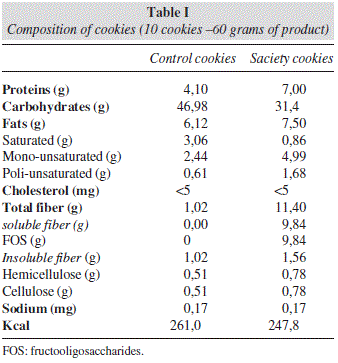
<body><![CDATA[<p><font face="Verdana" size="2">Since appropriate snacking may promote a healthy body weight or a control of satiety, it is essential to determine which snack foods are most affective for appetite control. Cookies enriched with FOS could be appropriated snacks. Fructooligosaccharides (FOS), oligofructose and inulin are the most common prebiotics commercially and those with a greater number of studies that have examined their actions on health and may present a potential role in controlling certain cardiovascular risk factors for obese patients<sup>12</sup>.</font></p>     <p><font face="Verdana" size="2">The objective of the current study was to assess the responses of two different cookies similar in protein, fat and carbohydrate contents, while differing in fiber content, on satiety, subsequent food intake, and cardiovascular risk factors.</font></p>     <p>&nbsp;</p>     <p><font face="Verdana" size="2"><b>Material and methods</b></font></p>     <p><font face="Verdana" size="2">Thirty eight obese subjects were recruited from the community, starting the recruitment in October 2011 and completed follow-up of patients in may 2012. Inclusionary criteria included being 25-60 years of age, having a body mass index (BMI) between 30 and 35 (kg/m<sup>2</sup>), and being weight stable (less than 5% weight fluctuations) for past 3 months. Potential patients were excluded if they were pregnant, elevated blood glucose &gt; 126 mg/dl, high cholesterol&gt; 250 mg/dl, triglycerides&gt; 250 mg/dl, blood pressure &gt; 140/90 mmHg, and the taking of any of the following medications; statins, fibrates, resins, sulfonylureas, biguanides, thiazolidinediones, insulin, glucocorticoids, alpha blockers, converting enzyme inhibitors and angiotensin II receptor antagonists. These patients were studied in a Nutrition Unit. The general design of research was explained before the study began and all subjects provided written informed consent. The protocol has been approved by the Ethics Committee of the Center.</font></p>     <p><font face="Verdana" size="2"><i>Procedure and satiety scores</i></font></p>     <p><font face="Verdana" size="2">Patients were randomized (table of numbers) to one of the following two groups: cookie I (enriched with FOS, see table OI) (Gullon SL) and cookie II (control cookie, see <a href="#t1">table I</a>). Each patient received a total of 10 cookies per day (total product 60 grams), completing a month of treatment. Cookie intake was controlled for a month, each week, and patients were instructed to eat cookies along the day. The methodology was doubleblind, neither the patient nor the investigator who followed the patient knew the type of cookie.</font></p>     <p>&nbsp;</p>     <p align="center"><font face="Verdana" size="2"><a name="t1"><img src="/img/revistas/nh/v28n1/10_original_03_t1.gif" align="top"></a></font></p>     <p>&nbsp;</p>     ]]></body>
<body><![CDATA[<p><font face="Verdana" size="2">Patients reported to the laboratory at the same time each day following a 10-h fast. Before starting the dietary intervention and at the end of the protocol were determined weight, fat mass, blood pressure, fasting blood glucose, C reactive protein (CRP), insulin, insulin resistance (HOMA-R), total cholesterol, LDL-cholesterol, HDL-cholesterol and triglycerides.</font></p>     <p><font face="Verdana" size="2">After arriving at the laboratory, the patients were interviewed to assure that they followed the dietary protocol prior the visit. The subjects rated their feelings of satiety/hunger using a scoring system graded from minus 10, to represent extreme hunger, to plus 10, to represent extreme satiety<sup>13</sup>. Subjects were shown a scale with 20 graduations and asked to indicate how they felt in respect of hunger or satiety by pointing to an appropriate place along the scale. The scale was punctuated with phrases describing various degrees of hunger and satiety, but subjects were free to choose any point along it.</font></p>     <p><font face="Verdana" size="2">A 100 mm 5-point visual satiety scale<sup>14</sup> was used, too. The patients were instructed to place a single vertical line representing their feeling of 5 questions on the scale in each question (grade of hunger, grade of satiety, grade of fullness, desire to eat some food, desire to eat something fatty, salty, sweet or savory). The scale was anchored at 0 with "nothing at all" and at 100 with "a large amount".</font></p>     <p><font face="Verdana" size="2">Both hunger/satiety scores were recorded before a test meal of 5 cookies, immediately after it, and at 20 and 40 minutes after starting it. The patients were told that test food (5 cookies) was taken in less than 10 minutes with 150 ml of water.</font></p>     <p><font face="Verdana" size="2"><i>Biochemical determinations</i></font></p>     <p><font face="Verdana" size="2">Blood samples were centrifuged for 7 min at 4<sup>o</sup>C immediately after each collection and it was stored in cryogenic vials at -70<sup>o</sup> C. Serum total cholesterol and triglyceride concentrations were determined by enzymatic colorimetric assay (Technicon Instruments, Ltd., New York, N.Y., USA), while HDL cholesterol was determined enzymatically in the supernatant after precipitation of other lipoproteins with dextran sulphatemagnesium. LDL-cholesterol was calculated using Friedewald formula. Plasma glucose levels were determined by using an automated glucose oxidase method (Glucose analyser 2, Beckman Instruments, Fullerton, California). Insulin was measured by enzymatic colorimetry (Insulin, WAKO Pure-Chemical Industries, Osaka, Japan) and the homeostasis model assessment for insulin resistance (HOMA-R) was calculated<sup>15</sup>.</font></p>     <p><font face="Verdana" size="2"><i>Anthropometric measurements</i></font></p>     <p><font face="Verdana" size="2">Body weight was measured to an accuracy of 0.1 Kg and body mass index computed as body weight/ (height<sup>2</sup>) (kg/m<sup>2</sup>). Waist (narrowest diameter between xiphoid process and iliac crest) and hip (widest diameter over greater trochanters) circumferences to calculate waist-to hip ratio (WHR) were measured, too. Tetrapolar body electrical bioimpedance was used to determine body composition<sup>16</sup>. An electric current of 0.8 mA and 50 kHz was produced by a calibrated signal generator (Biodynamics Model 310e, Seattle, WA, USA) and applied to the skin using adhesive electrodes placed on right-side limbs. Resistance and reactance were used to calculate total body water, fat and fat-free mass.</font></p>     <p><font face="Verdana" size="2">Blood pressure was measured twice after a rest period of 10 minutes with a random zero mercury sphygmomanometer (Omron, London, United Kingdom), and averaged.</font></p>     <p><font face="Verdana" size="2"><i>Dietary intervention</i></font></p>     ]]></body>
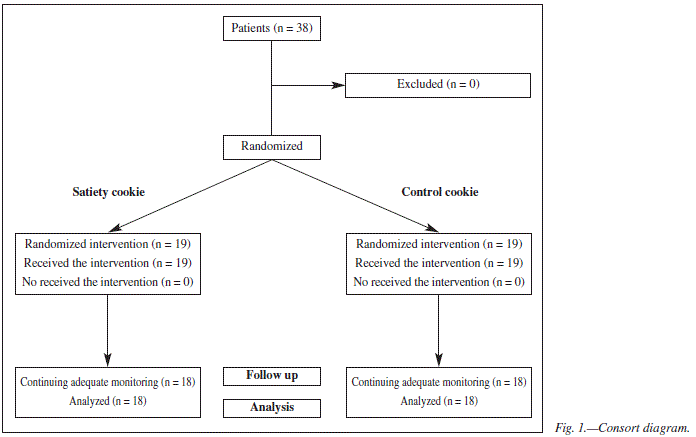
<body><![CDATA[<p><font face="Verdana" size="2">Before and after intervention, patients received prospective serial assessment of nutritional intake with 3 days written food records. All enrolled subjects received instruction to record their daily dietary intake for three days including a weekend day. Handling of the dietary data was by means of a personal computer equipped with personal software, incorporating use of food scales and models to enhance portion size accuracy. Records of intake and consumption of cookies were reviewed by a dietician and analyzed with a computer-based data evaluation system. National composition food tables were used as reference<sup>17</sup>. The exercise allowed was aerobic, which was previously done by patients before entering the study, mainly walking. At dietary intervention, patients were asked whether they considered their bowel habits have changed over who had previously shown a quantitatively and qualitatively. For a qualitative evaluation, they were asked whether they considered that the introduction of the cookie in the diet would have produced diarrhea or constipation.</font></p>     <p><font face="Verdana" size="2"><i>Statistical analysis</i></font></p>     <p><font face="Verdana" size="2">The sample size was calculated to detect a difference in satiety score<sup>14</sup> of 2 mm after treatment with a 90% power and an alpha error of 5% (n = 18 in each group). The results were expressed as mean (standard deviation). The normality of variables was analyzed by the Kolmogorov-Smirnov. Quantitative variables with normal distribution were analyzed with Student's t test paired and unpaired. Variables without normal distribution were analyzed with Wilcoxon W-test. ANOVA test was used as needed with Bonferroni test as post hoc test. Qualitative variables were analyzed with chi-square with Yates correction when appropriate, and Fisher's test. The area under the response curve (AUC) for both hunger/satiety scores with the test food (5 cookies) was calculated using the trapezoidal method. The strategy of analysis was by intention to treat. P less than 0.05 was considered statistically significant. All statistical analyses were performed using SPSS (version 15.0).</font></p>     <p>&nbsp;</p>     <p><font face="Verdana" size="2"><b>Results</b></font></p>     <p><font face="Verdana" size="2">Thirty eight patients were included in the protocol (<a href="#f1">fig. 1</a>, Consort diagram), 36 patients finished the study. The 2 patients excluded from the analysis had taken less than 80% of the prescribed cookies. The distribution was in group 1 (4 males and 14 females) with a mean age of 45.3 &plusmn;16.1 years and the control group 2 (5 males and 13 females) with a mean age of 50.8&plusmn;16.2 years. No differences in gender and age distribution of patients were observed.</font></p>     <p>&nbsp;</p>     <p align="center"><font face="Verdana" size="2"><a name="f1"><img src="/img/revistas/nh/v28n1/10_original_03_f1.gif" align="top"></a></font></p>     <p>&nbsp;</p>     <p><font face="Verdana" size="2"><i>Biochemical and anthropometricalparameters</i></font></p>     ]]></body>
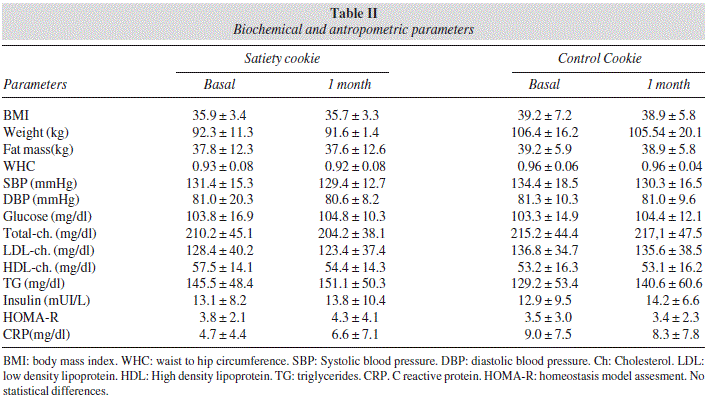
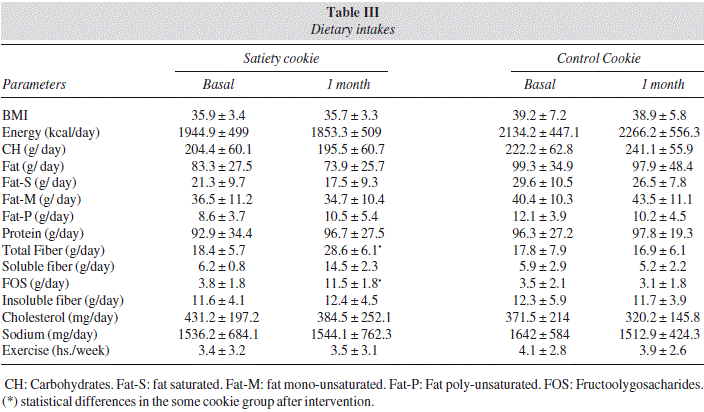
<body><![CDATA[<p><font face="Verdana" size="2">Values of anthropometric and biochemical parameters were shown in  <a href="#t2">table II</a>. No differences were detected in biochemical and anthropometrical parameters with dietary intervention. With respect to the anthropometric parameters after the introduction of cookies on the patient's usual diet, did not change any parameter (<a href="#t2">table II</a>). This finding is logical because the inclusion of patients in the protocol did not alter total energy intake from their diet. With respect to the biochemical values after the introduction of cookies on the patient's usual diet, it was not detected changes neither patients with enriched cookies nor patients with control cookie.</font></p>     <p>&nbsp;</p>     <p align="center"><font face="Verdana" size="2"><a name="t2"><img src="/img/revistas/nh/v28n1/10_original_03_t2.gif" align="top"></a></font></p>     <p>&nbsp;</p>     <p><font face="Verdana" size="2"><i>Dietary intake effects</i></font></p>     <p><font face="Verdana" size="2">In the evaluation of dietary intake variables, no statistically significant differences between baseline values of the two groups of cookies were detected (<a href="#t3">table III</a>). With respect to the values after the introduction of cookies on the patient's usual diet, it was detected in patients with satiety cookies a significantly increased of total fiber and soluble fiber dietary intakes, as expected. It was not detected any significant change in food intake in patients who received the control cookie (<a href="#t3">table III</a>). The number of cookies given per patient per month was 300 cookies. The number of consumed cookies after a month of intervention was 272.2&plusmn;22.1 (97.2%) in patients in the control cookie and 270.3&plusmn;13.98 in patients in the satiety cookie enriched (96.5%), without statistical differences.</font></p>     <p>&nbsp;</p>     <p align="center"><font face="Verdana" size="2"><a name="t3"><img src="/img/revistas/nh/v28n1/10_original_03_t3.gif" align="top"></a></font></p>     <p>&nbsp;</p>     <p><font face="Verdana" size="2"><i>Satiating effects</i></font></p>     ]]></body>
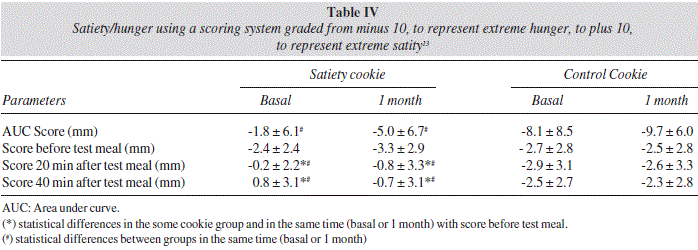
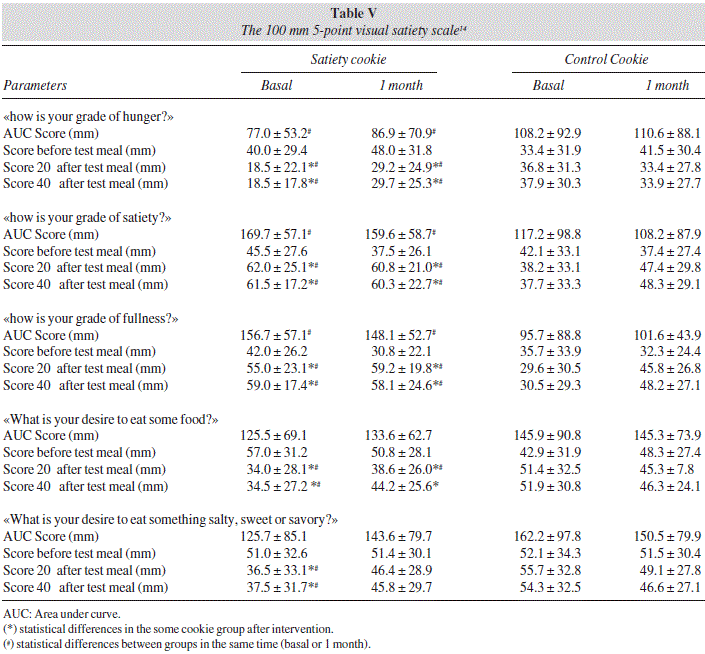
<body><![CDATA[<p><font face="Verdana" size="2">Immediately before the test meal, the basal hunger/satiety score (13) (<a href="#t4">table IV</a>) was similar with satiety cookie and control cookie (-2.4&plusmn;2.4 points vs -2.7&plusmn;2.8 points;p&gt;0.05), the data after 1 month of treatment was similar in both groups (-3.3&plusmn;2.9 mm vs - 2.5&plusmn;2.8 mm;p&gt;0.05), too. After the test meal, the basal AUC of this hunger/satiety score was higher with satiety cookie than with control cookie (-1.8 &plusmn;6.1 mm<sup>2</sup> vs -8.1&plusmn;8.5 mm<sup>2</sup>;p&lt;0.05), the data after 1 month of treatment was higher with satiety cookie than with control cookie (-5.0 &plusmn;6.7 mm<sup>2</sup> vs -9.7&plusmn;6.0 mm<sup>2</sup>;p&lt;0.05), too. The score was higher than the fasting level for 20 minutes with satiety cookie and for 40 minutes with the same cookie, too. In satiety group, these scores (20 min and 40 min) were higher than control group before and after 1 month of treatment.</font></p>     <p>&nbsp;</p>     <p align="center"><font face="Verdana" size="2"><a name="t4"><img src="/img/revistas/nh/v28n1/10_original_03_t4.gif" align="top"></a></font></p>     <p>&nbsp;</p>     <p><font face="Verdana" size="2">The results were in the same way with the 100 mm 5-point visual satiety scale<sup>14</sup> (<a href="#t5">table V</a>). When asked "how is your grade of hunger?" at the 20 min and 40 min, subjects rate that they wanted to eat less with satiety cookie. In satiety group, these scores (20 min and 40 min) were lower than control group at basal time and after 1 month of treatment. After the test meal, the basal AUC of this question score was lower with satiety cookie than with control cookie, the AUC data after 1 month of treatment remained lower with satiety cookie than with control cookie, too.</font></p>     <p>&nbsp;</p>     <p align="center"><font face="Verdana" size="2"><a name="t5"><img src="/img/revistas/nh/v28n1/10_original_03_t5.gif" align="top"></a></font></p>     <p>&nbsp;</p>     <p><font face="Verdana" size="2">When asked "how is your grade of satiety? and "How is your grade of fullness? (<a href="#t5">table V</a>) at the 20 min and 40 min, subjects rate that they wanted to eat less with satiety cookie. In satiety group, these scores (20 min and 40 min) were higher than control group at basal time and after 1 month of treatment. After the test meal, the basal AUC of this question score was higher with satiety cookie than with control cookie, the AUC data after 1 month of treatment remained higher with satiety cookie than with control cookie, too.</font></p>     <p><font face="Verdana" size="2">When asked "What is your desire to eat some food? and "What is your desire to eat something salty, sweet or savory? (<a href="#t5">table V</a>) at the 20 min and 40 min, subjects rate that they wanted to eat less with satiety cookie. In satiety group, these scores (20 min and 40 min) were lower than control group at basal time and after 1 month of treatment with the first question and only at basal time with the second question. After the test meal, AUC of these question score remained unchanged.</font></p>     ]]></body>
<body><![CDATA[<p><font face="Verdana" size="2"><i>Side effects</i></font></p>     <p><font face="Verdana" size="2">With respect to monitoring the effects on the digestive tract, two patients in the group of control cookies (11.0%) and one patient (5.5%) in the satiety group referred episodes of diarrhea during the month of treatment. Two patients (11.0%) in the control group and 2 patients in the satiety cookie group (11.0%) referred have constipation during the month of intervention.</font></p>     <p>&nbsp;</p>     <p><font face="Verdana" size="2"><b>Discusion</b></font></p>     <p><font face="Verdana" size="2">Results of our study indicate that a FOS enriched cookie promotes greater satiety than control cookies, but daily food consumption, cardiovascular parameters and anthropometric parameters are not significantly affected.</font></p>     <p><font face="Verdana" size="2">Other previous studies comparing more versus less satiating foods have found that higher fiber and protein contents promote greater satiety, while more fat and sugar typically promote less satiety. Berti et al<sup>18</sup> demonstrated that pasta and bread with high fiber contents decrease energy intake relative to lower fiber foods. Holt et al<sup>19</sup>. determined that fiber and protein contents were associated with increased satiety and that fat and sugar contents were associated with lower satiety for a variety of snack foods, protein rich foods, bakery products, breakfast foods, protein rich foods, carbohydrate-rich foods, and fruits. In other study, boiled potatoes were demonstrated to be more satiating than French fries, which may have been partially influenced by the greater glycemic response of the boiled potatoes<sup>20</sup>. One hypothesis to explain the effect of these fiber enriched foods on satiety is the potential effects on bowel, as softer stools, increased bulk, and facilitate mobility providing a laxative effect<sup>21</sup>, these symptoms could influence feelings of satiety. Gastrointestinal symptoms were assessed in our study and there are no differences between both groups.</font></p>     <p><font face="Verdana" size="2">No significant difference in food consumption was detected at the end of the FOS enriched cookie trial versus the control cookie trial. This result was unexpected given the difference in satiety scores. Many factors can affect food consumption following a pre-load that can alter subsequent food intake. These factors include food weight<sup>22</sup>, food volume<sup>23</sup> and food portion size<sup>24</sup>. Additionally, the eating environment, which includes the number of distractions<sup>25</sup> and people present<sup>26</sup>, affects food intake and may have contributed to variability in intake that limited our power to detect a significant difference. Some authors<sup>27</sup> propose that although monitoring food intake in a laboratory setting, as our design, may provide some valuable information, the outcomes are less than reliable and should not be overly generalized to appetite responses in more realistic conditions. In the other hand, hunger and satiety are subjective sensations and there is no generally accepted way of measuring them. Previous human interventional studies examining FOS and satiety have produced inconsistent results. A study in healthy subjects demonstrated enhanced satiety after consumption of 8g FOS supplements twice daily for two weeks<sup>28</sup>. In contrast, consumption of 8 g of FOS in a meal-replacement bar one to two times a day for two days did not affect appetite rating<sup>29</sup>. The different doses and the type of FOS supplement could explain these unclear results. Thus, our results corroborated that if FOS were to have an effect on appetite it is more likely to occur in doses over 9 g per day and included in a food as cookies.</font></p>     <p><font face="Verdana" size="2">The lack of effect on cardiovascular risk factors has been described in the literature, too. If we analyze the literature we found a number of problems in analyzing the effect of FOS on lipid profile and glucose metabolism. For example, we could mention, the heterogeneity of the populations (obese, diabetic, hyperlipidemic, healthy subjects, gender of the sample), secondly the daily amount of fiber administered and the type of prebiotic, which can vary from pure inulin to fructooligosaccharides (FOS) and finally the variability in the time of intervention performed. For example, one of the earliest studies was conducted with 12 healthy men, found no effect on the lipid profile by adding to the daily diet of 20 g FOS<sup>17</sup>. Similarly, in a study with 12 healthy volunteers also in various stages of intervention with inulin, FOS and galacto-oligosaccharides (GOS), there were no effects on LDL cholesterol, triglycerides, HDL cholesterol<sup>30</sup>. However, the results were significant when inulin was used in the interventions<sup>31-33</sup>. So, we could summarize this group of studies, noting that in the literature beneficial effects on triglycerides and cholesterol LDL by administering inulin have been detected, without effects with FOS. Most of this effect may be due to increased loss of bile salts in the feces, which can range between 20 and 80%, producing secondarily a decrease in total body cholesterol<sup>31</sup>.</font></p>     <p><font face="Verdana" size="2">Tolerance towards FOS enriched cookies was good and explains the excellent compliance observed. Cookies could be a good food form to improve consumption of this type of fiber. One question may arise from our study: which mechanism could FOS modulate satiety? In rats, FOS supplementation increase satiety through the promotion of intestinal synthesis and portal release of GLP-1<sup>34</sup>. Nevertheless, all fermentable dietary fiber do not have the same potency to increase satiogenic peptides: for example, inulin is fermented in distal colon, whereas FOS is fermented in the proximal colon. The second type of fiber is able to produce the effects of OFS in terms of secretion and mRNA modulation<sup>35</sup>.</font></p>     <p><font face="Verdana" size="2">Overall, selection of a FOS enriched cookie produced greater ratings of satiety and lower ratings of hunger than a control cookie, without effects on cardiovascular risk factors, anthropometric parameters and dietary intakes. Future researches to more comprehensively discover snack foods that are most likely to promote satiety and a significant effect on dietary intakes.</font></p>     ]]></body>
<body><![CDATA[<p>&nbsp;</p>     <p><font face="Verdana" size="2"><b>References</b></font></p>     <!-- ref --><p><font face="Verdana" size="2">1. Hampl JS, Heaton CL, Taylor CA. Snacking patterns influence energy and nutrient intakes but not body mass index. <i>Journal of Human Nutrition and Dietetics</i> 2003; 16: 3-11.    &nbsp;&nbsp;&nbsp;&nbsp;&nbsp;&nbsp;&nbsp;&nbsp;[&#160;<a href="javascript:void(0);" onclick="javascript: window.open('/scielo.php?script=sci_nlinks&ref=3706219&pid=S0212-1611201300010001000001&lng=','','width=640,height=500,resizable=yes,scrollbars=1,menubar=yes,');">Links</a>&#160;]<!-- end-ref --></font></p>    <!-- ref --><p><font face="Verdana" size="2">2. Ovaskainen ML, Reinivuo H, Tapanainen H, Hannila ML, Korhonen T. Pakkala H. Snacks as an element of energy intake and food consumption. <i>European Journal of Clinical Nutrition</i> 2006; 60: 494-501.    &nbsp;&nbsp;&nbsp;&nbsp;&nbsp;&nbsp;&nbsp;&nbsp;[&#160;<a href="javascript:void(0);" onclick="javascript: window.open('/scielo.php?script=sci_nlinks&ref=3706221&pid=S0212-1611201300010001000002&lng=','','width=640,height=500,resizable=yes,scrollbars=1,menubar=yes,');">Links</a>&#160;]<!-- end-ref --></font></p>    <!-- ref --><p><font face="Verdana" size="2">3. Berte us Forslund H, Torgerson JS, Sjo&quot; stro&quot; m L, Lindroos AK. Snacking frequency in relation to energy intake and food choices in obese men and women compared to reference population. <i>International Journal of Obesity</i> 2005; 29: 711-719.    &nbsp;&nbsp;&nbsp;&nbsp;&nbsp;&nbsp;&nbsp;&nbsp;[&#160;<a href="javascript:void(0);" onclick="javascript: window.open('/scielo.php?script=sci_nlinks&ref=3706223&pid=S0212-1611201300010001000003&lng=','','width=640,height=500,resizable=yes,scrollbars=1,menubar=yes,');">Links</a>&#160;]<!-- end-ref --></font></p>    <!-- ref --><p><font face="Verdana" size="2">4. Green SM, Wales JK, Lawton CL, Blundell JE. Comparison of high-fat and high-carbohydrate foods in a meal or snack on short-term fat and energy intakes in obese women. <i>The British Journal of Nutrition</i> 2000; 84: 521-530.    &nbsp;&nbsp;&nbsp;&nbsp;&nbsp;&nbsp;&nbsp;&nbsp;[&#160;<a href="javascript:void(0);" onclick="javascript: window.open('/scielo.php?script=sci_nlinks&ref=3706225&pid=S0212-1611201300010001000004&lng=','','width=640,height=500,resizable=yes,scrollbars=1,menubar=yes,');">Links</a>&#160;]<!-- end-ref --></font></p>    ]]></body>
<body><![CDATA[<!-- ref --><p><font face="Verdana" size="2">5. Arumugam V, Lee JS, Nowak JK, Pohle RJ, Nyrop JE, Leddy JJ, et al. A high-glycemic meal pattern elicited increased subjective appetite sensations in overweight and obese women. Appetite, 2008; 50: 215-222.    &nbsp;&nbsp;&nbsp;&nbsp;&nbsp;&nbsp;&nbsp;&nbsp;[&#160;<a href="javascript:void(0);" onclick="javascript: window.open('/scielo.php?script=sci_nlinks&ref=3706227&pid=S0212-1611201300010001000005&lng=','','width=640,height=500,resizable=yes,scrollbars=1,menubar=yes,');">Links</a>&#160;]<!-- end-ref --></font></p>    <!-- ref --><p><font face="Verdana" size="2">6. Aranceta-Bartrina J, Serra-Majem L, Foz-Sala M, Moreno-Esteban B; Grupo Colaborativo SEEDO. Prevalence of obesity in Spain. <i>Med Clin</i> (Barc) 2005 Oct 8;125(12): 460-6.    &nbsp;&nbsp;&nbsp;&nbsp;&nbsp;&nbsp;&nbsp;&nbsp;[&#160;<a href="javascript:void(0);" onclick="javascript: window.open('/scielo.php?script=sci_nlinks&ref=3706229&pid=S0212-1611201300010001000006&lng=','','width=640,height=500,resizable=yes,scrollbars=1,menubar=yes,');">Links</a>&#160;]<!-- end-ref --></font></p>    <!-- ref --><p><font face="Verdana" size="2">7. de Luis DA, Aller R, Gonzalez Sagrado M, Izaola O, Conde R. The effects of a low fat versus a low carbohydrate diet on adipocytokines in obese adults. <i>Hormone Research</i> 2007; 67: 296-300.    &nbsp;&nbsp;&nbsp;&nbsp;&nbsp;&nbsp;&nbsp;&nbsp;[&#160;<a href="javascript:void(0);" onclick="javascript: window.open('/scielo.php?script=sci_nlinks&ref=3706231&pid=S0212-1611201300010001000007&lng=','','width=640,height=500,resizable=yes,scrollbars=1,menubar=yes,');">Links</a>&#160;]<!-- end-ref --></font></p>    <!-- ref --><p><font face="Verdana" size="2">8. de Luis DA, Pacheco D, Izaola O, Teroba M, Cuellar L, Martin T. Clinical Results and nutritional consequences of biliopancreatic diversion: Three years of follow up. <i>Ann Nutr Metab</i> 2008; 53: 234-238.    &nbsp;&nbsp;&nbsp;&nbsp;&nbsp;&nbsp;&nbsp;&nbsp;[&#160;<a href="javascript:void(0);" onclick="javascript: window.open('/scielo.php?script=sci_nlinks&ref=3706233&pid=S0212-1611201300010001000008&lng=','','width=640,height=500,resizable=yes,scrollbars=1,menubar=yes,');">Links</a>&#160;]<!-- end-ref --></font></p>    <!-- ref --><p><font face="Verdana" size="2">9. Romero AL, Romero JE. Cookies enriched with psyllium or oat bran lower plasma LDL cholesterol in normal and hypercholesteronemic men from northern mexico. <i>J of American College of Nutrition</i> 1998; 6: 601-60.    &nbsp;&nbsp;&nbsp;&nbsp;&nbsp;&nbsp;&nbsp;&nbsp;[&#160;<a href="javascript:void(0);" onclick="javascript: window.open('/scielo.php?script=sci_nlinks&ref=3706235&pid=S0212-1611201300010001000009&lng=','','width=640,height=500,resizable=yes,scrollbars=1,menubar=yes,');">Links</a>&#160;]<!-- end-ref --></font></p>    ]]></body>
<body><![CDATA[<!-- ref --><p><font face="Verdana" size="2">10. de Luis DA, de La fuente B, Izaola O, Conde R, Gutierrez S, Morillo M, Teba Torres C. Randomized clinical trial with an inulin enriched cookie on cardiovascular risk factors in obese patients. <i>Nutr Hosp</i> 2010; 25: 53-59.    &nbsp;&nbsp;&nbsp;&nbsp;&nbsp;&nbsp;&nbsp;&nbsp;[&#160;<a href="javascript:void(0);" onclick="javascript: window.open('/scielo.php?script=sci_nlinks&ref=3706237&pid=S0212-1611201300010001000010&lng=','','width=640,height=500,resizable=yes,scrollbars=1,menubar=yes,');">Links</a>&#160;]<!-- end-ref --></font></p>    <!-- ref --><p><font face="Verdana" size="2">11. Da de Luis, B de La Fuente, O Izaola, R Conde, S Gutierrez, M Morillo, C Teba Torres. Ensayo clinico aleatorizado doble ciego controlado con placebo con una galleta enriquecida em acido alfa linoleico y prebioticos em El patron de riesgo cardiovascular en pacientes obesos. <i>Nutr Hosp</i> 2011; 26: 711-715.    &nbsp;&nbsp;&nbsp;&nbsp;&nbsp;&nbsp;&nbsp;&nbsp;[&#160;<a href="javascript:void(0);" onclick="javascript: window.open('/scielo.php?script=sci_nlinks&ref=3706239&pid=S0212-1611201300010001000011&lng=','','width=640,height=500,resizable=yes,scrollbars=1,menubar=yes,');">Links</a>&#160;]<!-- end-ref --></font></p>    <!-- ref --><p><font face="Verdana" size="2">12. Roberfroid M. Prebiotics: the concept revisited. 1. <i>J Nutr</i> 2007; 137: 830S-837S.    &nbsp;&nbsp;&nbsp;&nbsp;&nbsp;&nbsp;&nbsp;&nbsp;[&#160;<a href="javascript:void(0);" onclick="javascript: window.open('/scielo.php?script=sci_nlinks&ref=3706241&pid=S0212-1611201300010001000012&lng=','','width=640,height=500,resizable=yes,scrollbars=1,menubar=yes,');">Links</a>&#160;]<!-- end-ref --></font></p>    <!-- ref --><p><font face="Verdana" size="2">13. Haber GB, Heaton KW, Murphy D. Depletion and disruption of dietary fiber. Effects on satiety, plasma glucose, and seruminsulin. <i>Lancet</i> 1977; 1: 679-682.    &nbsp;&nbsp;&nbsp;&nbsp;&nbsp;&nbsp;&nbsp;&nbsp;[&#160;<a href="javascript:void(0);" onclick="javascript: window.open('/scielo.php?script=sci_nlinks&ref=3706243&pid=S0212-1611201300010001000013&lng=','','width=640,height=500,resizable=yes,scrollbars=1,menubar=yes,');">Links</a>&#160;]<!-- end-ref --></font></p>    <!-- ref --><p><font face="Verdana" size="2">14. Raben A, Tagliabue A, Astrup U. The reproductibility of subjective appetite scores. <i>Br J Nutr</i> 1995; 73: 517-530.    &nbsp;&nbsp;&nbsp;&nbsp;&nbsp;&nbsp;&nbsp;&nbsp;[&#160;<a href="javascript:void(0);" onclick="javascript: window.open('/scielo.php?script=sci_nlinks&ref=3706245&pid=S0212-1611201300010001000014&lng=','','width=640,height=500,resizable=yes,scrollbars=1,menubar=yes,');">Links</a>&#160;]<!-- end-ref --></font></p>    ]]></body>
<body><![CDATA[<!-- ref --><p><font face="Verdana" size="2">15. Mathews DR, Hosker JP, Rudenski AS, Naylor BA, Treacher Df. Homeostasis model assessment: insulin resistance and beta cell function from fasting plasma glucose and insulin concentrations in man. <i>Diabetologia</i> 1985; 28: 412-414.    &nbsp;&nbsp;&nbsp;&nbsp;&nbsp;&nbsp;&nbsp;&nbsp;[&#160;<a href="javascript:void(0);" onclick="javascript: window.open('/scielo.php?script=sci_nlinks&ref=3706247&pid=S0212-1611201300010001000015&lng=','','width=640,height=500,resizable=yes,scrollbars=1,menubar=yes,');">Links</a>&#160;]<!-- end-ref --></font></p>    <!-- ref --><p><font face="Verdana" size="2">16. Lukaski H, Johson PE. Assessment of fat-free mass using bioelectrical impedance measurements of the human body. <i>Am J Clin Nutr</i> 1985; 41: 810-7.    &nbsp;&nbsp;&nbsp;&nbsp;&nbsp;&nbsp;&nbsp;&nbsp;[&#160;<a href="javascript:void(0);" onclick="javascript: window.open('/scielo.php?script=sci_nlinks&ref=3706249&pid=S0212-1611201300010001000016&lng=','','width=640,height=500,resizable=yes,scrollbars=1,menubar=yes,');">Links</a>&#160;]<!-- end-ref --></font></p>    <!-- ref --><p><font face="Verdana" size="2">17. Mataix J, Mañas M. Tablas de composición de alimentos españoles. Ed: University of Granada, 2003.    &nbsp;&nbsp;&nbsp;&nbsp;&nbsp;&nbsp;&nbsp;&nbsp;[&#160;<a href="javascript:void(0);" onclick="javascript: window.open('/scielo.php?script=sci_nlinks&ref=3706251&pid=S0212-1611201300010001000017&lng=','','width=640,height=500,resizable=yes,scrollbars=1,menubar=yes,');">Links</a>&#160;]<!-- end-ref --></font></p>    <!-- ref --><p><font face="Verdana" size="2">18. Berti C, Riso P, Brusamolino A, Porrini M. Effect of appetite control on minor cereal and pseudocereal products. <i>British Journal of Nutrition</i> 2005; 94: 850-858.    &nbsp;&nbsp;&nbsp;&nbsp;&nbsp;&nbsp;&nbsp;&nbsp;[&#160;<a href="javascript:void(0);" onclick="javascript: window.open('/scielo.php?script=sci_nlinks&ref=3706253&pid=S0212-1611201300010001000018&lng=','','width=640,height=500,resizable=yes,scrollbars=1,menubar=yes,');">Links</a>&#160;]<!-- end-ref --></font></p>    <!-- ref --><p><font face="Verdana" size="2">19. Holt SH, Brand Miller JC, Petocz P, Farmakalidis E. A satiety index of common foods. <i>European Journal of Clinical Nutrition</i> 1995; 49: 675-690.    &nbsp;&nbsp;&nbsp;&nbsp;&nbsp;&nbsp;&nbsp;&nbsp;[&#160;<a href="javascript:void(0);" onclick="javascript: window.open('/scielo.php?script=sci_nlinks&ref=3706255&pid=S0212-1611201300010001000019&lng=','','width=640,height=500,resizable=yes,scrollbars=1,menubar=yes,');">Links</a>&#160;]<!-- end-ref --></font></p>    ]]></body>
<body><![CDATA[<!-- ref --><p><font face="Verdana" size="2">20. Leeman M, Östman E, Björk I. Glycaemic and satiating properties of potato products. <i>European Journal of Clinical Nutrition</i> 2008; 62: 87-95.    &nbsp;&nbsp;&nbsp;&nbsp;&nbsp;&nbsp;&nbsp;&nbsp;[&#160;<a href="javascript:void(0);" onclick="javascript: window.open('/scielo.php?script=sci_nlinks&ref=3706257&pid=S0212-1611201300010001000020&lng=','','width=640,height=500,resizable=yes,scrollbars=1,menubar=yes,');">Links</a>&#160;]<!-- end-ref --></font></p>    <!-- ref --><p><font face="Verdana" size="2">21. Stacewicz-Sapuntzakis M, Bowen PE, Hussain EA, Damayanti-Wood BI, Farsworth NR. Chemical composition and potential health effects of prunes: a functional food? <i>Critical Reviews in Food Science and Nutrition</i> 2001; 41: 251-286.    &nbsp;&nbsp;&nbsp;&nbsp;&nbsp;&nbsp;&nbsp;&nbsp;[&#160;<a href="javascript:void(0);" onclick="javascript: window.open('/scielo.php?script=sci_nlinks&ref=3706259&pid=S0212-1611201300010001000021&lng=','','width=640,height=500,resizable=yes,scrollbars=1,menubar=yes,');">Links</a>&#160;]<!-- end-ref --></font></p>    <!-- ref --><p><font face="Verdana" size="2">22. Osterholt KM, Roe LS, Rolls BJ. Incorporation of air into a snack food reduces energy intake. <i>Appetite</i> 2007; 48: 351-358.    &nbsp;&nbsp;&nbsp;&nbsp;&nbsp;&nbsp;&nbsp;&nbsp;[&#160;<a href="javascript:void(0);" onclick="javascript: window.open('/scielo.php?script=sci_nlinks&ref=3706261&pid=S0212-1611201300010001000022&lng=','','width=640,height=500,resizable=yes,scrollbars=1,menubar=yes,');">Links</a>&#160;]<!-- end-ref --></font></p>    <!-- ref --><p><font face="Verdana" size="2">23. Rolls BJ, Bell EA, Wauch BA. Increasing the volume of a food by incorporating air affects satiety in men. <i>American Journal of Clinical Nutrition</i> 2000; 72: 361-368.    &nbsp;&nbsp;&nbsp;&nbsp;&nbsp;&nbsp;&nbsp;&nbsp;[&#160;<a href="javascript:void(0);" onclick="javascript: window.open('/scielo.php?script=sci_nlinks&ref=3706263&pid=S0212-1611201300010001000023&lng=','','width=640,height=500,resizable=yes,scrollbars=1,menubar=yes,');">Links</a>&#160;]<!-- end-ref --></font></p>    <!-- ref --><p><font face="Verdana" size="2">24. Rolls BJ, Roe LS, Meengs JS. Reductions in portion size and energy density of foods are additive to sustained decreases in energy intake. <i>American Journal of Clinical Nutrition</i> 2006; 83: 11-17.    &nbsp;&nbsp;&nbsp;&nbsp;&nbsp;&nbsp;&nbsp;&nbsp;[&#160;<a href="javascript:void(0);" onclick="javascript: window.open('/scielo.php?script=sci_nlinks&ref=3706265&pid=S0212-1611201300010001000024&lng=','','width=640,height=500,resizable=yes,scrollbars=1,menubar=yes,');">Links</a>&#160;]<!-- end-ref --></font></p>    ]]></body>
<body><![CDATA[<!-- ref --><p><font face="Verdana" size="2">25. Bellisle F, Dalix AM, Slama G. Nonfood-related environmental stimuli induce increased meal intake in healthy women: comparison of television viewing versus listening to a recorded story in laboratory settings. <i>Appetite</i> 2004; 43: 175-180.    &nbsp;&nbsp;&nbsp;&nbsp;&nbsp;&nbsp;&nbsp;&nbsp;[&#160;<a href="javascript:void(0);" onclick="javascript: window.open('/scielo.php?script=sci_nlinks&ref=3706267&pid=S0212-1611201300010001000025&lng=','','width=640,height=500,resizable=yes,scrollbars=1,menubar=yes,');">Links</a>&#160;]<!-- end-ref --></font></p>    <!-- ref --><p><font face="Verdana" size="2">26. Hetherington MM, Anderson AS, Norton GN, Newson L. Situational effects on meal intake: a comparison of eating alone and eating with others. <i>Physiology &amp; Behavior</i> 2006; 88:498-505.    &nbsp;&nbsp;&nbsp;&nbsp;&nbsp;&nbsp;&nbsp;&nbsp;[&#160;<a href="javascript:void(0);" onclick="javascript: window.open('/scielo.php?script=sci_nlinks&ref=3706269&pid=S0212-1611201300010001000026&lng=','','width=640,height=500,resizable=yes,scrollbars=1,menubar=yes,');">Links</a>&#160;]<!-- end-ref --></font></p>    <!-- ref --><p><font face="Verdana" size="2">27. Mattes RD, Hollis J, Hayes D, Stunkard AJ. Appetite: measurement and manipulation misgivings. <i>Journal of the American Dietetic Association</i> 2005; 105(Suppl. 1): S87-S97.    &nbsp;&nbsp;&nbsp;&nbsp;&nbsp;&nbsp;&nbsp;&nbsp;[&#160;<a href="javascript:void(0);" onclick="javascript: window.open('/scielo.php?script=sci_nlinks&ref=3706271&pid=S0212-1611201300010001000027&lng=','','width=640,height=500,resizable=yes,scrollbars=1,menubar=yes,');">Links</a>&#160;]<!-- end-ref --></font></p>    <!-- ref --><p><font face="Verdana" size="2">28. Cani PD, Joly E, Horsmans Y, Delzenne N. Oligofructose promotes satiety in healthy subjects. <i>Eur J of Clincial Nutrition</i> 2006; 60: 567-572.    &nbsp;&nbsp;&nbsp;&nbsp;&nbsp;&nbsp;&nbsp;&nbsp;[&#160;<a href="javascript:void(0);" onclick="javascript: window.open('/scielo.php?script=sci_nlinks&ref=3706273&pid=S0212-1611201300010001000028&lng=','','width=640,height=500,resizable=yes,scrollbars=1,menubar=yes,');">Links</a>&#160;]<!-- end-ref --></font></p>    <!-- ref --><p><font face="Verdana" size="2">29. Peters HP, Boers HM, Haddeman E,  Melnikov SM, Qvyjt F. No effect of added beta-glucan or of FOS on appetite or energy intake. <i>Am J CLin Nutr</i> 2009; 89: 58-63.    &nbsp;&nbsp;&nbsp;&nbsp;&nbsp;&nbsp;&nbsp;&nbsp;[&#160;<a href="javascript:void(0);" onclick="javascript: window.open('/scielo.php?script=sci_nlinks&ref=3706275&pid=S0212-1611201300010001000029&lng=','','width=640,height=500,resizable=yes,scrollbars=1,menubar=yes,');">Links</a>&#160;]<!-- end-ref --></font></p>    ]]></body>
<body><![CDATA[<!-- ref --><p><font face="Verdana" size="2">30. van Dokkum W, Wezendonk B, Srikumar TS, van den Heuvel EG. Effect of nondigestible oligosaccharides on large-bowel functions, blood lipid concentrations and glucose absorption in young healthy male subjects. <i>Eur J Clin Nutr</i> 1999;53:1-7.    &nbsp;&nbsp;&nbsp;&nbsp;&nbsp;&nbsp;&nbsp;&nbsp;[&#160;<a href="javascript:void(0);" onclick="javascript: window.open('/scielo.php?script=sci_nlinks&ref=3706277&pid=S0212-1611201300010001000030&lng=','','width=640,height=500,resizable=yes,scrollbars=1,menubar=yes,');">Links</a>&#160;]<!-- end-ref --></font></p>    <!-- ref --><p><font face="Verdana" size="2">31. Balcazar-Munoz BR, Martinez-Abundis E, Gonzalez-Ortiz M. Effect of oral inulin administration on lipid profile and insulin sensitivity in subjects with obesity and dyslipidemia. <i>Rev Med Chil</i> 2003; 131: 597-604.    &nbsp;&nbsp;&nbsp;&nbsp;&nbsp;&nbsp;&nbsp;&nbsp;[&#160;<a href="javascript:void(0);" onclick="javascript: window.open('/scielo.php?script=sci_nlinks&ref=3706279&pid=S0212-1611201300010001000031&lng=','','width=640,height=500,resizable=yes,scrollbars=1,menubar=yes,');">Links</a>&#160;]<!-- end-ref --></font></p>    <!-- ref --><p><font face="Verdana" size="2">32. DA de Luis, B de La fuente, O Izaola, R Conde, S Gutierrez, M Morillo, C Teba Torres. Ensayo clínico aleatorizado con una galleta enriquecida en insulina en el patrón de riesgo cardiovascular de pacientes obesos. <i>Nutr Hosp</i> 2010; 25: 53-59.    &nbsp;&nbsp;&nbsp;&nbsp;&nbsp;&nbsp;&nbsp;&nbsp;[&#160;<a href="javascript:void(0);" onclick="javascript: window.open('/scielo.php?script=sci_nlinks&ref=3706281&pid=S0212-1611201300010001000032&lng=','','width=640,height=500,resizable=yes,scrollbars=1,menubar=yes,');">Links</a>&#160;]<!-- end-ref --></font></p>    <!-- ref --><p><font face="Verdana" size="2">33. Malkki Y. Oat fiber. In Handbook of dietary fiber. Edited bu: Cha SS, Dreher ML, New Cork Macrel Dekker 2001; 497-512.    &nbsp;&nbsp;&nbsp;&nbsp;&nbsp;&nbsp;&nbsp;&nbsp;[&#160;<a href="javascript:void(0);" onclick="javascript: window.open('/scielo.php?script=sci_nlinks&ref=3706283&pid=S0212-1611201300010001000033&lng=','','width=640,height=500,resizable=yes,scrollbars=1,menubar=yes,');">Links</a>&#160;]<!-- end-ref --></font></p>    <!-- ref --><p><font face="Verdana" size="2">34. Cani PD, Neyrink AM, Maton N, Delzenne NM. Oligofructose promotes satiety in rats fed a high fat diet: involvement of GLP-1. Obes Res 2005; 13: 1000-1007.    &nbsp;&nbsp;&nbsp;&nbsp;&nbsp;&nbsp;&nbsp;&nbsp;[&#160;<a href="javascript:void(0);" onclick="javascript: window.open('/scielo.php?script=sci_nlinks&ref=3706285&pid=S0212-1611201300010001000034&lng=','','width=640,height=500,resizable=yes,scrollbars=1,menubar=yes,');">Links</a>&#160;]<!-- end-ref --></font></p>    ]]></body>
<body><![CDATA[<!-- ref --><p><font face="Verdana" size="2">35. Cani PD, Dewever C, Delzenne NM. Inulin-type fructans modulate gastro-intestinal peptides involved in appetite regulation-GLP-1 and ghrelin in rats. <i>Br J Nutr</i> 2004; 92: 521-526.    &nbsp;&nbsp;&nbsp;&nbsp;&nbsp;&nbsp;&nbsp;&nbsp;[&#160;<a href="javascript:void(0);" onclick="javascript: window.open('/scielo.php?script=sci_nlinks&ref=3706287&pid=S0212-1611201300010001000035&lng=','','width=640,height=500,resizable=yes,scrollbars=1,menubar=yes,');">Links</a>&#160;]<!-- end-ref --></font></p>     <p>&nbsp;</p>     <p>&nbsp;</p>     <p><font face="Verdana" size="2"><a href="#top"><img border="0" src="/img/revistas/nh/v28n1/seta.gif" width="15" height="17"></a><a name="bajo"></a><b>Correspondence:</b>    <br>D. A. de Luis.    <br>Director of Institute of Endrocrinology and Nutrition Medicine School.    <br>University of Valladolid.    <br>Los Perales, 16. 47130 Simancas (Valladolid).    <br>E-mail:  <a href="mailto:dadluis@yahoo.es">dadluis@yahoo.es</a></font></p>     ]]></body>
<body><![CDATA[<p><font face="Verdana" size="2">Recibido: 16-IX-2012.    <br>Aceptado: 23-X-2012.</font></p>      ]]></body><back>
<ref-list>
<ref id="B1">
<label>1</label><nlm-citation citation-type="journal">
<person-group person-group-type="author">
<name>
<surname><![CDATA[Hampl]]></surname>
<given-names><![CDATA[JS]]></given-names>
</name>
<name>
<surname><![CDATA[Heaton]]></surname>
<given-names><![CDATA[CL]]></given-names>
</name>
<name>
<surname><![CDATA[Taylor]]></surname>
<given-names><![CDATA[CA]]></given-names>
</name>
</person-group>
<article-title xml:lang="en"><![CDATA[Snacking patterns influence energy and nutrient intakes but not body mass index]]></article-title>
<source><![CDATA[Journal of Human Nutrition and Dietetics]]></source>
<year>2003</year>
<volume>16</volume>
<page-range>3-11</page-range></nlm-citation>
</ref>
<ref id="B2">
<label>2</label><nlm-citation citation-type="journal">
<person-group person-group-type="author">
<name>
<surname><![CDATA[Ovaskainen]]></surname>
<given-names><![CDATA[ML]]></given-names>
</name>
<name>
<surname><![CDATA[Reinivuo]]></surname>
<given-names><![CDATA[H]]></given-names>
</name>
<name>
<surname><![CDATA[Tapanainen]]></surname>
<given-names><![CDATA[H]]></given-names>
</name>
<name>
<surname><![CDATA[Hannila]]></surname>
<given-names><![CDATA[ML]]></given-names>
</name>
<name>
<surname><![CDATA[Korhonen]]></surname>
<given-names><![CDATA[T.]]></given-names>
</name>
<name>
<surname><![CDATA[Pakkala]]></surname>
<given-names><![CDATA[H]]></given-names>
</name>
</person-group>
<article-title xml:lang="en"><![CDATA[Snacks as an element of energy intake and food consumption]]></article-title>
<source><![CDATA[European Journal of Clinical Nutrition]]></source>
<year>2006</year>
<volume>60</volume>
<page-range>494-501</page-range></nlm-citation>
</ref>
<ref id="B3">
<label>3</label><nlm-citation citation-type="journal">
<person-group person-group-type="author">
<name>
<surname><![CDATA[Berte us Forslund]]></surname>
<given-names><![CDATA[H]]></given-names>
</name>
<name>
<surname><![CDATA[Torgerson]]></surname>
<given-names><![CDATA[JS]]></given-names>
</name>
<name>
<surname><![CDATA[Sjo"stro" m]]></surname>
<given-names><![CDATA[L]]></given-names>
</name>
<name>
<surname><![CDATA[Lindroos]]></surname>
<given-names><![CDATA[AK]]></given-names>
</name>
</person-group>
<article-title xml:lang="en"><![CDATA[Snacking frequency in relation to energy intake and food choices in obese men and women compared to reference population]]></article-title>
<source><![CDATA[International Journal of Obesity]]></source>
<year>2005</year>
<volume>29</volume>
<page-range>711-719</page-range></nlm-citation>
</ref>
<ref id="B4">
<label>4</label><nlm-citation citation-type="journal">
<person-group person-group-type="author">
<name>
<surname><![CDATA[Green]]></surname>
<given-names><![CDATA[SM]]></given-names>
</name>
<name>
<surname><![CDATA[Wales]]></surname>
<given-names><![CDATA[JK]]></given-names>
</name>
<name>
<surname><![CDATA[Lawton]]></surname>
<given-names><![CDATA[CL]]></given-names>
</name>
<name>
<surname><![CDATA[Blundell]]></surname>
<given-names><![CDATA[JE]]></given-names>
</name>
</person-group>
<article-title xml:lang="en"><![CDATA[Comparison of high-fat and high-carbohydrate foods in a meal or snack on short-term fat and energy intakes in obese women]]></article-title>
<source><![CDATA[The British Journal of Nutrition]]></source>
<year>2000</year>
<volume>84</volume>
<page-range>521-530</page-range></nlm-citation>
</ref>
<ref id="B5">
<label>5</label><nlm-citation citation-type="journal">
<person-group person-group-type="author">
<name>
<surname><![CDATA[Arumugam]]></surname>
<given-names><![CDATA[V]]></given-names>
</name>
<name>
<surname><![CDATA[Lee]]></surname>
<given-names><![CDATA[JS]]></given-names>
</name>
<name>
<surname><![CDATA[Nowak]]></surname>
<given-names><![CDATA[JK]]></given-names>
</name>
<name>
<surname><![CDATA[Pohle]]></surname>
<given-names><![CDATA[RJ]]></given-names>
</name>
<name>
<surname><![CDATA[Nyrop]]></surname>
<given-names><![CDATA[JE]]></given-names>
</name>
<name>
<surname><![CDATA[Leddy]]></surname>
<given-names><![CDATA[JJ]]></given-names>
</name>
</person-group>
<article-title xml:lang="en"><![CDATA[A high-glycemic meal pattern elicited increased subjective appetite sensations in overweight and obese women]]></article-title>
<source><![CDATA[Appetite]]></source>
<year>2008</year>
<volume>50</volume>
<page-range>215-222</page-range></nlm-citation>
</ref>
<ref id="B6">
<label>6</label><nlm-citation citation-type="journal">
<person-group person-group-type="author">
<name>
<surname><![CDATA[Aranceta-Bartrina]]></surname>
<given-names><![CDATA[J]]></given-names>
</name>
<name>
<surname><![CDATA[Serra-Majem]]></surname>
<given-names><![CDATA[L]]></given-names>
</name>
<name>
<surname><![CDATA[Foz-Sala]]></surname>
<given-names><![CDATA[M]]></given-names>
</name>
<name>
<surname><![CDATA[Moreno-Esteban]]></surname>
<given-names><![CDATA[B]]></given-names>
</name>
</person-group>
<collab>Grupo Colaborativo SEEDO</collab>
<article-title xml:lang="en"><![CDATA[Prevalence of obesity in Spain]]></article-title>
<source><![CDATA[Med Clin (Barc)]]></source>
<year>2005</year>
<month> O</month>
<day>ct</day>
<volume>125</volume>
<numero>12</numero>
<issue>12</issue>
<page-range>460-6</page-range></nlm-citation>
</ref>
<ref id="B7">
<label>7</label><nlm-citation citation-type="journal">
<person-group person-group-type="author">
<name>
<surname><![CDATA[de Luis]]></surname>
<given-names><![CDATA[DA]]></given-names>
</name>
<name>
<surname><![CDATA[Aller]]></surname>
<given-names><![CDATA[R]]></given-names>
</name>
<name>
<surname><![CDATA[Gonzalez Sagrado]]></surname>
<given-names><![CDATA[M]]></given-names>
</name>
<name>
<surname><![CDATA[Izaola]]></surname>
<given-names><![CDATA[O]]></given-names>
</name>
<name>
<surname><![CDATA[Conde]]></surname>
<given-names><![CDATA[R]]></given-names>
</name>
</person-group>
<article-title xml:lang="en"><![CDATA[The effects of a low fat versus a low carbohydrate diet on adipocytokines in obese adults]]></article-title>
<source><![CDATA[Hormone Research]]></source>
<year>2007</year>
<volume>67</volume>
<page-range>296-300</page-range></nlm-citation>
</ref>
<ref id="B8">
<label>8</label><nlm-citation citation-type="journal">
<person-group person-group-type="author">
<name>
<surname><![CDATA[de Luis]]></surname>
<given-names><![CDATA[DA]]></given-names>
</name>
<name>
<surname><![CDATA[Pacheco]]></surname>
<given-names><![CDATA[D]]></given-names>
</name>
<name>
<surname><![CDATA[Izaola]]></surname>
<given-names><![CDATA[O]]></given-names>
</name>
<name>
<surname><![CDATA[Teroba]]></surname>
<given-names><![CDATA[M]]></given-names>
</name>
<name>
<surname><![CDATA[Cuellar]]></surname>
<given-names><![CDATA[L]]></given-names>
</name>
<name>
<surname><![CDATA[Martin]]></surname>
<given-names><![CDATA[T]]></given-names>
</name>
</person-group>
<article-title xml:lang="en"><![CDATA[Clinical Results and nutritional consequences of biliopancreatic diversion: Three years of follow up]]></article-title>
<source><![CDATA[Ann Nutr Metab]]></source>
<year>2008</year>
<volume>53</volume>
<page-range>234-238</page-range></nlm-citation>
</ref>
<ref id="B9">
<label>9</label><nlm-citation citation-type="journal">
<person-group person-group-type="author">
<name>
<surname><![CDATA[Romero]]></surname>
<given-names><![CDATA[AL]]></given-names>
</name>
<name>
<surname><![CDATA[Romero]]></surname>
<given-names><![CDATA[JE]]></given-names>
</name>
</person-group>
<article-title xml:lang="en"><![CDATA[Cookies enriched with psyllium or oat bran lower plasma LDL cholesterol in normal and hypercholesteronemic men from northern mexico]]></article-title>
<source><![CDATA[J of American College of Nutrition]]></source>
<year>1998</year>
<volume>6</volume>
<page-range>601-60</page-range></nlm-citation>
</ref>
<ref id="B10">
<label>10</label><nlm-citation citation-type="journal">
<person-group person-group-type="author">
<name>
<surname><![CDATA[de Luis]]></surname>
<given-names><![CDATA[DA]]></given-names>
</name>
<name>
<surname><![CDATA[de La fuente]]></surname>
<given-names><![CDATA[B]]></given-names>
</name>
<name>
<surname><![CDATA[Izaola]]></surname>
<given-names><![CDATA[O]]></given-names>
</name>
<name>
<surname><![CDATA[Conde]]></surname>
<given-names><![CDATA[R]]></given-names>
</name>
<name>
<surname><![CDATA[Gutierrez]]></surname>
<given-names><![CDATA[S]]></given-names>
</name>
<name>
<surname><![CDATA[Morillo]]></surname>
<given-names><![CDATA[M]]></given-names>
</name>
<name>
<surname><![CDATA[Teba Torres]]></surname>
<given-names><![CDATA[C]]></given-names>
</name>
</person-group>
<article-title xml:lang="en"><![CDATA[Randomized clinical trial with an inulin enriched cookie on cardiovascular risk factors in obese patients]]></article-title>
<source><![CDATA[Nutr Hosp]]></source>
<year>2010</year>
<volume>25</volume>
<page-range>53-59</page-range></nlm-citation>
</ref>
<ref id="B11">
<label>11</label><nlm-citation citation-type="journal">
<person-group person-group-type="author">
<name>
<surname><![CDATA[Luis]]></surname>
<given-names><![CDATA[Da de]]></given-names>
</name>
<name>
<surname><![CDATA[La Fuente]]></surname>
<given-names><![CDATA[B de]]></given-names>
</name>
<name>
<surname><![CDATA[Izaola]]></surname>
<given-names><![CDATA[O]]></given-names>
</name>
<name>
<surname><![CDATA[Conde]]></surname>
<given-names><![CDATA[R]]></given-names>
</name>
<name>
<surname><![CDATA[Gutierrez]]></surname>
<given-names><![CDATA[S]]></given-names>
</name>
<name>
<surname><![CDATA[Morillo]]></surname>
<given-names><![CDATA[M]]></given-names>
</name>
<name>
<surname><![CDATA[Teba Torres]]></surname>
<given-names><![CDATA[C]]></given-names>
</name>
</person-group>
<article-title xml:lang="es"><![CDATA[Ensayo clinico aleatorizado doble ciego controlado con placebo con una galleta enriquecida em acido alfa linoleico y prebioticos em El patron de riesgo cardiovascular en pacientes obesos]]></article-title>
<source><![CDATA[Nutr Hosp]]></source>
<year>2011</year>
<volume>26</volume>
<page-range>711-715</page-range></nlm-citation>
</ref>
<ref id="B12">
<label>12</label><nlm-citation citation-type="journal">
<person-group person-group-type="author">
<name>
<surname><![CDATA[Roberfroid]]></surname>
<given-names><![CDATA[M]]></given-names>
</name>
</person-group>
<article-title xml:lang="en"><![CDATA[Prebiotics: the concept revisited. 1]]></article-title>
<source><![CDATA[J Nutr]]></source>
<year>2007</year>
<volume>137</volume>
<page-range>830S-837S</page-range></nlm-citation>
</ref>
<ref id="B13">
<label>13</label><nlm-citation citation-type="journal">
<person-group person-group-type="author">
<name>
<surname><![CDATA[Haber]]></surname>
<given-names><![CDATA[GB]]></given-names>
</name>
<name>
<surname><![CDATA[Heaton]]></surname>
<given-names><![CDATA[KW]]></given-names>
</name>
<name>
<surname><![CDATA[Murphy]]></surname>
<given-names><![CDATA[D]]></given-names>
</name>
</person-group>
<article-title xml:lang="en"><![CDATA[Depletion and disruption of dietary fiber: Effects on satiety, plasma glucose, and seruminsulin]]></article-title>
<source><![CDATA[Lancet]]></source>
<year>1977</year>
<volume>1</volume>
<page-range>679-682</page-range></nlm-citation>
</ref>
<ref id="B14">
<label>14</label><nlm-citation citation-type="journal">
<person-group person-group-type="author">
<name>
<surname><![CDATA[Raben]]></surname>
<given-names><![CDATA[A]]></given-names>
</name>
<name>
<surname><![CDATA[Tagliabue]]></surname>
<given-names><![CDATA[A]]></given-names>
</name>
<name>
<surname><![CDATA[Astrup]]></surname>
<given-names><![CDATA[U]]></given-names>
</name>
</person-group>
<article-title xml:lang="en"><![CDATA[The reproductibility of subjective appetite scores]]></article-title>
<source><![CDATA[Br J Nutr]]></source>
<year>1995</year>
<volume>73</volume>
<page-range>517-530</page-range></nlm-citation>
</ref>
<ref id="B15">
<label>15</label><nlm-citation citation-type="journal">
<person-group person-group-type="author">
<name>
<surname><![CDATA[Mathews]]></surname>
<given-names><![CDATA[DR]]></given-names>
</name>
<name>
<surname><![CDATA[Hosker]]></surname>
<given-names><![CDATA[JP]]></given-names>
</name>
<name>
<surname><![CDATA[Rudenski]]></surname>
<given-names><![CDATA[AS]]></given-names>
</name>
<name>
<surname><![CDATA[Naylor]]></surname>
<given-names><![CDATA[BA]]></given-names>
</name>
<name>
<surname><![CDATA[Treacher]]></surname>
<given-names><![CDATA[Df]]></given-names>
</name>
</person-group>
<article-title xml:lang="en"><![CDATA[Homeostasis model assessment: insulin resistance and beta cell function from fasting plasma glucose and insulin concentrations in man]]></article-title>
<source><![CDATA[Diabetologia]]></source>
<year>1985</year>
<volume>28</volume>
<page-range>412-414</page-range></nlm-citation>
</ref>
<ref id="B16">
<label>16</label><nlm-citation citation-type="journal">
<person-group person-group-type="author">
<name>
<surname><![CDATA[Lukaski]]></surname>
<given-names><![CDATA[H]]></given-names>
</name>
<name>
<surname><![CDATA[Johson]]></surname>
<given-names><![CDATA[PE]]></given-names>
</name>
</person-group>
<article-title xml:lang="en"><![CDATA[Assessment of fat-free mass using bioelectrical impedance measurements of the human body]]></article-title>
<source><![CDATA[Am J Clin Nutr]]></source>
<year>1985</year>
<volume>41</volume>
<page-range>810-7</page-range></nlm-citation>
</ref>
<ref id="B17">
<label>17</label><nlm-citation citation-type="book">
<person-group person-group-type="author">
<name>
<surname><![CDATA[Mataix]]></surname>
<given-names><![CDATA[J]]></given-names>
</name>
<name>
<surname><![CDATA[Mañas]]></surname>
</name>
</person-group>
<source><![CDATA[Tablas de composición de alimentos españoles]]></source>
<year>2003</year>
<publisher-name><![CDATA[University of Granada]]></publisher-name>
</nlm-citation>
</ref>
<ref id="B18">
<label>18</label><nlm-citation citation-type="journal">
<person-group person-group-type="author">
<name>
<surname><![CDATA[Berti]]></surname>
<given-names><![CDATA[C]]></given-names>
</name>
<name>
<surname><![CDATA[Riso]]></surname>
<given-names><![CDATA[P]]></given-names>
</name>
<name>
<surname><![CDATA[Brusamolino]]></surname>
<given-names><![CDATA[A]]></given-names>
</name>
<name>
<surname><![CDATA[Porrini]]></surname>
<given-names><![CDATA[M]]></given-names>
</name>
</person-group>
<article-title xml:lang="en"><![CDATA[Effect of appetite control on minor cereal and pseudocereal products]]></article-title>
<source><![CDATA[British Journal of Nutrition]]></source>
<year>2005</year>
<volume>94</volume>
<page-range>850-858</page-range></nlm-citation>
</ref>
<ref id="B19">
<label>19</label><nlm-citation citation-type="journal">
<person-group person-group-type="author">
<name>
<surname><![CDATA[Holt]]></surname>
<given-names><![CDATA[SH]]></given-names>
</name>
<name>
<surname><![CDATA[Brand Miller]]></surname>
<given-names><![CDATA[JC]]></given-names>
</name>
<name>
<surname><![CDATA[Petocz]]></surname>
<given-names><![CDATA[P]]></given-names>
</name>
<name>
<surname><![CDATA[Farmakalidis]]></surname>
<given-names><![CDATA[E]]></given-names>
</name>
</person-group>
<article-title xml:lang="en"><![CDATA[A satiety index of common foods]]></article-title>
<source><![CDATA[European Journal of Clinical Nutrition]]></source>
<year>1995</year>
<volume>49</volume>
<page-range>675-690</page-range></nlm-citation>
</ref>
<ref id="B20">
<label>20</label><nlm-citation citation-type="journal">
<person-group person-group-type="author">
<name>
<surname><![CDATA[Leeman]]></surname>
<given-names><![CDATA[M]]></given-names>
</name>
<name>
<surname><![CDATA[Östman]]></surname>
<given-names><![CDATA[E]]></given-names>
</name>
<name>
<surname><![CDATA[Björk]]></surname>
<given-names><![CDATA[I]]></given-names>
</name>
</person-group>
<article-title xml:lang="en"><![CDATA[Glycaemic and satiating properties of potato products]]></article-title>
<source><![CDATA[European Journal of Clinical Nutrition]]></source>
<year>2008</year>
<volume>62</volume>
<page-range>87-95</page-range></nlm-citation>
</ref>
<ref id="B21">
<label>21</label><nlm-citation citation-type="journal">
<person-group person-group-type="author">
<name>
<surname><![CDATA[Stacewicz-Sapuntzakis]]></surname>
<given-names><![CDATA[M]]></given-names>
</name>
<name>
<surname><![CDATA[Bowen]]></surname>
<given-names><![CDATA[PE]]></given-names>
</name>
<name>
<surname><![CDATA[Hussain]]></surname>
<given-names><![CDATA[EA]]></given-names>
</name>
<name>
<surname><![CDATA[Damayanti-Wood]]></surname>
<given-names><![CDATA[BI]]></given-names>
</name>
<name>
<surname><![CDATA[Farsworth]]></surname>
<given-names><![CDATA[NR]]></given-names>
</name>
</person-group>
<article-title xml:lang="en"><![CDATA[Chemical composition and potential health effects of prunes: a functional food?]]></article-title>
<source><![CDATA[Critical Reviews in Food Science and Nutrition]]></source>
<year>2001</year>
<volume>41</volume>
<page-range>251-286</page-range></nlm-citation>
</ref>
<ref id="B22">
<label>22</label><nlm-citation citation-type="journal">
<person-group person-group-type="author">
<name>
<surname><![CDATA[Osterholt]]></surname>
<given-names><![CDATA[KM]]></given-names>
</name>
<name>
<surname><![CDATA[Roe]]></surname>
<given-names><![CDATA[LS]]></given-names>
</name>
<name>
<surname><![CDATA[Rolls]]></surname>
<given-names><![CDATA[BJ]]></given-names>
</name>
</person-group>
<article-title xml:lang="en"><![CDATA[Incorporation of air into a snack food reduces energy intake]]></article-title>
<source><![CDATA[Appetite]]></source>
<year>2007</year>
<volume>48</volume>
<page-range>351-358</page-range></nlm-citation>
</ref>
<ref id="B23">
<label>23</label><nlm-citation citation-type="journal">
<person-group person-group-type="author">
<name>
<surname><![CDATA[Rolls]]></surname>
<given-names><![CDATA[BJ]]></given-names>
</name>
<name>
<surname><![CDATA[Bell]]></surname>
<given-names><![CDATA[EA]]></given-names>
</name>
<name>
<surname><![CDATA[Wauch]]></surname>
<given-names><![CDATA[BA]]></given-names>
</name>
</person-group>
<article-title xml:lang="en"><![CDATA[Increasing the volume of a food by incorporating air affects satiety in men]]></article-title>
<source><![CDATA[American Journal of Clinical Nutrition]]></source>
<year>2000</year>
<volume>72</volume>
<page-range>361-368</page-range></nlm-citation>
</ref>
<ref id="B24">
<label>24</label><nlm-citation citation-type="journal">
<person-group person-group-type="author">
<name>
<surname><![CDATA[Rolls]]></surname>
<given-names><![CDATA[BJ]]></given-names>
</name>
<name>
<surname><![CDATA[Roe]]></surname>
<given-names><![CDATA[LS]]></given-names>
</name>
<name>
<surname><![CDATA[Meengs]]></surname>
<given-names><![CDATA[JS]]></given-names>
</name>
</person-group>
<article-title xml:lang="en"><![CDATA[Reductions in portion size and energy density of foods are additive to sustained decreases in energy intake]]></article-title>
<source><![CDATA[American Journal of Clinical Nutrition]]></source>
<year>2006</year>
<volume>83</volume>
<page-range>11-17</page-range></nlm-citation>
</ref>
<ref id="B25">
<label>25</label><nlm-citation citation-type="journal">
<person-group person-group-type="author">
<name>
<surname><![CDATA[Bellisle]]></surname>
<given-names><![CDATA[F]]></given-names>
</name>
<name>
<surname><![CDATA[Dalix]]></surname>
<given-names><![CDATA[AM]]></given-names>
</name>
<name>
<surname><![CDATA[Slama]]></surname>
<given-names><![CDATA[G]]></given-names>
</name>
</person-group>
<article-title xml:lang="en"><![CDATA[Nonfood-related environmental stimuli induce increased meal intake in healthy women: comparison of television viewing versus listening to a recorded story in laboratory settings]]></article-title>
<source><![CDATA[Appetite]]></source>
<year>2004</year>
<volume>43</volume>
<page-range>175-180</page-range></nlm-citation>
</ref>
<ref id="B26">
<label>26</label><nlm-citation citation-type="journal">
<person-group person-group-type="author">
<name>
<surname><![CDATA[Hetherington]]></surname>
<given-names><![CDATA[MM]]></given-names>
</name>
<name>
<surname><![CDATA[Anderson]]></surname>
<given-names><![CDATA[AS]]></given-names>
</name>
<name>
<surname><![CDATA[Norton]]></surname>
<given-names><![CDATA[GN]]></given-names>
</name>
<name>
<surname><![CDATA[Newson]]></surname>
<given-names><![CDATA[L]]></given-names>
</name>
</person-group>
<article-title xml:lang="en"><![CDATA[Situational effects on meal intake: a comparison of eating alone and eating with others]]></article-title>
<source><![CDATA[Physiology & Behavior]]></source>
<year>2006</year>
<volume>88</volume>
<page-range>498-505</page-range></nlm-citation>
</ref>
<ref id="B27">
<label>27</label><nlm-citation citation-type="journal">
<person-group person-group-type="author">
<name>
<surname><![CDATA[Mattes]]></surname>
<given-names><![CDATA[RD]]></given-names>
</name>
<name>
<surname><![CDATA[Hollis]]></surname>
<given-names><![CDATA[J]]></given-names>
</name>
<name>
<surname><![CDATA[Hayes]]></surname>
<given-names><![CDATA[D]]></given-names>
</name>
<name>
<surname><![CDATA[Stunkard]]></surname>
<given-names><![CDATA[AJ]]></given-names>
</name>
</person-group>
<article-title xml:lang="en"><![CDATA[Appetite: measurement and manipulation misgivings]]></article-title>
<source><![CDATA[Journal of the American Dietetic Association]]></source>
<year>2005</year>
<volume>105</volume>
<numero>^s1</numero>
<issue>^s1</issue>
<supplement>1</supplement>
<page-range>S87-S97</page-range></nlm-citation>
</ref>
<ref id="B28">
<label>28</label><nlm-citation citation-type="journal">
<person-group person-group-type="author">
<name>
<surname><![CDATA[Cani]]></surname>
<given-names><![CDATA[PD]]></given-names>
</name>
<name>
<surname><![CDATA[Joly]]></surname>
<given-names><![CDATA[E]]></given-names>
</name>
<name>
<surname><![CDATA[Horsmans]]></surname>
<given-names><![CDATA[Y]]></given-names>
</name>
<name>
<surname><![CDATA[Delzenne]]></surname>
<given-names><![CDATA[N]]></given-names>
</name>
</person-group>
<article-title xml:lang="en"><![CDATA[Oligofructose promotes satiety in healthy subjects]]></article-title>
<source><![CDATA[Eur J of Clincial Nutrition]]></source>
<year>2006</year>
<volume>60</volume>
<page-range>567-572</page-range></nlm-citation>
</ref>
<ref id="B29">
<label>29</label><nlm-citation citation-type="journal">
<person-group person-group-type="author">
<name>
<surname><![CDATA[Peters]]></surname>
<given-names><![CDATA[HP]]></given-names>
</name>
<name>
<surname><![CDATA[Boers]]></surname>
<given-names><![CDATA[HM]]></given-names>
</name>
<name>
<surname><![CDATA[Haddeman]]></surname>
<given-names><![CDATA[E]]></given-names>
</name>
<name>
<surname><![CDATA[Melnikov]]></surname>
<given-names><![CDATA[SM]]></given-names>
</name>
<name>
<surname><![CDATA[Qvyjt]]></surname>
<given-names><![CDATA[F]]></given-names>
</name>
</person-group>
<article-title xml:lang="en"><![CDATA[No effect of added beta-glucan or of FOS on appetite or energy intake]]></article-title>
<source><![CDATA[Am J CLin Nutr]]></source>
<year>2009</year>
<volume>89</volume>
<page-range>58-63</page-range></nlm-citation>
</ref>
<ref id="B30">
<label>30</label><nlm-citation citation-type="journal">
<person-group person-group-type="author">
<name>
<surname><![CDATA[van Dokkum]]></surname>
<given-names><![CDATA[W]]></given-names>
</name>
<name>
<surname><![CDATA[Wezendonk]]></surname>
<given-names><![CDATA[B]]></given-names>
</name>
<name>
<surname><![CDATA[Srikumar]]></surname>
<given-names><![CDATA[TS]]></given-names>
</name>
<name>
<surname><![CDATA[van den Heuvel]]></surname>
<given-names><![CDATA[EG]]></given-names>
</name>
</person-group>
<article-title xml:lang="en"><![CDATA[Effect of nondigestible oligosaccharides on large-bowel functions, blood lipid concentrations and glucose absorption in young healthy male subjects]]></article-title>
<source><![CDATA[Eur J Clin Nutr]]></source>
<year>1999</year>
<volume>53</volume>
<page-range>1-7</page-range></nlm-citation>
</ref>
<ref id="B31">
<label>31</label><nlm-citation citation-type="journal">
<person-group person-group-type="author">
<name>
<surname><![CDATA[Balcazar-Munoz]]></surname>
<given-names><![CDATA[BR]]></given-names>
</name>
<name>
<surname><![CDATA[Martinez-Abundis]]></surname>
<given-names><![CDATA[E]]></given-names>
</name>
<name>
<surname><![CDATA[Gonzalez-Ortiz]]></surname>
<given-names><![CDATA[M]]></given-names>
</name>
</person-group>
<article-title xml:lang="en"><![CDATA[Effect of oral inulin administration on lipid profile and insulin sensitivity in subjects with obesity and dyslipidemia]]></article-title>
<source><![CDATA[Rev Med Chil]]></source>
<year>2003</year>
<volume>131</volume>
<page-range>597-604</page-range></nlm-citation>
</ref>
<ref id="B32">
<label>32</label><nlm-citation citation-type="journal">
<person-group person-group-type="author">
<name>
<surname><![CDATA[Luis]]></surname>
<given-names><![CDATA[DA de]]></given-names>
</name>
<name>
<surname><![CDATA[La fuente]]></surname>
<given-names><![CDATA[B de]]></given-names>
</name>
<name>
<surname><![CDATA[Izaola]]></surname>
<given-names><![CDATA[O]]></given-names>
</name>
<name>
<surname><![CDATA[Conde]]></surname>
<given-names><![CDATA[R]]></given-names>
</name>
<name>
<surname><![CDATA[Gutierrez]]></surname>
<given-names><![CDATA[S]]></given-names>
</name>
<name>
<surname><![CDATA[Morillo]]></surname>
<given-names><![CDATA[M]]></given-names>
</name>
<name>
<surname><![CDATA[Teba Torres]]></surname>
<given-names><![CDATA[C]]></given-names>
</name>
</person-group>
<article-title xml:lang="es"><![CDATA[Ensayo clínico aleatorizado con una galleta enriquecida en insulina en el patrón de riesgo cardiovascular de pacientes obesos]]></article-title>
<source><![CDATA[Nutr Hosp]]></source>
<year>2010</year>
<volume>25</volume>
<page-range>53-59</page-range></nlm-citation>
</ref>
<ref id="B33">
<label>33</label><nlm-citation citation-type="book">
<person-group person-group-type="author">
<name>
<surname><![CDATA[Malkki]]></surname>
<given-names><![CDATA[Y]]></given-names>
</name>
</person-group>
<article-title xml:lang="en"><![CDATA[Oat fiber]]></article-title>
<person-group person-group-type="editor">
<name>
<surname><![CDATA[Cha]]></surname>
<given-names><![CDATA[SS]]></given-names>
</name>
<name>
<surname><![CDATA[Dreher]]></surname>
<given-names><![CDATA[ML]]></given-names>
</name>
</person-group>
<source><![CDATA[Handbook of dietary fiber]]></source>
<year>2001</year>
<page-range>497-512</page-range><publisher-name><![CDATA[Macrel Dekker]]></publisher-name>
</nlm-citation>
</ref>
<ref id="B34">
<label>34</label><nlm-citation citation-type="journal">
<person-group person-group-type="author">
<name>
<surname><![CDATA[Cani]]></surname>
<given-names><![CDATA[PD]]></given-names>
</name>
<name>
<surname><![CDATA[Neyrink]]></surname>
<given-names><![CDATA[AM]]></given-names>
</name>
<name>
<surname><![CDATA[Maton]]></surname>
<given-names><![CDATA[N]]></given-names>
</name>
<name>
<surname><![CDATA[Delzenne]]></surname>
<given-names><![CDATA[NM]]></given-names>
</name>
</person-group>
<article-title xml:lang="en"><![CDATA[Oligofructose promotes satiety in rats fed a high fat diet: involvement of GLP-1]]></article-title>
<source><![CDATA[Obes Res]]></source>
<year>2005</year>
<volume>13</volume>
<page-range>1000-1007</page-range></nlm-citation>
</ref>
<ref id="B35">
<label>35</label><nlm-citation citation-type="journal">
<person-group person-group-type="author">
<name>
<surname><![CDATA[Cani]]></surname>
<given-names><![CDATA[PD]]></given-names>
</name>
<name>
<surname><![CDATA[Dewever]]></surname>
<given-names><![CDATA[C]]></given-names>
</name>
<name>
<surname><![CDATA[Delzenne]]></surname>
<given-names><![CDATA[NM]]></given-names>
</name>
</person-group>
<article-title xml:lang="en"><![CDATA[Inulin-type fructans modulate gastro-intestinal peptides involved in appetite regulation-GLP-1 and ghrelin in rats]]></article-title>
<source><![CDATA[Br J Nutr]]></source>
<year>2004</year>
<volume>92</volume>
<page-range>521-526</page-range></nlm-citation>
</ref>
</ref-list>
</back>
</article>