<?xml version="1.0" encoding="ISO-8859-1"?><article xmlns:mml="http://www.w3.org/1998/Math/MathML" xmlns:xlink="http://www.w3.org/1999/xlink" xmlns:xsi="http://www.w3.org/2001/XMLSchema-instance">
<front>
<journal-meta>
<journal-id>0212-1611</journal-id>
<journal-title><![CDATA[Nutrición Hospitalaria]]></journal-title>
<abbrev-journal-title><![CDATA[Nutr. Hosp.]]></abbrev-journal-title>
<issn>0212-1611</issn>
<publisher>
<publisher-name><![CDATA[Grupo Arán]]></publisher-name>
</publisher>
</journal-meta>
<article-meta>
<article-id>S0212-16112013000100027</article-id>
<article-id pub-id-type="doi">10.3305/nh.2013.28.1.6185</article-id>
<title-group>
<article-title xml:lang="en"><![CDATA[Anthropometric traits, blood pressure, and dietary and physical exercise habits in health sciences students: the Obesity Observatory Project]]></article-title>
<article-title xml:lang="es"><![CDATA[Características antropométricas, presión arterial, hábitos dietarios y de actividad física en estudiantes de ciencias de la salud: el Proyecto Observatorio de Obesidad]]></article-title>
</title-group>
<contrib-group>
<contrib contrib-type="author">
<name>
<surname><![CDATA[Gutiérrez-Salmeán]]></surname>
<given-names><![CDATA[Gabriela]]></given-names>
</name>
<xref ref-type="aff" rid="A01"/>
</contrib>
<contrib contrib-type="author">
<name>
<surname><![CDATA[Meaney]]></surname>
<given-names><![CDATA[Alejandra]]></given-names>
</name>
<xref ref-type="aff" rid="A02"/>
</contrib>
<contrib contrib-type="author">
<name>
<surname><![CDATA[Ocharán]]></surname>
<given-names><![CDATA[M.ª Esther]]></given-names>
</name>
<xref ref-type="aff" rid="A01"/>
</contrib>
<contrib contrib-type="author">
<name>
<surname><![CDATA[Araujo]]></surname>
<given-names><![CDATA[Juan M.]]></given-names>
</name>
<xref ref-type="aff" rid="A01"/>
</contrib>
<contrib contrib-type="author">
<name>
<surname><![CDATA[Ramírez-Sánchez]]></surname>
<given-names><![CDATA[Israel]]></given-names>
</name>
<xref ref-type="aff" rid="A01"/>
</contrib>
<contrib contrib-type="author">
<name>
<surname><![CDATA[Olivares-Corichi]]></surname>
<given-names><![CDATA[Ivonne M.]]></given-names>
</name>
<xref ref-type="aff" rid="A01"/>
</contrib>
<contrib contrib-type="author">
<name>
<surname><![CDATA[García-Sánchez]]></surname>
<given-names><![CDATA[Rubén]]></given-names>
</name>
<xref ref-type="aff" rid="A01"/>
</contrib>
<contrib contrib-type="author">
<name>
<surname><![CDATA[Castillo]]></surname>
<given-names><![CDATA[Guadalupe]]></given-names>
</name>
<xref ref-type="aff" rid="A01"/>
</contrib>
<contrib contrib-type="author">
<name>
<surname><![CDATA[Méndez-Bolaina]]></surname>
<given-names><![CDATA[Enrique]]></given-names>
</name>
<xref ref-type="aff" rid="A02"/>
</contrib>
<contrib contrib-type="author">
<name>
<surname><![CDATA[Meaney]]></surname>
<given-names><![CDATA[Eduardo]]></given-names>
</name>
<xref ref-type="aff" rid="A01"/>
</contrib>
<contrib contrib-type="author">
<name>
<surname><![CDATA[Ceballos]]></surname>
<given-names><![CDATA[Guillermo]]></given-names>
</name>
<xref ref-type="aff" rid="A01"/>
</contrib>
</contrib-group>
<aff id="A01">
<institution><![CDATA[,Instituto Politécnico Nacional Escuela Superior de Medicina Sección de Estudios de Posgrado e Investigación]]></institution>
<addr-line><![CDATA[ ]]></addr-line>
</aff>
<aff id="A02">
<institution><![CDATA[,Instituto de Seguridad y Servicios Sociales de los Trabajadores del Estado (ISSSTE) Hospital Regional 1 de Octubre Unidad Cardiovascular]]></institution>
<addr-line><![CDATA[ ]]></addr-line>
</aff>
<aff id="A03">
<institution><![CDATA[,Universidad Veracruzana Facultad de Ciencias Químicas ]]></institution>
<addr-line><![CDATA[ ]]></addr-line>
</aff>
<pub-date pub-type="pub">
<day>00</day>
<month>02</month>
<year>2013</year>
</pub-date>
<pub-date pub-type="epub">
<day>00</day>
<month>02</month>
<year>2013</year>
</pub-date>
<volume>28</volume>
<numero>1</numero>
<fpage>194</fpage>
<lpage>201</lpage>
<copyright-statement/>
<copyright-year/>
<self-uri xlink:href="http://scielo.isciii.es/scielo.php?script=sci_arttext&amp;pid=S0212-16112013000100027&amp;lng=en&amp;nrm=iso"></self-uri><self-uri xlink:href="http://scielo.isciii.es/scielo.php?script=sci_abstract&amp;pid=S0212-16112013000100027&amp;lng=en&amp;nrm=iso"></self-uri><self-uri xlink:href="http://scielo.isciii.es/scielo.php?script=sci_pdf&amp;pid=S0212-16112013000100027&amp;lng=en&amp;nrm=iso"></self-uri><abstract abstract-type="short" xml:lang="en"><p><![CDATA[Background: Obesity and the metabolic syndrome affect a considerable segment of the population worldwide, including health professionals. In fact, several studies have reported that physicians tend to have more cardiovascular risk factors than their patients. The present cross-sectional study assessed whether the Health Sciences students had a healthier lifestyle, thus could have a more preventive attitude towards chronic diseases than the general population. Materials and methods: Students of the medical-biological areas were surveyed by answering a questionnaire about familiar cardiovascular risk factors, personal smoking, alcohol drinking, dietary and exercise habits. Blood pressure was also measured, along with weight, height, and abdominal circumference. Results: 23.4% of the participants were overweight and 10% obese. Parental obesity was the most frequent risk factor, followed by social drinking and smoking. We found high consumption of animal derived foods, breakfast-like cereals, pastries, white bread and sweetened beverages; while low intake of fruit and vegetables were reported. More than half the sample reported to practice very little or no exercise at all. Discussion and conclusions: We found similar or even higher rates of risk factors than the average population, that may eventually lead to the development of chronic cardiometabolic diseases. Thus we can infer that biomedical education is inefficient in inducing healthy lifestyles among biomedical students, which could have impact in their future practice as they will most probable become obese health-professionals, thus fail to effectively treat their own patients.]]></p></abstract>
<abstract abstract-type="short" xml:lang="es"><p><![CDATA[Introducción: La obesidad y el síndrome metabólico afectan a un segmento considerable de la población mundial, incluyendo a los profesionales de la salud. De hecho, diversos estudios han reportado que los médicos tienden a presentar más factores de riesgo cardiovascular que sus propios pacientes. El presente estudio transversal evaluó si los estudiantes del área de la salud tenían un estilo de vida más saludable y, por tanto, una mejor actitud en cuanto a la prevención de las enfermedades crónico-degenerativas, que el resto de la población. Materiales y métodos: Se encuestaron estudiantes del área medico-biológica a través de un cuestionario sobre antecedentes heredo-familiares de riesgo cardiovascular, consumo actual de tabaco y alcohol, así como hábitos alimentarios y de ejercicio físico. Se midió la presión arterial, el peos, la talla y la circunferencia abdominal. Resultados: 23.4% de los participantes presentaban sobrepeso y 10% obesidad. La obesidad paterna fue el factor de riesgo más frecuente, seguido de consumo social de alcohol y tabaquismo. Se encontró un alto consume de alimentos de origen animal, cereales industrializados y refrescos; por otra parte, se reportó un bajo consumo de verduras y frutas. Más de la mitad de la muestra refirió ser sedentario. Discusión y conclusiones: Se encontraron datos muy similares a aquéllos reportados sobre la población general, que eventualmente conducirán al desarrollo de enfermedades cardiometabólicas. Por tanto, es posible inferir que la educación biomédica no es eficiente en la inducción de un estilo de vida saludable entre los estudiantes de ciencias de la salud. Tal fenómeno podría impactar su práctica futura ya que probablemente se convertirán en profesionistas obesos, con la consecuente falla en la prevención primaria y secundaria de sus propios pacientes.]]></p></abstract>
<kwd-group>
<kwd lng="en"><![CDATA[Health occupations students]]></kwd>
<kwd lng="en"><![CDATA[Risk factors]]></kwd>
<kwd lng="en"><![CDATA[Primary prevention]]></kwd>
<kwd lng="en"><![CDATA[Physician-patient relations]]></kwd>
<kwd lng="es"><![CDATA[Estudiantes del área de la salud]]></kwd>
<kwd lng="es"><![CDATA[Factores de riesgo]]></kwd>
<kwd lng="es"><![CDATA[Prevención primaria]]></kwd>
<kwd lng="es"><![CDATA[Relación médico-paciente]]></kwd>
</kwd-group>
</article-meta>
</front><body><![CDATA[ <p><a name="top"></a></p>     <p><font face="Verdana" size="2"><b>ORIGINAL</b></font></p>     <p>&nbsp;</p>     <p><font face="Verdana" size="4"><b>Anthropometric traits, blood pressure, and dietary and physical exercise habits in health sciences students; the Obesity Observatory Project</b></font></p>     <p><font face="Verdana" size="4"><b>Características antropométricas, presión arterial, hábitos dietarios y de actividad física en estudiantes de ciencias de la salud; el Proyecto Observatorio de Obesidad</b></font></p>     <p>&nbsp;</p>     <p>&nbsp;</p>     <p><font face="Verdana" size="2"><b>Gabriela Gutiérrez-Salmeán<sup>1</sup>, Alejandra Meaney<sup>2</sup>, M.<sup>a</sup> Esther Ocharán<sup>1</sup>, Juan M. Araujo<sup>1</sup>, Israel Ramírez-Sánchez<sup>1</sup>, Ivonne M. Olivares-Corichi<sup>1</sup>, Rubén García-Sánchez<sup>1</sup>, Guadalupe Castillo<sup>1</sup>, Enrique Méndez-Bolaina<sup>2</sup>, Eduardo Meaney<sup>1</sup>* and Guillermo Ceballos<sup>1</sup>*</b></font></p>     <p><font face="Verdana" size="2"><sup>1</sup>Sección de Estudios de Posgrado e Investigación. Escuela Superior de Medicina, Instituto Politécnico Nacional.    <br><sup>2</sup>Unidad Cardiovascular. Hospital Regional 1<sup>o</sup> de Octubre, ISSSTE.    ]]></body>
<body><![CDATA[<br><sup>3</sup>Facultad de Ciencias Químicas. Universidad Veracruzana.</font></p>     <p><font face="Verdana" size="2"><a href="#bajo">Correspondence</a></font></p>     <p>&nbsp;</p>     <p>&nbsp;</p> <hr size="1">     <p><font face="Verdana" size="2"><b>ABSTRACT</b></font></p>     <p><font face="Verdana" size="2"><b>Background:</b> Obesity and the metabolic syndrome affect a considerable segment of the population worldwide, including health professionals. In fact, several studies have reported that physicians tend to have more cardiovascular risk factors than their patients. The present cross-sectional study assessed whether the Health Sciences students had a healthier lifestyle, thus could have a more preventive attitude towards chronic diseases than the general population.    <br><b>Materials and methods:</b> Students of the medical-biological areas were surveyed by answering a questionnaire about familiar cardiovascular risk factors, personal smoking, alcohol drinking, dietary and exercise habits. Blood pressure was also measured, along with weight, height, and abdominal circumference.    <br><b>Results:</b> 23.4% of the participants were overweight and 10% obese. Parental obesity was the most frequent risk factor, followed by social drinking and smoking. We found high consumption of animal derived foods, breakfast-like cereals, pastries, white bread and sweetened beverages; while low intake of fruit and vegetables were reported. More than half the sample reported to practice very little or no exercise at all.    <br><b>Discussion and conclusions:</b> We found similar or even higher rates of risk factors than the average population, that may eventually lead to the development of chronic cardiometabolic diseases. Thus we can infer that biomedical education is inefficient in inducing healthy lifestyles among biomedical students, which could have impact in their future practice as they will most probable become obese health-professionals, thus fail to effectively treat their own patients.</font></p>     <p><font face="Verdana" size="2"><b>Key words:</b> Health occupations students. Risk factors. Primary prevention. Physician-patient relations.</font></p> <hr size="1">     ]]></body>
<body><![CDATA[<p><font face="Verdana" size="2"><b>RESUMEN</b></font></p>     <p><font face="Verdana" size="2"><b>Introducción:</b> La obesidad y el síndrome metabólico afectan a un segmento considerable de la población mundial, incluyendo a los profesionales de la salud. De hecho, diversos estudios han reportado que los médicos tienden a presentar más factores de riesgo cardiovascular que sus propios pacientes. El presente estudio transversal evaluó si los estudiantes del área de la salud tenían un estilo de vida más saludable y, por tanto, una mejor actitud en cuanto a la prevención de las enfermedades crónico-degenerativas, que el resto de la población.    <br><b>Materiales y métodos:</b> Se encuestaron estudiantes del área medico-biológica a través de un cuestionario sobre antecedentes heredo-familiares de riesgo cardiovascular, consumo actual de tabaco y alcohol, así como hábitos alimentarios y de ejercicio físico. Se midió la presión arterial, el peos, la talla y la circunferencia abdominal.    <br><b>Resultados:</b> 23.4% de los participantes presentaban sobrepeso y 10% obesidad. La obesidad paterna fue el factor de riesgo más frecuente, seguido de consumo social de alcohol y tabaquismo. Se encontró un alto consume de alimentos de origen animal, cereales industrializados y refrescos; por otra parte, se reportó un bajo consumo de verduras y frutas. Más de la mitad de la muestra refirió ser sedentario.    <br><b>Discusión y conclusiones:</b> Se encontraron datos muy similares a aquéllos reportados sobre la población general, que eventualmente conducirán al desarrollo de enfermedades cardiometabólicas. Por tanto, es posible inferir que la educación biomédica no es eficiente en la inducción de un estilo de vida saludable entre los estudiantes de ciencias de la salud. Tal fenómeno podría impactar su práctica futura ya que probablemente se convertirán en profesionistas obesos, con la consecuente falla en la prevención primaria y secundaria de sus propios pacientes.</font></p>     <p><font face="Verdana" size="2"><b>Palabras clave:</b> Estudiantes del área de la salud. Factores de riesgo. Prevención primaria. Relación médico-paciente.</font></p> <hr size="1">     <p><font face="Verdana" size="2"><b>Abbreviations</b>    <br>OECD: Organization for Economic Cooperation and Development.    <br>BMI: Body mass index.    <br>ENSANUT: National Health and Nutrition Survey (Encuesta Nacional de Salud y Nutrición).    ]]></body>
<body><![CDATA[<br>ENA: National Addictions Survey (Encuesta Nacional de Adicciones).    <br>ENIGH: National Income and Expenditure in Households Survey (Encuesta Nacional de Ingreso y Gasto en los Hogares).</font></p>     <p>&nbsp;</p>     <p><font face="Verdana" size="2"><b>Background</b></font></p>     <p><font face="Verdana" size="2">Due to the profound political, sociological, demographic, economic, cultural and nutritional transformations that have occurred in the last decades in Mexico, and despite the fact that poverty affects half of its population, rapid dietary and somatometric changes have taken place, as well as an accelerated epidemiological transition that has drastically modified the disease profile of the population<sup>1</sup>. Nowadays, Mexico occupies the second rank in obesity among the countries encompassed in the Organization for Economic Cooperation and Development (OECD), the first in female obesity, and the first place in obesity among children<sup>2</sup>.</font></p>     <p><font face="Verdana" size="2">As a consequence, a surge of metabolic syndrome, diabetes and high blood pressure epidemics has taken place, to the extent that type 2 diabetes mellitus is now the first cause of general mortality, the metabolic syndrome affects a considerable segment of the population, and ischemic heart disease is the second leading cause of death<sup>1,3,4</sup>.</font></p>     <p><font face="Verdana" size="2">So far, neither anti-obesity national campaigns nor valuable massive control measures have been able to counteract the deleterious effect of overweight/obesity in the population, mainly in children and teenagers. Physicians and medical organizations have, in general, badly neglected the duty to take an act in the obesity epidemic. In fact, a study showed that a group of Mexican primary care physicians had more obesity and other cardiovascular risk factors than their patients<sup>5</sup>.</font></p>     <p><font face="Verdana" size="2">Due to all the aforementioned, we designed a cross-sectional study in aims to evaluate whether the Health Sciences educational system instilled the promotion of, as its name states, health. We hypothesized that the students of medical and biological oriented high schools or colleges would have better anthropometric measures and lifestyle habits and could have a better preventive attitude towards chronic diseases than the general population, given that these individuals have more knowledge regarding obesity and its comorbidities.</font></p>     <p>&nbsp;</p>     <p><font face="Verdana" size="2"><b>Methods</b></font></p>     ]]></body>
<body><![CDATA[<p><font face="Verdana" size="2">A convenience sample of 5745 students was included in the survey. Recruitment was carried out among first year students of either gender, in five colleges and one high school of the medical-biological areas, by invitation to participate in the survey. After a signed agreement, they answered a questionnaire comprehending familial antecedents of high blood pressure, diabetes and obesity; personal smoking and alcohol drinking habits; the practice of physical exercise; and some characteristics of their alimentary behavior. Arterial blood pressure was measured, in the sitting position, with calibrated mercurial sphygmomanometers, according to guidelines, taking the mean values of two separate measurements. Weight was measured with a calibrated clinical balance and expressed in kilograms, while height was obtained with the stadiometer of the clinical balance and expressed in meters. Abdominal circumference was measured with a fiber-glass metric tape, and expressed in centimeters. Body mass index (BMI) was obtained in the usual fashion and expressed in kg/m<sup>2</sup>. Normal weight was defined with BMl value less than 25; overweight if BMI values were between 25 and 29.9, while obesity was defined with a BMI <u>&gt;</u>30.</font></p>     <p><font face="Verdana" size="2">The survey was conducted in agreement with local law regulation<sup>6</sup>, the Helsinki Declaration<sup>7</sup> and the norms of Good Clinical Practice<sup>8</sup>.</font></p>     <p><font face="Verdana" size="2">A written consent was obtained previous to any measurement and the protocol had the approval of the ethic and investigation institutional committees.</font></p>     <p>&nbsp;</p>     <p><font face="Verdana" size="2"><b>Results</b></font></p>     <p><font face="Verdana" size="2">There is a trend observed in recent years in Mexico, regarding the fact that in medical and biological schools, student enrollment is formed largely by women. Accordingly, in this study 65.45% of the recruited individuals were women (n=3760).  <a href="#f1">Figure 1</a> shows the age distribution of the cohort. The age of almost 60% of the surveyed individuals was less than 20 years. Ages of 15 and 19 years were predominant.</font></p>     <p>&nbsp;</p>     <p align="center"><font face="Verdana" size="2"><a name="f1"><img src="/img/revistas/nh/v28n1/27_original_20_f1.gif" align="top"></a></font></p>     <p>&nbsp;</p>     <p><font face="Verdana" size="2">Mean weight for men and women were 58.62 &plusmn; 11.03 kg, and 68.05 &plusmn; 18.85 kg, respectively. Women showed a mean stature of 1.58 &plusmn; 0.06 m, while men averaged 1.68 &plusmn; 0.09 m.</font></p>     ]]></body>
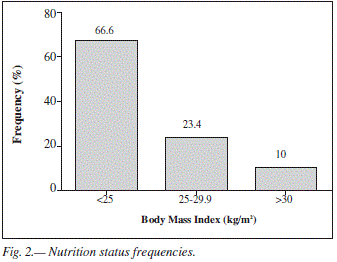
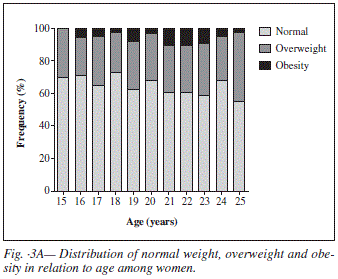
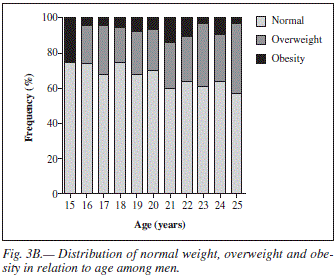
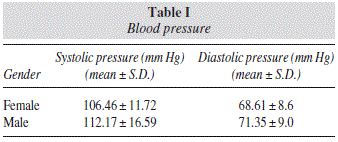
<body><![CDATA[<p><font face="Verdana" size="2"><a href="#f2">Figure 2</a> shows the distribution of the values of BMI. Two thirds of the participants had normal weight, while approximately one third had overweight (23.4%) or obesity (10%). We found a trend to increased overweight and obesity among the eldest ages of the sample, independently from gender, as it is shown in <a href="#f3">figures 3A and 3B</a>. By age 25 (by the time when they graduate) almost half of the participants presented overweight or obesity.</font></p>     <p>&nbsp;</p>     <p align="center"><font face="Verdana" size="2"><a name="f2"><img src="/img/revistas/nh/v28n1/27_original_20_f2.gif" align="top"></a></font></p>     <p align="center"><font face="Verdana" size="2"><a name="f3"><img src="/img/revistas/nh/v28n1/27_original_20_f3a.gif" align="top"></a></font></p>     <p align="center"><font face="Verdana" size="2"><img src="/img/revistas/nh/v28n1/27_original_20_f3b.gif" align="top"></font></p>     <p align="center">&nbsp;</p>     <p><font face="Verdana" size="2"><a href="#f4">Figure 4</a> presents the abdominal circumference results: both female (77.6 &plusmn; 10.3 cm.) and male (82.7 &plusmn; 11.1 cm.) subjects presented, in average, lower values than the cut-off point for cardiometabolic risk, established for the pediatric population (for age and sex)<sup>9</sup> or, if being &ge; 18 years old, the cut-off points for Mexican population, 80 cm. for women, and 90 cm. for men<sup>10</sup>.</font></p>     <p align="center"><font face="Verdana" size="2"><a name="f4"><img src="/img/revistas/nh/v28n1/27_original_20_f4.gif" align="top"></a></font></p>     <p>&nbsp;</p>     <p><font face="Verdana" size="2">Blood pressure was normal in both genders, even though men presented slightly higher values, as described in <a href="#t1">table I</a>. No hypertension was found in the direct blood pressure measurement or for self-reporting.</font></p>     ]]></body>
<body><![CDATA[<p>&nbsp;</p>     <p align="center"><font face="Verdana" size="2"><a name="t1"><img src="/img/revistas/nh/v28n1/27_original_20_t1.gif" align="top"></a></font></p>     <p>&nbsp;</p>     <p><font face="Verdana" size="2"><a href="#t2">Table II</a> summarized the findings related to the presence of cardiovascular risk factors. It can be observed that parental obesity was the most frequent risk factor among biomedical students, followed by alcohol consumption -reported as social drinking- and, smoking in the third place. Tobacco consumption has slightly higher among the male gender (18.4%) than in females (17.3%).</font></p>     <p>&nbsp;</p>     <p align="center"><font face="Verdana" size="2"><a name="t2"><img src="/img/revistas/nh/v28n1/27_original_20_t2.gif" align="top"></a></font></p>     <p>&nbsp;</p>     <p><font face="Verdana" size="2"><a href="#t3">Table III</a> presents the results from the food frequency questionnaire herein applied. Dairy products are often consumed by biomedical students, being milk the most important source as more than 60% of the sample reported to consume it on a daily basis. Regarding fruits, we selected 5 of the most popular among mexicans. In average, 20% of the subjects report to consume at least one fruit a day. The same phenomenon was found in vegetable intake, although results were slightly better; however, almost no one met the daily recommendation of 5 or more. The group of animal derived food (egg and chicken), was the most frequently consumed, followed by charcuterie pork products, such as ham and sausage. However, fresh pork meat was not reported to be eaten so often. Fish and shellfish were the least consumed foods. Beans intake was oddly lower than expected: almost 60% of the volunteers claimed to include them in their diets up to only 3 times a week. Not surprisingly, corn tortillas were the most frequently consumed cereal, with nearly 70% of the sample reporting to eat at least 1 piece a day. Break-fast-like cereals, pastries and white bread followed in terms of popularity since, in average, half the volunteers consume a minimum of a piece -of each- every week. In this study, we confirmed the &quot;globally recognized&quot; high sweetened beverages consumption in Mexico; on the bright side, water intake was found to be higher as almost 6/10 of the students drink it more than once a day. Finally, tacos and quesadillas were the most frequently consumed typical foods.</font></p>     <p>&nbsp;</p>     <p align="center"><font face="Verdana" size="2"><a name="t3"><img src="/img/revistas/nh/v28n1/27_original_20_t3.gif" align="top"></a></font></p>     ]]></body>
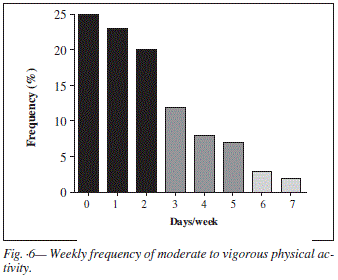
<body><![CDATA[<p>&nbsp;</p>     <p><font face="Verdana" size="2">Physical activity's results are shown in figures <a href="#f5">5</a> and <a href="#f6">6</a>. More than half the student population here questioned reported to practice very little or no exercise at all. Those who claimed to have moderate to vigorous activities persuade them less than the international recommendations: roughly 15% percent practiced at least 5 times a week.</font></p>     <p>&nbsp;</p>     <p align="center"><font face="Verdana" size="2"><a name="f5"><img src="/img/revistas/nh/v28n1/27_original_20_f5.gif" align="top"></a></font></p>     <p align="center"><font face="Verdana" size="2"><a name="f6"><img src="/img/revistas/nh/v28n1/27_original_20_f6.gif" align="top"></a></font></p>     <p>&nbsp;</p>     <p><font face="Verdana" size="2"><b>Discussion</b></font></p>     <p><font face="Verdana" size="2">By the 1970's it was clear that diet quality was declining, while physical activity was being dramatically reduced, and thus obesity prevalence raised among the developed countries. However, there was small concern of obesity in developing countries -such as Mexico- since their main health issues were infectious diseases, malnutrition and other poverty diseases<sup>11</sup>. During the late 1990's, a phenomenon called <i>nutrition transition</i>, -which, briefly, consists in the shift from a low-caloric density, rich in vegetables, grains and legumes, towards a new industrialized, of high-density energy, poor in fiber and rich in fats and simple carbohydrates, stated that overweight and obesity were, in fact, the emerging burden in developed countries but also in low- and middle-income countries too. Such dietary and physical activity patterns conduct to the development of obesity and its comorbidities<sup>12</sup>.</font></p>     <p><font face="Verdana" size="2">Although Mexican biomedical students, herein assessed, did not -in average- show cardiovascular alterations, they had important risk factors that may eventually lead to the development of chronic cardiometabolic diseases and this profile could have impact in their future practice.</font></p>     <p><font face="Verdana" size="2">Our results showed that the biomedical education induces no-change in lifestyle, since there were no differences between the surveyed individuals, i.e., the health sciences students, who were supposed to present fewer risk factors and lower aberrant nutritional status rates. Reflecting this, our study found a combined prevalence of about 20% of overweight and 10% of obesity, which correlates with the results from the 2006 National Nutrition and Health Survey (ENSANUT)<sup>13</sup>. The latter reports a frequency of 21.2 and 23.3 for every 100 adolescent women and men, respectively, while obesity was found in 10% of the men and 9.2% of the women, resulting in a combined prevalence of 32.5% in adolescent women and 31.2% in men. Therefore, we can infer that biomedical education has failed to inculcate a preventive conscience within students and we can surely expect similar future rates as those of the adults with non health-related occupations.</font></p>     ]]></body>
<body><![CDATA[<p><font face="Verdana" size="2">Central fat deposition correlates -even more than BMI- with the occurrence of cardiometabolic abnormalities, such as high blood pressure, dysglycemia and dyslipidemia. In the present study -and similarly to other international studies performed in adolescents<sup>14,15</sup>- we found that abdominal circumference tended to increase with age, although the mean values did not surpassed the cut-off points, i.e., the 90<sup>th</sup> percentile for the adolescent's age and sex<sup>9</sup>. Such findings were reinforced with the fact that, both, mean systolic and diastolic pressures were within normal values and were similar to those found in international studies on otherwise healthy adolescents, students, and young adults<sup>16</sup>.</font></p>     <p><font face="Verdana" size="2">As mentioned before, family history of obesity was the most frequent risk factor. Parental obesity has been associated with an increased relative risk of weight problems in their offspring. Besides genes, parents also influence eating behavior and, physical activity<sup>17,18</sup>.</font></p>     <p><font face="Verdana" size="2">Tobacco smoking rates was higher than that reported in national surveys such as the ENSANUT<sup>13</sup> (7.6%) and the 2008 National Addiction Survey (ENA)<sup>19</sup>, where a prevalence of 8.8% of active smoker adolescents was reported. Cigarette consumption confers an increased risk for cardiometabolic, respiratory and malignant diseases; furthermore, smoking raises the overall risk for complications in cardiometabolic diseases<sup>20</sup>. It is of great importance the fact that these biomedical students smoke twice than the general teenage population. As they become the health personnel, these smokers will not be in the best position for preventing and convincing their patients to quit smoking. For more than 20 years, the medical literature has extensively evidenced the impact of physicians in their patients' smoking cessation results<sup>21,22</sup> and several publications have reported that those doctors who consume tobacco are significantly less efficient in helping their patients to stop smoking<sup>22</sup> and, even worse, tend not to ask their patients about their smoking status<sup>23</sup>.</font></p>     <p><font face="Verdana" size="2">On regard to alcohol consumption, social drinking habits among physicians and health-related areas students have been reported to be similar to those found in our study (32.33% and around 40%, respectively)<sup>24</sup>; however, such rates -as ours- are higher than those corresponding to the general population<sup>25</sup>. Although, these high prevalences have been reported among undergraduates of different disciplines as well<sup>26</sup>, so this phenomenon may not be exclusive of health sciences students but it may rather be attributed to age and the social behavior among such populations. Despite this fact and in contrast to tobacco use, results about physicians' drinking habits and its impact in primary health care have been conflicting: some studies show no significant association<sup>27</sup>, while others conclude that physicians have a direct effect on their patient's outcomes as they are frequently seen as role models<sup>28</sup>.</font></p>     <p><font face="Verdana" size="2">Our results are also consistent with the National Income and Expenditure in Households Survey (ENIGH)<sup>29</sup> data: animal protein sources (e.g., meat and poultry) represent almost 20% of the total expense in food within a household; cereals (e.g., corn tortilla) follow with a 22.2% and, in third place, milk and other dairy products. The ENIGH also reported that the 10 most frequently consumed foods among Mexican population included tortilla, red tomato, eggs, sodas, milk, beans, potatoes, pastries and chicken<sup>30</sup>. This excess in animal protein is usually concomitant to a deficient consumption of fruits and vegetables<sup>31</sup>. Our analysis revealed a low intake of fruits and vegetables, as the vast majority of the students did not meet the recommendations of 5 servings a day. Qualitatively, we dare to suppose that food preferences among the herein surveyed students are profoundly influenced by the economic costs and practicality, as mentioned in other studies developed in Spain<sup>32</sup>. In the latter matter, all three most frequently consumed fruits (orange, banana and apple) have one thing in common: they can be carried without the need of a container and they can be easily and rapidly eaten, as no cutler nor special instrument is needed. The same logic is applied to pastries.</font></p>     <p><font face="Verdana" size="2">In addition, we also confirmed that sweetened beverages and milk were among the most frequently consumed beverages. A study<sup>33</sup> reported that 80.1 and 68.3% percent of adolescents claimed to consume sodas and milk, respectively, on a daily basis. In this same study, water intake was reported in 94%; such figure was similar to our findings and may contribute to the prevalence of obesity and overweight due to the fact that energy intake from beverages has significantly increased in the last years<sup>34</sup>.</font></p>     <p><font face="Verdana" size="2">This <i>Western-like</i> diet almost always goes side-by-side with a sedentary lifestyle. Almost 46% participants in this study claimed to have a moderate to vigorous physical activity level, however, when they were questioned in term of frequency, roughly 15% performed such exercise 5 or more times a week. The ENSANUT<sup>13 </sup>found out that most Mexicans do not have the optimal physical activity level, as only a third part reports sufficient time and intensity to meet recommendations; other studies<sup>35</sup> have reported the same prevalence (around 50%). Such physical inactivity, together with the dietary changes already discussed has undoubtedly contributed to the prevalence of overweight and obesity found in this and many other studies<sup>36</sup>.</font></p>     <p><font face="Verdana" size="2">Health sciences curricula are especially intensive, thus students simply lack time for adequate eating and/or nutrition is not a priority in comparison to school, resulting in an unbalanced and calorically excessive diet. The Observatory Study clearly reflects the reality of biomedical college students: the rapid and demanding rhythm of studies, together with limited accessibility (i.e., in terms of economy), little time and no spaces for practicing exercise, have a profound influence in nutrition status and -ultimately- the health of such population.</font></p>     <p><font face="Verdana" size="2">The importance that future health professionals maintain an adequate body composition through correct diet and physical activity relies on the fact that many studies that patients report significantly lower confidence towards those overweight/obese physicians who try to talk them into losing weight; moreover, such professionals tend to under-diagnose overweight and obesity, and not to talk to their patients about this themes<sup>37-39</sup>. In fact, the Mexican general practitioners' nutritional status, i.e., BMI and waist circumference, and their cardiometabolic risk factors were very similar to those of their patients<sup>5</sup>. Herein, we found the same phenomenon: the rates among young biomedical students in this series perfectly coincide with that published in national surveys and regarding the same population, in the international panorama<sup>40</sup>.</font></p>     <p>&nbsp;</p>     ]]></body>
<body><![CDATA[<p><font face="Verdana" size="2"><b>Conclusions</b></font></p>     <p><font face="Verdana" size="2">There is a lack in the effectiveness of health sciences education regarding a preventive conscience among such students. Findings here presented clearly indicate that cardiometabolic risk factors rates will not be lowered within the next years since youngsters will most probable become obese health-professionals, thus fail to effectively treat their own patients.</font></p>     <p><font face="Verdana" size="2">When will we stop being <i>the shoemaker whose son always goes barefoot?</i> When will we practice our own preaching? When will we walk the talk and lead with the example?</font></p>     <p>&nbsp;</p>     <p><font face="Verdana" size="2"><b>References</b></font></p>     <!-- ref --><p><font face="Verdana" size="2">1. Rivera JA, Barquera S, Campirano F, Campos I, Safdie M, Tovar V. Epidemiological and nutritional transition in Mexico: rapid increase of non-communicable chronic diseases and obesity. <i>Public health nutrition</i> 2002; 5(1A): 113-22. Epub 2002/05/25.    &nbsp;&nbsp;&nbsp;&nbsp;&nbsp;&nbsp;&nbsp;&nbsp;[&#160;<a href="javascript:void(0);" onclick="javascript: window.open('/scielo.php?script=sci_nlinks&ref=3718438&pid=S0212-1611201300010002700001&lng=','','width=640,height=500,resizable=yes,scrollbars=1,menubar=yes,');">Links</a>&#160;]<!-- end-ref --></font></p>    <!-- ref --><p><font face="Verdana" size="2">2. (OECD) OfECaD. Health data 2011. OECD; 2011 (cited 2012); Available from: <a target="_blank" href="http://www.oecd.org/dataoecd/1/61/49716427.pdf">http://www.oecd.org/dataoecd/1/61/49716427.pdf</a>.    &nbsp;&nbsp;&nbsp;&nbsp;&nbsp;&nbsp;&nbsp;&nbsp;[&#160;<a href="javascript:void(0);" onclick="javascript: window.open('/scielo.php?script=sci_nlinks&ref=3718440&pid=S0212-1611201300010002700002&lng=','','width=640,height=500,resizable=yes,scrollbars=1,menubar=yes,');">Links</a>&#160;]<!-- end-ref --></font></p>    <!-- ref --><p><font face="Verdana" size="2">3. Villalpando S, de la Cruz V, Rojas R, Shamah-Levy T, Avila MA, Gaona B, et al. Prevalence and distribution of type 2 diabetes mellitus in Mexican adult population: a probabilistic survey. <i>Salud publica de Mexico</i> 2010; 52 Suppl 1: S19-26.    &nbsp;&nbsp;&nbsp;&nbsp;&nbsp;&nbsp;&nbsp;&nbsp;[&#160;<a href="javascript:void(0);" onclick="javascript: window.open('/scielo.php?script=sci_nlinks&ref=3718442&pid=S0212-1611201300010002700003&lng=','','width=640,height=500,resizable=yes,scrollbars=1,menubar=yes,');">Links</a>&#160;]<!-- end-ref --> Epub 2010/07/24.</font></p>    <!-- ref --><p><font face="Verdana" size="2">4. Meaney E, Lara-Esqueda A, Ceballos-Reyes GM, Asbun J, Vela A, Martinez-Marroquin Y, et al. Cardiovascular risk factors in the urban Mexican population: the FRIMEX study. <i>Public health</i> 2007; 121(5): 378-84. Epub 2007/02/13.    &nbsp;&nbsp;&nbsp;&nbsp;&nbsp;&nbsp;&nbsp;&nbsp;[&#160;<a href="javascript:void(0);" onclick="javascript: window.open('/scielo.php?script=sci_nlinks&ref=3718444&pid=S0212-1611201300010002700004&lng=','','width=640,height=500,resizable=yes,scrollbars=1,menubar=yes,');">Links</a>&#160;]<!-- end-ref --></font></p>    <!-- ref --><p><font face="Verdana" size="2">5. Lara A, Meaney A, Kuri-Morales P, Meaney E, Asbun-Bojalil J, Álvarez Luca CH, et al. Frecuencia de obesidad abdominal en médicos mexicanos de primer contacto y en sus pacientes. <i>Med Int Mex</i> 2007; 23: 391-7.    &nbsp;&nbsp;&nbsp;&nbsp;&nbsp;&nbsp;&nbsp;&nbsp;[&#160;<a href="javascript:void(0);" onclick="javascript: window.open('/scielo.php?script=sci_nlinks&ref=3718446&pid=S0212-1611201300010002700005&lng=','','width=640,height=500,resizable=yes,scrollbars=1,menubar=yes,');">Links</a>&#160;]<!-- end-ref --></font></p>    <!-- ref --><p><font face="Verdana" size="2">6. Federación DOdl. Ley General de Salud, Reglamento de Investigación Clínica. Mexico 1986.    &nbsp;&nbsp;&nbsp;&nbsp;&nbsp;&nbsp;&nbsp;&nbsp;[&#160;<a href="javascript:void(0);" onclick="javascript: window.open('/scielo.php?script=sci_nlinks&ref=3718448&pid=S0212-1611201300010002700006&lng=','','width=640,height=500,resizable=yes,scrollbars=1,menubar=yes,');">Links</a>&#160;]<!-- end-ref --></font></p>    <!-- ref --><p><font face="Verdana" size="2">7. World Medical Association I. Declaration of Helsinki. Ethical principles for medical research involving human subjects. <i>Journal of the Indian Medical Association</i> 2009; 107(6): 403-5. Epub 2009/11/06.    &nbsp;&nbsp;&nbsp;&nbsp;&nbsp;&nbsp;&nbsp;&nbsp;[&#160;<a href="javascript:void(0);" onclick="javascript: window.open('/scielo.php?script=sci_nlinks&ref=3718450&pid=S0212-1611201300010002700007&lng=','','width=640,height=500,resizable=yes,scrollbars=1,menubar=yes,');">Links</a>&#160;]<!-- end-ref --></font></p>    <!-- ref --><p><font face="Verdana" size="2">8. International Conference on Harmonisation of Technical Requirements for Registration of Pharmaceuticals for Human Use (ICH) adopts Consolidated Guideline on Good Clinical Practice in the Conduct of Clinical Trials on Medicinal Products for Human Use. <i>International digest of health legislation</i> 1997; 48(2): 231-4. Epub 1997/01/01.    &nbsp;&nbsp;&nbsp;&nbsp;&nbsp;&nbsp;&nbsp;&nbsp;[&#160;<a href="javascript:void(0);" onclick="javascript: window.open('/scielo.php?script=sci_nlinks&ref=3718452&pid=S0212-1611201300010002700008&lng=','','width=640,height=500,resizable=yes,scrollbars=1,menubar=yes,');">Links</a>&#160;]<!-- end-ref --></font></p>    <!-- ref --><p><font face="Verdana" size="2">9. Fernandez JR, Redden DT, Pietrobelli A, Allison DB. Waist circumference percentiles in nationally representative samples of African-American, European-American, and Mexican-American children and adolescents. <i>The Journal of pediatrics</i> 2004; 145(4): 439-44. Epub 2004/10/14.    &nbsp;&nbsp;&nbsp;&nbsp;&nbsp;&nbsp;&nbsp;&nbsp;[&#160;<a href="javascript:void(0);" onclick="javascript: window.open('/scielo.php?script=sci_nlinks&ref=3718454&pid=S0212-1611201300010002700009&lng=','','width=640,height=500,resizable=yes,scrollbars=1,menubar=yes,');">Links</a>&#160;]<!-- end-ref --></font></p>    <!-- ref --><p><font face="Verdana" size="2">10. Rojas R, Aguilar-Salinas CA, Jimenez-Corona A, Shamah-Levy T, Rauda J, Avila-Burgos L, et al. Metabolic syndrome in Mexican adults: results from the National Health and Nutrition Survey 2006. <i>Salud publica de Mexico</i> 2010; 52 Suppl 1: S11-8. Epub 2010/07/24.    &nbsp;&nbsp;&nbsp;&nbsp;&nbsp;&nbsp;&nbsp;&nbsp;[&#160;<a href="javascript:void(0);" onclick="javascript: window.open('/scielo.php?script=sci_nlinks&ref=3718456&pid=S0212-1611201300010002700010&lng=','','width=640,height=500,resizable=yes,scrollbars=1,menubar=yes,');">Links</a>&#160;]<!-- end-ref --></font></p>    <!-- ref --><p><font face="Verdana" size="2">11. Popkin BM, Adair LS, Ng SW. Global nutrition transition and the pandemic of obesity in developing countries. <i>Nutrition reviews</i> 2012; 70(1): 3-21. Epub 2012/01/10.    &nbsp;&nbsp;&nbsp;&nbsp;&nbsp;&nbsp;&nbsp;&nbsp;[&#160;<a href="javascript:void(0);" onclick="javascript: window.open('/scielo.php?script=sci_nlinks&ref=3718458&pid=S0212-1611201300010002700011&lng=','','width=640,height=500,resizable=yes,scrollbars=1,menubar=yes,');">Links</a>&#160;]<!-- end-ref --></font></p>    <!-- ref --><p><font face="Verdana" size="2">12. Popkin BM. The nutrition transition in low-income countries: an emerging crisis. <i>Nutrition reviews</i> 1994; 52(9): 285-98. Epub 1994/09/01.    &nbsp;&nbsp;&nbsp;&nbsp;&nbsp;&nbsp;&nbsp;&nbsp;[&#160;<a href="javascript:void(0);" onclick="javascript: window.open('/scielo.php?script=sci_nlinks&ref=3718460&pid=S0212-1611201300010002700012&lng=','','width=640,height=500,resizable=yes,scrollbars=1,menubar=yes,');">Links</a>&#160;]<!-- end-ref --></font></p>    <!-- ref --><p><font face="Verdana" size="2">13. Olaiz-Fernández G, Rivera-Dommarco J, Shamah-Levy T, Rojas R, Villalpando-Hernández S, Hernández-Avila M, et al. Encuesta Nacional de Salud y Nutrición 2006. Cuernavaca, México: Instituto Nacional de Salud Pública; 2006.    &nbsp;&nbsp;&nbsp;&nbsp;&nbsp;&nbsp;&nbsp;&nbsp;[&#160;<a href="javascript:void(0);" onclick="javascript: window.open('/scielo.php?script=sci_nlinks&ref=3718462&pid=S0212-1611201300010002700013&lng=','','width=640,height=500,resizable=yes,scrollbars=1,menubar=yes,');">Links</a>&#160;]<!-- end-ref --></font></p>    <!-- ref --><p><font face="Verdana" size="2">14. Carmenate-Moreno MM, Marrodán-Serrano MD, Mesa-Saturnino MS,  et al. Obesidad y circunferencia de la cintura en adolescentes madrileños. <i>Rev Cub Salud Pública</i> 2007; 33(3).    &nbsp;&nbsp;&nbsp;&nbsp;&nbsp;&nbsp;&nbsp;&nbsp;[&#160;<a href="javascript:void(0);" onclick="javascript: window.open('/scielo.php?script=sci_nlinks&ref=3718464&pid=S0212-1611201300010002700014&lng=','','width=640,height=500,resizable=yes,scrollbars=1,menubar=yes,');">Links</a>&#160;]<!-- end-ref --></font></p>    <!-- ref --><p><font face="Verdana" size="2">15. Escarda Fernandez E, Gonzalez Martinez E, Gonzalez Sarmiento E, De Luis Roman D, Munoz Moreno MF, Rodriguez Gay C, et al. Study of the anthropometric and nutritional characteristics of adolescents in the city of Valladolid. Nutr Hosp. 2010; 25(5): 814-22. Epub 2011/02/22. Estudio de las características antropométricas y nutricionales de los adolescentes del núcleo urbano de Valladolid.    &nbsp;&nbsp;&nbsp;&nbsp;&nbsp;&nbsp;&nbsp;&nbsp;[&#160;<a href="javascript:void(0);" onclick="javascript: window.open('/scielo.php?script=sci_nlinks&ref=3718466&pid=S0212-1611201300010002700015&lng=','','width=640,height=500,resizable=yes,scrollbars=1,menubar=yes,');">Links</a>&#160;]<!-- end-ref --></font></p>    <!-- ref --><p><font face="Verdana" size="2">16. Nidich SI, Rainforth MV, Haaga DA, Hagelin I, Salerno IW, Travis F, et al. A randomized controlled trial on effects of the Transcendental Meditation program on blood pressure, psychological distress, and coping in young adults. <i>American Journal of Hypertension</i> 2009; 22(12): 1326-31. Epub 2009/10/03.    &nbsp;&nbsp;&nbsp;&nbsp;&nbsp;&nbsp;&nbsp;&nbsp;[&#160;<a href="javascript:void(0);" onclick="javascript: window.open('/scielo.php?script=sci_nlinks&ref=3718468&pid=S0212-1611201300010002700016&lng=','','width=640,height=500,resizable=yes,scrollbars=1,menubar=yes,');">Links</a>&#160;]<!-- end-ref --></font></p>    <!-- ref --><p><font face="Verdana" size="2">17. Kral TV, Rauh EM. Eating behaviors of children in the context of their family environment. <i>Physiology &amp; behavior</i> 2010; 100(5): 567-73. Epub 2010/05/12.    &nbsp;&nbsp;&nbsp;&nbsp;&nbsp;&nbsp;&nbsp;&nbsp;[&#160;<a href="javascript:void(0);" onclick="javascript: window.open('/scielo.php?script=sci_nlinks&ref=3718470&pid=S0212-1611201300010002700017&lng=','','width=640,height=500,resizable=yes,scrollbars=1,menubar=yes,');">Links</a>&#160;]<!-- end-ref --></font></p>    <!-- ref --><p><font face="Verdana" size="2">18. Shrewsbury VA, Steinbeck KS, Torvaldsen S, Baur LA. The role of parents in pre-adolescent and adolescent overweight and obesity treatment: a systematic review of clinical recommendations. Obesity reviews: an official journal of the International Association for the Study of Obesity 2011; 12(10): 759-69. Epub 2011/05/04.    &nbsp;&nbsp;&nbsp;&nbsp;&nbsp;&nbsp;&nbsp;&nbsp;[&#160;<a href="javascript:void(0);" onclick="javascript: window.open('/scielo.php?script=sci_nlinks&ref=3718472&pid=S0212-1611201300010002700018&lng=','','width=640,height=500,resizable=yes,scrollbars=1,menubar=yes,');">Links</a>&#160;]<!-- end-ref --></font></p>    <!-- ref --><p><font face="Verdana" size="2">19. Salud. Sd. Encuesta Nacional de Adicciones 2008. México: Instituto Nacional de Salud Pública; 2008.    &nbsp;&nbsp;&nbsp;&nbsp;&nbsp;&nbsp;&nbsp;&nbsp;[&#160;<a href="javascript:void(0);" onclick="javascript: window.open('/scielo.php?script=sci_nlinks&ref=3718474&pid=S0212-1611201300010002700019&lng=','','width=640,height=500,resizable=yes,scrollbars=1,menubar=yes,');">Links</a>&#160;]<!-- end-ref --></font></p>    <!-- ref --><p><font face="Verdana" size="2">20. Frey P, Waters DD. Tobacco smoke and cardiovascular risk: a call for continued efforts to reduce exposure. <i>Current opinion in cardiology</i> 2011; 26(5): 424-8. Epub 2011/07/07.    &nbsp;&nbsp;&nbsp;&nbsp;&nbsp;&nbsp;&nbsp;&nbsp;[&#160;<a href="javascript:void(0);" onclick="javascript: window.open('/scielo.php?script=sci_nlinks&ref=3718476&pid=S0212-1611201300010002700020&lng=','','width=640,height=500,resizable=yes,scrollbars=1,menubar=yes,');">Links</a>&#160;]<!-- end-ref --></font></p>    <!-- ref --><p><font face="Verdana" size="2">21. Hansen EC, Nelson MR. How cardiac patients describe the role of their doctors in smoking cessation: a qualitative study. <i>Australian journal of primary health</i> 2011; 17(3): 268-73. Epub 2011/09/08.    &nbsp;&nbsp;&nbsp;&nbsp;&nbsp;&nbsp;&nbsp;&nbsp;[&#160;<a href="javascript:void(0);" onclick="javascript: window.open('/scielo.php?script=sci_nlinks&ref=3718478&pid=S0212-1611201300010002700021&lng=','','width=640,height=500,resizable=yes,scrollbars=1,menubar=yes,');">Links</a>&#160;]<!-- end-ref --></font></p>    <!-- ref --><p><font face="Verdana" size="2">22. Raherison C. Influence of doctors' smoking status on their attitude towards patients' smoking cessation: myth or reality?. Revue des maladies respiratoires. 2010; 27(5): 409-10. Epub 2010/06/24. Influence du tabagisme des medecins sur la prise en charge du sevrage tabagique de leurs patients: mythe ou realite?</font>&nbsp;&nbsp;&nbsp;&nbsp;&nbsp;&nbsp;&nbsp;&nbsp;[&#160;<a href="javascript:void(0);" onclick="javascript: window.open('/scielo.php?script=sci_nlinks&ref=3718480&pid=S0212-1611201300010002700022&lng=','','width=640,height=500,resizable=yes,scrollbars=1,menubar=yes,');">Links</a>&#160;]<!-- end-ref --><!-- ref --><p><font face="Verdana" size="2">23. De Col P, Baron C, Guillaumin C, al. e. Le tabagisme des médecins généralistes a-til une influence sur l'abord du tabac en consultation en 2008? <i>Revue des maladies respiratoires</i> 2010; 27: 431-40.    &nbsp;&nbsp;&nbsp;&nbsp;&nbsp;&nbsp;&nbsp;&nbsp;[&#160;<a href="javascript:void(0);" onclick="javascript: window.open('/scielo.php?script=sci_nlinks&ref=3718481&pid=S0212-1611201300010002700023&lng=','','width=640,height=500,resizable=yes,scrollbars=1,menubar=yes,');">Links</a>&#160;]<!-- end-ref --></font></p>    ]]></body>
<body><![CDATA[<!-- ref --><p><font face="Verdana" size="2">24. Gerstenkorn A, Suwala M. Alcohol use by future physicians- medical and social problem. Wiadomosci lekarskie. 2003; 56(9-10): 402-6. Epub 2004/03/31. Problem medycznospoleczny spozywania alkoholu w grupie przyszlych lekarzy.    &nbsp;&nbsp;&nbsp;&nbsp;&nbsp;&nbsp;&nbsp;&nbsp;[&#160;<a href="javascript:void(0);" onclick="javascript: window.open('/scielo.php?script=sci_nlinks&ref=3718483&pid=S0212-1611201300010002700024&lng=','','width=640,height=500,resizable=yes,scrollbars=1,menubar=yes,');">Links</a>&#160;]<!-- end-ref --></font></p>    <!-- ref --><p><font face="Verdana" size="2">25. Sebo P, Bouvier Gallacchi M, Goehring C, Kunzi B, Bovier PA. Use of tobacco and alcohol by Swiss primary care physicians: a cross-sectional survey. <i>BMC public health</i> 2007; 7: 5. Epub 2007/01/16.    &nbsp;&nbsp;&nbsp;&nbsp;&nbsp;&nbsp;&nbsp;&nbsp;[&#160;<a href="javascript:void(0);" onclick="javascript: window.open('/scielo.php?script=sci_nlinks&ref=3718485&pid=S0212-1611201300010002700025&lng=','','width=640,height=500,resizable=yes,scrollbars=1,menubar=yes,');">Links</a>&#160;]<!-- end-ref --></font></p>    <!-- ref --><p><font face="Verdana" size="2">26. Ledo-Varela MT, De Luis Roman D, González-Sagrado M, al. e. Características nutricionales y estilo de vida en universitarios. <i>Nutr Hosp</i> 2011; 26(4): 814-8.    &nbsp;&nbsp;&nbsp;&nbsp;&nbsp;&nbsp;&nbsp;&nbsp;[&#160;<a href="javascript:void(0);" onclick="javascript: window.open('/scielo.php?script=sci_nlinks&ref=3718487&pid=S0212-1611201300010002700026&lng=','','width=640,height=500,resizable=yes,scrollbars=1,menubar=yes,');">Links</a>&#160;]<!-- end-ref --></font></p>    <!-- ref --><p><font face="Verdana" size="2">27. Aalto M, Hyvonen S, Seppa K. Do primary care physicians' own AUDIT scores predict their use of brief alcohol intervention? A cross-sectional survey. <i>Drug and alcohol dependence</i> 2006; 83(2): 169-73. Epub 2005/12/14.    &nbsp;&nbsp;&nbsp;&nbsp;&nbsp;&nbsp;&nbsp;&nbsp;[&#160;<a href="javascript:void(0);" onclick="javascript: window.open('/scielo.php?script=sci_nlinks&ref=3718489&pid=S0212-1611201300010002700027&lng=','','width=640,height=500,resizable=yes,scrollbars=1,menubar=yes,');">Links</a>&#160;]<!-- end-ref --></font></p>    <!-- ref --><p><font face="Verdana" size="2">28. Kumar S, Pokharel B, Nagesh S, Yadav BK. Alcohol use among physicians in a medical school in Nepal. <i>Kathmandu University medical journal</i> 2006; 4(4): 460-4. Epub 2008/07/08.    &nbsp;&nbsp;&nbsp;&nbsp;&nbsp;&nbsp;&nbsp;&nbsp;[&#160;<a href="javascript:void(0);" onclick="javascript: window.open('/scielo.php?script=sci_nlinks&ref=3718491&pid=S0212-1611201300010002700028&lng=','','width=640,height=500,resizable=yes,scrollbars=1,menubar=yes,');">Links</a>&#160;]<!-- end-ref --></font></p>    ]]></body>
<body><![CDATA[<!-- ref --><p><font face="Verdana" size="2">29. (INEGI) INdEyG. Encuesta Nacional de Ingresos y Gastos en los Hogares (ENIGH) 2010. México: INEGI; 2010.    &nbsp;&nbsp;&nbsp;&nbsp;&nbsp;&nbsp;&nbsp;&nbsp;[&#160;<a href="javascript:void(0);" onclick="javascript: window.open('/scielo.php?script=sci_nlinks&ref=3718493&pid=S0212-1611201300010002700029&lng=','','width=640,height=500,resizable=yes,scrollbars=1,menubar=yes,');">Links</a>&#160;]<!-- end-ref --></font></p>    <!-- ref --><p><font face="Verdana" size="2">30. Martinez I, Villezca PA. La alimentación en México: un estudio a partir de la ENIGH. <i>Rev Info Anal</i> 2003: 26-37.    &nbsp;&nbsp;&nbsp;&nbsp;&nbsp;&nbsp;&nbsp;&nbsp;[&#160;<a href="javascript:void(0);" onclick="javascript: window.open('/scielo.php?script=sci_nlinks&ref=3718495&pid=S0212-1611201300010002700030&lng=','','width=640,height=500,resizable=yes,scrollbars=1,menubar=yes,');">Links</a>&#160;]<!-- end-ref --></font></p>    <!-- ref --><p><font face="Verdana" size="2">31. Oliveras MI, Nieto P, Agudo E,  et al. Evaluación nutricional de una población universitaria. <i>Nutr Hosp</i> 2006; 21(2): 179-83.    &nbsp;&nbsp;&nbsp;&nbsp;&nbsp;&nbsp;&nbsp;&nbsp;[&#160;<a href="javascript:void(0);" onclick="javascript: window.open('/scielo.php?script=sci_nlinks&ref=3718497&pid=S0212-1611201300010002700031&lng=','','width=640,height=500,resizable=yes,scrollbars=1,menubar=yes,');">Links</a>&#160;]<!-- end-ref --></font></p>    <!-- ref --><p><font face="Verdana" size="2">32.  Jáuregui-Lobera I, Bolaños-Ríos P. What motivates the consumer's food choice? <i>Nutr Hosp</i> 2011; 26(6): 1313-21.    &nbsp;&nbsp;&nbsp;&nbsp;&nbsp;&nbsp;&nbsp;&nbsp;[&#160;<a href="javascript:void(0);" onclick="javascript: window.open('/scielo.php?script=sci_nlinks&ref=3718499&pid=S0212-1611201300010002700032&lng=','','width=640,height=500,resizable=yes,scrollbars=1,menubar=yes,');">Links</a>&#160;]<!-- end-ref --></font></p>    <!-- ref --><p><font face="Verdana" size="2">33. Barquera S, Hernandez-Barrera L, Tolentino ML, Espinosa I, Ng SW, Rivera IA, et al. Energy intake from beverages is increasing among Mexican adolescents and adults. <i>The Journal of nutrition</i> 2008; 138(12): 2454-61. Epub 2008/11/22.    &nbsp;&nbsp;&nbsp;&nbsp;&nbsp;&nbsp;&nbsp;&nbsp;[&#160;<a href="javascript:void(0);" onclick="javascript: window.open('/scielo.php?script=sci_nlinks&ref=3718501&pid=S0212-1611201300010002700033&lng=','','width=640,height=500,resizable=yes,scrollbars=1,menubar=yes,');">Links</a>&#160;]<!-- end-ref --></font></p>    ]]></body>
<body><![CDATA[<!-- ref --><p><font face="Verdana" size="2">34. Moreno LA, Rodriguez G, Fleta I, Bueno-Lozano M, Lazaro A, Bueno G. Trends of dietary habits in adolescents. <i>Critical reviews in food science and nutrition</i> 2010; 50(2): 106-12. Epub 2010/01/30.    &nbsp;&nbsp;&nbsp;&nbsp;&nbsp;&nbsp;&nbsp;&nbsp;[&#160;<a href="javascript:void(0);" onclick="javascript: window.open('/scielo.php?script=sci_nlinks&ref=3718503&pid=S0212-1611201300010002700034&lng=','','width=640,height=500,resizable=yes,scrollbars=1,menubar=yes,');">Links</a>&#160;]<!-- end-ref --></font></p>    <!-- ref --><p><font face="Verdana" size="2">35. Martins Mdo C, Ricarte IF, Rocha CH, Maia RB, Silva VB, Veras AB, et al. Blood pressure, excess weight and level of physical activity in students of a public university. <i>Arquivos brasileiros de cardiologia</i> 2010; 95(2): 192-9. Epub 2010/06/16.    &nbsp;&nbsp;&nbsp;&nbsp;&nbsp;&nbsp;&nbsp;&nbsp;[&#160;<a href="javascript:void(0);" onclick="javascript: window.open('/scielo.php?script=sci_nlinks&ref=3718505&pid=S0212-1611201300010002700035&lng=','','width=640,height=500,resizable=yes,scrollbars=1,menubar=yes,');">Links</a>&#160;]<!-- end-ref --></font></p>    <!-- ref --><p><font face="Verdana" size="2">36. Toselli S, Argnani L, Canducci E, Ricci E, Gualdi-Russo E. Food habits and nutritional status of adolescents in Emilia-Romagna, Italy. <i>Nutr Hosp</i> 2010; 25(4): 613-21. Epub 2010/08/10.    &nbsp;&nbsp;&nbsp;&nbsp;&nbsp;&nbsp;&nbsp;&nbsp;[&#160;<a href="javascript:void(0);" onclick="javascript: window.open('/scielo.php?script=sci_nlinks&ref=3718507&pid=S0212-1611201300010002700036&lng=','','width=640,height=500,resizable=yes,scrollbars=1,menubar=yes,');">Links</a>&#160;]<!-- end-ref --></font></p>    <!-- ref --><p><font face="Verdana" size="2">37. Bleich SN, Bennett WL, Gudzune KA, Cooper LA. Impact of physician BMI on obesity care and beliefs. <i>Obesity</i> 2012; 20(5): 999-1005. Epub 2012/01/21.    &nbsp;&nbsp;&nbsp;&nbsp;&nbsp;&nbsp;&nbsp;&nbsp;[&#160;<a href="javascript:void(0);" onclick="javascript: window.open('/scielo.php?script=sci_nlinks&ref=3718509&pid=S0212-1611201300010002700037&lng=','','width=640,height=500,resizable=yes,scrollbars=1,menubar=yes,');">Links</a>&#160;]<!-- end-ref --></font></p>    <!-- ref --><p><font face="Verdana" size="2">38. Ubink-Veltmaat LJ, Damoiseaux RA, Rischen RO, Groenier KH. Please, let my doctor be obese: associations between the characteristics of general practitioners and their patients with type 2 diabetes. <i>Diabetes care</i> 2004; 27(10): 2560. Epub 2004/09/29.    &nbsp;&nbsp;&nbsp;&nbsp;&nbsp;&nbsp;&nbsp;&nbsp;[&#160;<a href="javascript:void(0);" onclick="javascript: window.open('/scielo.php?script=sci_nlinks&ref=3718511&pid=S0212-1611201300010002700038&lng=','','width=640,height=500,resizable=yes,scrollbars=1,menubar=yes,');">Links</a>&#160;]<!-- end-ref --></font></p>    ]]></body>
<body><![CDATA[<!-- ref --><p><font face="Verdana" size="2">39. Hash RB, Munna RK, Vogel RL, Bason JJ. Does physician weight affect perception of health advice? <i>Preventive medicine</i> 2003; 36(1): 41-4. Epub 2002/12/11.    &nbsp;&nbsp;&nbsp;&nbsp;&nbsp;&nbsp;&nbsp;&nbsp;[&#160;<a href="javascript:void(0);" onclick="javascript: window.open('/scielo.php?script=sci_nlinks&ref=3718513&pid=S0212-1611201300010002700039&lng=','','width=640,height=500,resizable=yes,scrollbars=1,menubar=yes,');">Links</a>&#160;]<!-- end-ref --></font></p>    <!-- ref --><p><font face="Verdana" size="2">40. Costa Silva Zemdegs J, Barreto Corsi L, De Castro Coelho L, Duarte Pimentel G, Toyomi Hirai A, Sachs A. Lipid profile and cardiovascular risk factors among first-year Brazilian university students in Sao Paulo. <i>Nutr Hosp</i> 2011; 26(3): 553-9. Epub 2011/09/06.    &nbsp;&nbsp;&nbsp;&nbsp;&nbsp;&nbsp;&nbsp;&nbsp;[&#160;<a href="javascript:void(0);" onclick="javascript: window.open('/scielo.php?script=sci_nlinks&ref=3718515&pid=S0212-1611201300010002700040&lng=','','width=640,height=500,resizable=yes,scrollbars=1,menubar=yes,');">Links</a>&#160;]<!-- end-ref --></font></p>     <p>&nbsp;</p>     <p>&nbsp;</p>     <p><font face="Verdana" size="2"><a href="#top"><img border="0" src="/img/revistas/nh/v28n1/seta.gif" width="15" height="17"></a><a name="bajo"></a><b>Correspondence:</b>    <br>Guillermo Ceballos, MD, PhD.    <br>Laboratorio de Investigación Integral Cardiometabólica.    <br>Sección de Estudios de Posgrado e Investigación.    ]]></body>
<body><![CDATA[<br>Escuela Superior de Medicina del Instituto Politécnico Nacional.    <br>Plan de San Luis y Díaz Miron, s/n. Colonia Casco de Santo Tomás.    <br>Delegación Miguel Hidalgo. 11340 México DF.    <br>E-mail: <a href="mailto:gceballosr@ipn.mx">gceballosr@ipn.mx</a></font></p>     <p><font face="Verdana" size="2">Recibido: 18-IX-2012.    <br>Aceptado: 23-X-2012.</font></p>      ]]></body><back>
<ref-list>
<ref id="B1">
<label>1</label><nlm-citation citation-type="journal">
<person-group person-group-type="author">
<name>
<surname><![CDATA[Rivera]]></surname>
<given-names><![CDATA[JA]]></given-names>
</name>
<name>
<surname><![CDATA[Barquera]]></surname>
<given-names><![CDATA[S]]></given-names>
</name>
<name>
<surname><![CDATA[Campirano]]></surname>
<given-names><![CDATA[F]]></given-names>
</name>
<name>
<surname><![CDATA[Campos]]></surname>
<given-names><![CDATA[I]]></given-names>
</name>
<name>
<surname><![CDATA[Safdie]]></surname>
<given-names><![CDATA[M]]></given-names>
</name>
<name>
<surname><![CDATA[Tovar]]></surname>
<given-names><![CDATA[V]]></given-names>
</name>
</person-group>
<article-title xml:lang="en"><![CDATA[Epidemiological and nutritional transition in Mexico: rapid increase of non-communicable chronic diseases and obesity]]></article-title>
<source><![CDATA[Public health nutrition]]></source>
<year>2002</year>
<volume>5</volume>
<numero>1A</numero>
<issue>1A</issue>
<page-range>113-22</page-range></nlm-citation>
</ref>
<ref id="B2">
<label>2</label><nlm-citation citation-type="book">
<collab>OECD^dOfECaD</collab>
<source><![CDATA[Health data 2011]]></source>
<year>2011</year>
<publisher-name><![CDATA[OECD]]></publisher-name>
</nlm-citation>
</ref>
<ref id="B3">
<label>3</label><nlm-citation citation-type="journal">
<person-group person-group-type="author">
<name>
<surname><![CDATA[Villalpando]]></surname>
<given-names><![CDATA[S]]></given-names>
</name>
<name>
<surname><![CDATA[de la Cruz]]></surname>
<given-names><![CDATA[V]]></given-names>
</name>
<name>
<surname><![CDATA[Rojas]]></surname>
<given-names><![CDATA[R]]></given-names>
</name>
<name>
<surname><![CDATA[Shamah-Levy]]></surname>
<given-names><![CDATA[T]]></given-names>
</name>
<name>
<surname><![CDATA[Avila]]></surname>
<given-names><![CDATA[MA]]></given-names>
</name>
<name>
<surname><![CDATA[Gaona]]></surname>
<given-names><![CDATA[B]]></given-names>
</name>
</person-group>
<article-title xml:lang="en"><![CDATA[Prevalence and distribution of type 2 diabetes mellitus in Mexican adult population: a probabilistic survey]]></article-title>
<source><![CDATA[Salud publica de Mexico]]></source>
<year>2010</year>
<volume>52</volume>
<numero>^s1</numero>
<issue>^s1</issue>
<supplement>1</supplement>
<page-range>S19-26</page-range></nlm-citation>
</ref>
<ref id="B4">
<label>4</label><nlm-citation citation-type="journal">
<person-group person-group-type="author">
<name>
<surname><![CDATA[Meaney]]></surname>
<given-names><![CDATA[E]]></given-names>
</name>
<name>
<surname><![CDATA[Lara-Esqueda]]></surname>
<given-names><![CDATA[A]]></given-names>
</name>
<name>
<surname><![CDATA[Ceballos-Reyes]]></surname>
<given-names><![CDATA[GM]]></given-names>
</name>
<name>
<surname><![CDATA[Asbun]]></surname>
<given-names><![CDATA[J]]></given-names>
</name>
<name>
<surname><![CDATA[Vela]]></surname>
<given-names><![CDATA[A]]></given-names>
</name>
<name>
<surname><![CDATA[Martinez-Marroquin]]></surname>
<given-names><![CDATA[Y]]></given-names>
</name>
</person-group>
<article-title xml:lang="en"><![CDATA[Cardiovascular risk factors in the urban Mexican population: the FRIMEX study]]></article-title>
<source><![CDATA[Public health]]></source>
<year>2007</year>
<volume>121</volume>
<numero>5</numero>
<issue>5</issue>
<page-range>378-84</page-range></nlm-citation>
</ref>
<ref id="B5">
<label>5</label><nlm-citation citation-type="journal">
<person-group person-group-type="author">
<name>
<surname><![CDATA[Lara]]></surname>
<given-names><![CDATA[A]]></given-names>
</name>
<name>
<surname><![CDATA[Meaney]]></surname>
<given-names><![CDATA[A]]></given-names>
</name>
<name>
<surname><![CDATA[Kuri-Morales]]></surname>
<given-names><![CDATA[P]]></given-names>
</name>
<name>
<surname><![CDATA[Meaney]]></surname>
<given-names><![CDATA[E]]></given-names>
</name>
<name>
<surname><![CDATA[Asbun-Bojalil]]></surname>
<given-names><![CDATA[J]]></given-names>
</name>
<name>
<surname><![CDATA[Álvarez Luca]]></surname>
<given-names><![CDATA[CH]]></given-names>
</name>
</person-group>
<article-title xml:lang="es"><![CDATA[Frecuencia de obesidad abdominal en médicos mexicanos de primer contacto y en sus pacientes]]></article-title>
<source><![CDATA[Med Int Mex]]></source>
<year>2007</year>
<volume>23</volume>
<page-range>391-7</page-range></nlm-citation>
</ref>
<ref id="B6">
<label>6</label><nlm-citation citation-type="">
<collab>Federación DOdl</collab>
<source><![CDATA[Ley General de Salud, Reglamento de Investigación Clínica]]></source>
<year>1986</year>
</nlm-citation>
</ref>
<ref id="B7">
<label>7</label><nlm-citation citation-type="journal">
<collab>World Medical Association I</collab>
<article-title xml:lang="en"><![CDATA[Declaration of Helsinki: Ethical principles for medical research involving human subjects]]></article-title>
<source><![CDATA[Journal of the Indian Medical Association]]></source>
<year>2009</year>
<volume>107</volume>
<numero>6</numero>
<issue>6</issue>
<page-range>403-5</page-range></nlm-citation>
</ref>
<ref id="B8">
<label>8</label><nlm-citation citation-type="journal">
<article-title xml:lang="en"><![CDATA[International Conference on Harmonisation of Technical Requirements for Registration of Pharmaceuticals for Human Use (ICH) adopts Consolidated Guideline on Good Clinical Practice in the Conduct of Clinical Trials on Medicinal Products for Human Use]]></article-title>
<source><![CDATA[International digest of health legislation]]></source>
<year>1997</year>
<volume>48</volume>
<numero>2</numero>
<issue>2</issue>
<page-range>231-4</page-range></nlm-citation>
</ref>
<ref id="B9">
<label>9</label><nlm-citation citation-type="journal">
<person-group person-group-type="author">
<name>
<surname><![CDATA[Fernandez]]></surname>
<given-names><![CDATA[JR]]></given-names>
</name>
<name>
<surname><![CDATA[Redden]]></surname>
<given-names><![CDATA[DT]]></given-names>
</name>
<name>
<surname><![CDATA[Pietrobelli]]></surname>
<given-names><![CDATA[A]]></given-names>
</name>
<name>
<surname><![CDATA[Allison]]></surname>
<given-names><![CDATA[DB]]></given-names>
</name>
</person-group>
<article-title xml:lang="en"><![CDATA[Waist circumference percentiles in nationally representative samples of African-American, European-American, and Mexican-American children and adolescents]]></article-title>
<source><![CDATA[The Journal of pediatrics]]></source>
<year>2004</year>
<volume>145</volume>
<numero>4</numero>
<issue>4</issue>
<page-range>439-44</page-range></nlm-citation>
</ref>
<ref id="B10">
<label>10</label><nlm-citation citation-type="journal">
<person-group person-group-type="author">
<name>
<surname><![CDATA[Rojas]]></surname>
<given-names><![CDATA[R]]></given-names>
</name>
<name>
<surname><![CDATA[Aguilar-Salinas]]></surname>
<given-names><![CDATA[CA]]></given-names>
</name>
<name>
<surname><![CDATA[Jimenez-Corona]]></surname>
<given-names><![CDATA[A]]></given-names>
</name>
<name>
<surname><![CDATA[Shamah-Levy]]></surname>
<given-names><![CDATA[T]]></given-names>
</name>
<name>
<surname><![CDATA[Rauda]]></surname>
<given-names><![CDATA[J]]></given-names>
</name>
<name>
<surname><![CDATA[Avila-Burgos]]></surname>
<given-names><![CDATA[L]]></given-names>
</name>
</person-group>
<article-title xml:lang="en"><![CDATA[Metabolic syndrome in Mexican adults: results from the National Health and Nutrition Survey 2006]]></article-title>
<source><![CDATA[Salud publica de Mexico]]></source>
<year>2010</year>
<volume>52</volume>
<numero>^s1</numero>
<issue>^s1</issue>
<supplement>1</supplement>
<page-range>S11-8</page-range></nlm-citation>
</ref>
<ref id="B11">
<label>11</label><nlm-citation citation-type="journal">
<person-group person-group-type="author">
<name>
<surname><![CDATA[Popkin]]></surname>
<given-names><![CDATA[BM]]></given-names>
</name>
<name>
<surname><![CDATA[Adair]]></surname>
<given-names><![CDATA[LS]]></given-names>
</name>
<name>
<surname><![CDATA[Ng]]></surname>
<given-names><![CDATA[SW]]></given-names>
</name>
</person-group>
<article-title xml:lang="en"><![CDATA[Global nutrition transition and the pandemic of obesity in developing countries]]></article-title>
<source><![CDATA[Nutrition reviews]]></source>
<year>2012</year>
<volume>70</volume>
<numero>1</numero>
<issue>1</issue>
<page-range>3-21</page-range></nlm-citation>
</ref>
<ref id="B12">
<label>12</label><nlm-citation citation-type="journal">
<person-group person-group-type="author">
<name>
<surname><![CDATA[Popkin]]></surname>
<given-names><![CDATA[BM]]></given-names>
</name>
</person-group>
<article-title xml:lang="en"><![CDATA[The nutrition transition in low-income countries: an emerging crisis]]></article-title>
<source><![CDATA[Nutrition reviews]]></source>
<year>1994</year>
<volume>52</volume>
<numero>9</numero>
<issue>9</issue>
<page-range>285-98</page-range></nlm-citation>
</ref>
<ref id="B13">
<label>13</label><nlm-citation citation-type="book">
<person-group person-group-type="author">
<name>
<surname><![CDATA[Olaiz-Fernández]]></surname>
<given-names><![CDATA[G]]></given-names>
</name>
<name>
<surname><![CDATA[Rivera-Dommarco]]></surname>
<given-names><![CDATA[J]]></given-names>
</name>
<name>
<surname><![CDATA[Shamah-Levy]]></surname>
<given-names><![CDATA[T]]></given-names>
</name>
<name>
<surname><![CDATA[Rojas]]></surname>
<given-names><![CDATA[R]]></given-names>
</name>
<name>
<surname><![CDATA[Villalpando-Hernández]]></surname>
<given-names><![CDATA[S]]></given-names>
</name>
<name>
<surname><![CDATA[Hernández-Avila]]></surname>
<given-names><![CDATA[M]]></given-names>
</name>
</person-group>
<source><![CDATA[Encuesta Nacional de Salud y Nutrición 2006]]></source>
<year>2006</year>
<publisher-loc><![CDATA[Cuernavaca ]]></publisher-loc>
<publisher-name><![CDATA[Instituto Nacional de Salud Pública]]></publisher-name>
</nlm-citation>
</ref>
<ref id="B14">
<label>14</label><nlm-citation citation-type="journal">
<person-group person-group-type="author">
<name>
<surname><![CDATA[Carmenate-Moreno]]></surname>
<given-names><![CDATA[MM]]></given-names>
</name>
<name>
<surname><![CDATA[Marrodán-Serrano]]></surname>
<given-names><![CDATA[MD]]></given-names>
</name>
<name>
<surname><![CDATA[Mesa-Saturnino]]></surname>
<given-names><![CDATA[MS]]></given-names>
</name>
</person-group>
<article-title xml:lang="es"><![CDATA[Obesidad y circunferencia de la cintura en adolescentes madrileños]]></article-title>
<source><![CDATA[Rev Cub Salud Pública]]></source>
<year>2007</year>
<volume>33</volume>
<numero>3</numero>
<issue>3</issue>
</nlm-citation>
</ref>
<ref id="B15">
<label>15</label><nlm-citation citation-type="journal">
<person-group person-group-type="author">
<name>
<surname><![CDATA[Escarda Fernandez]]></surname>
<given-names><![CDATA[E]]></given-names>
</name>
<name>
<surname><![CDATA[Gonzalez Martinez]]></surname>
<given-names><![CDATA[E]]></given-names>
</name>
<name>
<surname><![CDATA[Gonzalez Sarmiento]]></surname>
<given-names><![CDATA[E]]></given-names>
</name>
<name>
<surname><![CDATA[De Luis Roman]]></surname>
<given-names><![CDATA[D]]></given-names>
</name>
<name>
<surname><![CDATA[Munoz Moreno]]></surname>
<given-names><![CDATA[MF]]></given-names>
</name>
<name>
<surname><![CDATA[Rodriguez Gay]]></surname>
<given-names><![CDATA[C]]></given-names>
</name>
</person-group>
<article-title xml:lang="en"><![CDATA[Study of the anthropometric and nutritional characteristics of adolescents in the city of Valladolid]]></article-title>
<source><![CDATA[Nutr Hosp.]]></source>
<year>2010</year>
<volume>25</volume>
<numero>5</numero>
<issue>5</issue>
<page-range>814-22</page-range></nlm-citation>
</ref>
<ref id="B16">
<label>16</label><nlm-citation citation-type="journal">
<person-group person-group-type="author">
<name>
<surname><![CDATA[Nidich]]></surname>
<given-names><![CDATA[SI]]></given-names>
</name>
<name>
<surname><![CDATA[Rainforth]]></surname>
<given-names><![CDATA[MV]]></given-names>
</name>
<name>
<surname><![CDATA[Haaga]]></surname>
<given-names><![CDATA[DA]]></given-names>
</name>
<name>
<surname><![CDATA[Hagelin]]></surname>
<given-names><![CDATA[I]]></given-names>
</name>
<name>
<surname><![CDATA[Salerno]]></surname>
<given-names><![CDATA[IW]]></given-names>
</name>
<name>
<surname><![CDATA[Travis]]></surname>
<given-names><![CDATA[F]]></given-names>
</name>
</person-group>
<article-title xml:lang="en"><![CDATA[A randomized controlled trial on effects of the Transcendental Meditation program on blood pressure, psychological distress, and coping in young adults]]></article-title>
<source><![CDATA[American Journal of Hypertension]]></source>
<year>2009</year>
<volume>22</volume>
<numero>12</numero>
<issue>12</issue>
<page-range>1326-31</page-range></nlm-citation>
</ref>
<ref id="B17">
<label>17</label><nlm-citation citation-type="journal">
<person-group person-group-type="author">
<name>
<surname><![CDATA[Kral]]></surname>
<given-names><![CDATA[TV]]></given-names>
</name>
<name>
<surname><![CDATA[Rauh]]></surname>
<given-names><![CDATA[EM]]></given-names>
</name>
</person-group>
<article-title xml:lang="en"><![CDATA[Eating behaviors of children in the context of their family environment]]></article-title>
<source><![CDATA[Physiology & behavior]]></source>
<year>2010</year>
<volume>100</volume>
<numero>5</numero>
<issue>5</issue>
<page-range>567-73</page-range></nlm-citation>
</ref>
<ref id="B18">
<label>18</label><nlm-citation citation-type="journal">
<person-group person-group-type="author">
<name>
<surname><![CDATA[Shrewsbury]]></surname>
<given-names><![CDATA[VA]]></given-names>
</name>
<name>
<surname><![CDATA[Steinbeck]]></surname>
<given-names><![CDATA[KS]]></given-names>
</name>
<name>
<surname><![CDATA[Torvaldsen]]></surname>
<given-names><![CDATA[S]]></given-names>
</name>
<name>
<surname><![CDATA[Baur]]></surname>
<given-names><![CDATA[LA]]></given-names>
</name>
</person-group>
<article-title xml:lang="en"><![CDATA[The role of parents in pre-adolescent and adolescent overweight and obesity treatment: a systematic review of clinical recommendations]]></article-title>
<source><![CDATA[Obesity reviews: an official journal of the International Association for the Study of Obesity]]></source>
<year>2011</year>
<volume>12</volume>
<numero>10</numero>
<issue>10</issue>
<page-range>759-69</page-range></nlm-citation>
</ref>
<ref id="B19">
<label>19</label><nlm-citation citation-type="book">
<collab>Salud. Sd</collab>
<source><![CDATA[Encuesta Nacional de Adicciones 2008]]></source>
<year>2008</year>
<publisher-name><![CDATA[Instituto Nacional de Salud Pública]]></publisher-name>
</nlm-citation>
</ref>
<ref id="B20">
<label>20</label><nlm-citation citation-type="journal">
<person-group person-group-type="author">
<name>
<surname><![CDATA[Frey]]></surname>
<given-names><![CDATA[P]]></given-names>
</name>
<name>
<surname><![CDATA[Waters]]></surname>
<given-names><![CDATA[DD]]></given-names>
</name>
</person-group>
<article-title xml:lang="en"><![CDATA[Tobacco smoke and cardiovascular risk: a call for continued efforts to reduce exposure]]></article-title>
<source><![CDATA[Current opinion in cardiology]]></source>
<year>2011</year>
<volume>26</volume>
<numero>5</numero>
<issue>5</issue>
<page-range>424-8</page-range></nlm-citation>
</ref>
<ref id="B21">
<label>21</label><nlm-citation citation-type="journal">
<person-group person-group-type="author">
<name>
<surname><![CDATA[Hansen]]></surname>
<given-names><![CDATA[EC]]></given-names>
</name>
<name>
<surname><![CDATA[Nelson]]></surname>
<given-names><![CDATA[MR]]></given-names>
</name>
</person-group>
<article-title xml:lang="en"><![CDATA[How cardiac patients describe the role of their doctors in smoking cessation: a qualitative study]]></article-title>
<source><![CDATA[Australian journal of primary health]]></source>
<year>2011</year>
<volume>17</volume>
<numero>3</numero>
<issue>3</issue>
<page-range>268-73</page-range></nlm-citation>
</ref>
<ref id="B22">
<label>22</label><nlm-citation citation-type="journal">
<person-group person-group-type="author">
<name>
<surname><![CDATA[Raherison]]></surname>
<given-names><![CDATA[C]]></given-names>
</name>
</person-group>
<article-title xml:lang="en"><![CDATA[Influence of doctors' smoking status on their attitude towards patients' smoking cessation: myth or reality?]]></article-title>
<source><![CDATA[Revue des maladies respiratoires.]]></source>
<year>2010</year>
<volume>27</volume>
<numero>5</numero>
<issue>5</issue>
<page-range>409-10</page-range></nlm-citation>
</ref>
<ref id="B23">
<label>23</label><nlm-citation citation-type="journal">
<person-group person-group-type="author">
<name>
<surname><![CDATA[De Col]]></surname>
<given-names><![CDATA[P]]></given-names>
</name>
<name>
<surname><![CDATA[Baron]]></surname>
<given-names><![CDATA[C]]></given-names>
</name>
<name>
<surname><![CDATA[Guillaumin]]></surname>
<given-names><![CDATA[C]]></given-names>
</name>
</person-group>
<article-title xml:lang="fr"><![CDATA[Le tabagisme des médecins généralistes a-til une influence sur l'abord du tabac en consultation en 2008?]]></article-title>
<source><![CDATA[Revue des maladies respiratoires]]></source>
<year>2010</year>
<volume>27</volume>
<page-range>431-40</page-range></nlm-citation>
</ref>
<ref id="B24">
<label>24</label><nlm-citation citation-type="journal">
<person-group person-group-type="author">
<name>
<surname><![CDATA[Gerstenkorn]]></surname>
<given-names><![CDATA[A]]></given-names>
</name>
<name>
<surname><![CDATA[Suwala]]></surname>
<given-names><![CDATA[M]]></given-names>
</name>
</person-group>
<article-title xml:lang="en"><![CDATA[Alcohol use by future physicians- medical and social problem]]></article-title>
<source><![CDATA[Wiadomosci lekarskie.]]></source>
<year>2003</year>
<volume>56</volume>
<numero>9-10</numero>
<issue>9-10</issue>
<page-range>402-6</page-range></nlm-citation>
</ref>
<ref id="B25">
<label>25</label><nlm-citation citation-type="journal">
<person-group person-group-type="author">
<name>
<surname><![CDATA[Sebo]]></surname>
<given-names><![CDATA[P]]></given-names>
</name>
<name>
<surname><![CDATA[Bouvier Gallacchi]]></surname>
<given-names><![CDATA[M]]></given-names>
</name>
<name>
<surname><![CDATA[Goehring]]></surname>
<given-names><![CDATA[C]]></given-names>
</name>
<name>
<surname><![CDATA[Kunzi]]></surname>
<given-names><![CDATA[B]]></given-names>
</name>
<name>
<surname><![CDATA[Bovier]]></surname>
<given-names><![CDATA[PA]]></given-names>
</name>
</person-group>
<article-title xml:lang="fr"><![CDATA[Use of tobacco and alcohol by Swiss primary care physicians: a cross-sectional survey]]></article-title>
<source><![CDATA[BMC public health]]></source>
<year>2007</year>
<volume>7</volume>
<page-range>5</page-range></nlm-citation>
</ref>
<ref id="B26">
<label>26</label><nlm-citation citation-type="journal">
<person-group person-group-type="author">
<name>
<surname><![CDATA[Ledo-Varela]]></surname>
<given-names><![CDATA[MT]]></given-names>
</name>
<name>
<surname><![CDATA[De Luis Roman]]></surname>
<given-names><![CDATA[D]]></given-names>
</name>
<name>
<surname><![CDATA[González-Sagrado]]></surname>
<given-names><![CDATA[M]]></given-names>
</name>
</person-group>
<article-title xml:lang="es"><![CDATA[Características nutricionales y estilo de vida en universitarios]]></article-title>
<source><![CDATA[Nutr Hosp]]></source>
<year>2011</year>
<volume>26</volume>
<numero>4</numero>
<issue>4</issue>
<page-range>814-8</page-range></nlm-citation>
</ref>
<ref id="B27">
<label>27</label><nlm-citation citation-type="journal">
<person-group person-group-type="author">
<name>
<surname><![CDATA[Aalto]]></surname>
<given-names><![CDATA[M]]></given-names>
</name>
<name>
<surname><![CDATA[Hyvonen]]></surname>
<given-names><![CDATA[S]]></given-names>
</name>
<name>
<surname><![CDATA[Seppa]]></surname>
<given-names><![CDATA[K]]></given-names>
</name>
</person-group>
<article-title xml:lang="en"><![CDATA[Do primary care physicians' own AUDIT scores predict their use of brief alcohol intervention?: A cross-sectional survey]]></article-title>
<source><![CDATA[Drug and alcohol dependence]]></source>
<year>2006</year>
<volume>83</volume>
<numero>2</numero>
<issue>2</issue>
<page-range>169-73</page-range></nlm-citation>
</ref>
<ref id="B28">
<label>28</label><nlm-citation citation-type="journal">
<person-group person-group-type="author">
<name>
<surname><![CDATA[Kumar]]></surname>
<given-names><![CDATA[S]]></given-names>
</name>
<name>
<surname><![CDATA[Pokharel]]></surname>
<given-names><![CDATA[B]]></given-names>
</name>
<name>
<surname><![CDATA[Nagesh]]></surname>
<given-names><![CDATA[S]]></given-names>
</name>
<name>
<surname><![CDATA[Yadav]]></surname>
<given-names><![CDATA[BK]]></given-names>
</name>
</person-group>
<article-title xml:lang="en"><![CDATA[Alcohol use among physicians in a medical school in Nepal]]></article-title>
<source><![CDATA[Kathmandu University medical journal]]></source>
<year>2006</year>
<volume>4</volume>
<numero>4</numero>
<issue>4</issue>
<page-range>460-4</page-range></nlm-citation>
</ref>
<ref id="B29">
<label>29</label><nlm-citation citation-type="book">
<collab>INEGI^dINdEyG</collab>
<source><![CDATA[Encuesta Nacional de Ingresos y Gastos en los Hogares (ENIGH)]]></source>
<year>2010</year>
<publisher-name><![CDATA[INEGI]]></publisher-name>
</nlm-citation>
</ref>
<ref id="B30">
<label>30</label><nlm-citation citation-type="journal">
<person-group person-group-type="author">
<name>
<surname><![CDATA[Martinez]]></surname>
<given-names><![CDATA[I]]></given-names>
</name>
<name>
<surname><![CDATA[Villezca]]></surname>
<given-names><![CDATA[PA]]></given-names>
</name>
</person-group>
<article-title xml:lang="es"><![CDATA[La alimentación en México: un estudio a partir de la ENIGH]]></article-title>
<source><![CDATA[Rev Info Anal]]></source>
<year>2003</year>
<page-range>26-37</page-range></nlm-citation>
</ref>
<ref id="B31">
<label>31</label><nlm-citation citation-type="journal">
<person-group person-group-type="author">
<name>
<surname><![CDATA[Oliveras]]></surname>
<given-names><![CDATA[MI]]></given-names>
</name>
<name>
<surname><![CDATA[Nieto]]></surname>
<given-names><![CDATA[P]]></given-names>
</name>
<name>
<surname><![CDATA[Agudo]]></surname>
<given-names><![CDATA[E]]></given-names>
</name>
</person-group>
<article-title xml:lang="es"><![CDATA[Evaluación nutricional de una población universitaria]]></article-title>
<source><![CDATA[Nutr Hosp]]></source>
<year>2006</year>
<volume>21</volume>
<numero>2</numero>
<issue>2</issue>
<page-range>179-83</page-range></nlm-citation>
</ref>
<ref id="B32">
<label>32</label><nlm-citation citation-type="journal">
<person-group person-group-type="author">
<name>
<surname><![CDATA[Jáuregui-Lobera]]></surname>
<given-names><![CDATA[I]]></given-names>
</name>
<name>
<surname><![CDATA[Bolaños-Ríos]]></surname>
<given-names><![CDATA[P]]></given-names>
</name>
</person-group>
<article-title xml:lang="en"><![CDATA[What motivates the consumer's food choice?]]></article-title>
<source><![CDATA[Nutr Hosp]]></source>
<year>2011</year>
<volume>26</volume>
<numero>6</numero>
<issue>6</issue>
<page-range>1313-21</page-range></nlm-citation>
</ref>
<ref id="B33">
<label>33</label><nlm-citation citation-type="journal">
<person-group person-group-type="author">
<name>
<surname><![CDATA[Barquera]]></surname>
<given-names><![CDATA[S]]></given-names>
</name>
<name>
<surname><![CDATA[Hernandez-Barrera]]></surname>
<given-names><![CDATA[L]]></given-names>
</name>
<name>
<surname><![CDATA[Tolentino]]></surname>
<given-names><![CDATA[ML]]></given-names>
</name>
<name>
<surname><![CDATA[Espinosa]]></surname>
<given-names><![CDATA[I]]></given-names>
</name>
<name>
<surname><![CDATA[Ng]]></surname>
<given-names><![CDATA[SW]]></given-names>
</name>
<name>
<surname><![CDATA[Rivera]]></surname>
<given-names><![CDATA[IA]]></given-names>
</name>
</person-group>
<article-title xml:lang="en"><![CDATA[Energy intake from beverages is increasing among Mexican adolescents and adults]]></article-title>
<source><![CDATA[The Journal of nutrition]]></source>
<year>2008</year>
<volume>138</volume>
<numero>12</numero>
<issue>12</issue>
<page-range>2454-61</page-range></nlm-citation>
</ref>
<ref id="B34">
<label>34</label><nlm-citation citation-type="journal">
<person-group person-group-type="author">
<name>
<surname><![CDATA[Moreno]]></surname>
<given-names><![CDATA[LA]]></given-names>
</name>
<name>
<surname><![CDATA[Rodriguez]]></surname>
<given-names><![CDATA[G]]></given-names>
</name>
<name>
<surname><![CDATA[Fleta]]></surname>
<given-names><![CDATA[I]]></given-names>
</name>
<name>
<surname><![CDATA[Bueno-Lozano]]></surname>
<given-names><![CDATA[M]]></given-names>
</name>
<name>
<surname><![CDATA[Lazaro]]></surname>
<given-names><![CDATA[A]]></given-names>
</name>
<name>
<surname><![CDATA[Bueno]]></surname>
<given-names><![CDATA[G]]></given-names>
</name>
</person-group>
<article-title xml:lang="en"><![CDATA[Trends of dietary habits in adolescents]]></article-title>
<source><![CDATA[Critical reviews in food science and nutrition]]></source>
<year>2010</year>
<volume>50</volume>
<numero>2</numero>
<issue>2</issue>
<page-range>106-12</page-range></nlm-citation>
</ref>
<ref id="B35">
<label>35</label><nlm-citation citation-type="journal">
<person-group person-group-type="author">
<name>
<surname><![CDATA[Martins]]></surname>
<given-names><![CDATA[Mdo C]]></given-names>
</name>
<name>
<surname><![CDATA[Ricarte]]></surname>
<given-names><![CDATA[IF]]></given-names>
</name>
<name>
<surname><![CDATA[Rocha]]></surname>
<given-names><![CDATA[CH]]></given-names>
</name>
<name>
<surname><![CDATA[Maia]]></surname>
<given-names><![CDATA[RB]]></given-names>
</name>
<name>
<surname><![CDATA[Silva]]></surname>
<given-names><![CDATA[VB]]></given-names>
</name>
<name>
<surname><![CDATA[Veras]]></surname>
<given-names><![CDATA[AB]]></given-names>
</name>
</person-group>
<article-title xml:lang="en"><![CDATA[Blood pressure, excess weight and level of physical activity in students of a public university]]></article-title>
<source><![CDATA[Arquivos brasileiros de cardiologia]]></source>
<year>2010</year>
<volume>95</volume>
<numero>2</numero>
<issue>2</issue>
<page-range>192-9</page-range></nlm-citation>
</ref>
<ref id="B36">
<label>36</label><nlm-citation citation-type="journal">
<person-group person-group-type="author">
<name>
<surname><![CDATA[Toselli]]></surname>
<given-names><![CDATA[S]]></given-names>
</name>
<name>
<surname><![CDATA[Argnani]]></surname>
<given-names><![CDATA[L]]></given-names>
</name>
<name>
<surname><![CDATA[Canducci]]></surname>
<given-names><![CDATA[E]]></given-names>
</name>
<name>
<surname><![CDATA[Ricci]]></surname>
<given-names><![CDATA[E]]></given-names>
</name>
<name>
<surname><![CDATA[Gualdi-Russo]]></surname>
<given-names><![CDATA[E]]></given-names>
</name>
</person-group>
<article-title xml:lang="en"><![CDATA[Food habits and nutritional status of adolescents in Emilia-Romagna, Italy]]></article-title>
<source><![CDATA[Nutr Hosp]]></source>
<year>2010</year>
<volume>25</volume>
<numero>4</numero>
<issue>4</issue>
<page-range>613-21</page-range></nlm-citation>
</ref>
<ref id="B37">
<label>37</label><nlm-citation citation-type="journal">
<person-group person-group-type="author">
<name>
<surname><![CDATA[Bleich]]></surname>
<given-names><![CDATA[SN]]></given-names>
</name>
<name>
<surname><![CDATA[Bennett]]></surname>
<given-names><![CDATA[WL]]></given-names>
</name>
<name>
<surname><![CDATA[Gudzune]]></surname>
<given-names><![CDATA[KA]]></given-names>
</name>
<name>
<surname><![CDATA[Cooper]]></surname>
<given-names><![CDATA[LA]]></given-names>
</name>
</person-group>
<article-title xml:lang="en"><![CDATA[Impact of physician BMI on obesity care and beliefs]]></article-title>
<source><![CDATA[Obesity]]></source>
<year>2012</year>
<volume>20</volume>
<numero>5</numero>
<issue>5</issue>
<page-range>999-1005</page-range></nlm-citation>
</ref>
<ref id="B38">
<label>38</label><nlm-citation citation-type="journal">
<person-group person-group-type="author">
<name>
<surname><![CDATA[Ubink-Veltmaat]]></surname>
<given-names><![CDATA[LJ]]></given-names>
</name>
<name>
<surname><![CDATA[Damoiseaux]]></surname>
<given-names><![CDATA[RA]]></given-names>
</name>
<name>
<surname><![CDATA[Rischen]]></surname>
<given-names><![CDATA[RO]]></given-names>
</name>
<name>
<surname><![CDATA[Groenier]]></surname>
<given-names><![CDATA[KH]]></given-names>
</name>
</person-group>
<article-title xml:lang="en"><![CDATA[Please, let my doctor be obese: associations between the characteristics of general practitioners and their patients with type 2 diabetes]]></article-title>
<source><![CDATA[Diabetes care]]></source>
<year>2004</year>
<volume>27</volume>
<numero>10</numero>
<issue>10</issue>
<page-range>2560</page-range></nlm-citation>
</ref>
<ref id="B39">
<label>39</label><nlm-citation citation-type="journal">
<person-group person-group-type="author">
<name>
<surname><![CDATA[Hash]]></surname>
<given-names><![CDATA[RB]]></given-names>
</name>
<name>
<surname><![CDATA[Munna]]></surname>
<given-names><![CDATA[RK]]></given-names>
</name>
<name>
<surname><![CDATA[Vogel]]></surname>
<given-names><![CDATA[RL]]></given-names>
</name>
<name>
<surname><![CDATA[Bason]]></surname>
<given-names><![CDATA[JJ]]></given-names>
</name>
</person-group>
<article-title xml:lang="en"><![CDATA[Does physician weight affect perception of health advice?]]></article-title>
<source><![CDATA[Preventive medicine]]></source>
<year>2003</year>
<volume>36</volume>
<numero>1</numero>
<issue>1</issue>
<page-range>41-4</page-range></nlm-citation>
</ref>
<ref id="B40">
<label>40</label><nlm-citation citation-type="journal">
<person-group person-group-type="author">
<name>
<surname><![CDATA[Costa Silva Zemdegs]]></surname>
<given-names><![CDATA[J]]></given-names>
</name>
<name>
<surname><![CDATA[Barreto Corsi]]></surname>
<given-names><![CDATA[L]]></given-names>
</name>
<name>
<surname><![CDATA[De Castro Coelho]]></surname>
<given-names><![CDATA[L]]></given-names>
</name>
<name>
<surname><![CDATA[Duarte Pimentel]]></surname>
<given-names><![CDATA[G]]></given-names>
</name>
<name>
<surname><![CDATA[Toyomi Hirai]]></surname>
<given-names><![CDATA[A]]></given-names>
</name>
<name>
<surname><![CDATA[Sachs]]></surname>
<given-names><![CDATA[A]]></given-names>
</name>
</person-group>
<article-title xml:lang="en"><![CDATA[Lipid profile and cardiovascular risk factors among first-year Brazilian university students in Sao Paulo]]></article-title>
<source><![CDATA[Nutr Hosp]]></source>
<year>2011</year>
<volume>26</volume>
<numero>3</numero>
<issue>3</issue>
<page-range>553-9</page-range></nlm-citation>
</ref>
</ref-list>
</back>
</article>