<?xml version="1.0" encoding="ISO-8859-1"?><article xmlns:mml="http://www.w3.org/1998/Math/MathML" xmlns:xlink="http://www.w3.org/1999/xlink" xmlns:xsi="http://www.w3.org/2001/XMLSchema-instance">
<front>
<journal-meta>
<journal-id>0212-1611</journal-id>
<journal-title><![CDATA[Nutrición Hospitalaria]]></journal-title>
<abbrev-journal-title><![CDATA[Nutr. Hosp.]]></abbrev-journal-title>
<issn>0212-1611</issn>
<publisher>
<publisher-name><![CDATA[Grupo Arán]]></publisher-name>
</publisher>
</journal-meta>
<article-meta>
<article-id>S0212-16112013000200026</article-id>
<article-id pub-id-type="doi">10.3305/nh.2013.28.2.6310</article-id>
<title-group>
<article-title xml:lang="en"><![CDATA[Influence of early environmental factors on lymphocyte subsets and gut microbiota in infants at risk of celiac disease: the PROFICEL study]]></article-title>
<article-title xml:lang="es"><![CDATA[Influencia de factores ambientales tempranos sobre las subpoblaciones de linfocitos y la microbiota intestinal de niños con riesgo de desarrollar enfermedad celíaca: el Estudio PROFICEL]]></article-title>
</title-group>
<contrib-group>
<contrib contrib-type="author">
<name>
<surname><![CDATA[Pozo-Rubio]]></surname>
<given-names><![CDATA[Tamara]]></given-names>
</name>
<xref ref-type="aff" rid="A01"/>
</contrib>
<contrib contrib-type="author">
<name>
<surname><![CDATA[Palma]]></surname>
<given-names><![CDATA[Giada de]]></given-names>
</name>
<xref ref-type="aff" rid="A02"/>
</contrib>
<contrib contrib-type="author">
<name>
<surname><![CDATA[Mujico]]></surname>
<given-names><![CDATA[Jorge R.]]></given-names>
</name>
<xref ref-type="aff" rid="A01"/>
</contrib>
<contrib contrib-type="author">
<name>
<surname><![CDATA[Olivares]]></surname>
<given-names><![CDATA[Marta]]></given-names>
</name>
<xref ref-type="aff" rid="A02"/>
</contrib>
<contrib contrib-type="author">
<name>
<surname><![CDATA[Marcos]]></surname>
<given-names><![CDATA[Ascensión]]></given-names>
</name>
<xref ref-type="aff" rid="A01"/>
</contrib>
<contrib contrib-type="author">
<name>
<surname><![CDATA[Acuña]]></surname>
<given-names><![CDATA[María Dolores]]></given-names>
</name>
<xref ref-type="aff" rid="A03"/>
</contrib>
<contrib contrib-type="author">
<name>
<surname><![CDATA[Polanco]]></surname>
<given-names><![CDATA[Isabel]]></given-names>
</name>
<xref ref-type="aff" rid="A04"/>
</contrib>
<contrib contrib-type="author">
<name>
<surname><![CDATA[Sanz]]></surname>
<given-names><![CDATA[Yolanda]]></given-names>
</name>
<xref ref-type="aff" rid="A02"/>
</contrib>
<contrib contrib-type="author">
<name>
<surname><![CDATA[Nova]]></surname>
<given-names><![CDATA[Esther]]></given-names>
</name>
<xref ref-type="aff" rid="A01"/>
</contrib>
</contrib-group>
<aff id="A01">
<institution><![CDATA[,Spanish National Research Council (CSIC) Technology and Nutrition (ICTAN) Department of Metabolism and Nutrition. Institute of Food Science]]></institution>
<addr-line><![CDATA[Madrid ]]></addr-line>
<country>Spain</country>
</aff>
<aff id="A02">
<institution><![CDATA[,Spanish National Research Council (CSIC) Institute of Agrochemistry and Food Technology (IATA) Microbial Ecophysiology and Nutrition Group]]></institution>
<addr-line><![CDATA[Valencia ]]></addr-line>
<country>Spain</country>
</aff>
<aff id="A03">
<institution><![CDATA[,Hospital Infantil Universitario Niño Jesús Gastroenterology Unit ]]></institution>
<addr-line><![CDATA[Madrid ]]></addr-line>
<country>Spain</country>
</aff>
<aff id="A04">
<institution><![CDATA[,Hospital Universitario La Paz Gastroenterology and Paediatric Nutrition Service ]]></institution>
<addr-line><![CDATA[Madrid ]]></addr-line>
<country>Spain</country>
</aff>
<pub-date pub-type="pub">
<day>00</day>
<month>04</month>
<year>2013</year>
</pub-date>
<pub-date pub-type="epub">
<day>00</day>
<month>04</month>
<year>2013</year>
</pub-date>
<volume>28</volume>
<numero>2</numero>
<fpage>464</fpage>
<lpage>473</lpage>
<copyright-statement/>
<copyright-year/>
<self-uri xlink:href="http://scielo.isciii.es/scielo.php?script=sci_arttext&amp;pid=S0212-16112013000200026&amp;lng=en&amp;nrm=iso"></self-uri><self-uri xlink:href="http://scielo.isciii.es/scielo.php?script=sci_abstract&amp;pid=S0212-16112013000200026&amp;lng=en&amp;nrm=iso"></self-uri><self-uri xlink:href="http://scielo.isciii.es/scielo.php?script=sci_pdf&amp;pid=S0212-16112013000200026&amp;lng=en&amp;nrm=iso"></self-uri><abstract abstract-type="short" xml:lang="en"><p><![CDATA[Introduction: It is known that the HLA genotype can explain about a 40% of the genetic risk of celiac disease (CD), thus, other genetic predisposing factors as well as factors that subtly modulate T cell activation and differentiation need to be studied. This includes environmental factors that are currently believed to impact on the immune system and gut microbiota development. Aim: To assess the associations between early environmental factors (EEF), lymphocyte subsets, and intestinal microbiota composition in infants at familial risk for CD. Study design: Prospective observational study. Subjects: Fifty-five 4 month-old infants with at least a first-degree relative suffering CD. Infants were classified according to type of delivery, mother's antibiotic intake during pregnancy and during labor, milk-feeding practices, early infections and antibiotic intake, rotavirus vaccine administration, and allergy incidence within the first 18 months of life. Methods: Lymphocyte subsets and gut microbiota composition were studied at the age of 4 months. Results: Formula feeding and infant's infections were associated with higher CD3+, CD4+, CD4+CD38+, CD4+CD28+ and CD3+CD4+CD45RO+ counts (P0.01). Infant s infections were also associated with higher CD4+CD25+, CD4+HLA-DR+ and NK cell counts (P0.01). Cesarean delivery and rotavirus vaccine administration were associated with lower percentage of CD4+CD25+ cells. Infant's antibiotic intake was associated and correlated with lower counts of Bifidobacterium longum and higher counts of Bacteroides fragilis group. Conclusions: Infant s infections and antibiotic intake in the first 4 months of life are the EEF more strongly and/or frequently associated to lymphocyte subpopulations and microbiota composition, respectively, in infants at risk of CD.]]></p></abstract>
<abstract abstract-type="short" xml:lang="es"><p><![CDATA[Introducción: Es bien sabido que el genotipo HLA puede explicar un 40% del riesgo genético de enfermedad celíaca, por lo que otros factores de predisposición genéticos así como factores que sutilmente modulen la activación y diferenciación de células T necesitan ser estudiados. Esto incluye factores ambientales, de los que se cree actualmente que ejercen un efecto sobre el desarrollo del sistema inmune y la microbiota intestinal. Objetivo: Evaluar las asociaciones entre factores ambientales tempranos, las subpoblaciones de linfocitos y la composición de la microbiota intestinal en niños con riesgo familiar de enfermedad celíaca. Diseño del estudio: Estudio prospectivo observacional Sujetos: 55 niños de 4 meses de edad con al menos un familiar celíaco de primer grado. Los niños fueron clasificados de acuerdo al tipo de parto, ingesta materna de antibióticos durante el embarazo y durante el parto, tipo de lactancia, infecciones tempranas y toma de antibióticos, administración de la vacuna de rotavirus, y incidencia de alergias dentro de los 18 primeros meses de vida. Métodos: Las subpoblaciones de linfocitos y la composición de la microbiota intestinal fueron estudiadas a la edad de 4 meses. Resultados: La lactancia de fórmula y las infecciones tempranas se asociaron con un mayor número absoluto de células CD3+, CD4+, CD4+CD38+, CD4+CD28+ y CD3+CD4+ CD45RO+ (P0.01). El parto por cesárea y la administración de la vacuna de rotavirus se asociaron a un menor porcentaje de células CD4+CD25+. La toma temprana de antibióticos se asoció y correlacionó con menor número de Bifidobacterium longum y mayor número de Bacteroides fragilis. Conclusiones: Las infecciones y la toma de antibióticos en los primeros 4 meses de edad son los factores ambientales tempranos más fuertemente y/o frecuentemente asociados a las subpoblaciones de linfocitos y la composición de la microbiota, respectivamente, en niños con riesgo de enfermedad celíaca.]]></p></abstract>
<kwd-group>
<kwd lng="en"><![CDATA[Lymphocyte subpopulations]]></kwd>
<kwd lng="en"><![CDATA[Gut microbiota]]></kwd>
<kwd lng="en"><![CDATA[Infants]]></kwd>
<kwd lng="en"><![CDATA[Early environmental factors]]></kwd>
<kwd lng="en"><![CDATA[Celiac disease's risk]]></kwd>
<kwd lng="es"><![CDATA[Subpoblaciones de linfocitos]]></kwd>
<kwd lng="es"><![CDATA[Microbiota intestinal]]></kwd>
<kwd lng="es"><![CDATA[Infantes]]></kwd>
<kwd lng="es"><![CDATA[Factores ambientales tempranos]]></kwd>
<kwd lng="es"><![CDATA[Riesgo de enfermedad celíaca]]></kwd>
</kwd-group>
</article-meta>
</front><body><![CDATA[ <p><a name="top"></a></p>     <p><font face="Verdana" size="2"><b>ORIGINAL</b></font></p>     <p>&nbsp;</p>     <p><font face="Verdana" size="4"><b>Influence of early environmental factors on lymphocyte subsets and gut microbiota in infants at risk of celiac disease; the PROFICEL study</b></font></p>     <p><font face="Verdana" size="4"><b>Influencia de factores ambientales tempranos sobre las subpoblaciones de linfocitos y la microbiota intestinal de niños con riesgo de desarrollar enfermedad celíaca; el Estudio PROFICEL</b></font></p>     <p>&nbsp;</p>     <p>&nbsp;</p>     <p><font face="Verdana" size="2"><b>Tamara Pozo-Rubio<sup>1</sup>, Giada de Palma<sup>2</sup>, Jorge R. Mujico<sup>1</sup>, Marta Olivares<sup>2</sup>, Ascensión Marcos<sup>1</sup>, María Dolores Acuña<sup>3</sup>, Isabel Polanco<sup>4</sup>, Yolanda Sanz<sup>2</sup> and Esther Nova<sup>1</sup></b></font></p>     <p><font face="Verdana" size="2"><sup>1</sup>Immunonutrition Group. Department of Metabolism and Nutrition. Institute of Food Science. Technology and Nutrition (ICTAN). Spanish National Research Council (CSIC). Madrid. Spain.    <br><sup>2</sup>Microbial Ecophysiology and Nutrition Group. Institute of Agrochemistry and Food Technology (IATA). Spanish National Research Council (CSIC). Valencia. Spain.    ]]></body>
<body><![CDATA[<br><sup>3</sup>Gastroenterology Unit. Hospital Infantil Universitario Niño Jesús. Madrid. Spain.    <br><sup>4</sup>Gastroenterology and Paediatric Nutrition Service. Hospital Universitario La Paz. Madrid. Spain.</font></p>     <p><font face="Verdana" size="2">Supported by grants AGL2007-66126-C03-01/ALI, AGL2007-66126-C03-02/ ALI and AGL2007-66126-C03-03/ALI, and Consolider Fun-C-Food CSD2007-00063, from the Spanish Ministry of Science and Innovation and grants 200570F0091 and 200570F0093 from  CSIC.</font></p>     <p><font face="Verdana" size="2"><a href="#bajo">Correspondence</a></font></p>     <p>&nbsp;</p>     <p>&nbsp;</p> <hr size="1">     <p><font face="Verdana" size="2"><b>ABSTRACT</b></font></p>     <p><font face="Verdana" size="2"><b>Introduction:</b> It is known that the HLA genotype can explain about a 40% of the genetic risk of celiac disease (CD), thus, other genetic predisposing factors as well as factors that subtly modulate T cell activation and differentiation need to be studied. This includes environmental factors that are currently believed to impact on the immune system and gut microbiota development.    <br><b>Aim:</b> To assess the associations between early environmental factors (EEF), lymphocyte subsets, and intestinal microbiota composition in infants at familial risk for CD.    <br><b>Study design:</b> Prospective observational study.    ]]></body>
<body><![CDATA[<br><b>Subjects:</b> Fifty-five 4 month-old infants with at least a first-degree relative suffering CD. Infants were classified according to type of delivery, mother's antibiotic intake during pregnancy and during labor, milk-feeding practices, early infections and antibiotic intake, rotavirus vaccine administration, and allergy incidence within the first 18 months of life.    <br><b>Methods:</b> Lymphocyte subsets and gut microbiota composition were studied at the age of 4 months.    <br><b>Results:</b> Formula feeding and infant's infections were associated with higher CD3+, CD4+, CD4+CD38+, CD4+CD28+ and CD3+CD4+CD45RO+ counts (P0.01). Infant s infections were also associated with higher CD4+CD25+, CD4+HLA-DR+ and NK cell counts (P0.01). Cesarean delivery and rotavirus vaccine administration were associated with lower percentage of CD4+CD25+ cells. Infant's antibiotic intake was associated and correlated with lower counts of <i>Bifidobacterium longum</i> and higher counts of <i>Bacteroides fragilis</i> group.    <br><b>Conclusions:</b> Infant s infections and antibiotic intake in the first 4 months of life are the EEF more strongly and/or frequently associated to lymphocyte subpopulations and microbiota composition, respectively, in infants at risk of CD.</font></p>     <p><font face="Verdana" size="2"><b>Key words:</b> Lymphocyte subpopulations. Gut microbiota. Infants. Early environmental factors. Celiac disease's risk.</font></p> <hr size="1">     <p><font face="Verdana" size="2"><b>RESUMEN</b></font></p>     <p><font face="Verdana" size="2"><b>Introducción:</b> Es bien sabido que el genotipo HLA puede explicar un 40% del riesgo genético de enfermedad celíaca, por lo que otros factores de predisposición genéticos así como factores que sutilmente modulen la activación y diferenciación de células T necesitan ser estudiados. Esto incluye factores ambientales, de los que se cree actualmente que ejercen un efecto sobre el desarrollo del sistema inmune y la microbiota intestinal.    <br><b>Objetivo:</b> Evaluar las asociaciones entre factores ambientales tempranos, las subpoblaciones de linfocitos y la composición de la microbiota intestinal en niños con riesgo familiar de enfermedad celíaca.    <br><b>Diseño del estudio:</b> Estudio prospectivo observacional    <br><b>Sujetos:</b> 55 niños de 4 meses de edad con al menos un familiar celíaco de primer grado. Los niños fueron clasificados de acuerdo al tipo de parto, ingesta materna de antibióticos durante el embarazo y durante el parto, tipo de lactancia, infecciones tempranas y toma de antibióticos, administración de la vacuna de rotavirus, y incidencia de alergias dentro de los 18 primeros meses de vida.    ]]></body>
<body><![CDATA[<br><b>Métodos:</b> Las subpoblaciones de linfocitos y la composición de la microbiota intestinal fueron estudiadas a la edad de 4 meses.    <br><b>Resultados:</b> La lactancia de fórmula y las infecciones tempranas se asociaron con un mayor número absoluto de células CD3+, CD4+, CD4+CD38+, CD4+CD28+ y CD3+CD4+ CD45RO+ (P0.01). El parto por cesárea y la administración de la vacuna de rotavirus se asociaron a un menor porcentaje de células CD4+CD25+. La toma temprana de antibióticos se asoció y correlacionó con menor número de <i>Bifidobacterium longum</i> y mayor número de Bacteroides fragilis.    <br><b>Conclusiones:</b> Las infecciones y la toma de antibióticos en los primeros 4 meses de edad son los factores ambientales tempranos más fuertemente y/o frecuentemente asociados a las subpoblaciones de linfocitos y la composición de la microbiota, respectivamente, en niños con riesgo de enfermedad celíaca.</font></p>     <p><font face="Verdana" size="2"><b>Palabras clave:</b> Subpoblaciones de linfocitos. Microbiota intestinal. Infantes. Factores ambientales tempranos. Riesgo de enfermedad celíaca.</font></p> <hr size="1">     <p><font face="Verdana" size="2"><b>Abbreviations</b>    <br>CD: Celiac disease.    <br>EEF: Early environmental factors.    <br>BF: Breast-fed (infants).    <br>FF: Formula-fed (infants).    <br>PBMCs: Peripheral blood mononuclear cells.    ]]></body>
<body><![CDATA[<br>OVA: Ovoalbumin.</font></p>     <p>&nbsp;</p>     <p><font face="Verdana" size="2"><b>Introduction</b></font></p>     <p><font face="Verdana" size="2">Celiac disease (CD) is an immune-mediated enteropathy triggered by the ingestion of gluten in genetically susceptible individuals. It is generally accepted that CD is a T-cell mediated disease, in which gliadin derived peptides activate lamina propria infiltrating T lymphocytes. The subsequent release of pro-inflammatory cytokines, in particular y-interferon, leads to a profound tissue remodeling. However, an innate immune response with the participation of IL-15 also seems to be involved in the disease development.<sup>1,2 </sup>This is a complex disorder, with environmental and genetic factors contributing to its etiology. The major genetic risk factor in CD is represented by HLA-DQ genes which account for approximately 40% of the genetic risk for CD. Approximately 90-95% of CD patients express HLA-DQ2 heterodimers, and the remaining 5-10% of patients express the HLA-DQ8 heterodimer.<sup>2</sup> However, only a subset of individuals that express HLA-DQ2 and HLA-DQ8 heterodimers develop CD and, among them, some individuals develop CD very early in infancy after their first exposure to gluten, and others in adulthood; the reasons for these variations are still unclear.<sup>2,3</sup> Thus, HLA-DQ2/8 heterodimers are necessary but not sufficient, and other genetic and environmental factors must be involved in CD development.<sup>3</sup> Gluten is the main environmental factor responsible for the signs and symptoms of the disease, but also, other environmental elements might play a role in the disease risk.<sup>4</sup></font></p>     <p><font face="Verdana" size="2">The effect of environmental factors on disease risk is relevant at the early stages of life when the immature neonate's gut undergoes the process of microbiota exposure and establishment, and the immune system acquires full competence and tolerance to non-harmful antigens <sup>5</sup>. A particular feature of the neonatal immune system is the presence of a wide pool of naive T cells waiting to participate in primary immune responses. In addition, intestinal antigen exposure during neonatal life, and the establishment of the microbiota, influences appropriate adult immune responses.<sup>6</sup> If appropriate immune tolerance is not established in early life and maintained throughout life, this represents a risk factor for the development of inflammatory, autoimmune, and allergic diseases.<sup>7</sup> CD development is also likely to be influenced by factors that modulate the development and maturation of the immune system in infants.</font></p>     <p><font face="Verdana" size="2">There are several factors influencing the colonization pattern and establishment of microbiota in infants. The microbes colonizing the infant's gut come primarily from the mother's vaginal and perineal microbiota if vaginally delivered, and from the feeding route, breast feeding or bottle feeding. Thus, the colonization pattern is influenced by delivery and feeding modes, and the exposure to pathogens and antimicrobials.<sup>8</sup></font></p>     <p><font face="Verdana" size="2">As early events during extrauterine life allow the maturation of the immune system, the peripheral lymphocyte subsets exhibit certain changes. Blood cell analysis shows marked lymphocytosis at birth and at later stages of life compared to adulthood. An increase in T and B lymphocytes occurs during the first weeks of life while NK cells decline sharply directly after birth.<sup>9,10</sup> A high CD4/CD8 ratio in babies up to two years of age has been found compared to the values observed in normal adults, and this is mainly due to the large and expanding pool of naïve T CD4+ cells present during the first year of life.<sup>11,12</sup> The proportion of activated T cells like CD3+CD25+ and CD3+HLA-DR+ are lower in newborns than in adults.<sup>13</sup> In contrast, the proportions of CD8+CD28+, CD8+CD38+, and CD4+CD38+ cells are higher in neonates.<sup>13,14</sup> There are only a limited number of studies that have addressed the influence of milk-feeding practices<sup>15-20</sup> or type of labor or delivery<sup>21-23</sup> on peripheral lymphocyte subsets or the immunocompetence of lactating children.</font></p>     <p><font face="Verdana" size="2">Given the important role that the maturation of the immune system can play as a predisposing or protective factor to disease development later in life, we planned to assess the effect of type of delivery, gender, mother's antibiotic intake during pregnancy, mother's antibiotic administration during labor, milk-feeding practices, infections and antibiotic intake in the first 4 months of life, and rotavirus vaccine administration on the levels of lymphocyte subsets and their activation markers, and on the gut microbiota composition in infants at risk of developing CD.</font></p>     <p>&nbsp;</p>     <p><font face="Verdana" size="2"><b>Materials and methods</b></font></p>     ]]></body>
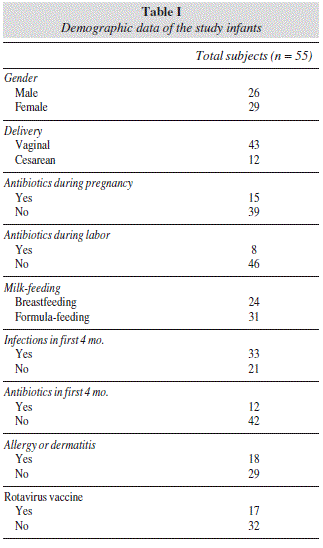
<body><![CDATA[<p><font face="Verdana" size="2"><i>Subjects and information on environmental factors</i></font></p>     <p><font face="Verdana" size="2">This study was conducted in 4 month-old infants who are first-degree relatives of CD patients (at least one parent or sibling affected with CD). A total of 55 infants with these characteristics, born between October 2006 and the end of 2010 were recruited in the University Hospital La Paz and University Hospital Niño Jesús of Madrid. Questions about mode of delivery, infections, vaccinations, feeding practices, clinical symptoms, and medical treatments were answered by the parents at the infant's age of 1 and 4 months in clinical visits with the paediatric gastroenterologist. To facilitate the collection of this information, a diary was given to the mothers upon recruitment (before delivery). On the basis of these questionnaires, the 55 infants were divided according to the following variables that were selected as potential influential factors of immune system development and gut microbiota composition: type of delivery (vaginal/cesarean), mother's antibiotic intake during pregnancy (yes/no), mother's antibiotic administration during labor (yes/no), milk-feeding practices (breast-fed (BF) infants, including those which had been exclusively breast-fed until the age of 4 months, and formula-fed (FF) infants, including babies receiving milk formula, either alone or in alternation with breast milk at the moment of analysis), infections in the first 4 months of life (yes/no), antibiotic intake in the first 4 months of life (yes/no), rotavirus vaccine administration (yes/no), and allergies or dermatitis suffering within the first 18 months of life (yes/no) (<a href="#t1">table I</a>). The study was approved by the Ethic Committee of the University Hospital La Paz and the University Hospital Niño Jesús of Madrid, and written informed consent was obtained from the parents of infants included in the study. This group of infants was a subset of those recruited in 8 Spanish hospitals for the PROFICEL study.<sup>20</sup></font></p>     <p>&nbsp;</p>     <p align="center"><a name="t1"><img src="/img/revistas/nh/v28n2/26_original_21_t1.gif" align="top"></a></font></p>     <p>&nbsp;</p>     <p><font face="Verdana" size="2"><i>Blood analyses</i></font></p>     <p><font face="Verdana" size="2">At the age of 4 months, peripheral blood samples were drawn from the infants and collected in BD Vacutainer<sup>TM</sup> tubes containing K3EDTA. Immediately after, 1 mL of blood was mixed with an equal volume (1 mL) of preservative solution (Streck Cell Preservative<sup>TM</sup> CE. Streck, USA) and sent to our laboratory at 4-8<sup>o</sup> C within 2-6 days for a centralised processing and flow cytometry analysis. Blood extractions were always performed previous to the standardized 4 month vaccination in the Spanish vaccination schedule. Complete blood counts and differential counts were performed <i>in situ</i> at the corresponding enrolling centers by automated instrumentation. Blood samples were not taken if the infant presented an ongoing infection or had received a vaccination in the prior six weeks.</font></p>     <p><font face="Verdana" size="2"><i>Flow cytometry analysis</i></font></p>     <p><font face="Verdana" size="2">Aliquots of blood mixed with the preservative-solution (150 L) were incubated for 30 minutes at room temperature and in the dark with 20 L of fluorochrome conjugated-monoclonal antibodies specific for CD3+ (CD3-APC), CD4+ (CD4-PerCP-Cy5.5), CD8+ (CD8-PerCP-Cy5.5), CD45RA+ (CD45RA-FITC), CD45RO+ (CD45RO-PE), CD25+ (CD25-FITC), HLA-DR+ (HLA-DR-FITC), CD38+ (CD38-PE), in quadruple immunostainings and 100 pL aliquots were incubated with the multitests CD3-FITC/CD16+56-PE/CD45-PerCP-Cy5.5/CD19-APC and CD3-FITC/CD8-PE/CD45-PerCP-Cy5.5/CD4-APC. All the monoclonal antibodies were purchased from Becton Dickinson (Sunnyvale, CA, USA). After incubation, samples were lysed with the BD FACSTM Lysing Solution (Becton Dickinson) following the manufacturer's protocol. The samples were analysed with FACSCal-ibur Flow Cytometer (four-color, dual-laser, Becton Dickinson). The lymphogate was defined on the forward and side scatter patterns of lymphocytes. The analysis protocol gated on lymphocytes stained with PerCP and/or APC and the selected population was then analysed with the 2 remaining colours (FITC and PE) to obtain cell percentages expressing the specific antigens. Cell subset counts were obtained by multiplying subset percentages by anchor marker counts, the later resulting by multiplying subset percentage by the absolute lymphocyte count.</font></p>     <p><font face="Verdana" size="2"><i>Faecal sampling and DNA extractions</i></font></p>     ]]></body>
<body><![CDATA[<p><font face="Verdana" size="2">Stool samples were collected from 44 subjects at 4 months of age and frozen at -20<sup>o</sup>C immediately. Samples (1 g) were diluted 1:10 (w/v) in PBS (pH 7.2) and homogenized by thorough agitation in a vortex. Aliquots were used for DNA extraction using the QIAamp DNA stool Mini kit (Qiagen, Hilden, Germany) following the manufacturer's instructions. DNA extractions from different pure cultures of reference strains were done following the same protocol.</font></p>     <p><font face="Verdana" size="2"><i>Quantitative PCR (qPCR) analysis of faecal bacteria</i></font></p>     <p><font face="Verdana" size="2">The following bacterial groups were analysed: <i>Bifidobacterium</i> spp., <i>Lactobacillus</i> group, <i>Staphylococcus</i> spp., <i>Bacteroides fragilis</i> group, <i>Clostridium coccoides-Eubacterium rectali</i> group, <i>Clostridium leptum</i> group, <i>Escherichia coli</i>, and the following <i>Bifidobacterium</i> spp.: <i>B. longum, B. breve, B. bifidum, B. adolescentis, B. catenulatum, B. angulatum, B. infantis, B. lactis</i>, and <i>B. dentium.</i> qPCR was used to quantify the different bacterial groups in faeces using genus-, group- and species-specific primers as previously described.<sup>24,25</sup> Briefly, PCR amplification and detection were performed with an ABI PRISM 7000-PCR sequence detection system (Applied Biosystems, UK) using SYBR<sup>&reg;</sup> Green PCR Master Mix (Super-Array Bioscience Corporation, USA). The bacterial concentration from each sample was calculated by comparing the Ct values obtained from standard curves of reference strains. Standard curves were created using serial 10-fold dilutions of pure culture DNA corresponding to 10<sup>2</sup> to 10<sup>9</sup> cells, as determined by microscopy counts after staining with 4',6-diamino-2-phenylindole in an epifluorescence microscope (Olympus BX51, Tokio, Japan).</font></p>     <p><font face="Verdana" size="2"><i>Statistics</i></font></p>     <p><font face="Verdana" size="2">Associations of perinatal and early environmental factors (EEF) with lymphocyte subset values and bacteria counts were analysed using multiple linear regression models. In addition, logistic regression analyses were used to examine the effect of the environmental factors on the prevalence of colonization (colonized opposed to non-colonized). Previously, data with a non-normal distribution were transformed logarithmically to a normal distribution. Type of delivery, mother's antibiotic intake during pregnancy, mother's antibiotic administration during labor, milkfeeding practices, infections and antibiotic intake in the first 4 months of life, rotavirus vaccine administration, and allergy incidence were included in the models. To limit the chance of falsely rejecting the null hypothesis (no association) as a result of multiple testing, a P-value lower than 0.010 was considered statistically significant in multiple linear regression analysis. Spearman's test was performed to assess possible correlations between exposures to the different individual perinatal and environmental factors and lymphocyte subsets, and also between the same factors and microbiota composition. Finally, correlations between lymphocyte subsets and faecal bacteria counts  were equally performed. A P-value less than 0.050 was considered statistically significant.</font></p>     <p>&nbsp;</p>     <p><font face="Verdana" size="2"><b>Results</b></font></p>     <p><font face="Verdana" size="2"><i>Lymphocytes subsets</i></font></p>     <p><font face="Verdana" size="2">The associations of perinatal and EEF with the percentage and counts of the lymphocyte subsets under study, as determined in the linear regression analysis adjusted for gender, are presented in  <a target="_blank" href="/img/revistas/nh/v28n2/26_original_21_t2.gif">table II</a>.</font></p>     <p><font face="Verdana" size="2">Formula-feeding was associated with higher absolute counts of total lymphocytes, T cells (CD3+), helper T cell (CD4+), CD4+CD38+, and CD4+CD28+ cells. T test analyses confirmed these results (P values <u>&lt;</u> 0.05 for these four subsets), and also showed that the percentage of CD4+CD25+ cells was higher in BF infants (11.1 &plusmn; 2.9 <i>vs.</i> 9.3 &plusmn; 3.3; P <u>&lt;</u> 0.05) while CD4+CD38+ cell percentage was lower compared to FF infants (91.1 &plusmn; 19.5 <i>vs.</i> 96.6 &plusmn; 1.0; P &le; 0.05).</font></p>     ]]></body>
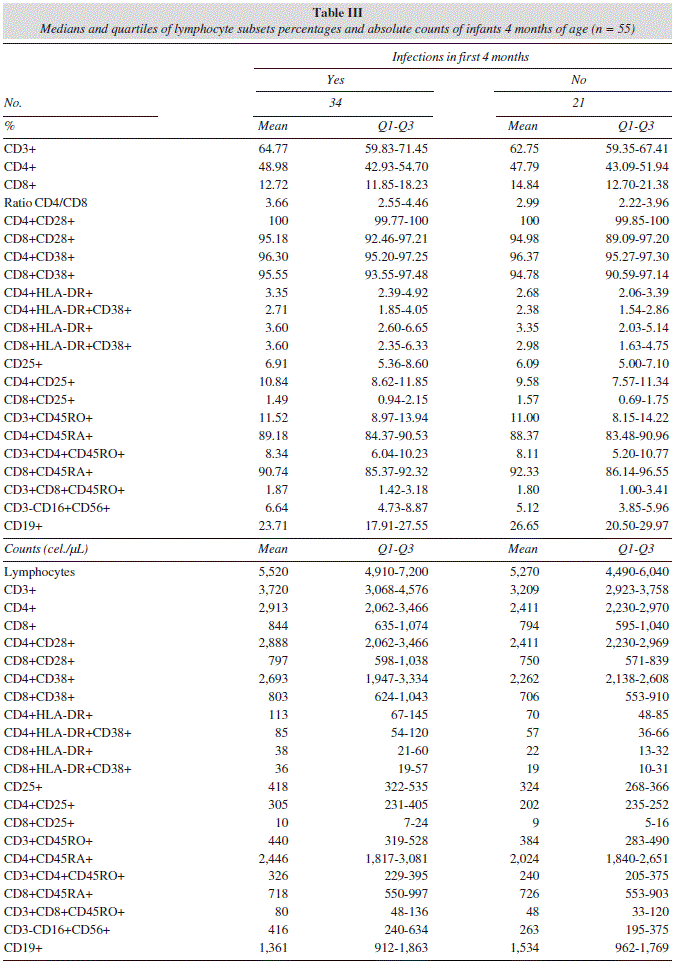
<body><![CDATA[<p><font face="Verdana" size="2">Infant's infections in the first 4 months of age were also associated with higher absolute counts of CD3+, CD4+, CD4+CD38+, and CD4+CD28+ cells (<a href="#t3">table III</a>).</font></p>     <p>&nbsp;</p>     <p align="center"><a name="t3"><img src="/img/revistas/nh/v28n2/26_original_21_t3.gif" align="top"></a></font></p>     <p>&nbsp;</p>     <p><font face="Verdana" size="2">Regarding activation markers which are not constitutively expressed, cesarean delivery and rotavirus vaccine administration were associated with a lower percentage of activated T helper lymphocytes that express CD25+ (CD4+CD25+), in contrast, infants whose mothers used antibiotics during pregnancy were associated with a higher percentage of these cells. Infant's infections in the first 4 months of life were associated with higher absolute counts of CD4+CD25+ (<a href="#t3">table III</a>).</font></p>     <p><font face="Verdana" size="2">Formula-feeding and infant's infections were associated with higher absolute counts of memory T helper lymphocytes (CD3+CD4+CD45RO+), and infant's antibiotic intake in the first 4 months was associated with lower absolute counts of these cells.</font></p>     <p><font face="Verdana" size="2">Infant's infections were associated with higher absolute counts of activated T helper lymphocytes HLA-DR+ (CD4+HLA-DR+) (<a href="#t3">table III</a>).</font></p>     <p><font face="Verdana" size="2">Finally, infant's infections and antibiotic administration in mothers during labor were associated with higher percentage and absolute counts of NK cells (CD3-CD16+CD56+), and future allergy incidence was associated with a lower percentage of NK cells.</font></p>     <p><font face="Verdana" size="2">Spearman's test carried out to analyse the correlations between lymphocyte subsets and bacterial genera, groups and species, did not show significant results.</font></p>     <p><font face="Verdana" size="2"><i>Gut microbiota composition</i></font></p>     ]]></body>
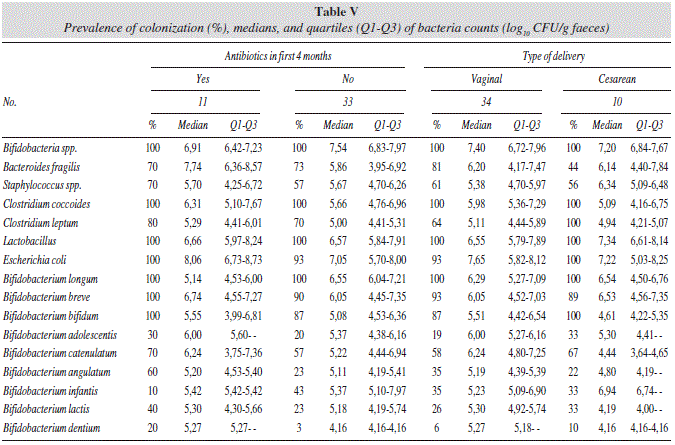
<body><![CDATA[<p><font face="Verdana" size="2">The composition of the fecal microbiota of 44 infants was analysed at 4 months of age (<a target="_blank" href="/img/revistas/nh/v28n2/26_original_21_t4.gif">table IV</a>). The remaining 11 infants did not collect their stool samples.</font></p>     <p><font face="Verdana" size="2">The results of the linear regression analysis of bacterial counts with respect to environmental factors are shown in <a target="_blank" href="/img/revistas/nh/v28n2/26_original_21_t4.gif">table IV</a>. Infants born by cesarean delivery showed associations with lower counts of <i>B. catenulatum</i>, and higher counts of <i>B. angulatum</i> (<a href="#t5">table V</a>). Spearman correlations showed that infants born by cesarean delivery were correlated with lower counts of <i>B. catenulatum</i> (R = -0.514; P = 0.010).</font></p>     <p>&nbsp;</p>     <p align="center"><a name="t5"><img src="/img/revistas/nh/v28n2/26_original_21_t5.gif" align="top"></a></font></p>     <p>&nbsp;</p>     <p><font face="Verdana" size="2">Infants whose mothers took antibiotic during pregnancy were associated with lower counts of <i>B. angulatum.</i></font></p>     <p><font face="Verdana" size="2">Regarding milk-feeding practices, formula-feeding was associated with lower counts of <i>B. angulatum</i> in the infant.</font></p>     <p><font face="Verdana" size="2">Antibiotics intake in the first 4 months of life was associated with higher counts of <i>Bacteroides fragilis</i> group and <i>B. angulatum</i>, and lower counts of <i>B. longum</i> (<a href="#t5">table V</a>). Spearman tests also showed significant correlations between infant's antibiotic intake and higher counts of <i>Bacteroides fragilis</i> group (R = 0.433; P = 0.019), higher <i>B. angulatum</i> prevalence (R=0.339; P = 0.032), and lower counts of <i>Bifidobacterium</i> spp. (R = -0.323; P = 0.042) and <i>B longum</i> (R = -0.443; P = 0.004).</font></p>     <p><font face="Verdana" size="2">Allergy and dermatitis incidence at follow-up was associated with lower counts of <i>B. angulatum</i> at 4 months.</font></p>     <p><font face="Verdana" size="2">Rotavirus vaccine administration was associated with lower counts of <i>B. angulatum</i> and was also significantly correlatedwith a lower prevalence of <i>Bacteroides fragilis</i> group (R = -0.396; P = 0.017). The rest of analysed bacteria did not show significant results for any of the EEF evaluated.</font></p>     ]]></body>
<body><![CDATA[<p><font face="Verdana" size="2">Finally, the logistic regression analysis did not show significant associations between the different EEF and the prevalence of bacterial colonization.</font></p>     <p>&nbsp;</p>     <p><font face="Verdana" size="2"><b>Discussion</b></font></p>     <p><font face="Verdana" size="2">Several EEF could be involved in immune system development and intestinal colonization in early life. It is well known that gut microbiota interacts with the gut-associated lymphoid tissue (GALT) and could thereafter modulate the systemic immune system. In this study, we assessed the associations between different EEF, peripheral lymphocyte subsets, and microbiota composition in fifty-five 4 month-old infants with at least one first-degree relative suffering from CD.</font></p>     <p><font face="Verdana" size="2">A widespread increase in the number of lymphocytes was associated with formula feeding in the studied population. The increase in lymphocytes involved mainly the T helper subsets, the overall subset (CD4+CD38+ and CD4+CD28+) as well as specifically the memory helper T cells. Similarly, an increase in the CD3+ and CD4+ lymphocyte counts were also associated with infant s infections, although in these cases, in addition to increased memory cell counts, also an increase in activated subsets expressing CD4+CD25+, and CD4+HLA-DR+ were associated with infection processes. Similar to our results, a study carried out with infants (0 to 6 months of age) of healthy mothers and uninfected infants of HIV-infected mothers, in which CD4+ lymphocyte phenotypes were examined, found that the proportions of activated (CD4+ HLA-DR+ CD38+) and memory (CD4+ CD45RA- RO+) lymphocytes were increased in uninfected infants of HIV-infected mothers compared to infants of uninfected mothers. Therefore, it was concluded that the lymphocytes of some HIV-exposed, uninfected infants, had been stimulated by antigen at early age and the cells principally implicated were helper T cells.<sup>26</sup> Early infections would reasonably result in a higher proportion of memory and activated T helper cells as shown in our infants, however, regarding the association of formula-feeding with higher memory helper T cells, no similar study has been found in the literature to compare with, although an increase in T cells, particularly in T helper cells,<sup>15,17</sup> and a decrease in NK cells<sup>17 </sup>have been reported for FF infants compared with BF infants at 6 months of age. Surprisingly, on the contrary to formula feeding and infant s infections, lower numbers of memory CD4+ cells were associated with the intake of antibiotics in the first 4mo., which suggest that taking antibiotics to halt the infections, alters the balance of immune cells acquired when infection is being eliminated by the body's own defense mechanisms. <i>In vivo</i> studies indicate that shortening the length of <i>Listeria monocytogenes</i> infection by antibiotic treatment can affect CD4+ T cell activation and development of memory T cells, but this effect is dependent on infectious dose, suggesting that overall antigen levels may play a role.<sup>27</sup></font></p>     <p><font face="Verdana" size="2">The percentage of CD4+CD25+ cells was stimulated by vaginal delivery, antibiotics use by mothers during pregnancy, and breast-feeding, but in contrast, a lower percentage was associated with infants vaccinated against rotavirus. A recent study<sup>28</sup> that compared the patterns of gene expression in peripheral blood mononuclear cells (PBMCs) from children with rotavirus diarrhea and healthy children showed that the first group had increased expression of genes involved in B-cell differentiation, maturation, activation and survival, but lower levels of mRNA for genes involved in the various stages of T-cell development. Importantly, this study also demonstrated a reduction in the total lymphocyte population and in the proportions of CD4+ and CD8+ T cells in PBMCs, suggesting that rotavirus alters T-cell homeostasis. According to our results, the rotavirus vaccine also influences the balance between T and B lymphocytes, as we have found by T test analysis that B cell percentage is higher in vaccinated infants (data not shown). On the other hand, previous results by our group in a bigger population with similar characteristics showed a higher percentage of CD4+CD25+ cells in BF infants than in FF infants,<sup>20</sup> which is in agreement with the results in the current study.</font></p>     <p><font face="Verdana" size="2">According to the hygiene hypothesis, early infections caused by certain microorganisms are suspected to accelerate the Th1 maturation in children and to protect against future allergic disease.<sup>29</sup> Our study showed that suffering infections during the first 4 months of life was associated with higher NK cell numbers. A similar result was found in a study comparing septic and healthy infants and children that described increased NK cells in the infants even after recovery from sepsis.<sup>30</sup> Moreover the development of allergy or dermatitis within the first 18 months of life was associated with a lower percentage of NK cells at 4 months. Accordingly, studies in newborns at risk for allergy,<sup>31</sup> infants with multiple allergy food,<sup>32</sup> and children with atopic dermatitis <sup>33 </sup>showed a decreased percentage<sup>32,33</sup> and counts<sup>31</sup> of NK cells. Our data suggest that infections suffered during the first 4 months of life might be protective, in the long term, for allergy and dermatitis development through the effect of infection on NK cells. However, no correlation was found between infection during the first 4 months and allergy incidence in the next months. Although, we have not found this correlation, the study by Han et al.<sup>34 </sup>support this last hypothesis. They suggest that NK cells may play an important role in infection-mediated inhibition of allergic responses. They studied the effect of chlamydial infection on the development of allergic responses induced by ovalbumin (OVA) and the involvement of NK cells in this process using a mouse model of airway inflammation. They found that the adoptive transfer of NK cells that were isolated from infected mice and injected to a syngeneic naive mice before OVA sensitization, produced a decrease of circulating and infiltrating eosinophils in the lung and inhibited the production of Th2 cytokines (IL-4 and IL-5) of spleen cells after sensitization.</font></p>     <p><font face="Verdana" size="2">Infants born by cesarean delivery are deprived of contact with their mother's intestinal and vaginal microbiota. In this infants, the acquisition of bacteroides , bifidobacteria, and <i>E. coli</i> has been shown to be delayed.<sup>8</sup> Accordingly, we found that cesarean delivery was associated with lower counts of <i>B. catenulatum.</i> Similar results were also found in the KOALA study, which showed that infants born by cesarean section had lower numbers of bifidobacteria and bacteroides.<sup>35</sup> On the other hand, a retrospective, multicenter, case-control study that included 1950 children found a significantly enhanced likelihood of being born by cesarean delivery in children with CD compared with control subjects.<sup>36</sup> The authors hypothesized that the influence of cesarean delivery on the postnatal establishment of the intestinal microbiota might primarily affect the neonatal period and therefore enhance the intestinal epithelial permeability to gluten, leading to an aberrant stimulation of the mucosal immune system. This matter will possibly be elucidated after adequate length of follow-up is achieved for the cohort of the current study.</font></p>     <p><font face="Verdana" size="2">Oral use of antibiotics by the infant during the first 4 months also showed several associations with faecal microbiota composition, such as lower counts of <i>B. longum</i> and <i>Bifidobacterium</i> spp. The KOALA study also found lower counts of bifidobacteria in infants who received oral antibiotic therapy in their first 1 month.<sup>36</sup> Finally, counts of <i>B. angulatum</i> appear to be associated with many of the different environmental factors studied (type of delivery, mother's antibiotic intake during pregnancy, milk-feeding practices, infections and antibiotic intake in the first 4 months of life, and rotavirus vaccine administration) which suggest that this might be a bacterial species more susceptible to fluctuations that others in its group.</font></p>     <p><font face="Verdana" size="2">One important point to consider about this study is the fact that it was performed in a population selected by the familial risk to suffer CD, which means that our results cannot be extrapolated to the general population. In this sense, we know that the frequency of infants with HLA haplotype different from DQ-2 in the group studied is significantly lower that the proportion in the general population.<sup>20</sup> On the other hand, we have observed previously in a similar population that no interaction effect exists between milk-feeding practices and HLA-genotype on lymphocyte subsets in these infants.<sup>20</sup> However, we cannot rule out the selection bias effect and therefore the importance of the influence of EEF on lymphocyte subsets and microbiota development would only be known in the future, when we are able to assess if the associations found here impact on CD development in this infant cohort.</font></p>     ]]></body>
<body><![CDATA[<p><font face="Verdana" size="2">In conclusion, infant s infections and antibiotic intake in the first 4 months of life are the EEF more strongly and/or frequently associated to lymphocyte subpopulations and microbiota composition, respectively in infants at risk of CD, but other factors such as milkfeeding practices, type of delivery, prenatal exposure to antibiotics, and rotavirus vaccine were also associated. The balance between the effects on lymphocyte subpopulations and microbiota composition of all these pre-and post-natal factors might modulate and define the risk for the future development of immune-related diseases such as CD. Thus, longer follow up of the entire PROFICEL cohort is necessary to assess the combined effect of environmental factors on that risk.</font></p>     <p>&nbsp;</p>     <p><font face="Verdana" size="2"><b>Acknowledgments</b></font></p>     <p><font face="Verdana" size="2">We gratefully acknowledge the assistance of the statistician Dr. Laura Barrios in the statistical analysis. T. Pozo-Rubio, G. De Palma and M. Olivares are recipient of a personal grant from the JAE Program of CSIC (Spain) cofunded by European Social Fund.</font></p>     <p>&nbsp;</p>     <p><font face="Verdana" size="2"><b>Conflict of interest statement</b></font></p>     <p><font face="Verdana" size="2">The authors declare that they have no conflict of interest.</font></p>     <p>&nbsp;</p>     <p><font face="Verdana" size="2"><b>References</b></font></p>     <!-- ref --><p><font face="Verdana" size="2">1. Gianfrani C, Auricchio S, Troncone R. Adaptive and innate immune responses in celiac disease. <i>Immunol Lett</i> 2005; 99: 141-5.    &nbsp;&nbsp;&nbsp;&nbsp;&nbsp;&nbsp;&nbsp;&nbsp;[&#160;<a href="javascript:void(0);" onclick="javascript: window.open('/scielo.php?script=sci_nlinks&ref=3715700&pid=S0212-1611201300020002600001&lng=','','width=640,height=500,resizable=yes,scrollbars=1,menubar=yes,');">Links</a>&#160;]<!-- end-ref --></font></p>    <!-- ref --><p><font face="Verdana" size="2">2. Meresse B, Ripoche J, Heyman M, Cerf-Bensussan N. Celiac disease: from oral tolerance to intestinal inflammation, autoimmunity and lymphomagenesis. <i>Mucosal Immunol</i> 2009; 2:8-23.    &nbsp;&nbsp;&nbsp;&nbsp;&nbsp;&nbsp;&nbsp;&nbsp;[&#160;<a href="javascript:void(0);" onclick="javascript: window.open('/scielo.php?script=sci_nlinks&ref=3715702&pid=S0212-1611201300020002600002&lng=','','width=640,height=500,resizable=yes,scrollbars=1,menubar=yes,');">Links</a>&#160;]<!-- end-ref --></font></p>    <!-- ref --><p><font face="Verdana" size="2">3. Dubois PC, van Heel DA. Translational mini-review series on the immunogenetics of gut disease: immunogenetics of coeliac disease. <i>Clin Exp Immunol</i> 2008; 153: 162-73.    &nbsp;&nbsp;&nbsp;&nbsp;&nbsp;&nbsp;&nbsp;&nbsp;[&#160;<a href="javascript:void(0);" onclick="javascript: window.open('/scielo.php?script=sci_nlinks&ref=3715704&pid=S0212-1611201300020002600003&lng=','','width=640,height=500,resizable=yes,scrollbars=1,menubar=yes,');">Links</a>&#160;]<!-- end-ref --></font></p>    <!-- ref --><p><font face="Verdana" size="2">4. Nova E, Pozo T, Sanz Y, Marcos A. Dietary strategies of immunomodulation in infants at risk for celiac disease. <i>The Proceedings of the Nutrition Society</i> 2010; 69: 347-53.    &nbsp;&nbsp;&nbsp;&nbsp;&nbsp;&nbsp;&nbsp;&nbsp;[&#160;<a href="javascript:void(0);" onclick="javascript: window.open('/scielo.php?script=sci_nlinks&ref=3715706&pid=S0212-1611201300020002600004&lng=','','width=640,height=500,resizable=yes,scrollbars=1,menubar=yes,');">Links</a>&#160;]<!-- end-ref --></font></p>    <!-- ref --><p><font face="Verdana" size="2">5. Westerbeek EA, van den Berg A, Lafeber HN, Knol J, Fetter WP, van Elburg RM. The intestinal bacterial colonisation in preterm infants: a review of the literature. <i>Clin Nutr</i> 2006; 25: 361-8.    &nbsp;&nbsp;&nbsp;&nbsp;&nbsp;&nbsp;&nbsp;&nbsp;[&#160;<a href="javascript:void(0);" onclick="javascript: window.open('/scielo.php?script=sci_nlinks&ref=3715708&pid=S0212-1611201300020002600005&lng=','','width=640,height=500,resizable=yes,scrollbars=1,menubar=yes,');">Links</a>&#160;]<!-- end-ref --></font></p>    <!-- ref --><p><font face="Verdana" size="2">6. Williams AM, Bland PW, Phillips AC, Turner S, Brooklyn T, Shaya G, et al. Intestinal alpha beta T cells differentiate and rearrange antigen receptor genes in situ in the human infant. <i>J Immunol</i> 2004; 173: 7190-9.    &nbsp;&nbsp;&nbsp;&nbsp;&nbsp;&nbsp;&nbsp;&nbsp;[&#160;<a href="javascript:void(0);" onclick="javascript: window.open('/scielo.php?script=sci_nlinks&ref=3715710&pid=S0212-1611201300020002600006&lng=','','width=640,height=500,resizable=yes,scrollbars=1,menubar=yes,');">Links</a>&#160;]<!-- end-ref --></font></p>    <!-- ref --><p><font face="Verdana" size="2">7. McLoughlin RM, Mills KH. Influence of gastrointestinal commensal bacteria on the immune responses that mediate allergy and asthma. <i>The Journal of Allergy and Clinical Immunology</i> 2011; 127: 1097-107; quiz 108-9.    &nbsp;&nbsp;&nbsp;&nbsp;&nbsp;&nbsp;&nbsp;&nbsp;[&#160;<a href="javascript:void(0);" onclick="javascript: window.open('/scielo.php?script=sci_nlinks&ref=3715712&pid=S0212-1611201300020002600007&lng=','','width=640,height=500,resizable=yes,scrollbars=1,menubar=yes,');">Links</a>&#160;]<!-- end-ref --></font></p>    <!-- ref --><p><font face="Verdana" size="2">8. Adlerberth I, Wold AE. Establishment of the gut microbiota in Western infants. <i>Acta Paediatrica</i> 2009; 98: 229-38.    &nbsp;&nbsp;&nbsp;&nbsp;&nbsp;&nbsp;&nbsp;&nbsp;[&#160;<a href="javascript:void(0);" onclick="javascript: window.open('/scielo.php?script=sci_nlinks&ref=3715714&pid=S0212-1611201300020002600008&lng=','','width=640,height=500,resizable=yes,scrollbars=1,menubar=yes,');">Links</a>&#160;]<!-- end-ref --></font></p>    <!-- ref --><p><font face="Verdana" size="2">9. De Vries E, de Bruin-Versteeg S, Comans-Bitter WM, de Groot R, Hop WC, Boerma GJ, et al. Longitudinal survey of lymphocyte subpopulations in the first year of life. <i>Pediatr Res</i> 2000; 47: 528-37.    &nbsp;&nbsp;&nbsp;&nbsp;&nbsp;&nbsp;&nbsp;&nbsp;[&#160;<a href="javascript:void(0);" onclick="javascript: window.open('/scielo.php?script=sci_nlinks&ref=3715716&pid=S0212-1611201300020002600009&lng=','','width=640,height=500,resizable=yes,scrollbars=1,menubar=yes,');">Links</a>&#160;]<!-- end-ref --></font></p>    <!-- ref --><p><font face="Verdana" size="2">10. Comans-Bitter WM, de Groot R, van den Beemd R, Neijens HJ, Hop WC, Groeneveld K, et al. Immunophenotyping of blood lymphocytes in childhood. Reference values for lymphocyte subpopulations. <i>J Pediatr</i> 1997; 130: 388-93.    &nbsp;&nbsp;&nbsp;&nbsp;&nbsp;&nbsp;&nbsp;&nbsp;[&#160;<a href="javascript:void(0);" onclick="javascript: window.open('/scielo.php?script=sci_nlinks&ref=3715718&pid=S0212-1611201300020002600010&lng=','','width=640,height=500,resizable=yes,scrollbars=1,menubar=yes,');">Links</a>&#160;]<!-- end-ref --></font></p>    <!-- ref --><p><font face="Verdana" size="2">11. Panaro A, Amati A, di Loreto M, Felle R, Ferrante M, Papadia AM, et al. Lymphocyte subpopulations in pediatric age. Definition of reference values by flow cytometry. <i>Allergol Immunopathol (Madr)</i> 1991; 19: 109-12.    &nbsp;&nbsp;&nbsp;&nbsp;&nbsp;&nbsp;&nbsp;&nbsp;[&#160;<a href="javascript:void(0);" onclick="javascript: window.open('/scielo.php?script=sci_nlinks&ref=3715720&pid=S0212-1611201300020002600011&lng=','','width=640,height=500,resizable=yes,scrollbars=1,menubar=yes,');">Links</a>&#160;]<!-- end-ref --></font></p>    <!-- ref --><p><font face="Verdana" size="2">12. Shearer WT, Rosenblatt HM, Gelman RS, Oyomopito R, Plaeger S, Stiehm ER, et al. Lymphocyte subsets in healthy children from birth through 18 years of age: the Pediatric AIDS Clinical Trials Group P1009 study. <i>J Allergy Clin Immunol</i> 2003; 112: 973-80.    &nbsp;&nbsp;&nbsp;&nbsp;&nbsp;&nbsp;&nbsp;&nbsp;[&#160;<a href="javascript:void(0);" onclick="javascript: window.open('/scielo.php?script=sci_nlinks&ref=3715722&pid=S0212-1611201300020002600012&lng=','','width=640,height=500,resizable=yes,scrollbars=1,menubar=yes,');">Links</a>&#160;]<!-- end-ref --></font></p>    <!-- ref --><p><font face="Verdana" size="2">13. O'Gorman MR, Millard DD, Lowder JN, Yogev R. Lymphocyte subpopulations in healthy 1-3-day-old infants. <i>Cytometry</i> 1998; 34: 235-41.    &nbsp;&nbsp;&nbsp;&nbsp;&nbsp;&nbsp;&nbsp;&nbsp;[&#160;<a href="javascript:void(0);" onclick="javascript: window.open('/scielo.php?script=sci_nlinks&ref=3715724&pid=S0212-1611201300020002600013&lng=','','width=640,height=500,resizable=yes,scrollbars=1,menubar=yes,');">Links</a>&#160;]<!-- end-ref --></font></p>    <!-- ref --><p><font face="Verdana" size="2">14. McCloskey TW, Cavaliere T, Bakshi S, Harper R, Fagin J, Kohn N, et al. Immunophenotyping of T lymphocytes by three-color flow cytometry in healthy newborns, children, and adults. <i>Clinical Immunology and Immunopathology</i> 1997; 84: 46-55.    &nbsp;&nbsp;&nbsp;&nbsp;&nbsp;&nbsp;&nbsp;&nbsp;[&#160;<a href="javascript:void(0);" onclick="javascript: window.open('/scielo.php?script=sci_nlinks&ref=3715726&pid=S0212-1611201300020002600014&lng=','','width=640,height=500,resizable=yes,scrollbars=1,menubar=yes,');">Links</a>&#160;]<!-- end-ref --></font></p>    <!-- ref --><p><font face="Verdana" size="2">15. Carver JD, Pimentel B, Wiener DA, Lowell NE, Barness LA. Infant feeding effects on flow cytometric analysis of blood. <i>J Clin Lab Anal</i> 1991; 5: 54-6.    &nbsp;&nbsp;&nbsp;&nbsp;&nbsp;&nbsp;&nbsp;&nbsp;[&#160;<a href="javascript:void(0);" onclick="javascript: window.open('/scielo.php?script=sci_nlinks&ref=3715728&pid=S0212-1611201300020002600015&lng=','','width=640,height=500,resizable=yes,scrollbars=1,menubar=yes,');">Links</a>&#160;]<!-- end-ref --></font></p>    <!-- ref --><p><font face="Verdana" size="2">16. Cummins AG, Eglinton BA, Gonzalez A, Roberton DM. Immune activation during infancy in healthy humans. <i>J Clin Immunol</i> 1994;14:107-15.    &nbsp;&nbsp;&nbsp;&nbsp;&nbsp;&nbsp;&nbsp;&nbsp;[&#160;<a href="javascript:void(0);" onclick="javascript: window.open('/scielo.php?script=sci_nlinks&ref=3715730&pid=S0212-1611201300020002600016&lng=','','width=640,height=500,resizable=yes,scrollbars=1,menubar=yes,');">Links</a>&#160;]<!-- end-ref --></font></p>    <!-- ref --><p><font face="Verdana" size="2">17. Hawkes JS, Neumann MA, Gibson RA. The effect of breast feeding on lymphocyte subpopulations in healthy term infants at 6 months of age. <i>Pediatr Res</i> 1999; 45: 648-51.    &nbsp;&nbsp;&nbsp;&nbsp;&nbsp;&nbsp;&nbsp;&nbsp;[&#160;<a href="javascript:void(0);" onclick="javascript: window.open('/scielo.php?script=sci_nlinks&ref=3715732&pid=S0212-1611201300020002600017&lng=','','width=640,height=500,resizable=yes,scrollbars=1,menubar=yes,');">Links</a>&#160;]<!-- end-ref --></font></p>    <!-- ref --><p><font face="Verdana" size="2">18. Jeppesen DL, Hasselbalch H, Lisse IM, Ersboll AK, Engelmann MD. T-lymphocyte subsets, thymic size and breastfeeding in infancy. <i>Pediatr Allergy Immunol</i> 2004; 15: 127-32.    &nbsp;&nbsp;&nbsp;&nbsp;&nbsp;&nbsp;&nbsp;&nbsp;[&#160;<a href="javascript:void(0);" onclick="javascript: window.open('/scielo.php?script=sci_nlinks&ref=3715734&pid=S0212-1611201300020002600018&lng=','','width=640,height=500,resizable=yes,scrollbars=1,menubar=yes,');">Links</a>&#160;]<!-- end-ref --></font></p>    <!-- ref --><p><font face="Verdana" size="2">19. Andersson Y, Hammarstrom ML, Lonnerdal B, Graverholt G, Falt H, Hernell O. Formula feeding skews immune cell composition toward adaptive immunity compared to breastfeeding. <i>Journal of immunology</i> 2009; 183: 4322-8.    &nbsp;&nbsp;&nbsp;&nbsp;&nbsp;&nbsp;&nbsp;&nbsp;[&#160;<a href="javascript:void(0);" onclick="javascript: window.open('/scielo.php?script=sci_nlinks&ref=3715736&pid=S0212-1611201300020002600019&lng=','','width=640,height=500,resizable=yes,scrollbars=1,menubar=yes,');">Links</a>&#160;]<!-- end-ref --></font></p>    <!-- ref --><p><font face="Verdana" size="2">20. Pozo-Rubio T, Capilla A, Mujico IR, de Palma G, Marcos A, Sanz Y, et al. Influence of breastfeeding versus formula feeding on lymphocyte subsets in infants at risk of coeliac disease: the PROFICEL study. <i>Eur J Nutr</i> 2012.    &nbsp;&nbsp;&nbsp;&nbsp;&nbsp;&nbsp;&nbsp;&nbsp;[&#160;<a href="javascript:void(0);" onclick="javascript: window.open('/scielo.php?script=sci_nlinks&ref=3715738&pid=S0212-1611201300020002600020&lng=','','width=640,height=500,resizable=yes,scrollbars=1,menubar=yes,');">Links</a>&#160;]<!-- end-ref --></font></p>    <!-- ref --><p><font face="Verdana" size="2">21. Duijts L, Bakker-Ionges LE, Labout IA, laddoe VW, Hofman A, Steegers EA et al. Perinatal stress influences lymphocyte subset counts in neonates. The generation R study. <i>Pediatric Research</i> 2008; 63: 292-8.    &nbsp;&nbsp;&nbsp;&nbsp;&nbsp;&nbsp;&nbsp;&nbsp;[&#160;<a href="javascript:void(0);" onclick="javascript: window.open('/scielo.php?script=sci_nlinks&ref=3715740&pid=S0212-1611201300020002600021&lng=','','width=640,height=500,resizable=yes,scrollbars=1,menubar=yes,');">Links</a>&#160;]<!-- end-ref --></font></p>    <!-- ref --><p><font face="Verdana" size="2">22. Samelson R, Larkey DM, Amankwah KS, McConnachie P. Effect of labor on lymphocyte subsets in full-term neonates. <i>Am J Reprod Immunol</i> 1992; 28: 71-3.    &nbsp;&nbsp;&nbsp;&nbsp;&nbsp;&nbsp;&nbsp;&nbsp;[&#160;<a href="javascript:void(0);" onclick="javascript: window.open('/scielo.php?script=sci_nlinks&ref=3715742&pid=S0212-1611201300020002600022&lng=','','width=640,height=500,resizable=yes,scrollbars=1,menubar=yes,');">Links</a>&#160;]<!-- end-ref --></font></p>    <!-- ref --><p><font face="Verdana" size="2">23. Chirico G, Gasparoni A, Ciardelli L, Martinotti L, Rondini G. Leukocyte counts in relation to the method of delivery during the first five days of life. <i>Biol Neonate</i> 1999; 75: 294-9.    &nbsp;&nbsp;&nbsp;&nbsp;&nbsp;&nbsp;&nbsp;&nbsp;[&#160;<a href="javascript:void(0);" onclick="javascript: window.open('/scielo.php?script=sci_nlinks&ref=3715744&pid=S0212-1611201300020002600023&lng=','','width=640,height=500,resizable=yes,scrollbars=1,menubar=yes,');">Links</a>&#160;]<!-- end-ref --></font></p>    <!-- ref --><p><font face="Verdana" size="2">24. Matsuki T, Watanabe K, Fujimoto I, Miyamoto Y, Takada T, Matsumoto K, et al. Development of 16S rRNA-gene-targeted group-specific primers for the detection and identification of predominant bacteria in human feces. <i>Applied and Environmental Microbiology</i> 2002; 68: 5445-51.    &nbsp;&nbsp;&nbsp;&nbsp;&nbsp;&nbsp;&nbsp;&nbsp;[&#160;<a href="javascript:void(0);" onclick="javascript: window.open('/scielo.php?script=sci_nlinks&ref=3715746&pid=S0212-1611201300020002600024&lng=','','width=640,height=500,resizable=yes,scrollbars=1,menubar=yes,');">Links</a>&#160;]<!-- end-ref --></font></p>    <!-- ref --><p><font face="Verdana" size="2">25. Malinen E, Kassinen A, Rinttila T, Palva A. Comparison of real-time PCR with SYBR Green I or 5'-nuclease assays and dot-blot hybridization with rDNA-targeted oligonucleotide probes in quantification of selected faecal bacteria. <i>Microbiology</i> 2003; 149: 269-77.    &nbsp;&nbsp;&nbsp;&nbsp;&nbsp;&nbsp;&nbsp;&nbsp;[&#160;<a href="javascript:void(0);" onclick="javascript: window.open('/scielo.php?script=sci_nlinks&ref=3715748&pid=S0212-1611201300020002600025&lng=','','width=640,height=500,resizable=yes,scrollbars=1,menubar=yes,');">Links</a>&#160;]<!-- end-ref --></font></p>    <!-- ref --><p><font face="Verdana" size="2">26. Rich KC, Siegel IN, lennings C, Rydman RI, Landay AL. Function and phenotype of immature CD4+ lymphocytes in healthy infants and early lymphocyte activation in uninfected infants of human immunodeficiency virus-infected mothers. <i>Clinical and Diagnostic Laboratory Immunology</i> 1997; 4: 358-61.    &nbsp;&nbsp;&nbsp;&nbsp;&nbsp;&nbsp;&nbsp;&nbsp;[&#160;<a href="javascript:void(0);" onclick="javascript: window.open('/scielo.php?script=sci_nlinks&ref=3715750&pid=S0212-1611201300020002600026&lng=','','width=640,height=500,resizable=yes,scrollbars=1,menubar=yes,');">Links</a>&#160;]<!-- end-ref --></font></p>    <!-- ref --><p><font face="Verdana" size="2">27. Blair DA, Lefrancois L. Increased competition for antigen during priming negatively impacts the generation of memory CD4 T cells. <i>Proceedings of the National Academy of Sciences of the United States of America</i> 2007; 104: 15045-50.    &nbsp;&nbsp;&nbsp;&nbsp;&nbsp;&nbsp;&nbsp;&nbsp;[&#160;<a href="javascript:void(0);" onclick="javascript: window.open('/scielo.php?script=sci_nlinks&ref=3715752&pid=S0212-1611201300020002600027&lng=','','width=640,height=500,resizable=yes,scrollbars=1,menubar=yes,');">Links</a>&#160;]<!-- end-ref --></font></p>    <!-- ref --><p><font face="Verdana" size="2">28. Wang Y, Dennehy PH, Keyserling HL, Tang K, Gentsch IR, Glass RI, et al. Rotavirus infection alters peripheral T-cell homeostasis in children with acute diarrhea. <i>Journal of virology</i> 2007; 81: 3904-12.    &nbsp;&nbsp;&nbsp;&nbsp;&nbsp;&nbsp;&nbsp;&nbsp;[&#160;<a href="javascript:void(0);" onclick="javascript: window.open('/scielo.php?script=sci_nlinks&ref=3715754&pid=S0212-1611201300020002600028&lng=','','width=640,height=500,resizable=yes,scrollbars=1,menubar=yes,');">Links</a>&#160;]<!-- end-ref --></font></p>    <!-- ref --><p><font face="Verdana" size="2">29. Blanco Quiros A, Arranz Sanz E. Early infections and later allergic diseases. <i>Allergologia et Immunopathologia</i> 2009; 37:279-80.    &nbsp;&nbsp;&nbsp;&nbsp;&nbsp;&nbsp;&nbsp;&nbsp;[&#160;<a href="javascript:void(0);" onclick="javascript: window.open('/scielo.php?script=sci_nlinks&ref=3715756&pid=S0212-1611201300020002600029&lng=','','width=640,height=500,resizable=yes,scrollbars=1,menubar=yes,');">Links</a>&#160;]<!-- end-ref --></font></p>    <!-- ref --><p><font face="Verdana" size="2">30. Wisniewska-Ligier M, Wozniakowska-Gesicka T, Zeman I, Banasik M. Evaluation of lymphocyte subsets and NK cells in septic children. <i>Med Sci Monit</i> 2002; 8: CR119-24.    &nbsp;&nbsp;&nbsp;&nbsp;&nbsp;&nbsp;&nbsp;&nbsp;[&#160;<a href="javascript:void(0);" onclick="javascript: window.open('/scielo.php?script=sci_nlinks&ref=3715758&pid=S0212-1611201300020002600030&lng=','','width=640,height=500,resizable=yes,scrollbars=1,menubar=yes,');">Links</a>&#160;]<!-- end-ref --></font></p>    <!-- ref --><p><font face="Verdana" size="2">31. Liao SY, Liao TN, Chiang BL, Huang MS, Chen CC, Chou CC, et al. Decreased production of IFN gamma and increased production of IL-6 by cord blood mononuclear cells of newborns with a high risk of allergy. <i>Clinical and experimental allergy: Journal of the British Society for Allergy and Clinical Immunology</i> 1996; 26: 397-405.    &nbsp;&nbsp;&nbsp;&nbsp;&nbsp;&nbsp;&nbsp;&nbsp;[&#160;<a href="javascript:void(0);" onclick="javascript: window.open('/scielo.php?script=sci_nlinks&ref=3715760&pid=S0212-1611201300020002600031&lng=','','width=640,height=500,resizable=yes,scrollbars=1,menubar=yes,');">Links</a>&#160;]<!-- end-ref --></font></p>    <!-- ref --><p><font face="Verdana" size="2">32. Latcham F, Merino F, Lang A, Garvey I, Thomson MA, Walker-Smith IA, et al. A consistent pattern of minor immunodeficiency and subtle enteropathy in children with multiple food allergy. <i>The Journal of Pediatrics</i> 2003; 143: 39-47.    &nbsp;&nbsp;&nbsp;&nbsp;&nbsp;&nbsp;&nbsp;&nbsp;[&#160;<a href="javascript:void(0);" onclick="javascript: window.open('/scielo.php?script=sci_nlinks&ref=3715762&pid=S0212-1611201300020002600032&lng=','','width=640,height=500,resizable=yes,scrollbars=1,menubar=yes,');">Links</a>&#160;]<!-- end-ref --></font></p>    <!-- ref --><p><font face="Verdana" size="2">33. Campbell DE, Fryga AS, Bol S, Kemp AS. Intracellular interferon-gamma (IFN-gamma) production in normal children and children with atopic dermatitis. <i>Clinical and Experimental Immunology</i> 1999; 115: 377-82.    &nbsp;&nbsp;&nbsp;&nbsp;&nbsp;&nbsp;&nbsp;&nbsp;[&#160;<a href="javascript:void(0);" onclick="javascript: window.open('/scielo.php?script=sci_nlinks&ref=3715764&pid=S0212-1611201300020002600033&lng=','','width=640,height=500,resizable=yes,scrollbars=1,menubar=yes,');">Links</a>&#160;]<!-- end-ref --></font></p>    <!-- ref --><p><font face="Verdana" size="2">34. Han X, Fan Y, Wang S, Iiao L, Qiu H, Yang X. NK cells contribute to intracellular bacterial infection-mediated inhibition of allergic responses. <i>Journal of Immunology</i> 2008; 180: 4621-8.    &nbsp;&nbsp;&nbsp;&nbsp;&nbsp;&nbsp;&nbsp;&nbsp;[&#160;<a href="javascript:void(0);" onclick="javascript: window.open('/scielo.php?script=sci_nlinks&ref=3715766&pid=S0212-1611201300020002600034&lng=','','width=640,height=500,resizable=yes,scrollbars=1,menubar=yes,');">Links</a>&#160;]<!-- end-ref --></font></p>    <!-- ref --><p><font face="Verdana" size="2">35. Penders I, Thijs C, Vink C, Stelma FF, Snijders B, Kummeling I, et al. Factors influencing the composition of the intestinal microbiota in early infancy. <i>Pediatrics</i> 2006; 118: 511-21.    &nbsp;&nbsp;&nbsp;&nbsp;&nbsp;&nbsp;&nbsp;&nbsp;[&#160;<a href="javascript:void(0);" onclick="javascript: window.open('/scielo.php?script=sci_nlinks&ref=3715768&pid=S0212-1611201300020002600035&lng=','','width=640,height=500,resizable=yes,scrollbars=1,menubar=yes,');">Links</a>&#160;]<!-- end-ref --></font></p>    <!-- ref --><p><font face="Verdana" size="2">36. Decker E, Engelmann G, Findeisen A, Gerner P, Laass M, Ney D, et al. Cesarean delivery is associated with celiac disease but not inflammatory bowel disease in children. <i>Pediatrics</i> 2010; 125: e1433-40.    &nbsp;&nbsp;&nbsp;&nbsp;&nbsp;&nbsp;&nbsp;&nbsp;[&#160;<a href="javascript:void(0);" onclick="javascript: window.open('/scielo.php?script=sci_nlinks&ref=3715770&pid=S0212-1611201300020002600036&lng=','','width=640,height=500,resizable=yes,scrollbars=1,menubar=yes,');">Links</a>&#160;]<!-- end-ref --></font></p>     <p>&nbsp;</p>     <p>&nbsp;</p>     <p><font face="Verdana" size="2"><a href="#top"><img border="0" src="/img/revistas/nh/v28n2/seta.gif" width="15" height="17"></a><a name="bajo"></a><b>Correspondence:</b>    <br>Tamara Pozo-Rubio.    <br>Immunonutrition Group, Department of Metabolism and Nutrition.    <br>Institute of Food Science, Technology and Nutrition (ICTAN).    <br>Spanish National Research Council (CSIC).    <br>C/ José Antonio Novais 10.    <br>28040 Madrid. Spain.    ]]></body>
<body><![CDATA[<br>E-mail:  <a href="mailto:tpozo@ictan.csic.es">tpozo@ictan.csic.es</a></font></p>     <p><font face="Verdana" size="2">Recibido: 10-XI-2012.    <br>Aceptado: 12-XII-2012.</font></p>      ]]></body><back>
<ref-list>
<ref id="B1">
<label>1</label><nlm-citation citation-type="journal">
<person-group person-group-type="author">
<name>
<surname><![CDATA[Gianfrani]]></surname>
<given-names><![CDATA[C]]></given-names>
</name>
<name>
<surname><![CDATA[Auricchio]]></surname>
<given-names><![CDATA[S]]></given-names>
</name>
<name>
<surname><![CDATA[Troncone]]></surname>
<given-names><![CDATA[R]]></given-names>
</name>
</person-group>
<article-title xml:lang="en"><![CDATA[Adaptive and innate immune responses in celiac disease]]></article-title>
<source><![CDATA[Immunol Lett]]></source>
<year>2005</year>
<volume>99</volume>
<page-range>141-5</page-range></nlm-citation>
</ref>
<ref id="B2">
<label>2</label><nlm-citation citation-type="journal">
<person-group person-group-type="author">
<name>
<surname><![CDATA[Meresse]]></surname>
<given-names><![CDATA[B]]></given-names>
</name>
<name>
<surname><![CDATA[Ripoche]]></surname>
<given-names><![CDATA[J]]></given-names>
</name>
<name>
<surname><![CDATA[Heyman]]></surname>
<given-names><![CDATA[M]]></given-names>
</name>
<name>
<surname><![CDATA[Cerf-Bensussan]]></surname>
<given-names><![CDATA[N]]></given-names>
</name>
</person-group>
<article-title xml:lang="en"><![CDATA[Celiac disease: from oral tolerance to intestinal inflammation, autoimmunity and lymphomagenesis]]></article-title>
<source><![CDATA[Mucosal Immunol]]></source>
<year>2009</year>
<volume>2</volume>
<page-range>8-23</page-range></nlm-citation>
</ref>
<ref id="B3">
<label>3</label><nlm-citation citation-type="journal">
<person-group person-group-type="author">
<name>
<surname><![CDATA[Dubois]]></surname>
<given-names><![CDATA[PC]]></given-names>
</name>
<name>
<surname><![CDATA[van Heel]]></surname>
<given-names><![CDATA[DA]]></given-names>
</name>
</person-group>
<article-title xml:lang="en"><![CDATA[Translational mini-review series on the immunogenetics of gut disease: immunogenetics of coeliac disease]]></article-title>
<source><![CDATA[Clin Exp Immunol]]></source>
<year>2008</year>
<volume>153</volume>
<page-range>162-73</page-range></nlm-citation>
</ref>
<ref id="B4">
<label>4</label><nlm-citation citation-type="journal">
<person-group person-group-type="author">
<name>
<surname><![CDATA[Nova]]></surname>
<given-names><![CDATA[E]]></given-names>
</name>
<name>
<surname><![CDATA[Pozo]]></surname>
<given-names><![CDATA[T]]></given-names>
</name>
<name>
<surname><![CDATA[Sanz]]></surname>
<given-names><![CDATA[Y]]></given-names>
</name>
<name>
<surname><![CDATA[Marcos]]></surname>
<given-names><![CDATA[A]]></given-names>
</name>
</person-group>
<article-title xml:lang="en"><![CDATA[Dietary strategies of immunomodulation in infants at risk for celiac disease]]></article-title>
<source><![CDATA[The Proceedings of the Nutrition Society]]></source>
<year>2010</year>
<volume>69</volume>
<page-range>347-53</page-range></nlm-citation>
</ref>
<ref id="B5">
<label>5</label><nlm-citation citation-type="journal">
<person-group person-group-type="author">
<name>
<surname><![CDATA[Westerbeek]]></surname>
<given-names><![CDATA[EA]]></given-names>
</name>
<name>
<surname><![CDATA[van den Berg]]></surname>
<given-names><![CDATA[A]]></given-names>
</name>
<name>
<surname><![CDATA[Lafeber]]></surname>
<given-names><![CDATA[HN]]></given-names>
</name>
<name>
<surname><![CDATA[Knol]]></surname>
<given-names><![CDATA[J]]></given-names>
</name>
<name>
<surname><![CDATA[Fetter]]></surname>
<given-names><![CDATA[WP]]></given-names>
</name>
<name>
<surname><![CDATA[van Elburg]]></surname>
<given-names><![CDATA[RM]]></given-names>
</name>
</person-group>
<article-title xml:lang="en"><![CDATA[The intestinal bacterial colonisation in preterm infants: a review of the literature]]></article-title>
<source><![CDATA[Clin Nutr]]></source>
<year>2006</year>
<volume>25</volume>
<page-range>361-8</page-range></nlm-citation>
</ref>
<ref id="B6">
<label>6</label><nlm-citation citation-type="journal">
<person-group person-group-type="author">
<name>
<surname><![CDATA[Williams]]></surname>
<given-names><![CDATA[AM]]></given-names>
</name>
<name>
<surname><![CDATA[Bland]]></surname>
<given-names><![CDATA[PW]]></given-names>
</name>
<name>
<surname><![CDATA[Phillips]]></surname>
<given-names><![CDATA[AC]]></given-names>
</name>
<name>
<surname><![CDATA[Turner]]></surname>
<given-names><![CDATA[S]]></given-names>
</name>
<name>
<surname><![CDATA[Brooklyn]]></surname>
<given-names><![CDATA[T]]></given-names>
</name>
<name>
<surname><![CDATA[Shaya]]></surname>
<given-names><![CDATA[G]]></given-names>
</name>
</person-group>
<article-title xml:lang="en"><![CDATA[Intestinal alpha beta T cells differentiate and rearrange antigen receptor genes in situ in the human infant]]></article-title>
<source><![CDATA[J Immunol]]></source>
<year>2004</year>
<volume>173</volume>
<page-range>7190-9</page-range></nlm-citation>
</ref>
<ref id="B7">
<label>7</label><nlm-citation citation-type="journal">
<person-group person-group-type="author">
<name>
<surname><![CDATA[McLoughlin]]></surname>
<given-names><![CDATA[RM]]></given-names>
</name>
<name>
<surname><![CDATA[Mills]]></surname>
<given-names><![CDATA[KH]]></given-names>
</name>
</person-group>
<article-title xml:lang="en"><![CDATA[Influence of gastrointestinal commensal bacteria on the immune responses that mediate allergy and asthma]]></article-title>
<source><![CDATA[The Journal of Allergy and Clinical Immunology]]></source>
<year>2011</year>
<volume>127</volume>
<page-range>1097-107</page-range></nlm-citation>
</ref>
<ref id="B8">
<label>8</label><nlm-citation citation-type="journal">
<person-group person-group-type="author">
<name>
<surname><![CDATA[Adlerberth]]></surname>
<given-names><![CDATA[I]]></given-names>
</name>
<name>
<surname><![CDATA[Wold]]></surname>
<given-names><![CDATA[AE]]></given-names>
</name>
</person-group>
<article-title xml:lang="en"><![CDATA[Establishment of the gut microbiota in Western infants]]></article-title>
<source><![CDATA[Acta Paediatrica]]></source>
<year>2009</year>
<volume>98</volume>
<page-range>229-38</page-range></nlm-citation>
</ref>
<ref id="B9">
<label>9</label><nlm-citation citation-type="journal">
<person-group person-group-type="author">
<name>
<surname><![CDATA[De Vries]]></surname>
<given-names><![CDATA[E]]></given-names>
</name>
<name>
<surname><![CDATA[de Bruin-Versteeg]]></surname>
<given-names><![CDATA[S]]></given-names>
</name>
<name>
<surname><![CDATA[Comans-Bitter]]></surname>
<given-names><![CDATA[WM]]></given-names>
</name>
<name>
<surname><![CDATA[de Groot]]></surname>
<given-names><![CDATA[R]]></given-names>
</name>
<name>
<surname><![CDATA[Hop]]></surname>
<given-names><![CDATA[WC]]></given-names>
</name>
<name>
<surname><![CDATA[Boerma]]></surname>
<given-names><![CDATA[GJ]]></given-names>
</name>
</person-group>
<article-title xml:lang="en"><![CDATA[Longitudinal survey of lymphocyte subpopulations in the first year of life]]></article-title>
<source><![CDATA[Pediatr Res]]></source>
<year>2000</year>
<volume>47</volume>
<page-range>528-37</page-range></nlm-citation>
</ref>
<ref id="B10">
<label>10</label><nlm-citation citation-type="journal">
<person-group person-group-type="author">
<name>
<surname><![CDATA[Comans-Bitter]]></surname>
<given-names><![CDATA[WM]]></given-names>
</name>
<name>
<surname><![CDATA[de Groot]]></surname>
<given-names><![CDATA[R]]></given-names>
</name>
<name>
<surname><![CDATA[van den Beemd]]></surname>
<given-names><![CDATA[R]]></given-names>
</name>
<name>
<surname><![CDATA[Neijens]]></surname>
<given-names><![CDATA[HJ]]></given-names>
</name>
<name>
<surname><![CDATA[Hop]]></surname>
<given-names><![CDATA[WC]]></given-names>
</name>
<name>
<surname><![CDATA[Groeneveld]]></surname>
<given-names><![CDATA[K]]></given-names>
</name>
</person-group>
<article-title xml:lang="en"><![CDATA[Immunophenotyping of blood lymphocytes in childhood: Reference values for lymphocyte subpopulations]]></article-title>
<source><![CDATA[J Pediatr]]></source>
<year>1997</year>
<volume>130</volume>
<page-range>388-93</page-range></nlm-citation>
</ref>
<ref id="B11">
<label>11</label><nlm-citation citation-type="journal">
<person-group person-group-type="author">
<name>
<surname><![CDATA[Panaro]]></surname>
<given-names><![CDATA[A]]></given-names>
</name>
<name>
<surname><![CDATA[Amati]]></surname>
<given-names><![CDATA[A]]></given-names>
</name>
<name>
<surname><![CDATA[di Loreto]]></surname>
<given-names><![CDATA[M]]></given-names>
</name>
<name>
<surname><![CDATA[Felle]]></surname>
<given-names><![CDATA[R]]></given-names>
</name>
<name>
<surname><![CDATA[Ferrante]]></surname>
<given-names><![CDATA[M]]></given-names>
</name>
<name>
<surname><![CDATA[Papadia]]></surname>
<given-names><![CDATA[AM]]></given-names>
</name>
</person-group>
<article-title xml:lang="en"><![CDATA[Lymphocyte subpopulations in pediatric age: Definition of reference values by flow cytometry]]></article-title>
<source><![CDATA[Allergol Immunopathol (Madr)]]></source>
<year>1991</year>
<volume>19</volume>
<page-range>109-12</page-range></nlm-citation>
</ref>
<ref id="B12">
<label>12</label><nlm-citation citation-type="journal">
<person-group person-group-type="author">
<name>
<surname><![CDATA[Shearer]]></surname>
<given-names><![CDATA[WT]]></given-names>
</name>
<name>
<surname><![CDATA[Rosenblatt]]></surname>
<given-names><![CDATA[HM]]></given-names>
</name>
<name>
<surname><![CDATA[Gelman]]></surname>
<given-names><![CDATA[RS]]></given-names>
</name>
<name>
<surname><![CDATA[Oyomopito]]></surname>
<given-names><![CDATA[R]]></given-names>
</name>
<name>
<surname><![CDATA[Plaeger]]></surname>
<given-names><![CDATA[S]]></given-names>
</name>
<name>
<surname><![CDATA[Stiehm]]></surname>
<given-names><![CDATA[ER]]></given-names>
</name>
</person-group>
<article-title xml:lang="en"><![CDATA[Lymphocyte subsets in healthy children from birth through 18 years of age: the Pediatric AIDS Clinical Trials Group P1009 study]]></article-title>
<source><![CDATA[J Allergy Clin Immunol]]></source>
<year>2003</year>
<volume>112</volume>
<page-range>973-80</page-range></nlm-citation>
</ref>
<ref id="B13">
<label>13</label><nlm-citation citation-type="journal">
<person-group person-group-type="author">
<name>
<surname><![CDATA[O'Gorman]]></surname>
<given-names><![CDATA[MR]]></given-names>
</name>
<name>
<surname><![CDATA[Millard]]></surname>
<given-names><![CDATA[DD]]></given-names>
</name>
<name>
<surname><![CDATA[Lowder]]></surname>
<given-names><![CDATA[JN]]></given-names>
</name>
<name>
<surname><![CDATA[Yogev]]></surname>
<given-names><![CDATA[R]]></given-names>
</name>
</person-group>
<article-title xml:lang="en"><![CDATA[Lymphocyte subpopulations in healthy 1-3-day-old infants]]></article-title>
<source><![CDATA[Cytometry]]></source>
<year>1998</year>
<volume>34</volume>
<page-range>235-41</page-range></nlm-citation>
</ref>
<ref id="B14">
<label>14</label><nlm-citation citation-type="journal">
<person-group person-group-type="author">
<name>
<surname><![CDATA[McCloskey]]></surname>
<given-names><![CDATA[TW]]></given-names>
</name>
<name>
<surname><![CDATA[Cavaliere]]></surname>
<given-names><![CDATA[T]]></given-names>
</name>
<name>
<surname><![CDATA[Bakshi]]></surname>
<given-names><![CDATA[S]]></given-names>
</name>
<name>
<surname><![CDATA[Harper]]></surname>
<given-names><![CDATA[R]]></given-names>
</name>
<name>
<surname><![CDATA[Fagin]]></surname>
<given-names><![CDATA[J]]></given-names>
</name>
<name>
<surname><![CDATA[Kohn]]></surname>
<given-names><![CDATA[N]]></given-names>
</name>
</person-group>
<article-title xml:lang="en"><![CDATA[Immunophenotyping of T lymphocytes by three-color flow cytometry in healthy newborns, children, and adults]]></article-title>
<source><![CDATA[Clinical Immunology and Immunopathology]]></source>
<year>1997</year>
<volume>84</volume>
<page-range>46-55</page-range></nlm-citation>
</ref>
<ref id="B15">
<label>15</label><nlm-citation citation-type="journal">
<person-group person-group-type="author">
<name>
<surname><![CDATA[Carver]]></surname>
<given-names><![CDATA[JD]]></given-names>
</name>
<name>
<surname><![CDATA[Pimentel]]></surname>
<given-names><![CDATA[B]]></given-names>
</name>
<name>
<surname><![CDATA[Wiener]]></surname>
<given-names><![CDATA[DA]]></given-names>
</name>
<name>
<surname><![CDATA[Lowell]]></surname>
<given-names><![CDATA[NE]]></given-names>
</name>
<name>
<surname><![CDATA[Barness]]></surname>
<given-names><![CDATA[LA]]></given-names>
</name>
</person-group>
<article-title xml:lang="en"><![CDATA[Infant feeding effects on flow cytometric analysis of blood]]></article-title>
<source><![CDATA[J Clin Lab Anal]]></source>
<year>1991</year>
<volume>5</volume>
<page-range>54-6</page-range></nlm-citation>
</ref>
<ref id="B16">
<label>16</label><nlm-citation citation-type="journal">
<person-group person-group-type="author">
<name>
<surname><![CDATA[Cummins]]></surname>
<given-names><![CDATA[AG]]></given-names>
</name>
<name>
<surname><![CDATA[Eglinton]]></surname>
<given-names><![CDATA[BA]]></given-names>
</name>
<name>
<surname><![CDATA[Gonzalez]]></surname>
<given-names><![CDATA[A]]></given-names>
</name>
<name>
<surname><![CDATA[Roberton]]></surname>
<given-names><![CDATA[DM]]></given-names>
</name>
</person-group>
<article-title xml:lang="en"><![CDATA[Immune activation during infancy in healthy humans]]></article-title>
<source><![CDATA[J Clin Immunol]]></source>
<year>1994</year>
<volume>14</volume>
<page-range>107-15</page-range></nlm-citation>
</ref>
<ref id="B17">
<label>17</label><nlm-citation citation-type="journal">
<person-group person-group-type="author">
<name>
<surname><![CDATA[Hawkes]]></surname>
<given-names><![CDATA[JS]]></given-names>
</name>
<name>
<surname><![CDATA[Neumann]]></surname>
<given-names><![CDATA[MA]]></given-names>
</name>
<name>
<surname><![CDATA[Gibson]]></surname>
<given-names><![CDATA[RA]]></given-names>
</name>
</person-group>
<article-title xml:lang="en"><![CDATA[The effect of breast feeding on lymphocyte subpopulations in healthy term infants at 6 months of age]]></article-title>
<source><![CDATA[Pediatr Res]]></source>
<year>1999</year>
<volume>45</volume>
<page-range>648-51</page-range></nlm-citation>
</ref>
<ref id="B18">
<label>18</label><nlm-citation citation-type="journal">
<person-group person-group-type="author">
<name>
<surname><![CDATA[Jeppesen]]></surname>
<given-names><![CDATA[DL]]></given-names>
</name>
<name>
<surname><![CDATA[Hasselbalch]]></surname>
<given-names><![CDATA[H]]></given-names>
</name>
<name>
<surname><![CDATA[Lisse]]></surname>
<given-names><![CDATA[IM]]></given-names>
</name>
<name>
<surname><![CDATA[Ersboll]]></surname>
<given-names><![CDATA[AK]]></given-names>
</name>
<name>
<surname><![CDATA[Engelmann]]></surname>
<given-names><![CDATA[MD]]></given-names>
</name>
</person-group>
<article-title xml:lang="en"><![CDATA[T-lymphocyte subsets, thymic size and breastfeeding in infancy]]></article-title>
<source><![CDATA[Pediatr Allergy Immunol]]></source>
<year>2004</year>
<volume>15</volume>
<page-range>127-32</page-range></nlm-citation>
</ref>
<ref id="B19">
<label>19</label><nlm-citation citation-type="journal">
<person-group person-group-type="author">
<name>
<surname><![CDATA[Andersson]]></surname>
<given-names><![CDATA[Y]]></given-names>
</name>
<name>
<surname><![CDATA[Hammarstrom]]></surname>
<given-names><![CDATA[ML]]></given-names>
</name>
<name>
<surname><![CDATA[Lonnerdal]]></surname>
<given-names><![CDATA[B]]></given-names>
</name>
<name>
<surname><![CDATA[Graverholt]]></surname>
<given-names><![CDATA[G]]></given-names>
</name>
<name>
<surname><![CDATA[Falt]]></surname>
<given-names><![CDATA[H]]></given-names>
</name>
<name>
<surname><![CDATA[Hernell]]></surname>
<given-names><![CDATA[O]]></given-names>
</name>
</person-group>
<article-title xml:lang="en"><![CDATA[Formula feeding skews immune cell composition toward adaptive immunity compared to breastfeeding]]></article-title>
<source><![CDATA[Journal of immunology]]></source>
<year>2009</year>
<volume>183</volume>
<page-range>4322-8</page-range></nlm-citation>
</ref>
<ref id="B20">
<label>20</label><nlm-citation citation-type="journal">
<person-group person-group-type="author">
<name>
<surname><![CDATA[Pozo-Rubio]]></surname>
<given-names><![CDATA[T]]></given-names>
</name>
<name>
<surname><![CDATA[Capilla]]></surname>
<given-names><![CDATA[A]]></given-names>
</name>
<name>
<surname><![CDATA[Mujico]]></surname>
<given-names><![CDATA[IR]]></given-names>
</name>
<name>
<surname><![CDATA[de Palma]]></surname>
<given-names><![CDATA[G]]></given-names>
</name>
<name>
<surname><![CDATA[Marcos]]></surname>
<given-names><![CDATA[A]]></given-names>
</name>
<name>
<surname><![CDATA[Sanz]]></surname>
<given-names><![CDATA[Y]]></given-names>
</name>
</person-group>
<article-title xml:lang="en"><![CDATA[Influence of breastfeeding versus formula feeding on lymphocyte subsets in infants at risk of coeliac disease: the PROFICEL study]]></article-title>
<source><![CDATA[Eur J Nutr]]></source>
<year>2012</year>
</nlm-citation>
</ref>
<ref id="B21">
<label>21</label><nlm-citation citation-type="journal">
<person-group person-group-type="author">
<name>
<surname><![CDATA[Duijts]]></surname>
<given-names><![CDATA[L]]></given-names>
</name>
<name>
<surname><![CDATA[Bakker-Ionges]]></surname>
<given-names><![CDATA[LE]]></given-names>
</name>
<name>
<surname><![CDATA[Labout]]></surname>
<given-names><![CDATA[IA]]></given-names>
</name>
<name>
<surname><![CDATA[laddoe]]></surname>
<given-names><![CDATA[VW]]></given-names>
</name>
<name>
<surname><![CDATA[Hofman]]></surname>
<given-names><![CDATA[A]]></given-names>
</name>
<name>
<surname><![CDATA[Steegers]]></surname>
<given-names><![CDATA[EA]]></given-names>
</name>
</person-group>
<article-title xml:lang="en"><![CDATA[Perinatal stress influences lymphocyte subset counts in neonates: The generation R study]]></article-title>
<source><![CDATA[Pediatric Research]]></source>
<year>2008</year>
<volume>63</volume>
<page-range>292-8</page-range></nlm-citation>
</ref>
<ref id="B22">
<label>22</label><nlm-citation citation-type="journal">
<person-group person-group-type="author">
<name>
<surname><![CDATA[Samelson]]></surname>
<given-names><![CDATA[R]]></given-names>
</name>
<name>
<surname><![CDATA[Larkey]]></surname>
<given-names><![CDATA[DM]]></given-names>
</name>
<name>
<surname><![CDATA[Amankwah]]></surname>
<given-names><![CDATA[KS]]></given-names>
</name>
<name>
<surname><![CDATA[McConnachie]]></surname>
<given-names><![CDATA[P]]></given-names>
</name>
</person-group>
<article-title xml:lang="en"><![CDATA[Effect of labor on lymphocyte subsets in full-term neonates]]></article-title>
<source><![CDATA[Am J Reprod Immunol]]></source>
<year>1992</year>
<volume>28</volume>
<page-range>71-3</page-range></nlm-citation>
</ref>
<ref id="B23">
<label>23</label><nlm-citation citation-type="journal">
<person-group person-group-type="author">
<name>
<surname><![CDATA[Chirico]]></surname>
<given-names><![CDATA[G]]></given-names>
</name>
<name>
<surname><![CDATA[Gasparoni]]></surname>
<given-names><![CDATA[A]]></given-names>
</name>
<name>
<surname><![CDATA[Ciardelli]]></surname>
<given-names><![CDATA[L]]></given-names>
</name>
<name>
<surname><![CDATA[Martinotti]]></surname>
<given-names><![CDATA[L]]></given-names>
</name>
<name>
<surname><![CDATA[Rondini]]></surname>
<given-names><![CDATA[G]]></given-names>
</name>
</person-group>
<article-title xml:lang="en"><![CDATA[Leukocyte counts in relation to the method of delivery during the first five days of life]]></article-title>
<source><![CDATA[Biol Neonate]]></source>
<year>1999</year>
<volume>75</volume>
<page-range>294-9</page-range></nlm-citation>
</ref>
<ref id="B24">
<label>24</label><nlm-citation citation-type="journal">
<person-group person-group-type="author">
<name>
<surname><![CDATA[Matsuki]]></surname>
<given-names><![CDATA[T]]></given-names>
</name>
<name>
<surname><![CDATA[Watanabe]]></surname>
<given-names><![CDATA[K]]></given-names>
</name>
<name>
<surname><![CDATA[Fujimoto]]></surname>
<given-names><![CDATA[I]]></given-names>
</name>
<name>
<surname><![CDATA[Miyamoto]]></surname>
<given-names><![CDATA[Y]]></given-names>
</name>
<name>
<surname><![CDATA[Takada]]></surname>
<given-names><![CDATA[T]]></given-names>
</name>
<name>
<surname><![CDATA[Matsumoto]]></surname>
<given-names><![CDATA[K]]></given-names>
</name>
</person-group>
<article-title xml:lang="en"><![CDATA[Development of 16S rRNA-gene-targeted group-specific primers for the detection and identification of predominant bacteria in human feces]]></article-title>
<source><![CDATA[Applied and Environmental Microbiology]]></source>
<year>2002</year>
<volume>68</volume>
<page-range>5445-51</page-range></nlm-citation>
</ref>
<ref id="B25">
<label>25</label><nlm-citation citation-type="journal">
<person-group person-group-type="author">
<name>
<surname><![CDATA[Malinen]]></surname>
<given-names><![CDATA[E]]></given-names>
</name>
<name>
<surname><![CDATA[Kassinen]]></surname>
<given-names><![CDATA[A]]></given-names>
</name>
<name>
<surname><![CDATA[Rinttila]]></surname>
<given-names><![CDATA[T]]></given-names>
</name>
<name>
<surname><![CDATA[Palva]]></surname>
<given-names><![CDATA[A]]></given-names>
</name>
</person-group>
<article-title xml:lang="en"><![CDATA[Comparison of real-time PCR with SYBR Green I or 5'-nuclease assays and dot-blot hybridization with rDNA-targeted oligonucleotide probes in quantification of selected faecal bacteria]]></article-title>
<source><![CDATA[Microbiology]]></source>
<year>2003</year>
<volume>149</volume>
<page-range>269-77</page-range></nlm-citation>
</ref>
<ref id="B26">
<label>26</label><nlm-citation citation-type="journal">
<person-group person-group-type="author">
<name>
<surname><![CDATA[Rich]]></surname>
<given-names><![CDATA[KC]]></given-names>
</name>
<name>
<surname><![CDATA[Siegel]]></surname>
<given-names><![CDATA[IN]]></given-names>
</name>
<name>
<surname><![CDATA[lennings]]></surname>
<given-names><![CDATA[C]]></given-names>
</name>
<name>
<surname><![CDATA[Rydman]]></surname>
<given-names><![CDATA[RI]]></given-names>
</name>
<name>
<surname><![CDATA[Landay]]></surname>
<given-names><![CDATA[AL]]></given-names>
</name>
</person-group>
<article-title xml:lang="en"><![CDATA[Function and phenotype of immature CD4+ lymphocytes in healthy infants and early lymphocyte activation in uninfected infants of human immunodeficiency virus-infected mothers]]></article-title>
<source><![CDATA[Clinical and Diagnostic Laboratory Immunology]]></source>
<year>1997</year>
<volume>4</volume>
<page-range>358-61</page-range></nlm-citation>
</ref>
<ref id="B27">
<label>27</label><nlm-citation citation-type="journal">
<person-group person-group-type="author">
<name>
<surname><![CDATA[Blair]]></surname>
<given-names><![CDATA[DA]]></given-names>
</name>
<name>
<surname><![CDATA[Lefrancois]]></surname>
<given-names><![CDATA[L]]></given-names>
</name>
</person-group>
<article-title xml:lang="en"><![CDATA[Increased competition for antigen during priming negatively impacts the generation of memory CD4 T cells]]></article-title>
<source><![CDATA[Proceedings of the National Academy of Sciences of the United States of America]]></source>
<year>2007</year>
<volume>104</volume>
<page-range>15045-50</page-range></nlm-citation>
</ref>
<ref id="B28">
<label>28</label><nlm-citation citation-type="journal">
<person-group person-group-type="author">
<name>
<surname><![CDATA[Wang]]></surname>
<given-names><![CDATA[Y]]></given-names>
</name>
<name>
<surname><![CDATA[Dennehy]]></surname>
<given-names><![CDATA[PH]]></given-names>
</name>
<name>
<surname><![CDATA[Keyserling]]></surname>
<given-names><![CDATA[HL]]></given-names>
</name>
<name>
<surname><![CDATA[Tang]]></surname>
<given-names><![CDATA[K]]></given-names>
</name>
<name>
<surname><![CDATA[Gentsch]]></surname>
<given-names><![CDATA[IR]]></given-names>
</name>
<name>
<surname><![CDATA[Glass]]></surname>
<given-names><![CDATA[RI]]></given-names>
</name>
</person-group>
<article-title xml:lang="en"><![CDATA[Rotavirus infection alters peripheral T-cell homeostasis in children with acute diarrhea]]></article-title>
<source><![CDATA[Journal of virology]]></source>
<year>2007</year>
<volume>81</volume>
<page-range>3904-12</page-range></nlm-citation>
</ref>
<ref id="B29">
<label>29</label><nlm-citation citation-type="journal">
<person-group person-group-type="author">
<name>
<surname><![CDATA[Blanco Quiros]]></surname>
<given-names><![CDATA[A]]></given-names>
</name>
<name>
<surname><![CDATA[Arranz Sanz]]></surname>
<given-names><![CDATA[E]]></given-names>
</name>
</person-group>
<article-title xml:lang="en"><![CDATA[Early infections and later allergic diseases]]></article-title>
<source><![CDATA[Allergologia et Immunopathologia]]></source>
<year>2009</year>
<volume>37</volume>
<page-range>279-80</page-range></nlm-citation>
</ref>
<ref id="B30">
<label>30</label><nlm-citation citation-type="journal">
<person-group person-group-type="author">
<name>
<surname><![CDATA[Wisniewska-Ligier]]></surname>
<given-names><![CDATA[M]]></given-names>
</name>
<name>
<surname><![CDATA[Wozniakowska-Gesicka]]></surname>
<given-names><![CDATA[T]]></given-names>
</name>
<name>
<surname><![CDATA[Zeman]]></surname>
<given-names><![CDATA[I]]></given-names>
</name>
<name>
<surname><![CDATA[Banasik]]></surname>
<given-names><![CDATA[M]]></given-names>
</name>
</person-group>
<article-title xml:lang="en"><![CDATA[Evaluation of lymphocyte subsets and NK cells in septic children]]></article-title>
<source><![CDATA[Med Sci Monit]]></source>
<year>2002</year>
<volume>8</volume>
<page-range>CR119-24</page-range></nlm-citation>
</ref>
<ref id="B31">
<label>31</label><nlm-citation citation-type="journal">
<person-group person-group-type="author">
<name>
<surname><![CDATA[Liao]]></surname>
<given-names><![CDATA[SY]]></given-names>
</name>
<name>
<surname><![CDATA[Liao]]></surname>
<given-names><![CDATA[TN]]></given-names>
</name>
<name>
<surname><![CDATA[Chiang]]></surname>
<given-names><![CDATA[BL]]></given-names>
</name>
<name>
<surname><![CDATA[Huang]]></surname>
<given-names><![CDATA[MS]]></given-names>
</name>
<name>
<surname><![CDATA[Chen]]></surname>
<given-names><![CDATA[CC]]></given-names>
</name>
<name>
<surname><![CDATA[Chou]]></surname>
<given-names><![CDATA[CC]]></given-names>
</name>
</person-group>
<article-title xml:lang="en"><![CDATA[Decreased production of IFN gamma and increased production of IL-6 by cord blood mononuclear cells of newborns with a high risk of allergy]]></article-title>
<source><![CDATA[Clinical and experimental allergy: Journal of the British Society for Allergy and Clinical Immunology]]></source>
<year>1996</year>
<volume>26</volume>
<page-range>397-405</page-range></nlm-citation>
</ref>
<ref id="B32">
<label>32</label><nlm-citation citation-type="journal">
<person-group person-group-type="author">
<name>
<surname><![CDATA[Latcham]]></surname>
<given-names><![CDATA[F]]></given-names>
</name>
<name>
<surname><![CDATA[Merino]]></surname>
<given-names><![CDATA[F]]></given-names>
</name>
<name>
<surname><![CDATA[Lang]]></surname>
<given-names><![CDATA[A]]></given-names>
</name>
<name>
<surname><![CDATA[Garvey]]></surname>
<given-names><![CDATA[I]]></given-names>
</name>
<name>
<surname><![CDATA[Thomson]]></surname>
<given-names><![CDATA[MA]]></given-names>
</name>
<name>
<surname><![CDATA[Walker-Smith]]></surname>
<given-names><![CDATA[IA]]></given-names>
</name>
</person-group>
<article-title xml:lang="en"><![CDATA[A consistent pattern of minor immunodeficiency and subtle enteropathy in children with multiple food allergy]]></article-title>
<source><![CDATA[The Journal of Pediatrics]]></source>
<year>2003</year>
<volume>143</volume>
<page-range>39-47</page-range></nlm-citation>
</ref>
<ref id="B33">
<label>33</label><nlm-citation citation-type="journal">
<person-group person-group-type="author">
<name>
<surname><![CDATA[Campbell]]></surname>
<given-names><![CDATA[DE]]></given-names>
</name>
<name>
<surname><![CDATA[Fryga]]></surname>
<given-names><![CDATA[AS]]></given-names>
</name>
<name>
<surname><![CDATA[Bol]]></surname>
<given-names><![CDATA[S]]></given-names>
</name>
<name>
<surname><![CDATA[Kemp]]></surname>
<given-names><![CDATA[AS]]></given-names>
</name>
</person-group>
<article-title xml:lang="en"><![CDATA[Intracellular interferon-gamma (IFN-gamma) production in normal children and children with atopic dermatitis]]></article-title>
<source><![CDATA[Clinical and Experimental Immunology]]></source>
<year>1999</year>
<volume>115</volume>
<page-range>377-82</page-range></nlm-citation>
</ref>
<ref id="B34">
<label>34</label><nlm-citation citation-type="journal">
<person-group person-group-type="author">
<name>
<surname><![CDATA[Han]]></surname>
<given-names><![CDATA[X]]></given-names>
</name>
<name>
<surname><![CDATA[Fan]]></surname>
<given-names><![CDATA[Y]]></given-names>
</name>
<name>
<surname><![CDATA[Wang]]></surname>
<given-names><![CDATA[S]]></given-names>
</name>
<name>
<surname><![CDATA[Iiao]]></surname>
<given-names><![CDATA[L]]></given-names>
</name>
<name>
<surname><![CDATA[Qiu]]></surname>
<given-names><![CDATA[H]]></given-names>
</name>
<name>
<surname><![CDATA[Yang]]></surname>
<given-names><![CDATA[X]]></given-names>
</name>
</person-group>
<article-title xml:lang="en"><![CDATA[NK cells contribute to intracellular bacterial infection-mediated inhibition of allergic responses]]></article-title>
<source><![CDATA[Journal of Immunology]]></source>
<year>2008</year>
<volume>180</volume>
<page-range>4621-8</page-range></nlm-citation>
</ref>
<ref id="B35">
<label>35</label><nlm-citation citation-type="journal">
<person-group person-group-type="author">
<name>
<surname><![CDATA[Penders]]></surname>
<given-names><![CDATA[I]]></given-names>
</name>
<name>
<surname><![CDATA[Thijs]]></surname>
<given-names><![CDATA[C]]></given-names>
</name>
<name>
<surname><![CDATA[Vink]]></surname>
<given-names><![CDATA[C]]></given-names>
</name>
<name>
<surname><![CDATA[Stelma]]></surname>
<given-names><![CDATA[FF]]></given-names>
</name>
<name>
<surname><![CDATA[Snijders]]></surname>
<given-names><![CDATA[B]]></given-names>
</name>
<name>
<surname><![CDATA[Kummeling]]></surname>
<given-names><![CDATA[I]]></given-names>
</name>
</person-group>
<article-title xml:lang="en"><![CDATA[Factors influencing the composition of the intestinal microbiota in early infancy]]></article-title>
<source><![CDATA[Pediatrics]]></source>
<year>2006</year>
<volume>118</volume>
<page-range>511-21</page-range></nlm-citation>
</ref>
<ref id="B36">
<label>36</label><nlm-citation citation-type="journal">
<person-group person-group-type="author">
<name>
<surname><![CDATA[Decker]]></surname>
<given-names><![CDATA[E]]></given-names>
</name>
<name>
<surname><![CDATA[Engelmann]]></surname>
<given-names><![CDATA[G]]></given-names>
</name>
<name>
<surname><![CDATA[Findeisen]]></surname>
<given-names><![CDATA[A]]></given-names>
</name>
<name>
<surname><![CDATA[Gerner]]></surname>
<given-names><![CDATA[P]]></given-names>
</name>
<name>
<surname><![CDATA[Laass]]></surname>
<given-names><![CDATA[M]]></given-names>
</name>
<name>
<surname><![CDATA[Ney]]></surname>
<given-names><![CDATA[D]]></given-names>
</name>
</person-group>
<article-title xml:lang="en"><![CDATA[Cesarean delivery is associated with celiac disease but not inflammatory bowel disease in children]]></article-title>
<source><![CDATA[Pediatrics]]></source>
<year>2010</year>
<volume>125</volume>
<page-range>e1433-40</page-range></nlm-citation>
</ref>
</ref-list>
</back>
</article>