<?xml version="1.0" encoding="ISO-8859-1"?><article xmlns:mml="http://www.w3.org/1998/Math/MathML" xmlns:xlink="http://www.w3.org/1999/xlink" xmlns:xsi="http://www.w3.org/2001/XMLSchema-instance">
<front>
<journal-meta>
<journal-id>0212-1611</journal-id>
<journal-title><![CDATA[Nutrición Hospitalaria]]></journal-title>
<abbrev-journal-title><![CDATA[Nutr. Hosp.]]></abbrev-journal-title>
<issn>0212-1611</issn>
<publisher>
<publisher-name><![CDATA[Grupo Arán]]></publisher-name>
</publisher>
</journal-meta>
<article-meta>
<article-id>S0212-16112013000500029</article-id>
<article-id pub-id-type="doi">10.3305/nh.2013.28.5.6695</article-id>
<title-group>
<article-title xml:lang="en"><![CDATA[Students of dietetics & nutrition; a high risk group for eating disorders?]]></article-title>
<article-title xml:lang="es"><![CDATA[Estudiantes de dietética y nutrición; ¿un grupo con riesgo elevado para trastornos de la alimentación?]]></article-title>
</title-group>
<contrib-group>
<contrib contrib-type="author">
<name>
<surname><![CDATA[Mealha]]></surname>
<given-names><![CDATA[Vanessa]]></given-names>
</name>
<xref ref-type="aff" rid="A01"/>
</contrib>
<contrib contrib-type="author">
<name>
<surname><![CDATA[Ferreira]]></surname>
<given-names><![CDATA[Catarina]]></given-names>
</name>
<xref ref-type="aff" rid="A02"/>
</contrib>
<contrib contrib-type="author">
<name>
<surname><![CDATA[Guerra]]></surname>
<given-names><![CDATA[Inés]]></given-names>
</name>
<xref ref-type="aff" rid="A02"/>
</contrib>
<contrib contrib-type="author">
<name>
<surname><![CDATA[Ravasco]]></surname>
<given-names><![CDATA[Paula]]></given-names>
</name>
<xref ref-type="aff" rid="A02"/>
</contrib>
</contrib-group>
<aff id="A01">
<institution><![CDATA[,Universidade de Lisboa Faculdade de Medicina ]]></institution>
<addr-line><![CDATA[Lisboa ]]></addr-line>
</aff>
<aff id="A02">
<institution><![CDATA[,Universidade de Lisboa Faculdade de Medicina Instituto de Medicina Molecular]]></institution>
<addr-line><![CDATA[Lisboa ]]></addr-line>
</aff>
<pub-date pub-type="pub">
<day>00</day>
<month>10</month>
<year>2013</year>
</pub-date>
<pub-date pub-type="epub">
<day>00</day>
<month>10</month>
<year>2013</year>
</pub-date>
<volume>28</volume>
<numero>5</numero>
<fpage>1558</fpage>
<lpage>1566</lpage>
<copyright-statement/>
<copyright-year/>
<self-uri xlink:href="http://scielo.isciii.es/scielo.php?script=sci_arttext&amp;pid=S0212-16112013000500029&amp;lng=en&amp;nrm=iso"></self-uri><self-uri xlink:href="http://scielo.isciii.es/scielo.php?script=sci_abstract&amp;pid=S0212-16112013000500029&amp;lng=en&amp;nrm=iso"></self-uri><self-uri xlink:href="http://scielo.isciii.es/scielo.php?script=sci_pdf&amp;pid=S0212-16112013000500029&amp;lng=en&amp;nrm=iso"></self-uri><abstract abstract-type="short" xml:lang="en"><p><![CDATA[Introduction: Changes in eating behaviour of university students are common and widely studied. Although the risk of developing eating disorders seems to be obvious among nutrition students, there is a lack of research in this field. This study aimed to: determine the risk of developing eating disorders in Dietetics and Nutrition (DN) students, through the comparison of eating behaviours, food habits, nutritional status, body composition and physical activity with those of other college students (from health and non-health degrees). Methods: Cross-sectional and comparative study. The sample included 189 female students, aged 18 to 25 years (20.3 ± 2.0), from two Portuguese public universities. All students were measured (weight, height, % fat mass and waist circumference) and answered four validated questionnaires to assess eating behaviour, food patterns and physical activity. Results: There was a low risk of eating disorders development among these students (4.2%). No significant differences between students from DN, health and non-health degrees concerning eating behaviour, nutritional status and body composition were found, contrasting with differences in some food habits and physical activity (p < 0.05). Conclusions: Despite the low risk of eating disorders among DN students, a large percentage of them had body weight concerns. DN students had the highest percentages of normal weight, no cardio-metabolic risk according to waist circumference and normal fat mass. DN students had the healthiest food habits and they also practiced moderate and intense physical activity in a high percentage, suggesting a possible positive influence of more knowledge on food and health. Results suggested the importance of more research in college students in order to identify the need for intervention and improve their lifestyle.]]></p></abstract>
<abstract abstract-type="short" xml:lang="es"><p><![CDATA[Introducción: Los cambios en la conducta alimentaria de los estudiantes universitarios son comunes y se han estudiado ampliamente. Aunque el riesgo de desarrollo de trastornos de la alimentación parece ser obvio entre los estudiantes de nutrición, hay una falta de investigación en este campo. Este estudio se propuso: determinar el riesgo de desarrollar trastornos de la alimentación en los estudiantes de Dietética y Nutrición mediante la comparación entre las conductas alimentarias, los hábitos dietéticos, el estado nutricional, la composición corporal y la actividad física con respecto a la de otros estudiantes (de grados de la salud y no relacionados con la salud). Métodos: Estudio comparativo transversal. La muestra comprendía 189 estudiantes mujeres, con edades entre 18 y 25 años (20,3 ± 2,0) de dos universidades públicas portuguesas. En todas las estudiantes se midió el peso, la talla, el porcentaje de masa grasa y la circunferencia de la cintura, y todas ellas contestaron cuatro cuestionarios validados que evaluaban la conducta alimentaria, los patrones de alimentación y la actividad física. Resultados: Hubo un riesgo bajo de desarrollar trastornos de la alimentación en estas estudiantes (4,2%). No hubo diferencias significativas entre las estudiantes de DN, salud y otras disciplinas no relacionadas con la salud con respecto a la conducta alimentaria, el estado nutricional o la composición corporal, lo que contrastaba con diferencias en algunos hábitos dietéticos y la actividad física (p < 0,05). Conclusiones: A pesar del riesgo bajo de trastornos de la alimentación entre las estudiantes de DN, un gran porcentaje de ellas tenía preocupación por el peso corporal. Las estudiantes de DN tenían los mayores porcentajes de peso normal, ausencia de riesgo cardiometabólico de acuerdo a la circunferencia de la cintura y la masa grasa normal. Estas estudiantes tenían los hábitos dietéticos más saludables y también practicaban una actividad física con una intensidad entre moderada y alta en un porcentaje elevado, lo que sugiere una posible influencia positiva de un mayor conocimiento en alimentación y salud. Los resultados sugieren la importancia de investigación adicional en estudiantes universitarios con el fin de identificar la necesidad de intervenciones que mejoren sus estilos de vida.]]></p></abstract>
<kwd-group>
<kwd lng="en"><![CDATA[Students of nutrition & dietetics]]></kwd>
<kwd lng="en"><![CDATA[Eating behaviour]]></kwd>
<kwd lng="en"><![CDATA[Food habits]]></kwd>
<kwd lng="en"><![CDATA[Nutritional status]]></kwd>
<kwd lng="en"><![CDATA[Physical activity]]></kwd>
<kwd lng="es"><![CDATA[Estudiantes de nutrición y dietética]]></kwd>
<kwd lng="es"><![CDATA[Conducta alimentaria]]></kwd>
<kwd lng="es"><![CDATA[Hábitos dietéticos]]></kwd>
<kwd lng="es"><![CDATA[Estado nutricional]]></kwd>
<kwd lng="es"><![CDATA[Actividad física]]></kwd>
</kwd-group>
</article-meta>
</front><body><![CDATA[ <p><a name="top"></a></p>     <p><font face="Verdana" size="2"><b>ORIGINAL / Pediatría</b></font></p>     <p>&nbsp;</p>     <p><font face="Verdana" size="4"><b>Students of dietetics & nutrition; a high risk group for eating disorders?</b></font></p>     <p><font face="Verdana" size="4"><b>Estudiantes de dietética y nutrición; ¿un grupo con riesgo elevado para trastornos de la alimentación?</b></font></p>     <p>&nbsp;</p>     <p>&nbsp;</p>     <p><font face="Verdana" size="2"><b>Vanessa Mealha<sup>1</sup>, Catarina Ferreira<sup>2</sup>, Inés Guerra<sup>2</sup> and Paula Ravasco<sup>2</sup></b></font></p>     <p><font face="Verdana" size="2"><sup>1</sup> MSc of Nutrition. Faculdade de Medicina da Universidade de Lisboa.    <br><sup>2</sup> Laboratorio de Nutrição &amp; Unidade de Nutrição e Metabolismo. Instituto de Medicina Molecular. Faculdade de Medicina da Universidade de Lisboa.</font></p>     ]]></body>
<body><![CDATA[<p><font face="Verdana" size="2"><a href="#bajo">Correspondence</a></font></p>     <p>&nbsp;</p>     <p>&nbsp;</p> <hr size="1">    <p><font face="Verdana" size="2"><b>ABSTRACT</b></font></p>     <p><font face="Verdana" size="2"><b>Introduction:</b> Changes in eating behaviour of university students are common and widely studied. Although the risk of developing eating disorders seems to be obvious among nutrition students, there is a lack of research in this field. This study aimed to: determine the risk of developing eating disorders in Dietetics and Nutrition (DN) students, through the comparison of eating behaviours, food habits, nutritional status, body composition and physical activity with those of other college students (from health and non-health degrees).    <br><b>Methods:</b> Cross-sectional and comparative study. The sample included 189 female students, aged 18 to 25 years (20.3 &plusmn; 2.0), from two Portuguese public universities. All students were measured (weight, height, % fat mass and waist circumference) and answered four validated questionnaires to assess eating behaviour, food patterns and physical activity.    <br><b>Results:</b> There was a low risk of eating disorders development among these students (4.2%). No significant differences between students from DN, health and non-health degrees concerning eating behaviour, nutritional status and body composition were found, contrasting with differences in some food habits and physical activity (p &lt; 0.05).    <br><b>Conclusions:</b> Despite the low risk of eating disorders among DN students, a large percentage of them had body weight concerns. DN students had the highest percentages of normal weight, no cardio-metabolic risk according to waist circumference and normal fat mass. DN students had the healthiest food habits and they also practiced moderate and intense physical activity in a high percentage, suggesting a possible positive influence of more knowledge on food and health. Results suggested the importance of more research in college students in order to identify the need for intervention and improve their lifestyle.</font></p>     <p><font face="Verdana" size="2"><b>Key words:</b> Students of nutrition &amp; dietetics. Eating behaviour. Food habits. Nutritional status. Physical activity.</font></p> <hr size="1">    <p><font face="Verdana" size="2"><b>RESUMEN</b></font></p>     ]]></body>
<body><![CDATA[<p><font face="Verdana" size="2"><b>Introducción:</b> Los cambios en la conducta alimentaria de los estudiantes universitarios son comunes y se han estudiado ampliamente. Aunque el riesgo de desarrollo de trastornos de la alimentación parece ser obvio entre los estudiantes de nutrición, hay una falta de investigación en este campo. Este estudio se propuso: determinar el riesgo de desarrollar trastornos de la alimentación en los estudiantes de Dietética y Nutrición mediante la comparación entre las conductas alimentarias, los hábitos dietéticos, el estado nutricional, la composición corporal y la actividad física con respecto a la de otros estudiantes (de grados de la salud y no relacionados con la salud).    <br><b>Métodos:</b> Estudio comparativo transversal. La muestra comprendía 189 estudiantes mujeres, con edades entre 18 y 25 años (20,3 &plusmn; 2,0) de dos universidades públicas portuguesas. En todas las estudiantes se midió el peso, la talla, el porcentaje de masa grasa y la circunferencia de la cintura, y todas ellas contestaron cuatro cuestionarios validados que evaluaban la conducta alimentaria, los patrones de alimentación y la actividad física.    <br><b>Resultados:</b> Hubo un riesgo bajo de desarrollar trastornos de la alimentación en estas estudiantes (4,2%). No hubo diferencias significativas entre las estudiantes de DN,  salud y otras disciplinas no relacionadas con la salud con respecto a la  conducta alimentaria, el estado nutricional o la composición corporal, lo que contrastaba con diferencias en algunos hábitos dietéticos y la actividad física (p &lt; 0,05).    <br><b>Conclusiones:</b> A pesar del riesgo bajo de trastornos de la alimentación entre las estudiantes de DN, un gran porcentaje de ellas tenía preocupación por el peso corporal. Las estudiantes de DN tenían los mayores porcentajes de peso normal, ausencia de riesgo cardiometabólico de acuerdo a la circunferencia de la cintura y la masa grasa normal. Estas estudiantes tenían los hábitos dietéticos más saludables y también practicaban una actividad física con una intensidad entre moderada y alta en un porcentaje elevado, lo que sugiere una posible influencia positiva de un mayor conocimiento en alimentación y salud. Los resultados sugieren la importancia de investigación adicional en estudiantes universitarios con el fin de identificar la necesidad de intervenciones que mejoren sus estilos de vida.</font></p>     <p><font face="Verdana" size="2"><b>Palabras clave:</b> Estudiantes de nutrición y dietética. Conducta alimentaria. Hábitos dietéticos. Estado nutricional. Actividad física.</font></p> <hr size="1">     <p>&nbsp;</p>     <p><font face="Verdana" size="2"><b>Introduction</b></font></p>     <p><font face="Verdana" size="2">Eating disorders (ED) are increasingly prevalent in Western and Non-Western societies, accompanying their development.<sup>1</sup> They affect predominantly young women,<sup>2</sup> though their prevalence is increasing also in young males.<sup>3</sup> According to the Diagnostic and Statistic Manual of Mental Disorders, Fourth Edition (DSM-IV) of the American Psychiatric Association (APA), ED can be divided into Anorexia Nervosa (AN), Bulimia Nervosa (BN), Eating Disorder Not Otherwise Specified (EDNOS) and Binge Eating Disorder (BED).<sup>4</sup></font></p>     <p><font face="Verdana" size="2">Among students from public higher education, changes in eating behaviour are frequent and have been studied.<sup>5</sup> In Portugal, some studies identified these students as the most dissatisfied with their weight and the most concerned with weight gain and control.<sup>6</sup> Students from Dietetics and Nutrition (DN), mostly women, appear to be particularly vulnerable to ED development.<sup>7</sup> This increased risk may be due to their knowledge on food, weight control and body composition.<sup>7,8</sup> However, studies concerning this subject are still few.<sup>5</sup> Costa et al found in 2007 that food restriction intended to maintain or lose weight influenced the food intake of Portuguese DN students.<sup>5</sup> A German study in 2009 identified more restrictive food intake in DN students compared to a control group.<sup>8</sup> Another study in Brazil in 2009 determined a high prevalence of ED symptoms in DN students.<sup>9</sup></font></p>     <p><font face="Verdana" size="2">The aim of this study, pioneer in Portugal, is to evaluate the risk of ED development among DN students by assessing their eating behaviours and habits, nutritional status, body composition and physical activity when compared to students from other health and non-health degrees.</font></p>     ]]></body>
<body><![CDATA[<p>&nbsp;</p>     <p><font face="Verdana" size="2"><b>Methods</b></font></p>     <p><font face="Verdana" size="2">This study was approved by the University Ethics Committee. It was an observational cross-sectional study performed to: 1) apply validated questionnaires for the Portuguese population in order to assess eating behaviour, food habits and physical activity; 2) make anthropometric measures and evaluate body composition to assess nutritional status. It was included female students from public higher education who attended three groups of degrees: Dietetics and Nutrition at Escola Superior de Tecnologia da Saúde de Lisboa (ESTeSL); other two health degrees (Nuclear Medicine and Orthopedics) at ESTeSL; and two non-health degrees (Environmental Engineering and Agricultural Engineering) at Instituto Superior de Agronomia (ISA). They aged 18 to 25 years old and participated in the study voluntarily. Exclusion criteria were: being pregnant, having a chronic disease and not filling/ filling incorrectly the questionnaires. DN professionals applied the questionnaires and body measures were made by one only person to minimize precision errors.</font></p>     <p><font face="Verdana" size="2"><i>Eating behaviours</i></font></p>     <p><font face="Verdana" size="2">The risk of developing Eating Disorders (ED) was determined applying a short version of the Eating Attitudes Test (EAT), validated for Portuguese population and the Eating Disorders Inventory (EDI). The EAT is composed by 25 multiple-choice questions and can be scored from 0 to 75 points, where 19 is the cut-off. Scores above the cut-off, represent dysfunctional eating attitudes and behaviours.<sup>10</sup> The 25 items are organized in three subscales: I - Motivation to lose weight; II - Bulimic behaviours; and III - Social pressure to eat.<sup>11</sup> The EDI is composed of 64 multiple choice questions and 192 points can be scored in the maximum. The 43 points cut-off allows differentiating the clinical population - individuals with symptoms of Anorexia Nervosa (AN) and Bulimia Nervosa (BN) -and non-clinical population, scoring below the cut-off. The 64 items of EDI have been organized in eight subscales. The first three (I - Impulse to lose weight, II -Bulimia and III - Body image dissatisfaction) measure central symptoms of ED, while the following subscales assess psychological characteristics related with ED (IV - Ineffectiveness, V - Interceptive awareness, VI -Perfectionism, VII - Interpersonal distrust and VIII -Maturity fears).<sup>12,13</sup></font></p>     <p><font face="Verdana" size="2"><i>Nutritional status</i></font></p>     <p><font face="Verdana" size="2">The nutritional status assessment was achieved by anthropometry (weight, height and waist circumference and calculation of Body Mass Index-BMI) and by bioimpedance analysis (% fat mass). Height was measured in the standing position using a stadiometer (Seca<sup>&reg;</sup>, Hamburg, Germany, model 240). Students' head was motionless and placed in the Frankfort plane. Weight was determined using a digital scale (Seca<sup>&reg;</sup>, Hamburg, Germany, model 220), with students shoeless and with light clothing. All the final values were the average of three measurements. BMI &#091;weight (kg)/ height (m)<sup>2</sup>&#093; was automatically calculated using bipolar Bioimpedance Analysis (BIA) (Omron<sup>&reg;</sup>, BF306). BMI values were classified according to World Health Organization criteria: undernutrition (&lt; 18.5 kg/m<sup>2</sup>), normal weight (&ge; 18.5 kg/m<sup>2</sup> and &le; 24.9 kg/m<sup>2</sup>), overweight (&ge; 25.0 kg/m<sup>2</sup> and &le; 29.9 kg/m<sup>2</sup>) and obesity (&ge; 30.0 kg/m<sup>2</sup>).<sup>14</sup> Waist circumference was determined with students in the standing position, measured in the midpoint between the iliac crest and the last floating rib, in an horizontal plane using a non-stretchable flexible tape (Roche<sup>&reg;</sup>). The final considered value was the average of three measurements. Waist circumference values were categorized according to the defined cutoffs, which evaluate cardio-metabolic moderate risk (&ge; 80 cm for women) and high risk (&ge; 88 cm for women).<sup>13</sup> Body composition was assessed with bipolar BIA (Omron<sup>&reg;</sup>, BF306) and the results were expressed in percentage of fat mass and organized into three categories: reduced fat mass (&lt; 20%), desirable fat mass (&#8805; 20% and &lt; 33%) and excessive fat mass (&#8805; 33%).<sup>16</sup></font></p>     <p><font face="Verdana" size="2"><i>Dietary and nutritional intakes</i></font></p>     <p><font face="Verdana" size="2">Regarding usual dietary intake, it was applied a modified version of the Food Frequency Questionnaire (FFQ). The original FFQ is composed of 86 food items organized in eight groups according to their nutritional value.<sup>17</sup> In this study, these items were reorganized into 21 groups to obtain more nutritionally homogeneous groups. However the redistribution did not modify de validity of the questionnaire. This FFQ was composed of the following groups: 1) milk, yoghurt and cheese; 2) red meat; 3) white meat; 4) eggs; 5) fat fish; 6) lean fish; 8) liquid fats and olives; 9) solid fats; 10) vegetables and soup; 11) grains; 12) cereals, derivates and tubers; 13) sweets and pastry; 14) salty snacks and junk food; 15) fresh fruit; 16) canned fruit; 17) nuts; 18) distilled alcoholic beverages; 19) non-distilled alcoholic beverages; 20) juices and sodas; 21) caffeine drinks. The daily amount of food intake per group was obtained by multiplying the intake frequency by the portions size (smaller than the average portion, equal to the average portion and larger than the average portion). The software DIETPLAN version 6 for Windows (Forestfield Software Ltd. 1991-2010, U.K.) was used to analyze nutrient content of foodstuff; total nutrient intake was compared with the Dietary Reference Intake (DRI) for women aged under 50 years: 1820% of protein; 50-55% of carbohydrates; 25-30% of total fat (10-12% of saturated fat, 7-10% of monounsat-urated fat and 10-12% of polyunsaturated fat); less than 300 mg of cholesterol; over 25g of dietary fibre; less than 15 g of ethanol; and a minimum of 1,000 mg of calcium.<sup>18</sup></font></p>     <p><font face="Verdana" size="2"><i>Physical activity</i></font></p>     ]]></body>
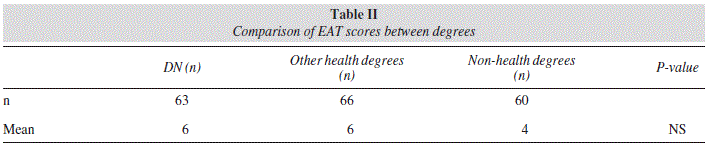
<body><![CDATA[<p><font face="Verdana" size="2">To assess physical activity it was applied the short version of International Physical Activity Questionnaire (IPAQ), which evaluates the time spent walking, practicing activities of moderate and high intensity and the time of physical inactivity.<sup>19</sup> The scores depend on the activity intensity (low, moderate and high), duration and week frequency. The results are expressed in METs-minutes/week (Metabolic Equivalent of Task). The scores were categorized into: high intensity (&gt; 30,000 METs-minutes/week), moderate intensity (&gt; 600 METs-minutes/week and &lt; 30,000 METs-minutes/ week) and low intensity (&lt; 600 METs-minutes/week).<sup>20</sup></font></p>     <p><font face="Verdana" size="2"><i>Statistical analysis</i></font></p>     <p><font face="Verdana" size="2">It was performed using SPSS<sup>&reg;</sup> 18.0 and Microsoft Office Excel<sup><sup>&reg;</sup></sup>. The quantitative variables were described by mean, median, mode, deviation standard, minimum and maximum; absolute and relative frequencies were calculated for the qualitative variables. Association between categorical independent variables was tested by Chi-square test. T-test and non-parametric Mann-Whitney test were used for comparisons between 2 groups of quantitative variables. Non-parametrical Kruskal-Wallis was used to compare three independent groups towards a numeric variable. The analysis of association between two quantitative or qualitative independent variables was achieved by Spearman's correlation. Statistical significance was set for a p-value &lt; 0.05.</font></p>     <p>&nbsp;</p>     <p><font face="Verdana" size="2"><b>Results</b></font></p>     <p><font face="Verdana" size="2"><i>Students' characterization</i></font></p>     <p><font face="Verdana" size="2">It was observed 189 students aged between 18 and 25 years old, being the mean age 20.3 years old. Of them, 33.3% (n = 63) attended DN degree, 34.9% (n = 66) other health degrees and 31.8% (n = 60) non-health degrees.</font></p>     <p><font face="Verdana" size="2"><i>Risk of ED development</i> </font></p>     <p><font face="Verdana" size="2">EAT score</font></p>     <p><font face="Verdana" size="2">Of the 8 students with scores above the cut-off: 4 (6.3%) were from DN, 3 (4.5%) were from other health degrees and 1 (1.7%) was from a non-health degree (<a href="#t1">table I</a>). There was no significant differences between students of the three groups of degrees and the EAT total score (p = 0.864). Eating attitudes among DN students and students from other degrees were homogeneous (<a href="#t2">table II</a>). According to the EAT subscales I (motivation to lose weight) and II (bulimic behaviours), no significant differences between the three groups were found. Nevertheless, DN students achieved a lower average score in the subscale III (social pressure to eat) (p &lt; 0.020). The differences were only significant between DN and health students (p &lt; 0.025). Comparing the risk of developing an ED, it was found a doubled prevalence of a DN student (6.3% DN <i>vs</i> 3.2% other degrees) achieve a score above the cut-off. However, this result was not statistically significant; the relative risk was very similar to Odds Ratio &#091;OR = 2.1, CI 95% (0.50, 8.56)&#093;.</font></p>     ]]></body>
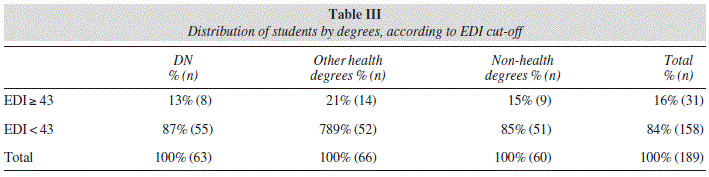
<body><![CDATA[<p>&nbsp;</p>     <p align="center"><font face="Verdana" size="2"><a name="t1"><img src="/img/revistas/nh/v28n5/29original24_t1.gif"></a></font></p>     <p align="center"><font face="Verdana" size="2"><a name="t2"><img src="/img/revistas/nh/v28n5/29original24_t2.gif"></a></font></p>     <p>&nbsp;</p>     <p><font face="Verdana" size="2">EDI score</font></p>     <p><font face="Verdana" size="2">Of the 31 students with scores equal or above the cutoff (psychological and behavioural characteristics often associated with ED), 8 (12.7%) were from DN, 14 (21.2%) were from other health degrees and 9 (15.0%) were from non-health degrees (<a href="#t3">table III</a>). No significant differences between degrees were found in mean EDI scores of the three groups (p = 0.769), revealing homogeneity among students from DN and other degrees (<a href="#t4">table IV</a>). It was only found significant differences in subscale VIII - Maturity fears (p &lt; 0.05). Concerning this subscale, application of Mann-Whitney test revealed that these differences were significant between DN students and from non-health degrees (p = 0.012). Students from non-health degrees obtained a higher mean score (6 points out of 21) than DN students (4 points out of 21) (<a href="#t5">table V</a>). However, both obtained low scores. Considering the risk of developing an ED, EDI scores showed that the prevalence of having a score above the cut-off was lower in DN students. As occurred with EAT, these results were not significant.</font></p>     <p>&nbsp;</p>     <p align="center"><font face="Verdana" size="2"><a name="t3"><img src="/img/revistas/nh/v28n5/29original24_t3.gif"></a></font></p>     <p align="center"><font face="Verdana" size="2"><a name="t4"><img src="/img/revistas/nh/v28n5/29original24_t4.gif"></a></font></p>     <p align="center"><font face="Verdana" size="2"><a name="t5"><img src="/img/revistas/nh/v28n5/29original24_t5.gif"></a></font></p>     ]]></body>
<body><![CDATA[<p>&nbsp;</p>     <p><font face="Verdana" size="2"><i>Nutritional status</i></font></p>     <p><font face="Verdana" size="2">BMI</font></p>     <p><font face="Verdana" size="2">Students from DN obtained a mean BMI value of 21.2 &plusmn; 1.9 kg/m<sup>2</sup>. The mean BMI value of students from other health degrees was 21.0 &plusmn; 2.8 kg/m<sup>2</sup>. Students from non-health degrees had a BMI of 21.5 &plusmn; 3.4 kg/m<sup>2</sup>. No significant differences were found in BMI values among the three groups (p = 0.112), but the prevalence of overweight in DN students was almost significantly lower than in non-health degrees, p = 0.05 (<a href="#t6">table VI</a>).</font></p>     <p>&nbsp;</p>     <p align="center"><font face="Verdana" size="2"><a name="t6"><img src="/img/revistas/nh/v28n5/29original24_t6.gif"></a></font></p>     <p>&nbsp;</p>     <p><font face="Verdana" size="2">Waist circumference</font></p>     <p><font face="Verdana" size="2">Mean waist circumference of DN students was 76.3 &plusmn; 6.8 cm. Students from other health degrees had a mean waist circumference value of 76.4 &plusmn; 8.0 cm. Students from non-health degrees obtained a mean waist circumference of 79.2 &plusmn; 10.2 cm. Comparing waist circumference values of students from the three groups, no significant differences were found, p = 0.110 (<a href="#t7">table VII</a>).</font></p>     <p>&nbsp;</p>     ]]></body>
<body><![CDATA[<p align="center"><font face="Verdana" size="2"><a name="t7"><img src="/img/revistas/nh/v28n5/29original24_t7.gif"></a></font></p>     <p>&nbsp;</p>     <p><font face="Verdana" size="2">Body composition</font></p>     <p><font face="Verdana" size="2">Mean percentage of fat mass in students from DN was 29.0%. Students from non-health degrees obtained a higher mean value, 30.6%, and students from other health degrees had a lower mean percentage of fat mass, 28.6%. No significant differences were found in fat mass percentage among the three groups, p = 0.919 (<a href="#t8">table VIII</a>).</font></p>     <p>&nbsp;</p>     <p align="center"><font face="Verdana" size="2"><a name="t8"><img src="/img/revistas/nh/v28n5/29original24_t8.gif"></a></font></p>     <p>&nbsp;</p>     <p><font face="Verdana" size="2"><i>Food habits</i></font></p>     <p><font face="Verdana" size="2">Among the students of the three groups, was verified homogeneity in the daily intake of all food groups, except white meat (p = 0.017), solid fats (p = 0.041), vegetables and soup (p=0.028), canned fruit (p = 0.013), juices and soft drinks (p = 0.019). Regarding white meat, DN students had the highest mean daily intake, comparing to other degrees (<a href="#t9">table IX</a>). On the other hand, DN students obtained a mean daily intake of solid fats below of health students (p &lt; 0.025). DN students showed a higher vegetable and soup daily intake than non-health students, p &lt; 0.025 (<a href="#t9">table IX</a>); consumption of canned fruit was higher among health students, p &lt; 0.025 (<a href="#t9">table IX</a>). The mean and median daily intake of soft drinks and juices was higher in health students, comparing to DN students, p &lt; 0.025 (<a href="#t9">table IX</a>).</font></p>     <p>&nbsp;</p>     ]]></body>
<body><![CDATA[<p align="center"><font face="Verdana" size="2"><a name="t9"><img src="/img/revistas/nh/v28n5/29original24_t9.gif"></a></font></p>     <p>&nbsp;</p>     <p><font face="Verdana" size="2"><i>Nutrient intake</i></font></p>     <p><font face="Verdana" size="2">It was found homogeneity between the three groups across all nutrients except for carbohydrates, total fat, saturated fat and dietary fibre (<a href="#t10">table X</a>). DN students presented a higher carbohydrate and dietary fibre intake and a lower total fat and saturated fat intake than non-health students, p &lt; 0.025 (<a href="#t10">table X</a>).</font></p>     <p>&nbsp;</p>     <p align="center"><font face="Verdana" size="2"><a name="t10"><img src="/img/revistas/nh/v28n5/29original24_t10.gif"></a></font></p>     <p>&nbsp;</p>     <p><font face="Verdana" size="2"><i>Physical activity</i></font></p>     <p><font face="Verdana" size="2">The difference between the three groups of degrees regarding physical activity was statistically significant, p &lt; 0.05 (<a href="#t11">table XI</a>). Non-health students had the highest percentage of light activities (41.7%-n = 25); DN students practiced more moderate activities (54.0%-n = 34); and health students had the highest level of vigorous activities (37.9%-n = 25). It was shown a tendency for health students to practice physical activity with higher intensity than non-health students (<a href="#t11">table XI</a>).</font></p>     <p>&nbsp;</p>     ]]></body>
<body><![CDATA[<p align="center"><font face="Verdana" size="2"><a name="t11"><img src="/img/revistas/nh/v28n5/29original24_t11.gif"></a></font></p>     <p>&nbsp;</p>     <p><font face="Verdana" size="2"><b>Discussion</b></font></p>     <p><font face="Verdana" size="2">No significant differences were found between DN students and other degrees on eating behaviour, as shown by Santos et al.<sup>7</sup> Of the students with EAT  <u>&gt;</u> 19: 6.3% were from DN; 4.5% from health degrees; and 1.7% from non-health degrees. The percentage of DN students with positive EAT was lower than found in two similar Brazilian studies (Santos et al. and Kirsten et al.), which identified, respectively, 23.8% and 24.7%.<sup>7,9</sup> However, in Santos et al. study DN students also obtained the highest EAT score (23.8%), compared to Nursing (9.8%) and Biological Sciences students (7.7%).<sup>7</sup> Stipp L and Oliveira M demonstrated that DN students (18%) had a high probability to have severe eating behaviour disturbances compared to Psychology students (13%), although this difference was not significant.<sup>21</sup> In contrast, <i>Korinth A et al</i> identified that DN students did not have more eating disorders than students from other degrees. In this study, DN students tended to restrict their food intake in order to control body weight, but they did not have a high prevalence of eating disorders.<sup>8</sup> Moreover, students who achieved an EDI <u>&gt;</u> 43: 12.7% were from DN; 21.2% were from health degrees; and 15.0% of non-health degrees. Studies with DN students in which this questionnaire had been applied were not found. Frequently, despite not establishing significant differences in the prevalence of eating disorders, there is a tendency of DN students to have deviant eating behaviours. A Portuguese study (Costa C et al., 2007) corroborated that dietary restriction influenced the eating patterns of these students.<sup>5</sup></font></p>     <p><font face="Verdana" size="2">Comparison of nutritional status and body composition of students from the three groups did not demonstrate significant differences. Nevertheless, DN students had lower overweight and obesity prevalences than non-health students; these had higher mean values than the remaining, with health students presenting lower mean BMI, waist circumference and fat mass values. Like the present study, Korinth A et al. also found no significant differences in BMI of DN students and control groups.<sup>8</sup></font></p>     <p><font face="Verdana" size="2">Dietary intake regarding food groups identified some significant differences. DN students consumed more white meat than other students; more vegetables and soup than non-health students; less solid fats, canned fruit and juice/ soda drinks than health students. It was also observed differences in nutrient intake between DN students and non-health degrees; the first consumed higher carbohydrates and dietary fibre quantities, but lower total and saturated fat. These differences between students can be explained by the knowledge that DN students have about healthy food habits. However, it is known that knowledge alone does not ensure the maintenance of healthy behaviour. Thereby, frequent exposure to information is considered a positive reinforcement. DN students (as well as the health degrees) not only have knowledge, but also are exposed to it constantly, apparently favouring the change.</font></p>     <p><font face="Verdana" size="2">Finally, evidence has demonstrated a high prevalence of sedentary lifestyles among college students. Accordingly, Racette S et al. found that 30% of university students did not practice physical activity regularly and only half did frequently some kind of activity.<sup>22</sup> Silliman K et al. showed even more concerning results in a study with 302 students; whereas only 30% did moderate physical activity, 39% met the minimum guidelines and 46% were physically inactive.<sup>23</sup> It was observed in this study, significant differences in all three groups. It was found that DN and health students practiced higher intensity activities, compared to non-health students. Similarly, due to their knowledge about the importance of physical activity, it is suggested that DN and health students obey these recommendations, as a preventive measure (for themselves) and as models for others. Note that these students not only seem to give more importance to physical activity, but also to the intensity, satisfying as well one of the guidelines.</font></p>     <p><font face="Verdana" size="2">In future studies it would be interesting to investigate all Portuguese DN students. Equally, a comparison between students from public and private institutions should be studied, because a higher socio-economic status seems to be associated with an increased risk of developing eating disorders. In addition to socioeconomic status, habitual residence <i>vs</i> residence during classes' time and people with whom they live should also be considered as important factors possibly influencing different eating behaviour and lifestyles.</font></p>     <p>&nbsp;</p>     <p><font face="Verdana" size="2"><b>Conclusion</b></font></p>     ]]></body>
<body><![CDATA[<p><font face="Verdana" size="2">Although differences were not statistically significant, DN students showed a doubled prevalence of psychological and behavioural characteristics often associated with ED (EDI test) when compared to students from other degrees. DN students had the highest percentages of normal weight, no cardio-metabolic risk according to waist circumference and normal fat mass. DN students had the healthiest eating habits and they also practiced moderate and intense physical activity in a high percentage.</font></p>     <p><font face="Verdana" size="2">Studies focused on ED in higher education students are still few, particularly in specific groups such as DN students. As future dieticians their physical, mental and emotional integrity are important to achieve better nutrition services. Since there was a high prevalence of college students with inadequate lifestyles, especially food habits and physical activity, it becomes important to study the key points to improve their lifestyles to increase the efficacy of interventions. Epidemiological research is therefore necessary in this field, in order to promote concerted interventions.</font></p>     <p>&nbsp;</p>     <p><font face="Verdana" size="2"><b>References</b></font></p>     <!-- ref --><p><font face="Verdana" size="2">1. Cabaco A, Colás I, Hage S, Abramides D, Loureiro M. Selectividade atencional e predisposição emocional face a estímulos do comportamento alimentar: dimensôes transculturais. <i>Análise Psicológica</i> 2002;4 (XX): 625-36.    &nbsp;&nbsp;&nbsp;&nbsp;&nbsp;&nbsp;&nbsp;&nbsp;[&#160;<a href="javascript:void(0);" onclick="javascript: window.open('/scielo.php?script=sci_nlinks&ref=3758273&pid=S0212-1611201300050002900001&lng=','','width=640,height=500,resizable=yes,scrollbars=1,menubar=yes,');">Links</a>&#160;]<!-- end-ref --></font></p>    <!-- ref --><p><font face="Verdana" size="2">2. Machado P, Soares I, Sampaio D, Torres A, Gouveia J, Oliveira C. Perturbagôes alimentares em Portugal: Padrôes de utilização dos serviços. Revista de informação e divulgação científica do núcleo de DCA. 2004;1(1).    &nbsp;&nbsp;&nbsp;&nbsp;&nbsp;&nbsp;&nbsp;&nbsp;[&#160;<a href="javascript:void(0);" onclick="javascript: window.open('/scielo.php?script=sci_nlinks&ref=3758275&pid=S0212-1611201300050002900002&lng=','','width=640,height=500,resizable=yes,scrollbars=1,menubar=yes,');">Links</a>&#160;]<!-- end-ref --></font></p>    <!-- ref --><p><font face="Verdana" size="2">3. Dixe M. Prevalência das DCA. <i>Análise Psicológica</i> 2007; 4 (XXV): 559-69.    &nbsp;&nbsp;&nbsp;&nbsp;&nbsp;&nbsp;&nbsp;&nbsp;[&#160;<a href="javascript:void(0);" onclick="javascript: window.open('/scielo.php?script=sci_nlinks&ref=3758277&pid=S0212-1611201300050002900003&lng=','','width=640,height=500,resizable=yes,scrollbars=1,menubar=yes,');">Links</a>&#160;]<!-- end-ref --></font></p>    ]]></body>
<body><![CDATA[<!-- ref --><p><font face="Verdana" size="2">4. American Psychiatric Association. Diagnostic and statistical. Manual of mental disorders. 4<sup>th</sup> ed. Washington, DC: Author; 1994.    &nbsp;&nbsp;&nbsp;&nbsp;&nbsp;&nbsp;&nbsp;&nbsp;[&#160;<a href="javascript:void(0);" onclick="javascript: window.open('/scielo.php?script=sci_nlinks&ref=3758279&pid=S0212-1611201300050002900004&lng=','','width=640,height=500,resizable=yes,scrollbars=1,menubar=yes,');">Links</a>&#160;]<!-- end-ref --></font></p>    <!-- ref --><p><font face="Verdana" size="2">5. Costa C, Teixeira V, Afonso C, de Almeida MDV, Moreira P. Caracterização do comportamento alimentar e avaliação da ingestão alimentar em estudantes de Ciências da Nutrição <i>Alimenta</i>çã<i>o Humana</i> 2007; 13 (2).    &nbsp;&nbsp;&nbsp;&nbsp;&nbsp;&nbsp;&nbsp;&nbsp;[&#160;<a href="javascript:void(0);" onclick="javascript: window.open('/scielo.php?script=sci_nlinks&ref=3758281&pid=S0212-1611201300050002900005&lng=','','width=640,height=500,resizable=yes,scrollbars=1,menubar=yes,');">Links</a>&#160;]<!-- end-ref --></font></p>    <!-- ref --><p><font face="Verdana" size="2">6. Moreira P, Sampaio D, Almeida M. Associação entre comportamento alimentar restritivo e ingestão nutricional em estudantes universitários. <i>RIDEP</i> 2003;16(2):113-133.    &nbsp;&nbsp;&nbsp;&nbsp;&nbsp;&nbsp;&nbsp;&nbsp;[&#160;<a href="javascript:void(0);" onclick="javascript: window.open('/scielo.php?script=sci_nlinks&ref=3758283&pid=S0212-1611201300050002900006&lng=','','width=640,height=500,resizable=yes,scrollbars=1,menubar=yes,');">Links</a>&#160;]<!-- end-ref --></font></p>    <!-- ref --><p><font face="Verdana" size="2">7. Santos M, Meneguci L, Mendonça A. Padrao alimentar anormal em estudantes universitárias das áreas de Nutrição, enfermagem e ciências biológicas. <i>Ciência et praxis</i> 2008; 1 (1): 1-4.    &nbsp;&nbsp;&nbsp;&nbsp;&nbsp;&nbsp;&nbsp;&nbsp;[&#160;<a href="javascript:void(0);" onclick="javascript: window.open('/scielo.php?script=sci_nlinks&ref=3758285&pid=S0212-1611201300050002900007&lng=','','width=640,height=500,resizable=yes,scrollbars=1,menubar=yes,');">Links</a>&#160;]<!-- end-ref --></font></p>    <!-- ref --><p><font face="Verdana" size="2">8. Korinth A, Schiess S, Westenhoefer J. Eating behaviour and eating disorders in students of nutrition sciences. <i>Public Health Nutrition</i> 2009; 13 (1): 32-7.    &nbsp;&nbsp;&nbsp;&nbsp;&nbsp;&nbsp;&nbsp;&nbsp;[&#160;<a href="javascript:void(0);" onclick="javascript: window.open('/scielo.php?script=sci_nlinks&ref=3758287&pid=S0212-1611201300050002900008&lng=','','width=640,height=500,resizable=yes,scrollbars=1,menubar=yes,');">Links</a>&#160;]<!-- end-ref --></font></p>    ]]></body>
<body><![CDATA[<!-- ref --><p><font face="Verdana" size="2">9. Kirsten V, Fratton F, Porta N. Transtornos alimentares em estudantes de Nutrição do Rio Grande do Sul. <i>Revista de Nutri</i>çã<i>o</i> 2009; 22 (2): 219-27.    &nbsp;&nbsp;&nbsp;&nbsp;&nbsp;&nbsp;&nbsp;&nbsp;[&#160;<a href="javascript:void(0);" onclick="javascript: window.open('/scielo.php?script=sci_nlinks&ref=3758289&pid=S0212-1611201300050002900009&lng=','','width=640,height=500,resizable=yes,scrollbars=1,menubar=yes,');">Links</a>&#160;]<!-- end-ref --></font></p>    <!-- ref --><p><font face="Verdana" size="2">10. Bento C, Saraiva J, Pereira A, Azevedo M, Macedo e Santos A. Atitudes e comportamentos alimentares em uma população adolescente portuguesa. <i>Pediatria</i> 2011; 33 (1): 21-8.    &nbsp;&nbsp;&nbsp;&nbsp;&nbsp;&nbsp;&nbsp;&nbsp;[&#160;<a href="javascript:void(0);" onclick="javascript: window.open('/scielo.php?script=sci_nlinks&ref=3758291&pid=S0212-1611201300050002900010&lng=','','width=640,height=500,resizable=yes,scrollbars=1,menubar=yes,');">Links</a>&#160;]<!-- end-ref --></font></p>    <!-- ref --><p><font face="Verdana" size="2">11. Pereira A, Maia B, Bos S, Soares M, Marques M, Macedo A, Azevedo M. The Portuguese Short Form of the Eating Attitudes Test-40y. <i>European Eating Disorders Review</i> 2008; 16: 319-25.    &nbsp;&nbsp;&nbsp;&nbsp;&nbsp;&nbsp;&nbsp;&nbsp;[&#160;<a href="javascript:void(0);" onclick="javascript: window.open('/scielo.php?script=sci_nlinks&ref=3758293&pid=S0212-1611201300050002900011&lng=','','width=640,height=500,resizable=yes,scrollbars=1,menubar=yes,');">Links</a>&#160;]<!-- end-ref --></font></p>    <!-- ref --><p><font face="Verdana" size="2">12. Machado P, Gonçalves S, Martins C, Soares I. The Portuguese version of the eating disorders inventory: evaluation of its psychometric properties. European eating disorders review. 2001; 9: 43-52.    &nbsp;&nbsp;&nbsp;&nbsp;&nbsp;&nbsp;&nbsp;&nbsp;[&#160;<a href="javascript:void(0);" onclick="javascript: window.open('/scielo.php?script=sci_nlinks&ref=3758295&pid=S0212-1611201300050002900012&lng=','','width=640,height=500,resizable=yes,scrollbars=1,menubar=yes,');">Links</a>&#160;]<!-- end-ref --></font></p>    <!-- ref --><p><font face="Verdana" size="2">13. Costa C, Ramos E, Barros H, Torres A, Severo M, Lopes C. Propiedades psicométricas do eating disorders inventory em adolescentes Portugueses. <i>Acta Médica Portuguesa</i> 2007; 20:524-51.    &nbsp;&nbsp;&nbsp;&nbsp;&nbsp;&nbsp;&nbsp;&nbsp;[&#160;<a href="javascript:void(0);" onclick="javascript: window.open('/scielo.php?script=sci_nlinks&ref=3758297&pid=S0212-1611201300050002900013&lng=','','width=640,height=500,resizable=yes,scrollbars=1,menubar=yes,');">Links</a>&#160;]<!-- end-ref --></font></p>    ]]></body>
<body><![CDATA[<!-- ref --><p><font face="Verdana" size="2">14. World Health Organization. Regional Office for Europe - Body mass index: <a target="_blank" href="http://www.euro.who.int/en/what-we-do/health-topics/disease-prevention/nutrition/a-healthy-lifestyle/body-mass-index-bmi">http://www.euro.who.int/en/what-we-do/health-topics/disease-prevention/nutrition/a-healthy-lifestyle/body-mass-index-bmi</a>.    &nbsp;&nbsp;&nbsp;&nbsp;&nbsp;&nbsp;&nbsp;&nbsp;[&#160;<a href="javascript:void(0);" onclick="javascript: window.open('/scielo.php?script=sci_nlinks&ref=3758299&pid=S0212-1611201300050002900014&lng=','','width=640,height=500,resizable=yes,scrollbars=1,menubar=yes,');">Links</a>&#160;]<!-- end-ref --></font></p>    <!-- ref --><p><font face="Verdana" size="2">15. Correia F. Breves notas sobre Avaliação Nutricional. Alimentação Humana.    &nbsp;&nbsp;&nbsp;&nbsp;&nbsp;&nbsp;&nbsp;&nbsp;[&#160;<a href="javascript:void(0);" onclick="javascript: window.open('/scielo.php?script=sci_nlinks&ref=3758301&pid=S0212-1611201300050002900015&lng=','','width=640,height=500,resizable=yes,scrollbars=1,menubar=yes,');">Links</a>&#160;]<!-- end-ref --></font></p>    <!-- ref --><p><font face="Verdana" size="2">16. Silva A, Sardinha L. Adiposidade corporal: métodos de avaliação e valores de referência. Em: Teixeira P, Sardinha L, Barata JL, editores. Nutrição, exercício e saúde. Lisboa: Lidel; 2008, pp. 135-80.    &nbsp;&nbsp;&nbsp;&nbsp;&nbsp;&nbsp;&nbsp;&nbsp;[&#160;<a href="javascript:void(0);" onclick="javascript: window.open('/scielo.php?script=sci_nlinks&ref=3758303&pid=S0212-1611201300050002900016&lng=','','width=640,height=500,resizable=yes,scrollbars=1,menubar=yes,');">Links</a>&#160;]<!-- end-ref --></font></p>    <!-- ref --><p><font face="Verdana" size="2">17. Lopes C, Oliveira A, Santos AC, Ramos E, Gaio AR, Severo M, Barros H. Consumo alimentar no Porto. Faculdade de Medicina da Universidade do Porto; 2006. Disponível em: <a target="_blank" href="http://www.consumoalimentarporto.med.up.pt">www.consumoalimentarporto.med.up.pt</a>.    &nbsp;&nbsp;&nbsp;&nbsp;&nbsp;&nbsp;&nbsp;&nbsp;[&#160;<a href="javascript:void(0);" onclick="javascript: window.open('/scielo.php?script=sci_nlinks&ref=3758305&pid=S0212-1611201300050002900017&lng=','','width=640,height=500,resizable=yes,scrollbars=1,menubar=yes,');">Links</a>&#160;]<!-- end-ref --></font></p>    <!-- ref --><p><font face="Verdana" size="2">18. Dietary Reference Intakes: Recommended Intakes for Individuals. National Academy of Sciences. Institute of Medicine. Food and Nutrition Board.    &nbsp;&nbsp;&nbsp;&nbsp;&nbsp;&nbsp;&nbsp;&nbsp;[&#160;<a href="javascript:void(0);" onclick="javascript: window.open('/scielo.php?script=sci_nlinks&ref=3758307&pid=S0212-1611201300050002900018&lng=','','width=640,height=500,resizable=yes,scrollbars=1,menubar=yes,');">Links</a>&#160;]<!-- end-ref --></font></p>    ]]></body>
<body><![CDATA[<!-- ref --><p><font face="Verdana" size="2">19. Hagströmer M, Sjöström M. The International Physical Activity Questionnaire (IPAQ): a study of concurrent and construct validity. <i>Public Health Nutrition</i> 9 (6): 755-62.    &nbsp;&nbsp;&nbsp;&nbsp;&nbsp;&nbsp;&nbsp;&nbsp;[&#160;<a href="javascript:void(0);" onclick="javascript: window.open('/scielo.php?script=sci_nlinks&ref=3758309&pid=S0212-1611201300050002900019&lng=','','width=640,height=500,resizable=yes,scrollbars=1,menubar=yes,');">Links</a>&#160;]<!-- end-ref --><!-- ref --><p>20. Guidelines for Data Processing and Analysis of the International Physical Activity Questionnaire (IPAQ) - Short and Long Forms (Internet). 2005 (citado em 2010 Jan) Disponível em: <a target="_blank" href="http://www.ipaq.ki.se">www.ipaq.ki.se</a>.    &nbsp;&nbsp;&nbsp;&nbsp;&nbsp;&nbsp;&nbsp;&nbsp;[&#160;<a href="javascript:void(0);" onclick="javascript: window.open('/scielo.php?script=sci_nlinks&ref=3758310&pid=S0212-1611201300050002900020&lng=','','width=640,height=500,resizable=yes,scrollbars=1,menubar=yes,');">Links</a>&#160;]<!-- end-ref --></p>    <!-- ref --><p>21. Stipp L, Oliveira M. Imagem corporal e atitudes alimentares: diferengas entre estudantes de nutrição e de psicologia. <i>Saúde em Revista</i> 2003; 5 (9): 47-51.    &nbsp;&nbsp;&nbsp;&nbsp;&nbsp;&nbsp;&nbsp;&nbsp;[&#160;<a href="javascript:void(0);" onclick="javascript: window.open('/scielo.php?script=sci_nlinks&ref=3758312&pid=S0212-1611201300050002900021&lng=','','width=640,height=500,resizable=yes,scrollbars=1,menubar=yes,');">Links</a>&#160;]<!-- end-ref --></p>    <!-- ref --><p>22. Racette S, Deusinger S, Strube M, Highstein G, Deusinger R. Weight changes, exercise, and dietary patterns during freshman and sophomore years of college. <i>Journal of the American College Health</i> 53 (6): 245-50.    &nbsp;&nbsp;&nbsp;&nbsp;&nbsp;&nbsp;&nbsp;&nbsp;[&#160;<a href="javascript:void(0);" onclick="javascript: window.open('/scielo.php?script=sci_nlinks&ref=3758314&pid=S0212-1611201300050002900022&lng=','','width=640,height=500,resizable=yes,scrollbars=1,menubar=yes,');">Links</a>&#160;]<!-- end-ref --></p>    <!-- ref --><p><font face="Verdana" size="2">23. Silliman K, Rodas-Fortier K, Neyman M. A survey of dietary and exercise habits and perceived barriers to following a healthy lifestyle in a college population. <i>Californian Journal of Health Promotion</i> 2004; 2 (2): 10-9.    &nbsp;&nbsp;&nbsp;&nbsp;&nbsp;&nbsp;&nbsp;&nbsp;[&#160;<a href="javascript:void(0);" onclick="javascript: window.open('/scielo.php?script=sci_nlinks&ref=3758316&pid=S0212-1611201300050002900023&lng=','','width=640,height=500,resizable=yes,scrollbars=1,menubar=yes,');">Links</a>&#160;]<!-- end-ref --></font></p>     <p>&nbsp;</p>     ]]></body>
<body><![CDATA[<p>&nbsp;</p>     <p><font face="Verdana" size="2"><a href="#top"><img border="0" src="/img/revistas/nh/v28n5/seta.gif" width="15" height="17"></a><a name="bajo"></a><b>Correspondence:</b>    <br>Paula Ravasco.    <br>Laboratorio de Nutrição.    <br>Unidade de Nutrição e Metabolismo.    <br>Instituto de Medicina Molecular.    <br>Faculdade de Medicina de Lisboa.    <br>Avda. Prof. Egas Moniz.    <br>1640-028 Lisboa. Portugal.    <br>E-mail: <a href="mailto:p.ravasco@fm.ul.pt">p.ravasco@fm.ul.pt</a></font></p>     ]]></body>
<body><![CDATA[<p><font face="Verdana" size="2">Recibido: 14-V-2013.    <br>Aceptado: 26-VI-2013.</font></p>      ]]></body><back>
<ref-list>
<ref id="B1">
<label>1</label><nlm-citation citation-type="journal">
<person-group person-group-type="author">
<name>
<surname><![CDATA[Cabaco]]></surname>
<given-names><![CDATA[A]]></given-names>
</name>
<name>
<surname><![CDATA[Colás]]></surname>
<given-names><![CDATA[I]]></given-names>
</name>
<name>
<surname><![CDATA[Hage]]></surname>
<given-names><![CDATA[S]]></given-names>
</name>
<name>
<surname><![CDATA[Abramides]]></surname>
<given-names><![CDATA[D]]></given-names>
</name>
<name>
<surname><![CDATA[Loureiro]]></surname>
<given-names><![CDATA[M]]></given-names>
</name>
</person-group>
<article-title xml:lang="pt"><![CDATA[Selectividade atencional e predisposição emocional face a estímulos do comportamento alimentar: dimensôes transculturais]]></article-title>
<source><![CDATA[Análise Psicológica]]></source>
<year>2002</year>
<volume>4</volume>
<numero>XX</numero>
<issue>XX</issue>
<page-range>625-36</page-range></nlm-citation>
</ref>
<ref id="B2">
<label>2</label><nlm-citation citation-type="journal">
<person-group person-group-type="author">
<name>
<surname><![CDATA[Machado]]></surname>
<given-names><![CDATA[P]]></given-names>
</name>
<name>
<surname><![CDATA[Soares]]></surname>
<given-names><![CDATA[I]]></given-names>
</name>
<name>
<surname><![CDATA[Sampaio]]></surname>
<given-names><![CDATA[D]]></given-names>
</name>
<name>
<surname><![CDATA[Torres]]></surname>
<given-names><![CDATA[A]]></given-names>
</name>
<name>
<surname><![CDATA[Gouveia]]></surname>
<given-names><![CDATA[J]]></given-names>
</name>
<name>
<surname><![CDATA[Oliveira]]></surname>
<given-names><![CDATA[C]]></given-names>
</name>
</person-group>
<article-title xml:lang="pt"><![CDATA[Perturbagôes alimentares em Portugal: Padrôes de utilização dos serviços]]></article-title>
<source><![CDATA[Revista de informação e divulgação científica do núcleo de DCA]]></source>
<year>2004</year>
<volume>1</volume>
<numero>1</numero>
<issue>1</issue>
</nlm-citation>
</ref>
<ref id="B3">
<label>3</label><nlm-citation citation-type="journal">
<person-group person-group-type="author">
<name>
<surname><![CDATA[Dixe]]></surname>
<given-names><![CDATA[M]]></given-names>
</name>
</person-group>
<article-title xml:lang="pt"><![CDATA[Prevalência das DCA]]></article-title>
<source><![CDATA[Análise Psicológica]]></source>
<year>2007</year>
<volume>4</volume>
<numero>XXV</numero>
<issue>XXV</issue>
<page-range>559-69</page-range></nlm-citation>
</ref>
<ref id="B4">
<label>4</label><nlm-citation citation-type="">
<collab>American Psychiatric Association</collab>
<source><![CDATA[Diagnostic and statistical: Manual of mental disorders]]></source>
<year>1994</year>
<edition>4</edition>
<publisher-loc><![CDATA[Washington^eDC DC]]></publisher-loc>
</nlm-citation>
</ref>
<ref id="B5">
<label>5</label><nlm-citation citation-type="journal">
<person-group person-group-type="author">
<name>
<surname><![CDATA[Costa]]></surname>
<given-names><![CDATA[C]]></given-names>
</name>
<name>
<surname><![CDATA[Teixeira]]></surname>
<given-names><![CDATA[V]]></given-names>
</name>
<name>
<surname><![CDATA[Afonso]]></surname>
<given-names><![CDATA[C]]></given-names>
</name>
<name>
<surname><![CDATA[de Almeida]]></surname>
<given-names><![CDATA[MDV]]></given-names>
</name>
<name>
<surname><![CDATA[Moreira]]></surname>
<given-names><![CDATA[P]]></given-names>
</name>
</person-group>
<article-title xml:lang="pt"><![CDATA[Caracterização do comportamento alimentar e avaliação da ingestão alimentar em estudantes de Ciências da Nutrição]]></article-title>
<source><![CDATA[Alimentação Humana]]></source>
<year>2007</year>
<volume>13</volume>
<numero>2</numero>
<issue>2</issue>
</nlm-citation>
</ref>
<ref id="B6">
<label>6</label><nlm-citation citation-type="journal">
<person-group person-group-type="author">
<name>
<surname><![CDATA[Moreira]]></surname>
<given-names><![CDATA[P]]></given-names>
</name>
<name>
<surname><![CDATA[Sampaio]]></surname>
<given-names><![CDATA[D]]></given-names>
</name>
<name>
<surname><![CDATA[Almeida]]></surname>
<given-names><![CDATA[M]]></given-names>
</name>
</person-group>
<article-title xml:lang="pt"><![CDATA[Associação entre comportamento alimentar restritivo e ingestão nutricional em estudantes universitários]]></article-title>
<source><![CDATA[RIDEP]]></source>
<year>2003</year>
<volume>16</volume>
<numero>2</numero>
<issue>2</issue>
<page-range>113-133</page-range></nlm-citation>
</ref>
<ref id="B7">
<label>7</label><nlm-citation citation-type="journal">
<person-group person-group-type="author">
<name>
<surname><![CDATA[Santos]]></surname>
<given-names><![CDATA[M]]></given-names>
</name>
<name>
<surname><![CDATA[Meneguci]]></surname>
<given-names><![CDATA[L]]></given-names>
</name>
<name>
<surname><![CDATA[Mendonça]]></surname>
<given-names><![CDATA[A]]></given-names>
</name>
</person-group>
<article-title xml:lang="pt"><![CDATA[Padrao alimentar anormal em estudantes universitárias das áreas de Nutrição, enfermagem e ciências biológicas]]></article-title>
<source><![CDATA[Ciência et praxis]]></source>
<year>2008</year>
<volume>1</volume>
<numero>1</numero>
<issue>1</issue>
<page-range>1-4</page-range></nlm-citation>
</ref>
<ref id="B8">
<label>8</label><nlm-citation citation-type="journal">
<person-group person-group-type="author">
<name>
<surname><![CDATA[Korinth]]></surname>
<given-names><![CDATA[A]]></given-names>
</name>
<name>
<surname><![CDATA[Schiess]]></surname>
<given-names><![CDATA[S]]></given-names>
</name>
<name>
<surname><![CDATA[Westenhoefer]]></surname>
<given-names><![CDATA[J]]></given-names>
</name>
</person-group>
<article-title xml:lang="en"><![CDATA[Eating behaviour and eating disorders in students of nutrition sciences]]></article-title>
<source><![CDATA[Public Health Nutrition]]></source>
<year>2009</year>
<volume>13</volume>
<numero>1</numero>
<issue>1</issue>
<page-range>32-7</page-range></nlm-citation>
</ref>
<ref id="B9">
<label>9</label><nlm-citation citation-type="journal">
<person-group person-group-type="author">
<name>
<surname><![CDATA[Kirsten]]></surname>
<given-names><![CDATA[V]]></given-names>
</name>
<name>
<surname><![CDATA[Fratton]]></surname>
<given-names><![CDATA[F]]></given-names>
</name>
<name>
<surname><![CDATA[Porta]]></surname>
<given-names><![CDATA[N]]></given-names>
</name>
</person-group>
<article-title xml:lang="pt"><![CDATA[Transtornos alimentares em estudantes de Nutrição do Rio Grande do Sul]]></article-title>
<source><![CDATA[Revista de Nutrição]]></source>
<year>2009</year>
<volume>22</volume>
<numero>2</numero>
<issue>2</issue>
<page-range>219-27</page-range></nlm-citation>
</ref>
<ref id="B10">
<label>10</label><nlm-citation citation-type="journal">
<person-group person-group-type="author">
<name>
<surname><![CDATA[Bento]]></surname>
<given-names><![CDATA[C]]></given-names>
</name>
<name>
<surname><![CDATA[Saraiva]]></surname>
<given-names><![CDATA[J]]></given-names>
</name>
<name>
<surname><![CDATA[Pereira]]></surname>
<given-names><![CDATA[A]]></given-names>
</name>
<name>
<surname><![CDATA[Azevedo]]></surname>
<given-names><![CDATA[M]]></given-names>
</name>
<name>
<surname><![CDATA[Macedo e Santos]]></surname>
<given-names><![CDATA[A]]></given-names>
</name>
</person-group>
<article-title xml:lang="pt"><![CDATA[Atitudes e comportamentos alimentares em uma população adolescente portuguesa]]></article-title>
<source><![CDATA[Pediatria]]></source>
<year>2011</year>
<volume>33</volume>
<numero>1</numero>
<issue>1</issue>
<page-range>21-8</page-range></nlm-citation>
</ref>
<ref id="B11">
<label>11</label><nlm-citation citation-type="journal">
<person-group person-group-type="author">
<name>
<surname><![CDATA[Pereira]]></surname>
<given-names><![CDATA[A]]></given-names>
</name>
<name>
<surname><![CDATA[Maia]]></surname>
<given-names><![CDATA[B]]></given-names>
</name>
<name>
<surname><![CDATA[Bos]]></surname>
<given-names><![CDATA[S]]></given-names>
</name>
<name>
<surname><![CDATA[Soares]]></surname>
<given-names><![CDATA[M]]></given-names>
</name>
<name>
<surname><![CDATA[Marques]]></surname>
<given-names><![CDATA[M]]></given-names>
</name>
<name>
<surname><![CDATA[Macedo]]></surname>
<given-names><![CDATA[A]]></given-names>
</name>
<name>
<surname><![CDATA[Azevedo]]></surname>
<given-names><![CDATA[M]]></given-names>
</name>
</person-group>
<article-title xml:lang="en"><![CDATA[The Portuguese Short Form of the Eating Attitudes Test-40y]]></article-title>
<source><![CDATA[European Eating Disorders Review]]></source>
<year>2008</year>
<volume>16</volume>
<page-range>319-25</page-range></nlm-citation>
</ref>
<ref id="B12">
<label>12</label><nlm-citation citation-type="journal">
<person-group person-group-type="author">
<name>
<surname><![CDATA[Machado]]></surname>
<given-names><![CDATA[P]]></given-names>
</name>
<name>
<surname><![CDATA[Gonçalves]]></surname>
<given-names><![CDATA[S]]></given-names>
</name>
<name>
<surname><![CDATA[Martins]]></surname>
<given-names><![CDATA[C]]></given-names>
</name>
<name>
<surname><![CDATA[Soares]]></surname>
<given-names><![CDATA[I]]></given-names>
</name>
</person-group>
<article-title xml:lang="en"><![CDATA[The Portuguese version of the eating disorders inventory: evaluation of its psychometric properties]]></article-title>
<source><![CDATA[European eating disorders review]]></source>
<year>2001</year>
<volume>9</volume>
<page-range>43-52</page-range></nlm-citation>
</ref>
<ref id="B13">
<label>13</label><nlm-citation citation-type="journal">
<person-group person-group-type="author">
<name>
<surname><![CDATA[Costa]]></surname>
<given-names><![CDATA[C]]></given-names>
</name>
<name>
<surname><![CDATA[Ramos]]></surname>
<given-names><![CDATA[E]]></given-names>
</name>
<name>
<surname><![CDATA[Barros]]></surname>
<given-names><![CDATA[H]]></given-names>
</name>
<name>
<surname><![CDATA[Torres]]></surname>
<given-names><![CDATA[A]]></given-names>
</name>
<name>
<surname><![CDATA[Severo]]></surname>
<given-names><![CDATA[M]]></given-names>
</name>
<name>
<surname><![CDATA[Lopes]]></surname>
<given-names><![CDATA[C]]></given-names>
</name>
</person-group>
<article-title xml:lang="pt"><![CDATA[Propiedades psicométricas do eating disorders inventory em adolescentes Portugueses]]></article-title>
<source><![CDATA[Acta Médica Portuguesa]]></source>
<year>2007</year>
<volume>20</volume>
<page-range>524-51</page-range></nlm-citation>
</ref>
<ref id="B14">
<label>14</label><nlm-citation citation-type="">
<collab>World Health Organization^dRegional Office for Europe</collab>
<source><![CDATA[Body mass index]]></source>
<year></year>
</nlm-citation>
</ref>
<ref id="B15">
<label>15</label><nlm-citation citation-type="journal">
<person-group person-group-type="author">
<name>
<surname><![CDATA[Correia]]></surname>
<given-names><![CDATA[F]]></given-names>
</name>
</person-group>
<article-title xml:lang="pt"><![CDATA[Breves notas sobre Avaliação Nutricional]]></article-title>
<source><![CDATA[Alimentação Humana]]></source>
<year></year>
</nlm-citation>
</ref>
<ref id="B16">
<label>16</label><nlm-citation citation-type="book">
<person-group person-group-type="author">
<name>
<surname><![CDATA[Silva]]></surname>
<given-names><![CDATA[A]]></given-names>
</name>
<name>
<surname><![CDATA[Sardinha]]></surname>
<given-names><![CDATA[L]]></given-names>
</name>
</person-group>
<article-title xml:lang="pt"><![CDATA[Adiposidade corporal: métodos de avaliação e valores de referência]]></article-title>
<person-group person-group-type="editor">
<name>
<surname><![CDATA[Teixeira]]></surname>
<given-names><![CDATA[P]]></given-names>
</name>
<name>
<surname><![CDATA[Sardinha]]></surname>
<given-names><![CDATA[L]]></given-names>
</name>
<name>
<surname><![CDATA[Barata]]></surname>
<given-names><![CDATA[JL]]></given-names>
</name>
</person-group>
<source><![CDATA[Nutrição, exercício e saúde]]></source>
<year>2008</year>
<page-range>135-80</page-range><publisher-loc><![CDATA[Lisboa ]]></publisher-loc>
<publisher-name><![CDATA[Lidel]]></publisher-name>
</nlm-citation>
</ref>
<ref id="B17">
<label>17</label><nlm-citation citation-type="book">
<person-group person-group-type="author">
<name>
<surname><![CDATA[Lopes]]></surname>
<given-names><![CDATA[C]]></given-names>
</name>
<name>
<surname><![CDATA[Oliveira]]></surname>
<given-names><![CDATA[A]]></given-names>
</name>
<name>
<surname><![CDATA[Santos]]></surname>
<given-names><![CDATA[AC]]></given-names>
</name>
<name>
<surname><![CDATA[Ramos]]></surname>
<given-names><![CDATA[E]]></given-names>
</name>
<name>
<surname><![CDATA[Gaio]]></surname>
<given-names><![CDATA[AR]]></given-names>
</name>
<name>
<surname><![CDATA[Severo]]></surname>
<given-names><![CDATA[M]]></given-names>
</name>
<name>
<surname><![CDATA[Barros]]></surname>
<given-names><![CDATA[H]]></given-names>
</name>
</person-group>
<source><![CDATA[Consumo alimentar no Porto]]></source>
<year>2006</year>
<publisher-name><![CDATA[Faculdade de Medicina da Universidade do Porto]]></publisher-name>
</nlm-citation>
</ref>
<ref id="B18">
<label>18</label><nlm-citation citation-type="book">
<source><![CDATA[Dietary Reference Intakes: Recommended Intakes for Individuals]]></source>
<year></year>
<publisher-name><![CDATA[National Academy of SciencesInstitute of MedicineFood and Nutrition Board]]></publisher-name>
</nlm-citation>
</ref>
<ref id="B19">
<label>19</label><nlm-citation citation-type="journal">
<person-group person-group-type="author">
<name>
<surname><![CDATA[Hagströmer]]></surname>
<given-names><![CDATA[M]]></given-names>
</name>
<name>
<surname><![CDATA[Sjöström]]></surname>
<given-names><![CDATA[M]]></given-names>
</name>
</person-group>
<article-title xml:lang="en"><![CDATA[The International Physical Activity Questionnaire (IPAQ): a study of concurrent and construct validity]]></article-title>
<source><![CDATA[Public Health Nutrition]]></source>
<year></year>
<volume>9</volume>
<numero>6</numero>
<issue>6</issue>
<page-range>755-62</page-range></nlm-citation>
</ref>
<ref id="B20">
<label>20</label><nlm-citation citation-type="">
<source><![CDATA[Guidelines for Data Processing and Analysis of the International Physical Activity Questionnaire (IPAQ): Short and Long Forms]]></source>
<year>2005</year>
</nlm-citation>
</ref>
<ref id="B21">
<label>21</label><nlm-citation citation-type="journal">
<person-group person-group-type="author">
<name>
<surname><![CDATA[Stipp]]></surname>
<given-names><![CDATA[L]]></given-names>
</name>
<name>
<surname><![CDATA[Oliveira]]></surname>
<given-names><![CDATA[M]]></given-names>
</name>
</person-group>
<article-title xml:lang="pt"><![CDATA[Imagem corporal e atitudes alimentares: diferengas entre estudantes de nutrição e de psicologia]]></article-title>
<source><![CDATA[Saúde em Revista]]></source>
<year>2003</year>
<volume>5</volume>
<numero>9</numero>
<issue>9</issue>
<page-range>47-51</page-range></nlm-citation>
</ref>
<ref id="B22">
<label>22</label><nlm-citation citation-type="journal">
<person-group person-group-type="author">
<name>
<surname><![CDATA[Racette]]></surname>
<given-names><![CDATA[S]]></given-names>
</name>
<name>
<surname><![CDATA[Deusinger]]></surname>
<given-names><![CDATA[S]]></given-names>
</name>
<name>
<surname><![CDATA[Strube]]></surname>
<given-names><![CDATA[M]]></given-names>
</name>
<name>
<surname><![CDATA[Highstein]]></surname>
<given-names><![CDATA[G]]></given-names>
</name>
<name>
<surname><![CDATA[Deusinger]]></surname>
<given-names><![CDATA[R]]></given-names>
</name>
</person-group>
<article-title xml:lang="en"><![CDATA[Weight changes, exercise, and dietary patterns during freshman and sophomore years of college]]></article-title>
<source><![CDATA[Journal of the American College Health]]></source>
<year></year>
<volume>53</volume>
<numero>6</numero>
<issue>6</issue>
<page-range>245-50</page-range></nlm-citation>
</ref>
<ref id="B23">
<label>23</label><nlm-citation citation-type="journal">
<person-group person-group-type="author">
<name>
<surname><![CDATA[Silliman]]></surname>
<given-names><![CDATA[K]]></given-names>
</name>
<name>
<surname><![CDATA[Rodas-Fortier]]></surname>
<given-names><![CDATA[K]]></given-names>
</name>
<name>
<surname><![CDATA[Neyman]]></surname>
<given-names><![CDATA[M]]></given-names>
</name>
</person-group>
<article-title xml:lang="en"><![CDATA[A survey of dietary and exercise habits and perceived barriers to following a healthy lifestyle in a college population]]></article-title>
<source><![CDATA[Californian Journal of Health Promotion]]></source>
<year>2004</year>
<volume>2</volume>
<numero>2</numero>
<issue>2</issue>
<page-range>10-9</page-range></nlm-citation>
</ref>
</ref-list>
</back>
</article>