<?xml version="1.0" encoding="ISO-8859-1"?><article xmlns:mml="http://www.w3.org/1998/Math/MathML" xmlns:xlink="http://www.w3.org/1999/xlink" xmlns:xsi="http://www.w3.org/2001/XMLSchema-instance">
<front>
<journal-meta>
<journal-id>0212-1611</journal-id>
<journal-title><![CDATA[Nutrición Hospitalaria]]></journal-title>
<abbrev-journal-title><![CDATA[Nutr. Hosp.]]></abbrev-journal-title>
<issn>0212-1611</issn>
<publisher>
<publisher-name><![CDATA[Grupo Arán]]></publisher-name>
</publisher>
</journal-meta>
<article-meta>
<article-id>S0212-16112013000600017</article-id>
<article-id pub-id-type="doi">10.3305/nh.2013.28.6.6873</article-id>
<title-group>
<article-title xml:lang="en"><![CDATA[Obesity, eating behaviour and mental health among university students in Mexico city]]></article-title>
<article-title xml:lang="es"><![CDATA[Obesidad, conducta alimentaria y salud mental en estudiantes universitarios de la ciudad de México]]></article-title>
</title-group>
<contrib-group>
<contrib contrib-type="author">
<name>
<surname><![CDATA[Lazarevich]]></surname>
<given-names><![CDATA[Irina]]></given-names>
</name>
<xref ref-type="aff" rid="A01"/>
</contrib>
<contrib contrib-type="author">
<name>
<surname><![CDATA[Irigoyen-Camacho]]></surname>
<given-names><![CDATA[María Esther]]></given-names>
</name>
<xref ref-type="aff" rid="A01"/>
</contrib>
<contrib contrib-type="author">
<name>
<surname><![CDATA[Velázquez-Alva]]></surname>
<given-names><![CDATA[María del Consuelo]]></given-names>
</name>
<xref ref-type="aff" rid="A01"/>
</contrib>
</contrib-group>
<aff id="A01">
<institution><![CDATA[,Universidad Autónoma Metropolitana-Xochimilco División de Ciencias Biológicas y de la Salud Departamento de Atención a la Salud]]></institution>
<addr-line><![CDATA[México D. F.]]></addr-line>
</aff>
<pub-date pub-type="pub">
<day>00</day>
<month>12</month>
<year>2013</year>
</pub-date>
<pub-date pub-type="epub">
<day>00</day>
<month>12</month>
<year>2013</year>
</pub-date>
<volume>28</volume>
<numero>6</numero>
<fpage>1892</fpage>
<lpage>1899</lpage>
<copyright-statement/>
<copyright-year/>
<self-uri xlink:href="http://scielo.isciii.es/scielo.php?script=sci_arttext&amp;pid=S0212-16112013000600017&amp;lng=en&amp;nrm=iso"></self-uri><self-uri xlink:href="http://scielo.isciii.es/scielo.php?script=sci_abstract&amp;pid=S0212-16112013000600017&amp;lng=en&amp;nrm=iso"></self-uri><self-uri xlink:href="http://scielo.isciii.es/scielo.php?script=sci_pdf&amp;pid=S0212-16112013000600017&amp;lng=en&amp;nrm=iso"></self-uri><abstract abstract-type="short" xml:lang="en"><p><![CDATA[Introduction: Psychological factors are important in the development of obesity; however these are frequently underestimated in intervention programs. Objective: To examine the association of mental health with altered eating behavior related to weigh gain, and with abdominal obesity among college students in order to provide more comprehensive guidelines for intervention programs. Methods: A cross-sectional study was performed with 1,122 university students (from a total population of 1,820 freshmen students) at the Metropolitan Autonomous University, Mexico City. Body mass index and waist circumference (WC) were recorded. A six items questionnaire was applied to assess altered eating behavior. Self-reported questionnaires for depression (Beck Depression Inventory), anxiety (General Anxiety Disorder Scale of Carrol and Davidson), and impulsiveness symptoms (Plutchik Impulsivity Scale) were used. Multiple logistic regression models were performed. Results: An increased WC was associated with depression symptoms (OR = 1.4), female sex (OR = 1.5), and age (OR = 1.1). Students with altered eating behaviors showed elevated levels of impulsivity (e.g. have difficulties to stop eating, OR = 4.2) and depression (e.g. have problem to eat at regular times, OR=6.98). In addition, higher WC was associated with female sex, parents' obesity, and unhealthy eating behaviors (e.g. have difficulties to stop eating, OR = 1.42; and constantly feel hungry, and eat too much, OR = 2.25). Conclusions: Although preventive programs directed at development of adequate eating habits and physical activity are considered a key component of intervention programs, strategies for the management of emotions, the promotion of positive mood and impulsivity-reduction techniques are a necessary complement for a comprehensive approach to overweight and obesity.]]></p></abstract>
<abstract abstract-type="short" xml:lang="es"><p><![CDATA[Introducción: Los factores psicológicos son importantes en el desarrollo de la obesidad; sin embargo, éstos se subestiman con frecuencia en los programas de intervención. Objetivo: Analizar la asociación entre salud mental y conductas alimentarias alteradas en relación con el sobrepeso y la obesidad abdominal entre estudiantes universitarios con el fin de proporcionar directrices más amplias para los programas de intervención. Métodos: Estudio transversal realizado con 1.122 estudiantes universitarios (de una población total de 1 820 estudiantes del primer año) de la Universidad Autónoma Metropolitana, Ciudad de México. Se registraron el índice de masa corporal y la circunferencia de la cintura (CC). Se aplicó un cuestionario para evaluar alteraciones de la conducta alimentaria . Se utilizaron cuestionarios de autoreporte para la identificación de depresión (Inventario de Depresión de Beck), ansiedad (trastorno de ansiedad general Escala de Carrol y Davidson), y síntomas de impulsividad (Escala de Impulsividad Plutchik). Se realizaron modelos de regresión logística múltiple. Resultados: Un aumento de CC se asoció con síntomas de depresión (OR = 1,4), sexo femenino (OR = 1,5) y edad (OR = 1,1). Los estudiantes con conductas alimentarias alteradas mostraron niveles elevados de impulsividad (por ejemplo, tienen dificultades para dejar de comer, OR = 4,2) y depresión (por ejemplo, tienen problemas para comer a horas regulares, OR = 6,98). Además, el aumento de CC se asoció con el sexo femenino, la obesidad de los padres, y los comportamientos alimentarios poco saludables (por ejemplo, tienen dificultades para dejar de comer, OR = 1,42, y constantemente sienten hambre y comen en exceso, OR = 2,25). Conclusiones: A pesar de que los programas de prevención dirigidos a desarrollo de hábitos alimentarios adecuados y la actividad física son considerados un componente clave de los programas de intervención, las estrategias para el manejo de las emociones, la promoción del estado de ánimo positivo y técnicas de reducción de la impulsividad son un complemento necesario para un enfoque integral del tratamiento del sobrepeso y la obesidad.]]></p></abstract>
<kwd-group>
<kwd lng="en"><![CDATA[Obesity]]></kwd>
<kwd lng="en"><![CDATA[Overweight]]></kwd>
<kwd lng="en"><![CDATA[Mental health]]></kwd>
<kwd lng="en"><![CDATA[Students]]></kwd>
<kwd lng="en"><![CDATA[Eating behaviour]]></kwd>
<kwd lng="es"><![CDATA[Obesidad]]></kwd>
<kwd lng="es"><![CDATA[Sobrepeso]]></kwd>
<kwd lng="es"><![CDATA[Salud mental]]></kwd>
<kwd lng="es"><![CDATA[Estudiantes]]></kwd>
</kwd-group>
</article-meta>
</front><body><![CDATA[  <a name="top"></a>     <p><font face="Verdana" size="2"><b>ORIGINAL / <i>Obesidad</i></b></font></p>     <p>&nbsp;</p>     <p><font face="Verdana" size="4"><b>Obesity, eating behaviour and mental health among university students in Mexico city</b></font></p>     <p><font face="Verdana" size="4"><b>Obesidad, conducta alimentaria y salud mental en estudiantes universitarios de la ciudad de México</b></font></p>     <p>&nbsp;</p>     <p>&nbsp;</p>     <p><font face="Verdana" size="2"><b>Irina Lazarevich, María Esther Irigoyen-Camacho and María del Consuelo Velázquez-Alva</b></font></p>     <p><font face="Verdana" size="2">Departamento de Atención a la Salud. División de Ciencias Biológicas y de la Salud. Universidad Autónoma Metropolitana-Xochimilco. México, D. F.</font></p>     <p><font face="Verdana" size="2"><a href="#bajo">Correspondence</a></font></p>     ]]></body>
<body><![CDATA[<p>&nbsp;</p>     <p>&nbsp;</p> <hr size="1">    <p><font face="Verdana" size="2"><b>ABSTRACT</b></font></p>     <p><font face="Verdana" size="2"><b>Introduction</b>: Psychological factors are important in the development of obesity; however these are frequently underestimated in intervention programs.    <br><b>Objective</b>: To examine the association of mental health with altered eating behavior related to weigh gain, and with abdominal obesity among college students in order to provide more comprehensive guidelines for intervention programs.    <br><b>Methods</b>: A cross-sectional study was performed with 1,122 university students (from a total population of 1,820 freshmen students) at the Metropolitan Autonomous University, Mexico City. Body mass index and waist circumference (WC) were recorded. A six items questionnaire was applied to assess altered eating behavior. Self-reported questionnaires for depression (Beck Depression Inventory), anxiety (General Anxiety Disorder Scale of Carrol and Davidson), and impulsiveness symptoms (Plutchik Impulsivity Scale) were used. Multiple logistic regression models were performed.    <br><b>Results</b>: An increased WC was associated with depression symptoms (OR = 1.4), female sex (OR = 1.5), and age (OR = 1.1). Students with altered eating behaviors showed elevated levels of impulsivity (e.g. have difficulties to stop eating, OR = 4.2) and depression (e.g. have problem to eat at regular times, OR=6.98). In addition, higher WC was associated with female sex, parents' obesity, and unhealthy eating behaviors (e.g. have difficulties to stop eating, OR = 1.42; and constantly feel hungry, and eat too much, OR = 2.25).    <br><b>Conclusions</b>: Although preventive programs directed at development of adequate eating habits and physical activity are considered a key component of intervention programs, strategies for the management of emotions, the promotion of positive mood and impulsivity-reduction techniques are a necessary complement for a comprehensive approach to overweight and obesity.</font></p>     <p><font face="Verdana" size="2"><b>Key words:</b> Obesity. Overweight. Mental health. Students. Eating behaviour.</font></p> <hr size="1">    <p><font face="Verdana" size="2"><b>RESUMEN</b></font></p>     ]]></body>
<body><![CDATA[<p><font face="Verdana" size="2"><b>Introducción</b>: Los factores psicológicos son importantes en el desarrollo de la obesidad; sin embargo, éstos se subestiman con frecuencia en los programas de intervención.    <br><b>Objetivo</b>: Analizar la asociación entre salud mental y conductas alimentarias alteradas en relación con el sobrepeso y la obesidad abdominal entre estudiantes universitarios con el fin de proporcionar directrices más amplias para los programas de intervención.    <br><b>Métodos</b>: Estudio transversal realizado con 1.122 estudiantes universitarios (de una población total de 1 820 estudiantes del primer año) de la Universidad Autónoma Metropolitana, Ciudad de México. Se registraron el índice de masa corporal y la circunferencia de la cintura (CC). Se aplicó un cuestionario para evaluar alteraciones de la conducta alimentaria . Se utilizaron cuestionarios de autoreporte para la identificación de depresión (Inventario de Depresión de Beck), ansiedad (trastorno de ansiedad general Escala de Carrol y Davidson), y síntomas de impulsividad (Escala de Impulsividad Plutchik). Se realizaron modelos de regresión logística múltiple.    <br><b>Resultados</b>: Un aumento de CC se asoció con síntomas de depresión (OR = 1,4), sexo femenino (OR = 1,5) y edad (OR = 1,1). Los estudiantes con conductas alimentarias alteradas mostraron niveles elevados de impulsividad (por ejemplo, tienen dificultades para dejar de comer, OR = 4,2) y depresión (por ejemplo, tienen problemas para comer a horas regulares, OR = 6,98). Además, el aumento de CC se asoció con el sexo femenino, la obesidad de los padres, y los comportamientos alimentarios poco saludables (por ejemplo, tienen dificultades para dejar de comer, OR = 1,42, y constantemente sienten hambre y comen en exceso, OR = 2,25).    <br><b>Conclusiones</b>: A pesar de que los programas de prevención dirigidos a desarrollo de hábitos alimentarios adecuados y la actividad física son considerados un componente clave de los programas de intervención, las estrategias para el manejo de las emociones, la promoción del estado de ánimo positivo y técnicas de reducción de la impulsividad son un complemento necesario para un enfoque integral del tratamiento del sobrepeso y la obesidad.</font></p>     <p><font face="Verdana" size="2"><b>Palabras clave:</b> Obesidad. Sobrepeso. Salud mental. Estudiantes.</font></p> <hr size="1">     <p>&nbsp;</p>     <p><font face="Verdana" size="2"><b>Introduction</b></font></p>     <p><font face="Verdana" size="2">Obesity represents a public health problem with increasing prevalence, long-term complications and frequent relapses in treatment. Therefore, this issue requires a better understanding of its causes in order to promote appropriate prevention and intervention management<sup>1-3</sup>.</font></p>     <p><font face="Verdana" size="2">Regarding eating behaviour, preventive programs have emphasized risk factors for anorexia and bulimia that include compensatory behaviour for weight loss, but little attention has been paid to subclinical disturbed eating behaviour that is related to weight gain<sup>4,5</sup>.</font></p>     ]]></body>
<body><![CDATA[<p><font face="Verdana" size="2">Obesity is the result of a complex interplay of genetic, environmental, and psychological factors<sup>3,6</sup>. The attributable risk associated with genetic factors in the etiology of obesity varies widely, from 6% to 85%, depending on the methods and the evaluated population<sup>6</sup>. Also, it is well recognized that external factors, such as "obesogenic environment," can contribute to the increasing prevalence of obesity, which is driven by unhealthy eating habits and physical inactivity<sup>7</sup>.</font></p>     <p><font face="Verdana" size="2">People with emotional problems and dysfunctional coping strategies (in which effective emotional regulation is substituted by eating) may develop abnormal eating behaviour that leads to weight gain<sup>8-14</sup>. Psychopathologies can be both a cause and a consequence of obesity and in many cases show a bidirectional relationship. Strine et al.<sup>12</sup> have shown that lifetime diagnosis of anxiety and depression was associated with obesity in American adults. Anxiety can lead to overeating, promotes weight gain, and decreases adherence to treatment<sup>14,15</sup>.</font></p>     <p><font face="Verdana" size="2">According to the American Psychiatric Association, individuals with atypical depression accompanied by increased appetite and periods of overeating frequently are overweight or obese<sup>16</sup>. These eating patterns may be related to the brain's reward mechanisms in regulating stress<sup>17</sup>. It is well known that eating disorders are accompanied by difficulty in regulating emotional states<sup>18-20</sup>. Several studies have reported that obese people frequently perform "emotional eating," which is defined as eating for reasons other than hunger and consuming large quantities of food in response to emotional states<sup>18-20</sup>.</font></p>     <p><font face="Verdana" size="2">Despite the fact that many investigations confirm the importance of psychological factors in the development of obesity; these findings are frequently underestimated in prevention and treatment of obesity.</font></p>     <p><font face="Verdana" size="2">Considering the high prevalence and increasing incidence of obesity in Mexico, which affect all age groups, it is necessary to implement adequate health promotion programs. Schools provide a good setting to develop such interventions, which should comprise evaluation of students' health status, including mental health and nutritional aspects. It is also important to take into account that unhealthy behavior could affect self-esteem and educational achievement<sup>1,2,21-25</sup>.</font></p>     <p><font face="Verdana" size="2">Therefore, the aims of the study were to associate altered eating behaviour with depression, anxiety, impulsivity symptoms, and abdominal obesity in Mexican college students, as well as to provide information for the university community in order to develop adequate strategies for obesity prevention and the promotion of healthy lifestyles.</font></p>     <p>&nbsp;</p>     <p><font face="Verdana" size="2"><b>Methods</b></font></p>     <p><font face="Verdana" size="2">A cross-sectional study was performed, applying self-report questionnaires.</font></p>     <p><font face="Verdana" size="2"><i>Sample</i></font></p>     ]]></body>
<body><![CDATA[<p><font face="Verdana" size="2">Freshmen students were randomly selected at the Autonomous Metropolitan University-Xochimilco of Mexico City in 2011. The sample included 1,231 students (from a total population of 1,820 freshmen students, females 52.8% and males 47.2%)<sup>26</sup>. First-year students who attended their computer training classes during the first week of the term answered the questionnaire online. In the present study, subjects over 25 years old (109 individuals) were excluded, therefore, a total of 1,122 participants were included for analysis. All of the freshmen attending the computer training class responded to the study's questionnaire (participation rate 100%). The average time for completing the questionnaire was 30 minutes.</font></p>     <p><font face="Verdana" size="2"><i>Ethics</i></font></p>     <p><font face="Verdana" size="2">The study's questionnaire was anonymous, and the participants were assured of data confidentiality. The students participated on a voluntary basis, and they acknowledged informed consent online. The possibility of psychological support was offered to the participants. The protocol for human research of the Mexican Health Ministry was followed. This research project is a component of the institutional program "Healthy University". The project was approved by the University Review Board, where the ethical aspects were revised.</font></p>     <p><font face="Verdana" size="2"><i>Measures</i></font></p>     <p><font face="Verdana" size="2">The participants self-measured their waist circumference to estimate abdominal obesity under the supervision of a researcher, who helped them to identify the midpoint between costal edge and iliac crest. They uncovered the abdominal area, and placed a flexible tape around their waist with a relaxed abdomen. The cutoff point for waist circumference was <u>&gt;</u> 80 cm for women and <u>&gt;</u> 90 cm for men<sup>2,27</sup>. Self-reported weight and height were recorded in order to calculate body >mass index (BMI weight/height<sup>2</sup>). Based on WHO criteria<sup>28</sup>, the cutoff point for being overweight was BMI <u>&gt;</u> 25.0 kg/m<sup>2</sup>, and for obesity <u>&gt;</u> 30 kg/m<sup>2</sup>.</font></p>     <p><font face="Verdana" size="2"><i>Instruments</i></font></p>     <p><font face="Verdana" size="2">In order to identify problems with eating behaviour related to weigh gain, 6 specific questions were applied and analyzed separately: 1) Do you have difficulty in keeping a mealtime and to eat regularly? 2) Do you constantly feel hungry and overeat? 3) Is it difficult for you to stop eating once you have started even if you are satisfied? 4) Do you binge with the feeling that you cannot stop eating? 5) Do you prefer eating sweet things? 6) Do you have a tendency to snack frequently between meals?</font></p>     <p><font face="Verdana" size="2">The answer for each question was provided using a Likert scale (0 to 3), with options of never, sometimes, often, and always. The questions to assess eating behaviour were selected from previous questionnaires<sup>29,30</sup>. Prior to the application in the study group, the questions were tested in the focus group consisted of university students and modified according to participants' suggestions. Cronbach alpha coefficient of the instrument was 0.77, which indicated a satisfactory reliability score<sup>31</sup>.</font></p>     <p><font face="Verdana" size="2">Beck Depression Inventory (BDI-II) was used to assess depressive symptoms in cognitive, motor, affective, and somatic areas. The instrument consists of 21 items with four possible answers (0 to 3), according to the intensity of symptoms. Depression was rated from 10 points using Mexican standards and the original criteria of this Inventory (cutoff score <u>&gt;</u> 10). Internal consistency of the instrument has been satisfactory -Cronbach's alpha varied from 0.87 to 0.95 in previous studies<sup>32</sup>.</font></p>     <p><font face="Verdana" size="2">Plutchik Impulsivity Scale was applied to evaluate impulsiveness. This is a 15-item questionnaire (I do things impulsively; I often lose patience; I eat even though I am not hungry; I cannot easily concentrate, etc.) with a Likert score (0 to 3), and a cutoff score of <u>&gt;</u>20. Cronbach's alpha in previous studies was 0.67 to 0.73 in previous studies<sup>33</sup>.</font></p>     ]]></body>
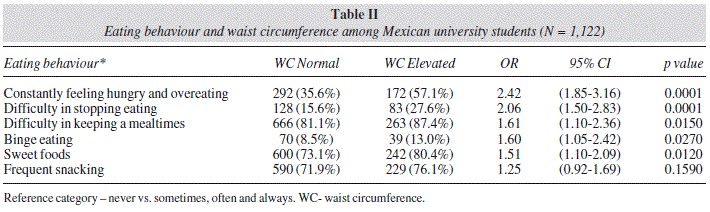
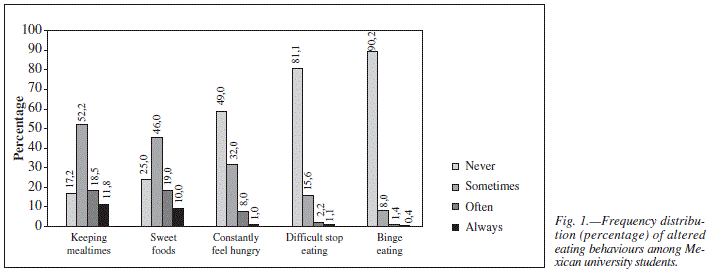
<body><![CDATA[<p><font face="Verdana" size="2">Anxiety symptoms were identified using the General Anxiety Disorder Scale of Carrol and Davidson, based on DSM-IV criteria<sup>34</sup>. This questionnaire contains dichotomous (yes/no) items based on aspects that the subject has felt in the last 6 months (e.g., Most days I feel nervous; I get irritated easily; the majority of the days I am worried about many things, etc.), with a cutoff score of <u>&gt;</u> 10, Cronbach's alpha was satisfactory 0.85 to 0.89.</font></p>     <p><font face="Verdana" size="2"><i>Analyses</i></font></p>     <p><font face="Verdana" size="2">Descriptive statistics were used for questions regarding eating behaviour, impulsiveness, anxiety, and depression scales. WC was dichotomized in two groups: normal WC and elevated WC,<sup>2</sup> this classification was carried out with a cutoff point calculated for the Mexican population. None of the students' anthropometric values were out of three standard deviation using Mahalanobis distance. Shapiro-Wilk W test for normal data was applied for continuous variables. Spearman s rank correlation (p) was used for waist circumference and body mass index.</font></p>     <p><font face="Verdana" size="2">A first multiple logistic regression model was carried out between mental health symptoms (depression, impulsivity, and anxiety), adjusted by sex and age, and WC. The second model was performed with depression, impulsivity and anxiety scores as independent variables and questions regarding eating behaviour as dependent variables. Bivariate analysis was conducted for WC groups and eating behaviour questions using chi-square maximum likelihood. In addition, a third multiple logistic regression model was developed using family history of obesity, eating behaviour patterns, sex, and age as independent variables; while WC was a dependent variable. The level of significance was set at p <u>&lt;</u> 0.05. The goodness of fit for logistic regression models was assessed by the Hosmer and Lemeshow test, (p &gt; 0.05). Stata statistical package was used for data analysis (StataCorp. 2007. Stata Statistical Software: Release 10. College Station, TX).</font></p>     <p>&nbsp;</p>     <p><font face="Verdana" size="2"><b>Results</b></font></p>     <p><font face="Verdana" size="2">A total of 1,122 participants were evaluated, 619 (55.2%) females and 503 (44.8%) males; mean age was 20 (SD = 1.98) years old. In relation to family history of obesity, 166 (14.8%) students indicated that their mother was obese and 182 (16.2%) reported that their father was obese; no differences were detected by sex (p &gt; 0.05).</font></p>     <p><font face="Verdana" size="2">The average of self-reported BMI was 23.3 kg/m<sup>2</sup> (SD = 3.56), 22.7 kg/m<sup>2</sup> (SD = 3.41) in women and 24.1kg/m<sup>2</sup> (SD = 3.59) in men, p &lt; 0.001. In 26.6% of the participants overweight and obesity (BMI <u>&gt;</u> 25 kg/m<sup>2</sup>) were detected, of which 4.4% presented obesity (BMI <u>&gt;</u> 30 kg/m<sup>2</sup>). Regarding waist circumference (WC), about a quarter of the students (26.8%) were above the established limit, 29.9% women and 23.1% men (p &lt; 0.01). A relatively high correlation between BMI and WC was observed (p = 0.70).</font></p>     <p><font face="Verdana" size="2"><a href="#f1">Figure 1</a> shows the distribution of altered eating behaviour among college students: 929 (82.8%) had problem to eat regularly and about three-quarters indicated carbohydrate craving, 842 (75%). Many reported constantly feeling hungry and overeating, 464 (41.4%), and some have difficulty to stop eating, 211(18.8%), or binge eating, 109 (9.7%). More women than men presented altered eating behaviours (p &lt; 0.05).</font></p>     <p>&nbsp;</p>     ]]></body>
<body><![CDATA[<p align="center"><a name="f1"><img src="/img/revistas/nh/v28n6/17originalobesidad05_f1.gif"></a></font></p>     <p>&nbsp;</p>     <p><font face="Verdana" size="2">Depression symptoms were observed in 20.4% of the students (24.2% women and 15.7% men, p &lt; 0.01); mean score was 5.24 (SD = 5.6). Impulsivity symptoms were observed in 15.7% of the participants, without differences by sex (p = 0.19); mean score was 13.82 (SD = 5.87). Anxiety was detected in 2.76% of the sample group (3.4% women and 2% men, p = 0.15); mean score was 2.19 (SD = 2.71), 2.66 (SD = 2.88) in women and 1.74 (SD = 2.49) in men, p &lt; 0.0001.</font></p>     <p><font face="Verdana" size="2">The results of the first multiple logistic regression model indicated correlation of female sex (OR = 1.5; p =.005), age (OR = 1.1; p = 0.005), and depression score (OR = 1.4; p = 0.043) with an elevated WC, that was not observed with impulsiveness and anxiety.</font></p>     <p><font face="Verdana" size="2"><a href="#t1">Table I</a> presents the results of the second multiple logistic regression model: the association between mental health symptoms and eating behaviours, adjusting for age and sex. It can be seen that irregular mealtimes, constantly feeling hungry and overeating, have difficulty to stop eating, binge eating, and carbohydrate craving were associated with impulsivity and depression. No association was detected with anxiety symptoms (data not shown).</font></p>     <p>&nbsp;</p>     <p align="center"><a name="t1"><img src="/img/revistas/nh/v28n6/17originalobesidad05_t1.gif"></a></font></p>     <p>&nbsp;</p>     <p><font face="Verdana" size="2"><a href="#t2">Table II</a> shows the association between eating behaviours and WC. In the bivariate analysis, the highest ORs were detected for the questions: constantly feeling hungry-overeating and difficulty to stop eating.</font></p>     <p>&nbsp;</p>     ]]></body>
<body><![CDATA[<p align="center"><a name="t2"><img src="/img/revistas/nh/v28n6/17originalobesidad05_t2.gif"></a></font></p>     <p>&nbsp;</p>     <p><font face="Verdana" size="2">In addition, in the third multiple logistic regression model it was observed that age, female sex, parents' obesity, and altered eating behaviour (difficulty to stop eating and constantly feeling hungry and overeating) were associated with higher waist circumference (<a href="#t3">Table III</a>).</font></p>     <p>&nbsp;</p>     <p align="center"><a name="t3"><img src="/img/revistas/nh/v28n6/17originalobesidad05_t3.gif"></a></font></p>     <p>&nbsp;</p>     <p><font face="Verdana" size="2"><b>Discussion</b></font></p>     <p><font face="Verdana" size="2"><i>Obesity and eating behaviour</i>: The results of this study indicated that 26.6% of the participants were overweight or obese (BMI <u>&gt;</u> 25 kg/m<sup>2</sup>). About the same number of the students (26.8%) had elevated weight circumference. These findings corroborate high prevalence of overweight and obesity in Mexico that ranks second worldwide after US<sup>1,2</sup>. Our data are slightly lower than those reported in the national survey<sup>2</sup> and similar to the data obtained in U.S. college students.<sup>35</sup> However, the prevalence of overweight and obesity in our study is higher than the prevalence observed in a group of university students in Spain<sup>36</sup>.</font></p>     <p><font face="Verdana" size="2">Regarding eating behaviour, we found that most of the students showed altered eating behaviours, such as difficulty to eat regularly (82.8%) and carbohydrate craving (75%), followed by overeating and difficulty in stopping eating. About 10% of the participant reported binge eating. More women than men were involved in these altered eating behaviours. The results demonstrate that Mexican college students had a high prevalence of unhealthy eating behaviours. Considering this information, it is important that university health programs provide an environment that is conducive to healthy eating and regular physical activity.</font></p>     <p><font face="Verdana" size="2">Most of the eating behaviours evaluated in this study, particularly those related to binge eating, overeating, and carbohydrate craving, could be associated with "food strategies" for emotions or mood regulation and contribute to weight gain<sup>13,17-20</sup>. According to the literature, it is known that these patterns frequently are related to the difficulties of emotional control (problems in identifying and making sense of emotional states, and limited access to appropriate regulation strategies); "emotional eaters" overeat in response to emotional states as has been shown before<sup>17-20</sup>.</font></p>     ]]></body>
<body><![CDATA[<p><font face="Verdana" size="2">Thus, the results of our study suggest that psychological problems and personality characteristics should be considered in prevention of obesity and weight control programs.</font></p>     <p><font face="Verdana" size="2"><i>Mental health, eating behaviour, and waist circumference</i>: The results indicated that elevated WC was associated with depression symptoms, female sex and age. These data are consistent with the study performed by Moral and Meza<sup>37</sup> which demonstrated relationship among affective disorders, age and overeating.</font></p>     <p><font face="Verdana" size="2">Analyzing eating behaviours, it was observed that students with altered patterns presented higher levels of impulsiveness and depression scores, particularly those with difficulty to stop eating, constantly feeling hungry and overeating, as well as participants with binge eating. This data can support the hypothesis that mental health problems are associated with altered eating behaviour that lead to weigh gain. Furthermore, it should be noted that eating behaviour, such as having problems to eat regularly, showed a highest association with depression symptoms. Our results are consistent with previous reports performed in nonclinical populations that have found an association between obesity and mental disorders<sup>8-12</sup>. Several studies have also emphasized that an elevated level of impulsivity was frequently detected among obese people<sup>38-41</sup>. Similar to the results herein, in a clinical study in Spain with obese patients<sup>42</sup>, it was observed a positive histories of family obesity, personal psychiatric disorders, compulsive eating disorders, and consumption of foods high in sugar. In the same study<sup>42</sup>, personality characteristics, such as loss of control (impulsivity), low self-esteem, depression, and anxiety, were detected in about half of the patients.</font></p>     <p><font face="Verdana" size="2">Despite the association detected between mental health problems and eating behaviour, such behaviours do not fulfill the criteria for a specific eating disorder, so they can be often not considered as pathological and can be not taken into account in prevention and treatment of obesity. Therefore, it is important to understand that obesity management requires integral interventions.</font></p>     <p><font face="Verdana" size="2"><i>Eating behaviour and waist circumference</i>: For assessment of overweight and obesity the use of both indicators, WC and BMI, simultaneously improves health risk prediction as compared to BMI only. However, several studies have shown that elevated WC is a better predictor of metabolic and cardiovascular diseases than BMI<sup>27,43</sup>.</font></p>     <p><font face="Verdana" size="2">In our study, students with abdominal obesity (elevated WC) presented more eating behaviour alterations than those with normal WC (e.g. constantly feeling hungry and overeating, have difficulty to stop eating, have problem to eat regularly, as well as binge eating and carbohydrate craving). Higher WC was associated with age, female sex, and parents' obesity. Our findings also reinforce the importance of family history of obesity, which could be related to genetic predisposition or an "obesogenic" family environment<sup>6,7</sup>.</font></p>     <p><font face="Verdana" size="2">Finally, given that mental health problems can be either causes or consequences of overweight and obesity (or both), it is important to emphasize that for this group is crucial to consider an individual preventive/therapeutic plan. The cognitive-behavioural changes (developing assertiveness, problem solving techniques and coping strategies) and developing of eating patterns can help to reduce body weight, prevent relapse and treatment dropout<sup>44-45</sup>.</font></p>     <p><font face="Verdana" size="2"><i>Limitations</i></font></p>     <p><font face="Verdana" size="2">The study was carried out with a specific non-clinical population (first-year university students) with fairly low prevalence of abdominal obesity, so caution should be taken in extrapolating the results and its comparison with other population groups. Another limitation was that BMI data were self-reported (which could be underestimated in self-reported questionnaires); however, a good correlation was observed with WC. More precise techniques for assessment of obesity could be useful for future studies. In addition, the instrument applied to detect eating behaviour problems has not been validated; however, this questionnaire showed a good association with overweight and obesity in the study group and offered a satisfactory reliability score. Finally, self-reported questionnaires related to mental health evaluation (depression, anxiety, and impulsivity) do not diagnose psychiatric disorders, but only identify symptoms related to these conditions. In this study, anxiety scores were not associated with altered eating behaviour, probably because of the low number of students who met the diagnostic criteria of the applied instrument. In addition, physical activity should be considered in studies of obesity and mental health.</font></p>     <p>&nbsp;</p>     ]]></body>
<body><![CDATA[<p><font face="Verdana" size="2"><b>Conclusions</b></font></p>     <p><font face="Verdana" size="2">Due to relation of disturbed eating behaviour with mental health symptoms and its association with being overweight and obese, it is important to emphasize the psychological aspects in prevention and treatment of obesity. As the vision of this component is often limited or excluded, personality assessment is essential for all obese individuals.</font></p>     <p><font face="Verdana" size="2">Regarding university students, preventive programs directed at development of eating habits and physical activity along with strategies for the management of emotions should be a key component. Interventions would benefit from the incorporation of impulsivity-reduction techniques and the promotion of positive mood. The efficiency of institutional services, promotion of sports and cultural extracurricular activities, educational nutrition programs, thematic workshops, as well as individual or group cognitive-behavioural therapy may contribute to the development of healthy eating behaviours.</font></p>     <p>&nbsp;</p>     <p><font face="Verdana" size="2"><b>Acknowledgments</b></font></p>     <p><font face="Verdana" size="2">The authors wish to thank Arturo Rueda and Vicente Ampudia, computing staff of the Metropolitan Autonomous University, and Hector Javier Delgadillo Gutiérrez for his collaboration in the survey. Also the authors thank the support of Dr. Adelita Sánchez Flores&#134;, responsible for the "Healthy University" program.</font></p>     <p>&nbsp;</p>     <p><font face="Verdana" size="2"><b>References</b></font></p>     <!-- ref --><p><font face="Verdana" size="2">1. Flegal KM, Carroll MD, Kit BK, Ogden CL. Prevalence of obesity and trends in the distribution of body mass index among U.S. adults. <i>JAMA</i> 2012; 307 (5): 491-7.    &nbsp;&nbsp;&nbsp;&nbsp;&nbsp;&nbsp;&nbsp;&nbsp;[&#160;<a href="javascript:void(0);" onclick="javascript: window.open('/scielo.php?script=sci_nlinks&ref=3769747&pid=S0212-1611201300060001700001&lng=','','width=640,height=500,resizable=yes,scrollbars=1,menubar=yes,');">Links</a>&#160;]<!-- end-ref --></font></p>    ]]></body>
<body><![CDATA[<!-- ref --><p><font face="Verdana" size="2">2. Gutiérrez JP, Rivera DJ, Shamah LT, Villalpando HS, Franco A, Cuevas NL. Encuesta Nacional de Salud y Nutrición 2012. Datos Nacionales. México: Instituto Nacional de Salud Pública; 2012.    &nbsp;&nbsp;&nbsp;&nbsp;&nbsp;&nbsp;&nbsp;&nbsp;[&#160;<a href="javascript:void(0);" onclick="javascript: window.open('/scielo.php?script=sci_nlinks&ref=3769749&pid=S0212-1611201300060001700002&lng=','','width=640,height=500,resizable=yes,scrollbars=1,menubar=yes,');">Links</a>&#160;]<!-- end-ref --></font></p>    <!-- ref --><p><font face="Verdana" size="2">3. Horwitz M, Tusie M, Calzada R, Vázquez V. La obesidad y el síndrome metabòlico como problema de salud pública. Una reflexión. Primera parte. <i>Salud Ment</i> 2008; 31 (6): 489-96.    &nbsp;&nbsp;&nbsp;&nbsp;&nbsp;&nbsp;&nbsp;&nbsp;[&#160;<a href="javascript:void(0);" onclick="javascript: window.open('/scielo.php?script=sci_nlinks&ref=3769751&pid=S0212-1611201300060001700003&lng=','','width=640,height=500,resizable=yes,scrollbars=1,menubar=yes,');">Links</a>&#160;]<!-- end-ref --></font></p>    <!-- ref --><p><font face="Verdana" size="2">4. Unikel C, Bojórquez I, Villatoro J, Fleiz-Bautista C, Medina-Mora ME. Conductas alimentarias de riesgo en población estudiantil del Distrito Federal. Tendencias 1997-2003. <i>Rev Invest Clin</i> 2006; 8 (1): 15-27.    &nbsp;&nbsp;&nbsp;&nbsp;&nbsp;&nbsp;&nbsp;&nbsp;[&#160;<a href="javascript:void(0);" onclick="javascript: window.open('/scielo.php?script=sci_nlinks&ref=3769753&pid=S0212-1611201300060001700004&lng=','','width=640,height=500,resizable=yes,scrollbars=1,menubar=yes,');">Links</a>&#160;]<!-- end-ref --></font></p>    <!-- ref --><p><font face="Verdana" size="2">5. Lora-Cortez CI, Saucedo-Molina TJ. Conductas alimentarias de riesgo e imagen corporal de acuerdo al índice de masa corporal en una muestra de mujeres adultas de la Ciudad de México. <i>Salud Ment</i> 2006; 29 (3): 60-7.    &nbsp;&nbsp;&nbsp;&nbsp;&nbsp;&nbsp;&nbsp;&nbsp;[&#160;<a href="javascript:void(0);" onclick="javascript: window.open('/scielo.php?script=sci_nlinks&ref=3769755&pid=S0212-1611201300060001700005&lng=','','width=640,height=500,resizable=yes,scrollbars=1,menubar=yes,');">Links</a>&#160;]<!-- end-ref --></font></p>    <!-- ref --><p><font face="Verdana" size="2">6. Willer C, Speliotes E, Loos R, Shengxu L, Lingren C, Heid I. Six new loci associated with body mass index highlight a neuronal influence on body weight regulation. <i>Nat Genet</i>2009; 41 (1): 25-34.    &nbsp;&nbsp;&nbsp;&nbsp;&nbsp;&nbsp;&nbsp;&nbsp;[&#160;<a href="javascript:void(0);" onclick="javascript: window.open('/scielo.php?script=sci_nlinks&ref=3769757&pid=S0212-1611201300060001700006&lng=','','width=640,height=500,resizable=yes,scrollbars=1,menubar=yes,');">Links</a>&#160;]<!-- end-ref --></font></p>    ]]></body>
<body><![CDATA[<!-- ref --><p><font face="Verdana" size="2">7. Papas M, Alberg A, Ewing R, Helzlsouer K, Gary T, Klassen A. The built environment and obesity. <i>Epidemiol Rev</i> 2007; 29 (1): 129-43.    &nbsp;&nbsp;&nbsp;&nbsp;&nbsp;&nbsp;&nbsp;&nbsp;[&#160;<a href="javascript:void(0);" onclick="javascript: window.open('/scielo.php?script=sci_nlinks&ref=3769759&pid=S0212-1611201300060001700007&lng=','','width=640,height=500,resizable=yes,scrollbars=1,menubar=yes,');">Links</a>&#160;]<!-- end-ref --></font></p>    <!-- ref --><p><font face="Verdana" size="2">8. Gariepy G, Nitka D, Schmitz N. The association between obesity and anxiety disorders in the population: a systematic review and meta-analysis. <i>Int J Obes</i> 2010; 34 (3): 407-19.    &nbsp;&nbsp;&nbsp;&nbsp;&nbsp;&nbsp;&nbsp;&nbsp;[&#160;<a href="javascript:void(0);" onclick="javascript: window.open('/scielo.php?script=sci_nlinks&ref=3769761&pid=S0212-1611201300060001700008&lng=','','width=640,height=500,resizable=yes,scrollbars=1,menubar=yes,');">Links</a>&#160;]<!-- end-ref --></font></p>    <!-- ref --><p><font face="Verdana" size="2">9. Pompa Guajardo E, Montoya Flores BI. Evaluación de la manifestación de ansiedad y depresión en niños con sobrepeso y obesidad en un campo de verano. <i>Psicología y salud</i> 2011; 21 (1): 119-24.    &nbsp;&nbsp;&nbsp;&nbsp;&nbsp;&nbsp;&nbsp;&nbsp;[&#160;<a href="javascript:void(0);" onclick="javascript: window.open('/scielo.php?script=sci_nlinks&ref=3769763&pid=S0212-1611201300060001700009&lng=','','width=640,height=500,resizable=yes,scrollbars=1,menubar=yes,');">Links</a>&#160;]<!-- end-ref --></font></p>    <!-- ref --><p><font face="Verdana" size="2">10. Scott KL, Bruffaerts R, Simon GE, Alonso J, Angermeyer M, De Girolamo G. Obesity and mental disorders in the general population: results from the world mental health surveys. <i>Int J Obes</i> 2008; 32 (1): 192-200.    &nbsp;&nbsp;&nbsp;&nbsp;&nbsp;&nbsp;&nbsp;&nbsp;[&#160;<a href="javascript:void(0);" onclick="javascript: window.open('/scielo.php?script=sci_nlinks&ref=3769765&pid=S0212-1611201300060001700010&lng=','','width=640,height=500,resizable=yes,scrollbars=1,menubar=yes,');">Links</a>&#160;]<!-- end-ref --></font></p>    <!-- ref --><p><font face="Verdana" size="2">11. Simon G, Von Korff M, Saunders K, Miglioretti D, Crane P, Van Belle G, Kessler R. Association between obesity and psychiatric disorders in the US adult population. <i>Arch Gen Psychiatry</i> 2006; 63 (7): 824-30.    &nbsp;&nbsp;&nbsp;&nbsp;&nbsp;&nbsp;&nbsp;&nbsp;[&#160;<a href="javascript:void(0);" onclick="javascript: window.open('/scielo.php?script=sci_nlinks&ref=3769767&pid=S0212-1611201300060001700011&lng=','','width=640,height=500,resizable=yes,scrollbars=1,menubar=yes,');">Links</a>&#160;]<!-- end-ref --></font></p>    ]]></body>
<body><![CDATA[<!-- ref --><p><font face="Verdana" size="2">12. Strine T, Mokdad A, Dube S, Balluz L, González O, Berry J. The association of depression and anxiety with unhealthy behaviours among community-dwelling US adults. <i>Gen Hosp Psychiatry</i> 2008; 30 (2): 127-37.    &nbsp;&nbsp;&nbsp;&nbsp;&nbsp;&nbsp;&nbsp;&nbsp;[&#160;<a href="javascript:void(0);" onclick="javascript: window.open('/scielo.php?script=sci_nlinks&ref=3769769&pid=S0212-1611201300060001700012&lng=','','width=640,height=500,resizable=yes,scrollbars=1,menubar=yes,');">Links</a>&#160;]<!-- end-ref --></font></p>    <!-- ref --><p><font face="Verdana" size="2">13. Zysberg L, Rubanov A. Emotional intelligence and emotional eating patterns: a new insight into the antecedents of eating disorders? <i>J Nutr Educ Behav</i> 2010; 42 (5): 345-8.    &nbsp;&nbsp;&nbsp;&nbsp;&nbsp;&nbsp;&nbsp;&nbsp;[&#160;<a href="javascript:void(0);" onclick="javascript: window.open('/scielo.php?script=sci_nlinks&ref=3769771&pid=S0212-1611201300060001700013&lng=','','width=640,height=500,resizable=yes,scrollbars=1,menubar=yes,');">Links</a>&#160;]<!-- end-ref --></font></p>    <!-- ref --><p><font face="Verdana" size="2">14. Anderson SE, Cohen P, Naumava EN. Association of depression and anxiety disorders with weight change in a prospective community-based study of children followed up into adulthood. <i>Arch Pediatr Adolesc</i> Med 2006; 160 (3): 285-91.    &nbsp;&nbsp;&nbsp;&nbsp;&nbsp;&nbsp;&nbsp;&nbsp;[&#160;<a href="javascript:void(0);" onclick="javascript: window.open('/scielo.php?script=sci_nlinks&ref=3769773&pid=S0212-1611201300060001700014&lng=','','width=640,height=500,resizable=yes,scrollbars=1,menubar=yes,');">Links</a>&#160;]<!-- end-ref --></font></p>    <!-- ref --><p><font face="Verdana" size="2">15. Zipper E, Vila G, Dabbas M. Obesity in children and adolescents, mental disorders and familial psychopathology. <i>Press Med</i> 2001; 30 (3): 1489-95.    &nbsp;&nbsp;&nbsp;&nbsp;&nbsp;&nbsp;&nbsp;&nbsp;[&#160;<a href="javascript:void(0);" onclick="javascript: window.open('/scielo.php?script=sci_nlinks&ref=3769775&pid=S0212-1611201300060001700015&lng=','','width=640,height=500,resizable=yes,scrollbars=1,menubar=yes,');">Links</a>&#160;]<!-- end-ref --></font></p>    <!-- ref --><p><font face="Verdana" size="2">16. American Psychiatric Association. Diagnostic and Statistical Manual of Mental Disorders. 4<sup>th</sup> ed. Text Revision. Washington: American Psychiatric Press; 2000.    &nbsp;&nbsp;&nbsp;&nbsp;&nbsp;&nbsp;&nbsp;&nbsp;[&#160;<a href="javascript:void(0);" onclick="javascript: window.open('/scielo.php?script=sci_nlinks&ref=3769777&pid=S0212-1611201300060001700016&lng=','','width=640,height=500,resizable=yes,scrollbars=1,menubar=yes,');">Links</a>&#160;]<!-- end-ref --></font></p>    ]]></body>
<body><![CDATA[<!-- ref --><p><font face="Verdana" size="2">17. Colantioni C, Rada P, McCarthy J, Patten C, Avena N, Chadeayne A y Hoebel B. Evidence that intermittent excessive sugar intake causes endogenous opioid dependence. <i>Obes Research</i> 2002; 10 (6): 478-88.    &nbsp;&nbsp;&nbsp;&nbsp;&nbsp;&nbsp;&nbsp;&nbsp;[&#160;<a href="javascript:void(0);" onclick="javascript: window.open('/scielo.php?script=sci_nlinks&ref=3769779&pid=S0212-1611201300060001700017&lng=','','width=640,height=500,resizable=yes,scrollbars=1,menubar=yes,');">Links</a>&#160;]<!-- end-ref --></font></p>    <!-- ref --><p><font face="Verdana" size="2">18. Spoor S, Bekker M, van Strien T, van Heck G. Relation between negative effect, coping, and emotional eating. <i>Appetite</i> 2007; 48 (3): 368-76.    &nbsp;&nbsp;&nbsp;&nbsp;&nbsp;&nbsp;&nbsp;&nbsp;[&#160;<a href="javascript:void(0);" onclick="javascript: window.open('/scielo.php?script=sci_nlinks&ref=3769781&pid=S0212-1611201300060001700018&lng=','','width=640,height=500,resizable=yes,scrollbars=1,menubar=yes,');">Links</a>&#160;]<!-- end-ref --></font></p>    <!-- ref --><p><font face="Verdana" size="2">19. Van Strien T, Herman CP, Verheijden MW. Eating style, overeating, and overweight in a representative Dutch sample. Does external eating play a role? <i>Appetite</i> 2009; 52 (2): 380-7.    &nbsp;&nbsp;&nbsp;&nbsp;&nbsp;&nbsp;&nbsp;&nbsp;[&#160;<a href="javascript:void(0);" onclick="javascript: window.open('/scielo.php?script=sci_nlinks&ref=3769783&pid=S0212-1611201300060001700019&lng=','','width=640,height=500,resizable=yes,scrollbars=1,menubar=yes,');">Links</a>&#160;]<!-- end-ref --></font></p>    <!-- ref --><p><font face="Verdana" size="2">20. Whiteside U, Chen E, Neighborn C, Hunter D, Lo T, Larimer M. Difficulties regulation emotions. Do binge eaters have fewer strategies to modulate and tolerate negative affect? <i>Eat Behav</i> 2007; 8 (2): 162-9.    &nbsp;&nbsp;&nbsp;&nbsp;&nbsp;&nbsp;&nbsp;&nbsp;[&#160;<a href="javascript:void(0);" onclick="javascript: window.open('/scielo.php?script=sci_nlinks&ref=3769785&pid=S0212-1611201300060001700020&lng=','','width=640,height=500,resizable=yes,scrollbars=1,menubar=yes,');">Links</a>&#160;]<!-- end-ref --></font></p>    <!-- ref --><p><font face="Verdana" size="2">21. Dooris M, Doherty S. Healthy Universities: current activity and future directions-findings and reflections from a national-level qualitative research study. <i>Glob Health Promot</i> 2010; 17 (3): 6-16.    &nbsp;&nbsp;&nbsp;&nbsp;&nbsp;&nbsp;&nbsp;&nbsp;[&#160;<a href="javascript:void(0);" onclick="javascript: window.open('/scielo.php?script=sci_nlinks&ref=3769787&pid=S0212-1611201300060001700021&lng=','','width=640,height=500,resizable=yes,scrollbars=1,menubar=yes,');">Links</a>&#160;]<!-- end-ref --></font></p>    ]]></body>
<body><![CDATA[<!-- ref --><p><font face="Verdana" size="2">22. Jomaa LH, McDonnelL E, Weirich E, Hartman T, Jensen L, Probart C. Student involvement in wellness policies: a study of Pennsylvania local education agencies. <i>J Nutr Educ Behav</i> 2010; 42 (6): 372-9.    &nbsp;&nbsp;&nbsp;&nbsp;&nbsp;&nbsp;&nbsp;&nbsp;[&#160;<a href="javascript:void(0);" onclick="javascript: window.open('/scielo.php?script=sci_nlinks&ref=3769789&pid=S0212-1611201300060001700022&lng=','','width=640,height=500,resizable=yes,scrollbars=1,menubar=yes,');">Links</a>&#160;]<!-- end-ref --></font></p>    <!-- ref --><p><font face="Verdana" size="2">23. Loria Kohen V, Gómez Candela C, Lourenco Noguera N, Pérez Torres A, Castillo Rabaneda R, Villarino Marin M. Evaluación de la utilidad de un programa de educación nutricional en trastornos de la conducta alimentaria. <i>Nutr Hosp</i> 2009; 24 (5): 558-67.    &nbsp;&nbsp;&nbsp;&nbsp;&nbsp;&nbsp;&nbsp;&nbsp;[&#160;<a href="javascript:void(0);" onclick="javascript: window.open('/scielo.php?script=sci_nlinks&ref=3769791&pid=S0212-1611201300060001700023&lng=','','width=640,height=500,resizable=yes,scrollbars=1,menubar=yes,');">Links</a>&#160;]<!-- end-ref --></font></p>    <!-- ref --><p><font face="Verdana" size="2">24. Agudelo DM, Casadiegos CP, Sánchez DL. Características de ansiedad y depresión en estudiantes universitarios. <i>International Journal of Psychological Research</i> 2008; 1 (1): 34-9.    &nbsp;&nbsp;&nbsp;&nbsp;&nbsp;&nbsp;&nbsp;&nbsp;[&#160;<a href="javascript:void(0);" onclick="javascript: window.open('/scielo.php?script=sci_nlinks&ref=3769793&pid=S0212-1611201300060001700024&lng=','','width=640,height=500,resizable=yes,scrollbars=1,menubar=yes,');">Links</a>&#160;]<!-- end-ref --></font></p>    <!-- ref --><p><font face="Verdana" size="2">25. Kristjánsson AL, Sigfúsdóttir ID, Allegrante JP. Health behaviour and academic achievement among adolescents: the relative contribution of dietary habits, physical activity, body mass index, and self-esteem. <i>Health Educ Behav</i> 2010; 37 (1): 51-64.    &nbsp;&nbsp;&nbsp;&nbsp;&nbsp;&nbsp;&nbsp;&nbsp;[&#160;<a href="javascript:void(0);" onclick="javascript: window.open('/scielo.php?script=sci_nlinks&ref=3769795&pid=S0212-1611201300060001700025&lng=','','width=640,height=500,resizable=yes,scrollbars=1,menubar=yes,');">Links</a>&#160;]<!-- end-ref --></font></p>    <!-- ref --><p><font face="Verdana" size="2">26. Demidenko E. Sample size determination for logistic regression revisited. <i>Stat Med</i> 2007; 26 (18): 3385-97.    &nbsp;&nbsp;&nbsp;&nbsp;&nbsp;&nbsp;&nbsp;&nbsp;[&#160;<a href="javascript:void(0);" onclick="javascript: window.open('/scielo.php?script=sci_nlinks&ref=3769797&pid=S0212-1611201300060001700026&lng=','','width=640,height=500,resizable=yes,scrollbars=1,menubar=yes,');">Links</a>&#160;]<!-- end-ref --></font></p>    ]]></body>
<body><![CDATA[<!-- ref --><p><font face="Verdana" size="2">27. González A, Amancio O, Islas S, Revilla C, Hernández M, Lara A. Factores de riesgo cardiovasculares asociados a obesidad abdominal en adultos aparentemente sanos. <i>Rev Med Inst Mex Seguro Soc</i> 2008; 46 (3): 273-9.    &nbsp;&nbsp;&nbsp;&nbsp;&nbsp;&nbsp;&nbsp;&nbsp;[&#160;<a href="javascript:void(0);" onclick="javascript: window.open('/scielo.php?script=sci_nlinks&ref=3769799&pid=S0212-1611201300060001700027&lng=','','width=640,height=500,resizable=yes,scrollbars=1,menubar=yes,');">Links</a>&#160;]<!-- end-ref --></font></p>    <!-- ref --><p><font face="Verdana" size="2">28. World Health Organization.    &nbsp;&nbsp;&nbsp;&nbsp;&nbsp;&nbsp;&nbsp;&nbsp;[&#160;<a href="javascript:void(0);" onclick="javascript: window.open('/scielo.php?script=sci_nlinks&ref=3769801&pid=S0212-1611201300060001700028&lng=','','width=640,height=500,resizable=yes,scrollbars=1,menubar=yes,');">Links</a>&#160;]<!-- end-ref --></font></p>    <!-- ref --><p><font face="Verdana" size="2">29. Sánchez-Carracedo D, Raich RM, Figueras M, Torras J, Mora M. Adaptación preliminar del cuestionario de alimentación de Stuncard y Messic (Three factor eating questionnaire, TFEQ) con una muestra española universitaria. <i>Psicol Conductual</i> 1999; 7 (3): 393-416.    &nbsp;&nbsp;&nbsp;&nbsp;&nbsp;&nbsp;&nbsp;&nbsp;[&#160;<a href="javascript:void(0);" onclick="javascript: window.open('/scielo.php?script=sci_nlinks&ref=3769803&pid=S0212-1611201300060001700029&lng=','','width=640,height=500,resizable=yes,scrollbars=1,menubar=yes,');">Links</a>&#160;]<!-- end-ref --></font></p>    <!-- ref --><p><font face="Verdana" size="2">30. Torrent C, Vieta E, García García M. Validation of the Barcelona Bipolar Eating Disorder Scale for Bipolar Patients with Eating Disturbances. <i>Psychopathology</i> 2008; 41 (6): 379-87.    &nbsp;&nbsp;&nbsp;&nbsp;&nbsp;&nbsp;&nbsp;&nbsp;[&#160;<a href="javascript:void(0);" onclick="javascript: window.open('/scielo.php?script=sci_nlinks&ref=3769805&pid=S0212-1611201300060001700030&lng=','','width=640,height=500,resizable=yes,scrollbars=1,menubar=yes,');">Links</a>&#160;]<!-- end-ref --></font></p>    <!-- ref --><p><font face="Verdana" size="2">31. Abramson JH, Abramson ZH. Survey methods in community medicine. 5<sup>th</sup> ed. Edinburgh: Churchill Livingstone; 1999.    &nbsp;&nbsp;&nbsp;&nbsp;&nbsp;&nbsp;&nbsp;&nbsp;[&#160;<a href="javascript:void(0);" onclick="javascript: window.open('/scielo.php?script=sci_nlinks&ref=3769807&pid=S0212-1611201300060001700031&lng=','','width=640,height=500,resizable=yes,scrollbars=1,menubar=yes,');">Links</a>&#160;]<!-- end-ref --></font></p>    ]]></body>
<body><![CDATA[<!-- ref --><p><font face="Verdana" size="2">32. Jurado S, Villegas M, Méndez L, Rodríguez F, Loperena V, Varela R. La estandarización del Inventario de Depresión de Beck para los residentes de la Ciudad de México. <i>Salud Ment</i> 1998; 21 (3): 26-31.    &nbsp;&nbsp;&nbsp;&nbsp;&nbsp;&nbsp;&nbsp;&nbsp;[&#160;<a href="javascript:void(0);" onclick="javascript: window.open('/scielo.php?script=sci_nlinks&ref=3769809&pid=S0212-1611201300060001700032&lng=','','width=640,height=500,resizable=yes,scrollbars=1,menubar=yes,');">Links</a>&#160;]<!-- end-ref --></font></p>    <!-- ref --><p><font face="Verdana" size="2">33. Páez F, Jimenez, A, Lopez A, Raull JP, Ortega H, Nicolini H. Estudio de validez de la traducción al castellano de la Escala de Impulsividad de Plutchik. <i>Salud Ment</i> 1996; 19 (Supl. 1): 10-2.    &nbsp;&nbsp;&nbsp;&nbsp;&nbsp;&nbsp;&nbsp;&nbsp;[&#160;<a href="javascript:void(0);" onclick="javascript: window.open('/scielo.php?script=sci_nlinks&ref=3769811&pid=S0212-1611201300060001700033&lng=','','width=640,height=500,resizable=yes,scrollbars=1,menubar=yes,');">Links</a>&#160;]<!-- end-ref --></font></p>    <!-- ref --><p><font face="Verdana" size="2">34. Bobes J, García-Calvo C, Prieto R, García-García M, Rico-Villademoros F. Propiedades psicométricas de la versión española de la Escala de Detección del Trastorno de Ansiedad Generalizada según DSM-IV de Carroll y Davidson. <i>Actas Esp Psiquiatr</i> 2006; 34 (2): 83-93.    &nbsp;&nbsp;&nbsp;&nbsp;&nbsp;&nbsp;&nbsp;&nbsp;[&#160;<a href="javascript:void(0);" onclick="javascript: window.open('/scielo.php?script=sci_nlinks&ref=3769813&pid=S0212-1611201300060001700034&lng=','','width=640,height=500,resizable=yes,scrollbars=1,menubar=yes,');">Links</a>&#160;]<!-- end-ref --></font></p>    <!-- ref --><p><font face="Verdana" size="2">35. Huang TT, Harris KJ, Lee RE, Nazir N, Rorn W, Kaur H. Assessing overweight, obesity, diet, and physical activity in college students. <i>J Am Coll Health</i> 2003; 52 (2): 83-6.    &nbsp;&nbsp;&nbsp;&nbsp;&nbsp;&nbsp;&nbsp;&nbsp;[&#160;<a href="javascript:void(0);" onclick="javascript: window.open('/scielo.php?script=sci_nlinks&ref=3769815&pid=S0212-1611201300060001700035&lng=','','width=640,height=500,resizable=yes,scrollbars=1,menubar=yes,');">Links</a>&#160;]<!-- end-ref --></font></p>    <!-- ref --><p><font face="Verdana" size="2">36. Arrolo Izaga M, Rocandio Pablo AM, Ansotegui Alday L, Pascual Apalauza E, Salces Beti I, Rebato Ochoa E. Calidad de la dieta, sobrepeso y obesidad en estudiantes universitarios. <i>Nutr Hosp</i> 2006; 21 (6): 673-9.    &nbsp;&nbsp;&nbsp;&nbsp;&nbsp;&nbsp;&nbsp;&nbsp;[&#160;<a href="javascript:void(0);" onclick="javascript: window.open('/scielo.php?script=sci_nlinks&ref=3769817&pid=S0212-1611201300060001700036&lng=','','width=640,height=500,resizable=yes,scrollbars=1,menubar=yes,');">Links</a>&#160;]<!-- end-ref --></font></p>    ]]></body>
<body><![CDATA[<!-- ref --><p><font face="Verdana" size="2">37. Moral de la Rubia J, Meza Peña C. Predicción de alteraciones de conducta alimentaria en mujeres mexicanas. <i>Salud Ment</i> 2012; 35 (6): 491-7.    &nbsp;&nbsp;&nbsp;&nbsp;&nbsp;&nbsp;&nbsp;&nbsp;[&#160;<a href="javascript:void(0);" onclick="javascript: window.open('/scielo.php?script=sci_nlinks&ref=3769819&pid=S0212-1611201300060001700037&lng=','','width=640,height=500,resizable=yes,scrollbars=1,menubar=yes,');">Links</a>&#160;]<!-- end-ref --></font></p>    <!-- ref --><p><font face="Verdana" size="2">38. Guerrieri R, Nederkoom C, Jansen A. The interaction between impulsivity and a varied food environment: its influence on food intake and overweight. <i>Int J Obesity</i> 2008; 32(4):708-14.    &nbsp;&nbsp;&nbsp;&nbsp;&nbsp;&nbsp;&nbsp;&nbsp;[&#160;<a href="javascript:void(0);" onclick="javascript: window.open('/scielo.php?script=sci_nlinks&ref=3769821&pid=S0212-1611201300060001700038&lng=','','width=640,height=500,resizable=yes,scrollbars=1,menubar=yes,');">Links</a>&#160;]<!-- end-ref --></font></p>    <!-- ref --><p><font face="Verdana" size="2">39. The interactive effect of hunger and impulsivity on food intake and purchase in a virtual supermarket. 2009; 33 (8): 905-12.    &nbsp;&nbsp;&nbsp;&nbsp;&nbsp;&nbsp;&nbsp;&nbsp;[&#160;<a href="javascript:void(0);" onclick="javascript: window.open('/scielo.php?script=sci_nlinks&ref=3769823&pid=S0212-1611201300060001700039&lng=','','width=640,height=500,resizable=yes,scrollbars=1,menubar=yes,');">Links</a>&#160;]<!-- end-ref --></font></p>    <!-- ref --><p><font face="Verdana" size="2">40. Davis C. Psychobiological traits in the risk profile for overeating and weight gain. <i>Int J Obes</i> 2009; 33 (Suppl. 2): S49-53.    &nbsp;&nbsp;&nbsp;&nbsp;&nbsp;&nbsp;&nbsp;&nbsp;[&#160;<a href="javascript:void(0);" onclick="javascript: window.open('/scielo.php?script=sci_nlinks&ref=3769825&pid=S0212-1611201300060001700040&lng=','','width=640,height=500,resizable=yes,scrollbars=1,menubar=yes,');">Links</a>&#160;]<!-- end-ref --></font></p>    <!-- ref --><p><font face="Verdana" size="2">41. Guerrieri R, Nederkoorn C, Schrooten M, Martijn C, Jansen A. Inducing impulsivity leads high and low restrained eaters into overeating, whereas current dieters stick to their diet. 2009; 53 (1): 93-100.    &nbsp;&nbsp;&nbsp;&nbsp;&nbsp;&nbsp;&nbsp;&nbsp;[&#160;<a href="javascript:void(0);" onclick="javascript: window.open('/scielo.php?script=sci_nlinks&ref=3769827&pid=S0212-1611201300060001700041&lng=','','width=640,height=500,resizable=yes,scrollbars=1,menubar=yes,');">Links</a>&#160;]<!-- end-ref --></font></p>    ]]></body>
<body><![CDATA[<!-- ref --><p><font face="Verdana" size="2">42. Delgado-Calvette C, Morales-Gorria M, Chimeno-Maruri I. Alimentary conducts, body attitudes and psychopathology in morbid obesity. <i>Actas Esp Psiquiatr</i> 2002; 30 (6): 376-81.    &nbsp;&nbsp;&nbsp;&nbsp;&nbsp;&nbsp;&nbsp;&nbsp;[&#160;<a href="javascript:void(0);" onclick="javascript: window.open('/scielo.php?script=sci_nlinks&ref=3769829&pid=S0212-1611201300060001700042&lng=','','width=640,height=500,resizable=yes,scrollbars=1,menubar=yes,');">Links</a>&#160;]<!-- end-ref --></font></p>    <!-- ref --><p><font face="Verdana" size="2">43. Janssen I, Katzmarzyk PT, Ross R. Waist circumference and not body mass index explains obesity-related health risk. <i>Am J Clin Nutr</i> 2004; 79 (3): 379-84.    &nbsp;&nbsp;&nbsp;&nbsp;&nbsp;&nbsp;&nbsp;&nbsp;[&#160;<a href="javascript:void(0);" onclick="javascript: window.open('/scielo.php?script=sci_nlinks&ref=3769831&pid=S0212-1611201300060001700043&lng=','','width=640,height=500,resizable=yes,scrollbars=1,menubar=yes,');">Links</a>&#160;]<!-- end-ref --></font></p>    <!-- ref --><p><font face="Verdana" size="2">44. Annesi JJ, Whitaker AC. Psychological factors associated with weight loss in obese and severely obese women in a behavioral physical activity intervention. <i>Health Educ Behav</i> 2010; 37 (4): 593-606.    &nbsp;&nbsp;&nbsp;&nbsp;&nbsp;&nbsp;&nbsp;&nbsp;[&#160;<a href="javascript:void(0);" onclick="javascript: window.open('/scielo.php?script=sci_nlinks&ref=3769833&pid=S0212-1611201300060001700044&lng=','','width=640,height=500,resizable=yes,scrollbars=1,menubar=yes,');">Links</a>&#160;]<!-- end-ref --></font></p>    <!-- ref --><p><font face="Verdana" size="2">45. Vilariño Besteiro MP, Pérez Franco C, Gallego Morales L, Calvo Sagardoy R, García de Lorenzo y Mateos A. La razón y la emoción: integración de las intervenciones cognitivo-conductuales y experiencia en el tratamiento de los trastornos de alimentación de larga evolución. <i>Nutr Hosp</i> 2009; 24 (5): 614-17.    &nbsp;&nbsp;&nbsp;&nbsp;&nbsp;&nbsp;&nbsp;&nbsp;[&#160;<a href="javascript:void(0);" onclick="javascript: window.open('/scielo.php?script=sci_nlinks&ref=3769835&pid=S0212-1611201300060001700045&lng=','','width=640,height=500,resizable=yes,scrollbars=1,menubar=yes,');">Links</a>&#160;]<!-- end-ref --></font></p>     <p>&nbsp;</p>     <p>&nbsp;</p>     ]]></body>
<body><![CDATA[<p><font face="Verdana" size="2"><a href="#top"><img border="0" src="/img/revistas/nh/v28n6/seta.gif" width="15" height="17"></a><a name="bajo"></a><b>Correspondence:</b>    <br>María Esther Irigoyen-Camacho.    <br>E-mail: <a href="mailto:meirigo@correo.xoc.uam.mx">meirigo@correo.xoc.uam.mx</a></font></p>     <p><font face="Verdana" size="2">Recibido: 5-VI-2013.    <br>1.<sup>a</sup> Revisión: 14-IX-2013.    <br>Aceptado: 18-IX-2013.</font></p>      ]]></body><back>
<ref-list>
<ref id="B1">
<label>1</label><nlm-citation citation-type="journal">
<person-group person-group-type="author">
<name>
<surname><![CDATA[Flegal]]></surname>
<given-names><![CDATA[KM]]></given-names>
</name>
<name>
<surname><![CDATA[Carroll]]></surname>
<given-names><![CDATA[MD]]></given-names>
</name>
<name>
<surname><![CDATA[Kit]]></surname>
<given-names><![CDATA[BK]]></given-names>
</name>
<name>
<surname><![CDATA[Ogden]]></surname>
<given-names><![CDATA[CL]]></given-names>
</name>
</person-group>
<article-title xml:lang="en"><![CDATA[Prevalence of obesity and trends in the distribution of body mass index among U.S. adults]]></article-title>
<source><![CDATA[JAMA]]></source>
<year>2012</year>
<volume>307</volume>
<numero>5</numero>
<issue>5</issue>
<page-range>491-7</page-range></nlm-citation>
</ref>
<ref id="B2">
<label>2</label><nlm-citation citation-type="book">
<person-group person-group-type="author">
<name>
<surname><![CDATA[Gutiérrez]]></surname>
<given-names><![CDATA[JP]]></given-names>
</name>
<name>
<surname><![CDATA[Rivera]]></surname>
<given-names><![CDATA[DJ]]></given-names>
</name>
<name>
<surname><![CDATA[Shamah]]></surname>
<given-names><![CDATA[LT]]></given-names>
</name>
<name>
<surname><![CDATA[Villalpando]]></surname>
<given-names><![CDATA[HS]]></given-names>
</name>
<name>
<surname><![CDATA[Franco]]></surname>
<given-names><![CDATA[A]]></given-names>
</name>
<name>
<surname><![CDATA[Cuevas]]></surname>
<given-names><![CDATA[NL]]></given-names>
</name>
</person-group>
<source><![CDATA[Encuesta Nacional de Salud y Nutrición 2012: Datos Nacionales]]></source>
<year>2012</year>
<publisher-loc><![CDATA[México ]]></publisher-loc>
<publisher-name><![CDATA[Instituto Nacional de Salud Pública]]></publisher-name>
</nlm-citation>
</ref>
<ref id="B3">
<label>3</label><nlm-citation citation-type="journal">
<person-group person-group-type="author">
<name>
<surname><![CDATA[Horwitz]]></surname>
<given-names><![CDATA[M]]></given-names>
</name>
<name>
<surname><![CDATA[Tusie]]></surname>
<given-names><![CDATA[M]]></given-names>
</name>
<name>
<surname><![CDATA[Calzada]]></surname>
<given-names><![CDATA[R]]></given-names>
</name>
<name>
<surname><![CDATA[Vázquez]]></surname>
<given-names><![CDATA[V]]></given-names>
</name>
</person-group>
<article-title xml:lang="es"><![CDATA[La obesidad y el síndrome metabòlico como problema de salud pública: Una reflexión. Primera parte]]></article-title>
<source><![CDATA[Salud Ment]]></source>
<year>2008</year>
<volume>31</volume>
<numero>6</numero>
<issue>6</issue>
<page-range>489-96</page-range></nlm-citation>
</ref>
<ref id="B4">
<label>4</label><nlm-citation citation-type="journal">
<person-group person-group-type="author">
<name>
<surname><![CDATA[Unikel]]></surname>
<given-names><![CDATA[C]]></given-names>
</name>
<name>
<surname><![CDATA[Bojórquez]]></surname>
<given-names><![CDATA[I]]></given-names>
</name>
<name>
<surname><![CDATA[Villatoro]]></surname>
<given-names><![CDATA[J]]></given-names>
</name>
<name>
<surname><![CDATA[Fleiz-Bautista]]></surname>
<given-names><![CDATA[C]]></given-names>
</name>
<name>
<surname><![CDATA[Medina-Mora]]></surname>
<given-names><![CDATA[ME]]></given-names>
</name>
</person-group>
<article-title xml:lang="es"><![CDATA[Conductas alimentarias de riesgo en población estudiantil del Distrito Federal: Tendencias 1997-2003]]></article-title>
<source><![CDATA[Rev Invest Clin]]></source>
<year>2006</year>
<volume>8</volume>
<numero>1</numero>
<issue>1</issue>
<page-range>15-27</page-range></nlm-citation>
</ref>
<ref id="B5">
<label>5</label><nlm-citation citation-type="journal">
<person-group person-group-type="author">
<name>
<surname><![CDATA[Lora-Cortez]]></surname>
<given-names><![CDATA[CI]]></given-names>
</name>
<name>
<surname><![CDATA[Saucedo-Molina]]></surname>
<given-names><![CDATA[TJ]]></given-names>
</name>
</person-group>
<article-title xml:lang="es"><![CDATA[Conductas alimentarias de riesgo e imagen corporal de acuerdo al índice de masa corporal en una muestra de mujeres adultas de la Ciudad de México]]></article-title>
<source><![CDATA[Salud Ment]]></source>
<year>2006</year>
<volume>29</volume>
<numero>3</numero>
<issue>3</issue>
<page-range>60-7</page-range></nlm-citation>
</ref>
<ref id="B6">
<label>6</label><nlm-citation citation-type="journal">
<person-group person-group-type="author">
<name>
<surname><![CDATA[Willer]]></surname>
<given-names><![CDATA[C]]></given-names>
</name>
<name>
<surname><![CDATA[Speliotes]]></surname>
<given-names><![CDATA[E]]></given-names>
</name>
<name>
<surname><![CDATA[Loos]]></surname>
<given-names><![CDATA[R]]></given-names>
</name>
<name>
<surname><![CDATA[Shengxu]]></surname>
<given-names><![CDATA[L]]></given-names>
</name>
<name>
<surname><![CDATA[Lingren]]></surname>
<given-names><![CDATA[C]]></given-names>
</name>
<name>
<surname><![CDATA[Heid]]></surname>
<given-names><![CDATA[I]]></given-names>
</name>
</person-group>
<article-title xml:lang="en"><![CDATA[Six new loci associated with body mass index highlight a neuronal influence on body weight regulation]]></article-title>
<source><![CDATA[Nat Genet]]></source>
<year>2009</year>
<volume>41</volume>
<numero>1</numero>
<issue>1</issue>
<page-range>25-34</page-range></nlm-citation>
</ref>
<ref id="B7">
<label>7</label><nlm-citation citation-type="journal">
<person-group person-group-type="author">
<name>
<surname><![CDATA[Papas]]></surname>
<given-names><![CDATA[M]]></given-names>
</name>
<name>
<surname><![CDATA[Alberg]]></surname>
<given-names><![CDATA[A]]></given-names>
</name>
<name>
<surname><![CDATA[Ewing]]></surname>
<given-names><![CDATA[R]]></given-names>
</name>
<name>
<surname><![CDATA[Helzlsouer]]></surname>
<given-names><![CDATA[K]]></given-names>
</name>
<name>
<surname><![CDATA[Gary]]></surname>
<given-names><![CDATA[T]]></given-names>
</name>
<name>
<surname><![CDATA[Klassen]]></surname>
<given-names><![CDATA[A]]></given-names>
</name>
</person-group>
<article-title xml:lang="en"><![CDATA[The built environment and obesity]]></article-title>
<source><![CDATA[Epidemiol Rev]]></source>
<year>2007</year>
<volume>29</volume>
<numero>1</numero>
<issue>1</issue>
<page-range>129-43</page-range></nlm-citation>
</ref>
<ref id="B8">
<label>8</label><nlm-citation citation-type="journal">
<person-group person-group-type="author">
<name>
<surname><![CDATA[Gariepy]]></surname>
<given-names><![CDATA[G]]></given-names>
</name>
<name>
<surname><![CDATA[Nitka]]></surname>
<given-names><![CDATA[D]]></given-names>
</name>
<name>
<surname><![CDATA[Schmitz]]></surname>
<given-names><![CDATA[N]]></given-names>
</name>
</person-group>
<article-title xml:lang="en"><![CDATA[The association between obesity and anxiety disorders in the population: a systematic review and meta-analysis]]></article-title>
<source><![CDATA[Int J Obes]]></source>
<year>2010</year>
<volume>34</volume>
<numero>3</numero>
<issue>3</issue>
<page-range>407-19</page-range></nlm-citation>
</ref>
<ref id="B9">
<label>9</label><nlm-citation citation-type="journal">
<person-group person-group-type="author">
<name>
<surname><![CDATA[Pompa Guajardo]]></surname>
<given-names><![CDATA[E]]></given-names>
</name>
<name>
<surname><![CDATA[Montoya Flores]]></surname>
<given-names><![CDATA[BI]]></given-names>
</name>
</person-group>
<article-title xml:lang="es"><![CDATA[Evaluación de la manifestación de ansiedad y depresión en niños con sobrepeso y obesidad en un campo de verano]]></article-title>
<source><![CDATA[Psicología y salud]]></source>
<year>2011</year>
<volume>21</volume>
<numero>1</numero>
<issue>1</issue>
<page-range>119-24</page-range></nlm-citation>
</ref>
<ref id="B10">
<label>10</label><nlm-citation citation-type="journal">
<person-group person-group-type="author">
<name>
<surname><![CDATA[Scott]]></surname>
<given-names><![CDATA[KL]]></given-names>
</name>
<name>
<surname><![CDATA[Bruffaerts]]></surname>
<given-names><![CDATA[R]]></given-names>
</name>
<name>
<surname><![CDATA[Simon]]></surname>
<given-names><![CDATA[GE]]></given-names>
</name>
<name>
<surname><![CDATA[Alonso]]></surname>
<given-names><![CDATA[J]]></given-names>
</name>
<name>
<surname><![CDATA[Angermeyer]]></surname>
<given-names><![CDATA[M]]></given-names>
</name>
<name>
<surname><![CDATA[De Girolamo]]></surname>
<given-names><![CDATA[G]]></given-names>
</name>
</person-group>
<article-title xml:lang="en"><![CDATA[Obesity and mental disorders in the general population: results from the world mental health surveys]]></article-title>
<source><![CDATA[Int J Obes]]></source>
<year>2008</year>
<volume>32</volume>
<numero>1</numero>
<issue>1</issue>
<page-range>192-200</page-range></nlm-citation>
</ref>
<ref id="B11">
<label>11</label><nlm-citation citation-type="journal">
<person-group person-group-type="author">
<name>
<surname><![CDATA[Simon]]></surname>
<given-names><![CDATA[G]]></given-names>
</name>
<name>
<surname><![CDATA[Von Korff]]></surname>
<given-names><![CDATA[M]]></given-names>
</name>
<name>
<surname><![CDATA[Saunders]]></surname>
<given-names><![CDATA[K]]></given-names>
</name>
<name>
<surname><![CDATA[Miglioretti]]></surname>
<given-names><![CDATA[D]]></given-names>
</name>
<name>
<surname><![CDATA[Crane]]></surname>
<given-names><![CDATA[P]]></given-names>
</name>
<name>
<surname><![CDATA[Van Belle]]></surname>
<given-names><![CDATA[G]]></given-names>
</name>
<name>
<surname><![CDATA[Kessler]]></surname>
<given-names><![CDATA[R]]></given-names>
</name>
</person-group>
<article-title xml:lang="en"><![CDATA[Association between obesity and psychiatric disorders in the US adult population]]></article-title>
<source><![CDATA[Arch Gen Psychiatry]]></source>
<year>2006</year>
<volume>63</volume>
<numero>7</numero>
<issue>7</issue>
<page-range>824-30</page-range></nlm-citation>
</ref>
<ref id="B12">
<label>12</label><nlm-citation citation-type="journal">
<person-group person-group-type="author">
<name>
<surname><![CDATA[Strine]]></surname>
<given-names><![CDATA[T]]></given-names>
</name>
<name>
<surname><![CDATA[Mokdad]]></surname>
<given-names><![CDATA[A]]></given-names>
</name>
<name>
<surname><![CDATA[Dube]]></surname>
<given-names><![CDATA[S]]></given-names>
</name>
<name>
<surname><![CDATA[Balluz]]></surname>
<given-names><![CDATA[L]]></given-names>
</name>
<name>
<surname><![CDATA[González]]></surname>
<given-names><![CDATA[O]]></given-names>
</name>
<name>
<surname><![CDATA[Berry]]></surname>
<given-names><![CDATA[J]]></given-names>
</name>
</person-group>
<article-title xml:lang="en"><![CDATA[The association of depression and anxiety with unhealthy behaviours among community-dwelling US adults]]></article-title>
<source><![CDATA[Gen Hosp Psychiatry]]></source>
<year>2008</year>
<volume>30</volume>
<numero>2</numero>
<issue>2</issue>
<page-range>127-37</page-range></nlm-citation>
</ref>
<ref id="B13">
<label>13</label><nlm-citation citation-type="journal">
<person-group person-group-type="author">
<name>
<surname><![CDATA[Zysberg]]></surname>
<given-names><![CDATA[L]]></given-names>
</name>
<name>
<surname><![CDATA[Rubanov]]></surname>
<given-names><![CDATA[A]]></given-names>
</name>
</person-group>
<article-title xml:lang="en"><![CDATA[Emotional intelligence and emotional eating patterns: a new insight into the antecedents of eating disorders?]]></article-title>
<source><![CDATA[J Nutr Educ Behav]]></source>
<year>2010</year>
<volume>42</volume>
<numero>5</numero>
<issue>5</issue>
<page-range>345-8</page-range></nlm-citation>
</ref>
<ref id="B14">
<label>14</label><nlm-citation citation-type="journal">
<person-group person-group-type="author">
<name>
<surname><![CDATA[Anderson]]></surname>
<given-names><![CDATA[SE]]></given-names>
</name>
<name>
<surname><![CDATA[Cohen]]></surname>
<given-names><![CDATA[P]]></given-names>
</name>
<name>
<surname><![CDATA[Naumava]]></surname>
<given-names><![CDATA[EN]]></given-names>
</name>
</person-group>
<article-title xml:lang="en"><![CDATA[Association of depression and anxiety disorders with weight change in a prospective community-based study of children followed up into adulthood]]></article-title>
<source><![CDATA[Arch Pediatr Adolesc Med]]></source>
<year>2006</year>
<volume>160</volume>
<numero>3</numero>
<issue>3</issue>
<page-range>285-91</page-range></nlm-citation>
</ref>
<ref id="B15">
<label>15</label><nlm-citation citation-type="journal">
<person-group person-group-type="author">
<name>
<surname><![CDATA[Zipper]]></surname>
<given-names><![CDATA[E]]></given-names>
</name>
<name>
<surname><![CDATA[Vila]]></surname>
<given-names><![CDATA[G]]></given-names>
</name>
<name>
<surname><![CDATA[Dabbas]]></surname>
<given-names><![CDATA[M]]></given-names>
</name>
</person-group>
<article-title xml:lang="en"><![CDATA[Obesity in children and adolescents, mental disorders and familial psychopathology]]></article-title>
<source><![CDATA[Press Med]]></source>
<year>2001</year>
<volume>30</volume>
<numero>3</numero>
<issue>3</issue>
<page-range>1489-95</page-range></nlm-citation>
</ref>
<ref id="B16">
<label>16</label><nlm-citation citation-type="book">
<collab>American Psychiatric Association</collab>
<source><![CDATA[Diagnostic and Statistical Manual of Mental Disorders]]></source>
<year>2000</year>
<edition>4</edition>
<publisher-loc><![CDATA[Washington ]]></publisher-loc>
<publisher-name><![CDATA[American Psychiatric Press]]></publisher-name>
</nlm-citation>
</ref>
<ref id="B17">
<label>17</label><nlm-citation citation-type="journal">
<person-group person-group-type="author">
<name>
<surname><![CDATA[Colantioni]]></surname>
<given-names><![CDATA[C]]></given-names>
</name>
<name>
<surname><![CDATA[Rada]]></surname>
<given-names><![CDATA[P]]></given-names>
</name>
<name>
<surname><![CDATA[McCarthy]]></surname>
<given-names><![CDATA[J]]></given-names>
</name>
<name>
<surname><![CDATA[Patten]]></surname>
<given-names><![CDATA[C]]></given-names>
</name>
<name>
<surname><![CDATA[Avena]]></surname>
<given-names><![CDATA[N]]></given-names>
</name>
<name>
<surname><![CDATA[Chadeayne]]></surname>
<given-names><![CDATA[A]]></given-names>
</name>
<name>
<surname><![CDATA[Hoebel]]></surname>
<given-names><![CDATA[B]]></given-names>
</name>
</person-group>
<article-title xml:lang="en"><![CDATA[Evidence that intermittent excessive sugar intake causes endogenous opioid dependence]]></article-title>
<source><![CDATA[Obes Research]]></source>
<year>2002</year>
<volume>10</volume>
<numero>6</numero>
<issue>6</issue>
<page-range>478-88</page-range></nlm-citation>
</ref>
<ref id="B18">
<label>18</label><nlm-citation citation-type="journal">
<person-group person-group-type="author">
<name>
<surname><![CDATA[Spoor]]></surname>
<given-names><![CDATA[S]]></given-names>
</name>
<name>
<surname><![CDATA[Bekker]]></surname>
<given-names><![CDATA[M]]></given-names>
</name>
<name>
<surname><![CDATA[van Strien]]></surname>
<given-names><![CDATA[T]]></given-names>
</name>
<name>
<surname><![CDATA[van Heck]]></surname>
<given-names><![CDATA[G]]></given-names>
</name>
</person-group>
<article-title xml:lang="en"><![CDATA[Relation between negative effect, coping, and emotional eating]]></article-title>
<source><![CDATA[Appetite]]></source>
<year>2007</year>
<volume>48</volume>
<numero>3</numero>
<issue>3</issue>
<page-range>368-76</page-range></nlm-citation>
</ref>
<ref id="B19">
<label>19</label><nlm-citation citation-type="journal">
<person-group person-group-type="author">
<name>
<surname><![CDATA[Van Strien]]></surname>
<given-names><![CDATA[T]]></given-names>
</name>
<name>
<surname><![CDATA[Herman]]></surname>
<given-names><![CDATA[CP]]></given-names>
</name>
<name>
<surname><![CDATA[Verheijden]]></surname>
<given-names><![CDATA[MW]]></given-names>
</name>
</person-group>
<article-title xml:lang="en"><![CDATA[Eating style, overeating, and overweight in a representative Dutch sample: Does external eating play a role?]]></article-title>
<source><![CDATA[Appetite]]></source>
<year>2009</year>
<volume>52</volume>
<numero>2</numero>
<issue>2</issue>
<page-range>380-7</page-range></nlm-citation>
</ref>
<ref id="B20">
<label>20</label><nlm-citation citation-type="journal">
<person-group person-group-type="author">
<name>
<surname><![CDATA[Whiteside]]></surname>
<given-names><![CDATA[U]]></given-names>
</name>
<name>
<surname><![CDATA[Chen]]></surname>
<given-names><![CDATA[E]]></given-names>
</name>
<name>
<surname><![CDATA[Neighborn]]></surname>
<given-names><![CDATA[C]]></given-names>
</name>
<name>
<surname><![CDATA[Hunter]]></surname>
<given-names><![CDATA[D]]></given-names>
</name>
<name>
<surname><![CDATA[Lo]]></surname>
<given-names><![CDATA[T]]></given-names>
</name>
<name>
<surname><![CDATA[Larimer]]></surname>
<given-names><![CDATA[M]]></given-names>
</name>
</person-group>
<article-title xml:lang="en"><![CDATA[Difficulties regulation emotions: Do binge eaters have fewer strategies to modulate and tolerate negative affect?]]></article-title>
<source><![CDATA[Eat Behav]]></source>
<year>2007</year>
<volume>8</volume>
<numero>2</numero>
<issue>2</issue>
<page-range>162-9</page-range></nlm-citation>
</ref>
<ref id="B21">
<label>21</label><nlm-citation citation-type="journal">
<person-group person-group-type="author">
<name>
<surname><![CDATA[Dooris]]></surname>
<given-names><![CDATA[M]]></given-names>
</name>
<name>
<surname><![CDATA[Doherty]]></surname>
<given-names><![CDATA[S]]></given-names>
</name>
</person-group>
<article-title xml:lang="en"><![CDATA[Healthy Universities: current activity and future directions-findings and reflections from a national-level qualitative research study]]></article-title>
<source><![CDATA[Glob Health Promot]]></source>
<year>2010</year>
<volume>17</volume>
<numero>3</numero>
<issue>3</issue>
<page-range>6-16</page-range></nlm-citation>
</ref>
<ref id="B22">
<label>22</label><nlm-citation citation-type="journal">
<person-group person-group-type="author">
<name>
<surname><![CDATA[Jomaa]]></surname>
<given-names><![CDATA[LH]]></given-names>
</name>
<name>
<surname><![CDATA[McDonnelL]]></surname>
<given-names><![CDATA[E]]></given-names>
</name>
<name>
<surname><![CDATA[Weirich]]></surname>
<given-names><![CDATA[E]]></given-names>
</name>
<name>
<surname><![CDATA[Hartman]]></surname>
<given-names><![CDATA[T]]></given-names>
</name>
<name>
<surname><![CDATA[Jensen]]></surname>
<given-names><![CDATA[L]]></given-names>
</name>
<name>
<surname><![CDATA[Probart]]></surname>
<given-names><![CDATA[C]]></given-names>
</name>
</person-group>
<article-title xml:lang="en"><![CDATA[Student involvement in wellness policies: a study of Pennsylvania local education agencies]]></article-title>
<source><![CDATA[J Nutr Educ Behav]]></source>
<year>2010</year>
<volume>42</volume>
<numero>6</numero>
<issue>6</issue>
<page-range>372-9</page-range></nlm-citation>
</ref>
<ref id="B23">
<label>23</label><nlm-citation citation-type="journal">
<person-group person-group-type="author">
<name>
<surname><![CDATA[Loria Kohen]]></surname>
<given-names><![CDATA[V]]></given-names>
</name>
<name>
<surname><![CDATA[Gómez Candela]]></surname>
<given-names><![CDATA[C]]></given-names>
</name>
<name>
<surname><![CDATA[Lourenco Noguera]]></surname>
<given-names><![CDATA[N]]></given-names>
</name>
<name>
<surname><![CDATA[Pérez Torres]]></surname>
<given-names><![CDATA[A]]></given-names>
</name>
<name>
<surname><![CDATA[Castillo Rabaneda]]></surname>
<given-names><![CDATA[R]]></given-names>
</name>
<name>
<surname><![CDATA[Villarino Marin]]></surname>
<given-names><![CDATA[M]]></given-names>
</name>
</person-group>
<article-title xml:lang="es"><![CDATA[Evaluación de la utilidad de un programa de educación nutricional en trastornos de la conducta alimentaria]]></article-title>
<source><![CDATA[Nutr Hosp]]></source>
<year>2009</year>
<volume>24</volume>
<numero>5</numero>
<issue>5</issue>
<page-range>558-67</page-range></nlm-citation>
</ref>
<ref id="B24">
<label>24</label><nlm-citation citation-type="journal">
<person-group person-group-type="author">
<name>
<surname><![CDATA[Agudelo]]></surname>
<given-names><![CDATA[DM]]></given-names>
</name>
<name>
<surname><![CDATA[Casadiegos]]></surname>
<given-names><![CDATA[CP]]></given-names>
</name>
<name>
<surname><![CDATA[Sánchez]]></surname>
<given-names><![CDATA[DL]]></given-names>
</name>
</person-group>
<article-title xml:lang="es"><![CDATA[Características de ansiedad y depresión en estudiantes universitarios]]></article-title>
<source><![CDATA[International Journal of Psychological Research]]></source>
<year>2008</year>
<volume>1</volume>
<numero>1</numero>
<issue>1</issue>
<page-range>34-9</page-range></nlm-citation>
</ref>
<ref id="B25">
<label>25</label><nlm-citation citation-type="journal">
<person-group person-group-type="author">
<name>
<surname><![CDATA[Kristjánsson]]></surname>
<given-names><![CDATA[AL]]></given-names>
</name>
<name>
<surname><![CDATA[Sigfúsdóttir]]></surname>
<given-names><![CDATA[ID]]></given-names>
</name>
<name>
<surname><![CDATA[Allegrante]]></surname>
<given-names><![CDATA[JP]]></given-names>
</name>
</person-group>
<article-title xml:lang="en"><![CDATA[Health behaviour and academic achievement among adolescents: the relative contribution of dietary habits, physical activity, body mass index, and self-esteem]]></article-title>
<source><![CDATA[Health Educ Behav]]></source>
<year>2010</year>
<volume>37</volume>
<numero>1</numero>
<issue>1</issue>
<page-range>51-64</page-range></nlm-citation>
</ref>
<ref id="B26">
<label>26</label><nlm-citation citation-type="journal">
<person-group person-group-type="author">
<name>
<surname><![CDATA[Demidenko]]></surname>
<given-names><![CDATA[E]]></given-names>
</name>
</person-group>
<article-title xml:lang="en"><![CDATA[Sample size determination for logistic regression revisited]]></article-title>
<source><![CDATA[Stat Med]]></source>
<year>2007</year>
<volume>26</volume>
<numero>18</numero>
<issue>18</issue>
<page-range>3385-97</page-range></nlm-citation>
</ref>
<ref id="B27">
<label>27</label><nlm-citation citation-type="journal">
<person-group person-group-type="author">
<name>
<surname><![CDATA[González]]></surname>
<given-names><![CDATA[A]]></given-names>
</name>
<name>
<surname><![CDATA[Amancio]]></surname>
<given-names><![CDATA[O]]></given-names>
</name>
<name>
<surname><![CDATA[Islas]]></surname>
<given-names><![CDATA[S]]></given-names>
</name>
<name>
<surname><![CDATA[Revilla]]></surname>
<given-names><![CDATA[C]]></given-names>
</name>
<name>
<surname><![CDATA[Hernández]]></surname>
<given-names><![CDATA[M]]></given-names>
</name>
<name>
<surname><![CDATA[Lara]]></surname>
<given-names><![CDATA[A]]></given-names>
</name>
</person-group>
<article-title xml:lang="es"><![CDATA[Factores de riesgo cardiovasculares asociados a obesidad abdominal en adultos aparentemente sanos]]></article-title>
<source><![CDATA[Rev Med Inst Mex Seguro Soc]]></source>
<year>2008</year>
<volume>46</volume>
<numero>3</numero>
<issue>3</issue>
<page-range>273-9</page-range></nlm-citation>
</ref>
<ref id="B28">
<label>28</label><nlm-citation citation-type="">
<collab>World Health Organization</collab>
<source><![CDATA[]]></source>
<year></year>
</nlm-citation>
</ref>
<ref id="B29">
<label>29</label><nlm-citation citation-type="journal">
<person-group person-group-type="author">
<name>
<surname><![CDATA[Sánchez-Carracedo]]></surname>
<given-names><![CDATA[D]]></given-names>
</name>
<name>
<surname><![CDATA[Raich]]></surname>
<given-names><![CDATA[RM]]></given-names>
</name>
<name>
<surname><![CDATA[Figueras]]></surname>
<given-names><![CDATA[M]]></given-names>
</name>
<name>
<surname><![CDATA[Torras]]></surname>
<given-names><![CDATA[J]]></given-names>
</name>
<name>
<surname><![CDATA[Mora]]></surname>
<given-names><![CDATA[M]]></given-names>
</name>
</person-group>
<article-title xml:lang="es"><![CDATA[Adaptación preliminar del cuestionario de alimentación de Stuncard y Messic (Three factor eating questionnaire, TFEQ) con una muestra española universitaria]]></article-title>
<source><![CDATA[Psicol Conductual]]></source>
<year>1999</year>
<volume>7</volume>
<numero>3</numero>
<issue>3</issue>
<page-range>393-416</page-range></nlm-citation>
</ref>
<ref id="B30">
<label>30</label><nlm-citation citation-type="journal">
<person-group person-group-type="author">
<name>
<surname><![CDATA[Torrent]]></surname>
<given-names><![CDATA[C]]></given-names>
</name>
<name>
<surname><![CDATA[Vieta]]></surname>
<given-names><![CDATA[E]]></given-names>
</name>
<name>
<surname><![CDATA[García García]]></surname>
<given-names><![CDATA[M]]></given-names>
</name>
</person-group>
<article-title xml:lang="en"><![CDATA[Validation of the Barcelona Bipolar Eating Disorder Scale for Bipolar Patients with Eating Disturbances]]></article-title>
<source><![CDATA[Psychopathology]]></source>
<year>2008</year>
<volume>41</volume>
<numero>6</numero>
<issue>6</issue>
<page-range>379-87</page-range></nlm-citation>
</ref>
<ref id="B31">
<label>31</label><nlm-citation citation-type="book">
<person-group person-group-type="author">
<name>
<surname><![CDATA[Abramson]]></surname>
<given-names><![CDATA[JH]]></given-names>
</name>
<name>
<surname><![CDATA[Abramson]]></surname>
<given-names><![CDATA[ZH]]></given-names>
</name>
</person-group>
<source><![CDATA[Survey methods in community medicine]]></source>
<year>1999</year>
<edition>5</edition>
<publisher-loc><![CDATA[Edinburgh ]]></publisher-loc>
<publisher-name><![CDATA[Churchill Livingstone]]></publisher-name>
</nlm-citation>
</ref>
<ref id="B32">
<label>32</label><nlm-citation citation-type="journal">
<person-group person-group-type="author">
<name>
<surname><![CDATA[Jurado]]></surname>
<given-names><![CDATA[S]]></given-names>
</name>
<name>
<surname><![CDATA[Villegas]]></surname>
<given-names><![CDATA[M]]></given-names>
</name>
<name>
<surname><![CDATA[Méndez]]></surname>
<given-names><![CDATA[L]]></given-names>
</name>
<name>
<surname><![CDATA[Rodríguez]]></surname>
<given-names><![CDATA[F]]></given-names>
</name>
<name>
<surname><![CDATA[Loperena]]></surname>
<given-names><![CDATA[V]]></given-names>
</name>
<name>
<surname><![CDATA[Varela]]></surname>
<given-names><![CDATA[R]]></given-names>
</name>
</person-group>
<article-title xml:lang="es"><![CDATA[La estandarización del Inventario de Depresión de Beck para los residentes de la Ciudad de México]]></article-title>
<source><![CDATA[Salud Ment]]></source>
<year>1998</year>
<volume>21</volume>
<numero>3</numero>
<issue>3</issue>
<page-range>26-31</page-range></nlm-citation>
</ref>
<ref id="B33">
<label>33</label><nlm-citation citation-type="journal">
<person-group person-group-type="author">
<name>
<surname><![CDATA[Páez]]></surname>
<given-names><![CDATA[F]]></given-names>
</name>
<name>
<surname><![CDATA[Jimenez,]]></surname>
<given-names><![CDATA[A]]></given-names>
</name>
<name>
<surname><![CDATA[Lopez]]></surname>
<given-names><![CDATA[A]]></given-names>
</name>
<name>
<surname><![CDATA[Raull]]></surname>
<given-names><![CDATA[JP]]></given-names>
</name>
<name>
<surname><![CDATA[Ortega]]></surname>
<given-names><![CDATA[H]]></given-names>
</name>
<name>
<surname><![CDATA[Nicolini]]></surname>
<given-names><![CDATA[H]]></given-names>
</name>
</person-group>
<article-title xml:lang="es"><![CDATA[Estudio de validez de la traducción al castellano de la Escala de Impulsividad de Plutchik]]></article-title>
<source><![CDATA[Salud Ment]]></source>
<year>1996</year>
<volume>19</volume>
<numero>^s1</numero>
<issue>^s1</issue>
<supplement>1</supplement>
<page-range>10-2</page-range></nlm-citation>
</ref>
<ref id="B34">
<label>34</label><nlm-citation citation-type="journal">
<person-group person-group-type="author">
<name>
<surname><![CDATA[Bobes]]></surname>
<given-names><![CDATA[J]]></given-names>
</name>
<name>
<surname><![CDATA[García-Calvo]]></surname>
<given-names><![CDATA[C]]></given-names>
</name>
<name>
<surname><![CDATA[Prieto]]></surname>
<given-names><![CDATA[R]]></given-names>
</name>
<name>
<surname><![CDATA[García-García]]></surname>
<given-names><![CDATA[M]]></given-names>
</name>
<name>
<surname><![CDATA[Rico-Villademoros]]></surname>
<given-names><![CDATA[F]]></given-names>
</name>
</person-group>
<article-title xml:lang="es"><![CDATA[Propiedades psicométricas de la versión española de la Escala de Detección del Trastorno de Ansiedad Generalizada según DSM-IV de Carroll y Davidson]]></article-title>
<source><![CDATA[Actas Esp Psiquiatr]]></source>
<year>2006</year>
<volume>34</volume>
<numero>2</numero>
<issue>2</issue>
<page-range>83-93</page-range></nlm-citation>
</ref>
<ref id="B35">
<label>35</label><nlm-citation citation-type="journal">
<person-group person-group-type="author">
<name>
<surname><![CDATA[Huang]]></surname>
<given-names><![CDATA[TT]]></given-names>
</name>
<name>
<surname><![CDATA[Harris]]></surname>
<given-names><![CDATA[KJ]]></given-names>
</name>
<name>
<surname><![CDATA[Lee]]></surname>
<given-names><![CDATA[RE]]></given-names>
</name>
<name>
<surname><![CDATA[Nazir]]></surname>
<given-names><![CDATA[N]]></given-names>
</name>
<name>
<surname><![CDATA[Rorn]]></surname>
<given-names><![CDATA[W]]></given-names>
</name>
<name>
<surname><![CDATA[Kaur]]></surname>
<given-names><![CDATA[H]]></given-names>
</name>
</person-group>
<article-title xml:lang="en"><![CDATA[Assessing overweight, obesity, diet, and physical activity in college students]]></article-title>
<source><![CDATA[J Am Coll Health]]></source>
<year>2003</year>
<volume>52</volume>
<numero>2</numero>
<issue>2</issue>
<page-range>83-6</page-range></nlm-citation>
</ref>
<ref id="B36">
<label>36</label><nlm-citation citation-type="journal">
<person-group person-group-type="author">
<name>
<surname><![CDATA[Arrolo Izaga]]></surname>
<given-names><![CDATA[M]]></given-names>
</name>
<name>
<surname><![CDATA[Rocandio Pablo]]></surname>
<given-names><![CDATA[AM]]></given-names>
</name>
<name>
<surname><![CDATA[Ansotegui Alday]]></surname>
<given-names><![CDATA[L]]></given-names>
</name>
<name>
<surname><![CDATA[Pascual Apalauza]]></surname>
<given-names><![CDATA[E]]></given-names>
</name>
<name>
<surname><![CDATA[Salces Beti]]></surname>
<given-names><![CDATA[I]]></given-names>
</name>
<name>
<surname><![CDATA[Rebato Ochoa]]></surname>
<given-names><![CDATA[E]]></given-names>
</name>
</person-group>
<article-title xml:lang="es"><![CDATA[Calidad de la dieta, sobrepeso y obesidad en estudiantes universitarios]]></article-title>
<source><![CDATA[Nutr Hosp]]></source>
<year>2006</year>
<volume>21</volume>
<numero>6</numero>
<issue>6</issue>
<page-range>673-9</page-range></nlm-citation>
</ref>
<ref id="B37">
<label>37</label><nlm-citation citation-type="journal">
<person-group person-group-type="author">
<name>
<surname><![CDATA[Moral de la Rubia]]></surname>
<given-names><![CDATA[J]]></given-names>
</name>
<name>
<surname><![CDATA[Meza Peña]]></surname>
<given-names><![CDATA[C]]></given-names>
</name>
</person-group>
<article-title xml:lang="es"><![CDATA[Predicción de alteraciones de conducta alimentaria en mujeres mexicanas]]></article-title>
<source><![CDATA[Salud Ment]]></source>
<year>2012</year>
<volume>35</volume>
<numero>6</numero>
<issue>6</issue>
<page-range>491-7</page-range></nlm-citation>
</ref>
<ref id="B38">
<label>38</label><nlm-citation citation-type="journal">
<person-group person-group-type="author">
<name>
<surname><![CDATA[Guerrieri]]></surname>
<given-names><![CDATA[R]]></given-names>
</name>
<name>
<surname><![CDATA[Nederkoom]]></surname>
<given-names><![CDATA[C]]></given-names>
</name>
<name>
<surname><![CDATA[Jansen]]></surname>
<given-names><![CDATA[A]]></given-names>
</name>
</person-group>
<article-title xml:lang="en"><![CDATA[The interaction between impulsivity and a varied food environment: its influence on food intake and overweight]]></article-title>
<source><![CDATA[Int J Obesity]]></source>
<year>2008</year>
<volume>32</volume>
<numero>4</numero>
<issue>4</issue>
<page-range>708-14</page-range></nlm-citation>
</ref>
<ref id="B39">
<label>39</label><nlm-citation citation-type="">
<article-title xml:lang="en"><![CDATA[The interactive effect of hunger and impulsivity on food intake and purchase in a virtual supermarket]]></article-title>
<source><![CDATA[]]></source>
<year>2009</year>
<volume>33</volume>
<numero>8</numero>
<issue>8</issue>
<page-range>905-12</page-range></nlm-citation>
</ref>
<ref id="B40">
<label>40</label><nlm-citation citation-type="journal">
<person-group person-group-type="author">
<name>
<surname><![CDATA[Davis]]></surname>
<given-names><![CDATA[C]]></given-names>
</name>
</person-group>
<article-title xml:lang="en"><![CDATA[Psychobiological traits in the risk profile for overeating and weight gain]]></article-title>
<source><![CDATA[Int J Obes]]></source>
<year>2009</year>
<volume>33</volume>
<numero>^s2</numero>
<issue>^s2</issue>
<supplement>2</supplement>
<page-range>S49-53</page-range></nlm-citation>
</ref>
<ref id="B41">
<label>41</label><nlm-citation citation-type="">
<person-group person-group-type="author">
<name>
<surname><![CDATA[Guerrieri]]></surname>
<given-names><![CDATA[R]]></given-names>
</name>
<name>
<surname><![CDATA[Nederkoorn]]></surname>
<given-names><![CDATA[C]]></given-names>
</name>
<name>
<surname><![CDATA[Schrooten]]></surname>
<given-names><![CDATA[M]]></given-names>
</name>
<name>
<surname><![CDATA[Martijn]]></surname>
<given-names><![CDATA[C]]></given-names>
</name>
<name>
<surname><![CDATA[Jansen]]></surname>
<given-names><![CDATA[A]]></given-names>
</name>
</person-group>
<article-title xml:lang="en"><![CDATA[Inducing impulsivity leads high and low restrained eaters into overeating, whereas current dieters stick to their diet]]></article-title>
<source><![CDATA[]]></source>
<year>2009</year>
<volume>53</volume>
<numero>1</numero>
<issue>1</issue>
<page-range>93-100</page-range></nlm-citation>
</ref>
<ref id="B42">
<label>42</label><nlm-citation citation-type="journal">
<person-group person-group-type="author">
<name>
<surname><![CDATA[Delgado-Calvette]]></surname>
<given-names><![CDATA[C]]></given-names>
</name>
<name>
<surname><![CDATA[Morales-Gorria]]></surname>
<given-names><![CDATA[M]]></given-names>
</name>
<name>
<surname><![CDATA[Chimeno-Maruri]]></surname>
<given-names><![CDATA[I]]></given-names>
</name>
</person-group>
<article-title xml:lang="en"><![CDATA[Alimentary conducts, body attitudes and psychopathology in morbid obesity]]></article-title>
<source><![CDATA[Actas Esp Psiquiatr]]></source>
<year>2002</year>
<volume>30</volume>
<numero>6</numero>
<issue>6</issue>
<page-range>376-81</page-range></nlm-citation>
</ref>
<ref id="B43">
<label>43</label><nlm-citation citation-type="journal">
<person-group person-group-type="author">
<name>
<surname><![CDATA[Janssen]]></surname>
<given-names><![CDATA[I]]></given-names>
</name>
<name>
<surname><![CDATA[Katzmarzyk]]></surname>
<given-names><![CDATA[PT]]></given-names>
</name>
<name>
<surname><![CDATA[Ross]]></surname>
<given-names><![CDATA[R]]></given-names>
</name>
</person-group>
<article-title xml:lang="en"><![CDATA[Waist circumference and not body mass index explains obesity-related health risk]]></article-title>
<source><![CDATA[Am J Clin Nutr]]></source>
<year>2004</year>
<volume>79</volume>
<numero>3</numero>
<issue>3</issue>
<page-range>379-84</page-range></nlm-citation>
</ref>
<ref id="B44">
<label>44</label><nlm-citation citation-type="journal">
<person-group person-group-type="author">
<name>
<surname><![CDATA[Annesi]]></surname>
<given-names><![CDATA[JJ]]></given-names>
</name>
<name>
<surname><![CDATA[Whitaker]]></surname>
<given-names><![CDATA[AC]]></given-names>
</name>
</person-group>
<article-title xml:lang="en"><![CDATA[Psychological factors associated with weight loss in obese and severely obese women in a behavioral physical activity intervention]]></article-title>
<source><![CDATA[Health Educ Behav]]></source>
<year>2010</year>
<volume>37</volume>
<numero>4</numero>
<issue>4</issue>
<page-range>593-606</page-range></nlm-citation>
</ref>
<ref id="B45">
<label>45</label><nlm-citation citation-type="journal">
<person-group person-group-type="author">
<name>
<surname><![CDATA[Vilariño Besteiro]]></surname>
<given-names><![CDATA[MP]]></given-names>
</name>
<name>
<surname><![CDATA[Pérez Franco]]></surname>
<given-names><![CDATA[C]]></given-names>
</name>
<name>
<surname><![CDATA[Gallego Morales]]></surname>
<given-names><![CDATA[L]]></given-names>
</name>
<name>
<surname><![CDATA[Calvo Sagardoy]]></surname>
<given-names><![CDATA[R]]></given-names>
</name>
<name>
<surname><![CDATA[García de Lorenzo y Mateos]]></surname>
<given-names><![CDATA[A]]></given-names>
</name>
</person-group>
<article-title xml:lang="es"><![CDATA[La razón y la emoción: integración de las intervenciones cognitivo-conductuales y experiencia en el tratamiento de los trastornos de alimentación de larga evolución]]></article-title>
<source><![CDATA[Nutr Hosp]]></source>
<year>2009</year>
<volume>24</volume>
<numero>5</numero>
<issue>5</issue>
<page-range>614-17</page-range></nlm-citation>
</ref>
</ref-list>
</back>
</article>