<?xml version="1.0" encoding="ISO-8859-1"?><article xmlns:mml="http://www.w3.org/1998/Math/MathML" xmlns:xlink="http://www.w3.org/1999/xlink" xmlns:xsi="http://www.w3.org/2001/XMLSchema-instance">
<front>
<journal-meta>
<journal-id>0212-1611</journal-id>
<journal-title><![CDATA[Nutrición Hospitalaria]]></journal-title>
<abbrev-journal-title><![CDATA[Nutr. Hosp.]]></abbrev-journal-title>
<issn>0212-1611</issn>
<publisher>
<publisher-name><![CDATA[Grupo Arán]]></publisher-name>
</publisher>
</journal-meta>
<article-meta>
<article-id>S0212-16112014000200018</article-id>
<article-id pub-id-type="doi">10.3305/nh.2014.29.2.7046</article-id>
<title-group>
<article-title xml:lang="en"><![CDATA[The intake of Yam (Dioscorea bulbifera Linn) attenuated the hyperglycemia and the bone fragility in female diabetic rats]]></article-title>
<article-title xml:lang="es"><![CDATA[El consumo de Ñame (Dioscorea bulbifera Linn) atenuó la hiperglucemia y la fragilidad ósea en ratas diabéticas]]></article-title>
</title-group>
<contrib-group>
<contrib contrib-type="author">
<name>
<surname><![CDATA[Salgado Rêgo]]></surname>
<given-names><![CDATA[Thaís de]]></given-names>
</name>
<xref ref-type="aff" rid="A01"/>
</contrib>
<contrib contrib-type="author">
<name>
<surname><![CDATA[Silva Ash]]></surname>
<given-names><![CDATA[Louise da]]></given-names>
</name>
<xref ref-type="aff" rid="A01"/>
</contrib>
<contrib contrib-type="author">
<name>
<surname><![CDATA[Pessoa]]></surname>
<given-names><![CDATA[Leticia]]></given-names>
</name>
<xref ref-type="aff" rid="A01"/>
</contrib>
<contrib contrib-type="author">
<name>
<surname><![CDATA[Barreto da Silva Feijó]]></surname>
<given-names><![CDATA[Márcia]]></given-names>
</name>
<xref ref-type="aff" rid="A02"/>
</contrib>
<contrib contrib-type="author">
<name>
<surname><![CDATA[Leite]]></surname>
<given-names><![CDATA[Juliana]]></given-names>
</name>
<xref ref-type="aff" rid="A03"/>
</contrib>
<contrib contrib-type="author">
<name>
<surname><![CDATA[Sousa dos Santos]]></surname>
<given-names><![CDATA[Aline de]]></given-names>
</name>
<xref ref-type="aff" rid="A04"/>
</contrib>
<contrib contrib-type="author">
<name>
<surname><![CDATA[Soares da Costa]]></surname>
<given-names><![CDATA[Carlos Alberto]]></given-names>
</name>
<xref ref-type="aff" rid="A01"/>
</contrib>
<contrib contrib-type="author">
<name>
<surname><![CDATA[Teles Boaventura]]></surname>
<given-names><![CDATA[Gilson]]></given-names>
</name>
<xref ref-type="aff" rid="A01"/>
</contrib>
</contrib-group>
<aff id="A01">
<institution><![CDATA[,Federal Fluminense University College of Nutrition Experimental Nutrition Laboratory]]></institution>
<addr-line><![CDATA[ ]]></addr-line>
<country>Brazil</country>
</aff>
<aff id="A02">
<institution><![CDATA[,Federal Fluminense University College of Pharmacy Bromatology Laboratory]]></institution>
<addr-line><![CDATA[Niterói Rio de Janeiro]]></addr-line>
<country>Brazil</country>
</aff>
<aff id="A03">
<institution><![CDATA[,Federal Fluminense University Veterinary Faculty Department of Pathology and Veterinary Clinics]]></institution>
<addr-line><![CDATA[ ]]></addr-line>
<country>Brazil</country>
</aff>
<aff id="A04">
<institution><![CDATA[,State University of Rio de Janeiro Institute of Biology Roberto Alcantara Gomes Physiological Sciences Department]]></institution>
<addr-line><![CDATA[Rio de Janeiro ]]></addr-line>
<country>Brazil</country>
</aff>
<pub-date pub-type="pub">
<day>00</day>
<month>02</month>
<year>2014</year>
</pub-date>
<pub-date pub-type="epub">
<day>00</day>
<month>02</month>
<year>2014</year>
</pub-date>
<volume>29</volume>
<numero>2</numero>
<fpage>370</fpage>
<lpage>375</lpage>
<copyright-statement/>
<copyright-year/>
<self-uri xlink:href="http://scielo.isciii.es/scielo.php?script=sci_arttext&amp;pid=S0212-16112014000200018&amp;lng=en&amp;nrm=iso"></self-uri><self-uri xlink:href="http://scielo.isciii.es/scielo.php?script=sci_abstract&amp;pid=S0212-16112014000200018&amp;lng=en&amp;nrm=iso"></self-uri><self-uri xlink:href="http://scielo.isciii.es/scielo.php?script=sci_pdf&amp;pid=S0212-16112014000200018&amp;lng=en&amp;nrm=iso"></self-uri><abstract abstract-type="short" xml:lang="en"><p><![CDATA[Introduction: Diabetic patients have a higher risk to osteoporotic fractures. Foods, such as yam, to oppose hyperglycemia, has been used to treatment of diabetes. Objective: The goal was assess the role of Brazilian yam (Dioscorea bulbifera) on glycemia and bone parameters of female diabetic rats. Methods: Female Wistar rats with 3 months age were allocated in three groups. Control group (C, n = 6), treated with normal fat diet. Diabetic rats treated with high-fat diet without (DM, n = 8) and with (DMY, n = 8) liofilized yam flour. After 5 weeks of the experiment, serum glucose and insulin, pancreas mass, number and area of pancreas islets were quantified. And femur parameters were analyzed by dual-energy X-ray absorptiometry (DXA) and computed tomography (CT). Results: Differences were considered significant if P<0.05. Diabetic groups showed lower (P < 0.05): femur and pancreas mass, area of the pancreatic islets and insulin. However, DMY showed lower (-10%, P < 0.05) concentrations of glucose to DM group. Femur, by DXA, showed lower bone mineral density, content and area in the DM group. While the DMY group showed greater (+27%, P < 0.05) radiodensity of femoral head when compared to DM group. Discussion: Brazilian yam flour supplement did not fix a defect, but alleviated the consequences of the experimental diabetic disease. It showed results to control the rise in blood glucose levels in diabetic rats, suggesting protection in oxidative agents and postpone harm in the bone. Conclusion: Considering all the findings of the present study, our results suggest that yam flour does act producing benefits in the experimental diabetes.]]></p></abstract>
<abstract abstract-type="short" xml:lang="es"><p><![CDATA[Introducción: Los pacientes diabéticos tienen un mayor riesgo de fracturas osteoporóticas. Los alimentos, como el ñame, para oponerse a la hiperglucemia, se ha utilizado para el tratamiento de la diabetes. Objetivos: El objetivo era evaluar el papel de ñame brasileño (Dioscorea bulbifera) sobre la glucemia y el hueso parámetros de ratas diabéticas hembra. Métodos: Ratas Wistar hembra con 3 meses de edad fueron asignados en tres grupos. El grupo de control (C, n = 6), tratados con dieta normal de la grasa. Las ratas diabéticas tratadas con dieta alta en grasas y sin (DM, n = 8) y con (DMY, n = 8) harina de ñame liofilizado. Después se cuantificaron 5 semanas del experimento, la glucosa y la insulina en suero, la masa páncreas, el número y el área de islotes del páncreas. Y los parámetros de fémur fueron analizados por absorciometría de rayos X de energía dual (DXA) y la tomografía computarizada (CT). Resultados: Las diferencias se consideraron significativas si P < 0,05. Grupos diabéticos mostraron menor (P < 0,05): el fémur y la masa páncreas, el área de los islotes pancreáticos y la insulina. Sin embargo, DMY mostró inferior (-10%, P < 0,05) concentraciones de glucosa al grupo DM. Fémur, por DXA, mostró menor densidad mineral ósea, el contenido y el área en el grupo de DM. Mientras que el grupo DMY mostró mayor (27%, P < 0,05) radiodensidad de la cabeza femoral en comparación con el grupo de DM. Discusión: Suplemento de harina de ñame brasileña no fijó un defecto, pero alivia las consecuencias de la enfermedad diabética experimental. Se mostró resultados para controlar el aumento de los niveles de glucosa en sangre en ratas diabéticas, lo que sugiere la protección en agentes oxidantes y posponer daño en el hueso. Conclusión: Teniendo en cuenta todos los resultados de este estudio, nuestros resultados sugieren que la harina de ñame actúa de producir beneficios en la diabetes experimental.]]></p></abstract>
<kwd-group>
<kwd lng="en"><![CDATA[Yam]]></kwd>
<kwd lng="en"><![CDATA[Dioscorea bulbifera]]></kwd>
<kwd lng="en"><![CDATA[Diabetes]]></kwd>
<kwd lng="en"><![CDATA[Femur]]></kwd>
<kwd lng="en"><![CDATA[Wistar]]></kwd>
<kwd lng="es"><![CDATA[Ñame]]></kwd>
<kwd lng="es"><![CDATA[Dioscorea bulbifera]]></kwd>
<kwd lng="es"><![CDATA[Diabetes]]></kwd>
<kwd lng="es"><![CDATA[Fémur]]></kwd>
<kwd lng="es"><![CDATA[Wistar]]></kwd>
</kwd-group>
</article-meta>
</front><body><![CDATA[ <p><a name="top"></a></p>     <p><font face="Verdana" size="2"><b>ORIGINAL / <i>Alimentos funcionales</i></b></font></p>     <p>&nbsp;</p>     <p><font face="Verdana" size="4"><b>The intake of Yam (Dioscorea bulbifera Linn) attenuated the hyperglycemia and the bone fragility in female diabetic rats</b></font></p>     <p><font face="Verdana" size="4"><b>El consumo de Ñame (Dioscorea bulbifera Linn) atenuó la hiperglucemia y la fragilidad ósea en ratas diabéticas</b></font></p>     <p>&nbsp;</p>     <p>&nbsp;</p>     <p><font face="Verdana" size="2"><b>Thaís de Salgado Rêgo<sup>1</sup>, Louise da Silva Ash<sup>1</sup>, Leticia Pessoa<sup>1</sup>, Márcia Barreto da Silva Feijó<sup>2</sup>, Juliana Leite<sup>3</sup>, Aline de Sousa dos Santos<sup>4</sup>, Carlos Alberto Soares da Costa<sup>1</sup> and Gilson Teles Boaventura<sup>1</sup></b></font></p>     <p><font face="Verdana" size="2"><sup>1</sup>Experimental Nutrition Laboratory. College of Nutrition. Federal Fluminense University. Brazil.    <br><sup>2</sup>Bromatology Laboratory. College of Pharmacy. Federal Fluminense University. Niterói. Rio de Janeiro. Brazil.    ]]></body>
<body><![CDATA[<br><sup>3</sup>Department of Pathology and Veterinary Clinics. Veterinary Faculty. Federal Fluminense University. Brazil.    <br><sup>4</sup>Physiological Sciences Department. Institute of Biology Roberto Alcantara Gomes. State University of Rio de Janeiro. Brazil</font></p>     <p><font face="Verdana" size="2"><a href="#bajo">Correspondence</a></font></p>     <p>&nbsp;</p>     <p>&nbsp;</p> <hr size="1">    <p><font face="Verdana" size="2"><b>ABSTRACT</b></font></p>     <p><font face="Verdana" size="2"><b>Introduction:</b> Diabetic patients have a higher risk to osteoporotic fractures. Foods, such as yam, to oppose hyperglycemia, has been used to treatment of diabetes.    <br><b>Objective:</b> The goal was assess the role of Brazilian yam (Dioscorea bulbifera) on glycemia and bone parameters of female diabetic rats.    <br><b>Methods:</b> Female Wistar rats with 3 months age were allocated in three groups. Control group (C, n = 6), treated with normal fat diet. Diabetic rats treated with high-fat diet without (DM, n = 8) and with (DMY, n = 8) liofilized yam flour. After 5 weeks of the experiment, serum glucose and insulin, pancreas mass, number and area of pancreas islets were quantified. And femur parameters were analyzed by dual-energy X-ray absorptiometry (DXA) and computed tomography (CT).    <br><b>Results:</b> Differences were considered significant if P&lt;0.05. Diabetic groups showed lower (P &lt; 0.05): femur and pancreas mass, area of the pancreatic islets and insulin. However, DMY showed lower (-10%, P &lt; 0.05) concentrations of glucose to DM group. Femur, by DXA, showed lower bone mineral density, content and area in the DM group. While the DMY group showed greater (+27%, P &lt; 0.05) radiodensity of femoral head when compared to DM group.    ]]></body>
<body><![CDATA[<br><b>Discussion:</b> Brazilian yam flour supplement did not fix a defect, but alleviated the consequences of the experimental diabetic disease. It showed results to control the rise in blood glucose levels in diabetic rats, suggesting protection in oxidative agents and postpone harm in the bone.    <br><b>Conclusion:</b> Considering all the findings of the present study, our results suggest that yam flour does act producing benefits in the experimental diabetes.</font></p>     <p><font face="Verdana" size="2"><b>Key words:</b> Yam. Dioscorea bulbifera. Diabetes. Femur. Wistar.</font></p> <hr size="1">    <p><font face="Verdana" size="2"><b>RESUMEN</b></font></p>     <p><font face="Verdana" size="2"><b>Introducción:</b> Los pacientes diabéticos tienen un mayor riesgo de fracturas osteoporóticas. Los alimentos, como el ñame, para oponerse a la hiperglucemia, se ha utilizado para el tratamiento de la diabetes.    <br><b>Objetivos:</b> El objetivo era evaluar el papel de ñame brasileño (Dioscorea bulbifera) sobre la glucemia y el hueso parámetros de ratas diabéticas hembra.    <br><b>Métodos:</b> Ratas Wistar hembra con 3 meses de edad fueron asignados en tres grupos. El grupo de control (C, n = 6), tratados con dieta normal de la grasa. Las ratas diabéticas tratadas con dieta alta en grasas y sin (DM, n = 8) y con (DMY, n = 8) harina de ñame liofilizado. Después se cuantificaron 5 semanas del experimento, la glucosa y la insulina en suero, la masa páncreas, el número y el área de islotes del páncreas. Y los parámetros de fémur fueron analizados por absorciometría de rayos X de energía dual (DXA) y la tomografía computarizada (CT).    <br><b>Resultados:</b> Las diferencias se consideraron significativas si P &lt; 0,05. Grupos diabéticos mostraron menor (P &lt; 0,05): el fémur y la masa páncreas, el área de los islotes pancreáticos y la insulina. Sin embargo, DMY mostró inferior (-10%, P &lt; 0,05) concentraciones de glucosa al grupo DM. Fémur, por DXA, mostró menor densidad mineral ósea, el contenido y el área en el grupo de DM. Mientras que el grupo DMY mostró mayor (27%, P &lt; 0,05) radiodensidad de la cabeza femoral en comparación con el grupo de DM.    <br><b>Discusión:</b> Suplemento de harina de ñame brasileña no fijó un defecto, pero alivia las consecuencias de la enfermedad diabética experimental. Se mostró resultados para controlar el aumento de los niveles de glucosa en sangre en ratas diabéticas, lo que sugiere la protección en agentes oxidantes y posponer daño en el hueso.    <br><b>Conclusión:</b> Teniendo en cuenta todos los resultados de este estudio, nuestros resultados sugieren que la harina de ñame actúa de producir beneficios en la diabetes experimental.</font></p>     ]]></body>
<body><![CDATA[<p><font face="Verdana" size="2"><b>Palabras clave:</b> Ñame. Dioscorea bulbifera. Diabetes. Fémur. Wistar.</font></p> <hr size="1">     <p><font face="Verdana" size="2"><b>Abbreviations</b>    <br>AIN: American Institute of Nutrition.    <br>BMC: Bone Mineral Content.    <br>BMD: Bone Mineral Density.    <br>C: Control rats group.    <br>CT: Computed Tomography.    <br>DM: Diabetic rats group.    <br>DMY: Diabetic rats group given yam flour.    <br>DXA: Dual-energy X-ray absorptiometry.    ]]></body>
<body><![CDATA[<br>HFD: High Fat Diet.    <br>HU: Hounsfield Unit.    <br>ND: Normal Diet.    <br>STZ: streptozotocin.    <br>UFF: Federal Fluminse University.    <br>WHO: World Health Organization.</font></p>     <p>&nbsp;</p>     <p><font face="Verdana" size="2"><b>Introduction</b></font></p>     <p><font face="Verdana" size="2">There is a global epidemic of diabetes mellitus, and the number of affected is expected to rise more than 430 million by 2030<sup>1</sup>. The wide spread chronic disorder of diabetes adversely affects multiple organ systems including bones, a highly dynamic tissue that undergoes constant remodeling<sup>2</sup>. Besides, a worldwide prevalence of osteoporosis is estimated to be greater than 200 million people, with the majority being women<sup>3</sup>.</font></p>     <p><font face="Verdana" size="2">Herbal medicine is the oldest form of health care known to humanity. The use of plants and plant foods to oppose hyperglycemia has been practiced by herbalists for a long time<sup>4</sup>. The World Health Organization (WHO) expert committee has recommended that plants possessing hypoglycemic activity may provide a utilizable source of new oral antidiabetic drug, or may act as simple dietary adjuncts to the existing therapies<sup>5</sup>.</font></p>     ]]></body>
<body><![CDATA[<p><font face="Verdana" size="2">The genus Dioscorea has been used widely in traditional Chinese medicine to promote human health. The Pharmacopoeia of the People's Republic of China describes its employing for the treatment of several diseases including diabetes<sup>6</sup>.</font></p>     <p><font face="Verdana" size="2">The physico-chemical properties and phytochemical investigations of starch foods compounds have been studied, but little attention has been given to the tubers of Dioscoreaceas<sup>7</sup>, especially in Brazil, where current studies and investments on yams are incipient<sup>8</sup>. Thriving well in tropical and subtropical environmental conditions, varied yam species are satisfactorily developed in the Brazilian ecosystems, especially in the Northeast, but it still is an underutilized crop. The unknown diversity and features of Dioscorea in Brazil, is information blank and needs to be filled to reinforce how important is the yam as a healthy food source<sup>8</sup>.</font></p>     <p><font face="Verdana" size="2">One of the serious skeletal complications in bones is osteoporotic fractures due weakened bone strength. Both type 1 and 2 diabetic patients have a higher risk of sustaining osteoporotic fractures compared to non-diabetic patients<sup>2</sup>. In order to realize the health benefits which can be obtained from yam, additional research on its effects in bone health are required. Thus, here we intend to show if yam added in a diabetic rats diet would influence the glycemia and bone parameters altered by the disease.</font></p>     <p>&nbsp;</p>     <p><font face="Verdana" size="2"><b>Materials and methods</b></font></p>     <p><font face="Verdana" size="2"><i>Plant Material</i></font></p>     <p><font face="Verdana" size="2">Tubers of yam (<i>Dioscorea bulbifera</i>) were purchased from a local market in Belo Horizonte (MG, Brazil) and categorized by a biologist in comparison to the existing voucher specimen in Jardim Botanico (RJ, Brazil): Couto, R.S. 164. Each tuber sample was washed free of dirt, skinned, cut (0.5-cm thick slices), boiled (60 seconds), freezed and lyophilized. The dried yam was milled, passed through a 35-mesh sieve and stored in plastic bags at -20 C until use<sup>9</sup>. The lyophilized yam powder contains (in g/100g): Moisture 3.62; ash 2.85; protein 7.33; fat 0.38; carbohydrates (starch + reducing sugar) 82.13.</font></p>     <p><font face="Verdana" size="2"><i>Animals</i></font></p>     <p><font face="Verdana" size="2">The studied was conducted in Female albino Wistar rats with 3 months age, weighting about 190-200 g. The animals maintained under controlled room temperature (22 ± 2 C) with 12 h light/12 h dark cycle. All the rats were fed a normal chow diet (Nuvital<sup>&reg;</sup>, Nuvilab, PR, Brazil) and water <i>ad libitum</i>, prior to the dietary manipulation. All procedures were approved by the Animal Ethics Committee of the UFF (n 37, 2010).</font></p>     <p><font face="Verdana" size="2"><i>Induction of experimental diabetes</i></font></p>     ]]></body>
<body><![CDATA[<p><font face="Verdana" size="2">The rats were allocated into two dietary regimens by feeding either Normal Diet (ND: 10% lipids, 12% protein and 78% de carbohydrate as a percentage of total kcal), according to American Institute of Nutrition (AIN) recommendations<sup>10</sup>, or High Fat Diet (HFD: 60% lipids, 14% protein and 26% de carbohydrate as a percentage of total kcal) <i>ad libitum</i>, for 3 weeks<sup>11</sup>. The diets composition and preparation were described<sup>12</sup>. Then, the HFD rats were injected intraperitoneally (i.p.) with streptozotocin (STZ, 35mg/kg), while the respective control rats were given vehicle citrate buffer (1ml/kg, i.p, pH 4.4)<sup>11</sup>. After 1 week, the fasting glucose level of a blood obtained from the tail, was measured using a glucometer and the rats with the glycemia of more than 290 mg/dl were considered diabetic and selected for the study.</font></p>     <p><font face="Verdana" size="2"><i>Experimental design</i></font></p>     <p><font face="Verdana" size="2">The rats were divided into three groups based on diet (<a target="_blank" href="/img/revistas/nh/v29n2/18originalalimentosfuncionales01_t1.gif">table I</a>): Control group (C: Six healthy rats) received an AIN-93M-based control diet; Diabetic group (DM: Eight diabetic rats) received a 45% fat (of total kcal) diet; Diabetic Yam group (DMY: Eight diabetic rats), treated with diet containing 25% of yam flour. The animals were given <i>ad libitum</i> access to their respective diets and water. During the 5 weeks of experiment, body weight change and total food intake were evaluated twice a week. At the end of this period the animals, after 6-hours fasting, were anesthetized by Thiopentax<sup>&reg;</sup> followed by exsanguination. Blood samples was collected by cardiac puncture for serum separation and stored at -20<sup>o</sup>C for biochemical analysis. Pancreas and left femur were removed, rinsed, and weighed.</font></p>     <p><font face="Verdana" size="2"><i>Serum analysis</i></font></p>     <p><font face="Verdana" size="2">Glucose analysis was assayed by colorimetric method (Bioclin/Quibasa, Belo Horizonte, MG, Brazil). Serum insulin concentrations were measured using multiplex assay kits (RADPK-81K).</font></p>     <p><font face="Verdana" size="2"><i>Pancreas morphology</i></font></p>     <p><font face="Verdana" size="2">Samples of pancreas were fixed in buffered formaldehyde and processed following the routine technique by paraffin inclusion. Serial sections were stained with hematoxylineosin. Sectional areas of pancreatic islets (&#956;m<sup>2</sup>) were determined (<a href="#f1">fig. 1</a>). Digital images of 20 islets in pancreas sections were acquired at random with an Optronics CCD video camera system and Olympus BX40 light microscope and analyzed using the software IMAGE J (NIH, USA).</font></p>     <p>&nbsp;</p>     <p align="center"><a name="f1"><img src="/img/revistas/nh/v29n2/18originalalimentosfuncionales01_f1.gif"></a></font></p>     <p>&nbsp;</p>     ]]></body>
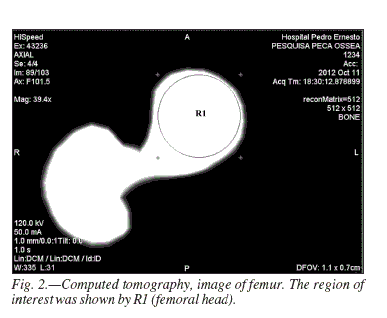
<body><![CDATA[<p><font face="Verdana" size="2"><i>Bone analyses</i></font></p>     <p><font face="Verdana" size="2">The left femur was cleaned of soft tissue, weighted and kept at -80<sup>o</sup>C until analysis. To measure the Bone</font></p>     <p><font face="Verdana" size="2">Mineral Density (BMD), Bone Mineral Content (BMC) and bone area by dual-energy X-ray absorptiometry scan (DXA. Lunar, Wisconsin, USA) with specific software (encore 2008. Version 12.20 GE Healthcare). The DXA results were obtained using a previously described procedure<sup>13</sup>. In order to mimic soft tissue conditions, excised bones were fixed on constant volume of rice in a plastic container. The radiodensity of femoral head (<a href="#f2">fig. 2</a>) was obtained by scan computed tomography (CT. Helicoidally model HISPEeD, GE<sup>&reg;</sup>) measured with a computerized analyzer software system (eFilm Lite, 2.0, 2003, Milwaukee, USA) by manual measurement Toll-Ellipse. The DXA and CT technicians did not know about the experimental protocol.</font></p>     <p>&nbsp;</p>     <p align="center"><a name="f2"><img src="/img/revistas/nh/v29n2/18originalalimentosfuncionales01_f2.gif"></a></font></p>     <p>&nbsp;</p>     <p><font face="Verdana" size="2"><i>Statistical analyses</i></font></p>     <p><font face="Verdana" size="2">Statistical analysis were carried out using the Graph Pad Prism statistical package version 5.00, 2007 (San Diego, CA, USA) using one-way ANOVA, followed by Newman-Keuls post-test. All results are expressed as Means ± SEM with significance level of 0.05.</font></p>     <p>&nbsp;</p>     <p><font face="Verdana" size="2"><b>Results</b></font></p>     ]]></body>
<body><![CDATA[<p><font face="Verdana" size="2">During the nutritional period, the DM groups showed similar food intake, but these were significantly increased (+64%) compared to the control group. In regard to the body mass, at the end of the experimental period, the DM groups showed lower (<i>P</i> &lt; 0.05) values to the control group (<a target="_blank" href="/img/revistas/nh/v29n2/18originalalimentosfuncionales01_t2.gif">table II</a>).</font></p>     <p><font face="Verdana" size="2">When compared to control group, the DM (-42%) and DMY (-31%) showed lower (<i>P</i> &lt; 0.05) pancreas mass. The experimental groups showed lower serum concentrations of insulin and high concentrations of glucose (<i>P</i> &lt; 0.05, respectively). However, the DMY group showed lower concentrations of glucose (-10%, <i>P</i> &lt; 0.05) when compared to DM group. Morphometric analyses showed lower ( -57%, <i>P</i> &lt; 0.05) pancreatic islet area in DM and DMY groups in relation to C group (<a target="_blank" href="/img/revistas/nh/v29n2/18originalalimentosfuncionales01_t2.gif">table II</a>).</font></p>     <p><font face="Verdana" size="2">Bone analyses showed that lower (<i>P</i> &lt; 0.05) femur mass were observed in the DM (-17%) and DMY (-9%) in regard to control group. Evaluating the femur using DXA showed that the bone area in the DM was lower when compared to the others groups. In the same way, the DM group showed lower (<i>P</i> &lt; 0.05) BMC in regard to control and DMY groups (-19% and -7.5%, respectively). BMD was lower (P &lt; 0.05) in the experimental groups. However, the percentage difference was -11% and -5.8% in DM and DMY, respectively, when compared to control group. The CT analysis showed lower (<i>P</i> &lt; 0.05) radiodensity of femoral head in DM and DMY groups (-37% and -20%, respectively). Simultaneously, the DMY group was greater radiodensity (+27%, P&lt;0.05) than the DM group when comparing the experimental groups (<a target="_blank" href="/img/revistas/nh/v29n2/18originalalimentosfuncionales01_t3.gif">table III</a>).</font></p>     <p>&nbsp;</p>     <p><font face="Verdana" size="2"><b>Discussion</b></font></p>     <p><font face="Verdana" size="2">A new diet health paradigm is evolving which places more emphasis on the positive aspects of diet<sup>14</sup>. The Plant Kingdom constitutes the main source of many of our major current therapeutic drugs and it is also the basis of folk medicine and phytotherapy. A wide variety of natural compounds with therapeutic effects on diabetes<sup>15</sup> and on bone parameters have been reported<sup>16</sup>. Bone status is closely linked to regulation of energy metabolism and insulin sensitivity and it should be considered as a vital target for therapies which modulate energy metabolism<sup>17</sup>. Yam, seems to act in both condition, Yin<sup>18</sup> related that among 30 traditional Chinese herbs, yam (<i>Dioscorea spongiosa</i>) showed the strongest activity of the stimulation on bone formation with a rate of 67% and He<sup>19</sup> suggests that yam (<i>Dioscorea opposita</i>) may exert a beneficial action on both diabetes and diabetic complications. The results of the present study corroborate the healthy effects of yam (<i>Dioscorea bulbifera</i>) flour on bone fragility observed in diabetic context.</font></p>     <p><font face="Verdana" size="2">Since the combination of high fat diet (HFD)-fed and low-dose streptozotocin (STZ)-treated rat which serves as an alternative animal model for type 2 diabetes has been proved to be suitable for testing antidiabetic agents<sup>12</sup>, we used this model in this study. Indeed, after performing the protocol our diabetic animals showed similar glycemia (over 290 mg/dl) (data not shown), however there was a decrease in body mass and an impairment in insulin secretion. Somehow our animals resembled to type 1 diabetes.</font></p>     <p><font face="Verdana" size="2">Hyperglycemia, the most important feature of diabetes mellitus, is in itself very dangerous for diabetic patients<sup>20</sup>. The diabetes characteristics of body mass losses and increased food intake due metabolic changes attributed by the lack or deficiency of insulin<sup>21</sup>, were presents in our diabetic rats and were affected by the nutritional intervention. Our results showed that, despite it was not similar to control group, yam flour increased body mass, gonad adipose tissue mass and maintained food intake, in relation to diabetic rats. These results show an improvement in the fundamental mechanism underlying hyperglycemia which is a decreased utilization of glucose by the tissues, suggesting an action of yam in glycemic control.</font></p>     <p><font face="Verdana" size="2">Yam flour did not differ in insulin levels of diabetic rats, but it decreased the fasting blood glucose. The lower pancreas mass, islets number and area results provide the histological evidence of severe pancreatic damage in conjunction with the blood biochemical results. All these results suggest that the improvement of glycemic control may be not by the increasing of insulin release. Many pathways has been studied: a possible insulin-like action<sup>22</sup>, an insulin sensitizing action at tissue level<sup>23</sup>, an increased GLUT-4 gene expression via insulin independent mechanism<sup>24</sup> and an impairment of glucose translocation by decreased in Na+ K+-ATPase activity<sup>4</sup> has been suggested and assigned to yam.</font></p>     <p><font face="Verdana" size="2">The bone turnover and thus the skeletal integrity may also be affected by diabetes, which can represent a hitherto overlooked complication of diabetes<sup>25</sup>. Yam flour seems to ameliorate bone parameters weakened by the disease. The decrease of BMD is already expected by diabetes<sup>26</sup>, seems to be due poor glycemic control and loss of bone anabolic action (due lack of insulin)<sup>27</sup>. BMD may increase with BMC, and BMD decreases with increasing bone areal size<sup>28</sup>. Our results did not differ on bone mineral density in diabetic groups, but the decrease of bone mineral content present only in DM group, indicates that yam flour is able to delay the BMC losses or an anabolic action improving osteoblastogenesis. A possible insulin-like action brought up already can underline the yam action on either glycemic control observed in our results and on proliferation and bone mineralization suggested by Yin et al<sup>29</sup>.</font></p>     ]]></body>
<body><![CDATA[<p><font face="Verdana" size="2">DXA is an important clinical tool because of its availability and low levels of radiation exposure<sup>30</sup>, and the diagnostic criteria for DXA established by WHO in 1994 have long been used as the gold standard in the clinical diagnosis of osteoporosis<sup>31</sup>. However it is unclear whether the DXA-based measures of bone geometry provide important information in addition to a BMD with respect to bone adaptations to mechanical loading<sup>30</sup>. Computed tomography allows measurement of volumetric trabecular bone density without superimposition of cortical bone and other tissue and the compartmental bone tissue adaptations that result from mechanical (un)loading<sup>30,32</sup>. CT has a greater diagnostic sensitivity than DXA<sup>32</sup>, and it showed an impairment in radiodensity of diabetic rats and yam flour present in diet of diabetic rats brought the radiodensity to similar values of control animals, as a result of an improvement of bone quality. The influences of yam ameliorating bone parameters was related with antiosteoporotic activity<sup>18</sup>; improving plasma levels of calcium and mineral density of the femur and lumbar vertebrae<sup>33</sup>; positive effects in proliferation assay in osteoblastic cells<sup>34</sup>; inhibition of osteoclasts and stimulate bone mineralization and proliferation<sup>29</sup>.</font></p>     <p><font face="Verdana" size="2">In conclusion, our experiment with Brazilian yam (<i>Dioscorea bulbifera</i>) flour supplement did not fix a defect, but alleviated the consequences of the experimental diabetic disease. It showed results to control the rise in blood glucose levels in diabetic rats, suggesting protection in oxidative agents and postpone harm in the bone. Considering all the findings of the present study, our results suggest that yam flour does act producing benefits in the experimental diabetes.</font></p>     <p>&nbsp;</p>     <p><font face="Verdana" size="2"><b>References</b></font></p>     <!-- ref --><p><font face="Verdana" size="2">1. Shaw JE, Sicree RA, Zimmet PZ. Global estimates of the prevalence of diabetes for 2010 and 2030. <i>Diabetes Research and Clinical Practice</i> 2010; 87: 4-14.    &nbsp;&nbsp;&nbsp;&nbsp;&nbsp;&nbsp;&nbsp;&nbsp;[&#160;<a href="javascript:void(0);" onclick="javascript: window.open('/scielo.php?script=sci_nlinks&ref=3792685&pid=S0212-1611201400020001800001&lng=','','width=640,height=500,resizable=yes,scrollbars=1,menubar=yes,');">Links</a>&#160;]<!-- end-ref --></font></p>    <!-- ref --><p><font face="Verdana" size="2">2. Yan W, Li X. Impact of diabetes and its treatments on skeletal diseases. <i>Front Med</i> 2013; 7 (1): 81-90.    &nbsp;&nbsp;&nbsp;&nbsp;&nbsp;&nbsp;&nbsp;&nbsp;[&#160;<a href="javascript:void(0);" onclick="javascript: window.open('/scielo.php?script=sci_nlinks&ref=3792687&pid=S0212-1611201400020001800002&lng=','','width=640,height=500,resizable=yes,scrollbars=1,menubar=yes,');">Links</a>&#160;]<!-- end-ref --></font></p>    <!-- ref --><p><font face="Verdana" size="2">3. Sealand R, Razavi C, Adler RA. Diabetes Mellitus and Osteoporosis. <i>Curr Diab Rep March</i> 2013. p. 8.    &nbsp;&nbsp;&nbsp;&nbsp;&nbsp;&nbsp;&nbsp;&nbsp;[&#160;<a href="javascript:void(0);" onclick="javascript: window.open('/scielo.php?script=sci_nlinks&ref=3792689&pid=S0212-1611201400020001800003&lng=','','width=640,height=500,resizable=yes,scrollbars=1,menubar=yes,');">Links</a>&#160;]<!-- end-ref --></font></p>    ]]></body>
<body><![CDATA[<!-- ref --><p><font face="Verdana" size="2">4. Kumar, Reddy. Importance of traditional system of medicine -a review. <i>International Journal of Phytotherapy</i> 2012; 2: 1-6.    &nbsp;&nbsp;&nbsp;&nbsp;&nbsp;&nbsp;&nbsp;&nbsp;[&#160;<a href="javascript:void(0);" onclick="javascript: window.open('/scielo.php?script=sci_nlinks&ref=3792691&pid=S0212-1611201400020001800004&lng=','','width=640,height=500,resizable=yes,scrollbars=1,menubar=yes,');">Links</a>&#160;]<!-- end-ref --></font></p>    <!-- ref --><p><font face="Verdana" size="2">5. World Health Organization, 1980. The WHO Expert committee on diabetes mellitus, Technical Report Series.    &nbsp;&nbsp;&nbsp;&nbsp;&nbsp;&nbsp;&nbsp;&nbsp;[&#160;<a href="javascript:void(0);" onclick="javascript: window.open('/scielo.php?script=sci_nlinks&ref=3792693&pid=S0212-1611201400020001800005&lng=','','width=640,height=500,resizable=yes,scrollbars=1,menubar=yes,');">Links</a>&#160;]<!-- end-ref --></font></p>    <!-- ref --><p><font face="Verdana" size="2">6. Chinese Pharmacopoeia Commission. Pharmacopoeia of the People's Republic of China. People's Medical Publishing House, Beijing 2005.    &nbsp;&nbsp;&nbsp;&nbsp;&nbsp;&nbsp;&nbsp;&nbsp;[&#160;<a href="javascript:void(0);" onclick="javascript: window.open('/scielo.php?script=sci_nlinks&ref=3792695&pid=S0212-1611201400020001800006&lng=','','width=640,height=500,resizable=yes,scrollbars=1,menubar=yes,');">Links</a>&#160;]<!-- end-ref --></font></p>    <!-- ref --><p><font face="Verdana" size="2">7. Sahore DA, Amani, NG, Kamenan A. Functional properties of wild yam (<i>Dioscorea</i> spp.) starches. <i>Tropical Science</i> 2007; 47 (1): 33-7.    &nbsp;&nbsp;&nbsp;&nbsp;&nbsp;&nbsp;&nbsp;&nbsp;[&#160;<a href="javascript:void(0);" onclick="javascript: window.open('/scielo.php?script=sci_nlinks&ref=3792697&pid=S0212-1611201400020001800007&lng=','','width=640,height=500,resizable=yes,scrollbars=1,menubar=yes,');">Links</a>&#160;]<!-- end-ref --></font></p>    <!-- ref --><p><font face="Verdana" size="2">8. Siqueira MVBM. Yam: a neglected and underutilized crop in Brazil. <i>Horticultura Brasileira</i> 2011; 29: 16-20.    &nbsp;&nbsp;&nbsp;&nbsp;&nbsp;&nbsp;&nbsp;&nbsp;[&#160;<a href="javascript:void(0);" onclick="javascript: window.open('/scielo.php?script=sci_nlinks&ref=3792699&pid=S0212-1611201400020001800008&lng=','','width=640,height=500,resizable=yes,scrollbars=1,menubar=yes,');">Links</a>&#160;]<!-- end-ref --></font></p>    ]]></body>
<body><![CDATA[<!-- ref --><p><font face="Verdana" size="2">9. Hashimoto N, Noda T, Kim S, Sarker ZI, Yamauchi H, Takigawa S, Matsuura-Endo C, Suzuki T, Han K, Fukushima M. Yam contributes to improvement of glucose metabolism in rats. <i>Plant Foods Hum Nutr</i> 2009; 64: 193-8.    &nbsp;&nbsp;&nbsp;&nbsp;&nbsp;&nbsp;&nbsp;&nbsp;[&#160;<a href="javascript:void(0);" onclick="javascript: window.open('/scielo.php?script=sci_nlinks&ref=3792701&pid=S0212-1611201400020001800009&lng=','','width=640,height=500,resizable=yes,scrollbars=1,menubar=yes,');">Links</a>&#160;]<!-- end-ref --></font></p>    <!-- ref --><p><font face="Verdana" size="2">10. Reeves PG, Nielsen FH, Fahey GCJr. AIN-93 purified diet of laboratory Rodents: final report of the American Institute of Nutrition ad hoc writing Committee on the Reformulation of the AIN-76A Rodents diet. <i>Journal of Nutrition</i> 1993; 123 (11): 1939-51.    &nbsp;&nbsp;&nbsp;&nbsp;&nbsp;&nbsp;&nbsp;&nbsp;[&#160;<a href="javascript:void(0);" onclick="javascript: window.open('/scielo.php?script=sci_nlinks&ref=3792703&pid=S0212-1611201400020001800010&lng=','','width=640,height=500,resizable=yes,scrollbars=1,menubar=yes,');">Links</a>&#160;]<!-- end-ref --></font></p>    <!-- ref --><p><font face="Verdana" size="2">11. Sirinivasan K, Viswanad B, Asrat L, Kaul CL, Ramarao P. Combination of High-fat diet-feed and low-dose streptocin-treated rat: A model for type 2 diabetes and pharmacological scree ning. <i>Pharmacological Research</i> 2005; 52 (4): 313-20.    &nbsp;&nbsp;&nbsp;&nbsp;&nbsp;&nbsp;&nbsp;&nbsp;[&#160;<a href="javascript:void(0);" onclick="javascript: window.open('/scielo.php?script=sci_nlinks&ref=3792705&pid=S0212-1611201400020001800011&lng=','','width=640,height=500,resizable=yes,scrollbars=1,menubar=yes,');">Links</a>&#160;]<!-- end-ref --></font></p>    <!-- ref --><p><font face="Verdana" size="2">12. Correia-Santos AM, Suzuki A, Anjos JS, Rego T, Almeida KCL, Boaventura GT. Indução de diabetes tipo 2 por dieta hiperlipidica e baixa dose de streptozotocina em ratas wistar. Medicina (Ribeirão Preto) 2012; 45: 432-40.    &nbsp;&nbsp;&nbsp;&nbsp;&nbsp;&nbsp;&nbsp;&nbsp;[&#160;<a href="javascript:void(0);" onclick="javascript: window.open('/scielo.php?script=sci_nlinks&ref=3792707&pid=S0212-1611201400020001800012&lng=','','width=640,height=500,resizable=yes,scrollbars=1,menubar=yes,');">Links</a>&#160;]<!-- end-ref --></font></p>    <!-- ref --><p><font face="Verdana" size="2">13. Costa CA, Carlos AS, Gonzalez GP, Reis RP, Ribeiro MS, Dos Santos AS, Monteiro AM, de Moura EG, Nascimento-Saba CC. Diet containing low n-6/n-3 polyunsaturated fatty acids ratio, provided by canola oil, alters body composition and bone quality in young rats. <i>Eur J Nutr</i> 2012; 51: 191-8.    &nbsp;&nbsp;&nbsp;&nbsp;&nbsp;&nbsp;&nbsp;&nbsp;[&#160;<a href="javascript:void(0);" onclick="javascript: window.open('/scielo.php?script=sci_nlinks&ref=3792709&pid=S0212-1611201400020001800013&lng=','','width=640,height=500,resizable=yes,scrollbars=1,menubar=yes,');">Links</a>&#160;]<!-- end-ref --></font></p>    ]]></body>
<body><![CDATA[<!-- ref --><p><font face="Verdana" size="2">14. Das L, Bhaumik E, Raychaudhuri U, Chakraborty R. Role of nutraceuticals in human health. <i>J Food Sci Technol</i> 2012; 49 (2): 173-83.    &nbsp;&nbsp;&nbsp;&nbsp;&nbsp;&nbsp;&nbsp;&nbsp;[&#160;<a href="javascript:void(0);" onclick="javascript: window.open('/scielo.php?script=sci_nlinks&ref=3792711&pid=S0212-1611201400020001800014&lng=','','width=640,height=500,resizable=yes,scrollbars=1,menubar=yes,');">Links</a>&#160;]<!-- end-ref --></font></p>    <!-- ref --><p><font face="Verdana" size="2">15. Patel DK, Prasad SK, Kumar R, Hemalatha S. An overview on antidiabetic medicinal plants having insulin mimetic property. <i>Asian Pac J Trop Biomed</i> 2012; 2 (4): 320-30.    &nbsp;&nbsp;&nbsp;&nbsp;&nbsp;&nbsp;&nbsp;&nbsp;[&#160;<a href="javascript:void(0);" onclick="javascript: window.open('/scielo.php?script=sci_nlinks&ref=3792713&pid=S0212-1611201400020001800015&lng=','','width=640,height=500,resizable=yes,scrollbars=1,menubar=yes,');">Links</a>&#160;]<!-- end-ref --></font></p>    <!-- ref --><p><font face="Verdana" size="2">16. Wang ZQ, Li JL, Sun YL, Yao M, Gao J, Yang Z, Shi Q, Cui XJ, Wang YJ. Chinese herbal medicine for osteoporosis: a systematic review of randomized controlled trails. <i>Evidence-Based Complementary and Alternative Medicine</i> 2013; 2013: 356260.    &nbsp;&nbsp;&nbsp;&nbsp;&nbsp;&nbsp;&nbsp;&nbsp;[&#160;<a href="javascript:void(0);" onclick="javascript: window.open('/scielo.php?script=sci_nlinks&ref=3792715&pid=S0212-1611201400020001800016&lng=','','width=640,height=500,resizable=yes,scrollbars=1,menubar=yes,');">Links</a>&#160;]<!-- end-ref --></font></p>    <!-- ref --><p><font face="Verdana" size="2">17. Lecka-Czernik B. Safety of Anti-Diabetic Therapies on Bone. <i>Clin Rev Bone Miner Metab</i> 2013; 11 (1): 49-58.    &nbsp;&nbsp;&nbsp;&nbsp;&nbsp;&nbsp;&nbsp;&nbsp;[&#160;<a href="javascript:void(0);" onclick="javascript: window.open('/scielo.php?script=sci_nlinks&ref=3792717&pid=S0212-1611201400020001800017&lng=','','width=640,height=500,resizable=yes,scrollbars=1,menubar=yes,');">Links</a>&#160;]<!-- end-ref --></font></p>    <!-- ref --><p><font face="Verdana" size="2">18. Yin J, Tezuka Y, Kouda K, Tran QL, Miyahara T, Chen Y, Kadota S. Antiosteoporotic Activity of the Water Extract of Dioscorea spongiosa. <i>Biol Pharm Bull</i> 2004; 27 (4): 583-6.    &nbsp;&nbsp;&nbsp;&nbsp;&nbsp;&nbsp;&nbsp;&nbsp;[&#160;<a href="javascript:void(0);" onclick="javascript: window.open('/scielo.php?script=sci_nlinks&ref=3792719&pid=S0212-1611201400020001800018&lng=','','width=640,height=500,resizable=yes,scrollbars=1,menubar=yes,');">Links</a>&#160;]<!-- end-ref --></font></p>    ]]></body>
<body><![CDATA[<!-- ref --><p><font face="Verdana" size="2">19. He K, Li X, Chen X, Ye X, Huang J, Jin Y, Li P, Deng Y, Jin Q, Shi, Q, Shu H. Evaluation of antidiabetic potential of selected traditional Chinese medicines in STZ-induced diabetic mice. <i>J Ethnopharmacol</i> 2011; 137: 1135-42.    &nbsp;&nbsp;&nbsp;&nbsp;&nbsp;&nbsp;&nbsp;&nbsp;[&#160;<a href="javascript:void(0);" onclick="javascript: window.open('/scielo.php?script=sci_nlinks&ref=3792721&pid=S0212-1611201400020001800019&lng=','','width=640,height=500,resizable=yes,scrollbars=1,menubar=yes,');">Links</a>&#160;]<!-- end-ref --></font></p>    <!-- ref --><p><font face="Verdana" size="2">20. Zhang L, Yang J, Chen X, Zan K, Wen X, Chen H, Wang Q, La, M. Antidiabetic and antioxidant effects of extracts from Potentilla discolor Bunge on diabetic rats induced by high fat diet and streptozotocin. <i>Journal of Ethnopharmacology</i> 2010; 132 (2): 518-24.    &nbsp;&nbsp;&nbsp;&nbsp;&nbsp;&nbsp;&nbsp;&nbsp;[&#160;<a href="javascript:void(0);" onclick="javascript: window.open('/scielo.php?script=sci_nlinks&ref=3792723&pid=S0212-1611201400020001800020&lng=','','width=640,height=500,resizable=yes,scrollbars=1,menubar=yes,');">Links</a>&#160;]<!-- end-ref --></font></p>    <!-- ref --><p><font face="Verdana" size="2">21. Szkudelski T. The Mechanism of Alloxan and Streptozotocin Action in B Cells of the Rat Pancreas. <i>Physiol Res</i> 2001; 50 (6): 536-46.    &nbsp;&nbsp;&nbsp;&nbsp;&nbsp;&nbsp;&nbsp;&nbsp;[&#160;<a href="javascript:void(0);" onclick="javascript: window.open('/scielo.php?script=sci_nlinks&ref=3792725&pid=S0212-1611201400020001800021&lng=','','width=640,height=500,resizable=yes,scrollbars=1,menubar=yes,');">Links</a>&#160;]<!-- end-ref --></font></p>    <!-- ref --><p><font face="Verdana" size="2">22. Mcanuff MA, Omoruyi F, Gardner MT, Morrison EY, Asemota HN. Alterations in intestinal morphology of streptozotocin-induced diabetic rats fed Jamaican bitter yam (Dioscorea polygonoides) steroidal sapogenin extract. <i>Nutrition Research</i> 2003; 23 (11): 1569-77.    &nbsp;&nbsp;&nbsp;&nbsp;&nbsp;&nbsp;&nbsp;&nbsp;[&#160;<a href="javascript:void(0);" onclick="javascript: window.open('/scielo.php?script=sci_nlinks&ref=3792727&pid=S0212-1611201400020001800022&lng=','','width=640,height=500,resizable=yes,scrollbars=1,menubar=yes,');">Links</a>&#160;]<!-- end-ref --></font></p>    <!-- ref --><p><font face="Verdana" size="2">23. Gao X, Li B, Jiang H, Liu F, Xu D, Liu Z. Dioscorea opposita reverses dexamethasone induced insulin resistance. <i>Fitoterapia</i> 2007; 78 (1): 12-5.    &nbsp;&nbsp;&nbsp;&nbsp;&nbsp;&nbsp;&nbsp;&nbsp;[&#160;<a href="javascript:void(0);" onclick="javascript: window.open('/scielo.php?script=sci_nlinks&ref=3792729&pid=S0212-1611201400020001800023&lng=','','width=640,height=500,resizable=yes,scrollbars=1,menubar=yes,');">Links</a>&#160;]<!-- end-ref --></font></p>    ]]></body>
<body><![CDATA[<!-- ref --><p><font face="Verdana" size="2">24. Niu CS, Chen W, Wu HT, Cheng KC, Wen YJ, Lin KC, Cheng JT. Decrease of plasma glucose by allantoin, an active principle of yam ( Dioscorea spp.), in streptozotocin-induced diabetic rats. <i>J Agric Food Chem</i> 2010; 58 (22): 12031-5.    &nbsp;&nbsp;&nbsp;&nbsp;&nbsp;&nbsp;&nbsp;&nbsp;[&#160;<a href="javascript:void(0);" onclick="javascript: window.open('/scielo.php?script=sci_nlinks&ref=3792731&pid=S0212-1611201400020001800024&lng=','','width=640,height=500,resizable=yes,scrollbars=1,menubar=yes,');">Links</a>&#160;]<!-- end-ref --></font></p>    <!-- ref --><p><font face="Verdana" size="2">25. Starup-Linde J. Diabetes, biochemical markers of bone turnover, diabetes control, and bone. <i>Front Endocrinol</i> (Lausanne) 2013; 4: 21.    &nbsp;&nbsp;&nbsp;&nbsp;&nbsp;&nbsp;&nbsp;&nbsp;[&#160;<a href="javascript:void(0);" onclick="javascript: window.open('/scielo.php?script=sci_nlinks&ref=3792733&pid=S0212-1611201400020001800025&lng=','','width=640,height=500,resizable=yes,scrollbars=1,menubar=yes,');">Links</a>&#160;]<!-- end-ref --></font></p>    <!-- ref --><p><font face="Verdana" size="2">26. Sood A, Cunningham C, Lin S. The BB Wistar Rat as a Diabetic Model for Fracture Healing. Endocrinology doi: 10.1155/2013/349604, 2013.    &nbsp;&nbsp;&nbsp;&nbsp;&nbsp;&nbsp;&nbsp;&nbsp;[&#160;<a href="javascript:void(0);" onclick="javascript: window.open('/scielo.php?script=sci_nlinks&ref=3792735&pid=S0212-1611201400020001800026&lng=','','width=640,height=500,resizable=yes,scrollbars=1,menubar=yes,');">Links</a>&#160;]<!-- end-ref --></font></p>    <!-- ref --><p><font face="Verdana" size="2">27. Joshi A, Varthakavi P, Chadha M, Bhagwat N. A Study of Bone Mineral Density and Its Determinants in Type 1 Diabetes Mellitus. Journal of Osteoporosis doi: 10.1155/2013/397814, 2013.    &nbsp;&nbsp;&nbsp;&nbsp;&nbsp;&nbsp;&nbsp;&nbsp;[&#160;<a href="javascript:void(0);" onclick="javascript: window.open('/scielo.php?script=sci_nlinks&ref=3792737&pid=S0212-1611201400020001800027&lng=','','width=640,height=500,resizable=yes,scrollbars=1,menubar=yes,');">Links</a>&#160;]<!-- end-ref --></font></p>    <!-- ref --><p><font face="Verdana" size="2">28. Deng HW, Xu FH, Davies KM, Heaney R, Recker RR. Differences in bone mineral density, bone mineral content, and bone areal size in fracturing and non-fracturing women, and their interrelationships at the spine and hip. <i>J Bone Miner Metab</i> 2002; 20 (6): 358-66.    &nbsp;&nbsp;&nbsp;&nbsp;&nbsp;&nbsp;&nbsp;&nbsp;[&#160;<a href="javascript:void(0);" onclick="javascript: window.open('/scielo.php?script=sci_nlinks&ref=3792739&pid=S0212-1611201400020001800028&lng=','','width=640,height=500,resizable=yes,scrollbars=1,menubar=yes,');">Links</a>&#160;]<!-- end-ref --></font></p>    ]]></body>
<body><![CDATA[<!-- ref --><p><font face="Verdana" size="2">29. Yin J, Han N, Liu Z, Song S, Kadota S. The in Vitro Antiosteoporotic Activity of Some Glycosides in Dioscorea spongiosa. <i>Biol Pharm Bull</i> 2010; 33 (2): 316-20.    &nbsp;&nbsp;&nbsp;&nbsp;&nbsp;&nbsp;&nbsp;&nbsp;[&#160;<a href="javascript:void(0);" onclick="javascript: window.open('/scielo.php?script=sci_nlinks&ref=3792741&pid=S0212-1611201400020001800029&lng=','','width=640,height=500,resizable=yes,scrollbars=1,menubar=yes,');">Links</a>&#160;]<!-- end-ref --></font></p>    <!-- ref --><p><font face="Verdana" size="2">30. Macintyre NJ, Lorbergs AL. Imaging-Based Methods for Noninvasive Assessment of Bone Properties Influenced by Mechanical Loading. <i>Physiother Can</i> 2012; 64 (2): 202-15.    &nbsp;&nbsp;&nbsp;&nbsp;&nbsp;&nbsp;&nbsp;&nbsp;[&#160;<a href="javascript:void(0);" onclick="javascript: window.open('/scielo.php?script=sci_nlinks&ref=3792743&pid=S0212-1611201400020001800030&lng=','','width=640,height=500,resizable=yes,scrollbars=1,menubar=yes,');">Links</a>&#160;]<!-- end-ref --></font></p>    <!-- ref --><p><font face="Verdana" size="2">31. World Health Organization Technical Report Series. Assessment of fracture risk and its application to screening for postmenopausal osteoporosis. Report of a WHO Study Group, 1994.    &nbsp;&nbsp;&nbsp;&nbsp;&nbsp;&nbsp;&nbsp;&nbsp;[&#160;<a href="javascript:void(0);" onclick="javascript: window.open('/scielo.php?script=sci_nlinks&ref=3792745&pid=S0212-1611201400020001800031&lng=','','width=640,height=500,resizable=yes,scrollbars=1,menubar=yes,');">Links</a>&#160;]<!-- end-ref --></font></p>    <!-- ref --><p><font face="Verdana" size="2">32. Li N, Xin-min Li, Xu L, Wei-jie Sun, Xiao-guang Cheng,Tian W. Comparison of QCT and DXA: Osteoporosis Detection Rates in Postmenopausal Women. International Journal of Endocrinology. doi: 10.1155/2013/895474, 2013.    &nbsp;&nbsp;&nbsp;&nbsp;&nbsp;&nbsp;&nbsp;&nbsp;[&#160;<a href="javascript:void(0);" onclick="javascript: window.open('/scielo.php?script=sci_nlinks&ref=3792747&pid=S0212-1611201400020001800032&lng=','','width=640,height=500,resizable=yes,scrollbars=1,menubar=yes,');">Links</a>&#160;]<!-- end-ref --></font></p>    <!-- ref --><p><font face="Verdana" size="2">33. Chen JH, Wu JSS, Lin HC, Wu SH, Wang WF, Huang SK, Ho YJ. Dioscorea improves the morphometric and mechanical properties of bone in ovariectomised rats. <i>J Sci Food Agric</i> 2008; 88: 2700-6.    &nbsp;&nbsp;&nbsp;&nbsp;&nbsp;&nbsp;&nbsp;&nbsp;[&#160;<a href="javascript:void(0);" onclick="javascript: window.open('/scielo.php?script=sci_nlinks&ref=3792749&pid=S0212-1611201400020001800033&lng=','','width=640,height=500,resizable=yes,scrollbars=1,menubar=yes,');">Links</a>&#160;]<!-- end-ref --></font></p>    ]]></body>
<body><![CDATA[<!-- ref --><p><font face="Verdana" size="2">34. Peng KY, Horng LY, Sung HC, Huang HC, Wu RT. Antiosteoporotic Activity of Dioscorea alata L. cv. Phyto through Driving Mesenchymal Stem Cells Differentiation for Bone Formation. <i>Evid Based Complement Alternat Med</i> doi:10.1155/2011/712892, 2011.    &nbsp;&nbsp;&nbsp;&nbsp;&nbsp;&nbsp;&nbsp;&nbsp;[&#160;<a href="javascript:void(0);" onclick="javascript: window.open('/scielo.php?script=sci_nlinks&ref=3792751&pid=S0212-1611201400020001800034&lng=','','width=640,height=500,resizable=yes,scrollbars=1,menubar=yes,');">Links</a>&#160;]<!-- end-ref --></font></p>     <p>&nbsp;</p>     <p>&nbsp;</p>     <p><font face="Verdana" size="2"><a href="#top"><img border="0" src="/img/revistas/nh/v29n2/seta.gif" width="15" height="17"></a><a name="bajo"></a><b>Dirección para correspondencia:</b>    <br>Thaís de Salgado Rêgo.    <br>Experimental Nutrition Laboratory.    <br>College of Nutrition. Federal Fluminense University.    <br>Rua Mário Santos Braga, 30.    <br>Rj 24015-110 Niteróis. Rio de Janeiro. Brazil.    ]]></body>
<body><![CDATA[<br>E-mail: <a href="mailto:thais.nutricionista@ymail.com">thais.nutricionista@ymail.com</a></font></p>     <p><font face="Verdana" size="2">Recibido: 17-VII-2013.    <br>1.<sup>a</sup> Revisión: 12-XI-2013.    <br>Aceptado: 1-XII-2013.</font></p>      ]]></body><back>
<ref-list>
<ref id="B1">
<label>1</label><nlm-citation citation-type="journal">
<person-group person-group-type="author">
<name>
<surname><![CDATA[Shaw]]></surname>
<given-names><![CDATA[JE]]></given-names>
</name>
<name>
<surname><![CDATA[Sicree]]></surname>
<given-names><![CDATA[RA]]></given-names>
</name>
<name>
<surname><![CDATA[Zimmet]]></surname>
<given-names><![CDATA[PZ]]></given-names>
</name>
</person-group>
<article-title xml:lang="en"><![CDATA[Global estimates of the prevalence of diabetes for 2010 and 2030]]></article-title>
<source><![CDATA[Diabetes Research and Clinical Practice]]></source>
<year>2010</year>
<volume>87</volume>
<page-range>4-14</page-range></nlm-citation>
</ref>
<ref id="B2">
<label>2</label><nlm-citation citation-type="journal">
<person-group person-group-type="author">
<name>
<surname><![CDATA[Yan]]></surname>
<given-names><![CDATA[W]]></given-names>
</name>
<name>
<surname><![CDATA[Li]]></surname>
<given-names><![CDATA[X]]></given-names>
</name>
</person-group>
<article-title xml:lang="en"><![CDATA[Impact of diabetes and its treatments on skeletal diseases]]></article-title>
<source><![CDATA[Front Med]]></source>
<year>2013</year>
<volume>7</volume>
<numero>1</numero>
<issue>1</issue>
<page-range>81-90</page-range></nlm-citation>
</ref>
<ref id="B3">
<label>3</label><nlm-citation citation-type="journal">
<person-group person-group-type="author">
<name>
<surname><![CDATA[Sealand]]></surname>
<given-names><![CDATA[R]]></given-names>
</name>
<name>
<surname><![CDATA[Razavi]]></surname>
<given-names><![CDATA[C]]></given-names>
</name>
<name>
<surname><![CDATA[Adler]]></surname>
<given-names><![CDATA[RA.]]></given-names>
</name>
</person-group>
<article-title xml:lang="en"><![CDATA[Diabetes Mellitus and Osteoporosis]]></article-title>
<source><![CDATA[Curr Diab Rep March]]></source>
<year>2013</year>
<page-range>8</page-range></nlm-citation>
</ref>
<ref id="B4">
<label>4</label><nlm-citation citation-type="journal">
<person-group person-group-type="author">
<name>
<surname><![CDATA[Kumar]]></surname>
<given-names><![CDATA[Reddy]]></given-names>
</name>
</person-group>
<article-title xml:lang="en"><![CDATA[Importance of traditional system of medicine -a review]]></article-title>
<source><![CDATA[International Journal of Phytotherapy]]></source>
<year>2012</year>
<volume>2</volume>
<page-range>1-6</page-range></nlm-citation>
</ref>
<ref id="B5">
<label>5</label><nlm-citation citation-type="">
<collab>World Health Organization</collab>
<source><![CDATA[The WHO Expert committee on diabetes mellitus]]></source>
<year>1980</year>
</nlm-citation>
</ref>
<ref id="B6">
<label>6</label><nlm-citation citation-type="book">
<collab>Chinese Pharmacopoeia Commission</collab>
<source><![CDATA[Pharmacopoeia of the People's Republic of China]]></source>
<year>2005</year>
<publisher-loc><![CDATA[Beijing ]]></publisher-loc>
<publisher-name><![CDATA[People's Medical Publishing House]]></publisher-name>
</nlm-citation>
</ref>
<ref id="B7">
<label>7</label><nlm-citation citation-type="journal">
<person-group person-group-type="author">
<name>
<surname><![CDATA[Sahore]]></surname>
<given-names><![CDATA[DA]]></given-names>
</name>
<name>
<surname><![CDATA[Amani]]></surname>
<given-names><![CDATA[NG]]></given-names>
</name>
<name>
<surname><![CDATA[Kamenan]]></surname>
<given-names><![CDATA[A]]></given-names>
</name>
</person-group>
<article-title xml:lang="en"><![CDATA[Functional properties of wild yam (Dioscorea spp.) starches]]></article-title>
<source><![CDATA[Tropical Science]]></source>
<year>2007</year>
<volume>47</volume>
<numero>1</numero>
<issue>1</issue>
<page-range>33-7</page-range></nlm-citation>
</ref>
<ref id="B8">
<label>8</label><nlm-citation citation-type="journal">
<person-group person-group-type="author">
<name>
<surname><![CDATA[Siqueira]]></surname>
<given-names><![CDATA[MVBM]]></given-names>
</name>
</person-group>
<article-title xml:lang="en"><![CDATA[Yam: a neglected and underutilized crop in Brazil]]></article-title>
<source><![CDATA[Horticultura Brasileira]]></source>
<year>2011</year>
<volume>29</volume>
<page-range>16-20</page-range></nlm-citation>
</ref>
<ref id="B9">
<label>9</label><nlm-citation citation-type="journal">
<person-group person-group-type="author">
<name>
<surname><![CDATA[Hashimoto]]></surname>
<given-names><![CDATA[N]]></given-names>
</name>
<name>
<surname><![CDATA[Noda]]></surname>
<given-names><![CDATA[T]]></given-names>
</name>
<name>
<surname><![CDATA[Kim]]></surname>
<given-names><![CDATA[S]]></given-names>
</name>
<name>
<surname><![CDATA[Sarker]]></surname>
<given-names><![CDATA[ZI]]></given-names>
</name>
<name>
<surname><![CDATA[Yamauchi]]></surname>
<given-names><![CDATA[H]]></given-names>
</name>
<name>
<surname><![CDATA[Takigawa]]></surname>
<given-names><![CDATA[S]]></given-names>
</name>
<name>
<surname><![CDATA[Matsuura-Endo]]></surname>
<given-names><![CDATA[C]]></given-names>
</name>
<name>
<surname><![CDATA[Suzuki]]></surname>
<given-names><![CDATA[T]]></given-names>
</name>
<name>
<surname><![CDATA[Han]]></surname>
<given-names><![CDATA[K]]></given-names>
</name>
<name>
<surname><![CDATA[Fukushima]]></surname>
<given-names><![CDATA[M]]></given-names>
</name>
</person-group>
<article-title xml:lang="en"><![CDATA[Yam contributes to improvement of glucose metabolism in rats]]></article-title>
<source><![CDATA[Plant Foods Hum Nutr]]></source>
<year>2009</year>
<volume>64</volume>
<page-range>193-8</page-range></nlm-citation>
</ref>
<ref id="B10">
<label>10</label><nlm-citation citation-type="journal">
<person-group person-group-type="author">
<name>
<surname><![CDATA[Reeves]]></surname>
<given-names><![CDATA[PG]]></given-names>
</name>
<name>
<surname><![CDATA[Nielsen]]></surname>
<given-names><![CDATA[FH]]></given-names>
</name>
<name>
<surname><![CDATA[Fahey]]></surname>
<given-names><![CDATA[GCJr]]></given-names>
</name>
</person-group>
<article-title xml:lang="en"><![CDATA[AIN-93 purified diet of laboratory Rodents: final report of the American Institute of Nutrition ad hoc writing Committee on the Reformulation of the AIN-76A Rodents diet]]></article-title>
<source><![CDATA[Journal of Nutrition]]></source>
<year>1993</year>
<volume>123</volume>
<numero>11</numero>
<issue>11</issue>
<page-range>1939-51</page-range></nlm-citation>
</ref>
<ref id="B11">
<label>11</label><nlm-citation citation-type="journal">
<person-group person-group-type="author">
<name>
<surname><![CDATA[Sirinivasan]]></surname>
<given-names><![CDATA[K]]></given-names>
</name>
<name>
<surname><![CDATA[Viswanad]]></surname>
<given-names><![CDATA[B]]></given-names>
</name>
<name>
<surname><![CDATA[Asrat]]></surname>
<given-names><![CDATA[L]]></given-names>
</name>
<name>
<surname><![CDATA[Kaul]]></surname>
<given-names><![CDATA[CL]]></given-names>
</name>
<name>
<surname><![CDATA[Ramarao]]></surname>
<given-names><![CDATA[P]]></given-names>
</name>
</person-group>
<article-title xml:lang="en"><![CDATA[Combination of High-fat diet-feed and low-dose streptocin-treated rat: A model for type 2 diabetes and pharmacological scree ning]]></article-title>
<source><![CDATA[Pharmacological Research]]></source>
<year>2005</year>
<volume>52</volume>
<numero>4</numero>
<issue>4</issue>
<page-range>313-20</page-range></nlm-citation>
</ref>
<ref id="B12">
<label>12</label><nlm-citation citation-type="journal">
<person-group person-group-type="author">
<name>
<surname><![CDATA[Correia-Santos]]></surname>
<given-names><![CDATA[AM]]></given-names>
</name>
<name>
<surname><![CDATA[Suzuki]]></surname>
<given-names><![CDATA[A]]></given-names>
</name>
<name>
<surname><![CDATA[Anjos]]></surname>
<given-names><![CDATA[JS]]></given-names>
</name>
<name>
<surname><![CDATA[Rego]]></surname>
<given-names><![CDATA[T]]></given-names>
</name>
<name>
<surname><![CDATA[Almeida]]></surname>
<given-names><![CDATA[KCL]]></given-names>
</name>
<name>
<surname><![CDATA[Boaventura]]></surname>
<given-names><![CDATA[GT]]></given-names>
</name>
</person-group>
<article-title xml:lang="pt"><![CDATA[Indução de diabetes tipo 2 por dieta hiperlipidica e baixa dose de streptozotocina em ratas wistar]]></article-title>
<source><![CDATA[Medicina (Ribeirão Preto)]]></source>
<year>2012</year>
<volume>45</volume>
<page-range>432-40</page-range></nlm-citation>
</ref>
<ref id="B13">
<label>13</label><nlm-citation citation-type="journal">
<person-group person-group-type="author">
<name>
<surname><![CDATA[Costa]]></surname>
<given-names><![CDATA[CA]]></given-names>
</name>
<name>
<surname><![CDATA[Carlos]]></surname>
<given-names><![CDATA[AS]]></given-names>
</name>
<name>
<surname><![CDATA[Gonzalez]]></surname>
<given-names><![CDATA[GP]]></given-names>
</name>
<name>
<surname><![CDATA[Reis]]></surname>
<given-names><![CDATA[RP]]></given-names>
</name>
<name>
<surname><![CDATA[Ribeiro]]></surname>
<given-names><![CDATA[MS]]></given-names>
</name>
<name>
<surname><![CDATA[Dos Santos]]></surname>
<given-names><![CDATA[AS]]></given-names>
</name>
<name>
<surname><![CDATA[Monteiro]]></surname>
<given-names><![CDATA[AM]]></given-names>
</name>
<name>
<surname><![CDATA[de Moura]]></surname>
<given-names><![CDATA[EG]]></given-names>
</name>
<name>
<surname><![CDATA[Nascimento-Saba]]></surname>
<given-names><![CDATA[CC]]></given-names>
</name>
</person-group>
<article-title xml:lang="en"><![CDATA[Diet containing low n-6/n-3 polyunsaturated fatty acids ratio, provided by canola oil, alters body composition and bone quality in young rats]]></article-title>
<source><![CDATA[Eur J Nutr]]></source>
<year>2012</year>
<volume>51</volume>
<page-range>191-8</page-range></nlm-citation>
</ref>
<ref id="B14">
<label>14</label><nlm-citation citation-type="journal">
<person-group person-group-type="author">
<name>
<surname><![CDATA[Das]]></surname>
<given-names><![CDATA[L]]></given-names>
</name>
<name>
<surname><![CDATA[Bhaumik]]></surname>
<given-names><![CDATA[E]]></given-names>
</name>
<name>
<surname><![CDATA[Raychaudhuri]]></surname>
<given-names><![CDATA[U]]></given-names>
</name>
<name>
<surname><![CDATA[Chakraborty]]></surname>
<given-names><![CDATA[R]]></given-names>
</name>
</person-group>
<article-title xml:lang="en"><![CDATA[Role of nutraceuticals in human health]]></article-title>
<source><![CDATA[J Food Sci Technol]]></source>
<year>2012</year>
<volume>49</volume>
<numero>2</numero>
<issue>2</issue>
<page-range>173-83</page-range></nlm-citation>
</ref>
<ref id="B15">
<label>15</label><nlm-citation citation-type="journal">
<person-group person-group-type="author">
<name>
<surname><![CDATA[Patel]]></surname>
<given-names><![CDATA[DK]]></given-names>
</name>
<name>
<surname><![CDATA[Prasad]]></surname>
<given-names><![CDATA[SK]]></given-names>
</name>
<name>
<surname><![CDATA[Kumar]]></surname>
<given-names><![CDATA[R]]></given-names>
</name>
<name>
<surname><![CDATA[Hemalatha]]></surname>
<given-names><![CDATA[S]]></given-names>
</name>
</person-group>
<article-title xml:lang="en"><![CDATA[An overview on antidiabetic medicinal plants having insulin mimetic property]]></article-title>
<source><![CDATA[Asian Pac J Trop Biomed]]></source>
<year>2012</year>
<volume>2</volume>
<numero>4</numero>
<issue>4</issue>
<page-range>320-30</page-range></nlm-citation>
</ref>
<ref id="B16">
<label>16</label><nlm-citation citation-type="journal">
<person-group person-group-type="author">
<name>
<surname><![CDATA[Wang]]></surname>
<given-names><![CDATA[ZQ]]></given-names>
</name>
<name>
<surname><![CDATA[Li]]></surname>
<given-names><![CDATA[JL]]></given-names>
</name>
<name>
<surname><![CDATA[Sun]]></surname>
<given-names><![CDATA[YL]]></given-names>
</name>
<name>
<surname><![CDATA[Yao]]></surname>
<given-names><![CDATA[M]]></given-names>
</name>
<name>
<surname><![CDATA[Gao]]></surname>
<given-names><![CDATA[J]]></given-names>
</name>
<name>
<surname><![CDATA[Yang]]></surname>
<given-names><![CDATA[Z]]></given-names>
</name>
<name>
<surname><![CDATA[Shi]]></surname>
<given-names><![CDATA[Q]]></given-names>
</name>
<name>
<surname><![CDATA[Cui]]></surname>
<given-names><![CDATA[XJ]]></given-names>
</name>
<name>
<surname><![CDATA[Wang]]></surname>
<given-names><![CDATA[YJ]]></given-names>
</name>
</person-group>
<article-title xml:lang="en"><![CDATA[Chinese herbal medicine for osteoporosis: a systematic review of randomized controlled trails]]></article-title>
<source><![CDATA[Evidence-Based Complementary and Alternative Medicine]]></source>
<year>2013</year>
<volume>2013</volume>
</nlm-citation>
</ref>
<ref id="B17">
<label>17</label><nlm-citation citation-type="journal">
<person-group person-group-type="author">
<name>
<surname><![CDATA[Lecka-Czernik]]></surname>
<given-names><![CDATA[B]]></given-names>
</name>
</person-group>
<article-title xml:lang="en"><![CDATA[Safety of Anti-Diabetic Therapies on Bone]]></article-title>
<source><![CDATA[Clin Rev Bone Miner Metab]]></source>
<year>2013</year>
<volume>11</volume>
<numero>1</numero>
<issue>1</issue>
<page-range>49-58</page-range></nlm-citation>
</ref>
<ref id="B18">
<label>18</label><nlm-citation citation-type="journal">
<person-group person-group-type="author">
<name>
<surname><![CDATA[Yin]]></surname>
<given-names><![CDATA[J]]></given-names>
</name>
<name>
<surname><![CDATA[Tezuka]]></surname>
<given-names><![CDATA[Y]]></given-names>
</name>
<name>
<surname><![CDATA[Kouda]]></surname>
<given-names><![CDATA[K]]></given-names>
</name>
<name>
<surname><![CDATA[Tran]]></surname>
<given-names><![CDATA[QL]]></given-names>
</name>
<name>
<surname><![CDATA[Miyahara]]></surname>
<given-names><![CDATA[T]]></given-names>
</name>
<name>
<surname><![CDATA[Chen]]></surname>
<given-names><![CDATA[Y]]></given-names>
</name>
<name>
<surname><![CDATA[Kadota]]></surname>
<given-names><![CDATA[S]]></given-names>
</name>
</person-group>
<article-title xml:lang="en"><![CDATA[Antiosteoporotic Activity of the Water Extract of Dioscorea spongiosa]]></article-title>
<source><![CDATA[Biol Pharm Bull]]></source>
<year>2004</year>
<volume>27</volume>
<numero>4</numero>
<issue>4</issue>
<page-range>583-6</page-range></nlm-citation>
</ref>
<ref id="B19">
<label>19</label><nlm-citation citation-type="journal">
<person-group person-group-type="author">
<name>
<surname><![CDATA[He]]></surname>
<given-names><![CDATA[K]]></given-names>
</name>
<name>
<surname><![CDATA[Li]]></surname>
<given-names><![CDATA[X]]></given-names>
</name>
<name>
<surname><![CDATA[Chen]]></surname>
<given-names><![CDATA[X]]></given-names>
</name>
<name>
<surname><![CDATA[Ye]]></surname>
<given-names><![CDATA[X]]></given-names>
</name>
<name>
<surname><![CDATA[Huang]]></surname>
<given-names><![CDATA[J]]></given-names>
</name>
<name>
<surname><![CDATA[Jin]]></surname>
<given-names><![CDATA[Y]]></given-names>
</name>
<name>
<surname><![CDATA[Li]]></surname>
<given-names><![CDATA[P]]></given-names>
</name>
<name>
<surname><![CDATA[Deng]]></surname>
<given-names><![CDATA[Y]]></given-names>
</name>
<name>
<surname><![CDATA[Jin]]></surname>
<given-names><![CDATA[Q]]></given-names>
</name>
<name>
<surname><![CDATA[Shi]]></surname>
<given-names><![CDATA[Q]]></given-names>
</name>
<name>
<surname><![CDATA[Shu]]></surname>
<given-names><![CDATA[H]]></given-names>
</name>
</person-group>
<article-title xml:lang="en"><![CDATA[Evaluation of antidiabetic potential of selected traditional Chinese medicines in STZ-induced diabetic mice]]></article-title>
<source><![CDATA[J Ethnopharmacol]]></source>
<year>2011</year>
<volume>137</volume>
<page-range>1135-42</page-range></nlm-citation>
</ref>
<ref id="B20">
<label>20</label><nlm-citation citation-type="journal">
<person-group person-group-type="author">
<name>
<surname><![CDATA[Zhang]]></surname>
<given-names><![CDATA[L]]></given-names>
</name>
<name>
<surname><![CDATA[Yang]]></surname>
<given-names><![CDATA[J]]></given-names>
</name>
<name>
<surname><![CDATA[Chen]]></surname>
<given-names><![CDATA[X]]></given-names>
</name>
<name>
<surname><![CDATA[Zan]]></surname>
<given-names><![CDATA[K]]></given-names>
</name>
<name>
<surname><![CDATA[Wen]]></surname>
<given-names><![CDATA[X]]></given-names>
</name>
<name>
<surname><![CDATA[Chen]]></surname>
<given-names><![CDATA[H]]></given-names>
</name>
<name>
<surname><![CDATA[Wang]]></surname>
<given-names><![CDATA[Q]]></given-names>
</name>
<name>
<surname><![CDATA[La]]></surname>
<given-names><![CDATA[M]]></given-names>
</name>
</person-group>
<article-title xml:lang="en"><![CDATA[Antidiabetic and antioxidant effects of extracts from Potentilla discolor Bunge on diabetic rats induced by high fat diet and streptozotocin]]></article-title>
<source><![CDATA[Journal of Ethnopharmacology]]></source>
<year>2010</year>
<volume>132</volume>
<numero>2</numero>
<issue>2</issue>
<page-range>518-24</page-range></nlm-citation>
</ref>
<ref id="B21">
<label>21</label><nlm-citation citation-type="journal">
<person-group person-group-type="author">
<name>
<surname><![CDATA[Szkudelski]]></surname>
<given-names><![CDATA[T]]></given-names>
</name>
</person-group>
<article-title xml:lang="en"><![CDATA[The Mechanism of Alloxan and Streptozotocin Action in B Cells of the Rat Pancreas]]></article-title>
<source><![CDATA[Physiol Res]]></source>
<year>2001</year>
<volume>50</volume>
<numero>6</numero>
<issue>6</issue>
<page-range>536-46</page-range></nlm-citation>
</ref>
<ref id="B22">
<label>22</label><nlm-citation citation-type="journal">
<person-group person-group-type="author">
<name>
<surname><![CDATA[Mcanuff]]></surname>
<given-names><![CDATA[MA]]></given-names>
</name>
<name>
<surname><![CDATA[Omoruyi]]></surname>
<given-names><![CDATA[F]]></given-names>
</name>
<name>
<surname><![CDATA[Gardner]]></surname>
<given-names><![CDATA[MT]]></given-names>
</name>
<name>
<surname><![CDATA[Morrison]]></surname>
<given-names><![CDATA[EY]]></given-names>
</name>
<name>
<surname><![CDATA[Asemota]]></surname>
<given-names><![CDATA[HN]]></given-names>
</name>
</person-group>
<article-title xml:lang="en"><![CDATA[Alterations in intestinal morphology of streptozotocin-induced diabetic rats fed Jamaican bitter yam (Dioscorea polygonoides) steroidal sapogenin extract]]></article-title>
<source><![CDATA[Nutrition Research]]></source>
<year>2003</year>
<volume>23</volume>
<numero>11</numero>
<issue>11</issue>
<page-range>1569-77</page-range></nlm-citation>
</ref>
<ref id="B23">
<label>23</label><nlm-citation citation-type="journal">
<person-group person-group-type="author">
<name>
<surname><![CDATA[Gao]]></surname>
<given-names><![CDATA[X]]></given-names>
</name>
<name>
<surname><![CDATA[Li]]></surname>
<given-names><![CDATA[B]]></given-names>
</name>
<name>
<surname><![CDATA[Jiang]]></surname>
<given-names><![CDATA[H]]></given-names>
</name>
<name>
<surname><![CDATA[Liu]]></surname>
<given-names><![CDATA[F]]></given-names>
</name>
<name>
<surname><![CDATA[Xu]]></surname>
<given-names><![CDATA[D]]></given-names>
</name>
<name>
<surname><![CDATA[Liu]]></surname>
<given-names><![CDATA[Z]]></given-names>
</name>
</person-group>
<article-title xml:lang="en"><![CDATA[Dioscorea opposita reverses dexamethasone induced insulin resistance]]></article-title>
<source><![CDATA[Fitoterapia]]></source>
<year>2007</year>
<volume>78</volume>
<numero>1</numero>
<issue>1</issue>
<page-range>12-5</page-range></nlm-citation>
</ref>
<ref id="B24">
<label>24</label><nlm-citation citation-type="journal">
<person-group person-group-type="author">
<name>
<surname><![CDATA[Niu]]></surname>
<given-names><![CDATA[CS]]></given-names>
</name>
<name>
<surname><![CDATA[Chen]]></surname>
<given-names><![CDATA[W]]></given-names>
</name>
<name>
<surname><![CDATA[Wu]]></surname>
<given-names><![CDATA[HT]]></given-names>
</name>
<name>
<surname><![CDATA[Cheng]]></surname>
<given-names><![CDATA[KC]]></given-names>
</name>
<name>
<surname><![CDATA[Wen]]></surname>
<given-names><![CDATA[YJ]]></given-names>
</name>
<name>
<surname><![CDATA[Lin]]></surname>
<given-names><![CDATA[KC]]></given-names>
</name>
<name>
<surname><![CDATA[Cheng]]></surname>
<given-names><![CDATA[JT]]></given-names>
</name>
</person-group>
<article-title xml:lang="en"><![CDATA[Decrease of plasma glucose by allantoin, an active principle of yam ( Dioscorea spp.), in streptozotocin-induced diabetic rats]]></article-title>
<source><![CDATA[J Agric Food Chem]]></source>
<year>2010</year>
<volume>58</volume>
<numero>22</numero>
<issue>22</issue>
<page-range>12031-5</page-range></nlm-citation>
</ref>
<ref id="B25">
<label>25</label><nlm-citation citation-type="journal">
<person-group person-group-type="author">
<name>
<surname><![CDATA[Starup-Linde]]></surname>
<given-names><![CDATA[J]]></given-names>
</name>
</person-group>
<article-title xml:lang="en"><![CDATA[Diabetes, biochemical markers of bone turnover, diabetes control, and bone]]></article-title>
<source><![CDATA[Front Endocrinol (Lausanne)]]></source>
<year>2013</year>
<volume>4</volume>
<page-range>21</page-range></nlm-citation>
</ref>
<ref id="B26">
<label>26</label><nlm-citation citation-type="journal">
<person-group person-group-type="author">
<name>
<surname><![CDATA[Sood]]></surname>
<given-names><![CDATA[A]]></given-names>
</name>
<name>
<surname><![CDATA[Cunningham]]></surname>
<given-names><![CDATA[C]]></given-names>
</name>
<name>
<surname><![CDATA[Lin]]></surname>
<given-names><![CDATA[S.]]></given-names>
</name>
</person-group>
<article-title xml:lang="en"><![CDATA[The BB Wistar Rat as a Diabetic Model for Fracture Healing]]></article-title>
<source><![CDATA[Endocrinology]]></source>
<year>2013</year>
</nlm-citation>
</ref>
<ref id="B27">
<label>27</label><nlm-citation citation-type="journal">
<person-group person-group-type="author">
<name>
<surname><![CDATA[Joshi]]></surname>
<given-names><![CDATA[A]]></given-names>
</name>
<name>
<surname><![CDATA[Varthakavi]]></surname>
<given-names><![CDATA[P]]></given-names>
</name>
<name>
<surname><![CDATA[Chadha]]></surname>
<given-names><![CDATA[M]]></given-names>
</name>
<name>
<surname><![CDATA[Bhagwat]]></surname>
<given-names><![CDATA[N.]]></given-names>
</name>
</person-group>
<article-title xml:lang="en"><![CDATA[A Study of Bone Mineral Density and Its Determinants in Type 1 Diabetes Mellitus]]></article-title>
<source><![CDATA[Journal of Osteoporosis]]></source>
<year>2013</year>
</nlm-citation>
</ref>
<ref id="B28">
<label>28</label><nlm-citation citation-type="journal">
<person-group person-group-type="author">
<name>
<surname><![CDATA[Deng]]></surname>
<given-names><![CDATA[HW]]></given-names>
</name>
<name>
<surname><![CDATA[Xu]]></surname>
<given-names><![CDATA[FH]]></given-names>
</name>
<name>
<surname><![CDATA[Davies]]></surname>
<given-names><![CDATA[KM]]></given-names>
</name>
<name>
<surname><![CDATA[Heaney]]></surname>
<given-names><![CDATA[R]]></given-names>
</name>
<name>
<surname><![CDATA[Recker]]></surname>
<given-names><![CDATA[RR]]></given-names>
</name>
</person-group>
<article-title xml:lang="en"><![CDATA[Differences in bone mineral density, bone mineral content, and bone areal size in fracturing and non-fracturing women, and their interrelationships at the spine and hip]]></article-title>
<source><![CDATA[J Bone Miner Metab]]></source>
<year>2002</year>
<volume>20</volume>
<numero>6</numero>
<issue>6</issue>
<page-range>358-66</page-range></nlm-citation>
</ref>
<ref id="B29">
<label>29</label><nlm-citation citation-type="journal">
<person-group person-group-type="author">
<name>
<surname><![CDATA[Yin]]></surname>
<given-names><![CDATA[J]]></given-names>
</name>
<name>
<surname><![CDATA[Han]]></surname>
<given-names><![CDATA[N]]></given-names>
</name>
<name>
<surname><![CDATA[Liu]]></surname>
<given-names><![CDATA[Z]]></given-names>
</name>
<name>
<surname><![CDATA[Song]]></surname>
<given-names><![CDATA[S]]></given-names>
</name>
<name>
<surname><![CDATA[Kadota]]></surname>
<given-names><![CDATA[S]]></given-names>
</name>
</person-group>
<article-title xml:lang="en"><![CDATA[The in Vitro Antiosteoporotic Activity of Some Glycosides in Dioscorea spongiosa]]></article-title>
<source><![CDATA[Biol Pharm Bull]]></source>
<year>2010</year>
<volume>33</volume>
<numero>2</numero>
<issue>2</issue>
<page-range>316-20</page-range></nlm-citation>
</ref>
<ref id="B30">
<label>30</label><nlm-citation citation-type="journal">
<person-group person-group-type="author">
<name>
<surname><![CDATA[Macintyre]]></surname>
<given-names><![CDATA[NJ]]></given-names>
</name>
<name>
<surname><![CDATA[Lorbergs]]></surname>
<given-names><![CDATA[AL]]></given-names>
</name>
</person-group>
<article-title xml:lang="en"><![CDATA[Imaging-Based Methods for Noninvasive Assessment of Bone Properties Influenced by Mechanical Loading]]></article-title>
<source><![CDATA[Physiother Can]]></source>
<year>2012</year>
<volume>64</volume>
<numero>2</numero>
<issue>2</issue>
<page-range>202-15</page-range></nlm-citation>
</ref>
<ref id="B31">
<label>31</label><nlm-citation citation-type="">
<collab>World Health Organization</collab>
<source><![CDATA[Assessment of fracture risk and its application to screening for postmenopausal osteoporosis: Report of a WHO Study Group]]></source>
<year>1994</year>
</nlm-citation>
</ref>
<ref id="B32">
<label>32</label><nlm-citation citation-type="journal">
<person-group person-group-type="author">
<name>
<surname><![CDATA[Li]]></surname>
<given-names><![CDATA[N]]></given-names>
</name>
<name>
<surname><![CDATA[Xin-min]]></surname>
<given-names><![CDATA[Li]]></given-names>
</name>
<name>
<surname><![CDATA[Xu]]></surname>
<given-names><![CDATA[L]]></given-names>
</name>
<name>
<surname><![CDATA[Wei-jie]]></surname>
<given-names><![CDATA[Sun]]></given-names>
</name>
<name>
<surname><![CDATA[Xiao-guang]]></surname>
<given-names><![CDATA[Cheng]]></given-names>
</name>
<name>
<surname><![CDATA[Tian]]></surname>
<given-names><![CDATA[W]]></given-names>
</name>
</person-group>
<article-title xml:lang="en"><![CDATA[Comparison of QCT and DXA: Osteoporosis Detection Rates in Postmenopausal Women]]></article-title>
<source><![CDATA[International Journal of Endocrinology]]></source>
<year>2013</year>
</nlm-citation>
</ref>
<ref id="B33">
<label>33</label><nlm-citation citation-type="journal">
<person-group person-group-type="author">
<name>
<surname><![CDATA[Chen]]></surname>
<given-names><![CDATA[JH]]></given-names>
</name>
<name>
<surname><![CDATA[Wu]]></surname>
<given-names><![CDATA[JSS]]></given-names>
</name>
<name>
<surname><![CDATA[Lin]]></surname>
<given-names><![CDATA[HC]]></given-names>
</name>
<name>
<surname><![CDATA[Wu]]></surname>
<given-names><![CDATA[SH]]></given-names>
</name>
<name>
<surname><![CDATA[Wang]]></surname>
<given-names><![CDATA[WF]]></given-names>
</name>
<name>
<surname><![CDATA[Huang]]></surname>
<given-names><![CDATA[SK]]></given-names>
</name>
<name>
<surname><![CDATA[Ho]]></surname>
<given-names><![CDATA[YJ]]></given-names>
</name>
</person-group>
<article-title xml:lang="en"><![CDATA[Dioscorea improves the morphometric and mechanical properties of bone in ovariectomised rats]]></article-title>
<source><![CDATA[J Sci Food Agric]]></source>
<year>2008</year>
<volume>88</volume>
<page-range>2700-6</page-range></nlm-citation>
</ref>
<ref id="B34">
<label>34</label><nlm-citation citation-type="journal">
<person-group person-group-type="author">
<name>
<surname><![CDATA[Peng]]></surname>
<given-names><![CDATA[KY]]></given-names>
</name>
<name>
<surname><![CDATA[Horng]]></surname>
<given-names><![CDATA[LY]]></given-names>
</name>
<name>
<surname><![CDATA[Sung]]></surname>
<given-names><![CDATA[HC]]></given-names>
</name>
<name>
<surname><![CDATA[Huang]]></surname>
<given-names><![CDATA[HC]]></given-names>
</name>
<name>
<surname><![CDATA[Wu]]></surname>
<given-names><![CDATA[RT.]]></given-names>
</name>
</person-group>
<article-title xml:lang="en"><![CDATA[Antiosteoporotic Activity of Dioscorea alata L. cv. Phyto through Driving Mesenchymal Stem Cells Differentiation for Bone Formation]]></article-title>
<source><![CDATA[Evid Based Complement Alternat Med]]></source>
<year>2011</year>
</nlm-citation>
</ref>
</ref-list>
</back>
</article>