<?xml version="1.0" encoding="ISO-8859-1"?><article xmlns:mml="http://www.w3.org/1998/Math/MathML" xmlns:xlink="http://www.w3.org/1999/xlink" xmlns:xsi="http://www.w3.org/2001/XMLSchema-instance">
<front>
<journal-meta>
<journal-id>0212-1611</journal-id>
<journal-title><![CDATA[Nutrición Hospitalaria]]></journal-title>
<abbrev-journal-title><![CDATA[Nutr. Hosp.]]></abbrev-journal-title>
<issn>0212-1611</issn>
<publisher>
<publisher-name><![CDATA[Grupo Arán]]></publisher-name>
</publisher>
</journal-meta>
<article-meta>
<article-id>S0212-16112014000200026</article-id>
<article-id pub-id-type="doi">10.3305/nh.2014.29.2.7066</article-id>
<title-group>
<article-title xml:lang="en"><![CDATA[Scored patient-generated subjective global assessment, albumin and transferrin for nutritional assessment of gastrostomy fed head or neck cancer patients]]></article-title>
<article-title xml:lang="es"><![CDATA[Evaluación global subjetiva del estado de nutrición generada por el paciente, albúmina y transferrina en pacientes con cáncer de cabeza o cuello alimentados por gastrostomía]]></article-title>
</title-group>
<contrib-group>
<contrib contrib-type="author">
<name>
<surname><![CDATA[Correira Pereira]]></surname>
<given-names><![CDATA[Marta Alexandra]]></given-names>
</name>
<xref ref-type="aff" rid="A01"/>
</contrib>
<contrib contrib-type="author">
<name>
<surname><![CDATA[Santos]]></surname>
<given-names><![CDATA[Carla Adriana]]></given-names>
</name>
<xref ref-type="aff" rid="A01"/>
</contrib>
<contrib contrib-type="author">
<name>
<surname><![CDATA[Almeida Brito]]></surname>
<given-names><![CDATA[José]]></given-names>
</name>
<xref ref-type="aff" rid="A02"/>
</contrib>
<contrib contrib-type="author">
<name>
<surname><![CDATA[Fonseca]]></surname>
<given-names><![CDATA[Jorge]]></given-names>
</name>
<xref ref-type="aff" rid="A01"/>
<xref ref-type="aff" rid="A02"/>
</contrib>
</contrib-group>
<aff id="A01">
<institution><![CDATA[,Hospital García de Orta Grupo de Estudo de Nutrição Entérica (GENE). Enteral Feeding Group ]]></institution>
<addr-line><![CDATA[Almada ]]></addr-line>
<country>Portugal</country>
</aff>
<aff id="A02">
<institution><![CDATA[,Centro de Investigação Interdisciplinar Egas Moniz (CiiEM)  ]]></institution>
<addr-line><![CDATA[Almada ]]></addr-line>
<country>Portugal</country>
</aff>
<pub-date pub-type="pub">
<day>00</day>
<month>02</month>
<year>2014</year>
</pub-date>
<pub-date pub-type="epub">
<day>00</day>
<month>02</month>
<year>2014</year>
</pub-date>
<volume>29</volume>
<numero>2</numero>
<fpage>420</fpage>
<lpage>426</lpage>
<copyright-statement/>
<copyright-year/>
<self-uri xlink:href="http://scielo.isciii.es/scielo.php?script=sci_arttext&amp;pid=S0212-16112014000200026&amp;lng=en&amp;nrm=iso"></self-uri><self-uri xlink:href="http://scielo.isciii.es/scielo.php?script=sci_abstract&amp;pid=S0212-16112014000200026&amp;lng=en&amp;nrm=iso"></self-uri><self-uri xlink:href="http://scielo.isciii.es/scielo.php?script=sci_pdf&amp;pid=S0212-16112014000200026&amp;lng=en&amp;nrm=iso"></self-uri><abstract abstract-type="short" xml:lang="en"><p><![CDATA[Introduction: Gastrostomy fed head or neck cancer patients frequently have impaired speech capacities. Enteral feeding teams frequently depend on laboratorial or anthropometrical parameters for nutritional assessment. Aims: In these patients, this study aimed to evaluate: (1) the practicability of Scored - Patient-Generated Subjective Global Assessment (PG-SGA); (2) their nutritional status using the Scored-PG-SGA; (3) association of serum albumin and transferrin values to the nutritional status rating using PG-SGA. Methods: On adult outpatients with head or neck cancer under prolonged (> 1 month) gastrostomy feeding, Scored-PG-SGA, albumin and transferrin were evaluated during the same appointment. Results: Scored-PG-SGA was easily feasible in 42 patients, even in patients with speech difficulties. Twenty-five patients were moderately/severely undernourished (PG-SGA/B+C). Scored-PG-SGA rated 41 patients as &#8805; 2, thus needing nutritional/pharmacologic intervention. Albumin was low in 13 patients. Transferrin was low in 19 patients. Average albumin and transferrin in moderately/severely undernourished patients (PG-SGA/B+C) was significantly lower than in well-nourished (PG-SGA/A). There was association between Scored-PG-SGA rating, albumin and transferrin. Conclusions: In PEG fed head or neck cancer patients, PG-SGA was practicable and useful, even in patients with impaired speaking skills. Most patients displayed moderate/severe malnutrition (PG-SGA/B+C). Scored-PG-SGA rated 41 patients as needing for nutritional/pharmacological intervention. Scored-PG-SGA should be systematically included in the evaluation of these patients. In these patients, albumin and transferrin levels showed relation with Scored-PG-SGA and should be considered as nutritional biomarkers.]]></p></abstract>
<abstract abstract-type="short" xml:lang="es"><p><![CDATA[Introducción: Los pacientes con cáncer de cabeza o cuello alimentados por gastrostomía tienen a menudo una deterioración en la capacidad de hablar. Con frecuencia para la evaluación nutricional se usan parámetros bioquímicos y antropométricos. Objetivos: Evaluación Global Subjetiva - Generada por el Paciente (EGS-GP): (1) aplicabilidad; (2) el estado nutricional del paciente; (3) la asociación con los valores de albúmina y transferrina séricas. Métodos: Evaluación nutricional (EGS-GP), albúmina y transferrina en pacientes ambulatorios adultos con cáncer, sometidos a alimentación prolongada (> 1 mes) por gastrostomía. Valoración realizada en la misma consulta. Resultados: La EGS-GP fue fácilmente factible en 42 pacientes, incluso en pacientes con dificultades en hablar. Veinticinco estaban con desnutrición moderada/severa (EGS-GP/B+C). En 41 la EGS-GP fue &#8805; 2, demostrando la necesidad de intervención nutricional/farmacológica. La albúmina estaba por debajo de lo normal en 13 pacientes. La transferrina en 19 pacientes. La media de albúmina y transferrina de los pacientes moderadamente/severamente desnutridos (EGS-GP/B+C) fue significativamente más baja, en comparación con los bien nutridos (EGS-GP/A). Se ha hallado asociación entre la EGS-GP, la albúmina y transferrina. Conclusiones: En los pacientes con cáncer de cabeza o cuello alimentados por gastrostomía, la EGS-GP fue viable y útil, incluso en los pacientes con dificultades de comunicación. La mayoría muestran desnutrición moderada/severa (EGS-GP/B+C). La EGS-GP ha calificado 41 pacientes como requiriendo de intervención nutricional/farmacológica. La EGS-GP debe incluirse sistemáticamente en la valoración de estos pacientes. En estos, la albúmina y transferrina mostraron una relación con la EGS-GP y deben ser consideradas como biomarcadores nutricionales.]]></p></abstract>
<kwd-group>
<kwd lng="en"><![CDATA[Nutrition assessment]]></kwd>
<kwd lng="en"><![CDATA[PG-SGA]]></kwd>
<kwd lng="en"><![CDATA[Head or neck cancer]]></kwd>
<kwd lng="en"><![CDATA[Gastrostomy]]></kwd>
<kwd lng="es"><![CDATA[Evaluación nutricional]]></kwd>
<kwd lng="es"><![CDATA[EGS-GP]]></kwd>
<kwd lng="es"><![CDATA[Cáncer de cabeza o cuello]]></kwd>
<kwd lng="es"><![CDATA[Gastrostomía]]></kwd>
</kwd-group>
</article-meta>
</front><body><![CDATA[ <p><a name="top"></a></p>     <p><font face="Verdana" size="2"><b>ORIGINAL/ <i>Valoración nutricional</i></b></font></p>     <p>&nbsp;</p>     <p><font face="Verdana" size="4"><b>Scored patient-generated subjective global assessment, albumin and transferrin for nutritional assessment of gastrostomy fed head or neck cancer patients</b></font></p>     <p><font face="Verdana" size="4"><b>Evaluación global subjetiva del estado de nutrición generada por el paciente, albúmina y transferrina en pacientes con cáncer de cabeza o cuello alimentados por gastrostomía</b></font></p>     <p>&nbsp;</p>     <p>&nbsp;</p>     <p><font face="Verdana" size="2"><b>Marta Alexandra Correira Pereira<sup>1</sup>, Carla Adriana Santos<sup>1</sup>, José Almeida Brito<sup>2</sup> and Jorge Fonseca<sup>1,2</sup></b></font></p>     <p><font face="Verdana" size="2"><sup>1</sup>GENE. Enteral Feeding Group. Hospital García de Orta. Almada. Portugal.    <br><sup>2</sup>CiiEM. Centro de Investigação Interdisciplinar Egas Moniz. Almada. Portugal.</font></p>     ]]></body>
<body><![CDATA[<p><font face="Verdana" size="2"><a href="#bajo">Correspondence</a></font></p>     <p>&nbsp;</p>     <p>&nbsp;</p> <hr size="1">    <p><font face="Verdana" size="2"><b>ABSTRACT</b></font></p>     <p><font face="Verdana" size="2"><b>Introduction:</b> Gastrostomy fed head or neck cancer patients frequently have impaired speech capacities. Enteral feeding teams frequently depend on laboratorial or anthropometrical parameters for nutritional assessment.    <br><b>Aims:</b> In these patients, this study aimed to evaluate: (1) the practicability of Scored - Patient-Generated Subjective Global Assessment (PG-SGA); (2) their nutritional status using the Scored-PG-SGA; (3) association of serum albumin and transferrin values to the nutritional status rating using PG-SGA.    <br><b>Methods:</b> On adult outpatients with head or neck cancer under prolonged (&gt; 1 month) gastrostomy feeding, Scored-PG-SGA, albumin and transferrin were evaluated during the same appointment.    <br><b>Results:</b> Scored-PG-SGA was easily feasible in 42 patients, even in patients with speech difficulties. Twenty-five patients were moderately/severely undernourished (PG-SGA/B+C). Scored-PG-SGA rated 41 patients as &ge; 2, thus needing nutritional/pharmacologic intervention. Albumin was low in 13 patients. Transferrin was low in 19 patients. Average albumin and transferrin in moderately/severely undernourished patients (PG-SGA/B+C) was significantly lower than in well-nourished (PG-SGA/A). There was association between Scored-PG-SGA rating, albumin and transferrin.    <br><b>Conclusions:</b> In PEG fed head or neck cancer patients, PG-SGA was practicable and useful, even in patients with impaired speaking skills. Most patients displayed moderate/severe malnutrition (PG-SGA/B+C). Scored-PG-SGA rated 41 patients as needing for nutritional/pharmacological intervention. Scored-PG-SGA should be systematically included in the evaluation of these patients. In these patients, albumin and transferrin levels showed relation with Scored-PG-SGA and should be considered as nutritional biomarkers.</font></p>     <p><font face="Verdana" size="2"><b>Key words:</b> Nutrition assessment. PG-SGA. Head or neck cancer. Gastrostomy.</font></p> <hr size="1">    ]]></body>
<body><![CDATA[<p><font face="Verdana" size="2"><b>RESUMEN</b></font></p>     <p><font face="Verdana" size="2"><b>Introducción:</b> Los pacientes con cáncer de cabeza o cuello alimentados por gastrostomía tienen a menudo una deterioración en la capacidad de hablar. Con frecuencia para la evaluación nutricional se usan parámetros bioquímicos y antropométricos.    <br><b>Objetivos:</b> Evaluación Global Subjetiva - Generada por el Paciente (EGS-GP): (1) aplicabilidad; (2) el estado nutricional del paciente; (3) la asociación con los valores de albúmina y transferrina séricas.    <br><b>Métodos:</b> Evaluación nutricional (EGS-GP), albúmina y transferrina en pacientes ambulatorios adultos con cáncer, sometidos a alimentación prolongada (&gt; 1 mes) por gastrostomía. Valoración realizada en la misma consulta.    <br><b>Resultados:</b> La EGS-GP fue fácilmente factible en 42 pacientes, incluso en pacientes con dificultades en hablar. Veinticinco estaban con desnutrición moderada/severa (EGS-GP/B+C). En 41 la EGS-GP fue &ge; 2, demostrando la necesidad de intervención nutricional/farmacológica. La albúmina estaba por debajo de lo normal en 13 pacientes. La transferrina en 19 pacientes. La media de albúmina y transferrina de los pacientes moderadamente/severamente desnutridos (EGS-GP/B+C) fue significativamente más baja, en comparación con los bien nutridos (EGS-GP/A). Se ha hallado asociación entre la EGS-GP, la albúmina y transferrina.    <br><b>Conclusiones:</b> En los pacientes con cáncer de cabeza o cuello alimentados por gastrostomía, la EGS-GP fue viable y útil, incluso en los pacientes con dificultades de comunicación. La mayoría muestran desnutrición moderada/severa (EGS-GP/B+C). La EGS-GP ha calificado 41 pacientes como requiriendo de intervención nutricional/farmacológica. La EGS-GP debe incluirse sistemáticamente en la valoración de estos pacientes. En estos, la albúmina y transferrina mostraron una relación con la EGS-GP y deben ser consideradas como biomarcadores nutricionales.</font></p>     <p><font face="Verdana" size="2"><b>Palabras clave:</b> Evaluación nutricional. EGS-GP. Cáncer de cabeza o cuello. Gastrostomía.</font></p> <hr size="1">     <p>&nbsp;</p>     <p><font face="Verdana" size="2"><b>Introduction</b></font></p>     <p><font face="Verdana" size="2">Malnutrition is a major issue in patients with head or neck cancer including cervical esophageal cancer, due to the direct effects of the disease, therapy side effects and poor food intake<sup>1-3</sup>. This condition affects the response to the cancer treatment and increases susceptibility to its side effects. Malnutrition is associated with an increase in number and severity of complications, impaired quality of life and decreased survival rate<sup>3-5</sup>. In these patients, chewing and swallowing may be affected by the cancer mass position, and by cancer therapy, reduced food intake thus contributing to weight loss and malnutrition<sup>6,7</sup>.</font></p>     ]]></body>
<body><![CDATA[<p><font face="Verdana" size="2">In dysphagic patients, the Percutaneous Endoscopic Gastrostomy (PEG) is the preferred nutritional access method for prolonged enteral nutrition, to prevent weight loss and maintain or improve patients' nutritional status<sup>1,5,8</sup>. In this setting, it's essential to use nutritional assessment tools that prove to be practical and trustworthy. Gastrostomy fed head or neck cancer patients frequently have speech difficulties and are difficult to assess. Often, enteral feeding teams rely on objective data, as anthropometric and laboratory data, to evaluate the nutritional status of gastrostomy fed patients<sup>1,9,10</sup>.</font></p>     <p><font face="Verdana" size="2">Lab tools commonly used (albumin, transthyretin and transferrin) are known as prognosis, inflammatory and nutritional status biomarkers, even though they are influenced by several factors<sup>11-14</sup>. These biomarkers are frequently used to assess patients' nutritional status as they are widespread, easy to obtain and have a low cost<sup>11-15</sup>. These proteins can be used as malnutrition biomarkers in patients with no inflammatory condition or with a known mild chronic inflammatory condition<sup>12</sup>. Serum proteins are neither specific nor sensitive nutritional status indicators but they can be used with other nutritional assessment tools in cancer patients<sup>12</sup>.</font></p>     <p><font face="Verdana" size="2">The Patient-Generated Subjective Global Assessment (PG-SGA) is a specific method to assess the nutritional status of both cancer inpatients and outpatients<sup>16-18</sup>. This tool puts the patient in one of three categories: A) Well-nourished or anabolic, B) Suspected or moderate undernutrition, C) Severely undernourished<sup>3,16</sup>. Using the Scored-PG-SGA, besides getting those three nutritional status categories, the healthcare professional obtains an individual score for each patient. These score results allow the healthcare professional to select priority patients for nutritional support<sup>2,3,16,18</sup>. The Scored PG-SGA is the standard method to assess cancer patients' nutritional status, as recommended by the Oncology Nutrition Dietetic Practice Group, of the American Dietetic Association<sup>18,19</sup>.</font></p>     <p><font face="Verdana" size="2">Several studies have shown that the PG-SGA score and the serum albumin are accurate for predicting the global result of the Subjective Global Assessment (SGA), being useful to differentiate between undernourished and well-nourished cancer patients. Patients rated as undernourished (PG-SGA B+C) showed lower serum albumin levels and a higher average PG-SGA score when compared to those rated as well-nourished (PG-SGA A)<sup>20-22</sup>. Other authors who used PG-SGA have concluded that cancer patients diagnosed as moderately or severely undernourished (PG-SGA B+C) presented significantly lower body weight, Body Mass Index (BMI), total lymphocyte count, transferrin, transthyretin (pre-albumin) and albumin, proving that the nutritional status assessment using PG-SGA was associated with laboratorial/anthropometric data from these patients<sup>23-25</sup>.</font></p>     <p><font face="Verdana" size="2">Gastrostomy fed patients suffering from head or neck cancer frequently have speaking difficulties, as the same lesions that cause dysphagia also disturb speaking abilities<sup>1</sup>. To the best of our knowledge, there are no previous systematic studies evaluating PEG-patients using PG-SGA. The present study aimed to assess the nutritional status of head or neck cancer patients subjected to PEG-feeding, by using the Scored PG-SGA. The specific goals were: (1) to evaluate the practicability of the Scored PG-SGA in these patients; (2) to test the hypothesis that the nutritional status rating using the PG- SGA tool was associated with the serum albumin and transferrin values in these patients.</font></p>     <p>&nbsp;</p>     <p><font face="Verdana" size="2"><b>Patients and Methods</b></font></p>     <p><font face="Verdana" size="2"><i>Study Design</i></font></p>     <p><font face="Verdana" size="2">A descriptive-correlational observational study was designed, to be undertaken in a hospital setting. This project was approved by the Ethic Committee of our Hospital.</font></p>     <p><font face="Verdana" size="2"><i>Patients</i></font></p>     ]]></body>
<body><![CDATA[<p><font face="Verdana" size="2">The sample consists of adult outpatients with head or neck cancer subject to prolonged enteral feeding by gastrostomy, who attended a medical appointment at the Artificial Feeding Team of our hospital.</font></p>     <p><font face="Verdana" size="2">Adult outpatients (age &ge; 18), from both genders, who were diagnosed with head or neck cancer (including cervical esophagus cancer) under enteral feeding by gastrostomy for over a month were recruited for the study, from December 2012 to May 2013. Exclusion criteria were:</font></p>     <blockquote>     <p><font face="Verdana" size="2">1. Refusal to participate the study</font></p>     <p><font face="Verdana" size="2">2. PEG-feeding during less than one month</font></p>     <p><font face="Verdana" size="2">3. Terminal cancer</font></p>     <p><font face="Verdana" size="2">4. Other cachexia-inducing diseases</font></p>     <p><font face="Verdana" size="2">5. Mental or neurological illness</font></p>     <p><font face="Verdana" size="2">6. Kidney or liver disorders</font></p> </blockquote>     <p><font face="Verdana" size="2"><i>Nutritional Assessment Tool</i></font></p>     ]]></body>
<body><![CDATA[<p><font face="Verdana" size="2">We used the Portuguese version of the <i>Scored Patient-Generated Subjective Global Assessment (Scored</i> PG-SGA) survey, validated specifically for cancer inpatients and outpatients<sup>16,17</sup>.</font></p>     <p><font face="Verdana" size="2">The first section of the survey, that covers the data related to their medical history, was filled by the patient, or, if they were illiterate, by the researcher. This first section includes the register of 1) weight change; 2) dietary intake change; 3) cancer-related nutrition impact symptoms; 4) functional capacity<sup>4,16</sup>. Their current body weight (in Kg) was obtained using a calibrated digital KERN<sup>&reg;</sup> MPS (200 ± 0,1 kg) scale. Most patients were weighed in the upright position, using only underclothes. Patients with poor functional capacity were weighed sitting down in a digital SECA<sup>&reg;</sup> (200 ± 0,1 kg) scale-chair. Weight was measured in kilograms, rounded to one decimal place, with an observational error of 0,05 kg. The patient's weight from a month ago was obtained from his medical file. Body height was measured in the orthostatic position, in meters and rounded to the centimeter, with an observational error of 0,05 cm.</font></p>     <p><font face="Verdana" size="2">The remaining questions, in the second section, were filled in by the main researcher, based on the patient's medical file and a physical examination. This section incorporated data pertaining to the patient's age, type of cancer, disease stage, metabolic stress increase-related components and physical examination<sup>4,16</sup>. Each of the survey's questions is scored, and, at the end, a total PG-SGA score is obtained<sup>16</sup>. Scoring 9 or above indicates a critical need for nutritional intervention and/or symptom management.</font></p>     <p><font face="Verdana" size="2">At the end of the survey, the patient is rated nutritionally in one of three categories: "Well-nourished or anabolic" (PG-SGA - A), "Moderately or suspected of being undernourished" (PG-SGA B) and "Severely undernourished" (PG-SGA C)<sup>16</sup>.</font></p>     <p><font face="Verdana" size="2"><i>Research Method</i></font></p>     <p><font face="Verdana" size="2">Each patient was nutritionally assessed in a single moment, using the Scored PG-SGA survey. In the same assessment day, a blood sample was collected for serum albumin and transferrin evaluation. According to the reference normal values used by the hospital laboratory (albumin: 3,5-5,0 g/dl; transferrin: 200-360 mg/dl)<sup>26</sup>, serum albumin values were considered "normal" when above or equal to 3,5 g/dl, and "low" when under 3,5 g/dl<sup>27,28</sup>. Serum transferrin values were considered "normal" when above or equal to 200 mg/dl and "low" when under 200 mg/dl<sup>28</sup>.</font></p>     <p><font face="Verdana" size="2"><i>Statistical analysis</i></font></p>     <p><font face="Verdana" size="2">All data was analyzed with the SPSS<sup>&reg;</sup> software (version 17.0). Descriptive and inferential statistics were used. Nominal measurement scales were used for PG-SGA, to rate patients in one of the two desired nutritional status categories (PG-SGA-A or PG-SGA B+C). Serum albumin and transferrin values were considered as either "normal" or "low", according to the reference values for normality. A chi-square test was used to test the hypothesis of the nutritional status rating using PG-SGA being related with the serum albumin and transferrin values. The independent sample t-test was used to determine if there were statistically significant differences in the means of the continuous quantitative variables of the patients rated as PG-SGA A and PG-SGA B+C. Statistical significance was reported at the conventional &alpha; = 0,05 level.</font></p>     <p>&nbsp;</p>     <p><font face="Verdana" size="2"><b>Results</b></font></p>     ]]></body>
<body><![CDATA[<p><font face="Verdana" size="2"><i>Patient Characteristics</i></font></p>     <p><font face="Verdana" size="2">We evaluated 42 head or neck cancer patients, 38 men (90,5%) and 4 women (9,5%), with ages ranging between 47 and 87 years (average: 63,12 ± 8,8 years; median: 63 years). Overall, 14 patients were diagnosed with pharynx cancer (33,3%), 11 with mouth cancer (26,2%), 8 with larynx cancer (19%), 6 with cervical metastases that compromise swallowing (14,3%) and 3 with upper esophageal cancer (7,1%). All patients had advanced cancer, 12 patients (28,6%) had stage III and 30 (71,4%) had stage IV cancer. Looking at the cancer treatment each patient underwent before the study, 21 (50%) underwent surgery, 22 (52,4%) underwent radiotherapy, and all patients underwent chemotherapy. PEG procedure was performed one month before the study in 21 patients (50%), 3 months before in 11 (26,2%) and 6 months before in 10 patients (23,8%) (<a href="#t1">Table I</a>).</font></p>     <p>&nbsp;</p>     <p align="center"><font face="Verdana" size="2"><a name="t1"><img src="/img/revistas/nh/v29n2/26originalvaloracionnutricional02_t1.gif"></a></font></p>     <p>&nbsp;</p>     <p><font face="Verdana" size="2"><b>Scored Patient - Generated Subjective Global Assessment survey in nutritional evaluation</b></font></p>     <p><font face="Verdana" size="2"><i>PG-SGA feasibility</i></font></p>     <p><font face="Verdana" size="2">The PG-SGA was easily feasible, with all items being evaluated even in patients with speech difficulties.</font></p>     <p><font face="Verdana" size="2"><i>Nutritional status rating</i></font></p>     <p><font face="Verdana" size="2">Using the Scored PG-SGA, 25 patients (59,5%) were shown to be moderately or severely undernourished (PG-SGA B+C) and 17 were well-nourished (PG-SGA A) (<a href="#t1">Table I</a>; <a target="_blank" href="/img/revistas/nh/v29n2/26originalvaloracionnutricional02_t2.gif">Table II</a>).</font></p>     ]]></body>
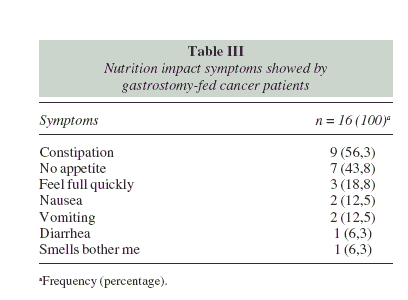
<body><![CDATA[<p><font face="Verdana" size="2"><i>Body weight changes during one month</i></font></p>     <p><font face="Verdana" size="2">When looking at unintentional body weight loss, 21 (50%) out of the 42 assessed patients had lost weight in the month earlier to the survey filling, 13 (31%) had gained weight and 8 (19%) had maintained their body weight.</font></p>     <p><font face="Verdana" size="2">By analyzing the patient's weight loss percentage in the previous month, 26,2% had a weight loss of &le; 5%, suggesting risk of or moderate undernourishment, and 23,8% had lost &gt; 5% of their total body weight, which suggests severe undernourishment (<a href="#t1">Table I</a>).</font></p>     <p><font face="Verdana" size="2">The weight loss percentage in the month that preceded the assessment varied between 0% and 10% of lost weight, with an average 2,5 ± 3,1%. Well-nourished patients (PG-SGA A) had an average lost weight percentage of 0,4 ± 0,9%, while those with suspected or moderate undernourishment (PG-SGA B) lost, in average, 3,5 ± 3,1% and those severely undernourished (PG-SGA C) had a weight loss average of 5,3 ± 3,6% (<a target="_blank" href="/img/revistas/nh/v29n2/26originalvaloracionnutricional02_t2.gif">Table II</a>).</font></p>     <p><font face="Verdana" size="2"><i>Food Intake during the past month</i></font></p>     <p><font face="Verdana" size="2">In the "Food Intake" section, all patients confirmed they were PEG-fed. Three of them (7,1%) claimed to also ingest some food orally. Nevertheless, most of their feeding was through the PEG tube and the oral intake only "for pleasure". Oral ingestion was not taken into account when providing for the patients' nutritional needs. Even so, 11 patients (26,2%) displayed psychological resistance to this method of feeding, even though they were unable to eat through any other method.</font></p>     <p><font face="Verdana" size="2"><i>Prevalence of nutrition impact symptoms</i></font></p>     <p><font face="Verdana" size="2">Evaluating the presence of typical cancer patients' symptoms that affect food ingestion or nutrient absorption, 16 patients (38,1%) presented nutritionally significant symptoms (<a href="#t3">Table III</a>). The remaining 26 patients (61,9%) didn't present symptoms that prevented tube feeding.</font></p>     <p>&nbsp;</p>     <p align="center"><font face="Verdana" size="2"><a name="t3"><img src="/img/revistas/nh/v29n2/26originalvaloracionnutricional02_t3.gif"></a></font></p>     ]]></body>
<body><![CDATA[<p>&nbsp;</p>     <p><font face="Verdana" size="2"><i>Functional capacity during the past month</i></font></p>     <p><font face="Verdana" size="2">Evaluating the functional capacity during the last month before the study, 6 patients (14,3%) said they had normal activities with no limitations, 11 (26,2%) said they did not have normal activities, but were able to stand up and perform mild normal activities, 8 (19%), said they were not able to perform most activities, although they were in bed or sitting less than half the day, 11 (26,2%) claimed to be able to do little activity and to spend most of the day in bed or on a chair and 6 (14,3%) were mostly bedridden, rarely being out of bed. Most patients showed some mild functional deficit during the month before the study, 8 (19%) showed a moderate functional deficit and 17 (40,5%) a severe functional deficit.</font></p>     <p><font face="Verdana" size="2"><i>Total PG-SGA Score</i></font></p>     <p><font face="Verdana" size="2">The average total PG-SGA score was 7,4 ± 4,0 points (median: 7 points), ranging between 1 and 17 points. Well-nourished patients (PG-SGA A) had an average PG-SGA total score of 3,9 ± 2,1 points, those suspected of or moderately undernourished (PG-SGA B), 8,7 ± 2,5 points and those severely undernourished had an average score of 12,8 ± 3,8 points (<a target="_blank" href="/img/revistas/nh/v29n2/26originalvaloracionnutricional02_t2.gif">Table II</a>). According to the total PG-SGA score, 41 patients needed an appropriate nutritional or pharmacologic intervention.</font></p>     <p>&nbsp;</p>     <p><font face="Verdana" size="2"><b>Nutritional assessment rating, albumin and transferrin: how they're related</b></font></p>     <p><font face="Verdana" size="2">The range of serum albumin levels was 2,5-5,0 g/dl (normal 3,5-5,0 g/dl). The average serum albumin levels were 3,9 ± 0,7 g/dl (<a target="_blank" href="/img/revistas/nh/v29n2/26originalvaloracionnutricional02_t4.gif">Table IV</a>). The serum albumin levels were low (&lt; 3,5 g/dl) in 13 patients (31%) and within the reference range for normality in 29 patients (69%). Out of the 17 patients rated as well-nourished, 16 (94,1%) presented normal serum albumin levels and 1 (5,9%) a low serum albumin level. Out of the 25 patients rated as moderately or severely undernourished, 13 (52%) presented normal serum albumin levels and 12 (48%) low serum albumin levels.</font></p>     <p><font face="Verdana" size="2">In well-nourished patients (PG-SGA A) the average serum albumin level was 4,4 ± 0,4 g/dl (range: 3,3-5,0 g/dl), in patients with suspected or moderate undernutrition (PG-SGA B) 3,7 ± 0,5 mg/dl (range: 2,8-4,3 g/dl) and in severely undernourished patients (PG-SGA C) 3,1 ± 0,6 mg/dl (range: 2,5-3,8 g/dl). Statistically significant differences were found between the average serum albumin level in well-nourished patients (PG-SGA - A) and moderately or severely undernourished patients (PG-SGA B+C) (p&lt; 0.001) (<a target="_blank" href="/img/revistas/nh/v29n2/26originalvaloracionnutricional02_t4.gif">Table IV</a>).</font></p>     <p><font face="Verdana" size="2">An association was found between the nutritional status rating using the PG-SGA tool and the serum albumin levels in these cancer patients subject to prolonged PEG-feeding (p = 0,011).</font></p>     ]]></body>
<body><![CDATA[<p><font face="Verdana" size="2">The range of serum transferrin levels was 95-325 mg/dl (normal: 200-360 mg/dl). The average serum transferrin levels were 204,95 ± 54,5 mg/dl (<a target="_blank" href="/img/revistas/nh/v29n2/26originalvaloracionnutricional02_t4.gif">Table IV</a>). The serum transferrin levels were low (&lt; 200 mg/dl) in 19 patients (45,2%) and within the reference range for normality in 23 patients (54,8%). Out of the 17 patients rated as well-nourished, 14 (82,4%) presented normal serum transferrin levels and 3 (17,6%) low serum transferrin levels. Out of the 25 patients rated as moderately or severely undernourished, 9 (36%) presented normal serum transferrin levels and 16 (64%) low serum transferrin levels.</font></p>     <p><font face="Verdana" size="2">In well-nourished patients (PG-SGA A) the average serum transferrin level was 241,2 ± 46,5 mg/dl (range: 140-325 mg/dl) in patients with suspected or moderate undernutrition (PG-SGA B) 185,6 ± 46,7 mg/dl (range: 95-266 mg/dl) and in severely undernourished patients (PG-SGA C) was 163,3 ± 39,9 mg/dl (range: 100-222 mg/dl). Statistically significant differences were found between the average serum transferrin levels in well-nourished patients (PG-SGA A) and in moderately or severely undernourished patients (PG-SGA B+C) (p &lt; 0.001) (<a target="_blank" href="/img/revistas/nh/v29n2/26originalvaloracionnutricional02_t4.gif">Table IV</a>).</font></p>     <p><font face="Verdana" size="2">An association was found between the nutritional status rating using the PG-SGA tool and the serum transferrin of cancer patients subject to prolonged enteral feeding by gastrostomy (p = 0,008).</font></p>     <p>&nbsp;</p>     <p><font face="Verdana" size="2"><b>Discussion</b></font></p>     <p><font face="Verdana" size="2">The PG-SGA tool had already been used on patients with different types of cancer, but no other studies evaluated the use of the PG-SGA in head or neck cancer patients needing a gastrostomy for enteral feeding<sup>16,18,29,24</sup>. Our study proved that PG-SGA is a feasible and easily usable tool to assess the nutritional status of head or neck gastrostomized cancer patients, even in those whose tumor location or treatments caused speech difficulties<sup>16,24,25</sup>.</font></p>     <p><font face="Verdana" size="2">Using the PG-SGA nutritional assessment, it is clear that undernutrition had very high prevalence in our patients, with 59,5% of the patients being moderately or severely undernourished (PG-SGA B+C). This result is in accordance with the undernutrition prevalence mentioned by other authors (40-80%) found in cancer patients<sup>2-4,16</sup>. The moderately or severely undernourished patient's prevalence was higher than the one found by other authors (43,8%) in patients with head or neck cancers but not subject to PEG-feeding<sup>29</sup>.</font></p>     <p><font face="Verdana" size="2">The percentage of patients that lost body weight involuntarily in the month before the nutritional assessment was very high. Twenty-one patients were shown to have lost weight, with 10 of them having lost more than 5% of their body weight, which is considered a significant unintentional weight loss in a month<sup>30</sup>. This pronounced weight loss in some patients was possibly due to the joined effect of the cancer's aggression, the cancer treatments and emotional factors, such as depression and unwillingness to be PEG-fed<sup>31,32</sup>. In spite of being gastrostomized, and thus having a backup feeding suply, some patients were reluctant to being tube fed, and went on having a food intake below their needs.</font></p>     <p><font face="Verdana" size="2">Weight loss prevalence in our sample was lower to the one detected by other groups of patients with head or neck cancer (70%) due to the fact of our patients being gastrostomized, to have an alternate feeding system<sup>24,33,34</sup>. Severely undernourished patients (PG-SGA C) had a higher average weight loss percentage, followed by those who were moderately undernourished (PG-SGA B) and those who were well-nourished (PG-SGA A). Likewise, due to being at an advanced stage of nutritional status deterioration, the benefits of nutritional intervention in severely undernourished patients are, as mentioned by other authors, limited<sup>35</sup>. So, it is important to identify symptoms related to a pre-cachexia phase and to initiate tube feeding sooner on patients with higher risk of undernutrition, before the treatment, to prevent weight loss and the patient's nutritional status decay<sup>5,35</sup>. Tube feeding has allowed for appropriate food intake, and thus the maintenance or body weight gain in 21 patients (50%), fulfilling the intended purpose of maintaining or increasing body weight<sup>5,8</sup>.</font></p>     <p><font face="Verdana" size="2">In our study, the reasons pointed out by the patients that were relevant for decreased food intake or nutrient absorption were constipation, anorexia, early satiation, nausea, vomiting and diarrhea, all symptoms common in cancer patients, as pointed out by other authors<sup>6,34</sup>. In another study with patients with head or neck cancer, the most frequent symptoms were dysphagia, due to the harmful location of the tumors, and pain, which affected food intake, which were not relevant complaints from our patients, due to the PEG feeding option<sup>29</sup>.</font></p>     ]]></body>
<body><![CDATA[<p><font face="Verdana" size="2">Most patients presented some degree of functional deficit in the month before the PG-SGA study, with 25 patients (59,5%) presenting moderate or severe functional deficit.</font></p>     <p><font face="Verdana" size="2">As expected, severely undernourished patients (PG-SGA C) were the ones that had a higher average total PG-SGA score, followed by those moderately undernourished (AGS-GD B) and those well-nourished (PG-SGA A). In our sample, like in other studies, patients with PG-SGA scores of 0-1 (no need for treatment or nutritional intervention) were rare<sup>25</sup>.</font></p>     <p><font face="Verdana" size="2">Looking at the laboratory data, severely undernourished patients (PG-SGA C) were the ones that presented lower average serum albumin and transferrin levels, followed by those moderately undernourished (PG-SGA B) and those well-nourished (PG-SGA A). Statistically significant differences were found in our study between the average serum albumin and transferrin levels in well-nourished (PG-SGA A) and moderately and severely undernourished patients (PG-SGA B+C)<sup>20,21,24</sup>. An association was found, in our study, between the nutritional status assessment using the PG-SGA and the serum albumin and transferrin levels in cancer patients subject to prolonged tube feeding. Although in many clinical settings serum albumin and transferrin levels may reflect inflammatory status, the close relation between the PG-SGA and the serum proteins suggests that low albumin and transferrin are biomarkers of malnutrition in our head or neck cancer patients<sup>2,11,12,14</sup>.</font></p>     <p>&nbsp;</p>     <p><font face="Verdana" size="2"><b>Conclusions</b></font></p>     <p><font face="Verdana" size="2">In our experience with PEG fed head or neck cancer patients, PG-SGA was a practicable tool for nutritional status evaluation, even in patients with impaired speaking skills. PG-SGA was a useful tool in classifying most (25/42) of the patients as PG-SGA B or C, with moderate/severe malnutrition. Scored-PG-SGA rated 41 out of 42 with scores &ge; 2, thus identifying the need for nutritional or pharmacological intervention. Scored-PG-SGA should be systematically included in the evaluation of head or neck cancer PEG fed patients, even in those with speech difficulties. Although cancer patients may have low grade systemic inflammation, in our patients, serum albumin and transferrin showed a relation with PG-SGA and should be considered as nutritional biomarkers.</font></p>     <p>&nbsp;</p>     <p><font face="Verdana" size="2"><b>References</b></font></p>     <!-- ref --><p><font face="Verdana" size="2">1. Grilo A, Santos CA, Fonseca J. Percutaneous endoscopic gastrostomy for nutritional palliation of upper esophageal cancer unsuitable for esophageal stenting. <i>Arq Gastroenterol</i> 2012; 49 (3): 227-31.    &nbsp;&nbsp;&nbsp;&nbsp;&nbsp;&nbsp;&nbsp;&nbsp;[&#160;<a href="javascript:void(0);" onclick="javascript: window.open('/scielo.php?script=sci_nlinks&ref=3794108&pid=S0212-1611201400020002600001&lng=','','width=640,height=500,resizable=yes,scrollbars=1,menubar=yes,');">Links</a>&#160;]<!-- end-ref --></font></p>    ]]></body>
<body><![CDATA[<!-- ref --><p><font face="Verdana" size="2">2. Gupta D, Vashi PG, Lammersfeld CA, Braun DP. Role of nutritional status in predicting the length of stay in cancer: a systematic review of the epidemiological literature. <i>Ann Nutr Metab</i> 2011; 59 (2-4): 96-106.    &nbsp;&nbsp;&nbsp;&nbsp;&nbsp;&nbsp;&nbsp;&nbsp;[&#160;<a href="javascript:void(0);" onclick="javascript: window.open('/scielo.php?script=sci_nlinks&ref=3794110&pid=S0212-1611201400020002600002&lng=','','width=640,height=500,resizable=yes,scrollbars=1,menubar=yes,');">Links</a>&#160;]<!-- end-ref --></font></p>    <!-- ref --><p><font face="Verdana" size="2">3. Gomez Candela C, Olivar Roldan J, García M, Marin M, Madero R, Pérez-Portabella C, et al. Assessment of a malnutrition screening tool in cancer patients. <i>Nutr Hosp</i> 2010; 25 (3): 400-5.    &nbsp;&nbsp;&nbsp;&nbsp;&nbsp;&nbsp;&nbsp;&nbsp;[&#160;<a href="javascript:void(0);" onclick="javascript: window.open('/scielo.php?script=sci_nlinks&ref=3794112&pid=S0212-1611201400020002600003&lng=','','width=640,height=500,resizable=yes,scrollbars=1,menubar=yes,');">Links</a>&#160;]<!-- end-ref --></font></p>    <!-- ref --><p><font face="Verdana" size="2">4. Ravasco P, Monteiro-Grillo I, Vidal PM, Camilo ME. Nutritional deterioration in cancer: the role of disease and diet. <i>Clin Oncol (R Coll Radiol)</i> 2003; 15 (8): 443-50.    &nbsp;&nbsp;&nbsp;&nbsp;&nbsp;&nbsp;&nbsp;&nbsp;[&#160;<a href="javascript:void(0);" onclick="javascript: window.open('/scielo.php?script=sci_nlinks&ref=3794114&pid=S0212-1611201400020002600004&lng=','','width=640,height=500,resizable=yes,scrollbars=1,menubar=yes,');">Links</a>&#160;]<!-- end-ref --></font></p>    <!-- ref --><p><font face="Verdana" size="2">5. Arends J, Bodoky G, Bozzetti F, Fearon K, Muscaritoli M, Selga G, et al. ESPEN Guidelines on Enteral Nutrition: Nonsurgical oncology. <i>Clin Nutr</i> 2006; 25 (2): 245-59.    &nbsp;&nbsp;&nbsp;&nbsp;&nbsp;&nbsp;&nbsp;&nbsp;[&#160;<a href="javascript:void(0);" onclick="javascript: window.open('/scielo.php?script=sci_nlinks&ref=3794116&pid=S0212-1611201400020002600005&lng=','','width=640,height=500,resizable=yes,scrollbars=1,menubar=yes,');">Links</a>&#160;]<!-- end-ref --></font></p>    <!-- ref --><p><font face="Verdana" size="2">6. Kubrak C, Olson K, Jha N, Jensen L, McCargar L, Seikaly H, et al. Nutrition impact symptoms: key determinants of reduced dietary intake, weight loss, and reduced functional capacity of patients with head and neck cancer before treatment. <i>Head Neck</i> 2010; 32 (3): 290-300.    &nbsp;&nbsp;&nbsp;&nbsp;&nbsp;&nbsp;&nbsp;&nbsp;[&#160;<a href="javascript:void(0);" onclick="javascript: window.open('/scielo.php?script=sci_nlinks&ref=3794118&pid=S0212-1611201400020002600006&lng=','','width=640,height=500,resizable=yes,scrollbars=1,menubar=yes,');">Links</a>&#160;]<!-- end-ref --></font></p>    ]]></body>
<body><![CDATA[<!-- ref --><p><font face="Verdana" size="2">7. Paccagnella A, Morello M, Da Mosto MC, Baruffi C, Marcon ML, Gava A, et al. Early nutritional intervention improves treatment tolerance and outcomes in head and neck cancer patients undergoing concurrent chemoradiotherapy. <i>Support Care Cancer</i> 2010; 18 (7): 837-45.    &nbsp;&nbsp;&nbsp;&nbsp;&nbsp;&nbsp;&nbsp;&nbsp;[&#160;<a href="javascript:void(0);" onclick="javascript: window.open('/scielo.php?script=sci_nlinks&ref=3794120&pid=S0212-1611201400020002600007&lng=','','width=640,height=500,resizable=yes,scrollbars=1,menubar=yes,');">Links</a>&#160;]<!-- end-ref --></font></p>    <!-- ref --><p><font face="Verdana" size="2">8. Jeffery E, Sherriff J, Langdon C. A clinical audit of the nutritional status and need for nutrition support amongst head and neck cancer patients treated with radiotherapy. <i>Australas Med J</i> 2012; 5 (1): 8-13.    &nbsp;&nbsp;&nbsp;&nbsp;&nbsp;&nbsp;&nbsp;&nbsp;[&#160;<a href="javascript:void(0);" onclick="javascript: window.open('/scielo.php?script=sci_nlinks&ref=3794122&pid=S0212-1611201400020002600008&lng=','','width=640,height=500,resizable=yes,scrollbars=1,menubar=yes,');">Links</a>&#160;]<!-- end-ref --></font></p>    <!-- ref --><p><font face="Verdana" size="2">9. Pereira M, Santos C, Fonseca J. Body Mass Index estimation on Gastrostomy Patients using the Mid Upper Arm Circumference. <i>J Aging Res Clin Practice</i> 2012; 1 (3): 252-5.    &nbsp;&nbsp;&nbsp;&nbsp;&nbsp;&nbsp;&nbsp;&nbsp;[&#160;<a href="javascript:void(0);" onclick="javascript: window.open('/scielo.php?script=sci_nlinks&ref=3794124&pid=S0212-1611201400020002600009&lng=','','width=640,height=500,resizable=yes,scrollbars=1,menubar=yes,');">Links</a>&#160;]<!-- end-ref --></font></p>    <!-- ref --><p><font face="Verdana" size="2">10. Fonseca J, Santos CA. Clinical anatomy: anthropometry for nutritional assessment of 367 adults who underwent endoscopic gastrostomy. <i>Acta Med Port</i> 2013; 26 (3): 212-8.    &nbsp;&nbsp;&nbsp;&nbsp;&nbsp;&nbsp;&nbsp;&nbsp;[&#160;<a href="javascript:void(0);" onclick="javascript: window.open('/scielo.php?script=sci_nlinks&ref=3794126&pid=S0212-1611201400020002600010&lng=','','width=640,height=500,resizable=yes,scrollbars=1,menubar=yes,');">Links</a>&#160;]<!-- end-ref --></font></p>    <!-- ref --><p><font face="Verdana" size="2">11. Fuhrman MP, Charney P, Mueller CM. Hepatic proteins and nutrition assessment. <i>J Am Diet Assoc</i> 2004; 104 (8): 1258-64.    &nbsp;&nbsp;&nbsp;&nbsp;&nbsp;&nbsp;&nbsp;&nbsp;[&#160;<a href="javascript:void(0);" onclick="javascript: window.open('/scielo.php?script=sci_nlinks&ref=3794128&pid=S0212-1611201400020002600011&lng=','','width=640,height=500,resizable=yes,scrollbars=1,menubar=yes,');">Links</a>&#160;]<!-- end-ref --></font></p>    ]]></body>
<body><![CDATA[<!-- ref --><p><font face="Verdana" size="2">12. Duguet A, Bachmann P, Lallemand Y, Blanc-Vincent MP, FNCLCC. Summary report of the Standards, Options and Recommendations for malnutrition and nutritional assessment in patients with cancer (1999). <i>Br J Cancer</i> 2003; 89 (Suppl. 1): S92-7.    &nbsp;&nbsp;&nbsp;&nbsp;&nbsp;&nbsp;&nbsp;&nbsp;[&#160;<a href="javascript:void(0);" onclick="javascript: window.open('/scielo.php?script=sci_nlinks&ref=3794130&pid=S0212-1611201400020002600012&lng=','','width=640,height=500,resizable=yes,scrollbars=1,menubar=yes,');">Links</a>&#160;]<!-- end-ref --></font></p>    <!-- ref --><p><font face="Verdana" size="2">13. Guerra LT, Rosa AR, Romani RF, Gurski RR, Schirmer CC, Kruel CD. Serum transferrin and serum prealbumin as markers of response to nutritional support in patients with esophageal cancer. <i>Nutr Hosp</i> 2009; 24 (2): 241-2.    &nbsp;&nbsp;&nbsp;&nbsp;&nbsp;&nbsp;&nbsp;&nbsp;[&#160;<a href="javascript:void(0);" onclick="javascript: window.open('/scielo.php?script=sci_nlinks&ref=3794132&pid=S0212-1611201400020002600013&lng=','','width=640,height=500,resizable=yes,scrollbars=1,menubar=yes,');">Links</a>&#160;]<!-- end-ref --></font></p>    <!-- ref --><p><font face="Verdana" size="2">14. Ellegård LH, Bosaeus IG. Biochemical indices to evaluate nutritional support for malignant disease. <i>Clin Chim Acta</i> 2008; 390 (1-2): 23-7.    &nbsp;&nbsp;&nbsp;&nbsp;&nbsp;&nbsp;&nbsp;&nbsp;[&#160;<a href="javascript:void(0);" onclick="javascript: window.open('/scielo.php?script=sci_nlinks&ref=3794134&pid=S0212-1611201400020002600014&lng=','','width=640,height=500,resizable=yes,scrollbars=1,menubar=yes,');">Links</a>&#160;]<!-- end-ref --></font></p>    <!-- ref --><p><font face="Verdana" size="2">15. Valenzuela-Landaeta K, Rojas P, Basfifer K. Nutritional assessment for cancer patient. <i>Nutr Hosp</i> 2012; 27 (2): 516-23.    &nbsp;&nbsp;&nbsp;&nbsp;&nbsp;&nbsp;&nbsp;&nbsp;[&#160;<a href="javascript:void(0);" onclick="javascript: window.open('/scielo.php?script=sci_nlinks&ref=3794136&pid=S0212-1611201400020002600015&lng=','','width=640,height=500,resizable=yes,scrollbars=1,menubar=yes,');">Links</a>&#160;]<!-- end-ref --></font></p>    <!-- ref --><p><font face="Verdana" size="2">16. Bauer J, Capra S, Ferguson M. Use of the scored Patient-Generated Subjective Global Assessment (PG-SGA) as a nutrition assessment tool in patients with cancer. <i>Eur J Clin Nutr</i> 2002; 56 (8): 779-85.    &nbsp;&nbsp;&nbsp;&nbsp;&nbsp;&nbsp;&nbsp;&nbsp;[&#160;<a href="javascript:void(0);" onclick="javascript: window.open('/scielo.php?script=sci_nlinks&ref=3794138&pid=S0212-1611201400020002600016&lng=','','width=640,height=500,resizable=yes,scrollbars=1,menubar=yes,');">Links</a>&#160;]<!-- end-ref --></font></p>    ]]></body>
<body><![CDATA[<!-- ref --><p><font face="Verdana" size="2">17. Ottery FD. Definition of standardized nutritional assessment and interventional pathways in oncology. <i>Nutrition</i> 1996; 12 (1 Suppl.): S15-9.    &nbsp;&nbsp;&nbsp;&nbsp;&nbsp;&nbsp;&nbsp;&nbsp;[&#160;<a href="javascript:void(0);" onclick="javascript: window.open('/scielo.php?script=sci_nlinks&ref=3794140&pid=S0212-1611201400020002600017&lng=','','width=640,height=500,resizable=yes,scrollbars=1,menubar=yes,');">Links</a>&#160;]<!-- end-ref --></font></p>    <!-- ref --><p><font face="Verdana" size="2">18. Kim JY, Wie GA, Cho YA, Kim SY, Kim SM, Son KH, et al. Development and validation of a nutrition screening tool for hospitalized cancer patients. <i>Clin Nutr</i> 2011; 30 (6): 724-9.    &nbsp;&nbsp;&nbsp;&nbsp;&nbsp;&nbsp;&nbsp;&nbsp;[&#160;<a href="javascript:void(0);" onclick="javascript: window.open('/scielo.php?script=sci_nlinks&ref=3794142&pid=S0212-1611201400020002600018&lng=','','width=640,height=500,resizable=yes,scrollbars=1,menubar=yes,');">Links</a>&#160;]<!-- end-ref --></font></p>    <!-- ref --><p><font face="Verdana" size="2">19. Read JA, Crockett N, Volker DH, MacLennan P, Choy ST, Beale P, et al. Nutritional assessment in cancer: comparing the Mini-Nutritional Assessment (MNA) with the scored PatientGenerated Subjective Global Assessment (PGSGA). <i>Nutr Cancer</i> 2005; 53 (1): 51-6.    &nbsp;&nbsp;&nbsp;&nbsp;&nbsp;&nbsp;&nbsp;&nbsp;[&#160;<a href="javascript:void(0);" onclick="javascript: window.open('/scielo.php?script=sci_nlinks&ref=3794144&pid=S0212-1611201400020002600019&lng=','','width=640,height=500,resizable=yes,scrollbars=1,menubar=yes,');">Links</a>&#160;]<!-- end-ref --></font></p>    <!-- ref --><p><font face="Verdana" size="2">20. Cid Conde L, Fernández López T, Neira Blanco P, Arias Delgado J, Varela Correa JJ, Gómez Lorenzo FF. Hyponutrition prevalence among patients with digestive neoplasm before surgery. <i>Nutr Hosp</i> 2008; 23 (1): 46-53.    &nbsp;&nbsp;&nbsp;&nbsp;&nbsp;&nbsp;&nbsp;&nbsp;[&#160;<a href="javascript:void(0);" onclick="javascript: window.open('/scielo.php?script=sci_nlinks&ref=3794146&pid=S0212-1611201400020002600020&lng=','','width=640,height=500,resizable=yes,scrollbars=1,menubar=yes,');">Links</a>&#160;]<!-- end-ref --></font></p>    <!-- ref --><p><font face="Verdana" size="2">21. Laky B, Janda M, Bauer J, Vavra C, Cleghorn G, Obermair A. Malnutrition among gynaecological cancer patients. <i>Eur J Clin Nutr</i> 2007; 61 (5): 642-6.    &nbsp;&nbsp;&nbsp;&nbsp;&nbsp;&nbsp;&nbsp;&nbsp;[&#160;<a href="javascript:void(0);" onclick="javascript: window.open('/scielo.php?script=sci_nlinks&ref=3794148&pid=S0212-1611201400020002600021&lng=','','width=640,height=500,resizable=yes,scrollbars=1,menubar=yes,');">Links</a>&#160;]<!-- end-ref --></font></p>    ]]></body>
<body><![CDATA[<!-- ref --><p><font face="Verdana" size="2">22. Laky B, Janda M, Cleghorn G, Obermair A. Comparison of different nutritional assessments and body-composition measurements in detecting malnutrition among gynecologic cancer patients. <i>Am J Clin Nutr</i> 2008; 87 (6): 1678-85.    &nbsp;&nbsp;&nbsp;&nbsp;&nbsp;&nbsp;&nbsp;&nbsp;[&#160;<a href="javascript:void(0);" onclick="javascript: window.open('/scielo.php?script=sci_nlinks&ref=3794150&pid=S0212-1611201400020002600022&lng=','','width=640,height=500,resizable=yes,scrollbars=1,menubar=yes,');">Links</a>&#160;]<!-- end-ref --></font></p>    <!-- ref --><p><font face="Verdana" size="2">23. Li R, Wu J, Ma M, Pei J, Song Y, Zhang X, et al. Comparison of PG-SGA, SGA and body-composition measurement in detecting malnutrition among newly diagnosed lung cancer patients in stage IIIB/IV and benign conditions. <i>Med Oncol</i> 2011; 28 (3): 689-96.    &nbsp;&nbsp;&nbsp;&nbsp;&nbsp;&nbsp;&nbsp;&nbsp;[&#160;<a href="javascript:void(0);" onclick="javascript: window.open('/scielo.php?script=sci_nlinks&ref=3794152&pid=S0212-1611201400020002600023&lng=','','width=640,height=500,resizable=yes,scrollbars=1,menubar=yes,');">Links</a>&#160;]<!-- end-ref --></font></p>    <!-- ref --><p><font face="Verdana" size="2">24. Persson C, Sjodén PO, Glimelius B. The Swedish version of the patient-generated subjective global assessment of nutritional status: gastrointestinal <i>vs</i> urological cancers. <i>Clin Nutr</i> 1999; 18 (2): 71-7.    &nbsp;&nbsp;&nbsp;&nbsp;&nbsp;&nbsp;&nbsp;&nbsp;[&#160;<a href="javascript:void(0);" onclick="javascript: window.open('/scielo.php?script=sci_nlinks&ref=3794154&pid=S0212-1611201400020002600024&lng=','','width=640,height=500,resizable=yes,scrollbars=1,menubar=yes,');">Links</a>&#160;]<!-- end-ref --></font></p>    <!-- ref --><p><font face="Verdana" size="2">25. Segura A, Pardo J, Jara C, Zugazabeitia L, Carulla J, de Las Peñas R, et al. An epidemiological evaluation of the prevalence of malnutrition in Spanish patients with locally advanced or metastatic cancer. <i>Clin Nutr</i> 2005; 24 (5): 801-14.    &nbsp;&nbsp;&nbsp;&nbsp;&nbsp;&nbsp;&nbsp;&nbsp;[&#160;<a href="javascript:void(0);" onclick="javascript: window.open('/scielo.php?script=sci_nlinks&ref=3794156&pid=S0212-1611201400020002600025&lng=','','width=640,height=500,resizable=yes,scrollbars=1,menubar=yes,');">Links</a>&#160;]<!-- end-ref --></font></p>    <!-- ref --><p><font face="Verdana" size="2">26. Dati F, Schumann G, Thomas L, Aguzzi F, Baudner S, Bienvenu J, et al. Consensus of a group of professional societies and diagnostic companies on guidelines for interim reference ranges for 14 proteins in serum based on the standardization against the IFCC/BCR/CAP Reference Material (CRM 470). International Federation of Clinical Chemistry. Community Bureau of Reference of the Commission of the European Communities. College of American Pathologists. <i>Eur J Clin Chem Clin Biochem</i> 1996; 34 (6): 517-20.    &nbsp;&nbsp;&nbsp;&nbsp;&nbsp;&nbsp;&nbsp;&nbsp;[&#160;<a href="javascript:void(0);" onclick="javascript: window.open('/scielo.php?script=sci_nlinks&ref=3794158&pid=S0212-1611201400020002600026&lng=','','width=640,height=500,resizable=yes,scrollbars=1,menubar=yes,');">Links</a>&#160;]<!-- end-ref --></font></p>    ]]></body>
<body><![CDATA[<!-- ref --><p><font face="Verdana" size="2"> 27. Acuña K, Cruz T. Nutritional assessment of adults and elderly and the nutritional status of the Brazilian population. <i>Arq Bras Endocrinol Metabol</i> 2004; 48 (3): 345-61.    &nbsp;&nbsp;&nbsp;&nbsp;&nbsp;&nbsp;&nbsp;&nbsp;[&#160;<a href="javascript:void(0);" onclick="javascript: window.open('/scielo.php?script=sci_nlinks&ref=3794160&pid=S0212-1611201400020002600027&lng=','','width=640,height=500,resizable=yes,scrollbars=1,menubar=yes,');">Links</a>&#160;]<!-- end-ref --></font></p>    <!-- ref --><p><font face="Verdana" size="2">28. Salvino RM, Dechicco RS, Seidner DL. Perioperative nutrition support: who and how. <i>Cleve Clin J Med</i> 2004; 71 (4): 345-51.    &nbsp;&nbsp;&nbsp;&nbsp;&nbsp;&nbsp;&nbsp;&nbsp;[&#160;<a href="javascript:void(0);" onclick="javascript: window.open('/scielo.php?script=sci_nlinks&ref=3794162&pid=S0212-1611201400020002600028&lng=','','width=640,height=500,resizable=yes,scrollbars=1,menubar=yes,');">Links</a>&#160;]<!-- end-ref --></font></p>    <!-- ref --><p><font face="Verdana" size="2">29. Arribas L, Hurtós L, Milà R, Fort E, Peiró I. Predict factors associated with malnutrition from patient generated subjective global assessment (pg-sga) in head and neck cancer patients. <i>Nutr Hosp</i> 2013; 28 (1): 155-62.    &nbsp;&nbsp;&nbsp;&nbsp;&nbsp;&nbsp;&nbsp;&nbsp;[&#160;<a href="javascript:void(0);" onclick="javascript: window.open('/scielo.php?script=sci_nlinks&ref=3794164&pid=S0212-1611201400020002600029&lng=','','width=640,height=500,resizable=yes,scrollbars=1,menubar=yes,');">Links</a>&#160;]<!-- end-ref --></font></p>    <!-- ref --><p><font face="Verdana" size="2">30. Jager-Wittenaar H, Dijkstra PU, Vissink A, van der Laan BF, van Oort RP, Roodenburg JL. Critical weight loss in head and neck cancer-prevalence and risk factors at diagnosis: an explorative study. <i>Support Care Cancer</i> 2007; 15 (9): 1045-50.    &nbsp;&nbsp;&nbsp;&nbsp;&nbsp;&nbsp;&nbsp;&nbsp;[&#160;<a href="javascript:void(0);" onclick="javascript: window.open('/scielo.php?script=sci_nlinks&ref=3794166&pid=S0212-1611201400020002600030&lng=','','width=640,height=500,resizable=yes,scrollbars=1,menubar=yes,');">Links</a>&#160;]<!-- end-ref --></font></p>    <!-- ref --><p><font face="Verdana" size="2">31. Hopkinson JB, Wright DN, McDonald JW, Corner JL. The prevalence of concern about weight loss and change in eating habits in people with advanced cancer. <i>J Pain Symptom Manage</i> 2006; 32 (4): 322-31.    &nbsp;&nbsp;&nbsp;&nbsp;&nbsp;&nbsp;&nbsp;&nbsp;[&#160;<a href="javascript:void(0);" onclick="javascript: window.open('/scielo.php?script=sci_nlinks&ref=3794168&pid=S0212-1611201400020002600031&lng=','','width=640,height=500,resizable=yes,scrollbars=1,menubar=yes,');">Links</a>&#160;]<!-- end-ref --></font></p>    ]]></body>
<body><![CDATA[<!-- ref --><p><font face="Verdana" size="2">32. Khalid U, Spiro A, Baldwin C, Sharma B, McGough C, Norman AR, et al. Symptoms and weight loss in patients with gastrointestinal and lung cancer at presentation. <i>Support Care Cancer</i> 2007; 15 (1): 39-46.    &nbsp;&nbsp;&nbsp;&nbsp;&nbsp;&nbsp;&nbsp;&nbsp;[&#160;<a href="javascript:void(0);" onclick="javascript: window.open('/scielo.php?script=sci_nlinks&ref=3794170&pid=S0212-1611201400020002600032&lng=','','width=640,height=500,resizable=yes,scrollbars=1,menubar=yes,');">Links</a>&#160;]<!-- end-ref --></font></p>    <!-- ref --><p><font face="Verdana" size="2">33. Daly JM, Fry WA, Little AG, Winchester DP, McKee RF, Stewart AK, et al. Esophageal cancer: results of an American College of Surgeons Patient Care Evaluation Study. <i>J Am Coll Surg</i> 2000; 190 (5): 562-72; discussion 72-3.    &nbsp;&nbsp;&nbsp;&nbsp;&nbsp;&nbsp;&nbsp;&nbsp;[&#160;<a href="javascript:void(0);" onclick="javascript: window.open('/scielo.php?script=sci_nlinks&ref=3794172&pid=S0212-1611201400020002600033&lng=','','width=640,height=500,resizable=yes,scrollbars=1,menubar=yes,');">Links</a>&#160;]<!-- end-ref --></font></p>    <!-- ref --><p><font face="Verdana" size="2">34. von Meyenfeldt M. Cancer-associated malnutrition: an introduction. <i>Eur J Oncol Nurs</i> 2005; 9 (Suppl. 2): S35-8.    &nbsp;&nbsp;&nbsp;&nbsp;&nbsp;&nbsp;&nbsp;&nbsp;[&#160;<a href="javascript:void(0);" onclick="javascript: window.open('/scielo.php?script=sci_nlinks&ref=3794174&pid=S0212-1611201400020002600034&lng=','','width=640,height=500,resizable=yes,scrollbars=1,menubar=yes,');">Links</a>&#160;]<!-- end-ref --></font></p>    <!-- ref --><p><font face="Verdana" size="2">35. Muscaritoli M, Anker SD, Argilés J, Aversa Z, Bauer JM, Biolo G, et al. Consensus definition of sarcopenia, cachexia and precachexia: joint document elaborated by Special Interest Groups (SIG) "cachexia-anorexia in chronic wasting diseases" and "nutrition in geriatrics". <i>Clin Nutr</i> 2010; 29 (2): 154-9.    &nbsp;&nbsp;&nbsp;&nbsp;&nbsp;&nbsp;&nbsp;&nbsp;[&#160;<a href="javascript:void(0);" onclick="javascript: window.open('/scielo.php?script=sci_nlinks&ref=3794176&pid=S0212-1611201400020002600035&lng=','','width=640,height=500,resizable=yes,scrollbars=1,menubar=yes,');">Links</a>&#160;]<!-- end-ref --></font></p>     <p>&nbsp;</p>     <p>&nbsp;</p>     ]]></body>
<body><![CDATA[<p><font face="Verdana" size="2"><a href="#top"><img border="0" src="/img/revistas/nh/v29n2/seta.gif" width="15" height="17"></a><a name="bajo"></a><b>Correspondence:</b>    <br>Carla Adriana Cunha Santos.    <br>Hospital Garcia de Orta.    <br>Av. Professor Torrado da Silva.    <br>2800 Almada. Portugal.    <br>E-mail: <a href="mailto:carla.adriana.santos@hotmail.com">carla.adriana.santos@hotmail.com</a></font></p>     <p><font face="Verdana" size="2">Recibido: 5-X-2013.    <br>1.<sup>a</sup> Revisión: 22-X-2013.    <br>Aceptado: 1-XII-2013.</font></p>      ]]></body><back>
<ref-list>
<ref id="B1">
<label>1</label><nlm-citation citation-type="journal">
<person-group person-group-type="author">
<name>
<surname><![CDATA[Grilo]]></surname>
<given-names><![CDATA[A]]></given-names>
</name>
<name>
<surname><![CDATA[Santos]]></surname>
<given-names><![CDATA[CA]]></given-names>
</name>
<name>
<surname><![CDATA[Fonseca]]></surname>
<given-names><![CDATA[J]]></given-names>
</name>
</person-group>
<article-title xml:lang="en"><![CDATA[Percutaneous endoscopic gastrostomy for nutritional palliation of upper esophageal cancer unsuitable for esophageal stenting]]></article-title>
<source><![CDATA[Arq Gastroenterol]]></source>
<year>2012</year>
<volume>49</volume>
<numero>3</numero>
<issue>3</issue>
<page-range>227-31</page-range></nlm-citation>
</ref>
<ref id="B2">
<label>2</label><nlm-citation citation-type="journal">
<person-group person-group-type="author">
<name>
<surname><![CDATA[Gupta]]></surname>
<given-names><![CDATA[D]]></given-names>
</name>
<name>
<surname><![CDATA[Vashi]]></surname>
<given-names><![CDATA[PG]]></given-names>
</name>
<name>
<surname><![CDATA[Lammersfeld]]></surname>
<given-names><![CDATA[CA]]></given-names>
</name>
<name>
<surname><![CDATA[Braun]]></surname>
<given-names><![CDATA[DP]]></given-names>
</name>
</person-group>
<article-title xml:lang="en"><![CDATA[Role of nutritional status in predicting the length of stay in cancer: a systematic review of the epidemiological literature]]></article-title>
<source><![CDATA[Ann Nutr Metab]]></source>
<year>2011</year>
<volume>59</volume>
<numero>2-4</numero>
<issue>2-4</issue>
<page-range>96-106</page-range></nlm-citation>
</ref>
<ref id="B3">
<label>3</label><nlm-citation citation-type="journal">
<person-group person-group-type="author">
<name>
<surname><![CDATA[Gomez Candela]]></surname>
<given-names><![CDATA[C]]></given-names>
</name>
<name>
<surname><![CDATA[Olivar Roldan]]></surname>
<given-names><![CDATA[J]]></given-names>
</name>
<name>
<surname><![CDATA[García]]></surname>
<given-names><![CDATA[M]]></given-names>
</name>
<name>
<surname><![CDATA[Marin]]></surname>
<given-names><![CDATA[M]]></given-names>
</name>
<name>
<surname><![CDATA[Madero]]></surname>
<given-names><![CDATA[R]]></given-names>
</name>
<name>
<surname><![CDATA[Pérez-Portabella]]></surname>
<given-names><![CDATA[C]]></given-names>
</name>
</person-group>
<article-title xml:lang="en"><![CDATA[Assessment of a malnutrition screening tool in cancer patients]]></article-title>
<source><![CDATA[Nutr Hosp]]></source>
<year>2010</year>
<volume>25</volume>
<numero>3</numero>
<issue>3</issue>
<page-range>400-5</page-range></nlm-citation>
</ref>
<ref id="B4">
<label>4</label><nlm-citation citation-type="journal">
<person-group person-group-type="author">
<name>
<surname><![CDATA[Ravasco]]></surname>
<given-names><![CDATA[P]]></given-names>
</name>
<name>
<surname><![CDATA[Monteiro-Grillo]]></surname>
<given-names><![CDATA[I]]></given-names>
</name>
<name>
<surname><![CDATA[Vidal]]></surname>
<given-names><![CDATA[PM]]></given-names>
</name>
<name>
<surname><![CDATA[Camilo]]></surname>
<given-names><![CDATA[ME]]></given-names>
</name>
</person-group>
<article-title xml:lang="en"><![CDATA[Nutritional deterioration in cancer: the role of disease and diet]]></article-title>
<source><![CDATA[Clin Oncol (R Coll Radiol)]]></source>
<year>2003</year>
<volume>15</volume>
<numero>8</numero>
<issue>8</issue>
<page-range>443-50</page-range></nlm-citation>
</ref>
<ref id="B5">
<label>5</label><nlm-citation citation-type="journal">
<person-group person-group-type="author">
<name>
<surname><![CDATA[Arends]]></surname>
<given-names><![CDATA[J]]></given-names>
</name>
<name>
<surname><![CDATA[Bodoky]]></surname>
<given-names><![CDATA[G]]></given-names>
</name>
<name>
<surname><![CDATA[Bozzetti]]></surname>
<given-names><![CDATA[F]]></given-names>
</name>
<name>
<surname><![CDATA[Fearon]]></surname>
<given-names><![CDATA[K]]></given-names>
</name>
<name>
<surname><![CDATA[Muscaritoli]]></surname>
<given-names><![CDATA[M]]></given-names>
</name>
<name>
<surname><![CDATA[Selga]]></surname>
<given-names><![CDATA[G]]></given-names>
</name>
</person-group>
<article-title xml:lang="en"><![CDATA[ESPEN Guidelines on Enteral Nutrition: Nonsurgical oncology]]></article-title>
<source><![CDATA[Clin Nutr]]></source>
<year>2006</year>
<volume>25</volume>
<numero>2</numero>
<issue>2</issue>
<page-range>245-59</page-range></nlm-citation>
</ref>
<ref id="B6">
<label>6</label><nlm-citation citation-type="journal">
<person-group person-group-type="author">
<name>
<surname><![CDATA[Kubrak]]></surname>
<given-names><![CDATA[C]]></given-names>
</name>
<name>
<surname><![CDATA[Olson]]></surname>
<given-names><![CDATA[K]]></given-names>
</name>
<name>
<surname><![CDATA[Jha]]></surname>
<given-names><![CDATA[N]]></given-names>
</name>
<name>
<surname><![CDATA[Jensen]]></surname>
<given-names><![CDATA[L]]></given-names>
</name>
<name>
<surname><![CDATA[McCargar]]></surname>
<given-names><![CDATA[L]]></given-names>
</name>
<name>
<surname><![CDATA[Seikaly]]></surname>
<given-names><![CDATA[H]]></given-names>
</name>
</person-group>
<article-title xml:lang="en"><![CDATA[Nutrition impact symptoms: key determinants of reduced dietary intake, weight loss, and reduced functional capacity of patients with head and neck cancer before treatment]]></article-title>
<source><![CDATA[Head Neck]]></source>
<year>2010</year>
<volume>32</volume>
<numero>3</numero>
<issue>3</issue>
<page-range>290-300</page-range></nlm-citation>
</ref>
<ref id="B7">
<label>7</label><nlm-citation citation-type="journal">
<person-group person-group-type="author">
<name>
<surname><![CDATA[Paccagnella]]></surname>
<given-names><![CDATA[A]]></given-names>
</name>
<name>
<surname><![CDATA[Morello]]></surname>
<given-names><![CDATA[M]]></given-names>
</name>
<name>
<surname><![CDATA[Da Mosto]]></surname>
<given-names><![CDATA[MC]]></given-names>
</name>
<name>
<surname><![CDATA[Baruffi]]></surname>
<given-names><![CDATA[C]]></given-names>
</name>
<name>
<surname><![CDATA[Marcon]]></surname>
<given-names><![CDATA[ML]]></given-names>
</name>
<name>
<surname><![CDATA[Gava]]></surname>
<given-names><![CDATA[A]]></given-names>
</name>
</person-group>
<article-title xml:lang="en"><![CDATA[Early nutritional intervention improves treatment tolerance and outcomes in head and neck cancer patients undergoing concurrent chemoradiotherapy]]></article-title>
<source><![CDATA[Support Care Cancer]]></source>
<year>2010</year>
<volume>18</volume>
<numero>7</numero>
<issue>7</issue>
<page-range>837-45</page-range></nlm-citation>
</ref>
<ref id="B8">
<label>8</label><nlm-citation citation-type="journal">
<person-group person-group-type="author">
<name>
<surname><![CDATA[Jeffery]]></surname>
<given-names><![CDATA[E]]></given-names>
</name>
<name>
<surname><![CDATA[Sherriff]]></surname>
<given-names><![CDATA[J]]></given-names>
</name>
<name>
<surname><![CDATA[Langdon]]></surname>
<given-names><![CDATA[C]]></given-names>
</name>
</person-group>
<article-title xml:lang="en"><![CDATA[A clinical audit of the nutritional status and need for nutrition support amongst head and neck cancer patients treated with radiotherapy]]></article-title>
<source><![CDATA[Australas Med J]]></source>
<year>2012</year>
<volume>5</volume>
<numero>1</numero>
<issue>1</issue>
<page-range>8-13</page-range></nlm-citation>
</ref>
<ref id="B9">
<label>9</label><nlm-citation citation-type="journal">
<person-group person-group-type="author">
<name>
<surname><![CDATA[Pereira]]></surname>
<given-names><![CDATA[M]]></given-names>
</name>
<name>
<surname><![CDATA[Santos]]></surname>
<given-names><![CDATA[C]]></given-names>
</name>
<name>
<surname><![CDATA[Fonseca]]></surname>
<given-names><![CDATA[J]]></given-names>
</name>
</person-group>
<article-title xml:lang="en"><![CDATA[Body Mass Index estimation on Gastrostomy Patients using the Mid Upper Arm Circumference]]></article-title>
<source><![CDATA[J Aging Res Clin Practice]]></source>
<year>2012</year>
<volume>1</volume>
<numero>3</numero>
<issue>3</issue>
<page-range>252-5</page-range></nlm-citation>
</ref>
<ref id="B10">
<label>10</label><nlm-citation citation-type="journal">
<person-group person-group-type="author">
<name>
<surname><![CDATA[Fonseca]]></surname>
<given-names><![CDATA[J]]></given-names>
</name>
<name>
<surname><![CDATA[Santos]]></surname>
<given-names><![CDATA[CA]]></given-names>
</name>
</person-group>
<article-title xml:lang="en"><![CDATA[Clinical anatomy: anthropometry for nutritional assessment of 367 adults who underwent endoscopic gastrostomy]]></article-title>
<source><![CDATA[Acta Med Port]]></source>
<year>2013</year>
<volume>26</volume>
<numero>3</numero>
<issue>3</issue>
<page-range>212-8</page-range></nlm-citation>
</ref>
<ref id="B11">
<label>11</label><nlm-citation citation-type="journal">
<person-group person-group-type="author">
<name>
<surname><![CDATA[Fuhrman]]></surname>
<given-names><![CDATA[MP]]></given-names>
</name>
<name>
<surname><![CDATA[Charney]]></surname>
<given-names><![CDATA[P]]></given-names>
</name>
<name>
<surname><![CDATA[Mueller]]></surname>
<given-names><![CDATA[CM]]></given-names>
</name>
</person-group>
<article-title xml:lang="en"><![CDATA[Hepatic proteins and nutrition assessment]]></article-title>
<source><![CDATA[J Am Diet Assoc]]></source>
<year>2004</year>
<volume>104</volume>
<numero>8</numero>
<issue>8</issue>
<page-range>1258-64</page-range></nlm-citation>
</ref>
<ref id="B12">
<label>12</label><nlm-citation citation-type="journal">
<person-group person-group-type="author">
<name>
<surname><![CDATA[Duguet]]></surname>
<given-names><![CDATA[A]]></given-names>
</name>
<name>
<surname><![CDATA[Bachmann]]></surname>
<given-names><![CDATA[P]]></given-names>
</name>
<name>
<surname><![CDATA[Lallemand]]></surname>
<given-names><![CDATA[Y]]></given-names>
</name>
<name>
<surname><![CDATA[Blanc-Vincent]]></surname>
<given-names><![CDATA[MP]]></given-names>
</name>
</person-group>
<article-title xml:lang="en"><![CDATA[FNCLCC. Summary report of the Standards, Options and Recommendations for malnutrition and nutritional assessment in patients with cancer (1999)]]></article-title>
<source><![CDATA[Br J Cancer]]></source>
<year>2003</year>
<volume>89</volume>
<numero>^s1</numero>
<issue>^s1</issue>
<supplement>1</supplement>
<page-range>S92-7</page-range></nlm-citation>
</ref>
<ref id="B13">
<label>13</label><nlm-citation citation-type="journal">
<person-group person-group-type="author">
<name>
<surname><![CDATA[Guerra]]></surname>
<given-names><![CDATA[LT]]></given-names>
</name>
<name>
<surname><![CDATA[Rosa]]></surname>
<given-names><![CDATA[AR]]></given-names>
</name>
<name>
<surname><![CDATA[Romani]]></surname>
<given-names><![CDATA[RF]]></given-names>
</name>
<name>
<surname><![CDATA[Gurski]]></surname>
<given-names><![CDATA[RR]]></given-names>
</name>
<name>
<surname><![CDATA[Schirmer]]></surname>
<given-names><![CDATA[CC]]></given-names>
</name>
<name>
<surname><![CDATA[Kruel]]></surname>
<given-names><![CDATA[CD]]></given-names>
</name>
</person-group>
<article-title xml:lang="en"><![CDATA[Serum transferrin and serum prealbumin as markers of response to nutritional support in patients with esophageal cancer]]></article-title>
<source><![CDATA[Nutr Hosp]]></source>
<year>2009</year>
<volume>24</volume>
<numero>2</numero>
<issue>2</issue>
<page-range>241-2</page-range></nlm-citation>
</ref>
<ref id="B14">
<label>14</label><nlm-citation citation-type="journal">
<person-group person-group-type="author">
<name>
<surname><![CDATA[Ellegård]]></surname>
<given-names><![CDATA[LH]]></given-names>
</name>
<name>
<surname><![CDATA[Bosaeus]]></surname>
<given-names><![CDATA[IG]]></given-names>
</name>
</person-group>
<article-title xml:lang="en"><![CDATA[Biochemical indices to evaluate nutritional support for malignant disease]]></article-title>
<source><![CDATA[Clin Chim Acta]]></source>
<year>2008</year>
<volume>390</volume>
<numero>1-2</numero>
<issue>1-2</issue>
<page-range>23-7</page-range></nlm-citation>
</ref>
<ref id="B15">
<label>15</label><nlm-citation citation-type="journal">
<person-group person-group-type="author">
<name>
<surname><![CDATA[Valenzuela-Landaeta]]></surname>
<given-names><![CDATA[K]]></given-names>
</name>
<name>
<surname><![CDATA[Rojas]]></surname>
<given-names><![CDATA[P]]></given-names>
</name>
<name>
<surname><![CDATA[Basfifer]]></surname>
<given-names><![CDATA[K]]></given-names>
</name>
</person-group>
<article-title xml:lang="en"><![CDATA[Nutritional assessment for cancer patient]]></article-title>
<source><![CDATA[Nutr Hosp]]></source>
<year>2012</year>
<volume>27</volume>
<numero>2</numero>
<issue>2</issue>
<page-range>516-23</page-range></nlm-citation>
</ref>
<ref id="B16">
<label>16</label><nlm-citation citation-type="journal">
<person-group person-group-type="author">
<name>
<surname><![CDATA[Bauer]]></surname>
<given-names><![CDATA[J]]></given-names>
</name>
<name>
<surname><![CDATA[Capra]]></surname>
<given-names><![CDATA[S]]></given-names>
</name>
<name>
<surname><![CDATA[Ferguson]]></surname>
<given-names><![CDATA[M]]></given-names>
</name>
</person-group>
<article-title xml:lang="en"><![CDATA[Use of the scored Patient-Generated Subjective Global Assessment (PG-SGA) as a nutrition assessment tool in patients with cancer]]></article-title>
<source><![CDATA[Eur J Clin Nutr]]></source>
<year>2002</year>
<volume>56</volume>
<numero>8</numero>
<issue>8</issue>
<page-range>779-85</page-range></nlm-citation>
</ref>
<ref id="B17">
<label>17</label><nlm-citation citation-type="journal">
<person-group person-group-type="author">
<name>
<surname><![CDATA[Ottery]]></surname>
<given-names><![CDATA[FD]]></given-names>
</name>
</person-group>
<article-title xml:lang="en"><![CDATA[Definition of standardized nutritional assessment and interventional pathways in oncology]]></article-title>
<source><![CDATA[Nutrition]]></source>
<year>1996</year>
<volume>12</volume>
<numero>1</numero>
<issue>1</issue>
<page-range>S15-9</page-range></nlm-citation>
</ref>
<ref id="B18">
<label>18</label><nlm-citation citation-type="journal">
<person-group person-group-type="author">
<name>
<surname><![CDATA[Kim]]></surname>
<given-names><![CDATA[JY]]></given-names>
</name>
<name>
<surname><![CDATA[Wie]]></surname>
<given-names><![CDATA[GA]]></given-names>
</name>
<name>
<surname><![CDATA[Cho]]></surname>
<given-names><![CDATA[YA]]></given-names>
</name>
<name>
<surname><![CDATA[Kim]]></surname>
<given-names><![CDATA[SY]]></given-names>
</name>
<name>
<surname><![CDATA[Kim]]></surname>
<given-names><![CDATA[SM]]></given-names>
</name>
<name>
<surname><![CDATA[Son]]></surname>
<given-names><![CDATA[KH]]></given-names>
</name>
</person-group>
<article-title xml:lang="en"><![CDATA[Development and validation of a nutrition screening tool for hospitalized cancer patients]]></article-title>
<source><![CDATA[Clin Nutr]]></source>
<year>2011</year>
<volume>30</volume>
<numero>6</numero>
<issue>6</issue>
<page-range>724-9</page-range></nlm-citation>
</ref>
<ref id="B19">
<label>19</label><nlm-citation citation-type="journal">
<person-group person-group-type="author">
<name>
<surname><![CDATA[Read]]></surname>
<given-names><![CDATA[JA]]></given-names>
</name>
<name>
<surname><![CDATA[Crockett]]></surname>
<given-names><![CDATA[N]]></given-names>
</name>
<name>
<surname><![CDATA[Volker]]></surname>
<given-names><![CDATA[DH]]></given-names>
</name>
<name>
<surname><![CDATA[MacLennan]]></surname>
<given-names><![CDATA[P]]></given-names>
</name>
<name>
<surname><![CDATA[Choy]]></surname>
<given-names><![CDATA[ST]]></given-names>
</name>
<name>
<surname><![CDATA[Beale]]></surname>
<given-names><![CDATA[P]]></given-names>
</name>
</person-group>
<article-title xml:lang="en"><![CDATA[Nutritional assessment in cancer: comparing the Mini-Nutritional Assessment (MNA) with the scored PatientGenerated Subjective Global Assessment (PGSGA)]]></article-title>
<source><![CDATA[Nutr Cancer]]></source>
<year>2005</year>
<volume>53</volume>
<numero>1</numero>
<issue>1</issue>
<page-range>51-6</page-range></nlm-citation>
</ref>
<ref id="B20">
<label>20</label><nlm-citation citation-type="journal">
<person-group person-group-type="author">
<name>
<surname><![CDATA[Cid Conde]]></surname>
<given-names><![CDATA[L]]></given-names>
</name>
<name>
<surname><![CDATA[Fernández López]]></surname>
<given-names><![CDATA[T]]></given-names>
</name>
<name>
<surname><![CDATA[Neira Blanco]]></surname>
<given-names><![CDATA[P]]></given-names>
</name>
<name>
<surname><![CDATA[Arias Delgado]]></surname>
<given-names><![CDATA[J]]></given-names>
</name>
<name>
<surname><![CDATA[Varela Correa]]></surname>
<given-names><![CDATA[JJ]]></given-names>
</name>
<name>
<surname><![CDATA[Gómez Lorenzo]]></surname>
<given-names><![CDATA[FF]]></given-names>
</name>
</person-group>
<article-title xml:lang="en"><![CDATA[Hyponutrition prevalence among patients with digestive neoplasm before surgery]]></article-title>
<source><![CDATA[Nutr Hosp]]></source>
<year>2008</year>
<volume>23</volume>
<numero>1</numero>
<issue>1</issue>
<page-range>46-53</page-range></nlm-citation>
</ref>
<ref id="B21">
<label>21</label><nlm-citation citation-type="journal">
<person-group person-group-type="author">
<name>
<surname><![CDATA[Laky]]></surname>
<given-names><![CDATA[B]]></given-names>
</name>
<name>
<surname><![CDATA[Janda]]></surname>
<given-names><![CDATA[M]]></given-names>
</name>
<name>
<surname><![CDATA[Bauer]]></surname>
<given-names><![CDATA[J]]></given-names>
</name>
<name>
<surname><![CDATA[Vavra]]></surname>
<given-names><![CDATA[C]]></given-names>
</name>
<name>
<surname><![CDATA[Cleghorn]]></surname>
<given-names><![CDATA[G]]></given-names>
</name>
<name>
<surname><![CDATA[Obermair]]></surname>
<given-names><![CDATA[A]]></given-names>
</name>
</person-group>
<article-title xml:lang="en"><![CDATA[Malnutrition among gynaecological cancer patients]]></article-title>
<source><![CDATA[Eur J Clin Nutr]]></source>
<year>2007</year>
<volume>61</volume>
<numero>5</numero>
<issue>5</issue>
<page-range>642-6</page-range></nlm-citation>
</ref>
<ref id="B22">
<label>22</label><nlm-citation citation-type="journal">
<person-group person-group-type="author">
<name>
<surname><![CDATA[Laky]]></surname>
<given-names><![CDATA[B]]></given-names>
</name>
<name>
<surname><![CDATA[Janda]]></surname>
<given-names><![CDATA[M]]></given-names>
</name>
<name>
<surname><![CDATA[Cleghorn]]></surname>
<given-names><![CDATA[G]]></given-names>
</name>
<name>
<surname><![CDATA[Obermair]]></surname>
<given-names><![CDATA[A]]></given-names>
</name>
</person-group>
<article-title xml:lang="en"><![CDATA[Comparison of different nutritional assessments and body-composition measurements in detecting malnutrition among gynecologic cancer patients]]></article-title>
<source><![CDATA[Am J Clin Nutr]]></source>
<year>2008</year>
<volume>87</volume>
<numero>6</numero>
<issue>6</issue>
<page-range>1678-85</page-range></nlm-citation>
</ref>
<ref id="B23">
<label>23</label><nlm-citation citation-type="journal">
<person-group person-group-type="author">
<name>
<surname><![CDATA[Li]]></surname>
<given-names><![CDATA[R]]></given-names>
</name>
<name>
<surname><![CDATA[Wu]]></surname>
<given-names><![CDATA[J]]></given-names>
</name>
<name>
<surname><![CDATA[Ma]]></surname>
<given-names><![CDATA[M]]></given-names>
</name>
<name>
<surname><![CDATA[Pei]]></surname>
<given-names><![CDATA[J]]></given-names>
</name>
<name>
<surname><![CDATA[Song]]></surname>
<given-names><![CDATA[Y]]></given-names>
</name>
<name>
<surname><![CDATA[Zhang]]></surname>
<given-names><![CDATA[X]]></given-names>
</name>
</person-group>
<article-title xml:lang="en"><![CDATA[Comparison of PG-SGA, SGA and body-composition measurement in detecting malnutrition among newly diagnosed lung cancer patients in stage IIIB/IV and benign conditions]]></article-title>
<source><![CDATA[Med Oncol]]></source>
<year>2011</year>
<volume>28</volume>
<numero>3</numero>
<issue>3</issue>
<page-range>689-96</page-range></nlm-citation>
</ref>
<ref id="B24">
<label>24</label><nlm-citation citation-type="journal">
<person-group person-group-type="author">
<name>
<surname><![CDATA[Persson]]></surname>
<given-names><![CDATA[C]]></given-names>
</name>
<name>
<surname><![CDATA[Sjodén]]></surname>
<given-names><![CDATA[PO]]></given-names>
</name>
<name>
<surname><![CDATA[Glimelius]]></surname>
<given-names><![CDATA[B]]></given-names>
</name>
</person-group>
<article-title xml:lang="en"><![CDATA[The Swedish version of the patient-generated subjective global assessment of nutritional status: gastrointestinal vs urological cancers]]></article-title>
<source><![CDATA[Clin Nutr]]></source>
<year>1999</year>
<volume>18</volume>
<numero>2</numero>
<issue>2</issue>
<page-range>71-7</page-range></nlm-citation>
</ref>
<ref id="B25">
<label>25</label><nlm-citation citation-type="journal">
<person-group person-group-type="author">
<name>
<surname><![CDATA[Segura]]></surname>
<given-names><![CDATA[A]]></given-names>
</name>
<name>
<surname><![CDATA[Pardo]]></surname>
<given-names><![CDATA[J]]></given-names>
</name>
<name>
<surname><![CDATA[Jara]]></surname>
<given-names><![CDATA[C]]></given-names>
</name>
<name>
<surname><![CDATA[Zugazabeitia]]></surname>
<given-names><![CDATA[L]]></given-names>
</name>
<name>
<surname><![CDATA[Carulla]]></surname>
<given-names><![CDATA[J]]></given-names>
</name>
<name>
<surname><![CDATA[de Las Peñas]]></surname>
<given-names><![CDATA[R]]></given-names>
</name>
</person-group>
<article-title xml:lang="en"><![CDATA[An epidemiological evaluation of the prevalence of malnutrition in Spanish patients with locally advanced or metastatic cancer]]></article-title>
<source><![CDATA[Clin Nutr]]></source>
<year>2005</year>
<volume>24</volume>
<numero>5</numero>
<issue>5</issue>
<page-range>801-14</page-range></nlm-citation>
</ref>
<ref id="B26">
<label>26</label><nlm-citation citation-type="journal">
<person-group person-group-type="author">
<name>
<surname><![CDATA[Dati]]></surname>
<given-names><![CDATA[F]]></given-names>
</name>
<name>
<surname><![CDATA[Schumann]]></surname>
<given-names><![CDATA[G]]></given-names>
</name>
<name>
<surname><![CDATA[Thomas]]></surname>
<given-names><![CDATA[L]]></given-names>
</name>
<name>
<surname><![CDATA[Aguzzi]]></surname>
<given-names><![CDATA[F]]></given-names>
</name>
<name>
<surname><![CDATA[Baudner]]></surname>
<given-names><![CDATA[S]]></given-names>
</name>
<name>
<surname><![CDATA[Bienvenu]]></surname>
<given-names><![CDATA[J]]></given-names>
</name>
</person-group>
<article-title xml:lang="en"><![CDATA[Consensus of a group of professional societies and diagnostic companies on guidelines for interim reference ranges for 14 proteins in serum based on the standardization against the IFCC/BCR/CAP Reference Material (CRM 470): International Federation of Clinical Chemistry. Community Bureau of Reference of the Commission of the European Communities. College of American Pathologists]]></article-title>
<source><![CDATA[Eur J Clin Chem Clin Biochem]]></source>
<year>1996</year>
<volume>34</volume>
<numero>6</numero>
<issue>6</issue>
<page-range>517-20</page-range></nlm-citation>
</ref>
<ref id="B27">
<label>27</label><nlm-citation citation-type="journal">
<person-group person-group-type="author">
<name>
<surname><![CDATA[Acuña]]></surname>
<given-names><![CDATA[K]]></given-names>
</name>
<name>
<surname><![CDATA[Cruz]]></surname>
<given-names><![CDATA[T]]></given-names>
</name>
</person-group>
<article-title xml:lang="en"><![CDATA[Nutritional assessment of adults and elderly and the nutritional status of the Brazilian population]]></article-title>
<source><![CDATA[Arq Bras Endocrinol Metabol]]></source>
<year>2004</year>
<volume>48</volume>
<numero>3</numero>
<issue>3</issue>
<page-range>345-61</page-range></nlm-citation>
</ref>
<ref id="B28">
<label>28</label><nlm-citation citation-type="journal">
<person-group person-group-type="author">
<name>
<surname><![CDATA[Salvino]]></surname>
<given-names><![CDATA[RM]]></given-names>
</name>
<name>
<surname><![CDATA[Dechicco]]></surname>
<given-names><![CDATA[RS]]></given-names>
</name>
<name>
<surname><![CDATA[Seidner]]></surname>
<given-names><![CDATA[DL]]></given-names>
</name>
</person-group>
<article-title xml:lang="en"><![CDATA[Perioperative nutrition support: who and how]]></article-title>
<source><![CDATA[Cleve Clin J Med]]></source>
<year>2004</year>
<volume>71</volume>
<numero>4</numero>
<issue>4</issue>
<page-range>345-51</page-range></nlm-citation>
</ref>
<ref id="B29">
<label>29</label><nlm-citation citation-type="journal">
<person-group person-group-type="author">
<name>
<surname><![CDATA[Arribas]]></surname>
<given-names><![CDATA[L]]></given-names>
</name>
<name>
<surname><![CDATA[Hurtós]]></surname>
<given-names><![CDATA[L]]></given-names>
</name>
<name>
<surname><![CDATA[Milà]]></surname>
<given-names><![CDATA[R]]></given-names>
</name>
<name>
<surname><![CDATA[Fort]]></surname>
<given-names><![CDATA[E]]></given-names>
</name>
<name>
<surname><![CDATA[Peiró]]></surname>
<given-names><![CDATA[I]]></given-names>
</name>
</person-group>
<article-title xml:lang="en"><![CDATA[Predict factors associated with malnutrition from patient generated subjective global assessment (pg-sga) in head and neck cancer patients]]></article-title>
<source><![CDATA[Nutr Hosp]]></source>
<year>2013</year>
<volume>28</volume>
<numero>1</numero>
<issue>1</issue>
<page-range>155-62</page-range></nlm-citation>
</ref>
<ref id="B30">
<label>30</label><nlm-citation citation-type="journal">
<person-group person-group-type="author">
<name>
<surname><![CDATA[Jager-Wittenaar]]></surname>
<given-names><![CDATA[H]]></given-names>
</name>
<name>
<surname><![CDATA[Dijkstra]]></surname>
<given-names><![CDATA[PU]]></given-names>
</name>
<name>
<surname><![CDATA[Vissink]]></surname>
<given-names><![CDATA[A]]></given-names>
</name>
<name>
<surname><![CDATA[van der Laan]]></surname>
<given-names><![CDATA[BF]]></given-names>
</name>
<name>
<surname><![CDATA[van Oort]]></surname>
<given-names><![CDATA[RP]]></given-names>
</name>
<name>
<surname><![CDATA[Roodenburg]]></surname>
<given-names><![CDATA[JL]]></given-names>
</name>
</person-group>
<article-title xml:lang="en"><![CDATA[Critical weight loss in head and neck cancer-prevalence and risk factors at diagnosis: an explorative study]]></article-title>
<source><![CDATA[Support Care Cancer]]></source>
<year>2007</year>
<volume>15</volume>
<numero>9</numero>
<issue>9</issue>
<page-range>1045-50</page-range></nlm-citation>
</ref>
<ref id="B31">
<label>31</label><nlm-citation citation-type="journal">
<person-group person-group-type="author">
<name>
<surname><![CDATA[Hopkinson]]></surname>
<given-names><![CDATA[JB]]></given-names>
</name>
<name>
<surname><![CDATA[Wright]]></surname>
<given-names><![CDATA[DN]]></given-names>
</name>
<name>
<surname><![CDATA[McDonald]]></surname>
<given-names><![CDATA[JW]]></given-names>
</name>
<name>
<surname><![CDATA[Corner]]></surname>
<given-names><![CDATA[JL]]></given-names>
</name>
</person-group>
<article-title xml:lang="en"><![CDATA[The prevalence of concern about weight loss and change in eating habits in people with advanced cancer]]></article-title>
<source><![CDATA[J Pain Symptom Manage]]></source>
<year>2006</year>
<volume>32</volume>
<numero>4</numero>
<issue>4</issue>
<page-range>322-31</page-range></nlm-citation>
</ref>
<ref id="B32">
<label>32</label><nlm-citation citation-type="journal">
<person-group person-group-type="author">
<name>
<surname><![CDATA[Khalid]]></surname>
<given-names><![CDATA[U]]></given-names>
</name>
<name>
<surname><![CDATA[Spiro]]></surname>
<given-names><![CDATA[A]]></given-names>
</name>
<name>
<surname><![CDATA[Baldwin]]></surname>
<given-names><![CDATA[C]]></given-names>
</name>
<name>
<surname><![CDATA[Sharma]]></surname>
<given-names><![CDATA[B]]></given-names>
</name>
<name>
<surname><![CDATA[McGough]]></surname>
<given-names><![CDATA[C]]></given-names>
</name>
<name>
<surname><![CDATA[Norman]]></surname>
<given-names><![CDATA[AR]]></given-names>
</name>
</person-group>
<article-title xml:lang="en"><![CDATA[Symptoms and weight loss in patients with gastrointestinal and lung cancer at presentation]]></article-title>
<source><![CDATA[Support Care Cancer]]></source>
<year>2007</year>
<volume>15</volume>
<numero>1</numero>
<issue>1</issue>
<page-range>39-46</page-range></nlm-citation>
</ref>
<ref id="B33">
<label>33</label><nlm-citation citation-type="journal">
<person-group person-group-type="author">
<name>
<surname><![CDATA[Daly]]></surname>
<given-names><![CDATA[JM]]></given-names>
</name>
<name>
<surname><![CDATA[Fry]]></surname>
<given-names><![CDATA[WA]]></given-names>
</name>
<name>
<surname><![CDATA[Little]]></surname>
<given-names><![CDATA[AG]]></given-names>
</name>
<name>
<surname><![CDATA[Winchester]]></surname>
<given-names><![CDATA[DP]]></given-names>
</name>
<name>
<surname><![CDATA[McKee]]></surname>
<given-names><![CDATA[RF]]></given-names>
</name>
<name>
<surname><![CDATA[Stewart]]></surname>
<given-names><![CDATA[AK]]></given-names>
</name>
</person-group>
<article-title xml:lang="en"><![CDATA[Esophageal cancer: results of an American College of Surgeons Patient Care Evaluation Study]]></article-title>
<source><![CDATA[J Am Coll Surg]]></source>
<year>2000</year>
<volume>190</volume>
<numero>5</numero>
<issue>5</issue>
<page-range>562-72</page-range><page-range>72-3</page-range></nlm-citation>
</ref>
<ref id="B34">
<label>34</label><nlm-citation citation-type="journal">
<person-group person-group-type="author">
<name>
<surname><![CDATA[von Meyenfeldt]]></surname>
<given-names><![CDATA[M]]></given-names>
</name>
</person-group>
<article-title xml:lang="en"><![CDATA[Cancer-associated malnutrition: an introduction]]></article-title>
<source><![CDATA[Eur J Oncol Nurs]]></source>
<year>2005</year>
<volume>9</volume>
<numero>^s2</numero>
<issue>^s2</issue>
<supplement>2</supplement>
<page-range>S35-8</page-range></nlm-citation>
</ref>
<ref id="B35">
<label>35</label><nlm-citation citation-type="journal">
<person-group person-group-type="author">
<name>
<surname><![CDATA[Muscaritoli]]></surname>
<given-names><![CDATA[M]]></given-names>
</name>
<name>
<surname><![CDATA[Anker]]></surname>
<given-names><![CDATA[SD]]></given-names>
</name>
<name>
<surname><![CDATA[Argilés]]></surname>
<given-names><![CDATA[J]]></given-names>
</name>
<name>
<surname><![CDATA[Aversa]]></surname>
<given-names><![CDATA[Z]]></given-names>
</name>
<name>
<surname><![CDATA[Bauer]]></surname>
<given-names><![CDATA[JM]]></given-names>
</name>
<name>
<surname><![CDATA[Biolo]]></surname>
<given-names><![CDATA[G]]></given-names>
</name>
</person-group>
<article-title xml:lang="en"><![CDATA[Consensus definition of sarcopenia, cachexia and precachexia: joint document elaborated by Special Interest Groups (SIG) "cachexia-anorexia in chronic wasting diseases" and "nutrition in geriatrics"]]></article-title>
<source><![CDATA[Clin Nutr]]></source>
<year>2010</year>
<volume>29</volume>
<numero>2</numero>
<issue>2</issue>
<page-range>154-9</page-range></nlm-citation>
</ref>
</ref-list>
</back>
</article>