<?xml version="1.0" encoding="ISO-8859-1"?><article xmlns:mml="http://www.w3.org/1998/Math/MathML" xmlns:xlink="http://www.w3.org/1999/xlink" xmlns:xsi="http://www.w3.org/2001/XMLSchema-instance">
<front>
<journal-meta>
<journal-id>0212-9728</journal-id>
<journal-title><![CDATA[Anales de Psicología]]></journal-title>
<abbrev-journal-title><![CDATA[Anal. Psicol.]]></abbrev-journal-title>
<issn>0212-9728</issn>
<publisher>
<publisher-name><![CDATA[Universidad de Murcia]]></publisher-name>
</publisher>
</journal-meta>
<article-meta>
<article-id>S0212-97282016000100030</article-id>
<article-id pub-id-type="doi">10.6018/analesps.32.1.194461</article-id>
<title-group>
<article-title xml:lang="en"><![CDATA[Underlying processes behind false perspective production]]></article-title>
<article-title xml:lang="es"><![CDATA[Procesos subyacentes más allá de la producción de perspectiva falsa]]></article-title>
</title-group>
<contrib-group>
<contrib contrib-type="author">
<name>
<surname><![CDATA[Manzanero]]></surname>
<given-names><![CDATA[Antonio L.]]></given-names>
</name>
<xref ref-type="aff" rid="A01"/>
</contrib>
<contrib contrib-type="author">
<name>
<surname><![CDATA[López]]></surname>
<given-names><![CDATA[Beatriz]]></given-names>
</name>
<xref ref-type="aff" rid="A02"/>
</contrib>
<contrib contrib-type="author">
<name>
<surname><![CDATA[Aróztegui]]></surname>
<given-names><![CDATA[Javier]]></given-names>
</name>
<xref ref-type="aff" rid="A01"/>
</contrib>
</contrib-group>
<aff id="A01">
<institution><![CDATA[,Universidad Complutense de Madrid  ]]></institution>
<addr-line><![CDATA[Madrid ]]></addr-line>
<country>Spain</country>
</aff>
<aff id="A02">
<institution><![CDATA[,University of Portsmouth  ]]></institution>
<addr-line><![CDATA[Portsmouth ]]></addr-line>
<country>U.K</country>
</aff>
<pub-date pub-type="pub">
<day>00</day>
<month>01</month>
<year>2016</year>
</pub-date>
<pub-date pub-type="epub">
<day>00</day>
<month>01</month>
<year>2016</year>
</pub-date>
<volume>32</volume>
<numero>1</numero>
<fpage>256</fpage>
<lpage>265</lpage>
<copyright-statement/>
<copyright-year/>
<self-uri xlink:href="http://scielo.isciii.es/scielo.php?script=sci_arttext&amp;pid=S0212-97282016000100030&amp;lng=en&amp;nrm=iso"></self-uri><self-uri xlink:href="http://scielo.isciii.es/scielo.php?script=sci_abstract&amp;pid=S0212-97282016000100030&amp;lng=en&amp;nrm=iso"></self-uri><self-uri xlink:href="http://scielo.isciii.es/scielo.php?script=sci_pdf&amp;pid=S0212-97282016000100030&amp;lng=en&amp;nrm=iso"></self-uri><abstract abstract-type="short" xml:lang="en"><p><![CDATA[This study aimed to determine the extent to which Reality Monitoring (RM) content analysis can provide useful information when discriminating between actual versus false statements. Participants were instructed to either describe a traffic accident as eyewitness actual role or to describe the accident as a simulated victim. Data were analysed in terms of accuracy and quality, and were represented using high dimensional visualization (HDV). In Experiment 1 (between-participant design), participants made significantly more references to cognitive operations, more self-references and less changes in order when describing the event as simulated victim. In Experiment 2 (within-participants design) participants also made significantly more references to cognitive operations and more self references when describing the event from the simulated victim as well as being less accurate, providing less irrelevant information and more evalúative comments. HDV graphics indicated that false statements differ holistically from actual ones.]]></p></abstract>
<abstract abstract-type="short" xml:lang="es"><p><![CDATA[El objetivo del presente estudio consistió en determinar si los procedimientos de análisis de contenido basados en las propuestas de Reality Monitoring (RM) pueden aportar información útil para discriminar entre declaraciones verdaderas y falsas. Se pidió a los participantes que describieran un accidente de tráfico desde su papel real de testigo o que lo describieran simulando ser la víctima. Los datos se analizaron en función de la exactitud y calidad de los relatos, y se representaron gráficamente mediante Visualización Hiperdimensional (HDV). En el experimento 1 (inter-sujetos) los relatos de las víctimas simuladas contenían más alusiones a procesos cognitivos, más auto-referencias y menos cambios de orden. En el experimento 2 (intra-sujetos) los relatos de las víctimas simuladas también contenían más alusiones a procesos cognitivos y mas auto-referencias, pero además fueron menos exactos y aportaron menos información irrelevante y más juicios y comentarios personales. Los gráficos HDV indican que los relatos falsos difieren holísticamente de los reales.]]></p></abstract>
<kwd-group>
<kwd lng="en"><![CDATA[Autobiographical memory]]></kwd>
<kwd lng="en"><![CDATA[deception detection]]></kwd>
<kwd lng="en"><![CDATA[eyewitness testimony]]></kwd>
<kwd lng="en"><![CDATA[credibility]]></kwd>
<kwd lng="en"><![CDATA[criteria content analysis]]></kwd>
<kwd lng="en"><![CDATA[high dimensional visualization]]></kwd>
<kwd lng="en"><![CDATA[multidimensional scaling]]></kwd>
<kwd lng="en"><![CDATA[holistic]]></kwd>
<kwd lng="es"><![CDATA[Memoria autobiográfica]]></kwd>
<kwd lng="es"><![CDATA[detección de mentira]]></kwd>
<kwd lng="es"><![CDATA[psicología del testimonio]]></kwd>
<kwd lng="es"><![CDATA[credibilidad]]></kwd>
<kwd lng="es"><![CDATA[análisis de contenido]]></kwd>
<kwd lng="es"><![CDATA[visualización hiperdimensional]]></kwd>
<kwd lng="es"><![CDATA[escalado multidimensional]]></kwd>
<kwd lng="es"><![CDATA[holístico]]></kwd>
</kwd-group>
</article-meta>
</front><body><![CDATA[ <p><a name="top"></a>&nbsp;</p>     <p>&nbsp;</p>     <p><font face="Verdana" size="4"><b>Underlying processes behind false perspective production</b></b></font></p>     <p><font face="Verdana" size="4"><b>Procesos subyacentes más allá de la producción de perspectiva falsa</b></font></p>     <p>&nbsp;</p>     <p>&nbsp;</p>     <p><font face="Verdana" size="2"><b>Antonio L. Manzanero<sup>1</sup>, Beatriz López<sup>2</sup> and Javier Aróztegui<sup>1</sup></b></font></p>     <p><font face="Verdana" size="2"><sup>1</sup> Universidad Complutense de Madrid (Spain)    <br><sup>2</sup> University of Portsmouth (U.K.)</font></p>     <p><font face="Verdana" size="2">This work is part of a research project entitled The witness evidence in specially vulnerable victims, developed by the UCM Research Group on Psychology of Testimony (<a target="_blank" href="http://www.psicologiadeltestimonio.com">www.psicologiadeltestimonio.com</a>) (ref. 971672).</font></p>     ]]></body>
<body><![CDATA[<p><font face="Verdana" size="2"><a href="#bajo">Correspondence</a></font></p>     <p>&nbsp;</p>     <p>&nbsp;</p> <hr size="1">    <p><font face="Verdana" size="2"><b>ABSTRACT</b></font></p>     <p><font face="Verdana" size="2">This study aimed to determine the extent to which Reality Monitoring (RM) content analysis can provide useful information when discriminating between actual versus false statements. Participants were instructed to either describe a traffic accident as eyewitness actual role or to describe the accident as a simulated victim. Data were analysed in terms of accuracy and quality, and were represented using high dimensional visualization (HDV). In Experiment 1 (between-participant design), participants made significantly more references to cognitive operations, more self-references and less changes in order when describing the event as simulated victim. In Experiment 2 (within-participants design) participants also made significantly more references to cognitive operations and more self references when describing the event from the simulated victim as well as being less accurate, providing less irrelevant information and more evalúative comments. HDV graphics indicated that false statements differ holistically from actual ones.</font></p>     <p><font face="Verdana" size="2"><b>Key words:</b> Autobiographical memory; deception detection; eyewitness testimony; credibility; criteria content analysis; high dimensional visualization; multidimensional scaling; holistic.</font></p> <hr size="1">    <p><font face="Verdana" size="2"><b>RESUMEN</b></font></p>     <p><font face="Verdana" size="2">El objetivo del presente estudio consistió en determinar si los procedimientos de análisis de contenido basados en las propuestas de Reality Monitoring (RM) pueden aportar información útil para discriminar entre declaraciones verdaderas y falsas. Se pidió a los participantes que describieran un accidente de tráfico desde su papel real de testigo o que lo describieran simulando ser la víctima. Los datos se analizaron en función de la exactitud y calidad de los relatos, y se representaron gráficamente mediante Visualización Hiperdimensional (HDV). En el experimento 1 (inter-sujetos) los relatos de las víctimas simuladas contenían más alusiones a procesos cognitivos, más auto-referencias y menos cambios de orden. En el experimento 2 (intra-sujetos) los relatos de las víctimas simuladas también contenían más alusiones a procesos cognitivos y mas auto-referencias, pero además fueron menos exactos y aportaron menos información irrelevante y más juicios y comentarios personales. Los gráficos HDV indican que los relatos falsos difieren holísticamente de los reales.</font></p>     <p><font face="Verdana" size="2"><b>Palabras clave:</b> Memoria autobiográfica; detección de mentira; psicología del testimonio; credibilidad; análisis de contenido; visualización hiperdimensional; escalado multidimensional; holístico.</font></p> <hr size="1">     <p>&nbsp;</p>     ]]></body>
<body><![CDATA[<p><font face="Verdana" size="2"><b>Introduction</b></font></p>     <p><font face="Verdana" size="2">In order to distinguish the origin of memories, people would undertake a process of comparing the characteristic attributes of memories of different origins. This process has been called <i>Reality Monitoring</i> (Johnson &amp; Raye, 1981), or in a more generally forms <i>Source Monitoring</i> (Johnson, Hashtroudi &amp; Lindsay, 1993). Since the proposal of the Reality Monitoring (RM) model and the use of phenomenological content analysis to differentiate between memories from different sources, there have been numerous studies investigating distinctive characteristics of memories from a wide variety of sources such as actual memories from perceptual processes, and self-generated memories from imagination, dreams, fantasies, false memories and post-event implanted memories. In their original proposal, Johnson and Raye (1981) suggested that perceptual memories would have more contextual, sensorial and semantic attributes whilst self-generated memories would have more information about cognitive operations. Subsequent research (Manzanero &amp; Diges, 1995; Manzanero, 2006; Santtila, Roppola, &amp; Niemi, 1998; Schooler, Gerhard, &amp; Loftus, 1986; Stromwall, Bengtsson, Leander, &amp; Granhag, 2004; Vrij, 2005) has identified additional attributes to include, amongst others, doubts, irrelevant information, explanations, self-references, exaggerations, personal involvement, judgements and comments, pauses, spontaneous corrections, changes in order, length of description... whilst other researchers have proposed alternative criteria to evalúate the credibility of testimonies in specific criminal cases (Jones &amp; McGraw, 1987; Steller &amp; Köhnken, 1989; Trankell, 1972; Undeutsch, 1989).</font></p>     <p><font face="Verdana" size="2">However, the evidence about potential differences between true and false statements is largely inconsistent. Vrij, Akehurst, Soukara and Bull (2004) found significant differences in the expected direction regarding logical structure, amount of details, contextual information, descriptions of interaction, conversation reproduction, visual, audio, spatial and temporal details and cognitive operations. No effects were found however regarding mental state attributions, acknowledgement of lack of memory and doubts. Other studies however fail to find such marked differences. Porter and Yuille (1996) analysed differences between the two types of statements using some of the content criteria from Criteria-Based Content Analysis (CBCA) procedure for credibility assessment (Kohnken, Manzanero, &amp; Scott, 2015; Steller &amp; Köhnken, 1989). Out of the 17 criteria employed only three yielded significant differences: amount of detail provided, logical structure and acknowledgement of lack of memory. Although the CBCA came independently to the studies on the RM processes, assumptions are shared, and both have been proposed as a method to assess the credibility of the statements with similar results, albeit RM could be more sensitive than CBCA (Granhag, Strömwall, &amp; Landström, 2006). Sporer and Sharman (2006) analysed made-up or true autobiographical data according to clarity, how vivid they were, sensory, spatial and temporal information, quality of the memory, significance and realism, in the theoretical framework of RM. Results showed significant differences in the predicted direction only for temporal information and realism.</font></p>     <p><font face="Verdana" size="2">Different reasons can be argued to explain the inconsistency of the results and the lack of differences between real and false statements. a) Mounting evidence (Bensi, Gambetti, Nori, &amp; Giusberti, 2009; Campos &amp; Alonso-Quecuty, 1998; Colwell, Hiscock-Anisman, Memon, Colwell, Taylor, &amp; Woods, 2009; Comblain, D'Argembeau &amp; Van der Linden, 2005; Diges, 1995; Diges, Rubio &amp; Rodríguez, 1992; Henkel, Franklin &amp; Johnson, 2000; Manzanero, El-Astal &amp; Aróztegui, 2009; Memon, Fraser, Colwell, Odinot &amp; Mastroberardino, 2010; Pérez-Mata &amp; Diges, 2007; Roberts &amp; Lamb, 2010) suggests that numerous factors (activation levels, coherence and previous knowledge, perceptual modality, subjects' involvement degree and perspective, age, contextual factors, type of design used in the research, training of the evalúators, and the coding method) influence the characteristics of statements. b) There is also great variability in the possible origins of memories and different sources produce distinctive characteristics which vary depending on whether they are from fantasy, lies, dreams or post-event information (Hekkanen &amp; McEvoy, 2005; Johnson, Kahan &amp; Raye, 1984; Sporer &amp; Sharman, 2006; Vrij et al., 2004). c) Moreover, within each source there are different degrees on a continuum from perceptual memories to the most fantastic memories. For instance it is not the same to imagine a complete event than to change a detail of a perceptual memory, for example when a witness pretend to have been the victim, or a perpetrator pretend to be a witness. In these cases, the person has experienced the event and has all the information pertaining to this event but his role is very different from the one he is portraying. When adopting a false role, the accuracy and phenomenological characteristics of the description of an event may be affected. According to the RM model (Johnson &amp; Raye, 1981; Johnson et al., 1993) the statements from real witness should be characterised by attributes associated to perceptual memories whilst witnesses adopting a false role should provide a very different statement characteristic of self-generated memories. In a seminal study Anderson and Pichert (1978) asked participants to remember a story from the perspective of a prospective buyer or a prospective burglar. Results showed that participants remembered different details from each perspective and so they concluded that having a specific schema may affect encoding as well as recovery and they also suggested that different relevance criteria determine whether details are accessible or not, even when they all are stored in memory.</font></p>     <p><font face="Verdana" size="2">The present study aimed to further our understanding of the differences between actual and false statements by analysing the attributes of statements produced by witnesses that supplant the role of the victim of an event. More specifically, actual statements given by observers were compared with statements given by simulated victims (eyewitnesses who pretend to be a victim). Therefore, false accounts are provided by witnesses who play a role that is false, and knowing that this is not true they intent to deceive in their testimonies.</font></p>     <p><font face="Verdana" size="2">According to the RM model it was predicted that actual statements would present more sensorial and contextual information, less references to cognitive processes, less doubts, explanations and self-references and would be shorter than false statements. Other attributes that could be of use to discriminate between the two types of statements such as spontaneous corrections, unstructured production, exaggerations, and judgements and personal comments will also be explored in this study. Two alternative theoretical perspectives will be tested: a general lying theory will be compared to a differential lying theory. The general lying theory states a unique, general, way to build the lying statement, leading to homogeneous differences across participants in statements when compared with those not lying. On the other hand, the differential lying theory states that each person uses its own set of believes when trying to solve the problem on how to build a credible lying statement. Different beliefs may lead to differences with respect to those not trying to lie, but the differences may be heterogeneous. For example, if a person believes that a more detailed statement is more credible, it will likely show more details that those not trying to lie, while another person believing that too many details looks like a prepared statement, may produce less details than those not trying to lie.</font></p>     <p><font face="Verdana" size="2">When attempting to discriminate true and false memories we are faced with two possibilities. The first scenario is that some of the variables can significantly and consistently discriminate between both types of memories, in which case data analyses of paired comparisons are appropriate. A second alternative however is that the distinction between the two types of memories is only possible when all variables are considered simultaneously in a holistic way. Thus in this study in addition to utilising paired comparisons of accuracy and quality measures, high dimensional visualization (HDV) was employed to represent and explore complex patterns of interactions between variables. This technique is a multivariate analysis used in psychology (Clark-Carter, 2004; Manzanero et al., 2009; Manzanero, Alemany, Recio, Vallet &amp; Aroztegui, 2015; Manzanero, López, Aróztegui, &amp; El-Astal, 2015; Roskam, 1989; Tversky &amp; Krantz, 1970) and other disciplines (Barton &amp; Valdés, 2008; Romero, Valdés &amp; Barton, 2007) to predict outcomes from a large set of variables. If discrimination rates of true and false statements are more successful analysing patterns of interactions than pairwise comparisons it would suggest that it may be time to discard simpler general models of credibility assessments in favour of more complex differential theoretical models of deception.</font></p>     <p>&nbsp;</p>     <p><font face="Verdana" size="2"><b>Experiment 1</b></font></p>     <p><font face="Verdana" size="2"><b>Method</b></font></p>     ]]></body>
<body><![CDATA[<p><font face="Verdana" size="2"><i>Design</i></font></p>     <p><font face="Verdana" size="2">An unifactorial design was employed using reality of description as the between-participant factor with two levels: a) actual witness and b) simulated victims. There were two categories of dependent measures: accuracy and qualitative measures. Considering the RM theoretical framework, accuracy measures include <i>correct information</i>, amount of correct details provided; and <i>distortions</i>, incorrectly described details or fabrications.</font></p>     <p><font face="Verdana" size="2">Qualitative measures include <i>sensory information</i>, information relating to sensory aspects of the event: colours, sizes...; <i>contextual information</i>, information about spatial and temporal aspects of the environment in which the event takes place; <i>cognitive operations</i>, explicit allusion to cognitive operations; <i>doubtful expressions</i>, expressions that indicate doubts about the description in hand (i.e., it could be, it appears, I think, it is probable...); <i>irrelevant information</i>, correct information that does not form part of the pre-established script. It is used for the overall correct information variable; <i>explanations</i>, information that adds to purely sensorial or contextual information, such as, for instance, a functional description of some aspect of the event; <i>spontaneous corrections</i>, corrections made by the participant that appear crossed out, corrected or added to the text; <i>change in order</i>, changes in the order in which the event took place; <i>exaggerations</i>, descriptions in which the quality of the events is over or underreported; <i>judgements and personal comments</i>, judgements about some aspect of the event and personal additions; <i>self-references</i>, number of first person pronouns or first person verb forms that revealed a pronoun in the deeper structure; and <i>length of the narrative</i>, the number of words of the report.</font></p>     <p><font face="Verdana" size="2"><i>Participants</i></font></p>     <p><font face="Verdana" size="2">Thirty psychology university students (21 female and 9 male) were randomly selected and allocated to two groups corresponding to the two types of descriptions under scrutiny. The ages ranged between 17 and 27 years old, with mean age of 19.16 years (<i>SD</i>= 2.61).</font></p>     <p><font face="Verdana" size="2"><i>Materials</i></font></p>     <p><font face="Verdana" size="2">A complex event employed in previous studies (e.g. Manzanero &amp; Diges, 1995; Manzanero, 2009) was presented to participants. This event was presented as a short film, 29 sec. in length and without sound. This consisted of a cross roads collision between two cars. The clip starts with a car moving amongst other vehicles in a street by a park. The car arrives to a cross roads, stops and immediately starts again and collides at low speed with another vehicle coming from the side. The end of the film shows the outcome of the collision, the first vehicle has been pushed along the cross roads and is seriously damaged.</font></p>     <p><font face="Verdana" size="2">All participants were told in advance about the nature of the event; of its brevity and lack of sound. They watched the film in a colour TV monitor in a classroom at the university. The recall of the event took place in the same lecture theatre. An analysis protocol was used to measure the accuracy of descriptions provided by the study subjects. This protocol describes the event through propositions, and it has been shown to be useful in accuracy assessment, to avoid bias and to facilitate scoring (Manzanero &amp; Diges, 1995).</font></p>     <p><font face="Verdana" size="2"><i>Procedure</i></font></p>     <p><font face="Verdana" size="2">Participants were asked to watch carefully the TV monitor where a short clip showing a traffic accident was presented. Immediately after watching the clip, participants performed a distractor task for 10 minutes, which involved describing an itinerary on the university campus from the railway station to the School of Psychology. Once completed, participants were asked to describe the clip. Fifteen participants were asked to describe it as much detail as possible as if they were the victim of the accident and fifteen participants were asked to remember as much detail as possible from their actual role as eyewitness.</font></p>     ]]></body>
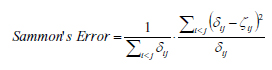
<body><![CDATA[<p><font face="Verdana" size="2"><i>Data Analysis</i></font></p>     <p><font face="Verdana" size="2"><i>Reliability</i>. The protocols of the free narrative account were submitted to two expert coders for content analysis. The expert coders, were trained specially for this study with examples taken from each category. To assess the codings' reliability for within- and between-coders, the Agreement Index &#091;<i>AI= agreements/ (agreements + disagreements)</i>&#093; was computed. In all of the variables measured, this was greater than the cut-off .80 (Tversky, 1977).</font></p>     <p><font face="Verdana" size="2"><i>HDV graphs:</i> To explore the holistic complex patterns that underlie the construction of lies, HDV graphs were used, considering all content criteria simultaneously (Manzanero et al., 2009). This technique is linked, at its root, to a scatter plot. The different variables corresponding to each statement are represented as a point in a high dimensional space. When having more than three variables, such as it is the case in this study, mathematical techniques are required to reduce dimensionality to allow a 3D graphical representation. This study employed multidimensional scaling in order to reduce dimensionality (Buja, Swayne, Liftman, Dean, Hofmann &amp; Chen, 2008; Steyvers, 2002). Each point in the hyperspace has a distance to each other point. Multidimensional scaling will search 3D points preserving those distances between points as much as possible. Distance between points will be calculated using a normalized euclidean distance (Barton &amp; Valdés, 2008) as shown below:</font></p>     <p>&nbsp;</p>     <p align="center"><font face="Verdana" size="2"><img src="/img/revistas/ap/v32n1/psicologia_basica3_formula1.jpg"></font></p>     <p>&nbsp;</p>     <p><font face="Verdana" size="2">The normalized euclidean distance is equivalent to regular euclidean distance but the apparent higher distance due to a high number of dimensions is corrected though normalization (that is, considering p, the number of dimensions). The quality of the 3D transformation is measured through the Sammon's Error (Barton &amp; Valdés, 2008; Romero, Valdés &amp; Barton, 2007) as follows:</font></p>     <p>&nbsp;</p>     <p align="center"><font face="Verdana" size="2"><img src="/img/revistas/ap/v32n1/psicologia_basica3_formula2.jpg"></font></p>     <p>&nbsp;</p>     ]]></body>
<body><![CDATA[<p><font face="Verdana" size="2">Where d<sub>ij</sub> is the distance (or dissimilarity) between points <i>i</i> and <i>j</i> in the original space and &#950;<sub>ij</sub> is the distance in the reduced dimensionality 3D space. Therefore, Sammon's Error compares the differences between the original distances between points, in the original hyperspace, and the final distance among the new representing points in the 3D space. If distances are similar, the error is small as few information is lost in the transformation. If distances are high, the error is high as more information is lost in the transformation. Sammon's error value should be interpreted as the proportion of distance difference with respect to the original distance. For example, .05 means that the average difference between distances is 5 percent with respect to the original distance.</font></p>     <p><font face="Verdana" size="2">Finally, the 3D points are represented using Virtual Reality Modelling Language (VRML). VRML files allow graphical rotation and exploration to facilitate graphical data analysis. Two HDV graphs were used in each of the experiments. The first HDV graph represented only the variables that yielded significant differences in the statistical analyses, whilst the second HDV included all variables regardless of whether they were significant in the pairwise statistical comparisons. Finding that there was a significant increase in classification power with all the variables included would suggest that valuable information may be lost by using the traditional classification system of statistical pairwise comparisons.</font></p>     <p>&nbsp;</p>     <p><font face="Verdana" size="2"><b>Results</b></font></p>     <p><font face="Verdana" size="2">Once statements were transcribed, they were analysed according to the categories described above. Results for accuracy and qualitative measures are reported separately.</font></p>     <p><font face="Verdana" size="2"><i>Accuracy measures</i></font></p>     <p><font face="Verdana" size="2">No significant group differences were found in accuracy measures. See <a target="_blank" href="/img/revistas/ap/v32n1/psicologia_basica3_t1.jpg">Table 1</a> for a summary of results.</font></p>     <p><font face="Verdana" size="2"><i>Qualitative measures</i></font></p>     <p><font face="Verdana" size="2">Significant differences were found on self-references, cognitive operations and change of order. Participants describing the event as simulated victim had more selfreferences (<i>t</i>(28)=7.281, <i>p</i>&gt;.01 <i>r</i><sub>&#947;&#955;</sub> =.809), more cognitive operations (<i>t</i>(28)=2.945, p&gt;.01, <i>r</i><sub>&#947;&#955;</sub>=.486), and less changes of order (<i>t</i>(28)=2.269, <i>p</i>&gt;.05, <i>r</i><sub>&#947;&#955;</sub>=.394), than those describing the event as eyewitness. Results can be seen in <a target="_blank" href="/img/revistas/ap/v32n1/psicologia_basica3_t1.jpg">Table 1</a>.</font></p>     <p><font face="Verdana" size="2">The HDV results are shown in Figures <a href="#f1a">1a</a> and <a href="#f1b">1b</a>. <a href="#f1a">Figure 1a</a> represents the three variables that yielded significance in the statistical analyses. The classification obtained using only these three variables was not optimal, with only 80 percent of cases correctly classified.</font></p>     ]]></body>
<body><![CDATA[<p>&nbsp;</p>     <p align="center"><font face="Verdana" size="2"><a name="f1a"><img src="/img/revistas/ap/v32n1/psicologia_basica3_f1a.jpg"></a></font></p>     <p>&nbsp;</p>     <p align="center"><font face="Verdana" size="2"><a name="f1b"><img src="/img/revistas/ap/v32n1/psicologia_basica3_f1b.jpg"></a></font></p>     <p>&nbsp;</p>     <p><font face="Verdana" size="2"><a href="#f1b">Figure 1b</a> represents all variables regardless of whether their values in both groups were significantly different in the statistical analyses. The quality of the dimensionality reduction through MDS was very good, highwith a small sam-mon's error (sammon's error = .027). In this case, the dotted line graphically discriminating actual witness and simulated victims, provides a correct classification in 96.7 percent of cases, a remarkably better discrimination than the classification obtained just using the statistically significant variables.</font></p>     <p>&nbsp;</p>     <p><font face="Verdana" size="2"><b>Discussion</b></font></p>     <p><font face="Verdana" size="2">Only a few significant differences were found between actual and false statements. As predicted, participants made significantly more references to cognitive operations and more self-references when describing the event as simulated victim. Contrary to predictions simulated victims made fewer changes in order in the perceptual condition.</font></p>     <p><font face="Verdana" size="2">One possible explanation for the lack of differences in the statistical analyses may relate to the use of a between-participants design. In a previous study, Bensi and cols. (2009) have shown that the methodological design, whether within or between-participants, influences credibility discrimination. Specifically, they found significant differences between truth and deception using within-participants design but not with a between-participants design. Undeutsch (1989) suggests that to analyse credibility of statements in terms of content analyses it is necessary to compare a statement known to be true with the target statement by the same individual. A second experiment was therefore designed to compare descriptions of the same participants under the two conditions of actual witness and false victims to enable us to answer this question. It was expected that this manipulation would increase the differences between conditions on both accuracy and quality measures.</font></p>     ]]></body>
<body><![CDATA[<p>&nbsp;</p>     <p><font face="Verdana" size="2"><b>Experiment 2</b></font></p>     <p><font face="Verdana" size="2"><b>Method</b></font></p>     <p><font face="Verdana" size="2"><i>Design</i></font></p>     <p><font face="Verdana" size="2">The same design as in Experiment 1 was employed in this experiment, except that the independent variable (whether the statement was actual or false) was tested with a within-participant design. The same dependent variables, accuracy and quality, were measured.</font></p>     <p><font face="Verdana" size="2">The same materials and procedure as in experiment 1 were used.</font></p>     <p><font face="Verdana" size="2"><i>Participants</i></font></p>     <p><font face="Verdana" size="2">Thirty-five psychology university students were randomly selected and assigned to two groups. The first group comprised of 18 participants and they described the clip as simulated victim first followed by the description as actual witness. The remaining 17 participants described the event in the reverse order, first as actual witness and then as simulated victim.</font></p>     <p><font face="Verdana" size="2"><i>Data Analysis</i></font></p>     <p><font face="Verdana" size="2">The same reliability procedures and HDV representations were used as in Experiment 1. Equally, to assess the codings' reliability for within- and between-coders, the Agreement Index was computed. In all of the variables measured, this was greater than the cut-off .80 (Tversky, 1977).</font></p>     ]]></body>
<body><![CDATA[<p><font face="Verdana" size="2"><b>Results</b></font></p>     <p><font face="Verdana" size="2">As in the previous experiment, once descriptions were transcribed they were analysed according to the categories mentioned earlier. Results are also presented separately for accuracy and quality measures.</font></p>     <p><font face="Verdana" size="2"><i>Accuracy measures</i></font></p>     <p><font face="Verdana" size="2">Statements were significantly more accurate in the observer condition than in the simulated condition (<i>t</i>(34)=3.479, <i>p</i>&lt;.01, <i>r</i><sub>&#947;&#955;</sub>=.269). No differences were found for distortions between the two conditions. See <a href="#t2">Table 2</a> for a summary of results.</font></p>     <p>&nbsp;</p>     <p align="center"><font face="Verdana" size="2"><a name="t2"><img src="/img/revistas/ap/v32n1/psicologia_basica3_t2.jpg"></a></font></p>     <p>&nbsp;</p>     <p><font face="Verdana" size="2"><i>Qualitative measures</i></font></p>     <p><font face="Verdana" size="2">Significantly more self-references, less irrelevant information and more judgements and personal comments, and references to mental processes were found in false statements than in actual ones (<i>t</i>(34)=11.423, <i>p</i>&lt;.01, <i>r</i><sub>&#947;&#955;</sub>=.901; <i>t</i>(34)=3.061, <i>p</i>&lt;.01, <i>r</i><sub>&#947;&#955;</sub>=.294; <i>t</i>(34)=3.515, <i>p</i>&lt;.01, <i>r</i><sub>&#947;&#955;</sub>=.303; <i>t</i>(34)=4.218, <i>p</i>&lt;.01, <i>r</i><sub>&#947;&#955;</sub>=.465, respectively). For a summary of results see <a href="#t2">Table 2</a>.</font></p>     <p><font face="Verdana" size="2">As in the previous Experiment, a HDV representation was employed using, first, only the four variables that were significant in the statistical analyses (see <a href="#f2a">Figure 2a</a>). The quality of the dimensionality reduction was very good, with a sammon's error = .003. The plane used to classify (separating points in 2 groups) permits a value of correct classification of 86.7 percent.</font></p>     ]]></body>
<body><![CDATA[<p>&nbsp;</p>     <p align="center"><font face="Verdana" size="2"><a name="f2a"><img src="/img/revistas/ap/v32n1/psicologia_basica3_f2a.jpg"></a></font></p>     <p>&nbsp;</p>     <p><font face="Verdana" size="2"><a href="#f2b">Figure 2b</a> shows the HDV graph including all variables measured in Experiment 2. The dimensionality reduction quality again was very high, with a sammon's error = .034.</font></p>     <p>&nbsp;</p>     <p align="center"><font face="Verdana" size="2">    <br><a name="f2b"><img src="/img/revistas/ap/v32n1/psicologia_basica3_f2b.jpg"></a></font></p>     <p>&nbsp;</p>     <p><font face="Verdana" size="2">When discriminating data using the best possible plane, a 94.3 percent correct classification of statements (true or false) was achieved. This is a significant improvement from the classification achieved by including only those variables that produced significant differences in the statistical analyses.</font></p>     <p>&nbsp;</p>     ]]></body>
<body><![CDATA[<p><font face="Verdana" size="2"><b>Discussion</b></font></p>     <p><font face="Verdana" size="2">Whilst in Experiment 1, using a between-participants design, no differences were found in accuracy and amount of irrelevant information, using a within-participant design has produced significant differences in both these measures. Simulated victims' statements contained less accurate and less irrelevant information than actual witnesses' statements. In contrast, both studies have showed consistent differences in references to cognitive operations and self-references. Moreover, the within-participant design also produced differences in personal commentaries whilst the between-participant design has produced differences in changes of order. Significant differences found in relation to cognitive operations, are probably due to processes relating to the reconstruction of the event to integrate information with the simulated victim. This reconstruction, according to the RM model (Johnson &amp; Rye, 1981) may be the result of false accounts undergoing a process of internalisation.</font></p>     <p><font face="Verdana" size="2">Leaving aside the effects due to processes of internalisation, differences between witnesses' and simulated victim's statements, when taking into account the results from classical statistical analysis, are minimal regardless of whether a between- or within-participants design was employed. The failure to discriminate between both statements using pairwise comparisons, seems to be related to the underlying theoretical perspective as in contrast in both experiments HDV representations showed different complex patterns for two types of statements.</font></p>     <p>&nbsp;</p>     <p><font face="Verdana" size="2"><b>Conclusions</b></font></p>     <p><font face="Verdana" size="2">It seems rather difficult to discriminate between statements when an eyewitness pretends to be another person involved in the event with a different role, in this case a simulated victim. This adds to existing evidence showing little differences in memories from different sources. The few differences found in adults when recalling emotional events, such as a traffic accident, point to a good ability to generate different credible versións of the same event. The few differences found can also explain as well why it is difficult to judge the credibility of statements, as many other studies show (Santtila et al., 1998; Schooler et al., 1986; Stromwall et al., 2004; Vrij, 2005).</font></p>     <p><font face="Verdana" size="2">If we apply the content criteria defined by Steller and Köhnken (1989) using the SVA/CBCA technique, it would still be difficult to discriminate between actual and false statements as only three variables showed significant differences, namely, unstructured production (changes of order in Exp. 1), amount of details provided (accuracy details in Exp. 2) and superfluous details (irrelevant information in Exp. 2). And even though not all criteria can be applied to the recall of a traffic accident, no differences were found on measures relating to contextual embedding, spontaneous corrections, doubts about one's own memory, and admitting lack of memory.</font></p>     <p><font face="Verdana" size="2">Adding all variables rather than including only statistically significant variables increased the differences in both Experiments 1 and 2. This suggests that a complex pattern, not detectable with statistical pairwise data analysis, seems to underlie simulated victims' statements. Including all variables available, improved classification of actual and false statements from 80 percent to 97.6 percent in Experiment 1 and from 86.7 percent to 94.3 percent in Experiment 2. Similar results were found in previous studies when actual and simulated victims in people with intellectual disability were compared (Manzanero, Alemany et al., 2015).</font></p>     <p><font face="Verdana" size="2">The conclusions stemming from these findings do not just relate to the use of pairwise comparisons or HDV techniques. The crucial issue relates to the theoretical assumptions behind these differences. If there is a general process behind the production of false statements, and if the process affects the variables measured in a unique way, single criterion should be enough to discriminate between true and false statements.</font></p>     <p><font face="Verdana" size="2">In contrast, if what underlies the production of false statements is the result of a complex process involving many factors, alternative processes, and individual differences on what makes a false statement look credible, then using pairwise comparisons will not be successful in discriminating between true and false statements. If this is the case, multidimensional scaling techniques need to be applied.</font></p>     ]]></body>
<body><![CDATA[<p><font face="Verdana" size="2">Lying is a general cognitive skill appearing quite early in cognitive development as part of the development of the theory of mind (Feldman, 2006; Flavell et al., 1995; Rochat, 1999; Zahn-Waxler, Robinson, &amp; Emde, 1992; Lee &amp; Homer, 1999). It has been assumed that once children acquire the concept of lying, they start producing lies in a similar way. In contrast, we propose an alternative model, the <i>differential lying theory</i>, which suggests that although the comprehension of what is a lie is universal across individuals, throughout development beliefs on what makes a statement look credible diverge among individuals.</font></p>     <p><font face="Verdana" size="2">Past attempts have been made to objectify as much as possible the evaluación of credibility in adults through the analyses of behavioural and physiological factors related to witness' statements and also through the analyses of the content of these statements. None of these methods however allow the <i>objective</i> evaluación of credibility, and less so, that of the veracity, as illustrated by findings of near to 50% of errors in discriminating source of accounts (Manzanero &amp; Diges, 1994; Santtila et al., 1998; Schooler et al., 1986; Strömwall et al., 2004). The findings from the present study suggest that previous attempts may have been constrained by the comparison of isolated variables rather than investigating more complex patterns which take into account all variables simultaneously. When all variables are taken into account the degree of distinction improved considerably. Perhaps it is the reason because Hartwig &amp; Bond (2011), as a result of a meta-analysis, argued that intuitive notions about deception are more accurate than explicit knowledge and that lie detection is more readily improved by increasing behavioural differences between liars and truth tellers than by informing lie-catchers of valid cues to deception. Intuition judgements can take into consideration more criteria to distinguish between both statements than explicit knowledge based on content criteria techniques. Anyway, intuition seems to be few effective when accuracy credibility assessment is the goal (Manzanero, Quintana, &amp; Contreras, 2015).</font></p>     <p><font face="Verdana" size="2">The results from this study however should be taken with caution as it is only a first exploratory study which assesses only one variable -simulated victim- and thus would need further confirmation in future research.</font></p>     <p>&nbsp;</p>     <p><font face="Verdana" size="2"><b>References</b></font></p>     <!-- ref --><p><font face="Verdana" size="2">1. Anderson, R. C. &amp; Pichert, J. W. (1978). Recall of previously unrecallable information following a shift in perspective. Journal of Verbal Learning and Verbal Behavior, 16, 1-12. doi: 10.1016/S0022-5371(78)90485-1.    &nbsp;&nbsp;&nbsp;&nbsp;&nbsp;&nbsp;&nbsp;&nbsp;[&#160;<a href="javascript:void(0);" onclick="javascript: window.open('/scielo.php?script=sci_nlinks&ref=746323&pid=S0212-9728201600010003000001&lng=','','width=640,height=500,resizable=yes,scrollbars=1,menubar=yes,');">Links</a>&#160;]<!-- end-ref --></font></p>    <!-- ref --><p><font face="Verdana" size="2">2. Barton, A. &amp; Valdés, J. J. (2008). Hybrid unsupervised/supervised virtual reality spaces for visualizing gastric and liver cancer databases: An evolutionary computation approach. In A. An, S. Matwin, Z. W. Ra&#347; &amp; D. &#346;l&#281;zak (Eds.), Foundations of Intelligent Systems (pp. 256-261). Berlin: Springer.    &nbsp;&nbsp;&nbsp;&nbsp;&nbsp;&nbsp;&nbsp;&nbsp;[&#160;<a href="javascript:void(0);" onclick="javascript: window.open('/scielo.php?script=sci_nlinks&ref=746325&pid=S0212-9728201600010003000002&lng=','','width=640,height=500,resizable=yes,scrollbars=1,menubar=yes,');">Links</a>&#160;]<!-- end-ref --></font></p>    <!-- ref --><p><font face="Verdana" size="2">3. Bensi, L., Gambetti, E., Nori, R. &amp; Giusberti, F. (2009). Discerning truth from deception: the sincere witness profile. The European Journal of Psychology Applied to Legal Context, 1(1), 101-121. Retrieved from <a target="_blank" href="http://www.usc.es/sepjf/images/documentos/volume_1/Bensi.pdf">http://www.usc.es/sepjf/images/documentos/volume_1/Bensi.pdf</a>.    &nbsp;&nbsp;&nbsp;&nbsp;&nbsp;&nbsp;&nbsp;&nbsp;[&#160;<a href="javascript:void(0);" onclick="javascript: window.open('/scielo.php?script=sci_nlinks&ref=746327&pid=S0212-9728201600010003000003&lng=','','width=640,height=500,resizable=yes,scrollbars=1,menubar=yes,');">Links</a>&#160;]<!-- end-ref --></font></p>    <!-- ref --><p><font face="Verdana" size="2">4. Buja A., Swayne D. F., Littman M., Dean N., Hofmann H. &amp; Chen L. (2008). Data Visualization with Multidimensional Scaling. Journal of Computational and Graphical Statistics, 17(2), 444-472. doi:10.1198/106186008X318440.    &nbsp;&nbsp;&nbsp;&nbsp;&nbsp;&nbsp;&nbsp;&nbsp;[&#160;<a href="javascript:void(0);" onclick="javascript: window.open('/scielo.php?script=sci_nlinks&ref=746329&pid=S0212-9728201600010003000004&lng=','','width=640,height=500,resizable=yes,scrollbars=1,menubar=yes,');">Links</a>&#160;]<!-- end-ref --></font></p>    <!-- ref --><p><font face="Verdana" size="2">5. Campos, L. &amp; Alonso-Quecuty, M. L. (1998). Knowledge of crime context: Improving the understanding of why the cognitive interview works. Memory, 6, 103-112. doi: 10.1080/741941602.    &nbsp;&nbsp;&nbsp;&nbsp;&nbsp;&nbsp;&nbsp;&nbsp;[&#160;<a href="javascript:void(0);" onclick="javascript: window.open('/scielo.php?script=sci_nlinks&ref=746331&pid=S0212-9728201600010003000005&lng=','','width=640,height=500,resizable=yes,scrollbars=1,menubar=yes,');">Links</a>&#160;]<!-- end-ref --></font></p>    <!-- ref --><p><font face="Verdana" size="2">6. Clark-Carter, D. (2004) Quantitative psychological research. New York: Psychology Press.    &nbsp;&nbsp;&nbsp;&nbsp;&nbsp;&nbsp;&nbsp;&nbsp;[&#160;<a href="javascript:void(0);" onclick="javascript: window.open('/scielo.php?script=sci_nlinks&ref=746333&pid=S0212-9728201600010003000006&lng=','','width=640,height=500,resizable=yes,scrollbars=1,menubar=yes,');">Links</a>&#160;]<!-- end-ref --></font></p>    <!-- ref --><p><font face="Verdana" size="2">7. Colwell, K., Hiscock-Anisman, C., Memon, A., Colwell, L. H., Taylor, L., &amp; Woods, D. (2009). Training in Assessment Criteria Indicative of Deception to improve credibility judgments. Journal of Forensic Psychology Practice, 9(3), 199-207. doi:10.1080/15228930902810078.    &nbsp;&nbsp;&nbsp;&nbsp;&nbsp;&nbsp;&nbsp;&nbsp;[&#160;<a href="javascript:void(0);" onclick="javascript: window.open('/scielo.php?script=sci_nlinks&ref=746335&pid=S0212-9728201600010003000007&lng=','','width=640,height=500,resizable=yes,scrollbars=1,menubar=yes,');">Links</a>&#160;]<!-- end-ref --></font></p>    <!-- ref --><p><font face="Verdana" size="2">8. Comblain, C., D'Argembeau, A. &amp; Van der Linden, M. (2005). Phenomenal characteristics of autobiographical memories for emotional and neutral events in older and younger adults. Experimental Aging Research, 31(2), 173-89. doi: 10.1080/03610730590915010.    &nbsp;&nbsp;&nbsp;&nbsp;&nbsp;&nbsp;&nbsp;&nbsp;[&#160;<a href="javascript:void(0);" onclick="javascript: window.open('/scielo.php?script=sci_nlinks&ref=746337&pid=S0212-9728201600010003000008&lng=','','width=640,height=500,resizable=yes,scrollbars=1,menubar=yes,');">Links</a>&#160;]<!-- end-ref --></font></p>    <!-- ref --><p><font face="Verdana" size="2">9. Diges, M. (1995). Previous knowledge and delay in the recall of a filmed event. In G. Davies, S.M.A. Lloyd-Bostock, M. McMurran &amp; C. Wilson (Eds.), Psychology, law and criminaljustice. International developments in research andpractice (pp. 46-55). Berlin: W. de Gruyter.    &nbsp;&nbsp;&nbsp;&nbsp;&nbsp;&nbsp;&nbsp;&nbsp;[&#160;<a href="javascript:void(0);" onclick="javascript: window.open('/scielo.php?script=sci_nlinks&ref=746339&pid=S0212-9728201600010003000009&lng=','','width=640,height=500,resizable=yes,scrollbars=1,menubar=yes,');">Links</a>&#160;]<!-- end-ref --></font></p>    <!-- ref --><p><font face="Verdana" size="2">10. Diges, M., Rubio, M. E. &amp; Rodríguez, M. C. (1992). Eyewitness testimony and time of day. In F. Losel, D. Bender &amp; T. Bliesener (Eds.), Psychology and Law. International Perspectives (pp. 317-320). Berlin: W de Gruyter.    &nbsp;&nbsp;&nbsp;&nbsp;&nbsp;&nbsp;&nbsp;&nbsp;[&#160;<a href="javascript:void(0);" onclick="javascript: window.open('/scielo.php?script=sci_nlinks&ref=746341&pid=S0212-9728201600010003000010&lng=','','width=640,height=500,resizable=yes,scrollbars=1,menubar=yes,');">Links</a>&#160;]<!-- end-ref --></font></p>    <!-- ref --><p><font face="Verdana" size="2">11. Feldman, R. S. (2006). Development across the life span. Englewood Cliffs, NJ: Prentice-Hall.    &nbsp;&nbsp;&nbsp;&nbsp;&nbsp;&nbsp;&nbsp;&nbsp;[&#160;<a href="javascript:void(0);" onclick="javascript: window.open('/scielo.php?script=sci_nlinks&ref=746343&pid=S0212-9728201600010003000011&lng=','','width=640,height=500,resizable=yes,scrollbars=1,menubar=yes,');">Links</a>&#160;]<!-- end-ref --></font></p>    <!-- ref --><p><font face="Verdana" size="2">12. Flavell, J. H., Green, F. L. &amp; Flavell, E. R. (1995). The development of children's knowledge about attentional focus. Developmental psychology, 31, 706-712. doi: 10.1037/0012-1649.31.4.706.    &nbsp;&nbsp;&nbsp;&nbsp;&nbsp;&nbsp;&nbsp;&nbsp;[&#160;<a href="javascript:void(0);" onclick="javascript: window.open('/scielo.php?script=sci_nlinks&ref=746345&pid=S0212-9728201600010003000012&lng=','','width=640,height=500,resizable=yes,scrollbars=1,menubar=yes,');">Links</a>&#160;]<!-- end-ref --></font></p>    <!-- ref --><p><font face="Verdana" size="2">13. Granhag, P. A., Stromwall, L. A., &amp; Landstrom, S. (2006). Children recalling an event repeatedly: Effects on RM and CBCA scores. Legal and Criminological Psychology, 11(1), 81-98. doi: 10.1348/135532505X49620.    &nbsp;&nbsp;&nbsp;&nbsp;&nbsp;&nbsp;&nbsp;&nbsp;[&#160;<a href="javascript:void(0);" onclick="javascript: window.open('/scielo.php?script=sci_nlinks&ref=746347&pid=S0212-9728201600010003000013&lng=','','width=640,height=500,resizable=yes,scrollbars=1,menubar=yes,');">Links</a>&#160;]<!-- end-ref --></font></p>    <!-- ref --><p><font face="Verdana" size="2">14. Hartwig, M., &amp; Bond Jr., Ch. F. (2011). Why do lie-catchers fail? A lens model meta-analysis of human lie judgments. Psychological Bulletin, 137(4), 643-659. doi: 10.1037/a0023589.    &nbsp;&nbsp;&nbsp;&nbsp;&nbsp;&nbsp;&nbsp;&nbsp;[&#160;<a href="javascript:void(0);" onclick="javascript: window.open('/scielo.php?script=sci_nlinks&ref=746349&pid=S0212-9728201600010003000014&lng=','','width=640,height=500,resizable=yes,scrollbars=1,menubar=yes,');">Links</a>&#160;]<!-- end-ref --></font></p>    <!-- ref --><p><font face="Verdana" size="2">15. Hekkanen, S. T. &amp; McEvoy, C. (2005). Source monitoring in eyewitness memory: Implicit associations, suggestions, and episodic traces. Memory and Cognition, 33(5), 759-769. doi: 10.3758/BF03193072.    &nbsp;&nbsp;&nbsp;&nbsp;&nbsp;&nbsp;&nbsp;&nbsp;[&#160;<a href="javascript:void(0);" onclick="javascript: window.open('/scielo.php?script=sci_nlinks&ref=746351&pid=S0212-9728201600010003000015&lng=','','width=640,height=500,resizable=yes,scrollbars=1,menubar=yes,');">Links</a>&#160;]<!-- end-ref --></font></p>    <!-- ref --><p><font face="Verdana" size="2">16. Henkel, L. A., Franklin, N. &amp; Johnson, M. K. (2000). Cross-modal source monitoring confusions between perceived and imagined events. Journal of Experimental Psychology: Learning, Memory and Cognition, 26(2), 321-335. doi: 10.1037/0278-7393.26.2.321.    &nbsp;&nbsp;&nbsp;&nbsp;&nbsp;&nbsp;&nbsp;&nbsp;[&#160;<a href="javascript:void(0);" onclick="javascript: window.open('/scielo.php?script=sci_nlinks&ref=746353&pid=S0212-9728201600010003000016&lng=','','width=640,height=500,resizable=yes,scrollbars=1,menubar=yes,');">Links</a>&#160;]<!-- end-ref --></font></p>    <!-- ref --><p><font face="Verdana" size="2">17. Johnson, M. K., Hashtroudi, S. &amp; Lindsay, D. S. (1993). Source monitoring. Psychological Bulletin, 114, 3-28. doi: 10.1037/0033-2909.114.1.3.    &nbsp;&nbsp;&nbsp;&nbsp;&nbsp;&nbsp;&nbsp;&nbsp;[&#160;<a href="javascript:void(0);" onclick="javascript: window.open('/scielo.php?script=sci_nlinks&ref=746355&pid=S0212-9728201600010003000017&lng=','','width=640,height=500,resizable=yes,scrollbars=1,menubar=yes,');">Links</a>&#160;]<!-- end-ref --></font></p>    <!-- ref --><p><font face="Verdana" size="2">18. Johnson, M. K., Kahan, T. L. &amp; Raye, C. L. (1984). Dreams and reality monitoring. Journal of Experimental Psychology: General, 113(3), 329-344. doi: 10.1037/0096-3445.113.3.329.    &nbsp;&nbsp;&nbsp;&nbsp;&nbsp;&nbsp;&nbsp;&nbsp;[&#160;<a href="javascript:void(0);" onclick="javascript: window.open('/scielo.php?script=sci_nlinks&ref=746357&pid=S0212-9728201600010003000018&lng=','','width=640,height=500,resizable=yes,scrollbars=1,menubar=yes,');">Links</a>&#160;]<!-- end-ref --></font></p>    <!-- ref --><p><font face="Verdana" size="2">19. Johnson, M. K. &amp; Raye, C. (1981). Reality monitoring. Psychological Review, 88, 67-85. doi: 10.1037/0033-295X.88.1.67.    &nbsp;&nbsp;&nbsp;&nbsp;&nbsp;&nbsp;&nbsp;&nbsp;[&#160;<a href="javascript:void(0);" onclick="javascript: window.open('/scielo.php?script=sci_nlinks&ref=746359&pid=S0212-9728201600010003000019&lng=','','width=640,height=500,resizable=yes,scrollbars=1,menubar=yes,');">Links</a>&#160;]<!-- end-ref --></font></p>    <!-- ref --><p><font face="Verdana" size="2">20. Jones, D. P. H. &amp; McGraw, J. M. (1987). Reliable and fictitious accounts of sexual abuse in children. Journal of interpersonal Violence, 2, 27-45. doi: 10.1177/088626087002001002.    &nbsp;&nbsp;&nbsp;&nbsp;&nbsp;&nbsp;&nbsp;&nbsp;[&#160;<a href="javascript:void(0);" onclick="javascript: window.open('/scielo.php?script=sci_nlinks&ref=746361&pid=S0212-9728201600010003000020&lng=','','width=640,height=500,resizable=yes,scrollbars=1,menubar=yes,');">Links</a>&#160;]<!-- end-ref --></font></p>    <!-- ref --><p><font face="Verdana" size="2">21. Köhnken, G., Manzanero, A. L., &amp; Scott, M. T. (2015). Análisis de la Validez de las Declaraciones (SVA): mitos y limitaciones (Statement Validity Assessment: Myths and limitations). Anuario de Psicología Jurídica, 25, 13-19. doi:10.1016/j.apj. 2015.01.004.    &nbsp;&nbsp;&nbsp;&nbsp;&nbsp;&nbsp;&nbsp;&nbsp;[&#160;<a href="javascript:void(0);" onclick="javascript: window.open('/scielo.php?script=sci_nlinks&ref=746363&pid=S0212-9728201600010003000021&lng=','','width=640,height=500,resizable=yes,scrollbars=1,menubar=yes,');">Links</a>&#160;]<!-- end-ref --></font></p>    <!-- ref --><p><font face="Verdana" size="2">22. Lee, K. &amp; Homer, B. (1999) Children as folk psychologists: The developing understanding of the mind. In A. Slater &amp; D. Muir (Eds.), The Blackwell reader in developmental psychology. Malden, MA: Blackwell.    &nbsp;&nbsp;&nbsp;&nbsp;&nbsp;&nbsp;&nbsp;&nbsp;[&#160;<a href="javascript:void(0);" onclick="javascript: window.open('/scielo.php?script=sci_nlinks&ref=746365&pid=S0212-9728201600010003000022&lng=','','width=640,height=500,resizable=yes,scrollbars=1,menubar=yes,');">Links</a>&#160;]<!-- end-ref --></font></p>    <!-- ref --><p><font face="Verdana" size="2">23. Manzanero, A. L. (2006): Do perceptual and suggested accounts actually differ? Psychology in Spain, 10(1), 52-65. Retrieved from <a target="_blank" href="http://eprints.ucm.es/11380/1/psychology_in_spain.pdf">http://eprints.ucm.es/11380/1/psychology_in_spain.pdf</a>.    &nbsp;&nbsp;&nbsp;&nbsp;&nbsp;&nbsp;&nbsp;&nbsp;[&#160;<a href="javascript:void(0);" onclick="javascript: window.open('/scielo.php?script=sci_nlinks&ref=746367&pid=S0212-9728201600010003000023&lng=','','width=640,height=500,resizable=yes,scrollbars=1,menubar=yes,');">Links</a>&#160;]<!-- end-ref --></font></p>    <!-- ref --><p><font face="Verdana" size="2">24. Manzanero, A. L. (2009). Análisis de contenido de memorias autobiográficas falsas (Criteria content analysis of false autobiographical memories). Anuario de Psicología Jurídica, 19, 61-72.    &nbsp;&nbsp;&nbsp;&nbsp;&nbsp;&nbsp;&nbsp;&nbsp;[&#160;<a href="javascript:void(0);" onclick="javascript: window.open('/scielo.php?script=sci_nlinks&ref=746369&pid=S0212-9728201600010003000024&lng=','','width=640,height=500,resizable=yes,scrollbars=1,menubar=yes,');">Links</a>&#160;]<!-- end-ref --></font></p>    <!-- ref --><p><font face="Verdana" size="2">25. Manzanero, A. L., Alemany, A., Recio, M., Vallet, R., &amp; Aróztegui, J. (2015). Credibility assessment of statements given by people with learning disability. Anales de Psicología, 31 (1), 1-25. doi:10.6018/analesps.31.1.166571.    &nbsp;&nbsp;&nbsp;&nbsp;&nbsp;&nbsp;&nbsp;&nbsp;[&#160;<a href="javascript:void(0);" onclick="javascript: window.open('/scielo.php?script=sci_nlinks&ref=746371&pid=S0212-9728201600010003000025&lng=','','width=640,height=500,resizable=yes,scrollbars=1,menubar=yes,');">Links</a>&#160;]<!-- end-ref --></font></p>    <!-- ref --><p><font face="Verdana" size="2">26. Manzanero, A. L. &amp; Diges, M. (1994). Análisis de la credibilidad de recuerdos percibidos e imaginados (Credibility assessement of perceived and imagined memories). Apuntes de Psicología, 41-42, 81-92. Retrieved from: <a target="_blank" href="http://eprints.ucm.es/11043/">http://eprints.ucm.es/11043/</a>.    &nbsp;&nbsp;&nbsp;&nbsp;&nbsp;&nbsp;&nbsp;&nbsp;[&#160;<a href="javascript:void(0);" onclick="javascript: window.open('/scielo.php?script=sci_nlinks&ref=746373&pid=S0212-9728201600010003000026&lng=','','width=640,height=500,resizable=yes,scrollbars=1,menubar=yes,');">Links</a>&#160;]<!-- end-ref --></font></p>    <!-- ref --><p><font face="Verdana" size="2">27. Manzanero, A. L. &amp; Diges, M. (1995). Effects of preparation on internal and external memories. In G. Davies, S. M. A. Lloyd-Bostock, M. McMurran &amp; C. Wilson (Eds.), Psychology, law and criminal justice. International developments in research and practice (pp. 56-63). Berlin: W. De Gruyter &amp; Co. Retrieved from <a target="_blank" href="http://eprints.ucm.es/6174/1/oxford_95.pdf">http://eprints.ucm.es/6174/1/oxford_95.pdf</a>.    &nbsp;&nbsp;&nbsp;&nbsp;&nbsp;&nbsp;&nbsp;&nbsp;[&#160;<a href="javascript:void(0);" onclick="javascript: window.open('/scielo.php?script=sci_nlinks&ref=746375&pid=S0212-9728201600010003000027&lng=','','width=640,height=500,resizable=yes,scrollbars=1,menubar=yes,');">Links</a>&#160;]<!-- end-ref --></font></p>    <!-- ref --><p><font face="Verdana" size="2">28. Manzanero, A. L., El-Astal, S. &amp; Aróztegui, J. (2009). Implication degree and delay on recall of events: An experimental and HDV study. The European Journal of Psychology Applied to Legal Context, 1(2), 101-116. Retrieved from <a target="_blank" href="http://eprints.ucm.es/11383/1/Manzanero_et_al_2009.pdf">http://eprints.ucm.es/11383/1/Manzanero_et_al_2009.pdf</a>.    &nbsp;&nbsp;&nbsp;&nbsp;&nbsp;&nbsp;&nbsp;&nbsp;[&#160;<a href="javascript:void(0);" onclick="javascript: window.open('/scielo.php?script=sci_nlinks&ref=746377&pid=S0212-9728201600010003000028&lng=','','width=640,height=500,resizable=yes,scrollbars=1,menubar=yes,');">Links</a>&#160;]<!-- end-ref --></font></p>    <!-- ref --><p><font face="Verdana" size="2">29. Manzanero, A. L., López, B., Aróztegui, J., &amp; El-Astal, S. (2015). Autobiographical memories for negative and positive events in war contexts. Anuario de Psicología Jurídica, 25, 57-64. doi:10.1016/j.apj. 2015.02.001.    &nbsp;&nbsp;&nbsp;&nbsp;&nbsp;&nbsp;&nbsp;&nbsp;[&#160;<a href="javascript:void(0);" onclick="javascript: window.open('/scielo.php?script=sci_nlinks&ref=746379&pid=S0212-9728201600010003000029&lng=','','width=640,height=500,resizable=yes,scrollbars=1,menubar=yes,');">Links</a>&#160;]<!-- end-ref --></font></p>    <!-- ref --><p><font face="Verdana" size="2">30. Manzanero, A. L., Quintana, J. M., &amp; Contreras, M. J. (2015). (The null) Importance of police experience on intuitive credibility of people with intellectual disabilities. Research in Developmental Disabilities, 36, 191-197. doi:10.1016/j.ridd.2014.10.009.    &nbsp;&nbsp;&nbsp;&nbsp;&nbsp;&nbsp;&nbsp;&nbsp;[&#160;<a href="javascript:void(0);" onclick="javascript: window.open('/scielo.php?script=sci_nlinks&ref=746381&pid=S0212-9728201600010003000030&lng=','','width=640,height=500,resizable=yes,scrollbars=1,menubar=yes,');">Links</a>&#160;]<!-- end-ref --></font></p>    <!-- ref --><p><font face="Verdana" size="2">31. Memon, A., Fraser, J., Colwell, K., Odinot, G., &amp; Mastroberardino, S. (2010). Distinguishing truthful from invented accounts using reality monitoring criteria. Legal and Criminological Psychology, 15(2), 177-194. doi: 10.1348/135532508X401382.    &nbsp;&nbsp;&nbsp;&nbsp;&nbsp;&nbsp;&nbsp;&nbsp;[&#160;<a href="javascript:void(0);" onclick="javascript: window.open('/scielo.php?script=sci_nlinks&ref=746383&pid=S0212-9728201600010003000031&lng=','','width=640,height=500,resizable=yes,scrollbars=1,menubar=yes,');">Links</a>&#160;]<!-- end-ref --></font></p>    <!-- ref --><p><font face="Verdana" size="2">32. Pérez-Mata, N. &amp; Diges, M. (2007). False recollections and the congruence of suggested information. Memory, 15(7), 701-717. doi:10.1080/09658210701647258.    &nbsp;&nbsp;&nbsp;&nbsp;&nbsp;&nbsp;&nbsp;&nbsp;[&#160;<a href="javascript:void(0);" onclick="javascript: window.open('/scielo.php?script=sci_nlinks&ref=746385&pid=S0212-9728201600010003000032&lng=','','width=640,height=500,resizable=yes,scrollbars=1,menubar=yes,');">Links</a>&#160;]<!-- end-ref --></font></p>    <!-- ref --><p><font face="Verdana" size="2">33. Porter, S. &amp; Yuille, J. C. (1996). The language of deceit: an investigation of the verbal cues to deception in the interrogation context. Law and Human Behavior, 20, 443-458. doi: 10.1007/BF01498980.    &nbsp;&nbsp;&nbsp;&nbsp;&nbsp;&nbsp;&nbsp;&nbsp;[&#160;<a href="javascript:void(0);" onclick="javascript: window.open('/scielo.php?script=sci_nlinks&ref=746387&pid=S0212-9728201600010003000033&lng=','','width=640,height=500,resizable=yes,scrollbars=1,menubar=yes,');">Links</a>&#160;]<!-- end-ref --></font></p>    <!-- ref --><p><font face="Verdana" size="2">34. Roberts, K. P., &amp; Lamb, M. E. (2010). Reality-monitoring characteristics in confirmed and doubtful allegations of child sexual abuse. Applied Cognitive Psychology, 24(8), 1049-1079. doi: 10.1002/acp.1600.    &nbsp;&nbsp;&nbsp;&nbsp;&nbsp;&nbsp;&nbsp;&nbsp;[&#160;<a href="javascript:void(0);" onclick="javascript: window.open('/scielo.php?script=sci_nlinks&ref=746389&pid=S0212-9728201600010003000034&lng=','','width=640,height=500,resizable=yes,scrollbars=1,menubar=yes,');">Links</a>&#160;]<!-- end-ref --></font></p>    <!-- ref --><p><font face="Verdana" size="2">35. Rochat, P. (Ed.) (1999) Early social cognition: Understanding others in the first months of life. Mahwah, NJ: Erlbaum.    &nbsp;&nbsp;&nbsp;&nbsp;&nbsp;&nbsp;&nbsp;&nbsp;[&#160;<a href="javascript:void(0);" onclick="javascript: window.open('/scielo.php?script=sci_nlinks&ref=746391&pid=S0212-9728201600010003000035&lng=','','width=640,height=500,resizable=yes,scrollbars=1,menubar=yes,');">Links</a>&#160;]<!-- end-ref --></font></p>    <!-- ref --><p><font face="Verdana" size="2">36. Romero, E., Valdés, J. J. &amp; Barton, A. J. (2007). Neural network based virtual reality spaces for visual data mining of cancer data: An unsupervised perspective. In F. Sandoval, A. Prieto, J. Cabestany &amp; M. Graña (Eds.), Computational and ambient intelligence. (pp. 1020-1027). Berlin: Springer.    &nbsp;&nbsp;&nbsp;&nbsp;&nbsp;&nbsp;&nbsp;&nbsp;[&#160;<a href="javascript:void(0);" onclick="javascript: window.open('/scielo.php?script=sci_nlinks&ref=746393&pid=S0212-9728201600010003000036&lng=','','width=640,height=500,resizable=yes,scrollbars=1,menubar=yes,');">Links</a>&#160;]<!-- end-ref --></font></p>    <!-- ref --><p><font face="Verdana" size="2">37. Roskam, E. E. (1989) Formal models and axiomatic measurement. In E. E. Roskam (Ed.), Mathematicalpsychology in progress. Berlin: Springer-Berlag.    &nbsp;&nbsp;&nbsp;&nbsp;&nbsp;&nbsp;&nbsp;&nbsp;[&#160;<a href="javascript:void(0);" onclick="javascript: window.open('/scielo.php?script=sci_nlinks&ref=746395&pid=S0212-9728201600010003000037&lng=','','width=640,height=500,resizable=yes,scrollbars=1,menubar=yes,');">Links</a>&#160;]<!-- end-ref --></font></p>    <!-- ref --><p><font face="Verdana" size="2">38. Santtila, P., Roppola, H. &amp; Niemi, P. (1998). Assessing the truthfulness of witness statements made by children (aged 7-8, 10-11, and 13-14) employing scales derived from Johnson and Raye‘s model of reality monitoring. Expert Evidence, 6(4), 273-289. doi: 10.1023/A:1008930821076.    &nbsp;&nbsp;&nbsp;&nbsp;&nbsp;&nbsp;&nbsp;&nbsp;[&#160;<a href="javascript:void(0);" onclick="javascript: window.open('/scielo.php?script=sci_nlinks&ref=746397&pid=S0212-9728201600010003000038&lng=','','width=640,height=500,resizable=yes,scrollbars=1,menubar=yes,');">Links</a>&#160;]<!-- end-ref --></font></p>    <!-- ref --><p><font face="Verdana" size="2">39. Schooler, J., Gerhard, D. &amp; Loftus, E. (1986). Qualities of unreal. Journal of Experimental Psychology: Learning Memory and Cognition, 12, 171-181. doi: 10.1037/0278-7393.12.2.171.    &nbsp;&nbsp;&nbsp;&nbsp;&nbsp;&nbsp;&nbsp;&nbsp;[&#160;<a href="javascript:void(0);" onclick="javascript: window.open('/scielo.php?script=sci_nlinks&ref=746399&pid=S0212-9728201600010003000039&lng=','','width=640,height=500,resizable=yes,scrollbars=1,menubar=yes,');">Links</a>&#160;]<!-- end-ref --></font></p>    <!-- ref --><p><font face="Verdana" size="2">40. Sporer, S. L. &amp; Sharman, S. J. (2006). Should I believe this? Reality monitoring of accounts of self-experienced and invented recent and distant autobiographical events. Applied Cognitive Psychology, 20, 837-854. doi: 10.1002/acp.1234.    &nbsp;&nbsp;&nbsp;&nbsp;&nbsp;&nbsp;&nbsp;&nbsp;[&#160;<a href="javascript:void(0);" onclick="javascript: window.open('/scielo.php?script=sci_nlinks&ref=746401&pid=S0212-9728201600010003000040&lng=','','width=640,height=500,resizable=yes,scrollbars=1,menubar=yes,');">Links</a>&#160;]<!-- end-ref --></font></p>    <!-- ref --><p><font face="Verdana" size="2">41. Steller, M. &amp; Köhnken, G. (1989). Criteria-Based Content Analysis. En D. C. Raskin (Ed.), Psychological methods in criminal investigation and evidence (pp. 217-245). New York: Springer-Verlag.    &nbsp;&nbsp;&nbsp;&nbsp;&nbsp;&nbsp;&nbsp;&nbsp;[&#160;<a href="javascript:void(0);" onclick="javascript: window.open('/scielo.php?script=sci_nlinks&ref=746403&pid=S0212-9728201600010003000041&lng=','','width=640,height=500,resizable=yes,scrollbars=1,menubar=yes,');">Links</a>&#160;]<!-- end-ref --></font></p>    <!-- ref --><p><font face="Verdana" size="2">42. Steyvers, M. (2002). Multidimensional scaling. In Encyclopedia of Cognitive Science. (pp. 1-7). London: MacMillan.    &nbsp;&nbsp;&nbsp;&nbsp;&nbsp;&nbsp;&nbsp;&nbsp;[&#160;<a href="javascript:void(0);" onclick="javascript: window.open('/scielo.php?script=sci_nlinks&ref=746405&pid=S0212-9728201600010003000042&lng=','','width=640,height=500,resizable=yes,scrollbars=1,menubar=yes,');">Links</a>&#160;]<!-- end-ref --></font></p>    <!-- ref --><p><font face="Verdana" size="2">43. Strömwall, L. A., Bengtsson, L., Leander, L. &amp; Granhag, P. A. (2004). Assessing children's statements: The impact of a repeated Experience on CBCA and RM ratings. Applied Cognitive Psychology, 18, 653-668. doi: 10.1002/acp.1021.    &nbsp;&nbsp;&nbsp;&nbsp;&nbsp;&nbsp;&nbsp;&nbsp;[&#160;<a href="javascript:void(0);" onclick="javascript: window.open('/scielo.php?script=sci_nlinks&ref=746407&pid=S0212-9728201600010003000043&lng=','','width=640,height=500,resizable=yes,scrollbars=1,menubar=yes,');">Links</a>&#160;]<!-- end-ref --></font></p>    <!-- ref --><p><font face="Verdana" size="2">44. Trankell, A. (1972). Reliability of evidence. Stockholm: Rotobeckman.    &nbsp;&nbsp;&nbsp;&nbsp;&nbsp;&nbsp;&nbsp;&nbsp;[&#160;<a href="javascript:void(0);" onclick="javascript: window.open('/scielo.php?script=sci_nlinks&ref=746409&pid=S0212-9728201600010003000044&lng=','','width=640,height=500,resizable=yes,scrollbars=1,menubar=yes,');">Links</a>&#160;]<!-- end-ref --></font></p>    <!-- ref --><p><font face="Verdana" size="2">45. Tversky, A. (1977). Features of similarity. Psychological Review, 84, 327-352. doi: 10.1037/0033-295X.84.4.327.    &nbsp;&nbsp;&nbsp;&nbsp;&nbsp;&nbsp;&nbsp;&nbsp;[&#160;<a href="javascript:void(0);" onclick="javascript: window.open('/scielo.php?script=sci_nlinks&ref=746411&pid=S0212-9728201600010003000045&lng=','','width=640,height=500,resizable=yes,scrollbars=1,menubar=yes,');">Links</a>&#160;]<!-- end-ref --></font></p>    <!-- ref --><p><font face="Verdana" size="2">46. Tversky, A. &amp; Krantz, D. H. (1970). The dimensional representation and the metric structure of similarity data. Journal of mathematical psychology, 7, 572-596. doi: 10.1016/0022-2496(70)90041-6.    &nbsp;&nbsp;&nbsp;&nbsp;&nbsp;&nbsp;&nbsp;&nbsp;[&#160;<a href="javascript:void(0);" onclick="javascript: window.open('/scielo.php?script=sci_nlinks&ref=746413&pid=S0212-9728201600010003000046&lng=','','width=640,height=500,resizable=yes,scrollbars=1,menubar=yes,');">Links</a>&#160;]<!-- end-ref --></font></p>    <!-- ref --><p><font face="Verdana" size="2">47. Undeutsch, U. (1989). The development of statement reality analysis. In J. C. Yuille (Ed.), Credibility assessment (pp. 101-121). Netherland: Kluwer Academic Publishers.    &nbsp;&nbsp;&nbsp;&nbsp;&nbsp;&nbsp;&nbsp;&nbsp;[&#160;<a href="javascript:void(0);" onclick="javascript: window.open('/scielo.php?script=sci_nlinks&ref=746415&pid=S0212-9728201600010003000047&lng=','','width=640,height=500,resizable=yes,scrollbars=1,menubar=yes,');">Links</a>&#160;]<!-- end-ref --></font></p>    <!-- ref --><p><font face="Verdana" size="2">48. Vrij, A. (2005). Criteria-Based Content Analysis: A Qualitative Review of the First 37 Studies. Psychology, Public Policy, and Law, 11(1), 3-41. doi: 10.1037/1076-8971.11.1.3.    &nbsp;&nbsp;&nbsp;&nbsp;&nbsp;&nbsp;&nbsp;&nbsp;[&#160;<a href="javascript:void(0);" onclick="javascript: window.open('/scielo.php?script=sci_nlinks&ref=746417&pid=S0212-9728201600010003000048&lng=','','width=640,height=500,resizable=yes,scrollbars=1,menubar=yes,');">Links</a>&#160;]<!-- end-ref --></font></p>    <!-- ref --><p><font face="Verdana" size="2">49. Vrij, A., Akehurst, L., Soukara, S. &amp; Bull, R. (2004). Detecting deceit via analysis of verbal and nonverbal behaviour in children and adults. Human Communication Research, 30(1), 8-41. doi: 10.1111/j.1468-2958.2004.tb00723.x.    &nbsp;&nbsp;&nbsp;&nbsp;&nbsp;&nbsp;&nbsp;&nbsp;[&#160;<a href="javascript:void(0);" onclick="javascript: window.open('/scielo.php?script=sci_nlinks&ref=746419&pid=S0212-9728201600010003000049&lng=','','width=640,height=500,resizable=yes,scrollbars=1,menubar=yes,');">Links</a>&#160;]<!-- end-ref --></font></p>    <!-- ref --><p><font face="Verdana" size="2">50. Wicker, A. W. (1975). An application of the multitrait-multimethod logic to the reliability of observational records. Personality and Social Psychology Bulletin, 4, 575-579. doi: 10.1177/014616727500100405.    &nbsp;&nbsp;&nbsp;&nbsp;&nbsp;&nbsp;&nbsp;&nbsp;[&#160;<a href="javascript:void(0);" onclick="javascript: window.open('/scielo.php?script=sci_nlinks&ref=746421&pid=S0212-9728201600010003000050&lng=','','width=640,height=500,resizable=yes,scrollbars=1,menubar=yes,');">Links</a>&#160;]<!-- end-ref --></font></p>    <!-- ref --><p><font face="Verdana" size="2">51. Zahn-Waxler, C., Robinson, J. L. &amp; Emde, R. N. (1992). The development of empathy in twins. Developmental Psychology, 28, 1038-1047. doi: 10.1037/0012-1649.28.6.1038.    &nbsp;&nbsp;&nbsp;&nbsp;&nbsp;&nbsp;&nbsp;&nbsp;[&#160;<a href="javascript:void(0);" onclick="javascript: window.open('/scielo.php?script=sci_nlinks&ref=746423&pid=S0212-9728201600010003000051&lng=','','width=640,height=500,resizable=yes,scrollbars=1,menubar=yes,');">Links</a>&#160;]<!-- end-ref --></font></p>     <p>&nbsp;</p>     <p>&nbsp;</p>     <p><font face="Verdana" size="2"><a href="#top"><img border="0" src="/img/revistas/ap/v32n1/seta.gif" width="15" height="17"></a><a name="bajo"></a><b>Correspondence:</b>    ]]></body>
<body><![CDATA[<br>Antonio L. Manzanero.    <br>Facultad de Psicología.    <br>Universidad Complutense de Madrid.    <br>Campus de Somosaguas.    <br>CP 28223. Madrid (España).    <br>E-mail: <a href="mailto:antonio.manzanero@psi.ucm.es">antonio.manzanero@psi.ucm.es</a></font></p>     <p><font face="Verdana" size="2">Article received: 11-03-2014    <br>Revised: 13-09-2015    <br>Accepted: 24-11-2015</font></p>      ]]></body><back>
<ref-list>
<ref id="B1">
<label>1</label><nlm-citation citation-type="journal">
<person-group person-group-type="author">
<name>
<surname><![CDATA[Anderson]]></surname>
<given-names><![CDATA[R. C.]]></given-names>
</name>
<name>
<surname><![CDATA[Pichert]]></surname>
<given-names><![CDATA[J. W.]]></given-names>
</name>
</person-group>
<article-title xml:lang="en"><![CDATA[Recall of previously unrecallable information following a shift in perspective]]></article-title>
<source><![CDATA[Journal of Verbal Learning and Verbal Behavior]]></source>
<year>1978</year>
<page-range>1-12</page-range></nlm-citation>
</ref>
<ref id="B2">
<label>2</label><nlm-citation citation-type="book">
<person-group person-group-type="author">
<name>
<surname><![CDATA[Barton]]></surname>
<given-names><![CDATA[A.]]></given-names>
</name>
<name>
<surname><![CDATA[Valdés]]></surname>
<given-names><![CDATA[J. J.]]></given-names>
</name>
</person-group>
<article-title xml:lang="en"><![CDATA[Hybrid unsupervised/supervised virtual reality spaces for visualizing gastric and liver cancer databases: An evolutionary computation approach]]></article-title>
<person-group person-group-type="editor">
<name>
<surname><![CDATA[An]]></surname>
<given-names><![CDATA[A.]]></given-names>
</name>
<name>
<surname><![CDATA[Matwin]]></surname>
<given-names><![CDATA[S.]]></given-names>
</name>
<name>
<surname><![CDATA[Ra&#347;]]></surname>
<given-names><![CDATA[Z. W.]]></given-names>
</name>
<name>
<surname><![CDATA[&#346;l&#281;zak]]></surname>
<given-names><![CDATA[D.]]></given-names>
</name>
</person-group>
<source><![CDATA[Foundations of Intelligent Systems]]></source>
<year>2008</year>
<page-range>256-261</page-range><publisher-loc><![CDATA[Berlin ]]></publisher-loc>
<publisher-name><![CDATA[Springer]]></publisher-name>
</nlm-citation>
</ref>
<ref id="B3">
<label>3</label><nlm-citation citation-type="journal">
<person-group person-group-type="author">
<name>
<surname><![CDATA[Bensi]]></surname>
<given-names><![CDATA[L.]]></given-names>
</name>
<name>
<surname><![CDATA[Gambetti]]></surname>
<given-names><![CDATA[E.]]></given-names>
</name>
<name>
<surname><![CDATA[Nori]]></surname>
<given-names><![CDATA[R.]]></given-names>
</name>
<name>
<surname><![CDATA[Giusberti]]></surname>
<given-names><![CDATA[F.]]></given-names>
</name>
</person-group>
<article-title xml:lang="en"><![CDATA[Discerning truth from deception: the sincere witness profile]]></article-title>
<source><![CDATA[The European Journal of Psychology Applied to Legal Context]]></source>
<year>2009</year>
<volume>1</volume>
<numero>1</numero>
<issue>1</issue>
<page-range>101-121</page-range></nlm-citation>
</ref>
<ref id="B4">
<label>4</label><nlm-citation citation-type="journal">
<person-group person-group-type="author">
<name>
<surname><![CDATA[Buja]]></surname>
<given-names><![CDATA[A.]]></given-names>
</name>
<name>
<surname><![CDATA[Swayne]]></surname>
<given-names><![CDATA[D. F.]]></given-names>
</name>
<name>
<surname><![CDATA[Littman]]></surname>
<given-names><![CDATA[M.]]></given-names>
</name>
<name>
<surname><![CDATA[Dean]]></surname>
<given-names><![CDATA[N.]]></given-names>
</name>
<name>
<surname><![CDATA[Hofmann]]></surname>
<given-names><![CDATA[H.]]></given-names>
</name>
<name>
<surname><![CDATA[Chen]]></surname>
<given-names><![CDATA[L.]]></given-names>
</name>
</person-group>
<article-title xml:lang="en"><![CDATA[Data Visualization with Multidimensional Scaling]]></article-title>
<source><![CDATA[Journal of Computational and Graphical Statistics]]></source>
<year>2008</year>
<volume>17</volume>
<numero>2</numero>
<issue>2</issue>
<page-range>444-472</page-range></nlm-citation>
</ref>
<ref id="B5">
<label>5</label><nlm-citation citation-type="journal">
<person-group person-group-type="author">
<name>
<surname><![CDATA[Campos]]></surname>
<given-names><![CDATA[L.]]></given-names>
</name>
<name>
<surname><![CDATA[Alonso-Quecuty]]></surname>
<given-names><![CDATA[M. L.]]></given-names>
</name>
</person-group>
<article-title xml:lang="en"><![CDATA[Knowledge of crime context: Improving the understanding of why the cognitive interview works]]></article-title>
<source><![CDATA[Memory]]></source>
<year>1998</year>
<volume>6</volume>
<page-range>103-112</page-range></nlm-citation>
</ref>
<ref id="B6">
<label>6</label><nlm-citation citation-type="book">
<person-group person-group-type="author">
<name>
<surname><![CDATA[Clark-Carter]]></surname>
<given-names><![CDATA[D.]]></given-names>
</name>
</person-group>
<source><![CDATA[Quantitative psychological research]]></source>
<year>2004</year>
<publisher-loc><![CDATA[New York ]]></publisher-loc>
<publisher-name><![CDATA[Psychology Press]]></publisher-name>
</nlm-citation>
</ref>
<ref id="B7">
<label>7</label><nlm-citation citation-type="journal">
<person-group person-group-type="author">
<name>
<surname><![CDATA[Colwell]]></surname>
<given-names><![CDATA[K.]]></given-names>
</name>
<name>
<surname><![CDATA[Hiscock-Anisman]]></surname>
<given-names><![CDATA[C.]]></given-names>
</name>
<name>
<surname><![CDATA[Memon]]></surname>
<given-names><![CDATA[A.]]></given-names>
</name>
<name>
<surname><![CDATA[Colwell]]></surname>
<given-names><![CDATA[L. H.]]></given-names>
</name>
<name>
<surname><![CDATA[Taylor]]></surname>
<given-names><![CDATA[L.]]></given-names>
</name>
<name>
<surname><![CDATA[Woods]]></surname>
<given-names><![CDATA[D.]]></given-names>
</name>
</person-group>
<article-title xml:lang="en"><![CDATA[Training in Assessment Criteria Indicative of Deception to improve credibility judgments]]></article-title>
<source><![CDATA[Journal of Forensic Psychology Practice]]></source>
<year>2009</year>
<volume>9</volume>
<numero>3</numero>
<issue>3</issue>
<page-range>199-207</page-range></nlm-citation>
</ref>
<ref id="B8">
<label>8</label><nlm-citation citation-type="journal">
<person-group person-group-type="author">
<name>
<surname><![CDATA[Comblain]]></surname>
<given-names><![CDATA[C.]]></given-names>
</name>
<name>
<surname><![CDATA[D'Argembeau]]></surname>
<given-names><![CDATA[A.]]></given-names>
</name>
<name>
<surname><![CDATA[Van der Linden]]></surname>
<given-names><![CDATA[M.]]></given-names>
</name>
</person-group>
<article-title xml:lang="en"><![CDATA[Phenomenal characteristics of autobiographical memories for emotional and neutral events in older and younger adults]]></article-title>
<source><![CDATA[Experimental Aging Research]]></source>
<year>2005</year>
<volume>31</volume>
<numero>2</numero>
<issue>2</issue>
<page-range>173-89</page-range></nlm-citation>
</ref>
<ref id="B9">
<label>9</label><nlm-citation citation-type="book">
<person-group person-group-type="author">
<name>
<surname><![CDATA[Diges]]></surname>
<given-names><![CDATA[M.]]></given-names>
</name>
</person-group>
<article-title xml:lang="en"><![CDATA[Previous knowledge and delay in the recall of a filmed event]]></article-title>
<person-group person-group-type="editor">
<name>
<surname><![CDATA[Davies]]></surname>
<given-names><![CDATA[G.]]></given-names>
</name>
<name>
<surname><![CDATA[Lloyd-Bostock]]></surname>
<given-names><![CDATA[S.M.A.]]></given-names>
</name>
<name>
<surname><![CDATA[McMurran]]></surname>
<given-names><![CDATA[M.]]></given-names>
</name>
<name>
<surname><![CDATA[Wilson]]></surname>
<given-names><![CDATA[C.]]></given-names>
</name>
</person-group>
<source><![CDATA[Psychology, law and criminaljustice: International developments in research andpractice]]></source>
<year>1995</year>
<page-range>46-55</page-range><publisher-loc><![CDATA[Berlin ]]></publisher-loc>
<publisher-name><![CDATA[W. de Gruyter]]></publisher-name>
</nlm-citation>
</ref>
<ref id="B10">
<label>10</label><nlm-citation citation-type="book">
<person-group person-group-type="author">
<name>
<surname><![CDATA[Diges]]></surname>
<given-names><![CDATA[M.]]></given-names>
</name>
<name>
<surname><![CDATA[Rubio]]></surname>
<given-names><![CDATA[M. E.]]></given-names>
</name>
<name>
<surname><![CDATA[Rodríguez]]></surname>
<given-names><![CDATA[M. C.]]></given-names>
</name>
</person-group>
<article-title xml:lang="en"><![CDATA[Eyewitness testimony and time of day]]></article-title>
<person-group person-group-type="editor">
<name>
<surname><![CDATA[Losel]]></surname>
<given-names><![CDATA[F.]]></given-names>
</name>
<name>
<surname><![CDATA[Bender]]></surname>
<given-names><![CDATA[D.]]></given-names>
</name>
<name>
<surname><![CDATA[Bliesener]]></surname>
<given-names><![CDATA[T.]]></given-names>
</name>
</person-group>
<source><![CDATA[Psychology and Law: International Perspectives]]></source>
<year>1992</year>
<page-range>317-320</page-range><publisher-loc><![CDATA[Berlin ]]></publisher-loc>
<publisher-name><![CDATA[W de Gruyter]]></publisher-name>
</nlm-citation>
</ref>
<ref id="B11">
<label>11</label><nlm-citation citation-type="book">
<person-group person-group-type="author">
<name>
<surname><![CDATA[Feldman]]></surname>
<given-names><![CDATA[R. S.]]></given-names>
</name>
</person-group>
<source><![CDATA[Development across the life span]]></source>
<year>2006</year>
<publisher-loc><![CDATA[Englewood Cliffs^eNJ NJ]]></publisher-loc>
<publisher-name><![CDATA[Prentice-Hall]]></publisher-name>
</nlm-citation>
</ref>
<ref id="B12">
<label>12</label><nlm-citation citation-type="journal">
<person-group person-group-type="author">
<name>
<surname><![CDATA[Flavell]]></surname>
<given-names><![CDATA[J. H.]]></given-names>
</name>
<name>
<surname><![CDATA[Green]]></surname>
<given-names><![CDATA[F. L.]]></given-names>
</name>
<name>
<surname><![CDATA[Flavell]]></surname>
<given-names><![CDATA[E. R.]]></given-names>
</name>
</person-group>
<article-title xml:lang="en"><![CDATA[The development of children's knowledge about attentional focus]]></article-title>
<source><![CDATA[Developmental psychology]]></source>
<year>1995</year>
<volume>31</volume>
<page-range>706-712</page-range></nlm-citation>
</ref>
<ref id="B13">
<label>13</label><nlm-citation citation-type="journal">
<person-group person-group-type="author">
<name>
<surname><![CDATA[Granhag]]></surname>
<given-names><![CDATA[P. A.]]></given-names>
</name>
<name>
<surname><![CDATA[Stromwall]]></surname>
<given-names><![CDATA[L. A.]]></given-names>
</name>
<name>
<surname><![CDATA[Landstrom]]></surname>
<given-names><![CDATA[S.]]></given-names>
</name>
</person-group>
<article-title xml:lang="en"><![CDATA[Children recalling an event repeatedly: Effects on RM and CBCA scores]]></article-title>
<source><![CDATA[Legal and Criminological Psychology]]></source>
<year>2006</year>
<volume>11</volume>
<numero>1</numero>
<issue>1</issue>
<page-range>81-98</page-range></nlm-citation>
</ref>
<ref id="B14">
<label>14</label><nlm-citation citation-type="journal">
<person-group person-group-type="author">
<name>
<surname><![CDATA[Hartwig]]></surname>
<given-names><![CDATA[M.]]></given-names>
</name>
<name>
<surname><![CDATA[Bond Jr.]]></surname>
<given-names><![CDATA[Ch. F.]]></given-names>
</name>
</person-group>
<article-title xml:lang="en"><![CDATA[Why do lie-catchers fail? A lens model meta-analysis of human lie judgments]]></article-title>
<source><![CDATA[Psychological Bulletin]]></source>
<year>2011</year>
<volume>137</volume>
<numero>4</numero>
<issue>4</issue>
<page-range>643-659</page-range></nlm-citation>
</ref>
<ref id="B15">
<label>15</label><nlm-citation citation-type="journal">
<person-group person-group-type="author">
<name>
<surname><![CDATA[Hekkanen]]></surname>
<given-names><![CDATA[S. T.]]></given-names>
</name>
<name>
<surname><![CDATA[McEvoy]]></surname>
<given-names><![CDATA[C.]]></given-names>
</name>
</person-group>
<article-title xml:lang="en"><![CDATA[Source monitoring in eyewitness memory: Implicit associations, suggestions, and episodic traces]]></article-title>
<source><![CDATA[Memory and Cognition]]></source>
<year>2005</year>
<volume>33</volume>
<numero>5</numero>
<issue>5</issue>
<page-range>759-769</page-range></nlm-citation>
</ref>
<ref id="B16">
<label>16</label><nlm-citation citation-type="journal">
<person-group person-group-type="author">
<name>
<surname><![CDATA[Henkel]]></surname>
<given-names><![CDATA[L. A.]]></given-names>
</name>
<name>
<surname><![CDATA[Franklin]]></surname>
<given-names><![CDATA[N.]]></given-names>
</name>
<name>
<surname><![CDATA[Johnson]]></surname>
<given-names><![CDATA[M. K.]]></given-names>
</name>
</person-group>
<article-title xml:lang="en"><![CDATA[Cross-modal source monitoring confusions between perceived and imagined events]]></article-title>
<source><![CDATA[Journal of Experimental Psychology: Learning, Memory and Cognition]]></source>
<year>2000</year>
<volume>26</volume>
<numero>2</numero>
<issue>2</issue>
<page-range>321-335</page-range></nlm-citation>
</ref>
<ref id="B17">
<label>17</label><nlm-citation citation-type="journal">
<person-group person-group-type="author">
<name>
<surname><![CDATA[Johnson]]></surname>
<given-names><![CDATA[M. K.]]></given-names>
</name>
<name>
<surname><![CDATA[Hashtroudi]]></surname>
<given-names><![CDATA[S.]]></given-names>
</name>
<name>
<surname><![CDATA[Lindsay]]></surname>
<given-names><![CDATA[D. S.]]></given-names>
</name>
</person-group>
<article-title xml:lang="en"><![CDATA[Source monitoring]]></article-title>
<source><![CDATA[Psychological Bulletin]]></source>
<year>1993</year>
<volume>114</volume>
<page-range>3-28</page-range></nlm-citation>
</ref>
<ref id="B18">
<label>18</label><nlm-citation citation-type="journal">
<person-group person-group-type="author">
<name>
<surname><![CDATA[Johnson]]></surname>
<given-names><![CDATA[M. K.]]></given-names>
</name>
<name>
<surname><![CDATA[Kahan]]></surname>
<given-names><![CDATA[T. L.]]></given-names>
</name>
<name>
<surname><![CDATA[Raye]]></surname>
<given-names><![CDATA[C. L.]]></given-names>
</name>
</person-group>
<article-title xml:lang="en"><![CDATA[Dreams and reality monitoring]]></article-title>
<source><![CDATA[Journal of Experimental Psychology: General]]></source>
<year>1984</year>
<volume>113</volume>
<numero>3</numero>
<issue>3</issue>
<page-range>329-344</page-range></nlm-citation>
</ref>
<ref id="B19">
<label>19</label><nlm-citation citation-type="journal">
<person-group person-group-type="author">
<name>
<surname><![CDATA[Johnson]]></surname>
<given-names><![CDATA[M. K.]]></given-names>
</name>
<name>
<surname><![CDATA[Raye]]></surname>
<given-names><![CDATA[C.]]></given-names>
</name>
</person-group>
<article-title xml:lang="en"><![CDATA[Reality monitoring]]></article-title>
<source><![CDATA[Psychological Review]]></source>
<year>1981</year>
<volume>88</volume>
<page-range>67-85</page-range></nlm-citation>
</ref>
<ref id="B20">
<label>20</label><nlm-citation citation-type="journal">
<person-group person-group-type="author">
<name>
<surname><![CDATA[Jones]]></surname>
<given-names><![CDATA[D. P. H.]]></given-names>
</name>
<name>
<surname><![CDATA[McGraw]]></surname>
<given-names><![CDATA[J. M.]]></given-names>
</name>
</person-group>
<article-title xml:lang="en"><![CDATA[Reliable and fictitious accounts of sexual abuse in children]]></article-title>
<source><![CDATA[Journal of interpersonal Violence]]></source>
<year>1987</year>
<volume>2</volume>
<page-range>27-45</page-range></nlm-citation>
</ref>
<ref id="B21">
<label>21</label><nlm-citation citation-type="journal">
<person-group person-group-type="author">
<name>
<surname><![CDATA[Köhnken]]></surname>
<given-names><![CDATA[G.]]></given-names>
</name>
<name>
<surname><![CDATA[Manzanero]]></surname>
<given-names><![CDATA[A. L.]]></given-names>
</name>
<name>
<surname><![CDATA[Scott]]></surname>
<given-names><![CDATA[M. T.]]></given-names>
</name>
</person-group>
<article-title xml:lang="es"><![CDATA[Análisis de la Validez de las Declaraciones (SVA): mitos y limitaciones]]></article-title>
<source><![CDATA[Anuario de Psicología Jurídica]]></source>
<year>2015</year>
<volume>25</volume>
<page-range>13-19</page-range></nlm-citation>
</ref>
<ref id="B22">
<label>22</label><nlm-citation citation-type="book">
<person-group person-group-type="author">
<name>
<surname><![CDATA[Lee]]></surname>
<given-names><![CDATA[K.]]></given-names>
</name>
<name>
<surname><![CDATA[Homer]]></surname>
<given-names><![CDATA[B.]]></given-names>
</name>
</person-group>
<person-group person-group-type="editor">
<name>
<surname><![CDATA[Slater]]></surname>
<given-names><![CDATA[A.]]></given-names>
</name>
<name>
<surname><![CDATA[Muir]]></surname>
<given-names><![CDATA[D.]]></given-names>
</name>
</person-group>
<source><![CDATA[The Blackwell reader in developmental psychology]]></source>
<year>1999</year>
<publisher-loc><![CDATA[Malden^eMA MA]]></publisher-loc>
<publisher-name><![CDATA[Blackwell]]></publisher-name>
</nlm-citation>
</ref>
<ref id="B23">
<label>23</label><nlm-citation citation-type="journal">
<person-group person-group-type="author">
<name>
<surname><![CDATA[Manzanero]]></surname>
<given-names><![CDATA[A. L.]]></given-names>
</name>
</person-group>
<article-title xml:lang="en"><![CDATA[Do perceptual and suggested accounts actually differ?]]></article-title>
<source><![CDATA[Psychology in Spain]]></source>
<year>2006</year>
<volume>10</volume>
<numero>1</numero>
<issue>1</issue>
<page-range>52-65</page-range></nlm-citation>
</ref>
<ref id="B24">
<label>24</label><nlm-citation citation-type="journal">
<person-group person-group-type="author">
<name>
<surname><![CDATA[Manzanero]]></surname>
<given-names><![CDATA[A. L.]]></given-names>
</name>
</person-group>
<article-title xml:lang="es"><![CDATA[Análisis de contenido de memorias autobiográficas falsas]]></article-title>
<source><![CDATA[Anuario de Psicología Jurídica]]></source>
<year>2009</year>
<volume>19</volume>
<page-range>61-72</page-range></nlm-citation>
</ref>
<ref id="B25">
<label>25</label><nlm-citation citation-type="journal">
<person-group person-group-type="author">
<name>
<surname><![CDATA[Manzanero]]></surname>
<given-names><![CDATA[A. L.]]></given-names>
</name>
<name>
<surname><![CDATA[Alemany]]></surname>
<given-names><![CDATA[A.]]></given-names>
</name>
<name>
<surname><![CDATA[Recio]]></surname>
<given-names><![CDATA[M.]]></given-names>
</name>
<name>
<surname><![CDATA[Vallet]]></surname>
<given-names><![CDATA[R.]]></given-names>
</name>
<name>
<surname><![CDATA[Aróztegui]]></surname>
<given-names><![CDATA[J.]]></given-names>
</name>
</person-group>
<article-title xml:lang="en"><![CDATA[Credibility assessment of statements given by people with learning disability]]></article-title>
<source><![CDATA[Anales de Psicología]]></source>
<year>2015</year>
<volume>31</volume>
<numero>1</numero>
<issue>1</issue>
<page-range>1-25</page-range></nlm-citation>
</ref>
<ref id="B26">
<label>26</label><nlm-citation citation-type="journal">
<person-group person-group-type="author">
<name>
<surname><![CDATA[Manzanero]]></surname>
<given-names><![CDATA[A. L.]]></given-names>
</name>
<name>
<surname><![CDATA[Diges]]></surname>
<given-names><![CDATA[M.]]></given-names>
</name>
</person-group>
<article-title xml:lang="es"><![CDATA[Análisis de la credibilidad de recuerdos percibidos e imaginados]]></article-title>
<source><![CDATA[Apuntes de Psicología]]></source>
<year>1994</year>
<numero>41-42</numero>
<issue>41-42</issue>
<page-range>81-92</page-range></nlm-citation>
</ref>
<ref id="B27">
<label>27</label><nlm-citation citation-type="book">
<person-group person-group-type="author">
<name>
<surname><![CDATA[Manzanero]]></surname>
<given-names><![CDATA[A. L.]]></given-names>
</name>
<name>
<surname><![CDATA[Diges]]></surname>
<given-names><![CDATA[M.]]></given-names>
</name>
</person-group>
<article-title xml:lang="en"><![CDATA[Effects of preparation on internal and external memories]]></article-title>
<person-group person-group-type="editor">
<name>
<surname><![CDATA[Davies]]></surname>
<given-names><![CDATA[G.]]></given-names>
</name>
<name>
<surname><![CDATA[Lloyd-Bostock]]></surname>
<given-names><![CDATA[S. M. A.]]></given-names>
</name>
<name>
<surname><![CDATA[McMurran]]></surname>
<given-names><![CDATA[M.]]></given-names>
</name>
<name>
<surname><![CDATA[Wilson]]></surname>
<given-names><![CDATA[C.]]></given-names>
</name>
</person-group>
<source><![CDATA[Psychology, law and criminal justice: International developments in research and practice]]></source>
<year>1995</year>
<page-range>56-63</page-range><publisher-loc><![CDATA[Berlin ]]></publisher-loc>
<publisher-name><![CDATA[W. De Gruyter & Co]]></publisher-name>
</nlm-citation>
</ref>
<ref id="B28">
<label>28</label><nlm-citation citation-type="journal">
<person-group person-group-type="author">
<name>
<surname><![CDATA[Manzanero]]></surname>
<given-names><![CDATA[A. L.]]></given-names>
</name>
<name>
<surname><![CDATA[El-Astal]]></surname>
<given-names><![CDATA[S.]]></given-names>
</name>
<name>
<surname><![CDATA[Aróztegui]]></surname>
<given-names><![CDATA[J.]]></given-names>
</name>
</person-group>
<article-title xml:lang="en"><![CDATA[Implication degree and delay on recall of events: An experimental and HDV study]]></article-title>
<source><![CDATA[The European Journal of Psychology Applied to Legal Context]]></source>
<year>2009</year>
<volume>1</volume>
<numero>2</numero>
<issue>2</issue>
<page-range>101-116</page-range></nlm-citation>
</ref>
<ref id="B29">
<label>29</label><nlm-citation citation-type="journal">
<person-group person-group-type="author">
<name>
<surname><![CDATA[Manzanero]]></surname>
<given-names><![CDATA[A. L.]]></given-names>
</name>
<name>
<surname><![CDATA[López]]></surname>
<given-names><![CDATA[B.]]></given-names>
</name>
<name>
<surname><![CDATA[Aróztegui]]></surname>
<given-names><![CDATA[J.]]></given-names>
</name>
<name>
<surname><![CDATA[El-Astal]]></surname>
<given-names><![CDATA[S.]]></given-names>
</name>
</person-group>
<article-title xml:lang="en"><![CDATA[Autobiographical memories for negative and positive events in war contexts]]></article-title>
<source><![CDATA[Anuario de Psicología Jurídica]]></source>
<year>2015</year>
<volume>25</volume>
<page-range>57-64</page-range></nlm-citation>
</ref>
<ref id="B30">
<label>30</label><nlm-citation citation-type="journal">
<person-group person-group-type="author">
<name>
<surname><![CDATA[Manzanero]]></surname>
<given-names><![CDATA[A. L.]]></given-names>
</name>
<name>
<surname><![CDATA[Quintana]]></surname>
<given-names><![CDATA[J. M.]]></given-names>
</name>
<name>
<surname><![CDATA[Contreras]]></surname>
<given-names><![CDATA[M. J.]]></given-names>
</name>
</person-group>
<article-title xml:lang="en"><![CDATA[(The null) Importance of police experience on intuitive credibility of people with intellectual disabilities]]></article-title>
<source><![CDATA[Research in Developmental Disabilities]]></source>
<year>2015</year>
<volume>36</volume>
<page-range>191-197</page-range></nlm-citation>
</ref>
<ref id="B31">
<label>31</label><nlm-citation citation-type="journal">
<person-group person-group-type="author">
<name>
<surname><![CDATA[Memon]]></surname>
<given-names><![CDATA[A.]]></given-names>
</name>
<name>
<surname><![CDATA[Fraser]]></surname>
<given-names><![CDATA[J.]]></given-names>
</name>
<name>
<surname><![CDATA[Colwell]]></surname>
<given-names><![CDATA[K.]]></given-names>
</name>
<name>
<surname><![CDATA[Odinot]]></surname>
<given-names><![CDATA[G.]]></given-names>
</name>
<name>
<surname><![CDATA[Mastroberardino]]></surname>
<given-names><![CDATA[S.]]></given-names>
</name>
</person-group>
<article-title xml:lang="en"><![CDATA[Distinguishing truthful from invented accounts using reality monitoring criteria]]></article-title>
<source><![CDATA[Legal and Criminological Psychology]]></source>
<year>2010</year>
<volume>15</volume>
<numero>2</numero>
<issue>2</issue>
<page-range>177-194</page-range></nlm-citation>
</ref>
<ref id="B32">
<label>32</label><nlm-citation citation-type="journal">
<person-group person-group-type="author">
<name>
<surname><![CDATA[Pérez-Mata]]></surname>
<given-names><![CDATA[N.]]></given-names>
</name>
<name>
<surname><![CDATA[Diges]]></surname>
<given-names><![CDATA[M.]]></given-names>
</name>
</person-group>
<article-title xml:lang="en"><![CDATA[False recollections and the congruence of suggested information]]></article-title>
<source><![CDATA[Memory]]></source>
<year>2007</year>
<volume>15</volume>
<numero>7</numero>
<issue>7</issue>
<page-range>701-717</page-range></nlm-citation>
</ref>
<ref id="B33">
<label>33</label><nlm-citation citation-type="journal">
<person-group person-group-type="author">
<name>
<surname><![CDATA[Porter]]></surname>
<given-names><![CDATA[S.]]></given-names>
</name>
<name>
<surname><![CDATA[Yuille]]></surname>
<given-names><![CDATA[J. C.]]></given-names>
</name>
</person-group>
<article-title xml:lang="en"><![CDATA[The language of deceit: an investigation of the verbal cues to deception in the interrogation context]]></article-title>
<source><![CDATA[Law and Human Behavior]]></source>
<year>1996</year>
<volume>20</volume>
<page-range>443-458</page-range></nlm-citation>
</ref>
<ref id="B34">
<label>34</label><nlm-citation citation-type="journal">
<person-group person-group-type="author">
<name>
<surname><![CDATA[Roberts]]></surname>
<given-names><![CDATA[K. P.]]></given-names>
</name>
<name>
<surname><![CDATA[Lamb]]></surname>
<given-names><![CDATA[M. E.]]></given-names>
</name>
</person-group>
<article-title xml:lang="en"><![CDATA[Reality-monitoring characteristics in confirmed and doubtful allegations of child sexual abuse]]></article-title>
<source><![CDATA[Applied Cognitive Psychology]]></source>
<year>2010</year>
<volume>24</volume>
<numero>8</numero>
<issue>8</issue>
<page-range>1049-1079</page-range></nlm-citation>
</ref>
<ref id="B35">
<label>35</label><nlm-citation citation-type="book">
<person-group person-group-type="author">
<name>
<surname><![CDATA[Rochat]]></surname>
<given-names><![CDATA[P.]]></given-names>
</name>
</person-group>
<source><![CDATA[Early social cognition: Understanding others in the first months of life]]></source>
<year>1999</year>
<publisher-loc><![CDATA[Mahwah^eNJ NJ]]></publisher-loc>
<publisher-name><![CDATA[Erlbaum]]></publisher-name>
</nlm-citation>
</ref>
<ref id="B36">
<label>36</label><nlm-citation citation-type="book">
<person-group person-group-type="author">
<name>
<surname><![CDATA[Romero]]></surname>
<given-names><![CDATA[E.]]></given-names>
</name>
<name>
<surname><![CDATA[Valdés]]></surname>
<given-names><![CDATA[J. J.]]></given-names>
</name>
<name>
<surname><![CDATA[Barton]]></surname>
<given-names><![CDATA[A. J.]]></given-names>
</name>
</person-group>
<article-title xml:lang="en"><![CDATA[Neural network based virtual reality spaces for visual data mining of cancer data: An unsupervised perspective]]></article-title>
<person-group person-group-type="editor">
<name>
<surname><![CDATA[Sandoval]]></surname>
<given-names><![CDATA[F.]]></given-names>
</name>
<name>
<surname><![CDATA[Prieto]]></surname>
<given-names><![CDATA[A.]]></given-names>
</name>
<name>
<surname><![CDATA[Cabestany]]></surname>
<given-names><![CDATA[J.]]></given-names>
</name>
<name>
<surname><![CDATA[Graña]]></surname>
<given-names><![CDATA[M.]]></given-names>
</name>
</person-group>
<source><![CDATA[Computational and ambient intelligence]]></source>
<year>2007</year>
<page-range>1020-1027</page-range><publisher-loc><![CDATA[Berlin ]]></publisher-loc>
<publisher-name><![CDATA[Springer]]></publisher-name>
</nlm-citation>
</ref>
<ref id="B37">
<label>37</label><nlm-citation citation-type="book">
<person-group person-group-type="author">
<name>
<surname><![CDATA[Roskam]]></surname>
<given-names><![CDATA[E. E.]]></given-names>
</name>
</person-group>
<article-title xml:lang="en"><![CDATA[Formal models and axiomatic measurement]]></article-title>
<person-group person-group-type="editor">
<name>
<surname><![CDATA[Roskam]]></surname>
<given-names><![CDATA[E. E.]]></given-names>
</name>
</person-group>
<source><![CDATA[Mathematicalpsychology in progress]]></source>
<year>1989</year>
<publisher-loc><![CDATA[Berlin ]]></publisher-loc>
<publisher-name><![CDATA[Springer-Berlag]]></publisher-name>
</nlm-citation>
</ref>
<ref id="B38">
<label>38</label><nlm-citation citation-type="journal">
<person-group person-group-type="author">
<name>
<surname><![CDATA[Santtila]]></surname>
<given-names><![CDATA[P.]]></given-names>
</name>
<name>
<surname><![CDATA[Roppola]]></surname>
<given-names><![CDATA[H.]]></given-names>
</name>
<name>
<surname><![CDATA[Niemi]]></surname>
<given-names><![CDATA[P.]]></given-names>
</name>
</person-group>
<article-title xml:lang="en"><![CDATA[Assessing the truthfulness of witness statements made by children (aged 7-8, 10-11, and 13-14) employing scales derived from Johnson and Raye‘s model of reality monitoring]]></article-title>
<source><![CDATA[Expert Evidence]]></source>
<year>1998</year>
<volume>6</volume>
<numero>4</numero>
<issue>4</issue>
<page-range>273-289</page-range></nlm-citation>
</ref>
<ref id="B39">
<label>39</label><nlm-citation citation-type="journal">
<person-group person-group-type="author">
<name>
<surname><![CDATA[Schooler]]></surname>
<given-names><![CDATA[J.]]></given-names>
</name>
<name>
<surname><![CDATA[Gerhard]]></surname>
<given-names><![CDATA[D.]]></given-names>
</name>
<name>
<surname><![CDATA[Loftus]]></surname>
<given-names><![CDATA[E.]]></given-names>
</name>
</person-group>
<article-title xml:lang="en"><![CDATA[Qualities of unreal]]></article-title>
<source><![CDATA[Journal of Experimental Psychology: Learning Memory and Cognition]]></source>
<year>1986</year>
<volume>12</volume>
<page-range>171-181</page-range></nlm-citation>
</ref>
<ref id="B40">
<label>40</label><nlm-citation citation-type="journal">
<person-group person-group-type="author">
<name>
<surname><![CDATA[Sporer]]></surname>
<given-names><![CDATA[S. L.]]></given-names>
</name>
<name>
<surname><![CDATA[Sharman]]></surname>
<given-names><![CDATA[S. J.]]></given-names>
</name>
</person-group>
<article-title xml:lang="en"><![CDATA[Should I believe this? Reality monitoring of accounts of self-experienced and invented recent and distant autobiographical events]]></article-title>
<source><![CDATA[Applied Cognitive Psychology]]></source>
<year>2006</year>
<volume>20</volume>
<page-range>837-854</page-range></nlm-citation>
</ref>
<ref id="B41">
<label>41</label><nlm-citation citation-type="book">
<person-group person-group-type="author">
<name>
<surname><![CDATA[Steller]]></surname>
<given-names><![CDATA[M.]]></given-names>
</name>
<name>
<surname><![CDATA[Köhnken]]></surname>
<given-names><![CDATA[G.]]></given-names>
</name>
</person-group>
<article-title xml:lang="en"><![CDATA[Criteria-Based Content Analysis]]></article-title>
<person-group person-group-type="editor">
<name>
<surname><![CDATA[Raskin]]></surname>
<given-names><![CDATA[D. C.]]></given-names>
</name>
</person-group>
<source><![CDATA[Psychological methods in criminal investigation and evidence]]></source>
<year>1989</year>
<page-range>217-245</page-range><publisher-loc><![CDATA[New York ]]></publisher-loc>
<publisher-name><![CDATA[Springer-Verlag]]></publisher-name>
</nlm-citation>
</ref>
<ref id="B42">
<label>42</label><nlm-citation citation-type="book">
<person-group person-group-type="author">
<name>
<surname><![CDATA[Steyvers]]></surname>
<given-names><![CDATA[M.]]></given-names>
</name>
</person-group>
<article-title xml:lang="en"><![CDATA[Multidimensional scaling]]></article-title>
<source><![CDATA[Encyclopedia of Cognitive Science]]></source>
<year>2002</year>
<page-range>1-7</page-range><publisher-loc><![CDATA[London ]]></publisher-loc>
<publisher-name><![CDATA[MacMillan]]></publisher-name>
</nlm-citation>
</ref>
<ref id="B43">
<label>43</label><nlm-citation citation-type="journal">
<person-group person-group-type="author">
<name>
<surname><![CDATA[Strömwall]]></surname>
<given-names><![CDATA[L. A.]]></given-names>
</name>
<name>
<surname><![CDATA[Bengtsson]]></surname>
<given-names><![CDATA[L.]]></given-names>
</name>
<name>
<surname><![CDATA[Leander]]></surname>
<given-names><![CDATA[L.]]></given-names>
</name>
<name>
<surname><![CDATA[Granhag]]></surname>
<given-names><![CDATA[P. A.]]></given-names>
</name>
</person-group>
<article-title xml:lang="en"><![CDATA[Assessing children's statements: The impact of a repeated Experience on CBCA and RM ratings]]></article-title>
<source><![CDATA[Applied Cognitive Psychology]]></source>
<year>2004</year>
<volume>18</volume>
<page-range>653-668</page-range></nlm-citation>
</ref>
<ref id="B44">
<label>44</label><nlm-citation citation-type="book">
<person-group person-group-type="author">
<name>
<surname><![CDATA[Trankell]]></surname>
<given-names><![CDATA[A.]]></given-names>
</name>
</person-group>
<source><![CDATA[Reliability of evidence]]></source>
<year>1972</year>
<publisher-loc><![CDATA[Stockholm ]]></publisher-loc>
<publisher-name><![CDATA[Rotobeckman]]></publisher-name>
</nlm-citation>
</ref>
<ref id="B45">
<label>45</label><nlm-citation citation-type="journal">
<person-group person-group-type="author">
<name>
<surname><![CDATA[Tversky]]></surname>
<given-names><![CDATA[A.]]></given-names>
</name>
</person-group>
<article-title xml:lang="en"><![CDATA[Features of similarity]]></article-title>
<source><![CDATA[Psychological Review]]></source>
<year>1977</year>
<volume>84</volume>
<page-range>327-352</page-range></nlm-citation>
</ref>
<ref id="B46">
<label>46</label><nlm-citation citation-type="journal">
<person-group person-group-type="author">
<name>
<surname><![CDATA[Tversky]]></surname>
<given-names><![CDATA[A.]]></given-names>
</name>
<name>
<surname><![CDATA[Krantz]]></surname>
<given-names><![CDATA[D. H.]]></given-names>
</name>
</person-group>
<article-title xml:lang="en"><![CDATA[The dimensional representation and the metric structure of similarity data]]></article-title>
<source><![CDATA[Journal of mathematical psychology]]></source>
<year>1970</year>
<volume>7</volume>
<page-range>572-596</page-range></nlm-citation>
</ref>
<ref id="B47">
<label>47</label><nlm-citation citation-type="book">
<person-group person-group-type="author">
<name>
<surname><![CDATA[Undeutsch]]></surname>
<given-names><![CDATA[U.]]></given-names>
</name>
</person-group>
<article-title xml:lang="en"><![CDATA[The development of statement reality analysis]]></article-title>
<person-group person-group-type="editor">
<name>
<surname><![CDATA[Yuille]]></surname>
<given-names><![CDATA[J. C.]]></given-names>
</name>
</person-group>
<source><![CDATA[Credibility assessment]]></source>
<year>1989</year>
<page-range>101-121</page-range><publisher-name><![CDATA[Kluwer Academic Publishers]]></publisher-name>
</nlm-citation>
</ref>
<ref id="B48">
<label>48</label><nlm-citation citation-type="journal">
<person-group person-group-type="author">
<name>
<surname><![CDATA[Vrij]]></surname>
<given-names><![CDATA[A.]]></given-names>
</name>
</person-group>
<article-title xml:lang="en"><![CDATA[Criteria-Based Content Analysis: A Qualitative Review of the First 37 Studies]]></article-title>
<source><![CDATA[Psychology, Public Policy, and Law]]></source>
<year>2005</year>
<volume>11</volume>
<numero>1</numero>
<issue>1</issue>
<page-range>3-41</page-range></nlm-citation>
</ref>
<ref id="B49">
<label>49</label><nlm-citation citation-type="journal">
<person-group person-group-type="author">
<name>
<surname><![CDATA[Vrij]]></surname>
<given-names><![CDATA[A.]]></given-names>
</name>
<name>
<surname><![CDATA[Akehurst]]></surname>
<given-names><![CDATA[L.]]></given-names>
</name>
<name>
<surname><![CDATA[Soukara]]></surname>
<given-names><![CDATA[S.]]></given-names>
</name>
<name>
<surname><![CDATA[Bull]]></surname>
<given-names><![CDATA[R.]]></given-names>
</name>
</person-group>
<article-title xml:lang="en"><![CDATA[Detecting deceit via analysis of verbal and nonverbal behaviour in children and adults]]></article-title>
<source><![CDATA[Human Communication Research]]></source>
<year>2004</year>
<volume>30</volume>
<numero>1</numero>
<issue>1</issue>
<page-range>8-41</page-range></nlm-citation>
</ref>
<ref id="B50">
<label>50</label><nlm-citation citation-type="journal">
<person-group person-group-type="author">
<name>
<surname><![CDATA[Wicker]]></surname>
<given-names><![CDATA[A. W.]]></given-names>
</name>
</person-group>
<article-title xml:lang="en"><![CDATA[An application of the multitrait-multimethod logic to the reliability of observational records]]></article-title>
<source><![CDATA[Personality and Social Psychology Bulletin]]></source>
<year>1975</year>
<numero>4</numero>
<issue>4</issue>
<page-range>575-579</page-range></nlm-citation>
</ref>
<ref id="B51">
<label>51</label><nlm-citation citation-type="journal">
<person-group person-group-type="author">
<name>
<surname><![CDATA[Zahn-Waxler]]></surname>
<given-names><![CDATA[C.]]></given-names>
</name>
<name>
<surname><![CDATA[Robinson]]></surname>
<given-names><![CDATA[J. L.]]></given-names>
</name>
<name>
<surname><![CDATA[Emde]]></surname>
<given-names><![CDATA[R. N.]]></given-names>
</name>
</person-group>
<article-title xml:lang="en"><![CDATA[The development of empathy in twins]]></article-title>
<source><![CDATA[Developmental Psychology]]></source>
<year>1992</year>
<volume>28</volume>
<page-range>1038-1047</page-range></nlm-citation>
</ref>
</ref-list>
</back>
</article>