<?xml version="1.0" encoding="ISO-8859-1"?><article xmlns:mml="http://www.w3.org/1998/Math/MathML" xmlns:xlink="http://www.w3.org/1999/xlink" xmlns:xsi="http://www.w3.org/2001/XMLSchema-instance">
<front>
<journal-meta>
<journal-id>1130-6343</journal-id>
<journal-title><![CDATA[Farmacia Hospitalaria]]></journal-title>
<abbrev-journal-title><![CDATA[Farm Hosp.]]></abbrev-journal-title>
<issn>1130-6343</issn>
<publisher>
<publisher-name><![CDATA[Grupo Aula Médica]]></publisher-name>
</publisher>
</journal-meta>
<article-meta>
<article-id>S1130-63432015000400002</article-id>
<article-id pub-id-type="doi">10.7399/fh.2015.39.4.8329</article-id>
<title-group>
<article-title xml:lang="en"><![CDATA[The impact of Pharmacy Intervention on the treatment of elderly multi-pathological patients]]></article-title>
<article-title xml:lang="es"><![CDATA[Impacto de la Intervención Farmacéutica en el tratamiento del paciente mayor pluripatológico]]></article-title>
</title-group>
<contrib-group>
<contrib contrib-type="author">
<name>
<surname><![CDATA[Delgado-Silveira]]></surname>
<given-names><![CDATA[Eva]]></given-names>
</name>
<xref ref-type="aff" rid="A01"/>
</contrib>
<contrib contrib-type="author">
<name>
<surname><![CDATA[Fernández-Villalba]]></surname>
<given-names><![CDATA[Elia María]]></given-names>
</name>
<xref ref-type="aff" rid="A01"/>
</contrib>
<contrib contrib-type="author">
<name>
<surname><![CDATA[García-Mina Freire]]></surname>
<given-names><![CDATA[María]]></given-names>
</name>
<xref ref-type="aff" rid="A01"/>
</contrib>
<contrib contrib-type="author">
<name>
<surname><![CDATA[Albiñana Pérez]]></surname>
<given-names><![CDATA[María Sandra]]></given-names>
</name>
<xref ref-type="aff" rid="A01"/>
</contrib>
<contrib contrib-type="author">
<name>
<surname><![CDATA[Casajús Lagranja]]></surname>
<given-names><![CDATA[María Pilar]]></given-names>
</name>
<xref ref-type="aff" rid="A01"/>
</contrib>
<contrib contrib-type="author">
<name>
<surname><![CDATA[Peris Martí]]></surname>
<given-names><![CDATA[Juan Francisco]]></given-names>
</name>
<xref ref-type="aff" rid="A01"/>
</contrib>
</contrib-group>
<aff id="A01">
<institution><![CDATA[,The CRONOS Group  ]]></institution>
<addr-line><![CDATA[ ]]></addr-line>
<country>Spain</country>
</aff>
<pub-date pub-type="pub">
<day>00</day>
<month>08</month>
<year>2015</year>
</pub-date>
<pub-date pub-type="epub">
<day>00</day>
<month>08</month>
<year>2015</year>
</pub-date>
<volume>39</volume>
<numero>4</numero>
<fpage>192</fpage>
<lpage>202</lpage>
<copyright-statement/>
<copyright-year/>
<self-uri xlink:href="http://scielo.isciii.es/scielo.php?script=sci_arttext&amp;pid=S1130-63432015000400002&amp;lng=en&amp;nrm=iso"></self-uri><self-uri xlink:href="http://scielo.isciii.es/scielo.php?script=sci_abstract&amp;pid=S1130-63432015000400002&amp;lng=en&amp;nrm=iso"></self-uri><self-uri xlink:href="http://scielo.isciii.es/scielo.php?script=sci_pdf&amp;pid=S1130-63432015000400002&amp;lng=en&amp;nrm=iso"></self-uri><abstract abstract-type="short" xml:lang="en"><p><![CDATA[Objective: to analyze the impact of Pharmacy Intervention (PI), within the healthcare team who manages elderly multi-pathological patients, regarding the evolution of Drug Related Problems (DRPs) and Negative Outcomes Associated with Medication (NOMs). To estimate the prevalence of DRPs, NOMs, and Potentially Inappropriate Prescriptions (PIPs), and the drugs involved, considering the characteristics of their healthcare location. Method: multicenter, prospective study, on &gt; 65-year-old patients with multiple pathologies, either institutionalized or hospitalized. The Pharmacist reviewed the chronic medication of the patient in order to detect DRPs and NOMs, and issued recommendations to the physician responsible for the patient, and this intervention was subsequently evaluated. DRPs and NOMs were classified according to the Third Consensus of Granada. The STOPP/START Criteria were used for PIP detection. The primary variables were: number of PIs conducted and accepted by the physician. Outcomes: 338 patients were included, and 326 (96.4%) presented some DRP. 1089 DRPs were detected, with 983 PIs suggested for their solution, and 651 (69.9%) of these were accepted. PIs solved 58.9% of DRPs, and an association was found between PI and the solution for the DRP (p < 0.001). PIs were more accepted in institutionalized than in hospitalized patients (p = 0.002), by physicians with a higher specialization (p < 0.001) and when they involved quantitative safety NOMs (p = 0.042). The STOPP/START Criteria detected 65% of PIPs, and more PIPs not associated with these criteria were found in institutionalized than in hospitalized patients (p < 0.001). Conclusions: pharmacy Intervention within the multidisciplinary team can solve in a significant way both DRPs and NOMs in elderly multi-pathological patients, and thus help to improve the quality of their pharmacological therapy. This is the first multicenter clinical trial with these characteristics that has been conducted in Spain.]]></p></abstract>
<abstract abstract-type="short" xml:lang="es"><p><![CDATA[Objetivo: analizar el impacto de la Intervención Farmacéutica (IF), dentro del equipo asistencial que atiende al paciente mayor pluripatológico, en la evolución de los Problemas Relacionados con la Medicación (PRM) y los Resultados Negativos asociados con la Medicación (RNM). Estimar la prevalencia de PRM, RMN y Prescripciones Potencialmente Inadecuadas (PPI), y fármacos implicados, considerando las características de su ubicación asistencial. Método: estudio multicéntrico, prospectivo, de intervención, en pacientes mayores de 65 años pluripatológicos, institucionalizados u hospitalizados. El farmacéutico revisó la medicación crónica del paciente para detectar PRM y RNM y emitió recomendaciones al médico responsable del paciente, valorando posteriormente el efecto de dicha intervención. Los PRM y los RNM se clasificaron según el Tercer Consenso de Granada. Para la detección de PPI se utilizaron los Criterios STOPP/START. Las variables principales fueron: número IF realizadas y aceptadas por el médico. Resultados: se incluyeron 338 pacientes, presentando 326 (96,4%) algún PRM. Se detectaron 1.089 PRM, proponiéndose para su resolución 933 IF y aceptándose 651(69,9%). Las IF resolvieron 58,9% de los PRM, encontrándose asociación entre la IF y la resolución del PRM (p < 0.001). Las IF fueron más aceptadas en pacientes institucionalizados que en hospitalizados (p = 0,002), por médicos con mayor especialización (p < 0,001) y cuando implicaban RNM de seguridad cuantitativa (p = 0,042). Los criterios STOPP/START detectaron el 65% de las PPI, encontrándose más PPI no relacionadas con estos criterios en institucionalizados que en hospitalizados (p < 0,001). Conclusiones: la IF en el equipo interdisciplinar logra resolver de forma significativa los PRM y RNM en el paciente mayor pluripatológico, contribuyendo a mejorar la calidad de su farmacoterapia. Es el primer estudio multicéntrico de estas características realizado en España.]]></p></abstract>
<kwd-group>
<kwd lng="en"><![CDATA[Pharmaceutical care]]></kwd>
<kwd lng="en"><![CDATA[Drug Related Problems (DRPs)]]></kwd>
<kwd lng="en"><![CDATA[Negative Outcomes Associated with Medication (NOMs)]]></kwd>
<kwd lng="en"><![CDATA[Pharmacy Intervention]]></kwd>
<kwd lng="en"><![CDATA[Multiple pathologies]]></kwd>
<kwd lng="en"><![CDATA[Inappropriate prescription]]></kwd>
<kwd lng="en"><![CDATA[Elderly persons]]></kwd>
<kwd lng="es"><![CDATA[Atención farmacéutica]]></kwd>
<kwd lng="es"><![CDATA[Problemas Relacionados con la medicación (PRM)]]></kwd>
<kwd lng="es"><![CDATA[Resultados Negativos asociados a la medicación (RNM)]]></kwd>
<kwd lng="es"><![CDATA[Intervención farmacéutica]]></kwd>
<kwd lng="es"><![CDATA[Pluripatología]]></kwd>
<kwd lng="es"><![CDATA[Prescripción inadecuada]]></kwd>
<kwd lng="es"><![CDATA[Personas mayores]]></kwd>
</kwd-group>
</article-meta>
</front><body><![CDATA[ <p><a name="top"></a><font face="Verdana" size="2"><b>ORIGINALES</b></font></p>     <p>&nbsp;</p>     <p><font face="Verdana" size="4"><b>The impact of Pharmacy Intervention on the treatment of elderly multi-pathological patients</b></font></p>     <p><font face="Verdana" size="4"><b>Impacto de la Intervención Farmacéutica en el tratamiento del paciente mayor pluripatológico</b></font></p>     <p>&nbsp;</p>     <p>&nbsp;</p>     <p><font face="Verdana" size="2"><b>Eva Delgado-Silveira, Elia María Fernández-Villalba, María García-Mina Freire, María Sandra Albiñana Pérez, María Pilar Casajús Lagranja  and Juan Francisco Peris Martí</b></font></p>     <p><font face="Verdana" size="2">The CRONOS Group. Spain.</font></p>     <p><font face="Verdana" size="2">This study has been funded through grants for research and teaching &amp; healthcare projects for work teams by the Spanish Society of Hospital Pharmacy, 2012-2013.</font></p>     <p><font face="Verdana" size="2"><a href="#bajo">Correspondence</a></font></p>     ]]></body>
<body><![CDATA[<p>&nbsp;</p>     <p>&nbsp;</p> <hr size="1">    <p><font face="Verdana" size="2"><b>ABSTRACT</b></font></p>     <p><font face="Verdana" size="2"><b>Objective:</b> to analyze the impact of Pharmacy Intervention (PI), within the healthcare team who manages elderly multi-pathological patients, regarding the evolution of Drug Related Problems (DRPs) and Negative Outcomes Associated with Medication (NOMs). To estimate the prevalence of DRPs, NOMs, and Potentially Inappropriate Prescriptions (PIPs), and the drugs involved, considering the characteristics of their healthcare location.    <br><b>Method:</b> multicenter, prospective study, on &gt; 65-year-old patients with multiple pathologies, either institutionalized or hospitalized. The Pharmacist reviewed the chronic medication of the patient in order to detect DRPs and NOMs, and issued recommendations to the physician responsible for the patient, and this intervention was subsequently evaluated. DRPs and NOMs were classified according to the Third Consensus of Granada. The STOPP/START Criteria were used for PIP detection. The primary variables were: number of PIs conducted and accepted by the physician.    <br><b>Outcomes:</b> 338 patients were included, and 326 (96.4%) presented some DRP. 1089 DRPs were detected, with 983 PIs suggested for their solution, and 651 (69.9%) of these were accepted. PIs solved 58.9% of DRPs, and an association was found between PI and the solution for the DRP (p &lt; 0.001). PIs were more accepted in institutionalized than in hospitalized patients (p = 0.002), by physicians with a higher specialization (p &lt; 0.001) and when they involved quantitative safety NOMs (p = 0.042). The STOPP/START Criteria detected 65% of PIPs, and more PIPs not associated with these criteria were found in institutionalized than in hospitalized patients (p &lt; 0.001).    <br><b>Conclusions:</b> pharmacy Intervention within the multidisciplinary team can solve in a significant way both DRPs and NOMs in elderly multi-pathological patients, and thus help to improve the quality of their pharmacological therapy. This is the first multicenter clinical trial with these characteristics that has been conducted in Spain.</font></p>     <p><font face="Verdana" size="2"><b>Key words:</b> Pharmaceutical care; Drug Related Problems (DRPs); Negative Outcomes Associated with Medication (NOMs); Pharmacy Intervention; Multiple pathologies; Inappropriate prescription; Elderly persons.</font></p> <hr size="1">    <p><font face="Verdana" size="2"><b>RESUMEN</b></font></p>     <p><font face="Verdana" size="2"><b>Objetivo:</b> analizar el impacto de la Intervención Farmacéutica (IF), dentro del equipo asistencial que atiende al paciente mayor pluripatológico, en la evolución de los Problemas Relacionados con la Medicación (PRM) y los Resultados Negativos asociados con la Medicación (RNM). Estimar la prevalencia de PRM, RMN y Prescripciones Potencialmente Inadecuadas (PPI), y fármacos implicados, considerando las características de su ubicación asistencial.    ]]></body>
<body><![CDATA[<br><b>Método:</b> estudio multicéntrico, prospectivo, de intervención, en pacientes mayores de 65 años pluripatológicos, institucionalizados u hospitalizados. El farmacéutico revisó la medicación crónica del paciente para detectar PRM y RNM y emitió recomendaciones al médico responsable del paciente, valorando posteriormente el efecto de dicha intervención. Los PRM y los RNM se clasificaron según el Tercer Consenso de Granada. Para la detección de PPI se utilizaron los Criterios STOPP/START. Las variables principales fueron: número IF realizadas y aceptadas por el médico.    <br><b>Resultados:</b> se incluyeron 338 pacientes, presentando 326 (96,4%) algún PRM. Se detectaron 1.089 PRM, proponiéndose para su resolución 933 IF y aceptándose 651(69,9%). Las IF resolvieron 58,9% de los PRM, encontrándose asociación entre la IF y la resolución del PRM (p &lt; 0.001). Las IF fueron más aceptadas en pacientes institucionalizados que en hospitalizados (p = 0,002), por médicos con mayor especialización (p &lt; 0,001) y cuando implicaban RNM de seguridad cuantitativa (p = 0,042). Los criterios STOPP/START detectaron el 65% de las PPI, encontrándose más PPI no relacionadas con estos criterios en institucionalizados que en hospitalizados (p &lt; 0,001).    <br><b>Conclusiones:</b> la IF en el equipo interdisciplinar logra resolver de forma significativa los PRM y RNM en el paciente mayor pluripatológico, contribuyendo a mejorar la calidad de su farmacoterapia. Es el primer estudio multicéntrico de estas características realizado en España.</font></p>     <p><font face="Verdana" size="2"><b>Palabras clave:</b> Atención farmacéutica; Problemas Relacionados con la medicación (PRM); Resultados Negativos asociados a la medicación (RNM); Intervención farmacéutica; Pluripatología; Prescripción inadecuada; Personas mayores.</font></p> <hr size="1">     <p>&nbsp;</p>     <p><font face="Verdana" size="2"><b>Introduction</b></font></p>     <p><font face="Verdana" size="2">The inappropriate prescription of medications in elderly patients with chronic conditions is a very prevalent situation, which is associated with a higher risk of adverse events, morbi-mortality, and an increase in healthcare use<sup>1</sup>.</font></p>     <p><font face="Verdana" size="2">The situation gets even worse when the chronic patient is also multi-pathological, defined as the coexistence of two or more chronic diseases lasting one year or more, and requiring continuous medical care and/or restricting their daily activities, and presenting a higher tendency towards disability and death, with the subsequent higher use of resources<sup>2</sup>.</font></p>     <p><font face="Verdana" size="2">Drug Related Problems (DRPs) are the cause for 6 to 30% of admissions to hospital in elderly patients<sup>3</sup>, but are also generated during hospitalization (from 2 to 50%), primarily due to the prescription of unnecessary or contraindicated drugs, overdosing, or excessive duration of treatments<sup>4,5</sup>.</font></p>     <p><font face="Verdana" size="2">Therefore, treatment for these chronic patients should be periodically reviewed in depth, in order to adapt it to their prognosis, the evolution of their clinical situation, and their functional, cognitive, social and spiritual situation, with the objective to improve their quality of life, to reduce poly-pharmacy, to optimize treatment outcomes in patients, and, thus to achieve a rational use of medications<sup>6,7</sup>.</font></p>     ]]></body>
<body><![CDATA[<p><font face="Verdana" size="2">A prescription is considered potentially inappropriate (PIP) when the risk of suffering adverse effects is superior to its clinical benefit, particularly when there is evidence of therapeutic alternative options that are safer and/or more effective. PIPs also include the use of drugs with higher frequency or duration than indicated, the use of drugs with a high risk of interactions, and use of duplicate drugs or drugs within the same class, as well as the lack of use of beneficial drugs, which are clinically indicated, but often not prescribed to elderly patients for different reasons<sup>8,9</sup>.</font></p>     <p><font face="Verdana" size="2">PIP adequacy can be assessed through explicit and implicit methods. Among the explicit methods, we can highlight Beers' Criteria, and the STOPP-START Criteria. The MAI index is one of the main implicit methods, and ACOVE is a mix of explicit-implicit methods. The STOPP-START Criteria<sup>10</sup> originated in Ireland on 2008, and have been endorsed by the European Union Geriatric Medicine Society. The STOPP Criteria present a higher association between PIPs detected and the development of ARDs (Adverse Reactions to Drugs)<sup>11</sup>. In this sense, Gallagher <i>et al</i> found that the STOPP criteria identified a significantly higher proportion of patients who required hospitalization as a result of a DRP associated with a PIP (11.5%) vs. Beers' Criteria (6%)<sup>12</sup>.</font></p>     <p><font face="Verdana" size="2">The objective of Pharmaceutical Care for the elderly patient is not always to achieve &quot;a cure&quot;, but it also includes aspects as important as preventing dependency or encouraging self-sufficiency, thus improving their quality of life<sup>13</sup>. Different studies have confirmed that the incorporation of the Pharmacist to the healthcare team responsible for managing elderly patients will translate into a reduction in Negative Outcomes Associated with Medication (NOMs)<sup>13,14</sup>. Moreover, the highest benefits were achieved when the pharmacist worked in the setting of a multidisciplinary team, either at hospital outpatient level or in socio-sanitary centres<sup>15</sup>. Pharmaceutical Care can also be very beneficial for multi-pathological patients, because they present a higher risk of suffering an inadequate pharmacological treatment due to continuous healthcare transitions and the large number of drugs they must take<sup>16</sup>.</font></p>     <p><font face="Verdana" size="2">Therefore, the objective of this study has been to analyze the impact of Pharmacist Intervention within the healthcare team managing elderly patients with multiple pathologies who are hospitalized and/or institutionalized, in terms of DRP and NOM evolution.</font></p>     <p><font face="Verdana" size="2">The secondary objectives have been: to estimate the prevalence of DRPs, NOMs and PIPs in multi-pathological patients, to determine the drugs more frequently involved in overall DRPs, NOMs and PIPs, and in terms of the characteristics of the healthcare setting (hospital or social healthcare centre), and to compare the level of DRPs, NOMs and PIPs in multi-pathological patients, in terms of the characteristics of their healthcare setting.</font></p>     <p>&nbsp;</p>     <p><font face="Verdana" size="2"><b>Methodology</b></font></p>     <p><font face="Verdana" size="2">A multicenter, prospective, intervention clinical trial, with patients &gt;65-year-old with multiple pathologies, institutionalized or hospitalized in the centres involved in the study. Patients were considered multi-pathological when they presented chronic conditions as defined in two or more clinical categories within the classification adopted in the second edition of the Integrated Healthcare Process (PAI) for multi-pathological patient care<sup>17</sup>.</font></p>     <p><font face="Verdana" size="2">The study was conducted under the direction of a Work Team at a national level, and involved Hospital Pharmacy Units with pharmacy specialists who managed elderly multi-pathological patients hospitalized in hospitals for acute or chronic patients, or institutionalized in social care centres (SCCs).</font></p>     <p><font face="Verdana" size="2">The exclusion criteria were: patients &gt;65-year-old with no information about their chronic pharmacological treatment before admission to the hospital or centre, re-admissions during the period of the study, patients for whom the Pharmacist had been involved previously in any aspect of their pharmacological therapy, and patients on palliative care.</font></p>     ]]></body>
<body><![CDATA[<p><font face="Verdana" size="2">The sample size was estimated assuming a reduction in the DRP rate from 35% to 20%, an 80% power, and a 5% significance level. Therefore, the total number of patients needed was 308; but assuming a 10% rate of losses, the sample size was increased to 336 patients. Previously to this study, a pilot study was conducted in order to validate the proposed methodology and its feasibility in each centre.</font></p>     <p><font face="Verdana" size="2">At hospital, the selection of subjects was conducted through consecutive sampling based on the list of daily admissions. In SCCs, patients were incorporated consecutively according to their admission.</font></p>     <p><font face="Verdana" size="2">Within the first 24-48 hours after admission, the Pharmacist obtained from each patient the list of chronic medication and other required variables; to this aim, he/ she reviewed all documents available according to each centre (clinical record, admission report, primary care or residence report, medication list or bag supplied by the patient, etc.). Whenever necessary, the patient and/or their carer were interviewed.</font></p>     <p><font face="Verdana" size="2">After this, the chronic treatment for each patient was thoroughly evaluated, with the objective of detecting DRPs and NOMs, and conducting any relevant Pharmacist Intervention (PI). This PI involved issuing a recommendation to the medical team responsible for the patient, based on the best clinical judgment by the Pharmacist, assisted by the recommendations provided by the CheckTheMeds&reg; program, with information about any DRP and NOM detected, and the actions to be conducted in order to solve them. Subsequently (at discharge in the case of hospitals, and when treatment had been reviewed by the medical team in the case of institutionalized patients), the Pharmacist assessed the effect of said PIs on the number of DRPs solved, as well as the level of acceptance by the physician.</font></p>     <p><font face="Verdana" size="2">DRPs and NOMs were classified according to the Third Consensus of Granada<sup>18</sup>, identifying problems in terms of safety, necessity, and effectiveness associated with said prescriptions. All PIPs detected were classified within a DRP type. The STOPP/START Criteria were used as a tool for PIP detection.</font></p>     <p><font face="Verdana" size="2">The primary variables were: the number of PIs conducted, and the number of PIs accepted by the medical team.</font></p>     <p><font face="Verdana" size="2">The secondary (independent) variables collected were: demographical (age, gender), type of centre, specialty of the physician responsible for the patient, clinical variables, Charlson Index<sup>19</sup> within the first 24-48 hours, multi-pathological classification<sup>17</sup>, number of molecules (chronic patient treatment) and description of the molecule, number of PIs, and number and types of DRPs and NOMs.</font></p>     <p><font face="Verdana" size="2">The following DRPs were considered:</font></p>     <blockquote>     <p><font face="Verdana" size="2">- Interaction.    ]]></body>
<body><![CDATA[<br>- Contraindication.    <br>- Non-adequate dose.    <br>- Non-adequate dosing regimen.    <br>- Non-adequate duration.    <br>- Non-indicated medication.    <br>- Insufficiently treated diagnosis/symptom.    <br>- Duplication.    <br>- No treatment compliance.    <br>- Non-effective medication.    <br>- Medication with low therapeutic utility.    ]]></body>
<body><![CDATA[<br>- Other health problems affecting treatment.    <br>- Prescription errors.    <br>- Likelihood of adverse effects.</font></p> </blockquote>     <p><font face="Verdana" size="2">The NOMs considered were the following:</font></p>     <p><font face="Verdana" size="2">- Necessity (N):</font></p>     <blockquote>     <p><font face="Verdana" size="2">&bull; Effect of a non-indicated medication (N1).    <br>&bull; Necessary medication not prescribed (N2).</font></p> </blockquote>     <p><font face="Verdana" size="2">- Safety (S).</font></p>     <blockquote>     ]]></body>
<body><![CDATA[<p><font face="Verdana" size="2">&bull; Quantitative safety (QS).    <br>&bull; Non-quantitative safety (NQS).</font></p> </blockquote>     <p><font face="Verdana" size="2">- Effectiveness (E).</font></p>     <blockquote>     <p><font face="Verdana" size="2">&bull; Quantitative effectiveness (QE).    <br>&bull; Non-quantitative effectiveness (NQE).</font></p> </blockquote>     <p><font face="Verdana" size="2">All data were entered into an electronic data collection system designed for this study.</font></p>     <p><font face="Verdana" size="2"><b>Statistical Analysis</b></font></p>     <p><font face="Verdana" size="2">A descriptive analysis was conducted of the demographic variables and data collected from the participants. Qualitative variables were expressed through proportion, and quantitative variables through mean or median value. Their fit to normal distribution was evaluated through the Kolmogorov-Smirnov or Shapiro-Wilk Test, according to their size.</font></p>     <p><font face="Verdana" size="2">A bivariate analysis was conducted between institutionalized patients and hospitalized patients. Either Chi-Square Test or Fisher's Exact Test was used for qualitative variables, according to the frequencies observed. The non-parametric Mann-Whitney U Test was used for non-parametric variables, because no variables in the institutionalized patient arm fitted a normal distribution.</font></p>     ]]></body>
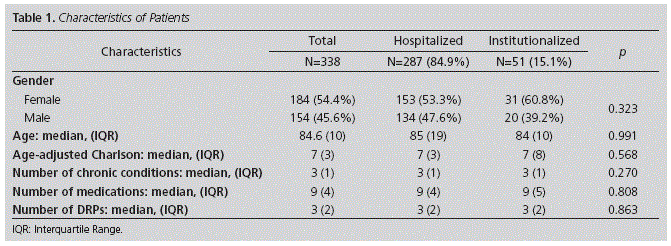
<body><![CDATA[<p><font face="Verdana" size="2">In order to evaluate the acceptance of the interventions independently of any influence by potential factors of confusion, a backward stepwise binary logistic regression was conducted, adjusted by plausibility. The criterion for model entry and exit into the model was 0.05 and 0.10, respectively. Goodness of fit was assessed according to the Hosmer-Lemeshow Test, and OR was expressed with its relevant 95% Confidence Interval. The bilateral significance of statistical tests was evaluated for a level below 5%. The entire analysis was conducted with the IBM SPSS Statistics v19.0 statistical software.</font></p>     <p><font face="Verdana" size="2">Previously to conducting the study, and according to the protocol submitted to the Hospital Committee for Research and Clinical Trials (CRCT), patients were adequately informed, both orally and in writing, and informed consent was obtained in case they accepted to participate.</font></p>     <p><font face="Verdana" size="2">Data treatment was conducted according to the Organic Law 15/1999, dated December, 13th, on Personal Data Protection.</font></p>     <p>&nbsp;</p>     <p><font face="Verdana" size="2"><b>Outcomes</b></font></p>     <p><font face="Verdana" size="2">There were 26 centres participating in the study: 18 hospitals and 8 SCCs. Out of an initial selection of 386 patients, 338 patients were included in the study: 287 hospitalized patients and 51 institutionalized patients. The list of participants in the study appears in  <a target="_blank" href="/img/revistas/fh/v39n4/02original01_anexo1.gif">Annex 1</a>.</font></p>     <p><font face="Verdana" size="2">The basal characteristics of patients included in the study are shown in <a href="#t1">table 1</a>: 54.4% (n=184) were women, with a median age of 84.6 years<sup>10</sup>.</font></p>     <p>&nbsp;</p>     <p align="center"><font face="Verdana" size="2"><a name="t1"><img src="/img/revistas/fh/v39n4/02original01_t1.gif"></a></font></p>     <p>&nbsp;</p>     ]]></body>
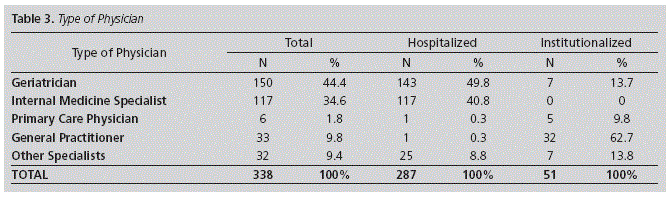
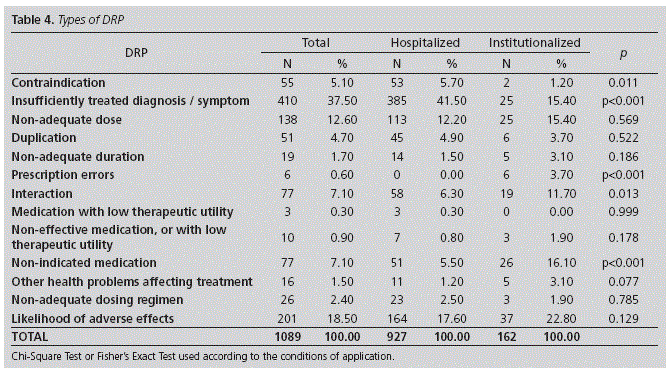
<body><![CDATA[<p><font face="Verdana" size="2">Regarding the defining categories of multiple pathologies, the overall number of patients and distribution according to their setting is collected in <a target="_blank" href="/img/revistas/fh/v39n4/02original01_t2.gif">table 2</a>. The multi-pathology profile was different between hospitalized and institutionalized patients, with neurological diseases and chronic osteoarticular disease more frequent in the latter.</font></p>     <p><font face="Verdana" size="2">90.6% of hospitalized patients were managed by specialist physicians, with a more specific training in multi-pathological patients (Geriatrics, Internal Medicine) vs. 13.7% of institutionalized patients (p&lt;0.001) (<a href="#t3">Table 3</a>).</font></p>     <p>&nbsp;</p>     <p align="center"><font face="Verdana" size="2"><a name="t3"><img src="/img/revistas/fh/v39n4/02original01_t3.gif"></a></font></p>     <p>&nbsp;</p>     <p><font face="Verdana" size="2">From 338 patients studied, 326 (96.4%) presented some type of DRP, but no significant differences were found between hospitalized and institutionalized patients (95.1 and 100%, respectively).</font></p>     <p><font face="Verdana" size="2">For the solution of those 1,089 DRPs detected, 933 PIs in total were proposed, and 651 (69.9%) of these were accepted by the medical team. Out of these, 641 facilitated the solution of the DRP, while 2 were not able to solve the DRP, or solved it but with consequences, and there was an unknown outcome in the rest; and therefore, PIs achieved the solution in 58.9% of DRPs, and an association was found between the PI and the DRP solution (p&lt;0.001). More interventions were conducted in SCCs than in hospitals (93.8% and 84.3% respectively; p=0.005); and the acceptance of intervention was also higher (77% and 68.4% p=0.037).</font></p>     <p><font face="Verdana" size="2">Distribution by type of DRP is collected in <a href="#t4">table 4</a>. Hospitalized patients presented more DRPs in terms of diagnosis and/or undertreated symptoms, and less DRPs regarding prescription errors and non-indicated medication vs. institutionalized patients (p&lt;0.001).</font></p>     <p>&nbsp;</p>     <p align="center"><font face="Verdana" size="2"><a name="t4"><img src="/img/revistas/fh/v39n4/02original01_t4.gif"></a></font></p>     ]]></body>
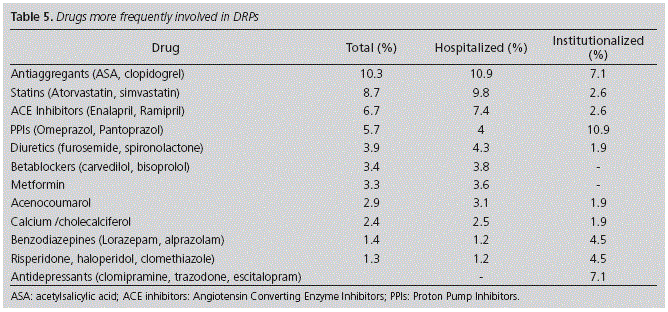
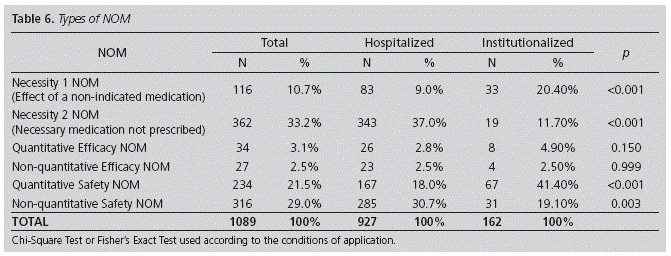
<body><![CDATA[<p>&nbsp;</p>     <p><font face="Verdana" size="2">Those drugs with higher involvement in DRPs appear in <a href="#t5">table 5</a>; the most frequent in the hospital setting were those for cardiovascular treatment, and the most frequent in SCCs were psychotropic drugs.</font></p>     <p>&nbsp;</p>     <p align="center"><font face="Verdana" size="2"><a name="t5"><img src="/img/revistas/fh/v39n4/02original01_t5.gif"></a></font></p>     <p>&nbsp;</p>     <p><font face="Verdana" size="2">Regarding NOMs, the most frequent were for Safety (50.5%), followed by Necessity (43.9%), and there were statistically significant differences between hospitalized and institutionalized patients (<a href="#t6">Table 6</a>).</font></p>     <p>&nbsp;</p>     <p align="center"><font face="Verdana" size="2"><a name="t6"><img src="/img/revistas/fh/v39n4/02original01_t6.gif"></a></font></p>     <p>&nbsp;</p>     <p><font face="Verdana" size="2">The STOPP/START Criteria allowed the detection of 65% of all PIPs, and there were more PIPs not associated with these criteria in SCCs than in hospitals, p&lt;0.001 (<a href="#t7">Table 7</a>).</font></p>     ]]></body>
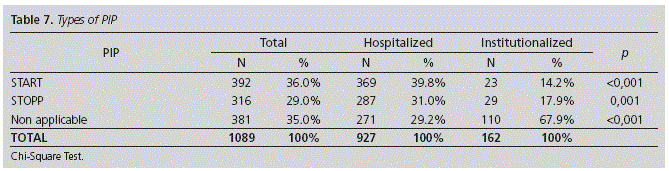
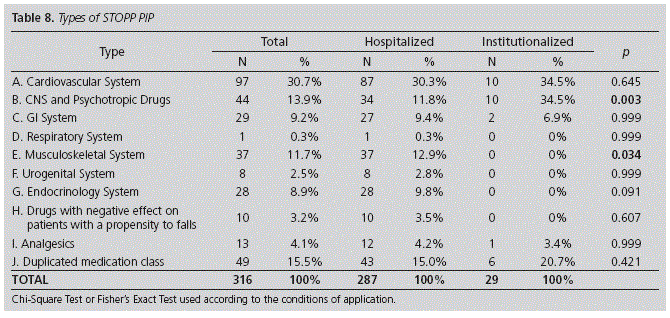
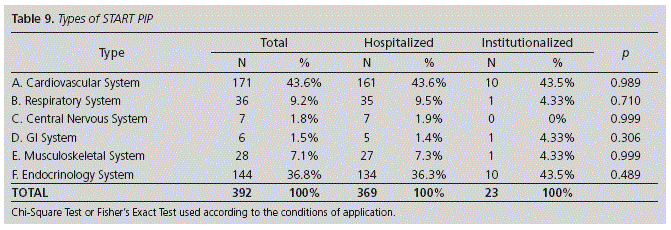
<body><![CDATA[<p>&nbsp;</p>     <p align="center"><font face="Verdana" size="2"><a name="t7"><img src="/img/revistas/fh/v39n4/02original01_t7.gif"></a></font></p>     <p>&nbsp;</p>     <p><font face="Verdana" size="2">Among those STOPP Criteria more frequently found (<a href="#t8">Table 8</a>), the main ones were those associated with the cardiovascular system, class duplication, and those associated with the Central Nervous System and psychotropic drugs. The most prevalent were: the use of acetylsalicylic acid at doses over 150mg, loop diuretics as first line treatment for hypertension, prolonged use of benzodiazepines with long half-life and neuroleptic drugs as hypnotic drugs, antimuscarinic drugs with prostatism, PPIs at treatment doses for over eight weeks, and non-steroid anti-inflammatory drugs (NSAIDs) with moderate-severe hypertension.</font></p>     <p>&nbsp;</p>     <p align="center"><font face="Verdana" size="2"><a name="t8"><img src="/img/revistas/fh/v39n4/02original01_t8.gif"></a></font></p>     <p>&nbsp;</p>     <p><font face="Verdana" size="2">Regarding START Criteria (<a href="#t9">Table 9</a>), once again those associated with the cardiovascular group were the most frequent, followed by those in the endocrinology system. The most relevant would be: indication to initiate treatment with an ACE inhibitor in chronic cardiac failure, with statins in patients with cardiovascular risk factors and/or diabetes mellitus, or with platelet antiag-gregants in diabetic patients with risk factors.</font></p>     <p>&nbsp;</p>     <p align="center"><font face="Verdana" size="2"><a name="t9"><img src="/img/revistas/fh/v39n4/02original01_t9.gif"></a></font></p>     ]]></body>
<body><![CDATA[<p>&nbsp;</p>     <p><font face="Verdana" size="2">The logistic regression factor showed that PI acceptance was significantly influenced by type of centre, physician specialty, and the type of NOM associated with the problem causing the intervention. Therefore, PIs were more accepted in SCCs than in hospitals (p=0.002), by physicians with a higher degree of academic specialization in elderly patients (p&lt;0.001), and when they involved quantitative safety NOMs (p=0.042).</font></p>     <p>&nbsp;</p>     <p><font face="Verdana" size="2"><b>Discussion</b></font></p>     <p><font face="Verdana" size="2">Elderly multi-pathological patients are characterized by their clinical complexity and a higher need to use therapeutic resources. Besides multiple morbidity, other aspects must be taken into account in their approach, such as the presence of disabilities (functional, psychological, cognitive), the existence of geriatric syndromes, their social situation and their values or beliefs, which leads to pharmacological treatment becoming very complex<sup>20</sup>.</font></p>     <p><font face="Verdana" size="2">This reality can be assessed in the present study: the median number of chronic medications per patient has been 9, and 96.4 of patients presented some DRP, with a prevalence of 3.3 DRP/patient. Even though there is a great variability within bibliography<sup>21</sup>, our data are similar to those found by other authors in chronic patients, and with outcomes ranging between 3.5 to 3.7 DRP/ patient (98.6%) in the institutionalized population<sup>22,23,24 </sup>and 2.1 to 2.9 DRP/patient (81%) in hospitalized patients<sup>25,26,27</sup>.</font></p>     <p><font face="Verdana" size="2">Pharmacist Intervention integrated in the multidisciplinary team managing elderly multi-pathological patients has achieved a significant 59.7% reduction in DRPs and NOMs associated with medication, equal to what other authors have published <sup>13,15,24,27</sup>. Pharmacist involvement in patient's pharmacological therapy is perceived as an effective method to improve their care. The best results are obtained when the clinical pharmacist reviews pharmacological therapy actively, in a structured way, and within the context of a multidisciplinary approach<sup>15,22,28</sup>. This sum of efforts is essential in the case of elderly and poly-medicated patients, who will typically present complex treatment regimens, multiple comorbidities, and other factors of risk of medication-associated morbidity related with patients, their setting, and the health system<sup>16</sup>.</font></p>     <p><font face="Verdana" size="2">The impact of PI has been of 69.9%, measured as the degree of acceptance of these interventions by the healthcare system; and the solution for DRPs and NOMs was achieved in 98.5% of them, which indicates a high effectiveness of the intervention. Other studies have achieved similar acceptance rates in institutionalization centres, 66% and 77%<sup>22,29</sup>, or more dispersed, between 50% and 90%, in elderly hospitalized patients<sup>13,27</sup>, or 60% in multipathological patients<sup>2</sup>. This higher or lower acceptance for PIs could be explained by the model of communication used: the situations in which there is a direct communication with the healthcare team will lead to a higher acceptance than those models that use indirect contact between professionals, through written notes or messages<sup>21,22</sup>.</font></p>     <p><font face="Verdana" size="2">Our study has identified healthcare setting, physician specialty and type of NOM as those factors having an impact on the acceptance or lack of acceptance for the interventions. Thus, the acceptance of PIs among patients in SCCs was higher than in hospitalized patients, because there is a higher level of integration of the Pharmacist within the multidisciplinary team, and there is a more comprehensive and integrated approach for the chronic situation and patient setting<sup>24</sup>, as well as a more direct communication between these professionals. Regarding physician specialties, Geriatricians have shown the highest acceptance, probably because of their higher awareness of the STOPP/START Criteria for PIPs used in treatment assessment, which allowed the identification of 65% of DRPs<sup>30</sup>. Regarding type of NOM, those classified as &quot;quantitative ineffectiveness&quot; were the least accepted. These NOMs were associated with insufficient dosing of medication. A possible cause could be that the physician responsible for treatment gave priority to treatment safety, assessing the adverse effect profile and its indication. A heavy patient load could also lead to make occasional fast decisions; and the complexity in these patients could have left this NOM in a secondary position.</font></p>     <p><font face="Verdana" size="2">NOM distribution followed a similar pattern to that described in the bibliography about patients with similar characteristics; the majority of NOMs more frequently detected were for Safety, followed by Necessity<sup>13,14,31</sup>. The most frequent DRPs also coincided with those published by other authors; thus, most interventions were associated with the indication, dosing, and likelihood of adverse effects; though some other studies have found a higher number of interactions <sup>2,22,24,27</sup>.</font></p>     ]]></body>
<body><![CDATA[<p><font face="Verdana" size="2">One common characteristic among those DRPs more prevalent in our study (insufficiently treated diagnosis or symptom, likelihood of adverse effects, and non-adequate dose) has been that they could have been prevented, and this is a fact with coincides with what has been collected by other authors<sup>31</sup>. The prevalence profile by type of DRP observed in hospitalized patients has been different to the profile for institutionalized patients; thus, hospitalized patients presented more DRPs regarding contraindication and insufficiently treated symptoms than patients in institutions. This could be explained by the different approach in patient healthcare during hospital admission, more focused on looking for a solution for the acute clinical situation which led to hospitalization. On the other hand, for institutionalized patients, healthcare is focused in patients and their chronic follow-up, and therefore more DRPs were detected regarding prescription errors, interactions, and non-indicated medication.</font></p>     <p><font face="Verdana" size="2">The drugs more widely involved in those DRPs detected were: antiaggregants, statins, ACE inhibitors and PPIs, and this situation coincided with the profile of multiple pathologies in the patients studied. The use of PPIs without clinical indication is worth highlighting; the massive use of these drugs could lead to the development of adverse effects, as detected by other authors<sup>2,24,32</sup>. On the other hand, the drugs more widely involved among patients in institutions were psychotropic drugs, given the highest prevalence of neurological disease. Other authors have also found a major number of DRPs associated with the use of psychotropic drugs, though, unlike our study, they have detected a higher number of DRPs associated with the use of laxatives and painkillers <sup>22,24</sup>.</font></p>     <p><font face="Verdana" size="2">A 65% of those DRPs detected were identified after the application of the STOPP/START Criteria for PIPs. The use of these criteria in our setting has been mostly promoted by Geriatricians in the hospital care setting <sup>14</sup>. This could explain the fact that a higher number of DRPs not associated with these criteria have been found in institutionalized patients than in hospitalized patients. But another cause for this, as pointed out by Galvan-Banqueri <i>et al</i>, could be that multi-pathological patients present such a level of complexity that their pharmacological therapy will require a comprehensive and multidimensional approach, using a combination of different strategies, and establishing adequate objectives for the patient's situation<sup>20</sup>.</font></p>     <p><font face="Verdana" size="2">The majority of patients included in the study in the hospital setting came from the Geriatrics and Internal Medicine Department, as these are the hospital units with higher involvement in care for elderly multi-pathological patients, who are the object of the present study.</font></p>     <p><font face="Verdana" size="2">From a statistical point of view, the sample of patients analyzed has been enough to detect a reduction in the DRP rate of at least 15%. Therefore, the reduction observed in the DRP rate (41.1%) can be attributed to Pharmacy Intervention rather than to hazard.</font></p>     <p><font face="Verdana" size="2">Regarding study limitations, it must be stated that the centre and its type of dependency, relationship and/or integration (particularly in the case of CAS, Centres for Care and Follow-up) with the healthcare structures of each Autonomous Community may have represented a limitation in terms of information availability, which may have determined the inadequate assessment of some of the STOPP/START Criteria in patients. At the same time, clinical records are not computerized in some centres, they are not shared with the health system either, and clinical information about patients at admission is often incomplete regarding diagnosis and health problems. These are common difficulties found in studies conducted on the institutionalized population<sup>24</sup>, and could explain our lower rate of PIP detection, particularly by STOPP Criteria (29% STOPP), compared with what has been published by other authors: 64.2%<sup>27</sup> and 55.5%<sup>33</sup>.</font></p>     <p><font face="Verdana" size="2">There is a mixed evidence of the impact of Pharmacist Intervention on health outcomes, quality of life, or cost-efficacy, probably because these are multifactorial variables, and they are not sensitive enough to determine the impact of Pharmacist Interventions<sup>15,34</sup>. This study has not measured the impact of the interventions conducted upon health outcomes, but it lays the foundations for future research, and for delving into the role of the Pharmacist in the therapeutic approach for these complex patients, who are increasingly more numerous in all National Health System settings.</font></p>     <p><font face="Verdana" size="2">Summing up, the present paper is the first multicenter study conducted in Spain where Pharmacist Intervention, together with the medical team responsible for the elderly multi-pathological patient, allows solving to a significant degree those DRPs and NOMs associated with medication and, therefore, it helps to improve the quality of pharmacological therapy in this type of patients.</font></p>     <p>&nbsp;</p>     <p><font face="Verdana" size="2"><b>Bibliography</b></font></p>     ]]></body>
<body><![CDATA[<!-- ref --><p><font face="Verdana" size="2">1. Hamilton HJ, Gallagher PF, O'Mahony D. Inappropriate prescribing and adverse drug events in older people. BMC Geriatr. 2009; 9:5.    &nbsp;&nbsp;&nbsp;&nbsp;&nbsp;&nbsp;&nbsp;&nbsp;[&#160;<a href="javascript:void(0);" onclick="javascript: window.open('/scielo.php?script=sci_nlinks&ref=2221099&pid=S1130-6343201500040000200001&lng=','','width=640,height=500,resizable=yes,scrollbars=1,menubar=yes,');">Links</a>&#160;]<!-- end-ref --></font></p>    <!-- ref --><p><font face="Verdana" size="2">2. Galván-Banqueri M, González-Méndez AI, Alfaro-Lara E, Nieto-Martín MD, Pérez-Guerrero C, Santos-Ramos B. Evaluación de la adecuación del tratamiento farmacológico en pacientes pluripatológicos. Aten Primaria. 2013; 45: 235-43.    &nbsp;&nbsp;&nbsp;&nbsp;&nbsp;&nbsp;&nbsp;&nbsp;[&#160;<a href="javascript:void(0);" onclick="javascript: window.open('/scielo.php?script=sci_nlinks&ref=2221101&pid=S1130-6343201500040000200002&lng=','','width=640,height=500,resizable=yes,scrollbars=1,menubar=yes,');">Links</a>&#160;]<!-- end-ref --></font></p>    <!-- ref --><p><font face="Verdana" size="2">3. Scott I, Jayathissa S. Quality of drug prescribing in older patients: is there a problem and can we improve it? Intern Med J. 2010; 40: 7-18.    &nbsp;&nbsp;&nbsp;&nbsp;&nbsp;&nbsp;&nbsp;&nbsp;[&#160;<a href="javascript:void(0);" onclick="javascript: window.open('/scielo.php?script=sci_nlinks&ref=2221103&pid=S1130-6343201500040000200003&lng=','','width=640,height=500,resizable=yes,scrollbars=1,menubar=yes,');">Links</a>&#160;]<!-- end-ref --></font></p>    <!-- ref --><p><font face="Verdana" size="2">4. Hanlon JT, Schmader KE, Semla TP. Update of Studies on Drug-Related Problems in Older Adults. J Am Geriatr Soc. 2013; 61:1365-8.    &nbsp;&nbsp;&nbsp;&nbsp;&nbsp;&nbsp;&nbsp;&nbsp;[&#160;<a href="javascript:void(0);" onclick="javascript: window.open('/scielo.php?script=sci_nlinks&ref=2221105&pid=S1130-6343201500040000200004&lng=','','width=640,height=500,resizable=yes,scrollbars=1,menubar=yes,');">Links</a>&#160;]<!-- end-ref --></font></p>    <!-- ref --><p><font face="Verdana" size="2">5. Van den Bemt PM, Egberts TC, de Jong-van den Berg LT, Brouwers JR. Drug-related problems in hospitalised patients. Drug Saf. 2000; 22: 321-33.    &nbsp;&nbsp;&nbsp;&nbsp;&nbsp;&nbsp;&nbsp;&nbsp;[&#160;<a href="javascript:void(0);" onclick="javascript: window.open('/scielo.php?script=sci_nlinks&ref=2221107&pid=S1130-6343201500040000200005&lng=','','width=640,height=500,resizable=yes,scrollbars=1,menubar=yes,');">Links</a>&#160;]<!-- end-ref --></font></p>    ]]></body>
<body><![CDATA[<!-- ref --><p><font face="Verdana" size="2">6. Page RL II, Linnebur SA, Bryant LL, Ruscin JM. Inappropriate prescribing in the hospitalized elderly patient: Defining the problem, evaluation tools, and possible solutions. Clin Interv Aging. 2010; 5: 75-87.    &nbsp;&nbsp;&nbsp;&nbsp;&nbsp;&nbsp;&nbsp;&nbsp;[&#160;<a href="javascript:void(0);" onclick="javascript: window.open('/scielo.php?script=sci_nlinks&ref=2221109&pid=S1130-6343201500040000200006&lng=','','width=640,height=500,resizable=yes,scrollbars=1,menubar=yes,');">Links</a>&#160;]<!-- end-ref --></font></p>    <!-- ref --><p><font face="Verdana" size="2">7. García-Gollarte F, Baleriola-Júlvez J, Ferrero-López I, Cuenllas-Díaz A, Cruz-Jentoft AJ. An Educational Intervention on Drug Use in Nursing Homes Improves Health Outcomes Resource Utilization and Reduces Inappropriate Drug Prescription. J Am Med Dir Assoc. 2014; 15: 885-91.    &nbsp;&nbsp;&nbsp;&nbsp;&nbsp;&nbsp;&nbsp;&nbsp;[&#160;<a href="javascript:void(0);" onclick="javascript: window.open('/scielo.php?script=sci_nlinks&ref=2221111&pid=S1130-6343201500040000200007&lng=','','width=640,height=500,resizable=yes,scrollbars=1,menubar=yes,');">Links</a>&#160;]<!-- end-ref --></font></p>    <!-- ref --><p><font face="Verdana" size="2">8. Gallagher PF, Lang PO, Cherubini A, Topinková E, Cruz-Jentoft A, Montero B, Mádlová P, Gasperini B, Baeyens H, Baeyens JP, Michel JP, O'Mahony D. Prevalence of potentially inappropriate prescribing in an acutely ill population of older patients admitted to six European hospitals. Eur J Clin Pharmacol. 2011; 67: 1175-88.    &nbsp;&nbsp;&nbsp;&nbsp;&nbsp;&nbsp;&nbsp;&nbsp;[&#160;<a href="javascript:void(0);" onclick="javascript: window.open('/scielo.php?script=sci_nlinks&ref=2221113&pid=S1130-6343201500040000200008&lng=','','width=640,height=500,resizable=yes,scrollbars=1,menubar=yes,');">Links</a>&#160;]<!-- end-ref --></font></p>    <!-- ref --><p><font face="Verdana" size="2">9. O'Connor MN, Gallagher P, O'Mahony D. Inappropriate Prescribing Criteria, Detection and Prevention. Drugs Aging. 2012; 29 (6): 437-52.    &nbsp;&nbsp;&nbsp;&nbsp;&nbsp;&nbsp;&nbsp;&nbsp;[&#160;<a href="javascript:void(0);" onclick="javascript: window.open('/scielo.php?script=sci_nlinks&ref=2221115&pid=S1130-6343201500040000200009&lng=','','width=640,height=500,resizable=yes,scrollbars=1,menubar=yes,');">Links</a>&#160;]<!-- end-ref --></font></p>    <!-- ref --><p><font face="Verdana" size="2">10. Delgado-Silveira E, Muñoz-García M, Montero-Errasquin B, Sánchez-Castellano, Gallagher PF, Cruz-Jentoft A. Prescripción inapropiada de medicamentos en los pacientes mayores: los criterios STOPP/START. Rev Esp Geriatr Gerontol. 2009; 44: 273-9.    &nbsp;&nbsp;&nbsp;&nbsp;&nbsp;&nbsp;&nbsp;&nbsp;[&#160;<a href="javascript:void(0);" onclick="javascript: window.open('/scielo.php?script=sci_nlinks&ref=2221117&pid=S1130-6343201500040000200010&lng=','','width=640,height=500,resizable=yes,scrollbars=1,menubar=yes,');">Links</a>&#160;]<!-- end-ref --></font></p>    ]]></body>
<body><![CDATA[<!-- ref --><p><font face="Verdana" size="2">11. Hill-Taylor B, Sketris I, Hayden J, Byrne S, O'Sullivan D, Christie R. Application of the STOPP/START criteria: a systematic review of the prevalence of potentially inappropriate prescribing in older adults, and evidence of clinical, humanistic and economic impact. J Clin Pharm Ther. 2013; 38:360-72.    &nbsp;&nbsp;&nbsp;&nbsp;&nbsp;&nbsp;&nbsp;&nbsp;[&#160;<a href="javascript:void(0);" onclick="javascript: window.open('/scielo.php?script=sci_nlinks&ref=2221119&pid=S1130-6343201500040000200011&lng=','','width=640,height=500,resizable=yes,scrollbars=1,menubar=yes,');">Links</a>&#160;]<!-- end-ref --></font></p>    <!-- ref --><p><font face="Verdana" size="2">12. Gallagher P, O'Mahoney, D. STOPP (Screening Tool of Older Person's potentially inappropriate Prescriptions): application to acutely ill elderly patients and comparison with Beers' criteria. Age Ageing. 2008; 37: 673-9.    &nbsp;&nbsp;&nbsp;&nbsp;&nbsp;&nbsp;&nbsp;&nbsp;[&#160;<a href="javascript:void(0);" onclick="javascript: window.open('/scielo.php?script=sci_nlinks&ref=2221121&pid=S1130-6343201500040000200012&lng=','','width=640,height=500,resizable=yes,scrollbars=1,menubar=yes,');">Links</a>&#160;]<!-- end-ref --></font></p>    <!-- ref --><p><font face="Verdana" size="2">13. Gillespie U, Alassaad A, Henrohn D, Garmo H, Hammarlund-Udenaes M, Toss H, Kettis-Lindblad A, Melhus H. Mórlin C. A comprehensive pharmacist Intervention to reduce morbidity in patients 80 years or older. Arch Intern Med. 2009; 169: 894-900.    &nbsp;&nbsp;&nbsp;&nbsp;&nbsp;&nbsp;&nbsp;&nbsp;[&#160;<a href="javascript:void(0);" onclick="javascript: window.open('/scielo.php?script=sci_nlinks&ref=2221123&pid=S1130-6343201500040000200013&lng=','','width=640,height=500,resizable=yes,scrollbars=1,menubar=yes,');">Links</a>&#160;]<!-- end-ref --></font></p>    <!-- ref --><p><font face="Verdana" size="2">14. Delgado-Silveira E, Álvarez-Díaz A, Pérez.Menéndez-Conde C, Muñoz-García M, Cruz-Jentoft A, Bermejo-Vicedo T. Resultados de la integración de la atención farmacéutica en una Unidad de Agudos de Geriatría. Rev Esp Geriatr Gerontol. 2012; 47: 49-54.    &nbsp;&nbsp;&nbsp;&nbsp;&nbsp;&nbsp;&nbsp;&nbsp;[&#160;<a href="javascript:void(0);" onclick="javascript: window.open('/scielo.php?script=sci_nlinks&ref=2221125&pid=S1130-6343201500040000200014&lng=','','width=640,height=500,resizable=yes,scrollbars=1,menubar=yes,');">Links</a>&#160;]<!-- end-ref --></font></p>    <!-- ref --><p><font face="Verdana" size="2">15. Spinewine A, Fialová D, Byrne S. The role of the pharmacist in optimizing pharmacotherapy in older people. Drugs Aging. 2012; 29: 495-510.    &nbsp;&nbsp;&nbsp;&nbsp;&nbsp;&nbsp;&nbsp;&nbsp;[&#160;<a href="javascript:void(0);" onclick="javascript: window.open('/scielo.php?script=sci_nlinks&ref=2221127&pid=S1130-6343201500040000200015&lng=','','width=640,height=500,resizable=yes,scrollbars=1,menubar=yes,');">Links</a>&#160;]<!-- end-ref --></font></p>    ]]></body>
<body><![CDATA[<!-- ref --><p><font face="Verdana" size="2">16. Santos-RamosB, Otero-López MJ, Galván-Banqueri M, Alfaro-Lara ER, Vega-Coca MD, Nieto-Martín MD, Ollero-Baturone M. Modelos de atención al paciente pluripatológico y el papel de la farmacia hospitalaria. Farm Hosp. 2012; 36: 506-17.    &nbsp;&nbsp;&nbsp;&nbsp;&nbsp;&nbsp;&nbsp;&nbsp;[&#160;<a href="javascript:void(0);" onclick="javascript: window.open('/scielo.php?script=sci_nlinks&ref=2221129&pid=S1130-6343201500040000200016&lng=','','width=640,height=500,resizable=yes,scrollbars=1,menubar=yes,');">Links</a>&#160;]<!-- end-ref --></font></p>    <!-- ref --><p><font face="Verdana" size="2">17. Ollero-Baturone M, Álvarez M, Baron-Franco B, Bernabéu-Wittel M, Codina A, Fernández-Moyano A. Atención a pacientes pluripatológicos. Proceso asistencial integrado. Sevilla: Consejería de Salud, Junta de Andalucía. Segunda edición. 2007. (Acceso en marzo de 2014). Disponible en: <a target="_blank" href="http://www.juntadeandalucia.es/servicios/publicaciones/detalle/50328.html">http://www.juntadeandalucia.es/servicios/publicaciones/detalle/50328.html</a>.    &nbsp;&nbsp;&nbsp;&nbsp;&nbsp;&nbsp;&nbsp;&nbsp;[&#160;<a href="javascript:void(0);" onclick="javascript: window.open('/scielo.php?script=sci_nlinks&ref=2221131&pid=S1130-6343201500040000200017&lng=','','width=640,height=500,resizable=yes,scrollbars=1,menubar=yes,');">Links</a>&#160;]<!-- end-ref --></font></p>    <!-- ref --><p><font face="Verdana" size="2">18. Grupo de Investigación en Atención Farmacéutica. Universidad de Granada. Grupo de Investigación en Farmacología. Universidad de Granada. Fundación Pharmaceutical Care España. Sociedad Española de Farmacia Comunitaria. Tercer Consenso de Granada sobre Problemas Relacionados con Medicamentos (PRM) y Resultados Negativos asociados a la Medicación (RNM). Ars Pharm. 2007; 48: 5-17.    &nbsp;&nbsp;&nbsp;&nbsp;&nbsp;&nbsp;&nbsp;&nbsp;[&#160;<a href="javascript:void(0);" onclick="javascript: window.open('/scielo.php?script=sci_nlinks&ref=2221133&pid=S1130-6343201500040000200018&lng=','','width=640,height=500,resizable=yes,scrollbars=1,menubar=yes,');">Links</a>&#160;]<!-- end-ref --></font></p>    <!-- ref --><p><font face="Verdana" size="2">19. Charlson M, Pompei P, Ales KL, mcKenzie CR. A new method of classifying prognostic comorbidity in longitudinal studies: development and validation. J Chron Dis. 1987; 40: 373-83.    &nbsp;&nbsp;&nbsp;&nbsp;&nbsp;&nbsp;&nbsp;&nbsp;[&#160;<a href="javascript:void(0);" onclick="javascript: window.open('/scielo.php?script=sci_nlinks&ref=2221135&pid=S1130-6343201500040000200019&lng=','','width=640,height=500,resizable=yes,scrollbars=1,menubar=yes,');">Links</a>&#160;]<!-- end-ref --></font></p>    <!-- ref --><p><font face="Verdana" size="2">20. Fusco D, Lattanzio F, Tosato M, Corsonello A, Cherubini A, Volpato S, Maraldi C, Ruggiero C, Onder G. Development of criteria to assess appropriate medication use among elderly complex patients (CRIME) project. Drugs Aging. 2009; 26 Suppl1: 3-13.    &nbsp;&nbsp;&nbsp;&nbsp;&nbsp;&nbsp;&nbsp;&nbsp;[&#160;<a href="javascript:void(0);" onclick="javascript: window.open('/scielo.php?script=sci_nlinks&ref=2221137&pid=S1130-6343201500040000200020&lng=','','width=640,height=500,resizable=yes,scrollbars=1,menubar=yes,');">Links</a>&#160;]<!-- end-ref --></font></p>    ]]></body>
<body><![CDATA[<!-- ref --><p><font face="Verdana" size="2">21. Geurts ME, Talsma J, Broewers JR Gier JJ. Medication review and reconciliation with cooperation between pharmacists and general practitioners and the benefit for the patient: a systematic review. Br J Clin Pharmacol. 2012; 74:16-33.    &nbsp;&nbsp;&nbsp;&nbsp;&nbsp;&nbsp;&nbsp;&nbsp;[&#160;<a href="javascript:void(0);" onclick="javascript: window.open('/scielo.php?script=sci_nlinks&ref=2221139&pid=S1130-6343201500040000200021&lng=','','width=640,height=500,resizable=yes,scrollbars=1,menubar=yes,');">Links</a>&#160;]<!-- end-ref --></font></p>    <!-- ref --><p><font face="Verdana" size="2">22. Halvorsen KH, Ruths S, Granas AG Viktil KK. Multidisciplinary intervention to identify and resolve drug-related problems in Norwegian nursing homes. Scand J Prim Heatl Care. 2010; 28: 82-88.    &nbsp;&nbsp;&nbsp;&nbsp;&nbsp;&nbsp;&nbsp;&nbsp;[&#160;<a href="javascript:void(0);" onclick="javascript: window.open('/scielo.php?script=sci_nlinks&ref=2221141&pid=S1130-6343201500040000200022&lng=','','width=640,height=500,resizable=yes,scrollbars=1,menubar=yes,');">Links</a>&#160;]<!-- end-ref --></font></p>    <!-- ref --><p><font face="Verdana" size="2">23. Finkers F, Maring JG, Boersma F, Taxis K. A study of medication reviews to identify drug-related problems of polypharmacy patients in Dutch nursing home setting. J Clin Pharm Ther. 2007; 32: 469-76.    &nbsp;&nbsp;&nbsp;&nbsp;&nbsp;&nbsp;&nbsp;&nbsp;[&#160;<a href="javascript:void(0);" onclick="javascript: window.open('/scielo.php?script=sci_nlinks&ref=2221143&pid=S1130-6343201500040000200023&lng=','','width=640,height=500,resizable=yes,scrollbars=1,menubar=yes,');">Links</a>&#160;]<!-- end-ref --></font></p>    <!-- ref --><p><font face="Verdana" size="2">24. Brulhart MI, Wermeille JP. Multidisciplinary medication review: evaluation of a pharmaceutical care model for nursing homes. Int J Clin Pharm. 2011; 33: 549-57.    &nbsp;&nbsp;&nbsp;&nbsp;&nbsp;&nbsp;&nbsp;&nbsp;[&#160;<a href="javascript:void(0);" onclick="javascript: window.open('/scielo.php?script=sci_nlinks&ref=2221145&pid=S1130-6343201500040000200024&lng=','','width=640,height=500,resizable=yes,scrollbars=1,menubar=yes,');">Links</a>&#160;]<!-- end-ref --></font></p>    <!-- ref --><p><font face="Verdana" size="2">25. Viktil KK, Blix HS, Reikvam A, Moger TA, Hjemaas BJ, Walseth EK, Vraalsen TE, Pretsch P, Jorgensen F. Comparison of drug-related problems in different patient groups. Ann Pharmacother. 2004; 38: 942-8.    &nbsp;&nbsp;&nbsp;&nbsp;&nbsp;&nbsp;&nbsp;&nbsp;[&#160;<a href="javascript:void(0);" onclick="javascript: window.open('/scielo.php?script=sci_nlinks&ref=2221147&pid=S1130-6343201500040000200025&lng=','','width=640,height=500,resizable=yes,scrollbars=1,menubar=yes,');">Links</a>&#160;]<!-- end-ref --></font></p>    ]]></body>
<body><![CDATA[<!-- ref --><p><font face="Verdana" size="2">26. Ahmad A, Mast MR, Nijpels G, Elders P, Dekker J, Hugtenburg J. Identification of drug-related problems of elderly patients discharged from hospital. Patient Prefer Adherence. 2014; 8: 155-65.    &nbsp;&nbsp;&nbsp;&nbsp;&nbsp;&nbsp;&nbsp;&nbsp;[&#160;<a href="javascript:void(0);" onclick="javascript: window.open('/scielo.php?script=sci_nlinks&ref=2221149&pid=S1130-6343201500040000200026&lng=','','width=640,height=500,resizable=yes,scrollbars=1,menubar=yes,');">Links</a>&#160;]<!-- end-ref --></font></p>    <!-- ref --><p><font face="Verdana" size="2">27. O'Sullivan D, O'Mahony D, O'Connor MN, Gallagher P, Cullinan S, O'Sullivan R, gallagher J, Eustace J, Byrne S. The impact of a structured pharmacist intervention of the appropriateness of prescribing in older hospitalized patients. Drugs Aging. 2014; 31: 471-81.    &nbsp;&nbsp;&nbsp;&nbsp;&nbsp;&nbsp;&nbsp;&nbsp;[&#160;<a href="javascript:void(0);" onclick="javascript: window.open('/scielo.php?script=sci_nlinks&ref=2221151&pid=S1130-6343201500040000200027&lng=','','width=640,height=500,resizable=yes,scrollbars=1,menubar=yes,');">Links</a>&#160;]<!-- end-ref --></font></p>    <!-- ref --><p><font face="Verdana" size="2">28. Patterson SM, Cadogan SA, Kerse N, Cardwell CR, Bradley MC, Ryan C, Hughes C. Interventions to improve the appropriate use of polypharmacy for older people. Cochrane Database Syst Rev. 2014.    &nbsp;&nbsp;&nbsp;&nbsp;&nbsp;&nbsp;&nbsp;&nbsp;[&#160;<a href="javascript:void(0);" onclick="javascript: window.open('/scielo.php?script=sci_nlinks&ref=2221153&pid=S1130-6343201500040000200028&lng=','','width=640,height=500,resizable=yes,scrollbars=1,menubar=yes,');">Links</a>&#160;]<!-- end-ref --></font></p>    <!-- ref --><p><font face="Verdana" size="2">29. Zermansky AG, Alldred DP, Petty DR, Raynor DK, Freemantle N, Eastaugh J, Bowie P. Clinical medication review by a pharmacist of elderly people living in care-homes-randomised controlled trial. Age Ageing. 2006; 35: 586-91.    &nbsp;&nbsp;&nbsp;&nbsp;&nbsp;&nbsp;&nbsp;&nbsp;[&#160;<a href="javascript:void(0);" onclick="javascript: window.open('/scielo.php?script=sci_nlinks&ref=2221155&pid=S1130-6343201500040000200029&lng=','','width=640,height=500,resizable=yes,scrollbars=1,menubar=yes,');">Links</a>&#160;]<!-- end-ref --></font></p>    <!-- ref --><p><font face="Verdana" size="2">30. Muñoz M. Criterios STOPP/START versus Criterios de Beers, aplicación en diferentes unidades de hospitalización (Tesis doctoral). Madrid. Universidad Complutense de Madrid; 2012.    &nbsp;&nbsp;&nbsp;&nbsp;&nbsp;&nbsp;&nbsp;&nbsp;[&#160;<a href="javascript:void(0);" onclick="javascript: window.open('/scielo.php?script=sci_nlinks&ref=2221157&pid=S1130-6343201500040000200030&lng=','','width=640,height=500,resizable=yes,scrollbars=1,menubar=yes,');">Links</a>&#160;]<!-- end-ref --></font></p>    ]]></body>
<body><![CDATA[<!-- ref --><p><font face="Verdana" size="2">31. Gorgas MQ, Páez F, Camós J, de Puig E, Jolonch P, Homs E, Schoenenberger JA, Codina C, Gómez-Arbonés J. Programa de atención farmacéutica integrada en pacientes con enfermedades crónicas. Farm Hosp. 2012; 36: 229-39.    &nbsp;&nbsp;&nbsp;&nbsp;&nbsp;&nbsp;&nbsp;&nbsp;[&#160;<a href="javascript:void(0);" onclick="javascript: window.open('/scielo.php?script=sci_nlinks&ref=2221159&pid=S1130-6343201500040000200031&lng=','','width=640,height=500,resizable=yes,scrollbars=1,menubar=yes,');">Links</a>&#160;]<!-- end-ref --></font></p>    <!-- ref --><p><font face="Verdana" size="2">32. Pasina L, Nobili A, tettamanti M, Salerno F, Corrao S, Marengoni A, Iorio A, Marcucci M, Mannucci PM; REPOSI Investigators. Prevalence and appropriateness of drug prescriptions for peptic ulcer and gastro-esophageal reflux disease in a cohort of hospitalized elderly. Eur J Intern Med. 2011; 22: 205-10.    &nbsp;&nbsp;&nbsp;&nbsp;&nbsp;&nbsp;&nbsp;&nbsp;[&#160;<a href="javascript:void(0);" onclick="javascript: window.open('/scielo.php?script=sci_nlinks&ref=2221161&pid=S1130-6343201500040000200032&lng=','','width=640,height=500,resizable=yes,scrollbars=1,menubar=yes,');">Links</a>&#160;]<!-- end-ref --></font></p>    <!-- ref --><p><font face="Verdana" size="2">33. Galán C, Garrido R, Fernández S, Ruiz A, García MA, Padilla V. Prevalencia de medicación potencialmente inapropiada en pacientes ancianos hospitalizados utilizando criterios explícitos. Farm Hosp. 2014; 38: 305-16.    &nbsp;&nbsp;&nbsp;&nbsp;&nbsp;&nbsp;&nbsp;&nbsp;[&#160;<a href="javascript:void(0);" onclick="javascript: window.open('/scielo.php?script=sci_nlinks&ref=2221163&pid=S1130-6343201500040000200033&lng=','','width=640,height=500,resizable=yes,scrollbars=1,menubar=yes,');">Links</a>&#160;]<!-- end-ref --></font></p>    <!-- ref --><p><font face="Verdana" size="2">34. Castelino R, Bajorek B, Chen T. Targeting suboptimal prescribing in the elderly: A review of the impact of pharmacy services. Ann Pharmacother. 2009; 43: 1096-106.    &nbsp;&nbsp;&nbsp;&nbsp;&nbsp;&nbsp;&nbsp;&nbsp;[&#160;<a href="javascript:void(0);" onclick="javascript: window.open('/scielo.php?script=sci_nlinks&ref=2221165&pid=S1130-6343201500040000200034&lng=','','width=640,height=500,resizable=yes,scrollbars=1,menubar=yes,');">Links</a>&#160;]<!-- end-ref --></font></p>     <p>&nbsp;</p>     <p>&nbsp;</p>     ]]></body>
<body><![CDATA[<p><font face="Verdana" size="2"><a href="#top"><img border="0" src="/img/revistas/fh/v39n4/seta.gif" width="15" height="17"></a><a name="bajo"></a><b>Correspondence:</b>    <br>Correo electrónico: <a href="mailto:eva.delgado@salud.madrid.org">eva.delgado@salud.madrid.org</a>    <br>(Eva Delgado Silveira).</font></p>     <p><font face="Verdana" size="2">Recibido el 8 de noviembre de 2014    <br>Aceptado el 23 de abril de 2015</font></p>      ]]></body><back>
<ref-list>
<ref id="B1">
<label>1</label><nlm-citation citation-type="journal">
<person-group person-group-type="author">
<name>
<surname><![CDATA[Hamilton]]></surname>
<given-names><![CDATA[HJ]]></given-names>
</name>
<name>
<surname><![CDATA[Gallagher]]></surname>
<given-names><![CDATA[PF]]></given-names>
</name>
<name>
<surname><![CDATA[O'Mahony]]></surname>
<given-names><![CDATA[D]]></given-names>
</name>
</person-group>
<article-title xml:lang="en"><![CDATA[Inappropriate prescribing and adverse drug events in older people]]></article-title>
<source><![CDATA[BMC Geriatr.]]></source>
<year>2009</year>
<volume>9</volume>
</nlm-citation>
</ref>
<ref id="B2">
<label>2</label><nlm-citation citation-type="journal">
<person-group person-group-type="author">
<name>
<surname><![CDATA[Galván-Banqueri]]></surname>
<given-names><![CDATA[M]]></given-names>
</name>
<name>
<surname><![CDATA[González-Méndez]]></surname>
<given-names><![CDATA[AI]]></given-names>
</name>
<name>
<surname><![CDATA[Alfaro-Lara]]></surname>
<given-names><![CDATA[E]]></given-names>
</name>
<name>
<surname><![CDATA[Nieto-Martín]]></surname>
<given-names><![CDATA[MD]]></given-names>
</name>
<name>
<surname><![CDATA[Pérez-Guerrero]]></surname>
<given-names><![CDATA[C]]></given-names>
</name>
<name>
<surname><![CDATA[Santos-Ramos]]></surname>
<given-names><![CDATA[B]]></given-names>
</name>
</person-group>
<article-title xml:lang="es"><![CDATA[Evaluación de la adecuación del tratamiento farmacológico en pacientes pluripatológicos]]></article-title>
<source><![CDATA[Aten Primaria]]></source>
<year>2013</year>
<volume>45</volume>
<page-range>235-43</page-range></nlm-citation>
</ref>
<ref id="B3">
<label>3</label><nlm-citation citation-type="journal">
<person-group person-group-type="author">
<name>
<surname><![CDATA[Scott]]></surname>
<given-names><![CDATA[I]]></given-names>
</name>
<name>
<surname><![CDATA[Jayathissa]]></surname>
<given-names><![CDATA[S]]></given-names>
</name>
</person-group>
<article-title xml:lang="en"><![CDATA[Quality of drug prescribing in older patients: is there a problem and can we improve it?]]></article-title>
<source><![CDATA[Intern Med J.]]></source>
<year>2010</year>
<volume>40</volume>
<page-range>7-18</page-range></nlm-citation>
</ref>
<ref id="B4">
<label>4</label><nlm-citation citation-type="journal">
<person-group person-group-type="author">
<name>
<surname><![CDATA[Hanlon]]></surname>
<given-names><![CDATA[JT]]></given-names>
</name>
<name>
<surname><![CDATA[Schmader]]></surname>
<given-names><![CDATA[KE]]></given-names>
</name>
<name>
<surname><![CDATA[Semla]]></surname>
<given-names><![CDATA[TP]]></given-names>
</name>
</person-group>
<article-title xml:lang="en"><![CDATA[Update of Studies on Drug-Related Problems in Older Adults]]></article-title>
<source><![CDATA[J Am Geriatr Soc.]]></source>
<year>2013</year>
<volume>61</volume>
<page-range>1365-8</page-range></nlm-citation>
</ref>
<ref id="B5">
<label>5</label><nlm-citation citation-type="journal">
<person-group person-group-type="author">
<name>
<surname><![CDATA[Van den Bemt]]></surname>
<given-names><![CDATA[PM]]></given-names>
</name>
<name>
<surname><![CDATA[Egberts]]></surname>
<given-names><![CDATA[TC]]></given-names>
</name>
<name>
<surname><![CDATA[de Jong-van den Berg]]></surname>
<given-names><![CDATA[LT]]></given-names>
</name>
<name>
<surname><![CDATA[Brouwers]]></surname>
<given-names><![CDATA[JR]]></given-names>
</name>
</person-group>
<article-title xml:lang="en"><![CDATA[Drug-related problems in hospitalised patients]]></article-title>
<source><![CDATA[Drug Saf.]]></source>
<year>2000</year>
<volume>22</volume>
<page-range>321-33</page-range></nlm-citation>
</ref>
<ref id="B6">
<label>6</label><nlm-citation citation-type="journal">
<person-group person-group-type="author">
<name>
<surname><![CDATA[Page]]></surname>
<given-names><![CDATA[RL II]]></given-names>
</name>
<name>
<surname><![CDATA[Linnebur]]></surname>
<given-names><![CDATA[SA]]></given-names>
</name>
<name>
<surname><![CDATA[Bryant]]></surname>
<given-names><![CDATA[LL]]></given-names>
</name>
<name>
<surname><![CDATA[Ruscin]]></surname>
<given-names><![CDATA[JM]]></given-names>
</name>
</person-group>
<article-title xml:lang="en"><![CDATA[Inappropriate prescribing in the hospitalized elderly patient: Defining the problem, evaluation tools, and possible solutions]]></article-title>
<source><![CDATA[Clin Interv Aging]]></source>
<year>2010</year>
<volume>5</volume>
<page-range>75-87</page-range></nlm-citation>
</ref>
<ref id="B7">
<label>7</label><nlm-citation citation-type="journal">
<person-group person-group-type="author">
<name>
<surname><![CDATA[García-Gollarte]]></surname>
<given-names><![CDATA[F]]></given-names>
</name>
<name>
<surname><![CDATA[Baleriola-Júlvez]]></surname>
<given-names><![CDATA[J]]></given-names>
</name>
<name>
<surname><![CDATA[Ferrero-López]]></surname>
<given-names><![CDATA[I]]></given-names>
</name>
<name>
<surname><![CDATA[Cuenllas-Díaz]]></surname>
<given-names><![CDATA[A]]></given-names>
</name>
<name>
<surname><![CDATA[Cruz-Jentoft]]></surname>
<given-names><![CDATA[AJ]]></given-names>
</name>
</person-group>
<article-title xml:lang="en"><![CDATA[An Educational Intervention on Drug Use in Nursing Homes Improves Health Outcomes Resource Utilization and Reduces Inappropriate Drug Prescription]]></article-title>
<source><![CDATA[J Am Med Dir Assoc.]]></source>
<year>2014</year>
<volume>15</volume>
<page-range>885-91</page-range></nlm-citation>
</ref>
<ref id="B8">
<label>8</label><nlm-citation citation-type="journal">
<person-group person-group-type="author">
<name>
<surname><![CDATA[Gallagher]]></surname>
<given-names><![CDATA[PF]]></given-names>
</name>
<name>
<surname><![CDATA[Lang]]></surname>
<given-names><![CDATA[PO]]></given-names>
</name>
<name>
<surname><![CDATA[Cherubini]]></surname>
<given-names><![CDATA[A]]></given-names>
</name>
<name>
<surname><![CDATA[Topinková]]></surname>
<given-names><![CDATA[E]]></given-names>
</name>
<name>
<surname><![CDATA[Cruz-Jentoft]]></surname>
<given-names><![CDATA[A]]></given-names>
</name>
<name>
<surname><![CDATA[Montero]]></surname>
<given-names><![CDATA[B]]></given-names>
</name>
<name>
<surname><![CDATA[Mádlová]]></surname>
<given-names><![CDATA[P]]></given-names>
</name>
<name>
<surname><![CDATA[Gasperini]]></surname>
<given-names><![CDATA[B]]></given-names>
</name>
<name>
<surname><![CDATA[Baeyens]]></surname>
<given-names><![CDATA[H]]></given-names>
</name>
<name>
<surname><![CDATA[Baeyens]]></surname>
<given-names><![CDATA[JP]]></given-names>
</name>
<name>
<surname><![CDATA[Michel]]></surname>
<given-names><![CDATA[JP]]></given-names>
</name>
<name>
<surname><![CDATA[O'Mahony]]></surname>
<given-names><![CDATA[D]]></given-names>
</name>
</person-group>
<article-title xml:lang="en"><![CDATA[Prevalence of potentially inappropriate prescribing in an acutely ill population of older patients admitted to six European hospitals]]></article-title>
<source><![CDATA[Eur J Clin Pharmacol.]]></source>
<year>2011</year>
<volume>67</volume>
<page-range>1175-88</page-range></nlm-citation>
</ref>
<ref id="B9">
<label>9</label><nlm-citation citation-type="journal">
<person-group person-group-type="author">
<name>
<surname><![CDATA[O'Connor]]></surname>
<given-names><![CDATA[MN]]></given-names>
</name>
<name>
<surname><![CDATA[Gallagher]]></surname>
<given-names><![CDATA[P]]></given-names>
</name>
<name>
<surname><![CDATA[O'Mahony]]></surname>
<given-names><![CDATA[D]]></given-names>
</name>
</person-group>
<article-title xml:lang="en"><![CDATA[Inappropriate Prescribing Criteria, Detection and Prevention]]></article-title>
<source><![CDATA[Drugs Aging]]></source>
<year>2012</year>
<volume>29</volume>
<numero>6</numero>
<issue>6</issue>
<page-range>437-52</page-range></nlm-citation>
</ref>
<ref id="B10">
<label>10</label><nlm-citation citation-type="journal">
<person-group person-group-type="author">
<name>
<surname><![CDATA[Delgado-Silveira]]></surname>
<given-names><![CDATA[E]]></given-names>
</name>
<name>
<surname><![CDATA[Muñoz-García]]></surname>
<given-names><![CDATA[M]]></given-names>
</name>
<name>
<surname><![CDATA[Montero-Errasquin]]></surname>
<given-names><![CDATA[B]]></given-names>
</name>
<name>
<surname><![CDATA[Sánchez-Castellano]]></surname>
</name>
<name>
<surname><![CDATA[Gallagher]]></surname>
<given-names><![CDATA[PF]]></given-names>
</name>
<name>
<surname><![CDATA[Cruz-Jentoft]]></surname>
<given-names><![CDATA[A]]></given-names>
</name>
</person-group>
<article-title xml:lang="es"><![CDATA[Prescripción inapropiada de medicamentos en los pacientes mayores: los criterios STOPP/START]]></article-title>
<source><![CDATA[Rev Esp Geriatr Gerontol.]]></source>
<year>2009</year>
<volume>44</volume>
<page-range>273-9</page-range></nlm-citation>
</ref>
<ref id="B11">
<label>11</label><nlm-citation citation-type="journal">
<person-group person-group-type="author">
<name>
<surname><![CDATA[Hill-Taylor]]></surname>
<given-names><![CDATA[B]]></given-names>
</name>
<name>
<surname><![CDATA[Sketris]]></surname>
<given-names><![CDATA[I]]></given-names>
</name>
<name>
<surname><![CDATA[Hayden]]></surname>
<given-names><![CDATA[J]]></given-names>
</name>
<name>
<surname><![CDATA[Byrne]]></surname>
<given-names><![CDATA[S]]></given-names>
</name>
<name>
<surname><![CDATA[O'Sullivan]]></surname>
<given-names><![CDATA[D]]></given-names>
</name>
<name>
<surname><![CDATA[Christie]]></surname>
<given-names><![CDATA[R]]></given-names>
</name>
</person-group>
<article-title xml:lang="en"><![CDATA[Application of the STOPP/START criteria: a systematic review of the prevalence of potentially inappropriate prescribing in older adults, and evidence of clinical, humanistic and economic impact]]></article-title>
<source><![CDATA[J Clin Pharm Ther.]]></source>
<year>2013</year>
<volume>38</volume>
<page-range>360-72</page-range></nlm-citation>
</ref>
<ref id="B12">
<label>12</label><nlm-citation citation-type="journal">
<person-group person-group-type="author">
<name>
<surname><![CDATA[Gallagher]]></surname>
<given-names><![CDATA[P]]></given-names>
</name>
<name>
<surname><![CDATA[O'Mahoney]]></surname>
<given-names><![CDATA[D]]></given-names>
</name>
</person-group>
<article-title xml:lang="en"><![CDATA[STOPP (Screening Tool of Older Person's potentially inappropriate Prescriptions): application to acutely ill elderly patients and comparison with Beers' criteria]]></article-title>
<source><![CDATA[Age Ageing]]></source>
<year>2008</year>
<volume>37</volume>
<page-range>673-9</page-range></nlm-citation>
</ref>
<ref id="B13">
<label>13</label><nlm-citation citation-type="journal">
<person-group person-group-type="author">
<name>
<surname><![CDATA[Gillespie]]></surname>
<given-names><![CDATA[U]]></given-names>
</name>
<name>
<surname><![CDATA[Alassaad]]></surname>
<given-names><![CDATA[A]]></given-names>
</name>
<name>
<surname><![CDATA[Henrohn]]></surname>
<given-names><![CDATA[D]]></given-names>
</name>
<name>
<surname><![CDATA[Garmo]]></surname>
<given-names><![CDATA[H]]></given-names>
</name>
<name>
<surname><![CDATA[Hammarlund-Udenaes]]></surname>
<given-names><![CDATA[M]]></given-names>
</name>
<name>
<surname><![CDATA[Toss]]></surname>
<given-names><![CDATA[H]]></given-names>
</name>
<name>
<surname><![CDATA[Kettis-Lindblad]]></surname>
<given-names><![CDATA[A]]></given-names>
</name>
<name>
<surname><![CDATA[Melhus]]></surname>
<given-names><![CDATA[H.]]></given-names>
</name>
<name>
<surname><![CDATA[Mórlin]]></surname>
<given-names><![CDATA[C]]></given-names>
</name>
</person-group>
<article-title xml:lang="en"><![CDATA[A comprehensive pharmacist Intervention to reduce morbidity in patients 80 years or older]]></article-title>
<source><![CDATA[Arch Intern Med.]]></source>
<year>2009</year>
<volume>169</volume>
<page-range>894-900</page-range></nlm-citation>
</ref>
<ref id="B14">
<label>14</label><nlm-citation citation-type="journal">
<person-group person-group-type="author">
<name>
<surname><![CDATA[Delgado-Silveira]]></surname>
<given-names><![CDATA[E]]></given-names>
</name>
<name>
<surname><![CDATA[Álvarez-Díaz]]></surname>
<given-names><![CDATA[A]]></given-names>
</name>
<name>
<surname><![CDATA[Pérez.Menéndez-Conde]]></surname>
<given-names><![CDATA[C]]></given-names>
</name>
<name>
<surname><![CDATA[Muñoz-García]]></surname>
<given-names><![CDATA[M]]></given-names>
</name>
<name>
<surname><![CDATA[Cruz-Jentoft]]></surname>
<given-names><![CDATA[A]]></given-names>
</name>
<name>
<surname><![CDATA[Bermejo-Vicedo]]></surname>
<given-names><![CDATA[T]]></given-names>
</name>
</person-group>
<article-title xml:lang="es"><![CDATA[Resultados de la integración de la atención farmacéutica en una Unidad de Agudos de Geriatría]]></article-title>
<source><![CDATA[Rev Esp Geriatr Gerontol.]]></source>
<year>2012</year>
<volume>47</volume>
<page-range>49-54</page-range></nlm-citation>
</ref>
<ref id="B15">
<label>15</label><nlm-citation citation-type="journal">
<person-group person-group-type="author">
<name>
<surname><![CDATA[Spinewine]]></surname>
<given-names><![CDATA[A]]></given-names>
</name>
<name>
<surname><![CDATA[Fialová]]></surname>
<given-names><![CDATA[D]]></given-names>
</name>
<name>
<surname><![CDATA[Byrne]]></surname>
<given-names><![CDATA[S]]></given-names>
</name>
</person-group>
<article-title xml:lang="en"><![CDATA[The role of the pharmacist in optimizing pharmacotherapy in older people]]></article-title>
<source><![CDATA[Drugs Aging]]></source>
<year>2012</year>
<volume>29</volume>
<page-range>495-510</page-range></nlm-citation>
</ref>
<ref id="B16">
<label>16</label><nlm-citation citation-type="journal">
<person-group person-group-type="author">
<name>
<surname><![CDATA[Santos-Ramos]]></surname>
<given-names><![CDATA[B]]></given-names>
</name>
<name>
<surname><![CDATA[Otero-López]]></surname>
<given-names><![CDATA[MJ]]></given-names>
</name>
<name>
<surname><![CDATA[Galván-Banqueri]]></surname>
<given-names><![CDATA[M]]></given-names>
</name>
<name>
<surname><![CDATA[Alfaro-Lara]]></surname>
<given-names><![CDATA[ER]]></given-names>
</name>
<name>
<surname><![CDATA[Vega-Coca]]></surname>
<given-names><![CDATA[MD]]></given-names>
</name>
<name>
<surname><![CDATA[Nieto-Martín]]></surname>
<given-names><![CDATA[MD]]></given-names>
</name>
<name>
<surname><![CDATA[Ollero-Baturone]]></surname>
<given-names><![CDATA[M]]></given-names>
</name>
</person-group>
<article-title xml:lang="es"><![CDATA[Modelos de atención al paciente pluripatológico y el papel de la farmacia hospitalaria]]></article-title>
<source><![CDATA[Farm Hosp.]]></source>
<year>2012</year>
<volume>36</volume>
<page-range>506-17</page-range></nlm-citation>
</ref>
<ref id="B17">
<label>17</label><nlm-citation citation-type="book">
<person-group person-group-type="author">
<name>
<surname><![CDATA[Ollero-Baturone]]></surname>
<given-names><![CDATA[M]]></given-names>
</name>
<name>
<surname><![CDATA[Álvarez]]></surname>
<given-names><![CDATA[M]]></given-names>
</name>
<name>
<surname><![CDATA[Baron-Franco]]></surname>
<given-names><![CDATA[B]]></given-names>
</name>
<name>
<surname><![CDATA[Bernabéu-Wittel]]></surname>
<given-names><![CDATA[M]]></given-names>
</name>
<name>
<surname><![CDATA[Codina]]></surname>
<given-names><![CDATA[A]]></given-names>
</name>
<name>
<surname><![CDATA[Fernández-Moyano]]></surname>
<given-names><![CDATA[A]]></given-names>
</name>
</person-group>
<source><![CDATA[Atención a pacientes pluripatológicos. Proceso asistencial integrado]]></source>
<year>2007</year>
<publisher-loc><![CDATA[Sevilla ]]></publisher-loc>
<publisher-name><![CDATA[Consejería de Salud, Junta de Andalucía]]></publisher-name>
</nlm-citation>
</ref>
<ref id="B18">
<label>18</label><nlm-citation citation-type="journal">
<collab>Universidad de Granada^dGrupo de Investigación en Atención Farmacéutica</collab>
<collab>Universidad de Granada^dGrupo de Investigación en Farmacología</collab>
<collab>Fundación Pharmaceutical Care España</collab>
<collab>Sociedad Española de Farmacia Comunitaria</collab>
<article-title xml:lang="es"><![CDATA[Tercer Consenso de Granada sobre Problemas Relacionados con Medicamentos (PRM) y Resultados Negativos asociados a la Medicación (RNM)]]></article-title>
<source><![CDATA[Ars Pharm.]]></source>
<year>2007</year>
<volume>48</volume>
<page-range>5-17</page-range></nlm-citation>
</ref>
<ref id="B19">
<label>19</label><nlm-citation citation-type="journal">
<person-group person-group-type="author">
<name>
<surname><![CDATA[Charlson]]></surname>
<given-names><![CDATA[M]]></given-names>
</name>
<name>
<surname><![CDATA[Pompei]]></surname>
<given-names><![CDATA[P]]></given-names>
</name>
<name>
<surname><![CDATA[Ales]]></surname>
<given-names><![CDATA[KL]]></given-names>
</name>
<name>
<surname><![CDATA[mcKenzie]]></surname>
<given-names><![CDATA[CR]]></given-names>
</name>
</person-group>
<article-title xml:lang="en"><![CDATA[A new method of classifying prognostic comorbidity in longitudinal studies: development and validation]]></article-title>
<source><![CDATA[J Chron Dis.]]></source>
<year>1987</year>
<volume>40</volume>
<page-range>373-83</page-range></nlm-citation>
</ref>
<ref id="B20">
<label>20</label><nlm-citation citation-type="journal">
<person-group person-group-type="author">
<name>
<surname><![CDATA[Fusco]]></surname>
<given-names><![CDATA[D]]></given-names>
</name>
<name>
<surname><![CDATA[Lattanzio]]></surname>
<given-names><![CDATA[F]]></given-names>
</name>
<name>
<surname><![CDATA[Tosato]]></surname>
<given-names><![CDATA[M]]></given-names>
</name>
<name>
<surname><![CDATA[Corsonello]]></surname>
<given-names><![CDATA[A]]></given-names>
</name>
<name>
<surname><![CDATA[Cherubini]]></surname>
<given-names><![CDATA[A]]></given-names>
</name>
<name>
<surname><![CDATA[Volpato]]></surname>
<given-names><![CDATA[S]]></given-names>
</name>
<name>
<surname><![CDATA[Maraldi]]></surname>
<given-names><![CDATA[C]]></given-names>
</name>
<name>
<surname><![CDATA[Ruggiero]]></surname>
<given-names><![CDATA[C]]></given-names>
</name>
<name>
<surname><![CDATA[Onder]]></surname>
<given-names><![CDATA[G]]></given-names>
</name>
</person-group>
<article-title xml:lang="en"><![CDATA[Development of criteria to assess appropriate medication use among elderly complex patients (CRIME) project]]></article-title>
<source><![CDATA[Drugs Aging]]></source>
<year>2009</year>
<volume>26</volume>
<numero>^s1</numero>
<issue>^s1</issue>
<supplement>1</supplement>
<page-range>3-13</page-range></nlm-citation>
</ref>
<ref id="B21">
<label>21</label><nlm-citation citation-type="journal">
<person-group person-group-type="author">
<name>
<surname><![CDATA[Geurts]]></surname>
<given-names><![CDATA[ME]]></given-names>
</name>
<name>
<surname><![CDATA[Talsma]]></surname>
<given-names><![CDATA[J]]></given-names>
</name>
<name>
<surname><![CDATA[Broewers]]></surname>
<given-names><![CDATA[JR]]></given-names>
</name>
<name>
<surname><![CDATA[Gier]]></surname>
<given-names><![CDATA[JJ]]></given-names>
</name>
</person-group>
<article-title xml:lang="en"><![CDATA[Medication review and reconciliation with cooperation between pharmacists and general practitioners and the benefit for the patient: a systematic review]]></article-title>
<source><![CDATA[Br J Clin Pharmacol.]]></source>
<year>2012</year>
<volume>74</volume>
<page-range>16-33</page-range></nlm-citation>
</ref>
<ref id="B22">
<label>22</label><nlm-citation citation-type="journal">
<person-group person-group-type="author">
<name>
<surname><![CDATA[Halvorsen]]></surname>
<given-names><![CDATA[KH]]></given-names>
</name>
<name>
<surname><![CDATA[Ruths]]></surname>
<given-names><![CDATA[S]]></given-names>
</name>
<name>
<surname><![CDATA[Granas]]></surname>
<given-names><![CDATA[AG]]></given-names>
</name>
<name>
<surname><![CDATA[Viktil]]></surname>
<given-names><![CDATA[KK]]></given-names>
</name>
</person-group>
<article-title xml:lang="en"><![CDATA[Multidisciplinary intervention to identify and resolve drug-related problems in Norwegian nursing homes]]></article-title>
<source><![CDATA[Scand J Prim Heatl Care]]></source>
<year>2010</year>
<volume>28</volume>
<page-range>82-88</page-range></nlm-citation>
</ref>
<ref id="B23">
<label>23</label><nlm-citation citation-type="journal">
<person-group person-group-type="author">
<name>
<surname><![CDATA[Finkers]]></surname>
<given-names><![CDATA[F]]></given-names>
</name>
<name>
<surname><![CDATA[Maring]]></surname>
<given-names><![CDATA[JG]]></given-names>
</name>
<name>
<surname><![CDATA[Boersma]]></surname>
<given-names><![CDATA[F]]></given-names>
</name>
<name>
<surname><![CDATA[Taxis]]></surname>
<given-names><![CDATA[K]]></given-names>
</name>
</person-group>
<article-title xml:lang="en"><![CDATA[A study of medication reviews to identify drug-related problems of polypharmacy patients in Dutch nursing home setting]]></article-title>
<source><![CDATA[J Clin Pharm Ther.]]></source>
<year>2007</year>
<volume>32</volume>
<page-range>469-76</page-range></nlm-citation>
</ref>
<ref id="B24">
<label>24</label><nlm-citation citation-type="journal">
<person-group person-group-type="author">
<name>
<surname><![CDATA[Brulhart]]></surname>
<given-names><![CDATA[MI]]></given-names>
</name>
<name>
<surname><![CDATA[Wermeille]]></surname>
<given-names><![CDATA[JP]]></given-names>
</name>
</person-group>
<article-title xml:lang="en"><![CDATA[Multidisciplinary medication review: evaluation of a pharmaceutical care model for nursing homes]]></article-title>
<source><![CDATA[Int J Clin Pharm.]]></source>
<year>2011</year>
<volume>33</volume>
<page-range>549-57</page-range></nlm-citation>
</ref>
<ref id="B25">
<label>25</label><nlm-citation citation-type="journal">
<person-group person-group-type="author">
<name>
<surname><![CDATA[Viktil]]></surname>
<given-names><![CDATA[KK]]></given-names>
</name>
<name>
<surname><![CDATA[Blix]]></surname>
<given-names><![CDATA[HS]]></given-names>
</name>
<name>
<surname><![CDATA[Reikvam]]></surname>
<given-names><![CDATA[A]]></given-names>
</name>
<name>
<surname><![CDATA[Moger]]></surname>
<given-names><![CDATA[TA]]></given-names>
</name>
<name>
<surname><![CDATA[Hjemaas]]></surname>
<given-names><![CDATA[BJ]]></given-names>
</name>
<name>
<surname><![CDATA[Walseth]]></surname>
<given-names><![CDATA[EK]]></given-names>
</name>
<name>
<surname><![CDATA[Vraalsen]]></surname>
<given-names><![CDATA[TE]]></given-names>
</name>
<name>
<surname><![CDATA[Pretsch]]></surname>
<given-names><![CDATA[P]]></given-names>
</name>
<name>
<surname><![CDATA[Jorgensen]]></surname>
<given-names><![CDATA[F]]></given-names>
</name>
</person-group>
<article-title xml:lang="en"><![CDATA[Comparison of drug-related problems in different patient groups]]></article-title>
<source><![CDATA[Ann Pharmacother.]]></source>
<year>2004</year>
<volume>38</volume>
<page-range>942-8</page-range></nlm-citation>
</ref>
<ref id="B26">
<label>26</label><nlm-citation citation-type="journal">
<person-group person-group-type="author">
<name>
<surname><![CDATA[Ahmad]]></surname>
<given-names><![CDATA[A]]></given-names>
</name>
<name>
<surname><![CDATA[Mast]]></surname>
<given-names><![CDATA[MR]]></given-names>
</name>
<name>
<surname><![CDATA[Nijpels]]></surname>
<given-names><![CDATA[G]]></given-names>
</name>
<name>
<surname><![CDATA[Elders]]></surname>
<given-names><![CDATA[P]]></given-names>
</name>
<name>
<surname><![CDATA[Dekker]]></surname>
<given-names><![CDATA[J]]></given-names>
</name>
<name>
<surname><![CDATA[Hugtenburg]]></surname>
<given-names><![CDATA[J]]></given-names>
</name>
</person-group>
<article-title xml:lang="en"><![CDATA[Identification of drug-related problems of elderly patients discharged from hospital]]></article-title>
<source><![CDATA[Patient Prefer Adherence]]></source>
<year>2014</year>
<volume>8</volume>
<page-range>155-65</page-range></nlm-citation>
</ref>
<ref id="B27">
<label>27</label><nlm-citation citation-type="journal">
<person-group person-group-type="author">
<name>
<surname><![CDATA[O'Sullivan]]></surname>
<given-names><![CDATA[D]]></given-names>
</name>
<name>
<surname><![CDATA[O'Mahony]]></surname>
<given-names><![CDATA[D]]></given-names>
</name>
<name>
<surname><![CDATA[O'Connor]]></surname>
<given-names><![CDATA[MN]]></given-names>
</name>
<name>
<surname><![CDATA[Gallagher]]></surname>
<given-names><![CDATA[P]]></given-names>
</name>
<name>
<surname><![CDATA[Cullinan]]></surname>
<given-names><![CDATA[S]]></given-names>
</name>
<name>
<surname><![CDATA[O'Sullivan]]></surname>
<given-names><![CDATA[R]]></given-names>
</name>
<name>
<surname><![CDATA[gallagher]]></surname>
<given-names><![CDATA[J]]></given-names>
</name>
<name>
<surname><![CDATA[Eustace]]></surname>
<given-names><![CDATA[J]]></given-names>
</name>
<name>
<surname><![CDATA[Byrne]]></surname>
<given-names><![CDATA[S]]></given-names>
</name>
</person-group>
<article-title xml:lang="en"><![CDATA[The impact of a structured pharmacist intervention of the appropriateness of prescribing in older hospitalized patients]]></article-title>
<source><![CDATA[Drugs Aging]]></source>
<year>2014</year>
<volume>31</volume>
<page-range>471-81</page-range></nlm-citation>
</ref>
<ref id="B28">
<label>28</label><nlm-citation citation-type="journal">
<person-group person-group-type="author">
<name>
<surname><![CDATA[Patterson]]></surname>
<given-names><![CDATA[SM]]></given-names>
</name>
<name>
<surname><![CDATA[Cadogan]]></surname>
<given-names><![CDATA[SA]]></given-names>
</name>
<name>
<surname><![CDATA[Kerse]]></surname>
<given-names><![CDATA[N]]></given-names>
</name>
<name>
<surname><![CDATA[Cardwell]]></surname>
<given-names><![CDATA[CR]]></given-names>
</name>
<name>
<surname><![CDATA[Bradley]]></surname>
<given-names><![CDATA[MC]]></given-names>
</name>
<name>
<surname><![CDATA[Ryan]]></surname>
<given-names><![CDATA[C]]></given-names>
</name>
<name>
<surname><![CDATA[Hughes]]></surname>
<given-names><![CDATA[C]]></given-names>
</name>
</person-group>
<article-title xml:lang="en"><![CDATA[Interventions to improve the appropriate use of polypharmacy for older people]]></article-title>
<source><![CDATA[Cochrane Database Syst Rev.]]></source>
<year>2014</year>
</nlm-citation>
</ref>
<ref id="B29">
<label>29</label><nlm-citation citation-type="journal">
<person-group person-group-type="author">
<name>
<surname><![CDATA[Zermansky]]></surname>
<given-names><![CDATA[AG]]></given-names>
</name>
<name>
<surname><![CDATA[Alldred]]></surname>
<given-names><![CDATA[DP]]></given-names>
</name>
<name>
<surname><![CDATA[Petty]]></surname>
<given-names><![CDATA[DR]]></given-names>
</name>
<name>
<surname><![CDATA[Raynor]]></surname>
<given-names><![CDATA[DK]]></given-names>
</name>
<name>
<surname><![CDATA[Freemantle]]></surname>
<given-names><![CDATA[N]]></given-names>
</name>
<name>
<surname><![CDATA[Eastaugh]]></surname>
<given-names><![CDATA[J]]></given-names>
</name>
<name>
<surname><![CDATA[Bowie]]></surname>
<given-names><![CDATA[P]]></given-names>
</name>
</person-group>
<article-title xml:lang="en"><![CDATA[Clinical medication review by a pharmacist of elderly people living in care-homes-randomised controlled trial]]></article-title>
<source><![CDATA[Age Ageing]]></source>
<year>2006</year>
<volume>35</volume>
<page-range>586-91</page-range></nlm-citation>
</ref>
<ref id="B30">
<label>30</label><nlm-citation citation-type="">
<person-group person-group-type="author">
<name>
<surname><![CDATA[Muñoz]]></surname>
<given-names><![CDATA[M]]></given-names>
</name>
</person-group>
<source><![CDATA[Criterios STOPP/START versus Criterios de Beers, aplicación en diferentes unidades de hospitalización]]></source>
<year></year>
</nlm-citation>
</ref>
<ref id="B31">
<label>31</label><nlm-citation citation-type="journal">
<person-group person-group-type="author">
<name>
<surname><![CDATA[Gorgas]]></surname>
<given-names><![CDATA[MQ]]></given-names>
</name>
<name>
<surname><![CDATA[Páez]]></surname>
<given-names><![CDATA[F]]></given-names>
</name>
<name>
<surname><![CDATA[Camós]]></surname>
<given-names><![CDATA[J]]></given-names>
</name>
<name>
<surname><![CDATA[de Puig]]></surname>
<given-names><![CDATA[E]]></given-names>
</name>
<name>
<surname><![CDATA[Jolonch]]></surname>
<given-names><![CDATA[P]]></given-names>
</name>
<name>
<surname><![CDATA[Homs]]></surname>
<given-names><![CDATA[E]]></given-names>
</name>
<name>
<surname><![CDATA[Schoenenberger]]></surname>
<given-names><![CDATA[JA]]></given-names>
</name>
<name>
<surname><![CDATA[Codina]]></surname>
<given-names><![CDATA[C]]></given-names>
</name>
<name>
<surname><![CDATA[Gómez-Arbonés]]></surname>
<given-names><![CDATA[J]]></given-names>
</name>
</person-group>
<article-title xml:lang="es"><![CDATA[Programa de atención farmacéutica integrada en pacientes con enfermedades crónicas]]></article-title>
<source><![CDATA[Farm Hosp.]]></source>
<year>2012</year>
<volume>36</volume>
<page-range>229-39</page-range></nlm-citation>
</ref>
<ref id="B32">
<label>32</label><nlm-citation citation-type="journal">
<person-group person-group-type="author">
<name>
<surname><![CDATA[Pasina]]></surname>
<given-names><![CDATA[L]]></given-names>
</name>
<name>
<surname><![CDATA[Nobili]]></surname>
<given-names><![CDATA[A]]></given-names>
</name>
<name>
<surname><![CDATA[tettamanti]]></surname>
<given-names><![CDATA[M]]></given-names>
</name>
<name>
<surname><![CDATA[Salerno]]></surname>
<given-names><![CDATA[F]]></given-names>
</name>
<name>
<surname><![CDATA[Corrao]]></surname>
<given-names><![CDATA[S]]></given-names>
</name>
<name>
<surname><![CDATA[Marengoni]]></surname>
<given-names><![CDATA[A]]></given-names>
</name>
<name>
<surname><![CDATA[Iorio]]></surname>
<given-names><![CDATA[A]]></given-names>
</name>
<name>
<surname><![CDATA[Marcucci]]></surname>
<given-names><![CDATA[M]]></given-names>
</name>
<name>
<surname><![CDATA[Mannucci]]></surname>
<given-names><![CDATA[PM]]></given-names>
</name>
</person-group>
<collab>REPOSI Investigators</collab>
<article-title xml:lang="en"><![CDATA[Prevalence and appropriateness of drug prescriptions for peptic ulcer and gastro-esophageal reflux disease in a cohort of hospitalized elderly]]></article-title>
<source><![CDATA[Eur J Intern Med.]]></source>
<year>2011</year>
<volume>22</volume>
<page-range>205-10</page-range></nlm-citation>
</ref>
<ref id="B33">
<label>33</label><nlm-citation citation-type="journal">
<person-group person-group-type="author">
<name>
<surname><![CDATA[Galán]]></surname>
<given-names><![CDATA[C]]></given-names>
</name>
<name>
<surname><![CDATA[Garrido]]></surname>
<given-names><![CDATA[R]]></given-names>
</name>
<name>
<surname><![CDATA[Fernández]]></surname>
<given-names><![CDATA[S]]></given-names>
</name>
<name>
<surname><![CDATA[Ruiz]]></surname>
<given-names><![CDATA[A]]></given-names>
</name>
<name>
<surname><![CDATA[García]]></surname>
<given-names><![CDATA[MA]]></given-names>
</name>
<name>
<surname><![CDATA[Padilla]]></surname>
<given-names><![CDATA[V]]></given-names>
</name>
</person-group>
<article-title xml:lang="es"><![CDATA[Prevalencia de medicación potencialmente inapropiada en pacientes ancianos hospitalizados utilizando criterios explícitos]]></article-title>
<source><![CDATA[Farm Hosp.]]></source>
<year>2014</year>
<volume>38</volume>
<page-range>305-16</page-range></nlm-citation>
</ref>
<ref id="B34">
<label>34</label><nlm-citation citation-type="journal">
<person-group person-group-type="author">
<name>
<surname><![CDATA[Castelino]]></surname>
<given-names><![CDATA[R]]></given-names>
</name>
<name>
<surname><![CDATA[Bajorek]]></surname>
<given-names><![CDATA[B]]></given-names>
</name>
<name>
<surname><![CDATA[Chen]]></surname>
<given-names><![CDATA[T]]></given-names>
</name>
</person-group>
<article-title xml:lang="en"><![CDATA[Targeting suboptimal prescribing in the elderly: A review of the impact of pharmacy services]]></article-title>
<source><![CDATA[Ann Pharmacother.]]></source>
<year>2009</year>
<volume>43</volume>
<page-range>1096-106</page-range></nlm-citation>
</ref>
</ref-list>
</back>
</article>