<?xml version="1.0" encoding="ISO-8859-1"?><article xmlns:mml="http://www.w3.org/1998/Math/MathML" xmlns:xlink="http://www.w3.org/1999/xlink" xmlns:xsi="http://www.w3.org/2001/XMLSchema-instance">
<front>
<journal-meta>
<journal-id>1134-8046</journal-id>
<journal-title><![CDATA[Revista de la Sociedad Española del Dolor]]></journal-title>
<abbrev-journal-title><![CDATA[Rev. Soc. Esp. Dolor]]></abbrev-journal-title>
<issn>1134-8046</issn>
<publisher>
<publisher-name><![CDATA[Inspira Network Group, S.L ]]></publisher-name>
</publisher>
</journal-meta>
<article-meta>
<article-id>S1134-80462016000100003</article-id>
<title-group>
<article-title xml:lang="oa"><![CDATA[Inter- and intra-patient variability in breakthrough pain episodes of opioid-treated patients with underlying chronic pain: an observational, prospective and multicenter study]]></article-title>
<article-title xml:lang="es"><![CDATA[Variabilidad inter- e intra-individual en pacientes con dolor irruptor tratados con opioides: estudio observacional, prospectivo y multicéntrico]]></article-title>
</title-group>
<contrib-group>
<contrib contrib-type="author">
<name>
<surname><![CDATA[Pérez Cajaraville]]></surname>
<given-names><![CDATA[J.]]></given-names>
</name>
<xref ref-type="aff" rid="A01"/>
</contrib>
<contrib contrib-type="author">
<name>
<surname><![CDATA[Cánovas]]></surname>
<given-names><![CDATA[L.]]></given-names>
</name>
<xref ref-type="aff" rid="A02"/>
</contrib>
<contrib contrib-type="author">
<name>
<surname><![CDATA[Santos]]></surname>
<given-names><![CDATA[J.]]></given-names>
</name>
<xref ref-type="aff" rid="A03"/>
</contrib>
<contrib contrib-type="author">
<name>
<surname><![CDATA[Ortega]]></surname>
<given-names><![CDATA[E.]]></given-names>
</name>
<xref ref-type="aff" rid="A04"/>
</contrib>
<contrib contrib-type="author">
<name>
<surname><![CDATA[Cuello]]></surname>
<given-names><![CDATA[J.J.]]></given-names>
</name>
<xref ref-type="aff" rid="A05"/>
</contrib>
<contrib contrib-type="author">
<name>
<surname><![CDATA[Alborés]]></surname>
<given-names><![CDATA[R.]]></given-names>
</name>
<xref ref-type="aff" rid="A06"/>
</contrib>
<contrib contrib-type="author">
<name>
<surname><![CDATA[Sáenz]]></surname>
<given-names><![CDATA[J.A.]]></given-names>
</name>
<xref ref-type="aff" rid="A07"/>
</contrib>
<contrib contrib-type="author">
<name>
<surname><![CDATA[Vara]]></surname>
<given-names><![CDATA[F.J.]]></given-names>
</name>
<xref ref-type="aff" rid="A08"/>
</contrib>
<contrib contrib-type="author">
<name>
<surname><![CDATA[Carceller]]></surname>
<given-names><![CDATA[J.]]></given-names>
</name>
<xref ref-type="aff" rid="A09"/>
</contrib>
<contrib contrib-type="author">
<name>
<surname><![CDATA[Sobrino]]></surname>
<given-names><![CDATA[J.]]></given-names>
</name>
<xref ref-type="aff" rid="A10"/>
</contrib>
<contrib contrib-type="author">
<name>
<surname><![CDATA[Carpintero]]></surname>
<given-names><![CDATA[M.]]></given-names>
</name>
<xref ref-type="aff" rid="A11"/>
</contrib>
<contrib contrib-type="author">
<name>
<surname><![CDATA[Gutiérrez]]></surname>
<given-names><![CDATA[A.]]></given-names>
</name>
<xref ref-type="aff" rid="A12"/>
</contrib>
<contrib contrib-type="author">
<name>
<surname><![CDATA[Cabanas]]></surname>
<given-names><![CDATA[C.]]></given-names>
</name>
<xref ref-type="aff" rid="A13"/>
</contrib>
<contrib contrib-type="author">
<name>
<surname><![CDATA[Torcal]]></surname>
<given-names><![CDATA[E.]]></given-names>
</name>
<xref ref-type="aff" rid="A14"/>
</contrib>
</contrib-group>
<aff id="A01">
<institution><![CDATA[,Grupo HM Hospitales Unidad Funcional Tratamiento del Dolor ]]></institution>
<addr-line><![CDATA[Madrid ]]></addr-line>
</aff>
<aff id="A02">
<institution><![CDATA[,Complejo Hospitalario de Ourense  ]]></institution>
<addr-line><![CDATA[Ourense ]]></addr-line>
</aff>
<aff id="A03">
<institution><![CDATA[,Hospital Clínico Universitario de Salamanca  ]]></institution>
<addr-line><![CDATA[Salamanca ]]></addr-line>
</aff>
<aff id="A04">
<institution><![CDATA[,Hospital Río Hortega  ]]></institution>
<addr-line><![CDATA[Valladolid ]]></addr-line>
</aff>
<aff id="A05">
<institution><![CDATA[,Complejo Asistencial de Zamora  ]]></institution>
<addr-line><![CDATA[Zamora ]]></addr-line>
</aff>
<aff id="A06">
<institution><![CDATA[,Hospital Comarcal de Monforte de Lemos  ]]></institution>
<addr-line><![CDATA[Monforte de Lemos ]]></addr-line>
</aff>
<aff id="A07">
<institution><![CDATA[,Hospital San Pedro  ]]></institution>
<addr-line><![CDATA[Logroño ]]></addr-line>
</aff>
<aff id="A08">
<institution><![CDATA[,Hospital Universitario de Salamanca Pain Unit and Palliative Care ]]></institution>
<addr-line><![CDATA[Salamanca ]]></addr-line>
</aff>
<aff id="A09">
<institution><![CDATA[,Hospital Clínico Universitario de Santiago de Compostela Pain Unit ]]></institution>
<addr-line><![CDATA[Santiago de Compostela ]]></addr-line>
</aff>
<aff id="A10">
<institution><![CDATA[,Hospital de Povisa  ]]></institution>
<addr-line><![CDATA[Vigo ]]></addr-line>
</aff>
<aff id="A11">
<institution><![CDATA[,Hospital de Cabueñes  ]]></institution>
<addr-line><![CDATA[Gijón ]]></addr-line>
</aff>
<aff id="A12">
<institution><![CDATA[,Hospital Universitario de Burgos  ]]></institution>
<addr-line><![CDATA[Burgos ]]></addr-line>
</aff>
<aff id="A13">
<institution><![CDATA[,Complejo Universitario Xeral-Cíes  ]]></institution>
<addr-line><![CDATA[Vigo ]]></addr-line>
</aff>
<aff id="A14">
<institution><![CDATA[,Grupo Ferrer Ferrer Farma Medical Department]]></institution>
<addr-line><![CDATA[Barcelona ]]></addr-line>
<country>Spain</country>
</aff>
<pub-date pub-type="pub">
<day>00</day>
<month>02</month>
<year>2016</year>
</pub-date>
<pub-date pub-type="epub">
<day>00</day>
<month>02</month>
<year>2016</year>
</pub-date>
<volume>23</volume>
<numero>1</numero>
<fpage>6</fpage>
<lpage>15</lpage>
<copyright-statement/>
<copyright-year/>
<self-uri xlink:href="http://scielo.isciii.es/scielo.php?script=sci_arttext&amp;pid=S1134-80462016000100003&amp;lng=en&amp;nrm=iso"></self-uri><self-uri xlink:href="http://scielo.isciii.es/scielo.php?script=sci_abstract&amp;pid=S1134-80462016000100003&amp;lng=en&amp;nrm=iso"></self-uri><self-uri xlink:href="http://scielo.isciii.es/scielo.php?script=sci_pdf&amp;pid=S1134-80462016000100003&amp;lng=en&amp;nrm=iso"></self-uri><abstract abstract-type="short" xml:lang="en"><p><![CDATA[Objective: Since, to date, there are few epidemiological data assessing the diversity in the characteristics of breakthrough pain episodes, the present study was performed to assess the intra-individual variability in the episodes of breakthrough pain in patients with underlying chronic pain controlled with opioids. Methods: An observational, prospective and multicenter study (CADI study) was conducted in the context of the routine clinical practice of Spanish pain specialists recruiting opioid-treated patients with underlying chronic pain. Data were recorded in three visits (baseline, at 7 and 28 days post-inclusion) and by the patient on a patient's diary card, specifically designed to characterise the first 8 breakthrough pain episodes (type, intensity -using 100 mm Visual Analog Scale- and duration of pain), to assess the intra-individual and inter-individual variability in the intensity, duration and typology of episodes of breakthrough pain. Results: 50 opioid-treated patients were recruited (23 with oncologic pain and 27 with non oncologic pain, mean age of 61.1 years, 62 % females). For all three parameters, inter-patient variability was higher than intra-patient variability throughout the episodes. Nevertheless, we found intra-patient variability in maximum pain intensity, pain intensity at the end of the episode, pain relief and duration of the episode. Conclusions: This is the first study to quantify the intra-patient variability of breakthrough pain. The results show a great variability in terms of intensity and duration of the episode and its typology. Although inter-patient variability is higher, the intra-patient variability is important enough to be taken into account in optimizing the approach and treatment selection.]]></p></abstract>
<abstract abstract-type="short" xml:lang="es"><p><![CDATA[Objetivos: Debido a los pocos datos epidemiológicos existentes que evalúen la diversidad de las características de los episodios de dolor irruptivo, se realizó el presente estudio, cuyo principal objetivo fue evaluar la variabilidad intraindividual de las crisis de dolor irruptivo en pacientes con dolor crónico controlado con opioides. Métodos: Este estudio observacional, prospectivo y multicéntrico (estudio CADI) se llevó a cabo en el contexto de la práctica clínica habitual, en Unidades del Dolor de España, con la participación de pacientes tratados con opioides para el dolor crónico. Los datos fueron registrados en tres visitas (basal, a los 7 y 28 días después de la inclusión) y por el propio paciente, en un Diario del Paciente, específicamente diseñado para caracterizar los primeros 8 episodios de dolor irruptivo (tipo, intensidad -utilizando la Escala Analógica Visual (EVA)- y duración del dolor) con el objetivo de evaluar la variabilidad intraindividual e interindividual en la intensidad, duración y tipología de los episodios de dolor irruptivo. Resultados: Se reclutaron 50 pacientes, 23 con dolor oncológico y 27 con el dolor no oncológico (edad media de 61,1 años; 62 % de mujeres). Aunque para los tres parámetros medidos, la variabilidad entre pacientes fue mayor que la variabilidad intrapaciente, la variabilidad intraindividual fue significativa en la evaluación de la máxima intensidad del dolor, la intensidad del dolor al final del episodio, el alivio del dolor y la duración del episodio de dolor irruptivo. Conclusiones: Este es el primer estudio que cuantifica la variabilidad intraindividual del dolor irruptivo. Los resultados muestran una gran variabilidad en cuanto a la intensidad y la duración del episodio y su tipología. Aunque la variabilidad entre pacientes es mayor, la variabilidad intrapaciente es lo suficientemente importante como para ser tenida en cuenta para la mejor aproximación y selección del tratamiento.]]></p></abstract>
<kwd-group>
<kwd lng="en"><![CDATA[Breakthrough pain]]></kwd>
<kwd lng="en"><![CDATA[chronic pain]]></kwd>
<kwd lng="en"><![CDATA[opioids]]></kwd>
<kwd lng="en"><![CDATA[oral transmucosal fentanyl]]></kwd>
<kwd lng="en"><![CDATA[variability]]></kwd>
<kwd lng="es"><![CDATA[Dolor irruptivo]]></kwd>
<kwd lng="es"><![CDATA[dolor crónico]]></kwd>
<kwd lng="es"><![CDATA[opioides]]></kwd>
<kwd lng="es"><![CDATA[citrato fentanilo oral transmucosa]]></kwd>
<kwd lng="es"><![CDATA[variabilidad]]></kwd>
</kwd-group>
</article-meta>
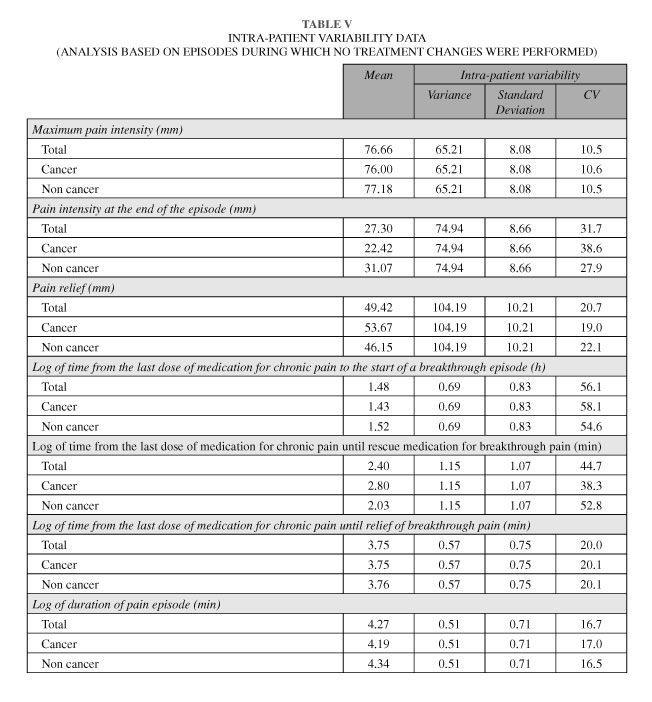
</front><body><![CDATA[  <a name="top"></a>    <p><font face="Verdana" size="2"><b>ORIGINAL</b></font></p>     <p>&nbsp;</p>     <p><font face="Verdana" size="4"><b>Inter- and intra-patient variability in breakthrough pain episodes of opioid-treated patients with underlying chronic pain. An observational, prospective and multicenter study</b></font></p>     <p><font face="Verdana" size="4"><b>Variabilidad inter- e intra-individual en pacientes con dolor irruptor tratados con opioides. Estudio observacional, prospectivo y multicéntrico</b></font></p>     <p>&nbsp;</p>     <p>&nbsp;</p>     <p><font face="Verdana" size="2"><b>J. P&eacute;rez Cajaraville, L. C&aacute;novas<sup>1</sup>, J. Santos<sup>2</sup>, E. Ortega<sup>3</sup>, J.J. Cuello<sup>4</sup>, R. Albor&eacute;s<sup>5</sup>, J.A. S&aacute;enz<sup>6</sup>, F.J. Vara<sup>7</sup>, J. Carceller<sup>8</sup>, J. Sobrino<sup>9</sup>, M. Carpintero<sup>10</sup>, A. Guti&eacute;rrez<sup>11</sup>, C. Cabanas<sup>12</sup> and E. Torcal<sup>13</sup></b></font></p>     <p><font face="Verdana" size="2">Unidad Funcional Tratamiento del Dolor. Grupo HM Hospitales. Madrid    <br><sup>1</sup>Complejo Hospitalario de Ourense.    ]]></body>
<body><![CDATA[<br><sup>2</sup>Hospital Cl&iacute;nico Universitario de Salamanca.    <br><sup>3</sup>Hospital R&iacute;o Hortega. Valladolid.    <br><sup>4</sup>Complejo Asistencial de Zamora.    <br><sup>5</sup>Hospital Comarcal de Monforte de Lemos. Lugo.    <br><sup>6</sup>Hospital San Pedro. Logro&ntilde;o.    <br><sup>7</sup>Pain Unit and Palliative Care. Hospital Universitario de Salamanca.    <br><sup>8</sup>Pain Unit. Hospital Cl&iacute;nico Universitario. Santiago de Compostela.    <br><sup>9</sup>Hospital de Povisa. Vigo.    <br><sup>10</sup>Hospital de Cabue&ntilde;es. Gij&oacute;n.    <br><sup>11</sup>Hospital Universitario de Burgos.    ]]></body>
<body><![CDATA[<br><sup>12</sup>Complejo Universitario Xeral-C&iacute;es. Vigo.    <br><sup>13</sup>Medical Department. Ferrer Farma. Grupo Ferrer. Barcelona. Spain</font></p>     <p><font face="Verdana" size="2"><a href="#bajo">Correspondence</a></font></p>     <p>&nbsp;</p>     <p>&nbsp;</p> <hr size="1">     <p><font face="Verdana" size="2"><b>ABSTRACT</b></font></p>     <p><font face="Verdana" size="2"><b>Objective:</b> Since, to date, there are few epidemiological data assessing the diversity in the characteristics of breakthrough pain episodes, the present study was performed to assess the intra-individual variability in the episodes of breakthrough pain in patients with underlying chronic pain controlled with opioids.    <br><b>Methods:</b> An observational, prospective and multicenter study (CADI study) was conducted in the context of the routine clinical practice of Spanish pain specialists recruiting opioid-treated patients with underlying chronic pain. Data were recorded in three visits (baseline, at 7 and 28 days post-inclusion) and by the patient on a patient's diary card, specifically designed to characterise the first 8 breakthrough pain episodes (type, intensity -using 100 mm Visual Analog Scale- and duration of pain), to assess the intra-individual and inter-individual variability in the intensity, duration and typology of episodes of breakthrough pain.    <br><b>Results:</b> 50 opioid-treated patients were recruited (23 with oncologic pain and 27 with non oncologic pain, mean age of 61.1 years, 62 % females). For all three parameters, inter-patient variability was higher than intra-patient variability throughout the episodes. Nevertheless, we found intra-patient variability in maximum pain intensity, pain intensity at the end of the episode, pain relief and duration of the episode.    <br><b>Conclusions:</b> This is the first study to quantify the intra-patient variability of breakthrough pain. The results show a great variability in terms of intensity and duration of the episode and its typology. Although inter-patient variability is higher, the intra-patient variability is important enough to be taken into account in optimizing the approach and treatment selection.</font></p>     ]]></body>
<body><![CDATA[<p><font face="Verdana" size="2"><b>Key words:</b> Breakthrough pain, chronic pain, opioids, oral transmucosal fentanyl, variability.</font></p> <hr size="1">     <p><font face="Verdana" size="2"><b>RESUMEN</b></font></p>     <p><font face="Verdana" size="2"><b>Objetivos:</b> Debido a los pocos datos epidemiol&oacute;gicos existentes que eval&uacute;en la diversidad de las caracter&iacute;sticas de los episodios de dolor irruptivo, se realiz&oacute; el presente estudio, cuyo principal objetivo fue evaluar la variabilidad intraindividual de las crisis de dolor irruptivo en pacientes con dolor cr&oacute;nico controlado con opioides.    <br><b>M&eacute;todos:</b> Este estudio observacional, prospectivo y multic&eacute;ntrico (estudio CADI) se llev&oacute; a cabo en el contexto de la pr&aacute;ctica cl&iacute;nica habitual, en Unidades del Dolor de Espa&ntilde;a, con la participaci&oacute;n de pacientes tratados con opioides para el dolor cr&oacute;nico. Los datos fueron registrados en tres visitas (basal, a los 7 y 28 d&iacute;as despu&eacute;s de la inclusi&oacute;n) y por el propio paciente, en un Diario del Paciente, espec&iacute;ficamente dise&ntilde;ado para caracterizar los primeros 8 episodios de dolor irruptivo (tipo, intensidad -utilizando la Escala Anal&oacute;gica Visual (EVA)- y duraci&oacute;n del dolor) con el objetivo de evaluar la variabilidad intraindividual e interindividual en la intensidad, duraci&oacute;n y tipolog&iacute;a de los episodios de dolor irruptivo.    <br><b>Resultados:</b> Se reclutaron 50 pacientes, 23 con dolor oncol&oacute;gico y 27 con el dolor no oncol&oacute;gico (edad media de 61,1 a&ntilde;os; 62 % de mujeres). Aunque para los tres par&aacute;metros medidos, la variabilidad entre pacientes fue mayor que la variabilidad intrapaciente, la variabilidad intraindividual fue significativa en la evaluaci&oacute;n de la m&aacute;xima intensidad del dolor, la intensidad del dolor al final del episodio, el alivio del dolor y la duraci&oacute;n del episodio de dolor irruptivo.    <br><b>Conclusiones:</b> Este es el primer estudio que cuantifica la variabilidad intraindividual del dolor irruptivo. Los resultados muestran una gran variabilidad en cuanto a la intensidad y la duraci&oacute;n del episodio y su tipolog&iacute;a. Aunque la variabilidad entre pacientes es mayor, la variabilidad intrapaciente es lo suficientemente importante como para ser tenida en cuenta para la mejor aproximaci&oacute;n y selecci&oacute;n del tratamiento.</font></p>     <p><font face="Verdana" size="2"><b>Palabras clave:</b> Dolor irruptivo, dolor cr&oacute;nico, opioides, citrato fentanilo oral transmucosa, variabilidad.</font></p> <hr size="1">     <p>&nbsp;</p>     <p><font face="Verdana" size="2"><b>Introduction</b></font></p>     <p><font face="Verdana" size="2">Pain management is a fundamental human right recognized by the United Nations and the World Health Organization (WHO) (1-4). Pain, especially chronic pain, is a key patient-reported outcome. Pain poor control undermines quality of life (1) and, as stated by Dr. Milton Raff, "its physical, psychological, social, and economic ramifications evolve, overlap, and compound one another" (1,5). Effective treatment of chronic pain improves the overall quality of life, including maintenance of function and interaction with family and friends (1,6).</font></p>     ]]></body>
<body><![CDATA[<p><font face="Verdana" size="2">Currently, despite the increasingly sophisticated understanding of the pathophysiology of pain, widespread inadequacy of its treatment is still a reality (1,7). The lack of knowledge on the characteristics of the different types of pain (as cancer or non cancer pain or breakthrough pain) is considered as one of the barriers for correct pain management (7-9).</font></p>     <p><font face="Verdana" size="2">Episodes of breakthrough pain, defined as a transitory exacerbation of pain experienced by the patient who has relatively stable and adequately controlled baseline pain (10-12), are an important contributor to suffering in these patients (13,14), occurring in 33-65 % of patients with chronic cancer pain and in 70 % of patients with chronic non cancer pain (12).</font></p>     <p><font face="Verdana" size="2">In the absence of knowledge on the characteristics of this type of pain, particularly regarding its management and its differences depending on the baseline pathology (cancer or non cancer patients) (10,11), recent observational studies have addressed this issue (15,16), pointing out that breakthrough cancer pain is an extremely heterogeneous condition.</font></p>     <p><font face="Verdana" size="2">In this context, the present observational, prospective and multicenter and nationwide study (CADI study) was conducted in the routine clinical practice to assess the inter- and intra-individual variability in the intensity, duration and typology of episodes of breakthrough pain in patients with underlying chronic pain controlled with opioids.</font></p>     <p><font face="Verdana" size="2">Results obtained would contribute to a better knowledge of this type of pain and, thus, improving pain management in routine clinical practice.</font></p>     <p>&nbsp;</p>     <p><font face="Verdana" size="2"><b>Methods</b></font></p>     <p><font face="Verdana" size="2">From Dec 2011 to Sep 2012, an observational, prospective and multicenter and nationwide study (CADI study) was conducted in the context of the routine clinical practice of 20 Spanish specialists from pain units. Each investigator consecutively enrolled 4 opioid-treated patients with underlying chronic pain (two patients with cancer pain and two patients with non cancer pain), to complete a study sample of 56 patients.</font></p>     <p><font face="Verdana" size="2">The included patients had to be older than 18 years, receive treatment with opioids for their chronic pain in an outpatient basis without variations in the regimen for treatment of chronic pain during the last 4 weeks, with a maximum of 3 episodes of breakthrough pain per day and be treated in pain units from different Spanish regions. Dose titration for the treatment of breakthrough pain had to be previously established and the same dose had to be used for the last 4 episodes before the start of the study. Exclusion criteria for the study included: being hospitalized during the last month due to uncontrolled pain or surgery, undergoing radiotherapy in the last month or having a scheduled radiotherapy session within the first month of the study, having a Karnofsky index &le; 50, being terminally ill (life expectancy &lt; 15 days), being pregnant or at risk of pregnancy (without taking adequate contraceptive measures) and being not capable to understand the objectives of the study and completing the questionnaires.</font></p>     <p><font face="Verdana" size="2">The study protocol was approved by the Ethics Committee of Human Experimentation of Cl&iacute;nica Universidad de Navarra (Pamplona, Spain) and procedures were in accordance with the ethical standards laid down in Helsinki Declaration, as revised in 2000.</font></p>     ]]></body>
<body><![CDATA[<p><font face="Verdana" size="2">Prior to participation, patients provided written informed consent. During the basal visit, the physician collected demographic, clinical (including comorbidities) and treatment (for the underlying chronic pain, for breakthrough pain and for comorbidities) data from the patient in the investigator e-CRF (Case Report Form) specially designed for this purpose. Basal functional status was assessed by means of Karnofsky Performance Status Scale (17) and basal underlying chronic pain by means of the 100-mm Visual Analog Scale (VAS) (18).</font></p>     <p><font face="Verdana" size="2">At the end of the basal visit, the physician provided patient with the patient's diary card, specifically designed to characterise the first 8 breakthrough pain episodes (type, intensity and duration of pain) by the patient. Type was characterized according to the nature (superficial, oppressive, deep, burning, stinging, electric, tingling or unknown) and onset of pain (sudden or gradual); intensity was characterized according to maximum pain intensity during and at the end of the episode. Moreover, patients were asked to characterize their pain as incidental ("episode associated with something") or spontaneous ("episode without apparent cause").</font></p>     <p><font face="Verdana" size="2">Patients were asked to not change the treatment regimen (drug, dose) during the first 8 episodes. In case of unbearable pain, patients had to contact the study investigator, who valued the convenience to change the established regimen and all changes were recorded in the eCRD.</font></p>     <p><font face="Verdana" size="2">Episodes during which treatment changes were performed due to unbearable pain were not considered for the primary analysis. Intensity of breakthrough pain episodes was assessed by means of the 100-mm Visual Analog Scale (VAS) (18).</font></p>     <p><font face="Verdana" size="2">A follow-up visit was performed 7 &plusmn; 2 days after patient's inclusion to report current treatment for basal pain and for breakthrough pain and to collect the first part of the diary card. In the final visit, performed 28 &plusmn; 2 days after patient's inclusion, functional status (Karnofsky Performance Status Scale) and pain (VAS) were assessed again and information on current treatment for basal and breakthrough pain was also collected, together with the second part of the patient's diary card.</font></p>     <p><font face="Verdana" size="2">The primary objective was to assess the intra-patient and inter-patientvariability in the intensity, duration and typology of episodes of breakthrough pain in patients with underlying chronic pain controlled with opioids. The diagnosis of chronic pain was established before the beginning of the study according to routine clinical criteria. Types of chronic pain in terms of pathophysiology were recorded (nociceptive, neuropathic or mixed).</font></p>     <p><font face="Verdana" size="2">Secondary objectives included description of chronic pain characteristics, etiology, treatment (currently and within the last month before inclusion), registry of the number of episodes during the study period and description of prescribed treatments for episodes of breakthrough pain, time between administration of treatment of chronic pain and the start of episodes of breakthrough pain, patient's self-reported treatment for episodes of breakthrough pain (excellent, good, regular, ineffective).</font></p>     <p><font face="Verdana" size="2">Since the main objective evaluated intra-individual variability in the intensity, duration and type of breakthrough pain, it was considered necessary to have at least three of the first eight episodes reported into the patient's diary card, to assess this variability, and declared invalid patients with less than three episodes documented.</font></p>     <p><font face="Verdana" size="2">Study variables were obtained from the patient's self-reported registries on the episodes and from the patient's data registered by the investigator in the e-CRF.</font></p>     <p><font face="Verdana" size="2"><b>Statistical analysis</b></font></p>     ]]></body>
<body><![CDATA[<p><font face="Verdana" size="2">Results were expressed as measures of central tendency and dispersion (mean and standard deviation) for continuous variables and as absolute numbers and relative frequencies (%) for categorical variables. Comparisons in the clinical variables between subgroups of subjects (obtained a posteriori) were conducted using a Student's t-test for continuous variables and Pearson's chi-squared test or Fisher exact test for categorical variables. In order to find possible differences, results were expressed for cancer and non cancer patients as well as for the total of them. Variability of intensity of pain, pain relief and duration of pain episodes were analyzed using the repeated measurements analysis of variance. In all cases the variable distribution was checked against theoretical models and the hypothesis of variance homogeneity was corroborated. Statistical significance was set at a p-value of p &lt; 0.05. The statistical analysis was performed using SAS v.9.2 (SAS Institute Inc., Cary, North Carolina, USA).</font></p>     <p>&nbsp;</p>     <p><font face="Verdana" size="2"><b>Results</b></font></p>     <p><font face="Verdana" size="2">Fifty-six patients were recruited for this study, 6 (10.7 %) of whom were excluded because less than 3 episodes of breakthrough pain were well documented. Therefore, the intra-individual variability of the intensity, duration and type of breakthrough pain episodes were assessed in the remaining 50 (89.3 %) eligible chronic pain patients, 23 experiencing cancer pain and 27 non cancer pain.</font></p>     <p><font face="Verdana" size="2">Mean (SD) age of patients was 61.1 (14.6), age ranging from 33.5 to 89.6 years; 90 % of patients were Caucasian, and 62 % were female. More prevalent co-morbidities at baseline were arterial hypertension (54 %), osteoarthritis (34 %), dyslipidaemia (30 %) and gastroesophageal reflux disease (18 %); other disorders such as diabetes mellitus, ischemic heart disease, renal failure or liver diseases were less frequent (&lt; 12 %).</font></p>     <p><font face="Verdana" size="2">Demographic data distributed according to the oncologic and non oncologic type of pain are shown in <a href="#t1">Table I</a>. No relevant differences were observed in the functional status scores (Karnofsky index) in both groups at baseline or during the study.</font></p>     <p>&nbsp;</p>     <p align="center"><font face="Verdana" size="2"><a name="t1"><img src="/img/revistas/dolor/v23n1/03_original_table1.jpg"></a></font></p>     <p>&nbsp;</p>     <p><font face="Verdana" size="2">Mean (SD) pain intensity was 48.5 (30.6) mm at baseline, 42.7 (25.6) mm after 7 days and 37.4 (23.0) mm after 30 days, without differences between both cancer and non-cancer patients at any time-point.</font></p>     ]]></body>
<body><![CDATA[<p><font face="Verdana" size="2">A total of 389 episodes of breakthrough pain were documented during the study, 88 of which were discarded because the rescue treatment was not described (36 episodes) or because the rescue treatment was different than that used in the previous 4 weeks (52 episodes); thus, the remaining 301 episodes, in which the rescue treatment was the same during 8 weeks, were used for the intra-individual variability analysis of breakthrough pain.</font></p>     <p><font face="Verdana" size="2">During the last month before the inclusion in the study, the most frequent treatments for chronic cancer pain were fentanyl (19.6 %), paracetamol (7.8 %) and either duloxetine or ibuprofen or pregabalin or tramadol (5.8 %, each), whereas for patients with non cancer pain fentanyl (13.7 %), pregabalin (12.3 %) and gabapentin (9.5 %) were the most frequently used treatments.</font></p>     <p><font face="Verdana" size="2">During the study, the most frequent treatments for underlying chronic cancer pain were fentanyl (26.0 %), oxycodone (13.0 %), followed by either etoricoxib or ibuprofen or metamizole or tramadol (8.6 % each), whereas for patients with non cancer pain most frequent treatments were gabapentin (14.8 %) followed by either duloxetine or fentanyl or ibuprofen or oxycodone or pregabalin (7.4 %, each) (<a href="#t2">Table II</a>).</font></p>     <p>&nbsp;</p>     <p align="center"><font face="Verdana" size="2"><a name="t2"><img src="/img/revistas/dolor/v23n1/03_original_table2.jpg"></a></font></p>     <p>&nbsp;</p>     <p><font face="Verdana" size="2">The most frequent treatments for the last four breakthrough pain episodes before the inclusion in the study were fentanyl (55.5 %) and paracetamol (18.5 %) in cancer pain patients, and fentanyl (77.1 %) and paracetamol (8.5 %) in non cancer patients. In both types of patients fentanyl was orally and nasally administered by transmucosal routes.</font></p>     <p><font face="Verdana" size="2">Fentanyl was the most frequently used rescue treatment during the first 8 breakthrough pain episodes, administered alone (72.2 % of episodes) or in combination with other drugs such as baclofen (1 episode), paracetamol (4 episodes), paracetamol plus metamizole (1 episode) or tramadol (1 episode). The association of tramadol plus paracetamol was the second most frequent treatment (5.7 %) and morphine (4.5 %), the third.</font></p>     <p><font face="Verdana" size="2">No differences were found in the number of breakthrough pain episodes (Wilcoxon test: Z = 0.70, p = 0.483) or in the number of breakthrough pain episodes per week (Wilcoxon test: Z = 1.64, p = 0.100) between the cancer and noncancer patients (<a href="#f1">Figure 1</a>).</font></p>     <p>&nbsp;</p>     ]]></body>
<body><![CDATA[<p align="center"><font face="Verdana" size="2"><a name="f1"><img src="/img/revistas/dolor/v23n1/03_original_fig1.jpg"></a></font></p>     <p>&nbsp;</p>     <p><font face="Verdana" size="2">Breakthrough pain onset was gradual in the 61.7 % of pain episodes and sudden in the remaining 38.3 %, spontaneously starting in 73 % of episodes or with a triggering factor in the remaining 27 % of cases. Pain was described as burning (29.9 %), superficial (5 %), oppressive (57.1 %), squeezing (22.3 %), sharp (46.5 %), crampy (22.9 %), tingling (10.0 %) and non- classified (0.7 %).</font></p>     <p><font face="Verdana" size="2">When fentanyl was used as rescue treatment, mean (SE) pain relief was 49.4 (20.9) mm and median duration of pain was 30 minutes. When fentanyl was combined with either baclofen or paracetamol, the duration of pain was reduced to 10 minutes (Tables <a href="#t3">III</a> and <a href="#t4">IV</a>). When other rescue treatments were tramadol plus paracetamol combination (5.7 % of episodes) followed by morphine (4.5 % of episodes), the mean (SE) pain relief was 42.4 (18.4) and 40.8 (13.3), respectively, and the median (IQR) duration of pain to relief was 109.5 (50-600) minutes and 360 (90-765) minutes, respectively.</font></p>     <p>&nbsp;</p>     <p align="center"><font face="Verdana" size="2"><a name="t3"><img src="/img/revistas/dolor/v23n1/03_original_table3.jpg"></a></font></p>     <p>&nbsp;</p>     <p align="center"><font face="Verdana" size="2"><a name="t4"><img src="/img/revistas/dolor/v23n1/03_original_table4.jpg"></a></font></p>     <p>&nbsp;</p>     <p><font face="Verdana" size="2">Mean (SE) time from taking the last medication for chronic pain to the start of breaktrhough pain episode was 6.9 (5.5) hours; 6.7 (5.8) hours in oncologic pain patients and 7.0 (5.3) in non oncologic patients.</font></p>     ]]></body>
<body><![CDATA[<p><font face="Verdana" size="2">Regarding satisfaction with treatment, from a total of 253 episodes treated with fentanyl, treatment was considered as excellent in 48 (19.0 %) episodes and good in 151 (59.7 %), regular in 53 (20.9 %) and inefficacious in one episode (0.4 %) Maximum pain intensity during the episodes recorded by the patients ranged from 35 to 100 mm, with a mean (SD) of 76.7 (14.3) mm, without differences between oncologic and non oncologic patients (F = 0.25, p = 0.62). Inter-patient variability of intensity pain was higher than the intra-patient variability in the intensity pain records (variances: 146.8 and 65.2, respectively) (<a href="#f2">Figure 2.A</a>). Nevertheless, the intra-patient confidence interval (95 % CI) of the mean for maximum pain intensity (76.66 &plusmn; 15.84) showed that the same patient could have experienced both episodes of moderate pain (&le;70) and episodes of severe pain (&gt; 70) (<a href="#t5">Table V</a>).</font></p>     <p>&nbsp;</p>     <p align="center"><font face="Verdana" size="2"><a name="f2"><img src="/img/revistas/dolor/v23n1/03_original_fig2.jpg"></a></font></p>     <p>&nbsp;</p>     <p align="center"><font face="Verdana" size="2"><a name="t5"><img src="/img/revistas/dolor/v23n1/03_original_table5.jpg"></a></font></p>     <p>&nbsp;</p>     <p><font face="Verdana" size="2">Pain relief (defined as maximum pain intensity minus final pain intensity at the end of the episode) ranged from -10 to 100 mm, with a mean (SD) in total episodes of 49.4 (19.7). Inter-patient variability of pain relief was also higher compared to the intra-patient variability in the relief pain records (variances: 265.8 and 104.2, respectively) (<a href="#f2">Figure 2.B</a>). Although a slight trend to higher values in the pain relief assessment was observed for patients with cancer pain, no statistically significant differences were found (F = 1.96, p = 0.163). As in the case of maximum pain intensity, we also found data indicative of intra-patient variability, with an intra-patient confidence interval (95 % CI) of the mean pain relief (49.22 &plusmn; 20.01) showing that in the same patient, pain relief can range between 30 and 70 points (<a href="#t5">Table V</a>). Similarly, we also found intra-patient variability (27.30 &plusmn; 16.97) in the pain intensity at the end of the episode, thus showing that pain could range from 10 to 40 at the end of an episode for a same patient (<a href="#t5">Table V</a>).</font></p>     <p><font face="Verdana" size="2">Pain duration of episodes ranged from 0 to 1,335 minutes (approximately 23 hours), with a median (IQR) of 60 (35, 120) minutes, without statistically significant differences being found between oncologic pain and non oncologic pain (F = 1.23, p = 0.27). Again, inter-patient variability of pain duration was higher compared to the intra-patient variability (variances: 0.54 and 0.51, respectively, time data transformed in logarithm) (<a href="#f2">Figure 2.C</a>). However, intra patient variability was also high &#091;median (CI): 71.5 (17.5-295) minutes&#093; indicating that in the same patient, an episode can last either a few minutes or a few hours (<a href="#t5">Table V</a>).</font></p>     <p><font face="Verdana" size="2">We also found intra-patient variability in the time from the last dose of medication for chronic pain to the start of a breakthrough episode, until rescue medication for breakthrough pain and until relief of breakthrough pain (<a href="#t5">Table V</a>).</font></p>     <p><font face="Verdana" size="2">While no statistically significant differences were observed in either group in terms of pain location (chi-square = 5.64; p = 0.245), pathophysiology of pain was not homogenous between groups (chi-square = 12.8; p = 0.003). Mixed pathophysiology (nociceptive and neuropathic) (52 %) and nociceptive pain (21.7 %, somatic or visceral) were predominant in the group of patients with oncologic pain, whereas neuropathic pain (48.1 %) was predominant in the group of patients with non oncologic pain (<a href="#t1">Table I</a>).</font></p>     ]]></body>
<body><![CDATA[<p><font face="Verdana" size="2">Finally, no serious adverse events were recorded during the study. One patient with cancer pain experienced excessive somnolence and one patient with non cancer pain experienced nausea and vomiting.</font></p>     <p>&nbsp;</p>     <p><font face="Verdana" size="2"><b>Discussion</b></font></p>     <p><font face="Verdana" size="2">To date, few data exist on intra-patient variability of the breakthrough pain episodes. In this regard, for the first time, results of our present observational and prospective study have provided new insights into the diversity of breakthrough pain episodes in both cancer and non cancer patients, particularly in terms of intra-patient variability. Taken together, in the presence of relevant inter-patient variability (15,16), non-negligible intra-patient diversity have been observed in our study, especially in terms of pain intensity, pain relief and duration.</font></p>     <p><font face="Verdana" size="2">If we translate these findings to clinical practice, physicians can encounter a great difficulty in establishing the most appropriate treatment regimen for each specific patient and for all his/her episodes. The first difficulty is related to the effective dose: our results reveal that in a same patient, a presumed effective dose, searched in an individual dose titration process, can not be equally effective in all episodes of the patient, due to the high diversity of them. Likewise, the variability observed in the pain intensity at the end of the episode in the same patient implies that the same treatment can not be always appropriate for all episodes. Similarly, as the duration of the episode is highly variable, the same dose can not be equally effective in all cases. This variability is also reflected in the profile of the episodes onset, with approximately 60 % gradual type and 40 % sudden type. It is very important to note that this high intra-patient variability has been observed in a maximum of 8 consecutive episodes of breakthrough pain in a same patient.</font></p>     <p><font face="Verdana" size="2">Second, another difficulty is choosing the most appropriate treatment. Although currently rapid-onset opioids are accepted as the appropriate treatment to relieve breakthrough pain (12,19,20), the variability observed in our study suggests that only those formulations that provide flexibility in dosing would be the treatment of choice for this type of pain (12,19,20). Different rapid-onset opioids' (ROOs) technologies have been developed to provide fast pain relief with potent opioid drugs such fentanyl, delivered by non-invasive routes, including oral transmucosal fentanyl citrate (OTFC), fentanyl buccal tablet, sublingual fentanyl, intranasal fentanyl spray, fentanyl-pectine nasal spray and fentanyl buccal soluble film, which have shown better efficacy than placebo or oral opioids. However, OTFC is the only product of this new generation of delivery systems that could offer this flexibility in dosing (20). The fact that this formulation is on a handle may enable to use the drug as needed, depending on the characteristics of the pain episode. It means that if excessive drug effect is produced or enough relief, the remaining dose can be removed from the mouth (19-22). Nevertheless, further studies with OTFC in breakthrough pain are necessary to assess this flexibility.</font></p>     <p><font face="Verdana" size="2">Even considering that the number of episodes monitored is important enough, due to the relatively low number of patients included in our study, and based on the high variability observed, future research should be performed to assess the convenience of dose titration, a process that is already currently being questioned when rapid-onset opioids are prescribed (20), and to confirm the high diversity observed in the breakthrough pain episodes, especially in terms of intra-patient variability.</font></p>     <p><font face="Verdana" size="2">Moreover, the study reflect the experience of a number of patients who were receiving care from pain team specialists that may not be entirely representative of a wider population. Further research should also focus on the individual source of variation, thus allowing obtaining patient profiles with specific pain characteristics and treatment preferences, as proposed elsewhere (23,24).</font></p>     <p><font face="Verdana" size="2">Although it is accepted that breakthrough pain is a heterogeneous condition and the episodes vary both between individuals and within individuals, to date no other studies had quantified the intra-patient variability of breakthrough pain.</font></p>     <p><font face="Verdana" size="2">Overall, we can conclude that the results show a great variability in terms of intensity and duration of the episode and its typology. Although inter-patient variability is higher, the intra-patient variability is important enough to be taken into account in optimizing the approach and treatment selection.</font></p>     ]]></body>
<body><![CDATA[<p>&nbsp;</p>     <p><font face="Verdana" size="2"><b>References</b></font></p>     <!-- ref --><p><font face="Verdana" size="2">1. Brennan F, Carr DB, Cousins M. Pain management: A fundamental human right. Anesth Analg 2007;105:205-21. doi: 10.1213/01.ane.0000268145.52345.55.    &nbsp;&nbsp;&nbsp;&nbsp;&nbsp;&nbsp;&nbsp;&nbsp;[&#160;<a href="javascript:void(0);" onclick="javascript: window.open('/scielo.php?script=sci_nlinks&ref=4962921&pid=S1134-8046201600010000300001&lng=','','width=640,height=500,resizable=yes,scrollbars=1,menubar=yes,');">Links</a>&#160;]<!-- end-ref --></font></p>    <!-- ref --><p><font face="Verdana" size="2">2. Fishman SM. Recognizing pain management as a human right: A first step. Anesth Analg 2007;105:8-9. doi: 10.1213/01.ane.0000267526.37663.41.    &nbsp;&nbsp;&nbsp;&nbsp;&nbsp;&nbsp;&nbsp;&nbsp;[&#160;<a href="javascript:void(0);" onclick="javascript: window.open('/scielo.php?script=sci_nlinks&ref=4962923&pid=S1134-8046201600010000300002&lng=','','width=640,height=500,resizable=yes,scrollbars=1,menubar=yes,');">Links</a>&#160;]<!-- end-ref --></font></p>    <!-- ref --><p><font face="Verdana" size="2">3. Anwari JS. Pain management: Citizenship or human right? Anesth Analg 2008;106:678.    &nbsp;&nbsp;&nbsp;&nbsp;&nbsp;&nbsp;&nbsp;&nbsp;[&#160;<a href="javascript:void(0);" onclick="javascript: window.open('/scielo.php?script=sci_nlinks&ref=4962925&pid=S1134-8046201600010000300003&lng=','','width=640,height=500,resizable=yes,scrollbars=1,menubar=yes,');">Links</a>&#160;]<!-- end-ref --></font></p>    <!-- ref --><p><font face="Verdana" size="2">4. Yates JW, Kirch R. Regulatory barriers for adequate pain control. Asian Pac J Canver Prev 2010;11:17-21.    &nbsp;&nbsp;&nbsp;&nbsp;&nbsp;&nbsp;&nbsp;&nbsp;[&#160;<a href="javascript:void(0);" onclick="javascript: window.open('/scielo.php?script=sci_nlinks&ref=4962927&pid=S1134-8046201600010000300004&lng=','','width=640,height=500,resizable=yes,scrollbars=1,menubar=yes,');">Links</a>&#160;]<!-- end-ref --></font></p>    ]]></body>
<body><![CDATA[<!-- ref --><p><font face="Verdana" size="2">5. Ospina MB, Taenzer P, Rashiq S, MacDermid JC, Carr E, Chojecki D, et al. A systematic review of the effectiveness of knowledge translation interventions for chronic noncancer painmanagement. Pain Res Manag 2013;18:e129-41.    &nbsp;&nbsp;&nbsp;&nbsp;&nbsp;&nbsp;&nbsp;&nbsp;[&#160;<a href="javascript:void(0);" onclick="javascript: window.open('/scielo.php?script=sci_nlinks&ref=4962929&pid=S1134-8046201600010000300005&lng=','','width=640,height=500,resizable=yes,scrollbars=1,menubar=yes,');">Links</a>&#160;]<!-- end-ref --></font></p>    <!-- ref --><p><font face="Verdana" size="2">6. Ehrich EW, Bolognese JA, Watson DJ, Kong SX. Effect of rofecoxib on measures of health-related quality of life in patients with osteoarthritis. Am J Manag Care 2001;7:609-16.    &nbsp;&nbsp;&nbsp;&nbsp;&nbsp;&nbsp;&nbsp;&nbsp;[&#160;<a href="javascript:void(0);" onclick="javascript: window.open('/scielo.php?script=sci_nlinks&ref=4962931&pid=S1134-8046201600010000300006&lng=','','width=640,height=500,resizable=yes,scrollbars=1,menubar=yes,');">Links</a>&#160;]<!-- end-ref --></font></p>    <!-- ref --><p><font face="Verdana" size="2">7. Breivik H, Collett B, Ventafridda V, Cohen R, Gallacher D. Survey of chronic pain in Europe: Prevalence, impact on daily life, and treatment. Eur J Pain 2006;10:287-333. doi: 10.1016/j.ejpain.2005.06.009.    &nbsp;&nbsp;&nbsp;&nbsp;&nbsp;&nbsp;&nbsp;&nbsp;[&#160;<a href="javascript:void(0);" onclick="javascript: window.open('/scielo.php?script=sci_nlinks&ref=4962933&pid=S1134-8046201600010000300007&lng=','','width=640,height=500,resizable=yes,scrollbars=1,menubar=yes,');">Links</a>&#160;]<!-- end-ref --></font></p>    <!-- ref --><p><font face="Verdana" size="2">8. Ogboli-Nwasor E, Makama J, Yusufu L. Evaluation of knowledge of cancer pain management among medical practitioners in a low-resource setting. J Pain Res 2013;6:71-77. doi: 10.2147/JPR.S38588.    &nbsp;&nbsp;&nbsp;&nbsp;&nbsp;&nbsp;&nbsp;&nbsp;[&#160;<a href="javascript:void(0);" onclick="javascript: window.open('/scielo.php?script=sci_nlinks&ref=4962935&pid=S1134-8046201600010000300008&lng=','','width=640,height=500,resizable=yes,scrollbars=1,menubar=yes,');">Links</a>&#160;]<!-- end-ref --></font></p>    <!-- ref --><p><font face="Verdana" size="2">9. Zeppetella G, O'Doherty CA, Collins S. Prevalence and characteristics of breakthrough pain in patients with non-malignant terminal disease admitted to a hospice. Palliat Med 2001;15:243-6. doi: 10.1191/026921601678576220.    &nbsp;&nbsp;&nbsp;&nbsp;&nbsp;&nbsp;&nbsp;&nbsp;[&#160;<a href="javascript:void(0);" onclick="javascript: window.open('/scielo.php?script=sci_nlinks&ref=4962937&pid=S1134-8046201600010000300009&lng=','','width=640,height=500,resizable=yes,scrollbars=1,menubar=yes,');">Links</a>&#160;]<!-- end-ref --></font></p>    ]]></body>
<body><![CDATA[<!-- ref --><p><font face="Verdana" size="2">10. Portenoy RK, Bennett DS, Rauck R, Simon S, Taylor D, Brennan M, et al. Prevalence and characteristics of breakthrough pain in opioid-treated patients with chronic non cancer pain. J Pain 2006;7:583-91. doi: 10.1016/j.jpain.2006.02.003.    &nbsp;&nbsp;&nbsp;&nbsp;&nbsp;&nbsp;&nbsp;&nbsp;[&#160;<a href="javascript:void(0);" onclick="javascript: window.open('/scielo.php?script=sci_nlinks&ref=4962939&pid=S1134-8046201600010000300010&lng=','','width=640,height=500,resizable=yes,scrollbars=1,menubar=yes,');">Links</a>&#160;]<!-- end-ref --></font></p>    <!-- ref --><p><font face="Verdana" size="2">11. Davies AN, Vriens J, Kennett A, McTaggart M. An observational study of oncology patients' utilization of breakthrough pain medication. J Pain Symptom Manage 2008;35:406-11. doi: 10.1016/j.jpainsymman.2007.05.010.    &nbsp;&nbsp;&nbsp;&nbsp;&nbsp;&nbsp;&nbsp;&nbsp;[&#160;<a href="javascript:void(0);" onclick="javascript: window.open('/scielo.php?script=sci_nlinks&ref=4962941&pid=S1134-8046201600010000300011&lng=','','width=640,height=500,resizable=yes,scrollbars=1,menubar=yes,');">Links</a>&#160;]<!-- end-ref --></font></p>    <!-- ref --><p><font face="Verdana" size="2">12. Smith H. A comprehensive review of rapid-onset opioids for breakthrough pain. CNS Drugs 2012;26:509-35. doi: 10.2165/11630580-000000000-00000.    &nbsp;&nbsp;&nbsp;&nbsp;&nbsp;&nbsp;&nbsp;&nbsp;[&#160;<a href="javascript:void(0);" onclick="javascript: window.open('/scielo.php?script=sci_nlinks&ref=4962943&pid=S1134-8046201600010000300012&lng=','','width=640,height=500,resizable=yes,scrollbars=1,menubar=yes,');">Links</a>&#160;]<!-- end-ref --></font></p>    <!-- ref --><p><font face="Verdana" size="2">13. Fine PG, Busch MA. Characterization of breakthrough pain by hospice patients and their caregivers. J Pain Symptom Manage 1998;16:179-83. doi: 10.1016/S0885-3924(98)00045-1.    &nbsp;&nbsp;&nbsp;&nbsp;&nbsp;&nbsp;&nbsp;&nbsp;[&#160;<a href="javascript:void(0);" onclick="javascript: window.open('/scielo.php?script=sci_nlinks&ref=4962945&pid=S1134-8046201600010000300013&lng=','','width=640,height=500,resizable=yes,scrollbars=1,menubar=yes,');">Links</a>&#160;]<!-- end-ref --></font></p>    <!-- ref --><p><font face="Verdana" size="2">14. Portenoy RK, Payne D, Jacobsen P. Breakthrough pain: Characteristics and impact in patients with cancer pain. Pain 1999;81:129-34. doi: 10.1016/S0304-3959(99)00006-8.    &nbsp;&nbsp;&nbsp;&nbsp;&nbsp;&nbsp;&nbsp;&nbsp;[&#160;<a href="javascript:void(0);" onclick="javascript: window.open('/scielo.php?script=sci_nlinks&ref=4962947&pid=S1134-8046201600010000300014&lng=','','width=640,height=500,resizable=yes,scrollbars=1,menubar=yes,');">Links</a>&#160;]<!-- end-ref --></font></p>    ]]></body>
<body><![CDATA[<!-- ref --><p><font face="Verdana" size="2">15. Davies A, Buchanan A, Zeppetella G, Porta-Sales J, Likar R, Weismayr W, et al. Breakthrough cancer pain: An observational study of 1000 European oncology patients. J Pain Symptom Manage 2013;46:619-28. doi: 10.1016/j.jpainsymman.2012.12.009.    &nbsp;&nbsp;&nbsp;&nbsp;&nbsp;&nbsp;&nbsp;&nbsp;[&#160;<a href="javascript:void(0);" onclick="javascript: window.open('/scielo.php?script=sci_nlinks&ref=4962949&pid=S1134-8046201600010000300015&lng=','','width=640,height=500,resizable=yes,scrollbars=1,menubar=yes,');">Links</a>&#160;]<!-- end-ref --></font></p>    <!-- ref --><p><font face="Verdana" size="2">16. Davies A, Zeppetella G, Andersen S, Damkier A, Vejlgaard T, Nauck F, et al. Multi-centre European study of breakthrough cancer pain: Pain characteristics and patient perceptions of current and potential management strategies. Eur J Pain 2011;15:756-63. doi: 10.1016/j.ejpain.2010.12.004.    &nbsp;&nbsp;&nbsp;&nbsp;&nbsp;&nbsp;&nbsp;&nbsp;[&#160;<a href="javascript:void(0);" onclick="javascript: window.open('/scielo.php?script=sci_nlinks&ref=4962951&pid=S1134-8046201600010000300016&lng=','','width=640,height=500,resizable=yes,scrollbars=1,menubar=yes,');">Links</a>&#160;]<!-- end-ref --></font></p>    <!-- ref --><p><font face="Verdana" size="2">17. Friendlander AH, Ettinger RL. Karnofsky performance status scale. Spec Care Dentist 2009;29:147-8. doi: 10.1111/j.1754-4505.2009.00088.x.    &nbsp;&nbsp;&nbsp;&nbsp;&nbsp;&nbsp;&nbsp;&nbsp;[&#160;<a href="javascript:void(0);" onclick="javascript: window.open('/scielo.php?script=sci_nlinks&ref=4962953&pid=S1134-8046201600010000300017&lng=','','width=640,height=500,resizable=yes,scrollbars=1,menubar=yes,');">Links</a>&#160;]<!-- end-ref --></font></p>    <!-- ref --><p><font face="Verdana" size="2">18. Huskisson EC, Jones J, Scott PJ. Application of visual-analogue scales to the measurement of functional capacity. Rheumatol Rehabil 1976;15:185-7. doi: 10.1093/rheumatology/15.3.185.    &nbsp;&nbsp;&nbsp;&nbsp;&nbsp;&nbsp;&nbsp;&nbsp;[&#160;<a href="javascript:void(0);" onclick="javascript: window.open('/scielo.php?script=sci_nlinks&ref=4962955&pid=S1134-8046201600010000300018&lng=','','width=640,height=500,resizable=yes,scrollbars=1,menubar=yes,');">Links</a>&#160;]<!-- end-ref --></font></p>    <!-- ref --><p><font face="Verdana" size="2">19. Mercadante S, Villari P, Ferrera P, Casuccio A, Mangione S, Intravaia G. Transmucosal fentanyl vs. intravenous morphine in doses proportional to basal opioid regimen for episodic-breakthrough pain. Br J Cancer 2007;96:1828-33. doi: 10.1038/sj.bjc.6603811.    &nbsp;&nbsp;&nbsp;&nbsp;&nbsp;&nbsp;&nbsp;&nbsp;[&#160;<a href="javascript:void(0);" onclick="javascript: window.open('/scielo.php?script=sci_nlinks&ref=4962957&pid=S1134-8046201600010000300019&lng=','','width=640,height=500,resizable=yes,scrollbars=1,menubar=yes,');">Links</a>&#160;]<!-- end-ref --></font></p>    ]]></body>
<body><![CDATA[<!-- ref --><p><font face="Verdana" size="2">20. Mercadante S. Oral trasmucosal fentanyl citrate for breakthrough pain treatment in cancer patients. Expert Opin Pharmacother 2012;13:873-8. doi: 10.1517/14656566.2012.663353.    &nbsp;&nbsp;&nbsp;&nbsp;&nbsp;&nbsp;&nbsp;&nbsp;[&#160;<a href="javascript:void(0);" onclick="javascript: window.open('/scielo.php?script=sci_nlinks&ref=4962959&pid=S1134-8046201600010000300020&lng=','','width=640,height=500,resizable=yes,scrollbars=1,menubar=yes,');">Links</a>&#160;]<!-- end-ref --></font></p>    <!-- ref --><p><font face="Verdana" size="2">21. Egan TD, Sharma A, Ashburn MA, Kievit J, Pace NL, Streisand JB. Multiple dose pharmacokinetics of oral transmucosal fentanyl citrate in healthy volunteers. Anesthesiology 2000;92:665-73. doi: 10.1097/00000542-200003000-00009.    &nbsp;&nbsp;&nbsp;&nbsp;&nbsp;&nbsp;&nbsp;&nbsp;[&#160;<a href="javascript:void(0);" onclick="javascript: window.open('/scielo.php?script=sci_nlinks&ref=4962961&pid=S1134-8046201600010000300021&lng=','','width=640,height=500,resizable=yes,scrollbars=1,menubar=yes,');">Links</a>&#160;]<!-- end-ref --></font></p>    <!-- ref --><p><font face="Verdana" size="2">22. Porta-Sales J, Garz&oacute;n C, Juli&agrave; J, Casals M. Dolor irruptivo en c&aacute;ncer. Med Clin (Barc) 2010; 135(6): 280-5. doi: 10.1016/j.medcli.2010.02.008.    &nbsp;&nbsp;&nbsp;&nbsp;&nbsp;&nbsp;&nbsp;&nbsp;[&#160;<a href="javascript:void(0);" onclick="javascript: window.open('/scielo.php?script=sci_nlinks&ref=4962963&pid=S1134-8046201600010000300022&lng=','','width=640,height=500,resizable=yes,scrollbars=1,menubar=yes,');">Links</a>&#160;]<!-- end-ref --></font></p>    <!-- ref --><p><font face="Verdana" size="2">23. Fornasari D. Pain mechanisms in patients with chronic pain. Clin Drug Investig 2012;32:45-52. doi: 10.2165/11630070-000000000-00000.    &nbsp;&nbsp;&nbsp;&nbsp;&nbsp;&nbsp;&nbsp;&nbsp;[&#160;<a href="javascript:void(0);" onclick="javascript: window.open('/scielo.php?script=sci_nlinks&ref=4962965&pid=S1134-8046201600010000300023&lng=','','width=640,height=500,resizable=yes,scrollbars=1,menubar=yes,');">Links</a>&#160;]<!-- end-ref --></font></p>    <!-- ref --><p><font face="Verdana" size="2">24. Ablin JN, Buskila D. Personalized treatment of pain. Curr Rheumatol Rep 2013;15:298-303. doi: 10.1007/s11926-012-0298-7.    &nbsp;&nbsp;&nbsp;&nbsp;&nbsp;&nbsp;&nbsp;&nbsp;[&#160;<a href="javascript:void(0);" onclick="javascript: window.open('/scielo.php?script=sci_nlinks&ref=4962967&pid=S1134-8046201600010000300024&lng=','','width=640,height=500,resizable=yes,scrollbars=1,menubar=yes,');">Links</a>&#160;]<!-- end-ref --></font></p>     ]]></body>
<body><![CDATA[<p>&nbsp;</p>     <p>&nbsp;</p>     <p><font face="Verdana" size="2"><a href="#top"><img border="0" src="/img/revistas/dolor/v23n1/seta.gif" width="15" height="17"></a><a name="bajo"></a><b>Correspondence:</b>    <br>Juan P&eacute;rez Cajaraville    <br>e-mail: <a href="mailto:jpcajaraville@hmhospitales.com">jpcajaraville@hmhospitales.com</a></font></p>     <p><font face="Verdana" size="2">Recibido: 1-8-15.    <br>Aceptado: 3-11-15.</font></p>      ]]></body><back>
<ref-list>
<ref id="B1">
<label>1</label><nlm-citation citation-type="journal">
<person-group person-group-type="author">
<name>
<surname><![CDATA[Brennan]]></surname>
<given-names><![CDATA[F]]></given-names>
</name>
<name>
<surname><![CDATA[Carr]]></surname>
<given-names><![CDATA[DB]]></given-names>
</name>
<name>
<surname><![CDATA[Cousins]]></surname>
<given-names><![CDATA[M]]></given-names>
</name>
</person-group>
<article-title xml:lang="en"><![CDATA[Pain management: A fundamental human right]]></article-title>
<source><![CDATA[Anesth Analg]]></source>
<year>2007</year>
<volume>105</volume>
<page-range>205-21</page-range></nlm-citation>
</ref>
<ref id="B2">
<label>2</label><nlm-citation citation-type="journal">
<person-group person-group-type="author">
<name>
<surname><![CDATA[Fishman]]></surname>
<given-names><![CDATA[SM]]></given-names>
</name>
</person-group>
<article-title xml:lang="en"><![CDATA[Recognizing pain management as a human right: A first step]]></article-title>
<source><![CDATA[Anesth Analg]]></source>
<year>2007</year>
<volume>105</volume>
<page-range>8-9</page-range></nlm-citation>
</ref>
<ref id="B3">
<label>3</label><nlm-citation citation-type="journal">
<person-group person-group-type="author">
<name>
<surname><![CDATA[Anwari]]></surname>
<given-names><![CDATA[JS]]></given-names>
</name>
</person-group>
<article-title xml:lang="en"><![CDATA[Pain management: Citizenship or human right]]></article-title>
<source><![CDATA[Anesth Analg]]></source>
<year>2008</year>
<volume>106</volume>
<page-range>678</page-range></nlm-citation>
</ref>
<ref id="B4">
<label>4</label><nlm-citation citation-type="journal">
<person-group person-group-type="author">
<name>
<surname><![CDATA[Yates]]></surname>
<given-names><![CDATA[JW]]></given-names>
</name>
<name>
<surname><![CDATA[Kirch]]></surname>
<given-names><![CDATA[R]]></given-names>
</name>
</person-group>
<article-title xml:lang="en"><![CDATA[Regulatory barriers for adequate pain control]]></article-title>
<source><![CDATA[Asian Pac J Canver Prev]]></source>
<year>2010</year>
<volume>11</volume>
<page-range>17-21</page-range></nlm-citation>
</ref>
<ref id="B5">
<label>5</label><nlm-citation citation-type="journal">
<person-group person-group-type="author">
<name>
<surname><![CDATA[Ospina]]></surname>
<given-names><![CDATA[MB]]></given-names>
</name>
<name>
<surname><![CDATA[Taenzer]]></surname>
<given-names><![CDATA[P]]></given-names>
</name>
<name>
<surname><![CDATA[Rashiq]]></surname>
<given-names><![CDATA[S]]></given-names>
</name>
<name>
<surname><![CDATA[MacDermid]]></surname>
<given-names><![CDATA[JC]]></given-names>
</name>
<name>
<surname><![CDATA[Carr]]></surname>
<given-names><![CDATA[E]]></given-names>
</name>
<name>
<surname><![CDATA[Chojecki]]></surname>
<given-names><![CDATA[D]]></given-names>
</name>
</person-group>
<article-title xml:lang="en"><![CDATA[A systematic review of the effectiveness of knowledge translation interventions for chronic noncancer painmanagement]]></article-title>
<source><![CDATA[Pain Res Manag]]></source>
<year>2013</year>
<volume>18</volume>
<page-range>e129-41</page-range></nlm-citation>
</ref>
<ref id="B6">
<label>6</label><nlm-citation citation-type="journal">
<person-group person-group-type="author">
<name>
<surname><![CDATA[Ehrich]]></surname>
<given-names><![CDATA[EW]]></given-names>
</name>
<name>
<surname><![CDATA[Bolognese]]></surname>
<given-names><![CDATA[JA]]></given-names>
</name>
<name>
<surname><![CDATA[Watson]]></surname>
<given-names><![CDATA[DJ]]></given-names>
</name>
<name>
<surname><![CDATA[Kong]]></surname>
<given-names><![CDATA[SX]]></given-names>
</name>
</person-group>
<article-title xml:lang="en"><![CDATA[Effect of rofecoxib on measures of health-related quality of life in patients with osteoarthritis]]></article-title>
<source><![CDATA[Am J Manag Care]]></source>
<year>2001</year>
<volume>7</volume>
<page-range>609-16</page-range></nlm-citation>
</ref>
<ref id="B7">
<label>7</label><nlm-citation citation-type="journal">
<person-group person-group-type="author">
<name>
<surname><![CDATA[Breivik]]></surname>
<given-names><![CDATA[H]]></given-names>
</name>
<name>
<surname><![CDATA[Collett]]></surname>
<given-names><![CDATA[B]]></given-names>
</name>
<name>
<surname><![CDATA[Ventafridda]]></surname>
<given-names><![CDATA[V]]></given-names>
</name>
<name>
<surname><![CDATA[Cohen]]></surname>
<given-names><![CDATA[R]]></given-names>
</name>
<name>
<surname><![CDATA[Gallacher]]></surname>
<given-names><![CDATA[D]]></given-names>
</name>
</person-group>
<article-title xml:lang="en"><![CDATA[Survey of chronic pain in Europe: Prevalence, impact on daily life, and treatment]]></article-title>
<source><![CDATA[Eur J Pain]]></source>
<year>2006</year>
<volume>10</volume>
<page-range>287-333</page-range></nlm-citation>
</ref>
<ref id="B8">
<label>8</label><nlm-citation citation-type="journal">
<person-group person-group-type="author">
<name>
<surname><![CDATA[Ogboli-Nwasor]]></surname>
<given-names><![CDATA[E]]></given-names>
</name>
<name>
<surname><![CDATA[Makama]]></surname>
<given-names><![CDATA[J]]></given-names>
</name>
<name>
<surname><![CDATA[Yusufu]]></surname>
<given-names><![CDATA[L]]></given-names>
</name>
</person-group>
<article-title xml:lang="en"><![CDATA[Evaluation of knowledge of cancer pain management among medical practitioners in a low-resource setting]]></article-title>
<source><![CDATA[J Pain Res]]></source>
<year>2013</year>
<volume>6</volume>
<page-range>71-77</page-range></nlm-citation>
</ref>
<ref id="B9">
<label>9</label><nlm-citation citation-type="journal">
<person-group person-group-type="author">
<name>
<surname><![CDATA[Zeppetella]]></surname>
<given-names><![CDATA[G]]></given-names>
</name>
<name>
<surname><![CDATA[O'Doherty]]></surname>
<given-names><![CDATA[CA]]></given-names>
</name>
<name>
<surname><![CDATA[Collins]]></surname>
<given-names><![CDATA[S]]></given-names>
</name>
</person-group>
<article-title xml:lang="en"><![CDATA[Prevalence and characteristics of breakthrough pain in patients with non-malignant terminal disease admitted to a hospice]]></article-title>
<source><![CDATA[Palliat Med]]></source>
<year>2001</year>
<volume>15</volume>
<page-range>243-6</page-range></nlm-citation>
</ref>
<ref id="B10">
<label>10</label><nlm-citation citation-type="journal">
<person-group person-group-type="author">
<name>
<surname><![CDATA[Portenoy]]></surname>
<given-names><![CDATA[RK]]></given-names>
</name>
<name>
<surname><![CDATA[Bennett]]></surname>
<given-names><![CDATA[DS]]></given-names>
</name>
<name>
<surname><![CDATA[Rauck]]></surname>
<given-names><![CDATA[R]]></given-names>
</name>
<name>
<surname><![CDATA[Simon]]></surname>
<given-names><![CDATA[S]]></given-names>
</name>
<name>
<surname><![CDATA[Taylor]]></surname>
<given-names><![CDATA[D]]></given-names>
</name>
<name>
<surname><![CDATA[Brennan]]></surname>
<given-names><![CDATA[M]]></given-names>
</name>
</person-group>
<article-title xml:lang="en"><![CDATA[Prevalence and characteristics of breakthrough pain in opioid-treated patients with chronic non cancer pain]]></article-title>
<source><![CDATA[J Pain]]></source>
<year>2006</year>
<volume>7</volume>
<page-range>583-91</page-range></nlm-citation>
</ref>
<ref id="B11">
<label>11</label><nlm-citation citation-type="journal">
<person-group person-group-type="author">
<name>
<surname><![CDATA[Davies]]></surname>
<given-names><![CDATA[AN]]></given-names>
</name>
<name>
<surname><![CDATA[Vriens]]></surname>
<given-names><![CDATA[J]]></given-names>
</name>
<name>
<surname><![CDATA[Kennett]]></surname>
<given-names><![CDATA[A]]></given-names>
</name>
<name>
<surname><![CDATA[McTaggart]]></surname>
<given-names><![CDATA[M]]></given-names>
</name>
</person-group>
<article-title xml:lang="en"><![CDATA[An observational study of oncology patients' utilization of breakthrough pain medication]]></article-title>
<source><![CDATA[J Pain Symptom Manage]]></source>
<year>2008</year>
<volume>35</volume>
<page-range>406-11</page-range></nlm-citation>
</ref>
<ref id="B12">
<label>12</label><nlm-citation citation-type="journal">
<person-group person-group-type="author">
<name>
<surname><![CDATA[Smith]]></surname>
<given-names><![CDATA[H]]></given-names>
</name>
</person-group>
<article-title xml:lang="en"><![CDATA[A comprehensive review of rapid-onset opioids for breakthrough pain]]></article-title>
<source><![CDATA[CNS Drugs]]></source>
<year>2012</year>
<volume>26</volume>
<page-range>509-35</page-range></nlm-citation>
</ref>
<ref id="B13">
<label>13</label><nlm-citation citation-type="journal">
<person-group person-group-type="author">
<name>
<surname><![CDATA[Fine]]></surname>
<given-names><![CDATA[PG]]></given-names>
</name>
<name>
<surname><![CDATA[Busch]]></surname>
<given-names><![CDATA[MA]]></given-names>
</name>
</person-group>
<article-title xml:lang="en"><![CDATA[Characterization of breakthrough pain by hospice patients and their caregivers]]></article-title>
<source><![CDATA[J Pain Symptom Manage]]></source>
<year>1998</year>
<volume>16</volume>
<page-range>179-83</page-range></nlm-citation>
</ref>
<ref id="B14">
<label>14</label><nlm-citation citation-type="journal">
<person-group person-group-type="author">
<name>
<surname><![CDATA[Portenoy]]></surname>
<given-names><![CDATA[RK]]></given-names>
</name>
<name>
<surname><![CDATA[Payne]]></surname>
<given-names><![CDATA[D]]></given-names>
</name>
<name>
<surname><![CDATA[Jacobsen]]></surname>
<given-names><![CDATA[P]]></given-names>
</name>
</person-group>
<article-title xml:lang="en"><![CDATA[Breakthrough pain: Characteristics and impact in patients with cancer pain]]></article-title>
<source><![CDATA[Pain]]></source>
<year>1999</year>
<volume>81</volume>
<page-range>129-34</page-range></nlm-citation>
</ref>
<ref id="B15">
<label>15</label><nlm-citation citation-type="journal">
<person-group person-group-type="author">
<name>
<surname><![CDATA[Davies]]></surname>
<given-names><![CDATA[A]]></given-names>
</name>
<name>
<surname><![CDATA[Buchanan]]></surname>
<given-names><![CDATA[A]]></given-names>
</name>
<name>
<surname><![CDATA[Zeppetella]]></surname>
<given-names><![CDATA[G]]></given-names>
</name>
<name>
<surname><![CDATA[Porta-Sales]]></surname>
<given-names><![CDATA[J]]></given-names>
</name>
<name>
<surname><![CDATA[Likar]]></surname>
<given-names><![CDATA[R]]></given-names>
</name>
<name>
<surname><![CDATA[Weismayr]]></surname>
<given-names><![CDATA[W]]></given-names>
</name>
</person-group>
<article-title xml:lang="en"><![CDATA[Breakthrough cancer pain: An observational study of 1000 European oncology patients]]></article-title>
<source><![CDATA[J Pain Symptom Manage]]></source>
<year>2013</year>
<volume>46</volume>
<page-range>619-28</page-range></nlm-citation>
</ref>
<ref id="B16">
<label>16</label><nlm-citation citation-type="journal">
<person-group person-group-type="author">
<name>
<surname><![CDATA[Davies]]></surname>
<given-names><![CDATA[A]]></given-names>
</name>
<name>
<surname><![CDATA[Zeppetella]]></surname>
<given-names><![CDATA[G]]></given-names>
</name>
<name>
<surname><![CDATA[Andersen]]></surname>
<given-names><![CDATA[S]]></given-names>
</name>
<name>
<surname><![CDATA[Damkier]]></surname>
<given-names><![CDATA[A]]></given-names>
</name>
<name>
<surname><![CDATA[Vejlgaard]]></surname>
<given-names><![CDATA[T]]></given-names>
</name>
<name>
<surname><![CDATA[Nauck]]></surname>
<given-names><![CDATA[F]]></given-names>
</name>
</person-group>
<article-title xml:lang="en"><![CDATA[Multi-centre European study of breakthrough cancer pain: Pain characteristics and patient perceptions of current and potential management strategies]]></article-title>
<source><![CDATA[Eur J Pain]]></source>
<year>2011</year>
<volume>15</volume>
<page-range>756-63</page-range></nlm-citation>
</ref>
<ref id="B17">
<label>17</label><nlm-citation citation-type="journal">
<person-group person-group-type="author">
<name>
<surname><![CDATA[Friendlander]]></surname>
<given-names><![CDATA[AH]]></given-names>
</name>
<name>
<surname><![CDATA[Ettinger]]></surname>
<given-names><![CDATA[RL]]></given-names>
</name>
</person-group>
<article-title xml:lang="en"><![CDATA[Karnofsky performance status scale]]></article-title>
<source><![CDATA[Spec Care Dentist]]></source>
<year>2009</year>
<volume>29</volume>
<page-range>147-8</page-range></nlm-citation>
</ref>
<ref id="B18">
<label>18</label><nlm-citation citation-type="journal">
<person-group person-group-type="author">
<name>
<surname><![CDATA[Huskisson]]></surname>
<given-names><![CDATA[EC]]></given-names>
</name>
<name>
<surname><![CDATA[Jones]]></surname>
<given-names><![CDATA[J]]></given-names>
</name>
<name>
<surname><![CDATA[Scott]]></surname>
<given-names><![CDATA[PJ]]></given-names>
</name>
</person-group>
<article-title xml:lang="en"><![CDATA[Application of visual-analogue scales to the measurement of functional capacity]]></article-title>
<source><![CDATA[Rheumatol Rehabil]]></source>
<year>1976</year>
<volume>15</volume>
<page-range>185-7</page-range></nlm-citation>
</ref>
<ref id="B19">
<label>19</label><nlm-citation citation-type="journal">
<person-group person-group-type="author">
<name>
<surname><![CDATA[Mercadante]]></surname>
<given-names><![CDATA[S]]></given-names>
</name>
<name>
<surname><![CDATA[Villari]]></surname>
<given-names><![CDATA[P]]></given-names>
</name>
<name>
<surname><![CDATA[Ferrera]]></surname>
<given-names><![CDATA[P]]></given-names>
</name>
<name>
<surname><![CDATA[Casuccio]]></surname>
<given-names><![CDATA[A]]></given-names>
</name>
<name>
<surname><![CDATA[Mangione]]></surname>
<given-names><![CDATA[S]]></given-names>
</name>
<name>
<surname><![CDATA[Intravaia]]></surname>
<given-names><![CDATA[G]]></given-names>
</name>
</person-group>
<article-title xml:lang="en"><![CDATA[Transmucosal fentanyl vs. intravenous morphine in doses proportional to basal opioid regimen for episodic-breakthrough pain]]></article-title>
<source><![CDATA[Br J Cancer]]></source>
<year>2007</year>
<volume>96</volume>
<page-range>1828-33</page-range></nlm-citation>
</ref>
<ref id="B20">
<label>20</label><nlm-citation citation-type="journal">
<person-group person-group-type="author">
<name>
<surname><![CDATA[Mercadante]]></surname>
<given-names><![CDATA[S]]></given-names>
</name>
</person-group>
<article-title xml:lang="en"><![CDATA[Oral trasmucosal fentanyl citrate for breakthrough pain treatment in cancer patients]]></article-title>
<source><![CDATA[Expert Opin Pharmacother]]></source>
<year>2012</year>
<volume>13</volume>
<page-range>873-8</page-range></nlm-citation>
</ref>
<ref id="B21">
<label>21</label><nlm-citation citation-type="journal">
<person-group person-group-type="author">
<name>
<surname><![CDATA[Egan]]></surname>
<given-names><![CDATA[TD]]></given-names>
</name>
<name>
<surname><![CDATA[Sharma]]></surname>
<given-names><![CDATA[A]]></given-names>
</name>
<name>
<surname><![CDATA[Ashburn]]></surname>
<given-names><![CDATA[MA]]></given-names>
</name>
<name>
<surname><![CDATA[Kievit]]></surname>
<given-names><![CDATA[J]]></given-names>
</name>
<name>
<surname><![CDATA[Pace]]></surname>
<given-names><![CDATA[NL]]></given-names>
</name>
<name>
<surname><![CDATA[Streisand]]></surname>
<given-names><![CDATA[JB]]></given-names>
</name>
</person-group>
<article-title xml:lang="en"><![CDATA[Multiple dose pharmacokinetics of oral transmucosal fentanyl citrate in healthy volunteers]]></article-title>
<source><![CDATA[Anesthesiology]]></source>
<year>2000</year>
<volume>92</volume>
<page-range>665-73</page-range></nlm-citation>
</ref>
<ref id="B22">
<label>22</label><nlm-citation citation-type="journal">
<person-group person-group-type="author">
<name>
<surname><![CDATA[Porta-Sales]]></surname>
<given-names><![CDATA[J]]></given-names>
</name>
<name>
<surname><![CDATA[Garzón]]></surname>
<given-names><![CDATA[C]]></given-names>
</name>
<name>
<surname><![CDATA[Julià]]></surname>
<given-names><![CDATA[J]]></given-names>
</name>
<name>
<surname><![CDATA[Casals]]></surname>
<given-names><![CDATA[M]]></given-names>
</name>
</person-group>
<article-title xml:lang="es"><![CDATA[Dolor irruptivo en cáncer]]></article-title>
<source><![CDATA[Med Clin (Barc)]]></source>
<year>2010</year>
<volume>135</volume>
<numero>6</numero>
<issue>6</issue>
<page-range>280-5</page-range></nlm-citation>
</ref>
<ref id="B23">
<label>23</label><nlm-citation citation-type="journal">
<person-group person-group-type="author">
<name>
<surname><![CDATA[Fornasari]]></surname>
<given-names><![CDATA[D]]></given-names>
</name>
</person-group>
<article-title xml:lang="en"><![CDATA[Pain mechanisms in patients with chronic pain]]></article-title>
<source><![CDATA[Clin Drug Investig]]></source>
<year>2012</year>
<volume>32</volume>
<page-range>45-52</page-range></nlm-citation>
</ref>
<ref id="B24">
<label>24</label><nlm-citation citation-type="journal">
<person-group person-group-type="author">
<name>
<surname><![CDATA[Ablin]]></surname>
<given-names><![CDATA[JN]]></given-names>
</name>
<name>
<surname><![CDATA[Buskila]]></surname>
<given-names><![CDATA[D]]></given-names>
</name>
</person-group>
<article-title xml:lang="en"><![CDATA[Personalized treatment of pain]]></article-title>
<source><![CDATA[Curr Rheumatol Rep]]></source>
<year>2013</year>
<volume>15</volume>
<page-range>298-303</page-range></nlm-citation>
</ref>
</ref-list>
</back>
</article>