<?xml version="1.0" encoding="ISO-8859-1"?><article xmlns:mml="http://www.w3.org/1998/Math/MathML" xmlns:xlink="http://www.w3.org/1999/xlink" xmlns:xsi="http://www.w3.org/2001/XMLSchema-instance">
<front>
<journal-meta>
<journal-id>1135-5727</journal-id>
<journal-title><![CDATA[Revista Española de Salud Pública]]></journal-title>
<abbrev-journal-title><![CDATA[Rev. Esp. Salud Publica]]></abbrev-journal-title>
<issn>1135-5727</issn>
<publisher>
<publisher-name><![CDATA[Ministerio de Sanidad]]></publisher-name>
</publisher>
</journal-meta>
<article-meta>
<article-id>S1135-57271998000600010</article-id>
<title-group>
<article-title xml:lang="es"><![CDATA[Condiciones higiénico-sanitarias de comedores escolares del municipio de Oviedo]]></article-title>
<article-title xml:lang="en"><![CDATA[Health and hygiene-related conditions of school lunchrooms in the municipality of Oviedo]]></article-title>
</title-group>
<contrib-group>
<contrib contrib-type="author">
<name>
<surname><![CDATA[Arias Díaz]]></surname>
<given-names><![CDATA[Cristina]]></given-names>
</name>
<xref ref-type="aff" rid="A01"/>
</contrib>
<contrib contrib-type="author">
<name>
<surname><![CDATA[Blanco Fernández]]></surname>
<given-names><![CDATA[Natalia]]></given-names>
</name>
<xref ref-type="aff" rid="A01"/>
</contrib>
<contrib contrib-type="author">
<name>
<surname><![CDATA[Rodríguez Fidalgo]]></surname>
<given-names><![CDATA[Alfonso]]></given-names>
</name>
<xref ref-type="aff" rid="A01"/>
</contrib>
<contrib contrib-type="author">
<name>
<surname><![CDATA[Tardón García]]></surname>
<given-names><![CDATA[Adonina]]></given-names>
</name>
<xref ref-type="aff" rid="A02"/>
</contrib>
<contrib contrib-type="author">
<name>
<surname><![CDATA[Cueto Espinar]]></surname>
<given-names><![CDATA[Antonio]]></given-names>
</name>
<xref ref-type="aff" rid="A02"/>
</contrib>
</contrib-group>
<aff id="A01">
<institution><![CDATA[,Servicios Médicos Municipales del Ayuntamiento de Oviedo  ]]></institution>
<addr-line><![CDATA[ ]]></addr-line>
</aff>
<aff id="A02">
<institution><![CDATA[,Universidad de Oviedo  ]]></institution>
<addr-line><![CDATA[ ]]></addr-line>
</aff>
<pub-date pub-type="pub">
<day>00</day>
<month>11</month>
<year>1998</year>
</pub-date>
<pub-date pub-type="epub">
<day>00</day>
<month>11</month>
<year>1998</year>
</pub-date>
<volume>72</volume>
<numero>6</numero>
<fpage>571</fpage>
<lpage>581</lpage>
<copyright-statement/>
<copyright-year/>
<self-uri xlink:href="http://scielo.isciii.es/scielo.php?script=sci_arttext&amp;pid=S1135-57271998000600010&amp;lng=en&amp;nrm=iso"></self-uri><self-uri xlink:href="http://scielo.isciii.es/scielo.php?script=sci_abstract&amp;pid=S1135-57271998000600010&amp;lng=en&amp;nrm=iso"></self-uri><self-uri xlink:href="http://scielo.isciii.es/scielo.php?script=sci_pdf&amp;pid=S1135-57271998000600010&amp;lng=en&amp;nrm=iso"></self-uri><abstract abstract-type="short" xml:lang="es"><p><![CDATA[FUNDAMENTO: Conocer las condiciones higiénico-sanitarias en las que se encuentran los comedores escolares del municipio de Oviedo, mediante la realización de una inspección higiénico-sanitaria en estas instalaciones. MÉTODO: Se ha realizado un estudio epidemiológico descriptivo transversal en 24 colegios del municipio de Oviedo, 9 concertados y 15 públicos, según información procedente del Ministerio de Educación y Ciencia (MEC). Se ha llevado a cabo una inspección con un protocolo basado en la Reglamentación Técnico-Sanitaria de Comedores Colectivos. Las variables son las condiciones higiénico-sanitarias de los locales (cocinas, comedores y servicios higiénicos), del utillaje, condiciones del personal y de las materias primas y alimentos. Se han considerado condiciones inadecuadas o deficiencias cuando no se cumplen los criterios del protocolo. RESULTADOS: Las deficiencias encontradas en la mayoría de los comedores escolares inspeccionados han sido la falta de protección en los elementos de iluminación, de malla antiinsectos en ventanas y lavamanos de accionamiento no manual, toallas de papel de un solo uso y jabón líquido tanto en cocinas como en servicios higiénicos. Se han comparado estadísticamente las variables del estudio entre colegios públicos y concertados, para ello se ha realizado un Test de T de Student obteniéndose diferencias significativas, entre ambos tipos de colegios, solo en el estado de las cocinas y en el total de los ítems. CONCLUSIONES: La mayoría de las anomalías encontradas, tanto en colegios públicos como en concertados, son de carácter estructural y de las instalaciones, originadas por el desconocimiento de la legislación vigente. Se cree conveniente impartir formación en Educación Sanitaria, dada la actitud positiva mostrada por los responsables de los centros educativos.]]></p></abstract>
<abstract abstract-type="short" xml:lang="en"><p><![CDATA[BAKCGROUND: To ascertain the health and hygiene-related conditions of school lunchrooms within the municipality of Oviedo by means of conducting a health and hygiene inspection of these facilities. METHOD: A descriptive epidemiological cross-sectional study was made of 24 schools in the municipality of Oviedo, 9 of which were government-subsidized private schools and another 15 of which were public schools, according to information from the Ministry of Education and Science. An inspection was conducted entailing a protocol based on the Public Lunchroom Health and Hygiene Regulations. The variables are the health and hygiene-related conditions of the premises (kitchens, lunchrooms and lavatories), of the utensils, the health of the employees and the conditions of the raw materials and foods. These conditions have been considered to be inadequate or deficient whenever they failed to met the criteria of the protocol in question. RESULTS: The deficiencies found n most of the school lunchrooms inspected were the lack of protection of the lighting components, of window screens to prevent the entry of insects and of soap dispensers which are not hand-operated, disposable paper towels and liquid soap both in kitchens as well as in lavatories. The variables entailed in this study have been compared among public schools and government-subsidized private schools, for which purpose a Student T Test was employed, significant differences having been found to exist between these two types of schools solely in the condition of the kitchens and in the total of the items. CONCLUSIONS: Most of the irregularities found in both the public schools and in the government-subsidized private schools are of an organizational nature and with regard to the facilities stemming from a lack of knowledge of the laws in force. It is deemed advantageous for training in Hygiene to be provided, given the positive attitude shown by those in charge of the schools in question.]]></p></abstract>
<kwd-group>
<kwd lng="es"><![CDATA[condiciones higiénico-sanitarias]]></kwd>
<kwd lng="es"><![CDATA[inspección]]></kwd>
<kwd lng="es"><![CDATA[comedor escolar]]></kwd>
<kwd lng="en"><![CDATA[Health and Hygiene-related Conditions]]></kwd>
<kwd lng="en"><![CDATA[Inspection]]></kwd>
<kwd lng="en"><![CDATA[School Lunchroom]]></kwd>
</kwd-group>
</article-meta>
</front><body><![CDATA[  <b>      <p ALIGN="CENTER"><font size="4">CONDICIONES HIGIÉNICO-SANITARIAS DE COMEDORES ESCOLARES DEL MUNICIPIO DE OVIEDO.</font></p>  </b>    <p ALIGN="CENTER"><b></b>&nbsp;</p>      <p ALIGN="JUSTIFY"><font size="3"><strong>Cristina Arias Díaz (1), Blanco Fernández Natalia (1), Rodríguez Fidalgo Alfonso (1) Tardón García Adonina (2)Cueto Espinar Antonio (2)    <br> (1) Servicios Médicos Municipales del Ayuntamiento de Oviedo.    <br> (2) Área de Medicina Preventiva y Salud Pública. Universidad de Oviedo.</strong></font></p>      <p ALIGN="JUSTIFY"><font size="3"><strong>Correspondencia:    <br> Adonina Tardón García    <br> Área de Medicina Preventiva y Salud Pública.    <br> Facultad de Medicina.    ]]></body>
<body><![CDATA[<br> Campus del Cristo s/n 33006 Oviedo.    <br> Tfno. 985103556 Fax 985103545</strong></font></p>  <hr>  <table border="0" width="100%">   <tr>     <td valign="top" width="48%">    <p ALIGN="CENTER"><font size="3"><b>RESUMEN</b></font></p>         <p ALIGN="JUSTIFY"><font size="3"><b>Fundamento:</b> Conocer las condiciones     higiénico-sanitarias en las que se encuentran los comedores escolares del municipio de     Oviedo, mediante la realización de una inspección higiénico-sanitaria en estas     instalaciones.</font></p>         <p ALIGN="JUSTIFY"><font size="3"><b>Método:</b> Se ha realizado un estudio     epidemiológico descriptivo transversal en 24 colegios del municipio de Oviedo, 9     concertados y 15 públicos, según información procedente del Ministerio de Educación y     Ciencia (MEC). Se ha llevado a cabo una inspección con un protocolo basado en la     Reglamentación Técnico-Sanitaria de Comedores Colectivos. Las variables son las     condiciones higiénico-sanitarias de los locales (cocinas, comedores y servicios     higiénicos), del utillaje, condiciones del personal y de las materias primas y alimentos.     Se han considerado condiciones inadecuadas o deficiencias cuando no se cumplen los     criterios del protocolo.</font></p>         <p ALIGN="JUSTIFY"><font size="3"><b>Resultados:</b> Las deficiencias encontradas en la     mayoría de los comedores escolares inspeccionados han sido la falta de protección en los     elementos de iluminación, de malla antiinsectos en ventanas y lavamanos de accionamiento     no manual, toallas de papel de un solo uso y jabón líquido tanto en cocinas como en     servicios higiénicos. Se han comparado estadísticamente las variables del estudio entre     colegios públicos y concertados, para ello se ha realizado un Test de T de Student     obteniéndose diferencias significativas, entre ambos tipos de colegios, solo en el estado     de las cocinas y en el total de los ítems.</font></p>         <p ALIGN="JUSTIFY"><font size="3"><b>Conclusiones:</b> La mayoría de las anomalías     encontradas, tanto en colegios públicos como en concertados, son de carácter estructural     y de las instalaciones, originadas por el desconocimiento de la legislación vigente. Se     cree conveniente impartir formación en Educación Sanitaria, dada la actitud positiva     mostrada por los responsables de los centros educativos.</font></p>         <p ALIGN="JUSTIFY"><font size="3"><b>Palabras Clave</b>: condiciones     higiénico-sanitarias., inspección. comedor escolar.</font></p>         <p>&nbsp;</td>     <td width="4%"></td>     <td valign="top" width="48%">    <p ALIGN="CENTER"><font size="3"><b>ABSTRACT</b></font></p>         ]]></body>
<body><![CDATA[<p ALIGN="CENTER"><font size="3"><b>Health and Hygiene-related Conditions of School     Lunchrooms in the Municipality of Oviedo</b></font></p>         <p ALIGN="JUSTIFY"><font size="3"><b>Bakcground:</b> To ascertain the health and     hygiene-related conditions of school lunchrooms within the municipality of Oviedo by means     of conducting a health and hygiene inspection of these facilities.</font></p>         <p ALIGN="JUSTIFY"><font size="3"><b>Method:</b> A descriptive epidemiological     cross-sectional study was made of 24 schools in the municipality of Oviedo, 9 of which     were government-subsidized private schools and another 15 of which were public schools,     according to information from the Ministry of Education and Science. An inspection was     conducted entailing a protocol based on the Public Lunchroom Health and Hygiene     Regulations. The variables are the health and hygiene-related conditions of the premises     (kitchens, lunchrooms and lavatories), of the utensils, the health of the employees and     the conditions of the raw materials and foods. These conditions have been considered to be     inadequate or deficient whenever they failed to met the criteria of the protocol in     question.</font></p>         <p ALIGN="JUSTIFY"><font size="3"><b>Results:</b> The deficiencies found n most of the     school lunchrooms inspected were the lack of protection of the lighting components, of     window screens to prevent the entry of insects and of soap dispensers which are not     hand-operated, disposable paper towels and liquid soap both in kitchens as well as in     lavatories. The variables entailed in this study have been compared among public schools     and government-subsidized private schools, for which purpose a Student T Test was     employed, significant differences having been found to exist between these two types of     schools solely in the condition of the kitchens and in the total of the items.</font></p>         <p ALIGN="JUSTIFY"><font size="3"><b>Conclusions:</b> Most of the irregularities found in     both the public schools and in the government-subsidized private schools are of an     organizational nature and with regard to the facilities stemming from a lack of knowledge     of the laws in force. It is deemed advantageous for training in Hygiene to be provided,     given the positive attitude shown by those in charge of the schools in question.</font></p>         <p><font size="3"><b>Key words:</b> Health and Hygiene-related Conditions. Inspection.     School Lunchroom.</font></td>   </tr> </table>  <hr>      <p ALIGN="CENTER"><font size="4"><b>INTRODUCCIÓN</b></font></p>      <p ALIGN="JUSTIFY"><font size="3">La Constitución Española de 1978 establece en su artículo 43 el derecho a la protección de la salud y a la atención sanitaria de todos los ciudadanos. La regulación general de este derecho constituye el objetivo de la Ley 14/1986, de 25 de abril, General de Sanidad y de la Ley Orgánica 3/1986, 14 de abril, de Medidas Especiales en Materia de Salud Pública. Otro de los mecanismos que permiten a la administración sanitaria dar cumplimiento de este precepto es la función de la vigilancia e intervención sobre las actividades públicas o privadas que pueden tener consecuencias negativas sobre la salud de la población, tal y como se establece en el capítulo V de la citada Ley General de Sanidad. Las competencias autonómicas y municipales en materia de salud quedan recogidas en la Ley General de Sanidad; en la Ley 1/92 de 2 de julio, del Servicio de Salud del Principado de Asturias y en la Ley 7/1985 de 2 de abril, Reguladora de las Bases de Régimen Local.</font></p>      <p ALIGN="JUSTIFY"><font size="3">La inspección sanitaria puede definirse, desde una perspectiva integral, como el conjunto de acciones que la administración sanitaria planifica y ejecuta con el objeto de vigilar y modificar aquellas actividades de cualquier tipo que, dada su naturaleza, puedan afectar a la salud de la población y que son susceptibles de una acción preventiva<sup>1</sup>.</font></p>      <p ALIGN="JUSTIFY"><font size="3">En nuestro caso, la actividad de vigilar y modificar es la que se lleva a cabo en los comedores escolares, ya que conlleva cierto riesgo sobre la salud de los niños.</font></p>      ]]></body>
<body><![CDATA[<p ALIGN="JUSTIFY"><font size="3">La educación acerca de buenos hábitos de salud, particularmente relacionados con la higiene y la manipulación de alimentos, es una parte vital de la lucha contra las enfermedades. Gran número de enfermedades transmitidas por los alimentos podrían evitarse siguiendo algunas reglas sencillas a la producción, recolección, almacenamiento, preparación y consumo de los alimentos<sup>2</sup>.</font></p>      <p ALIGN="JUSTIFY"><font size="3">Es de gran importancia mantener las máximas condiciones higiénico-sanitarias en los locales destinados a comedor y cocinas, así como en el utillaje necesario para la manipulación de alimentos, evitando así la contaminación de estos.</font></p>      <p ALIGN="JUSTIFY"><font size="3">La calidad higiénica es uno de los aspectos que van a influir de forma directa en la salud, ya que la alteración, adulteración o contaminación, tanto química como biológica de los alimentos puede afectar seriamente a la salud<sup>3</sup>. Con motivo de conocer el estado de higiene de los comedores escolares, durante el curso 96-97 se ha realizado una campaña de inspecciones sanitarias de estas instalaciones en 24 colegios del municipio de Oviedo. Las instalaciones comprenden: zona de recepción, almacenamiento de productos, cocina, autoservicio, comedor, vestuario y servicios higiénicos del personal, servicios higiénicos para el público y lugar de tratamiento de basuras<sup>4</sup>.</font></p>      <p ALIGN="JUSTIFY"><font size="3">Por comedor colectivo se entenderá aquel establecimiento público o privado, con finalidad mercantil o social, y cuya actividad sea la de facilitar comidas que se consumen en el mismo incluyendo tanto los comedores dotados de cocina propia como los que carecen de la misma, tengan o no instalaciones al aire libre<sup>1</sup>. Dentro de esta definición están incluidos los comedores escolares. Las inspecciones realizadas son a instancia de un organismo público. Es la Consejería de Servicios Sociales del Principado de Asturias quien solicita al Ayuntamiento, dentro de su marco de competencias, la realización de estas inspecciones en los comedores escolares. Con esta campaña se pretende dar a conocer la legislación vigente en materia de comedores colectivos (Reglamentación Técnico-Sanitaria de Comedores Colectivos, Real Decreto 2817/1983 del 13 de octubre) y que las actuales condiciones se modifiquen de acuerdo a esta legislación; de este modo se proporciona una información objetiva sobre la higiene de los comedores escolares del municipio de Oviedo.</font></p>     <p ALIGN="CENTER">  <b></b>&nbsp;</p>      <p ALIGN="CENTER"><font size="4"><b>MATERIAL Y MÉTODO</b></font></p>      <p ALIGN="JUSTIFY"><font size="3"><b>MATERIAL</b></font></p>      <p ALIGN="JUSTIFY"><font size="3">Las inspecciones se realizaron con un protocolo basado en la Reglamentación Técnico-Sanitaria de Comedores Colectivos<sup>5</sup> que fue elaborado por la Consejería de Servicios Sociales del Principado de Asturias.</font></p>      <p ALIGN="JUSTIFY"><font size="3">Las variables ha tener en cuenta han sido: identificación de la instalación, condiciones higiénico-sanitarias de los locales (cocinas, comedores, servicios higiénicos), condiciones higiénico sanitarias del utillaje, condiciones del personal, condiciones de las materias primas y de los alimentos, dictamen sanitario final.</font></p>      <p ALIGN="JUSTIFY"><font size="3">Se ha procedido a la categorización de todos y cada uno de los epígrafes del protocolo, de acuerdo con la siguiente clasificación:</font></p>  <ul>       ]]></body>
<body><![CDATA[<li><font size="3">CATEGORÍA A: anomalías estructurales y/o de dotación importantes     (falta de agua potable, etc. ...), deficiencias en las condiciones higiénicas de las     instalaciones y/o en la manipulación, que puedan comprometer la salubridad de los     productos.</font></li>       <li><font size="3">CATEGORÍA B: deficiencias estructurales y/o de dotación, de importancia     media: falta de accionamiento no manual en lavamanos, falta de programa de desratización,     falta de tela mosquitera, etc...</font></li>       <li><font size="3">CATEGORÍA C: deficiencias leves y de fácil subsanación (de dotación,     de poca importancia: falta de accesorios en lavamanos -jabón líquido, toallas de papel,     etc.-).</font></li>     </ul>      <p ALIGN="JUSTIFY"><font size="3">El protocolo con el que se han realizado las inspecciones es el que a continuación se describe.</font></p>      <p><i><b>&nbsp;</b></i></p><i><b>      <p ALIGN="CENTER"><font size="3">PROTOCOLO DE INSPECCIÓN DE COMEDORES COLECTIVOS CON FINALIDAD SOCIAL</font></p></b></i>      <p><font size="3">1. <i>IDENTIFICACIÓN DE LA INSTALACIÓN</i></font></p>     <div align="center">    <center>  <table CELLSPACING="0" BORDER="0" CELLPADDING="4" WIDTH="338">   <tr>     <td VALIGN="TOP" COLSPAN="2" align="left" width="330"><font size="3">Denominación o     razón social </font></td>   </tr>   <tr>     <td VALIGN="TOP" COLSPAN="2" align="left" width="330"><font size="3">Categoría </font></td>   </tr>   <tr>     <td VALIGN="TOP" COLSPAN="2" align="left" width="330"><font size="3">Dirección </font></td>   </tr>   <tr>     <td WIDTH="190" VALIGN="TOP" align="left"><font size="3">Localidad </font></td>     <td WIDTH="132" VALIGN="TOP" align="left"><font size="3">Concejo </font></td>   </tr>   <tr>     <td VALIGN="TOP" COLSPAN="2" align="left" width="330"><font size="3">Número de usuarios </font></td>   </tr>   <tr>     <td WIDTH="190" VALIGN="TOP" align="left"><font size="3">Titular </font></td>     <td WIDTH="132" VALIGN="TOP" align="left"><font size="3">DNI </font></td>   </tr>   <tr>     <td WIDTH="190" VALIGN="TOP" align="left"><font size="3">Teléfono </font></td>     <td WIDTH="132" VALIGN="TOP" align="left"><font size="3">Fecha inspección     ........./........./............</font></td>   </tr> </table> </center></div>      ]]></body>
<body><![CDATA[<p><font size="3">Señálese donde se elabora la comida:</font></p>     <div align="center">    <center>  <table CELLSPACING="0" BORDER="0" CELLPADDING="4" WIDTH="404">   <tr>     <td WIDTH="239" VALIGN="TOP"><font size="3">Establecimiento </font></td>     <td WIDTH="149" VALIGN="TOP"><font size="3">El personal depende de </font></td>   </tr>   <tr>     <td VALIGN="TOP" COLSPAN="2" width="396"><font size="3">Restaurante </font></td>   </tr>   <tr>     <td VALIGN="TOP" COLSPAN="2" width="396"><font size="3">Cocina central </font></td>   </tr>   <tr>     <td VALIGN="TOP" COLSPAN="2" width="396"><font size="3">Otras posibilidades </font></td>   </tr> </table>     <p>&nbsp;</p></center></div>      <p><font size="3">2. <i>CONDICIONES HIGIÉNICO-SANITARIAS DE LOS LOCALES</i></font></p>      <p><font size="3">A. <i>COCINAS</i></font></p>     <div align="center">    <center>  <table CELLSPACING="0" BORDER="0" CELLPADDING="4" WIDTH="495">   <tr>     <td WIDTH="391" VALIGN="TOP"><font size="3">1. Locales apropiados para el uso a que se     destinan</font></td>     <td WIDTH="46" VALIGN="TOP">    <p ALIGN="CENTER"><font size="3">SI</font></td>     <td WIDTH="54" VALIGN="TOP">    <p ALIGN="CENTER"><font size="3">NO</font></td>   </tr>   <tr>     <td WIDTH="391" VALIGN="TOP"><font size="3">2. Aislados de focos de contaminación y     suciedad</font></td>     <td WIDTH="46" VALIGN="TOP">    ]]></body>
<body><![CDATA[<p ALIGN="CENTER"><font size="3">SI</font></td>     <td WIDTH="54" VALIGN="TOP">    <p ALIGN="CENTER"><font size="3">NO</font></td>   </tr>   <tr>     <td WIDTH="391" VALIGN="TOP"><font size="3">3. Aislado de viviendas</font></td>     <td WIDTH="46" VALIGN="TOP">    <p ALIGN="CENTER"><font size="3">SI</font></td>     <td WIDTH="54" VALIGN="TOP">    <p ALIGN="CENTER"><font size="3">NO</font></td>   </tr>   <tr>     <td WIDTH="391" VALIGN="TOP"><font size="3">4. Estado de limpieza bueno</font></td>     <td WIDTH="46" VALIGN="TOP">    <p ALIGN="CENTER"><font size="3">SI</font></td>     <td WIDTH="54" VALIGN="TOP">    <p ALIGN="CENTER"><font size="3">NO</font></td>   </tr> </table> </center></div>    <div align="center">    <center>  <table CELLSPACING="0" BORDER="0" CELLPADDING="4" WIDTH="494">   <tr>     <td WIDTH="387" VALIGN="TOP"><font size="3">5. Paredes, techos y suelos estado de     conservación adecuado</font></td>     <td WIDTH="46" VALIGN="TOP">    <p ALIGN="CENTER"><font size="3">SI</font></td>     <td WIDTH="53" VALIGN="TOP">    <p ALIGN="CENTER"><font size="3">NO</font></td>   </tr>   <tr>     <td WIDTH="387" VALIGN="TOP"><font size="3">6. Paredes, techos y suelos de material de     fácil limpieza</font></td>     <td WIDTH="46" VALIGN="TOP">    ]]></body>
<body><![CDATA[<p ALIGN="CENTER"><font size="3">SI</font></td>     <td WIDTH="53" VALIGN="TOP">    <p ALIGN="CENTER"><font size="3">NO</font></td>   </tr>   <tr>     <td WIDTH="387" VALIGN="TOP"><font size="3">7. Ventilación natural y/o artificial     apropiada</font></td>     <td WIDTH="46" VALIGN="TOP">    <p ALIGN="CENTER"><font size="3">SI</font></td>     <td WIDTH="53" VALIGN="TOP">    <p ALIGN="CENTER"><font size="3">NO</font></td>   </tr>   <tr>     <td WIDTH="387" VALIGN="TOP"><font size="3">8. Dispone de campana extractora</font></td>     <td WIDTH="46" VALIGN="TOP">    <p ALIGN="CENTER"><font size="3">SI</font></td>     <td WIDTH="53" VALIGN="TOP">    <p ALIGN="CENTER"><font size="3">NO</font></td>   </tr>   <tr>     <td WIDTH="387" VALIGN="TOP"><font size="3">9. Se limpia habitualmente</font></td>     <td WIDTH="46" VALIGN="TOP">    <p ALIGN="CENTER"><font size="3">SI</font></td>     <td WIDTH="53" VALIGN="TOP">    <p ALIGN="CENTER"><font size="3">NO</font></td>   </tr>   <tr>     <td WIDTH="387" VALIGN="TOP"><font size="3">10. Protección de elementos de iluminación     contra roturas </font></td>     <td WIDTH="46" VALIGN="TOP">    <p ALIGN="CENTER"><font size="3">SI</font></td>     <td WIDTH="53" VALIGN="TOP">    <p ALIGN="CENTER"><font size="3">NO</font></td>   </tr>   <tr>     <td WIDTH="387" VALIGN="TOP"><font size="3">11. Malla antiinsectos en ventanas y huecos de     ventilación</font></td>     <td WIDTH="46" VALIGN="TOP">    ]]></body>
<body><![CDATA[<p ALIGN="CENTER"><font size="3">SI</font></td>     <td WIDTH="53" VALIGN="TOP">    <p ALIGN="CENTER"><font size="3">NO</font></td>   </tr>   <tr>     <td WIDTH="387" VALIGN="TOP"><font size="3">12. Ausencia de animales domésticos</font></td>     <td WIDTH="46" VALIGN="TOP">    <p ALIGN="CENTER"><font size="3">SI</font></td>     <td WIDTH="53" VALIGN="TOP">    <p ALIGN="CENTER"><font size="3">NO</font></td>   </tr>   <tr>     <td WIDTH="387" VALIGN="TOP"><font size="3">13. Agua corriente potable</font></td>     <td WIDTH="46" VALIGN="TOP">    <p ALIGN="CENTER"><font size="3">SI</font></td>     <td WIDTH="53" VALIGN="TOP">    <p ALIGN="CENTER"><font size="3">NO</font></td>   </tr>   <tr>     <td WIDTH="387" VALIGN="TOP"><font size="3">14. El nivel de cloro es correcto</font></td>     <td WIDTH="46" VALIGN="TOP">    <p ALIGN="CENTER"><font size="3">SI</font></td>     <td WIDTH="53" VALIGN="TOP">    <p ALIGN="CENTER"><font size="3">NO</font></td>   </tr>   <tr>     <td WIDTH="387" VALIGN="TOP"><font size="3">15. Procedencia del agua </font></td>     <td WIDTH="46" VALIGN="TOP"></td>     <td WIDTH="53" VALIGN="TOP"></td>   </tr>   <tr>     <td WIDTH="387" VALIGN="TOP"><font size="3">16. Sistema higiénico de evacuación de aguas     residuales</font></td>     <td WIDTH="46" VALIGN="TOP">    <p ALIGN="CENTER"><font size="3">SI</font></td>     <td WIDTH="53" VALIGN="TOP">    <p ALIGN="CENTER"><font size="3">NO</font></td>   </tr>   <tr>     <td WIDTH="387" VALIGN="TOP"><font size="3">17. Lavamanos de accionamiento no manual</font></td>     <td WIDTH="46" VALIGN="TOP">    ]]></body>
<body><![CDATA[<p ALIGN="CENTER"><font size="3">SI</font></td>     <td WIDTH="53" VALIGN="TOP">    <p ALIGN="CENTER"><font size="3">NO</font></td>   </tr>   <tr>     <td WIDTH="387" VALIGN="TOP"><font size="3">18. Dotación de toallas de papel de un solo     uso y jabón líquido</font></td>     <td WIDTH="46" VALIGN="TOP">    <p ALIGN="CENTER"><font size="3">SI</font></td>     <td WIDTH="53" VALIGN="TOP">    <p ALIGN="CENTER"><font size="3">NO</font></td>   </tr>   <tr>     <td WIDTH="387" VALIGN="TOP"><font size="3">19. Dispositivo de cierre hermético para     almacenar residuos</font></td>     <td WIDTH="46" VALIGN="TOP">    <p ALIGN="CENTER"><font size="3">SI</font></td>     <td WIDTH="53" VALIGN="TOP">    <p ALIGN="CENTER"><font size="3">NO</font></td>   </tr>   <tr>     <td WIDTH="387" VALIGN="TOP"><font size="3">20. Recipientes de residuos aislados     convenientemente de los alimentos</font></td>     <td WIDTH="46" VALIGN="TOP">    <p ALIGN="CENTER"><font size="3">SI</font></td>     <td WIDTH="53" VALIGN="TOP">    <p ALIGN="CENTER"><font size="3">NO</font></td>   </tr>   <tr>     <td WIDTH="387" VALIGN="TOP"><font size="3">21. Se realizan planes de desinfección,     desinsectación y desratización</font></td>     <td WIDTH="46" VALIGN="TOP">    <p ALIGN="CENTER"><font size="3">SI</font></td>     <td WIDTH="53" VALIGN="TOP">    <p ALIGN="CENTER"><font size="3">NO</font></td>   </tr>   <tr>     <td WIDTH="387" VALIGN="TOP"><font size="3">22. Citar el nombre de la empresa </font></td>     <td WIDTH="46" VALIGN="TOP"></td>     <td WIDTH="53" VALIGN="TOP"></td>   </tr>   <tr>     <td WIDTH="387" VALIGN="TOP"><font size="3">23. Existe un local o similar para el     almacenamiento de los productos y utensilios de limpieza</font></td>     <td WIDTH="46" VALIGN="TOP">    ]]></body>
<body><![CDATA[<p ALIGN="CENTER"><font size="3">SI</font></td>     <td WIDTH="53" VALIGN="TOP">    <p ALIGN="CENTER"><font size="3">NO</font></td>   </tr>   <tr>     <td WIDTH="387" VALIGN="TOP"><font size="3">24. Observaciones:</font></td>     <td WIDTH="46" VALIGN="TOP"></td>     <td WIDTH="53" VALIGN="TOP"></td>   </tr> </table>     <p>&nbsp;</p></center></div>      <p><font size="3">B. <i>COMEDORES</i></font></p>     <div align="center">    <center>  <table CELLSPACING="0" BORDER="0" CELLPADDING="4" WIDTH="495">   <tr>     <td WIDTH="371" VALIGN="TOP"><font size="3">25. Locales apropiados para el uso a que se     destinan</font></td>     <td WIDTH="47" VALIGN="TOP">    <p ALIGN="CENTER"><font size="3">SI</font></td>     <td WIDTH="53" VALIGN="TOP">    <p ALIGN="CENTER"><font size="3">NO</font></td>   </tr>   <tr>     <td WIDTH="371" VALIGN="TOP"><font size="3">26. Aislados de focos de contaminación y     suciedad</font></td>     <td WIDTH="47" VALIGN="TOP">    <p ALIGN="CENTER"><font size="3">SI</font></td>     <td WIDTH="53" VALIGN="TOP">    <p ALIGN="CENTER"><font size="3">NO</font></td>   </tr>   <tr>     <td WIDTH="371" VALIGN="TOP"><font size="3">27. Aislados de viviendas</font></td>     <td WIDTH="47" VALIGN="TOP">    ]]></body>
<body><![CDATA[<p ALIGN="CENTER"><font size="3">SI</font></td>     <td WIDTH="53" VALIGN="TOP">    <p ALIGN="CENTER"><font size="3">NO</font></td>   </tr>   <tr>     <td WIDTH="371" VALIGN="TOP"><font size="3">28. Estado de limpieza bueno</font></td>     <td WIDTH="47" VALIGN="TOP">    <p ALIGN="CENTER"><font size="3">SI</font></td>     <td WIDTH="53" VALIGN="TOP">    <p ALIGN="CENTER"><font size="3">NO</font></td>   </tr>   <tr>     <td WIDTH="371" VALIGN="TOP"><font size="3">29. Paredes, techos y suelos estado de     conservación adecuado</font></td>     <td WIDTH="47" VALIGN="TOP">    <p ALIGN="CENTER"><font size="3">SI</font></td>     <td WIDTH="53" VALIGN="TOP">    <p ALIGN="CENTER"><font size="3">NO</font></td>   </tr>   <tr>     <td WIDTH="371" VALIGN="TOP"><font size="3">30. Paredes, techos y suelos de material de     fácil limpieza</font></td>     <td WIDTH="47" VALIGN="TOP">    <p ALIGN="CENTER"><font size="3">SI</font></td>     <td WIDTH="53" VALIGN="TOP">    <p ALIGN="CENTER"><font size="3">NO</font></td>   </tr>   <tr>     <td WIDTH="371" VALIGN="TOP"><font size="3">31. Ventilación apropiada</font></td>     <td WIDTH="47" VALIGN="TOP">    <p ALIGN="CENTER"><font size="3">SI</font></td>     <td WIDTH="53" VALIGN="TOP">    <p ALIGN="CENTER"><font size="3">NO</font></td>   </tr>   <tr>     <td WIDTH="371" VALIGN="TOP"><font size="3">32. Iluminación adecuada</font></td>     <td WIDTH="47" VALIGN="TOP">    ]]></body>
<body><![CDATA[<p ALIGN="CENTER"><font size="3">SI</font></td>     <td WIDTH="53" VALIGN="TOP">    <p ALIGN="CENTER"><font size="3">NO</font></td>   </tr>   <tr>     <td WIDTH="371" VALIGN="TOP"><font size="3">33. Observaciones</font></td>     <td WIDTH="47" VALIGN="TOP"></td>     <td WIDTH="53" VALIGN="TOP"></td>   </tr> </table>     <p>&nbsp;</p></center></div>      <p><font size="3">C. <i>SERVICIOS HIGIÉNICOS</i></font></p>     <div align="center">    <center>  <table CELLSPACING="0" BORDER="0" CELLPADDING="4" WIDTH="484">   <tr>     <td WIDTH="377" VALIGN="TOP"><font size="3">34. Separados completamente de las zonas de     manipulación y elaboración</font></td>     <td WIDTH="35" VALIGN="TOP">    <p ALIGN="CENTER"><font size="3">SI</font></td>     <td WIDTH="58" VALIGN="TOP">    <p ALIGN="CENTER"><font size="3">NO</font></td>   </tr>   <tr>     <td WIDTH="377" VALIGN="TOP"><font size="3">35. Limpios y adecuadamente conservados</font></td>     <td WIDTH="35" VALIGN="TOP">    <p ALIGN="CENTER"><font size="3">SI</font></td>     <td WIDTH="58" VALIGN="TOP">    <p ALIGN="CENTER"><font size="3">NO</font></td>   </tr>   <tr>     <td WIDTH="377" VALIGN="TOP"><font size="3">36. Dotados de lavamanos, jabón líquido y     toallas de papel de un solo uso</font></td>     <td WIDTH="35" VALIGN="TOP">    ]]></body>
<body><![CDATA[<p ALIGN="CENTER"><font size="3">SI</font></td>     <td WIDTH="58" VALIGN="TOP">    <p ALIGN="CENTER"><font size="3">NO</font></td>   </tr>   <tr>     <td WIDTH="377" VALIGN="TOP"><font size="3">37. Disponen de vestuario</font></td>     <td WIDTH="35" VALIGN="TOP">    <p ALIGN="CENTER"><font size="3">SI</font></td>     <td WIDTH="58" VALIGN="TOP">    <p ALIGN="CENTER"><font size="3">NO</font></td>   </tr>   <tr>     <td WIDTH="377" VALIGN="TOP"><font size="3">38. Observaciones</font></td>     <td WIDTH="35" VALIGN="TOP"></td>     <td WIDTH="58" VALIGN="TOP"></td>   </tr> </table>     <p>&nbsp;</p></center></div>      <p><font size="3">3. <i>CONDICIONES HIGIÉNICO-SANITARIAS DEL UTILLAJE</i></font></p>     <div align="center">    <center>  <table CELLSPACING="0" BORDER="0" CELLPADDING="4" WIDTH="496">   <tr>     <td WIDTH="424" VALIGN="TOP"><font size="3">39. Materiales de utillaje anticorrosivos,     resistentes y de fácil limpieza y desinfección</font></td>     <td WIDTH="29" VALIGN="TOP">    <p ALIGN="CENTER"><font size="3">SI</font></td>     <td WIDTH="27" VALIGN="TOP">    <p ALIGN="CENTER"><font size="3">NO</font></td>   </tr>   <tr>     <td WIDTH="424" VALIGN="TOP"><font size="3">40. Estado de limpieza adecuado</font></td>     <td WIDTH="29" VALIGN="TOP">    ]]></body>
<body><![CDATA[<p ALIGN="CENTER"><font size="3">SI</font></td>     <td WIDTH="27" VALIGN="TOP">    <p ALIGN="CENTER"><font size="3">NO</font></td>   </tr>   <tr>     <td WIDTH="424" VALIGN="TOP"><font size="3">41. Estado de conservación adecuado</font></td>     <td WIDTH="29" VALIGN="TOP">    <p ALIGN="CENTER"><font size="3">SI</font></td>     <td WIDTH="27" VALIGN="TOP">    <p ALIGN="CENTER"><font size="3">NO</font></td>   </tr>   <tr>     <td WIDTH="424" VALIGN="TOP"><font size="3">42. Superficies de trabajo, mesas, tablas,     etc. de material liso, anticorrosivo y de fácil limpieza</font></td>     <td WIDTH="29" VALIGN="TOP">    <p ALIGN="CENTER"><font size="3">SI</font></td>     <td WIDTH="27" VALIGN="TOP">    <p ALIGN="CENTER"><font size="3">NO</font></td>   </tr>   <tr>     <td WIDTH="424" VALIGN="TOP"><font size="3">43. Observaciones</font></td>     <td WIDTH="29" VALIGN="TOP"></td>     <td WIDTH="27" VALIGN="TOP"></td>   </tr> </table>     <p>&nbsp;</p></center></div>      <p><font size="3">4. <i>CONDICIONES DEL PERSONAL</i></font></p>     <div align="center">    <center>  <table CELLSPACING="0" BORDER="0" CELLPADDING="4" WIDTH="493">   <tr>     <td WIDTH="422" VALIGN="TOP"><font size="3">44. Carnet de manipulador de alimentos o     resguardo de su solicitud</font></td>     <td WIDTH="29" VALIGN="TOP">    ]]></body>
<body><![CDATA[<p ALIGN="CENTER"><font size="3">SI</font></td>     <td WIDTH="26" VALIGN="TOP">    <p ALIGN="CENTER"><font size="3">NO</font></td>   </tr>   <tr>     <td WIDTH="422" VALIGN="TOP"><font size="3">45. Visten ropa limpia y de uso exclusivo</font></td>     <td WIDTH="29" VALIGN="TOP">    <p ALIGN="CENTER"><font size="3">SI</font></td>     <td WIDTH="26" VALIGN="TOP">    <p ALIGN="CENTER"><font size="3">NO</font></td>   </tr>   <tr>     <td WIDTH="422" VALIGN="TOP"><font size="3">46. Utilizan prenda de cabeza</font></td>     <td WIDTH="29" VALIGN="TOP">    <p ALIGN="CENTER"><font size="3">SI</font></td>     <td WIDTH="26" VALIGN="TOP">    <p ALIGN="CENTER"><font size="3">NO</font></td>   </tr>   <tr>     <td WIDTH="422" VALIGN="TOP"><font size="3">47. El aseo personal es el adecuado</font></td>     <td WIDTH="29" VALIGN="TOP">    <p ALIGN="CENTER"><font size="3">SI</font></td>     <td WIDTH="26" VALIGN="TOP">    <p ALIGN="CENTER"><font size="3">NO</font></td>   </tr>   <tr>     <td WIDTH="422" VALIGN="TOP"><font size="3">48. Se abstienen de fumar, mascar chicle</font></td>     <td WIDTH="29" VALIGN="TOP">    <p ALIGN="CENTER"><font size="3">SI</font></td>     <td WIDTH="26" VALIGN="TOP">    <p ALIGN="CENTER"><font size="3">NO</font></td>   </tr>   <tr>     <td WIDTH="422" VALIGN="TOP"><font size="3">49. Certificado médico</font></td>     <td WIDTH="29" VALIGN="TOP">    ]]></body>
<body><![CDATA[<p ALIGN="CENTER"><font size="3">SI</font></td>     <td WIDTH="26" VALIGN="TOP">    <p ALIGN="CENTER"><font size="3">NO</font></td>   </tr>   <tr>     <td WIDTH="422" VALIGN="TOP"><font size="3">50. Observaciones</font></td>     <td WIDTH="29" VALIGN="TOP"></td>     <td WIDTH="26" VALIGN="TOP"></td>   </tr> </table>     <p>&nbsp;</p></center></div>      <p><font size="3">5. <i>CONDICIONES DE LAS MATERIAS PRIMAS Y DE LOS ALIMENTOS</i></font></p>     <div align="center">    <center>  <table CELLSPACING="0" BORDER="0" CELLPADDING="4" WIDTH="503">   <tr>     <td WIDTH="435" VALIGN="TOP"><font size="3">51. Comprobación de la documentación oficial     de las materias primas (guías, marchamo, etiquetado, etc.)</font></td>     <td WIDTH="29" VALIGN="TOP">    <p ALIGN="CENTER"><font size="3">SI</font></td>     <td WIDTH="27" VALIGN="TOP">    <p ALIGN="CENTER"><font size="3">NO</font></td>   </tr>   <tr>     <td WIDTH="435" VALIGN="TOP"><font size="3">52. Almacenamiento correcto de las materias     primas y los alimentos que no necesitan tratamiento frigorífico</font></td>     <td WIDTH="29" VALIGN="TOP">    <p ALIGN="CENTER"><font size="3">SI</font></td>     <td WIDTH="27" VALIGN="TOP">    <p ALIGN="CENTER"><font size="3">NO</font></td>   </tr>   <tr>     <td WIDTH="435" VALIGN="TOP"><font size="3">53. Cámaras para materias primas y alimentos     refrigerados de dimensiones suficientes</font></td>     <td WIDTH="29" VALIGN="TOP">    ]]></body>
<body><![CDATA[<p ALIGN="CENTER"><font size="3">SI</font></td>     <td WIDTH="27" VALIGN="TOP">    <p ALIGN="CENTER"><font size="3">NO</font></td>   </tr>   <tr>     <td WIDTH="435" VALIGN="TOP"><font size="3">54. Termómetro para el control de la     temperatura</font></td>     <td WIDTH="29" VALIGN="TOP">    <p ALIGN="CENTER"><font size="3">SI</font></td>     <td WIDTH="27" VALIGN="TOP">    <p ALIGN="CENTER"><font size="3">NO</font></td>   </tr>   <tr>     <td WIDTH="435" VALIGN="TOP"><font size="3">55. Cámaras o secciones para materias primas     y alimentos congelados de dimensiones suficientes</font></td>     <td WIDTH="29" VALIGN="TOP">    <p ALIGN="CENTER"><font size="3">SI</font></td>     <td WIDTH="27" VALIGN="TOP">    <p ALIGN="CENTER"><font size="3">NO</font></td>   </tr>   <tr>     <td WIDTH="435" VALIGN="TOP"><font size="3">56. Termómetros para el control de la     temperatura</font></td>     <td WIDTH="29" VALIGN="TOP">    <p ALIGN="CENTER"><font size="3">SI</font></td>     <td WIDTH="27" VALIGN="TOP">    <p ALIGN="CENTER"><font size="3">NO</font></td>   </tr>   <tr>     <td WIDTH="435" VALIGN="TOP"><font size="3">57. Temperatura de los anteriores correcta</font></td>     <td WIDTH="29" VALIGN="TOP">    <p ALIGN="CENTER"><font size="3">SI</font></td>     <td WIDTH="27" VALIGN="TOP">    <p ALIGN="CENTER"><font size="3">NO</font></td>   </tr>   <tr>     <td WIDTH="435" VALIGN="TOP"><font size="3">58. Se respeta la incompatibilidad de     productos</font></td>     <td WIDTH="29" VALIGN="TOP">    ]]></body>
<body><![CDATA[<p ALIGN="CENTER"><font size="3">SI</font></td>     <td WIDTH="27" VALIGN="TOP">    <p ALIGN="CENTER"><font size="3">NO</font></td>   </tr>   <tr>     <td WIDTH="435" VALIGN="TOP"><font size="3">59. Uso de mayonesa industrial</font></td>     <td WIDTH="29" VALIGN="TOP">    <p ALIGN="CENTER"><font size="3">SI</font></td>     <td WIDTH="27" VALIGN="TOP">    <p ALIGN="CENTER"><font size="3">NO</font></td>   </tr>   <tr>     <td WIDTH="435" VALIGN="TOP"><font size="3">60. Para la elaboración de alimentos que     llevan huevo como ingrediente y no sigan un posterior tratamiento térmico no inferior a     75 ºC, se usan ovoproductos pasteurizados</font></td>     <td WIDTH="29" VALIGN="TOP">    <p ALIGN="CENTER"><font size="3">SI</font></td>     <td WIDTH="27" VALIGN="TOP">    <p ALIGN="CENTER"><font size="3">NO</font></td>   </tr>   <tr>     <td WIDTH="435" VALIGN="TOP"><font size="3">61. Se consumen en un plazo máximo de 24     horas a partir de su elaboración y se conservan a una temperatura máxima de 8 ºC</font></td>     <td WIDTH="29" VALIGN="TOP">    <p ALIGN="CENTER"><font size="3">SI</font></td>     <td WIDTH="27" VALIGN="TOP">    <p ALIGN="CENTER"><font size="3">NO</font></td>   </tr>   <tr>     <td WIDTH="435" VALIGN="TOP"><font size="3">62. Los vegetales crudos se lavan     correctamente</font></td>     <td WIDTH="29" VALIGN="TOP">    <p ALIGN="CENTER"><font size="3">SI</font></td>     <td WIDTH="27" VALIGN="TOP">    <p ALIGN="CENTER"><font size="3">NO</font></td>   </tr>   <tr>     <td WIDTH="435" VALIGN="TOP"><font size="3">63. Las comidas se elaboran con la menor     anticipación posible</font></td>     <td WIDTH="29" VALIGN="TOP">    ]]></body>
<body><![CDATA[<p ALIGN="CENTER"><font size="3">SI</font></td>     <td WIDTH="27" VALIGN="TOP">    <p ALIGN="CENTER"><font size="3">NO</font></td>   </tr>   <tr>     <td WIDTH="435" VALIGN="TOP"><font size="3">64. La temperatura en el centro del producto     que va a ser almacenado para su consumo en calientes es &gt; 70 ºC</font></td>     <td WIDTH="29" VALIGN="TOP">    <p ALIGN="CENTER"><font size="3">SI</font></td>     <td WIDTH="27" VALIGN="TOP">    <p ALIGN="CENTER"><font size="3">NO</font></td>   </tr>   <tr>     <td WIDTH="435" VALIGN="TOP"><font size="3">65. Se consumen antes de las 24 horas</font></td>     <td WIDTH="29" VALIGN="TOP">    <p ALIGN="CENTER"><font size="3">SI</font></td>     <td WIDTH="27" VALIGN="TOP">    <p ALIGN="CENTER"><font size="3">NO</font></td>   </tr>   <tr>     <td WIDTH="435" VALIGN="TOP"><font size="3">66. Las comidas refrigeradas se almacenan a     temperatura de conservación &lt; 5 ºC</font></td>     <td WIDTH="29" VALIGN="TOP">    <p ALIGN="CENTER"><font size="3">SI</font></td>     <td WIDTH="27" VALIGN="TOP">    <p ALIGN="CENTER"><font size="3">NO</font></td>   </tr>   <tr>     <td WIDTH="435" VALIGN="TOP"><font size="3">67. Se consumen antes de 5 días</font></td>     <td WIDTH="29" VALIGN="TOP">    <p ALIGN="CENTER"><font size="3">SI</font></td>     <td WIDTH="27" VALIGN="TOP">    <p ALIGN="CENTER"><font size="3">NO</font></td>   </tr>   <tr>     <td WIDTH="435" VALIGN="TOP"><font size="3">68. La conservación de comidas congeladas o     ultracongeladas se realiza a temperatura &lt; -18 ºC</font></td>     <td WIDTH="29" VALIGN="TOP">    ]]></body>
<body><![CDATA[<p ALIGN="CENTER"><font size="3">SI</font></td>     <td WIDTH="27" VALIGN="TOP">    <p ALIGN="CENTER"><font size="3">NO</font></td>   </tr>   <tr>     <td WIDTH="435" VALIGN="TOP"><font size="3">69. Los alimentos expuestos están protegidos     por vitrinas</font></td>     <td WIDTH="29" VALIGN="TOP">    <p ALIGN="CENTER"><font size="3">SI</font></td>     <td WIDTH="27" VALIGN="TOP">    <p ALIGN="CENTER"><font size="3">NO</font></td>   </tr>   <tr>     <td WIDTH="435" VALIGN="TOP"><font size="3">70. Observaciones</font></td>     <td WIDTH="29" VALIGN="TOP"></td>     <td WIDTH="27" VALIGN="TOP"></td>   </tr> </table>     <p>&nbsp;</p></center></div>      <p><font size="3">6.<i> DICTAMEN SANITARIO FINAL</i></font></p>     <div align="center">    <center>  <table CELLSPACING="0" BORDER="0" CELLPADDING="4" WIDTH="508">   <tr>     <td WIDTH="439" VALIGN="TOP"><font size="3">71. Dispone de libro de visitas</font></td>     <td WIDTH="26" VALIGN="TOP">    <p ALIGN="CENTER"><font size="3">SI</font></td>     <td WIDTH="27" VALIGN="TOP">    <p ALIGN="CENTER"><font size="3">NO</font></td>   </tr>   <tr>     <td WIDTH="439" VALIGN="TOP"><font size="3">72. En caso que el apartado anterior sea     negativo, considera que la visita ha sido favorable y se puede conceder el libro de     visitas</font></td>     <td WIDTH="26" VALIGN="TOP">    ]]></body>
<body><![CDATA[<p ALIGN="CENTER"><font size="3">SI</font></td>     <td WIDTH="27" VALIGN="TOP">    <p ALIGN="CENTER"><font size="3">NO</font></td>   </tr> </table>     <p>&nbsp;</p></center></div>      <p><font size="3">73. Dictamen sanitario: </font></p>     <div align="center">    <center>  <table CELLSPACING="0" BORDER="0" CELLPADDING="4" WIDTH="255">   <tr>     <td WIDTH="48%" VALIGN="TOP"><font size="3">Muy bueno</font></td>     <td WIDTH="52%" VALIGN="TOP"><font size="3">Regular</font></td>   </tr>   <tr>     <td WIDTH="48%" VALIGN="TOP"><font size="3">Bueno</font></td>     <td WIDTH="52%" VALIGN="TOP"><font size="3">Malo</font></td>   </tr> </table>     <p>&nbsp;</p></center></div>      <p ALIGN="JUSTIFY"><font size="3"><b>MÉTODO</b></font></p>      <p ALIGN="JUSTIFY"><font size="3">Se trata de un estudio epidemiológico descriptivo transversal en el que se han inspeccionado 24 colegios, de los cuales 9 son concertados y 15 son públicos, según la información procedente del Ministerio de Educación y Ciencia (MEC).</font></p>      <p ALIGN="JUSTIFY"><font size="3">La elección de la muestra a inspeccionar fue aleatoria de entre todos los colegios públicos y concertados del municipio de Oviedo. Las inspecciones se han realizado en el periodo comprendido entre abril y junio de 1997. </font></p>      ]]></body>
<body><![CDATA[<p ALIGN="JUSTIFY"><font size="3">Un inspector (Técnico en Salud Ambiental del Instituto de Enseñanza Secundaria de Cerdeño, en periodo de prácticas), cualificado y entrenado, para tal actividad, por personal especializado de la Sección de Servicios Médicos del Ayuntamiento de Oviedo, se presenta en el colegio de forma imprevista y realiza una inspección <i>&quot;in situ&quot;</i> y visual cubriendo el protocolo y levantando un acta. En la visita se solicita la presencia del director o responsable del colegio así como del responsable de cocina. En todo momento alguno de estos responsables acompaña al inspector en su visita a la instalación.</font></p>      <p ALIGN="JUSTIFY"><font size="3">La información obtenida con el protocolo se informatiza en una base de datos (Dbase III Plus), para posteriormente analizar los resultados en los programas SPSS y Harvard Graphics.</font></p>      <p ALIGN="JUSTIFY"><font size="3">En el acta, además de la identificación de la instalación, queda constancia de las anomalías encontradas. Es firmada por el representante del colegio y por el inspector actuante. Una copia de este acta se deja en el colegio, otra se envía a la Dirección Regional de Salud Pública de la Consejería de Servicios Sociales y otra se archiva en la Sección de Servicios Médicos Municipales del Ayuntamiento que es quien realiza la inspección.</font></p>      <p ALIGN="JUSTIFY">&nbsp;</p>  <b>      <p ALIGN="center"><font size="4">RESULTADOS</font></p> </b>      <p ALIGN="JUSTIFY"><font size="3">De todo el protocolo se encuentran cinco epígrafes, tres de categoría B (10, 11 y 17) y dos de categoría C (18 y 36), que prácticamente incumplen todos los comedores escolares inspeccionados. El epígrafe 10 lo incumple el 77% de los colegios concertados (C.C.) y el 73% de los colegios públicos (C.P.); el epígrafe 11 lo incumplen el 55% de los C.C. y el 73% de los C.P.; el epígrafe 17 lo incumplen el 88% de lo C.C. y el 86% de los C.P.; el 18 lo incumplen el 44% de los C.C. y el 73% de los C.P. y el epígrafe 36 lo incumplen el 55% de los C.C. y el 73% de los C.P. (<a href="#tab1">Tabla 1</a>)</font></p>      <p><a name="tab1"></a>&nbsp;&nbsp;&nbsp; </p><b>      <p ALIGN="CENTER"><font size="3">Tabla 1    <br> Deficiencias encontradas y su categorización</font></p> </b>    <div align="center">    ]]></body>
<body><![CDATA[<center>  <table BORDER="0" CELLSPACING="1" bgcolor="#ECECEC" width="448">   <tr>     <td VALIGN="top" bgcolor="#C0C0C0" width="435"><b>    <p ALIGN="CENTER"><font size="2">DEFICIENCIAS     ENCONTRADAS (EPÍGRAFES)</font></b></td>     <td VALIGN="top" bgcolor="#C0C0C0" width="80"><b>    <p ALIGN="CENTER"><font size="2">CATEGORÍA</font></b></td>   </tr>   <tr>     <td VALIGN="top" width="435"><font size="2">Cocinas:</font></td>     <td VALIGN="top" width="80"><small>&nbsp;&nbsp;&nbsp; </small></td>   </tr>   <tr>     <td VALIGN="top" width="435"><font size="2">1. Locales apropiados para el uso a que se     destinan </font></td>     <td VALIGN="top" width="80">    <p ALIGN="CENTER"><font size="2">A</font></td>   </tr>   <tr>     <td VALIGN="top" width="435"><font size="2">2. Aislados de focos de contaminación y     suciedad </font></td>     <td VALIGN="top" width="80">    <p ALIGN="CENTER"><font size="2">A</font></td>   </tr>   <tr>     <td VALIGN="top" width="435"><font size="2">4. Estado de limpieza bueno </font></td>     <td VALIGN="top" width="80">    <p ALIGN="CENTER"><font size="2">B </font></td>   </tr>   <tr>     <td VALIGN="top" width="435"><font size="2">5. Paredes, techos y suelos estado de     conservación adecuado </font></td>     <td VALIGN="top" width="80">    <p ALIGN="CENTER"><font size="2">B</font></td>   </tr>   <tr>     <td VALIGN="top" width="435"><font size="2">6. Paredes, techos y suelos de material de     fácil limpieza</font></td>     <td VALIGN="top" width="80">    <p ALIGN="CENTER"><font size="2">B</font></td>   </tr>   <tr>     <td VALIGN="top" width="435"><font size="2">8. Disponen de campana extractora </font></td>     <td VALIGN="top" width="80">    <p ALIGN="CENTER"><font size="2">A</font></td>   </tr>   <tr>     <td VALIGN="top" width="435"><font size="2">9. Se limpian habitualmente </font></td>     <td VALIGN="top" width="80">    <p ALIGN="CENTER"><font size="2">B</font></td>   </tr>   <tr>     <td VALIGN="top" width="435"><font size="2">10. Protección de elementos de iluminación     contra roturas </font></td>     <td VALIGN="top" width="80">    ]]></body>
<body><![CDATA[<p ALIGN="CENTER"><font size="2">B</font></td>   </tr>   <tr>     <td VALIGN="top" width="435"><font size="2">11. Malla antiinsectos en ventanas y huecos de     ventilación </font></td>     <td VALIGN="top" width="80">    <p ALIGN="CENTER"><font size="2">B</font></td>   </tr>   <tr>     <td VALIGN="top" width="435"><font size="2">17. Lavamanos de accionamiento no manual </font></td>     <td VALIGN="top" width="80">    <p ALIGN="CENTER"><font size="2">B</font></td>   </tr>   <tr>     <td VALIGN="top" width="435"><font size="2">18. Dotación de toallas de papel de un solo     uso y jabón líquido</font></td>     <td VALIGN="top" width="80">    <p ALIGN="CENTER"><font size="2">C</font></td>   </tr>   <tr>     <td VALIGN="top" width="435"><font size="2">19. Dispositivo de cierre hermético para     almacenar residuos</font></td>     <td VALIGN="top" width="80">    <p ALIGN="CENTER"><font size="2">B</font></td>   </tr>   <tr>     <td VALIGN="top" width="435"><font size="2">21. Se realizan planes de desinfección,     desinsectación y desratización</font></td>     <td VALIGN="top" width="80">    <p ALIGN="CENTER"><font size="2">B</font></td>   </tr>   <tr>     <td VALIGN="top" width="435"><font size="2">Comedores:</font></td>     <td VALIGN="top" width="80"><small>&nbsp;&nbsp;&nbsp;&nbsp; </small></td>   </tr>   <tr>     <td VALIGN="top" width="435"><font size="2">25. Locales apropiados para el uso a que se     destinan</font></td>     <td VALIGN="top" width="80">    <p ALIGN="CENTER"><font size="2">A</font></td>   </tr>   <tr>     <td VALIGN="top" width="435"><font size="2">26. Aislados de focos de contaminación y     suciedad</font></td>     <td VALIGN="top" width="80">    <p ALIGN="CENTER"><font size="2">A</font></td>   </tr>   <tr>     <td VALIGN="top" width="435"><font size="2">28. Estado de limpieza bueno</font></td>     <td VALIGN="top" width="80">    <p ALIGN="CENTER"><font size="2">B</font></td>   </tr>   <tr>     <td VALIGN="top" width="435"><font size="2">29. Paredes, techos y suelos estado de     conservación adecuado</font></td>     <td VALIGN="top" width="80">    <p ALIGN="CENTER"><font size="2">B</font></td>   </tr>   <tr>     <td VALIGN="top" width="435"><font size="2">30. Paredes, techos y suelos de material de     fácil limpieza</font></td>     <td VALIGN="top" width="80">    ]]></body>
<body><![CDATA[<p ALIGN="CENTER"><font size="2">B</font></td>   </tr>   <tr>     <td VALIGN="top" width="435"><font size="2">Servicios higiénicos</font></td>     <td VALIGN="top" width="80"><small>&nbsp;&nbsp;&nbsp; </small></td>   </tr>   <tr>     <td VALIGN="top" width="435"><font size="2">34. Separados completamente de las zonas de     manipulación y elaboración</font></td>     <td VALIGN="top" width="80">    <p ALIGN="CENTER"><font size="2">A</font></td>   </tr>   <tr>     <td VALIGN="top" width="435"><font size="2">35. Limpios y adecuadamente conservados</font></td>     <td VALIGN="top" width="80">    <p ALIGN="CENTER"><font size="2">A</font></td>   </tr>   <tr>     <td VALIGN="top" width="435"><font size="2">36. Dotados de lavamanos, jabón líquido y     toallas de papel de un solo uso</font></td>     <td VALIGN="top" width="80">    <p ALIGN="CENTER"><font size="2">C</font></td>   </tr>   <tr>     <td VALIGN="top" width="435"><font size="2">Utillaje</font></td>     <td VALIGN="top" width="80"><small>&nbsp;&nbsp;&nbsp; </small></td>   </tr>   <tr>     <td VALIGN="top" width="435"><font size="2">40. Estado de limpieza adecuado</font></td>     <td VALIGN="top" width="80">    <p ALIGN="CENTER"><font size="2">A</font></td>   </tr>   <tr>     <td VALIGN="top" width="435"><font size="2">41. Estado de conservación adecuado</font></td>     <td VALIGN="top" width="80">    <p ALIGN="CENTER"><font size="2">B</font></td>   </tr>   <tr>     <td VALIGN="top" width="435"><font size="2">Personal</font></td>     <td VALIGN="top" width="80"><small>&nbsp;&nbsp;&nbsp; </small></td>   </tr>   <tr>     <td VALIGN="top" width="435"><font size="2">44. Carnet de manipulador de alimentos o     resguardo de su solicitud</font></td>     <td VALIGN="top" width="80">    <p ALIGN="CENTER"><font size="2">A</font></td>   </tr>   <tr>     <td VALIGN="top" width="435"><font size="2">46. Utilizan prenda de cabeza</font></td>     <td VALIGN="top" width="80">    <p ALIGN="CENTER"><font size="2">C</font></td>   </tr>   <tr>     <td VALIGN="top" width="435"><font size="2">Materias primas y alimentos:</font></td>     <td VALIGN="top" width="80"><small>&nbsp;&nbsp; </small></td>   </tr>   <tr>     <td VALIGN="top" width="435"><font size="2">52. Almacenamiento correcto de las materias     primas y de los alimentos que no necesitan tratamiento frigorífico </font></td>     <td VALIGN="top" width="80">    <p ALIGN="CENTER"><font size="2">A</font></td>   </tr>   <tr>     <td VALIGN="top" width="435"><font size="2">54. Termómetros para el control de la     temperatura en cámaras de refrigeración</font></td>     <td VALIGN="top" width="80">    <p ALIGN="CENTER"><font size="2">C</font></td>   </tr>   <tr>     <td VALIGN="top" width="435"><font size="2">56. Termómetros para el control de la     temperatura en cámaras de congelación</font></td>     <td VALIGN="top" width="80">    ]]></body>
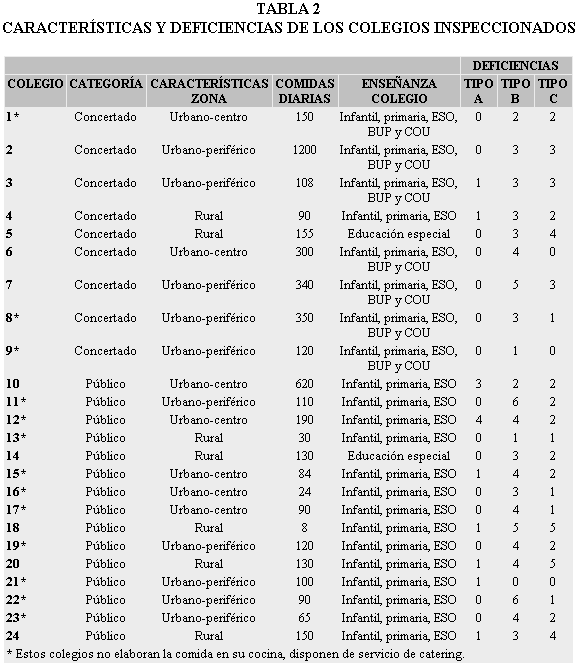
<body><![CDATA[<p ALIGN="CENTER"><font size="2">C</font></td>   </tr> </table> </center></div>      <p ALIGN="JUSTIFY">&nbsp;</p>      <p ALIGN="JUSTIFY"><font size="3">Es de destacar que cuatro colegios no realizan planes de desinfección, desinsectación y desratización, de los cuales tres son concertados y uno público.</font></p>      <p ALIGN="JUSTIFY"><font size="3">También es destacable que el 46% de los C.P. no presente dispositivo de cierre hermético para almacenar residuos frente al 11% de los colegios concertados.</font></p>      <p ALIGN="JUSTIFY"><font size="3">El colegio 22 llama la atención negativamente por tener un estado de limpieza inadecuado en la cocina, en el comedor y en el utillaje; estando éste ubicado en una zona privilegiada de la ciudad y siendo un colegio de reciente construcción. El colegio 12, por su parte, se encuentra situado en una de las calles con mayor densidad de tráfico en la zona centro de la ciudad, motivo por el cual no cumple los epígrafes referentes a focos de contaminación. Resalta negativamente el colegio 11 por tener un estado de limpieza intolerable en la cocina, encontrándose en ella objetos y útiles no relacionados para nada con la actividad de una cocina, como balones, herramientas de jardinería, etc. Hemos de poner de manifiesto que estos tres colegios, cuyas condiciones no son las adecuadas, son públicos.</font></p>      <p ALIGN="JUSTIFY"><font size="3">En los colegios con servicio de catering no han sido inspeccionadas las variables &quot;condiciones del personal&quot; y &quot;condiciones de las materias primas y de los alimentos&quot;, por depender de la empresa distribuidora.</font></p>      <p ALIGN="JUSTIFY"><font size="3">En la <a href="/img/fbpe/resp/v72n6/comt2.gif">tabla    2</a> se muestran las características de todos y cada uno de los colegios inspeccionados    (categoría, zona, comidas diarias y enseñanza del colegio) además de las deficiencias    encontradas en cada uno de ellos y categorizadas de acuerdo con la clasificación    de deficiencias tipo A, B y C.</font></p>      
<p><font size="3">Cuantitativamente existen diferencias consistentes entre los    comedores escolares de los colegios públicos y de los colegios concertados,    siendo mayor esta diferencia entre las deficiencias tipo B, aunque también cabe    destacar la diferencia existente entre las deficiencias tipo A (3&#146;8% en    colegios públicos y 1&#146;05% en colegios concertados) por ser este tipo de    deficiencias las más graves o de mayor importancia (<a href="#fig1">figura I</a>).    Se puede decir que el estado general de los comedores de los colegios concertados    es satisfactorio, mientras que los colegios públicos necesitan modificar sus    deficiencias estructurales y de dotación.</font></p>     <p><a name="fig1"></a>&nbsp;&nbsp;&nbsp; </p><b>    <p align="center">  <font size="4"></font><font size="3">FIGURA I    ]]></body>
<body><![CDATA[<br> PORCENTAJE DE DEFICIENCIAS DE COLEGIOS PÚBLICOS FRENTE A CONCERTADOS</font></p></b>      <p align="center"><!-- big --><!-- big --><img src="/img/fbpe/resp/v72n6/fig14.gif" alt="fig14.gif (6082 bytes)"><!-- /big --><!-- /big --></p>      
<p ALIGN="JUSTIFY"><font size="3">&nbsp; </font></p>      <p ALIGN="JUSTIFY"><font size="3">Se han comparado estadísticamente las variables cocina, comedor, servicios higiénicos, utillaje, personal y materias primas y alimentos; entre colegios públicos y concertados. Para ello se ha realizado un Test de T de Student obteniéndose diferencias significativas solo en el caso del estado de las cocinas entre ambos tipos de colegios (<a href="#tab3">tabla 3</a>).</font></p>      <p><a name="tab3"></a>&nbsp;&nbsp;&nbsp; </p><b>      <p ALIGN="CENTER"><font size="3">Tabla 3    <br> Condiciones higiénico-sanitarias de comedores escolares del municipio de Oviedo, 1997. Comparación de las variables adecuadas o no entre colegios públicos y concertados.</font></p> </b>    <div align="center">    <center>  <table BORDER="0" CELLSPACING="1" bgcolor="#ECECEC">   <tr>     <td VALIGN="top" bgcolor="#C0C0C0"><b>    <p ALIGN="CENTER"><font size="2">PÚBLICO/CONCERTADO</font></b></td>     <td VALIGN="top" bgcolor="#C0C0C0"><b>    ]]></body>
<body><![CDATA[<p ALIGN="CENTER"><font size="2">T-test</font></b></td>     <td VALIGN="top" bgcolor="#C0C0C0"><b>    <p ALIGN="CENTER"><font size="2">p</font></b></td>   </tr>   <tr>     <td VALIGN="top"><font size="2">Cocinas</font></td>     <td VALIGN="top">    <p ALIGN="CENTER"><font size="2">2&#146;23</font></td>     <td VALIGN="top">    <p ALIGN="CENTER"><font size="2">0&#146;037 *</font></td>   </tr>   <tr>     <td VALIGN="top"><font size="2">Comedores</font></td>     <td VALIGN="top">    <p ALIGN="CENTER"><font size="2">1&#146;01</font></td>     <td VALIGN="top">    <p ALIGN="CENTER"><font size="2">0&#146;325</font></td>   </tr>   <tr>     <td VALIGN="top"><font size="2">Servicios higiénicos</font></td>     <td VALIGN="top">    <p ALIGN="CENTER"><font size="2">1&#146;26</font></td>     <td VALIGN="top">    <p ALIGN="CENTER"><font size="2">0&#146;221</font></td>   </tr>   <tr>     <td VALIGN="top"><font size="2">Utillaje </font></td>     <td VALIGN="top">    <p ALIGN="CENTER"><font size="2">0&#146;15</font></td>     <td VALIGN="top">    <p ALIGN="CENTER"><font size="2">0&#146;880</font></td>   </tr>   <tr>     <td VALIGN="top"><font size="2">Personal</font></td>     <td VALIGN="top">    ]]></body>
<body><![CDATA[<p ALIGN="CENTER"><font size="2">0</font></td>     <td VALIGN="top">    <p ALIGN="CENTER"><font size="2">1</font></td>   </tr>   <tr>     <td VALIGN="top"><font size="2">Materias primas y alimentos</font></td>     <td VALIGN="top">    <p ALIGN="CENTER"><font size="2">1&#146;01</font></td>     <td VALIGN="top">    <p ALIGN="CENTER"><font size="2">0&#146;337</font></td>   </tr>   <tr>     <td VALIGN="top"><font size="2">TOTAL</font></td>     <td VALIGN="top">    <p ALIGN="CENTER"><font size="2">2&#146;26</font></td>     <td VALIGN="top">    <p ALIGN="CENTER"><font size="2">0&#146;034 *</font></td>   </tr> </table> </center></div>      <p><b>&nbsp;</b></p><b>      <p ALIGN="CENTER"><font size="4">DISCUSIÓN</font></p>  </b>    <p ALIGN="JUSTIFY"><b></b><font size="3">Es de destacar negativamente que la casi totalidad de los comedores inspeccionados no dispongan de protección en los elementos de iluminación (B), malla antiinsectos en ventanas y huecos de ventilación (B), y lavamanos de accionamiento no manual (B), toallas de papel de un solo uso y jabón líquido (C) tanto en cocinas como en servicios higiénicos; siendo todas ellas deficiencias estructurales o de dotación que son de fácil solución. </font></p>      <p ALIGN="JUSTIFY"><font size="3">En nuestro caso, la mayoría de los colegios públicos hace poco tiempo que disponen de servicio de comedor y, por falta de espacio físico en los edificios, adaptaron un aula o sala polivalente para acoger este servicio. Éste es el motivo por el cual estos locales pasan a ser salas de uso múltiple encontrándose en ellas todo tipo de objetos (material de audiovisuales, juegos, ...). En muchos casos son salas pequeñas y los niños tienen que comer en dos o más turnos con la incomodidad y el mayor riesgo higiénico que ello conlleva.</font></p>      ]]></body>
<body><![CDATA[<p ALIGN="JUSTIFY"><font size="3">Es de relevancia la proximidad existente entre la cocina y el comedor de un colegio público con un foco de contaminación (A) tanto acústico como atmosférico, como es una de las calles con mayor densidad de tráfico de la ciudad.</font></p>      <p ALIGN="JUSTIFY"><font size="3">Llama la atención, pero en sentido positivo, que todas las materias primas y alimentos utilizados en la elaboración de las comidas presenten documentación oficial de su procedencia (A) y que la mayonesa utilizada sea, en todos los casos, industrial (B). Otro dato positivo es que todos los alimentos que utilizan huevo como ingrediente siguen un tratamiento superior a 75ºC (A). </font></p>      <p ALIGN="JUSTIFY"><font size="3">En relación al personal, solamente no disponen de carnet de manipulador de alimentos o resguardo de su solicitud (A) alguna de las personas que forman parte del equipo de cocina y comedor en tres colegios; y en contradicción con ello encontramos que la mayoría del personal, aun habiendo obtenido el carnet de manipulador de alimentos, no utiliza prenda de cabeza (C) durante la realización de su trabajo.</font></p>      <p ALIGN="JUSTIFY"><font size="3">Fue sorprendente constatar que ninguno de los colegios inspeccionados tenía libro de visitas de inspección sanitaria (A), así como que todos desconocían absolutamente la existencia del Reglamento Técnico-Sanitario de Comedores Colectivos y sus contenidos, lo que pone de manifiesto deficiencias en anteriores procesos inspectores. </font></p>      <p ALIGN="JUSTIFY"><font size="3">Con motivo de la realización de esta campaña de inspecciones se les ha facilitado a todos los comedores escolares inspeccionados el libro de visitas para el control sanitario, en el que se transcribe el Reglamento Técnico-Sanitario de Comedores Colectivos. También se elaboró un informe con las deficiencias encontradas en cada colegio que fue enviado a la Concejalía de Educación para que se haga cargo de subsanar las deficiencias.</font></p>      <p ALIGN="JUSTIFY"><font size="3">Las anomalías más frecuentes en los comedores escolares inspeccionados son estructurales o de las instalaciones, todas ellas de fácil solución pero su corrección es lenta porque depende de la dotación económica que le asigne la administración a cada centro. El motivo de estas anomalías es el desconocimiento de la legislación vigente, lo que nos lleva a pensar en la necesidad de insistir en programas de educación sanitaria.</font></p>      <p ALIGN="JUSTIFY"><font size="3">Existe un estudio realizado en Elda<sup>6</sup> que pudiera ser comparable al nuestro. En este estudio se destacan las deficiencias más comunes que al igual que en nuestro caso son la ausencia de lavamanos de accionamiento no manual, jabón líquido y toallas de un solo uso, la falta de malla antiinsectos en ventanas y que las cámaras de refrigeración y/o congelación no dispongan de termómetro para el control de la temperatura. No presentan, sin embargo, otras como la falta de protección en los elementos de iluminación y el estado de limpieza inadecuado en cocinas, comedores o servicios higiénicos, que hemos observado en nuestros datos.</font></p>      <p ALIGN="JUSTIFY"><font size="3">Comparando con otro estudio realizado en Alicante<sup>7</sup> coinciden las deficiencias estructurales y de las instalaciones como las más frecuentes. Esto nos hace preguntarnos como es posible que colegios con titularidad pública puedan presentar deficiencias de este tipo y vuelve a hacernos pensar otra vez sobre la necesidad de impartir formación en Educación Sanitaria en los colegios y asimismo la necesidad de incrementar cada año la actividad inspectora para asegurar la corrección de deficiencias de estructura y de instalación.</font></p>      <p ALIGN="JUSTIFY"><font size="3">En un estudio de reciente publicación realizado en la Comunidad de Madrid<sup>8</sup> no han encontrado en ninguno de los comedores inspeccionados anomalías en la dotación de lavamanos de accionamiento no manual, jabón líquido y toallas de papel de un solo uso en cocinas, que al contrario que en nuestro caso es una de las anomalías más frecuentes; esto podría ser debido a la falta de realización de este tipo de inspecciones periódicas en nuestro municipio.</font></p>      <p ALIGN="JUSTIFY"><font size="3">La nutrición es uno de los pilares básicos de los estilos de vida saludables, que como determinante de la salud es el de mayor incidencia cuantitativa, por depender de decisiones en gran parte propias y por ser modificable, por todo ello ésta adquiere características cualitativas muy especiales. Los estilos de vida, muy ligados a nuestra forma de comportarnos, también están ligados a valores, prioridades, oportunidades y limitaciones relacionadas con situaciones culturales, sociales o económicas<sup>9</sup>.</font></p>      ]]></body>
<body><![CDATA[<p ALIGN="JUSTIFY"><font size="3">En este contexto y en nuestro ordenamiento social donde la Constitución de 1978 en su artículo 43 reconoce el derecho a la protección de la salud, y la ordena la competencia de los poderes públicos en esta materia, es donde la Administración Local, como uno de esos poderes, puede y debe desarrollar sus competencias y tareas en esta materia<sup>10</sup>.</font></p>      <p ALIGN="JUSTIFY"><font size="3">En base a ello, se estableció un programa de inspecciones de comedores escolares por ser la escuela uno de los principales lugares de aprendizaje de valores y prioridades y por tanto de estilos de vida, por lo que se convierte la hora de la comida en los mismos en un programa práctico de educación para la salud, al tiempo que se realiza una tarea preventiva de toda la patología que puede ser inducida por una alimentación inadecuada o insalubre.</font></p>      <p ALIGN="JUSTIFY"><font size="3">El programa, realizado a instancias de la Consejería de Servicios Sociales, se llevó a cabo con un protocolo común con la Sección de Servicios Médicos del Ayuntamiento de Oviedo y dentro de un convenio de colaboración en prácticas con el Instituto de Enseñanza Secundaria de Cerdeño (Oviedo), tratando así de potenciar el concepto de multisectorialidad y los principios de coordinación y eficacia que deben de presidir las tareas de Administración.</font></p>      <p ALIGN="JUSTIFY"><font size="3">También puso de manifiesto, por primera vez documentado en España, que esta relativamente nueva profesión de Técnicos en Salud Ambiental se ajusta perfectamente a las tareas de inspección sanitaria que se requiere en el marco de las competencias municipales en salud.</font></p>      <p ALIGN="JUSTIFY"><font size="3">Tratamos de conocer si existían diferencias entre los colegios públicos y los concertados, y si bien existían algunas diferencias estadísticamente significativas en el total de los epígrafes y en los referentes a cocinas, en el resto, el escaso tamaño de la muestra invalidaba estos resultados. En base a ello es nuestro objetivo revisar para el próximo curso el resto de colegios del municipio y así poder comparar el resto de epígrafes o poder concluir al tratarse de la totalidad de la población de colegios.</font></p>      <p ALIGN="JUSTIFY"><font size="3">Por todo lo anterior concluimos que se pone de manifiesto la necesidad de un mayor énfasis en el cumplimiento de las obligaciones competenciales en salud en el ámbito municipal como medio para dar a conocer la reglamentación higiénico sanitaria y vigilar su cumplimiento, y por tanto como método de educación para la salud respecto de algo tan importante para alcanzar un estilo de vida saludable y evitar consecuencias patológicas como es la nutrición infantil. </font></p>      <p ALIGN="JUSTIFY"><font size="3">Este programa de inspecciones ha servido para:</font></p>  <ul>       <li><font size="3">Reconducir el programa de inspecciones y evaluar el protocolo.</font></li>       <li><font size="3">Objetivar la calidad higiénico sanitaria de los comedores escolares.</font></li>       <li><font size="3">Tener una visión general y/o pormenorizada de la situación de los     diferentes comedores escolares.</font></li>       ]]></body>
<body><![CDATA[<li><font size="3">Estudiar la evolución en el tiempo de estos comedores.</font></li>       <li><font size="3">Realizar programas de educación para la salud.</font></li>     </ul>      <p ALIGN="JUSTIFY">&nbsp;</p>      <blockquote>   <b>    <p ALIGN="CENTER"><font size="4">BIBLIOGRAFÍA</font></p> </b></blockquote>    <!-- ref --><p>  <b></b><font size="3">1. Dirección Regional de Salud Pública. Inspección sanitaria en las áreas de salud. Principado de Asturias: Consejería de Servicios Sociales; 1994.</font>&nbsp;&nbsp;&nbsp;&nbsp;&nbsp;&nbsp;&nbsp;&nbsp;[&#160;<a href="javascript:void(0);" onclick="javascript: window.open('/scielo.php?script=sci_nlinks&ref=5537570&pid=S1135-5727199800060001000001&lng=','','width=640,height=500,resizable=yes,scrollbars=1,menubar=yes,');">Links</a>&#160;]<!-- end-ref --><!-- ref --><p>  <b></b><font size="3">2. Williams T., Moon A., Williamd M.. Alimentos, medio ambiente y salud. Guía para maestros de enseñanza primaria. Ginebra: OMS; 1991.</font>&nbsp;&nbsp;&nbsp;&nbsp;&nbsp;&nbsp;&nbsp;&nbsp;[&#160;<a href="javascript:void(0);" onclick="javascript: window.open('/scielo.php?script=sci_nlinks&ref=5537571&pid=S1135-5727199800060001000002&lng=','','width=640,height=500,resizable=yes,scrollbars=1,menubar=yes,');">Links</a>&#160;]<!-- end-ref --><!-- ref --><p>  <b></b><font size="3">3. Ariñogil JM., Abello A., Garrido J. Educación para la salud: alimentación. 1ª ed. Málaga: Agora; 1992.</font>&nbsp;&nbsp;&nbsp;&nbsp;&nbsp;&nbsp;&nbsp;&nbsp;[&#160;<a href="javascript:void(0);" onclick="javascript: window.open('/scielo.php?script=sci_nlinks&ref=5537572&pid=S1135-5727199800060001000003&lng=','','width=640,height=500,resizable=yes,scrollbars=1,menubar=yes,');">Links</a>&#160;]<!-- end-ref --><!-- ref --><p>  <b></b><font size="3">4. Dirección General de Planificación Sanitaria. Manual para manipuladores de alimentos. Madrid: Ministerio de Sanidad y Consumo; 1989.</font>&nbsp;&nbsp;&nbsp;&nbsp;&nbsp;&nbsp;&nbsp;&nbsp;[&#160;<a href="javascript:void(0);" onclick="javascript: window.open('/scielo.php?script=sci_nlinks&ref=5537573&pid=S1135-5727199800060001000004&lng=','','width=640,height=500,resizable=yes,scrollbars=1,menubar=yes,');">Links</a>&#160;]<!-- end-ref --><!-- ref --><p>  <b></b><font size="3">5. Boletín Oficial del Estado. Real Decreto 2817/1983, reglamentación técnico-sanitaria de comedores colectivos. BOE 11/11/1983.</font>&nbsp;&nbsp;&nbsp;&nbsp;&nbsp;&nbsp;&nbsp;&nbsp;[&#160;<a href="javascript:void(0);" onclick="javascript: window.open('/scielo.php?script=sci_nlinks&ref=5537574&pid=S1135-5727199800060001000005&lng=','','width=640,height=500,resizable=yes,scrollbars=1,menubar=yes,');">Links</a>&#160;]<!-- end-ref --><!-- ref --><p>  <b></b><font size="3">6. Hernández Villaplana A., Durá Tortosa A., Maestre Amer J. Estudio de los comedores escolares de Elda. Técnicas de Laboratorio, 1988, 11(145):384-8.</font>&nbsp;&nbsp;&nbsp;&nbsp;&nbsp;&nbsp;&nbsp;&nbsp;[&#160;<a href="javascript:void(0);" onclick="javascript: window.open('/scielo.php?script=sci_nlinks&ref=5537575&pid=S1135-5727199800060001000006&lng=','','width=640,height=500,resizable=yes,scrollbars=1,menubar=yes,');">Links</a>&#160;]<!-- end-ref --><!-- ref --><p>  <b></b><font size="3">7. Andreu E., Maciá JA., Perales T. Deficiencias en comedores colectivos. XII Reunión de la Sociedad Española de Epidemiología. Gaceta Sanitaria. Suplemento, sep-oct; 1994; 44:111-2.</font>&nbsp;&nbsp;&nbsp;&nbsp;&nbsp;&nbsp;&nbsp;&nbsp;[&#160;<a href="javascript:void(0);" onclick="javascript: window.open('/scielo.php?script=sci_nlinks&ref=5537576&pid=S1135-5727199800060001000007&lng=','','width=640,height=500,resizable=yes,scrollbars=1,menubar=yes,');">Links</a>&#160;]<!-- end-ref --><!-- ref --><p>  <b></b><font size="3">8. Pérez-Silva García C, Belmonte Cortés S, Martínez Corral J. Estudio microbiológico de los alimentos elaborados en comedores colectivos de alto riesgo. Rev Esp Salud Pública 1998; 72: 67-75.</font>&nbsp;&nbsp;&nbsp;&nbsp;&nbsp;&nbsp;&nbsp;&nbsp;[&#160;<a href="javascript:void(0);" onclick="javascript: window.open('/scielo.php?script=sci_nlinks&ref=5537577&pid=S1135-5727199800060001000008&lng=','','width=640,height=500,resizable=yes,scrollbars=1,menubar=yes,');">Links</a>&#160;]<!-- end-ref --><!-- ref --><p>  <b></b><font size="3">9. Cueto Espinar A. Ciudades Saludables: El derecho a la calidad de vida. Conferencia Inaugural de V Congreso de la Red Española de Ciudades Saludables. Oviedo; 1997.</font>&nbsp;&nbsp;&nbsp;&nbsp;&nbsp;&nbsp;&nbsp;&nbsp;[&#160;<a href="javascript:void(0);" onclick="javascript: window.open('/scielo.php?script=sci_nlinks&ref=5537578&pid=S1135-5727199800060001000009&lng=','','width=640,height=500,resizable=yes,scrollbars=1,menubar=yes,');">Links</a>&#160;]<!-- end-ref --><!-- ref --><p>  <b></b><font size="3">10. Villarino Samalea G. La Sanidad Local (tesis doctoral). Oviedo: Universidad de Oviedo; 1997.</font>&nbsp;&nbsp;&nbsp;&nbsp;&nbsp;&nbsp;&nbsp;&nbsp;[&#160;<a href="javascript:void(0);" onclick="javascript: window.open('/scielo.php?script=sci_nlinks&ref=5537579&pid=S1135-5727199800060001000010&lng=','','width=640,height=500,resizable=yes,scrollbars=1,menubar=yes,');">Links</a>&#160;]<!-- end-ref --> ]]></body><back>
<ref-list>
<ref id="B1">
<label>1</label><nlm-citation citation-type="book">
<collab>Dirección Regional de Salud Pública</collab>
<source><![CDATA[Inspección sanitaria en las áreas de salud]]></source>
<year>1994</year>
<publisher-name><![CDATA[Consejería de Servicios Sociales]]></publisher-name>
</nlm-citation>
</ref>
<ref id="B2">
<label>2</label><nlm-citation citation-type="book">
<person-group person-group-type="author">
<name>
<surname><![CDATA[Williams]]></surname>
<given-names><![CDATA[T.]]></given-names>
</name>
<name>
<surname><![CDATA[Moon]]></surname>
<given-names><![CDATA[A.]]></given-names>
</name>
<name>
<surname><![CDATA[Williamd]]></surname>
<given-names><![CDATA[M.]]></given-names>
</name>
</person-group>
<source><![CDATA[Alimentos, medio ambiente y salud: Guía para maestros de enseñanza primaria]]></source>
<year>1991</year>
<publisher-loc><![CDATA[Ginebra ]]></publisher-loc>
<publisher-name><![CDATA[OMS]]></publisher-name>
</nlm-citation>
</ref>
<ref id="B3">
<label>3</label><nlm-citation citation-type="book">
<person-group person-group-type="author">
<name>
<surname><![CDATA[Ariñogil]]></surname>
<given-names><![CDATA[JM.]]></given-names>
</name>
<name>
<surname><![CDATA[Abello]]></surname>
<given-names><![CDATA[A.]]></given-names>
</name>
<name>
<surname><![CDATA[Garrido]]></surname>
<given-names><![CDATA[J]]></given-names>
</name>
</person-group>
<source><![CDATA[Educación para la salud: alimentación]]></source>
<year>1992</year>
<edition>1ª</edition>
<publisher-loc><![CDATA[Málaga ]]></publisher-loc>
<publisher-name><![CDATA[Agora]]></publisher-name>
</nlm-citation>
</ref>
<ref id="B4">
<label>4</label><nlm-citation citation-type="book">
<collab>Dirección General de Planificación Sanitaria</collab>
<source><![CDATA[Manual para manipuladores de alimentos]]></source>
<year>1989</year>
<publisher-loc><![CDATA[Madrid ]]></publisher-loc>
<publisher-name><![CDATA[Ministerio de Sanidad y Consumo]]></publisher-name>
</nlm-citation>
</ref>
<ref id="B5">
<label>5</label><nlm-citation citation-type="journal">
<article-title xml:lang="es"><![CDATA[Real Decreto 2817/1983, reglamentación técnico-sanitaria de comedores colectivos]]></article-title>
<source><![CDATA[BOE]]></source>
<year>11/1</year>
<month>1/</month>
<day>19</day>
</nlm-citation>
</ref>
<ref id="B6">
<label>6</label><nlm-citation citation-type="journal">
<person-group person-group-type="author">
<name>
<surname><![CDATA[Hernández Villaplana]]></surname>
<given-names><![CDATA[A.]]></given-names>
</name>
<name>
<surname><![CDATA[Durá Tortosa]]></surname>
<given-names><![CDATA[A.]]></given-names>
</name>
<name>
<surname><![CDATA[Maestre Amer]]></surname>
<given-names><![CDATA[J.]]></given-names>
</name>
</person-group>
<article-title xml:lang="es"><![CDATA[Estudio de los comedores escolares de Elda]]></article-title>
<source><![CDATA[Técnicas de Laboratorio]]></source>
<year>1988</year>
<volume>11</volume>
<numero>145</numero>
<issue>145</issue>
<page-range>384-8</page-range></nlm-citation>
</ref>
<ref id="B7">
<label>7</label><nlm-citation citation-type="journal">
<person-group person-group-type="author">
<name>
<surname><![CDATA[Andreu]]></surname>
<given-names><![CDATA[E.]]></given-names>
</name>
<name>
<surname><![CDATA[Maciá]]></surname>
<given-names><![CDATA[JA.]]></given-names>
</name>
<name>
<surname><![CDATA[Perales]]></surname>
<given-names><![CDATA[T.]]></given-names>
</name>
</person-group>
<article-title xml:lang="es"><![CDATA[Deficiencias en comedores colectivos]]></article-title>
<source><![CDATA[Gaceta Sanitaria]]></source>
<year>sep-</year>
<month>oc</month>
<day>t;</day>
<volume>44</volume>
<numero>^sSuplemento</numero>
<conf-name><![CDATA[XII Reunión de la Sociedad Española de Epidemiología]]></conf-name>
<conf-loc> </conf-loc>
<issue>^sSuplemento</issue>
<supplement>Suplemento</supplement>
<page-range>111-2</page-range></nlm-citation>
</ref>
<ref id="B8">
<label>8</label><nlm-citation citation-type="journal">
<person-group person-group-type="author">
<name>
<surname><![CDATA[Pérez-Silva García]]></surname>
<given-names><![CDATA[C]]></given-names>
</name>
<name>
<surname><![CDATA[Belmonte Cortés]]></surname>
<given-names><![CDATA[S]]></given-names>
</name>
<name>
<surname><![CDATA[Martínez Corral]]></surname>
<given-names><![CDATA[J]]></given-names>
</name>
</person-group>
<article-title xml:lang="es"><![CDATA[Estudio microbiológico de los alimentos elaborados en comedores colectivos de alto riesgo]]></article-title>
<source><![CDATA[Rev Esp Salud Pública]]></source>
<year>1998</year>
<volume>72</volume>
<page-range>67-75</page-range></nlm-citation>
</ref>
<ref id="B9">
<label>9</label><nlm-citation citation-type="confpro">
<person-group person-group-type="author">
<name>
<surname><![CDATA[Cueto Espinar]]></surname>
<given-names><![CDATA[A]]></given-names>
</name>
</person-group>
<article-title xml:lang="es"><![CDATA[Ciudades Saludables: El derecho a la calidad de vida]]></article-title>
<source><![CDATA[]]></source>
<year></year>
<conf-name><![CDATA[V Congreso de la Red Española de Ciudades Saludables]]></conf-name>
<conf-date>1997</conf-date>
<conf-loc>Oviedo </conf-loc>
</nlm-citation>
</ref>
<ref id="B10">
<label>10</label><nlm-citation citation-type="">
<person-group person-group-type="author">
<name>
<surname><![CDATA[Villarino Samalea]]></surname>
<given-names><![CDATA[G]]></given-names>
</name>
</person-group>
<source><![CDATA[La Sanidad Local]]></source>
<year></year>
</nlm-citation>
</ref>
</ref-list>
</back>
</article>
