<?xml version="1.0" encoding="ISO-8859-1"?><article xmlns:mml="http://www.w3.org/1998/Math/MathML" xmlns:xlink="http://www.w3.org/1999/xlink" xmlns:xsi="http://www.w3.org/2001/XMLSchema-instance">
<front>
<journal-meta>
<journal-id>1698-6946</journal-id>
<journal-title><![CDATA[Medicina Oral, Patología Oral y Cirugía Bucal (Internet)]]></journal-title>
<abbrev-journal-title><![CDATA[Med. oral patol. oral cir.bucal (Internet)]]></abbrev-journal-title>
<issn>1698-6946</issn>
<publisher>
<publisher-name><![CDATA[Sociedad Española de Medicina Oral]]></publisher-name>
</publisher>
</journal-meta>
<article-meta>
<article-id>S1698-69462006000300016</article-id>
<title-group>
<article-title xml:lang="es"><![CDATA[Profilaxis antibiótica en Cirugía Oral y Maxilofacial]]></article-title>
<article-title xml:lang="en"><![CDATA[Antibiotic prophylaxis in Oral and Maxillofacial Surgery]]></article-title>
</title-group>
<contrib-group>
<contrib contrib-type="author">
<name>
<surname><![CDATA[Salmerón Escobar]]></surname>
<given-names><![CDATA[Jose Ignacio]]></given-names>
</name>
<xref ref-type="aff" rid="A01"/>
</contrib>
<contrib contrib-type="author">
<name>
<surname><![CDATA[Amo Fernández de Velasco]]></surname>
<given-names><![CDATA[Alvaro del]]></given-names>
</name>
<xref ref-type="aff" rid="A01"/>
</contrib>
</contrib-group>
<aff id="A01">
<institution><![CDATA[,Hospital General Universitario Gregorio Marañón de Madrid  ]]></institution>
<addr-line><![CDATA[Madrid ]]></addr-line>
</aff>
<pub-date pub-type="pub">
<day>00</day>
<month>06</month>
<year>2006</year>
</pub-date>
<pub-date pub-type="epub">
<day>00</day>
<month>06</month>
<year>2006</year>
</pub-date>
<volume>11</volume>
<numero>3</numero>
<fpage>292</fpage>
<lpage>296</lpage>
<copyright-statement/>
<copyright-year/>
<self-uri xlink:href="http://scielo.isciii.es/scielo.php?script=sci_arttext&amp;pid=S1698-69462006000300016&amp;lng=en&amp;nrm=iso"></self-uri><self-uri xlink:href="http://scielo.isciii.es/scielo.php?script=sci_abstract&amp;pid=S1698-69462006000300016&amp;lng=en&amp;nrm=iso"></self-uri><self-uri xlink:href="http://scielo.isciii.es/scielo.php?script=sci_pdf&amp;pid=S1698-69462006000300016&amp;lng=en&amp;nrm=iso"></self-uri><abstract abstract-type="short" xml:lang="es"><p><![CDATA[La profilaxis antibiótica en cirugía oral y maxilofacial tiene como fin la prevención de la infección en la herida quirúrgica, ya sea por las características de la cirugía o por el estado general del paciente. Este riesgo se incrementa cuanto más se contamine el campo quirúrgico, siendo necesario realizar tratamiento profiláctico de la infección en cirugías limpias-contaminadas y contaminadas y tratamiento de la infección en cirugías sucias. Además, una adecuada técnica quirúrgica colabora con la reducción de la aparición de infección postquirúrgica. La antibioterapia de elección varía entre derivados de la penicilina con inhibidores de las betalactamasas (amoxicilina-clavulánico, ampicilina-sulbactam), cefalosporinas de segunda o tercera generación, quinolonas o clindamicina. La indicación de su uso variará en función del tipo de cirugía en cada ámbito de la cirugía oral y maxilofacial, según el grado de contaminación de la misma. De este modo en cirugía oral y en patología de glándulas salivares la literatura parece demostrar que no hay mejor pronóstico en cuanto al uso de antibioterapia profiláctica respecto a no usarla en pacientes sanos. En traumatología se justifica en fracturas compuestas o con comunicación con senos paranasales. En cirugía ortognática hay discrepancia en cuanto al criterio de empleo de profilaxis antibiótica, si bien se prefieren ciclos cortos de tratamiento. En cuanto a la cirugía oncológica, se ha demostrado la reducción de la incidencia de infección postquirúrgica con el uso de antibioterapia profiláctica peroperatoria, fundamentalmente en los casos en que se pone en contacto la mucosa oral con la región cervical.]]></p></abstract>
<abstract abstract-type="short" xml:lang="en"><p><![CDATA[Antibiotic prophylaxis in oral and maxillofacial surgery aims the prevention of the infection of the surgical wound, either due to the characteristics of the surgery or the general state of the patient. This risk increases with the contamination of the surgical operation area, making it necessary to imply a prophylactic treatment of the infection in clean-contaminated and contaminated surgeries and treatment of the infection in dirty surgeries. Moreover, a proper surgical technique helps to reduce the development of the postsurgical infection. The elective antibiotic chemotherapy ranges from penicillin-derivates with betalactamase inhibitors (amoxycillin-clavulanate, ampicilin-sulbactam) to second or third generation cephalosporins, quinolones or clindamycin. The indication for the use of these antibiotics depends on the type of surgery in oral and maxillofacial surgery, according to the degree of contamination. Thus in oral surgery and surgery of the salivary glands the literature demonstrates that there is not a better prognosis when using prophylactic antibiotherapy instead of not using it in healthy patients. In traumatology this prophylaxis is justified in compound fractures and those communicating with paranasal sinuses. In orthognatic surgery there is disagreement according to the criteria of using antibiotic prophylaxis, but short term treatment is preferred in case of using it. In oncological surgery it has been demonstrated the reduce in incidence of postsurgical infection using prophylactic peroperative antibiotherapy, mostly in those cases in which oral mucosa and cervical area contact.]]></p></abstract>
<kwd-group>
<kwd lng="es"><![CDATA[Infección]]></kwd>
<kwd lng="es"><![CDATA[cavidad oral]]></kwd>
<kwd lng="es"><![CDATA[Antibioticos]]></kwd>
<kwd lng="es"><![CDATA[cirugía oral]]></kwd>
<kwd lng="es"><![CDATA[cirugía maxilofacial]]></kwd>
<kwd lng="es"><![CDATA[profilaxis]]></kwd>
<kwd lng="en"><![CDATA[Infection]]></kwd>
<kwd lng="en"><![CDATA[oral cavity]]></kwd>
<kwd lng="en"><![CDATA[antibiotic]]></kwd>
<kwd lng="en"><![CDATA[maxillofacial surgery]]></kwd>
<kwd lng="en"><![CDATA[prophylaxis]]></kwd>
</kwd-group>
</article-meta>
</front><body><![CDATA[ <p align="right"><FONT SIZE="4" face="Verdana"><a name="top"></a></FONT><b><font face="Verdana" size="2">PATOLOGÍA CERVICAL Y FACIAL</font></b></p>     <p>&nbsp;</p>     <p><b><FONT size="4" face="Verdana">Profilaxis antibi&oacute;tica en Cirug&iacute;a Oral y Maxilofacial</FONT></b></p>     <p><b><font size="4" face="Verdana">Antibiotic prophylaxis in Oral and Maxillofacial Surgery</font></b></p>     <p>&nbsp;</p>     <p>&nbsp;</p>     <p><font face="Verdana" size="2"><B>Jose Ignacio Salmer&oacute;n Escobar<SUP>1</SUP>, Alvaro del Amo Fern&aacute;ndez de Velasco<SUP>2</SUP></B></FONT></p>     <P><font face="Verdana" size="2">(1) M&eacute;dico Adjunto    <br> (2) M&eacute;dico Residente. H.G.U. Gregorio Mara&ntilde;&oacute;n de Madrid</FONT></P>     <P><font face="Verdana" size="-1"><a href="#back">Dirección para correspondencia</a></font></P>     ]]></body>
<body><![CDATA[<P>&nbsp;</P>     <P>&nbsp;</P>  <hr size="1">     <P><font face="Verdana" size="2"><B>RESUMEN</B></font></P>      <P><font face="Verdana" size="2">La profilaxis antibi&oacute;tica en cirug&iacute;a oral y maxilofacial tiene como fin la prevenci&oacute;n de la infecci&oacute;n en la herida quir&uacute;rgica, ya sea por las caracter&iacute;sticas de la cirug&iacute;a o por el estado general del paciente. Este riesgo se incrementa cuanto m&aacute;s se contamine el campo quir&uacute;rgico, siendo necesario realizar tratamiento profil&aacute;ctico de la infecci&oacute;n en cirug&iacute;as limpias-contaminadas y contaminadas y tratamiento de la infecci&oacute;n en cirug&iacute;as sucias. Adem&aacute;s, una adecuada t&eacute;cnica quir&uacute;rgica colabora con la reducci&oacute;n de la aparici&oacute;n de infecci&oacute;n postquir&uacute;rgica. La antibioterapia de elecci&oacute;n var&iacute;a entre derivados de la penicilina con inhibidores de las betalactamasas (amoxicilina-clavul&aacute;nico, ampicilina-sulbactam), cefalosporinas de segunda o tercera generaci&oacute;n, quinolonas o clindamicina. La indicaci&oacute;n de su uso variar&aacute; en funci&oacute;n del tipo de cirug&iacute;a en cada &aacute;mbito de la cirug&iacute;a oral y maxilofacial, seg&uacute;n el grado de contaminaci&oacute;n de la misma. De este modo en cirug&iacute;a oral y en patolog&iacute;a de gl&aacute;ndulas salivares la literatura parece demostrar que no hay mejor pron&oacute;stico en cuanto al uso de antibioterapia profil&aacute;ctica respecto a no usarla en pacientes sanos. En traumatolog&iacute;a se justifica en fracturas compuestas o con comunicaci&oacute;n con senos paranasales. En cirug&iacute;a ortogn&aacute;tica hay discrepancia en cuanto al criterio de empleo de profilaxis antibi&oacute;tica, si bien se prefieren ciclos cortos de tratamiento. En cuanto a la cirug&iacute;a oncol&oacute;gica, se ha demostrado la reducci&oacute;n de la incidencia de infecci&oacute;n postquir&uacute;rgica con el uso de antibioterapia profil&aacute;ctica peroperatoria, fundamentalmente en los casos en que se pone en contacto la mucosa oral con la regi&oacute;n cervical.</FONT></P>        <P><font face="Verdana" size="2"><B>Palabras clave:</B> Infecci&oacute;n, cavidad oral, Antibioticos, cirug&iacute;a oral, cirug&iacute;a maxilofacial, profilaxis.</FONT></P>  <hr size="1">    <font FACE="Verdana" SIZE="2"><b>    <p>ABSTRACT</b></font></p>     <p><font face="Verdana" size="2">Antibiotic prophylaxis in oral and maxillofacial surgery aims the prevention of the infection of the surgical wound, either due to the characteristics of the surgery or the general state of the patient. This risk increases with the contamination of the surgical operation area, making it necessary to imply a prophylactic treatment of the infection in clean-contaminated and contaminated surgeries and treatment of the infection in dirty surgeries. Moreover, a proper surgical technique helps to reduce the development of the postsurgical infection. The elective antibiotic chemotherapy ranges from penicillin-derivates with betalactamase inhibitors (amoxycillin-clavulanate, ampicilin-sulbactam) to second or third generation cephalosporins, quinolones or clindamycin. The indication for the use of these antibiotics depends on the type of surgery in oral and maxillofacial surgery, according to the degree of contamination. Thus in oral surgery and surgery of the salivary glands the literature demonstrates that there is not a better prognosis when using prophylactic antibiotherapy instead of not using it in healthy patients. In traumatology this prophylaxis is justified in compound fractures and those communicating with paranasal sinuses. In orthognatic surgery there is disagreement according to the criteria of using antibiotic prophylaxis, but short term treatment is preferred in case of using it. In oncological surgery it has been demonstrated the reduce in incidence of postsurgical infection using prophylactic peroperative antibiotherapy, mostly in those cases in which oral mucosa and cervical area contact.</font></p>     <p><font face="Verdana" size="2"><b>Key words:</b> Infection, oral cavity, antibiotic, maxillofacial surgery, prophylaxis.</font></p>  <hr size="1">     <P>&nbsp;</P>     <P>&nbsp;</P>     ]]></body>
<body><![CDATA[<P><B><font face="Verdana">Introducción</font></B></P>      <P><font face="Verdana" size="2">La finalidad de la profilaxis antibi&oacute;tica en cirug&iacute;a es prevenir la posible aparici&oacute;n de infecci&oacute;n a nivel de la herida quir&uacute;rgica, creando un estado de resistencia a los microorganismos mediante concentraciones antibi&oacute;ticas en sangre que eviten la proliferaci&oacute;n y diseminaci&oacute;n bacteriana a partir de la puerta de entrada que representa la herida quir&uacute;rgica.</FONT></P>      <P><font face="Verdana" size="2">La profilaxis est&aacute; indicada siempre que exista un riesgo importante de infecci&oacute;n, ya sea por las caracter&iacute;sticas mismas de la operaci&oacute;n o por las condiciones locales o generales del paciente. Entre los factores que van a determinar la posibilidad de aparici&oacute;n de la misma destacan el tipo y tiempo de cirug&iacute;a y el riesgo quir&uacute;rgico del paciente por su comorbilidad (riesgo ASA): diabetes, nefropat&iacute;as, hepatopat&iacute;as (cirrosis), cardiopat&iacute;as, terap&eacute;uticas inmunosupresoras (corticoides, radioterapia, quimioterapia, infecciones previas con antibioticoterapia no bien conocida o racionalizada). Intervenciones menores en pacientes sanos no requieren profilaxis.</FONT></P>      <P><font face="Verdana" size="2">Al producirse el trauma quir&uacute;rgico con la aparici&oacute;n de una soluci&oacute;n de continuidad en la piel, se produce la ruptura de la principal barrera que frena la entrada de microorganismos en el interior del cuerpo (1). De esta manera los g&eacute;rmenes entran y pueden colonizar e infectar tejidos profundos (2). Esto hace que dependiendo del in&oacute;culo bacteriano aumente la posibilidad de infecci&oacute;n, seg&uacute;n sea una cirug&iacute;a limpia, limpia-contaminada, contaminada o sucia. Cuanta mayor es la contaminaci&oacute;n, mayor es el riesgo de infecci&oacute;n postquir&uacute;rgica.</FONT></P>      <P><font face="Verdana" size="2">El riesgo de contaminaci&oacute;n del campo quir&uacute;rgico se minimiza con una adecuada t&eacute;cnica quir&uacute;rgica, con el buen estado nutricional del paciente, etc (3,4), pero el que se ha demostrado como el factor m&aacute;s importante es la profilaxis antibi&oacute;tica. El uso de antibi&oacute;ticos en cirug&iacute;a debe realizarse &uacute;nicamente en aquellos casos en los que est&eacute; indicado, el f&aacute;rmaco tiene que tener de vida media larga, poco t&oacute;xico y activo frente a los principales microorganismos que se pueden esperar de la contaminaci&oacute;n del campo quir&uacute;rgico.</FONT></P>      <P><font face="Verdana" size="2">Medidas de control en la t&eacute;cnica quir&uacute;rgica para minimizar el riesgo de infecci&oacute;n son: incisiones limpias; levantamiento mucoperi&oacute;stico libre de desgarros; irrigaciones como m&eacute;todo de enfriamiento y arrastre de part&iacute;culas de los fresados del hueso alveolar; aspiraci&oacute;n constante; hemostasia cuidadosa; en caso de utilizar anestesia local, evitar posibles desgarros de tejidos o capilares con la aguja; introducci&oacute;n lenta del anest&eacute;sico; precauci&oacute;n esmerada en labios, colgajos y tejidos al utilizar los separadores, retractores, depresor lingual, etc&eacute;tera; colocaci&oacute;n de drenajes (si es preciso); ap&oacute;sitos y compresivos bien colocados. Debemos recordar que algunas de las suturas efectuadas son puntos de aproximaci&oacute;n, por lo que existe un tr&aacute;nsito tanto del ambiente h&uacute;medo propio de la cavidad bucal, como de residuos alimenticios, por lo que se recomienda hacer enjuagues con suero fisiol&oacute;gico a partir de las 24 horas siguientes a la operaci&oacute;n.</FONT></P>      <P><font face="Verdana" size="2">Para una profilaxis efectiva, se deben de conseguir concentraciones s&eacute;ricas efectivas desde la apertura hasta el cierre de la herida quir&uacute;rgica, por lo que es necesario administrar el antibi&oacute;tico en un m&aacute;ximo de una hora antes de la incisi&oacute;n. El momento m&aacute;s propicio es durante la inducci&oacute;n anest&eacute;sica y mediante la v&iacute;a intravenosa. En caso de que se trate de una cirug&iacute;a prolongada, puede ser necesario repetir la dosis del antibi&oacute;tico para mantener unos niveles terap&eacute;uticos en sangre, dependiendo de la curva de biodisponibilidad y de la vida media de cada uno. No est&aacute; demostrado que prolongar la antibioterapia m&aacute;s all&aacute; de 24 horas tras la cirug&iacute;a reduzca el riesgo de infecci&oacute;n, por lo que se considera mala pr&aacute;ctica prolongar m&aacute;s all&aacute; de ese tiempo el tratamiento antimicrobiano (5).</FONT></P>      <P>&nbsp;</P>      <P><B><font face="Verdana">Clasificación de las heridas quirúrgicas de acuerdo con el riesgo de contaminación-infección (6-10)</font></B></P>     <P><font face="Verdana" size="2">&bull; Tipo I. Heridas limpias (no apertura de mucosas como la cavidad oral): tasa de infecci&oacute;n de 1 a 4 %, no profilaxis antibi&oacute;tica o profilaxis durante no m&aacute;s de 24 horas con amoxicilina-clavul&aacute;nico puesto que se ha demostrado la ausencia de beneficio por el uso de antibioterapia postoperatoria.</FONT></P>     ]]></body>
<body><![CDATA[<P><font face="Verdana" size="2">&bull; Tipo II. Heridas limpias-contaminadas (apertura de mucosas como la cavidad oral o intervenci&oacute;n de patolog&iacute;a inflamatoria): tasa de infecci&oacute;n de 5 a 15 %, profilaxis antibi&oacute;tica con f&aacute;rmacos que cubran microorganimos gram + y anaerobios(11) (amoxicilina-clavul&aacute;nico, cefazolina + anaerobicida (clindamicina o metronidazol) (12)).</FONT></P>      <blockquote>      <P><font face="Verdana" size="2">o Amoxicilina-clavul&aacute;nico 2 g, repetir dosis 1 g/4h si se prolonga la cirug&iacute;a (13).</FONT></P>     <P><font face="Verdana" size="2">o Al&eacute;rgicos a betalact&aacute;micos: clindamicina 600 mg + gentamicina 120 mg, repetir dosis cada 4 horas si se prolonga la cirug&iacute;a</FONT></P>  </blockquote>      <P><font face="Verdana" size="2">&bull; Tipo III. Heridas contaminadas (patolog&iacute;a oncol&oacute;gica en la que se act&uacute;a sobre la cavidad oral y el cuello): tasa de infecci&oacute;n de 16 a 25 %, debe efectuarse profilaxis antibi&oacute;tica cubriendo gram &#150; cuya cobertura es controvertida en cirug&iacute;as limpias y limpias contaminadas, mediante el uso de f&aacute;rmacos como ampicilina-sulbactam o piperacilina-tazobactam.</FONT></P>     <blockquote>     <P><font face="Verdana" size="2">o Amoxicilina-clavul&aacute;nico 2 g, repetir dosis 1 g/4h si se prolonga la cirug&iacute;a.</FONT></P>     <P><font face="Verdana" size="2">o Clindamicina 600 mg + cefazolina 2 g, repetir dosis cada 6 horas de clindamicina y 1 g de cefazolina cada 8 horas si se prolonga la cirug&iacute;a</FONT></P>  </blockquote>      <P><font face="Verdana" size="2">&bull; Tipo IV. Heridas sucias e infectadas (tasa de infecci&oacute;n de 25 %): tratamiento antibi&oacute;tico siempre.</FONT></P>      <P><font face="Verdana" size="2">El uso de antis&eacute;pticos t&oacute;picos en la cavidad oral reduce el in&oacute;culo bacteriano, pero no ha demostrado ser eficaz en la profilaxis de la colonizaci&oacute;n bacteriana.</FONT></P>      ]]></body>
<body><![CDATA[<P>&nbsp;</P>      <P><B><font face="Verdana">Clasificación de las intervenciones quirúrgicas</font></B></P>      <P><font face="Verdana" size="2">Se clasifican en 2 grupos, atendiendo a la presencia de g&eacute;rmenes o no en la zona de la intervenci&oacute;n; enumeramos una serie de operaciones tipo de la especialidad:</FONT></P>      <P><font face="Verdana" size="2">1. Intervenciones quir&uacute;rgicas sin presencia de g&eacute;rmenes: Dientes retenidos; exostosis, torus; tumores odontog&eacute;nicos, quistes (no infectados); &eacute;pulis, cirug&iacute;a preprot&eacute;sica y preortod&oacute;ntica; fracturas maxilares (cerradas); afecci&oacute;n glandular; osteotom&iacute;as; injertos, colgajos y otros.</FONT></P>      <P><font face="Verdana" size="2">2. Intervenciones quir&uacute;rgicas con presencia de g&eacute;rmenes: Pericoronaritis del tercer molar, quistes inflamatorios, restos radiculares, granulomas, etc&eacute;tera; sialolitiasis, fracturas abiertas, traumatismos, heridas contusas; sobreinfecci&oacute;n a&ntilde;adida a la lesi&oacute;n tumoral, radionecrosis y otros.</FONT></P>      <P>&nbsp;</P>      <P><B><font face="Verdana">Profilaxis antibiótica en distintas intervenciones quirúrgicas en cirugía oral y maxilofacial</font></B></P>     <P><font face="Verdana" size="2">Los datos de la literatura son contradictorios, si bien las series parecen indicar que la reducci&oacute;n de las complicaciones postoperatorias en cirug&iacute;a oral y maxilofacial se debe fundamentalmente a la mejor&iacute;a en la t&eacute;cnica quir&uacute;rgica y no a la profilaxis antibi&oacute;tica. Se recomienda la antibioterapia per y postoperatoria en aquellos casos en que haya alto riesgo de infecci&oacute;n o signos cl&iacute;nicos evidentes de infecci&oacute;n.</FONT></P>      <P><font face="Verdana" size="2">Los antimicrobianos a elegir deben ser sensibles a la flora oral y cut&aacute;nea cervicofacial, fundamentalmente Staphylococcus, Streptococcus, enterobacterias y anaerobios. Por ello es suficiente el uso de derivados de la penicilina combinados con inhibidores de las betalactamasas (amoxicilina-clavul&aacute;nico, ampicilina-sulbactam), si bien se pueden usar otras pautas con cefalosporinas de segunda o tercera generaci&oacute;n (cefazolina, cefoxitin, ceftriaxona) (14), quinolonas o clindamicina.</FONT></P>      <P><font face="Verdana" size="2">El uso de antis&eacute;pticos preoperatorios en la cavidad oral (clorhexidina, povidona yodada) puede reducir las complicaciones derivadas del trauma en la mucosa, especialmente en pacientes con valvulopat&iacute;as, implantes de material alopl&aacute;stico, injertos &oacute;seos, inmunodeprimidos, ancianos y en pacientes con mala higiene oral (15).</FONT></P>     ]]></body>
<body><![CDATA[<P><font face="Verdana" size="2"><I>1.- Cirug&iacute;a oral</I></FONT></P>      <P><font face="Verdana" size="2">La tasa de infecci&oacute;n es baja, por lo que en pacientes sanos la mayor&iacute;a de procedimientos en cirug&iacute;a oral no requieren antibioterapia. Se emplear&aacute; tratamiento antibi&oacute;tico profil&aacute;ctico en casos de infecci&oacute;n activa, pacientes con comorbilidad o inmunocomprometidos (16).</FONT></P>      <P><font face="Verdana" size="2">- Exodoncia de cordales: las distintas series parecen demostrar que el uso de antibioterapia postoperatoria no mejora el pron&oacute;stico frente a la posibilidad de infecci&oacute;n postoperatoria. Sin embargo algunos estudios parecen indicar que en los procedimientos de extracci&oacute;n del tercer molar en los que se realiza osteotom&iacute;a puede reducirse el &iacute;ndice de infecciones postoperatorias con el empleo de profilaxis con amoxicilina/clavul&aacute;nico (17).</FONT></P>      <P><font face="Verdana" size="2">- Implantolog&iacute;a: no hay mejor&iacute;a demostrada por uso de antibioterapia postoperatoria prolongada frente a dosis &uacute;nica intraoperatoria, si bien en pacientes con radioterapia previa se emplean reg&iacute;menes prolongados de antibioterapia para evitar la presencia de osteomielitis o p&eacute;rdida de los dispositivos de implantes osteointegrados.</FONT></P>      <P><font face="Verdana" size="2"><I>2.- Traumatolog&iacute;a</I></FONT></P>      <P><font face="Verdana" size="2">Est&aacute; aceptado ampliamente el uso de antibioterapia profil&aacute;ctica en fracturas compuestas(18).</FONT></P>     <P><font face="Verdana" size="2">- Fracturas de mand&iacute;bula y dentoalveolares: los esquemas de tratamiento antibi&oacute;tico son los cl&aacute;sicos del resto de la patolog&iacute;a cervicofacial (penicilina y derivados, cefalosporinas de tercera generaci&oacute;n). El tratamiento de fracturas no complicadas no parece aportar beneficios si bien muchos profesionales tratan estas fracturas para cubrir las posibles infecciones para reducir su incidencia (19-22). El tratamiento antibi&oacute;tico en las primeras 72 horas no resulta necesario. El tratamiento antibi&oacute;tico de las complicaciones infecciosas (abscesos, pseudoartrosis, osteomielitis...) es donde mayor consenso, si bien en este caso ya deja de ser antibioterapia profil&aacute;ctica para convertirse en terap&eacute;utica (23-4).</FONT></P>      <P><font face="Verdana" size="2">- Fracturas orbitarias: no hay consenso en la literatura (algunos autores abogan por el tratamiento mientras que otros no) (26).</FONT></P>      <P><font face="Verdana" size="2">- Fracturas de tercio medio y superior: se emplean cefalosporinas de tercera, tratamiento en aquellos casos en que se presente licuorrea (26), si bien la gran mayor&iacute;a de fracturas de esta regi&oacute;n se consideran complejas de entrada y con comunicaci&oacute;n de la mucosa oral con otras regiones como los senos paranasales por lo que, en nuestra experiencia, preferimos la cobertura antibi&oacute;tica profil&aacute;ctica de entrada en estas lesiones.</FONT></P>      <P><font face="Verdana" size="2"><I>3.- Cirug&iacute;a ortogn&aacute;tica y cirug&iacute;a preprot&eacute;sica</I></FONT></P>      ]]></body>
<body><![CDATA[<P><font face="Verdana" size="2">Se consideran cirug&iacute;as limpias-contaminadas en las cuales algunas series han demostrado la efectividad de la profilaxis antibi&oacute;tica postoperatoria (penicilina, cefalosporinas que no mejoran el pron&oacute;stico y suponen un mayor coste) (28-9), si bien otros autores parecen demostrar que no hay evidencias de mejor pron&oacute;stico frente a infecci&oacute;n por el uso de antibioterapia postoperatoria, especialmente si se administra v&iacute;a oral (30).</FONT></P>      <P><font face="Verdana" size="2">Hay una mayor incidencia de infecciones en cirug&iacute;a bimaxilar sin tratamiento antibi&oacute;tico (31).</FONT></P>      <P><font face="Verdana" size="2">Algunos estudios han utilizado levofloxacino oral o cefazolina iv en osteotom&iacute;as mandibulares, pero en el caso de &eacute;ste &uacute;ltimo, es mejor utilizar amoxicilina-clavul&aacute;nico por cepas resistentes a cefazolina (32).</FONT></P>      <P><font face="Verdana" size="2">El tiempo de tratamiento se hab&iacute;a establecido en publicaciones previas en 5 d&iacute;as para cobertura antibi&oacute;tica profil&aacute;ctica, pero la incidencia de infecci&oacute;n postoperatoria es igual en reg&iacute;menes de 1 &oacute; 5 d&iacute;as, si bien hay cierta mejor&iacute;a en la morbilidad postoperatoria prolongando el tratamiento durante 5 d&iacute;as (33).</FONT></P>      <P><font face="Verdana" size="2"><I>4.- Gl&aacute;ndulas salivares</I></FONT></P>      <P><font face="Verdana" size="2">En cirug&iacute;as como parotidectom&iacute;a o submaxilectom&iacute;a se ha demostrado la ausencia de efectividad del uso de profilaxis antibi&oacute;tica (34).</FONT></P>      <P><font face="Verdana" size="2"><I>5.- Cirug&iacute;a oncol&oacute;gica, reconstructiva y cervical</I></FONT></P>      <P><font face="Verdana" size="2">Se ha demostrado que el uso de antibi&oacute;ticos perioperatorios reduce significativamente la incidencia de infecciones postoperatorias. Como en los casos anteriores, en patolog&iacute;a cervical y, fundamentalmente, en cirug&iacute;a oncol&oacute;gica, se pueden utilizar reg&iacute;menes de antibioterapia profil&aacute;ctica combinando clindamicina y cefazolina, cefalosporinas, aminogluc&oacute;sidos, quinolonas o derivados de la penicilina con inhibidores de betalactamasas.</FONT></P>      <P><font face="Verdana" size="2">El riesgo de infecci&oacute;n surge ante la posibilidad de poner en contacto &aacute;reas limpias con la mucosa oral, puesto que la principal fuente de contaminaci&oacute;n en estos pacientes es la saliva que transporta un cantidad importante de bacterias. Otros factores contribuyentes son el mal estado general, los estados de inmunosupresi&oacute;n, radioterapia o quimioterapia preoperatoria, colgajos de reconstrucci&oacute;n o aquellos procedimientos que expongan a los tejidos a isquemia o necrosis tisular. Las fuentes de microorganismos en estas patolog&iacute;as son la saliva, la piel, las piezas dentarias y el propio tumor, por lo que el antibi&oacute;tico a elegir debe cubrir no solamente a los g&eacute;rmenes comunes de la saliva, como cocos gram + y anaerobios, sino tambi&eacute;n a gram &#150; que se a&iacute;slan com&uacute;nmente en los tumores (35). Gran parte de las referencias en la literatura no consideran que haya que cubrir a los microorganismos gram &#150; en cirug&iacute;a oncol&oacute;gica de cabeza y cuello pero recientes publicaciones si parecen asociar un mejor pron&oacute;stico con cobertura de gram &#150;.</FONT></P>      <P><font face="Verdana" size="2">Una pauta de antibioterapia puede ser gentamicina + clindamicina, que cubren bien gram +, gram &#150; y anaerobios (no as&iacute; la cefazolina que no cubre anaerobios). Tambi&eacute;n amoxicilina-clavul&aacute;nico y ampicilina-sulbactam tienen el mismo espectro, frente a clindamicina que no cubre suficientemente a los anaerobios.</FONT></P>      ]]></body>
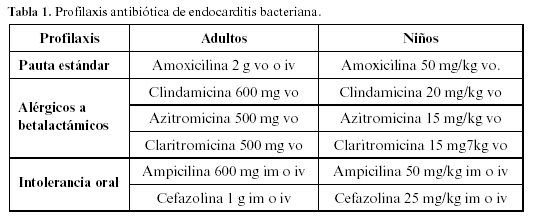
<body><![CDATA[<P><font face="Verdana" size="2">La duraci&oacute;n del tratamiento no est&aacute; estandarizada quedando en muchos casos a criterio del cirujano. La antibioterapia postoperatoria suele mantenerse hasta la retirada de los drenajes, si bien se prolonga en casos de infecci&oacute;n de herida quir&uacute;rgica, dehiscencia o f&iacute;stula.</FONT></P>      <P>&nbsp;</P>      <P><B><font face="Verdana">Profilaxis de endocarditis bacteriana</font></B></P>        <P><font face="Verdana" size="2">Se har&aacute; en todo paciente con cardiopat&iacute;a predisponente que vaya a ser sometido a un procedimiento con riesgo de bacteriemia en cirug&iacute;a oral y maxilofacial.</FONT></P>      <P><font face="Verdana" size="2">El antibi&oacute;tico de elecci&oacute;n es la amoxicilina-&aacute;cido clavul&aacute;nico. En al&eacute;rgicos, la alternativa es la clindamicina, claritromicina o azitromicina (<a href="#t1">tabla 1</a>).</FONT></P>      <P align="center"><a name="t1"><img border="0" src="/img/revistas/medicorpa/v11n3/16e.ht7.gif" width="538" height="224"></a></P>      <P><font face="Verdana" size="2">Pacientes con cardiopat&iacute;as predisponentes:</FONT></P>      <blockquote>      <P><font face="Verdana" size="2">1. De alto riesgo: pr&oacute;tesis endovascular, endocarditis previa, cardiopat&iacute;a cong&eacute;nita cian&oacute;gena compleja o f&iacute;stulas sist&eacute;mico-pulmonares realizadas quir&uacute;rgicamente</FONT></P>      <P><font face="Verdana" size="2">2. De riesgo moderado: otras cardiopat&iacute;as cong&eacute;nitas, valvulopat&iacute;as adquiridas, prolapso mitral con insuficiencia, miocardiopat&iacute;a hipertr&oacute;fica.</FONT></P>      ]]></body>
<body><![CDATA[<P><font face="Verdana" size="2">3. De bajo riesgo: CIA ostium secundum, CIA o CIV intervenidos, by-pass previo, prolapso mitral sin regurgitaci&oacute;n, marcapasos.</FONT></P>  </blockquote>      <P><font face="Verdana" size="2">Requieren profilaxis antibi&oacute;tica los pacientes de alto riesgo y riesgo moderado que vayan a ser intervenidos en el &aacute;mbito maxilofacial usando como pautas antibióticas 1 hora antes vía oral o 30 minutos antes vía intravenosa.</FONT></P>      <P>&nbsp;</P>      <P><B><font face="Verdana">Bibliografía</font></B></P>      <!-- ref --><P><font face="Verdana" size="2">1. Schuit KE, Johnson JT. Infections of the head and neck. Pediatr Clin North Am 1981;28:965-71.</FONT>&nbsp;&nbsp;&nbsp;&nbsp;&nbsp;&nbsp;&nbsp;&nbsp;[&#160;<a href="javascript:void(0);" onclick="javascript: window.open('/scielo.php?script=sci_nlinks&ref=2949963&pid=S1698-6946200600030001600001&lng=','','width=640,height=500,resizable=yes,scrollbars=1,menubar=yes,');">Links</a>&#160;]<!-- end-ref --><!-- ref --><P><font face="Verdana" size="2">2. Takai S, Kuriyama T, Yanagisawa M, Nakagawa K, Karasawa T. Incidence and bacteriology of bacteremia associated with various oral and maxillofacial surgical procedures. Oral Surg Oral Med Oral Pathol Oral Radiol Endod 2005;99:292-8.</FONT>&nbsp;&nbsp;&nbsp;&nbsp;&nbsp;&nbsp;&nbsp;&nbsp;[&#160;<a href="javascript:void(0);" onclick="javascript: window.open('/scielo.php?script=sci_nlinks&ref=2949964&pid=S1698-6946200600030001600002&lng=','','width=640,height=500,resizable=yes,scrollbars=1,menubar=yes,');">Links</a>&#160;]<!-- end-ref --><!-- ref --><P><font face="Verdana" size="2">3. Coskun H, Erisen L, Basut O. factors affecting wound infection rates in head and neck surgery., Otolaryngol Head Neck Surg 2000;123:328-33.</FONT>&nbsp;&nbsp;&nbsp;&nbsp;&nbsp;&nbsp;&nbsp;&nbsp;[&#160;<a href="javascript:void(0);" onclick="javascript: window.open('/scielo.php?script=sci_nlinks&ref=2949965&pid=S1698-6946200600030001600003&lng=','','width=640,height=500,resizable=yes,scrollbars=1,menubar=yes,');">Links</a>&#160;]<!-- end-ref --><!-- ref --><P><font face="Verdana" size="2">4. Girod DA, McCulloch TM, Tsue TT, Weymuller EA, Jr. Risk factors of complications in clean-contaminated head and neck surgical procedures. Head Neck 1995;17:7-13.</FONT>&nbsp;&nbsp;&nbsp;&nbsp;&nbsp;&nbsp;&nbsp;&nbsp;[&#160;<a href="javascript:void(0);" onclick="javascript: window.open('/scielo.php?script=sci_nlinks&ref=2949966&pid=S1698-6946200600030001600004&lng=','','width=640,height=500,resizable=yes,scrollbars=1,menubar=yes,');">Links</a>&#160;]<!-- end-ref --><!-- ref --><P><font face="Verdana" size="2">5. Hotz G, Novotny-Lenhard J, Kinzig M, Soergel F. Single-dose antibiotic prophylaxis in maxillofacial surgery. Chemotherapy 1994;40:65-9.</FONT>&nbsp;&nbsp;&nbsp;&nbsp;&nbsp;&nbsp;&nbsp;&nbsp;[&#160;<a href="javascript:void(0);" onclick="javascript: window.open('/scielo.php?script=sci_nlinks&ref=2949967&pid=S1698-6946200600030001600005&lng=','','width=640,height=500,resizable=yes,scrollbars=1,menubar=yes,');">Links</a>&#160;]<!-- end-ref --><!-- ref --><P><font face="Verdana" size="2">6. Grassi RF, Pappalardo S, De Benedittis M, Petruzzi M, Giannetti L, Cappello V, Baglio OA. Drugs in oral surgery. Brief guidelines for adult patients. Minerva Stomatol 2004;53:337-44. Review.</FONT>&nbsp;&nbsp;&nbsp;&nbsp;&nbsp;&nbsp;&nbsp;&nbsp;[&#160;<a href="javascript:void(0);" onclick="javascript: window.open('/scielo.php?script=sci_nlinks&ref=2949968&pid=S1698-6946200600030001600006&lng=','','width=640,height=500,resizable=yes,scrollbars=1,menubar=yes,');">Links</a>&#160;]<!-- end-ref --><!-- ref --><P><font face="Verdana" size="2">7. Mueller SC, Henkel KO, Neumann J, Hehl EM, Gundlach KK, Drewelow B. Perioperative antibiotic prophylaxis in maxillofacial surgery: penetration of clindamycin into various tissues. J Craniomaxillofac Surg 1999;27:172-6.</FONT>&nbsp;&nbsp;&nbsp;&nbsp;&nbsp;&nbsp;&nbsp;&nbsp;[&#160;<a href="javascript:void(0);" onclick="javascript: window.open('/scielo.php?script=sci_nlinks&ref=2949969&pid=S1698-6946200600030001600007&lng=','','width=640,height=500,resizable=yes,scrollbars=1,menubar=yes,');">Links</a>&#160;]<!-- end-ref --><!-- ref --><P><font face="Verdana" size="2">8. Peterson L. Antibiotic prophylaxis against wound infections in oral and maxillofacial surgery. J Oral Maxillofac Surg 1990;48:617-20.</FONT>&nbsp;&nbsp;&nbsp;&nbsp;&nbsp;&nbsp;&nbsp;&nbsp;[&#160;<a href="javascript:void(0);" onclick="javascript: window.open('/scielo.php?script=sci_nlinks&ref=2949970&pid=S1698-6946200600030001600008&lng=','','width=640,height=500,resizable=yes,scrollbars=1,menubar=yes,');">Links</a>&#160;]<!-- end-ref --><!-- ref --><P><font face="Verdana" size="2">9. Paterson JA, Cardo VA Jr, Stratigos GT. An examination of antibiotic prophylaxis in oral and maxillofacial surgery. J Oral Surg. 1970;28:753-9</FONT>&nbsp;&nbsp;&nbsp;&nbsp;&nbsp;&nbsp;&nbsp;&nbsp;[&#160;<a href="javascript:void(0);" onclick="javascript: window.open('/scielo.php?script=sci_nlinks&ref=2949971&pid=S1698-6946200600030001600009&lng=','','width=640,height=500,resizable=yes,scrollbars=1,menubar=yes,');">Links</a>&#160;]<!-- end-ref --><!-- ref --><P><font face="Verdana" size="2">10. Weed HG. Antimicrobial prophylaxis in the surgical patient. Med Clin North Am 2003;87:59-75.</FONT>&nbsp;&nbsp;&nbsp;&nbsp;&nbsp;&nbsp;&nbsp;&nbsp;[&#160;<a href="javascript:void(0);" onclick="javascript: window.open('/scielo.php?script=sci_nlinks&ref=2949972&pid=S1698-6946200600030001600010&lng=','','width=640,height=500,resizable=yes,scrollbars=1,menubar=yes,');">Links</a>&#160;]<!-- end-ref --><!-- ref --><P><font face="Verdana" size="2">11. Finegold SM, Wexler HM. Present studies of therapy for anaerobic infections. Clin Infect Dis 1996;23:9-14.</FONT>&nbsp;&nbsp;&nbsp;&nbsp;&nbsp;&nbsp;&nbsp;&nbsp;[&#160;<a href="javascript:void(0);" onclick="javascript: window.open('/scielo.php?script=sci_nlinks&ref=2949973&pid=S1698-6946200600030001600011&lng=','','width=640,height=500,resizable=yes,scrollbars=1,menubar=yes,');">Links</a>&#160;]<!-- end-ref --><!-- ref --><P><font face="Verdana" size="2">12. Lazzarini L, Brunello M, Padula E, de Lalla F. Prophylaxis with cefazolin plus clindamycin in clean-contaminated maxillofacial surgery. J Oral Maxillofac Surg 2004;62:567-70.</FONT>&nbsp;&nbsp;&nbsp;&nbsp;&nbsp;&nbsp;&nbsp;&nbsp;[&#160;<a href="javascript:void(0);" onclick="javascript: window.open('/scielo.php?script=sci_nlinks&ref=2949974&pid=S1698-6946200600030001600012&lng=','','width=640,height=500,resizable=yes,scrollbars=1,menubar=yes,');">Links</a>&#160;]<!-- end-ref --><!-- ref --><P><font face="Verdana" size="2">13. Ball P, Geddes A, Rolinson G. Amoxycillin clavulanate: an assessment after 15 years of clinical application. J Chemother 1997;9:167-98.</FONT>&nbsp;&nbsp;&nbsp;&nbsp;&nbsp;&nbsp;&nbsp;&nbsp;[&#160;<a href="javascript:void(0);" onclick="javascript: window.open('/scielo.php?script=sci_nlinks&ref=2949975&pid=S1698-6946200600030001600013&lng=','','width=640,height=500,resizable=yes,scrollbars=1,menubar=yes,');">Links</a>&#160;]<!-- end-ref --><!-- ref --><P><font face="Verdana" size="2">14. Alfter G, Schwenzer N, Friess D, Mohrle E. Perioperative antibiotic prophylaxis with cefuroxime in oral-maxillofacial surgical procedures. J Craniomaxillofac Surg 1995;23:38-41.</FONT>&nbsp;&nbsp;&nbsp;&nbsp;&nbsp;&nbsp;&nbsp;&nbsp;[&#160;<a href="javascript:void(0);" onclick="javascript: window.open('/scielo.php?script=sci_nlinks&ref=2949976&pid=S1698-6946200600030001600014&lng=','','width=640,height=500,resizable=yes,scrollbars=1,menubar=yes,');">Links</a>&#160;]<!-- end-ref --><!-- ref --><P><font face="Verdana" size="2">15. Summers AN, Larson DL, Edmiston CE, Gosain AK, Denny AD, Radke L. Efficacy of preoperative decontamination of the oral cavity. Plast Reconstr Surg 2000;106:895-900.</FONT>&nbsp;&nbsp;&nbsp;&nbsp;&nbsp;&nbsp;&nbsp;&nbsp;[&#160;<a href="javascript:void(0);" onclick="javascript: window.open('/scielo.php?script=sci_nlinks&ref=2949977&pid=S1698-6946200600030001600015&lng=','','width=640,height=500,resizable=yes,scrollbars=1,menubar=yes,');">Links</a>&#160;]<!-- end-ref --><!-- ref --><P><font face="Verdana" size="2">16. Rikhotso E, Ferretti C. Prophylactic antibiotic use in oral surgery--a review of current concepts. SADJ 2002;57:408-13. Review.</FONT>&nbsp;&nbsp;&nbsp;&nbsp;&nbsp;&nbsp;&nbsp;&nbsp;[&#160;<a href="javascript:void(0);" onclick="javascript: window.open('/scielo.php?script=sci_nlinks&ref=2949978&pid=S1698-6946200600030001600016&lng=','','width=640,height=500,resizable=yes,scrollbars=1,menubar=yes,');">Links</a>&#160;]<!-- end-ref --><!-- ref --><P><font face="Verdana" size="2">17. Mart&iacute;nez lacasa J, J&iacute;menez J, Ferr&agrave;s V, Garc&iacute;a-Rey C, Bosom M, Sol&agrave;-Morales Aguilar L, Garau1a J. Double Blind, Placebo-Controlled, Randomised, Comparative Phase III Clinical Trial o fPharmacokinetically Enhanced Amoxicillin/Clavulanate 2000/125, as Prophylaxis or as Treatment vs Placebo for Infectious and Inflammatory Morbidity after Third Mandibular MolarRemoval (TMR). Abstrac. 43rd Annual ICAAC Chicago. September 2003.</FONT>&nbsp;&nbsp;&nbsp;&nbsp;&nbsp;&nbsp;&nbsp;&nbsp;[&#160;<a href="javascript:void(0);" onclick="javascript: window.open('/scielo.php?script=sci_nlinks&ref=2949979&pid=S1698-6946200600030001600017&lng=','','width=640,height=500,resizable=yes,scrollbars=1,menubar=yes,');">Links</a>&#160;]<!-- end-ref --><!-- ref --><P><font face="Verdana" size="2">18. Maloney PL, Lincoln RE, Coyne CP. A protocol for the management of compound mandibular fractures based on the time from injury to treatment. J Oral Maxillofac Surg 2001;59:879-84.</FONT>&nbsp;&nbsp;&nbsp;&nbsp;&nbsp;&nbsp;&nbsp;&nbsp;[&#160;<a href="javascript:void(0);" onclick="javascript: window.open('/scielo.php?script=sci_nlinks&ref=2949980&pid=S1698-6946200600030001600018&lng=','','width=640,height=500,resizable=yes,scrollbars=1,menubar=yes,');">Links</a>&#160;]<!-- end-ref --><!-- ref --><P><font face="Verdana" size="2">19. Abubaker AO, Rollert MK. Postoperative antibiotic prophylaxis in mandibular fractures: A preliminary randomized, double-blind, and placebo-controlled clinical study. J Oral Maxillofac Surg 2001;59:1415-9.</FONT>&nbsp;&nbsp;&nbsp;&nbsp;&nbsp;&nbsp;&nbsp;&nbsp;[&#160;<a href="javascript:void(0);" onclick="javascript: window.open('/scielo.php?script=sci_nlinks&ref=2949981&pid=S1698-6946200600030001600019&lng=','','width=640,height=500,resizable=yes,scrollbars=1,menubar=yes,');">Links</a>&#160;]<!-- end-ref --><!-- ref --><P><font face="Verdana" size="2">20. Andreasen JO, Andreasen FM, Mejare I, Cvek M. Healing of 400 intra-alveolar root fractures. 2. Effect of treatment factors such as treatment delay, repositioning, splinting type and period and antibiotics. Dent Traumatol 2004;20:203-11.</FONT>&nbsp;&nbsp;&nbsp;&nbsp;&nbsp;&nbsp;&nbsp;&nbsp;[&#160;<a href="javascript:void(0);" onclick="javascript: window.open('/scielo.php?script=sci_nlinks&ref=2949982&pid=S1698-6946200600030001600020&lng=','','width=640,height=500,resizable=yes,scrollbars=1,menubar=yes,');">Links</a>&#160;]<!-- end-ref --><!-- ref --><P><font face="Verdana" size="2">21. Ghazal G, Jaquiery C, Hammer B. Non-surgical treatment of mandibular fractures--survey of 28 patients. Int J Oral Maxillofac Surg. 2004;33:141-5.</FONT>&nbsp;&nbsp;&nbsp;&nbsp;&nbsp;&nbsp;&nbsp;&nbsp;[&#160;<a href="javascript:void(0);" onclick="javascript: window.open('/scielo.php?script=sci_nlinks&ref=2949983&pid=S1698-6946200600030001600021&lng=','','width=640,height=500,resizable=yes,scrollbars=1,menubar=yes,');">Links</a>&#160;]<!-- end-ref --><!-- ref --><P><font face="Verdana" size="2">22. Heit JM, Stevens MR, Jeffords K. Comparison of ceftriaxone with penicillin for antibiotic prophylaxis for compound mandible fractures. Oral Surg Oral Med Oral Pathol Oral Radiol Endod 1997;83:423-6.</FONT>&nbsp;&nbsp;&nbsp;&nbsp;&nbsp;&nbsp;&nbsp;&nbsp;[&#160;<a href="javascript:void(0);" onclick="javascript: window.open('/scielo.php?script=sci_nlinks&ref=2949984&pid=S1698-6946200600030001600022&lng=','','width=640,height=500,resizable=yes,scrollbars=1,menubar=yes,');">Links</a>&#160;]<!-- end-ref --><!-- ref --><P><font face="Verdana" size="2">23. Bruno JR, Kempers KG, Silverstein K. Treatment of traumatic mandibular nonunion. J Craniomaxillofac Trauma 1999;5:27-32.</FONT>&nbsp;&nbsp;&nbsp;&nbsp;&nbsp;&nbsp;&nbsp;&nbsp;[&#160;<a href="javascript:void(0);" onclick="javascript: window.open('/scielo.php?script=sci_nlinks&ref=2949985&pid=S1698-6946200600030001600023&lng=','','width=640,height=500,resizable=yes,scrollbars=1,menubar=yes,');">Links</a>&#160;]<!-- end-ref --><!-- ref --><P><font face="Verdana" size="2">24. Dhariwal DK, Gibbons AJ, Murphy M, Llewelyn J, Gregory MC. A two year review of the treatment and complications of mandibular angle fractures. J R Army Med Corps. 2002;148:115-7.</FONT>&nbsp;&nbsp;&nbsp;&nbsp;&nbsp;&nbsp;&nbsp;&nbsp;[&#160;<a href="javascript:void(0);" onclick="javascript: window.open('/scielo.php?script=sci_nlinks&ref=2949986&pid=S1698-6946200600030001600024&lng=','','width=640,height=500,resizable=yes,scrollbars=1,menubar=yes,');">Links</a>&#160;]<!-- end-ref --><!-- ref --><P><font face="Verdana" size="2">25. Teenier TJ, Smith BR. Management of complications associated with mandible fracture treatment. Atlas Oral Maxillofac Surg Clin North Am. 1997;5:181-209.</FONT>&nbsp;&nbsp;&nbsp;&nbsp;&nbsp;&nbsp;&nbsp;&nbsp;[&#160;<a href="javascript:void(0);" onclick="javascript: window.open('/scielo.php?script=sci_nlinks&ref=2949987&pid=S1698-6946200600030001600025&lng=','','width=640,height=500,resizable=yes,scrollbars=1,menubar=yes,');">Links</a>&#160;]<!-- end-ref --><!-- ref --><P><font face="Verdana" size="2">26. Courtney DJ, Thomas S, Whitfield PH. Isolated orbital blowout fractures: survey and review. Br J Oral Maxillofac Surg 2000;38:496-504.</FONT>&nbsp;&nbsp;&nbsp;&nbsp;&nbsp;&nbsp;&nbsp;&nbsp;[&#160;<a href="javascript:void(0);" onclick="javascript: window.open('/scielo.php?script=sci_nlinks&ref=2949988&pid=S1698-6946200600030001600026&lng=','','width=640,height=500,resizable=yes,scrollbars=1,menubar=yes,');">Links</a>&#160;]<!-- end-ref --><!-- ref --><P><font face="Verdana" size="2">27. Torrielli F, Camurati R, Cervar MF, Tel A. Fractures with loss of substance of the middle and upper third of the face: nosographic classification, surgical indications and the prevention of meningeal infections with the new antibiotic, cefuroxime. Minerva Stomatol 1980;29:163-82.</FONT>&nbsp;&nbsp;&nbsp;&nbsp;&nbsp;&nbsp;&nbsp;&nbsp;[&#160;<a href="javascript:void(0);" onclick="javascript: window.open('/scielo.php?script=sci_nlinks&ref=2949989&pid=S1698-6946200600030001600027&lng=','','width=640,height=500,resizable=yes,scrollbars=1,menubar=yes,');">Links</a>&#160;]<!-- end-ref --><!-- ref --><P><font face="Verdana" size="2">28. Baqain ZH, Hyde N, Patrikidou A, Harris M. Antibiotic prophylaxis for orthognathic surgery: a prospective, randomised clinical trial. Br J Oral Maxillofac Surg 2004;42:506-10.</FONT>&nbsp;&nbsp;&nbsp;&nbsp;&nbsp;&nbsp;&nbsp;&nbsp;[&#160;<a href="javascript:void(0);" onclick="javascript: window.open('/scielo.php?script=sci_nlinks&ref=2949990&pid=S1698-6946200600030001600028&lng=','','width=640,height=500,resizable=yes,scrollbars=1,menubar=yes,');">Links</a>&#160;]<!-- end-ref --><!-- ref --><P><font face="Verdana" size="2">29. Heit JM, Farhood VW, Edwards RC. Survey of antibiotic prophylaxis for intraoral orthognathic surgery. J Oral Maxillofac Surg 1991;49:340-2.</FONT>&nbsp;&nbsp;&nbsp;&nbsp;&nbsp;&nbsp;&nbsp;&nbsp;[&#160;<a href="javascript:void(0);" onclick="javascript: window.open('/scielo.php?script=sci_nlinks&ref=2949991&pid=S1698-6946200600030001600029&lng=','','width=640,height=500,resizable=yes,scrollbars=1,menubar=yes,');">Links</a>&#160;]<!-- end-ref --><!-- ref --><P><font face="Verdana" size="2">30. Zijderveld SA, Smeele LE, Kostense PJ, Tuinzing DB. Preoperative antibiotic prophylaxis in orthognathic surgery: a randomized, double-blind, and placebo-controlled clinical study. J Oral Maxillofac Surg 1999;57:1403-6</FONT>&nbsp;&nbsp;&nbsp;&nbsp;&nbsp;&nbsp;&nbsp;&nbsp;[&#160;<a href="javascript:void(0);" onclick="javascript: window.open('/scielo.php?script=sci_nlinks&ref=2949992&pid=S1698-6946200600030001600030&lng=','','width=640,height=500,resizable=yes,scrollbars=1,menubar=yes,');">Links</a>&#160;]<!-- end-ref --><!-- ref --><P><font face="Verdana" size="2">31. Spaey YJ, Bettens RM, Mommaerts MY, Adriaens J, Van Landuyt HW, Abeloos JV, De Clercq CA, Lamoral PR, Neyt LF. A prospective study on infectious complications in orthognathic surgery. J Craniomaxillofac Surg 2005;33:24-9.</FONT>&nbsp;&nbsp;&nbsp;&nbsp;&nbsp;&nbsp;&nbsp;&nbsp;[&#160;<a href="javascript:void(0);" onclick="javascript: window.open('/scielo.php?script=sci_nlinks&ref=2949993&pid=S1698-6946200600030001600031&lng=','','width=640,height=500,resizable=yes,scrollbars=1,menubar=yes,');">Links</a>&#160;]<!-- end-ref --><!-- ref --><P><font face="Verdana" size="2">32. Yoda T, Sakai E, Harada K, Mori M, Sakamoto I, Enomoto S. A randomized prospective study of oral versus intravenous antibiotic prophylaxis against postoperative infection after sagittal split ramus osteotomy of the mandible. Chemotherapy 2000;46:438-44.</FONT>&nbsp;&nbsp;&nbsp;&nbsp;&nbsp;&nbsp;&nbsp;&nbsp;[&#160;<a href="javascript:void(0);" onclick="javascript: window.open('/scielo.php?script=sci_nlinks&ref=2949994&pid=S1698-6946200600030001600032&lng=','','width=640,height=500,resizable=yes,scrollbars=1,menubar=yes,');">Links</a>&#160;]<!-- end-ref --><!-- ref --><P><font face="Verdana" size="2">33. Bentley KC, Head TW, Aiello GA. Antibiotic prophylaxis in orthognathic surgery: a 1-day versus 5-day regimen. J Oral Maxillofac Surg 1999;57:226-30.</FONT>&nbsp;&nbsp;&nbsp;&nbsp;&nbsp;&nbsp;&nbsp;&nbsp;[&#160;<a href="javascript:void(0);" onclick="javascript: window.open('/scielo.php?script=sci_nlinks&ref=2949995&pid=S1698-6946200600030001600033&lng=','','width=640,height=500,resizable=yes,scrollbars=1,menubar=yes,');">Links</a>&#160;]<!-- end-ref --><!-- ref --><P><font face="Verdana" size="2">34. Johnson JT, Wagner RL. Infection following uncontaminated head and neck surgery. Arch Otolaryngol Head Neck Surg 1987;113:368-9.</FONT>&nbsp;&nbsp;&nbsp;&nbsp;&nbsp;&nbsp;&nbsp;&nbsp;[&#160;<a href="javascript:void(0);" onclick="javascript: window.open('/scielo.php?script=sci_nlinks&ref=2949996&pid=S1698-6946200600030001600034&lng=','','width=640,height=500,resizable=yes,scrollbars=1,menubar=yes,');">Links</a>&#160;]<!-- end-ref --><!-- ref --><P><font face="Verdana" size="2">35. Callender DL. Antibiotic prophylaxis in head and neck oncologic surgery: the role of gram-negative coverage. Int J Antimicrob Agents 1999;12:21-5;26-7.</FONT>&nbsp;&nbsp;&nbsp;&nbsp;&nbsp;&nbsp;&nbsp;&nbsp;[&#160;<a href="javascript:void(0);" onclick="javascript: window.open('/scielo.php?script=sci_nlinks&ref=2949997&pid=S1698-6946200600030001600035&lng=','','width=640,height=500,resizable=yes,scrollbars=1,menubar=yes,');">Links</a>&#160;]<!-- end-ref --><P>&nbsp;</P>      ]]></body>
<body><![CDATA[<P>&nbsp;</P>      <P><b><font face="Verdana" size="-1"><a name="back" href="#top"><img border="0" src="/img/revistas/medicorpa/v11n3/seta.gif" width="15" height="17"></a>  Dirección para  correspondencia</font></b><font face="Verdana" size="2">    <br> Dr. Jose Ignacio Salmer&oacute;n    <br> C/Rodr&iacute;guez Mar&iacute;n 71    <br> 28016 Madrid    <br> E-mail: <a href="mailto:jisalmeron@telefonica.net">jisalmeron@telefonica.net</a></FONT></P>      <P><font face="Verdana" size="2">Recibido: 17-12-2005    <br> Aceptado: 5-04-2006</FONT></P>       ]]></body><back>
<ref-list>
<ref id="B1">
<label>1</label><nlm-citation citation-type="journal">
<person-group person-group-type="author">
<name>
<surname><![CDATA[Schuit]]></surname>
<given-names><![CDATA[KE]]></given-names>
</name>
<name>
<surname><![CDATA[Johnson]]></surname>
<given-names><![CDATA[JT]]></given-names>
</name>
</person-group>
<article-title xml:lang="en"><![CDATA[Infections of the head and neck]]></article-title>
<source><![CDATA[Pediatr Clin North Am]]></source>
<year>1981</year>
<volume>28</volume>
<page-range>965-71</page-range></nlm-citation>
</ref>
<ref id="B2">
<label>2</label><nlm-citation citation-type="journal">
<person-group person-group-type="author">
<name>
<surname><![CDATA[Takai]]></surname>
<given-names><![CDATA[S]]></given-names>
</name>
<name>
<surname><![CDATA[Kuriyama]]></surname>
<given-names><![CDATA[T]]></given-names>
</name>
<name>
<surname><![CDATA[Yanagisawa]]></surname>
<given-names><![CDATA[M]]></given-names>
</name>
<name>
<surname><![CDATA[Nakagawa]]></surname>
<given-names><![CDATA[K]]></given-names>
</name>
<name>
<surname><![CDATA[Karasawa]]></surname>
<given-names><![CDATA[T]]></given-names>
</name>
</person-group>
<article-title xml:lang="en"><![CDATA[Incidence and bacteriology of bacteremia associated with various oral and maxillofacial surgical procedures]]></article-title>
<source><![CDATA[Oral Surg Oral Med Oral Pathol Oral Radiol Endod]]></source>
<year>2005</year>
<volume>99</volume>
<page-range>292-8</page-range></nlm-citation>
</ref>
<ref id="B3">
<label>3</label><nlm-citation citation-type="journal">
<person-group person-group-type="author">
<name>
<surname><![CDATA[Coskun]]></surname>
<given-names><![CDATA[H]]></given-names>
</name>
<name>
<surname><![CDATA[Erisen]]></surname>
<given-names><![CDATA[L]]></given-names>
</name>
<name>
<surname><![CDATA[Basut]]></surname>
<given-names><![CDATA[O]]></given-names>
</name>
</person-group>
<article-title xml:lang="en"><![CDATA[factors affecting wound infection rates in head and neck surgery]]></article-title>
<source><![CDATA[,Otolaryngol Head Neck Surg]]></source>
<year>2000</year>
<volume>123</volume>
<page-range>328-33</page-range></nlm-citation>
</ref>
<ref id="B4">
<label>4</label><nlm-citation citation-type="journal">
<person-group person-group-type="author">
<name>
<surname><![CDATA[Girod]]></surname>
<given-names><![CDATA[DA]]></given-names>
</name>
<name>
<surname><![CDATA[McCulloch]]></surname>
<given-names><![CDATA[TM]]></given-names>
</name>
<name>
<surname><![CDATA[Tsue]]></surname>
<given-names><![CDATA[TT]]></given-names>
</name>
<name>
<surname><![CDATA[Weymuller]]></surname>
<given-names><![CDATA[EA, Jr]]></given-names>
</name>
</person-group>
<article-title xml:lang="en"><![CDATA[Risk factors of complications in clean-contaminated head and neck surgical procedures]]></article-title>
<source><![CDATA[Head Neck]]></source>
<year>1995</year>
<volume>17</volume>
<page-range>7-13</page-range></nlm-citation>
</ref>
<ref id="B5">
<label>5</label><nlm-citation citation-type="journal">
<person-group person-group-type="author">
<name>
<surname><![CDATA[Hotz]]></surname>
<given-names><![CDATA[G]]></given-names>
</name>
<name>
<surname><![CDATA[Novotny-Lenhard]]></surname>
<given-names><![CDATA[J]]></given-names>
</name>
<name>
<surname><![CDATA[Kinzig]]></surname>
<given-names><![CDATA[M]]></given-names>
</name>
<name>
<surname><![CDATA[Soergel]]></surname>
<given-names><![CDATA[F]]></given-names>
</name>
</person-group>
<article-title xml:lang="en"><![CDATA[Single-dose antibiotic prophylaxis in maxillofacial surgery]]></article-title>
<source><![CDATA[Chemotherapy]]></source>
<year>1994</year>
<volume>40</volume>
<page-range>65-9</page-range></nlm-citation>
</ref>
<ref id="B6">
<label>6</label><nlm-citation citation-type="journal">
<person-group person-group-type="author">
<name>
<surname><![CDATA[Grassi]]></surname>
<given-names><![CDATA[RF]]></given-names>
</name>
<name>
<surname><![CDATA[Pappalardo]]></surname>
<given-names><![CDATA[S]]></given-names>
</name>
<name>
<surname><![CDATA[De Benedittis]]></surname>
<given-names><![CDATA[M]]></given-names>
</name>
<name>
<surname><![CDATA[Petruzzi]]></surname>
<given-names><![CDATA[M]]></given-names>
</name>
<name>
<surname><![CDATA[Giannetti]]></surname>
<given-names><![CDATA[L]]></given-names>
</name>
<name>
<surname><![CDATA[Cappello]]></surname>
<given-names><![CDATA[V]]></given-names>
</name>
<name>
<surname><![CDATA[Baglio]]></surname>
<given-names><![CDATA[OA]]></given-names>
</name>
</person-group>
<article-title xml:lang="en"><![CDATA[Drugs in oral surgery: Brief guidelines for adult patients]]></article-title>
<source><![CDATA[Minerva Stomatol]]></source>
<year>2004</year>
<volume>53</volume>
<page-range>337-44</page-range></nlm-citation>
</ref>
<ref id="B7">
<label>7</label><nlm-citation citation-type="journal">
<person-group person-group-type="author">
<name>
<surname><![CDATA[Mueller]]></surname>
<given-names><![CDATA[SC]]></given-names>
</name>
<name>
<surname><![CDATA[Henkel]]></surname>
<given-names><![CDATA[KO]]></given-names>
</name>
<name>
<surname><![CDATA[Neumann]]></surname>
<given-names><![CDATA[J]]></given-names>
</name>
<name>
<surname><![CDATA[Hehl]]></surname>
<given-names><![CDATA[EM]]></given-names>
</name>
<name>
<surname><![CDATA[Gundlach]]></surname>
<given-names><![CDATA[KK]]></given-names>
</name>
<name>
<surname><![CDATA[Drewelow]]></surname>
<given-names><![CDATA[B]]></given-names>
</name>
</person-group>
<article-title xml:lang="en"><![CDATA[Perioperative antibiotic prophylaxis in maxillofacial surgery: penetration of clindamycin into various tissues]]></article-title>
<source><![CDATA[J Craniomaxillofac Surg]]></source>
<year>1999</year>
<volume>27</volume>
<page-range>172-6</page-range></nlm-citation>
</ref>
<ref id="B8">
<label>8</label><nlm-citation citation-type="journal">
<person-group person-group-type="author">
<name>
<surname><![CDATA[Peterson]]></surname>
<given-names><![CDATA[L]]></given-names>
</name>
</person-group>
<article-title xml:lang="en"><![CDATA[Antibiotic prophylaxis against wound infections in oral and maxillofacial surgery]]></article-title>
<source><![CDATA[J Oral Maxillofac Surg]]></source>
<year>1990</year>
<volume>48</volume>
<page-range>617-20</page-range></nlm-citation>
</ref>
<ref id="B9">
<label>9</label><nlm-citation citation-type="journal">
<person-group person-group-type="author">
<name>
<surname><![CDATA[Paterson]]></surname>
<given-names><![CDATA[JA]]></given-names>
</name>
<name>
<surname><![CDATA[Cardo]]></surname>
<given-names><![CDATA[VA Jr]]></given-names>
</name>
<name>
<surname><![CDATA[Stratigos]]></surname>
<given-names><![CDATA[GT]]></given-names>
</name>
</person-group>
<article-title xml:lang="en"><![CDATA[An examination of antibiotic prophylaxis in oral and maxillofacial surgery]]></article-title>
<source><![CDATA[J Oral Surg.]]></source>
<year>1970</year>
<volume>28</volume>
<page-range>753-9</page-range></nlm-citation>
</ref>
<ref id="B10">
<label>10</label><nlm-citation citation-type="journal">
<person-group person-group-type="author">
<name>
<surname><![CDATA[Weed]]></surname>
<given-names><![CDATA[HG]]></given-names>
</name>
</person-group>
<article-title xml:lang="en"><![CDATA[Antimicrobial prophylaxis in the surgical patient]]></article-title>
<source><![CDATA[Med Clin North Am]]></source>
<year>2003</year>
<volume>87</volume>
<page-range>59-75</page-range></nlm-citation>
</ref>
<ref id="B11">
<label>11</label><nlm-citation citation-type="journal">
<person-group person-group-type="author">
<name>
<surname><![CDATA[Finegold]]></surname>
<given-names><![CDATA[SM]]></given-names>
</name>
<name>
<surname><![CDATA[Wexler]]></surname>
<given-names><![CDATA[HM]]></given-names>
</name>
</person-group>
<article-title xml:lang="en"><![CDATA[Present studies of therapy for anaerobic infections]]></article-title>
<source><![CDATA[Clin Infect Dis]]></source>
<year>1996</year>
<volume>23</volume>
<page-range>9-14</page-range></nlm-citation>
</ref>
<ref id="B12">
<label>12</label><nlm-citation citation-type="journal">
<person-group person-group-type="author">
<name>
<surname><![CDATA[Lazzarini]]></surname>
<given-names><![CDATA[L]]></given-names>
</name>
<name>
<surname><![CDATA[Brunello]]></surname>
<given-names><![CDATA[M]]></given-names>
</name>
<name>
<surname><![CDATA[Padula]]></surname>
<given-names><![CDATA[E]]></given-names>
</name>
<name>
<surname><![CDATA[de Lalla]]></surname>
<given-names><![CDATA[F]]></given-names>
</name>
</person-group>
<article-title xml:lang="en"><![CDATA[Prophylaxis with cefazolin plus clindamycin in clean-contaminated maxillofacial surgery]]></article-title>
<source><![CDATA[J Oral Maxillofac Surg]]></source>
<year>2004</year>
<volume>62</volume>
<page-range>567-70</page-range></nlm-citation>
</ref>
<ref id="B13">
<label>13</label><nlm-citation citation-type="journal">
<person-group person-group-type="author">
<name>
<surname><![CDATA[Ball]]></surname>
<given-names><![CDATA[P]]></given-names>
</name>
<name>
<surname><![CDATA[Geddes]]></surname>
<given-names><![CDATA[A]]></given-names>
</name>
<name>
<surname><![CDATA[Rolinson]]></surname>
<given-names><![CDATA[G]]></given-names>
</name>
</person-group>
<article-title xml:lang="en"><![CDATA[Amoxycillin clavulanate: an assessment after 15 years of clinical application]]></article-title>
<source><![CDATA[J Chemother]]></source>
<year>1997</year>
<volume>9</volume>
<page-range>167-98</page-range></nlm-citation>
</ref>
<ref id="B14">
<label>14</label><nlm-citation citation-type="journal">
<person-group person-group-type="author">
<name>
<surname><![CDATA[Alfter]]></surname>
<given-names><![CDATA[G]]></given-names>
</name>
<name>
<surname><![CDATA[Schwenzer]]></surname>
<given-names><![CDATA[N]]></given-names>
</name>
<name>
<surname><![CDATA[Friess]]></surname>
<given-names><![CDATA[D]]></given-names>
</name>
<name>
<surname><![CDATA[Mohrle]]></surname>
<given-names><![CDATA[E]]></given-names>
</name>
</person-group>
<article-title xml:lang="en"><![CDATA[Perioperative antibiotic prophylaxis with cefuroxime in oral-maxillofacial surgical procedures]]></article-title>
<source><![CDATA[J Craniomaxillofac Surg]]></source>
<year>1995</year>
<volume>23</volume>
<page-range>38-41</page-range></nlm-citation>
</ref>
<ref id="B15">
<label>15</label><nlm-citation citation-type="journal">
<person-group person-group-type="author">
<name>
<surname><![CDATA[Summers]]></surname>
<given-names><![CDATA[AN]]></given-names>
</name>
<name>
<surname><![CDATA[Larson]]></surname>
<given-names><![CDATA[DL]]></given-names>
</name>
<name>
<surname><![CDATA[Edmiston]]></surname>
<given-names><![CDATA[CE]]></given-names>
</name>
<name>
<surname><![CDATA[Gosain]]></surname>
<given-names><![CDATA[AK]]></given-names>
</name>
<name>
<surname><![CDATA[Denny]]></surname>
<given-names><![CDATA[AD]]></given-names>
</name>
<name>
<surname><![CDATA[Radke]]></surname>
<given-names><![CDATA[L]]></given-names>
</name>
</person-group>
<article-title xml:lang="en"><![CDATA[Efficacy of preoperative decontamination of the oral cavity]]></article-title>
<source><![CDATA[Plast Reconstr Surg]]></source>
<year>2000</year>
<volume>106</volume>
<page-range>895-900</page-range></nlm-citation>
</ref>
<ref id="B16">
<label>16</label><nlm-citation citation-type="journal">
<person-group person-group-type="author">
<name>
<surname><![CDATA[Rikhotso]]></surname>
<given-names><![CDATA[E]]></given-names>
</name>
<name>
<surname><![CDATA[Ferretti]]></surname>
<given-names><![CDATA[C]]></given-names>
</name>
</person-group>
<article-title xml:lang="en"><![CDATA[Prophylactic antibiotic use in oral surgery: a review of current concepts]]></article-title>
<source><![CDATA[SADJ]]></source>
<year>2002</year>
<volume>57</volume>
<page-range>408-13</page-range></nlm-citation>
</ref>
<ref id="B17">
<label>17</label><nlm-citation citation-type="confpro">
<person-group person-group-type="author">
<name>
<surname><![CDATA[Martínez lacasa]]></surname>
<given-names><![CDATA[J]]></given-names>
</name>
<name>
<surname><![CDATA[Jímenez]]></surname>
<given-names><![CDATA[J]]></given-names>
</name>
<name>
<surname><![CDATA[Ferràs]]></surname>
<given-names><![CDATA[V]]></given-names>
</name>
<name>
<surname><![CDATA[García-Rey]]></surname>
<given-names><![CDATA[C]]></given-names>
</name>
<name>
<surname><![CDATA[Bosom]]></surname>
<given-names><![CDATA[M]]></given-names>
</name>
<name>
<surname><![CDATA[Solà-Morales Aguilar]]></surname>
<given-names><![CDATA[L]]></given-names>
</name>
<name>
<surname><![CDATA[Garau1a]]></surname>
<given-names><![CDATA[J]]></given-names>
</name>
</person-group>
<article-title xml:lang="en"><![CDATA[Double Blind, Placebo-Controlled, Randomised, Comparative Phase III Clinical Trial o fPharmacokinetically Enhanced Amoxicillin/Clavulanate 2000/125, as Prophylaxis or as Treatment vs Placebo for Infectious and Inflammatory Morbidity after Third Mandibular MolarRemoval (TMR)]]></article-title>
<source><![CDATA[]]></source>
<year></year>
<conf-name><![CDATA[43 Annual ICAAC]]></conf-name>
<conf-date>September 2003</conf-date>
<conf-loc>Chicago </conf-loc>
</nlm-citation>
</ref>
<ref id="B18">
<label>18</label><nlm-citation citation-type="journal">
<person-group person-group-type="author">
<name>
<surname><![CDATA[Maloney]]></surname>
<given-names><![CDATA[PL]]></given-names>
</name>
<name>
<surname><![CDATA[Lincoln]]></surname>
<given-names><![CDATA[RE]]></given-names>
</name>
<name>
<surname><![CDATA[Coyne]]></surname>
<given-names><![CDATA[CP]]></given-names>
</name>
</person-group>
<article-title xml:lang="en"><![CDATA[A protocol for the management of compound mandibular fractures based on the time from injury to treatment]]></article-title>
<source><![CDATA[J Oral Maxillofac Surg]]></source>
<year>2001</year>
<volume>59</volume>
<page-range>879-84</page-range></nlm-citation>
</ref>
<ref id="B19">
<label>19</label><nlm-citation citation-type="journal">
<person-group person-group-type="author">
<name>
<surname><![CDATA[Abubaker]]></surname>
<given-names><![CDATA[AO]]></given-names>
</name>
<name>
<surname><![CDATA[Rollert]]></surname>
<given-names><![CDATA[MK]]></given-names>
</name>
</person-group>
<article-title xml:lang="en"><![CDATA[Postoperative antibiotic prophylaxis in mandibular fractures: A preliminary randomized, double-blind, and placebo-controlled clinical study]]></article-title>
<source><![CDATA[J Oral Maxillofac Surg]]></source>
<year>2001</year>
<volume>59</volume>
<page-range>1415-9</page-range></nlm-citation>
</ref>
<ref id="B20">
<label>20</label><nlm-citation citation-type="journal">
<person-group person-group-type="author">
<name>
<surname><![CDATA[Andreasen]]></surname>
<given-names><![CDATA[JO]]></given-names>
</name>
<name>
<surname><![CDATA[Andreasen]]></surname>
<given-names><![CDATA[FM]]></given-names>
</name>
<name>
<surname><![CDATA[Mejare]]></surname>
<given-names><![CDATA[I]]></given-names>
</name>
<name>
<surname><![CDATA[Cvek]]></surname>
<given-names><![CDATA[M]]></given-names>
</name>
</person-group>
<article-title xml:lang="en"><![CDATA[Healing of 400 intra-alveolar root fractures: 2. Effect of treatment factors such as treatment delay, repositioning, splinting type and period and antibiotics]]></article-title>
<source><![CDATA[Dent Traumatol]]></source>
<year>2004</year>
<volume>20</volume>
<page-range>203-11</page-range></nlm-citation>
</ref>
<ref id="B21">
<label>21</label><nlm-citation citation-type="journal">
<person-group person-group-type="author">
<name>
<surname><![CDATA[Ghazal]]></surname>
<given-names><![CDATA[G]]></given-names>
</name>
<name>
<surname><![CDATA[Jaquiery]]></surname>
<given-names><![CDATA[C]]></given-names>
</name>
<name>
<surname><![CDATA[Hammer]]></surname>
<given-names><![CDATA[B]]></given-names>
</name>
</person-group>
<article-title xml:lang="en"><![CDATA[Non-surgical treatment of mandibular fractures: survey of 28 patients]]></article-title>
<source><![CDATA[Int J Oral Maxillofac Surg.]]></source>
<year>2004</year>
<volume>33</volume>
<page-range>141-5</page-range></nlm-citation>
</ref>
<ref id="B22">
<label>22</label><nlm-citation citation-type="journal">
<person-group person-group-type="author">
<name>
<surname><![CDATA[Heit]]></surname>
<given-names><![CDATA[JM]]></given-names>
</name>
<name>
<surname><![CDATA[Stevens]]></surname>
<given-names><![CDATA[MR]]></given-names>
</name>
<name>
<surname><![CDATA[Jeffords]]></surname>
<given-names><![CDATA[K]]></given-names>
</name>
</person-group>
<article-title xml:lang="en"><![CDATA[Comparison of ceftriaxone with penicillin for antibiotic prophylaxis for compound mandible fractures]]></article-title>
<source><![CDATA[Oral Surg Oral Med Oral Pathol Oral Radiol Endod]]></source>
<year>1997</year>
<volume>83</volume>
<page-range>423-6</page-range></nlm-citation>
</ref>
<ref id="B23">
<label>23</label><nlm-citation citation-type="journal">
<person-group person-group-type="author">
<name>
<surname><![CDATA[Bruno]]></surname>
<given-names><![CDATA[JR]]></given-names>
</name>
<name>
<surname><![CDATA[Kempers]]></surname>
<given-names><![CDATA[KG]]></given-names>
</name>
<name>
<surname><![CDATA[Silverstein]]></surname>
<given-names><![CDATA[K]]></given-names>
</name>
</person-group>
<article-title xml:lang="en"><![CDATA[Treatment of traumatic mandibular nonunion]]></article-title>
<source><![CDATA[J Craniomaxillofac Trauma]]></source>
<year>1999</year>
<volume>5</volume>
<page-range>27-32</page-range></nlm-citation>
</ref>
<ref id="B24">
<label>24</label><nlm-citation citation-type="journal">
<person-group person-group-type="author">
<name>
<surname><![CDATA[Dhariwal]]></surname>
<given-names><![CDATA[DK]]></given-names>
</name>
<name>
<surname><![CDATA[Gibbons]]></surname>
<given-names><![CDATA[AJ]]></given-names>
</name>
<name>
<surname><![CDATA[Murphy]]></surname>
<given-names><![CDATA[M]]></given-names>
</name>
<name>
<surname><![CDATA[Llewelyn]]></surname>
<given-names><![CDATA[J]]></given-names>
</name>
<name>
<surname><![CDATA[Gregory]]></surname>
<given-names><![CDATA[MC]]></given-names>
</name>
</person-group>
<article-title xml:lang="en"><![CDATA[A two year review of the treatment and complications of mandibular angle fractures]]></article-title>
<source><![CDATA[J R Army Med Corps.]]></source>
<year>2002</year>
<volume>148</volume>
<page-range>115-7</page-range></nlm-citation>
</ref>
<ref id="B25">
<label>25</label><nlm-citation citation-type="journal">
<person-group person-group-type="author">
<name>
<surname><![CDATA[Teenier]]></surname>
<given-names><![CDATA[TJ]]></given-names>
</name>
<name>
<surname><![CDATA[Smith]]></surname>
<given-names><![CDATA[BR]]></given-names>
</name>
</person-group>
<article-title xml:lang="en"><![CDATA[Management of complications associated with mandible fracture treatment]]></article-title>
<source><![CDATA[Atlas Oral Maxillofac Surg Clin North Am.]]></source>
<year>1997</year>
<volume>5</volume>
<page-range>181-209</page-range></nlm-citation>
</ref>
<ref id="B26">
<label>26</label><nlm-citation citation-type="journal">
<person-group person-group-type="author">
<name>
<surname><![CDATA[Courtney]]></surname>
<given-names><![CDATA[DJ]]></given-names>
</name>
<name>
<surname><![CDATA[Thomas]]></surname>
<given-names><![CDATA[S]]></given-names>
</name>
<name>
<surname><![CDATA[Whitfield]]></surname>
<given-names><![CDATA[PH]]></given-names>
</name>
</person-group>
<article-title xml:lang="en"><![CDATA[Isolated orbital blowout fractures: survey and review]]></article-title>
<source><![CDATA[Br J Oral Maxillofac Surg]]></source>
<year>2000</year>
<volume>38</volume>
<page-range>496-504</page-range></nlm-citation>
</ref>
<ref id="B27">
<label>27</label><nlm-citation citation-type="journal">
<person-group person-group-type="author">
<name>
<surname><![CDATA[Torrielli]]></surname>
<given-names><![CDATA[F]]></given-names>
</name>
<name>
<surname><![CDATA[Camurati]]></surname>
<given-names><![CDATA[R]]></given-names>
</name>
<name>
<surname><![CDATA[Cervar]]></surname>
<given-names><![CDATA[MF]]></given-names>
</name>
<name>
<surname><![CDATA[Tel]]></surname>
<given-names><![CDATA[A]]></given-names>
</name>
</person-group>
<article-title xml:lang="en"><![CDATA[Fractures with loss of substance of the middle and upper third of the face: nosographic classification, surgical indications and the prevention of meningeal infections with the new antibiotic, cefuroxime]]></article-title>
<source><![CDATA[Minerva Stomatol]]></source>
<year>1980</year>
<volume>29</volume>
<page-range>163-82</page-range></nlm-citation>
</ref>
<ref id="B28">
<label>28</label><nlm-citation citation-type="journal">
<person-group person-group-type="author">
<name>
<surname><![CDATA[Baqain]]></surname>
<given-names><![CDATA[ZH]]></given-names>
</name>
<name>
<surname><![CDATA[Hyde]]></surname>
<given-names><![CDATA[N]]></given-names>
</name>
<name>
<surname><![CDATA[Patrikidou]]></surname>
<given-names><![CDATA[A]]></given-names>
</name>
<name>
<surname><![CDATA[Harris]]></surname>
<given-names><![CDATA[M]]></given-names>
</name>
</person-group>
<article-title xml:lang="en"><![CDATA[Antibiotic prophylaxis for orthognathic surgery: a prospective, randomised clinical trial]]></article-title>
<source><![CDATA[Br J Oral Maxillofac Surg]]></source>
<year>2004</year>
<volume>42</volume>
<page-range>506-10</page-range></nlm-citation>
</ref>
<ref id="B29">
<label>29</label><nlm-citation citation-type="journal">
<person-group person-group-type="author">
<name>
<surname><![CDATA[Heit]]></surname>
<given-names><![CDATA[JM]]></given-names>
</name>
<name>
<surname><![CDATA[Farhood]]></surname>
<given-names><![CDATA[VW]]></given-names>
</name>
<name>
<surname><![CDATA[Edwards]]></surname>
<given-names><![CDATA[RC]]></given-names>
</name>
</person-group>
<article-title xml:lang="en"><![CDATA[Survey of antibiotic prophylaxis for intraoral orthognathic surgery]]></article-title>
<source><![CDATA[J Oral Maxillofac Surg]]></source>
<year>1991</year>
<volume>49</volume>
<page-range>340-2</page-range></nlm-citation>
</ref>
<ref id="B30">
<label>30</label><nlm-citation citation-type="journal">
<person-group person-group-type="author">
<name>
<surname><![CDATA[Zijderveld]]></surname>
<given-names><![CDATA[SA]]></given-names>
</name>
<name>
<surname><![CDATA[Smeele]]></surname>
<given-names><![CDATA[LE]]></given-names>
</name>
<name>
<surname><![CDATA[Kostense]]></surname>
<given-names><![CDATA[PJ]]></given-names>
</name>
<name>
<surname><![CDATA[Tuinzing]]></surname>
<given-names><![CDATA[DB]]></given-names>
</name>
</person-group>
<article-title xml:lang="en"><![CDATA[Preoperative antibiotic prophylaxis in orthognathic surgery: a randomized, double-blind, and placebo-controlled clinical study]]></article-title>
<source><![CDATA[J Oral Maxillofac Surg]]></source>
<year>1999</year>
<volume>57</volume>
<page-range>1403-6</page-range></nlm-citation>
</ref>
<ref id="B31">
<label>31</label><nlm-citation citation-type="journal">
<person-group person-group-type="author">
<name>
<surname><![CDATA[Spaey]]></surname>
<given-names><![CDATA[YJ]]></given-names>
</name>
<name>
<surname><![CDATA[Bettens]]></surname>
<given-names><![CDATA[RM]]></given-names>
</name>
<name>
<surname><![CDATA[Mommaerts]]></surname>
<given-names><![CDATA[MY]]></given-names>
</name>
<name>
<surname><![CDATA[Adriaens]]></surname>
<given-names><![CDATA[J]]></given-names>
</name>
<name>
<surname><![CDATA[Van Landuyt]]></surname>
<given-names><![CDATA[HW]]></given-names>
</name>
<name>
<surname><![CDATA[Abeloos]]></surname>
<given-names><![CDATA[JV]]></given-names>
</name>
<name>
<surname><![CDATA[De Clercq]]></surname>
<given-names><![CDATA[CA]]></given-names>
</name>
<name>
<surname><![CDATA[Lamoral]]></surname>
<given-names><![CDATA[PR]]></given-names>
</name>
<name>
<surname><![CDATA[Neyt]]></surname>
<given-names><![CDATA[LF]]></given-names>
</name>
</person-group>
<article-title xml:lang="en"><![CDATA[A prospective study on infectious complications in orthognathic surgery]]></article-title>
<source><![CDATA[J Craniomaxillofac Surg]]></source>
<year>2005</year>
<volume>33</volume>
<page-range>24-9</page-range></nlm-citation>
</ref>
<ref id="B32">
<label>32</label><nlm-citation citation-type="journal">
<person-group person-group-type="author">
<name>
<surname><![CDATA[Yoda]]></surname>
<given-names><![CDATA[T]]></given-names>
</name>
<name>
<surname><![CDATA[Sakai]]></surname>
<given-names><![CDATA[E]]></given-names>
</name>
<name>
<surname><![CDATA[Harada]]></surname>
<given-names><![CDATA[K]]></given-names>
</name>
<name>
<surname><![CDATA[Mori]]></surname>
<given-names><![CDATA[M]]></given-names>
</name>
<name>
<surname><![CDATA[Sakamoto]]></surname>
<given-names><![CDATA[I]]></given-names>
</name>
<name>
<surname><![CDATA[Enomoto]]></surname>
<given-names><![CDATA[S]]></given-names>
</name>
</person-group>
<article-title xml:lang="en"><![CDATA[A randomized prospective study of oral versus intravenous antibiotic prophylaxis against postoperative infection after sagittal split ramus osteotomy of the mandible]]></article-title>
<source><![CDATA[Chemotherapy]]></source>
<year>2000</year>
<volume>46</volume>
<page-range>438-44</page-range></nlm-citation>
</ref>
<ref id="B33">
<label>33</label><nlm-citation citation-type="journal">
<person-group person-group-type="author">
<name>
<surname><![CDATA[Bentley]]></surname>
<given-names><![CDATA[KC]]></given-names>
</name>
<name>
<surname><![CDATA[Head]]></surname>
<given-names><![CDATA[TW]]></given-names>
</name>
<name>
<surname><![CDATA[Aiello]]></surname>
<given-names><![CDATA[GA]]></given-names>
</name>
</person-group>
<article-title xml:lang="en"><![CDATA[Antibiotic prophylaxis in orthognathic surgery: a 1-day versus 5-day regimen]]></article-title>
<source><![CDATA[J Oral Maxillofac Surg]]></source>
<year>1999</year>
<volume>57</volume>
<page-range>226-30</page-range></nlm-citation>
</ref>
<ref id="B34">
<label>34</label><nlm-citation citation-type="journal">
<person-group person-group-type="author">
<name>
<surname><![CDATA[Johnson]]></surname>
<given-names><![CDATA[JT]]></given-names>
</name>
<name>
<surname><![CDATA[Wagner]]></surname>
<given-names><![CDATA[RL]]></given-names>
</name>
</person-group>
<article-title xml:lang="en"><![CDATA[Infection following uncontaminated head and neck surgery]]></article-title>
<source><![CDATA[Arch Otolaryngol Head Neck Surg]]></source>
<year>1987</year>
<volume>113</volume>
<page-range>368-9</page-range></nlm-citation>
</ref>
<ref id="B35">
<label>35</label><nlm-citation citation-type="journal">
<person-group person-group-type="author">
<name>
<surname><![CDATA[Callender]]></surname>
<given-names><![CDATA[DL]]></given-names>
</name>
</person-group>
<article-title xml:lang="en"><![CDATA[Antibiotic prophylaxis in head and neck oncologic surgery: the role of gram-negative coverage]]></article-title>
<source><![CDATA[Int J Antimicrob Agents]]></source>
<year>1999</year>
<volume>12</volume>
<page-range>21-5;26-7</page-range></nlm-citation>
</ref>
</ref-list>
</back>
</article>
