<?xml version="1.0" encoding="ISO-8859-1"?><article xmlns:mml="http://www.w3.org/1998/Math/MathML" xmlns:xlink="http://www.w3.org/1999/xlink" xmlns:xsi="http://www.w3.org/2001/XMLSchema-instance">
<front>
<journal-meta>
<journal-id>1698-6946</journal-id>
<journal-title><![CDATA[Medicina Oral, Patología Oral y Cirugía Bucal (Internet)]]></journal-title>
<abbrev-journal-title><![CDATA[Med. oral patol. oral cir.bucal (Internet)]]></abbrev-journal-title>
<issn>1698-6946</issn>
<publisher>
<publisher-name><![CDATA[Sociedad Española de Medicina Oral]]></publisher-name>
</publisher>
</journal-meta>
<article-meta>
<article-id>S1698-69462007000300015</article-id>
<title-group>
<article-title xml:lang="en"><![CDATA[Clinical justification of dental radiology in adult patients: A review of the literature]]></article-title>
</title-group>
<contrib-group>
<contrib contrib-type="author">
<name>
<surname><![CDATA[Martínez Beneyto]]></surname>
<given-names><![CDATA[Yolanda]]></given-names>
</name>
<xref ref-type="aff" rid="A01"/>
</contrib>
<contrib contrib-type="author">
<name>
<surname><![CDATA[Alcaráz Baños]]></surname>
<given-names><![CDATA[Miguel]]></given-names>
</name>
<xref ref-type="aff" rid="A01"/>
</contrib>
<contrib contrib-type="author">
<name>
<surname><![CDATA[Pérez Lajarín]]></surname>
<given-names><![CDATA[Leonor]]></given-names>
</name>
<xref ref-type="aff" rid="A01"/>
</contrib>
<contrib contrib-type="author">
<name>
<surname><![CDATA[Rushton]]></surname>
<given-names><![CDATA[Vivian E.]]></given-names>
</name>
<xref ref-type="aff" rid="A02"/>
</contrib>
</contrib-group>
<aff id="A01">
<institution><![CDATA[,Universidad de Murcia  ]]></institution>
<addr-line><![CDATA[Murcia ]]></addr-line>
<country>España</country>
</aff>
<aff id="A02">
<institution><![CDATA[,Universidad de Manchester  ]]></institution>
<addr-line><![CDATA[Manchester ]]></addr-line>
<country>Reino Unido</country>
</aff>
<pub-date pub-type="pub">
<day>00</day>
<month>05</month>
<year>2007</year>
</pub-date>
<pub-date pub-type="epub">
<day>00</day>
<month>05</month>
<year>2007</year>
</pub-date>
<volume>12</volume>
<numero>3</numero>
<fpage>244</fpage>
<lpage>251</lpage>
<copyright-statement/>
<copyright-year/>
<self-uri xlink:href="http://scielo.isciii.es/scielo.php?script=sci_arttext&amp;pid=S1698-69462007000300015&amp;lng=en&amp;nrm=iso"></self-uri><self-uri xlink:href="http://scielo.isciii.es/scielo.php?script=sci_abstract&amp;pid=S1698-69462007000300015&amp;lng=en&amp;nrm=iso"></self-uri><self-uri xlink:href="http://scielo.isciii.es/scielo.php?script=sci_pdf&amp;pid=S1698-69462007000300015&amp;lng=en&amp;nrm=iso"></self-uri><abstract abstract-type="short" xml:lang="en"><p><![CDATA[Although the radiological doses used by dentists are low individually, patients are often exposured to many repeat dental radiographic examinations. The ‘routine’ use of dental radiography, such as screening of all patients using dental panoramic radiography (DPRs) or a random decision to take a dental radiograph, will inevitable lead to unnecessary patient exposure. The use of Radiographic Referral Criteria has now become a legal requirement for all practitioners following the adoption of European Legislation. All exposures to x-rays should be clinically justified and each exposure should be expected to give the patient a positive net benefit. Recently the European Commission has published guidelines (1) on radiation protection in dental radiology. Guidelines have previously been available in a number of European countries (2,3) and also within the United States (4,5). At the present time, no specific guidelines have been published within Spain. The aim of this review article is to provide the Spanish dentist with guidance as to the appropriateness of different radiographic techniques for a variety of clinical conditions and also the frequency with which they should be taken. It is hoped that this document will act as a useful work tool in daily dental practice.]]></p></abstract>
<abstract abstract-type="short" xml:lang="es"><p><![CDATA[Aunque generalmente las dosis de radiación empleadas por los odontoestomatólogos no suelen ser altas, consideradas individualmente, las exposiciones a las que algunos y determinados pacientes están sometidos pueden ser excesivas. En este sentido, hay que evitar radiaciones rutinarias innecesarias para no incrementar la dosis de irradiación recibidas por los pacientes. El empleo de criterios de selección radiográfica se ha convertido en requerimientos legales europeos a cumplir por todos los dentistas. Todas las exposiciones a los rayos X deberían de estar clínicamente justificadas y, a la vez, proporcionar un beneficio neto para el paciente. Recientemente, la Comisión Europea ha publicado unas Guías (1) sobre Protección Radiológica Dental, existentes ya en numerosos países de la Unión Europea (2, 3) y en Estados Unidos (4, 5); sin embargo, en España no se ha publicado ningún documento propio específico que permita difundir un protocolo de actuación en radiología dental. El objetivo de este artículo es proporcionar al odonto-estomatólogo general español guías de actuación en radiología dental apropiadas para cada situación clínica y, además, recomienda la frecuencia con la que se deben de realizar dichas exploraciones.]]></p></abstract>
<kwd-group>
<kwd lng="en"><![CDATA[Radiation protection]]></kwd>
<kwd lng="en"><![CDATA[dentistry]]></kwd>
<kwd lng="en"><![CDATA[European guidelines]]></kwd>
<kwd lng="en"><![CDATA[dental radiology]]></kwd>
<kwd lng="en"><![CDATA[regulations]]></kwd>
<kwd lng="es"><![CDATA[Protección radiológica]]></kwd>
<kwd lng="es"><![CDATA[odontología]]></kwd>
<kwd lng="es"><![CDATA[Guías europeas]]></kwd>
<kwd lng="es"><![CDATA[radiología dental]]></kwd>
<kwd lng="es"><![CDATA[legislación]]></kwd>
</kwd-group>
</article-meta>
</front><body><![CDATA[ <p>&nbsp;</p>     <p>&nbsp;</p>     <p><B><font face="Verdana" size="2"><a name="top"></a></font> <font face="Verdana" size="4">Clinical justification of dental radiology in adult patients: A review of the literature</font></B></p>     <p>&nbsp;</p>     <p>&nbsp;</p>     <p><font face="Verdana" size="2"><B>Yolanda Martínez Beneyto<sup>1</sup>, Miguel Alcaráz Baños<sup>2</sup>, Leonor Pérez Lajarín<sup>3</sup>, Vivian E. Rushton<sup>4</sup></B></font></p>     <p><font face="Verdana" size="2">(1) Profesor Ayudante Doctor Odontología Preventiva y Comunitaria. Universidad de Murcia, España    <BR>(2) Profesor Titular Radiología y Medicina Física. Universidad de Murcia, España    <BR>(3) Profesor Titular Odontología Preventiva y Comunitaria, Universidad de Murcia, España    <BR>(4) Profesor Titular Radiología Oral y Maxilofacial, Universidad de Manchester, Reino Unido</font></p>      ]]></body>
<body><![CDATA[<p><font face="Verdana" size="2"><a href="#back">Correspondence</a></font></p>     <p>&nbsp;</p>     <p>&nbsp;</p>  <hr size="1">      <p><font face="Verdana" size="2"><B>ABSTRACT</B></font></p>     <p><font face="Verdana" size="2">Although the radiological doses used by dentists are low individually, patients are often exposured to many repeat dental radiographic examinations. The ‘routine’ use of dental radiography, such as screening of all patients using dental panoramic radiography (DPRs) or a random decision to take a dental radiograph, will inevitable lead to unnecessary patient exposure.    <BR>The use of Radiographic Referral Criteria has now become a legal requirement for all practitioners following the adoption of European Legislation. All exposures to x-rays should be clinically justified and each exposure should be expected to give the patient a positive net benefit.    <BR>Recently the European Commission has published guidelines (1) on radiation protection in dental radiology. Guidelines have previously been available in a number of European countries (2,3) and also within the United States (4,5). At the present time, no specific guidelines have been published within Spain.    <BR>The aim of this review article is to provide the Spanish dentist with guidance as to the appropriateness of different radiographic techniques for a variety of clinical conditions and also the frequency with which they should be taken. It is hoped that this document will act as a useful work tool in daily dental practice.</font></p>     <p><font face="Verdana" size="2"><B>Key words:</B> Radiation protection, dentistry, European guidelines, dental radiology, regulations.</font></p> <hr size="1">     <p><font face="Verdana" size="2"><B>RESUMEN</B></font></p>     ]]></body>
<body><![CDATA[<p><font face="Verdana" size="2">Aunque generalmente las dosis de radiación empleadas por los odontoestomatólogos no suelen ser altas, consideradas individualmente, las exposiciones a las que algunos y determinados pacientes están sometidos pueden ser excesivas.    <BR>En este sentido, hay que evitar radiaciones rutinarias innecesarias para no incrementar la dosis de irradiación recibidas por los pacientes.    <BR>El empleo de criterios de selección radiográfica se ha convertido en requerimientos legales europeos a cumplir por todos los dentistas. Todas las exposiciones a los rayos X deberían de estar clínicamente justificadas y, a la vez, proporcionar un beneficio neto para el paciente.    <BR>Recientemente, la Comisión Europea ha publicado unas Guías (1) sobre Protección Radiológica Dental, existentes ya en numerosos países de la Unión Europea (2, 3) y en Estados Unidos (4, 5); sin embargo, en España no se ha publicado ningún documento propio específico que permita difundir un protocolo de actuación en radiología dental.    <BR>El objetivo de este artículo es proporcionar al odonto-estomatólogo general español guías de actuación en radiología dental apropiadas para cada situación clínica y, además, recomienda la frecuencia con la que se deben de realizar dichas exploraciones.</font></p>     <p><font face="Verdana" size="2"><B>Palabras clave:</B> Protección radiológica, odontología, Guías europeas, radiología dental, legislación.</font></p>  <hr size="1">      <p>&nbsp;</p>     <p><font face="Verdana"><B>Introduction</B></font></p>     <p><font face="Verdana" size="2">The use of x-rays requires the adoption of measures to limit  the exposure to both the patient and the clinian. One of the basic tenets of  radiation safety is to ensure that all exposures to ionising radiation are  clinically justified.</font></p>     <p><font face="Verdana" size="2">All radiation exposures must be kept as low as reasonably  achievable (ALARA principle). This is achieved in three ways, using physical  methods of minimising dose (i.e. equipment and film factors), the application of  Selection Criteria when choosing whether or not to use a radiographic  examination and, finally by Quality Assurance Programmes. In the latter, efforts  are made to ensure the consistent production of high quality radiographs,  thereby avoiding repeat exposure and maximising the benefit to the patient.</font></p>     ]]></body>
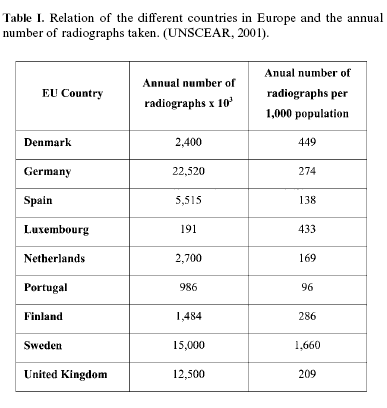
<body><![CDATA[<p><font face="Verdana" size="2">The dentist is the person who takes responsibily for the  necessity of a radiographic examination and its frequency. The clinician must  review any previous radiographs as these may well provide useful information on  the patient’s present symptoms. If these radiographs are not useful, then  further radiography is may well be justified. Selection criteria aid the  clinician in choosing the appropriate radiographic examination to maximise the  diagnostic yield while limiting the dose to the patient. The use of Selection  Criteria is well established within many countries of the European Union.  However, Spain has not adopted the routine use of selection criteria although  several published papers have highlighted the importance of implementing  radiographic guidelines within dental practice (6-8).</font></p>     <p><font face="Verdana" size="2">The main objetive of this study was to review some of the  more relevant aspects of the guidelines that appear in the recent publication of  the European Commission (1) on dental radiographic selection criteria in adult  patients.</font></p>     <p>&nbsp;</p>     <p><font face="Verdana"><B>European and Spanish regulations</B></font></p>     <p><font face="Verdana" size="2">Within the European Union, the most recent ICRP  recommendations were incorporated into several Euratom Directives (9-11). These  directives outline the best radiographic practice and also include many  recommendations to ensure high quality radiography. These recommendations  include: justification and optimization of the radiographic examination;  measures on quality control of radiolographic equipment; procedures for the  annual evaluation of the doses received by patients in the most frequently  conducted radiographic examinations; the evaluation of the image quality and  also an assessment of annual dose levels. These directives were implemented  within Spanish legislation by two Royal Decrees 1976/1999 (12) and 783/2001(13).</font></p>     <p><font face="Verdana" size="2">The control of the doses to patients combined with the  production of high quality images constitutes the first assessment of the state  of the radiological equipment used and, also, of the training of personnel involved with ionising radiation.</font></p>     <p>&nbsp;</p>     <p><font face="Verdana"><B>The necessity of selection criteria in dental radiology: frequency of radiographic examinations</B></font></p>     <p><font face="Verdana" size="2">The Scientific Committee on the Atomic Effects of Radiation  within the United Nations noted that dental radiography was the most frequent  radiographic technique in medical practice. Dental radiography accounts for  nearly one third of all the total number of radiological examinations conducted  within the European Union (14) (see <a href="#t1">Table 1</a>).</font></p>      <p align="center"><font face="Verdana" size="2"><a name="t1"><img border="0" src="/img/revistas/medicorpa/v12n3/15_medora91.gif" width="387" height="408"></a></font></p>      ]]></body>
<body><![CDATA[<p><font face="Verdana" size="2">Within Spain, there are believed to be approximately 440 dental sets per million of the population, although this figure has not been  reliably confirmed. This figure represents 57% of the total medical X-ray units  in clinical pracrice. Throughout the European Union, the number of dental x-ray  sets per million of population varies enormously with 1534 sets in Sweden, 975  to Denmark, 667 sets in Greece, 631 to France and 350 within the UK (14).</font></p>     <p><font face="Verdana" size="2">Vaño and colleagues (15) in a recent study assessed the  number of dental sets within Spanish dental practices and the number of dental  radiographs taken per annum compared with medical exposures. The study found  that the number of medical and dental x-ray machines in clinical practice  totalled 14,411, of which 7,327 (50.8%) were dental x-rays sets. The annual  number of medical radiolographic examinations has been assessed as 25,058,622, representing an annual rate of 629 examinations per 1000 habitants. Corresponding figures for the 5,226,823 dental x-ray examinations undertaken in Spain translates into 131 dental x-ray exposures per 1,000 inhabitants.</font></p>     <p><font face="Verdana" size="2">In the last 20 years within England and Wales, dental panoramic radiography (DPR) has become well-stablished in general dental  practice, as evidenced by a seven-fold increase when compared with intra-oral radiography over the same period (2). Between 1998 and 1999, approximately 2,05 million panoramic radiographs were taken in the general dental service in  England and Wales (16).This increasing use of panoramic radiography has been  observed in other countries. Within the USA, it was estimated 20 years ago that  60% of all practioners had access to panoramic equipment (17).</font></p>     <p><font face="Verdana" size="2">Panoramic equipment often delivers a wide range of doses to  patients and these can vary by a factor of 200. In Spain, the published data of  a recent study illustrates that in the region of 3,1% of the panoramic equipment  fail to reach the manufacturers’ nominal kilovoltage and machines also display  timer inaccuracies. These innacuries have decreased from 12% of all equipment  for the year 1997 to 3% in 2001 following the adoption of compulsory annual  quality control assessment of x-ray equipment (18).</font></p>     <p><font face="Verdana" size="2">Although a large number of dental radiographs are exposed  within primary dental care, a large proportion of these exhibit poor image  quality. These films represent a cumulative increase in dose to the exposed  population without benefit as often these films are essentially non-diagnostic  because of faults in technique and/or processing. Research has shown that 42% of  dental practitioners in the United Kingdom practise ‘routine screening’ of new  adult patients using panoramic radiography without any clinical findings to  support such a radiographic examination (19). Of these ‘screening’ panoramic  films, when the yield from posterior bitewing radiographs and the radiological  findingsof no relevance to treatment were excluded, 57% of patients received no  benefit from these panoramic films.</font></p>     <p><font face="Verdana" size="2">Several research studies have shown that the frequency of  unacceptable panoramic films ranges from 18% to 33% of the total panoramic  radiographs taken. These unacceptable panoramic films limit the diagnostic yield  that the practitioner can obtain from the radiographic image. The faults range  from inadequate processing to technical technical faults, such as movement of  the patient. More often inadequate panoramic films exhibit a combination of both  technical and processing errors (20). Films faults are not confined solely to  panoramic radiography as a recent study has reported levels of unacceptable  intraoral films ranging between 45.2-56.4% (21).</font></p>     <p><font face="Verdana" size="2">Similarly, in the USA, it has been estimated that the  elimination of non-productive examinations could lead to the reduction of the  collective population dose from medical radiography by 30% (4)</font></p>     <p><font face="Verdana" size="2">The method proposed to eliminate unnecessary x-ray  examinations is by the adoption of selection criteria in radiography. Selection  criteria have been defined as &quot;descriptions of clinical conditions observed from  patient signs, symptoms and history that identify those patients who are likely  to benefit from a particular radiographic examination&quot; (22).</font></p>     <p>&nbsp;</p>     <p><font face="Verdana"><B>Radiation dose and risks</B></font></p>     ]]></body>
<body><![CDATA[<p><font face="Verdana" size="2">The biological effects of ionizing radiation can be extremely  damaging. Somatic deterministic effects predominate with high doses of radiation,  while somatic stochastic effects predominate with low doses. Dental radiology  employs low doses and the risk of stochastic effects is very small (23). The  estimated risk of a fatal cancer developing from two intraoral bitewing  exposures, or from a dental panoramic tomography, is of the order of one tumour  for every 2 million exposures (24).</font></p>     <p><font face="Verdana" size="2">In the case of panoramic radiology, the weighted dose  equivalent from a panoramic examination was calculated to be 3,85-30 &#956;Sv ,  corresponding to a lifetime risk of fatal cancer (per million) of 0,21-1,9  (25,26). For an intra-oral radiograh the effective dose is 1-8.3 &#956;Sv and the  risk of cancer is 0,02-0,6 (26, 27). These figures assume best practice is  employed. A panoramic radiograph may be associated with an effective dose the  same as 1-5 days additional background radiation, while two bitewing radiographs  would be equivalent to about one day.</font></p>     <p><font face="Verdana" size="2">However lower levels of risk are associated with newer  equipment and techniques. Recent studies have showed that the 72,79% of dental  x-ray sets in Spain operate at 70 kVp, 88,02% employ a 20 cm of focus-to-film  distance (PID) and the majority of this equipment employ a 6 cm diameter round  beam. Ekta-speed dental film was used in the 10,24 % of the cases and intraoral  digital imaging was used by 11,95% of practitioners (28-30)</font></p>     <p><font face="Verdana" size="2">A particular problem arises from the inclusion or exclusion  of the salivary glands in the calculation of dose. The salivary glands have  previously not been included as an organ in effective dose calculations (31).  However, the most recent document from the International Commission on Radiation  Protection (ICRP) has recognised this omission in view of the apparent  relationship between dental radiography and increased risk of salivary gland  tumours (32). The most recent ICRP document has included salivary tissue as a  remainder organ and their inclusion in dose calculations increases the rate of  risk of inducing tumours by a factor of two.</font></p>     <p>&nbsp;</p>     <p><font face="Verdana"><B>Methodology</B></font></p>     <p><font face="Verdana" size="2">A review of the literature relating to European guidelines  and the protocols of performance of selection criteria in dental radiology was  undertaken.</font></p>     <p><font face="Verdana" size="2">This study was specially related to the European Guidelines  on Radiation Protection in Dental Radiology (1) which had been developped by a  Committe of European Experts in Radiation Protection. It has been designed to be  used as a guide for both general dental practitioners and dental specialists.  This document (1) has been developed using a methodology supported in a critical  review of the literature following an ‘evidence-based practice’. Depending on  the available evidence, the recommendations given were graded to reflect their  relevance. A similar document was produced by the Royal College of Surgeons,  London using identical techniques leading to the production of &quot;Selection  Criteria for Dental Radiography &#091;2nd edition, The Faculty of General Dental  Practitioners, The Royal College of Surgeons, London WC2A 3PE&#093; (33).</font></p>     <p>&nbsp;</p>     <p><font face="Verdana"><B>New adult patients</B></font></p>     ]]></body>
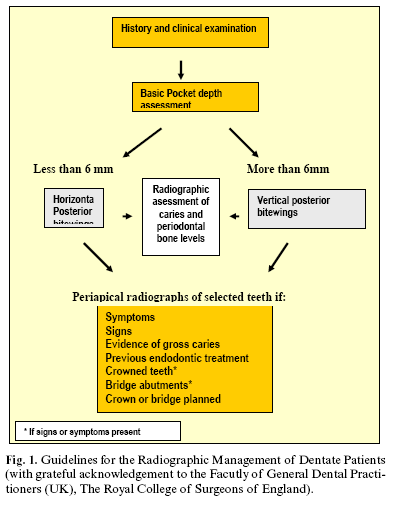
<body><![CDATA[<p><font face="Verdana" size="2">In some centres, it has become routine to take a panoramic  film or full-mouth intraoral radiography of all new patients and this ‘routine’  practice is not aceptable (34, 35).</font></p>     <p><font face="Verdana" size="2">A high proportion of practitioners (57%) continue to rely on  panoramic radiography alone to assess common dental pathosis (34). Research has  confirmed that intra-oral (bitewing and periapical) radiography is superior to  panoramic radiography for the diagnosis of common dental pathology (i.e.caries,  periodontal and periapical pathology). It is posible that anecdotal evidence of  identifying a cyst or other uncommon lesion in a patient may reinforce this  attitude. However, this standpoint ignores the low prevalence of the asymtomatic  pathology and routine radiography without the presence of clinical signs or  symptoms cannot be justified (35, 36). A panoramic radiograph may be apropriate  for the patient in certain cases such as one whom presents with a grossly  neglected mouth with significant numbers of clinically-determined carious  lesions and periapical pathology, along with established periodontal disease  (35). In these cases, it may be expeditious to use panoramic radiography as a  means of identifying teeth requiring a more detailed (intra-oral) radiographic  examination or, when limited to a hospital setting, prior to dental surgery  under general anaesthesia.</font></p>     <p><font face="Verdana" size="2">Full-mouth periapical radiography can be criticised in the  same way as routine panoramic radiography.</font></p>     <p><font face="Verdana" size="2">For a new adult dentate patient, the choice of radiography  should be based upon history, clinical examination and an individualised  prescription as illustrated in <a href="#f1">Figure 1</a>.</font></p>     <p align="center"><font face="Verdana" size="2"><a name="f1"><img border="0" src="/img/revistas/medicorpa/v12n3/15_medora92.gif" width="395" height="506"></a></font></p>     <p align="center">&nbsp;</p>     <p align="left"><font face="Verdana"><B>Screening with panoramic radiography</B></font></p>     <p><font face="Verdana" size="2">Forty-two percent of practitoners were found to use panoramic  radiography routinely to &quot;screen&quot; the jaws for clinically unsuspected pathology  and 77.4% of these do so for ‘no specific reason’. Approximately, 65,3% of  screening panoramic radiographs have no relevance to treatment rising to 71% in  the screened asymptomatic attender. Some dentists defend routine screening on  the basis of detecting of large cyst and tumours. These lesions are very rare  and often have signs or symptoms, which would alert the practitioner to the need  for radiography. The detection of a small number of lesions, which are  completely asymptomatic, does not justify the routine screening of the  population.</font></p>     <p>&nbsp;</p>     <p><font face="Verdana"><B>Radiography in endodontics</B></font></p>     ]]></body>
<body><![CDATA[<p><font face="Verdana" size="2">Radiographs are essential for the mechanical aspects of  endodontic treatment allowing evaluation of the root canal configuration and  also for confirmation that treatment goals have been achieved. Radiographs  should have optimum geometry obtained by using the paralleling technique and a  beam-aiming device (37).</font></p>     <p><font face="Verdana" size="2">The radiographs recommendated for endodontic treatment are shown within <a target="_blank" href="/img/revistas/medicorpa/v12n3/15_medora93.gif">Table 2</a>.</font></p>     <p>&nbsp;</p>     <p><font face="Verdana"><B>The edentulous patient</B></font></p>     <p><font face="Verdana" size="2">In the absense of any clinical signs or symptoms, there is no  justification for any radiographic examinations unless implant treatment is  planned (38). If implant treatment is extensive, other more advanced imaging  techniques, such as Computed Tomography (CT) imaging, may well be appropriate.  Where the clinical examination identifies the posible presence of an abnormality,  such as a possible retained root, then an intra-oral radiograph of the site is  the apropriate radiographic examination.</font></p>     <p>&nbsp;</p>     <p><B><font face="Verdana">Referral</font><font face="Verdana"> criteria for dental radiology: prior to third molars exodontia, simple extractions and surgery</font></B></p>     <p><font face="Verdana" size="2">The panoramic radiograph is commonly used to assess third  molars prior to their surgical renoval but this examination does not need to be  carried out at the initial examination (3). Routine radiography of unerupted  third molars is not recommended.</font></p>     <p><font face="Verdana" size="2">The techniques recommended in the extractions of the third  molar vary depending on the geographic situation of the tooth:</font></p>     <p><font face="Verdana" size="2">Lower third molar: a panoramic radiograph provides  information about the tooth position, the relationship to the inferior dental  canal and the distance to the lower border. A periapical radiograph is indicated  where there is any question of a complex root formation or an intimate relation  between the molar roots and the ID canal (3).</font></p>     ]]></body>
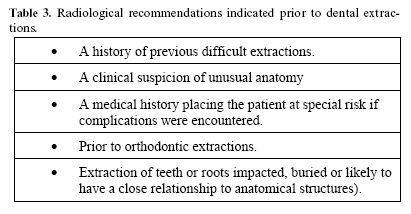
<body><![CDATA[<p><font face="Verdana" size="2">Upper third molar: If the tooth is erupted fully then a  periapical radiograph should be requested in the first instance, and remember to  always check previous radiographs before requesting new films. Previous  radiographs may show that there are no contralateral third molars present and  thus avoid the need to take a full panoramic radiograph.</font></p>      <p><font face="Verdana" size="2">In other surgical situacions, such as apicectomy, root  renoval or enucleation of small cysts, an intra-oral radiograph may be all that  is required for treatment planning.</font></p>     <p><font face="Verdana" size="2">There is no convincing evidence to support the need for  radiography prior to uncomplicated routine extrabtions in adults; however, where  a radiograph already exists, this should be referred to before commencing the  procedure.</font></p>     <p><font face="Verdana" size="2">Radiological recomendations for dental extractions are shown  at <a href="#t3">Table 3</a> and clinical situations that indicate radiological examination at <a href="#t4">Table 4</a>.</font></p>     <p align="center"><font face="Verdana" size="2"><a name="t3"><img border="0" src="/img/revistas/medicorpa/v12n3/15_medora94.gif" width="411" height="214"></a></font></p>     <p align="center"><font face="Verdana" size="2"><a name="t4"><img border="0" src="/img/revistas/medicorpa/v12n3/15_medora95.gif" width="591" height="352"></a></font></p>     <p align="center">&nbsp;</p>     <p align="left"><font face="Verdana"><B>Trauma</B></font></p>     <p><font face="Verdana" size="2">For simple dental trauma, intraoral radiography will provide  greater diagnostic detail.</font></p>     <p><font face="Verdana" size="2">A panoramic radiograph is indispensble when assessing  madibular fractures (39); however, poor panoramic film quality has been shown to  severely affect diagnosis (40). Panoramic radiography has been shown to  necesítate supplementary radiography in order accurately to diagnose high  condylar fractures (41).</font></p>     ]]></body>
<body><![CDATA[<p><font face="Verdana" size="2">If there is clinical evidence of a bony fracture, it is  probably more appropriate for a dentist to refer the patient for a complete  radiographic examination at the hospital where treatment wil be performed.  Panoramic radigoraphy has a limited ability to detect mid-facial fractures.</font></p>     <p>&nbsp;</p>     <p><font face="Verdana"><B>Temporomandibular joint problems</B></font></p>     <p><font face="Verdana" size="2">The panoramic radiograph shows an image of the mandibular  condyles and is often used as a first choice imaging technique for those  patients with TMJ symptoms.</font></p>     <p><font face="Verdana" size="2">A recent study (42) of patients with TMJ symptoms found that  panoramic radiography provided little or no information that influenced  diagnosis or patient management in the majority of cases examined.</font></p>      <p><font face="Verdana" size="2">The overwhelming majority of patients with symptoms and signs  related to the TMJ region are suffering from myofacial pain/disfunction or  internal disc derangements.</font></p>     <p><font face="Verdana" size="2">Radiography is not recommended for patients with joint sounds  (‘clicking’) in the absence of other signs or symptoms (43). Radiographic  examination is indicated where there is recent evidence of progressive pathology  (recent trauma, change in occlusion, madibular shift, sensory or motor  alterations or change in range of movement).</font></p>     <p><font face="Verdana" size="2">To assess disc position in cases of internal derangement in  which simple treatments have been unsuccessful, it may be useful to use Magnetic  Resonance Imaging.</font></p>     <p><font face="Verdana" size="2">In the situation where a clinical diagnosis of condylar  hyperplasia is suspected, it should be necessary to use Computed Tomography  (CT).</font></p>     <p>&nbsp;</p>     ]]></body>
<body><![CDATA[<p><font face="Verdana"><B>Periodontal disease</B></font></p>     <p><font face="Verdana" size="2">There is insufficient evidence from research studies to  develop robust evidence-based radiographic selection criteria for periodontal  disease. While the panoramic radiograph can offer a dose advantage over large  numbers of intra-oral radiographs, it may be considered as an alternative  imaging modality, if available. This may be the case when there are other  concurrent problems for which radiography is indicated (i.e. symptomatic third  molars, multiple existing crowns/heavily restored teeth, and/or multiple  endodontically-treated teeth in a patient new to a practice). The use of  radiography should be view as secondary to a detailed clinical examination in  the diagnosis of periodontal diseases. Access to previous radiographs may be  useful in assessing the rate of disease progression (5).</font></p>     <p><font face="Verdana" size="2">Guidelines for the use of dental radiography in periodontal  disease are shown in <a target="_blank" href="/img/revistas/medicorpa/v12n3/15_medora96.gif">Table 5</a>.</font></p>     <p>&nbsp;</p>     <p><font face="Verdana"><B>Suggested selection criteria for panoramic radiography</B></font></p>     <p><font face="Verdana" size="2">The general recommendations are detailed below:</font></p>     <p><font face="Verdana" size="2">• Where a bony lesion or unerupted tooth is of a size or position that precludes its complete demostration on intra-oral radigraphs.</font></p>     <p><font face="Verdana" size="2">• In the case of a grossly neglected mouth, with significant numbers of clinically-determined carious lesions and periapical pathology, along with established periodontal disease (other than simple gingivitis) and where there is pocketting greater than 6 mm in depth.</font></p>     <p><font face="Verdana" size="2">• For the assessment of wisdom teeth prior to planned surgical intervention. Routine radiography of unrerupted third molars is not  recommended.</font></p>     <p><font face="Verdana" size="2">• As a part of an orthodontic assessment where there is a clinical need to know the state of the dentition and the presence/absence of teeth. The use of clinical criteria to select patients rather than routine screening of patients is essential</font></p>     ]]></body>
<body><![CDATA[<p><font face="Verdana" size="2">• Panoramic radiographs should only be taken in the presence of specific clinical signs and symptoms. There is no justification for review panoramic radiography at arbitrary time intervals</font></p>     <p><font face="Verdana" size="2">The European Recommendations have been shaped to reflect the most frequent radiographic practices within General Dentistry.</font></p>     <p>&nbsp;</p>     <p><font face="Verdana"><B>Conclusion</B></font></p>     <p><font face="Verdana" size="2">The main conclusion of this study was to emphasise that ‘All  patients must have a clinical history taken prior to any radiological  examination and when radiographs are clinically indicated, intra-oral  radiographs should be considered first because of their better detail and lower  radiation dose&quot;.</font></p>     <p><font face="Verdana" size="2">Within Spain, it is necessary to change the dentist’s  attitude to the use of ionising radiation. This requires a readjustment to the  new regulations on radiological safety of the patient and also to reinforce the  need for justification for all radiographic examinations used in dental  radiological diagnosis.</font></p>     <p>&nbsp;</p>     <p><font face="Verdana"><B>Acknowledgement</B></font></p>     <p><font face="Verdana" size="2">This paper has been made thanks to a Post  Doctoral Grant of the University of Murcia for the dissemination of the European  Dental Guidelines on Radiation Protection in Dental Radiology. Acknowledgement  is made to the staff of the Department of Dental and Maxillofacial Radiology,  The School of Dentistry, The University of Manchester, M15 6FH, U.K. In addition,  the authors would like to express their thanks to The Faculty of General Dental  Practitioners (UK) and The Royal College of Surgeons of England for allowing the  use of their material to be translated into Spanish and to be published within  this document.</font></p>     <p>&nbsp;</p>     ]]></body>
<body><![CDATA[<p><font face="Verdana"><B>References</B></font></p>     <!-- ref --><p><font face="Verdana" size="2">1. European Union European Commission. Radiation Protection 136. European guidelines on radiation protection in dental radiology. Office for Official Publications of the EC, Luxembourg; 2004</font>&nbsp;&nbsp;&nbsp;&nbsp;&nbsp;&nbsp;&nbsp;&nbsp;[&#160;<a href="javascript:void(0);" onclick="javascript: window.open('/scielo.php?script=sci_nlinks&ref=2963392&pid=S1698-6946200700030001500001&lng=','','width=640,height=500,resizable=yes,scrollbars=1,menubar=yes,');">Links</a>&#160;]<!-- end-ref --><!-- ref --><p> <font face="Verdana" size="2">2. Dental Practice Board. Guidelines for panoral radiography. Eastbourne: Dental Practice Board of England den Wales; 1983.</font>&nbsp;&nbsp;&nbsp;&nbsp;&nbsp;&nbsp;&nbsp;&nbsp;[&#160;<a href="javascript:void(0);" onclick="javascript: window.open('/scielo.php?script=sci_nlinks&ref=2963393&pid=S1698-6946200700030001500002&lng=','','width=640,height=500,resizable=yes,scrollbars=1,menubar=yes,');">Links</a>&#160;]<!-- end-ref --><!-- ref --><p> <font face="Verdana" size="2">3. Scottish Intercollegiate Guidelines Network (SIGN). Management of Unerupted and Impacted Third Molar Teeth. SIGN publication No 43. Edimburgg: SIGN; 2000.</font>&nbsp;&nbsp;&nbsp;&nbsp;&nbsp;&nbsp;&nbsp;&nbsp;[&#160;<a href="javascript:void(0);" onclick="javascript: window.open('/scielo.php?script=sci_nlinks&ref=2963394&pid=S1698-6946200700030001500003&lng=','','width=640,height=500,resizable=yes,scrollbars=1,menubar=yes,');">Links</a>&#160;]<!-- end-ref --><!-- ref --><p> <font face="Verdana" size="2">4. Brown FR, Shaver JW, LAmel DA. The selection of patients for x-ray examination. U.S. Department of Health, Education and Welfare. HEW Publicacion (FDA) 80-8104. Rockville MD: Bureau of Radiological Health; 1980.</font>&nbsp;&nbsp;&nbsp;&nbsp;&nbsp;&nbsp;&nbsp;&nbsp;[&#160;<a href="javascript:void(0);" onclick="javascript: window.open('/scielo.php?script=sci_nlinks&ref=2963395&pid=S1698-6946200700030001500004&lng=','','width=640,height=500,resizable=yes,scrollbars=1,menubar=yes,');">Links</a>&#160;]<!-- end-ref --><!-- ref --><p> <font face="Verdana" size="2">5. White SC, Heslop EW, Hollender LG, Mosier KM et al. Parameters of radiologic care: AN official report of the AmericanAcademy or Oral and Maxillofacial Radiology. Oral Surg Oral Med Oral Pathol Oral Radiol Endod 2001;91:498-511.</font>&nbsp;&nbsp;&nbsp;&nbsp;&nbsp;&nbsp;&nbsp;&nbsp;[&#160;<a href="javascript:void(0);" onclick="javascript: window.open('/scielo.php?script=sci_nlinks&ref=2963396&pid=S1698-6946200700030001500005&lng=','','width=640,height=500,resizable=yes,scrollbars=1,menubar=yes,');">Links</a>&#160;]<!-- end-ref --><!-- ref --><p> <font face="Verdana" size="2">6. Fernández R, González L, Vaño E, Villa A, Martínez JM, Ortega R et al. Criterios de calidad de imagen en radiodiagnóstico dental. Archivos de odontoestomatología 1996;9:501-7.</font>&nbsp;&nbsp;&nbsp;&nbsp;&nbsp;&nbsp;&nbsp;&nbsp;[&#160;<a href="javascript:void(0);" onclick="javascript: window.open('/scielo.php?script=sci_nlinks&ref=2963397&pid=S1698-6946200700030001500006&lng=','','width=640,height=500,resizable=yes,scrollbars=1,menubar=yes,');">Links</a>&#160;]<!-- end-ref --><!-- ref --><p> <font face="Verdana" size="2">7. Finestres F, Miguel J, Cloquell DA, Rafael A, Chimenos E, Guix B. LA calidad en el servicio de radiología. Med Oral 2003; 8:311-21.</font>&nbsp;&nbsp;&nbsp;&nbsp;&nbsp;&nbsp;&nbsp;&nbsp;[&#160;<a href="javascript:void(0);" onclick="javascript: window.open('/scielo.php?script=sci_nlinks&ref=2963398&pid=S1698-6946200700030001500007&lng=','','width=640,height=500,resizable=yes,scrollbars=1,menubar=yes,');">Links</a>&#160;]<!-- end-ref --><!-- ref --><p> <font face="Verdana" size="2">8. Alcaráz M, Martínez Y, Jódar S, Velasco E, García MC. Control de calidad en radiología dental intraoral: anomalías en el funcionamiento de los equipos radiológicos. Radioprotección 2004;41:22-9.</font>&nbsp;&nbsp;&nbsp;&nbsp;&nbsp;&nbsp;&nbsp;&nbsp;[&#160;<a href="javascript:void(0);" onclick="javascript: window.open('/scielo.php?script=sci_nlinks&ref=2963399&pid=S1698-6946200700030001500008&lng=','','width=640,height=500,resizable=yes,scrollbars=1,menubar=yes,');">Links</a>&#160;]<!-- end-ref --><!-- ref --><p> <font face="Verdana" size="2">9. Council Directive 84/466 Euratom, laying down the basic measures for the radiation protection of persons undergoing medical examination or treatment. Official Journal of the European Communities No L 265, 5th October 1984. p. 1-3.</font>&nbsp;&nbsp;&nbsp;&nbsp;&nbsp;&nbsp;&nbsp;&nbsp;[&#160;<a href="javascript:void(0);" onclick="javascript: window.open('/scielo.php?script=sci_nlinks&ref=2963400&pid=S1698-6946200700030001500009&lng=','','width=640,height=500,resizable=yes,scrollbars=1,menubar=yes,');">Links</a>&#160;]<!-- end-ref --><!-- ref --><p> <font face="Verdana" size="2">10. European Union. Council Directive 96/29 Euratom, on health protection of sanitary persona and persons undergoing ionizing radiation. Official Journal of the European Communities No L 159, 29th June; 1996. p. 1-114.</font>&nbsp;&nbsp;&nbsp;&nbsp;&nbsp;&nbsp;&nbsp;&nbsp;[&#160;<a href="javascript:void(0);" onclick="javascript: window.open('/scielo.php?script=sci_nlinks&ref=2963401&pid=S1698-6946200700030001500010&lng=','','width=640,height=500,resizable=yes,scrollbars=1,menubar=yes,');">Links</a>&#160;]<!-- end-ref --><!-- ref --><p> <font face="Verdana" size="2">11. European Union. Council Directive 97/43 Euratom, on health protection of individuals against the danger of ionizing radiation in relation to medical exposure, and repealing Directiva 84/466 Euratom. Official Journal of the European Communities No L 180, 9th July; 1997. p. 22-7.</font>&nbsp;&nbsp;&nbsp;&nbsp;&nbsp;&nbsp;&nbsp;&nbsp;[&#160;<a href="javascript:void(0);" onclick="javascript: window.open('/scielo.php?script=sci_nlinks&ref=2963402&pid=S1698-6946200700030001500011&lng=','','width=640,height=500,resizable=yes,scrollbars=1,menubar=yes,');">Links</a>&#160;]<!-- end-ref --><!-- ref --><p> <font face="Verdana" size="2">12. BOE. Royal Decree 1976/1999, from the Health and Consumer Affairs Department, establishing quality criteria in radiodiagnostic. In State Official Bulletin, January 29th 1999:45891-900.(In Spanish).</font>&nbsp;&nbsp;&nbsp;&nbsp;&nbsp;&nbsp;&nbsp;&nbsp;[&#160;<a href="javascript:void(0);" onclick="javascript: window.open('/scielo.php?script=sci_nlinks&ref=2963403&pid=S1698-6946200700030001500012&lng=','','width=640,height=500,resizable=yes,scrollbars=1,menubar=yes,');">Links</a>&#160;]<!-- end-ref --><!-- ref --><p> <font face="Verdana" size="2">13. BOE. Royal Decree 783/2001, from the Health and Consumer Affairs Department, establishing the Regulation on Ionizing Radiation Protection In State Official Bulletin, July 26th 2001.</font>&nbsp;&nbsp;&nbsp;&nbsp;&nbsp;&nbsp;&nbsp;&nbsp;[&#160;<a href="javascript:void(0);" onclick="javascript: window.open('/scielo.php?script=sci_nlinks&ref=2963404&pid=S1698-6946200700030001500013&lng=','','width=640,height=500,resizable=yes,scrollbars=1,menubar=yes,');">Links</a>&#160;]<!-- end-ref --><!-- ref --><p> <font face="Verdana" size="2">14. United Nations Scientific Committee on the Effects of Atomic Radiation UNSCEAR Report to the general assembly with scientific annex. 2001.</font>&nbsp;&nbsp;&nbsp;&nbsp;&nbsp;&nbsp;&nbsp;&nbsp;[&#160;<a href="javascript:void(0);" onclick="javascript: window.open('/scielo.php?script=sci_nlinks&ref=2963405&pid=S1698-6946200700030001500014&lng=','','width=640,height=500,resizable=yes,scrollbars=1,menubar=yes,');">Links</a>&#160;]<!-- end-ref --><!-- ref --><p> <font face="Verdana" size="2">15. Vaño, E. Las exposiciones médicas en UNSCEAR 2000 y los datos del Comité Español. Radioprotección 2001;30:14-9.</font>&nbsp;&nbsp;&nbsp;&nbsp;&nbsp;&nbsp;&nbsp;&nbsp;[&#160;<a href="javascript:void(0);" onclick="javascript: window.open('/scielo.php?script=sci_nlinks&ref=2963406&pid=S1698-6946200700030001500015&lng=','','width=640,height=500,resizable=yes,scrollbars=1,menubar=yes,');">Links</a>&#160;]<!-- end-ref --><!-- ref --><p> <font face="Verdana" size="2">16. Dental Practice Board. Personal Communication. Dental Data Services, Dental Practice Board for England and Wales. 1999.</font>&nbsp;&nbsp;&nbsp;&nbsp;&nbsp;&nbsp;&nbsp;&nbsp;[&#160;<a href="javascript:void(0);" onclick="javascript: window.open('/scielo.php?script=sci_nlinks&ref=2963407&pid=S1698-6946200700030001500016&lng=','','width=640,height=500,resizable=yes,scrollbars=1,menubar=yes,');">Links</a>&#160;]<!-- end-ref --><!-- ref --><p> <font face="Verdana" size="2">17. Kaugars GE, Broga DW and Collett WK. Dental radiologic survey of Virginia and Florida. Oral Surg Oral Med Oral Pathol 1985;60:225-9.</font>&nbsp;&nbsp;&nbsp;&nbsp;&nbsp;&nbsp;&nbsp;&nbsp;[&#160;<a href="javascript:void(0);" onclick="javascript: window.open('/scielo.php?script=sci_nlinks&ref=2963408&pid=S1698-6946200700030001500017&lng=','','width=640,height=500,resizable=yes,scrollbars=1,menubar=yes,');">Links</a>&#160;]<!-- end-ref --><!-- ref --><p> <font face="Verdana" size="2">18. Jodar S, Alcaraz M, Martínez Y, Perez L, Velasco E, López M.Manejo de las radiaciones ionizantes en instalaciones dentales españolas: intraorales y panorámicos. Avances en Odontoestomatología 2005;21: 361-70.</font>&nbsp;&nbsp;&nbsp;&nbsp;&nbsp;&nbsp;&nbsp;&nbsp;[&#160;<a href="javascript:void(0);" onclick="javascript: window.open('/scielo.php?script=sci_nlinks&ref=2963409&pid=S1698-6946200700030001500018&lng=','','width=640,height=500,resizable=yes,scrollbars=1,menubar=yes,');">Links</a>&#160;]<!-- end-ref --><!-- ref --><p> <font face="Verdana" size="2">19. Rushton VE, Horner K, Worthington HM. Aspects of the use of panoramic radiography in genral dental practice. Br Dent J 1999;186:342-4.</font>&nbsp;&nbsp;&nbsp;&nbsp;&nbsp;&nbsp;&nbsp;&nbsp;[&#160;<a href="javascript:void(0);" onclick="javascript: window.open('/scielo.php?script=sci_nlinks&ref=2963410&pid=S1698-6946200700030001500019&lng=','','width=640,height=500,resizable=yes,scrollbars=1,menubar=yes,');">Links</a>&#160;]<!-- end-ref --><!-- ref --><p> <font face="Verdana" size="2">20. Rushton VE, Horner K, Worthington HM. The quality of Panoramic Radiographs in General Dental Practice. Br Dent J 1999;186:630-3.</font>&nbsp;&nbsp;&nbsp;&nbsp;&nbsp;&nbsp;&nbsp;&nbsp;[&#160;<a href="javascript:void(0);" onclick="javascript: window.open('/scielo.php?script=sci_nlinks&ref=2963411&pid=S1698-6946200700030001500020&lng=','','width=640,height=500,resizable=yes,scrollbars=1,menubar=yes,');">Links</a>&#160;]<!-- end-ref --><!-- ref --><p> <font face="Verdana" size="2">21. Helminen S, Vehkalahti M, Wolf J , Murtomaa H. Quality evaluation of young adults’ radiographs in Finnish public oral health service. Journal of Dentistry 2000;28:549-55.</font>&nbsp;&nbsp;&nbsp;&nbsp;&nbsp;&nbsp;&nbsp;&nbsp;[&#160;<a href="javascript:void(0);" onclick="javascript: window.open('/scielo.php?script=sci_nlinks&ref=2963412&pid=S1698-6946200700030001500021&lng=','','width=640,height=500,resizable=yes,scrollbars=1,menubar=yes,');">Links</a>&#160;]<!-- end-ref --><!-- ref --><p> <font face="Verdana" size="2">22. U.S. Department of Health and Human Services. The selection of patients for x-ray examination: Dental radiographic examinations. HHS Publication (FDA) 1987;88:8273.</font>&nbsp;&nbsp;&nbsp;&nbsp;&nbsp;&nbsp;&nbsp;&nbsp;[&#160;<a href="javascript:void(0);" onclick="javascript: window.open('/scielo.php?script=sci_nlinks&ref=2963413&pid=S1698-6946200700030001500022&lng=','','width=640,height=500,resizable=yes,scrollbars=1,menubar=yes,');">Links</a>&#160;]<!-- end-ref --><!-- ref --><p> <font face="Verdana" size="2">23. Whaites E. Essentials of Dental Radiography and Radiology.Churchill Livingstone, London 2005.</font>&nbsp;&nbsp;&nbsp;&nbsp;&nbsp;&nbsp;&nbsp;&nbsp;[&#160;<a href="javascript:void(0);" onclick="javascript: window.open('/scielo.php?script=sci_nlinks&ref=2963414&pid=S1698-6946200700030001500023&lng=','','width=640,height=500,resizable=yes,scrollbars=1,menubar=yes,');">Links</a>&#160;]<!-- end-ref --><!-- ref --><p> <font face="Verdana" size="2">24. NCRP (National Council of Radiation Protection and Measurements). Quality Assurance for Diagnostic Imaging Equipment. Report Nº 99 (Bethesda, MD: NCRP); 1998.</font>&nbsp;&nbsp;&nbsp;&nbsp;&nbsp;&nbsp;&nbsp;&nbsp;[&#160;<a href="javascript:void(0);" onclick="javascript: window.open('/scielo.php?script=sci_nlinks&ref=2963415&pid=S1698-6946200700030001500024&lng=','','width=640,height=500,resizable=yes,scrollbars=1,menubar=yes,');">Links</a>&#160;]<!-- end-ref --><!-- ref --><p> <font face="Verdana" size="2">25. Sanforth RA, Clark DE. Effective dose from radiation absorbed during a panoramic examination with a new generation machine. Oral Surg Oral Med Oral Pathol Oral Radiol Endod 2000;89:236-43.</font>&nbsp;&nbsp;&nbsp;&nbsp;&nbsp;&nbsp;&nbsp;&nbsp;[&#160;<a href="javascript:void(0);" onclick="javascript: window.open('/scielo.php?script=sci_nlinks&ref=2963416&pid=S1698-6946200700030001500025&lng=','','width=640,height=500,resizable=yes,scrollbars=1,menubar=yes,');">Links</a>&#160;]<!-- end-ref --><!-- ref --><p> <font face="Verdana" size="2">26. Dula K, Mini R, van der Stelt PF, Buser D. The radiographic assessment of implant patients: decision-making criteria. Int J Oral Maxillofac Implant 2001;16:80-9.</font>&nbsp;&nbsp;&nbsp;&nbsp;&nbsp;&nbsp;&nbsp;&nbsp;[&#160;<a href="javascript:void(0);" onclick="javascript: window.open('/scielo.php?script=sci_nlinks&ref=2963417&pid=S1698-6946200700030001500026&lng=','','width=640,height=500,resizable=yes,scrollbars=1,menubar=yes,');">Links</a>&#160;]<!-- end-ref --><!-- ref --><p> <font face="Verdana" size="2">27. Gijbels F, Jacobs R, Snaderink G, de smet E, Nowak B, van Dam J, et al. A comparison of the effective dose from scanography with periapical radiography. Dentomaxillofac Radiol 2002;31:159-63.</font>&nbsp;&nbsp;&nbsp;&nbsp;&nbsp;&nbsp;&nbsp;&nbsp;[&#160;<a href="javascript:void(0);" onclick="javascript: window.open('/scielo.php?script=sci_nlinks&ref=2963418&pid=S1698-6946200700030001500027&lng=','','width=640,height=500,resizable=yes,scrollbars=1,menubar=yes,');">Links</a>&#160;]<!-- end-ref --><!-- ref --><p> <font face="Verdana" size="2">28. Martínez-Beneyto Y, Alcaraz M, Perez L, Jodar S, Saura AM. Radiation protection and quality assurance in dental radiology: I. Intraoral Raiography. In: International Atomic energy Agency, editors. Internacional conference of radiological protection of patients in diagnostic and interventional raddiology, nuclear medicine and radiotheraphy. Málaga; 2001. p. 110-3.</font>&nbsp;&nbsp;&nbsp;&nbsp;&nbsp;&nbsp;&nbsp;&nbsp;[&#160;<a href="javascript:void(0);" onclick="javascript: window.open('/scielo.php?script=sci_nlinks&ref=2963419&pid=S1698-6946200700030001500028&lng=','','width=640,height=500,resizable=yes,scrollbars=1,menubar=yes,');">Links</a>&#160;]<!-- end-ref --><!-- ref --><p> <font face="Verdana" size="2">29. Alcaraz M, Martínez-Beneyto Y, Jodar S, Velasco E, García Vera M. Control de calidad en radiología dental intraoral: anomalías en el funcionamiento de los equipos radiológicos. Radioprotección 2004;41:22-30.</font>&nbsp;&nbsp;&nbsp;&nbsp;&nbsp;&nbsp;&nbsp;&nbsp;[&#160;<a href="javascript:void(0);" onclick="javascript: window.open('/scielo.php?script=sci_nlinks&ref=2963420&pid=S1698-6946200700030001500029&lng=','','width=640,height=500,resizable=yes,scrollbars=1,menubar=yes,');">Links</a>&#160;]<!-- end-ref --><!-- ref --><p> <font face="Verdana" size="2">30. Alcaraz M, Martinez Y, Perez L, Jodar S, Velasco E, Canteras M.The estatus of Spain´s dental practices following the European Union directive concerning radiological installations. Oral Surg Oral Med Oral Pathol Oral Radiol Endod 2004;98:476-82.</font>&nbsp;&nbsp;&nbsp;&nbsp;&nbsp;&nbsp;&nbsp;&nbsp;[&#160;<a href="javascript:void(0);" onclick="javascript: window.open('/scielo.php?script=sci_nlinks&ref=2963421&pid=S1698-6946200700030001500030&lng=','','width=640,height=500,resizable=yes,scrollbars=1,menubar=yes,');">Links</a>&#160;]<!-- end-ref --><!-- ref --><p> <font face="Verdana" size="2">31. ICPR Publication 60. Recommendations of the International Commission on Radiatiological Protectin. Annal of the ICRP 21. 1991.</font>&nbsp;&nbsp;&nbsp;&nbsp;&nbsp;&nbsp;&nbsp;&nbsp;[&#160;<a href="javascript:void(0);" onclick="javascript: window.open('/scielo.php?script=sci_nlinks&ref=2963422&pid=S1698-6946200700030001500031&lng=','','width=640,height=500,resizable=yes,scrollbars=1,menubar=yes,');">Links</a>&#160;]<!-- end-ref --><!-- ref --><p> <font face="Verdana" size="2">32. Horn-Ross PL, Ljung BM, Morrow M. Environmental factors and the risk of salivary gland cancer. Epidemiology 1997;8:414-9.</font>&nbsp;&nbsp;&nbsp;&nbsp;&nbsp;&nbsp;&nbsp;&nbsp;[&#160;<a href="javascript:void(0);" onclick="javascript: window.open('/scielo.php?script=sci_nlinks&ref=2963423&pid=S1698-6946200700030001500032&lng=','','width=640,height=500,resizable=yes,scrollbars=1,menubar=yes,');">Links</a>&#160;]<!-- end-ref --><!-- ref --><p> <font face="Verdana" size="2">33. Selection Criteria for Dental Radiography, 2nd Edition. The Faculty of General Dental Practitioners (UK). Royal College of Surgeons of England, London, 2004.</font>&nbsp;&nbsp;&nbsp;&nbsp;&nbsp;&nbsp;&nbsp;&nbsp;[&#160;<a href="javascript:void(0);" onclick="javascript: window.open('/scielo.php?script=sci_nlinks&ref=2963424&pid=S1698-6946200700030001500033&lng=','','width=640,height=500,resizable=yes,scrollbars=1,menubar=yes,');">Links</a>&#160;]<!-- end-ref --><!-- ref --><p> <font face="Verdana" size="2">34. Rushton VE, Horner K, Worthington HV. Screening panoramic radiology of adults in general dental practice: radiological findings. Br Dent J 2001; 190:495-501.</font>&nbsp;&nbsp;&nbsp;&nbsp;&nbsp;&nbsp;&nbsp;&nbsp;[&#160;<a href="javascript:void(0);" onclick="javascript: window.open('/scielo.php?script=sci_nlinks&ref=2963425&pid=S1698-6946200700030001500034&lng=','','width=640,height=500,resizable=yes,scrollbars=1,menubar=yes,');">Links</a>&#160;]<!-- end-ref --><!-- ref --><p> <font face="Verdana" size="2">35. Rushton VE, Horner K, Worthington HV. Screening panoramic radiology of a new adult patients in general dental practice: a measurement of diagnostic yield of relevance to treatment and identification of selection criteria. Oral Surgery, Oral Medicine Oral Pathology Oral Radiology and Endodontics 2002;93:488-95.</font>&nbsp;&nbsp;&nbsp;&nbsp;&nbsp;&nbsp;&nbsp;&nbsp;[&#160;<a href="javascript:void(0);" onclick="javascript: window.open('/scielo.php?script=sci_nlinks&ref=2963426&pid=S1698-6946200700030001500035&lng=','','width=640,height=500,resizable=yes,scrollbars=1,menubar=yes,');">Links</a>&#160;]<!-- end-ref --><!-- ref --><p> <font face="Verdana" size="2">36. Richardson PS. Selective periapical radiology compared to panoramic screening. Prim Dent Care 1997;4:95-9.</font>&nbsp;&nbsp;&nbsp;&nbsp;&nbsp;&nbsp;&nbsp;&nbsp;[&#160;<a href="javascript:void(0);" onclick="javascript: window.open('/scielo.php?script=sci_nlinks&ref=2963427&pid=S1698-6946200700030001500036&lng=','','width=640,height=500,resizable=yes,scrollbars=1,menubar=yes,');">Links</a>&#160;]<!-- end-ref --><!-- ref --><p> <font face="Verdana" size="2">37. Consensus report of the European Society of Endodontoloty on quality guidelines for endodontic treatment. Int Endod J 1996;29:150-5.</font>&nbsp;&nbsp;&nbsp;&nbsp;&nbsp;&nbsp;&nbsp;&nbsp;[&#160;<a href="javascript:void(0);" onclick="javascript: window.open('/scielo.php?script=sci_nlinks&ref=2963428&pid=S1698-6946200700030001500037&lng=','','width=640,height=500,resizable=yes,scrollbars=1,menubar=yes,');">Links</a>&#160;]<!-- end-ref --><!-- ref --><p> <font face="Verdana" size="2">38. Bohay RN, Stephens RG, Kogon SL. A study of the impact of screening or selective radiography on the treatment and post delivery outcome for edentulous patients. Oral Surg Oral Med Oral Pathol Oral Radiol Endod 1998; 86:353-9.</font>&nbsp;&nbsp;&nbsp;&nbsp;&nbsp;&nbsp;&nbsp;&nbsp;[&#160;<a href="javascript:void(0);" onclick="javascript: window.open('/scielo.php?script=sci_nlinks&ref=2963429&pid=S1698-6946200700030001500038&lng=','','width=640,height=500,resizable=yes,scrollbars=1,menubar=yes,');">Links</a>&#160;]<!-- end-ref --><!-- ref --><p> <font face="Verdana" size="2">39. Guss DA, Clark RF, Peitz T, Taub M. Pantomography vs mandibular series for the detection of mandibular fractures. Acad Emerg Med 2000; 7:141-5.</font>&nbsp;&nbsp;&nbsp;&nbsp;&nbsp;&nbsp;&nbsp;&nbsp;[&#160;<a href="javascript:void(0);" onclick="javascript: window.open('/scielo.php?script=sci_nlinks&ref=2963430&pid=S1698-6946200700030001500039&lng=','','width=640,height=500,resizable=yes,scrollbars=1,menubar=yes,');">Links</a>&#160;]<!-- end-ref --><!-- ref --><p> <font face="Verdana" size="2">40. Markowitz BL, Sinow JD, Kawamoto HK, Shewmake K, Khoumehr F. Prospective comparison of axial computed tomography and standard and panoramic radiographs in the diagnosis of madibular fractures. Ann Plast Surg 1999;42:163-9.</font>&nbsp;&nbsp;&nbsp;&nbsp;&nbsp;&nbsp;&nbsp;&nbsp;[&#160;<a href="javascript:void(0);" onclick="javascript: window.open('/scielo.php?script=sci_nlinks&ref=2963431&pid=S1698-6946200700030001500040&lng=','','width=640,height=500,resizable=yes,scrollbars=1,menubar=yes,');">Links</a>&#160;]<!-- end-ref --><!-- ref --><p> <font face="Verdana" size="2">41. Wilson IF, Lokeh a, Benjamin Cl, Hilger PA, Hamler DD, OndreyFG, et al. Contribution of conventional axial coputed tomography (nonhelical), in conjunction with panoramic tomography (zonography), in evaluation mandibular fractures. Ann Plast surg 2000;45:415-21.</font>&nbsp;&nbsp;&nbsp;&nbsp;&nbsp;&nbsp;&nbsp;&nbsp;[&#160;<a href="javascript:void(0);" onclick="javascript: window.open('/scielo.php?script=sci_nlinks&ref=2963432&pid=S1698-6946200700030001500041&lng=','','width=640,height=500,resizable=yes,scrollbars=1,menubar=yes,');">Links</a>&#160;]<!-- end-ref --><!-- ref --><p> <font face="Verdana" size="2">42. Epstein JB, Caldwell J, Black G. The utility of panoramic imaging of the temporomandibular joint in patients with temporomandibular disorders. Oral Surg Oral Med Oral Pathol Oral Radiol Endod 2001;92:236-9.</font>&nbsp;&nbsp;&nbsp;&nbsp;&nbsp;&nbsp;&nbsp;&nbsp;[&#160;<a href="javascript:void(0);" onclick="javascript: window.open('/scielo.php?script=sci_nlinks&ref=2963433&pid=S1698-6946200700030001500042&lng=','','width=640,height=500,resizable=yes,scrollbars=1,menubar=yes,');">Links</a>&#160;]<!-- end-ref --><!-- ref --><p> <font face="Verdana" size="2">43. Brooks SL, Brand JW, Gibbs SJ, Hollender L, Lurie AG, Ommell KA, et al. Imaging of the temporomandibular joint. A position paper of the American Academy of Oral and Maxillofacial Radiology. Oral Surg Oral Med Oral Pathol Oral Radiol Endod 1997;83:609-18.</font>&nbsp;&nbsp;&nbsp;&nbsp;&nbsp;&nbsp;&nbsp;&nbsp;[&#160;<a href="javascript:void(0);" onclick="javascript: window.open('/scielo.php?script=sci_nlinks&ref=2963434&pid=S1698-6946200700030001500043&lng=','','width=640,height=500,resizable=yes,scrollbars=1,menubar=yes,');">Links</a>&#160;]<!-- end-ref --><p> &nbsp;</p>     <p> &nbsp;</p>     <p> <b><font face="Verdana" size="2"><a href="#top"><img border="0" src="/img/revistas/medicorpa/v12n3/seta.gif" width="15" height="17"></a><a name="back"></a>C</font></b><font face="Verdana" size="2"><B>orrespondence:</B>    <BR>Prof. Yolanda Martínez Beneyto    <BR>Hospital Universitario Morales Meseguer    <BR>2ª Planta, Clínica Odontológica Universitaria    ]]></body>
<body><![CDATA[<BR>Marqués de los Vélez s/n, 30008 Murcia    <BR>E-mail:  <a href="mailto:yolandam@um.es">yolandam@um.es</a></font></p>     <p> <font face="Verdana" size="2">Received: 15-02-2006    <BR>Accepted: 30-01-2007</font></p>       ]]></body><back>
<ref-list>
<ref id="B1">
<label>1</label><nlm-citation citation-type="book">
<collab>European Union European Commission</collab>
<source><![CDATA[Radiation Protection 136: European guidelines on radiation protection in dental radiology]]></source>
<year>2004</year>
<publisher-loc><![CDATA[Luxembourg ]]></publisher-loc>
<publisher-name><![CDATA[Office for Official Publications of the EC]]></publisher-name>
</nlm-citation>
</ref>
<ref id="B2">
<label>2</label><nlm-citation citation-type="book">
<source><![CDATA[Dental Practice Board: Guidelines for panoral radiography]]></source>
<year>1983</year>
<publisher-loc><![CDATA[Eastbourne ]]></publisher-loc>
<publisher-name><![CDATA[Dental Practice Board of England den Wales]]></publisher-name>
</nlm-citation>
</ref>
<ref id="B3">
<label>3</label><nlm-citation citation-type="book">
<collab>Scottish Intercollegiate Guidelines Network</collab>
<source><![CDATA[Management of Unerupted and Impacted Third Molar Teeth]]></source>
<year>2000</year>
<volume>43</volume>
<publisher-loc><![CDATA[Edimburgg ]]></publisher-loc>
<publisher-name><![CDATA[SIGN]]></publisher-name>
</nlm-citation>
</ref>
<ref id="B4">
<label>4</label><nlm-citation citation-type="book">
<person-group person-group-type="author">
<name>
<surname><![CDATA[Brown]]></surname>
<given-names><![CDATA[FR]]></given-names>
</name>
<name>
<surname><![CDATA[Shaver]]></surname>
</name>
<name>
<surname><![CDATA[LAmel]]></surname>
<given-names><![CDATA[DA]]></given-names>
</name>
</person-group>
<source><![CDATA[The selection of patients for x-ray examination: U.S. Department of Health, Education and Welfare. HEW Publicacion (FDA) 80-8104]]></source>
<year>1980</year>
<publisher-loc><![CDATA[Rockville MD ]]></publisher-loc>
<publisher-name><![CDATA[Bureau of Radiological Health]]></publisher-name>
</nlm-citation>
</ref>
<ref id="B5">
<label>5</label><nlm-citation citation-type="journal">
<person-group person-group-type="author">
<name>
<surname><![CDATA[White]]></surname>
<given-names><![CDATA[SC]]></given-names>
</name>
<name>
<surname><![CDATA[Heslop]]></surname>
<given-names><![CDATA[EW]]></given-names>
</name>
<name>
<surname><![CDATA[Hollender]]></surname>
<given-names><![CDATA[LG]]></given-names>
</name>
<name>
<surname><![CDATA[Mosier]]></surname>
<given-names><![CDATA[KM]]></given-names>
</name>
</person-group>
<article-title xml:lang="en"><![CDATA[Parameters of radiologic care: AN official report of the AmericanAcademy or Oral and Maxillofacial Radiology]]></article-title>
<source><![CDATA[Oral Surg Oral Med Oral Pathol Oral Radiol Endod]]></source>
<year>2001</year>
<volume>91</volume>
<page-range>498-511</page-range></nlm-citation>
</ref>
<ref id="B6">
<label>6</label><nlm-citation citation-type="journal">
<person-group person-group-type="author">
<name>
<surname><![CDATA[Fernández]]></surname>
<given-names><![CDATA[R]]></given-names>
</name>
<name>
<surname><![CDATA[González]]></surname>
<given-names><![CDATA[L]]></given-names>
</name>
<name>
<surname><![CDATA[Vaño]]></surname>
<given-names><![CDATA[E]]></given-names>
</name>
<name>
<surname><![CDATA[Villa]]></surname>
<given-names><![CDATA[A]]></given-names>
</name>
<name>
<surname><![CDATA[Martínez]]></surname>
<given-names><![CDATA[JM]]></given-names>
</name>
<name>
<surname><![CDATA[Ortega]]></surname>
<given-names><![CDATA[R]]></given-names>
</name>
</person-group>
<article-title xml:lang="es"><![CDATA[Criterios de calidad de imagen en radiodiagnóstico dental]]></article-title>
<source><![CDATA[Archivos de odontoestomatología]]></source>
<year>1996</year>
<volume>9</volume>
<page-range>501-7</page-range></nlm-citation>
</ref>
<ref id="B7">
<label>7</label><nlm-citation citation-type="journal">
<person-group person-group-type="author">
<name>
<surname><![CDATA[Finestres]]></surname>
<given-names><![CDATA[F]]></given-names>
</name>
<name>
<surname><![CDATA[Miguel]]></surname>
<given-names><![CDATA[J]]></given-names>
</name>
<name>
<surname><![CDATA[Cloquell]]></surname>
<given-names><![CDATA[DA]]></given-names>
</name>
<name>
<surname><![CDATA[Rafael]]></surname>
<given-names><![CDATA[A]]></given-names>
</name>
<name>
<surname><![CDATA[Chimenos]]></surname>
<given-names><![CDATA[E]]></given-names>
</name>
<name>
<surname><![CDATA[Guix]]></surname>
<given-names><![CDATA[B]]></given-names>
</name>
</person-group>
<article-title xml:lang="es"><![CDATA[LA calidad en el servicio de radiología]]></article-title>
<source><![CDATA[Med Oral]]></source>
<year>2003</year>
<volume>8</volume>
<page-range>311-21</page-range></nlm-citation>
</ref>
<ref id="B8">
<label>8</label><nlm-citation citation-type="journal">
<person-group person-group-type="author">
<name>
<surname><![CDATA[Alcaráz]]></surname>
<given-names><![CDATA[M]]></given-names>
</name>
<name>
<surname><![CDATA[Martínez]]></surname>
<given-names><![CDATA[Y]]></given-names>
</name>
<name>
<surname><![CDATA[Jódar]]></surname>
<given-names><![CDATA[S]]></given-names>
</name>
<name>
<surname><![CDATA[Velasco]]></surname>
<given-names><![CDATA[E]]></given-names>
</name>
<name>
<surname><![CDATA[García]]></surname>
<given-names><![CDATA[MC]]></given-names>
</name>
</person-group>
<article-title xml:lang="es"><![CDATA[Control de calidad en radiología dental intraoral: anomalías en el funcionamiento de los equipos radiológicos]]></article-title>
<source><![CDATA[Radioprotección]]></source>
<year>2004</year>
<volume>41</volume>
<page-range>22-9</page-range></nlm-citation>
</ref>
<ref id="B9">
<label>9</label><nlm-citation citation-type="journal">
<article-title xml:lang="en"><![CDATA[Council Directive 84/466 Euratom, laying down the basic measures for the radiation protection of persons undergoing medical examination or treatment]]></article-title>
<source><![CDATA[Official Journal of the European Communities]]></source>
<year>5th </year>
<month>Oc</month>
<day>to</day>
<numero>L 265</numero>
<issue>L 265</issue>
<page-range>1-3</page-range></nlm-citation>
</ref>
<ref id="B10">
<label>10</label><nlm-citation citation-type="journal">
<article-title xml:lang="en"><![CDATA[European Union. Council Directive 96/29 Euratom, on health protection of sanitary persona and persons undergoing ionizing radiation]]></article-title>
<source><![CDATA[Official Journal of the European Communities]]></source>
<year>29th</year>
<month> J</month>
<day>un</day>
<numero>L 159</numero>
<issue>L 159</issue>
<page-range>1-114</page-range></nlm-citation>
</ref>
<ref id="B11">
<label>11</label><nlm-citation citation-type="journal">
<collab>European Union</collab>
<article-title xml:lang="en"><![CDATA[Council Directive 97/43 Euratom, on health protection of individuals against the danger of ionizing radiation in relation to medical exposure, and repealing Directiva 84/466 Euratom]]></article-title>
<source><![CDATA[Official Journal of the European Communities]]></source>
<year>9th </year>
<month>Ju</month>
<day>ly</day>
<numero>L 180</numero>
<issue>L 180</issue>
<page-range>22-7</page-range></nlm-citation>
</ref>
<ref id="B12">
<label>12</label><nlm-citation citation-type="journal">
<article-title xml:lang="en"><![CDATA[Royal Decree 1976/1999, from the Health and Consumer Affairs Department, establishing quality criteria in radiodiagnostic]]></article-title>
<source><![CDATA[State Official Bulletin]]></source>
<year>Janu</year>
<month>ar</month>
<day>y </day>
<page-range>45891-900</page-range></nlm-citation>
</ref>
<ref id="B13">
<label>13</label><nlm-citation citation-type="journal">
<article-title xml:lang="en"><![CDATA[Royal Decree 783/2001, from the Health and Consumer Affairs Department, establishing the Regulation on Ionizing Radiation Protection]]></article-title>
<source><![CDATA[State Official Bulletin]]></source>
<year>July</year>
<month> 2</month>
<day>6t</day>
</nlm-citation>
</ref>
<ref id="B14">
<label>14</label><nlm-citation citation-type="">
<source><![CDATA[United Nations Scientific Committee on the Effects of Atomic Radiation UNSCEAR Report to the general assembly with scientific annex]]></source>
<year>2001</year>
</nlm-citation>
</ref>
<ref id="B15">
<label>15</label><nlm-citation citation-type="journal">
<person-group person-group-type="author">
<name>
<surname><![CDATA[Vaño]]></surname>
<given-names><![CDATA[E]]></given-names>
</name>
</person-group>
<article-title xml:lang="es"><![CDATA[Las exposiciones médicas en UNSCEAR 2000 y los datos del Comité Español]]></article-title>
<source><![CDATA[Radioprotección]]></source>
<year>2001</year>
<volume>30</volume>
<page-range>14-9</page-range></nlm-citation>
</ref>
<ref id="B16">
<label>16</label><nlm-citation citation-type="">
<source><![CDATA[Dental Data Services, Dental Practice Board for England and Wales]]></source>
<year>1999</year>
</nlm-citation>
</ref>
<ref id="B17">
<label>17</label><nlm-citation citation-type="journal">
<person-group person-group-type="author">
<name>
<surname><![CDATA[Kaugars]]></surname>
<given-names><![CDATA[GE]]></given-names>
</name>
<name>
<surname><![CDATA[Broga]]></surname>
<given-names><![CDATA[DW]]></given-names>
</name>
<name>
<surname><![CDATA[Collett]]></surname>
<given-names><![CDATA[WK]]></given-names>
</name>
</person-group>
<article-title xml:lang="en"><![CDATA[Dental radiologic survey of Virginia and Florida]]></article-title>
<source><![CDATA[Oral Surg Oral Med Oral Pathol]]></source>
<year>1985</year>
<volume>60</volume>
<page-range>225-9</page-range></nlm-citation>
</ref>
<ref id="B18">
<label>18</label><nlm-citation citation-type="journal">
<person-group person-group-type="author">
<name>
<surname><![CDATA[Jodar]]></surname>
<given-names><![CDATA[S]]></given-names>
</name>
<name>
<surname><![CDATA[Alcaraz]]></surname>
<given-names><![CDATA[M]]></given-names>
</name>
<name>
<surname><![CDATA[Martínez]]></surname>
<given-names><![CDATA[Y]]></given-names>
</name>
<name>
<surname><![CDATA[Perez]]></surname>
<given-names><![CDATA[L]]></given-names>
</name>
<name>
<surname><![CDATA[Velasco]]></surname>
<given-names><![CDATA[E]]></given-names>
</name>
<name>
<surname><![CDATA[López]]></surname>
<given-names><![CDATA[M]]></given-names>
</name>
</person-group>
<article-title xml:lang="es"><![CDATA[Manejo de las radiaciones ionizantes en instalaciones dentales españolas: intraorales y panorámicos]]></article-title>
<source><![CDATA[Avances en Odontoestomatología]]></source>
<year>2005</year>
<volume>21</volume>
<page-range>361-70</page-range></nlm-citation>
</ref>
<ref id="B19">
<label>19</label><nlm-citation citation-type="journal">
<person-group person-group-type="author">
<name>
<surname><![CDATA[Rushton]]></surname>
<given-names><![CDATA[VE]]></given-names>
</name>
<name>
<surname><![CDATA[Horner]]></surname>
<given-names><![CDATA[K]]></given-names>
</name>
<name>
<surname><![CDATA[Worthington]]></surname>
<given-names><![CDATA[HM]]></given-names>
</name>
</person-group>
<article-title xml:lang="en"><![CDATA[Aspects of the use of panoramic radiography in genral dental practice]]></article-title>
<source><![CDATA[Br Dent J]]></source>
<year>1999</year>
<volume>186</volume>
<page-range>342-4</page-range></nlm-citation>
</ref>
<ref id="B20">
<label>20</label><nlm-citation citation-type="journal">
<person-group person-group-type="author">
<name>
<surname><![CDATA[Rushton]]></surname>
<given-names><![CDATA[VE]]></given-names>
</name>
<name>
<surname><![CDATA[Horner]]></surname>
<given-names><![CDATA[K]]></given-names>
</name>
<name>
<surname><![CDATA[Worthington]]></surname>
<given-names><![CDATA[HM]]></given-names>
</name>
</person-group>
<article-title xml:lang="en"><![CDATA[The quality of Panoramic Radiographs in General Dental Practice]]></article-title>
<source><![CDATA[Br Dent J]]></source>
<year>1999</year>
<volume>186</volume>
<page-range>630-3</page-range></nlm-citation>
</ref>
<ref id="B21">
<label>21</label><nlm-citation citation-type="journal">
<person-group person-group-type="author">
<name>
<surname><![CDATA[Helminen]]></surname>
<given-names><![CDATA[S]]></given-names>
</name>
<name>
<surname><![CDATA[Vehkalahti]]></surname>
<given-names><![CDATA[M]]></given-names>
</name>
<name>
<surname><![CDATA[Wolf]]></surname>
<given-names><![CDATA[J]]></given-names>
</name>
<name>
<surname><![CDATA[Murtomaa]]></surname>
<given-names><![CDATA[H]]></given-names>
</name>
</person-group>
<article-title xml:lang="en"><![CDATA[Quality evaluation of young adults’ radiographs in Finnish public oral health service]]></article-title>
<source><![CDATA[Journal of Dentistry]]></source>
<year>2000</year>
<volume>28</volume>
<page-range>549-55</page-range></nlm-citation>
</ref>
<ref id="B22">
<label>22</label><nlm-citation citation-type="journal">
<collab>U.S. Department of Health and Human Services</collab>
<article-title xml:lang="en"><![CDATA[The selection of patients for x-ray examination: Dental radiographic examinations]]></article-title>
<source><![CDATA[HHS Publication (FDA)]]></source>
<year>1987</year>
<volume>88</volume>
<page-range>8273</page-range></nlm-citation>
</ref>
<ref id="B23">
<label>23</label><nlm-citation citation-type="book">
<person-group person-group-type="author">
<name>
<surname><![CDATA[Whaites]]></surname>
<given-names><![CDATA[E]]></given-names>
</name>
</person-group>
<source><![CDATA[Essentials of Dental Radiography and Radiology]]></source>
<year>2005</year>
<publisher-loc><![CDATA[London ]]></publisher-loc>
<publisher-name><![CDATA[Churchill Livingstone]]></publisher-name>
</nlm-citation>
</ref>
<ref id="B24">
<label>24</label><nlm-citation citation-type="">
<collab>National Council of Radiation Protection and Measurements</collab>
<source><![CDATA[Quality Assurance for Diagnostic Imaging Equipment]]></source>
<year>1998</year>
<volume>99</volume>
<publisher-loc><![CDATA[Bethesda^eMD MD]]></publisher-loc>
</nlm-citation>
</ref>
<ref id="B25">
<label>25</label><nlm-citation citation-type="journal">
<person-group person-group-type="author">
<name>
<surname><![CDATA[Sanforth]]></surname>
<given-names><![CDATA[RA]]></given-names>
</name>
<name>
<surname><![CDATA[Clark]]></surname>
<given-names><![CDATA[DE]]></given-names>
</name>
</person-group>
<article-title xml:lang="en"><![CDATA[Effective dose from radiation absorbed during a panoramic examination with a new generation machine]]></article-title>
<source><![CDATA[Oral Surg Oral Med Oral Pathol Oral Radiol Endod]]></source>
<year>2000</year>
<volume>89</volume>
<page-range>236-43</page-range></nlm-citation>
</ref>
<ref id="B26">
<label>26</label><nlm-citation citation-type="journal">
<person-group person-group-type="author">
<name>
<surname><![CDATA[Dula]]></surname>
<given-names><![CDATA[K]]></given-names>
</name>
<name>
<surname><![CDATA[Mini]]></surname>
<given-names><![CDATA[R]]></given-names>
</name>
<name>
<surname><![CDATA[van der Stelt]]></surname>
<given-names><![CDATA[PF]]></given-names>
</name>
<name>
<surname><![CDATA[Buser]]></surname>
<given-names><![CDATA[D]]></given-names>
</name>
</person-group>
<article-title xml:lang="en"><![CDATA[The radiographic assessment of implant patients: decision-making criteria]]></article-title>
<source><![CDATA[Int J Oral Maxillofac Implant]]></source>
<year>2001</year>
<volume>16</volume>
<page-range>80-9</page-range></nlm-citation>
</ref>
<ref id="B27">
<label>27</label><nlm-citation citation-type="journal">
<person-group person-group-type="author">
<name>
<surname><![CDATA[Gijbels]]></surname>
<given-names><![CDATA[F]]></given-names>
</name>
<name>
<surname><![CDATA[Jacobs]]></surname>
<given-names><![CDATA[R]]></given-names>
</name>
<name>
<surname><![CDATA[Snaderink]]></surname>
<given-names><![CDATA[G]]></given-names>
</name>
<name>
<surname><![CDATA[de smet]]></surname>
<given-names><![CDATA[E]]></given-names>
</name>
<name>
<surname><![CDATA[Nowak]]></surname>
<given-names><![CDATA[B]]></given-names>
</name>
<name>
<surname><![CDATA[van Dam]]></surname>
<given-names><![CDATA[J]]></given-names>
</name>
</person-group>
<article-title xml:lang="en"><![CDATA[A comparison of the effective dose from scanography with periapical radiography]]></article-title>
<source><![CDATA[Dentomaxillofac Radiol]]></source>
<year>2002</year>
<volume>31</volume>
<page-range>159-63</page-range></nlm-citation>
</ref>
<ref id="B28">
<label>28</label><nlm-citation citation-type="">
<person-group person-group-type="author">
<name>
<surname><![CDATA[Martínez-Beneyto]]></surname>
<given-names><![CDATA[Y]]></given-names>
</name>
<name>
<surname><![CDATA[Alcaraz]]></surname>
<given-names><![CDATA[M]]></given-names>
</name>
<name>
<surname><![CDATA[Perez]]></surname>
<given-names><![CDATA[L]]></given-names>
</name>
<name>
<surname><![CDATA[Jodar]]></surname>
<given-names><![CDATA[S]]></given-names>
</name>
<name>
<surname><![CDATA[Saura]]></surname>
<given-names><![CDATA[AM]]></given-names>
</name>
</person-group>
<article-title xml:lang="en"><![CDATA[Radiation protection and quality assurance in dental radiology: I. Intraoral Raiography]]></article-title>
<collab>International Atomic energy Agency</collab>
<source><![CDATA[Internacional conference of radiological protection of patients in diagnostic and interventional raddiology, nuclear medicine and radiotheraphy]]></source>
<year>2001</year>
<page-range>110-3</page-range><publisher-loc><![CDATA[Málaga ]]></publisher-loc>
</nlm-citation>
</ref>
<ref id="B29">
<label>29</label><nlm-citation citation-type="journal">
<person-group person-group-type="author">
<name>
<surname><![CDATA[Alcaraz]]></surname>
<given-names><![CDATA[M]]></given-names>
</name>
<name>
<surname><![CDATA[Martínez-Beneyto]]></surname>
<given-names><![CDATA[Y]]></given-names>
</name>
<name>
<surname><![CDATA[Jodar]]></surname>
<given-names><![CDATA[S]]></given-names>
</name>
<name>
<surname><![CDATA[Velasco]]></surname>
<given-names><![CDATA[E]]></given-names>
</name>
<name>
<surname><![CDATA[García Vera]]></surname>
<given-names><![CDATA[M]]></given-names>
</name>
</person-group>
<article-title xml:lang="es"><![CDATA[Control de calidad en radiología dental intraoral: anomalías en el funcionamiento de los equipos radiológicos]]></article-title>
<source><![CDATA[Radioprotección]]></source>
<year>2004</year>
<volume>41</volume>
<page-range>22-30</page-range></nlm-citation>
</ref>
<ref id="B30">
<label>30</label><nlm-citation citation-type="journal">
<person-group person-group-type="author">
<name>
<surname><![CDATA[Alcaraz]]></surname>
<given-names><![CDATA[M]]></given-names>
</name>
<name>
<surname><![CDATA[Martinez]]></surname>
<given-names><![CDATA[Y]]></given-names>
</name>
<name>
<surname><![CDATA[Perez]]></surname>
<given-names><![CDATA[L]]></given-names>
</name>
<name>
<surname><![CDATA[Jodar]]></surname>
<given-names><![CDATA[S]]></given-names>
</name>
<name>
<surname><![CDATA[Velasco]]></surname>
<given-names><![CDATA[E]]></given-names>
</name>
<name>
<surname><![CDATA[Canteras]]></surname>
<given-names><![CDATA[M]]></given-names>
</name>
</person-group>
<article-title xml:lang="en"><![CDATA[The estatus of Spain´s dental practices following the European Union directive concerning radiological installations]]></article-title>
<source><![CDATA[Oral Surg Oral Med Oral Pathol Oral Radiol Endod]]></source>
<year>2004</year>
<volume>98</volume>
<page-range>476-82</page-range></nlm-citation>
</ref>
<ref id="B31">
<label>31</label><nlm-citation citation-type="journal">
<article-title xml:lang="en"><![CDATA[Recommendations of the International Commission on Radiatiological Protectin]]></article-title>
<source><![CDATA[Annal of the ICRP]]></source>
<year>1991</year>
<volume>21</volume>
</nlm-citation>
</ref>
<ref id="B32">
<label>32</label><nlm-citation citation-type="journal">
<person-group person-group-type="author">
<name>
<surname><![CDATA[Horn-Ross]]></surname>
<given-names><![CDATA[PL]]></given-names>
</name>
<name>
<surname><![CDATA[Ljung]]></surname>
<given-names><![CDATA[BM]]></given-names>
</name>
<name>
<surname><![CDATA[Morrow]]></surname>
<given-names><![CDATA[M]]></given-names>
</name>
</person-group>
<article-title xml:lang="en"><![CDATA[Environmental factors and the risk of salivary gland cancer]]></article-title>
<source><![CDATA[Epidemiology]]></source>
<year>1997</year>
<volume>8</volume>
<page-range>414-9</page-range></nlm-citation>
</ref>
<ref id="B33">
<label>33</label><nlm-citation citation-type="book">
<collab>The Faculty of General Dental Practitioners (UK)</collab>
<source><![CDATA[Selection Criteria for Dental Radiography]]></source>
<year>2004</year>
<edition>2</edition>
<publisher-loc><![CDATA[London ]]></publisher-loc>
<publisher-name><![CDATA[Royal College of Surgeons of England]]></publisher-name>
</nlm-citation>
</ref>
<ref id="B34">
<label>34</label><nlm-citation citation-type="journal">
<person-group person-group-type="author">
<name>
<surname><![CDATA[Rushton]]></surname>
<given-names><![CDATA[VE]]></given-names>
</name>
<name>
<surname><![CDATA[Horner]]></surname>
<given-names><![CDATA[K]]></given-names>
</name>
<name>
<surname><![CDATA[Worthington]]></surname>
<given-names><![CDATA[HV]]></given-names>
</name>
</person-group>
<article-title xml:lang="en"><![CDATA[Screening panoramic radiology of adults in general dental practice: radiological findings]]></article-title>
<source><![CDATA[Br Dent J]]></source>
<year>2001</year>
<volume>190</volume>
<page-range>495-501</page-range></nlm-citation>
</ref>
<ref id="B35">
<label>35</label><nlm-citation citation-type="journal">
<person-group person-group-type="author">
<name>
<surname><![CDATA[Rushton]]></surname>
<given-names><![CDATA[VE]]></given-names>
</name>
<name>
<surname><![CDATA[Horner]]></surname>
<given-names><![CDATA[K]]></given-names>
</name>
<name>
<surname><![CDATA[Worthington]]></surname>
<given-names><![CDATA[HV]]></given-names>
</name>
</person-group>
<article-title xml:lang="en"><![CDATA[Screening panoramic radiology of a new adult patients in general dental practice: a measurement of diagnostic yield of relevance to treatment and identification of selection criteria]]></article-title>
<source><![CDATA[Oral Surgery, Oral Medicine Oral Pathology Oral Radiology and Endodontics]]></source>
<year>2002</year>
<volume>93</volume>
<page-range>488-95</page-range></nlm-citation>
</ref>
<ref id="B36">
<label>36</label><nlm-citation citation-type="journal">
<person-group person-group-type="author">
<name>
<surname><![CDATA[Richardson]]></surname>
<given-names><![CDATA[PS]]></given-names>
</name>
</person-group>
<article-title xml:lang="en"><![CDATA[Selective periapical radiology compared to panoramic screening]]></article-title>
<source><![CDATA[Prim Dent Care]]></source>
<year>1997</year>
<volume>4</volume>
<page-range>95-9</page-range></nlm-citation>
</ref>
<ref id="B37">
<label>37</label><nlm-citation citation-type="journal">
<article-title xml:lang="en"><![CDATA[Consensus report of the European Society of Endodontoloty on quality guidelines for endodontic treatment]]></article-title>
<source><![CDATA[Int Endod J]]></source>
<year>1996</year>
<volume>29</volume>
<page-range>150-5</page-range></nlm-citation>
</ref>
<ref id="B38">
<label>38</label><nlm-citation citation-type="journal">
<person-group person-group-type="author">
<name>
<surname><![CDATA[Bohay]]></surname>
<given-names><![CDATA[RN]]></given-names>
</name>
<name>
<surname><![CDATA[Stephens]]></surname>
<given-names><![CDATA[RG]]></given-names>
</name>
<name>
<surname><![CDATA[Kogon]]></surname>
<given-names><![CDATA[SL]]></given-names>
</name>
</person-group>
<article-title xml:lang="en"><![CDATA[A study of the impact of screening or selective radiography on the treatment and post delivery outcome for edentulous patients]]></article-title>
<source><![CDATA[Oral Surg Oral Med Oral Pathol Oral Radiol Endod]]></source>
<year>1998</year>
<volume>86</volume>
<page-range>353-9</page-range></nlm-citation>
</ref>
<ref id="B39">
<label>39</label><nlm-citation citation-type="journal">
<person-group person-group-type="author">
<name>
<surname><![CDATA[Guss]]></surname>
<given-names><![CDATA[DA]]></given-names>
</name>
<name>
<surname><![CDATA[Clark]]></surname>
<given-names><![CDATA[RF]]></given-names>
</name>
<name>
<surname><![CDATA[Peitz]]></surname>
<given-names><![CDATA[T]]></given-names>
</name>
<name>
<surname><![CDATA[Taub]]></surname>
<given-names><![CDATA[M]]></given-names>
</name>
</person-group>
<article-title xml:lang="en"><![CDATA[Pantomography vs mandibular series for the detection of mandibular fractures]]></article-title>
<source><![CDATA[Acad Emerg Med]]></source>
<year>2000</year>
<volume>7</volume>
<page-range>141-5</page-range></nlm-citation>
</ref>
<ref id="B40">
<label>40</label><nlm-citation citation-type="journal">
<person-group person-group-type="author">
<name>
<surname><![CDATA[Markowitz]]></surname>
<given-names><![CDATA[BL]]></given-names>
</name>
<name>
<surname><![CDATA[Sinow]]></surname>
<given-names><![CDATA[JD]]></given-names>
</name>
<name>
<surname><![CDATA[Kawamoto]]></surname>
<given-names><![CDATA[HK]]></given-names>
</name>
<name>
<surname><![CDATA[Shewmake]]></surname>
<given-names><![CDATA[K]]></given-names>
</name>
<name>
<surname><![CDATA[Khoumehr]]></surname>
<given-names><![CDATA[F]]></given-names>
</name>
</person-group>
<article-title xml:lang="en"><![CDATA[Prospective comparison of axial computed tomography and standard and panoramic radiographs in the diagnosis of madibular fractures]]></article-title>
<source><![CDATA[Ann Plast Surg]]></source>
<year>1999</year>
<volume>42</volume>
<page-range>163-9</page-range></nlm-citation>
</ref>
<ref id="B41">
<label>41</label><nlm-citation citation-type="journal">
<person-group person-group-type="author">
<name>
<surname><![CDATA[Wilson]]></surname>
<given-names><![CDATA[IF]]></given-names>
</name>
<name>
<surname><![CDATA[Lokeh]]></surname>
<given-names><![CDATA[a]]></given-names>
</name>
<name>
<surname><![CDATA[Benjamin]]></surname>
<given-names><![CDATA[Cl]]></given-names>
</name>
<name>
<surname><![CDATA[Hilger]]></surname>
<given-names><![CDATA[PA]]></given-names>
</name>
<name>
<surname><![CDATA[Hamler]]></surname>
<given-names><![CDATA[DD]]></given-names>
</name>
<name>
<surname><![CDATA[Ondrey]]></surname>
<given-names><![CDATA[FG]]></given-names>
</name>
</person-group>
<article-title xml:lang="en"><![CDATA[Contribution of conventional axial coputed tomography (nonhelical), in conjunction with panoramic tomography (zonography), in evaluation mandibular fractures]]></article-title>
<source><![CDATA[Ann Plast surg]]></source>
<year>2000</year>
<volume>45</volume>
<page-range>415-21</page-range></nlm-citation>
</ref>
<ref id="B42">
<label>42</label><nlm-citation citation-type="journal">
<person-group person-group-type="author">
<name>
<surname><![CDATA[Epstein]]></surname>
<given-names><![CDATA[JB]]></given-names>
</name>
<name>
<surname><![CDATA[Caldwell]]></surname>
<given-names><![CDATA[J]]></given-names>
</name>
<name>
<surname><![CDATA[Black]]></surname>
<given-names><![CDATA[G]]></given-names>
</name>
</person-group>
<article-title xml:lang="en"><![CDATA[The utility of panoramic imaging of the temporomandibular joint in patients with temporomandibular disorders]]></article-title>
<source><![CDATA[Oral Surg Oral Med Oral Pathol Oral Radiol Endod]]></source>
<year>2001</year>
<volume>92</volume>
<page-range>236-9</page-range></nlm-citation>
</ref>
<ref id="B43">
<label>43</label><nlm-citation citation-type="journal">
<person-group person-group-type="author">
<name>
<surname><![CDATA[Brooks]]></surname>
<given-names><![CDATA[SL]]></given-names>
</name>
<name>
<surname><![CDATA[Brand]]></surname>
<given-names><![CDATA[JW]]></given-names>
</name>
<name>
<surname><![CDATA[Gibbs]]></surname>
<given-names><![CDATA[SJ]]></given-names>
</name>
<name>
<surname><![CDATA[Hollender]]></surname>
<given-names><![CDATA[L]]></given-names>
</name>
<name>
<surname><![CDATA[Lurie]]></surname>
<given-names><![CDATA[AG]]></given-names>
</name>
<name>
<surname><![CDATA[Ommell]]></surname>
<given-names><![CDATA[KA]]></given-names>
</name>
</person-group>
<article-title xml:lang="en"><![CDATA[Imaging of the temporomandibular joint: A position paper of the American Academy of Oral and Maxillofacial Radiology]]></article-title>
<source><![CDATA[Oral Surg Oral Med Oral Pathol Oral Radiol Endod]]></source>
<year>1997</year>
<volume>83</volume>
<page-range>609-18</page-range></nlm-citation>
</ref>
</ref-list>
</back>
</article>